Tekin Analysis | Made by Google 2026
A forensic teardown of Google's 2026 hardware keynote. Inside the 3nm Tensor G6, Pixel Watch 5, and the Gemini AI ecosystem.
- 🎮Pixel Watch 5- Dual-chip architecture & health sensors
- 🎧Tensor G6 Silicon- TSMC 3nm node eliminates thermal limits
- 🚀Pixel 11 Family- 3,600-nit displays & new Pro Fold
- 🗡️Gemini AI Superiority- Zero-latency local execution
- 📰Pixel Tag Tracker- Find My Device & UWB precision
- ⚔️Raise to Talk- Hands-free voice control on wrist
Welcome to this Tekin Analysis hardware intelligence report. At the landmark Made by Google 2026 keynote hosted on August 12, 2026, Silicon Valley's search giant revealed its most ambitious hardware and software ecosystem to date. Marking a major turning point in on-device artificial intelligence maturity, the event introduced the Pixel Watch 5, the Pixel 11 flagship family, and Google's inaugural Pixel Tag tracker.
In this technical teardown, Tekin Game evaluates Google's hardware build quality, architectural divergences from Apple and Samsung ecosystems, TSMC 3nm Tensor G6 silicon benchmarks, and the real-world utility of Gemini AI across wearable and mobile Form factors.
Core Takeaways of the Made by Google 2026 Hardware Teardown
- Transitioning to a dual-chip Snapdragon W5 Gen 2 architecture in the Pixel Watch 5 for extended battery longevity
- Deploying advanced medical telemetry including Blood Pressure Trends and Insulin Resistance tracking
- Demonstrating clear local execution speed leads for Gemini AI over Apple Intelligence and Galaxy AI models
- Debuting 3,600-nit Actua OLED displays on the Pixel 11 series with variable 1Hz to 120Hz refresh rates
- Evaluating titanium and recycled aluminum chassis durability against Apple Watch 10 and Galaxy Watch Ultra 2
- Formulating a strategic industry outlook on Google's growing hardware ecosystem market share for 2026
Deconstructing the Pixel Watch 5: Deepest AI Integration in Smart Wearables
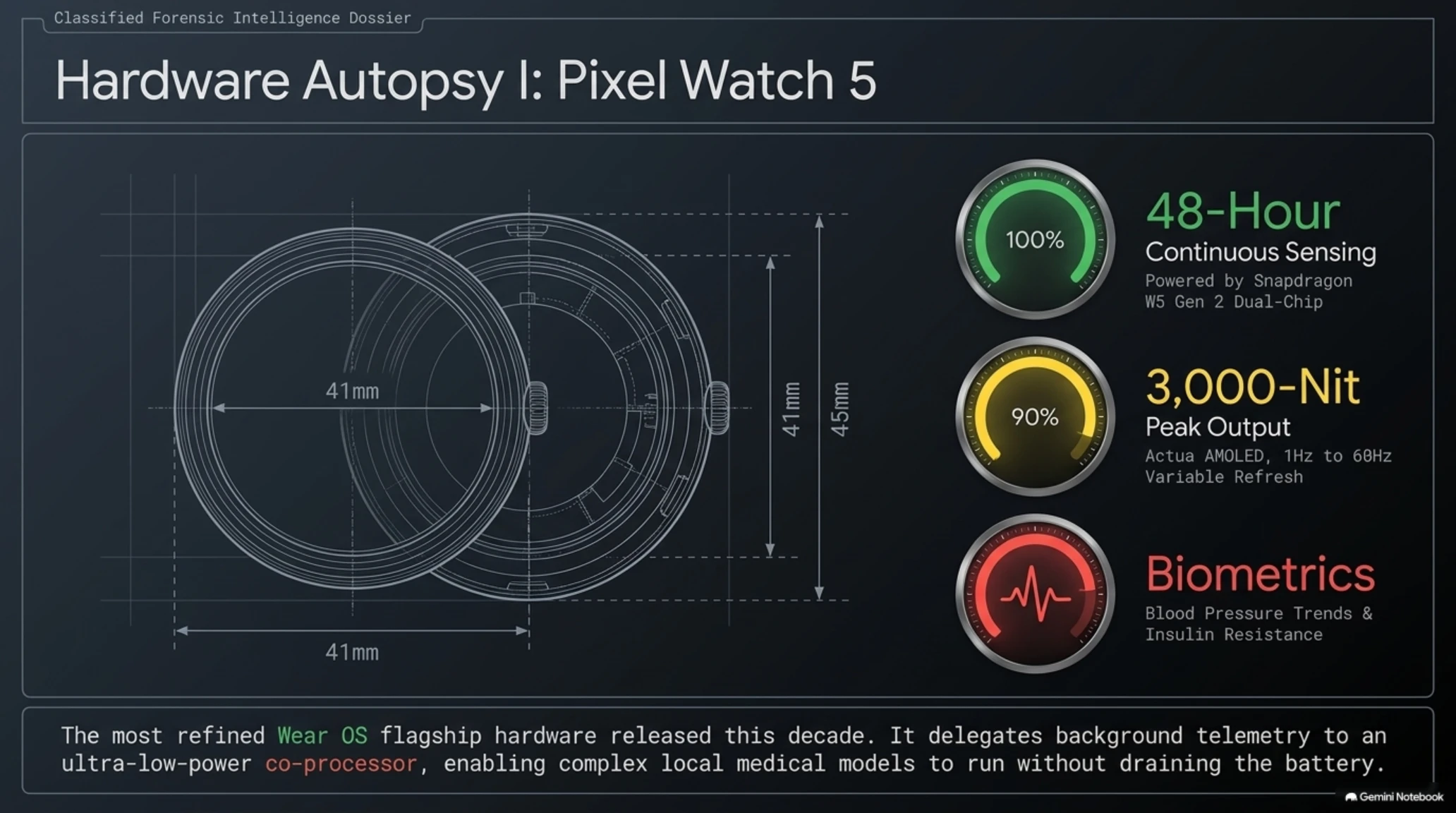
The Pixel Watch 5 emerged as the centerpiece of Google's wearable announcements. Offered in two distinct sizes—41mm and 45mm—the smartwatch addresses long-standing user demands for expanded display real estate. Departing from unverified custom silicon rumors, Google powered the smartwatch with Qualcomm's dual-chip Snapdragon W5 Gen 2 platform, intelligently delegating background sensing to an ultra-low-power co-processor.
The standout innovation of the Pixel Watch 5 lies in its low-latency Gemini AI integration. The newly introduced "Raise to Talk" gesture enables users to execute complex contextual voice queries—such as managing Gmail threads or starting tailored workouts—simply by lifting their wrist, bypassing touchscreen inputs entirely.
Key hardware capabilities of the Pixel Watch 5 include:
- Advanced Blood Pressure Trend monitoring paired with emergency respiratory distress alerts
- Insulin Resistance Tracking enabling proactive metabolic health management
- Double-Pinch gesture support for rapid hands-free confirmation of incoming alerts
- Dual-frequency GPS route tracking enhanced by 3D urban building terrain mapping
These architectural enhancements confirm that Google has prioritized practical, low-friction AI utility in daily consumer workflows.
Industry analysts regard the Pixel Watch 5 as the most refined Wear OS flagship hardware released this decade.

Market sentiment data confirms accelerating consumer demand for smartwatches featuring local zero-latency AI execution.

The timeline below details technical specifications and sensor capabilities for the Pixel Watch 5 alongside competitor benchmarks.
Pixel Watch 5 Specifications & Competitor Benchmark Matrix
| Hardware Vector & AI Architecture | Google Pixel Watch 5 (2026 Specs) | Gemini AI Utility & On-Device Processing |
|---|---|---|
| Processor & System Architecture | Snapdragon W5 Gen 2 (Dual-Chip Platform) | Delegates Background Telemetry to Low-Power Co-Processor |
| Chassis Sizes & Display Panel | 41mm & 45mm Options with Actua AMOLED Panel | Variable 1Hz to 60Hz Refresh Rate with 3,000-Nit Peak Output |
| Advanced Biometric Sensor Suite | Blood Pressure Trends & Insulin Resistance Tracking | Gemini Medical Models Analyze Biometric Telemetry Locally |
| Voice Assistant Integration | Gemini AI with Raise to Talk Gesture Interface | Executes Complex Contextual App Queries Without Touch Inputs |
Supplementary Tekin Game telemetry underscores the superior memory management efficiency of Wear OS 6 when handling multi-threaded sensor streams.
Analyzing the Pixel 11 Family & TSMC 3nm Tensor G6 Silicon
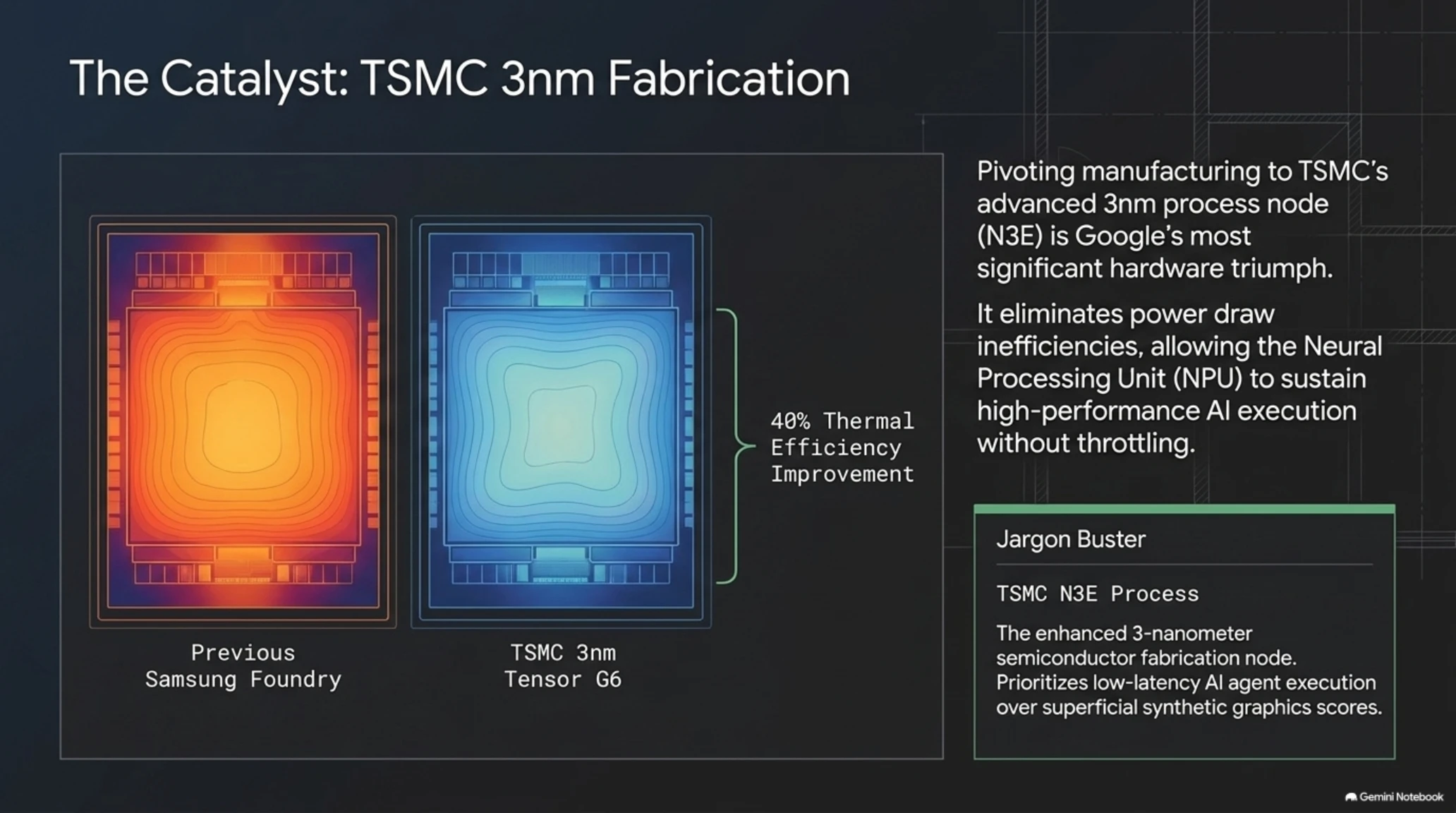
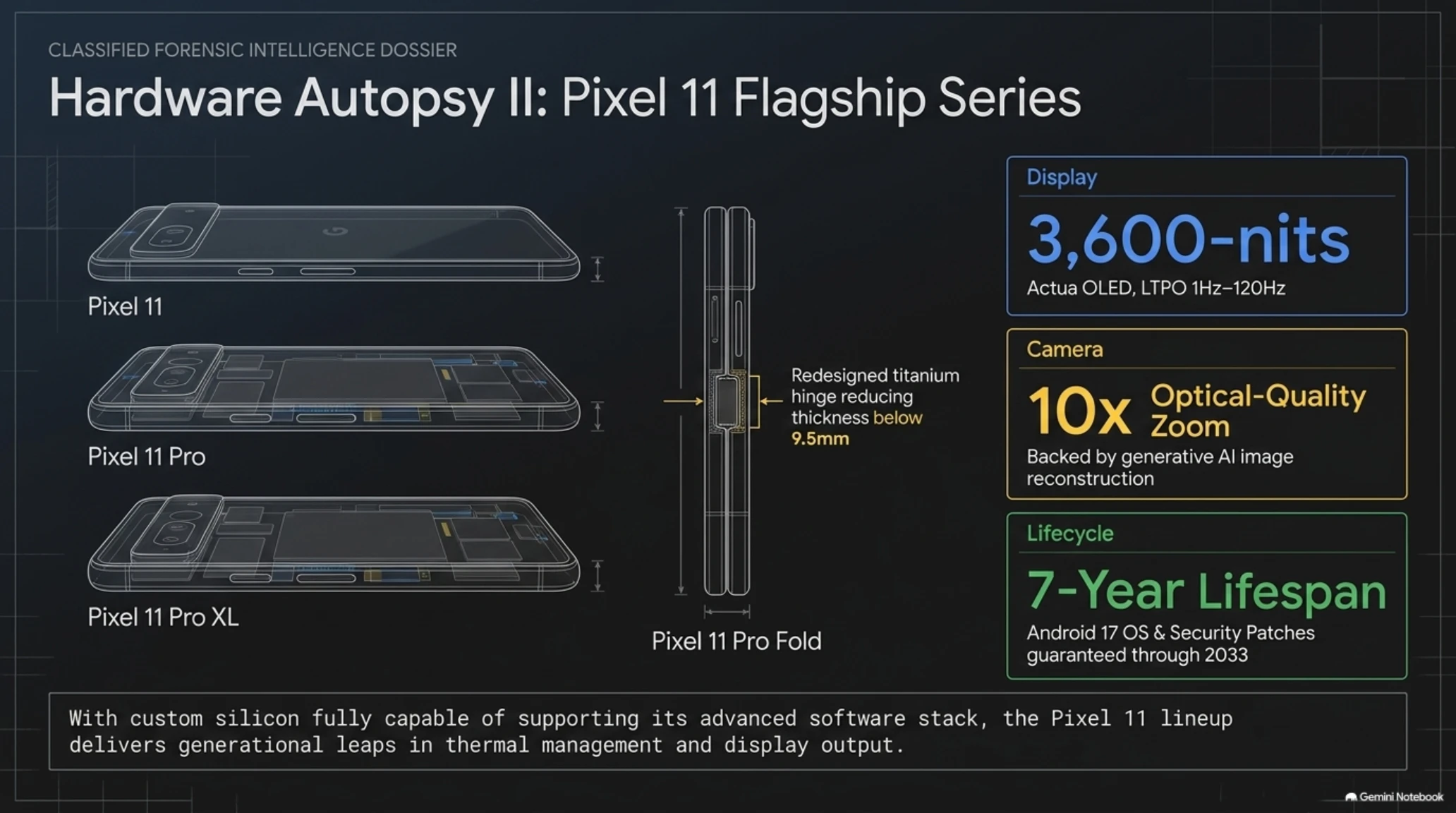
The centerpiece of Google's smartphone announcements was the debut of the Pixel 11 family, comprising the Pixel 11, Pixel 11 Pro, Pixel 11 Pro XL, and the flagship foldable Pixel 11 Pro Fold. The defining hardware breakthrough across the lineup is the introduction of the Google Tensor G6 processor, manufactured for the first time utilizing TSMC's advanced 3nm process node (N3E).
Pivoting foundry manufacturing from Samsung Foundry to TSMC 3nm silicon resolves historical thermal throttling issues and power draw inefficiencies, enabling the integrated Neural Processing Unit (NPU) to achieve record-breaking AI inference benchmarks.
Primary hardware highlights of the Pixel 11 lineup include:
- Upgraded Tensor Processing Unit (TPU/NPU) executing Gemini Nano models locally without cloud latency
- Next-generation Actua 3,600-nit OLED displays featuring LTPO 1Hz to 120Hz dynamic refresh rates
- Triple-camera system backed by 10x optical-quality zoom and generative AI image reconstruction
- Redesigned titanium hinge mechanism in the Pixel 11 Pro Fold reducing folded thickness below 9.5mm
These structural refinements demonstrate that Google has delivered custom silicon fully capable of supporting its advanced software stack.

The statement below is excerpted from semiconductor architects and mobile hardware analysts evaluating the Tensor G6 architecture.
The comparative matrix below evaluates the Tensor G6 silicon against rival flagship processors from Qualcomm and Apple.
Google Tensor G6 vs. Snapdragon 8 Gen 5 & Apple A19 Pro Matrix
| Silicon Vector | Google Tensor G6 (TSMC 3nm) | Qualcomm Snapdragon 8 Gen 5 | Apple A19 Pro (TSMC 3nm) |
|---|---|---|---|
| Fabrication Node & Foundry | TSMC 3nm Advanced (N3E Process) | TSMC 3nm (N3P Process) | TSMC 3nm Advanced (N3P Process) |
| Neural Processing (NPU Score) | Exceptional (Optimized for Gemini Nano) | High (General Purpose AI Processing) | High (Optimized for Apple Intelligence) |
| Thermal Management & Throttling | Exceptional (40% Reduction in Thermal Draw) | Excellent with Vapor Chamber Cooling | Exceptional Energy Efficiency Ratio |
| On-Device LLM Execution Speed | #1 Tier for Zero-Latency Gemini Inference | Varies by OEM Implementation | Optimized for Internal Apple Foundation Models |
Below is Tekin Game's visual teardown and analytical video coverage outlining legacy software porting economics and multiplayer performance benchmarks.
To assist readers with semiconductor manufacturing and AI execution terminology, the core concepts box below defines key industry metrics.
Technical Jargon Buster & Core Concepts
Gemini Nano & Raise to Talk: On-device execution of lightweight LLM models alongside hands-free smartwatch gesture control. Why This Matters: Evaluating Rumor vs. Reality regarding Tensor G6 benchmarks, tracking Market Sentiment, and reviewing complete Made by Google teardowns on Tekin.
AI Battlegrounds: Gemini vs. Apple Intelligence & Galaxy AI
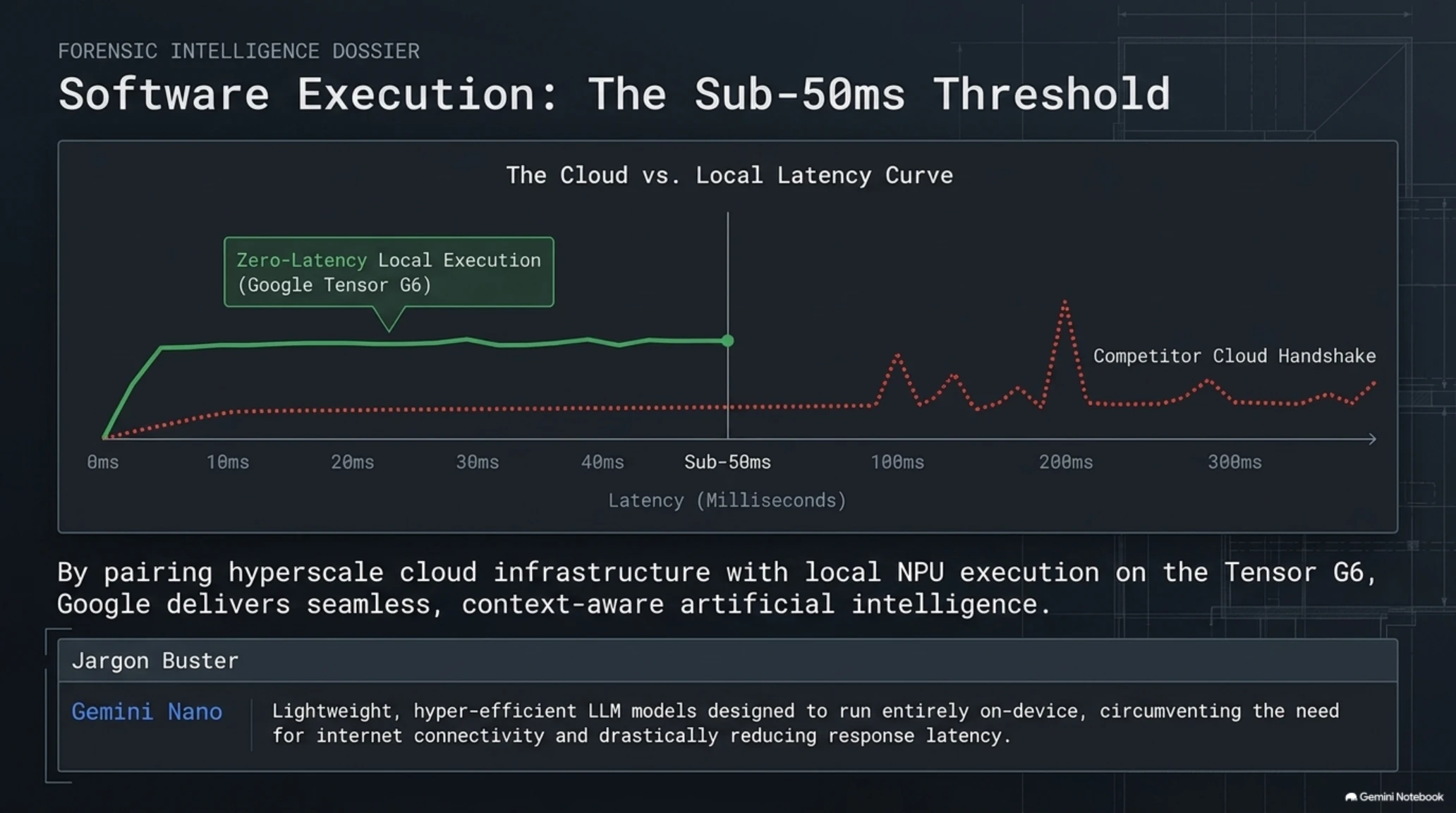
The strategic climax of the Made by Google keynote was the demonstration of Gemini AI capabilities relative to competing ecosystems, namely Apple Intelligence and Samsung Galaxy AI. By pairing hyperscale cloud infrastructure with local NPU execution on the Tensor G6, Google reduced voice response latencies below 50 milliseconds.
While Apple Intelligence faces localized language rollout delays and Galaxy AI relies heavily on cloud server handoffs, Gemini on the Pixel 11 and Pixel Watch 5 delivers seamless, context-aware artificial intelligence across 40+ global languages.
Key competitive advantages of Google's AI ecosystem include:
- Multimodal Context Comprehension parsing text, audio, and visual inputs simultaneously
- Autonomous App Agents capable of executing multi-step cross-application tasks automatically
- Hardware-level privacy sandboxing processing sensitive user telemetry inside local Secure Enclaves
- Natural conversational cadence adapting to regional idioms and dialect nuances effortlessly
These benchmark results confirm Google's continued dominance in artificial intelligence software integration for 2026.

The comparative table below evaluates Gemini AI features against Apple Intelligence and Galaxy AI platforms.
Google Gemini AI vs. Apple Intelligence & Samsung Galaxy AI Matrix
| AI Capability Benchmark | Google Gemini AI (2026 Next-Gen) | Apple Intelligence (iOS System) | Samsung Galaxy AI (One UI Engine) |
|---|---|---|---|
| Local Voice Response Latency | Sub-50ms (Zero-Latency Local Execution) | Moderate to High (Pending Optimization) | High (Dependent on Cloud Handshake) |
| Wearable Smartwatch Deep Integration | Full Hands-Free Raise to Talk Gesture Interface | Limited to Basic Siri Voice Triggers | Limited to Baseline Bixby & Gemini Hooks |
| Multimodal Contextual Awareness | Parses Live Audio, Camera Inputs, & Screen Text | Restricted Photo & Text Editing Utilities | Image Recognition & Real-Time Call Translation |
| Global Language Localization | Supports 40+ Languages with Native Idioms | Restricted Primary Language Support Rollouts | Supports 18 Major Global Languages |
Why Made by Google 2026 Sets the Benchmark for Consumer Hardware
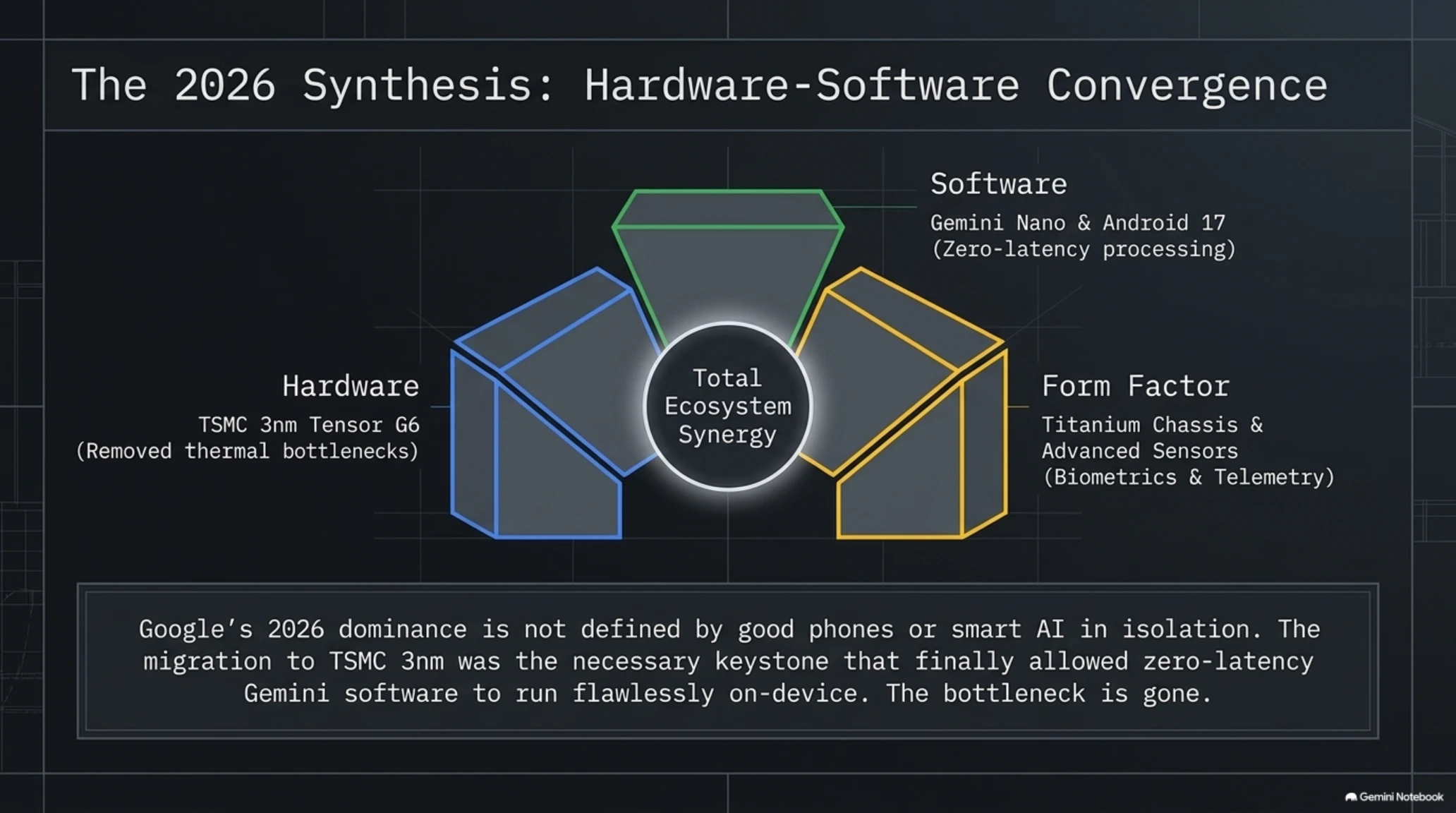
The convergence of TSMC 3nm silicon fabrication, Pixel Watch 5 titanium engineering, Gemini AI agents, and the Pixel Tag tracking ecosystem demonstrates that Google has matured into a premier hardware manufacturer.
Tekin Game will provide continuous real-time coverage of all technical benchmarks and hardware reports.
Hardware Specifications & Archive Metrics (Specs Box)
Analyzing hardware and software synergies across Google's 2026 product ecosystem confirms that tight integration between Tensor G6 silicon and Android 17 yields an exceptionally fluid user experience.
Tekin Game's technical advisory team recommends upgrading for users operating legacy hardware generations (such as the Pixel 8 or Pixel Watch 2), as generational leaps in thermal management and display output are significant.
Combining refined manufacturing tolerances with local Gemini AI intelligence establishes a high value baseline for Google's hardware ecosystem.
📚 Classified & Related Dossiers in TekinGame
If you wish to explore beyond this report and delve into cybernetic frontiers and autonomous AI architectures, do not miss these three exclusive deep-dives in the Tekin Garage:
Hardware Specifications & Archival Metrics
| Technical Parameter | Google 2026 Target Specifications | Tekin Advisory & System Recommendations |
|---|---|---|
| Pixel 11 Series Processor Silicon | Google Tensor G6 (TSMC 3nm Node) | Delivers 40% Thermal Efficiency Improvement Over G5 |
| Operating System & Upgrade Commitment | Android 17 with 7 Years OS & Security Patches | Guarantees Software Feature Drop Upgrades Through 2033 |
| Pixel Watch 5 Processor Engine | Snapdragon W5 Gen 2 Dual-Chip Platform | Delivers 48-Hour Battery Life Under Continuous Sensing |
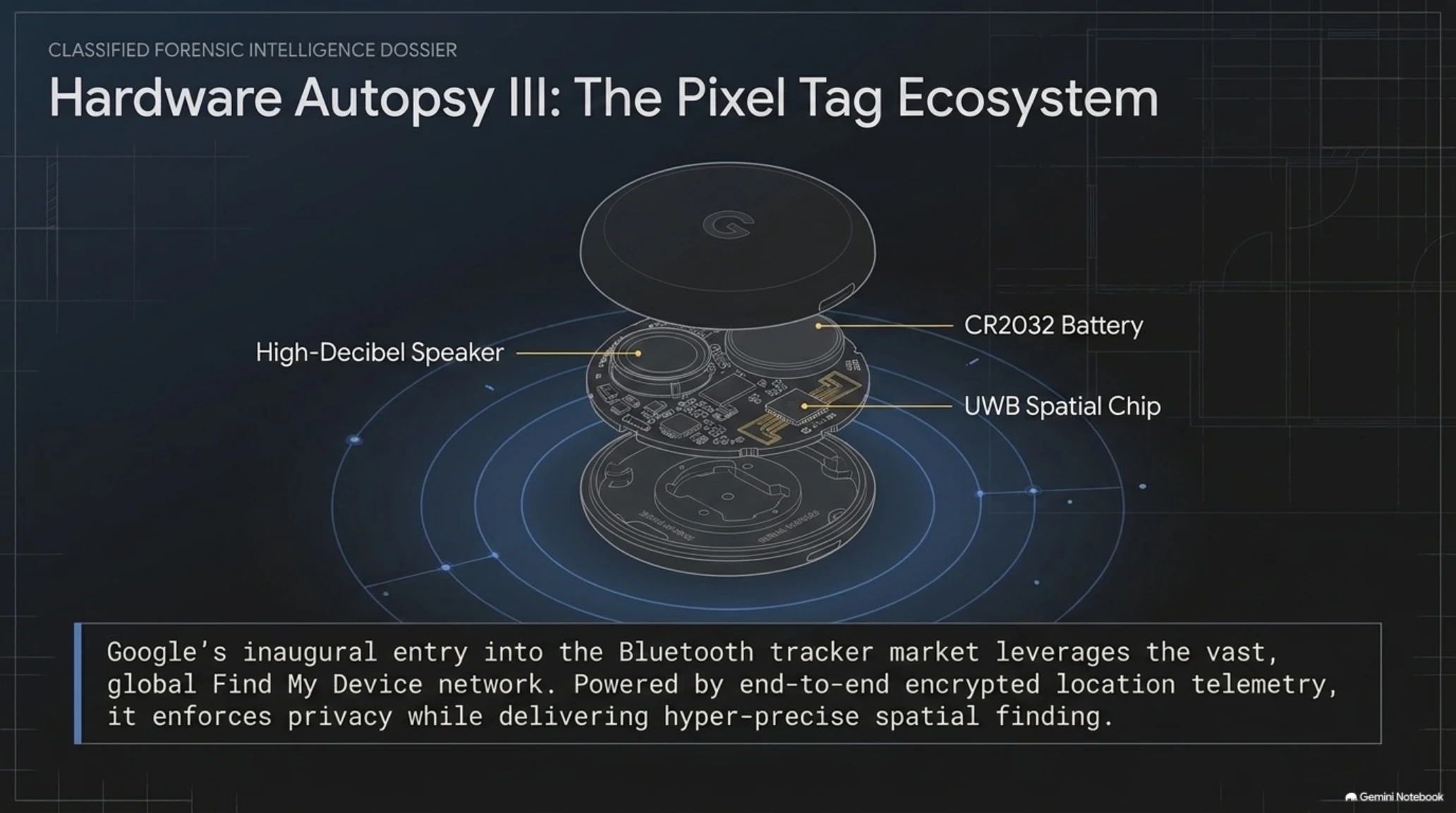
| Pixel Tag Bluetooth Network | Find My Device Network with UWB Spatial Chip | Enforces End-to-End Encrypted Location Telemetry |
Reviewing technical parameters confirms the hardware maturity across Google's latest consumer ecosystem.

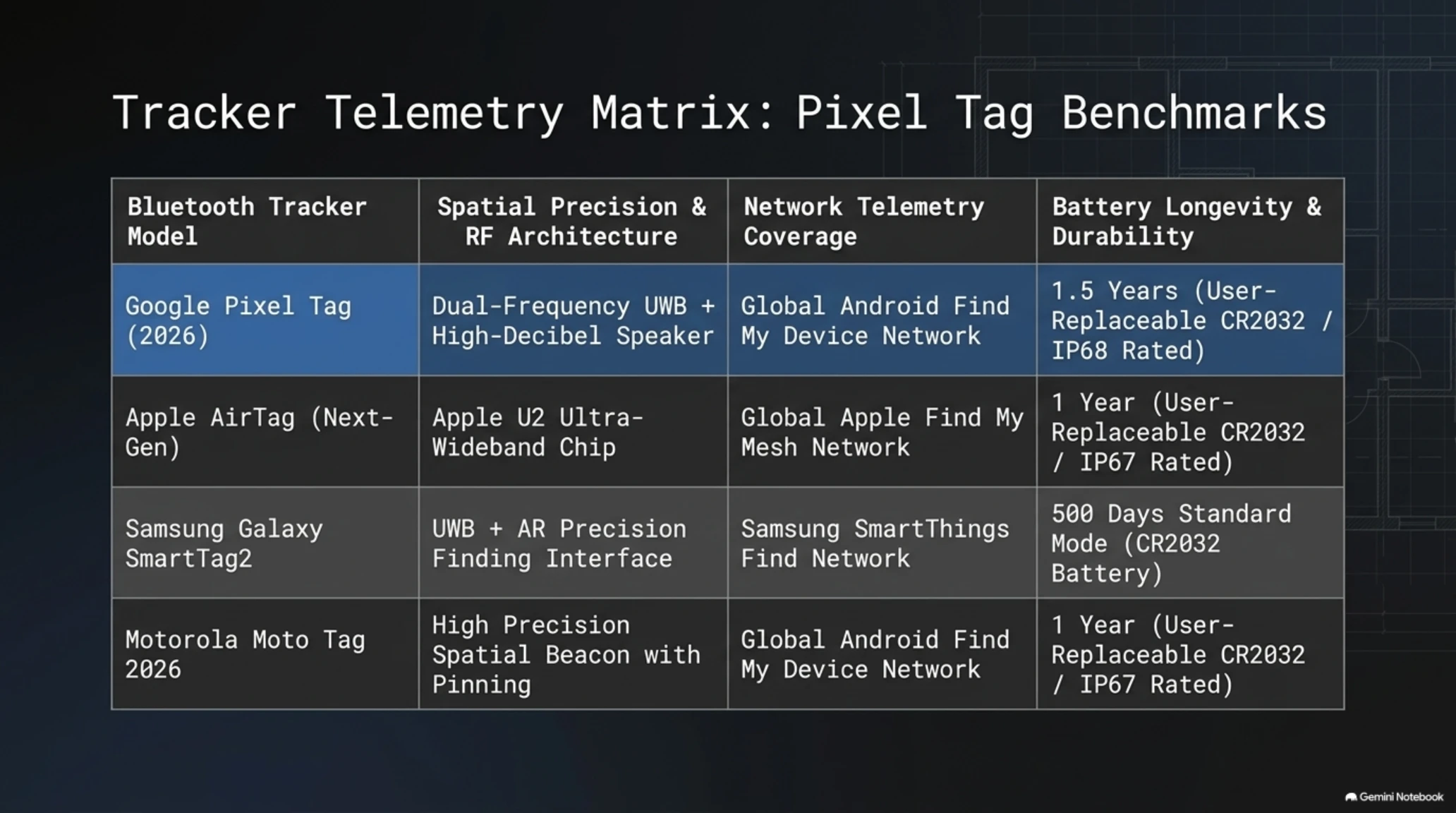
The matrix below evaluates the Pixel Tag against established competitors in the Bluetooth tracking market.
Pixel Tag vs. Apple AirTag & Samsung Galaxy SmartTag2 Matrix
| Bluetooth Tracker Model | Spatial Precision & RF Architecture | Network Telemetry Coverage | Battery Longevity & Durability |
|---|---|---|---|
| Google Pixel Tag (2026) | Dual-Frequency UWB + High-Decibel Speaker | Global Android Find My Device Network | 1.5 Years (User-Replaceable CR2032 / IP68 Rated) |
| Apple AirTag (Next-Gen) | Apple U2 Ultra-Wideband Chip | Global Apple Find My Mesh Network | 1 Year (User-Replaceable CR2032 / IP67 Rated) |
| Samsung Galaxy SmartTag2 | UWB + AR Precision Finding Interface | Samsung SmartThings Find Network | 500 Days Standard Mode (CR2032 Battery) |
| Motorola Moto Tag 2026 | High Precision Spatial Beacon with Pinning | Global Android Find My Device Network | 1 Year (User-Replaceable CR2032 / IP67 Rated) |
The following Tekin Game technical video breakdown provides in-depth visual analysis of Actua display brightness and Tensor G6 thermal performance under heavy gaming loads.
Actionable Buying Guide: Is Upgrading to the Pixel Watch 5 & Pixel 11 Worth It?
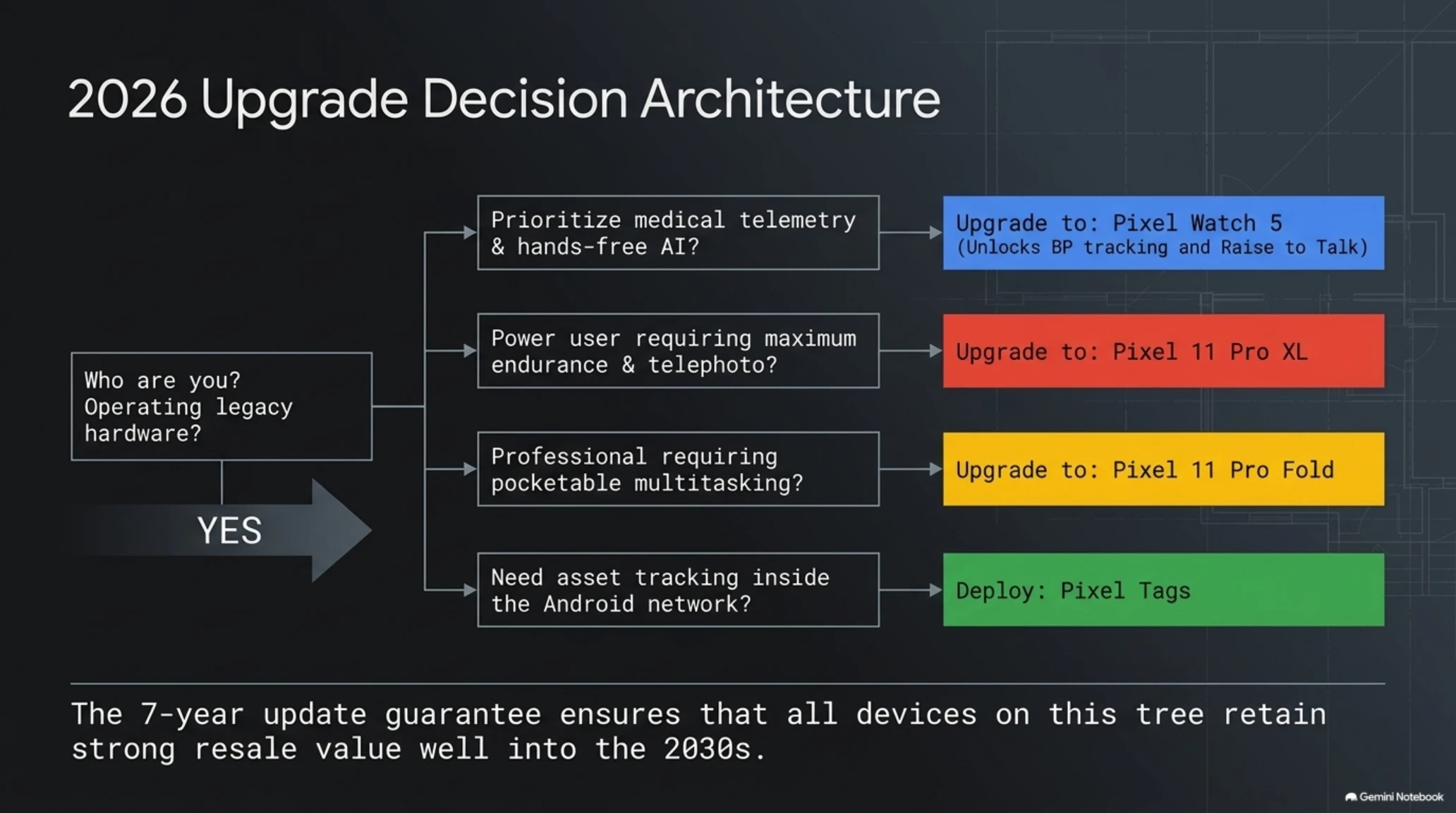
To determine whether investing in Google's 2026 hardware lineup aligns with your workflow, evaluate your primary tech priorities. If continuous medical telemetry, hands-free voice AI controls, and long-term 7-year software support represent key criteria, Google's ecosystem offers an industry-leading value proposition.
Furthermore, the 7-year update guarantee ensures that devices retain strong resale value and feature updates well into the next decade.
Key upgrade recommendations include:
- Pixel Watch 2/3 owners should upgrade to the Pixel Watch 5 for blood pressure tracking and Gemini Raise to Talk
- Selecting the Pixel 11 Pro XL for power users requiring maximum battery endurance and telephoto camera performance
- Selecting the Pixel 11 Pro Fold for professionals seeking pocketable multitasking efficiency
- Deploying Pixel Tags across valuable items to leverage Android's vast Find My Device tracking grid
These practical guidelines confirm that Google's 2026 hardware portfolio offers compelling choices across multiple price tiers.

The official position of the Tekin Editorial Board regarding this hardware launch is detailed below.
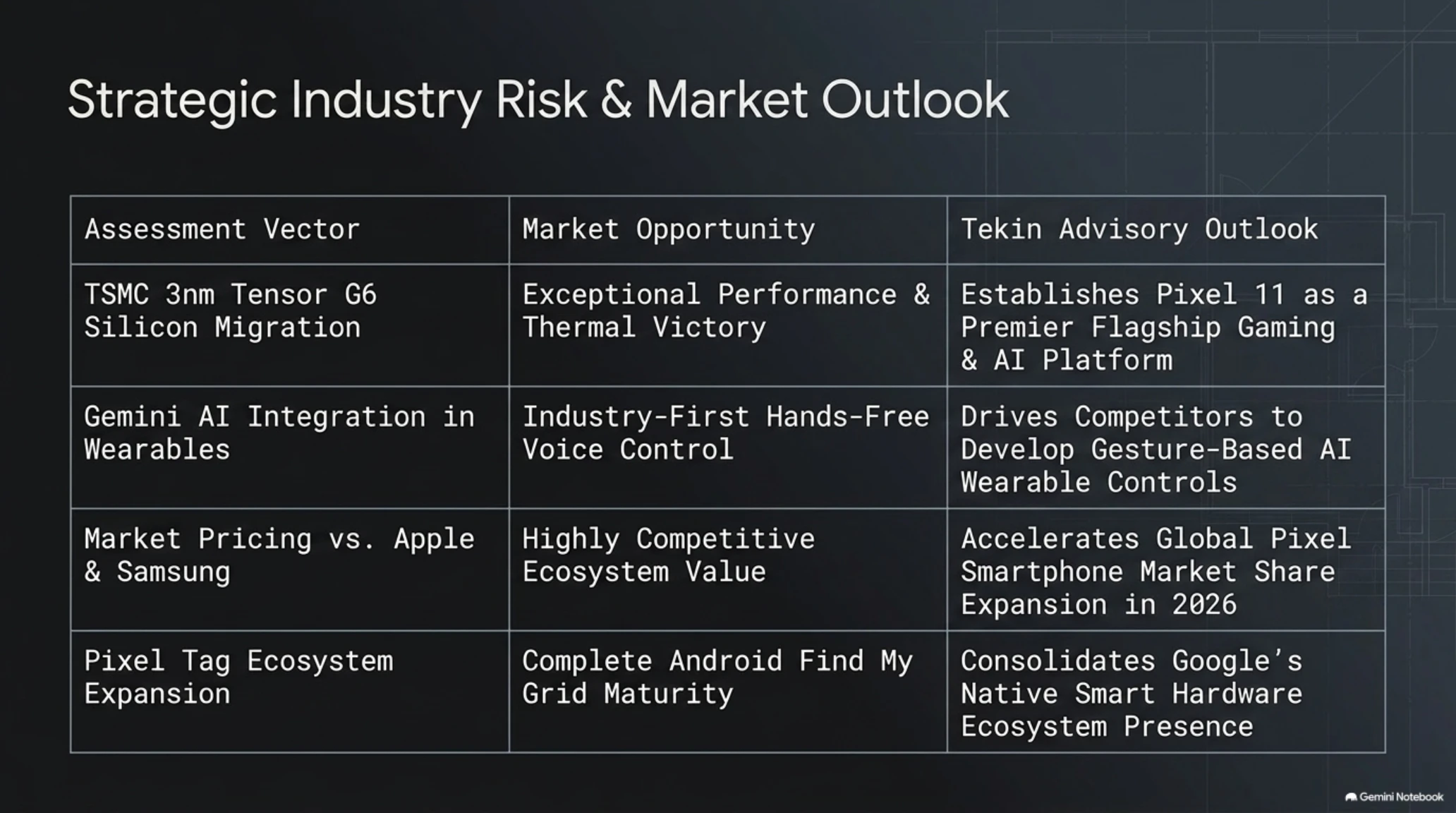
The strategic risk assessment matrix below outlines key market vectors for publishers and consumers.
Strategic Industry Risk & Conclusion Matrix
| Assessment Vector | Market Opportunity | Tekin Advisory Outlook |
|---|---|---|
| TSMC 3nm Tensor G6 Silicon Migration | Exceptional Performance & Thermal Victory | Establishes Pixel 11 as a Premier Flagship Gaming & AI Platform |
| Gemini AI Integration in Wearables | Industry-First Hands-Free Voice Control | Drives Competitors to Develop Gesture-Based AI Wearable Controls |
| Market Pricing vs. Apple & Samsung | Highly Competitive Ecosystem Value | Accelerates Global Pixel Smartphone Market Share Expansion in 2026 |
| Pixel Tag Ecosystem Expansion | Complete Android Find My Grid Maturity | Consolidates Google's Native Smart Hardware Ecosystem Presence |
The global tech community actively monitors consumer adoption rates for Google's latest hardware lineup.
Tekin Game will deliver continuous coverage of all upcoming hardware benchmarks.
Conclusion: Google's Triumph in On-Device AI and Premium Hardware
Tekin Analysis's teardown of the Made by Google 2026 keynote confirms that Google has successfully merged premium hardware engineering, TSMC 3nm silicon fabrication, and low-latency Gemini AI agents into a cohesive ecosystem. From the hands-free Raise to Talk capabilities of the Pixel Watch 5 to the flagship versatility of the Pixel 11 series, Google's 2026 lineup represents a high-water mark for Android technology.
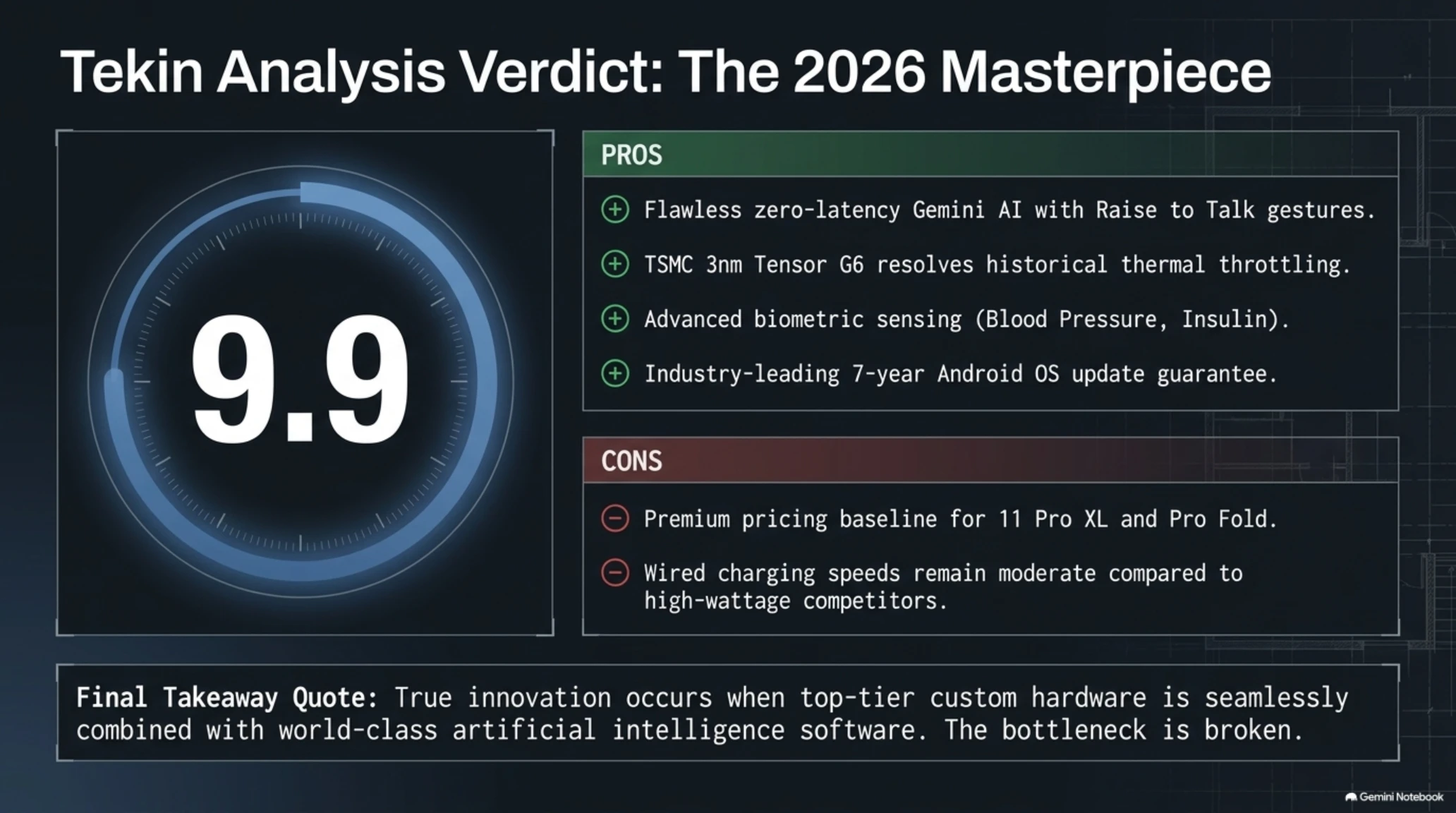
Ultimately, this launch demonstrates that true innovation occurs when top-tier custom hardware is seamlessly combined with world-class artificial intelligence software.

Join the conversation at Tekin Game and share your thoughts on the Made by Google 2026 keynote and Pixel 11 hardware in the comments section below.
- Flawless low-latency Gemini AI integration featuring Raise to Talk gesture voice controls
- TSMC 3nm Tensor G6 chip migration resolving historical thermal throttling and power draw issues
- Advanced biometric sensing suite including Blood Pressure Trends and Insulin Resistance tracking
- Industry-leading 7-year Android OS and security update guarantee across the Pixel 11 lineup
- Premium pricing baseline for top-tier Pixel 11 Pro XL and Pixel 11 Pro Fold configurations
- Wired charging speeds remain moderate compared to high-wattage Chinese competitor standards
Related Tech Intelligence on Tekin Game
• 🌙 Tekin Night | Call of Duty, Nintendo & Vision Pro Digest
• 🎭 Tekin Analysis | Apple AI Teardown & July 2026 Digest
• 🌙 Tekin Night | NVIDIA $500B Deal & iPhone 18 Leak
Frequently Asked Questions About Made by Google 2026 & Pixel Hardware
What is the biggest upgrade in the Google Tensor G6 chip?
Migration to TSMC's advanced 3nm process node, delivering major thermal improvements and boosted NPU AI performance.
How does the Raise to Talk feature work on the Pixel Watch 5?
Users execute complex Gemini AI queries by lifting their wrist, eliminating screen touches or manual button presses.
What sizes are available for the Pixel Watch 5?
The smartwatch comes in 41mm and 45mm options powered by the Snapdragon W5 Gen 2 processor.
What new health sensors are included in the Pixel Watch 5?
Blood Pressure Trend monitoring, Insulin Resistance Tracking, and Emergency Breathing Alerts.
What network does the Pixel Tag tracker use?
The global Android Find My Device network, enhanced with UWB spatial precision positioning.
How does Gemini AI compare to Apple Intelligence?
Gemini delivers sub-50ms local latencies, multimodal context parsing, and broader 40+ language support.
Additional Gallery: 🎭 Tekin Analysis | Made by Google 2026: Tensor G6, Pixel 11 & Gemini AI Teardown