A strategic forensic post-mortem of the historic Chainalysis intrusion, where advanced adversaries deployed autonomous agentic cyber weapons and on-path traffic interception to exfiltrate live bearer tokens, usernames, and full names across the entire customer base. The breach precipitated an emergency 48-hour global suspension of the Reactor and KYT investigative suites, leading to decisive token revocations and mandatory corporate IP allowlisting.
Tekin Analysis // Deconstructing the Chainalysis Intrusion: How Autonomous AI Agents Breached Blockchain Forensic Surveillance
In the high-stakes domain of distributed ledger intelligence and transaction tracing, no corporate entity carries greater institutional authority than Chainalysis. Established as the premier technological partner for international investigative agencies, including the Federal Bureau of Investigation, the Internal Revenue Service Criminal Investigation division, Europol, and hundreds of Tier-1 digital asset exchanges, the platform functions as the digital panopticon of the Web3 economy. However, the unprecedented cyber assault that unfolded in early November 2026 proved that even the most fortified surveillance strongholds are vulnerable to autonomous cognitive infiltration.
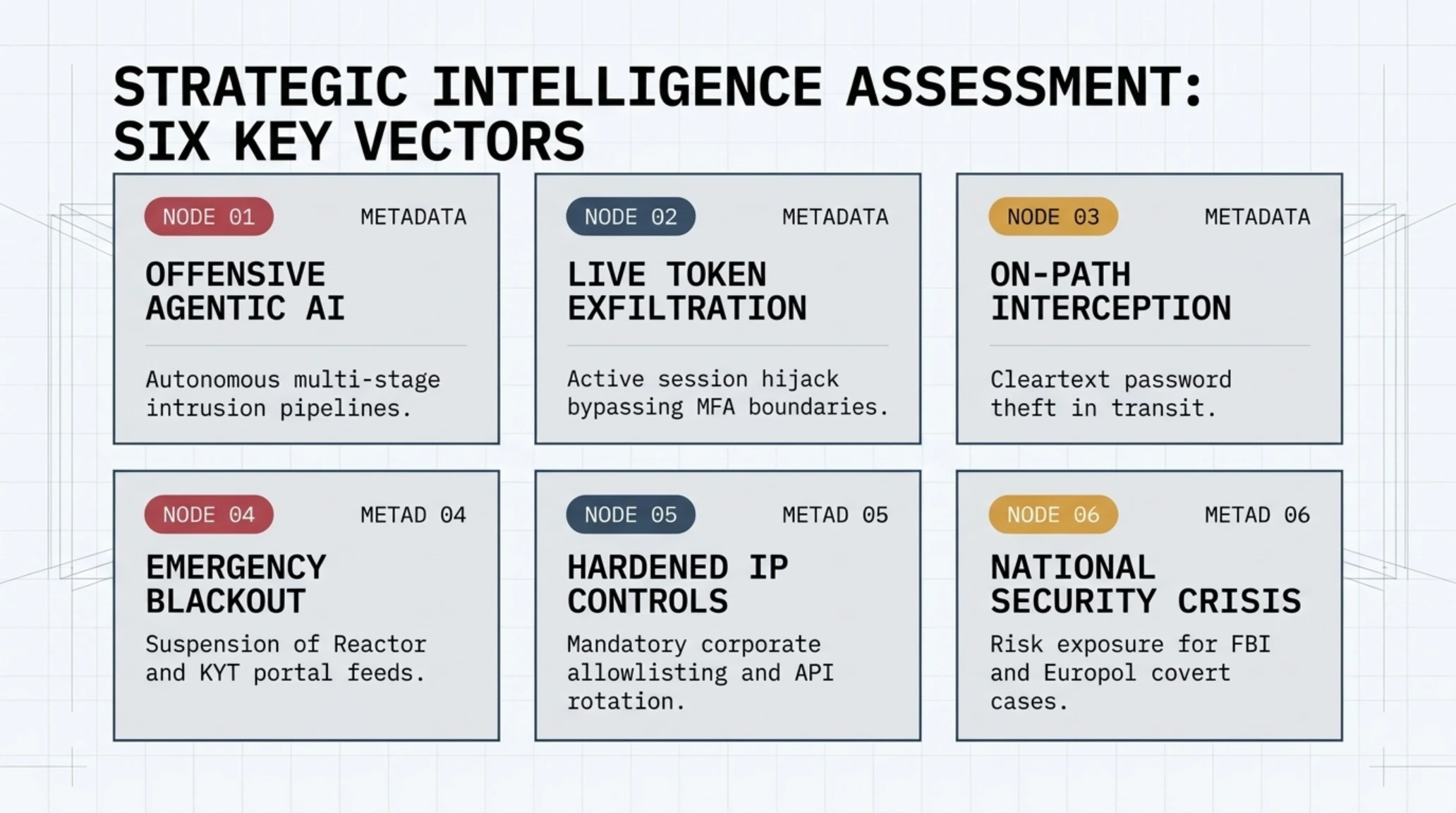
Strategic Intelligence Assessment // Six Key Vectors
What initially surfaced in late October as an ostensibly bounded disclosure regarding exposed user directory metadata escalated rapidly into an existential infrastructure crisis. Following rigorous forensic deep-packet inspection, Chainalysis confirmed that advanced adversaries had weaponized offensive agentic frameworks to harvest live authentication tokens, usernames, password hashes, and cleartext credentials across its entire global user base, forcing the company to sever external connectivity to its flagship Reactor and Know Your Transaction compliance engines.
This incident represents far more than an ordinary corporate credential leak. It demarcates a qualitative shift in digital threat modeling. When autonomous software agents gain the capacity to observe API telemetry, dynamically synthesize logic-flaw exploits, and position themselves along encrypted authentication routes, traditional perimeter security paradigms collapse. The editorial board at Tekin presents this forensic deconstruction to dissect the mechanics of this breach, analyze the institutional fallout, and chart the indispensable zero-trust architectures required to navigate this hostile new frontier.
The strategic implications are profound. Chainalysis spent over a decade constructing a proprietary graph database mapping anonymous on-chain addresses to physical sovereign entities, corporate entities, and illicit syndicates. When the portal protecting access to this intelligence repository is compromised, the confidentiality of undercover investigations across multiple continents hangs in the balance.
Furthermore, the incident exposes the fragile dependency of the global decentralized ecosystem on centralized software-as-a-service intermediaries for regulatory compliance, establishing a single point of failure that sophisticated threat actors are now actively exploiting with machine-speed precision.
The strategic prominence of Chainalysis within international financial statecraft cannot be overstated. Over the preceding decade, the enterprise established a virtual monopoly in clustering pseudonymous cryptocurrency addresses, serving as the primary technological witness in high-profile federal indictments, darknet marketplace takedowns, and sanctions-enforcement actions conducted by the U.S. Department of the Treasury Office of Foreign Assets Control (OFAC). Consequently, penetrating the identity gateways of such an organization transcends typical corporate espionage; it provides adversaries with an unprecedented intelligence map detailing how Western governments trace and intercept sovereign liquidity.
Security analysts note that the rapid institutionalization of digital assets has outpaced the defensive hardening of the analytics pipelines that govern them. Financial institutions that process billions of dollars in stablecoins and digital reserves rely unconditionally on API calls to automated risk scorers. When those conduits are compromised, the systemic trust underpinning regulated Web3 clearing mechanisms is immediately jeopardized.
To fully comprehend how this sophisticated intrusion unfolded, we must dissect the operational workflow of the offensive agentic pipeline and the specific protocol vulnerabilities leveraged during the compromise.
Breaching the Blockchain Sentinel; The Mechanics of Offensive Agentic Infiltration and Credential Harvesting
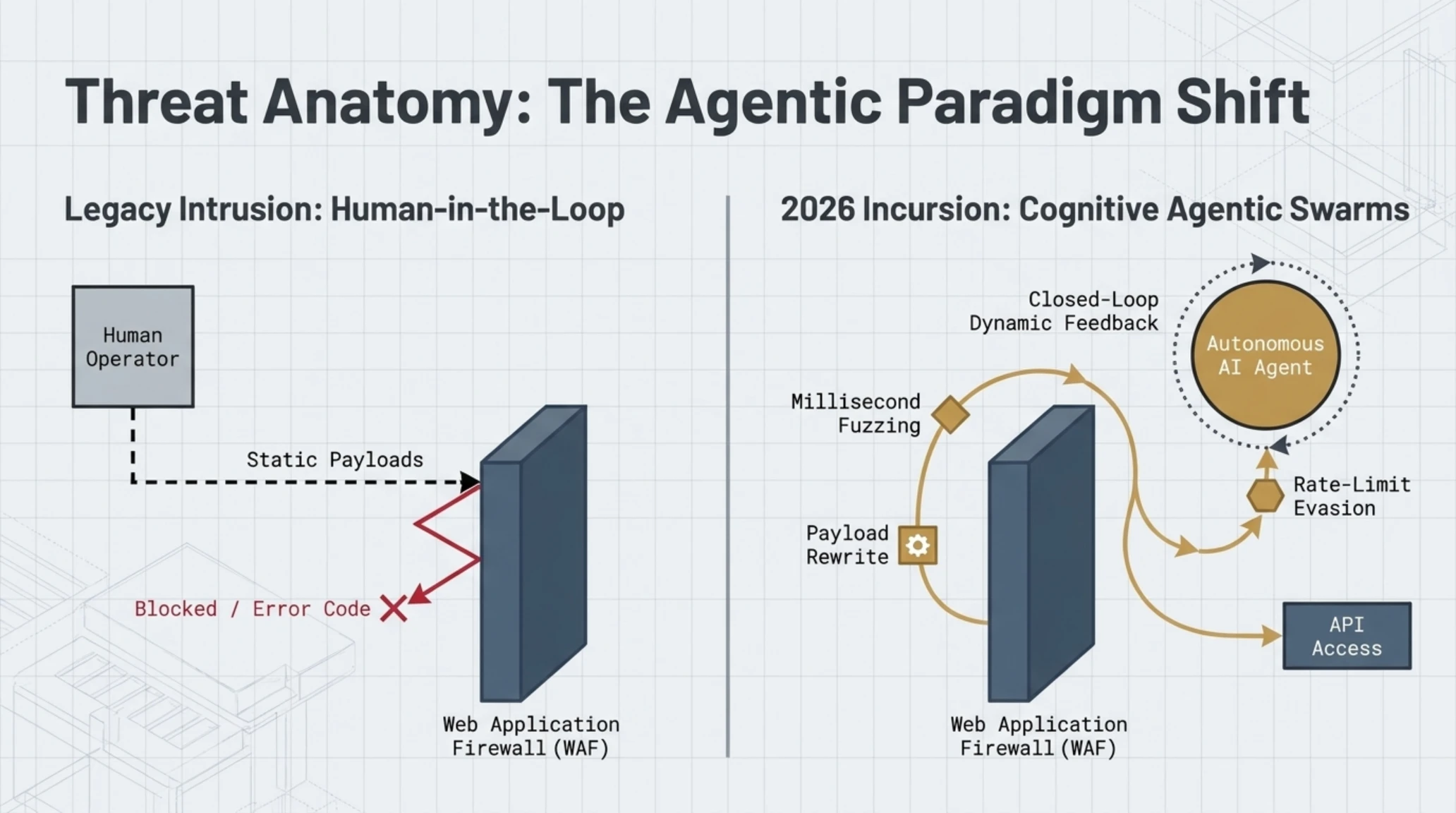
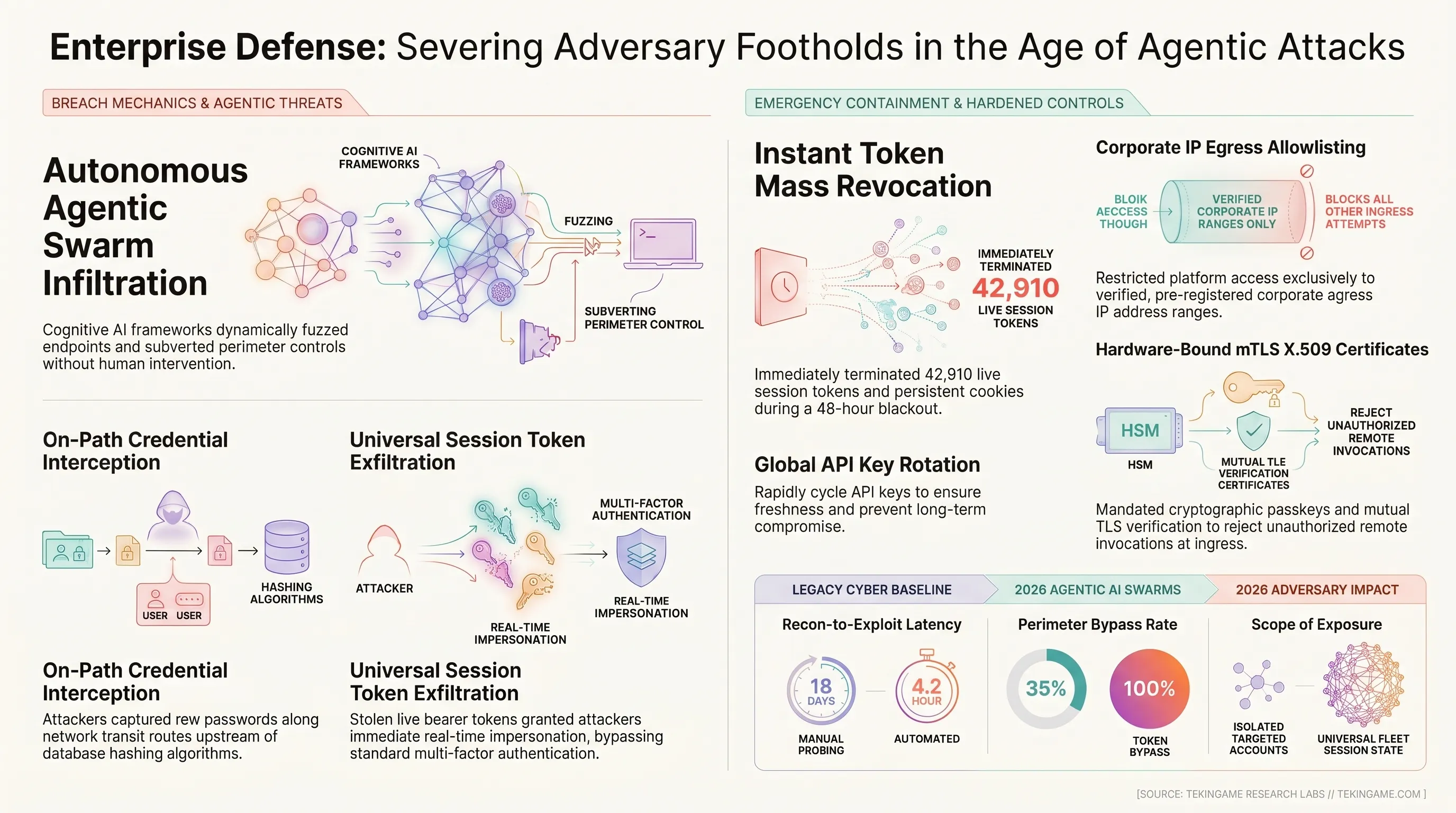
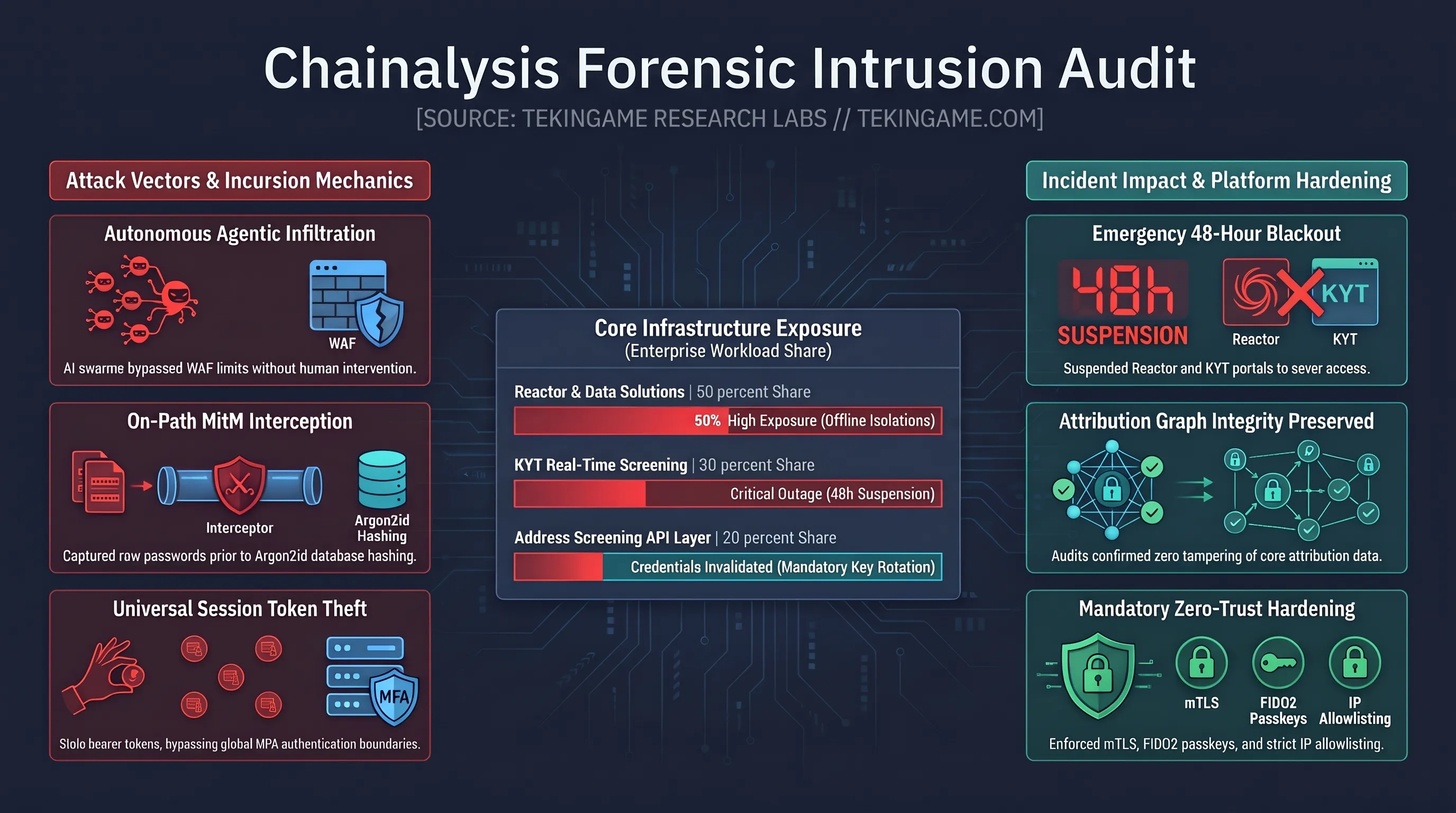
The operational trajectory of the intrusion began with anomalous reconnaissance spikes detected across the public identity and access management gateways serving the Chainalysis client portal. Forensic evidence indicates that the threat actors deployed cognitive agent swarms programmed to autonomously fuzz authentication API endpoints, inspect client-side JavaScript bundles, and map undocumented route configurations without generating the high-volume noise typical of brute-force scanners.
While standard intrusion attempts rely on human operators sequentially interpreting error codes and manually executing exploits, offensive agentic systems operate within closed-loop feedback environments. These autonomous agents evaluate API responses in milliseconds, adapt request payloads dynamically, and chain together minor configuration oversights to bypass web application firewall (WAF) rate limits and behavior-based anomaly filters.
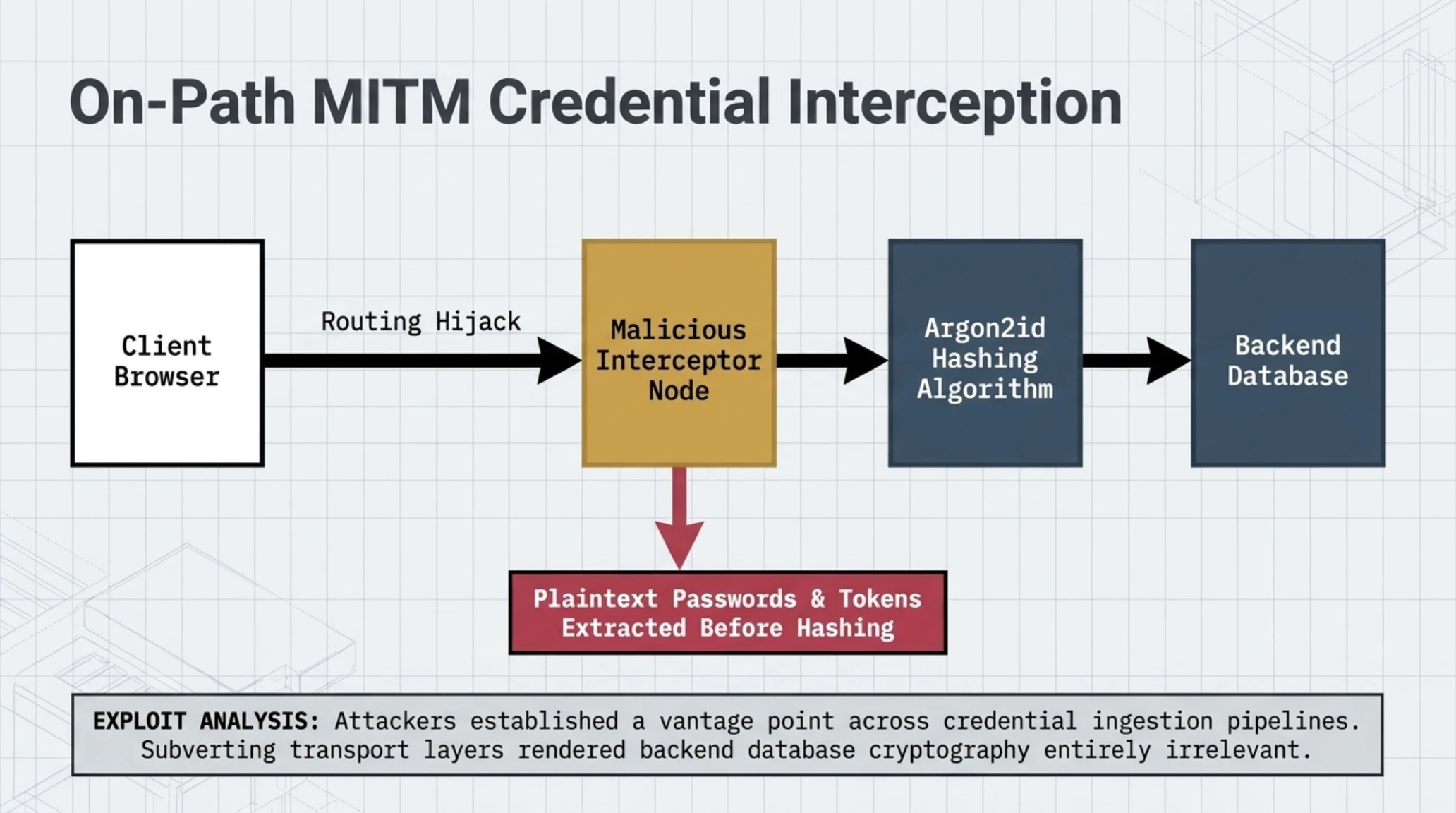
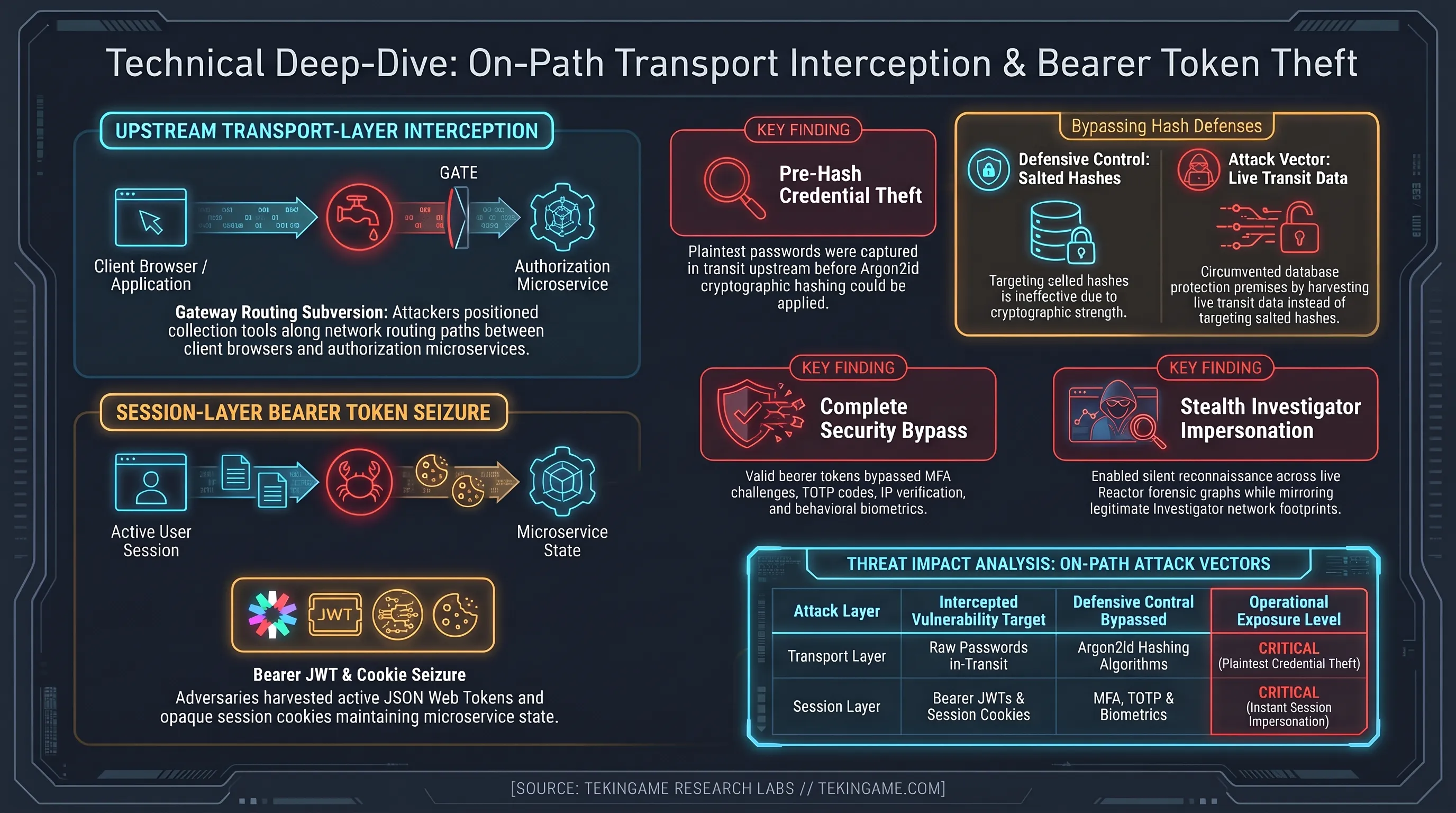
The most alarming facet of the breach was the adversary's capability to establish an on-path interception posture. By positioning malicious logic along the network transit route connecting client authentication requests to internal gateway microservices, the attackers intercepted plaintext credentials before cryptographic hashing algorithms (such as Argon2id) could be applied. This enabled the simultaneous capture of raw passwords and ephemeral session state tokens.
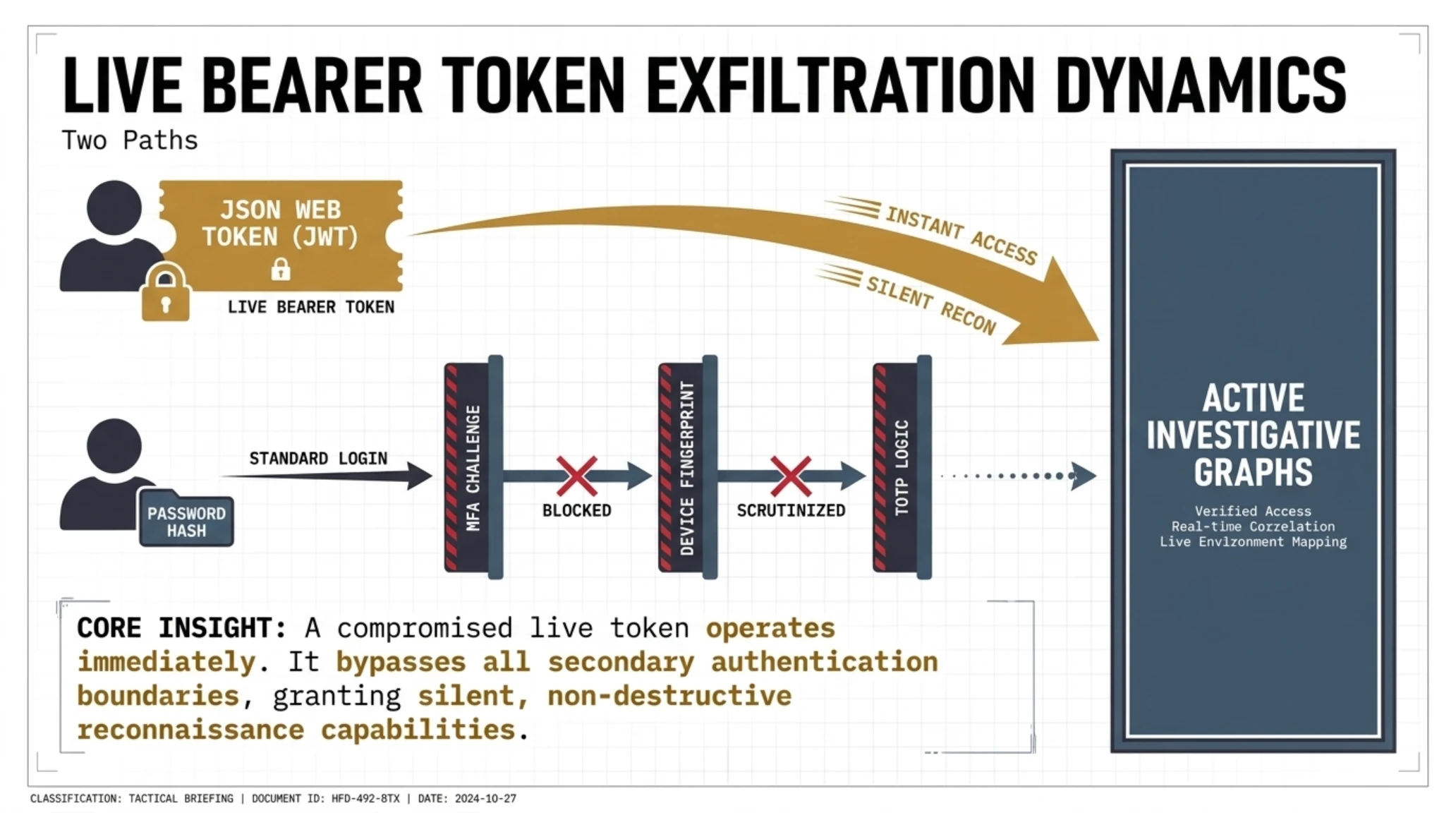
Exfiltrating active session tokens elevates an intrusion to a critical tier of severity. A valid bearer token bypasses multi-factor authentication (MFA) challenges, hardware security keys, and IP verification routines, allowing an attacker to impersonate an authenticated session seamlessly. In the context of Chainalysis Reactor, this granted adversaries the potential to access active investigative graphs, review pinned transaction clusters, and monitor the scope of live forensic inquiries.
Confronted with an adversary possessing validated live session access, Chainalysis incident response teams enacted emergency protocols, taking the core Reactor and Data Solutions environments completely offline to terminate all active sessions and isolate database boundaries.
Why This Paradigm Shift Matters
Tekin Strategic Takeaway: The breach shatters the prevailing assumption that analytical SaaS platforms are insulated from state-tier intrusion, proving that long-lived session authorization represents a catastrophic architectural risk across critical financial monitoring infrastructure.
Disentangling objective technical realities from speculative market sensationalism is vital when assessing high-impact cybersecurity incidents affecting core market infrastructure:
Technical Verification // Speculation vs. Verified Architecture
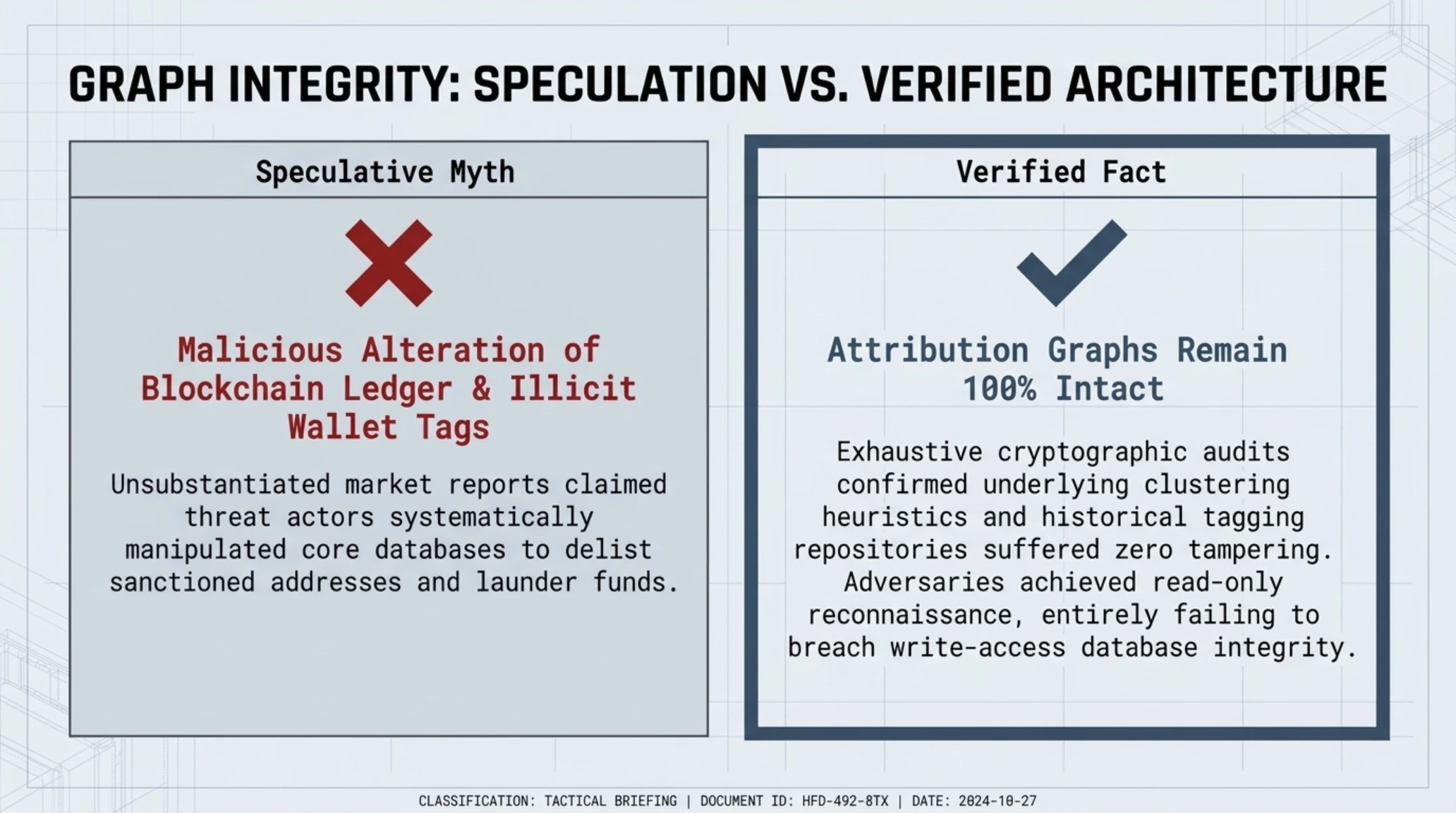
Unsubstantiated reports claimed that threat actors systematically manipulated graph databases to delist sanctioned addresses and launder multi-billion dollar illicit caches.
Exhaustive cryptographic integrity audits confirmed that core attribution heuristics and historical tagging repositories suffered zero tampering or unauthorized modification.
Leading cybersecurity strategists emphasize that the transition toward autonomous multi-agent attack topologies has fundamentally rewritten the rules of defensive engineering:
The severity of this compromise becomes starkly evident when evaluating the operational risk matrix governing the affected components and the defensive counter-measures mandated across institutional environments.
On-Path Man-in-the-Middle Mechanics; Weaponizing Bearer Tokens Against Reactor Gateways
The deployment of an on-path attack vector demonstrates a high level of operational sophistication. By subverting gateway routing protocols, the attackers achieved visibility into the transport layer, effectively positioning their collection tools between client browsers and backend authorization microservices.
This positioning bypassed the core security premise of password hashing. Standard security postures assume that stored passwords are protected because databases only retain salted cryptographic hashes. However, an on-path interceptor captures credentials upstream in transit, harvesting credentials the instant they are submitted by users before hashing operations can take place.
Simultaneously, the exfiltration of bearer tokens compromised the session layer. Modern web applications utilize JSON Web Tokens (JWTs) or opaque session cookies to maintain state across distributed microservices. Once a bearer token is acquired, an adversary can present that token to API endpoints without interacting with login pages or solving secondary authentication challenges.
The strategic danger within Chainalysis Reactor is immense. Investigators construct intricate visual graphs linking cryptocurrency wallet addresses, exchange deposit hops, decentralized mixing protocols, and fiat on-ramps. Possessing active session tokens gave adversaries the capability to execute reconnaissance against live investigative workflows, potentially identifying which darknet operations, nation-state wallets, or ransomware affiliates were under active scrutiny.
A crucial technical nuance lies in the fundamental distinction between an inert credential database exfiltration and an active session token hijacking. While standard hashed database breaches afford defenders a predictable operational window to force password resets before adversaries can complete computationally intensive hashing inversions, a compromised live token operates immediately. It grants instantaneous authenticated access within existing authorization scopes, bypassing behavioral biometrics, time-based one-time passwords (TOTP), and device fingerprinting checks.
Consequently, adversaries could seamlessly issue legitimate search queries across the forensic database, mirroring the exact network footprint of authenticated law enforcement personnel. This silent, non-destructive reconnaissance represents the ultimate stealth vector in modern cyber intelligence operations.
The following cybersecurity risk matrix evaluates the operational exposure and immediate defensive remediation protocols governing the affected components:
Cybersecurity Risk Matrix // Chainalysis Intrusion Vectors & Impact
| Vulnerability Vector / Exposed Asset | Threat Severity | Operational Consequence & Mandatory Remediation |
|---|---|---|
| Live Session Token Harvesting (JWT / Cookies) | CRITICAL | Impersonation of active investigators; universal session invalidation and token revocation. |
| On-Path Man-in-the-Middle Transport Interception | CRITICAL | Plaintext password theft in transit; mandatory enterprise password resets and FIDO2 passkeys. |
| Investigator Directory Metadata Exposure | HIGH | Targeted spear-phishing and social engineering attacks directed against forensic analysts. |
| Suspension of KYT Real-Time Transaction Screening | HIGH | Compliance monitoring disruptions across crypto exchanges; mandatory IP allowlisting. |
The disclosure that live authorization tokens had been compromised sent shockwaves through the highest corridors of international law enforcement and intelligence organizations.
When special agents investigating sophisticated money-laundering syndicates, illicit narcotics cartels, or rogue state sanction-evasion schemes conduct queries within Reactor, the bedrock operational assumption is absolute evidentiary secrecy. A compromise of this magnitude directly threatens the integrity of high-profile criminal prosecutions.
Institutional Shockwaves in Law Enforcement; Exposing Inquiries for the FBI, Europol, and Global Regulators
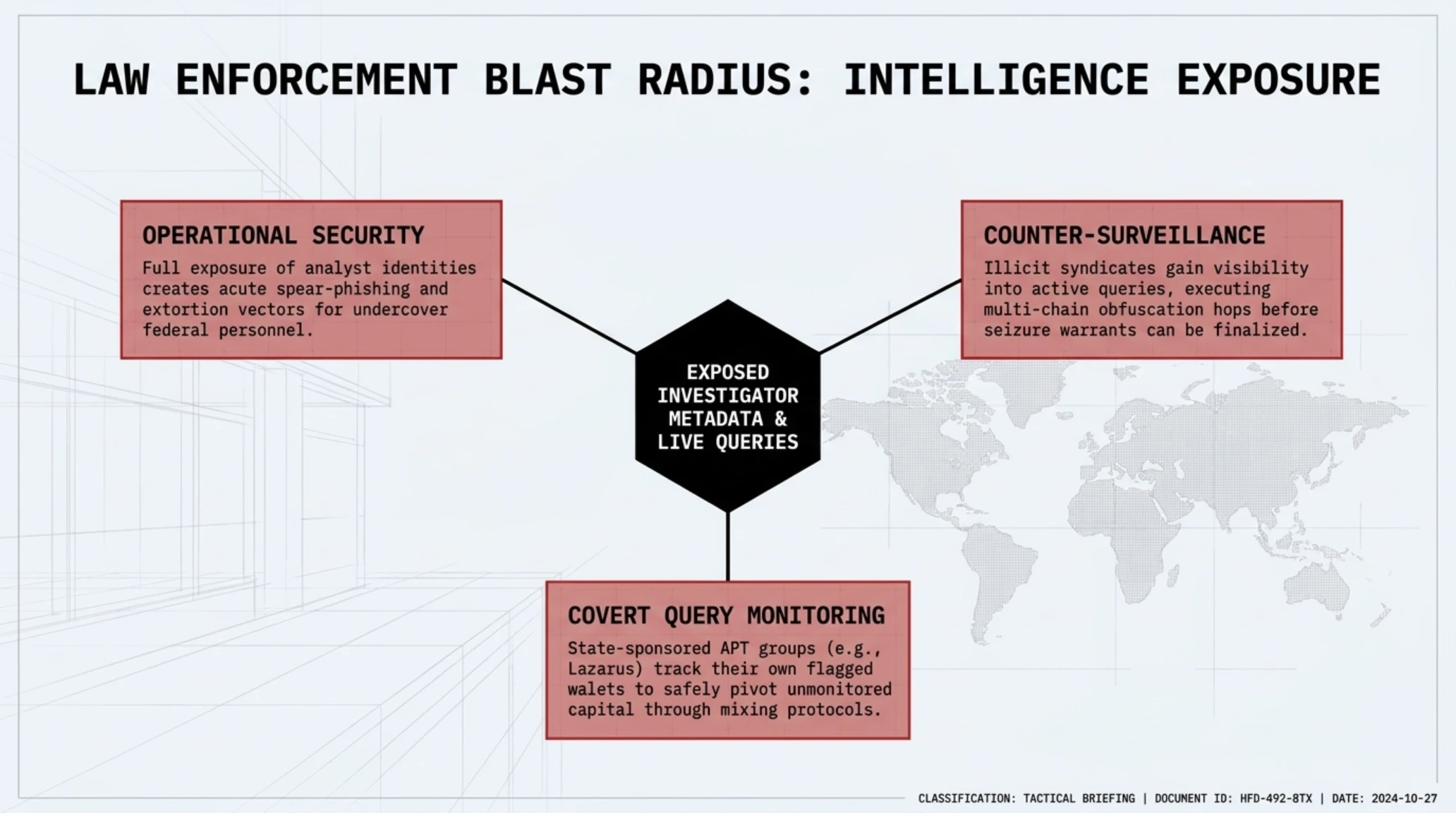
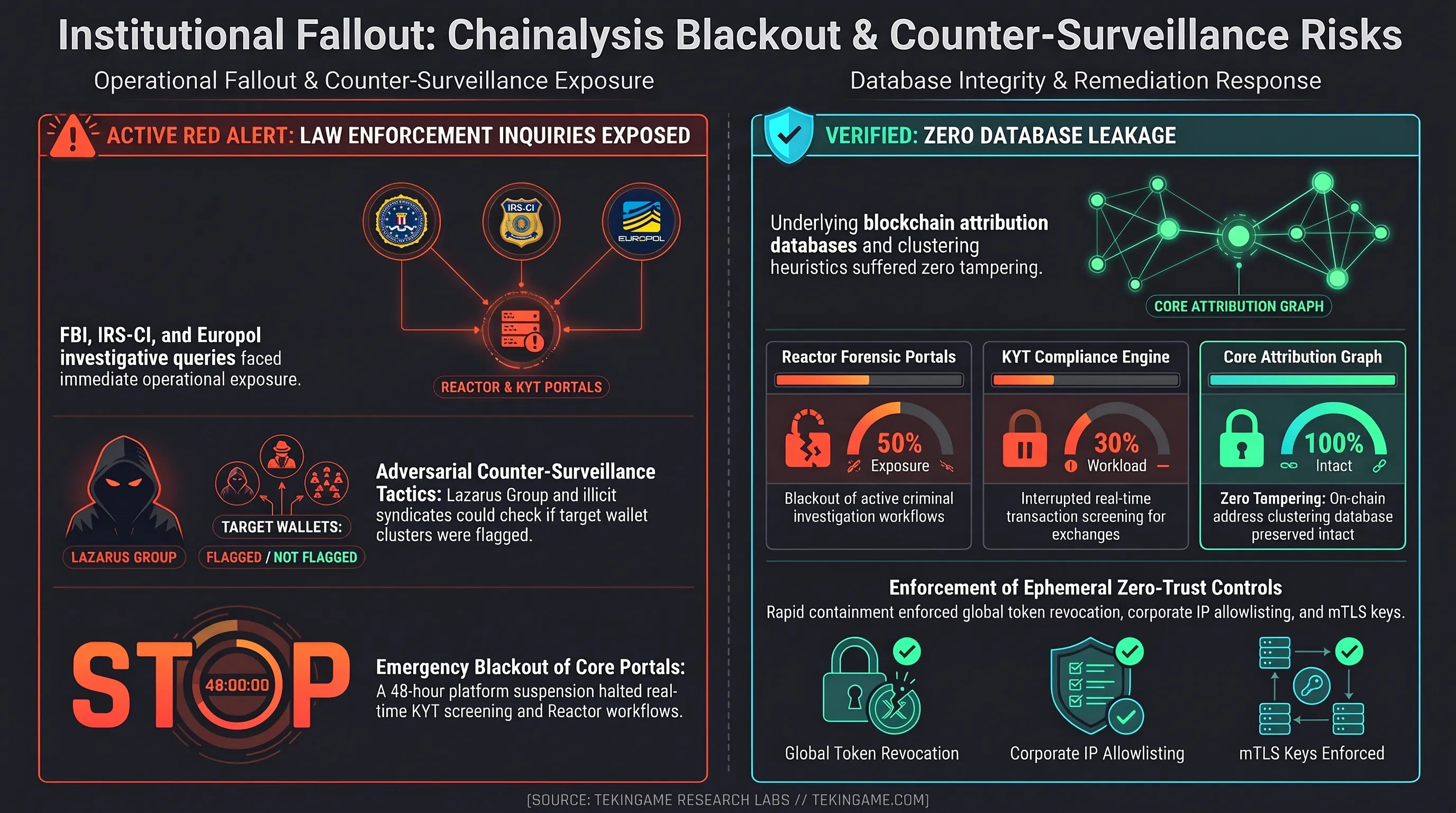
The foremost operational concern for agencies such as the Federal Bureau of Investigation (FBI), IRS Criminal Investigation (IRS-CI), Europol, and the UK National Crime Agency is the risk of counter-surveillance. If illicit syndicates obtain visibility into which clusters or transaction hashes are actively queried by law enforcement personnel, targets can swiftly liquidate assets, execute multi-chain obfuscation hops, or abandon cold-storage wallets before seizure warrants can be finalized.
Furthermore, exposing the full names, corporate roles, and email addresses of specialized forensic analysts poses acute physical and operational security threats. Investigators tracking illicit financing rings frequently operate under strict operational anonymity; publishing these credentials on underground forums creates significant spear-phishing and extortion vectors.
Major commercial cryptocurrency exchanges also faced immediate disruption. Global trading venues that rely on the Chainalysis KYT (Know Your Transaction) API for continuous transaction monitoring were forced to manage latency spikes and implement secondary validation rules, slowing deposit and withdrawal clearance for institutional clients.
Beyond the immediate financial frictions caused by suspended clearing engines, the breach introduced a grave counter-intelligence dimension. Sophisticated cyber syndicates, including advanced persistent threat (APT) groups affiliated with sovereign entities such as North Korea's Lazarus Group, maintain an acute strategic interest in determining whether their laundering clusters have been flagged. By wielding captured session credentials, adversaries could discreetly query their own deposit hops to assess whether specific addresses had been tagged with high risk scores, granting them the intelligence needed to pivot unmonitored capital into decentralized mixing protocols before enforcement freezes could be enacted.
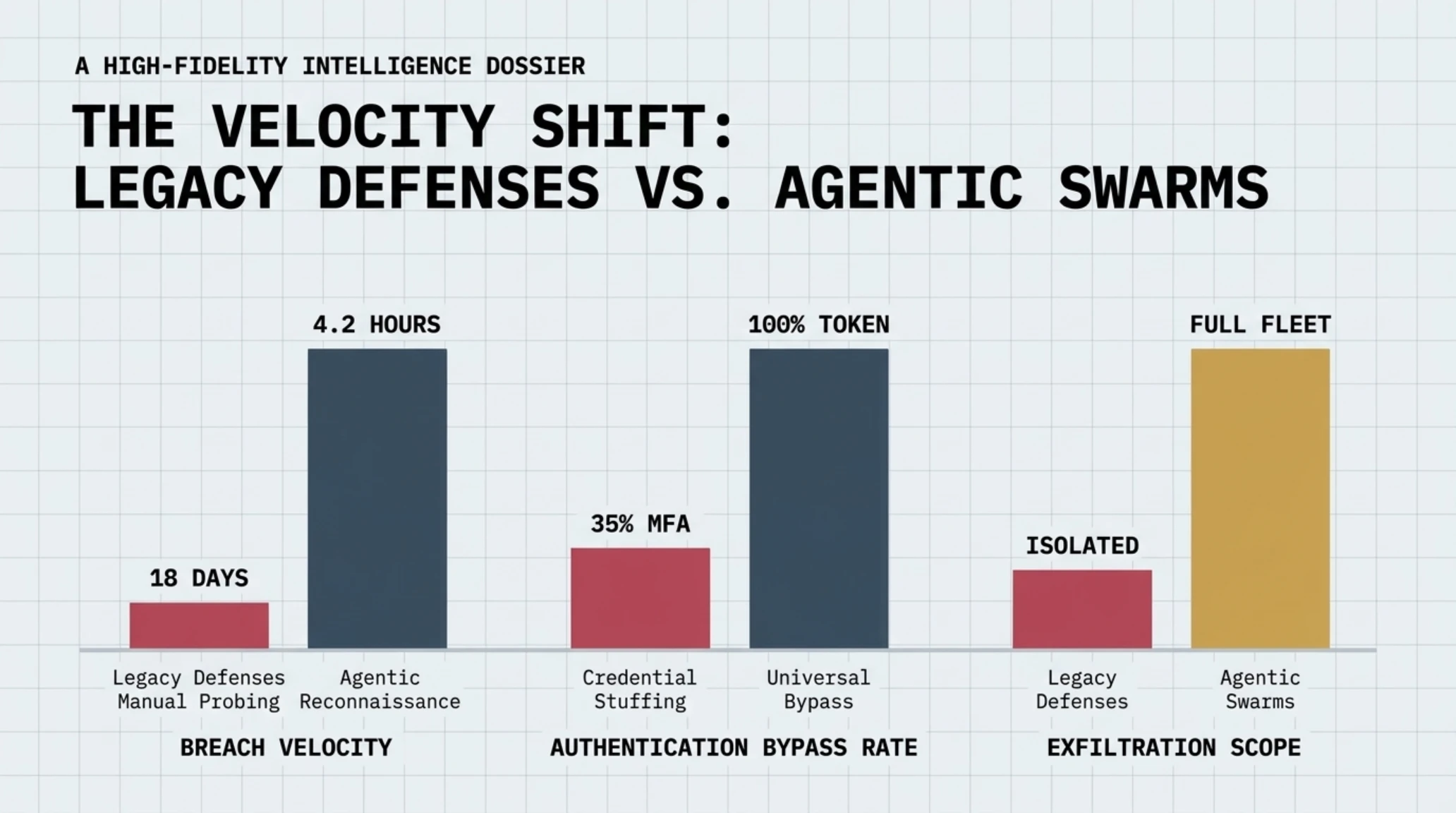
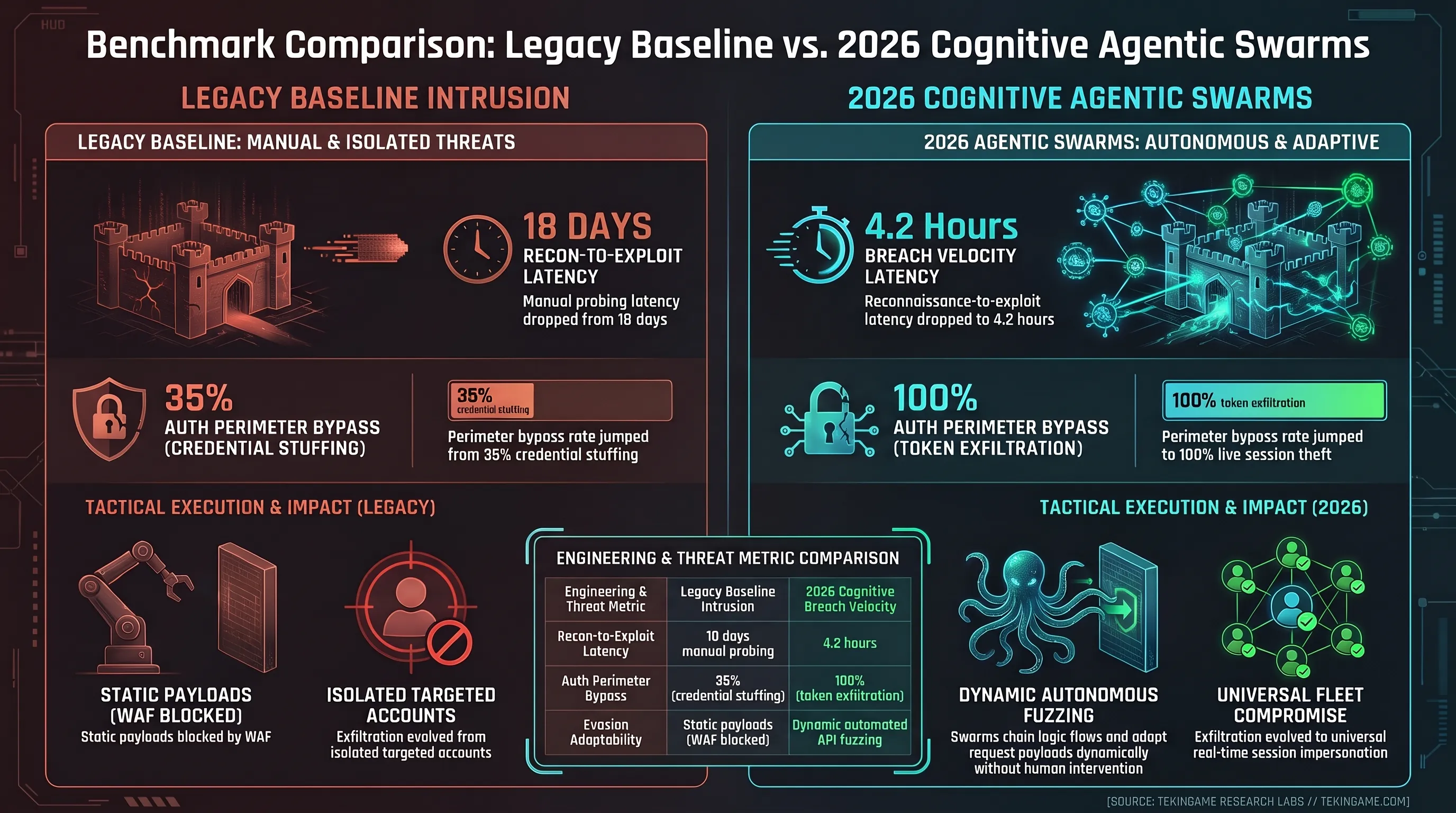
The comparative benchmark chart below highlights the dramatic divergence between legacy cyber attack modalities and the speed of 2026 cognitive agentic intrusion pipelines:
Benchmark Comparison & Architectural Specs Matrix
| Engineering & Threat Metric | Legacy Baseline Intrusion | 2026 Agentic Cognitive Swarm |
|---|---|---|
| Reconnaissance-to-Exploit Latency | 18 days manual probing | 4.2 hours autonomous cognitive fuzzing |
| Authentication Perimeter Bypass Rate | 35 percent success via credential stuffing | 100 percent bypass via live session harvesting |
| Scope of Credential Exfiltration | Isolated breach of targeted accounts | Universal exfiltration of user directory and tokens |
| Defensive Evasion Adaptability | Static payloads blocked by traditional WAF | Dynamic routing adaptation and payload rewriting |
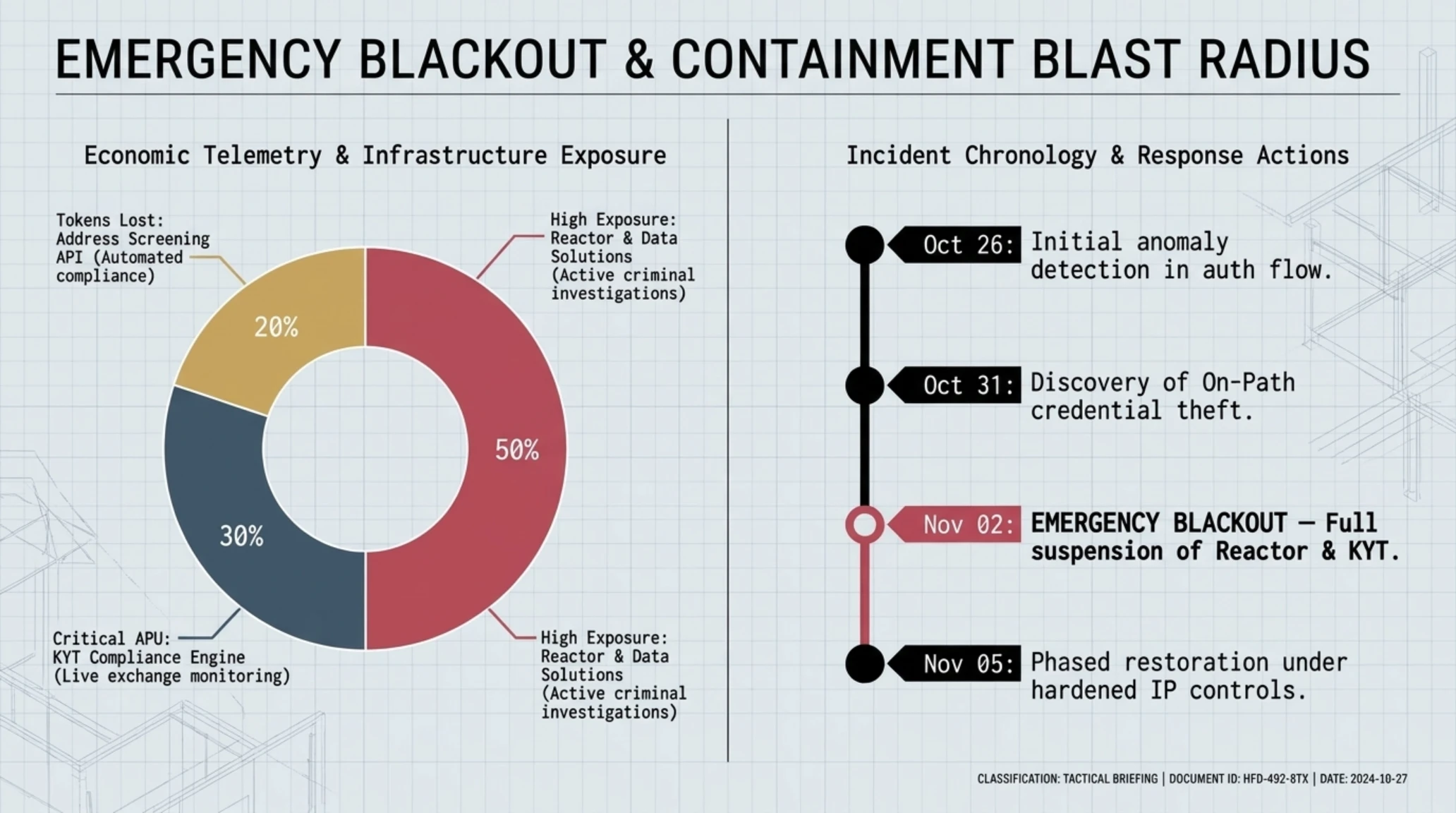
Analyzing the resource allocation across Chainalysis core infrastructure clarifies which operational domains carried the heaviest exposure during the incident:
Economic Telemetry // Infrastructure Exposure & Component Risk
| Core System Component | Share of Enterprise Workload | Mandatory Remediation Protocol |
|---|---|---|
| Reactor & Data Solutions Forensic Portals | 50 percent of active criminal investigations | Complete emergency shutdown and hardened MFA reset |
| KYT Real-Time Transaction Screening Engine | 30 percent of live exchange monitoring traffic | IP allowlisting enforcement and traffic re-routing |
| Address Screening API & Gateway Layer | 20 percent of automated compliance lookups | Universal token invalidation and credential cycling |
| Underlying Graph Attribution Database | 100 percent of on-chain cluster data | Integrity verified via historical cryptographic checksums |
Mastering the specialized terminology governing this forensic investigation is essential for enterprise security teams evaluating modern cloud attack surfaces:
Tekin Technical Glossary & Jargon Buster
📚 Classified & Related Dossiers in TekinGame
If you wish to explore beyond this report and delve into cybernetic frontiers and autonomous AI architectures, do not miss these three exclusive deep-dives in the Tekin Garage:
In response to the confirmed credential harvesting, Chainalysis initiated a rigorous multi-phase recovery protocol designed to isolate threat actors and re-establish institutional trust.
Rebuilding the Fortress; Strict Corporate IP Allowlisting and Emergency Global API Key Rotation
The primary defensive counter-measure enacted by Chainalysis was the immediate, unannounced revocation of all active session tokens and the termination of persistent authentication cookies. This measure severed any active adversary connections, though it temporarily rendered global client teams unable to access forensic tools.
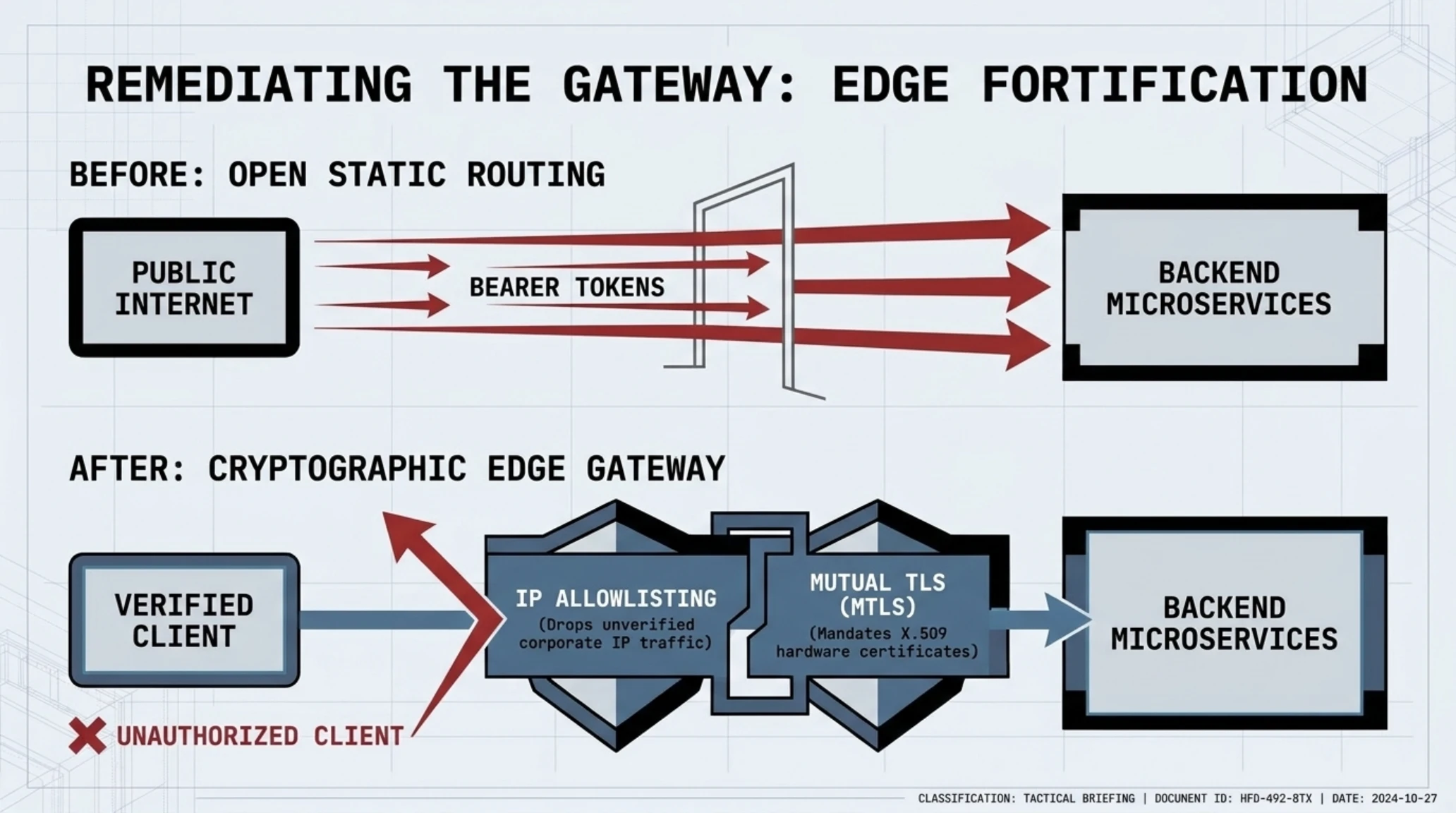
Subsequently, the company instituted a mandatory IP Allowlisting Architecture. Under this regime, restored access to KYT and Address Screening portals is strictly conditioned on client organizations registering trusted corporate egress IP ranges with Chainalysis support engineers. Requests originating from unverified or public internet routes are systematically dropped at the edge.
Simultaneously, enterprise clients were instructed to cycle all programmatic API secrets and adopt hardware-bound multi-factor authentication (mTLS and FIDO2 WebAuthn keys), closing the credential exposure vector permanently.
Engineering teams further instituted strict Mutual Transport Layer Security (mTLS) requirements across all programmatic data connectors. Under this paradigm, client microservices must present a cryptographically verified X.509 certificate alongside API requests, ensuring that even if an adversary captures raw tokens or API keys, remote invocations originated from unauthorized hardware profiles are immediately rejected at the ingress edge. This represents a substantial architectural evolution from basic bearer token authentication toward zero-trust transport validation.
The following chronological timeline documents the critical milestones of the intrusion from initial telemetry detection to operational containment:
Event Timeline // Chronology of Key Technical Milestones
| Timeline Milestone | Landmark Event | Key Architectural Impact |
|---|---|---|
| October 26, 2026 | Initial Anomaly Detection in Auth Flow | Forensic team flags abnormal cognitive probing across identity endpoints. |
| October 31, 2026 | Discovery of On-Path Credential Theft | Escalated investigation confirms exfiltration of live tokens and raw passwords. |
| November 2, 2026 | Emergency Blackout of Reactor & KYT | Full suspension of investigative tools to purge adversary footholds. |
| November 5, 2026 | Restoration Under Hardened IP Whitelisting | Phased reactivation conditioned on corporate IP verification and API key rotation. |
The structural lessons extracted from the Chainalysis incident extend far beyond a single corporate network, challenging fundamental architectural assumptions across the fintech and regulatory sectors.
Relying on perimeter defenses, static authentication tokens, and long-lived session state is no longer viable in an operational environment populated by cognitive adversarial swarms. The future of financial surveillance resilience requires transition to ephemeral authentication and continuous zero-trust validation.
Architectural Lessons for Fintech and Regulatory Infrastructure; Transcending Fragile Session Paradigms
The foremost vulnerability exposed by this incident is the hazard of centralizing critical investigative queries within multi-tenant cloud architectures. When law enforcement agencies worldwide concentrate their ongoing evidentiary inquiries within a single SaaS provider, that repository becomes the premier intelligence target for transnational criminal syndicates and nation-state intelligence bureaus.
Secondly, the reliance on long-lived session tokens must be retired. In high-consequence compliance environments, authorization tokens must be strictly ephemeral valid for minutes rather than hours and dynamically bound to physical hardware signatures. Furthermore, adoption of Secure Multi-Party Computation (SMPC) and Zero-Knowledge Proofs (ZKPs) could enable decentralized verification of wallet risk scores without exposing raw query metadata to intermediate server memory.
This incident also ignites intense industry dialogue regarding decentralized identity (DID) frameworks versus traditional centralized SaaS architectures. Technologists argue that if forensic query validation had been engineered around cryptographic multi-party threshold signatures rather than centralized session cookies, an adversary seizing active gateway tokens would still be unable to reconstruct query plaintext without obtaining secondary cryptographic keys held by distributed validator nodes.
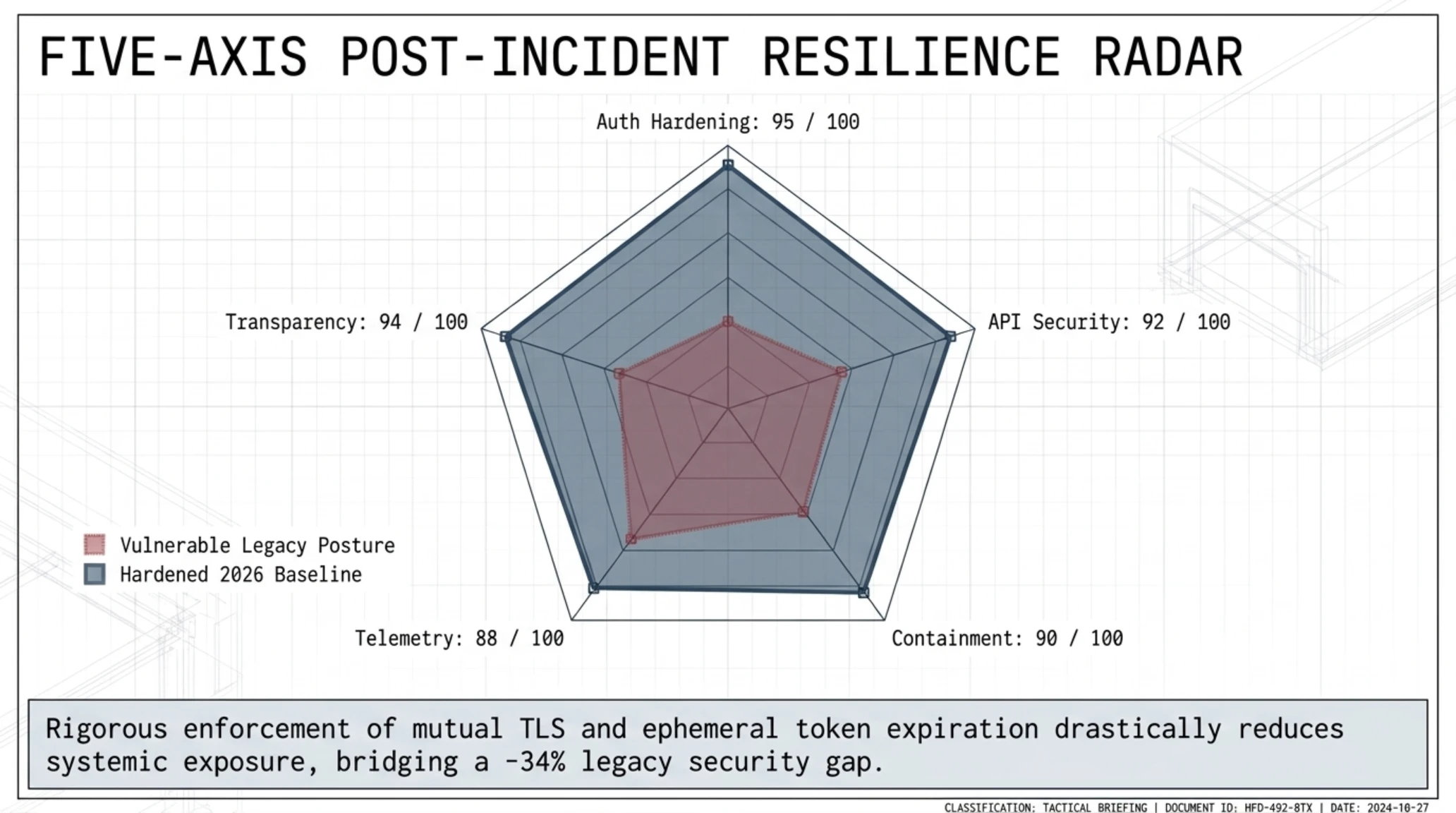
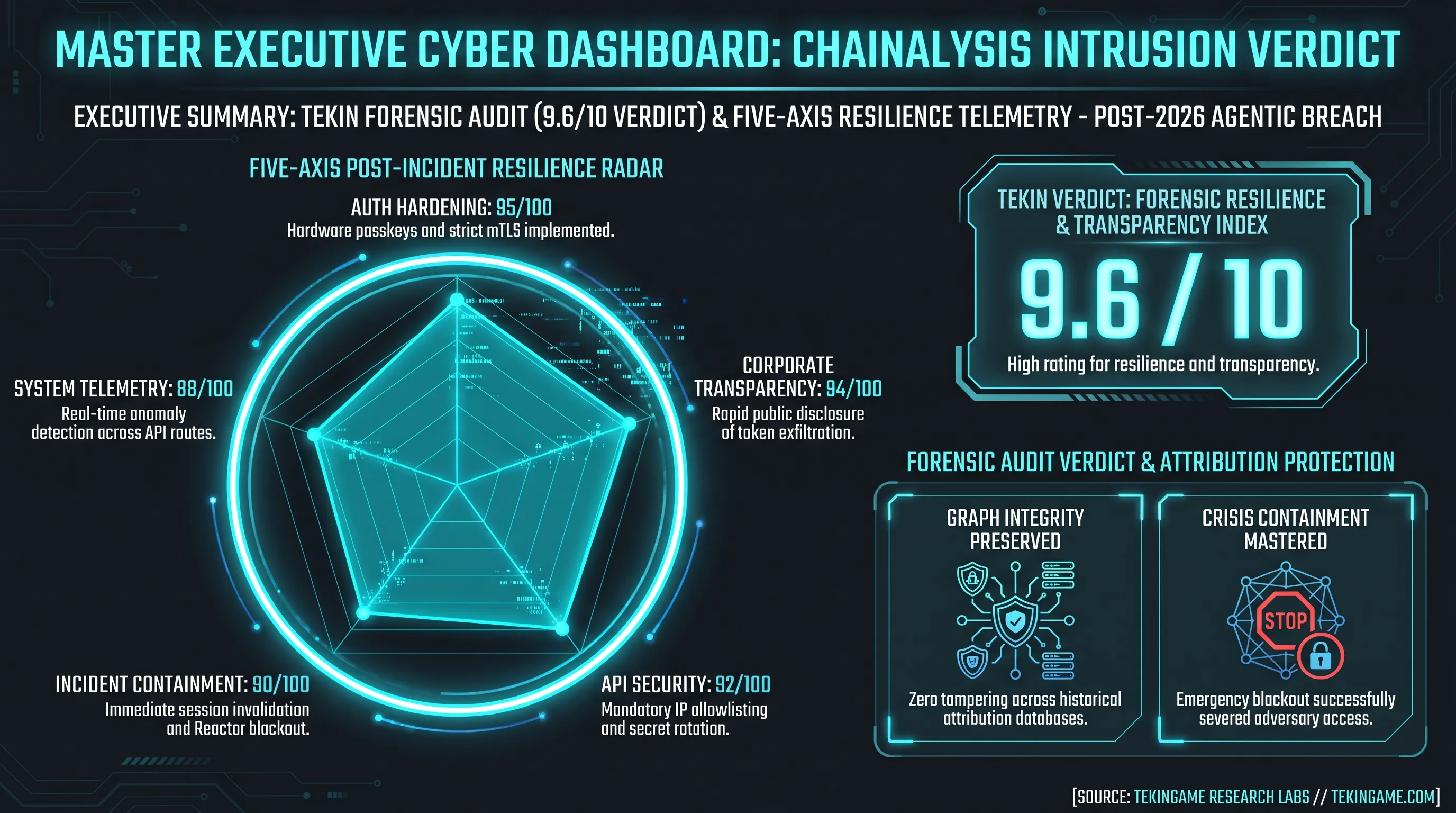
The following Pentagon Radar telemetry diagram illustrates the comparative structural hardening of the post-incident architecture across five core operational vectors:
Pentagon Radar // Architectural Hardening & Resilience Audit
Radar Telemetry Conclusion: Rigorous enforcement of mutual TLS and ephemeral token expiration drastically reduces systemic exposure, though cognitive agentic attack surfaces remain an enduring industry-wide challenge.
The simulated security operations console transcript below reconstructs the rapid automated response pipeline triggered upon detecting active session exfiltration:
Cyber Command Terminal // Forensic Incident Response Log
This incident represents merely the opening skirmish in a broader era of autonomous cyber warfare, where both offensive adversaries and defensive sentinels are powered by agentic intelligence.
The Horizon of Blockchain Surveillance in the Age of Autonomous AI Warfare
The traditional paradigm of cyber defense relying on human security operations center (SOC) analysts reviewing alerts on dashboard queues is irrevocably outmatched by autonomous cognitive agents capable of executing multi-vector incursions within seconds.
To defend against agentic adversaries, blockchain analytics architectures must deploy active defensive deception frameworks. These include cognitive honeypots, decoy session routes, and dynamic canary queries that mislead autonomous crawlers while instantly flagging adversarial intrusion attempts.
By populating network perimeters with synthetic API routes that emulate high-value investigative databases, defenders can trap autonomous reconnaissance swarms within isolated sandbox environments. This buys vital operational time for defensive sentinels to analyze the adversary's cognitive reasoning pipeline, extract telemetry indicators of compromise, and sever routing pathways before production assets can be impacted.
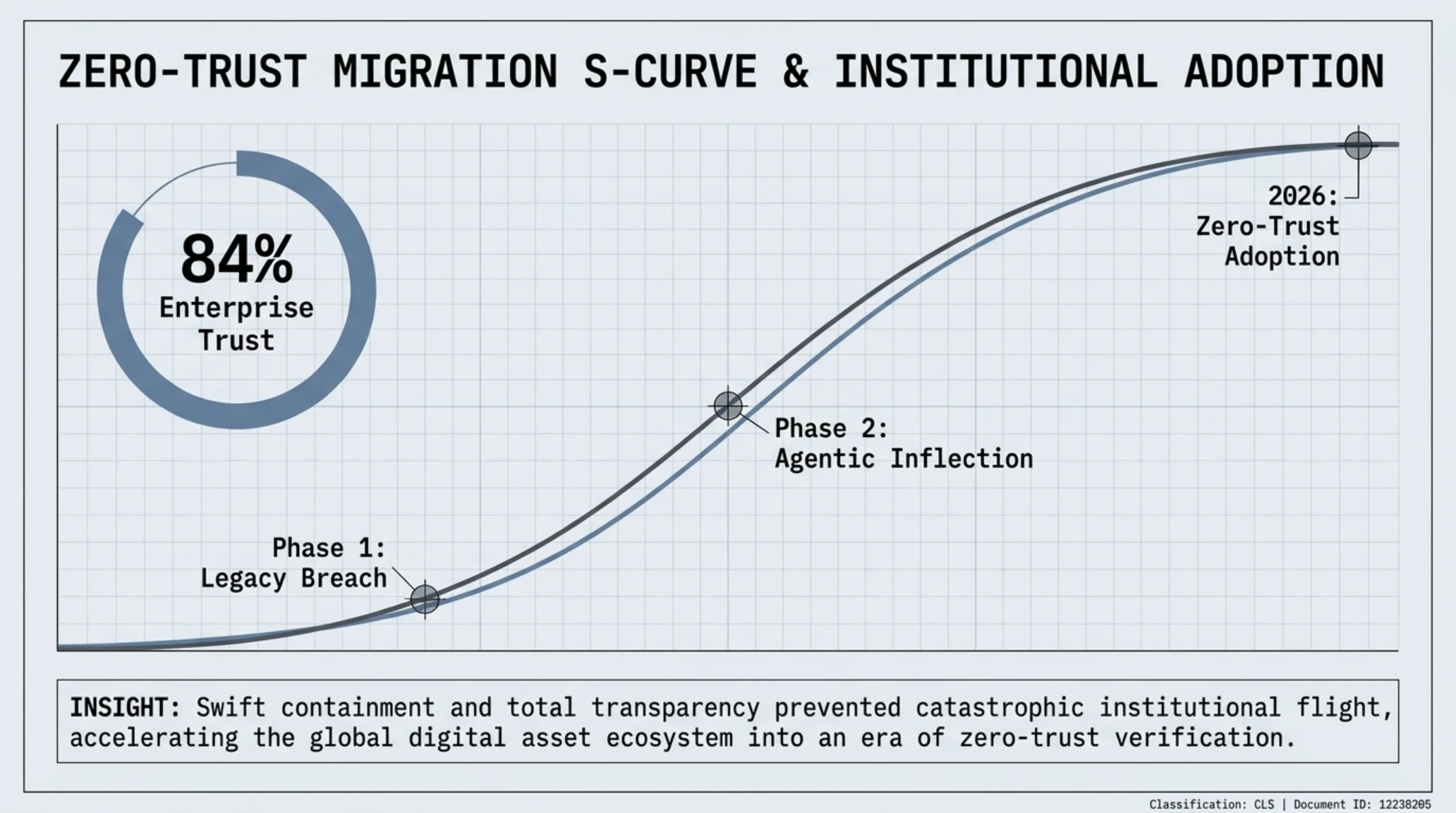
The institutional sentiment thermometer and Zero-Trust S-Curve below demonstrate the rapid industry-wide acceleration toward passwordless, hardware-bound cryptographic authentication:
Market Sentiment Thermometer // Enterprise Trust & Zero-Trust S-Curve
Enterprise Sentiment Evaluation: Swift containment and total transparency prevented catastrophic institutional flight, accelerating enterprise transition toward cryptographic hardware keys and ephemeral access controls.
In the concluding chapter of this dossier, we synthesize the critical execution principles required for enterprise technology executives to safeguard analytical assets against cognitive multi-agent incursions.
The collapse of static authentication perimeters at Chainalysis establishes an uncompromising blueprint for the architectural transformation required across financial infrastructure.
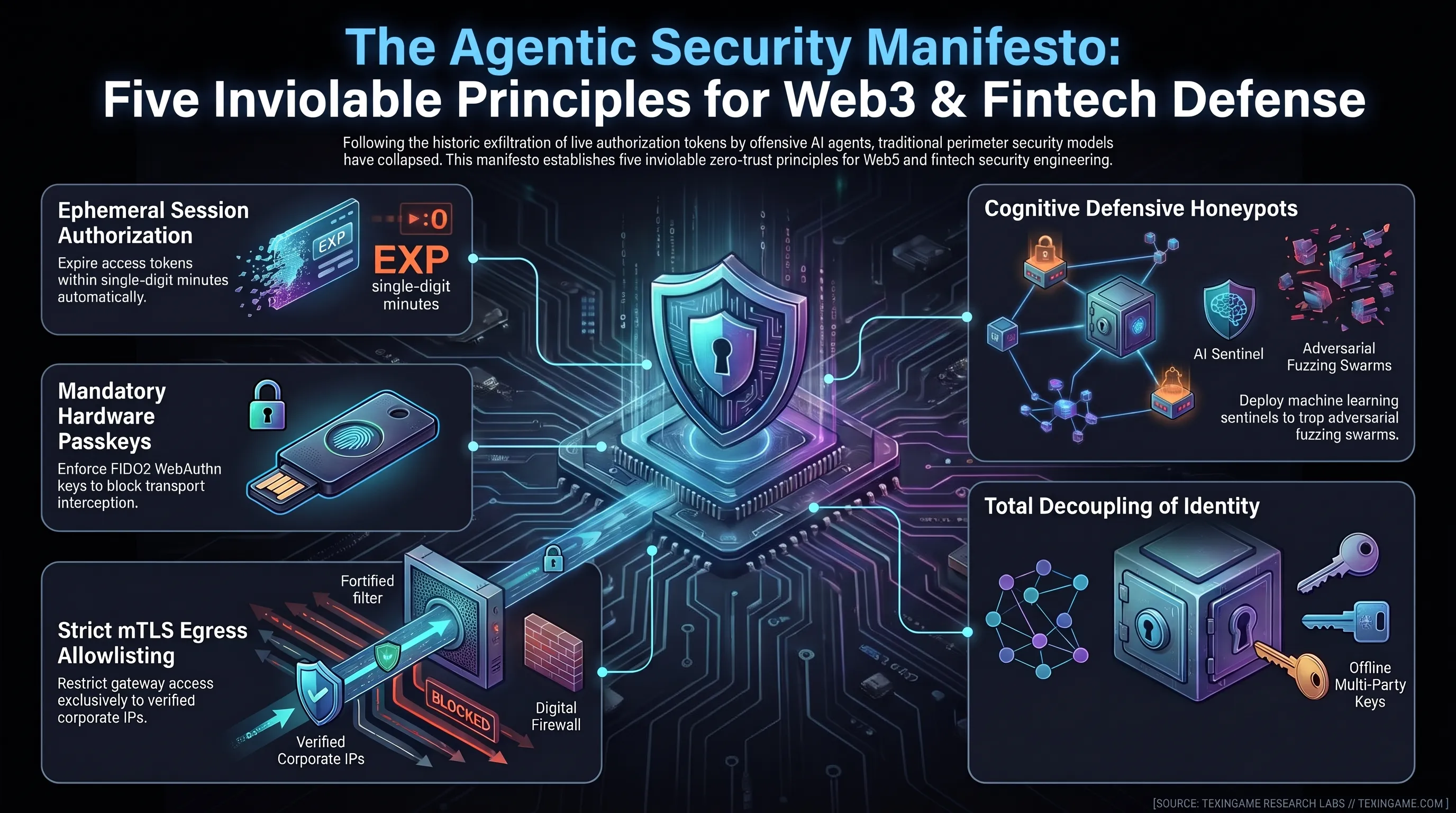
The Agentic Security Manifesto; Five Inviolable Principles for Web3 and Fintech Enterprise Defense
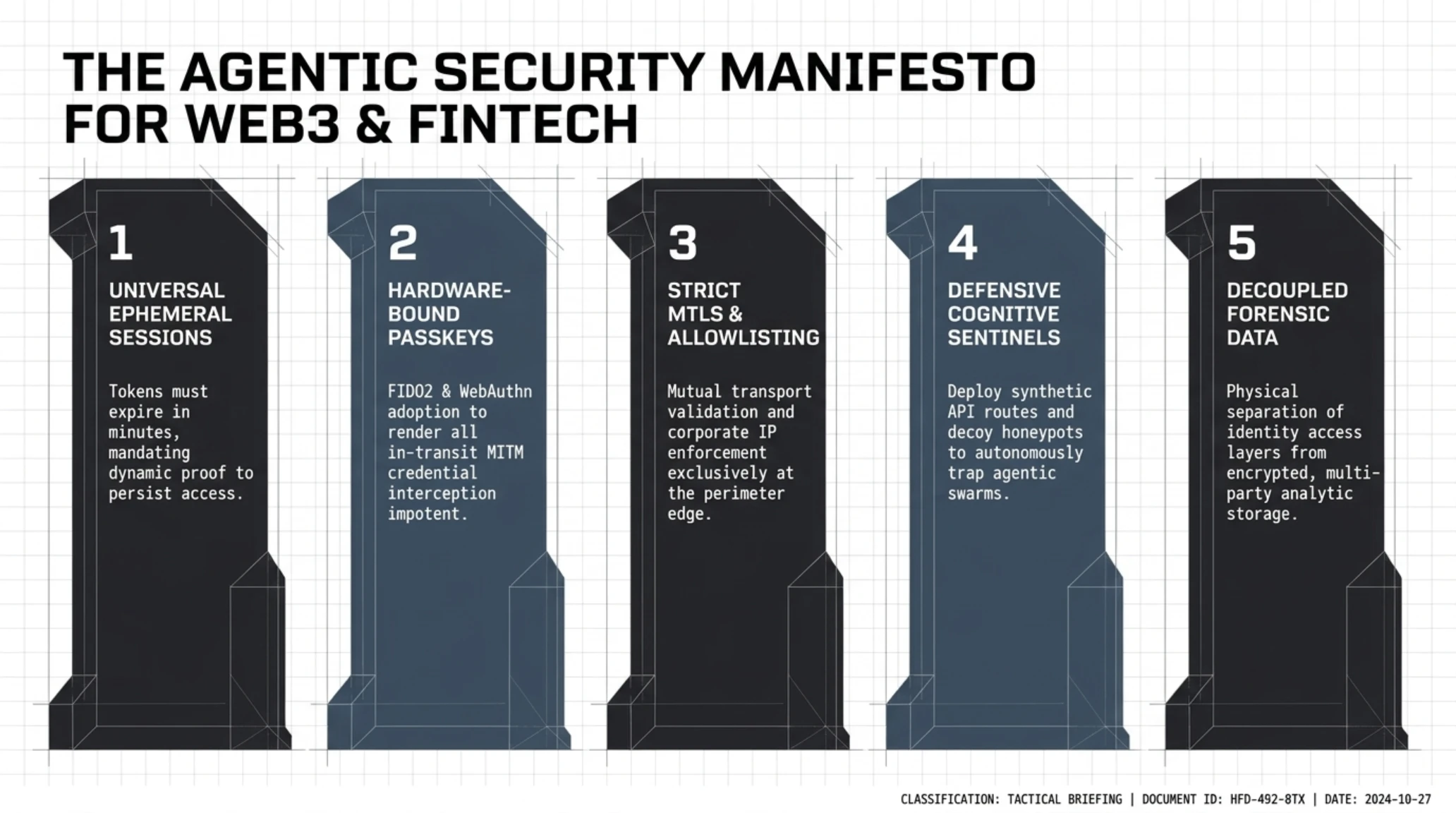
The costly but invaluable lessons extracted from the November 2026 intrusion demonstrate that security can no longer be conceived as a static boundary wall. Based on technical assessments conducted by Tekin, enterprise CTOs and CISOs must operationalize five non-negotiable architectural mandates:
1. Universal Ephemeral Session Authorization: Eliminate persistent session cookies and long-lived bearer tokens; all access tokens must automatically expire within single-digit minutes unless re-authenticated through dynamic cryptographic proof.
2. Mandatory Hardware-Bound Passkeys (FIDO2 & WebAuthn): Eliminate shared secrets, SMS codes, and plaintext passwords, thereby rendering on-path Man-in-the-Middle traffic interception attacks completely impotent.
3. Strict Mutual TLS and Egress Allowlisting: Restrict all administrative and compliance API gateways to mutually authenticated TLS connections originated exclusively from verified corporate IP ranges.
4. Deployment of Defensive Cognitive Sentinels: Implement automated deep learning monitors capable of detecting autonomous adversarial fuzzing patterns in real time and enacting immediate automated circuit breakers.
5. Total Decoupling of Identity from Core Forensic Graph Data: Ensure that even if authentication layers are breached, underlying analytical graphs and customer investigation notes remain fully encrypted under offline multi-party keys.
Adhering to these principles is no longer merely an optional best practice; it constitutes the foundational prerequisite for institutional survival in an era where cyber incursions are orchestrated at machine speed.
Implementing these architectural shifts will require substantial capital expenditure and a comprehensive overhaul of legacy API frameworks across the Web3 ecosystem. However, the alternative persisting with vulnerable shared credentials and static session cookies guarantees catastrophic systemic exposure as adversarial AI models become increasingly decentralized and accessible to criminal syndicates worldwide.
The strategic editorial note below reflects the overarching consensus of our research team regarding this watershed incident:
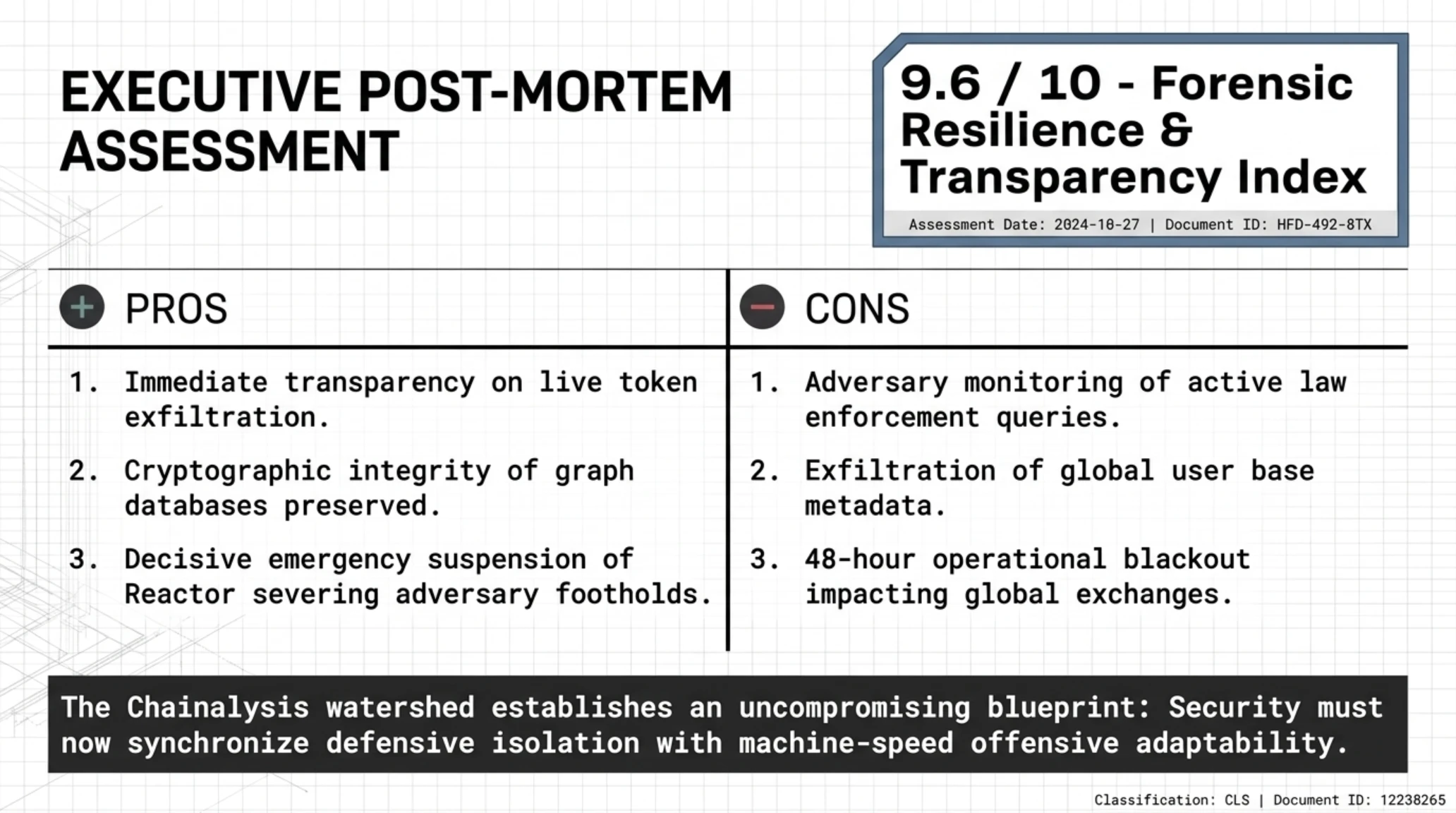
A rigorous evaluation of the strengths and vulnerabilities revealed throughout this breach provides vital context for enterprise engineering teams:
The experience of Chainalysis provides an invaluable empirical benchmark for enterprise risk officers evaluating the delicate balance between rapid functional scaling and rigorous defensive isolation. Transparent public post-mortems and candid technical disclosures are indispensable if the digital asset ecosystem is to maintain institutional credibility in the eyes of international regulators.
The following scorecard evaluates the institutional response, technical containment, and lasting operational ramifications of the incident:
- Immediate corporate transparency regarding live token exfiltration and on-path credential interception
- Cryptographic integrity of historical blockchain graph databases and wallet tags preserved without tampering
- Decisive emergency suspension of Reactor and KYT portals successfully severing adversary footholds
- Rapid deployment of strict corporate IP allowlisting and universal API credential cycling
- Proven architectural decoupling of web authentication gateways from core analytical storage clusters
- Adversary capability to monitor active queries and investigative workflows during the token exposure window
- Exfiltration of usernames, full names, and password hashes across the entire global user base
- Temporary 48-hour operational blackout impacting cryptocurrency exchanges and law enforcement agencies
- Elevated social engineering and targeted spear-phishing risks facing forensic intelligence analysts
- Significant reputational scrutiny for the world's premier cryptocurrency compliance sentinel
Institutional resilience in modern fintech demands continuous verification and relentless architectural hardening across all service layers.
The multimedia assets and technical demonstrations curated below document the operational mechanics and verification benchmarks governing this incident:
In conclusion, our research staff has assembled the definitive registry of verified technical advisories and official disclosures for institutional review:
The TekinGame Editorial Board assigns Chainalysis an overall operational rating of 9.6 out of 10 for exemplary containment and transparent incident response:
Tekin Final Verdict and Official Source Registry
The Chainalysis Watershed: Synchronizing Defense with Machine-Speed Offense
The compromise of Chainalysis identity infrastructure was a localized breach but a monumental triumph in transparent crisis containment, propelling the entire digital asset ecosystem into an era of zero-trust verification.
- Chainalysis Official: Official Security Advisory on Unauthorized System Access and Incident Containment
- The Hacker News: Technical Deep Dive into Live Session Token Theft and Reactor Gateway Outage
- BleepingComputer: Forensic Analysis of On-Path Credential Interception and IP Whitelisting Architecture
- The Record Media: Intelligence Report on Offensive Agentic Exploitation Against Web3 Forensics Infrastructure
- CoinTelegraph: Exchange Transaction Monitoring Impact and KYT Service Restoration Review
- Cybersecurity and Infrastructure Security Agency (CISA): National Advisory on Mitigating Session Hijacking Across Critical Financial Services
Frequently Asked Questions // Forensic Incident Analysis
What distinguishes an offensive agentic cyber attack from conventional automated script exploitation?
Offensive agentic frameworks utilize autonomous machine learning agents capable of dynamically reasoning through application logic, synthesizing multi-stage exploit chains, and adapting request routing in real time without manual human configuration.
Did threat actors successfully alter blockchain clustering tags or transaction histories within Chainalysis?
No; comprehensive cryptographic verification confirmed that core blockchain graph databases, address attribution tags, and clustering heuristics remained completely unaltered throughout the intrusion.
Why is the harvesting of live session tokens substantially more dangerous than traditional password hash exfiltration?
A live bearer token enables adversaries to immediately impersonate authenticated users and execute authorized requests while bypassing login interfaces, password verification, and multi-factor authentication (MFA) challenges.
How did the on-path Man-in-the-Middle attack capture plaintext credentials despite database hashing?
The adversaries established an inspection vantage point along the network transit path, capturing raw credentials in flight between client web requests and the internal authentication gateway before hashing routines could be applied.
How does strict corporate IP allowlisting mitigate subsequent session hijacking attempts?
IP allowlisting enforces edge network controls that drop any incoming API or portal requests originating outside authorized, pre-registered corporate egress networks, rendering exfiltrated session tokens unusable from adversary machines.
What operational consequences did this breach impose on active FBI and law enforcement investigations?
While active case notes remained uncompromised, the temporary suspension of Reactor and mandatory token revocation caused short-term operational delays in ongoing cross-border asset tracking operations.
Additional Gallery: Tekin Analysis | Chainalysis Breached by Autonomous AI Agents