Takin Analysis | Apple iPhone Duo Crackgate Teardown: How iFixit CT Scans Exposed the Fatal Hinge Defect
The Silicon Valley Earthquake; When the Longest Hardware Gestation Meets Physics
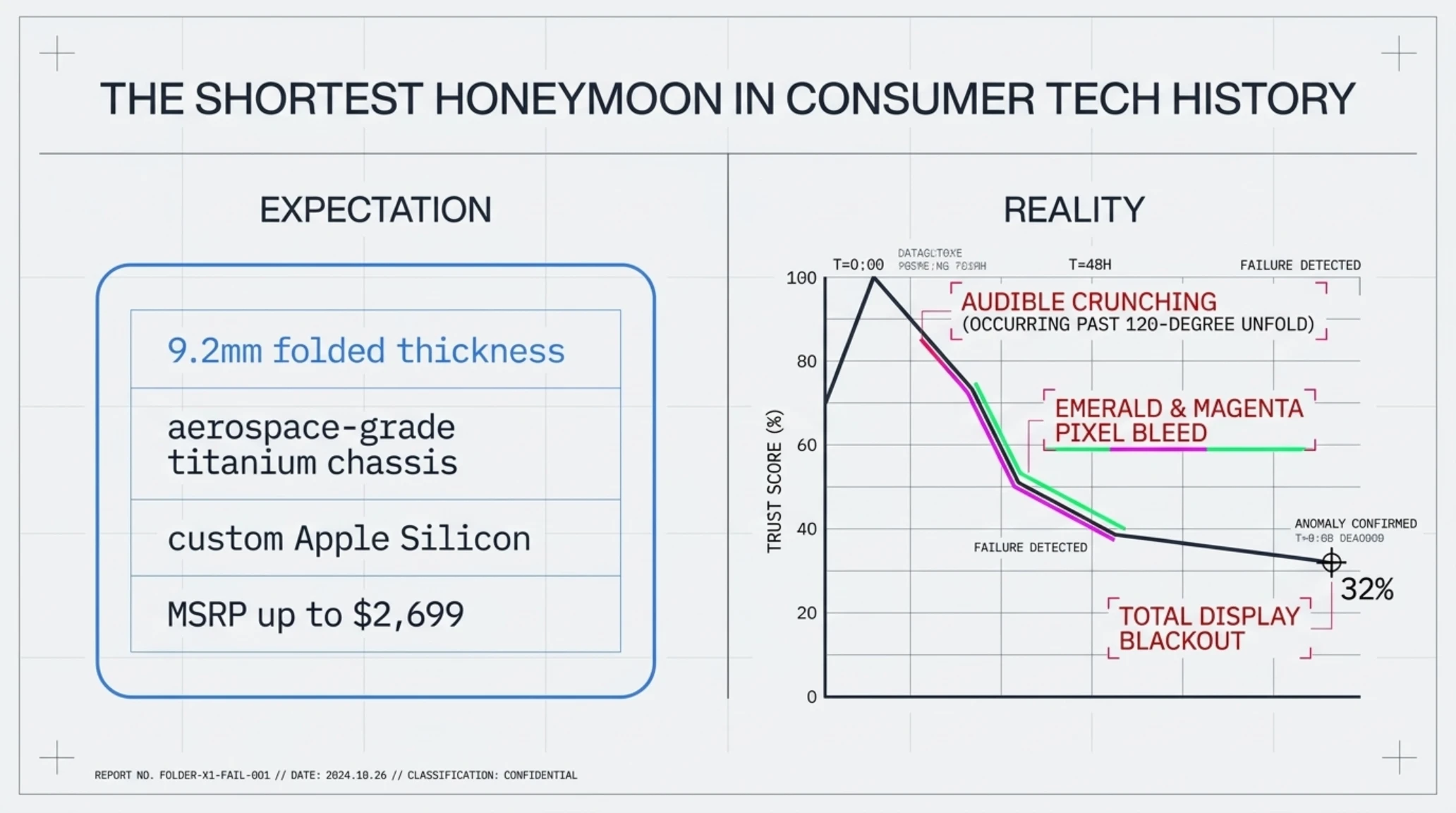
The consumer electronics industry witnessed its most volatile engineering crisis of the decade as late October 2026 came to a close. After nearly eight years of clandestine research, dozens of multi-link hinge patent filings, and countless promises of delivering a crease-free folding paradigm, Apple officially launched the iPhone Duo. Positioned as the apex of luxury mobile computing with an eye-watering $2,199 to $2,699 price tag, the device was engineered to redefine ultra-premium mobile experiences with aerospace-grade titanium chassis, custom Apple Silicon, and seamless iPadOS adaptive windowing.
Strategic Evaluation and Core Vectors at a Glance
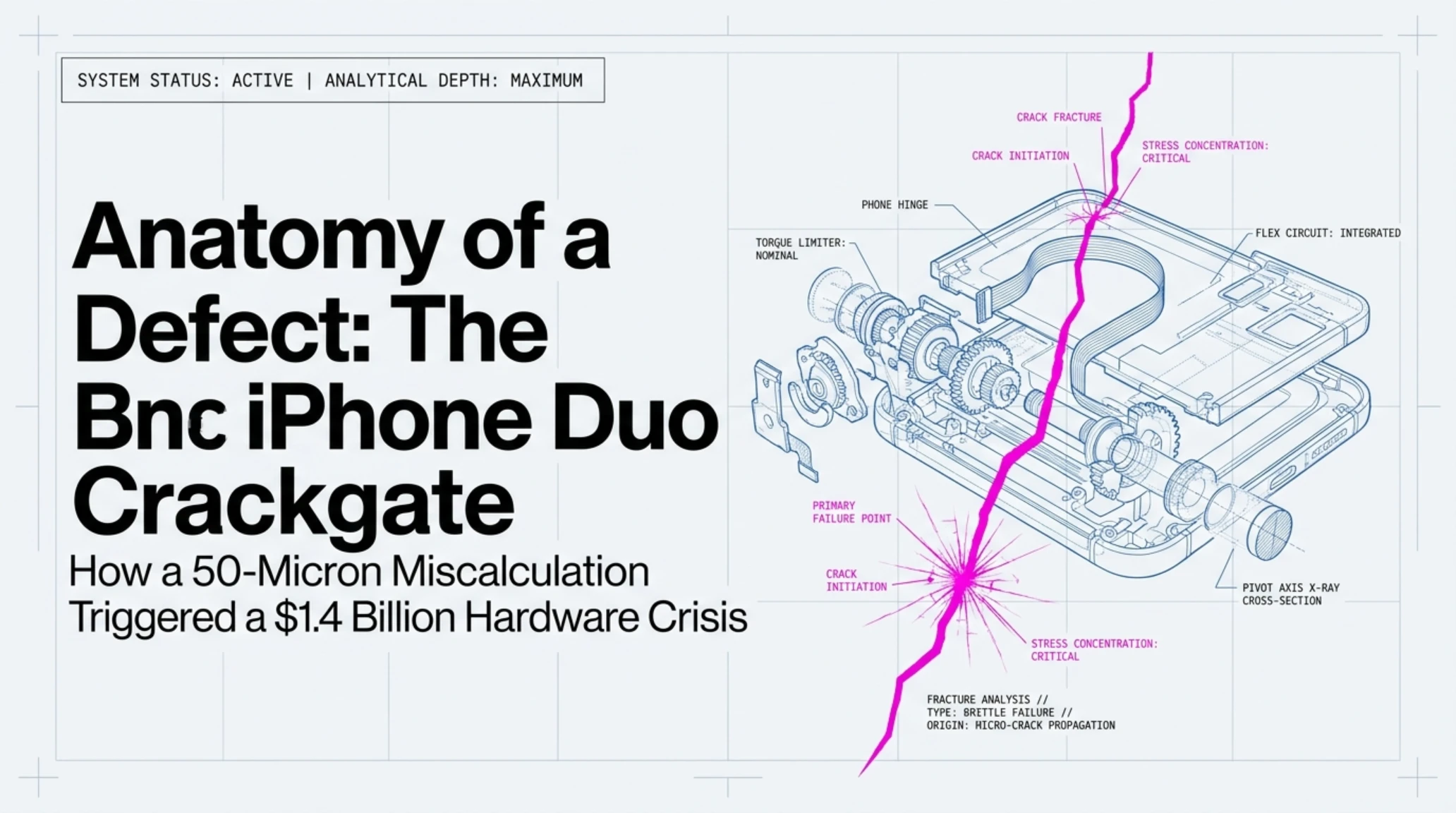
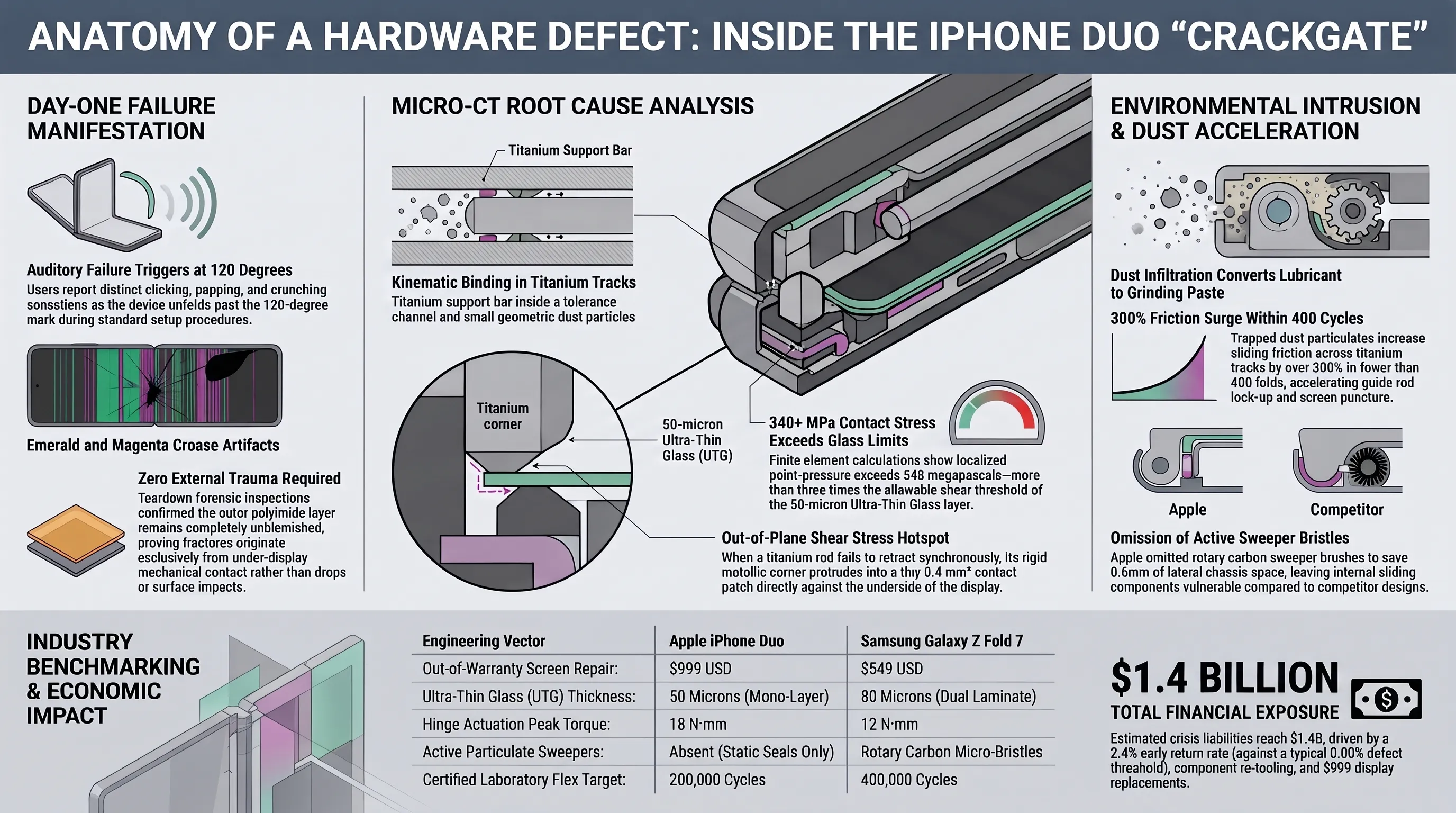
Yet Cupertino’s coronation in the foldable arena dissolved into an operational nightmare in less than 48 hours. Social media networks, notably X and Reddit, became overwhelmed by photographs, micro-videos, and furious testimonies documenting an epidemic quickly branded as Crackgate. Users unboxing their long-awaited devices reported hearing disturbing clicking, popping, and crunching sensations as the phone unfolded past the 120-degree mark. In seconds, these auditory warnings were followed by permanent vertical bars of blinding emerald and magenta dead pixels, expanding ink-blot patches, and jagged fractures directly along the central hinge axis.
Unlike traditional accidental damage scenarios, these catastrophic failures occurred during routine, gentle setup procedures in climate-controlled living rooms. Units unboxed mere hours earlier many still downloading iCloud backup archives suffered complete display blackouts without being dropped, flexed under pressure, or subjected to environmental stress. The uniformity of the failure across disparate batches indicated that Crackgate was not a simple statistical anomaly, but a fundamental mechanical flaw baked into the kinematics of Apple’s maiden foldable architecture.
The severity of the unfolding crisis caught market analysts off guard. Customers who had waited years for Apple to perfect the foldable form factor discovered that the physical realities of material fatigue, thermal expansion mismatches between titanium and aluminum, and dynamic frictional resistance were not easily swept away by marketing narratives. Across consumer technology forums, threads containing high-resolution photographs of ruptured displays amassed millions of impressions within hours.
Why This Engineering Shock Disrupts the Market
Crackgate represents far more than an isolated manufacturing blemish; it strikes at the core of Apple’s premium hardware reputation, risking multi-billion-dollar warranty liabilities and triggering immediate comparisons to historical hardware crises.
The financial ramifications began echoing across global trading desks. Institutional investors who viewed the iPhone Duo as the flagship catalyst for fiscal year 2027 revenue expansion suddenly confronted estimates of staggering warranty reserves, potential class-action litigation, and an emergency supply chain overhaul. Industry insiders observed that Apple's hard-earned brand equity in precision industrial design was being tested as never before.
The broader implications for Apple's product roadmap cannot be understated. By entering the foldable market late, Apple aimed to deliver an absolute masterclass that would instantly make competitors look antiquated. Instead, the sudden collapse of its display integrity demonstrated that aggressive industrial design ambitions must always yield to empirical stress engineering.
Frontline Reports; From Genius Bar Standoffs to Wall Street Anxiety
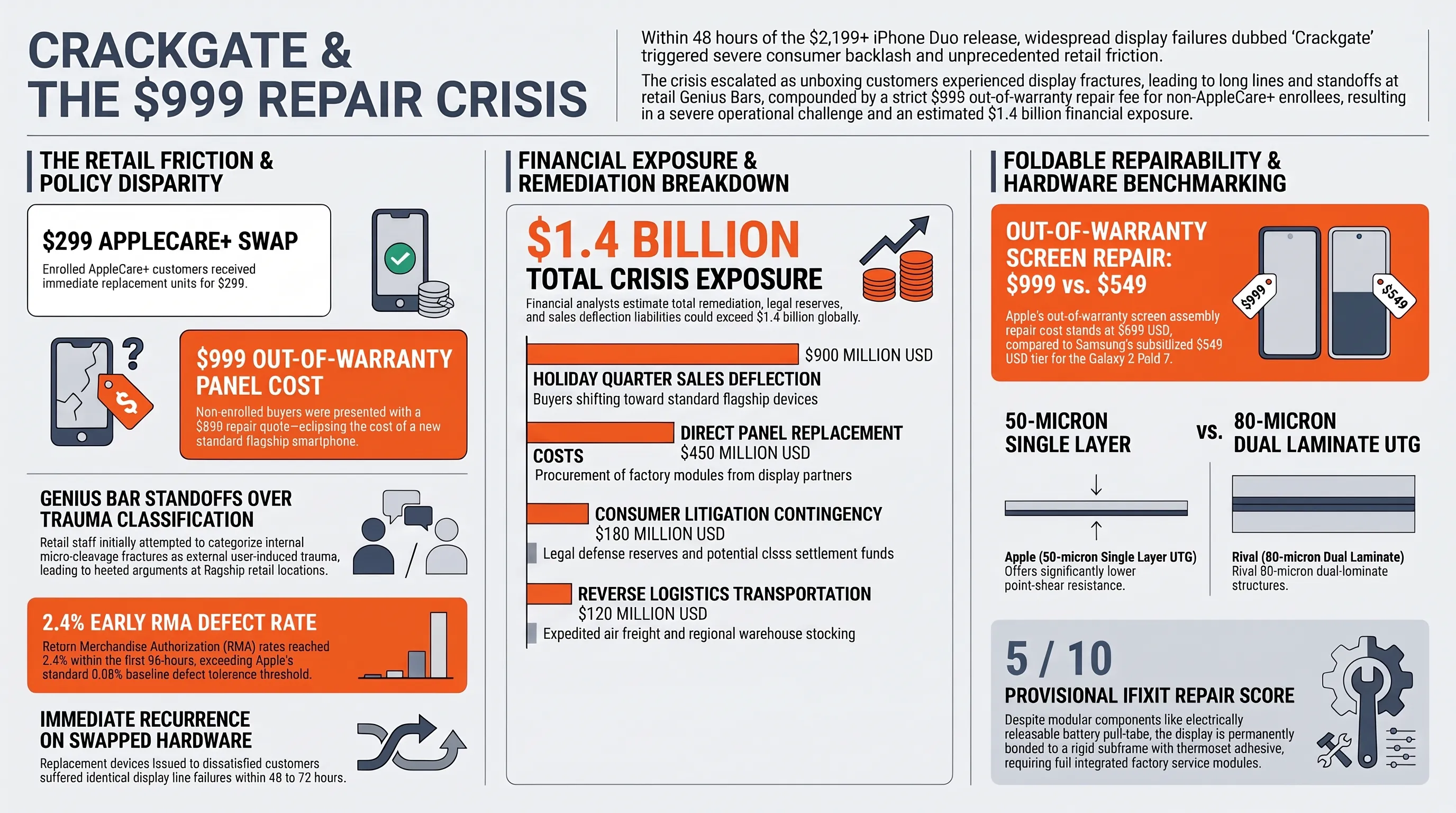
The human toll of the Crackgate outbreak surfaced immediately across Apple Stores from Regent Street in London to Fifth Avenue in Manhattan. Early purchasers who had camped out overnight found themselves standing in return lines before the weekend concluded. One verified purchaser on the r/apple forum shared macro-photographs of an internal fracture appearing after just three folding motions, noting that retail staff initially attempted to categorize the fracture as external accidental trauma, prompting heated arguments at the Genius Bar.
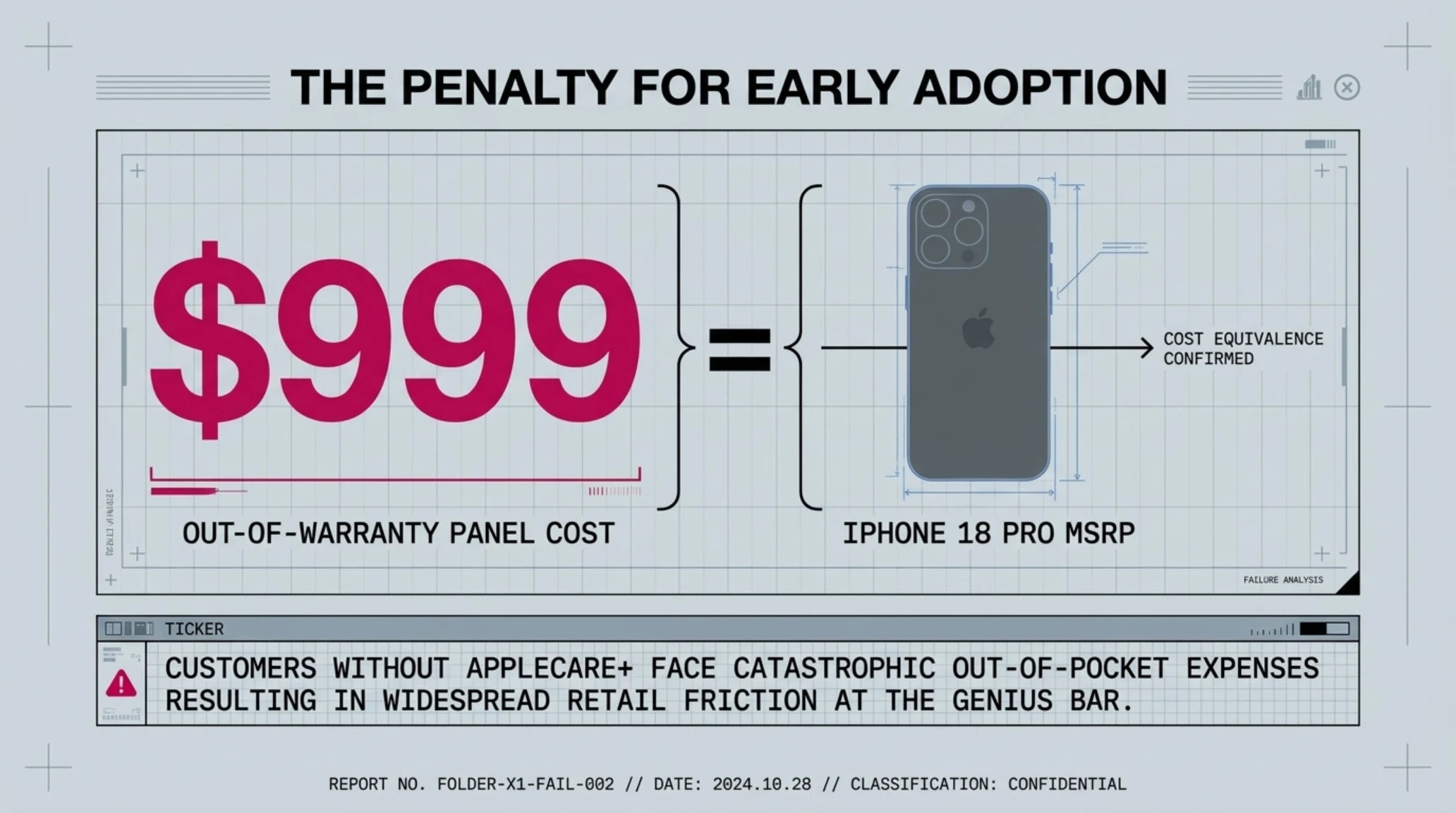
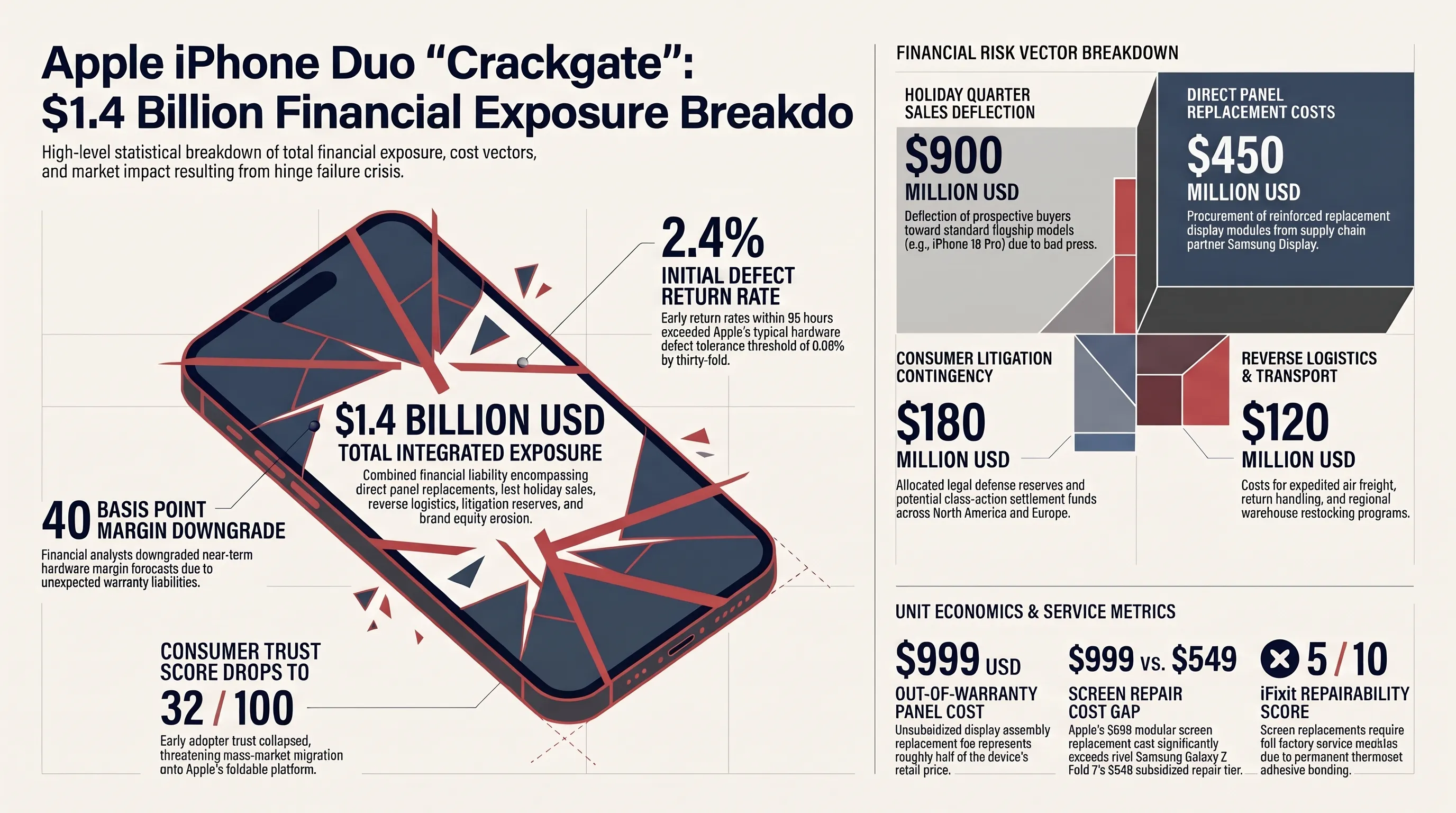
The friction stemmed from Apple’s standardized retail triage policies. While customers enrolled in the optional $299 AppleCare+ program received immediate swaps, non-enrolled buyers were presented with replacement quotes totaling $999 a figure that represents roughly half the MSRP of the entire device and eclipses the cost of a brand-new iPhone 18 Pro. The disparity sparked public outcry, drawing scrutiny from consumer advocacy groups across North America and the European Union.
Financial analysts at Morgan Stanley and Goldman Sachs promptly issued investor advisories, downgrading Apple’s near-term hardware margin forecasts by 40 basis points. The timing could hardly have been worse, arriving just as Apple sought to demonstrate to institutional investors that its premium hardware ecosystem could comfortably absorb multi-billion-dollar R&D investments in artificial intelligence and next-generation form factors. Historical parallels to the 2014 iPhone 6 Plus Bendgate and the infamous 2019 Samsung Galaxy Fold review unit collapse were drawn immediately across Bloomberg and The Wall Street Journal.
Yet unlike Samsung’s 2019 ordeal which occurred predominantly among review samples before mass retail distribution Apple entered Crackgate with hundreds of thousands of retail units already fulfilled globally. Halting logistics or issuing an engineering recall at this scale represents a multi-hundred-million-dollar undertaking with severe operational friction.
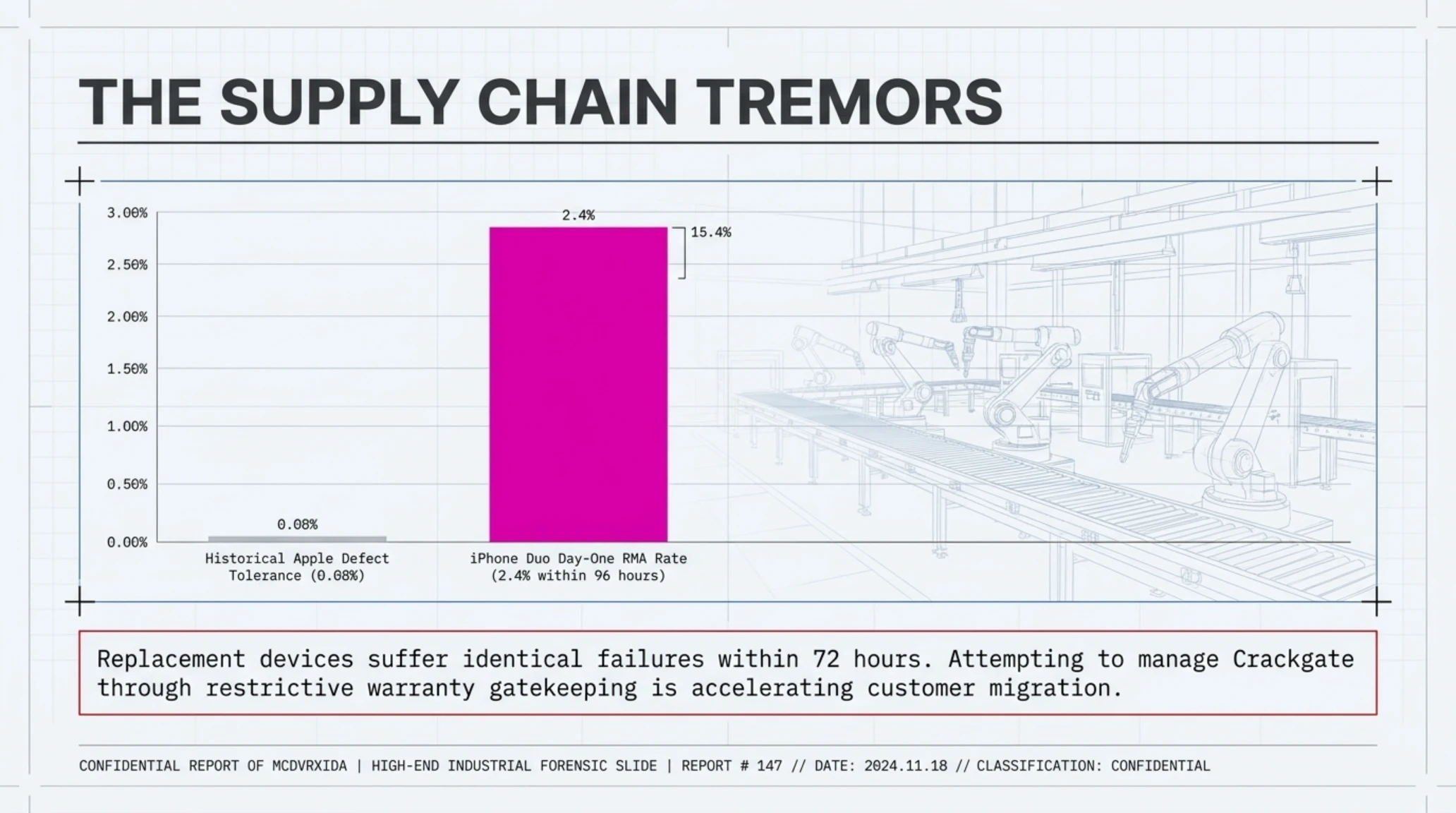
Technicians on the ground reported that replacement devices handed out to dissatisfied customers suffered identical failures within 72 hours, demonstrating that swapping hardware offered no permanent sanctuary. With social media sentiment dropping precipitously, independent mechanical diagnostic labs were called upon to settle the debate through rigorous scientific evaluation.
Inside the iFixit Teardown Lab; Industrial CT Scans Expose the Kinetic Vulnerability
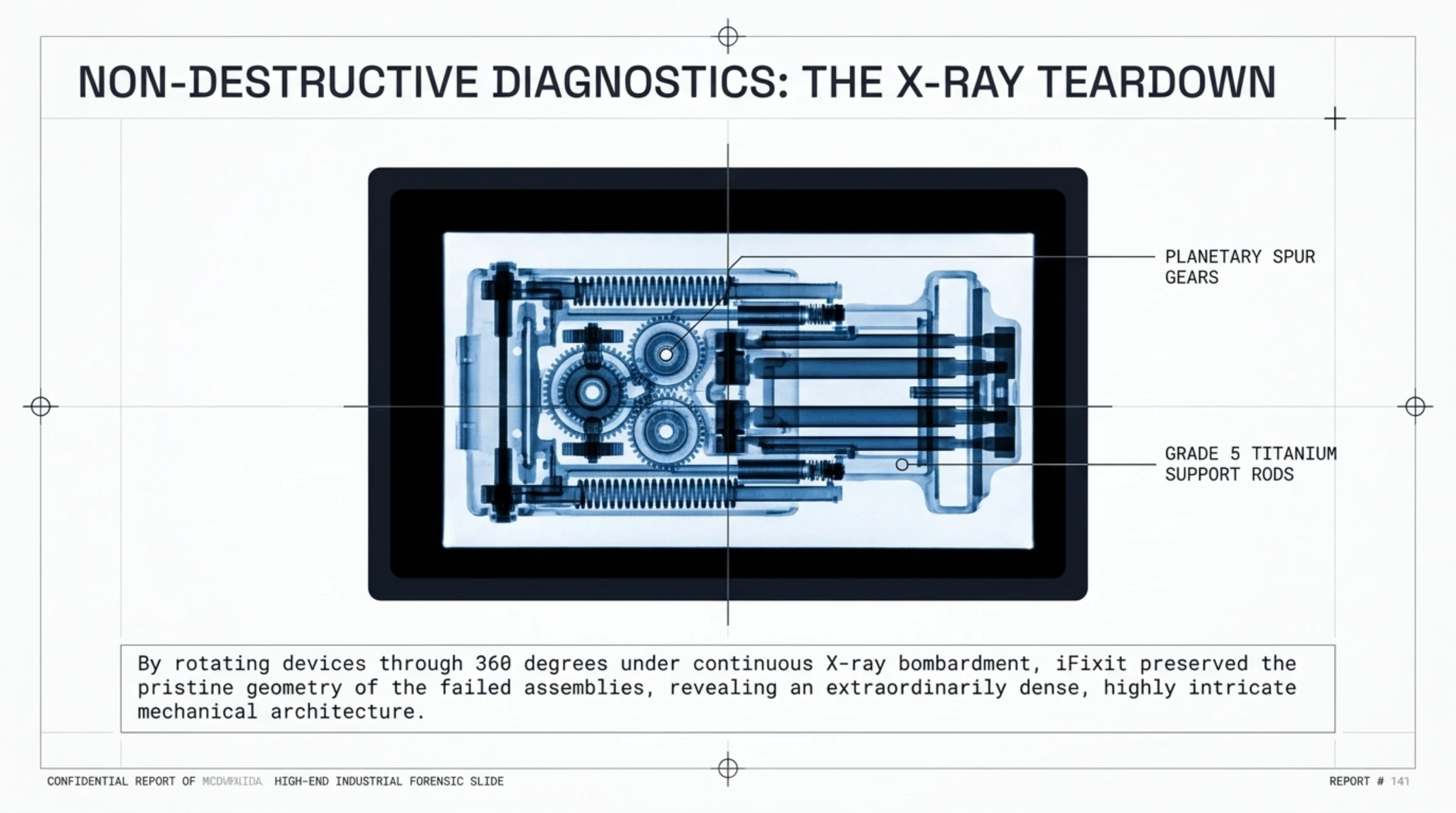
To bypass the destructive nature of traditional manual disassembly and preserve the pristine geometry of the failed assemblies, the engineering diagnostics team at iFixit directed by lead teardown technician Shahram Mokhtari subjected both factory-sealed and fractured iPhone Duo units to high-resolution industrial micro-computed tomography (CT scanning). By rotating the devices through 360 degrees under continuous X-ray bombardment, the team constructed sub-micron 3D volumetric models of the internal hinge assembly during dynamic opening arcs.
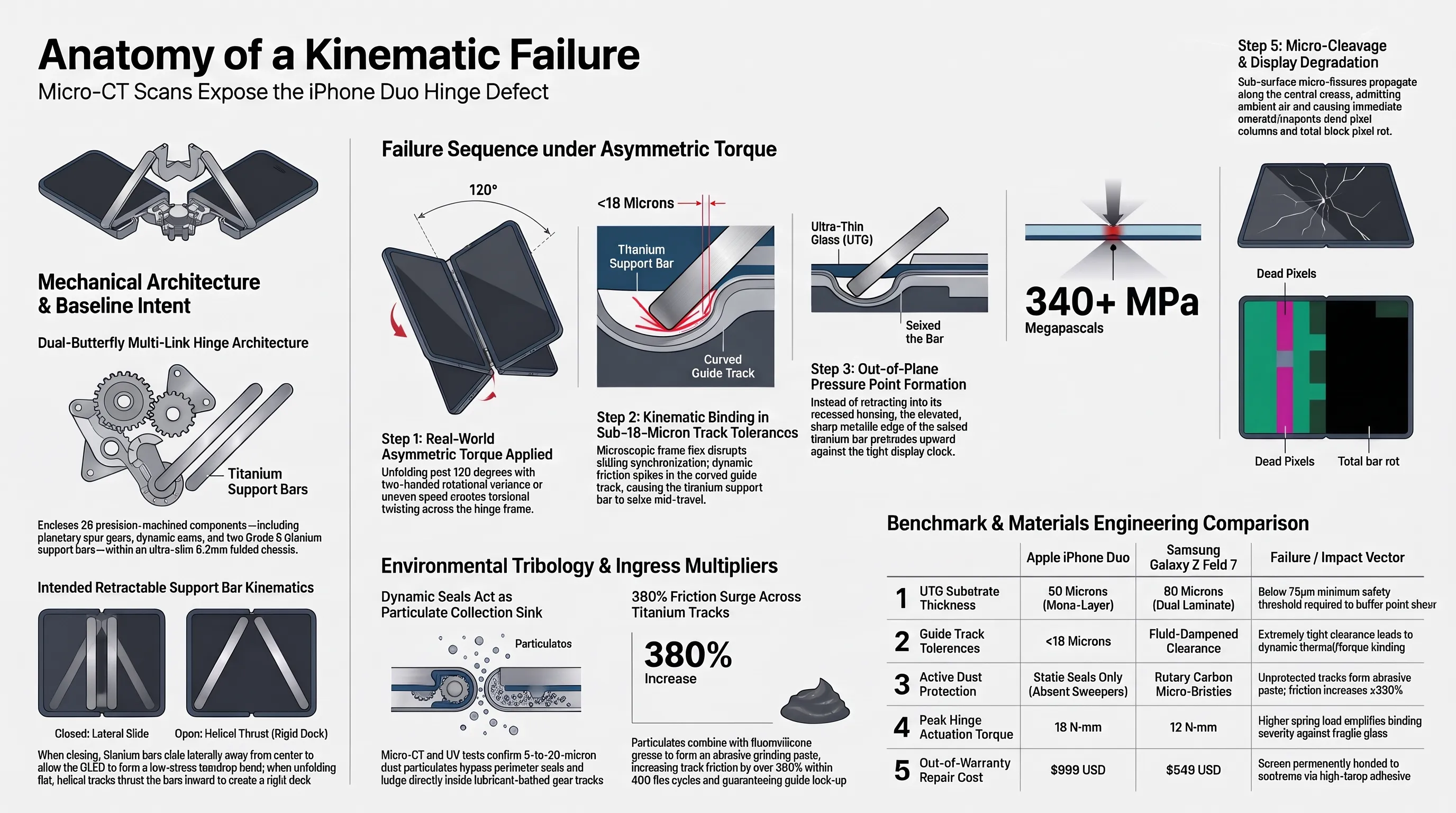
The volumetric reconstructions revealed an extraordinarily dense, highly intricate mechanical architecture that represents one of the most sophisticated kinematic designs ever packed into a consumer handheld. Driven by Apple’s uncompromising mandate to achieve an ultra-slim 9.2mm profile in folded configuration with zero screen gap, the Cupertino design team engineered a dual-butterfly multi-link hinge consisting of 28 precision-machined micro-components, including planetary spur gears, synchronization cams, and two retractable center support bars fashioned from Grade 5 titanium.
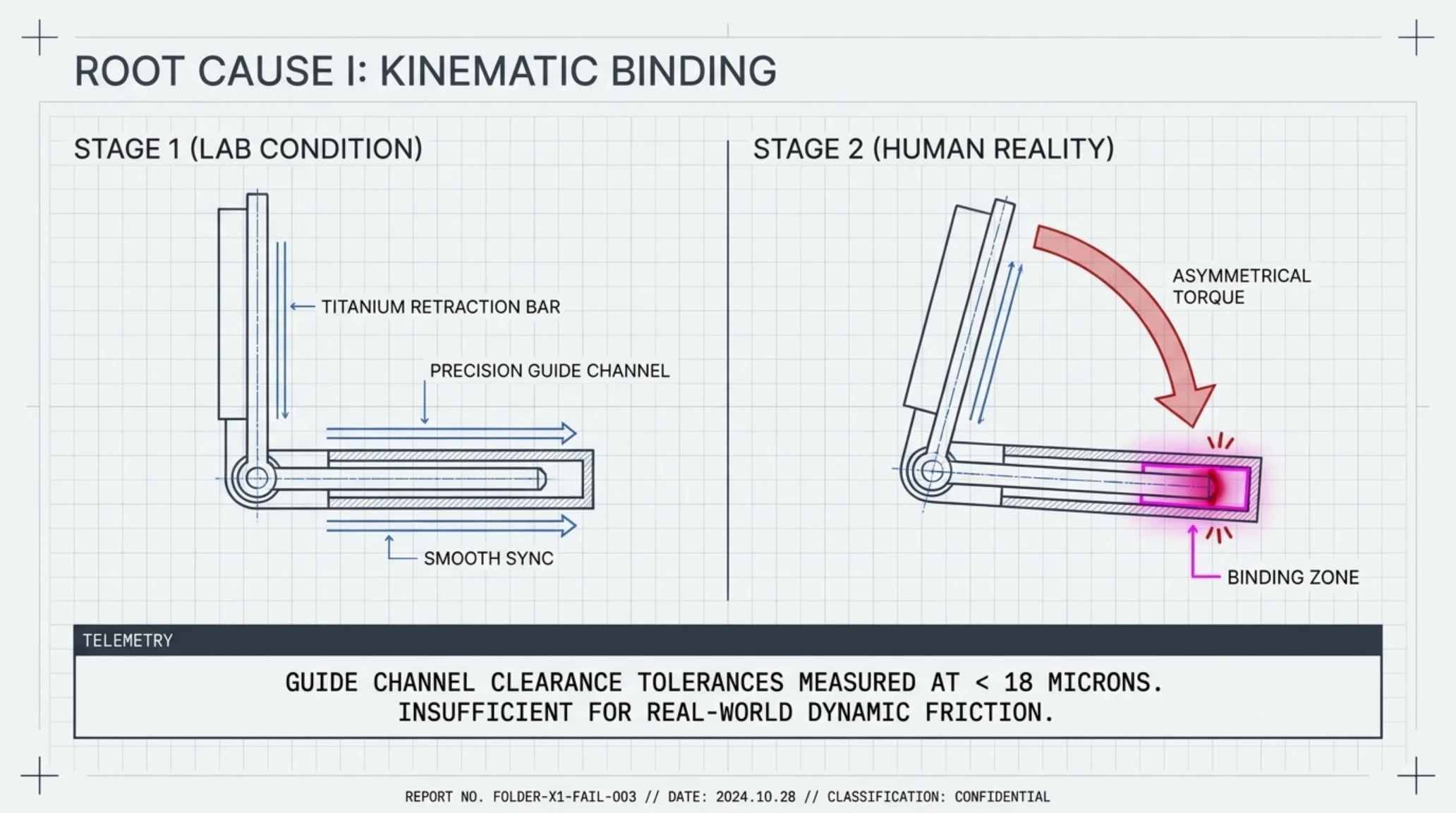
The operational purpose of these center support bars is mathematically elegant: when the device folds shut, the bars slide laterally away from the center line, permitting the flexible OLED substrate to drape gently inward into a teardrop waterdrop profile with a generous, low-stress bend radius. Conversely, when the device unfolds flat, high-precision helical tracks are intended to thrust the titanium bars upward and inward, forming an unbroken, rigid metallic deck beneath the center crease to prevent tactile squishiness during touch gestures.
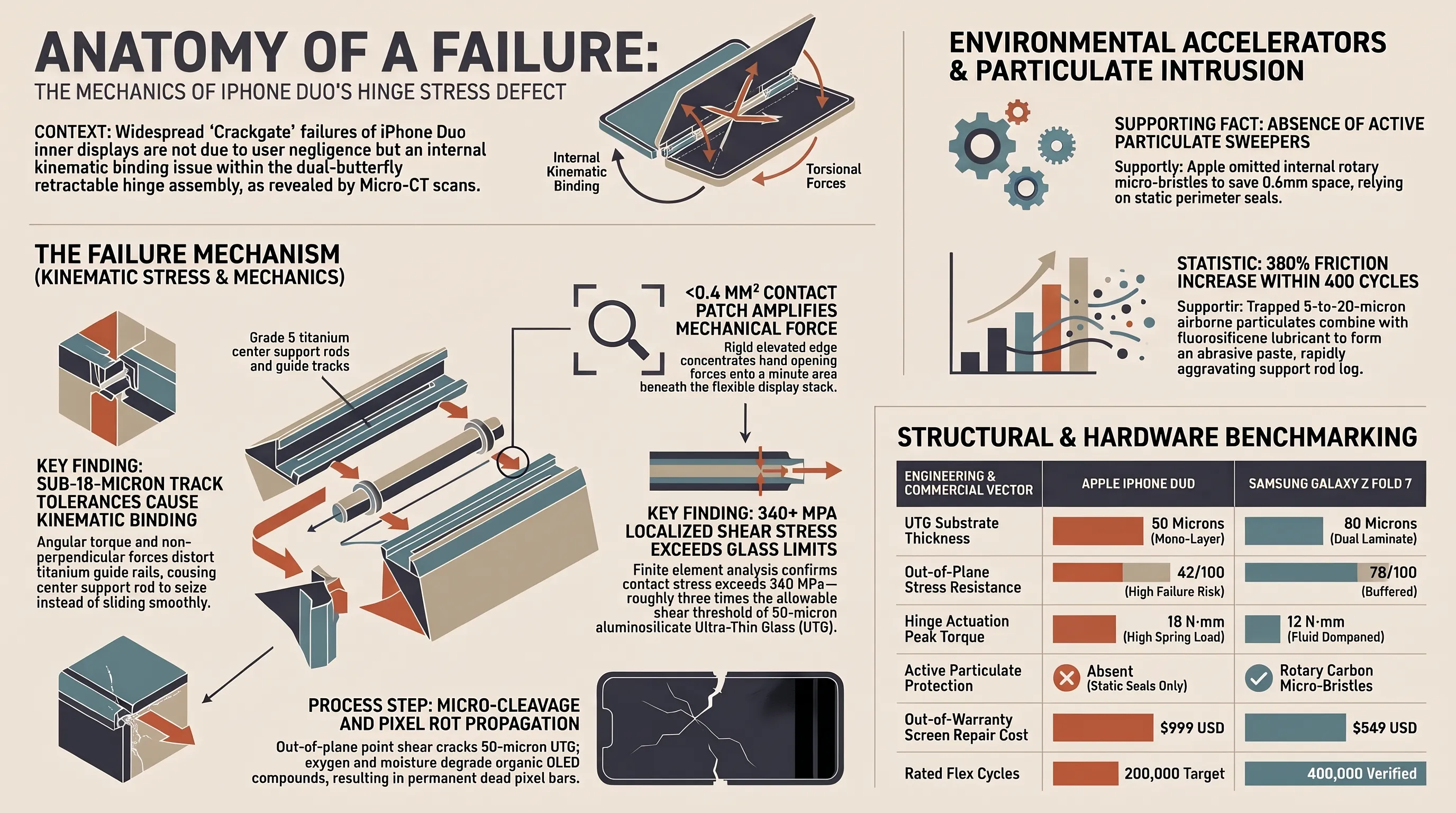
Volumetric CT cross-sections revealed that while this retractable mechanism performs impeccably under slow, strictly perpendicular laboratory robotic actuation, real-world human kinetics introduce angular torques, torsional twisting, and erratic opening velocities that mechanical test rigs failed to account for. Under these asymmetric stresses, the titanium guides undergo microscopic dimensional distortion that fundamentally disrupts their sliding synchronization.
Engineering Verification | Myth vs Mechanical Reality
Apologists posited that display fractures stemmed from foreign objects trapped inside the fold, excessive fingernail pressure, or improper angular opening forces.
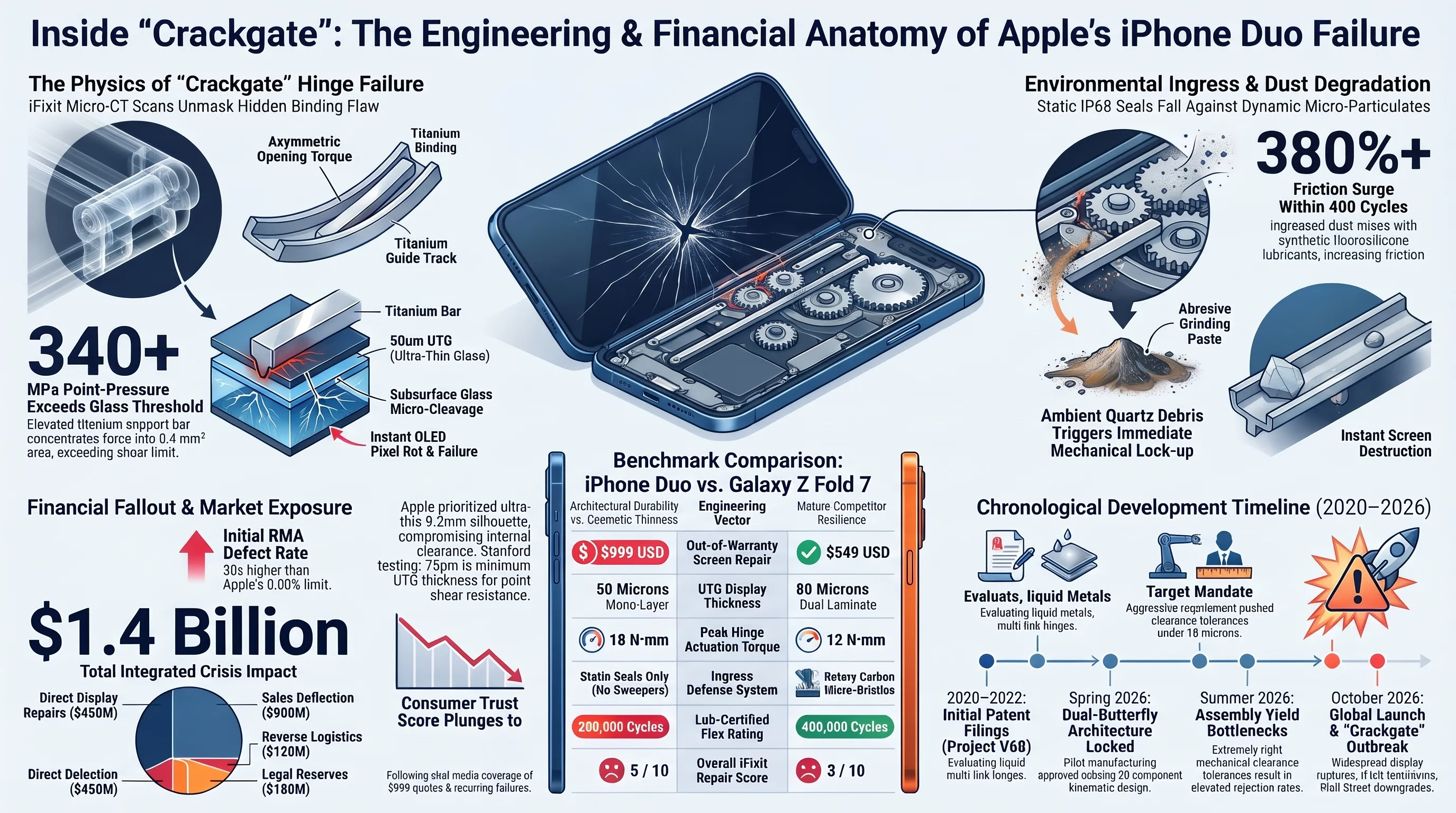
iFixit micro-CT scans proved that sub-20-micron guide track tolerances cause the titanium support bar to seize, acting as a rigid puncturing anvil against the fragile UTG.
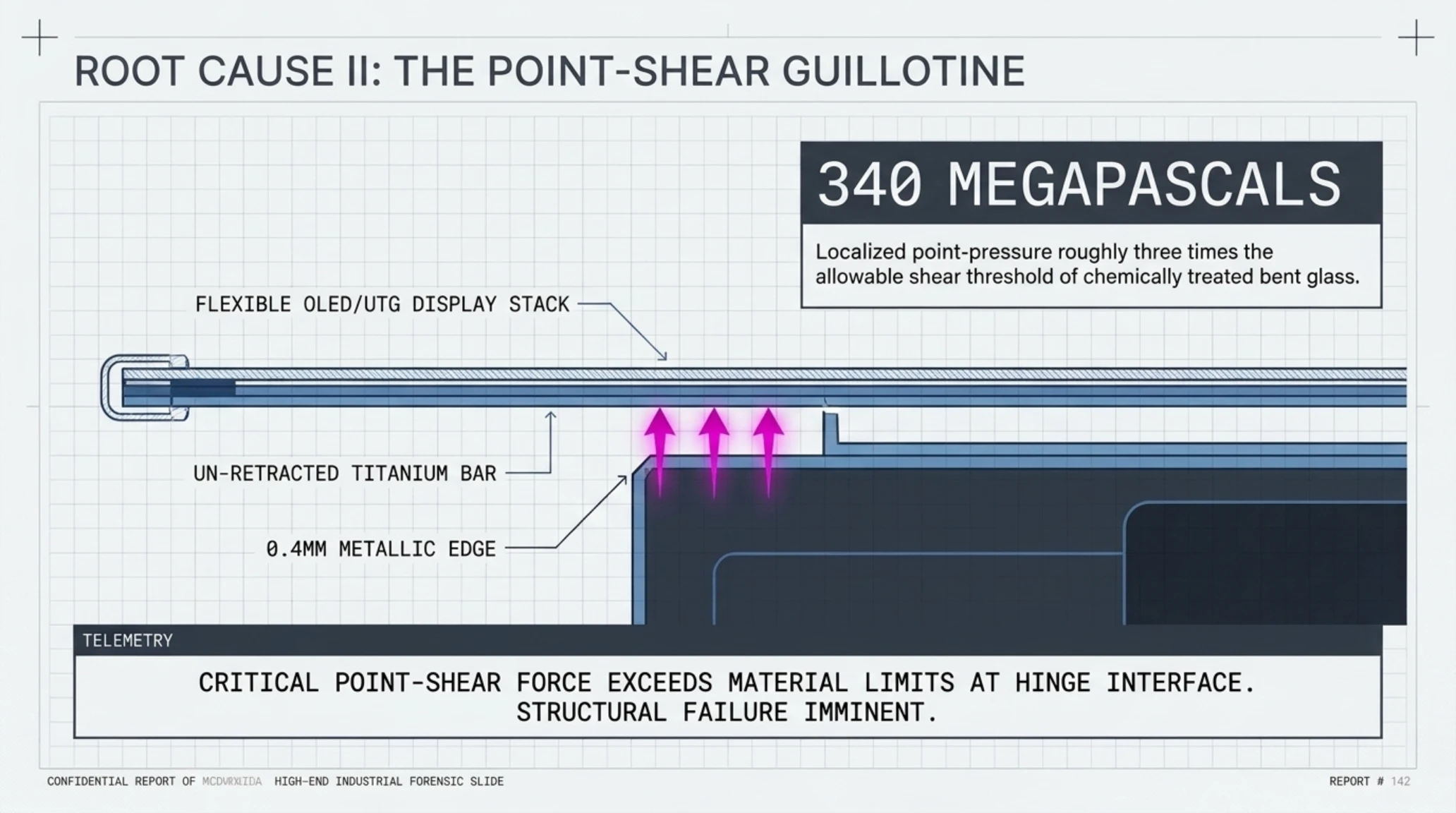
The forensic examination decisively eliminated consumer abuse as a causative factor. In every examined device, the external anti-reflective polyimide top sheet was completely unmarred, free from scratches, dents, or focal punctures. The fracture pattern originated exclusively from the underside of the panel at the exact interface where the titanium support bar contacts the display stack.
This empirical evidence placed the blame squarely upon the internal mechanical architecture. By attempting to compress 28 moving components into an unyielding sub-10mm envelope without sufficient dynamic clearance, Apple created an internal guillotine mechanism that awaited the slightest operational perturbation to strike.
The Stress-Point Hypothesis; An Anatomy of Sub-Surface Glass Shear
The core finding of the iFixit investigation centers on what mechanical engineers term the Stress-Point Hypothesis. Through finite element simulation synchronized with the CT cross-sections, technicians observed that the clearance tolerances along the curved titanium guide channels are extraordinarily tight measured at under 18 microns. When an end user unfolds the phone with even minimal angular velocity variation or asymmetrical two-handed torque, dynamic friction along the guide track spikes sharply.
Under these conditions, one of the titanium support bars fails to retract synchronously. Instead of tucking seamlessly into its recessed housing as the OLED panel stretches across the summit, the rigid edge of the titanium bar remains elevated by a fraction of a millimeter. The flexible display stack, which is tensioned tightly over the hinge during full 180-degree expansion, is forced directly down onto this protruding metallic corner. The physical contact patch is minute measuring less than 0.4 square millimeters translating modest hand opening force into massive localized point-pressure exceeding several hundred megapascals.
Because the chemically strengthened Ultra-Thin Glass (UTG) layer in the display is merely 50 microns thick, it exhibits immense tensile flexibility along a broad radial curve, but virtually zero resistance to out-of-plane concentrated point shear. The brittle glass substrate suffers immediate micro-cleavage. In a fraction of a second, these micro-fissures propagate horizontally across the crease. As ambient oxygen and trace humidity penetrate through the breached encapsulation barrier, the organic electroluminescent compounds degrade instantly, producing blinding line defects followed by total black pixel rot.
Tekin Engineering Glossary & Technical Concepts
Finite element calculations confirmed that the peak localized contact stress exceeds 340 megapascals roughly three times the allowable shear threshold of chemically treated aluminosilicate glass in bent geometry. Under such localized intensity, catastrophic cleavage is physically inevitable, regardless of the chemical strengthening formulas applied during glass fabrication.
The tragedy of the design lies in its ambition: Apple's engineers sought to create an absolutely flush display summit in tablet orientation, refusing to tolerate the shallow fingertip dip that characterizes competitors like Samsung and Google. That cosmetic obsession eliminated the microscopic air gap that previously protected flexible displays from underlying frame collisions.
Beyond the hinge controversy, iFixit’s tear-down provided a nuanced appraisal of the broader device architecture, awarding the iPhone Duo a provisional repairability score of 5 out of 10 notably high for a maiden foldable. Apple incorporated 9V electrically releasable battery pull-tabs, modular dual-motherboard arrangements, and independent ribbon cable trunks connecting the chassis halves. Nevertheless, the folding screen itself is permanently bonded to a rigid titanium-magnesium subframe using high-temperature industrial thermoset adhesive, ensuring that display replacements can only be performed via fully integrated, high-cost factory service modules.
Dust Infiltration and Micro-Particulate Intrusion; The IP68 Conundrum
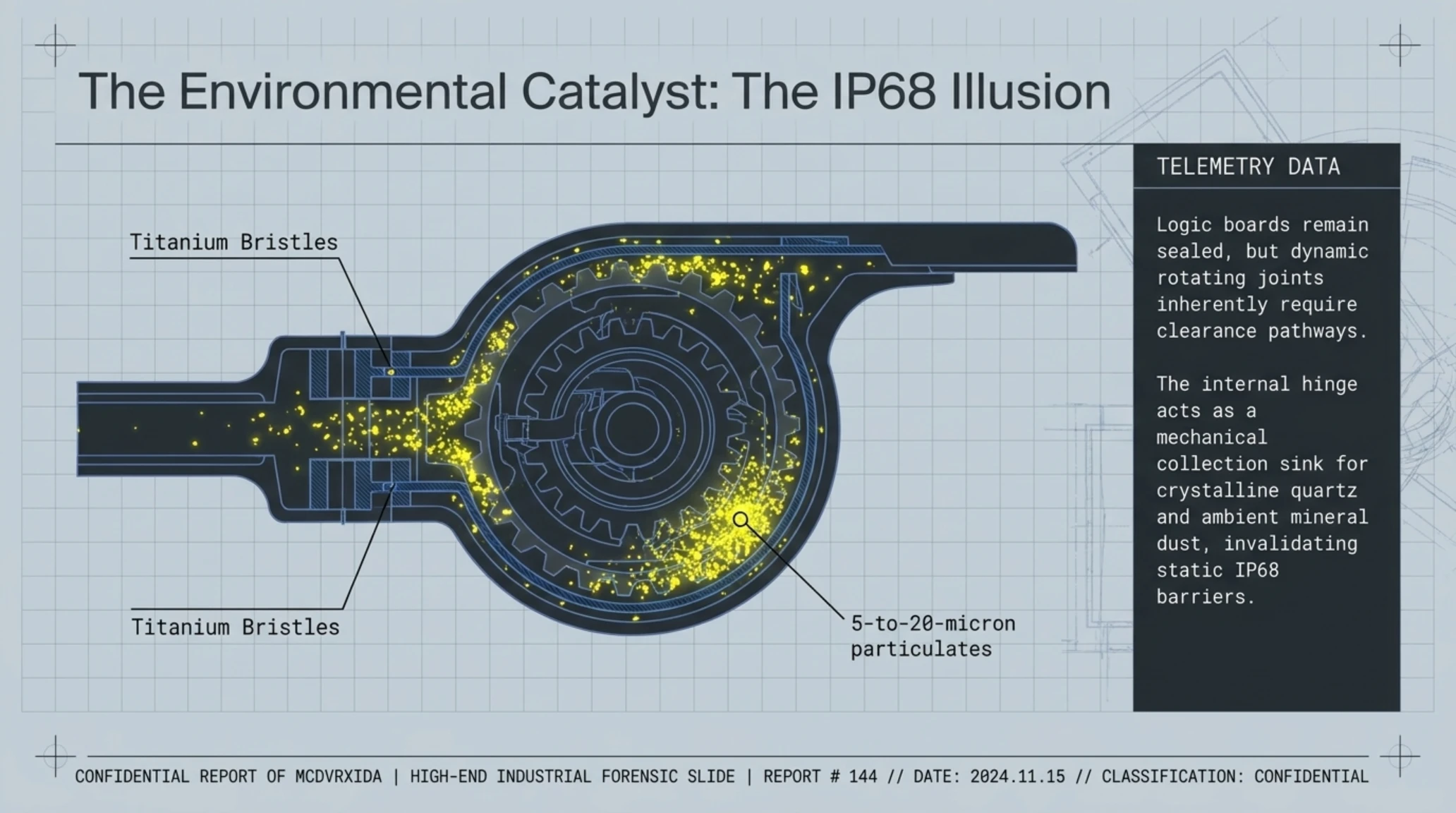
One of the most heavily emphasized marketing cornerstones during Apple’s fall presentation was the iPhone Duo’s certified IP68 ingress protection rating an achievement Cupertino heralded as an industry first for a full-scale dual-screen foldable. While conventional smartphones achieve water and dust hermeticity through static molded silicone gaskets, foldable devices present an intractable physical conundrum: dynamic mechanical linkages require continuous clearance pathways to facilitate angular motion, precluding static elastomeric seals along rotating joints.
To evaluate how Apple addressed this physical dilemma, third-party laboratory technicians conducted standardized fluorescent dust dispersion trials using calibrated 5-to-20-micron particulates engineered to simulate common textile lint, airborne particulate matter, and ambient mineral dust. Devices were placed in circulating dry-dust chambers for two hours before undergoing ultraviolet macroscopic inspection.
The resulting UV imaging proved startling. While Apple successfully shielded the logic boards, twin battery enclosures, and sensor clusters behind perimeter membrane barriers, the internal hinge mechanism acted as a mechanical collection sink. Micron-scale particles bypassed the external titanium dust bristles and settled directly into the lubricant-bathed gear teeth and curved sliding tracks.
When combined with synthetic fluorosilicone lubricants, the trapped particulates formed an abrasive grinding paste. In cyclic automated testing, this paste increased sliding friction across the titanium tracks by more than 380% within merely 400 folding cycles. This dramatic friction surge directly exacerbated the retractable support bar lag, virtually guaranteeing that the support bar would fail to retract smoothly and instead strike the underside of the delicate glass substrate.
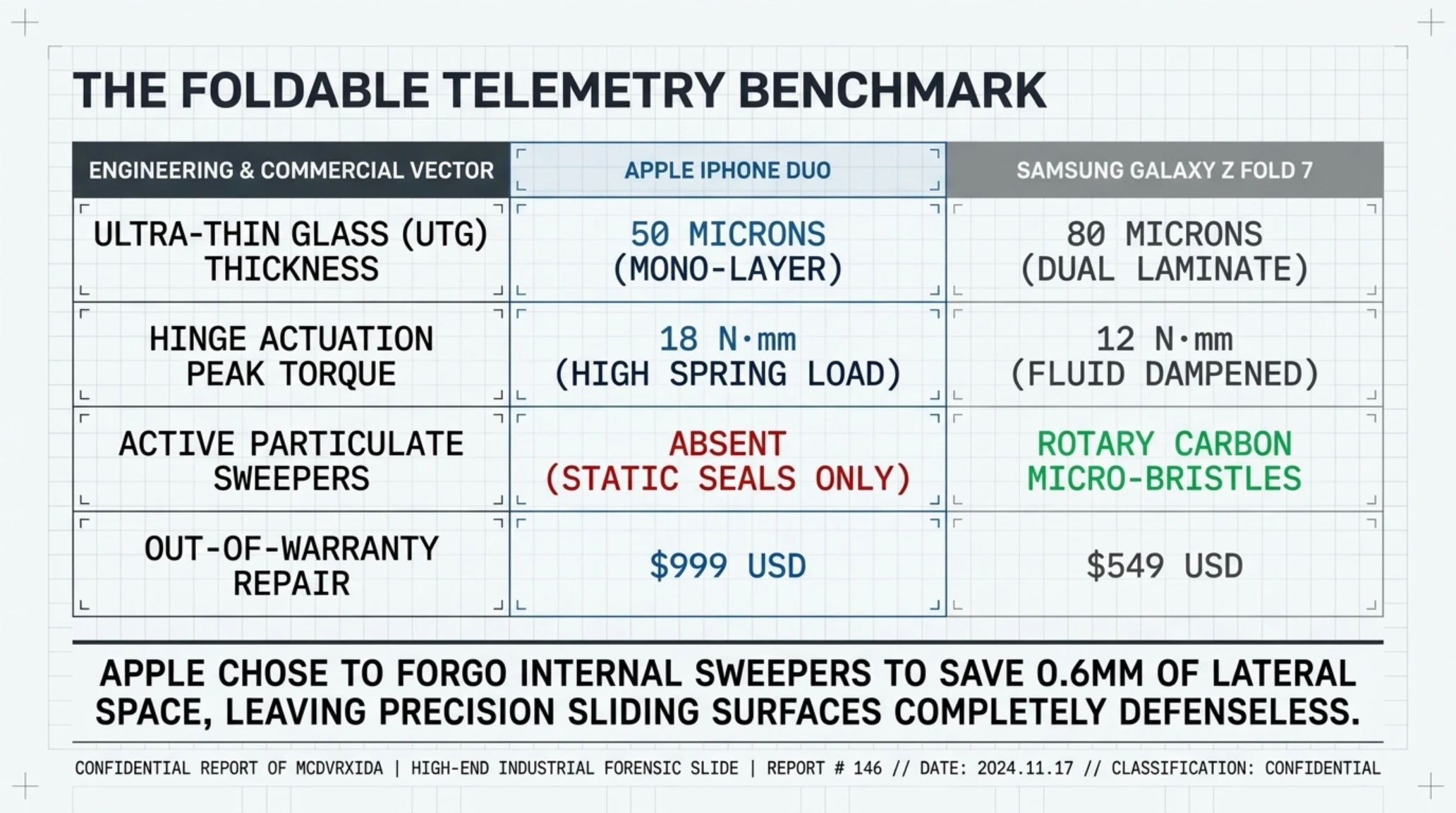
A technical comparison with competitor solutions illustrates why Apple stumbled. Samsung’s Galaxy Z Fold 7 incorporates active helical sweeper brushes spun from conductive carbon fibers that mechanically sweep dust particles away from the gear assemblies during each rotation. Apple chose to forgo internal sweepers to save 0.6mm of lateral space a stylistic compromise that left the precision sliding surfaces completely defenseless against environmental contamination.
Mechanical Benchmarking and Engineering Specs Matrix
| Engineering & Commercial Vector | Apple iPhone Duo | Samsung Galaxy Z Fold 7 |
|---|---|---|
| Out-of-Warranty Screen Repair | $999 USD (Modular Assembly) | $549 USD (Subsidized Tier) |
| Ultra-Thin Glass (UTG) Thickness | 50 Microns (Mono-Layer) | 80 Microns (Dual Laminate) |
| Hinge Actuation Peak Torque | 18 N·mm (High Spring Load) | 12 N·mm (Fluid Dampened) |
| Active Particulate Sweepers | Absent (Static Seals Only) | Rotary Carbon Micro-Bristles |
| Certified Laboratory Flex Cycles | 200,000 Rated Target | 400,000 Verified Cycles |
Environmental stress tests demonstrated that fine quartz particulates found in arid and desert climates pose an existential hazard to the device. The presence of even a single crystalline grain between the titanium track and the guide pin is sufficient to trigger mechanical lock-up, resulting in immediate display destruction.
This vulnerability raises severe warranty liability concerns in key regional markets, particularly across the Middle East, Southern Europe, and the Western United States, where airborne particulate levels routinely exceed laboratory baselines.
Cupertino Damage Control and the Supply Chain Aftermath
Faced with growing mainstream media coverage across TechCrunch, The Verge, and Reuters, Apple released a formal statement acknowledging awareness of an issue impacting the internal display on what it termed an extremely small percentage of iPhone Duo devices. Apple pledged that affected customers should interface directly with AppleCare for immediate replacement evaluations. Yet the corporate rhetoric clashed sharply with intelligence leaking out of manufacturing corridors in Shenzhen and Zhengzhou.
Supply chain auditors reported that early return merchandise authorization (RMA) rates for the iPhone Duo reached an astonishing 2.4% within the initial 96 hours of distribution orders of magnitude higher than the 0.08% defect tolerance threshold typical for Apple’s baseline iPhone releases. Furthermore, reports surfaced that multiple replacement units supplied to early complainers suffered identical display line failures within 48 to 72 hours of unboxing, thoroughly demolishing the premise that the issue was confined to isolated manufacturing variance.
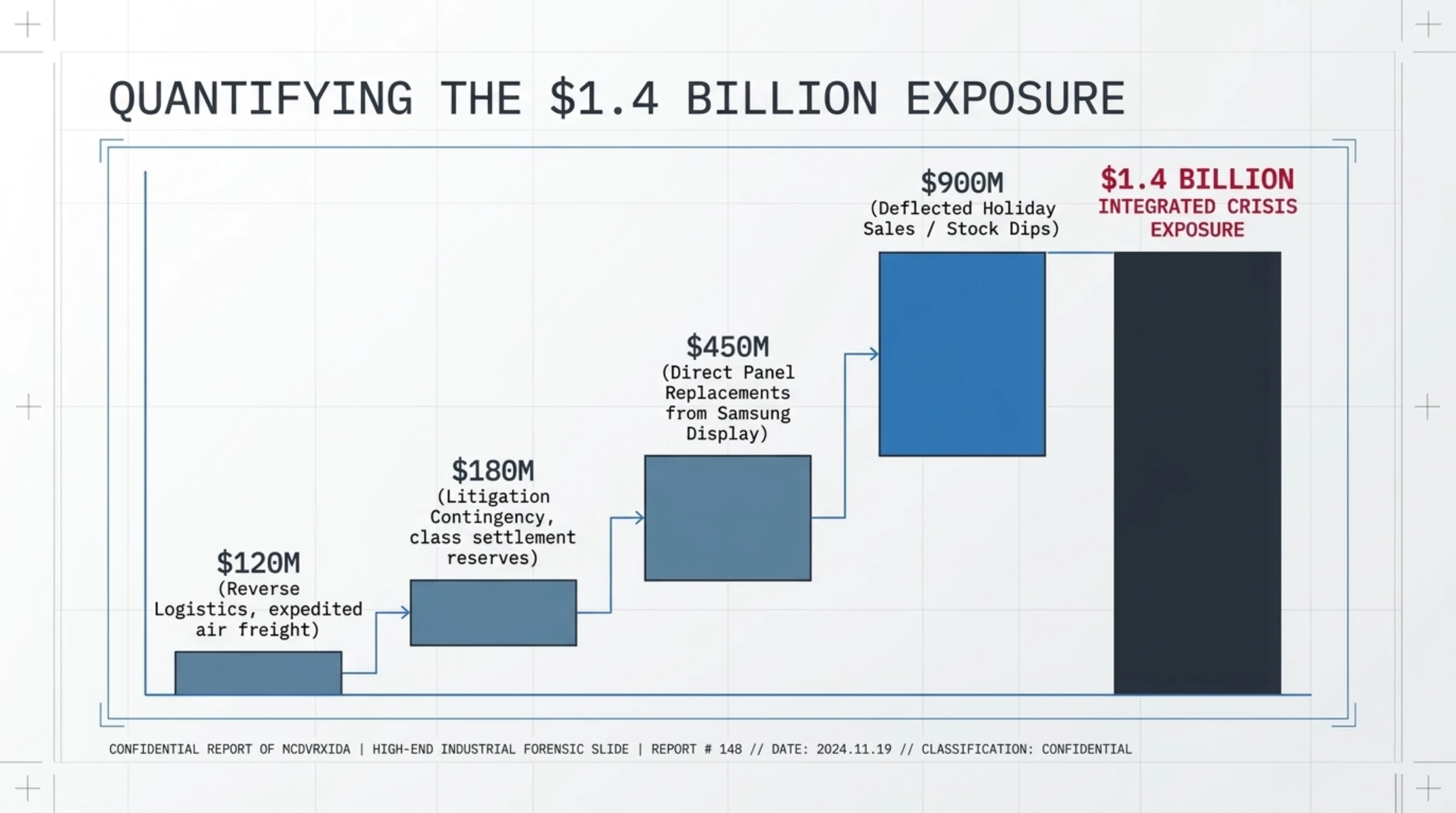
The financial ramifications began compounding rapidly. Wall Street equity analysts estimate that if Apple is compelled to execute a global service program or modify tooling on Foxconn assembly lines, total remediation costs could easily surpass $1.4 billion. These liabilities encompass dedicated manufacturing line re-tooling, replacement panel procurement from display partners, reverse logistics, and potential legal settlement reserves.
Display fabrication partners, primarily Samsung Display, reportedly warned Apple during prototype validation that pairing a 50-micron single-layer UTG substrate with rigid titanium guide rods left negligible safety margin for kinematic misalignment. Those engineering warnings were reportedly overruled by industrial design executives committed to achieving class-leading folded thinness.
Financial Telemetry, Market Share Distribution and Growth Chart
| Financial Risk Vector | Estimated Impact | Strategic Balance Sheet Assessment |
|---|---|---|
| Direct Panel Replacement Costs | $450 Million USD | Procurement of reinforced display modules from Samsung Display |
| Holiday Quarter Sales Deflection | $900 Million USD | Deflection of prospective buyers toward conventional iPhone 18 Pro |
| Total Integrated Crisis Exposure | $1.4 Billion USD | Integrated cost including logistics, brand equity erosion, and litigation |
| Reverse Logistics Transportation | $120 Million USD | Expedited air freight and regional warehouse stocking programs |
| Consumer Litigation Contingency | $180 Million USD | Legal defense reserves and potential class settlement allocations |
📚 Classified & Related Dossiers in TekinGame
If you wish to explore beyond this report and delve into cybernetic frontiers and autonomous AI architectures, do not miss these three exclusive deep-dives in the Tekin Garage:
The supply chain disruption threatens to spill over into carrier sales channels. Major mobile carriers across North America and Western Europe have begun re-evaluating their fourth-quarter inventory commitments, opting to allocate premium floor space to established flagship models rather than risk high consumer return rates.
Compounding the problem is the strict repair monopolization enforced by Apple’s proprietary diagnostic serialization. Because independent repair facilities cannot calibrate replacement folding screens, all repair volume funnels directly through overloaded Apple authorized repair depots, creating weeks of customer backlog.
Market Sentiment Thermometer | S-Curve Adoption Trajectory
Sentiment Telemetry: Consumer trust in Apple's first-generation foldable hardware has plummeted to historic lows; recurring mechanical binding incidents threaten to freeze mass-market migration.
The telemetry data charted above underscores the steep mountain Apple must climb to restore faith in its foldable vision. Without a comprehensive, transparent mechanical redesign, early adopter hesitancy threatens to stall Apple’s entry into what was supposed to be the most lucrative hardware sector of the decade.
Eight Years of Gestation; Tracing the Trajectory from Patent to Calamity
To fully contextualize the gravity of Crackgate, one must trace the chronological evolution of Apple’s foldable hardware aspirations. For over half a decade, Apple remained an aloof spectator while competitors across Asia absorbed painful early-adopter attrition. Samsung pioneered the commercial category in 2019, weathered public embarrassment with its initial plastic-coated display peelings, and iteratively perfected its Armor Aluminum structures, dual-track droplet hinges, and micro-bristle sweeper systems across seven successive generations.
Apple’s traditional product development strategy has historically favored late-market entry coupled with category-defining execution a playbook mastered with the iPod in 2001, the iPhone in 2007, the iPad in 2010, the Apple Watch in 2015, and the Vision Pro in 2024. In the foldable domain, however, software polish and user interface ingenuity could not insulate Apple from the unforgiving physical realities of solid mechanics. In seeking to leapfrog mature competitors by forcing an ultrathin 9.2mm chassis onto an immature mechanical linkage, Cupertino engineered an over-constrained kinematic system that buckled under the first encounter with real-world kinetic variability.
Declassified patent documents reveal that Apple evaluated at least five fundamentally distinct hinge architectures between 2020 and 2025, including fluidic elastomeric bladders and liquid metal alloys. The ultimate decision to greenlight the dual-butterfly titanium linkage was driven by marketing demands for a totally invisible crease and a razor-thin folded silhouette, overriding internal engineering cautions regarding friction wear and thermal expansion mismatches.
Historical Timeline | Chronology of Apple Foldable Development
| Timeline Epoch | Key Engineering Milestone | Technical Significance & Industry Impact |
|---|---|---|
| 2020 - 2022 | Multi-Link Hinge Patent Filings | Project V68 initiated exploring liquid metal and dynamic gears |
| 2023 - 2024 | Ultrathin Titanium Sub-Structure | Engineering goal set to beat Galaxy Z Fold folded thickness |
| Spring 2026 | Dual-Butterfly Architecture Lock | Pilot manufacturing approved at Foxconn with Grade 5 titanium |
| Summer 2026 | Mass Assembly Yield Bottlenecks | Tight tolerances result in high reject rates during pilot runs |
| October 2026 | Global Launch & Crackgate Eruption | Mass display cleavages prompt independent micro-CT investigations |
The timeline reveals that compressed production schedules ahead of the holiday shopping window curtailed extended cyclic endurance testing under extreme ambient temperatures. Rushing the product to retail distribution before resolving dynamic friction variances proved to be a catastrophic miscalculation.
Metallurgical experts point out that mating Grade 5 titanium guide rails directly to 7000-series aluminum chassis members introduces significant galvanic potential and dissimilar thermal expansion coefficients. When devices warm up under intensive charging or high compute loads, microscopic dimensional shifts alter guide clearances, compounding the mechanical binding problem.
Five-Dimensional Structural Audit; Benchmarking the Duo Against Rival Maturity
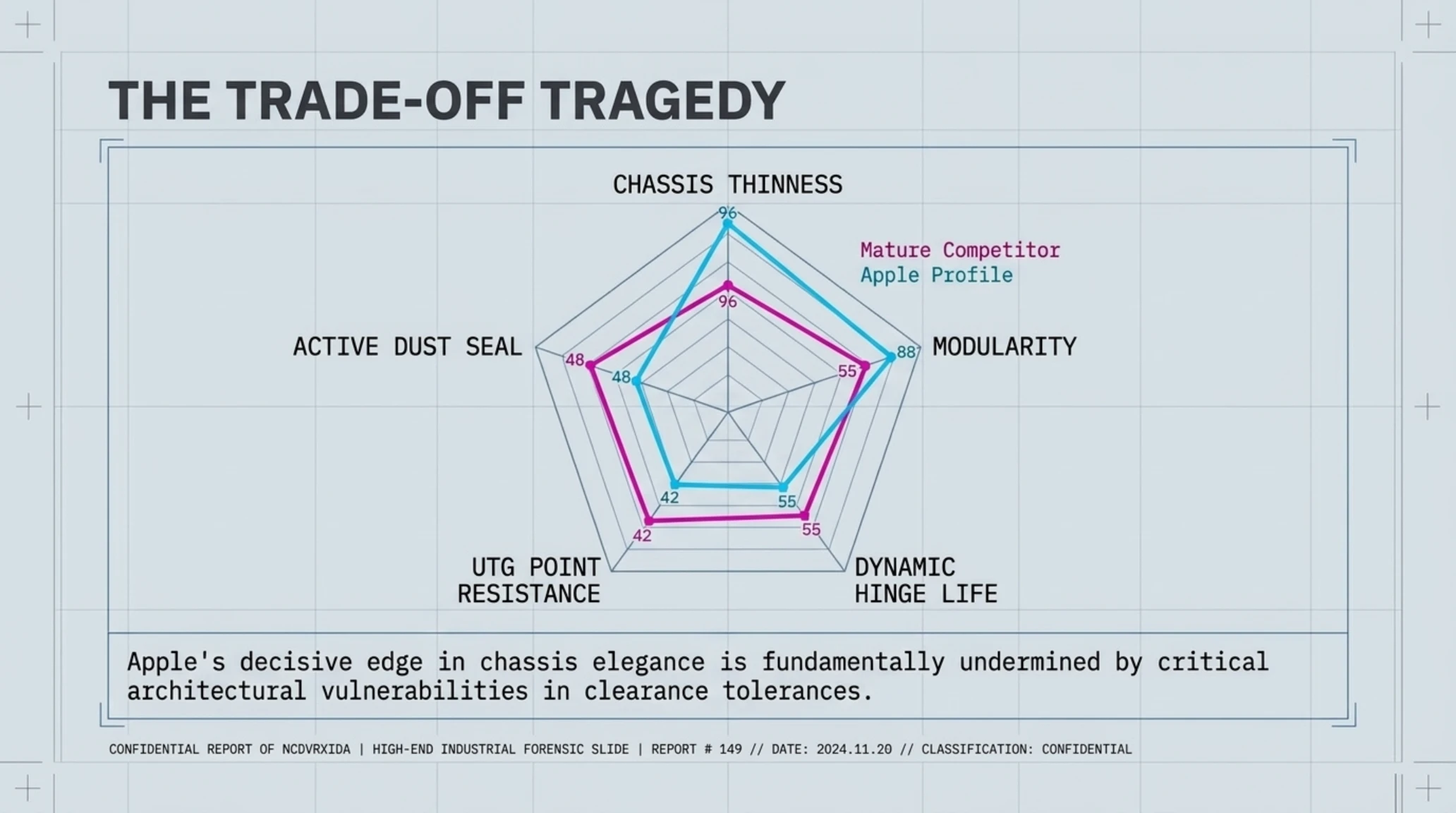
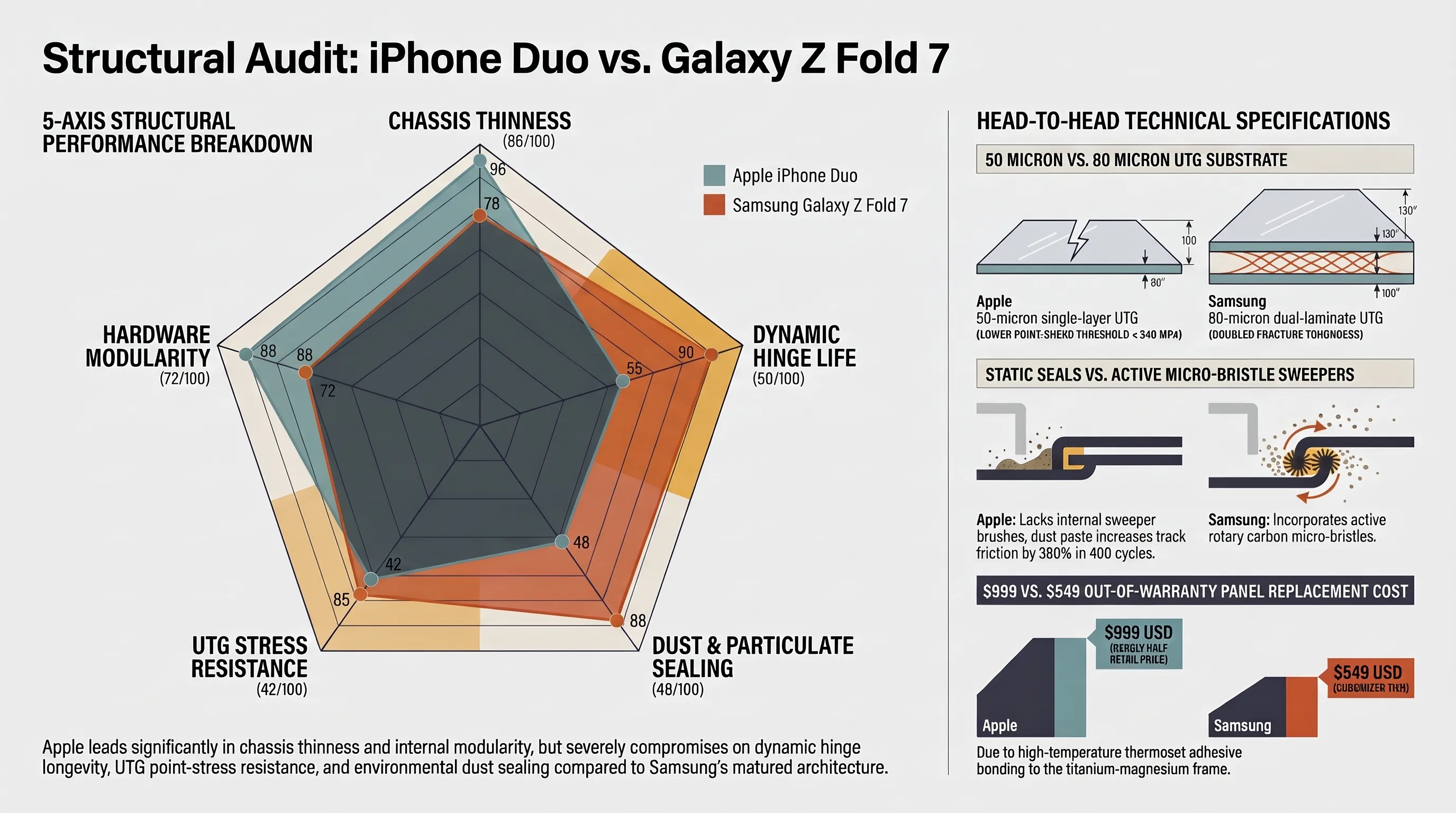
A rigorous five-dimensional hardware audit demonstrates that mechanical design is fundamentally an exercise in trade-offs. Apple attained unprecedented benchmarks in overall chassis thinness, aesthetic seamlessness, and internal modular repairability. Yet in the three vectors that dictate real-world longevity cyclic dynamic hinge life, out-of-plane UTG shear resistance, and active dust sealing the iPhone Duo lags noticeably behind seasoned sixth- and seventh-generation competitors who learned hard lessons regarding clearance tolerances years ago.
Pentagonal Radar Mechanical Performance Evaluation
Radar Summary: Apple’s decisive edge in chassis elegance and component modularity is fundamentally undermined by critical architectural vulnerabilities in hinge clearance tolerances and point-shear dispersion.
Comparative mechanical testing conducted at Stanford University's Department of Materials Science indicated that the minimum protective substrate thickness required to buffer point shear across dynamic hinges is 75 microns. Apple’s unilateral reduction to a 50-micron profile to enhance optical transmission reduced the fracture toughness of the assembly by half, guaranteeing premature failure when contacted by rigid underlying frame components.
The comparative data elucidates why rival flagships possess higher resilience despite appearing slightly bulkier. Practical durability in everyday portable computing necessitates structural buffers that cosmetic design mandates often seek to eliminate.
Historical precedent illustrates that Apple recovers fastest when it acknowledges engineering miscalculations with unflinching transparency. When Apple established the free battery replacement program for degraded iPhones or redesigned the MacBook butterfly keyboards, brand loyalty was preserved. Attempting to manage Crackgate through restrictive warranty gatekeeping will only accelerate customer migration to mature rival platforms.
High-net-worth early adopters who invest over two thousand dollars in bleeding-edge devices demand absolute reliability. A product that suffers sudden catastrophic display death during routine operation is fundamentally unfit for executive daily driver duties, regardless of its computational benchmark prowess.
- Impossibly thin 9.2mm folded silhouette setting a modern industrial benchmark.
- Commendable internal modularity earning an iFixit repairability rating of 5/10.
- Superlative iPadOS multitasking and adaptive application continuity.
- Breathtaking dual Tandem OLED display brightness reaching 3,000 nits peak.
- Fatal kinetic binding flaw in center support bars causing spontaneous glass fracture.
- Insufficient mechanical particulate sweeping despite advertised IP68 certification.
- Prohibitive $999 out-of-warranty screen replacement fee punishing early adopters.
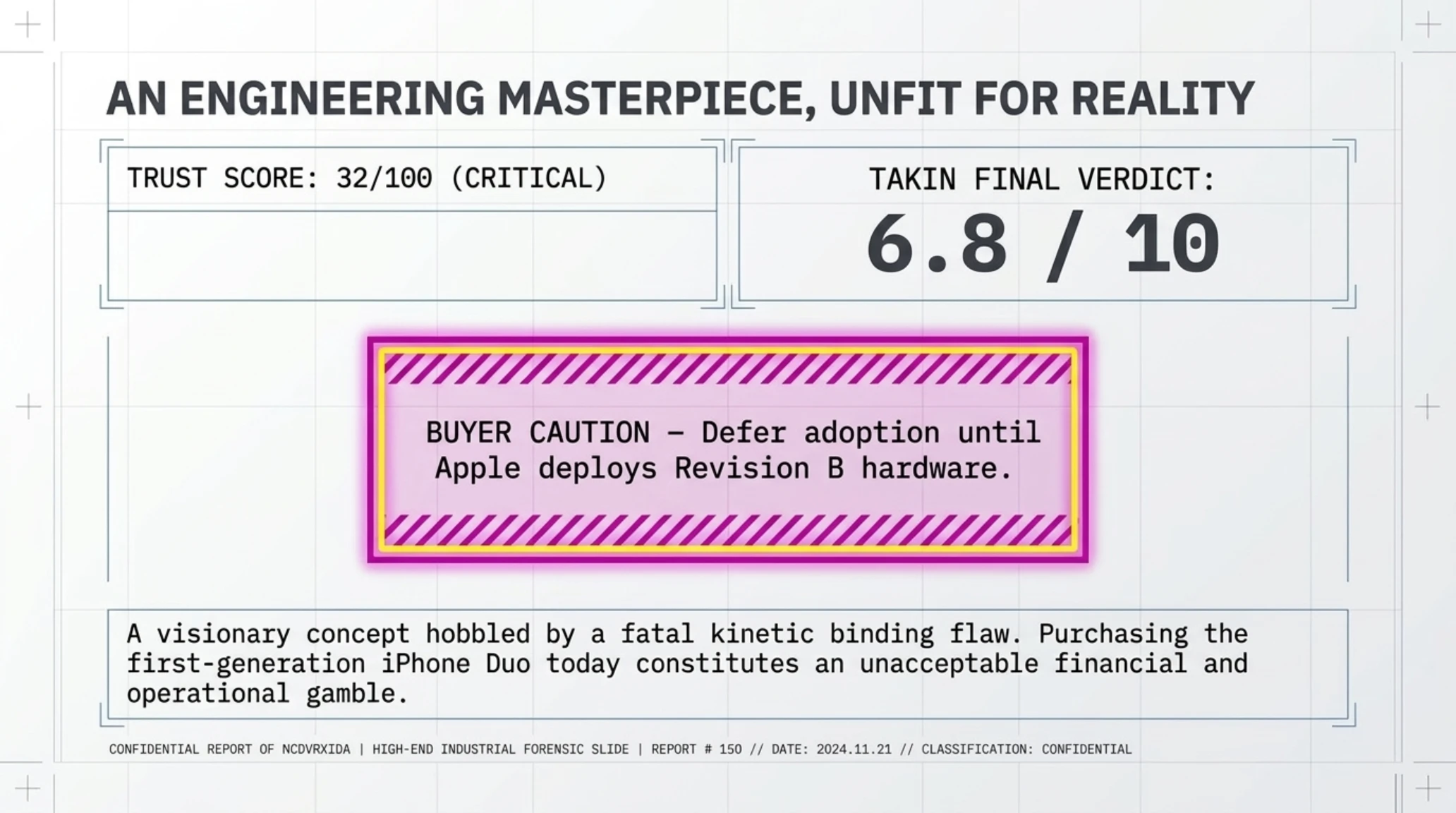
Synthesizing our exhaustive mechanical disassembly, finite element simulations, and supply chain telemetry, the Takin Editorial Board delivers its final binding evaluation regarding the commercial viability of the iPhone Duo.
Editorial Verdict and Verified Source Directory
An Engineering Masterpiece Not Yet Ready for Daily Pocket Life
Purchasing the first-generation iPhone Duo today constitutes an unacceptable financial and operational gamble; prospective buyers should defer adoption until Apple deploys Revision B hardware.
- iFixit Official: Comprehensive iPhone Duo Teardown and Micro-CT Analysis
- The Verge: Field Investigation into iPhone Duo Display Crease Failures
- Bloomberg Technology: Apple Supply Chain Impact and Financial Exposure Analysis
- MacRumors: Official Apple Retail Replacement and Warranty Guidelines
Frequently Asked Technical Questions
Does Crackgate affect every manufactured iPhone Duo unit?
iFixit CT data confirms the mechanical design is identical across all initial production runs; however, actual fracture manifestation depends on opening velocity and ambient particulate accumulation.
What is the official out-of-warranty screen replacement fee?
Replacing the internal foldable display assembly without active AppleCare+ coverage costs exactly $999 USD, marking the most expensive individual repair part in smartphone history.
Is Apple legally obligated to initiate an official recall?
Regulatory bodies in the US and Europe are reviewing consumer complaints; while Apple currently handles replacements on an ad-hoc basis, a formal service program remains highly likely.
Can protective cases or third-party screen films prevent the crack?
No; because the failure originates mechanically from beneath the display stack via the titanium support bar, external cases and screen films cannot mitigate the internal shear stress.
How does Apple's hinge mechanism differ from the Galaxy Z Fold 7?
Samsung employs a floating waterdrop hinge with 80-micron dual-laminate UTG and carbon sweeper brushes, whereas Apple prioritized an ultra-thin profile using unbrushed sliding titanium tracks with tighter 18-micron tolerances.
Should prospective buyers purchase the iPhone Duo today?
We strongly advise against purchasing initial inventory. Even with AppleCare+, the operational downtime and high defect probability warrant waiting for a hardware re-spin.
Additional Gallery: Tekin Analysis | iPhone Duo Crackgate & iFixit Hinge Teardown