🎭 Tekin Analyze | From Ocean's 11 to AI Heists: The New Era of Theft
Once upon a time, theft meant elaborate plans, bulletproof vaults, and guns. Today? Just a laptop and artificial intelligence are enough to steal billions of dollars.
- 🎮From Fiction to Reality- How cinematic heists evolved into modern hacks
- 🎧$3.7 Billion Stolen- Deepfake and AI hack losses through H1 2026
- 🚀Zero Physical Violence- Why guns and hostages are no longer needed
- 🗡️Quantum Threat- How quantum computers could break Bitcoin
- 📰Future Security- Solutions to combat digital theft
When Danny Ocean Could Have Been Richer With Just a Laptop
In 2001, George Clooney and Brad Pitt executed an audacious plan in Ocean's Eleven: robbing three major Las Vegas casinos in one night. Eleven specialists, months of planning, complex security systems, and ultimately $160 million in loot. When we watched the film, we thought this was the pinnacle of sophistication and intelligence in the world of crime. But today, 25 years later, this scenario seems almost quaint and slow-paced.
In February 2025, a hacker or hacking group infiltrated the Bybit cryptocurrency exchange and, in a single attack, stole $1.5 billion. No guns, no hostages, not even a chase scene. Just a few lines of code, a security vulnerability, and within minutes, the largest theft in history was accomplished. This amount is roughly ten times Danny Ocean's crew's haul, without any of the physical risks.

This story isn't just an exception. According to Chainalysis reports, over $3.4 billion was stolen through cryptocurrency hacks in 2025 alone. Add deepfake losses ($3.7 billion through H1 2026) and AI-powered fraud to that figure, and we're looking at a shadow economy that moves more than $10 billion annually without firing a single bullet.
Traditional vs. Modern Theft
From Cinema Dreams to Street Reality
Heist films have always captivated us. From The Italian Job to Heat, from Money Heist to Inside Man, they all share one common element: teams of specialists with precise plans who must navigate through complex security systems. But these films overlook one truth: the most sophisticated security system in the world always has one weak point—humans.
In the series Money Heist, the Professor and his team plan for months to infiltrate Spain's mint and print €2.4 billion. This isn't just a Netflix series, but a metaphor for humanity's desire to break systems. But today, physical infiltration is no longer necessary. Hackers can achieve the same result from thousands of miles away, using social engineering techniques and artificial intelligence.
Real Statistics More Fascinating Than Any Film
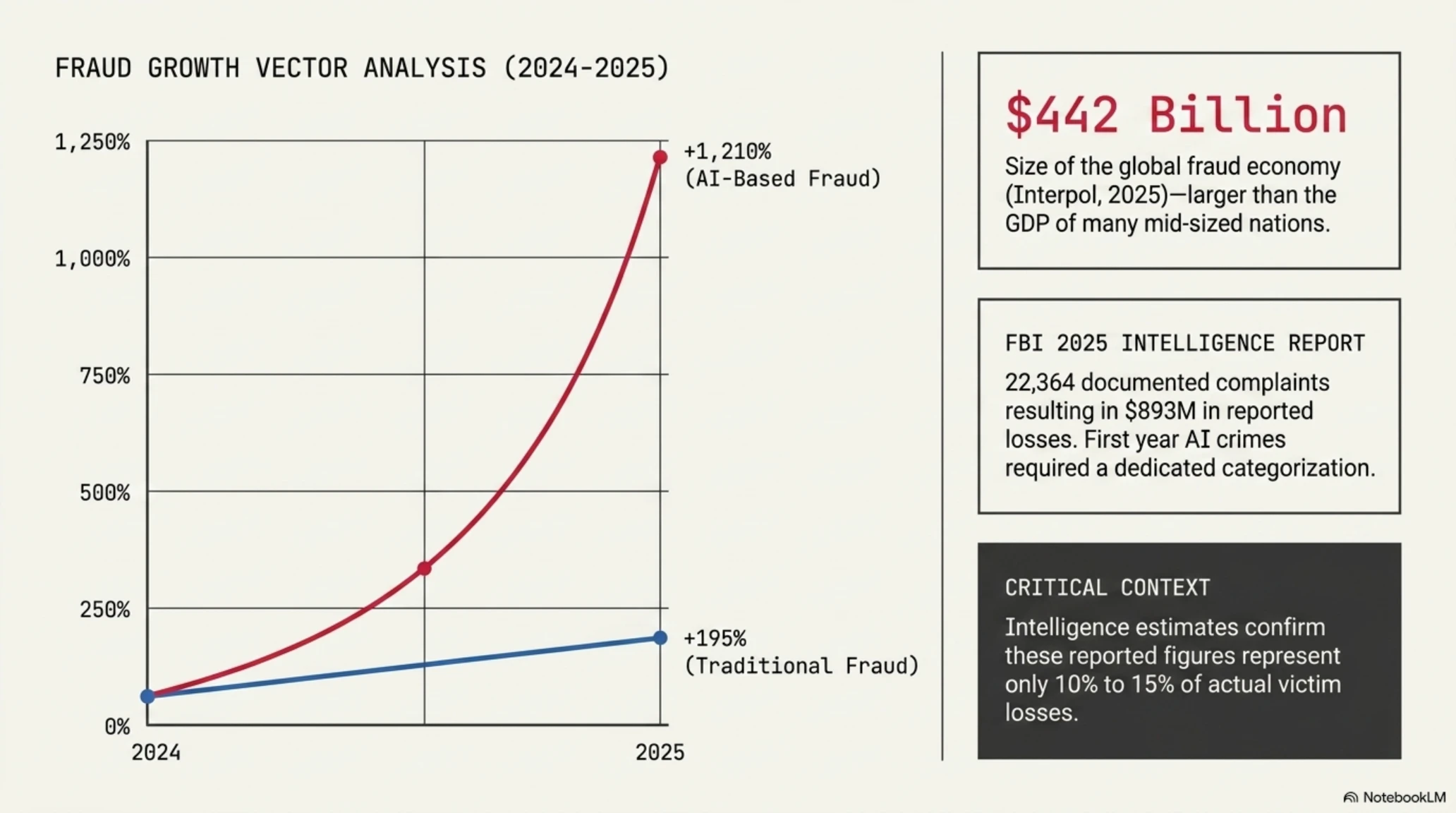
Let's start with reality. According to an FBI report that, for the first time in its 25-year history, created a dedicated category for AI-related crimes, more than 22,364 complaints related to AI fraud were filed in 2025, causing losses equivalent to $893 million. But here's the interesting part: these are only reported cases. Experts estimate that only 10 to 15 percent of victims of these frauds file official complaints.
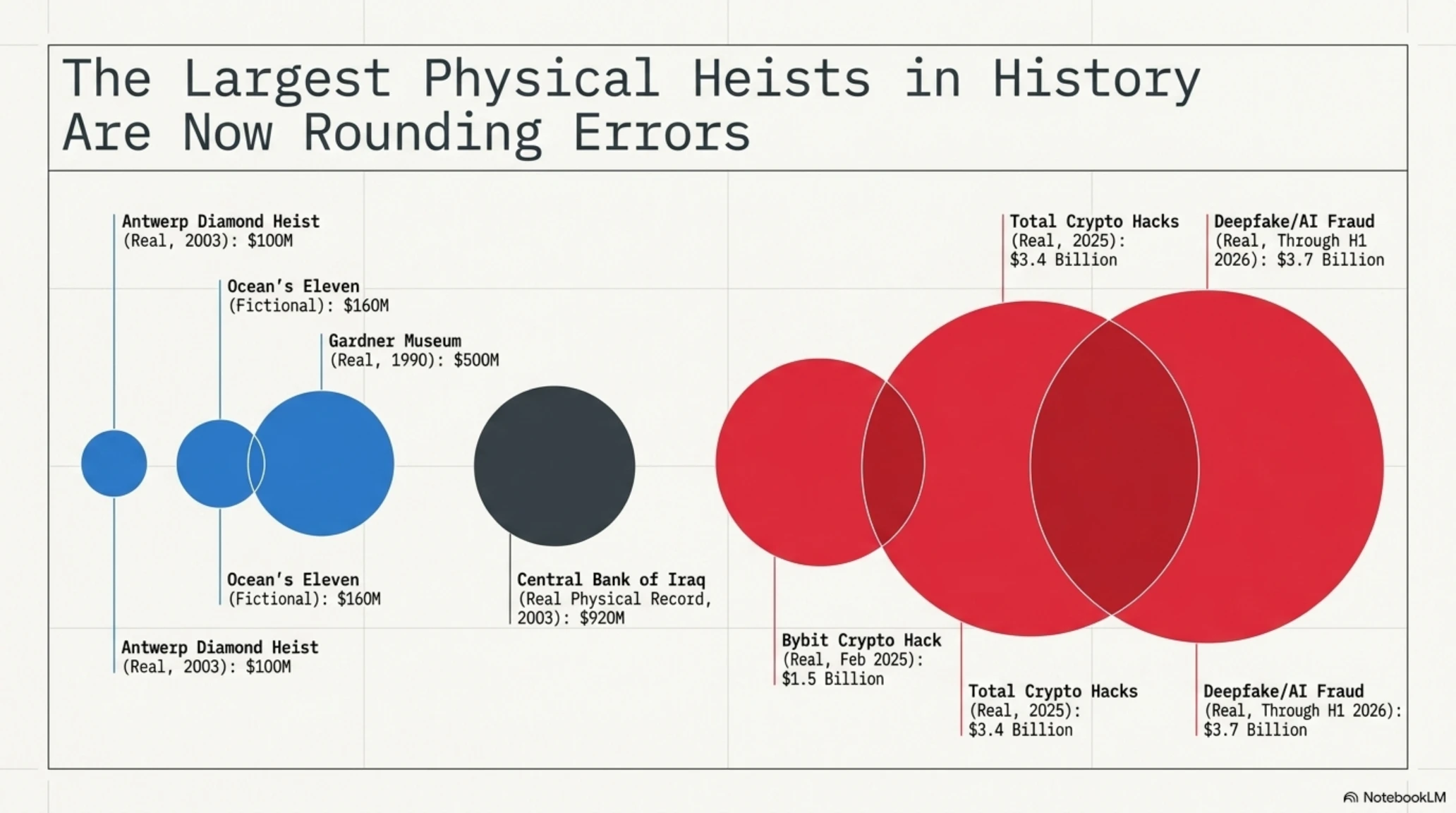
Now compare these numbers with the loot from famous films: Ocean's Eleven with $160 million, The Italian Job with $35 million, Inside Man with $140 million. Even the biggest real heists in history like the Antwerp Diamond heist ($100 million in 2003) or the Isabella Stewart Gardner Museum theft ($500 million in art value in 1990) are small numbers compared to a simple crypto hack.
Comparing Famous Heists
- Ocean's Eleven film: $160M (fictional)
- Antwerp Diamond heist: $100M (real, 2003)
- Gardner Museum: $500M (real, 1990)
- Bybit hack: $1,500M (real, 2025)
- Crypto hacks 2025: $3,400M (real)
- Deepfake through H1 2026: $3,700M (real)
Artificial Intelligence: The Secret Weapon of Modern Criminals
If Ocean's Eleven were made today, Danny Ocean wouldn't need eleven specialists. He'd only need one person: an AI specialist. Why? Because today you can use AI to simulate a company CEO's voice, create a fake video of them, and transfer millions of dollars in minutes.
In January 2026, a Swiss entrepreneur transferred several million francs after a series of phone calls he believed were with his trusted business partner. The voice was completely natural, the tone was right, even private details that only two people knew were mentioned in the conversation. But all those calls were generated by artificial intelligence. This technology, called Voice Cloning, has now become so advanced that even the closest people cannot distinguish whether a voice is real or fake.

CEO Fraud: When Your Boss Calls (But It's Not Them)
One of the most common modern fraud methods is known as CEO Fraud or BEC (Business Email Compromise). In this method, criminals impersonate a company's CEO or CFO and ask financial department employees to immediately transfer large sums. Previously, this was done with fake emails, but today with simulated voices or even deepfake video conferences, the success rate has multiplied.
According to FBI reports, the average loss per BEC attack using AI elements exceeds $4.1 million, three times that of traditional fraud. And what's more surprising is that the success rate of these attacks is also higher: currently, one in three AI fraud attempts succeeds. Compare this to traditional bank robberies, which have a success rate of less than 10 percent and an arrest probability exceeding 80 percent.
How Does Voice Cloning Work?
Explosive Growth: 1,210% Increase in One Year
The numbers are truly astonishing. According to Axis Intelligence analysis, AI-based fraud increased by 1,210 percent in 2025 compared to the previous year. In comparison, traditional fraud only increased by 195 percent. What does this mean? It means criminals are rapidly learning and adopting new technologies, while security systems and laws continue to trail far behind.
Interpol announced in its 2025 report that the global fraud economy has reached $442 billion. This figure is larger than the GDP of many medium-sized countries. And unfortunately, AI's share in this shadow economy is rapidly increasing. Fraud-as-a-Service tools available for free or at very low prices on the dark web have enabled even people without technical knowledge to commit sophisticated fraud.
Crypto Hacks: Vaults That Are No Longer Safe
In classic heist films, the vault-cracking scene is always the most tense moment. The lock specialist listens carefully to the sound of the lock turning, sweat drips from their forehead, and after minutes that feel like centuries, the lock finally opens. But in today's digital world, the "vault" is a cryptocurrency wallet, and opening it doesn't require physical skills. You just need to find a security vulnerability.
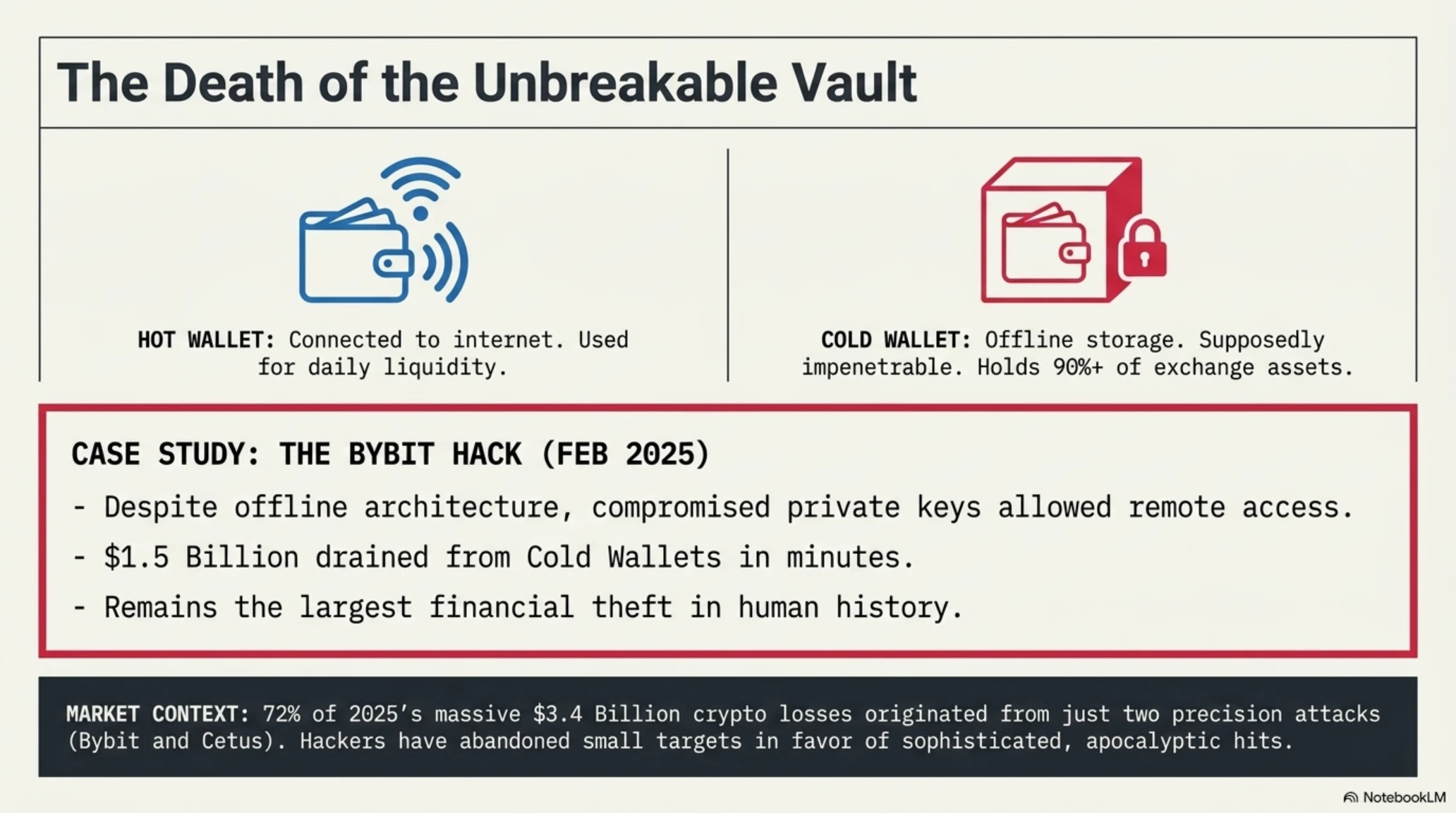
February 2025 was a month that changed the history of the crypto industry forever. Bybit exchange, one of the world's largest trading platforms, was hacked and $1.5 billion was stolen from its cold wallets. This wasn't just a hack, but the largest financial theft in all of human history. For comparison, the largest physical bank robbery in history was the Central Bank of Iraq heist in 2003, which "only" netted $920 million.
Difference Between Cold Wallet and Hot Wallet
Stunning Statistics of 2025-2026 Hacks
2025 was the worst year in cryptocurrency security history. According to various reports from Chainalysis, TRM Labs, and CertiK, between $2.7 and $3.4 billion was stolen throughout the year from exchanges and DeFi protocols. But interestingly, the bulk of this damage—about 72 percent—came from just two major incidents (Bybit and Cetus). What does this mean? It means criminals are no longer going after small targets, but carefully identifying big targets and hitting them with sophisticated attacks.
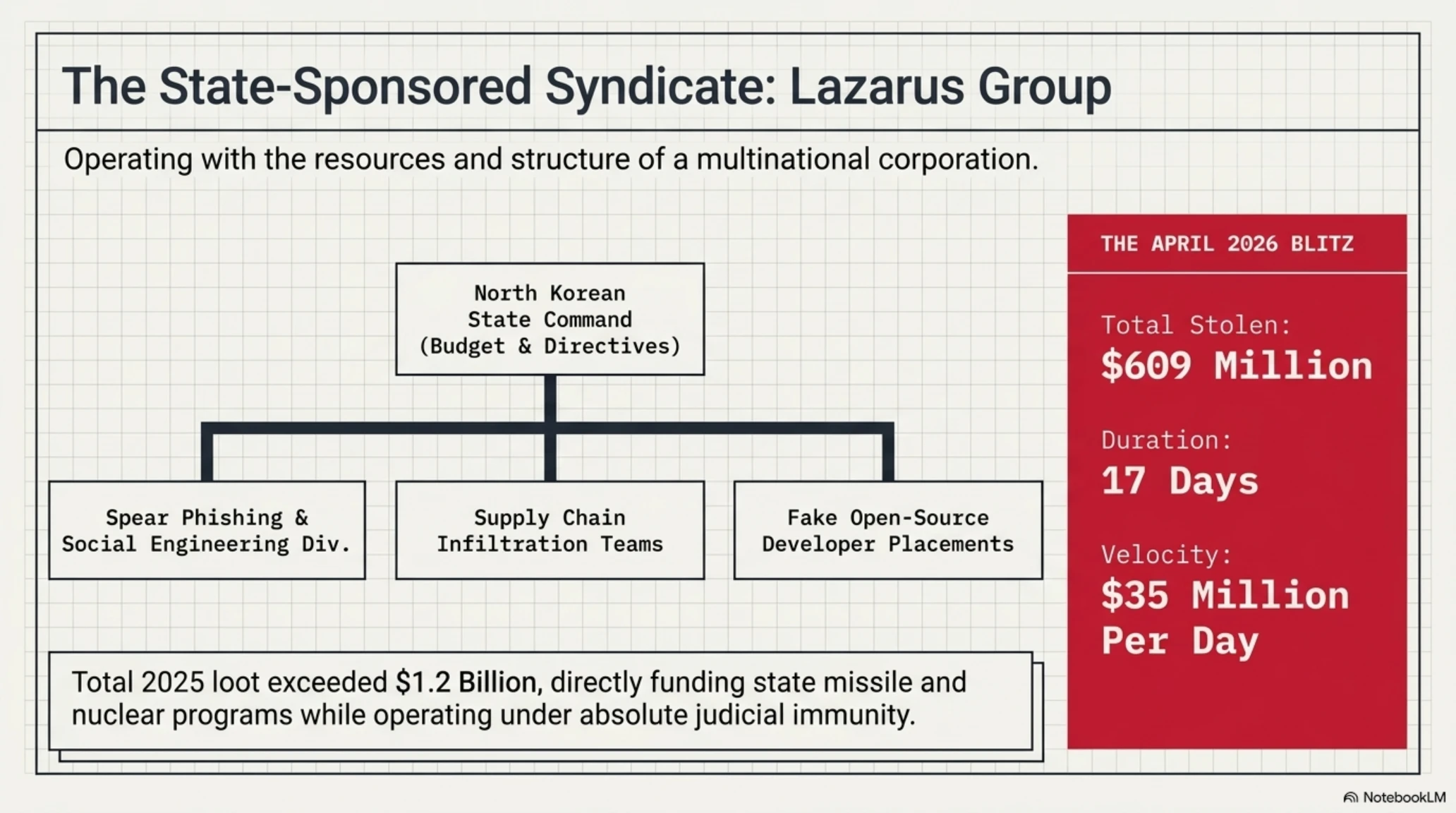
In the first half of 2026, the trend continued. The biggest hack of this period was the attack on Drift Protocol, which caused $295 million in losses. Also, the North Korean Lazarus Group, one of the most active state-sponsored hacking groups, stole over $609 million from various platforms in a 17-day span in April 2026. That's an average of about $35 million stolen per day—a figure no bank robber in history could even imagine.
Biggest Crypto Hacks in History
| Hack | Date | Amount Stolen | Recovery Status |
|---|---|---|---|
| Bybit | February 2025 | $1.5B | Not recovered |
| Cetus Protocol | March 2025 | $283M | Partially recovered |
| Drift Protocol | April 2026 | $295M | Under investigation |
| Mt. Gox | 2014 | $460M | Partially returned |
| Coincheck | 2018 | $530M | Not recovered |
Why Are Cryptocurrencies Hackers' Favorite Target?
The answer is simple: fast transferability, relative anonymity, and irreversibility of transactions. When a thief robs a bank, cash is heavy, they have to move it, hide it, and then slowly spend it so as not to arouse suspicion. But when a hacker hits a crypto exchange, they can transfer the amount to hundreds of different wallets within minutes, launder it through mixers and blockchain bridges, and ultimately use it cleanly.
Of course, it's not that simple. Many of these hacks require deep technical knowledge, identification of complex vulnerabilities, and sometimes even insider cooperation. But the important point is that physical presence, threats with weapons, or hostage-taking are no longer necessary. All this can be done from a bedroom on the other side of the world.
Quantum Threat: When Even Bitcoin Isn't Safe
If you think current hacks are scary, you should know that a bigger threat is on the way: quantum computers. These ultra-advanced machines, which use the principles of quantum physics, can perform complex calculations that would take thousands of years for regular computers in just minutes. And this means they can break the encryption that currently protects blockchains.

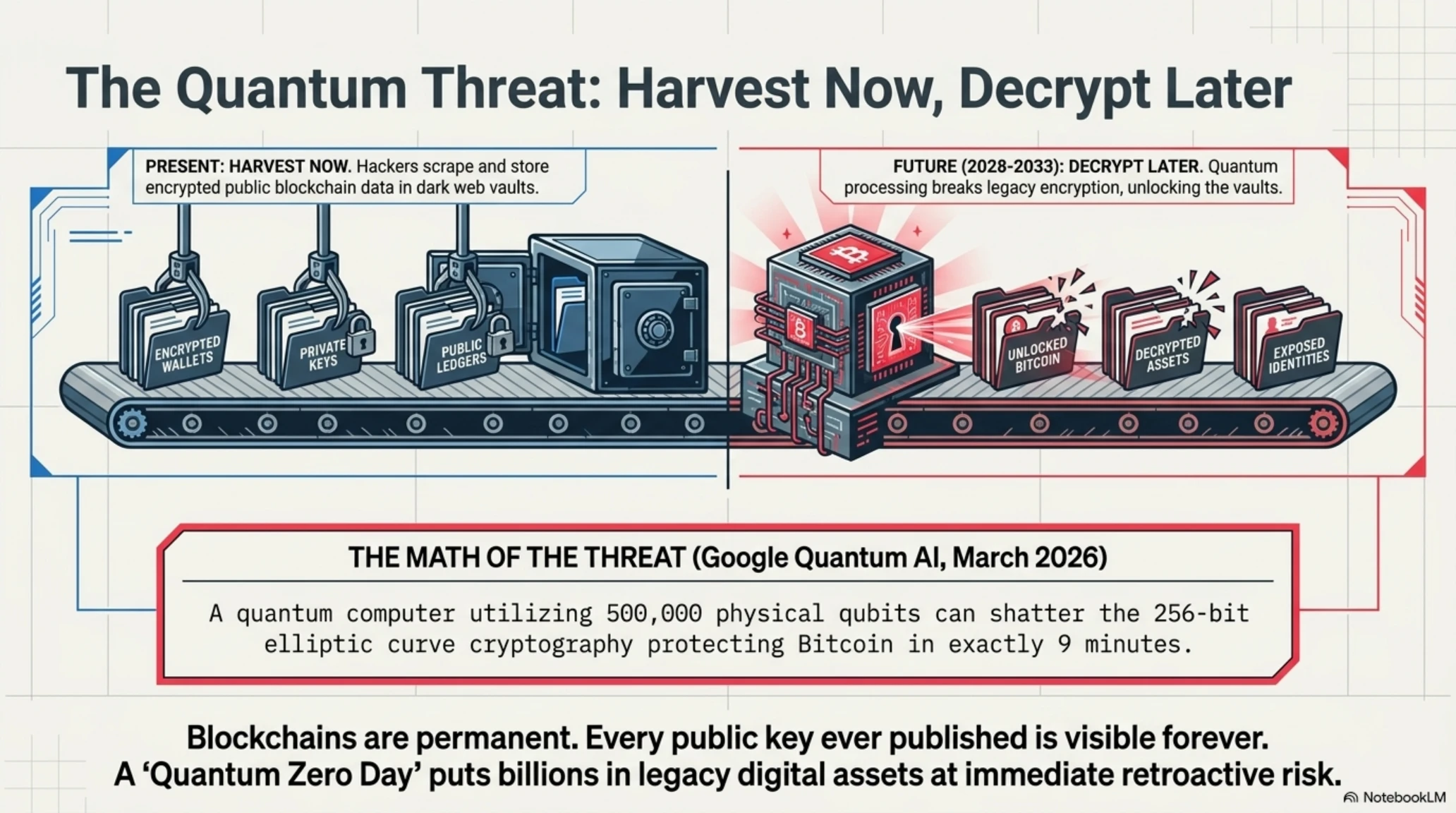
In March 2026, Google Quantum AI's team published a 57-page paper estimating that with a quantum computer with less than 500,000 physical qubits, the 256-bit elliptic curve cryptography protecting Bitcoin and Ethereum could be broken in just 9 minutes. What does this mean? It means anyone with access to a powerful quantum computer could extract the private keys of Bitcoin wallets and steal all their assets.
When Should We Be Worried?
The good news is that there isn't yet any publicly available quantum computer that can do this. The most advanced current quantum computers, like those IBM or Google have, only have a few hundred logical qubits, far from the 500,000 mark. But independent estimates predict that between 2028 and 2033, this technology will reach a point where it can be a real threat.
Here's the important point: unlike a regular database whose locks can be quietly changed, a blockchain cannot. Every public key ever published on a blockchain is visible forever. Attackers can collect these keys right now, store them on a disk, and wait for quantum computers to become more powerful. This is called a "Harvest Now, Decrypt Later" attack—collect now, decrypt later.
Social Engineering: The Oldest Trick, The Newest Tools
In all heist films, there's one common element: infiltration. Whether through a corrupt employee, identity forgery, or even through a romantic relationship. This technique is called social engineering, and it's still the most powerful weapon criminals have. The difference today is that social engineering has combined with artificial intelligence and become a superweapon.

Let's examine a real scenario: imagine you're an employee in the finance department of a large company. You receive an email from the CEO saying a confidential deal is underway and you must immediately transfer $500,000 to a foreign account. The email comes from the company's official address, the digital signature is correct. Then your phone rings, it's the CEO's voice emphasizing that this is urgent. What do you do?
In the past, this scenario was easy to detect: phishing emails usually had spelling errors, fake voices were obvious. But today with deepfake technology, the email is completely authentic, the voice is exactly like the CEO's, and you might even have a short video conference where you see the CEO's face (albeit fake). The success rate of these attacks is about 33 percent—meaning one in three people falls for it.
Lazarus Group: State-Sponsored Hackers Operating Like a Corporation
One of the main players in the world of crypto hacks is the Lazarus Group—a state-sponsored hacking group backed by North Korea. This group operates like an organized company: clear management structure, specialized teams, government budget, and defined financial goals. According to estimates, the Lazarus Group obtained over $1.2 billion through crypto hacks in 2025, a significant portion of which has been used to finance North Korea's missile and nuclear programs.
This group's methods are highly sophisticated: from targeted spear phishing attacks to supply chain attacks and even hiring fake developers who plant malicious code in open-source projects. In April 2026, over a 17-day period, Lazarus managed to steal $609 million from multiple platforms—an average of $35 million per day.

Impenetrable Digital Vaults: Do They Even Exist?
In heist films, there's always an "unbreakable" vault. But in the real world, no security system is 100% secure. As security experts say: "There are only two types of systems: systems that have been hacked, and systems that don't know they've been hacked yet." However, there are several security layers that can drastically reduce the probability of theft.
Multi-Factor Authentication (MFA): The First Line of Defense
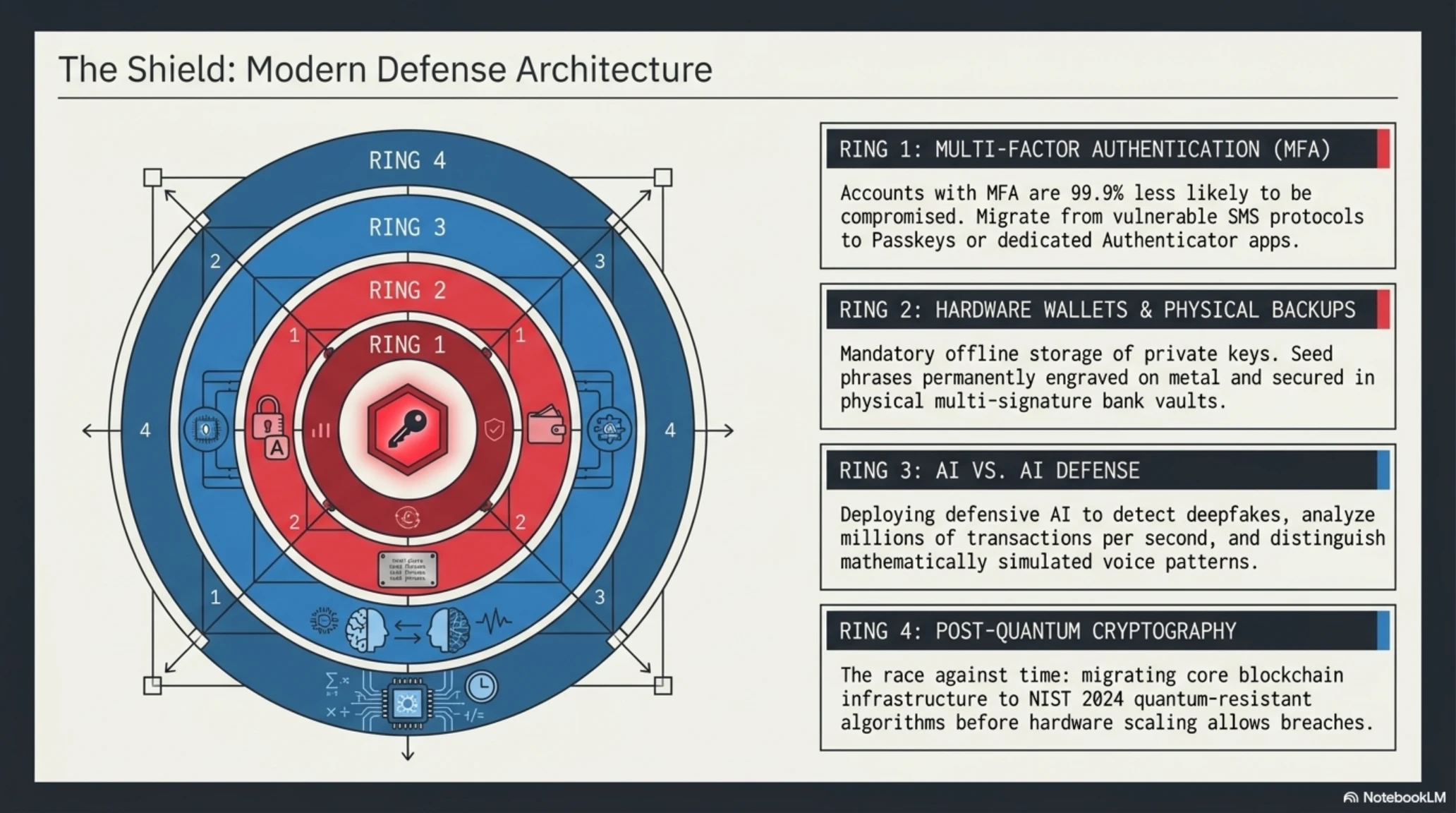
The simplest and most effective way to protect digital accounts is using multi-factor authentication. This means in addition to a password, another step must be completed: an SMS code, an Authenticator app, or even a physical security key (like YubiKey). According to Google reports, accounts using MFA are 99.9% less likely to be hacked.
But even MFA has weaknesses. SIM swapping attacks or advanced phishing can bypass MFA. For this reason, experts recommend using more modern methods like Passkey or hardware security keys.
Hardware Wallets: Your Personal Bank
For cryptocurrencies, the most secure storage method is using hardware wallets like Ledger or Trezor. These devices store private keys offline and never expose them to the internet. Even if your computer is infected with a virus, the keys remain secure.
Of course, this also has its weaknesses. If you lose your hardware wallet or your recovery phrase (Seed Phrase) falls into others' hands, your assets are lost. This is why experts recommend engraving your Seed Phrase on metal and storing it in multiple secure locations (like a bank vault).
Best Security Practices for Digital Assets
Post-Quantum Cryptography: Preparing for the Future
As the era of quantum computers approaches, the cryptography community is developing new algorithms that are resistant to quantum attacks. NIST (National Institute of Standards and Technology) published the first post-quantum cryptography standards in 2024, and now major blockchain projects are examining how to migrate to these algorithms.
The main problem here is that migration to post-quantum cryptography isn't quick work. Blockchains must change their protocols, users must update their wallets, and all this must be done without the network going down or security being compromised. Some projects like Ethereum and the Bitcoin Foundation are working on long-term solutions, but this is a race against time.
AI for Defense, Not Just Attack
Fortunately, artificial intelligence isn't just a tool for criminals. Security companies also use AI to identify suspicious patterns, detect deepfakes, and prevent fraud. Modern fraud detection systems can analyze millions of transactions per second to identify and block unusual behaviors.
For example, some banks use AI systems that can distinguish real voices from simulated ones, or detect subtle changes in a deepfake video's face. This is an ongoing battle: criminals improve their AI tools, and security companies advance their detection systems.
Lessons from Films: What Hasn't Changed?
Despite all these technological changes, one thing remains constant: motivation. Whether in Ocean's Eleven, Money Heist, or today's real hacks, the primary motivation is the same: money and power. The difference is only in the method. If Danny Ocean were alive today, he'd probably be a cybersecurity expert who hacks at night, not a thief in a suit.

Heist films teach us that no system is invulnerable, every lock has a key, and ultimately, the weakest link is always human. These lessons are truer today than ever. Security systems become more advanced every day, but criminals also find new methods every day.
Interestingly, in many heist films, the heroes ultimately fail or at least get punished somehow. But in the real world, the arrest rate for international hackers is very low. Especially when it comes to state-sponsored hackers like Lazarus, there's virtually no way to prosecute them legally. This is perhaps the saddest difference between cinema and reality.
Risk vs. Reward Comparison
| Type of Theft | Average Loot | Arrest Probability | Average Punishment | Physical Risk |
|---|---|---|---|---|
| Physical bank robbery | $7,500 | 85% | 15 years | Very high |
| Traditional fraud | $50,000 | 45% | 5 years | Low |
| Crypto hack | $15M | 15% | Variable* | Zero |
| CEO Fraud with AI | $4.1M | 8% | Variable* | Zero |
| State hacking (Lazarus) | $35M/day | ~0% | None | Zero |
The Future of Theft: What Should We Expect?
If current trends continue, the future of theft will be even more complex and terrifying. Here we examine several possible future scenarios predicted based on current technology and security trends.
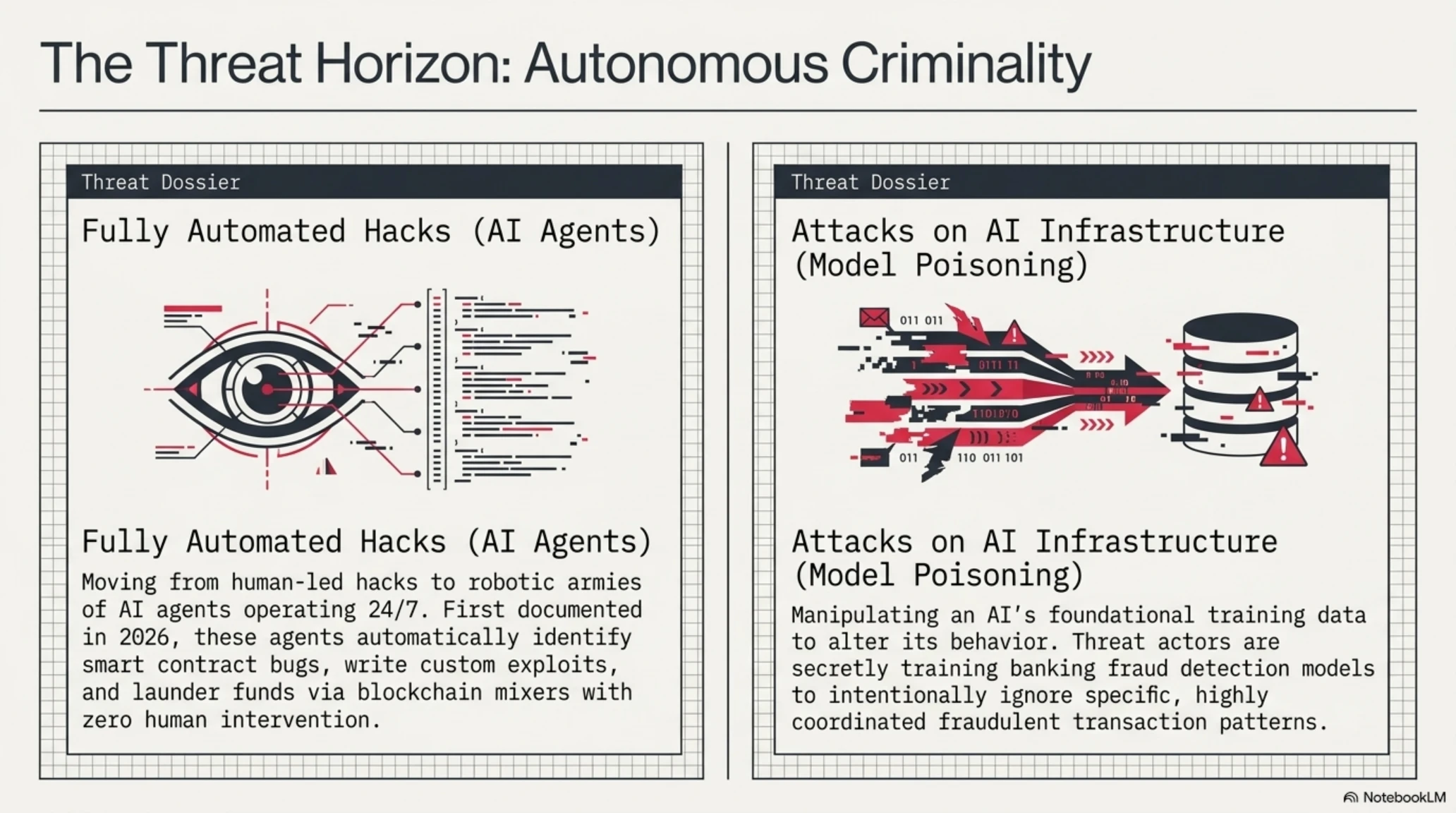
1. Fully Automated Hacks with AI Agents
Imagine an artificial intelligence that can automatically identify security vulnerabilities, write exploits, execute attacks, and even launder stolen money through complex routes—all without human intervention. This is no longer science fiction. In 2026, the first examples of automated AI hacking agents were seen that could automatically analyze smart contracts and find security bugs.
This means in the future, we may face "robotic armies" of AI hackers that scan networks 24/7 and identify vulnerable targets. The speed and scale of attacks will increase exponentially, and security systems managed by humans won't be able to respond in time.
2. Attacks on AI Infrastructure
Just as AI is used for attack, AI systems themselves will also be targets of attacks. Model Poisoning is a technique where an attacker manipulates an AI's training data to change the model's behavior. Imagine a bank fraud detection system secretly trained to ignore certain types of suspicious transactions. Or a customer service chatbot programmed to leak sensitive information.

3. The Quantum Threat Becomes Real
Between 2028 and 2033, we'll likely witness the first real quantum attacks. When this happens, we may have a "Quantum Zero Day"—a day when suddenly all traditional encryption is broken and billions of dollars in digital assets are at risk. This could be the biggest security crisis in human history.
Fortunately, the technical community is aware of this threat and is preparing. But the question is: will we be ready in time? Will all critical systems have migrated to post-quantum cryptography by then? History has shown that in cybersecurity, we usually react rather than act preventively.
Conclusion: Today's Vaults, Tomorrow's Memories
From Ocean's Eleven to today, the world of theft has changed. What once required a team of 11, months of planning, and high risk to life is now possible with one person, a laptop, and a few lines of code. The loot has also grown larger: from $160 million to $1.5 billion in a single attack. And unfortunately, the risk of arrest has also decreased.
But this isn't the end of the story. Just as technology advances, security solutions will also advance. Quantum cryptography, defensive AI systems, advanced biometric authentication, and next-generation blockchains are all under development. The battle between attackers and defenders will always continue, only the tools change.
Perhaps someday heist films will no longer be about physical vaults, but about hackers trying to bypass quantum security systems. And perhaps future generations will look at our films and laugh at how we thought a steel vault was secure. Because ultimately, absolute security doesn't exist—only different levels of difficulty exist. And there will always be someone trying to find a way around it.
Frequently Asked Questions
Are crypto hacks really bigger than bank robberies?
Yes. The largest physical bank robbery in history was about $920 million (Central Bank of Iraq, 2003). In contrast, the Bybit hack in 2025 broke records at $1.5 billion. In total, over $3.4 billion was stolen from exchanges in 2025.
How can I protect my digital assets?
Three main steps: 1) Use two-factor authentication (2FA) with an Authenticator app, not SMS. 2) Store large assets in offline hardware wallets. 3) Never store private keys or Seed Phrases online and stay away from suspicious links.
Can AI really fake my voice?
Yes. With modern Voice Cloning technology, just a few minutes of your voice sample (which can be obtained from public videos, podcasts, or even recorded calls) is enough for AI to speak any text in your voice. These tools are even available for free or at very low prices.
When will quantum computers become a real threat?
Independent estimates say between 2028 and 2033. Google said in March 2026 that with a 500,000 qubit computer, Bitcoin could be broken in 9 minutes. Currently, the most powerful quantum computers have a few hundred qubits, but progress is rapid.
Why is the hacker arrest rate so low?
Several reasons: 1) Hackers can operate from anywhere in the world and tracking them is difficult. 2) Many are state-sponsored (like North Korea's Lazarus) and have judicial immunity. 3) Anonymization technologies like VPN, Tor, and crypto mixers make tracking difficult. 4) International cooperation in prosecuting cybercriminals is weak.
Are heist films realistic?
Not really. Films like Ocean's Eleven are exaggerated and ignore many technical details. In reality, large physical heists are very rare, success rates are low, and arrest probability is high. But films do get one thing right: the main weakness of any security system is human.
Sources
Veriff - Deepfake Fraud Cost 2026
Axis Intelligence - AI Scam Statistics
The Next Web - Global Scam Economy
Crypto Hacks:
Chainalysis - Crypto Hacking 2025
DexTools - Biggest Crypto Hacks
Yellow Network - Crypto Exploits Analysis
Quantum Threat:
PostQuantum - Quantum Threat Overview
Cambridge - Quantum & Blockchain
CEO Fraud:
Forbes - CEO Deepfake Fraud
CybelAngel - Voice Cloning Attacks
Additional Gallery: 🎭 Tekin Analysis | From Ocean's 11 to AI Heists: The New Era of Digital Theft