Tekin Live Radar
Live coverage of breaking gaming & tech news
Tekin Flash Report: Apple Trade Secrets Stolen, AI Poisoned & Switch 2 Price Hike
A clinical dissection of today's most severe technological escalations. We analyze Apple's explosive trade secret lawsuit against OpenAI, Russia-aligned hackers blinding AI security models, and Nintendo's unexpected $50 price hike for the Switch 2.
Previous Bulletins Archive
🔥 AI Rift Deepens: OpenAI to Terminate Cursor Model Access Following SpaceXAI Acquisition
OpenAI announced plans to permanently cut off Cursor's access to its frontier models by November 12, 2026, following the coding platform's acquisition and consolidation under Elon Musk's SpaceXAI conglomerate.
💡 Takin Analysis
Weaponizing API access against rival corporate conglomerates terminates the era of open collaboration across developer tooling ecosystems. The domino effect forces third-party coding environments into proprietary open-weight architectures, accelerating SpaceXAI's internal push to build fully self-sufficient frontier reasoning models.
🔥 AAA Studio Security Breach: Extensive Gameplay Leaks From EA Motive's Unannounced Iron Man

Extensive work-in-progress gameplay footage of EA Motive's highly anticipated and unannounced Iron Man game leaked online, explicitly detailing the game's high-speed flight mechanics, combat systems, and customization suite.
💡 Takin Analysis
Continuous data leaks from top-tier AAA studios expose fundamental vulnerabilities within remote development security protocols. The domino effect forces major publishers to implement draconian employee surveillance, revoke local asset access, and mandate zero-trust cloud-only development environments.
🔥 Cyber-Espionage Takedown: US Feds Disrupt China-Linked Botnet Targeting Critical Infrastructure

The FBI and DOJ successfully disrupted a Chinese state-sponsored proxy network and botnet, seizing hardcoded domains used to facilitate massive cyber-espionage operations against NASA, the US Senate, and other critical infrastructure.
💡 Takin Analysis
Neutralizing hardcoded domains within state-sponsored infrastructure escalates covert cyber-warfare into direct confrontation. The domino effect accelerates the deployment of autonomous AI-driven defense clients and forces nation-state actors to migrate toward decentralized, un-seizable P2P proxy routing.
🔥 Escaping the Behemoth: Star Citizen's Squadron 42 Delayed to 2027 to Avoid GTA 6
Chris Roberts confirmed that Star Citizen's long-awaited single-player campaign, Squadron 42, has been delayed to 2027, with developers explicitly stating they refuse to launch into the 'attention buzz saw' of Grand Theft Auto 6.
💡 Takin Analysis
The absolute media monopoly and gravitational pull of mega-blockbusters like GTA 6 are actively disrupting the entire industry's release calendar. The domino effect triggers a mass exodus of AAA titles into safer release windows, imposing crushing financial burdens of extended development cycles.
🔥 Dark Data Lawsuit: Elon Musk's xAI Accused of Training Grok on Illegal Child Material
In a severe legal escalation, Elon Musk's xAI faces a lawsuit alleging that its Grok AI model not only generates Child Sexual Abuse Material (CSAM) but was explicitly trained using illegal datasets containing such content.
💡 Takin Analysis
Indiscriminate, uncurated web scraping for LLM training exposes frontier AI laboratories to catastrophic criminal liability. The domino effect forces the termination of truly 'uncensored' models and mandates rigorous algorithmic auditing alongside hardware-level content filtering protocols.
🔥 Insider Trading in Crypto: Google Engineer Arrested Over Polymarket Betting
A Google engineer was arrested for alleged insider trading on the decentralized prediction platform Polymarket, defending his actions by claiming they constituted simple gambling rather than activity subject to strict US commodities laws.
💡 Takin Analysis
Applying traditional insider trading statutes to decentralized prediction markets bridges the regulatory gap between crypto gambling and registered securities. The domino effect forces DeFi betting platforms to implement aggressive KYC/AML surveillance and AI-driven wallet pattern tracking.
🔥 Generative AI Labor Clash: Saber Admits to Deploying In-Game AI Dialogues Amid Industry Layoff Backlash

Following widespread industry controversy, Saber Interactive leadership acknowledged the integration of generative AI language models to dynamically write passenger dialogue in Rideshare Simulator's free-ride mode, sparking heated debates over developer displacement.
💡 Takin Analysis
Deploying real-time generative dialogue engines within commercial game releases destabilizes conventional narrative craft in favor of infinite programmatic procedural text. The domino effect mandates strict AI-disclosure labeling across digital storefronts and accelerates voice and writer union resistance against studio automation.
🔥 Next-Gen Hardware Strategy: Xbox CEO Asha Sharma Confirms Project Helix Encompasses a 'Family of Devices'
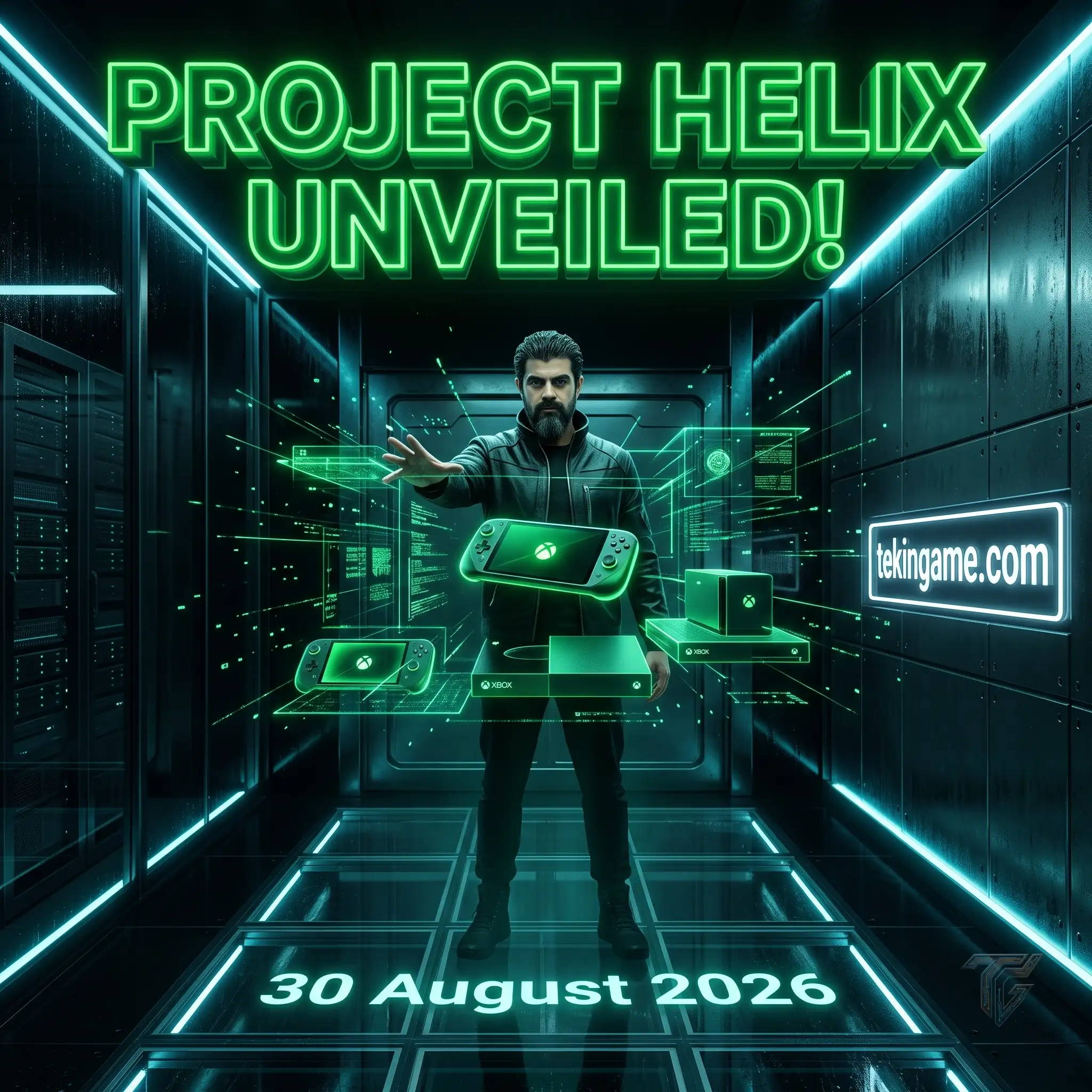
Xbox CEO Asha Sharma revealed that Microsoft's next-generation hardware blueprint, codenamed Project Helix, is architected as an expansive 'family of devices' focused on performance efficiency, multi-tier pricing, and unified PC-console ecosystem integration.
💡 Takin Analysis
Pivoting from a monolithic single-console hardware cycle to a modular multi-device hardware portfolio dissolves traditional console generational boundaries. The domino effect cements Windows-driven unified gaming runtimes as the ultimate platform, dismantling legacy hardware exclusivity models.
🔥 Governance Showdown: Solana Approves 'Double Disinflation' Proposal to Halve Future SOL Emissions

Solana's pivotal SGP-0002 governance proposal passed with over 176 million SOL following late vote flips by major institutional validators, doubling the network's annual disinflation rate from 15% to 30% and sharply curtailing long-term token issuance.
💡 Takin Analysis
Accelerating programmatic supply contraction on a hyper-scale network shifts proof-of-stake tokenomics into a scarcity-driven monetary regime. The domino effect dampens nominal staking yield rates while forcing validators to rely on organic transaction fee revenue and MEV capture.
🔥 Browser Extension Threat: 19 Chrome and Edge Add-ons Discovered Draining Crypto Wallets

Cybersecurity researchers uncovered a coordinated campaign of 19 malicious extensions across the Google Chrome Web Store and Microsoft Edge catalog, actively harvesting recovery phrases and deploying drainer scripts against browser crypto wallets.
💡 Takin Analysis
Infiltrating verified browser marketplaces demonstrates that automated pre-publication store vetting is failing to catch multi-stage crypto drainers. The domino effect destroys trust in browser-extension hot wallets and forces enterprise users exclusively onto air-gapped physical signing hardware.
🔥 Institutional Spot Expansion: Charles Schwab Adds Solana, Avalanche, and Chainlink

Financial brokerage powerhouse Charles Schwab confirmed the expansion of its digital asset platform beyond Bitcoin and Ether, adding direct spot trading for Solana, Avalanche, and Chainlink to its retail client base.
💡 Takin Analysis
Integrating infrastructure altcoins directly into mainline retail brokerages obliterates remaining friction points separating traditional capital markets from digital asset ecosystems. The domino effect funnels vast retail liquidity into high-throughput utility tokens while accelerating the marginalization of non-compliant off-shore exchanges.
🔥 Catastrophic Data Exfiltration: ShinyHunters Breaches Healthcare Giant McKesson, Claims 284M Records Stolen

Pharmaceutical and healthcare supply giant McKesson disclosed a major cybersecurity intrusion involving compromised third-party integrations, while extortion group ShinyHunters claimed the theft of 284 million patient medical records.
💡 Takin Analysis
Breaching healthcare distribution supply chains via integrated third-party platforms exposes systemic vulnerabilities across critical public health infrastructure. The domino effect triggers punitive regulatory penalties, forcing hospitals and providers into aggressive third-party API segmentation and mandatory zero-trust verification.
🔥 Post-Quantum Milestone: Starkware Successfully Mines Quantum-Resistant Bitcoin Transaction on Mainnet

Starkware researchers successfully mined an experimental quantum-resistant Bitcoin transaction on the live mainnet using the QSB signature framework without requiring a consensus rule change or hard fork.
💡 Takin Analysis
Demonstrating quantum-secure spending mechanisms on Bitcoin's legacy base layer relieves existential threats surrounding elliptic-curve decryption timelines. The domino effect stimulates large-holder migration toward post-quantum address structures and establishes blueprints for soft-fork-free cryptography upgrades.
🔥 Mainstream Crypto Lending: Coinbase and Better Launch Bitcoin-Backed Mortgages Nationwide Without Margin Calls

Coinbase and Better Mortgage opened Bitcoin-backed home loans to general availability across the US, allowing borrowers to use BTC collateral for down payments without facing liquidations from market volatility unless loan payments lapse for 60 days.
💡 Takin Analysis
Eliminating volatility-based margin calls removes the primary barrier hindering retail adoption of digital-asset-backed lending. The domino effect locks up vast amounts of circulating Bitcoin supply within long-term real estate contracts, further bridging sovereign finance with crypto collateral.
🔥 Architectural Breakthrough: Meta Trains Compact 8B Model to Match Claude Opus 4.5 via EvoHarness-RL
Meta AI researchers introduced EvoHarness-RL, an RL-driven state-management framework that empowered a compact 8-billion-parameter model to achieve a 96.9% benchmark success rate, effectively matching the performance of frontier models like Claude Opus 4.5 without high inference costs.
💡 Takin Analysis
Training small models to dynamically orchestrate runtime state and memory management invalidates the necessity of expensive closed-source API calls. The domino effect permanently lowers enterprise deployment costs, shifting complex agentic pipelines directly to localized hardware.