Tekin Live Radar
Live coverage of breaking gaming & tech news
Tekin Flash Report: Apple Trade Secrets Stolen, AI Poisoned & Switch 2 Price Hike
A clinical dissection of today's most severe technological escalations. We analyze Apple's explosive trade secret lawsuit against OpenAI, Russia-aligned hackers blinding AI security models, and Nintendo's unexpected $50 price hike for the Switch 2.
Previous Bulletins Archive
🔥 Complete Network Freeze: Crypto.com's Cronos Halts Blockchain Following $75M Tectonic Exploit
Cronos validators completely halted block production after an attacker manipulated the thinly-traded TONIC token 100-fold to drain $75 million from lending protocol Tectonic, stranding most stolen funds onchain.
💡 Takin Analysis
Manually halting a Layer-1 network to contain an exploit obliterates the illusion of enterprise decentralization. The domino effect triggers an exodus from illiquid oracle-dependent protocols and intensifies scrutiny over centralized validator kill-switches.
🔥 Physical Media Pledge: CD Projekt Red Confirms The Witcher 4 Will Retain Physical Edition in All-Digital Era

CD Projekt Red confirmed that The Witcher 4 will retain a physical boxed edition for collectors even if console manufacturers completely eliminate optical discs by 2028.
💡 Takin Analysis
Pivoting to code-in-a-box physical packaging allows publishers to maintain physical retail shelf presence while fully transitioning actual software delivery to digital distribution. The domino effect converts game packaging into collector-only merchandise, finalizing the industry's shift away from physical optical media.
🔥 Extortion Attack Shuts Down Game: Hacker Wipes Player Data in Secret Neighbor

Publisher tinyBuild was forced to take multiplayer game Secret Neighbor offline after a threat actor breached internal databases, wiped player progression, and demanded the title be pulled from digital storefronts.
💡 Takin Analysis
Wiping live multiplayer databases marks an aggressive escalation from conventional data extortion to destructive sabotage against live-service games. The domino effect forces game studios to implement immutable, air-gapped player progression backups and isolate administrative database controls.
🔥 Nordic Tax Crackdown: Swedish Authorities Challenge Crypto Miners Pivoting to AI Infrastructure

Swedish tax authorities launched audits challenging hundreds of millions of kronor in tax deductions claimed by data center operators converting legacy crypto mining facilities into AI compute farms.
💡 Takin Analysis
Arbitrarily differentiating crypto hashing from AI inference creates severe fiscal friction that destroys the margins of hybrid computing centers. The domino effect stalls enterprise data center capital expenditure across Northern Europe and accelerates infrastructure flight to tax-friendly jurisdictions.
🔥 AI Surveillance Pushback: Bernie Sanders Pledges Legislation to Ban Flock AI Camera Networks

US Senator Bernie Sanders vowed to introduce federal legislation to dismantle Flock Safety’s mass surveillance network of over 120,000 AI-powered vehicle tracking cameras across the United States.
💡 Takin Analysis
Federal bans on automated tracking grids structurally dismantle the surveillance-as-a-service business model selling automated data to law enforcement. The domino effect terminates municipal AI monitoring contracts and forces computer vision startups to adopt privacy-preserving zero-retention architectures.
🔥 Russian Banking Shift: Sberbank to Offer Loans Collateralized by USDT and Crypto
Russia’s largest state lender, Sberbank, confirmed plans to accept Tether (USDT) and Ether alongside Bitcoin as collateral for bank loans, while openly questioning market demand for the central bank’s digital ruble.
💡 Takin Analysis
State-backed acceptance of dollar-pegged stablecoins over national CBDCs signals that sovereign digital currencies cannot compete with organic decentralized liquidity. The domino effect institutionalizes private dollar tokens as Russia's shadow trade settlement standard, undermining central bank control over domestic liquidity.
🔥 Resource Backlash: US Municipalities Enforce Strict Water and Energy Caps on AI Data Centers

Escalating environmental concerns over massive water and electrical grid consumption have pushed US municipal governments, led by Austin, to propose emergency zoning ordinances and moratoriums restricting the construction of hyperscale AI data centers.
💡 Takin Analysis
The collision between exponential AI compute requirements and localized utility scarcity transforms data center expansion into an acute municipal crisis. The domino effect forces hyperscalers to mandate zero-water closed-loop liquid cooling architectures and fund dedicated off-grid renewable power plants.
🔥 Jackson Hole Showdown: ECB and BIS Declare Central Bank Money Must Move Onchain as Stablecoins Lack Credibility

At the Jackson Hole Symposium, leadership from the European Central Bank and the Bank for International Settlements asserted that private stablecoins lack systemic liquidity credibility at scale, mandating that sovereign central bank reserves directly migrate onchain to anchor digital finance.
💡 Takin Analysis
Direct institutional resistance from global monetary authorities signals an impending regulatory offensive against private stablecoin issuers like Tether and Circle. The domino effect drastically accelerates the deployment of wholesale CBDCs and regulated tokenized bank deposits to reclaim sovereign dominance over onchain liquidity rails.
🔥 Multi-Chain Exploit: Critical Cosmos EVM Flaw Drains $6M Across Six Blockchains After Months of Delay
Exploiters weaponized a critical balance-calculation zero-day in the shared Cosmos EVM module to drain nearly $6 million across six independent blockchains, a vulnerability known internally to maintainers months prior to the incident.
💡 Takin Analysis
Shared infrastructure modules across decentralized networks introduce catastrophic systemic vulnerabilities, where a single logic flaw instantly compromises entire multi-chain clusters. The domino effect severely undermines responsible disclosure protocols in Web3 and forces cross-chain ecosystems to build rigorous sandboxes around shared virtual machines.
🔥 Pure Human Craftsmanship: Rockstar Confirms GTA 6 Launches with Zero Microtransactions and No Generative AI
Rockstar Games officially confirmed that Grand Theft Auto 6's single-player campaign will launch entirely free of microtransactions, emphasizing that its massive open world and 600,000+ custom animations were built without generative AI tools.
💡 Takin Analysis
Rockstar's total rejection of generative AI sets a monumental quality benchmark in an industry rapidly substituting creative labor with automated pipelines. The domino effect forces competing publishers to justify automated asset generation and creates severe consumer backlash against procedural, low-effort game content.
🔥 GTA 6 Hardware Rush: $900 PS5 Pro Sells Out Amid Ongoing PlayStation Boycott

Surging GTA 6 anticipation triggered massive shortages of the $900 PlayStation 5 Pro across US retailers, pushing scalper prices on Amazon up to $1,300 and overwhelming an ongoing player boycott against Sony's hardware policies.
💡 Takin Analysis
The unyielding demand for high-fidelity GTA 6 execution proves that generational software blockbusters can easily neutralize consumer resistance against premium hardware price hikes. The domino effect cements multi-tier luxury pricing for future mid-gen console refreshes, emboldening platform holders to accelerate the complete phase-out of physical media.
🔥 WordPress Ecosystem Alert: Five Critical Zero-Day Flaws Enable Remote Server Takeover Across Major Plugins

Cybersecurity researchers uncovered five critical vulnerabilities (scoring up to CVSS 9.8) spanning dominant WordPress components including Avada, GiveWP, TranslatePress, and WPMU DEV Dashboard, allowing unauthenticated attackers to bypass authentication and execute remote server code.
💡 Takin Analysis
Simultaneous critical failures across ubiquitous CMS extensions expose millions of production web applications to unauthenticated takeovers. The domino effect triggers extensive database injection campaigns, accelerates enterprise CMS ransomware operations, and forces immediate deployment of dynamic, zero-trust web application firewalls.
🔥 Hardware Security Regression: Google Cuts Critical Security Component on Pixel 11, Blocking GrapheneOS Support

The GrapheneOS security team revealed that Google omitted a foundational hardware security feature in the Pixel 11 lineup to cut manufacturing costs, officially terminating the privacy-hardened operating system's day-and-date support for the flagship.
💡 Takin Analysis
Compromising hardware-level sandbox isolation to optimize production margins directly destroys Google's competitive moat as the baseline hardware provider for high-assurance mobile security. The domino effect alienates enterprise, defense, and privacy-focused sectors, forcing the mobile security ecosystem to look for alternative OEM hardware partners.
🔥 Deceptive Shell Injection: New TerminalFix Campaign Abuses Fake Cloudflare CAPTCHAs to Drop Windows Backdoors
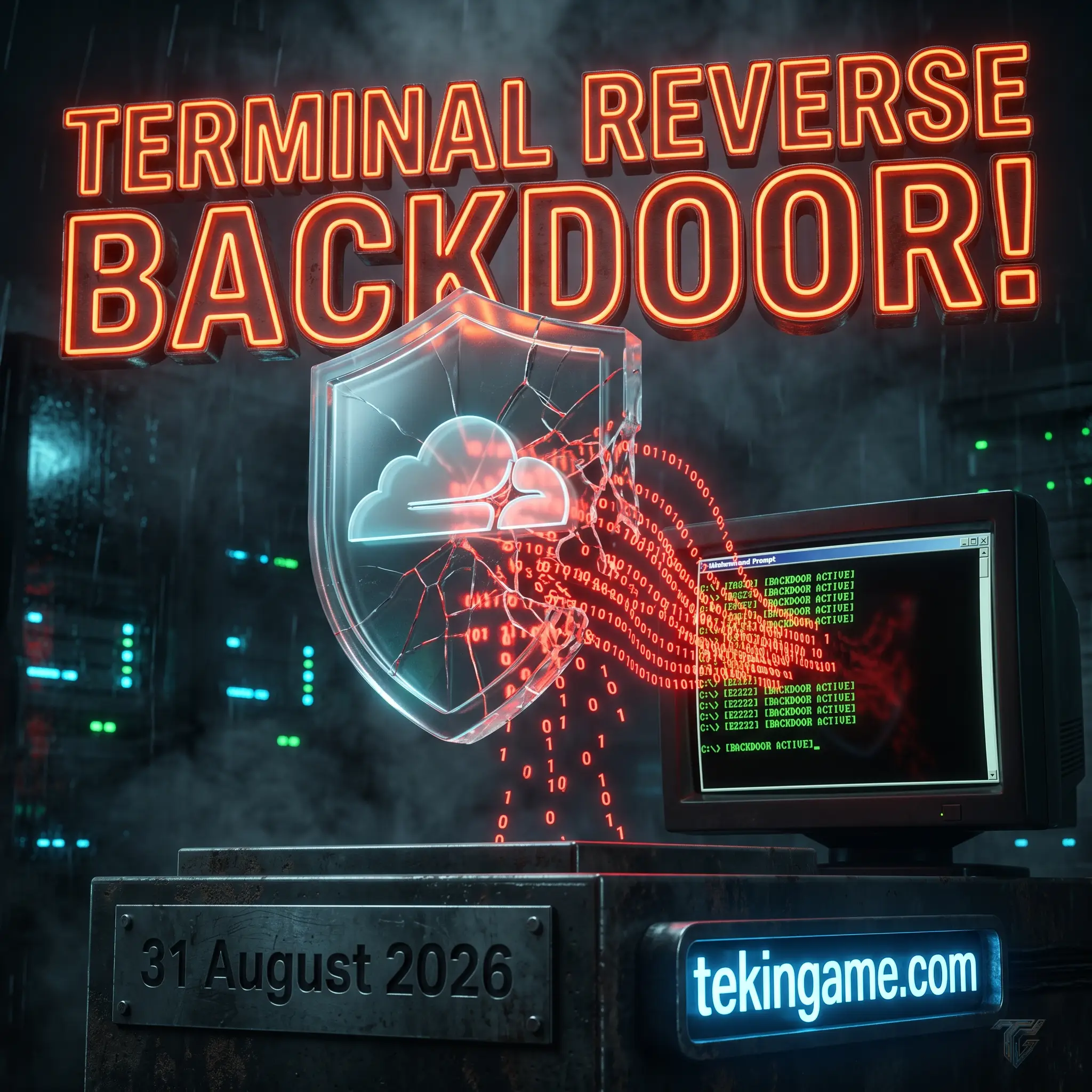
Microsoft disclosed details on a sophisticated ClickFix evolution dubbed 'TerminalFix,' which lures users into executing malicious base64 payloads inside Windows Terminal and PowerShell via fake Cloudflare CAPTCHA verification flows to establish persistent reverse shells.
💡 Takin Analysis
Weaponizing standard user verification reflexes completely circumvents endpoint perimeter defenses by tricking victims into executing native scripts. The domino effect invalidates conventional signature-based endpoint detection, compelling enterprise IT administrators to enforce zero-trust policies that restrict interactive PowerShell execution for standard accounts.
🔥 Multi-Billion Copyright Lawsuit: Sony Music and Warner Sue Anthropic Over Massive IP Theft

Sony Music and Warner Chappell filed a massive copyright infringement lawsuit against Anthropic in California federal court, alleging widespread IP theft across tens of thousands of musical works and seeking maximum statutory damages.
💡 Takin Analysis
Targeting frontier AI labs with multi-billion-dollar statutory damages directly threatens the foundational economics of pre-training commercial models. The domino effect mandates aggressive data sanitization across training pipelines and forces AI vendors to hike enterprise API pricing to absorb impending licensing settlements.