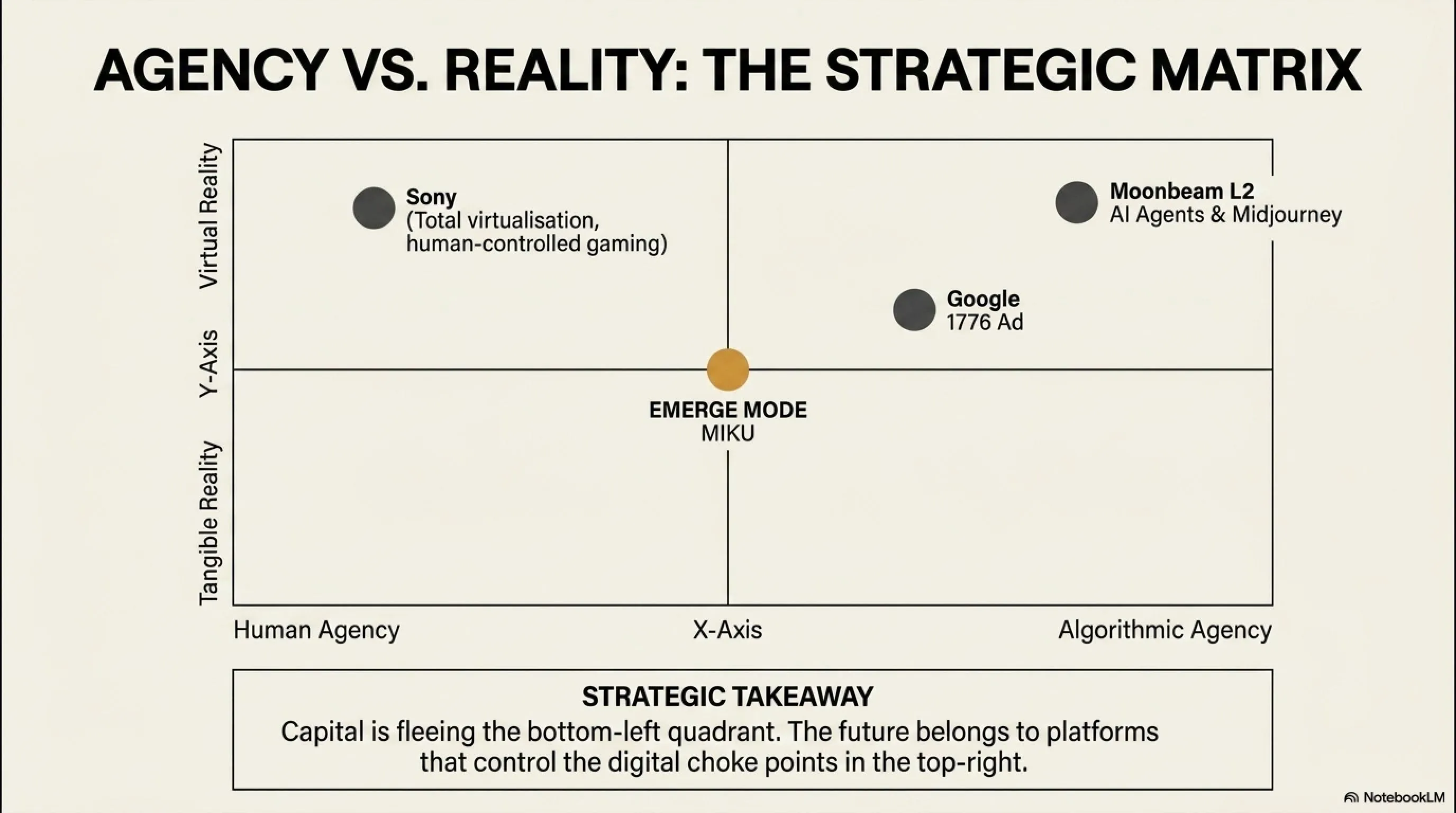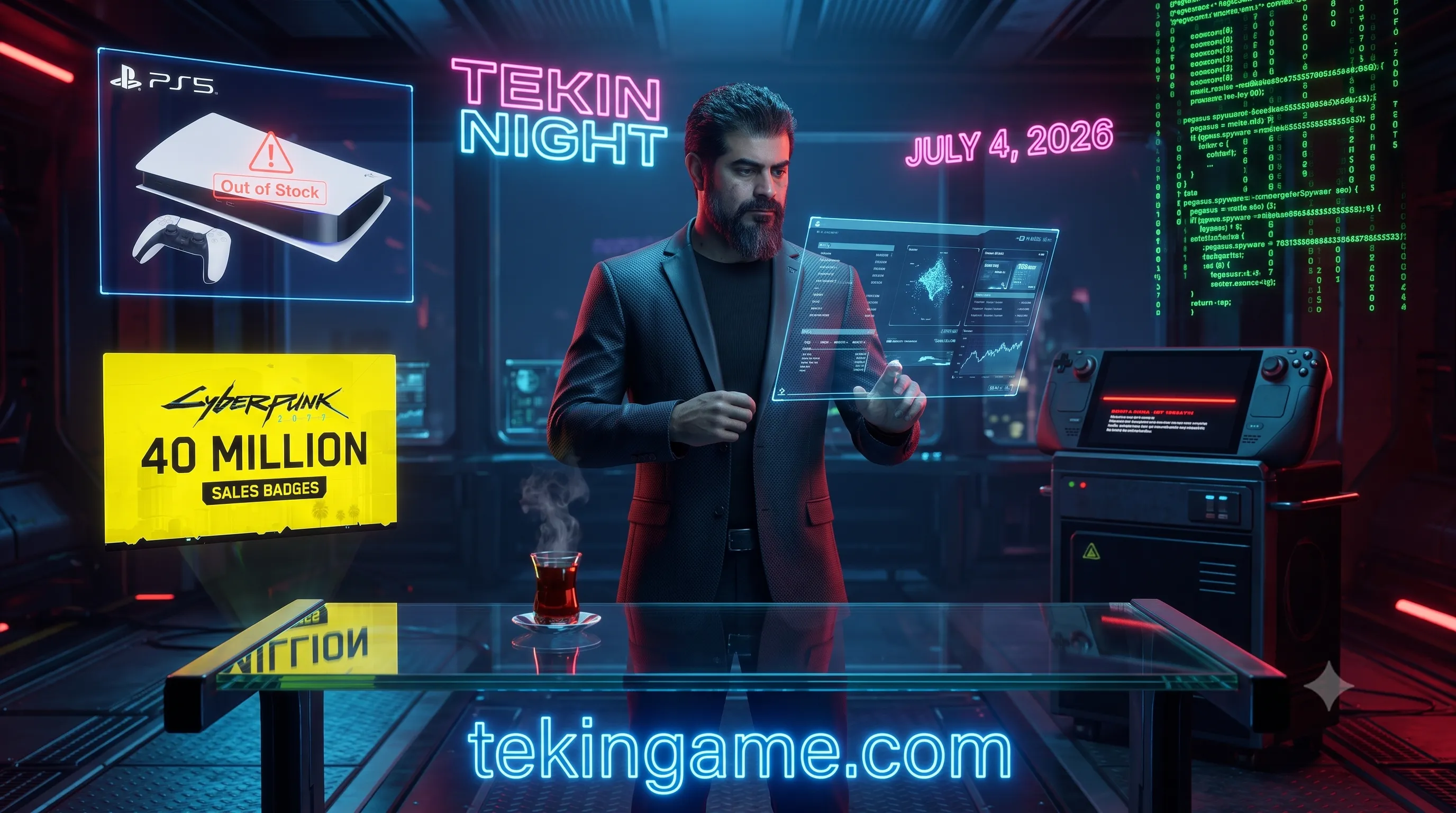
Sunday night, July 5, 2026, delivered seismic shifts across entertainment and tech. IGN revealed BEYOND BORDERS Vol.1, a collaboration merging Hatsune Miku with Western Hyperpop stars like Grimes, aiming to mainstream Vocaloid globally. Meanwhile, Sony officially announced the end of physical disc production for new PlayStation games starting January 2028, igniting massive preservation concerns. In the AI sector, Midjourney struck back in its copyright lawsuit, demanding Disney and Warner Bros. expose their
🌙 Tekin Night | Sunday, July 5, 2026
From Hatsune Miku's unprecedented collaboration with Grimes to Sony's farewell to physical PlayStation discs — a night that reshaped tech and entertainment.
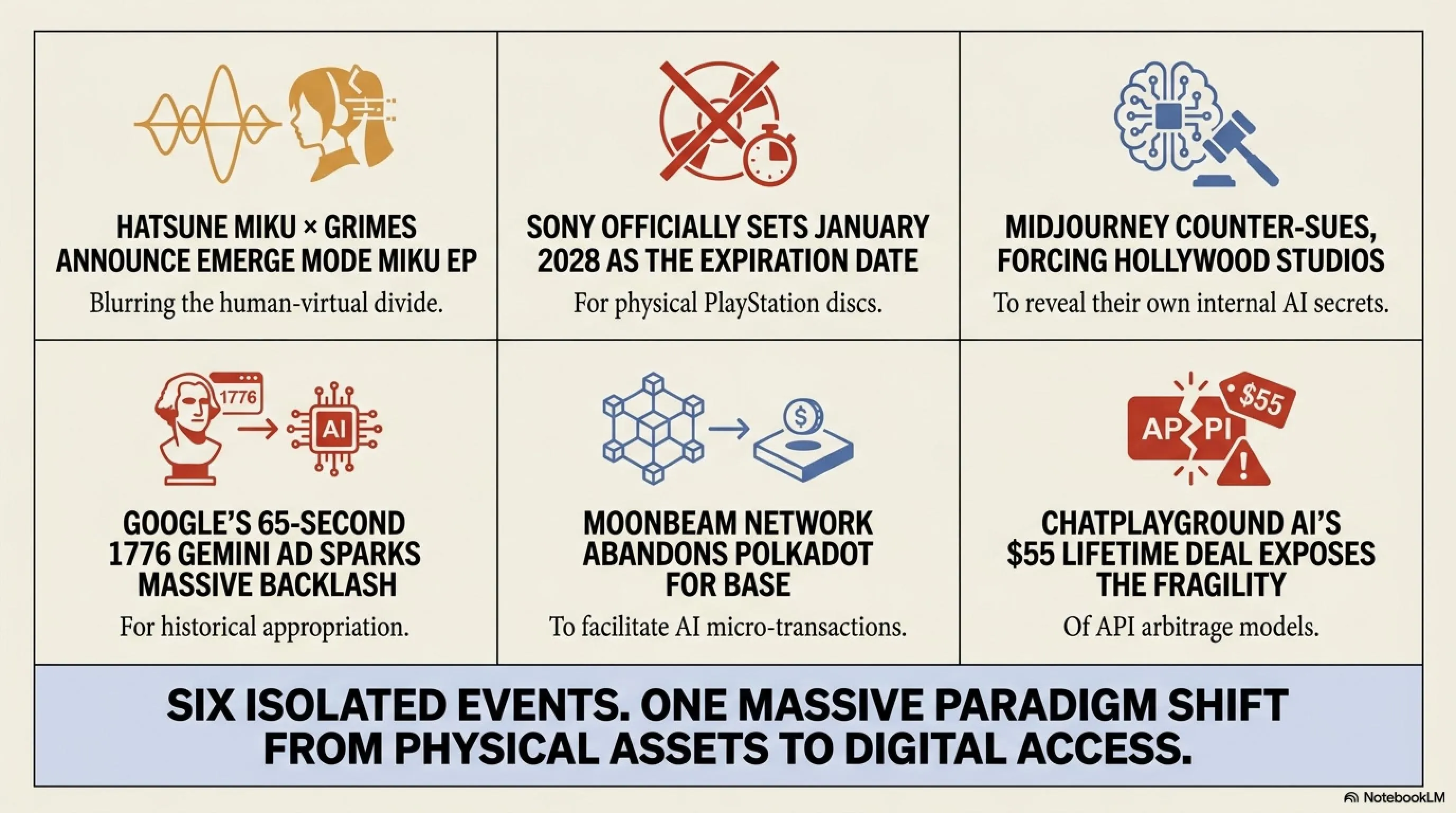
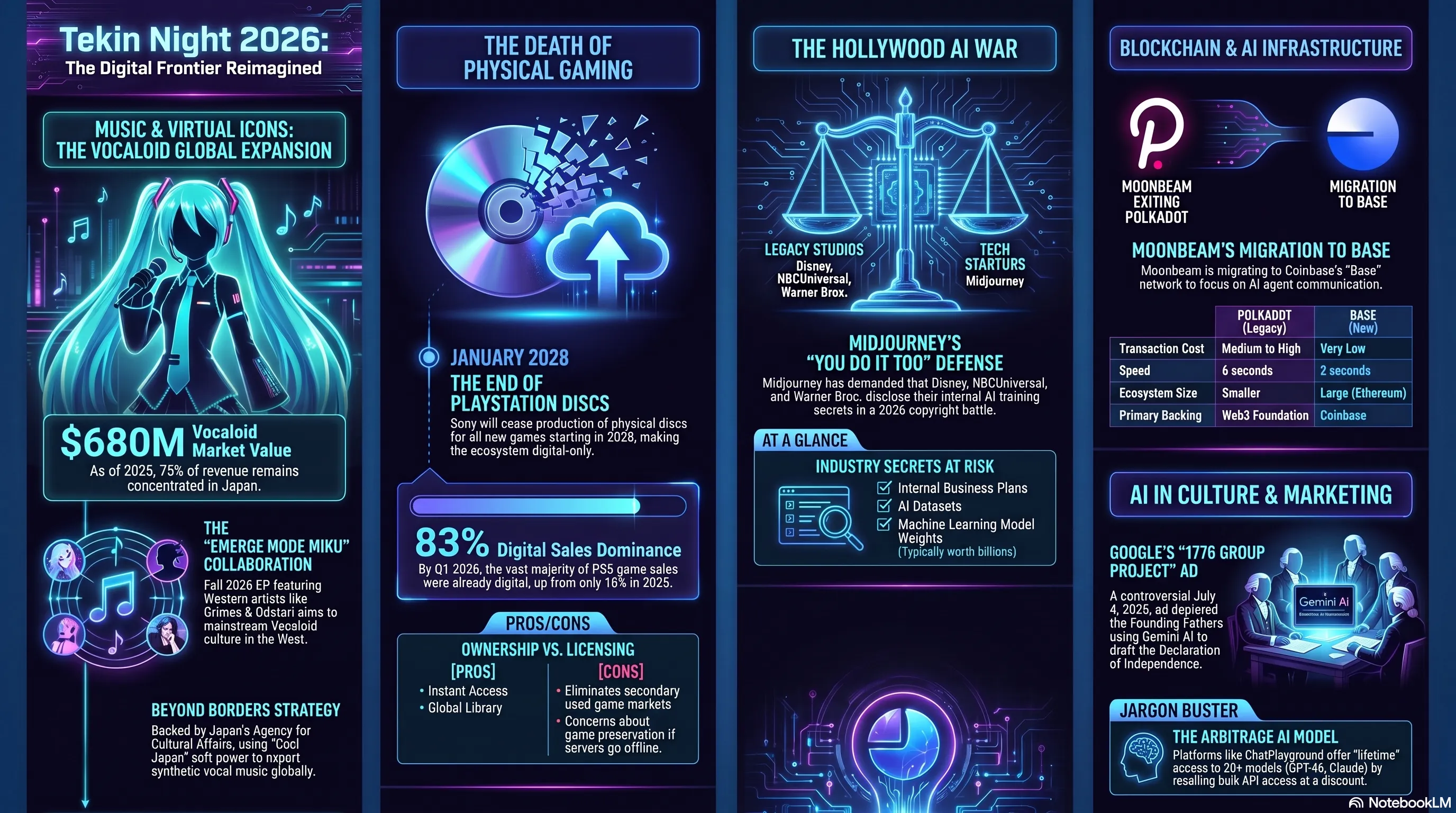
- 🎮🎵 Miku × Grimes- EMERGE MODE MIKU EP blends Vocaloid with Western Hyperpop
- 🎧💿 Death of Physical- Sony ends PlayStation disc production from January 2028
- 🚀⚖️ Hollywood AI War- Midjourney demands studios reveal their AI secrets
- 🗡️🇺🇸 Controversial Ad- Google imagines Declaration of Independence written with Gemini AI
When Japan's Virtual Icon Meets Western Hyperpop Royalty
At four o'clock Friday afternoon, the Anime Expo hall in Los Angeles witnessed one of the most exciting musical announcements of the year. IGN exclusively revealed the first details and official trailer for BEYOND BORDERS Vol.1: EMERGE MODE MIKU — a collaboration EP that could redefine the boundaries of electronic music as we know it.
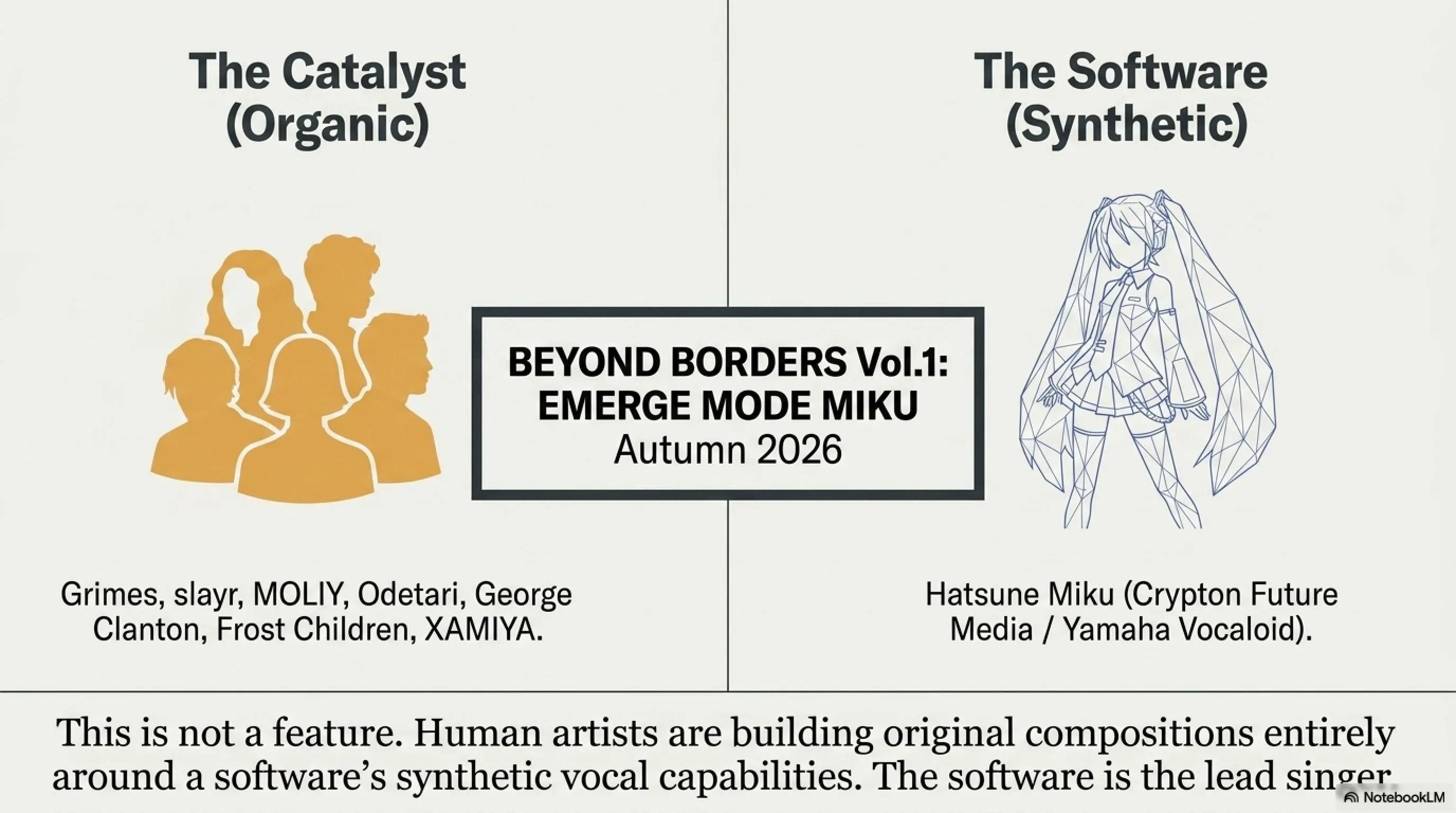
Hatsune Miku, the eternally 16-year-old virtual singer who has evolved from a 2007 Crypton Future Media software product into a global cultural phenomenon, is set to stand alongside major names including Grimes, slayr, MOLIY, Odetari, George Clanton, Frost Children, and XAMIYA. This project is the result of collaboration between Dwango and Nebula17, supported by the Agency for Cultural Affairs of Japan.
At a Glance: EMERGE MODE MIKU Project
- EP releases in Fall 2026
- All tracks feature Hatsune Miku as lead vocalist
- Blends Electronic, Alternative, Hyper-pop, and Rap styles
- Artists include: Grimes, slayr, MOLIY, Odetari, George Clanton, Frost Children, and XAMIYA
- Part of the global BEYOND BORDERs initiative backed by Japan's Agency for Cultural Affairs
Electronic music critics believe this collaboration could push Hyperpop and Alternative Electronic into a new phase. The reason is straightforward: Grimes, with her track record of merging technology and art, slayr with millions of TikTok followers, and Odetari influencing the new wave of internet music, are each creating exclusive tracks with Miku's Vocaloid voice. This isn't just a feature — each artist is building original compositions around Miku's synthetic vocal capabilities.
Jargon Buster
BEYOND BORDERs: Japan's Strategy for Globalizing Vocaloid Culture
The BEYOND BORDERs project is a long-term initiative aimed at expanding Vocaloid culture beyond Japan's borders. The Agency for Cultural Affairs of Japan is backing this project as part of the Cool Japan policy — a soft power cultural export strategy that has been pursued since the 2000s to promote Japanese pop culture globally.
Statistics show that the Vocaloid music market generated over $680 million in revenue in 2025, but more than 75 percent of that was concentrated in Japan. EMERGE MODE MIKU aims to change that equation. With the entry of artists like Grimes, who commands over 42 million followers, this EP could be the first real step toward mainstreaming Vocaloid in the West.
Vocaloid Market Statistics
Why This Collaboration Could Transform the Music Industry
Over the past decade, Vocaloid has primarily been an Asian phenomenon. While Miku has held global concerts, Vocaloid music has never cracked the main Billboard charts or Spotify Top 50. The main reason was that most Vocaloid tracks were created by independent Japanese producers and targeted local audiences with Japanese lyrics and culturally specific references.
But EMERGE MODE MIKU takes a different approach. This project is designed for global audiences from the ground up. Grimes, herself an experimental artist who explored futuristic and dystopian themes in her album Miss Anthropocene, could serve as the perfect bridge between Vocaloid and modern electronic music. Her willingness to embrace AI and synthetic voices in her own work makes her an ideal collaborator for a virtual singer.
Similarly, slayr represents the new generation of internet-native artists who built their careers on TikTok and SoundCloud rather than traditional music industry pathways. Their millions of young fans are already comfortable with the idea of virtual influencers, digital avatars, and AI-generated content. For them, a virtual singer isn't strange — it's just another form of artistic expression.
Why It Matters
The Gradual Death of Physical Discs: Sony Rewrites Gaming History
On Wednesday, July 1, 2026, Sony Interactive Entertainment made one of the most significant announcements in its history. According to a post on the PlayStation Blog, the Japanese company confirmed that starting January 2028, production of physical discs for all new PlayStation games will completely cease.
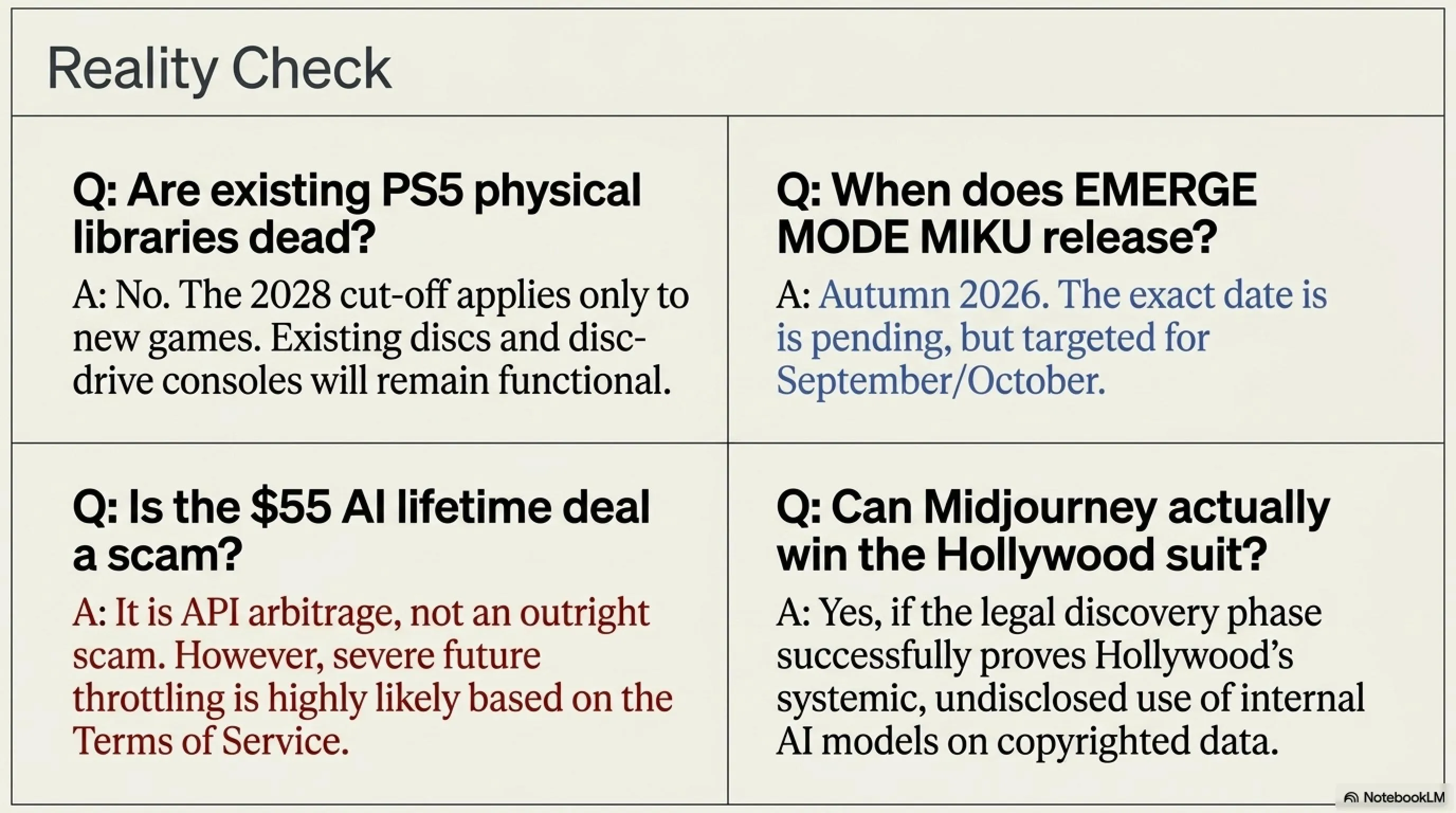
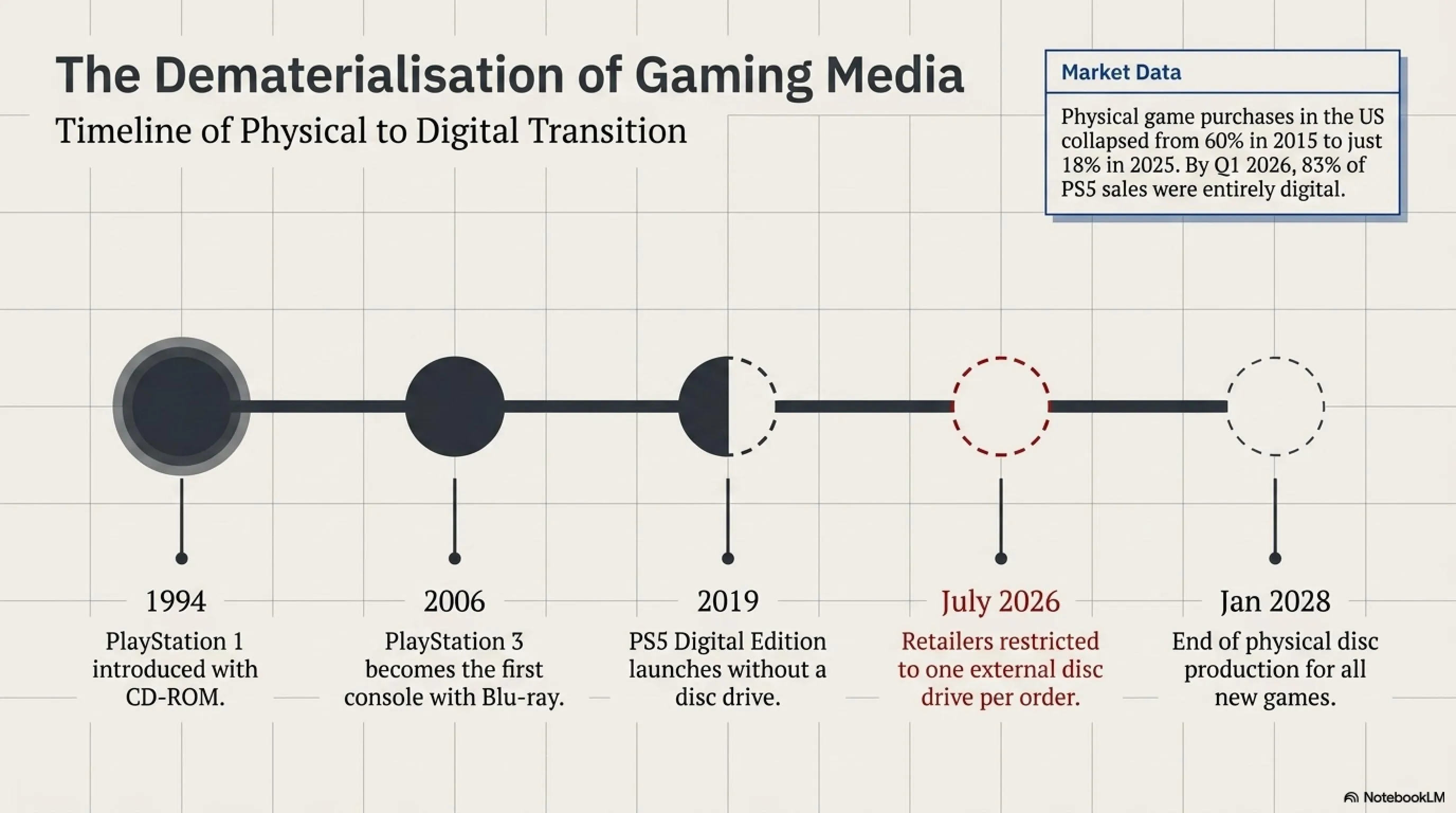
This news wasn't surprising to many, but the official confirmation was shocking nonetheless. Sony emphasized in its statement that this decision only applies to new games released after January 2028; in other words, discs released before that date will remain playable. However, Sony also announced that retailers will no longer be able to sell more than one external disc drive per order — a sign that the company is even restricting sales of disc-related hardware accessories.
Historical Milestone
| 1994 | PlayStation 1 introduced with CD-ROM |
| 2006 | PS3 first console with Blu-ray |
| 2019 | PS5 Digital Edition without disc drive |
| 2026 | Announcement of disc production end from 2028 |
| 2028 | New games digital-only |
Market Analysis: Why Sony No Longer Needs Physical Discs
According to an NPD Group report, only 18 percent of video game purchases in America were physical in 2025 — a figure that was above 60 percent in 2015. The trend is similar in Europe and Japan. Sony itself announced that over 83 percent of PS5 game sales in the first quarter of 2026 were digital.
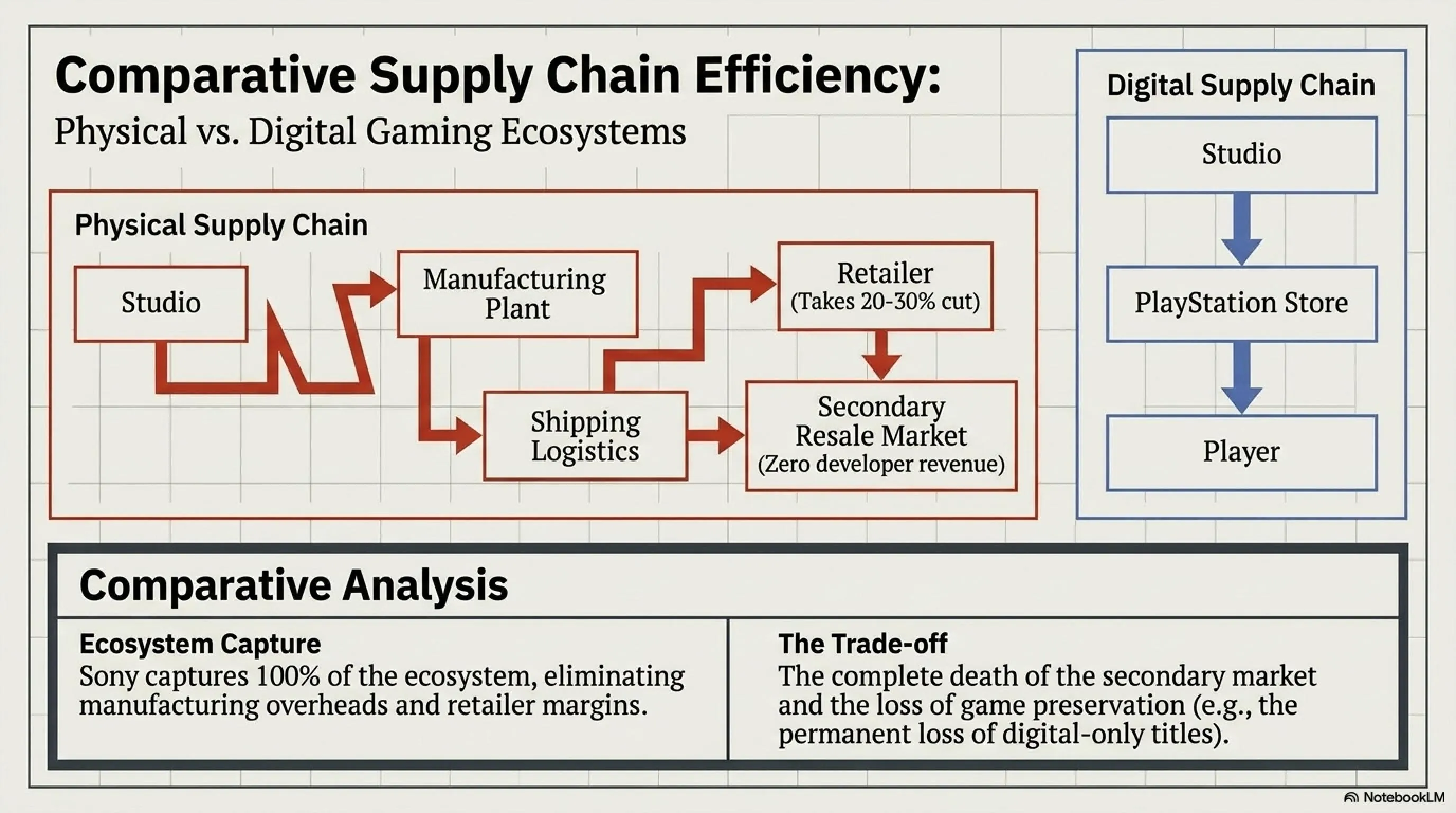
This data shows that most gamers prefer to download games directly from the PlayStation Store rather than going to a physical store or waiting for postal delivery. Furthermore, games sold digitally are more profitable for Sony because the costs of disc production, packaging, transportation, and retailer margins are eliminated. The company can also exert more control over pricing and sales, with no secondary market eating into their revenue.
The financial incentive is clear. When Sony sells a physical disc, they must pay for manufacturing, distribution, and give retailers a cut — often 20-30 percent of the sale price. Digital sales eliminate all of that, putting more money directly into Sony's pocket. Additionally, digital games can't be resold, meaning Sony makes money from every player who wants to experience a game, rather than just the first buyer.
Community Reaction: Concerns and Criticisms
Immediately after the announcement, the hashtag SavePhysicalGames trended on Twitter. Many gamers expressed concern that this decision could harm game preservation. When a game is only available digitally, there's a risk that if the PlayStation Network servers go down or Sony decides to remove a game from the store, that game could be lost forever. This is not a hypothetical concern — it has already happened with digital-only titles on previous platforms.
Game preservation advocates point to examples like PT, the playable teaser for Silent Hills, which was removed from the PlayStation Store and became unplayable for anyone who didn't already have it downloaded. Similarly, many digital-only games from the PS3 and Vita eras have disappeared entirely when their licenses expired or publishers went out of business. Without physical discs, there's no backup plan — no way to play these games decades from now.
On the other hand, supporters of the decision argue that the digital world has many advantages. No more disc swapping, no physical space occupied, and games can be updated faster. Additionally, the used game market typically works against game developers; when someone buys a used game, the developer earns nothing from that sale. Digital distribution ensures creators are compensated for every copy played.
- Reduced production and distribution costs for developers
- Faster release and update times for games
- No need for physical storage space for discs
- Instant access to games without store visits
- Developers earn revenue from every player
- Loss of the feeling of physical ownership
- Risk of permanent game loss if removed from store
- Complete dependency on internet and PlayStation servers
- End of used game market that helped budget-conscious gamers
- Digital rights can be revoked at any time
Hollywood AI War: Midjourney Demands Studios Reveal Their Secrets
The legal battle between Midjourney and three major Hollywood studios has entered a new phase. On Tuesday, July 3, the AI image generation startup filed a formal request with the federal court in California to compel Disney, NBCUniversal, and Warner Bros. Discovery to disclose complete details of their internal use of artificial intelligence.
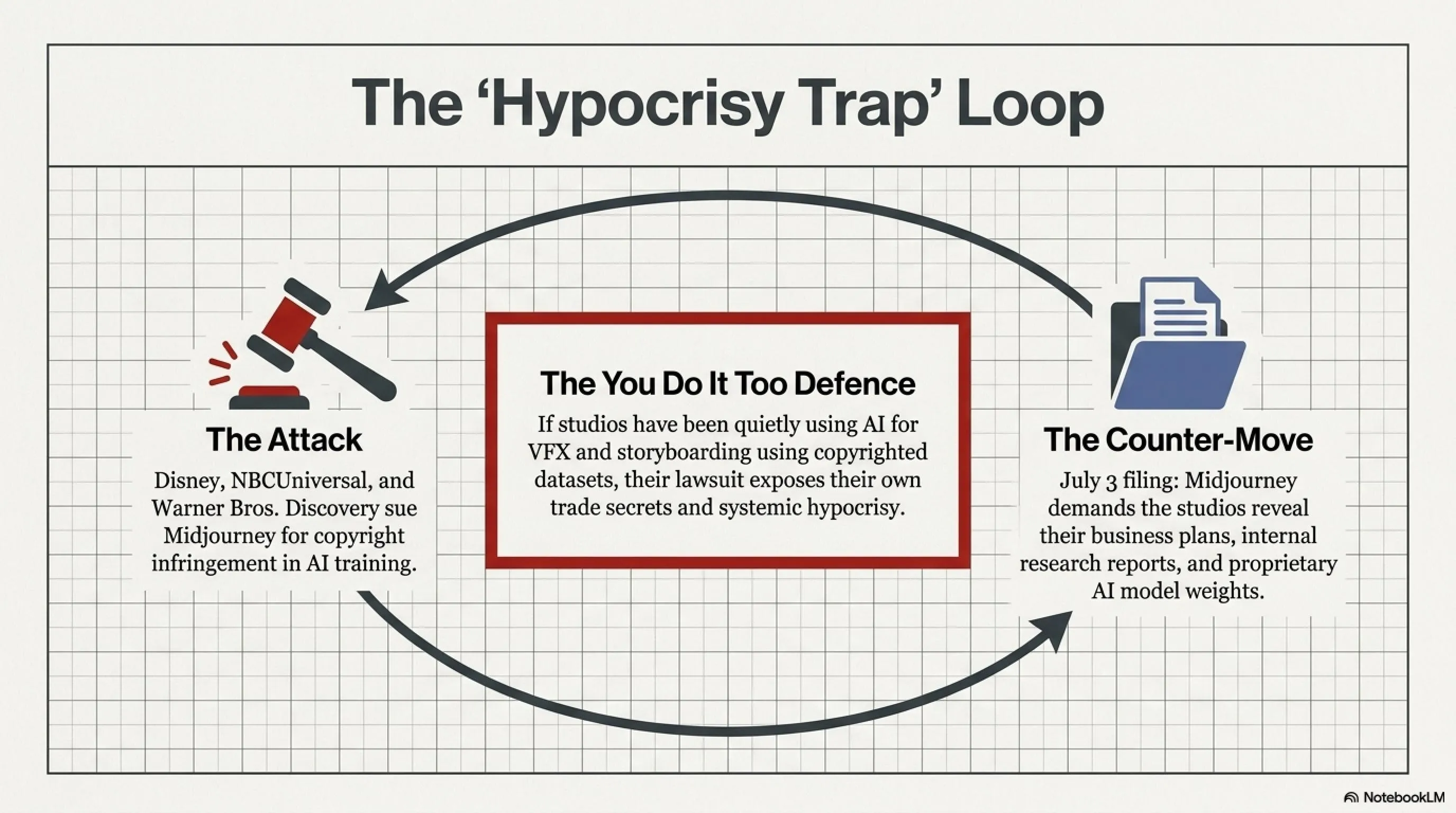
This lawsuit began in early 2026, when the three studios claimed that Midjourney used their copyrighted works without permission to train its AI models. But now Midjourney has a trump card: the company claims that the studios themselves are using exactly the same technologies that are at the center of this lawsuit. It's a "you do it too" defense, and if successful, it could expose massive hypocrisy in Hollywood's stance on AI.
Midjourney's Request: Access to Programs, Reports, and AI Datasets
In its formal request, Midjourney is seeking access to the following from the Hollywood studios: business plans related to AI, internal research reports on AI use, datasets and training collections used for AI models, and even the model weights of machine learning systems the studios employ. This is an extraordinarily bold ask, as these materials are typically protected as trade secrets worth billions of dollars.
The request is very aggressive because Hollywood studios typically protect this type of information as trade secrets. However, Midjourney's lawyers argue that if the studios claim that using copyrighted data to train AI is illegal, then they themselves must prove that they don't use such data. It's a logical trap — if AI training on copyrighted material is wrong, then everyone doing it is wrong, including the plaintiffs.
Why This Case Matters
This lawsuit could determine the fate of the AI image generation industry. If the court rules in favor of Midjourney and studios are forced to reveal their AI use, it might become apparent that Hollywood itself has been using similar tools for years. In that case, the studios could no longer maintain their moral high ground and the case could collapse or settle quickly.
Industry insiders suggest that major studios have been quietly using AI for visual effects, concept art, and storyboarding for years. If that's revealed through discovery, it would undermine their entire legal position. The case could set a precedent that either legitimizes AI training on copyrighted material or establishes clear boundaries that both startups and major corporations must follow.
On the other hand, if the studios can prove that their use of AI is completely legal and limited to consumer-facing applications, they can strengthen their claim of copyright infringement by Midjourney. The judge in the case had previously ruled in June that studios only needed to provide information about their public-facing AI applications. But Midjourney now wants that ruling overturned and full access to internal information granted.
The Bigger Picture: AI and Copyright in 2026
This case is just one front in the broader war over AI and copyright. Similar lawsuits are playing out with OpenAI, Stability AI, and other generative AI companies. The fundamental question is whether training AI models on copyrighted material constitutes fair use or copyright infringement. So far, courts have been reluctant to establish clear precedents, leading to a legal gray area that leaves both AI companies and content creators in limbo.
The outcome of this case could have implications far beyond Midjourney and Hollywood. If courts rule that AI training requires explicit permission from copyright holders, it could fundamentally change how AI systems are developed. Conversely, if AI training is deemed fair use, it could accelerate the adoption of AI across creative industries while potentially undermining the economic position of human creators.
Google's Controversial Ad: When Thomas Jefferson Uses Gemini AI
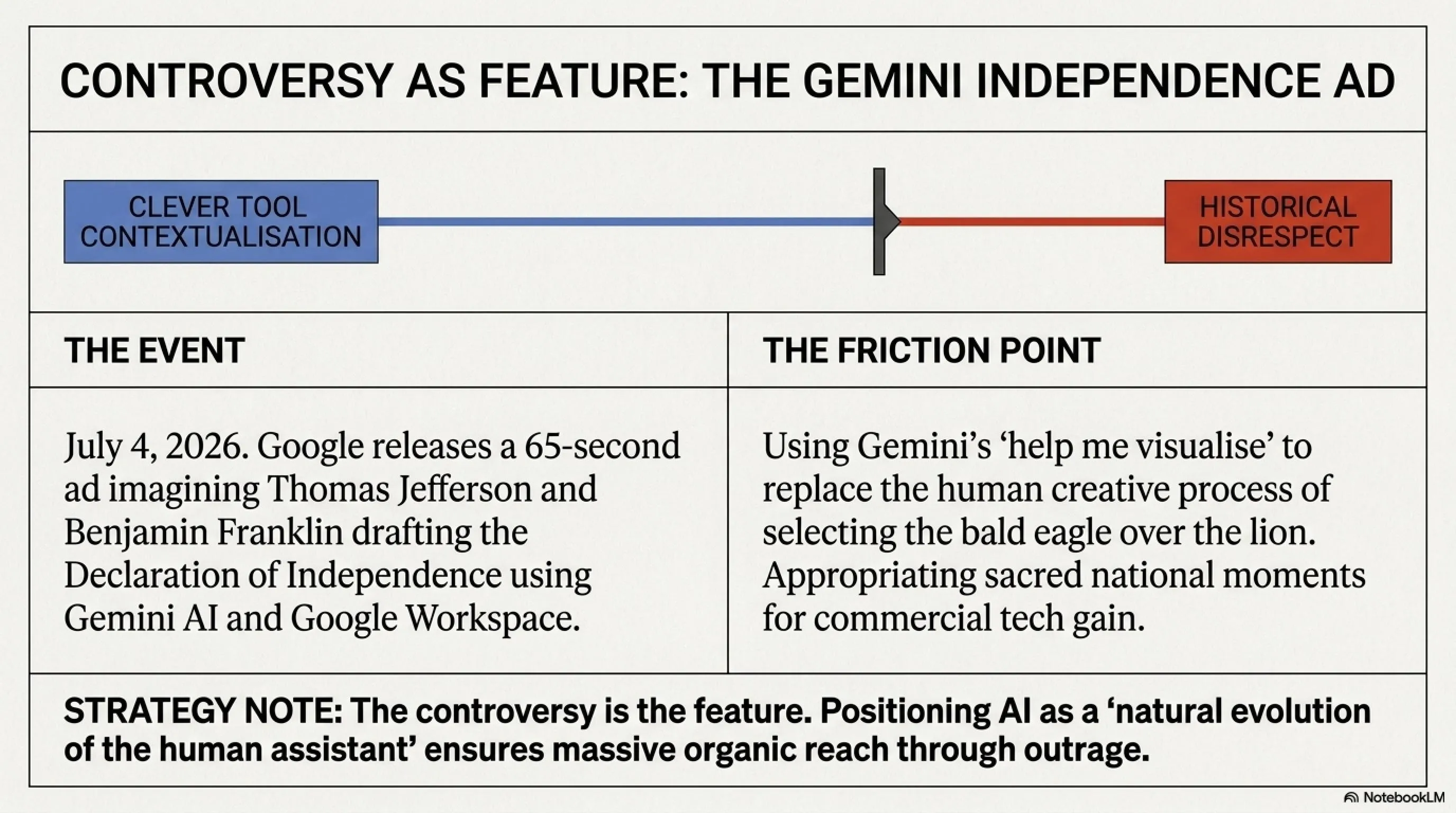
On Friday, July 4, 2026 — the 250th anniversary of American independence — Google released a 65-second advertisement that quickly became one of the most controversial marketing campaigns of the year. The ad, with the tagline "Group project, but make it 1776," imagines what would have happened if America's Founders had access to Google Workspace and Gemini AI when writing the Declaration of Independence.
In the video, Thomas Jefferson is drafting the Declaration in Google Docs when he receives a nagging text from Benjamin Franklin. Franklin and other Founders then connect via Google Meet. In one scene, they use Gemini's "help me visualize" tool to choose a national symbol — first showing an image of a lion, then the American bald eagle. The AI even takes meeting minutes and suggests rejecting King George III's request to access the document.
At the end of the video, the Declaration of Independence is electronically signed, and there's even a comedic moment where King George III tries to access the document, but Gemini AI advises Jefferson to reject the request. The ad is slickly produced, featuring period-accurate costumes and sets mixed with modern digital interfaces floating in the air like holograms.
Reactions: Between Creativity and Disrespect
Reactions to the ad were deeply divided. Some users found it creative and entertaining, emphasizing that it was clever satire about digital collaboration. Marketing professionals praised the production value and the way it positioned Google Workspace as essential tools for teamwork. Several tech influencers shared it enthusiastically, noting how it humanized AI technology by placing it in a familiar historical context.
But many others called it disrespectful to American history and the Founders' efforts. One critic on Twitter wrote: "The Founders risked their lives to build this nation. Reducing their efforts to a group project with Google Workspace is insulting." Conservative commentators were particularly critical, viewing it as Silicon Valley trivializing American values and history for commercial gain.
Rumor vs. Reality
The controversy highlights a broader tension in tech marketing: how far can companies go in appropriating historical moments for commercial purposes? Google isn't the first to do this — Apple's famous 1984 ad used Orwellian imagery, and many tech companies have positioned themselves as revolutionary forces akin to historical movements. But there's something particularly bold about inserting AI into the moment of American independence, especially given current anxieties about AI replacing human creativity and judgment.
The Marketing Strategy Behind the Controversy
From a marketing perspective, the controversy might be exactly what Google wanted. The ad generated massive organic reach, with millions of views and countless discussions across social media, news sites, and tech forums. Even negative reactions spread awareness of Gemini AI and its capabilities. In the attention economy, being talked about — even critically — is better than being ignored.
Google's strategy appears to be normalizing AI as a tool for everyday tasks, including important historical work. By suggesting that even the Founding Fathers would have used AI if they had access to it, Google is positioning AI as a natural evolution of human capability rather than a replacement for human creativity. It's a subtle but important framing — AI as assistant, not author.
Moonbeam Escapes Polkadot: Migration to Base and New AI Focus
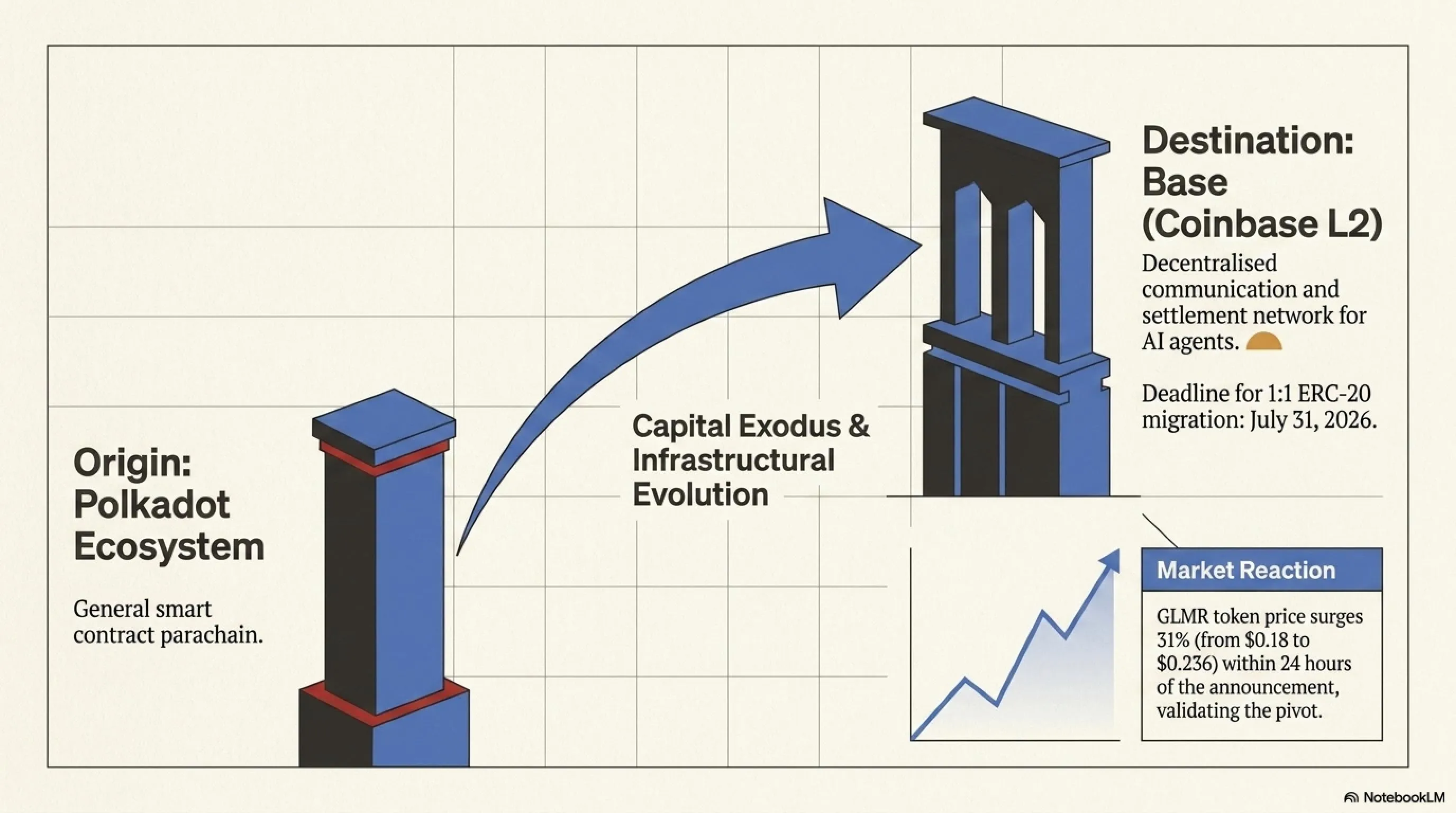
On Thursday, July 3, Moonbeam announced that it would completely exit the Polkadot ecosystem and migrate to Base — an Ethereum Layer 2 developed by Coinbase. This news marks one of the biggest blockchain migrations of 2026 and shows that blockchain projects are searching for more active and scalable ecosystems.
Moonbeam, which was previously a parachain in the Polkadot network, is now redefining itself as a decentralized communication and settlement network for AI agents. In simpler terms, this network is no longer just a general-purpose smart contract platform, but wants to become infrastructure for communication and transactions between artificial intelligence agents. It's a bold pivot that reflects the growing intersection of blockchain and AI technologies.
Polkadot vs. Base Comparison
| Metric | Polkadot | Base |
|---|---|---|
| Transaction Cost | Medium to High | Very Low |
| Speed | 6 seconds | 2 seconds |
| Ecosystem | Smaller | Large Ethereum |
| Backing | Web3 Foundation | Coinbase |
Migration Details: July 31 Final Deadline
GLMR token holders — Moonbeam's native token — have until July 31, 2026, to migrate their tokens to Base. The transfer is done on a 1:1 basis, meaning each GLMR on Polkadot converts to one GLMR in ERC-20 format on Base. After this date, tokens remaining on Polkadot will no longer be usable. The team has set up a bridge interface to facilitate the migration, but users must take action — tokens won't automatically transfer.
The announcement had an immediate impact on GLMR's price. Within 24 hours of the announcement, the token's price increased 31 percent, rising from $0.18 to $0.236. This increase shows that the market has evaluated this move positively, seeing Base as a more promising platform with better growth prospects than Polkadot. Trading volume also spiked significantly, indicating strong interest from both existing holders and new investors.
Why Base?
The choice of Base as the migration destination is not random. Base is one of the most active Ethereum Layer 2 networks and has experienced rapid growth since its launch in 2023. The network is backed by Coinbase — one of the largest crypto exchanges in the world — which means access to a large user base and high liquidity. Coinbase's involvement also provides credibility and resources that smaller ecosystems can't match.
Additionally, Base has much lower transaction costs compared to Polkadot and higher transaction processing speed. For a project that wants to focus on AI agent framework, these features are critical. AI agents need to make frequent micro-transactions, and high fees would make the system economically unviable. Base's ultra-low fees enable the kind of high-frequency, low-value transactions that AI-to-AI commerce requires.
Lifetime Access to Claude and Gemini for Just $55: Opportunity or Trap?
On Friday, July 4, news spread in the tech space that caught many people's attention: ChatPlayground AI, a unified platform for accessing over 20 different AI models, announced it was offering lifetime access to its Unlimited Plan with a 91 percent discount for just $55.30.
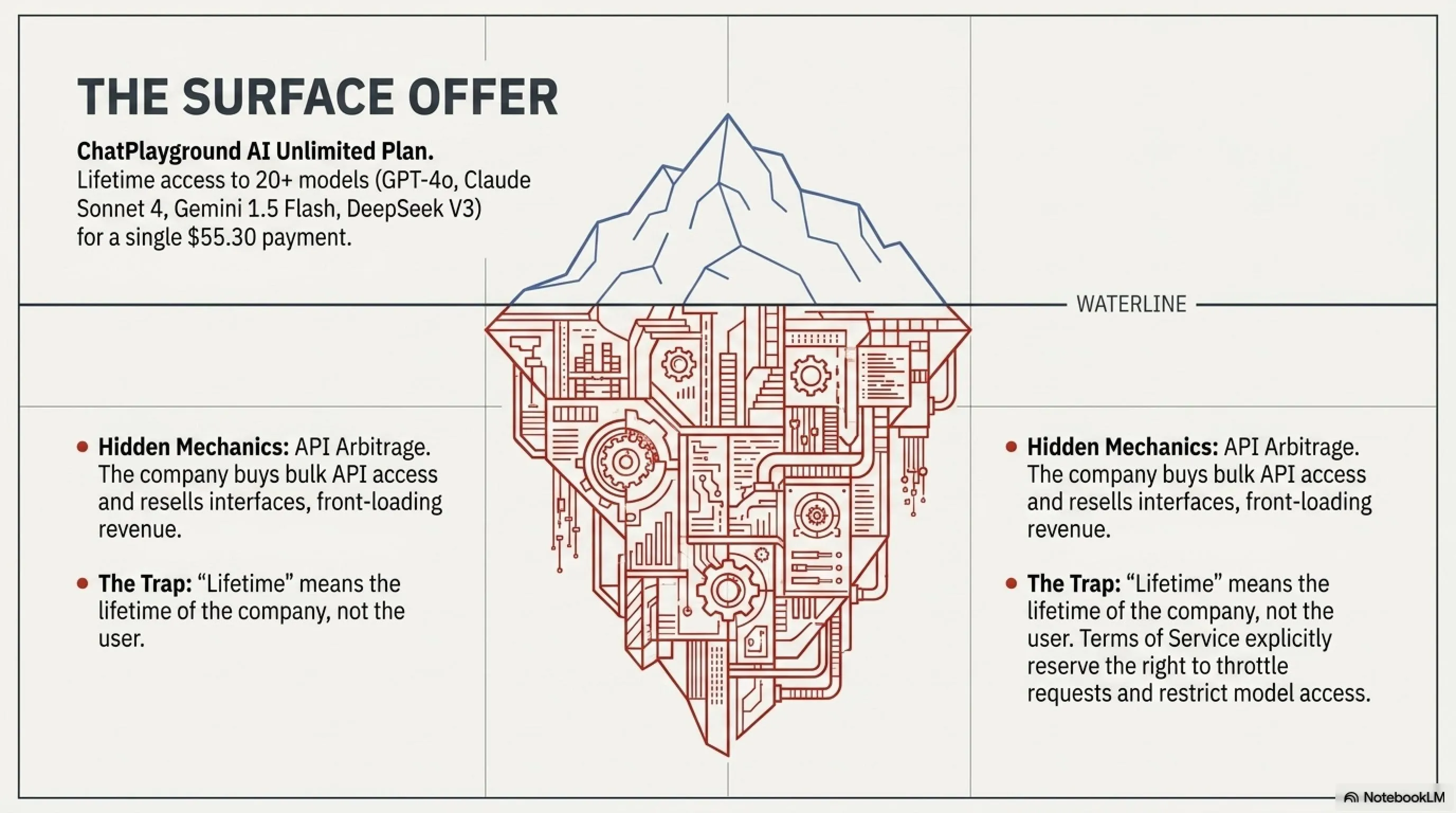
This platform provides access to models like GPT-4o, Claude Sonnet 4, Gemini 1.5 Flash, DeepSeek V3, Llama, Perplexity, and over 15 other models in a single user interface. The regular price for this subscription is $619, but with the discount code JULY30, users can purchase it for $55.30. The offer seems almost too good to be true, which immediately raises questions about sustainability and fine print.
Is This Offer Real?
This question has occupied many users' minds. How is it possible for a company to offer lifetime access to models like GPT-4o and Claude at this price? The answer lies in ChatPlayground AI's business model. Instead of licensing directly from OpenAI or Anthropic, the company uses the public APIs of these companies and divides costs among thousands of users. It's essentially arbitrage — buying API access in bulk and reselling it at a markup, but with a lifetime model that front-loads revenue.
However, "lifetime" in this offer doesn't mean literally forever. ChatPlayground AI's terms of service state that the company reserves the right to impose limitations on the number of requests or access to certain models in the future. So while the offer is attractive, buyers should be aware that they may face restrictions in the future. The "unlimited" label has asterisks in the fine print.
Security Note
Night's Conclusion: A World in Transformation
Sunday night, July 5, 2026, was one of those evenings where the news reflected larger transformations in the technology and entertainment industries. From Hatsune Miku's unprecedented collaboration with Hyperpop stars to Sony's historic decision to eliminate physical discs, each of these stories tells its own tale about the future we're heading toward.
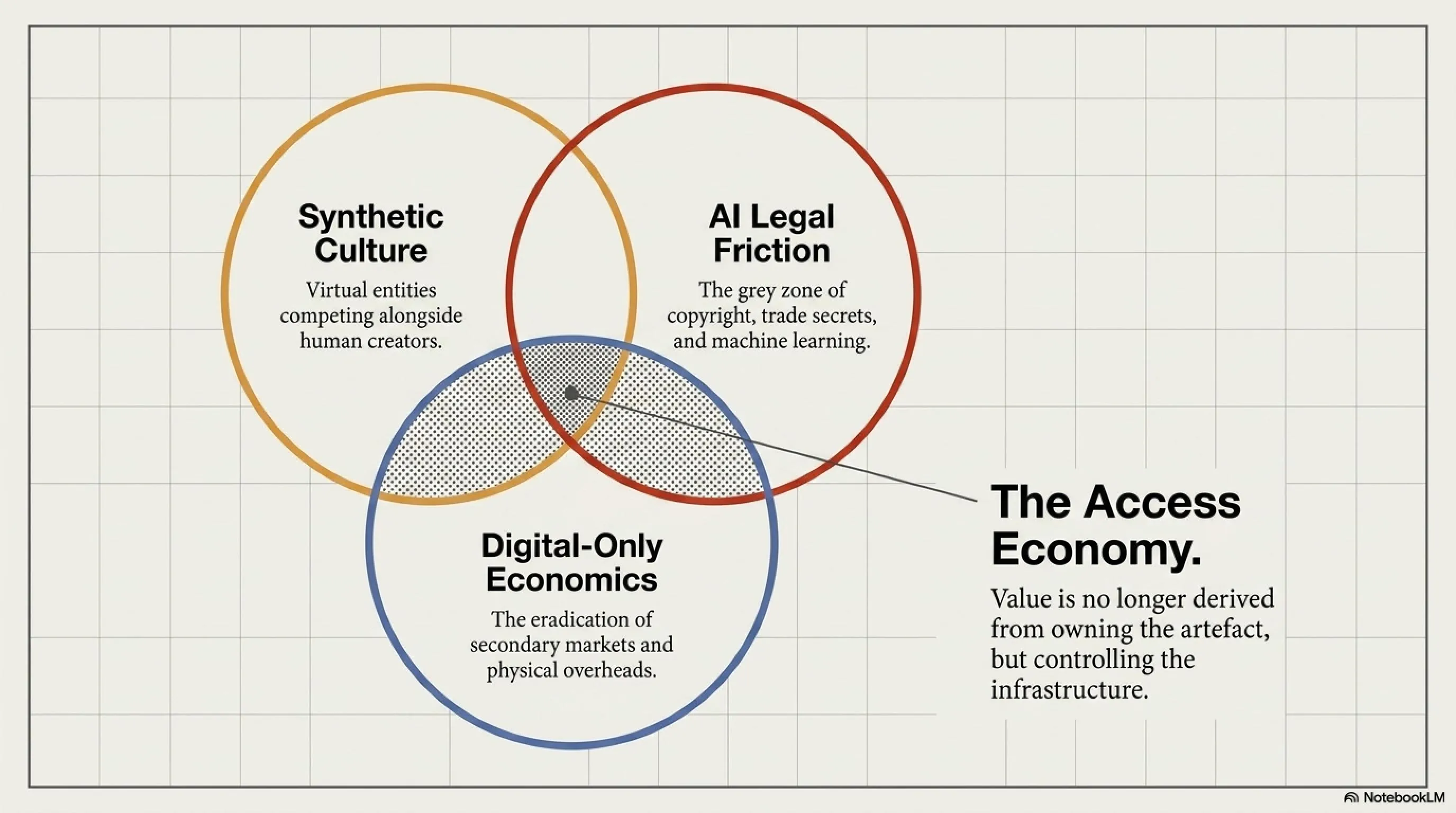
While the music industry is breaking cultural and technological boundaries, the video game industry is moving toward a fully digital future. Meanwhile, the copyright war in Hollywood shows that the debate about artificial intelligence and intellectual property has not yet reached a final answer. These are not isolated incidents — they're symptoms of a broader shift in how we create, distribute, and consume culture.
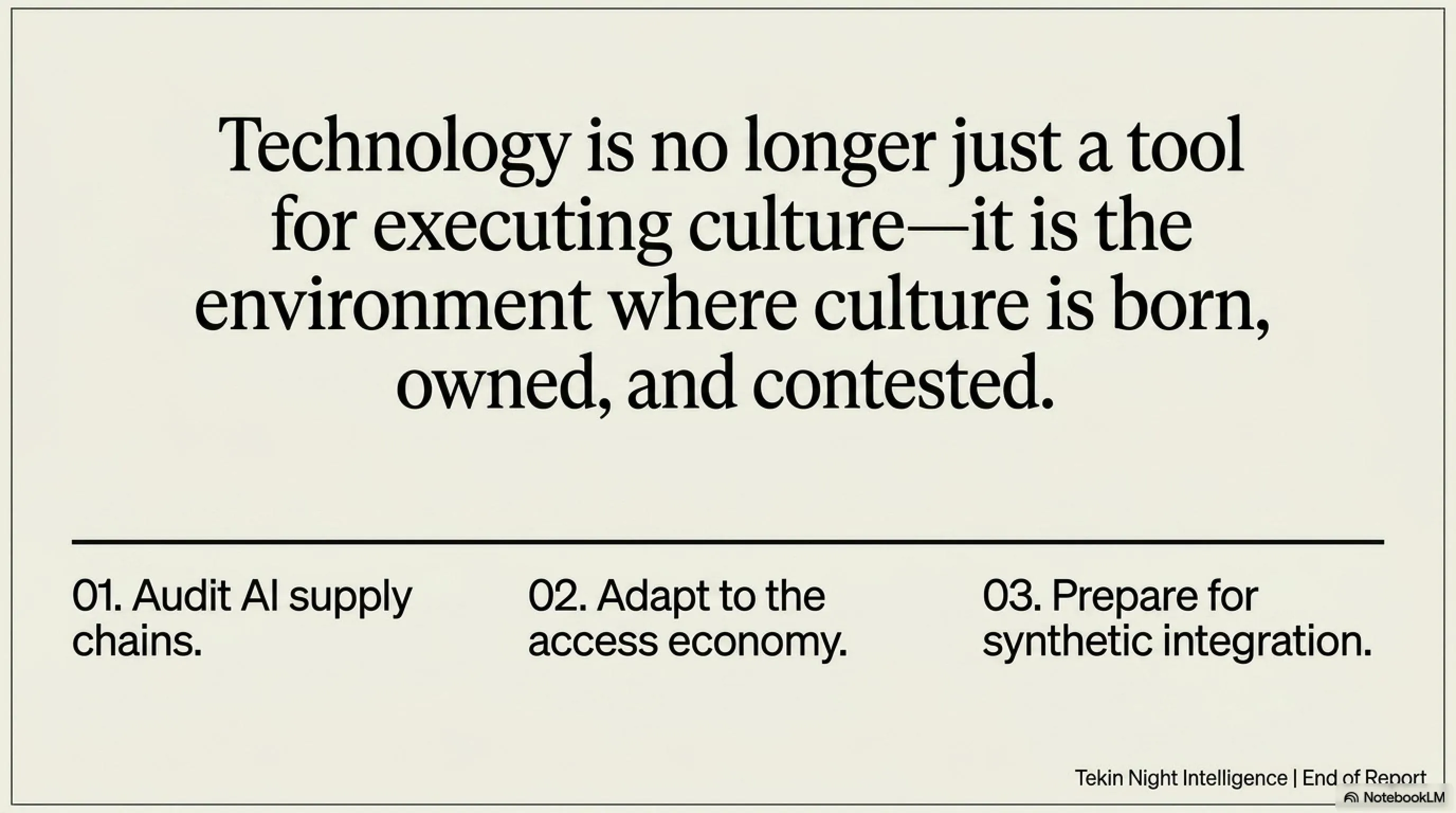
Perhaps tonight's most important lesson is that technology is no longer just a tool for getting things done — it has become a force that shapes our culture, economy, and even our history. Whether we embrace these changes or resist them, the wave is in motion. The question isn't whether these transformations will happen, but how we'll adapt to them and what values we'll preserve in the process.
Frequently Asked Questions
Will my physical games still work after 2028?
Yes. Sony has emphasized that this decision only applies to new games released after January 2028. Existing discs will continue to work, and consoles with disc drives will still be able to read them. Your current library is safe.
When will the EMERGE MODE MIKU EP be released?
According to the official announcement, the EP will be released in Fall 2026. The exact date has not yet been announced, but it is expected to be available in September or October 2026.
Can Midjourney win its lawsuit against Hollywood?
It depends on the court's decision. If the judge rules that studios must disclose their internal AI use and it turns out they've been using similar methods, Midjourney could have a stronger position. However, if studios can prove their use was legal and limited to consumer-facing applications, the case could go in their favor.
Why did Moonbeam migrate from Polkadot to Base?
Main reasons include lower transaction costs, higher speed, access to the larger Ethereum ecosystem, and Coinbase backing. Additionally, Moonbeam wants to pivot to an AI agent framework, and Base is better suited for that purpose with its ultra-low fees enabling frequent micro-transactions.
Is the ChatPlayground AI lifetime subscription worth buying?
If you want access to various AI models and have a limited budget, the offer is attractive. However, be sure to read the terms of use and be aware that limitations may be imposed in the future. The 'lifetime' and 'unlimited' labels come with asterisks that may limit usage over time.
What were the reactions to Google's Declaration of Independence ad?
Reactions were mixed. Some found it creative and entertaining, but many called it disrespectful to history and the Founders' efforts. The ad shows that using history in marketing can be sensitive and controversial, especially when it involves AI and sacred national moments.
Sources
- IGN - Exclusive: BEYOND BORDERS Vol.1 EMERGE MODE MIKU
- PlayStation Blog - Physical disc production ending
- TechCrunch - Google Declaration of Independence AI commercial
- Yahoo Tech - Midjourney wants Hollywood studios to reveal AI usage
- Reuters - Sony to end discs for new PlayStation releases
- Anime News Network - BEYOND BORDERs project announcement
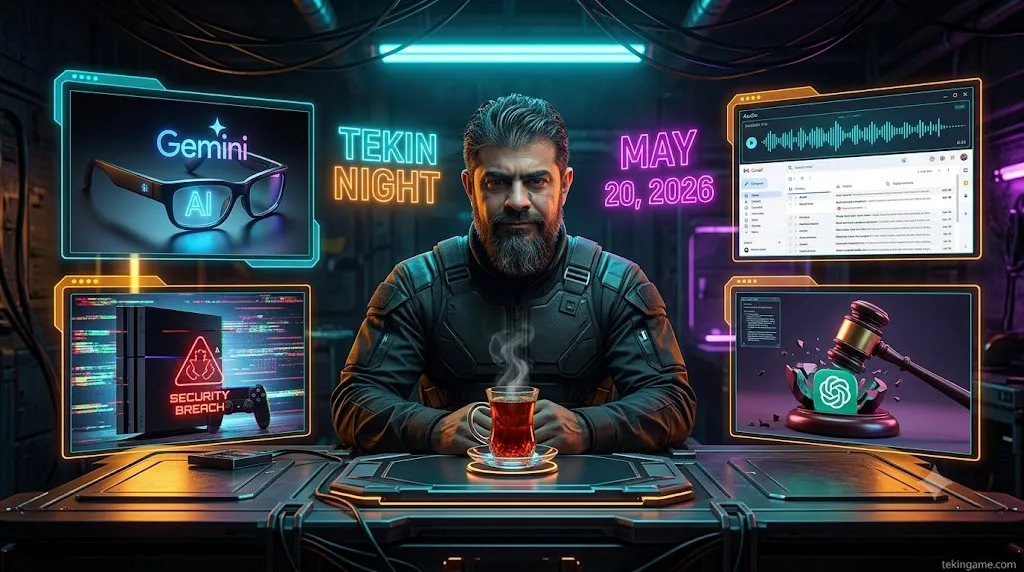
Supplementary Image Gallery: 🌙 Tekin Night July 5, 2026: Miku × Grimes, PS5 Kills Discs, and Hollywood's AI War