
☀️ Good Morning! Tekin Morning June 3, 2026
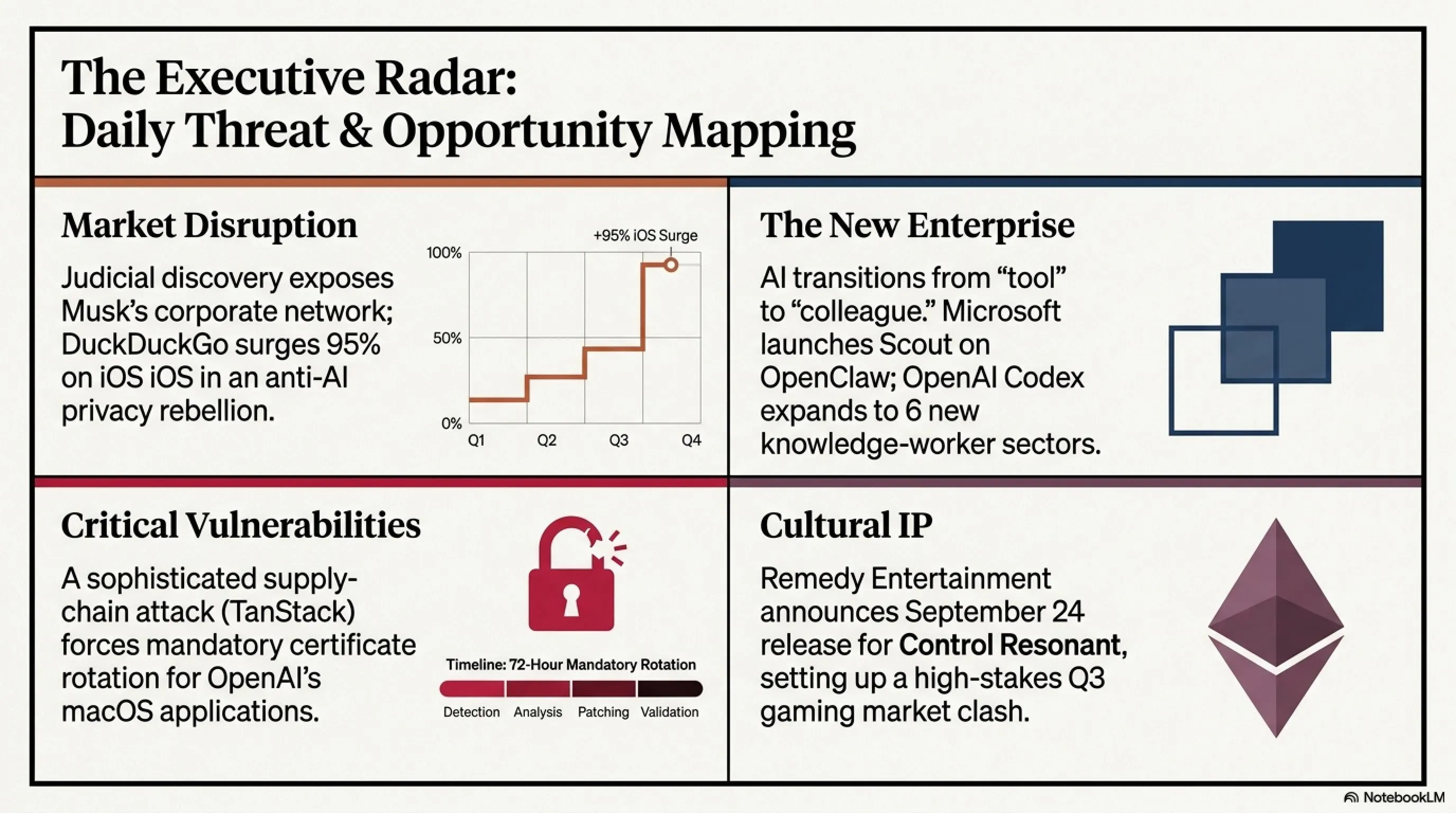
Welcome to an action-packed Wednesday morning! Today brings six explosive stories spanning federal courts and Elon Musk, the search privacy revolution, 24/7 AI assistants, urgent security warnings, and highly anticipated gaming releases. This is one of the most content-rich tech news days of the week.
⚡ Today's Headlines:
⚖️ Federal court orders Musk to produce Tesla/SpaceX emails
🔍 DuckDuckGo installs surge 95% on iPhone - privacy rebellion
🤖 Microsoft Scout: 24/7 AI assistant built on OpenClaw
🔐 Urgent: Update ChatGPT Mac app before June 12 deadline
💼 OpenAI launches six Codex plugins for white-collar workers
🎮 Control Resonant set for September 24 - Jesse Faden returns
☕ Grab your coffee and get ready for a comprehensive tech news journey!
⚖️ 1. Court Orders Musk to Produce Tesla & SpaceX Emails in Apple/OpenAI Lawsuit
In a ruling that could pull back the curtain on secretive technology partnerships, U.S. District Judge Mark Pittman denied xAI's request to shield Elon Musk's business emails from Tesla and SpaceX. The decision means Musk must turn over emails from his work accounts at both companies as part of the discovery process in his lawsuit against Apple and OpenAI.
⚡ Court Ruling Details
| Component | Details |
|---|---|
| Judge | Mark Pittman - U.S. District Court |
| Parties | xAI & X (Plaintiffs) vs. Apple & OpenAI (Defendants) |
| Accounts Sought | Business emails from Tesla and SpaceX (not personal accounts) |
| Core Issue | Alleged Apple monopolistic behavior in OpenAI integration on iOS |
| Ruling Date | June 2, 2026 |
The underlying lawsuit, filed by xAI and X (formerly Twitter), alleges that Apple and OpenAI engaged in anticompetitive behavior by integrating ChatGPT into the iOS ecosystem while denying fair access to Grok, xAI's competing AI chatbot. Musk argues that Apple has discriminated against Grok in ranking and accessibility, effectively giving OpenAI preferential treatment in the lucrative iOS app marketplace.
Last month, legal teams from Apple, OpenAI, X, and xAI appeared before U.S. Magistrate Judge Hal R. Ray Jr. to address several disagreements about the discovery process. One of the most contentious points was Apple and OpenAI's legal team requesting access to Musk's business emails at Tesla and SpaceX. xAI objected, arguing these accounts belong to separate companies and should not be subject to discovery in this case.
Judge Pittman's rejection of xAI's objections suggests he believes these business emails may contain relevant evidence for the lawsuit. The ruling potentially opens the door to discovering sensitive information about Musk's activities across his various companies, raising questions about potential conflicts of interest when one individual serves as CEO of multiple competing technology firms.
🔍 Tekin Analysis: Why These Emails Matter
The court's decision to compel production of Musk's Tesla and SpaceX emails signals that the judge believes these communications may contain material evidence. This ruling could expose critical information on several fronts:
- Cross-Company Resource Sharing: Did Musk leverage Tesla or SpaceX resources, talent, or intellectual property for xAI development? This could establish patterns of resource fungibility across his corporate empire.
- Historical OpenAI Communications: As OpenAI's co-founder, Musk's old emails could reveal early strategic discussions, partnership negotiations, or disagreements that led to his departure from the organization.
- Apple Negotiation Records: Were there discussions between Tesla/SpaceX and Apple regarding AI integration, autonomous vehicle technology, or other partnerships that inform the current dispute?
- Competitive Intelligence: The emails may show how Musk used information from one company to benefit another, potentially establishing a pattern of conflicts of interest.
- Timeline of xAI Development: When did Musk begin planning xAI, and did he use his positions at other companies to advance its competitive position?
This ruling could set a precedent for future litigation involving multi-company CEOs and clarify the boundaries of corporate information sharing when one individual controls multiple potentially competing entities. Legal experts suggest the decision reflects growing judicial scrutiny of tech moguls who operate at the intersection of multiple industries.
It's worth noting that in May 2026, Musk's separate $150 billion lawsuit against OpenAI was dismissed by a jury. In that case, Musk alleged that OpenAI betrayed its nonprofit mission by transitioning to a for-profit model. The judge ruled that Musk filed too late, missing applicable statutes of limitations. Musk has vowed to appeal that decision, setting up a prolonged legal battle on multiple fronts.
📊 Musk's Legal Battle Statistics
$150B
Value of dismissed OpenAI lawsuit
3
Major companies Musk controls
2
Active lawsuits involving OpenAI
The broader implications extend beyond Musk's personal legal troubles. This case highlights the tension between Big Tech platforms (like Apple's iOS) and AI providers competing for user attention and data. As AI becomes increasingly central to smartphone experiences, questions of fair access, preferential treatment, and platform neutrality will likely spawn additional litigation across the industry.
Industry observers note that this discovery battle could expose confidential strategic communications that companies typically guard fiercely. If Musk's emails reveal unethical business practices, coordination across companies, or anticompetitive strategies, the fallout could extend far beyond this single lawsuit. Regulatory agencies including the FTC and DOJ may take interest in any revelations about market manipulation or unfair business practices.
🎯 Interim Conclusion
The court's order compelling Musk to produce Tesla and SpaceX emails demonstrates that even the most powerful tech figures cannot shield themselves from legal discovery. This case may establish important precedents for handling conflicts of interest in multi-company CEO arrangements and could expose hidden competitive strategies in the AI industry. The next few months will reveal whether Musk's email archives contain smoking guns or simply routine business communications.
🔍 2. DuckDuckGo Installs Explode 95% on iPhone After Google's AI Search Overhaul
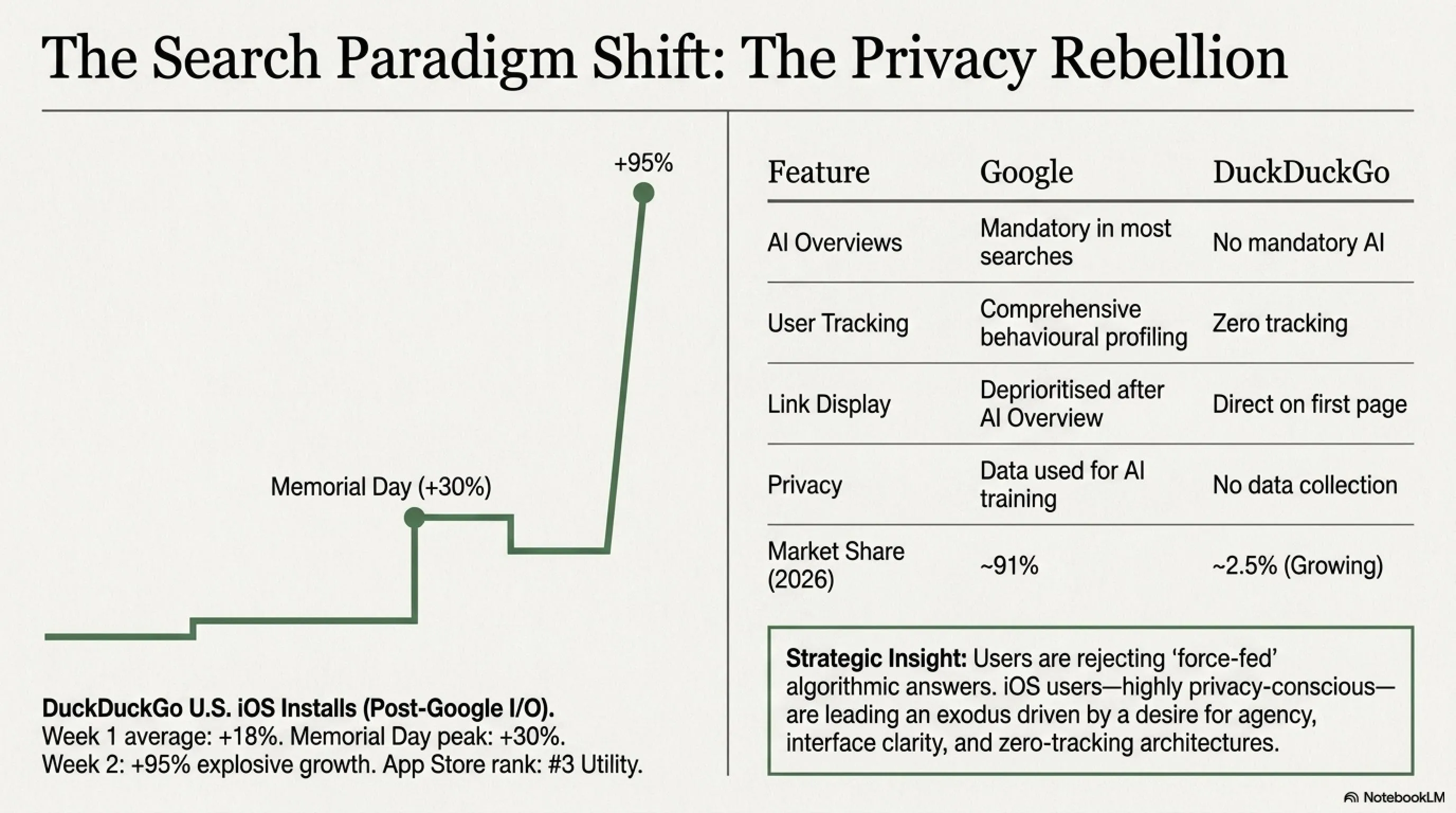
In a seismic shift that could mark a turning point in search engine history, DuckDuckGo has experienced explosive growth in iPhone installations. According to official reports, U.S. iOS installs of the privacy-focused search engine surged 95% above pre-Google I/O 2026 levels in the past week - nearly doubling installation rates compared to the baseline period before Google's AI announcements.
📊 DuckDuckGo Growth Statistics (Post-Google I/O 2026)
| Period / Platform | Growth % | Notes |
|---|---|---|
| Week 1 (May 20-25) | +18% | Average U.S. growth |
| Memorial Day Peak | +30% | Highest single-day growth that week |
| iOS (Apple Devices) | +70% | First week - significantly outpaced overall |
| Week 2 (May 26 - June 1) | +61% | Sustained elevated growth in U.S. |
| iOS Week 2 | +95% | Nearly 2x baseline - explosive growth! |
| Peak Day (June 1) | +76% | Strongest single-day performance |
| App Store Ranking | #3 | Third-ranked Utility app in U.S. |
This unprecedented surge directly followed Google's I/O 2026 conference, where the search giant announced the most significant overhaul of its search engine in decades. Instead of displaying traditional blue links, Google declared it would use AI Overviews to answer questions directly, complete tasks, and run background monitoring agents. The announcement sparked immediate backlash from users concerned about privacy, accuracy, and loss of control over their search experience.
DuckDuckGo currently holds the #3 position among Utility apps in the U.S. App Store, right behind Google Chrome. This ranking demonstrates that user backlash to Google's AI changes is not a short-lived reaction but rather represents a sustained behavioral shift. The fact that DuckDuckGo is competing directly with Google's own browser for top utility app spots signals a genuine competitive threat to Google's search monopoly.
The timing is particularly striking: iOS users, who tend to be more privacy-conscious than Android users, are leading the exodus. The 95% growth on iOS compared to 61% overall U.S. growth suggests that Apple's user base is especially receptive to privacy-focused alternatives. This aligns with Apple's own privacy-centric marketing strategy and may indicate a broader cultural shift among premium device users.
🔍 Tekin Analysis: Why Users Are Fleeing Google
The DuckDuckGo surge reveals that a significant segment of users rejects being "force-fed" AI-generated content. Several factors drive this migration:
- Loss of Agency: Users want to see links and decide where to click, not have AI make those decisions for them. The traditional "ten blue links" model empowered users to evaluate sources themselves.
- Accuracy Concerns: Google's AI Overviews have produced several high-profile errors in recent months (like recommending adding glue to pizza), eroding trust in AI-generated answers.
- Privacy Erosion: Users fear that Google will collect even more behavioral data to train its AI systems, further compromising privacy in an already data-hungry ecosystem.
- Interface Clutter: Many users find that AI Overviews make search results pages cluttered and harder to navigate, increasing cognitive load rather than reducing it.
- Publisher Impact: Content creators and publishers worry that AI summaries will cannibalize traffic to their sites, undermining the open web ecosystem that makes search valuable.
- Ideological Resistance: Some users object philosophically to AI mediating their information access, viewing it as a form of algorithmic gatekeeping that concentrates power in Big Tech's hands.
DuckDuckGo's value proposition - "we don't build profiles on you" and delivering results without mandatory AI - resonates powerfully with this growing segment. The company's emphasis on transparency and user control offers a stark contrast to Google's AI-first strategy.
🔥 Head-to-Head: Google vs DuckDuckGo
| Feature | DuckDuckGo | |
|---|---|---|
| AI Overviews | ✅ Mandatory in most searches | ❌ No mandatory AI |
| User Tracking | ✅ Comprehensive behavioral profiling | ❌ Zero tracking |
| Link Display | ⚠️ After AI Overview | ✅ Direct on first page |
| Privacy | ⚠️ Data used for AI training | ✅ No data collection |
| Market Share (2026) | ~91% | ~2.5% (growing) |
| Revenue Model | Advertising + user data monetization | Advertising only (contextual, not behavioral) |
| Default Browser Status | ✅ Default on Chrome, Android | ❌ Requires manual setup |
The trend suggests Google may have miscalculated with its AI-first strategy. While Google believes AI represents the best way to deliver information, a substantial segment of users still prefers the traditional search paradigm where they evaluate sources themselves. This preference reveals a fundamental tension between Google's vision of AI-mediated information access and users' desire for direct control over their search journey.
Market analysts note that even capturing 5-10% of Google's search market would represent a seismic shift in the industry. DuckDuckGo's current trajectory, if sustained, could push its market share to 4-5% by the end of 2026 - enough to attract serious advertising revenue and further investment. This growth could create a virtuous cycle where better results attract more users, generating more revenue to improve the product further.
The regulatory implications are also significant. If DuckDuckGo's growth continues, it could undermine Google's legal arguments that it faces meaningful competition in search. Antitrust regulators in the U.S., EU, and other jurisdictions are closely watching these market dynamics as they evaluate potential remedies in ongoing monopoly cases against Google.
🎯 Interim Conclusion
The 95% DuckDuckGo surge on iPhone signals the first serious crack in Google's 25-year search dominance. Users are voting with their feet: they value privacy and control over mandatory AI mediation. If this trend continues, we may witness a fundamental realignment in the search ecosystem, with implications for advertising markets, content publisher economics, and the broader AI adoption trajectory. Google's AI-first strategy may have backfired, at least for a privacy-conscious segment that refuses to be "force-fed" algorithmic answers.
🤖 3. Microsoft Scout: The 24/7 AI Coworker Built on OpenClaw
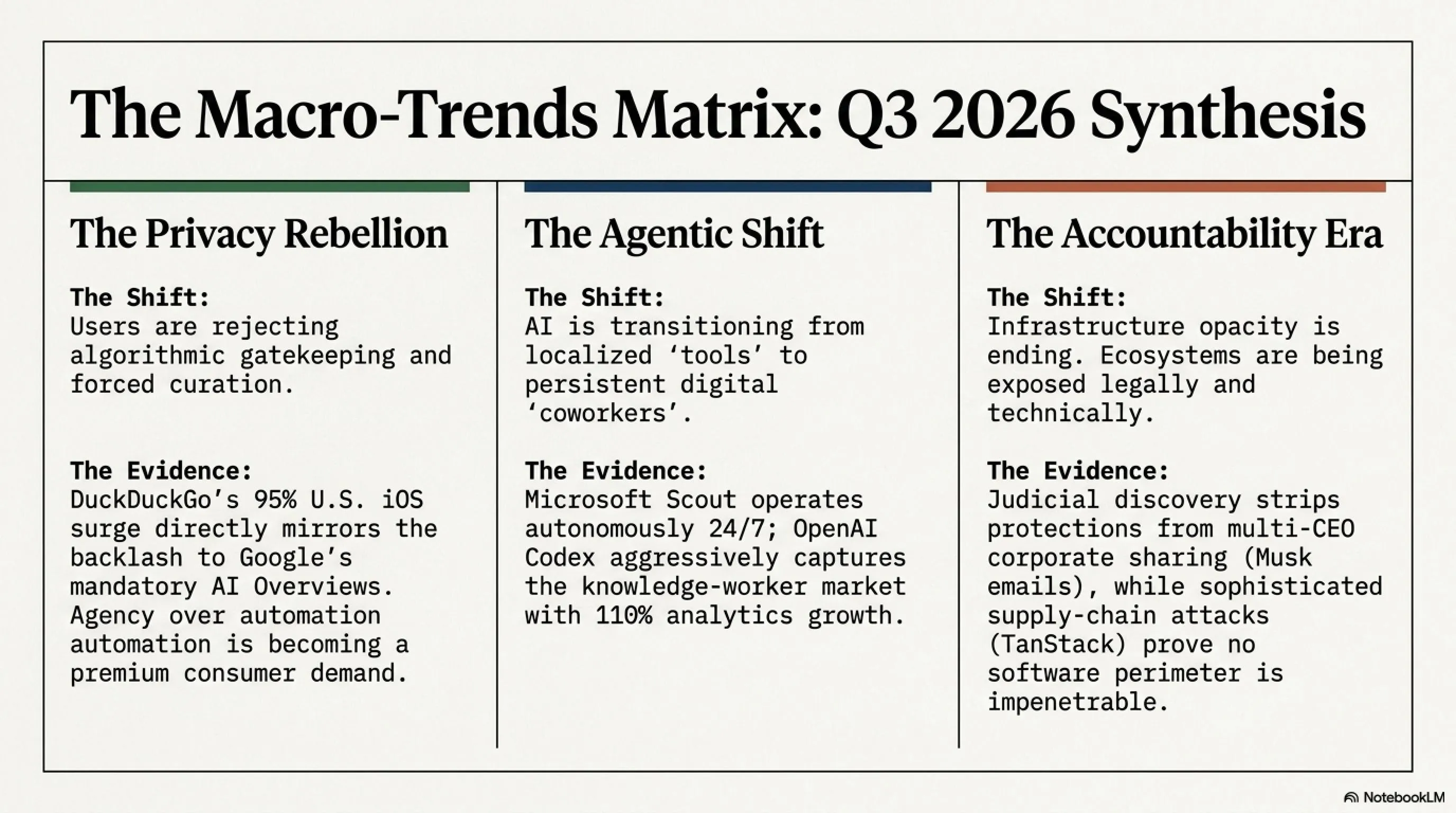
At Build 2026, Microsoft unveiled Scout - a revolutionary AI assistant built on the OpenClaw framework that operates 24/7 across the Microsoft 365 ecosystem. Scout represents Microsoft's fundamental shift from Copilot (which lives inside apps) to agent-first systems (which operate independently with persistent identities).
⚡ Microsoft Scout Technical Specifications
| Feature | Details |
|---|---|
| Technical Foundation | Built on OpenClaw framework |
| Type | Always-on agentic assistant |
| Integration | Teams, Outlook, OneDrive, SharePoint |
| Identity | Persistent identity with style |
| Execution Environment | Cloud, Desktop, Web - simultaneously |
| Autonomy | Can act autonomously with permissions |
| Communication Model | Direct commands in Teams like a coworker |
| Leadership | Omar Shahine - Corporate VP of Microsoft Scout |
Unlike Copilot, which operates inside Microsoft 365 applications, Scout works independently across the entire ecosystem. Users can communicate with Scout directly in Teams as if talking to a human colleague. Scout can prepare for meetings, manage schedules, draft emails, and perform other office tasks with minimal supervision.
Omar Shahine, the newly appointed Corporate Vice President of Microsoft Scout, describes the product in revealing terms: "Your company essentially hires your assistant." This framing positions Scout not as a tool but as a "digital team member" that companies "employ" to augment their workforce. The language shift from "using software" to "hiring an assistant" signals a fundamental reconceptualization of enterprise AI.
The OpenClaw foundation is particularly significant. OpenClaw is an open-source framework for building agentic AI systems that can maintain context, make decisions, and execute complex multi-step workflows. By building Scout on OpenClaw, Microsoft signals its commitment to interoperability and potentially opens the door to third-party extensions and integrations that could dramatically expand Scout's capabilities.
🔍 Tekin Analysis: Why Scout Is Different
Microsoft Scout represents a paradigm shift in AI assistant design. Key differentiators include:
- Persistent Identity: Unlike Copilot, which starts fresh each session, Scout remembers you and learns your work style over time, building a personalized understanding of your preferences and needs.
- Always-On Operation: Scout runs 24/7 and can act proactively, not just reactively. It can monitor for important events and alert you without explicit instructions.
- Autonomous Action: With appropriate permissions, Scout can complete tasks without constant user input, operating more like a human assistant than a chatbot.
- Deep Integration: Rather than living inside one app like Copilot, Scout operates across the entire Microsoft 365 ecosystem with unified context.
- Conversational Model: You can chat with Scout in Teams as if talking to a real colleague, using natural language without special commands or syntax.
- OpenClaw Foundation: The open-source base enables extensibility and potentially allows organizations to customize Scout's capabilities for specific workflows.
These features indicate Microsoft is moving from an "AI tool" model to an "AI colleague" model - a shift that could redefine office work over the next decade. The implications for productivity, organizational structure, and human-AI collaboration are profound.
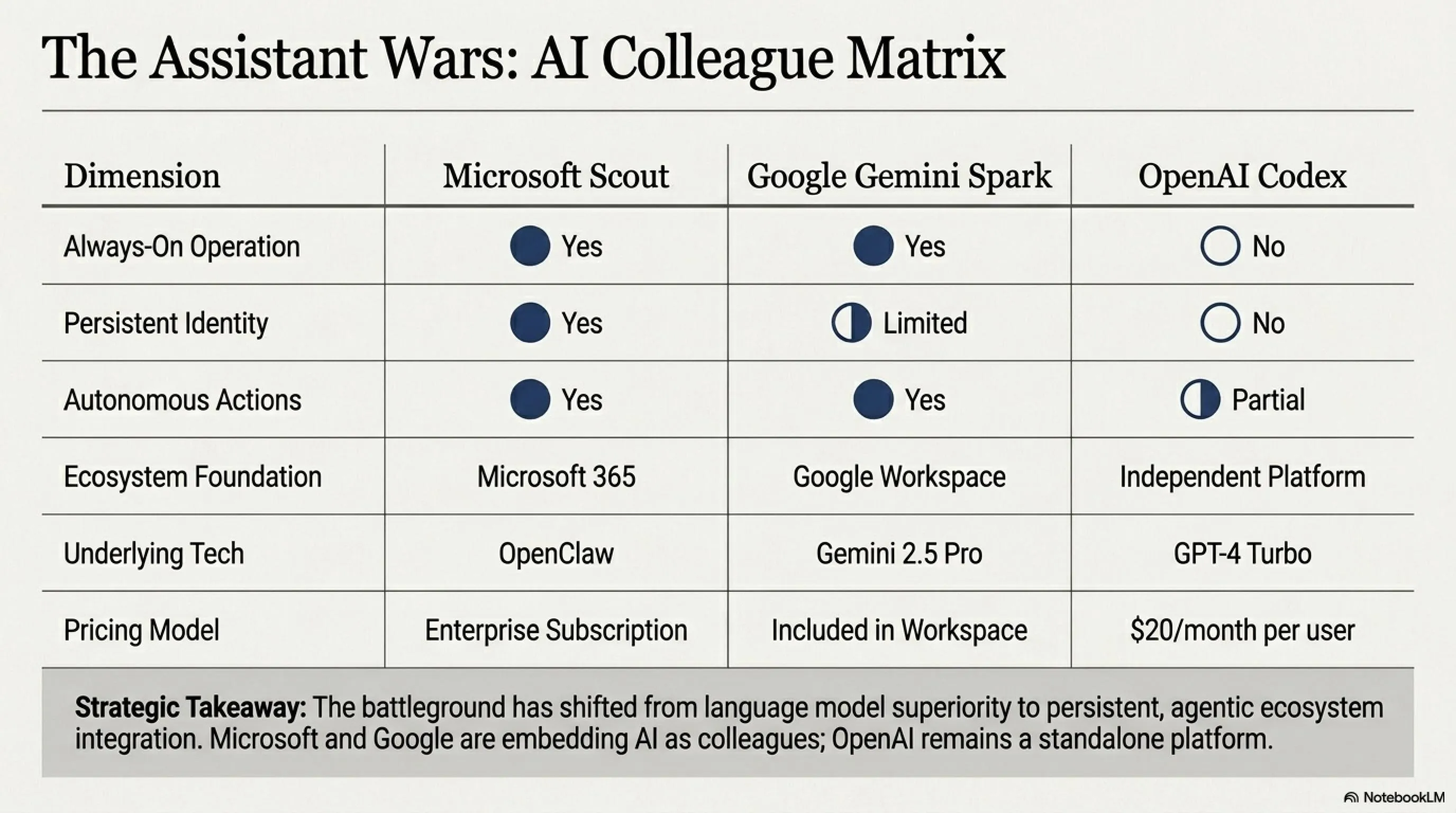
⚔️ The Assistant Wars: Scout vs. Competitors
| Feature | Microsoft Scout | Google Gemini Spark | OpenAI Codex |
|---|---|---|---|
| Always-On | ✅ Yes | ✅ Yes | ❌ No |
| Persistent Identity | ✅ Yes | ⚠️ Limited | ❌ No |
| Autonomous Actions | ✅ Yes | ✅ Yes | ⚠️ Partial |
| Ecosystem | Microsoft 365 | Google Workspace | Independent |
| Technical Base | OpenClaw | Gemini 2.5 Pro | GPT-4 Turbo |
| Pricing Model | Enterprise subscription (TBA) | Included in Workspace AI | $20/month per user |
Scout is part of Microsoft's broader "agent-first transformation," in which AI assistants become digital coworkers embedded in daily office interactions. This strategy positions Microsoft in direct competition with Google's Gemini Spark (announced yesterday) and represents a fundamental rethinking of workplace software from tools users operate to colleagues that work alongside them.
The timing of Scout's announcement is strategic. Microsoft is racing against Google to define the future of enterprise AI, and Scout represents Microsoft's vision: persistent agents with identity and autonomy, rather than stateless chatbots that forget you between sessions. This architectural choice has profound implications for how organizations will integrate AI into their workflows.
Industry analysts note that Scout's success will depend heavily on trust and control mechanisms. Organizations will be reluctant to grant broad autonomous permissions to an AI system unless they're confident in its reliability, security, and alignment with company policies. Microsoft will need to demonstrate that Scout can be trusted to act independently without creating compliance risks or making costly errors.
🎯 Interim Conclusion
Microsoft Scout signals that the AI war has shifted from language models to agentic systems. Future assistants won't just answer questions - they'll act proactively, maintain persistent identities, and behave like digital colleagues. This paradigm shift could redefine office work over the next decade, automating routine tasks while raising profound questions about human-AI collaboration, workplace culture, and the nature of knowledge work itself.
🔐 4. Security Alert: Update ChatGPT Mac App Immediately After TanStack Breach
In a supply-chain attack that demonstrates even tech giants remain vulnerable to sophisticated threats, OpenAI disclosed that two employee devices were compromised following an attack on TanStack, a popular JavaScript library. The incident forced OpenAI to rotate its code-signing certificates and issue an urgent update mandate for all macOS users.
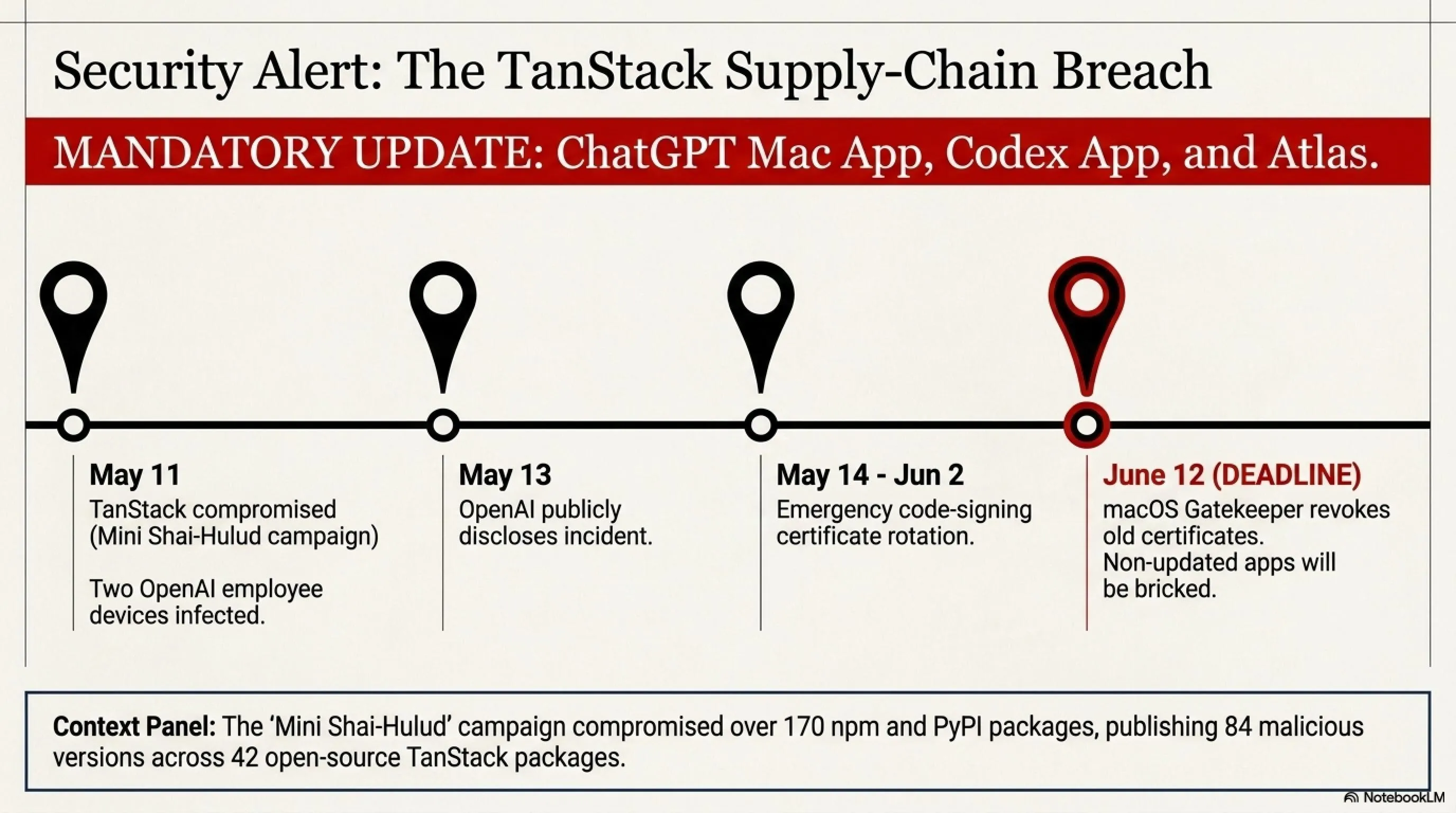
⚠️ TanStack Attack Timeline
| Date | Event |
|---|---|
| May 11, 2026 | TanStack compromised - part of Mini Shai-Hulud campaign |
| May 11, 2026 | Two OpenAI employee devices infected |
| May 13, 2026 | OpenAI disclosed the incident publicly |
| May 14 - June 2 | Rotating code-signing certificates |
| June 12, 2026 | DEADLINE: Old certificates revoked |
⚠️ Critical Warning: If you don't update by June 12, ChatGPT Desktop, Codex App, and Atlas will no longer launch on macOS!
The Mini Shai-Hulud campaign is a widespread supply-chain attack that has compromised over 170 npm and PyPI packages. Attackers published 84 malicious versions across 42 TanStack npm packages. TanStack is a widely-used open-source JavaScript toolkit for web development employed by thousands of companies worldwide.
OpenAI emphasized that it found no evidence of user data access. However, investigators identified unauthorized access to a limited set of internal source code repositories connected to the two compromised employees. This breach, though contained, forced a comprehensive security response including certificate rotation across macOS, iOS, and Windows products.
🔍 Tekin Analysis: Why Supply-Chain Attacks Are So Dangerous
The TanStack attack on OpenAI demonstrates that even companies with vast security resources remain vulnerable to supply-chain attacks. Several factors make this attack vector particularly pernicious:
- Chain of Trust: Modern software development relies on thousands of third-party libraries. One weak link breaks the entire chain, and developers implicitly trust these dependencies.
- Stealth Capability: Malware hidden in legitimate libraries evades traditional security tools that focus on direct attacks rather than poisoned dependencies.
- Scale of Impact: A single popular library like TanStack is used by thousands of organizations, meaning one successful attack yields thousands of potential victims.
- Detection Lag: Supply-chain compromises often go undetected for weeks or months, allowing attackers extensive time to operate before discovery.
- Response Complexity: Once discovered, companies must rotate certificates, push emergency updates, and coordinate with millions of users - a massive operational undertaking.
- Ecosystem Fragility: The open-source ecosystem's strength (rapid development and sharing) becomes its weakness (limited security auditing for thousands of dependencies).
This attack underscores that cybersecurity now extends far beyond protecting servers and networks. Organizations must secure their entire software supply chain, implementing continuous monitoring, dependency scanning, and rapid response capabilities.
⚡ How to Update Your OpenAI Apps
- ChatGPT Desktop: Open the app → Settings → About → Check for Updates
- Codex App: Launch Codex → Menu bar → Check for Updates
- Atlas: Open the app → Preferences → Updates → Install Now
- Codex CLI: Open Terminal and run `codex update`
🚨 Update before June 12! After this date, old app versions will be blocked by macOS security protections.
The certificate revocation deadline of June 12, 2026 is hard and non-negotiable. After that date, macOS Gatekeeper will refuse to launch applications signed with the old certificates, effectively bricking outdated versions of ChatGPT, Codex, and Atlas. This aggressive timeline reflects the severity of the threat and OpenAI's determination to force adoption of secure versions.
Security researchers note that the Mini Shai-Hulud campaign represents a new level of sophistication in supply-chain attacks. The attackers didn't just compromise one package; they systematically targeted multiple related packages across npm and PyPI ecosystems, suggesting either a well-resourced threat actor or coordinated group. The "Shai-Hulud" reference (a sandworm from Frank Herbert's Dune) appears to be a calling card, similar to how some hacking groups brand their operations.
🎯 Interim Conclusion
The TanStack attack on OpenAI serves as a wake-up call for the entire tech industry: software supply chains are a critical vulnerability. Even companies with world-class security teams remain exposed to third-party compromises. Organizations must implement robust dependency monitoring, rapid incident response, and proactive security measures. If you're a Mac user, update your OpenAI apps now - June 12 is the point of no return!
💼 5. OpenAI Launches New Codex Tools for White-Collar Work
In a strategic move to expand Codex beyond developers into the broader office productivity market, OpenAI released six new plugins specifically designed for white-collar workers. These plugins target data analytics, creative production, sales, product design, equity investing, and investment banking - a clear signal that OpenAI intends to compete directly with Microsoft 365 Copilot and Google Workspace AI.
🎯 Six New Codex Plugins
| Plugin | Target Users | Use Cases |
|---|---|---|
| Data Analytics | Data Analysts | Reports, spreadsheets, data visualization |
| Creative Production | Creative Teams | Content, presentations, marketing campaigns |
| Sales | Sales Teams | Contracts, proposals, CRM automation |
| Product Design | Product Designers | Prototyping, user research, documentation |
| Equity Investing | Investors | Market analysis, portfolio management, stock reports |
| Investment Banking | Investment Bankers | Financial modeling, valuation, M&A analysis |
According to OpenAI's internal report, Codex now has over 5 million weekly active users - more than sixfold growth since the desktop app launched in February. Knowledge workers are increasingly using Codex to create reports, spreadsheets, presentations, contracts, and other work products, extending far beyond its original coding focus.
Beyond the six plugins, OpenAI introduced three new features for Codex: Sites (rapid web hosting for internal enterprise applications), Annotations (localized edits without full document regeneration), and new integrations with Wix and Figma for faster design workflows. These additions transform Codex from a code generation tool into a comprehensive knowledge work platform.
🔍 Tekin Analysis: Is Codex Ready for Everyone?
OpenAI's strategy to transform Codex from a developer tool into an all-purpose productivity platform positions it for direct competition in the enterprise software market. Key insights:
- Competing with Giants: Codex now directly challenges Microsoft 365 Copilot and Google Workspace AI, entering a market where OpenAI must overcome entrenched incumbents with deep ecosystem integration.
- 110% Data Analytics Growth: Usage of Codex for data analytics has more than doubled, signaling strong demand and product-market fit in this category.
- Lightweight Tool Building: Non-technical employees can now build lightweight internal tools that previously required engineering support, democratizing software creation.
- Workflow Automation: Codex enables employees to automate repetitive processes without code, potentially saving organizations significant time and labor costs.
- Research and Analysis: Increasingly used for research, data analysis, and building internal tools, expanding well beyond its code generation origins.
- Integration Gap: Codex lacks deep integration with Microsoft and Google ecosystems, which could limit adoption in organizations already committed to those platforms.
The 6x user growth since February suggests Codex is successfully crossing the chasm from early adopters to mainstream knowledge workers, though the integration gap with existing enterprise software remains a significant barrier to universal adoption.
📊 Codex Usage Statistics
5M+
Weekly active users
6x
Growth since February 2026
110%
Data Analytics growth
The strategic implications are significant. OpenAI is no longer content to be an AI model provider for other companies' products. Instead, it's building end-user applications that compete directly with its biggest customers and partners. This creates tension: Microsoft invests heavily in OpenAI while OpenAI's Codex competes with Microsoft 365 Copilot. Similarly, OpenAI partners with Apple on iOS integration while potentially competing for user attention and data.
Industry observers note that Codex's success in white-collar markets will depend on several factors: ease of use for non-technical users, reliability and accuracy in specialized domains, integration with existing enterprise workflows, pricing competitiveness, and trust around data security and privacy. The 5 million user base suggests OpenAI is making progress on these fronts, but the market remains highly competitive.
🎯 Interim Conclusion
OpenAI's expansion of Codex into white-collar work signals that AI is no longer just for developers. With 5 million active users and 110% growth in data analytics, Codex is becoming a comprehensive automation platform for knowledge workers. The productivity tools market is heating up, with OpenAI now competing directly against Microsoft and Google in their core business. The next year will determine whether OpenAI can overcome the integration advantages of established players or whether Codex remains a powerful but niche tool for early adopters.
🎮 6. Control Resonant Drops September 24 Release Date - Jesse Faden Returns
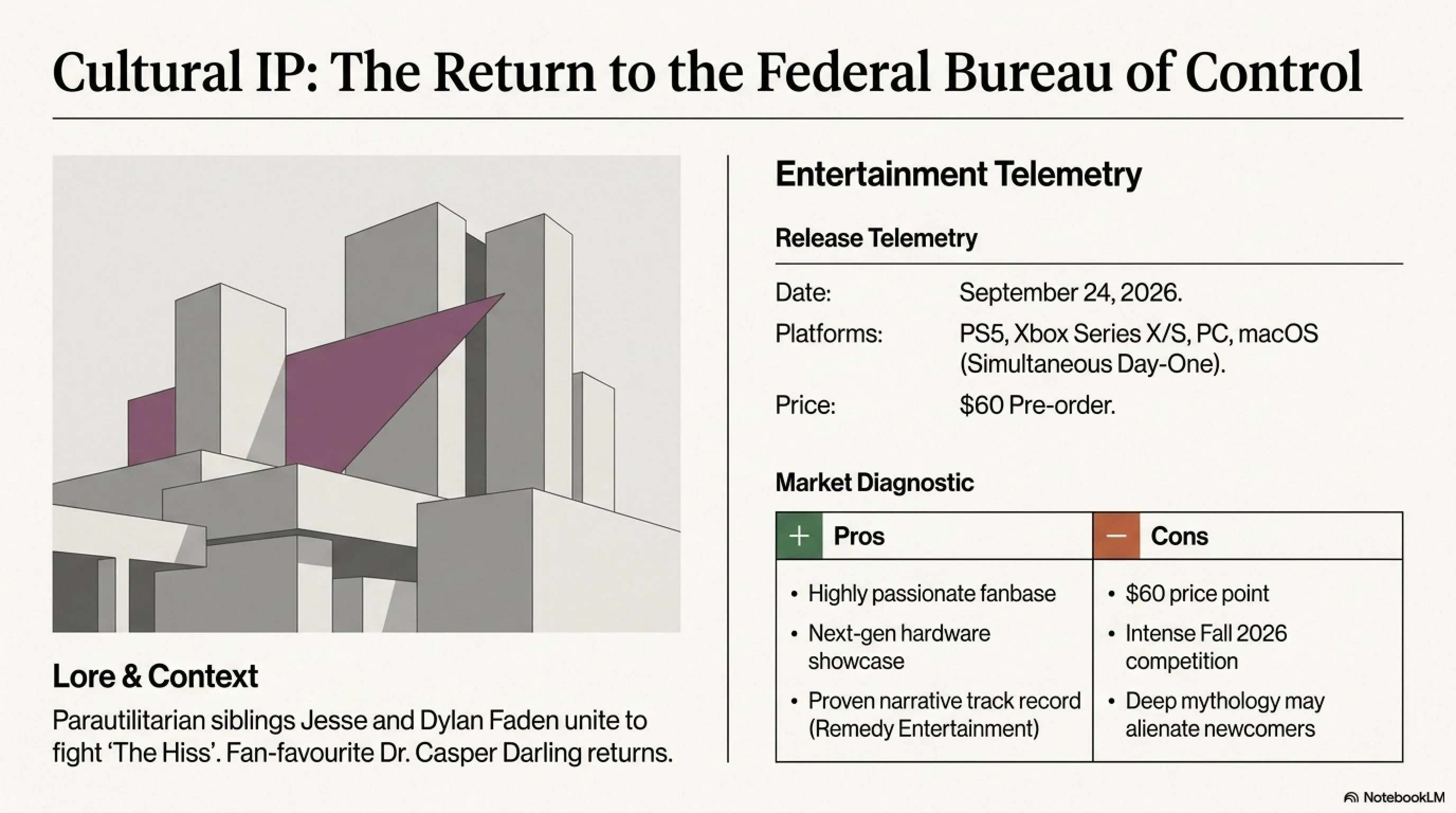
Remedy Entertainment announced the release date for Control Resonant during PlayStation's State of Play event: September 24, 2026. This highly anticipated sequel to the beloved 2019 game Control will launch on PlayStation 5, Xbox Series X/S, PC (Steam and Epic Games Store), and macOS simultaneously.
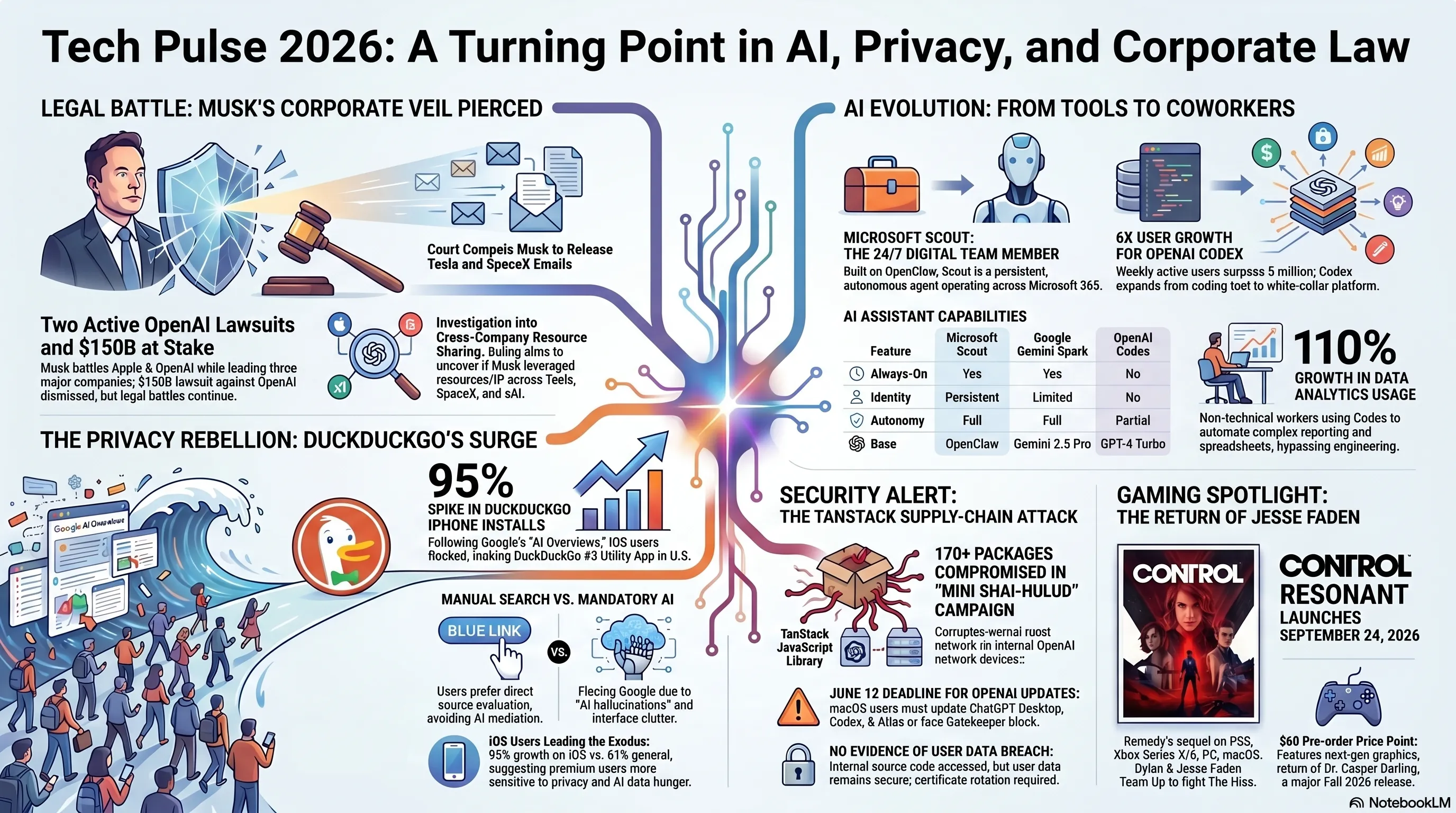
The new trailer provides the first glimpse of Jesse Faden's return, the protagonist from the original Control and sister to Dylan (Resonant's lead character). It appears the two parautilitarian siblings must work together to push back The Hiss, the reality-bending threat at the game's core.
🎯 Control Resonant Key Information
| Component | Details |
|---|---|
| Release Date | September 24, 2026 |
| Platforms | PS5, Xbox Series X/S, PC (Steam/Epic), macOS |
| Protagonist | Dylan Faden (main character) |
| Returning Characters | Jesse Faden, Dr. Casper Darling |
| Developer | Remedy Entertainment |
| Genre | Action Role-Playing Game (Supernatural) |
| Pre-order Price | $60 |
The return of Dr. Casper Darling - one of the original game's most beloved characters - has generated significant excitement. Darling was a scientist who recorded bizarre but captivating educational videos at the Federal Bureau of Control, providing exposition while simultaneously deepening the game's mysterious atmosphere.
🔍 Tekin Analysis: Why Control Resonant Matters
Control was one of the most critically acclaimed games of the past decade, and Resonant has generated sky-high expectations:
- Unique Narrative Universe: Control built a bizarre world with its own internal logic that attracted passionate fans who love unraveling mysteries and piecing together cryptic lore.
- Innovative Gameplay: The combination of psychokinetic powers and realistic physics created a unique experience where combat felt fresh and experimental rather than generic.
- Striking Art Direction: The brutalist architecture and oppressive atmosphere earned widespread praise for creating an unsettling but fascinating environment to explore.
- Remedy's Track Record: Remedy Entertainment has a proven history of narrative excellence (Alan Wake, Max Payne) and technical innovation, building confidence in Resonant's quality.
- Fall 2026 Competition: Resonant will compete in one of gaming's most crowded seasons, but it has a loyal fanbase and critical acclaim working in its favor.
- Next-Gen Showcase: As a PS5/Xbox Series exclusive, Resonant can fully leverage current-generation hardware for improved visuals, faster loading, and more complex environments.
⚔️ Control Resonant Pros & Cons
✅ Pros
- Beloved characters return
- Control's unique universe
- Remedy's strong track record
- Next-gen graphics for PS5/Xbox
- Complex, engaging narrative
- Passionate existing fanbase
❌ Cons
- $60 price - higher than original
- Intense fall 2026 competition
- New protagonist (not Jesse)
- May confuse newcomers
- Requires powerful PC hardware
- High expectations to meet
Pre-orders for Control Resonant opened today with a $60 price tag. Given the original game's popularity and the positive reception to the new trailer, Resonant is expected to be one of fall 2026's biggest releases. The September 24 date positions it strategically: late enough to avoid summer competition but early enough to capture holiday shopping momentum.
Industry analysts predict strong first-week sales driven by the dedicated Control fanbase, followed by sustained performance if critical reviews match the original's acclaim. The simultaneous multi-platform launch (including day-one macOS support, which is rare) suggests Remedy is confident in the game's technical stability and eager to maximize initial sales across all platforms.
🎯 Interim Conclusion
Control Resonant's September 24 release date and return of beloved characters position it as one of fall 2026's biggest gaming moments. The combination of Control's unique narrative universe, innovative gameplay, and striking art direction makes this sequel a must-play for action-adventure fans. Whether Remedy can match or exceed the original's critical and commercial success remains to be seen, but the foundation is solid and expectations are sky-high.
🏁 Final Thoughts
June 3, 2026 opened with six explosive tech stories that each illuminate different aspects of the industry's current trajectory. From federal courts compelling Elon Musk to disclose sensitive emails, to DuckDuckGo's explosive growth showing users demand privacy alternatives to Google, to 24/7 AI assistants like Microsoft Scout reimagining office work - these stories reveal an industry in rapid transformation.
The TanStack attack on OpenAI reminded us that cybersecurity is an endless battle where even giants remain vulnerable. Codex's expansion into white-collar work demonstrated that AI is no longer just for developers. And Control Resonant's release date announcement promised gaming fans an exciting fall 2026.
Three key takeaways emerge: (1) judicial power can compel even the most powerful tech figures to submit to discovery, (2) users still value privacy and control enough to flee tech giants when pushed too far, and (3) AI is evolving from tool to colleague - a transformation that will reshape every industry.
You've started your Wednesday morning with comprehensive tech news coverage. Stay informed, stay secure, and have a productive day ahead! ☕✨
❓ Frequently Asked Questions (FAQ)
1. Should I be worried about the TanStack attack if I'm not a Mac user?
No, this attack only affected OpenAI's macOS applications. Windows, Linux, iOS, and Android users do not need to take action. However, the incident serves as a reminder of the importance of keeping all software updated regardless of platform.
2. Why is DuckDuckGo suddenly so popular?
Users are flocking to DuckDuckGo due to privacy concerns and resistance to Google's mandatory AI-powered search results. DuckDuckGo doesn't build user profiles, displays results without mandatory AI mediation, and gives users more control over their search experience. The 95% growth on iPhone specifically reflects iOS users' heightened privacy consciousness.
3. What's the difference between Microsoft Scout and Copilot?
Copilot lives inside Microsoft 365 applications and becomes inactive when you're not using it. Scout is an always-on assistant that operates across Teams, Outlook, OneDrive, and SharePoint with a persistent identity. Scout can act autonomously with appropriate permissions, making it more like a digital coworker than a traditional chatbot.
4. Will Control Resonant make sense if I didn't play the first game?
Remedy typically designs its games so newcomers can follow the story, but you'll have a richer experience if you've played the original Control. We recommend experiencing Control (2019) before Resonant launches in September. The narrative universe is complex and rewards familiarity with its mythology and characters.
5. Why did the court order Elon Musk to turn over Tesla and SpaceX emails?
The judge believes these emails may contain relevant evidence for xAI's lawsuit against Apple and OpenAI. Since Musk is CEO of three companies (xAI, Tesla, SpaceX), the court wants to investigate whether he used resources from one company to benefit another, and whether his communications reveal anticompetitive behavior or conflicts of interest.
📚 Sources
- 9to5Mac: Court orders Elon Musk to turn over Tesla and SpaceX emails
- 9to5Mac: DuckDuckGo keeps surging on iPhone
- TechCrunch: Microsoft launches Scout
- Wired: Meet Microsoft Scout
- 9to5Mac: Security breach - update ChatGPT Mac app
- TechCrunch: OpenAI launches new Codex tools
- GameSpot: Control Resonant release date
- IGN: Control Resonant trailer and pricing
🌐 Stay Connected With Us 🎮✨
For the latest tech, gaming, and gadget news, follow us on our official social media channels: