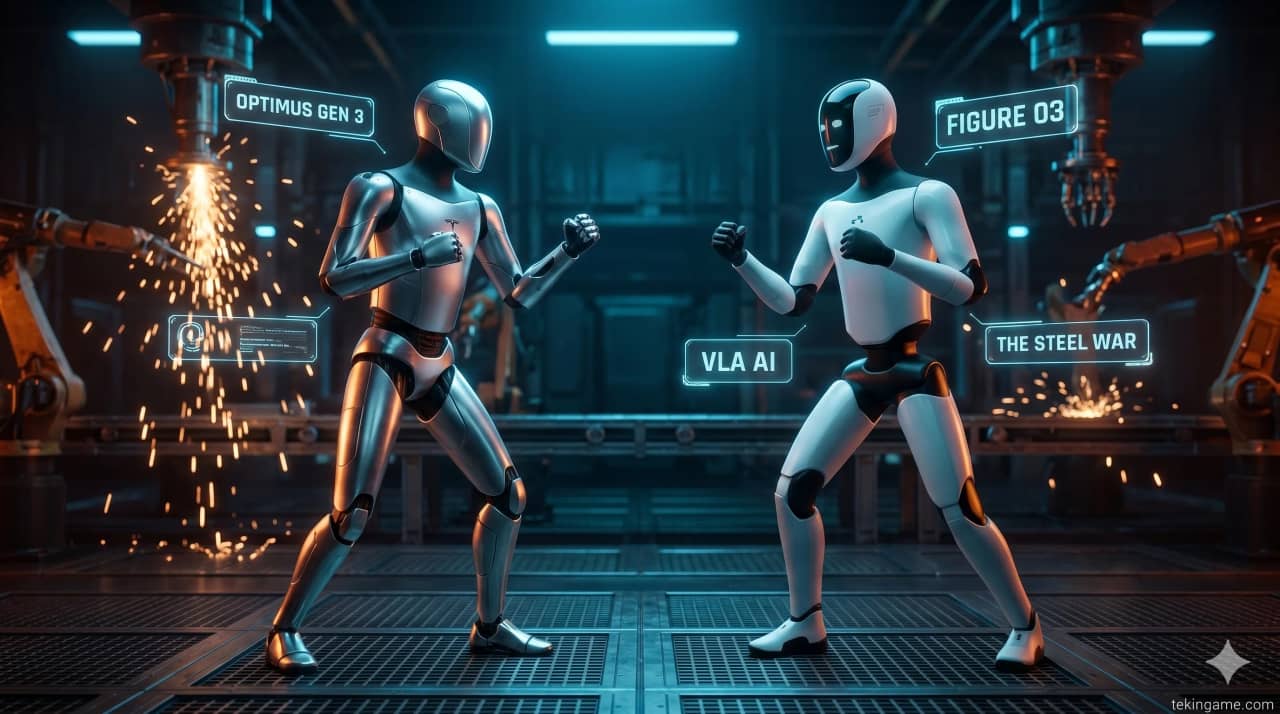
1. Tesla Optimus Gen 3: When Self-Driving Cars Start Walking
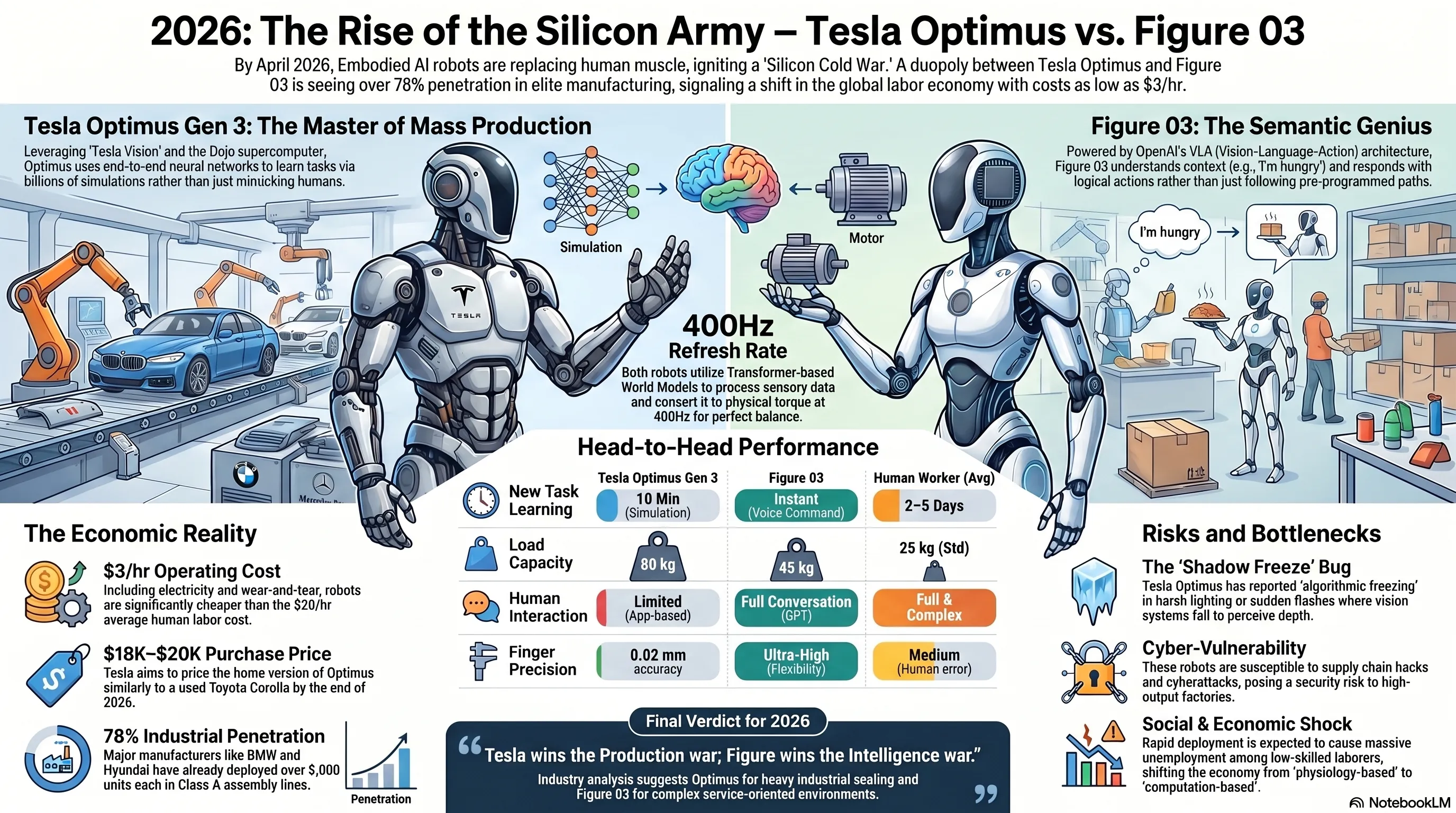
In 2026, Elon Musk no longer sees Optimus as a "side project." He has stated that Tesla's future value will be based not on its vehicles, but on the size of its "Silicon Army." The third-generation Optimus, introduced earlier this year, has shown staggering progress in End-to-End Neural Networks.
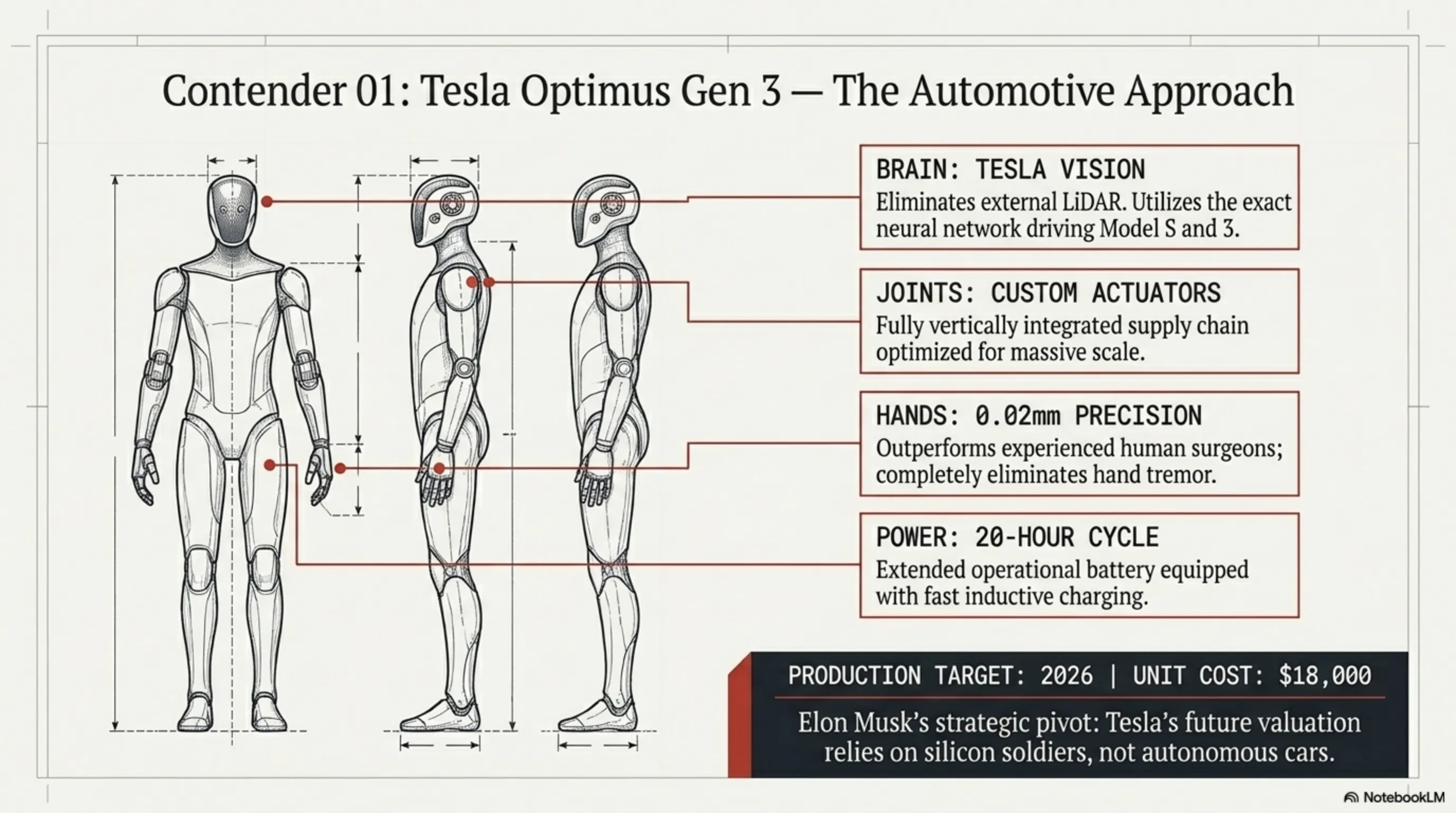
The primary differentiator for Optimus lies in the supply chain. Tesla has designed every single actuator (joint motor) in-house. This robot no longer relies on expensive external LiDAR sensors; instead, it utilizes the same Tesla Vision system found in Model S and Model 3 vehicles. This means the robot's brain perceives the environment exactly like a Tesla driver, but with two legs for balance instead of wheels.
TekinGame analysts believe the Optimus "brain" is trained entirely by the Dojo supercomputer. This means the robot didn't learn to pick up a box by watching thousands of hours of human workers; it repeated it billions of times in a simulated environment until it reached the most optimized state possible. The result? A robot whose hand tremors, even when carrying hypersensitive loads, are less than those of an experienced engineer.
2. Figure 03: Microsoft and OpenAI Enter the Fray
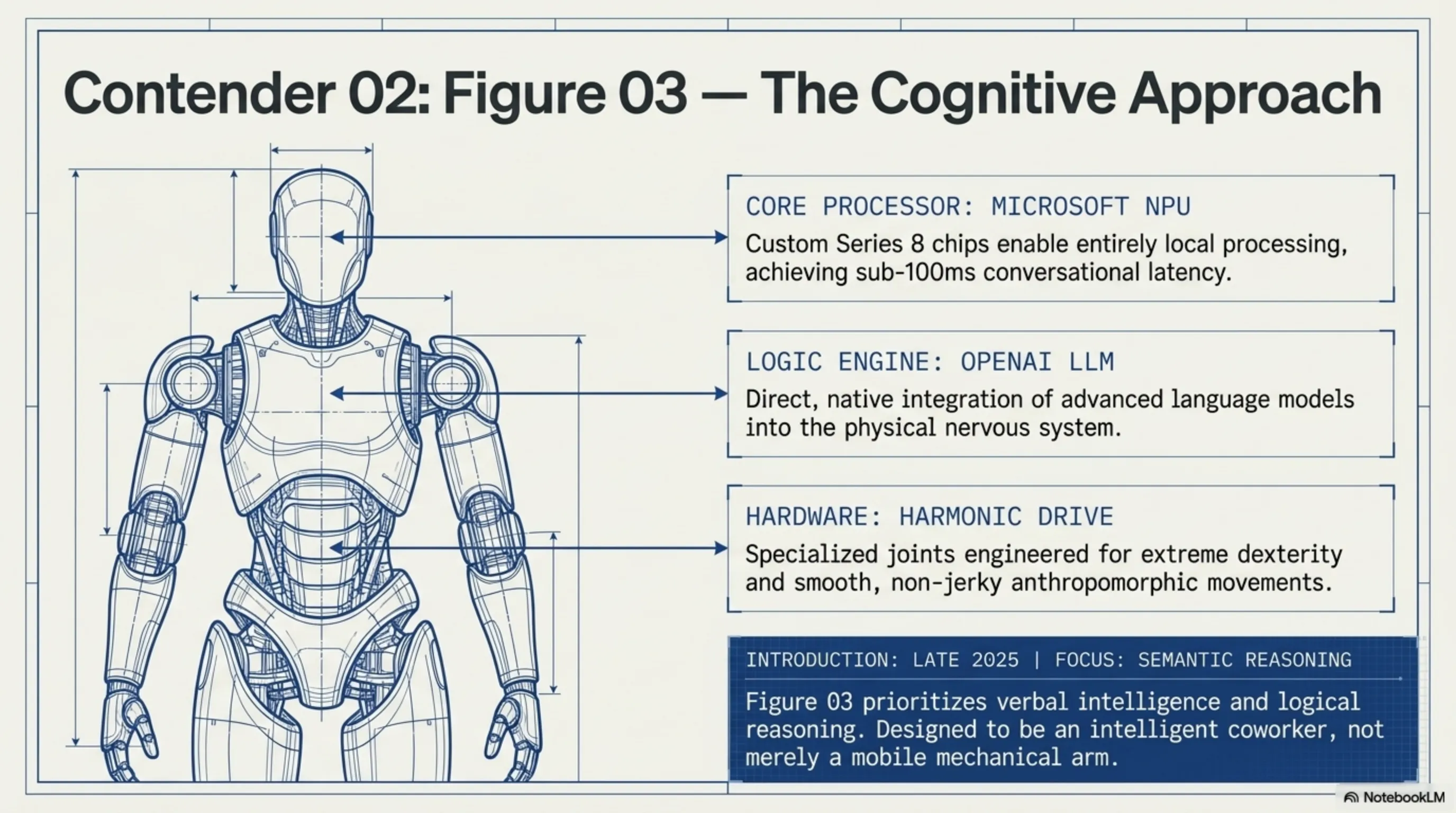
While Tesla owes its dominance to "Vision" and "Mass Production," Figure attributes its superiority to "Verbal and Logical Intelligence." The Figure 03 robot, launched in late 2025, is the first product to directly integrate OpenAI's Large Language Models (LLMs) into its neural system.
🕵️ Dissection: The Magic of "See-Hear-Act" in Figure 03
Tesla's main rival uses a VLA (Vision-Language-Action) architecture. In Optimus, the robot is programmed to "pick up the red object." But in Figure 03, you can say: "I'm hungry, give me something to eat." The robot doesn't just see the red apple; it understands that the apple is "edible" and must be picked up carefully and given to you. This level of Semantic Understanding is what has transformed Figure into an intelligent colleague, not just a mobile mechanical arm.
🔍 Inspector Note: Figure 03 uses Microsoft's custom NPU 8-series chips for local processing to bring conversational latency below 100ms.
3. Head-to-Head: Optimus vs. Figure; Who is Physically Superior?
When discussing physical power, we must look at motor torque. Tesla's Optimus uses Custom Actuators that provide enough power to carry a full piano. In contrast, Figure focuses on "finesse." Figure's joints were built in collaboration with Harmonic Drive, allowing the robot to have incredibly smooth, human-like movements (non-jerky).
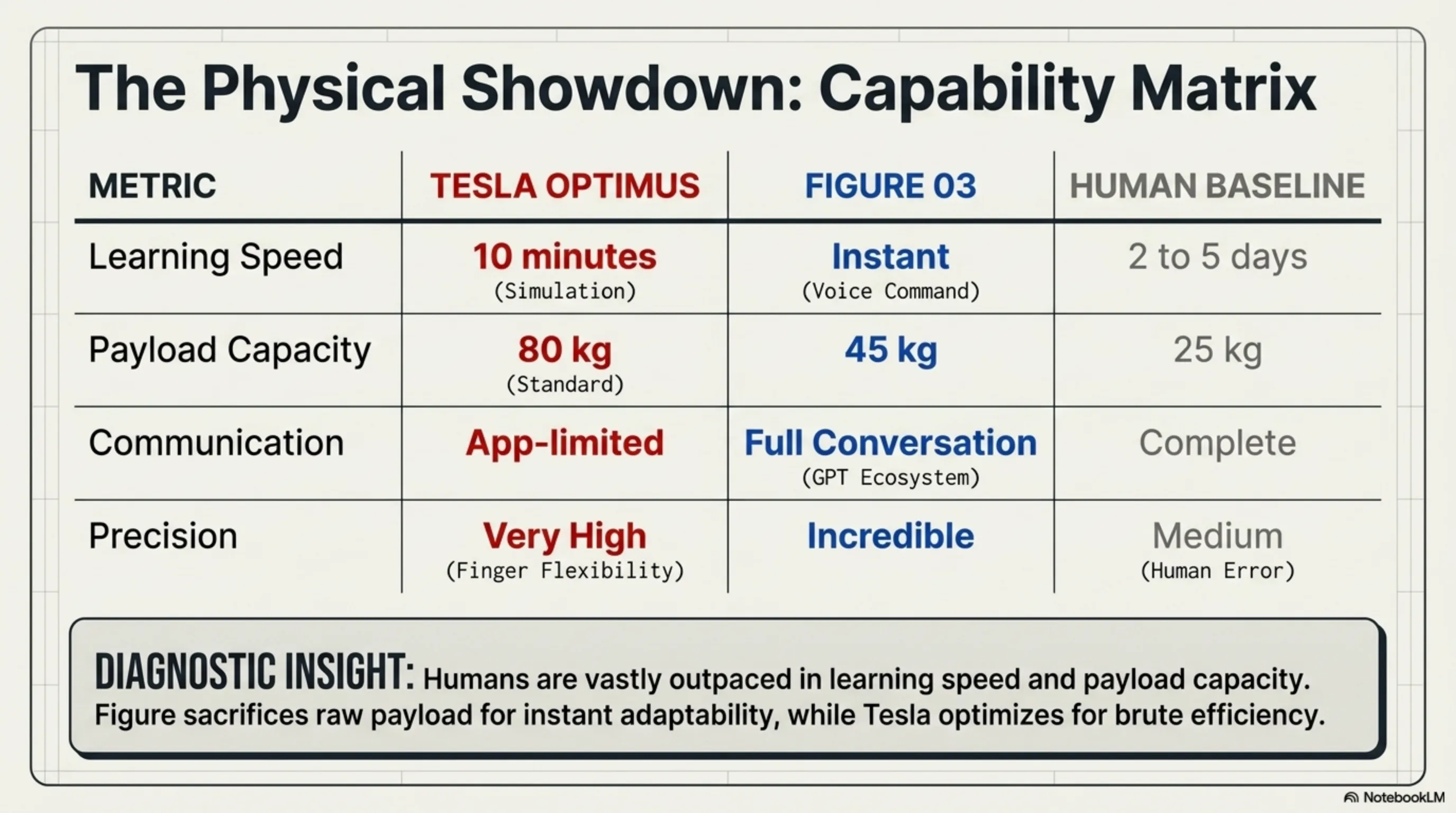
| Key Feature | Tesla Optimus (Gen 3) | Figure 03 | Human Worker (Avg) |
|---|---|---|---|
| New Task Learning Speed | 10 Minutes (Sim) | Instant (Voice Command) | 2-5 Days |
| Payload Capacity | 80 kg | 45 kg | 25 kg (OSHA Standard) |
| Human Interaction | Limited (via App) | Full Dialogue (OpenAI) | Full/Complex |
| Dexterity / Micro-parts | Very High | Exquisite (Finger Refinement) | Medium (Human Error) |
The real battle, however, is in the Software Stack. Tesla Optimus uses "Imitation Learning"; the robot watches recorded videos to learn how to tighten a bolt. But Figure 03 uses "Reasoning." If an obstacle is placed in Figure's path, the robot doesn't stop to await instructions; it actively looks for an alternative path because it understands the "concept" of the goal.
🌡️ Market Thermometer: Adoption Rate in Grade A Industry (2026)
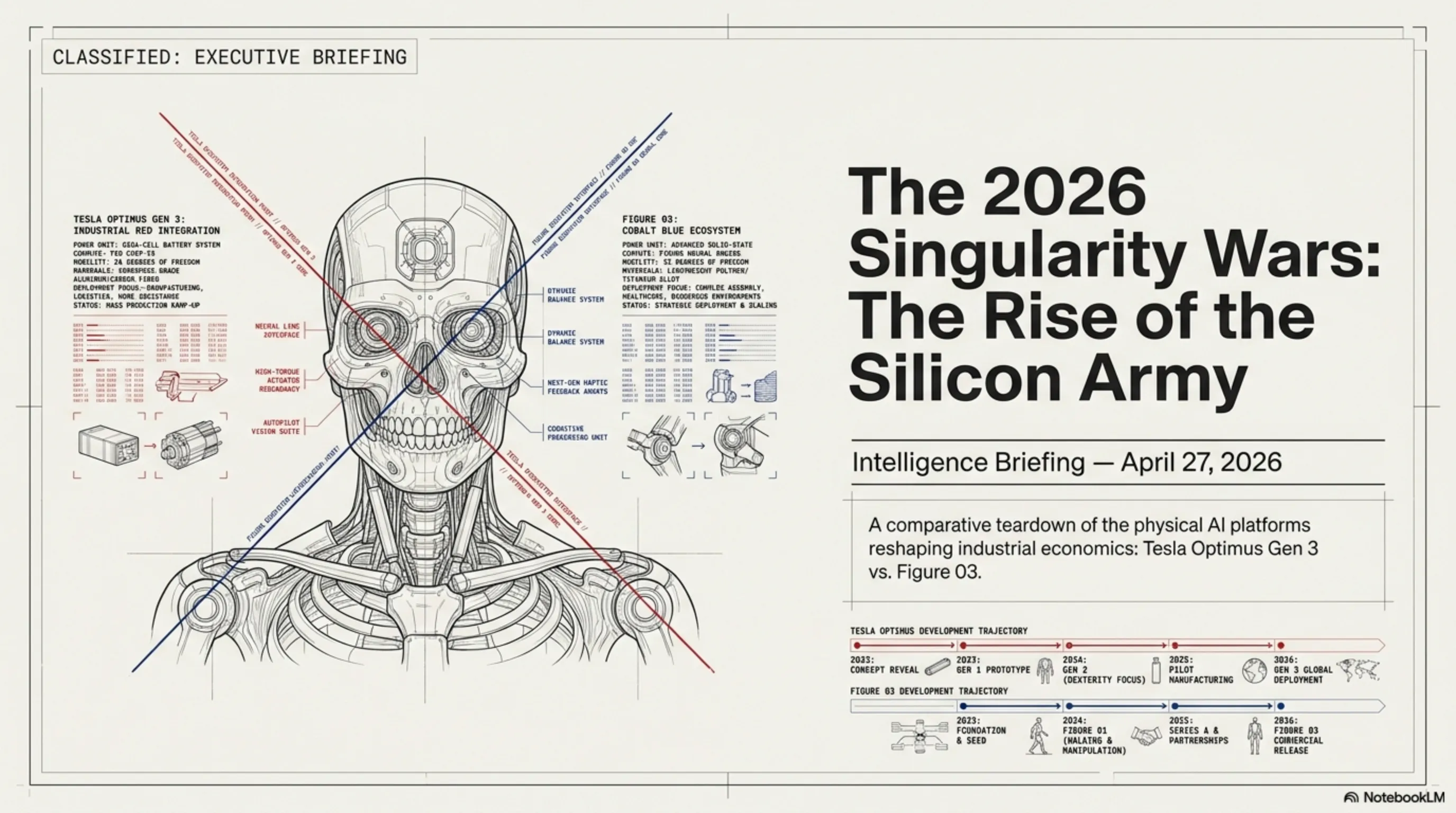
Tekin Analysis: The market has shifted from "testing" to "mass deployment." Currently, BMW, Hyundai, and Mercedes-Benz have signed contracts for over 5,000 units each from both Tesla and Figure. By 2027, repetitive factory work will no longer be a human job.
4. Gray Theories: What the Companies Aren't Telling You
🕵️ The "Shadow Freeze" Bug in Optimus?
Unconfirmed reports from the Giga Factory in Texas suggest that Optimus suffers from "Algorithmic Freezing" in certain lighting conditions (harsh shadows or sudden flashes). Some believe Tesla's vision system has yet to fully master "depth" in chaotic environments, leading to several equipment collisions. While Tesla denies these claims, the constant software updates over the last two weeks tell a different story.
✅ Strategic Advantages (Elite)
- Operational cost: ~$3/hour (Electricity & Depreciation).
- Zero rest, zero insurance, zero maternity leave.
- Repetitive accuracy across 100,000 cycles with zero degradation.
- Operates in toxic or dangerous environments natively.
❌ Critical Bottlenecks
- Hyper-specialized repair costs for actuator failure.
- Vulnerability to supply chain hacking and cyber warfare.
- Total lack of ethical or creative decision-making ability.
- Massive socioeconomic shock from labor displacement.
5. The Logic Behind the Steel: Dissecting Neural Architectures
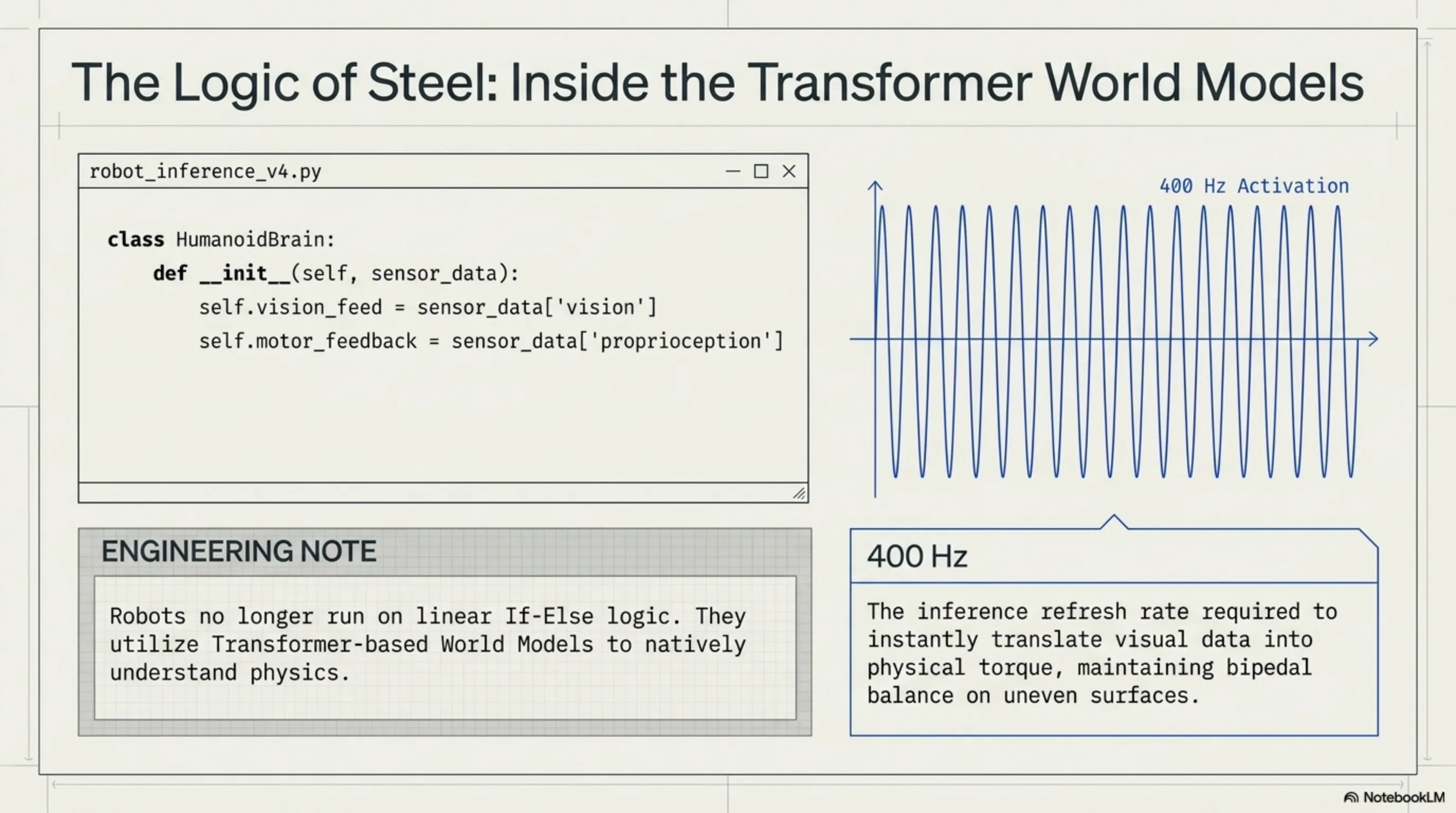
To understand how Optimus or Figure moves, we must look at Transformer-based World Models. These robots no longer live on linear (If-Else) code. They possess a "World Model" that inherently understands physics.
6. 2030 Predictions: A Jobless World?
Many critics fear "technological panic." However, history shows that every industrial revolution creates new roles. By 2030, we will likely have massive fleets of "Robot Supervisors." Companies will hire "Algorithm Paralyzers" to resolve software conflicts in robots in real-time.
"We are transitioning from a physiology-based economy to a computation-based economy. By 2027, the price of a humanoid robot with the ability of a master electrician will be cheaper than a used sedan. This means either the democratization of wealth or an unprecedented class crisis."
— Adrien Klepp, Senior Strategy Analyst, TekinGame❓ Humanoid Robots 2026: Frequently Asked Questions
1. Can these robots revolt against humans?
No. Current systems lack "consciousness." All motor limits are locked at the hardware level (Physical Locks) to prevent any movement outside protocol.
2. What is the final price for a domestic Optimus variant?
Tesla aims to bring the domestic version below $20,000 by late 2026—roughly the cost of a used Toyota Corolla.
🚀 Next Step: Are You Ready?
The world of Physical AI is moving at the speed of light. To stay ahead of the curve, join our "TekinPlus" newsletter today for exclusive insider analysis and hands-on robotics trials.
🏆 TekinGame's Final Verdict
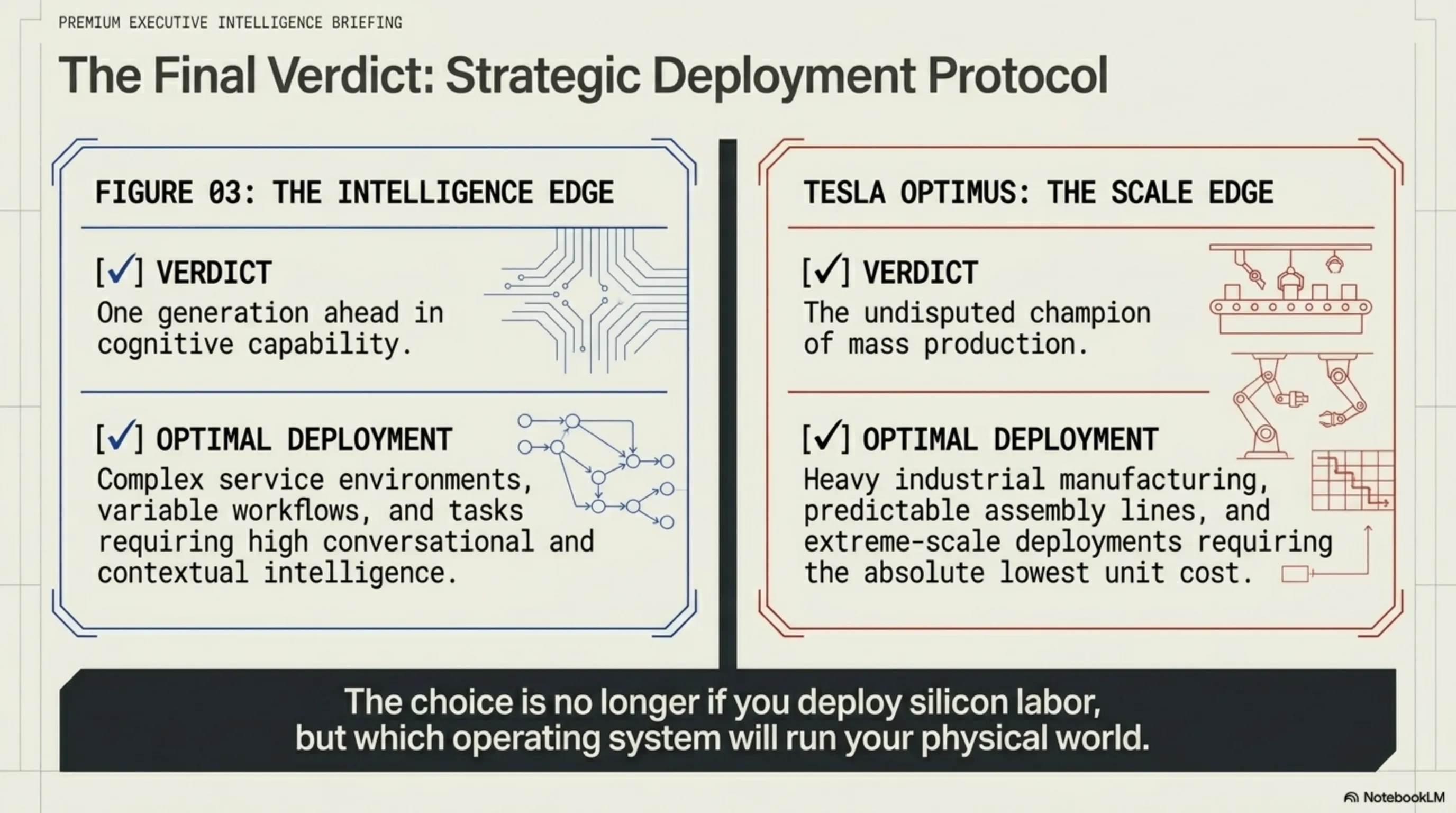
If you are looking for the cheapest and most accessible robot capable of mass-scale production, Tesla Optimus is the undisputed winner. Tesla wins the war of manufacturing. But if you want the smartest and most refined robot with conversational ability and environmental nuance, Figure 03 is a generational leap ahead. Our choice for 2026? Figure 03 for services, Optimus for industrial giants.
📚 Article Glossary (Robotics 2026)
- Actuator: Electronic motors acting as robotic muscles.
- Dojo: Tesla's supercomputer for AI training.
- VLA Model: Models combining Vision, Language, and Action.
- Degree of Freedom: Number of directions a joint can move.
- On-Device Inference: AI processing occurring locally on hardware.
- Proprioception: A robot's sense of its own joint positions.
🌐 Stay Connected With Us
For the latest tech, gaming, and gadget news, follow us on social media:
📸 Instagram 🆔 Telegram Arabia 🆔 Telegram Global 🆔 Telegram Iran 💬 Direct Contact 📧 majid@tekingame.com🌐 Stay Connected With Us 🎮✨
For the latest tech, gaming, and gadget news, follow us on our official social media channels: