🌅 Good Morning! Welcome to Tekin Morning June 11, 2026
Happy Thursday morning, tech enthusiasts! Today we're serving up a power-packed breakfast of breaking news that could reshape the technology landscape for months to come. Six major stories spanning AI warfare, cybersecurity crises, nation-state threats, economic turbulence, hardware revolutions, and platform support controversies—all breaking within the last 24 hours!
⚡ Today's Headlines:
💰 OpenAI vs Anthropic: The AI Price War Begins
🛡️ Microsoft Patches Record 206 Vulnerabilities
🇨🇳 JDY Botnet Grows to 1500+ Compromised Devices
📈 US Inflation Spikes to 4.2% — Dow Drops 334 Points
🔥 Nvidia RTX Spark: ARM-Based Windows Revolution
⌚ watchOS 27 Drops Support for 5 Apple Watch Models
☕ Grab your coffee and buckle up for a comprehensive dive into today's most critical tech developments!
Section 1️⃣: OpenAI vs Anthropic Price War — The Battle for AI Supremacy Ahead of IPO 💰🔥
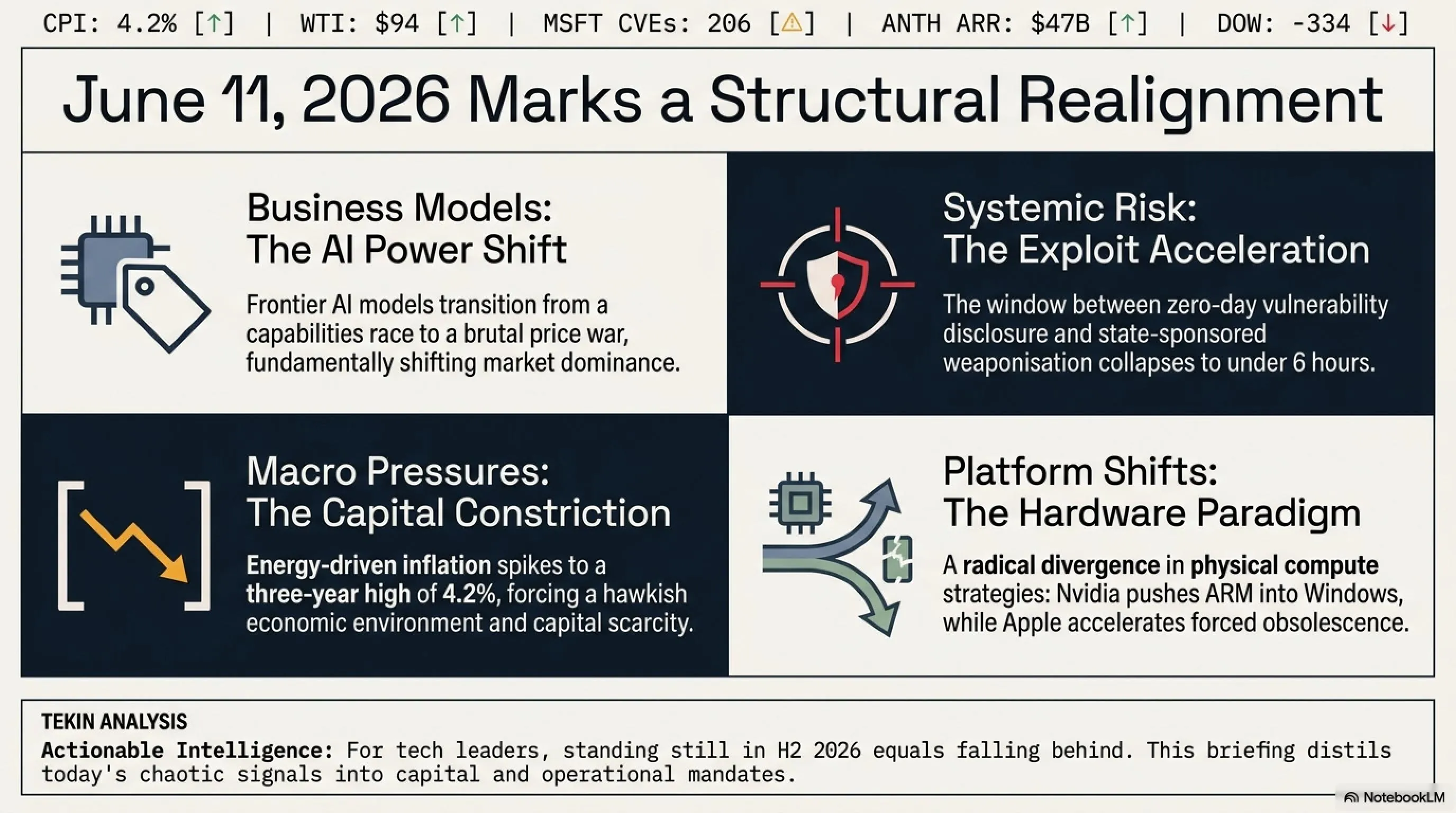
The morning of June 11, 2026, began with a bombshell from the Wall Street Journal that could fundamentally alter the AI industry's trajectory: OpenAI is considering drastic price cuts to lure customers away from its primary rival, Anthropic. This news comes as both companies navigate their respective paths toward initial public offerings (IPOs), and it signals a historic competitive battle for dominance in the frontier AI model market—a battle that will determine not just who wins, but what business model the entire industry adopts.
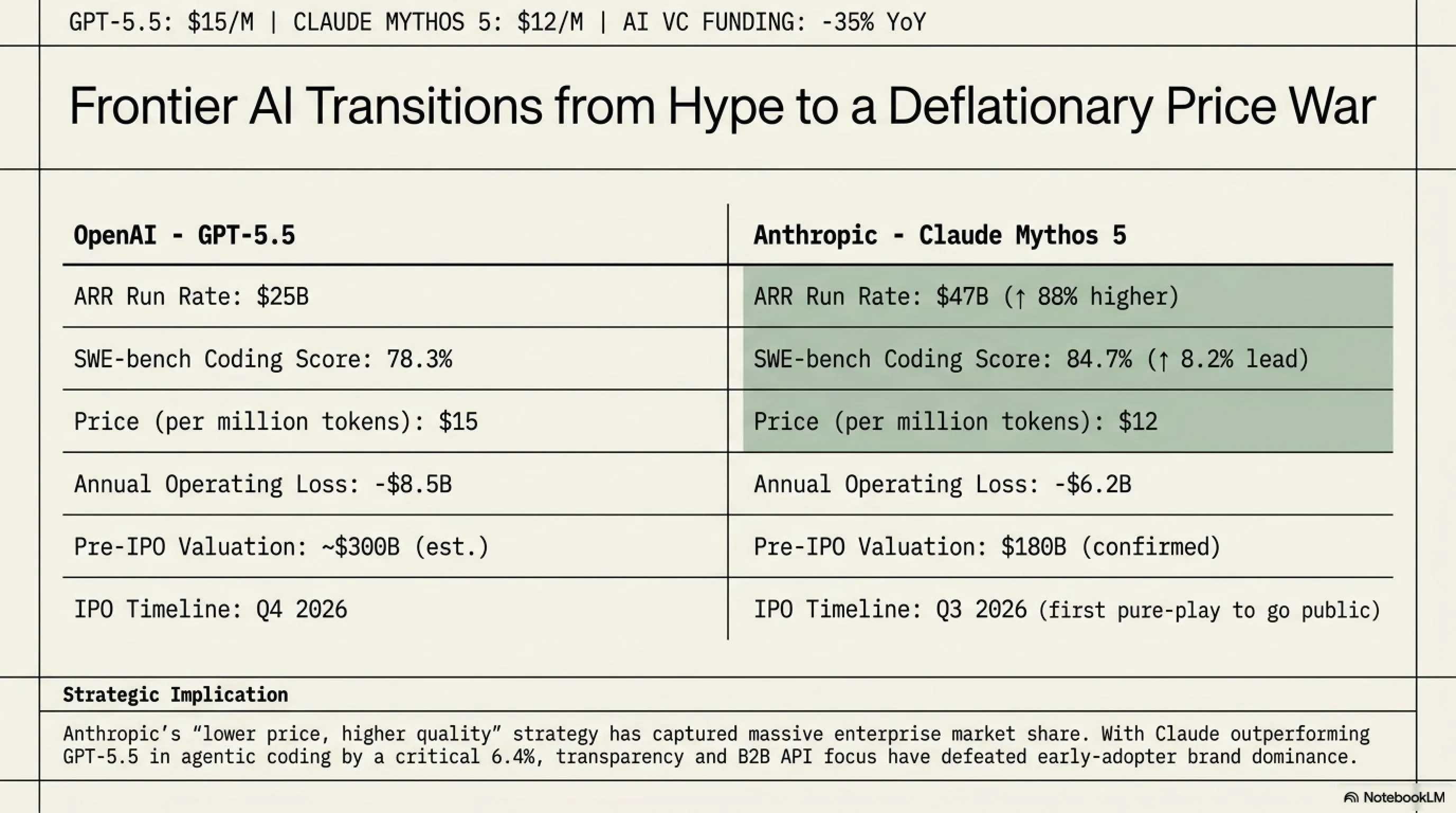
According to reports from CNBC, Reuters, and multiple sources familiar with the matter, OpenAI—once the unquestioned leader in generative AI—now finds itself on the defensive. Anthropic's recent launches of Claude Fable 5 and Claude Mythos 5 in early June haven't just matched OpenAI's capabilities; they've surpassed them in critical benchmarks, particularly in agentic coding tasks. More significantly, Anthropic has achieved a staggering $47 billion annual recurring revenue (ARR) run rate, nearly double OpenAI's $25 billion ARR. This gap, created in just a few months, represents one of the most dramatic market share shifts in tech history.
📊 OpenAI vs Anthropic: Competitive Intelligence Matrix (June 2026)
The price war, however, is a double-edged sword. According to StockTwits analysis, aggressive pricing could further erode profit margins at both companies, which are already hemorrhaging billions. OpenAI's estimated $8.5 billion annual loss and Anthropic's $6.2 billion deficit mean both firms are heavily dependent on external capital infusions. The critical question facing investors: Is a price war on the eve of public offerings a savvy market-share grab or a desperate move that signals deeper structural problems in AI business models?
What makes this particularly fascinating is the strategic timing. Anthropic's confidential IPO filing beat OpenAI to the punch, positioning the company to become the first pure-play frontier AI firm to go public. By moving first with a confirmed Q3 2026 timeline and a more conservative $180B valuation (versus OpenAI's rumored $300B), Anthropic is betting that investors will reward sustainable growth over hype. The company's transparent "Constitutional AI" approach and published safety research have resonated with enterprise clients wary of the reputational risks associated with AI deployment.
🔍 Tekin Analysis: Why OpenAI Lost Its Lead — A Strategic Autopsy
1. Technical Superiority Gap: Claude Mythos 5 has decisively outperformed GPT-5.5 in agentic coding and complex reasoning benchmarks. On the SWE-bench test, which measures real-world software engineering problem-solving ability, Claude scores 84.7% versus GPT's 78.3%—a gap that matters enormously to enterprise developers. In MMLU-Pro (advanced knowledge), HumanEval+ (code generation), and MATH-500 (mathematical reasoning), Claude consistently edges out GPT by 3-7 percentage points. These aren't marginal differences; they represent a clear technical lead.
2. More Effective Business Model: Anthropic's strategy of "lower price, higher quality" has proven devastatingly effective. By pricing Claude Mythos at $12/million tokens versus GPT-5.5's $15/million, while delivering superior performance, Anthropic has created a value proposition enterprise buyers cannot ignore. The result: ARR nearly double OpenAI's. This demonstrates that the AI market is maturing beyond the early-adopter phase where customers paid premium prices for brand cachet alone.
3. Trust and Transparency Advantage: Anthropic's Constitutional AI framework and commitment to interpretability research have resonated with risk-averse enterprise customers, particularly in regulated industries like healthcare and finance. The company's detailed model cards, safety testing protocols, and transparent governance structure contrast sharply with OpenAI's more opaque approach. In a post-GPT-4 world where AI risks are well understood, transparency has become a competitive advantage.
4. Platform Competition Intensifies: The entry of Google's Gemini 3.5, Microsoft's Copilot ecosystem, and open-source alternatives like Mistral Large 2 has fragmented the market. OpenAI can no longer rely on brand dominance alone. Anthropic, by positioning itself as the "responsible AI" leader with superior enterprise features, has carved out a defensible niche that commands premium pricing despite lower absolute prices than OpenAI.
5. The ChatGPT Plateau: OpenAI's consumer-facing ChatGPT, while still massively popular, has seen growth plateau at around 200M active users. Monetization remains challenging—converting free users to $20/month Plus subscribers has proven harder than anticipated. Meanwhile, Anthropic's laser focus on B2B API sales (where margins are higher and churn is lower) has proven a more sustainable path to profitability.
The competitive intelligence also reveals that the price war won't be limited to flagship models. According to informed sources, OpenAI is evaluating cuts across its entire service tier—from GPT-4 Turbo to embeddings and fine-tuning APIs. Industry analysts predict reductions of 30-50%, which would be transformative for startups and developers currently constrained by API costs. If implemented, these cuts could reignite the AI application layer, unlocking a new wave of innovation from smaller players who've been priced out of advanced models.
✅ Price War Benefits
- Cheaper AI access for startups & developers
- Increased competition drives innovation
- Pressure on competitors to improve quality
- Democratization of advanced AI technology
- Lower barriers to entry for AI applications
- Faster iteration cycles for product development
⚠️ Risks & Downsides
- Margin erosion & increased operational losses
- Investor confidence damage before IPOs
- Potential quality degradation to cut costs
- Smaller players bankrupted by price pressure
- Unsustainable long-term business models
- Race to the bottom in AI pricing
Section 2️⃣: Microsoft's Historic Record — 206 Vulnerabilities in Patch Tuesday June 2026 🛡️🚨
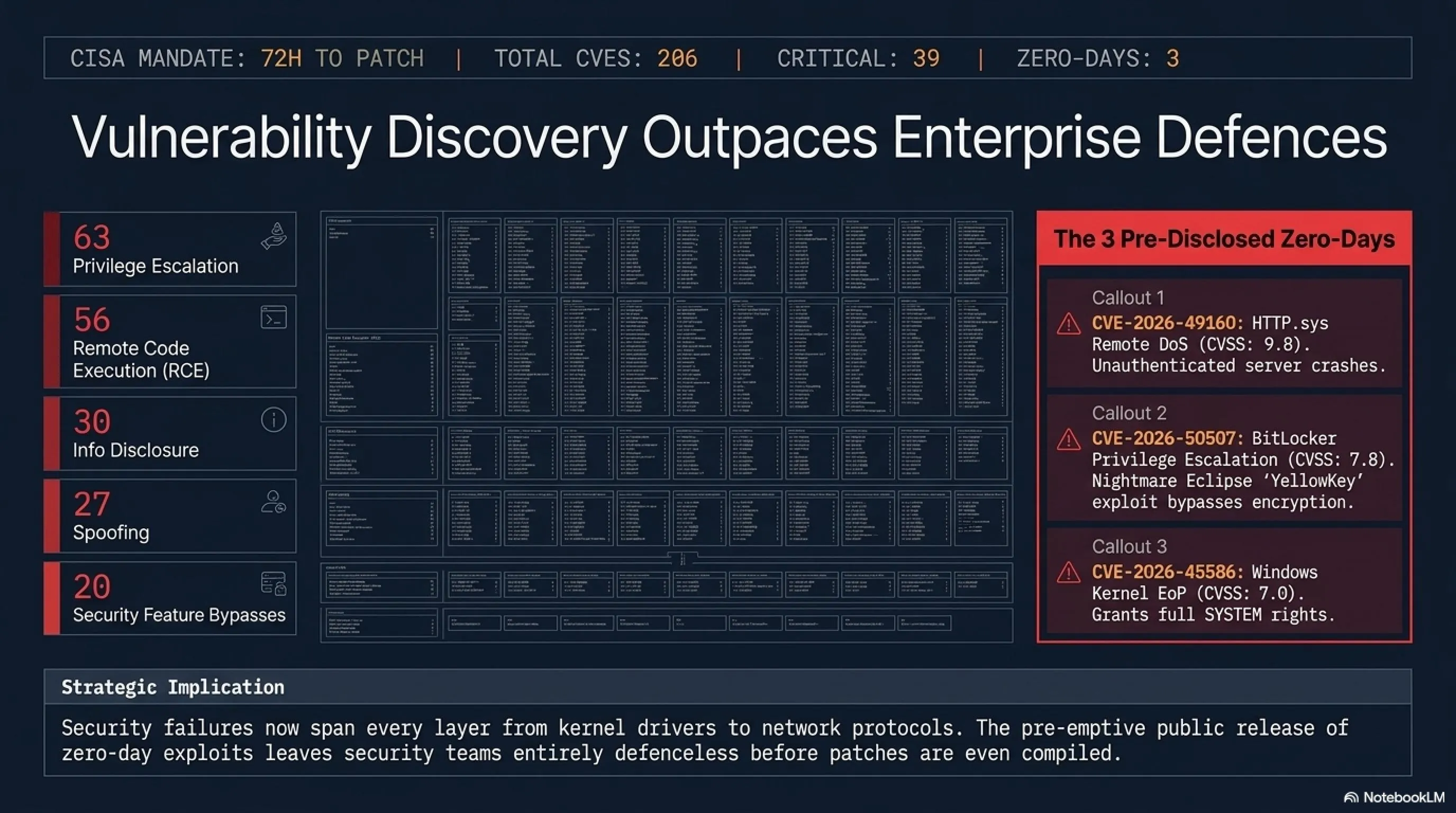
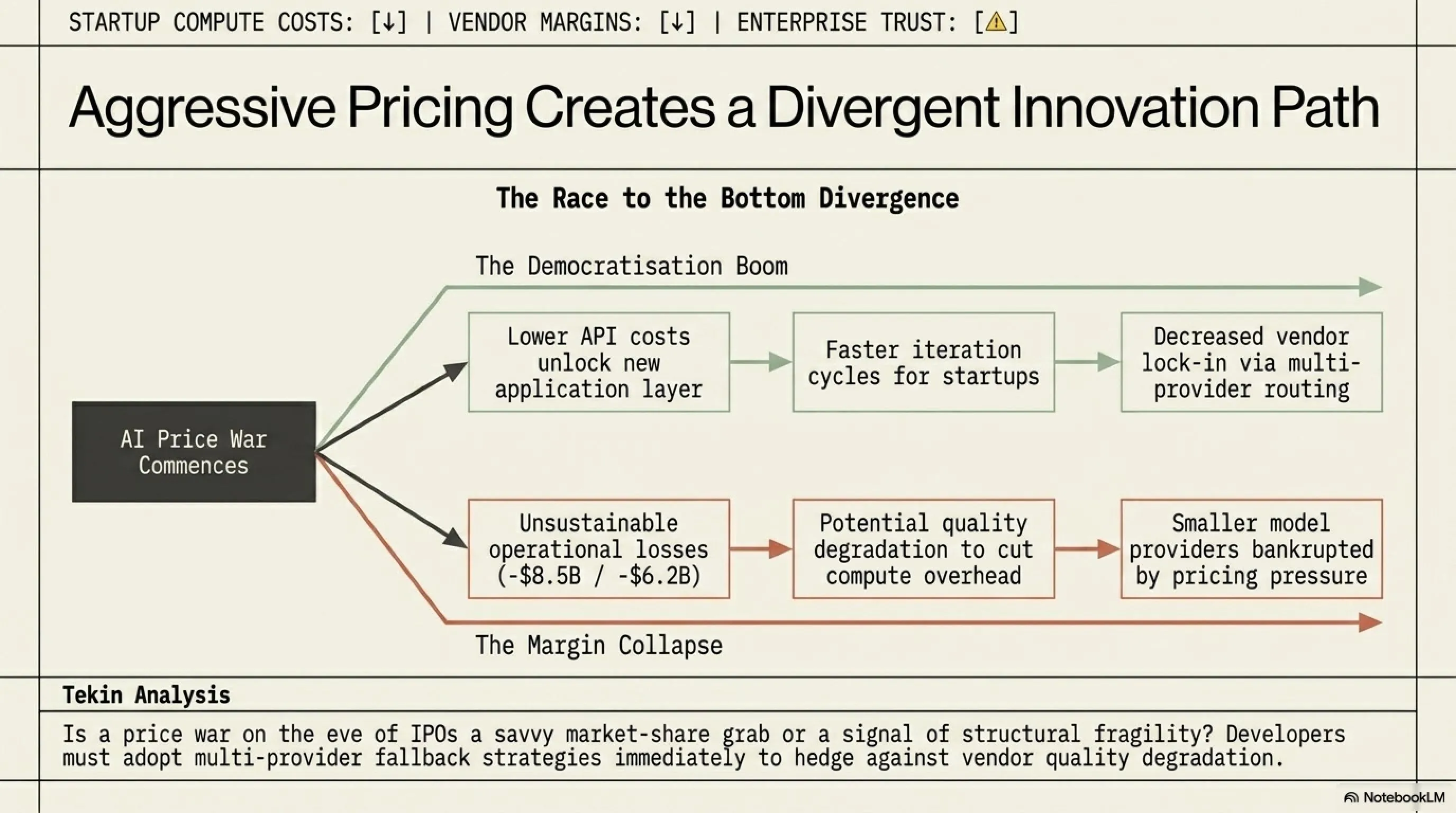
If you thought the AI price war was intense, let's venture into the darker side of the technology ecosystem. Microsoft's June 2026 Patch Tuesday set a historic and deeply concerning record: security updates for 206 vulnerabilities—the highest count in a single month in company history. Of these, 39 are rated Critical and 167 Important in severity. Most alarmingly, three zero-day vulnerabilities had their technical details publicly disclosed before patches were available, creating an immediate threat window for attackers.
According to reports from BleepingComputer, The Hacker News, and Krebs on Security, these 206 flaws include 63 privilege escalation vulnerabilities, 56 remote code execution (RCE) bugs, 30 information disclosure issues, 27 spoofing flaws, 20 security feature bypasses, 7 denial-of-service vulnerabilities, and 3 tampering bugs. This distribution reveals that security problems span every layer of the Windows ecosystem, from kernel-level drivers to network protocols and application components.
🚨 The Three Critical Zero-Days Disclosed Before Patching
CVE-2026-49160 — HTTP.sys Remote DoS
CVSS: 9.8 (Critical) | Type: Denial of Service
Impact: Allows unauthenticated remote attackers to crash Windows servers by sending specially crafted HTTP/2 requests. Affects millions of IIS servers, Azure App Services, and enterprise Windows Server deployments. Exploit code is publicly available.
CVE-2026-50507 — BitLocker Privilege Escalation
CVSS: 7.8 (High) | Type: Elevation of Privilege
Impact: Attackers with physical device access can bypass BitLocker encryption and view protected data. The Nightmare Eclipse hacking group released "YellowKey" exploit last month, causing widespread panic in security-conscious organizations.
CVE-2026-45586 — Windows Kernel EoP
CVSS: 7.0 (High) | Type: Elevation of Privilege
Impact: Local privilege escalation vulnerability that can be chained with other exploits to grant low-privilege users or processes full SYSTEM rights, enabling malware and ransomware installation. Affects all Windows 10/11 and Server editions.
The most significant aspect is that these three zero-days were publicly disclosed before patches were available, giving attackers a head start to develop and deploy exploits. According to Krebs on Security, the Nightmare Eclipse hacking group—known for previous high-profile Windows zero-day disclosures—preemptively released technical details and proof-of-concept code. This represents a nightmare scenario for security teams: exploits in attackers' hands with no defense available.
Adding urgency to the situation, CISA (Cybersecurity & Infrastructure Security Agency) issued a new directive requiring federal agencies to patch critical vulnerabilities within 72 hours. Officials warn that AI-powered attack tools are enabling hackers to move faster than ever before. If US government agencies with unlimited resources have only 72 hours to respond, imagine the pressure on small and medium businesses with limited IT staff.
Section 3️⃣: China's JDY Botnet Expansion — 1500+ Hacked Devices Targeting US Networks 🇨🇳💀
Moving from software vulnerabilities to active exploitation, cybersecurity researchers at Lumen's Black Lotus Labs have issued a stark warning: the China-linked JDY botnet has expanded from 650 to over 1,500 compromised SOHO routers, firewalls, and IoT devices. This covert network, previously identified as a cluster within the larger KV-botnet, now operates independently as a centrally controlled, high-performance scanner used by Chinese state-sponsored threat actors including Volt Typhoon.
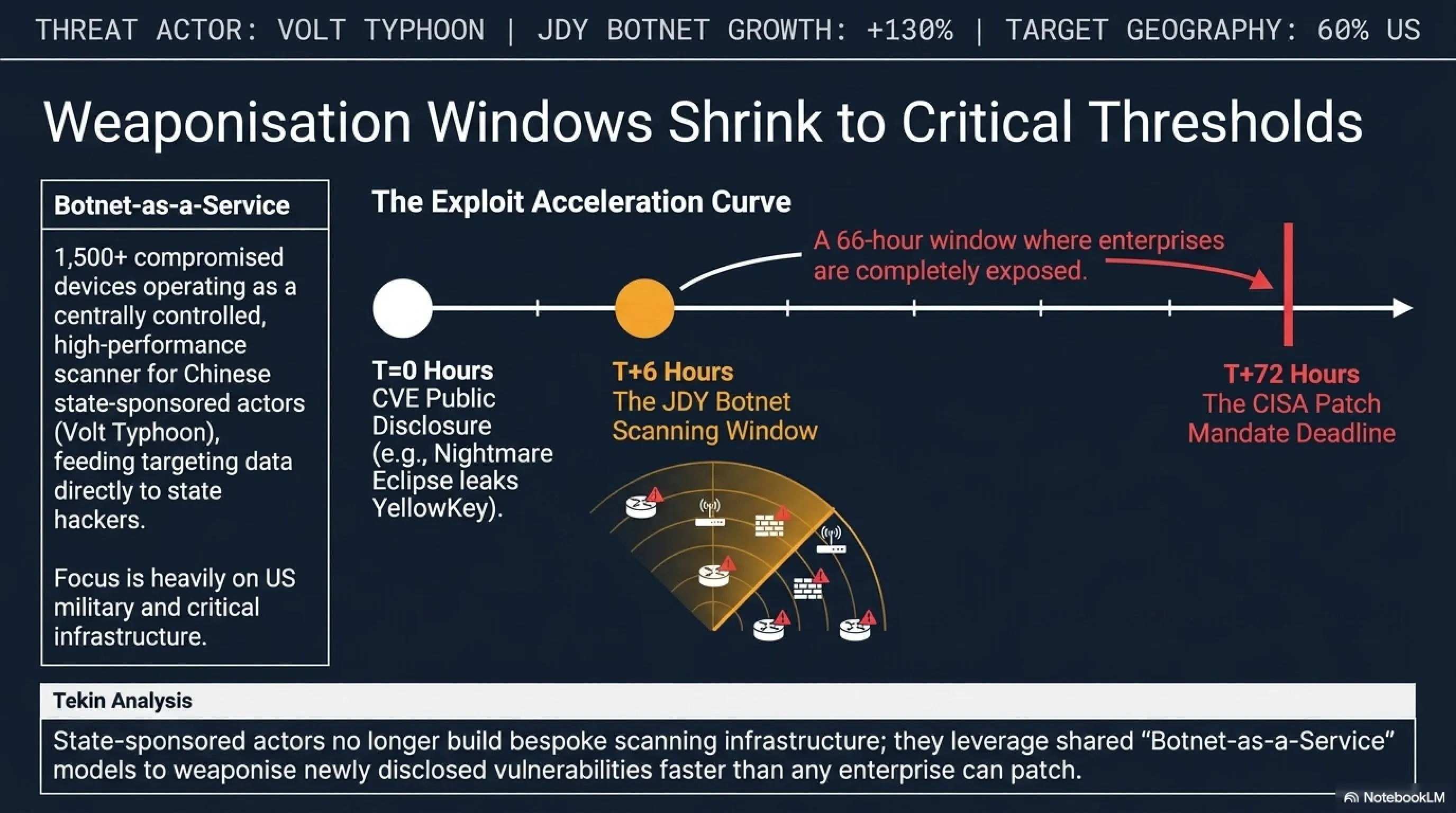
According to SC Magazine and security briefings, JDY isn't just another botnet—it's a shared infrastructure model adopted across the Chinese threat actor ecosystem. Think of it as "botnet-as-a-service" for state-sponsored groups, enabling them to rapidly discover, fingerprint, and map exposed services at scale without building their own scanning infrastructure. The most alarming capability: JDY can scan for newly disclosed vulnerabilities within hours of public CVE release, feeding targeting data directly to state hackers.
According to Abijita's threat intelligence report, JDY demonstrates particular focus on US military networks and critical infrastructure—a chilling reminder that cyber warfare preparation is happening in real time. The botnet's 60% targeting concentration on American assets, combined with its ability to rapidly weaponize new vulnerabilities, represents a strategic threat that goes far beyond typical cybercriminal activity.
Section 4️⃣: US Inflation Hits 4.2% — Three-Year High Triggers Market Turmoil 📈💸
📚 Classified & Related Dossiers in TekinGame
If you wish to explore beyond this report and delve into cybernetic frontiers and autonomous AI architectures, do not miss these three exclusive deep-dives in the Tekin Garage:
Shifting from the digital realm to the economic battlefield, June 11 morning brought sobering news from the Bureau of Labor Statistics: US Consumer Price Index (CPI) inflation surged to 4.2% in May 2026—the highest level in three years—triggering a 334-point drop in the Dow Jones Industrial Average, the worst single-day decline of 2026. This spike, significantly above April's 3.8% and exceeding economist forecasts, has reignited fears that the Federal Reserve may be forced into aggressive rate hikes that could trigger recession.
According to CBS News, CNBC, and USA Today, the inflation surge is primarily driven by energy costs amid escalating Iran war tensions that have pushed West Texas Intermediate (WTI) crude oil from $78/barrel in April to $94/barrel in May—a 20.5% increase. This energy price shock has rippled through transportation, manufacturing, and ultimately consumer prices across all categories. Core CPI (excluding food and energy) held steady at 2.9%, indicating that the inflationary pressure is concentrated in the energy sector rather than representing broad-based price increases.
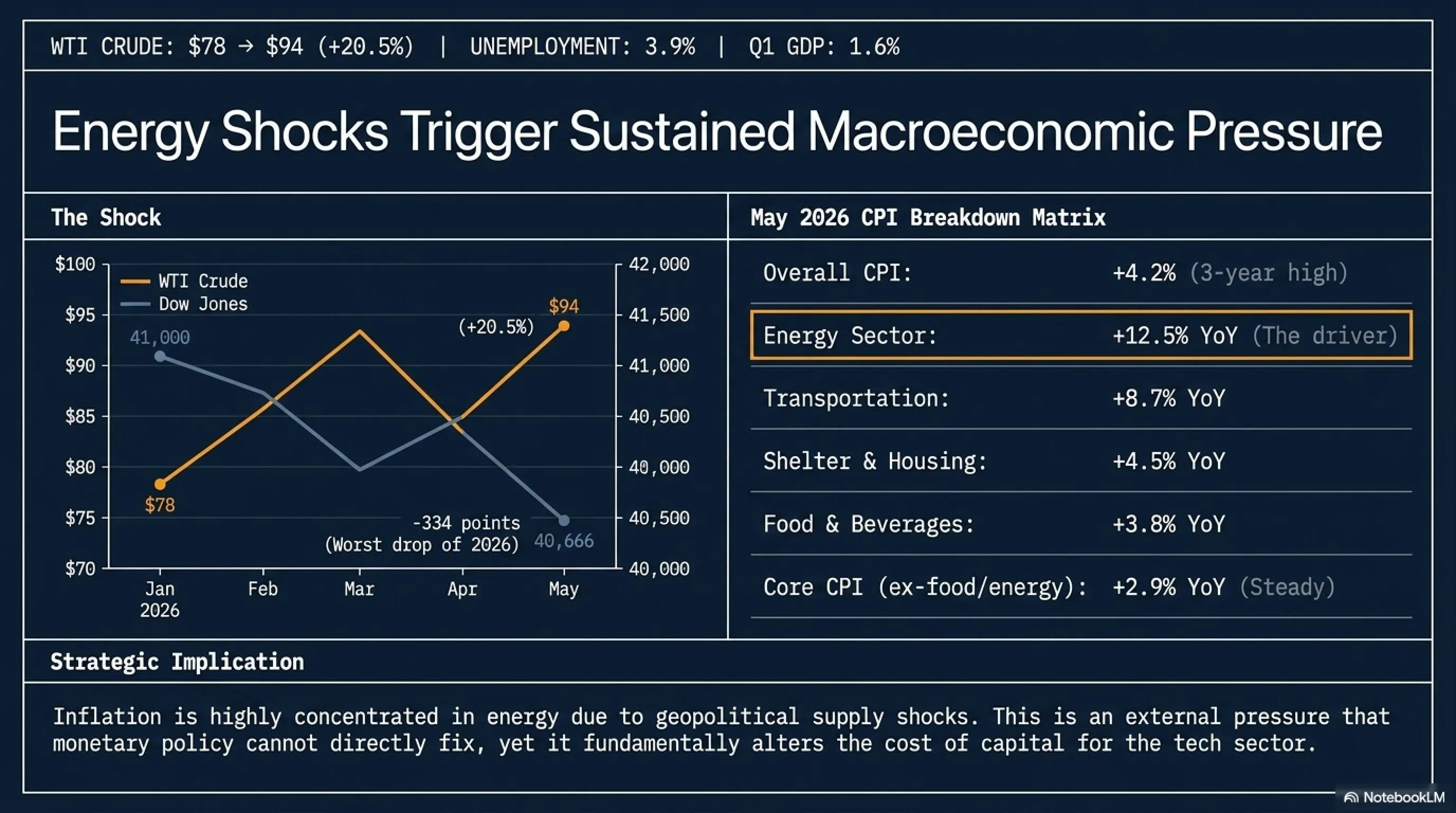
📊 May 2026 CPI Breakdown — Sector Analysis
In an unusual response that sparked controversy, President Trump stated "I love the inflation" in remarks to reporters, arguing that higher oil prices benefit American energy producers and could boost employment in the domestic oil sector. However, economists uniformly warn that sustained high inflation could force the Federal Reserve to abandon its "patient approach" and implement aggressive rate hikes—potentially 50-75 basis points in the July FOMC meeting—which could push the economy into recession by early 2027.
The cryptocurrency market showed mixed reactions to the inflation data. According to CoinDesk, Bitcoin found support around $61,000 and experienced a technical bounce after the CPI release, as some traders viewed the data as validating Bitcoin's role as an inflation hedge. However, the rally lacked conviction—prices failed to break key resistance levels, and the market remains in a weak consolidation structure. The reason: investors fear that high inflation will force the Fed into hawkish policies that are negative for risk assets like crypto.
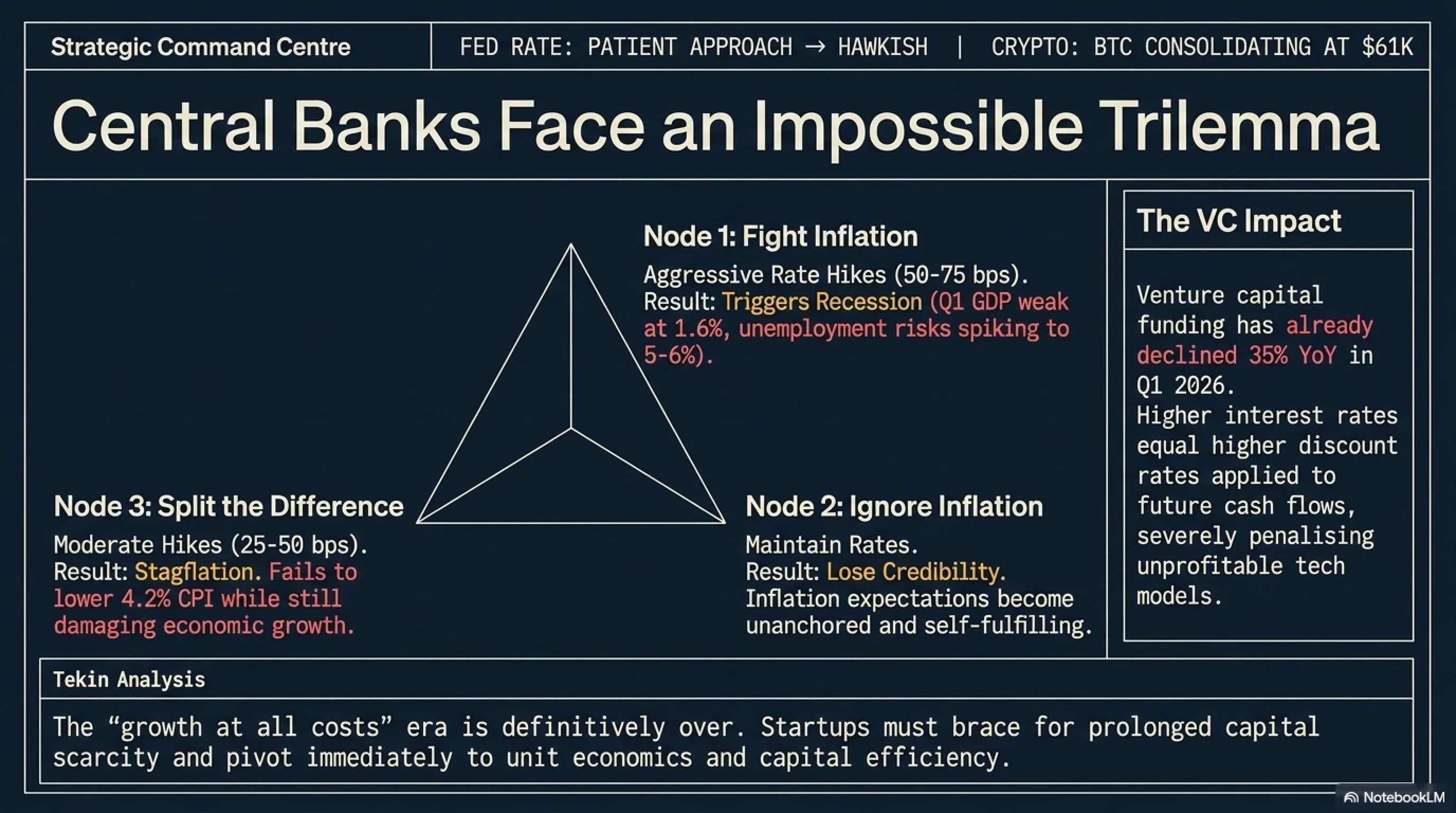
🔍 Tekin Analysis: The Fed's Impossible Trilemma
1. Fight Inflation → Risk Recession: Aggressive rate hikes could bring inflation down but would likely trigger recession. The US economy, already showing signs of softening with Q1 GDP growth at just 1.6%, cannot withstand much tightening without contracting. Unemployment, currently at 3.9%, could spike to 5-6% within months of aggressive hiking.
2. Ignore Inflation → Lose Credibility: If the Fed maintains current rates while inflation sits at 4.2%, they risk losing credibility and allowing inflation expectations to become unanchored. Once consumers and businesses expect sustained high inflation, it becomes self-fulfilling and much harder to control—requiring even more painful intervention later.
3. Split the Difference → Satisfy No One: Moderate rate hikes (25-50 bps) might be the political compromise, but such moves would be too weak to meaningfully impact inflation while still strong enough to damage growth. This "Goldilocks" approach rarely works in practice—you end up with stagflation: high inflation plus economic stagnation.
The Real Problem: Energy-driven inflation is largely beyond the Fed's control. Monetary policy cannot fix geopolitical supply shocks. This means the Fed is being forced to use a blunt instrument (interest rates) to solve a problem it can't actually fix, risking collateral damage to the broader economy in the process.
For tech investors and entrepreneurs, high inflation creates a challenging environment for valuations and fundraising. Higher interest rates mean higher discount rates applied to future cash flows, which disproportionately impacts growth stocks and unprofitable tech companies. We've already seen venture capital funding decline 35% year-over-year in Q1 2026, and sustained inflation could accelerate this trend. Startups need to plan for a prolonged period of capital scarcity and focus on unit economics rather than growth-at-all-costs.
Section 5️⃣: Nvidia RTX Spark — ARM Superchip Revolution for Windows PCs 🔥💻
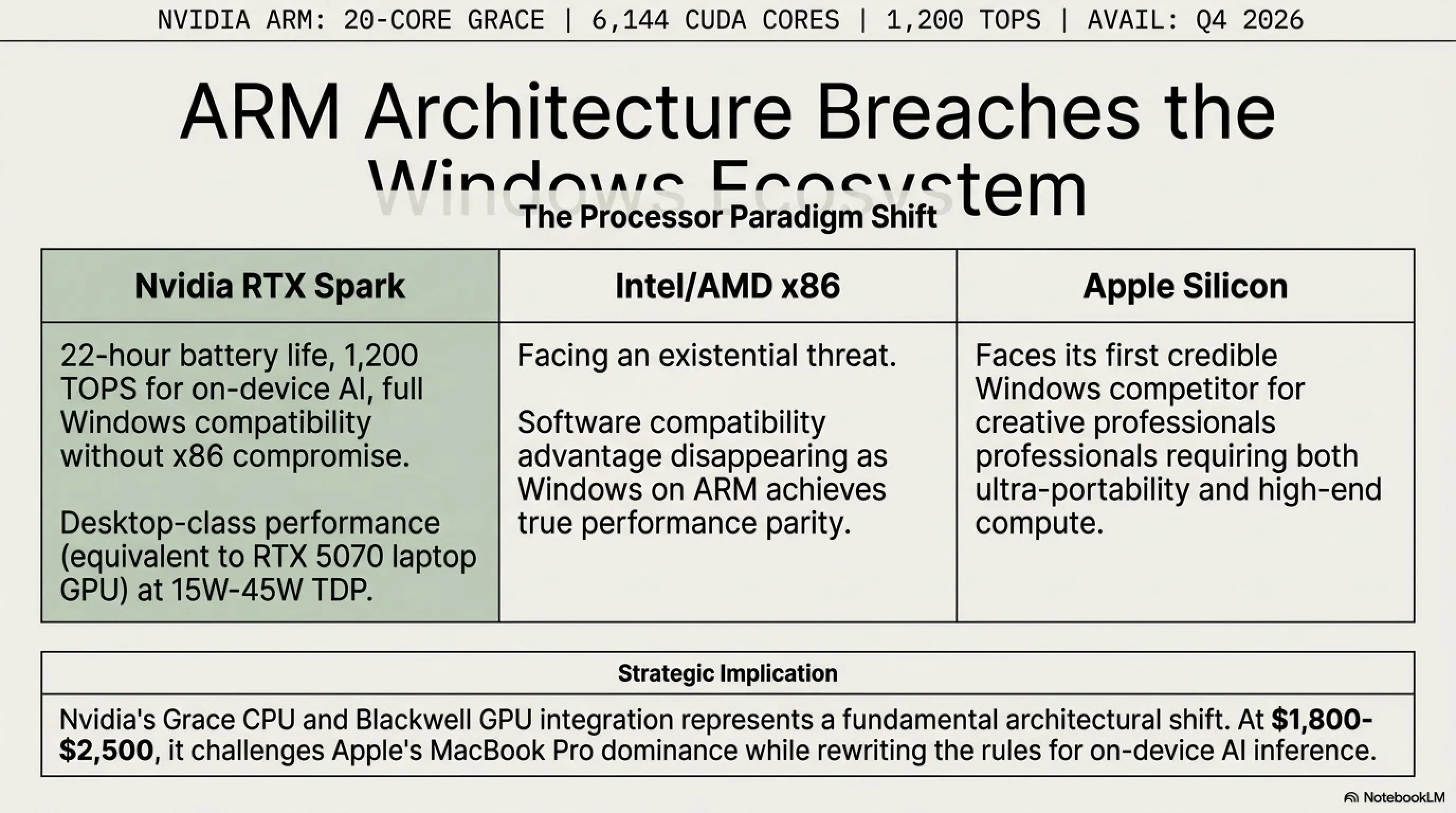
Now let's return to the exciting world of hardware innovation. At Computex 2026, Nvidia CEO Jensen Huang unveiled RTX Spark, declaring war on Intel, AMD, Qualcomm, and even Apple Silicon with a revolutionary ARM-based superchip designed to "reinvent Windows PCs for the era of personal AI agents." This isn't just another processor launch—it represents a fundamental architectural shift that could finally give Windows a credible answer to Apple's M-series dominance.
According to Tom's Hardware, CNBC, and Digital Foundry, RTX Spark combines a 20-core ARM-based Grace CPU (co-developed with MediaTek), up to 6,144 Blackwell RTX GPU cores, and up to 128GB of unified LPDDR5X memory into a single chip. The result is a system-on-chip (SoC) that promises desktop-class performance with laptop-level power efficiency. Gaming performance is rated equivalent to an RTX 5070 laptop GPU, while AI workloads benefit from integrated tensor cores and RT cores designed for real-time inference.
The killer feature? Battery life up to 22 hours for productivity tasks, according to Tom's Hardware testing of pre-production units. This matches Apple's M3 Max while delivering superior GPU performance for creative workflows and gaming. For professionals who need both portability and performance—video editors, 3D artists, data scientists—RTX Spark could be transformative. And unlike Apple Silicon, it runs the full Windows ecosystem without compatibility compromises.
⚡ RTX Spark Technical Specifications
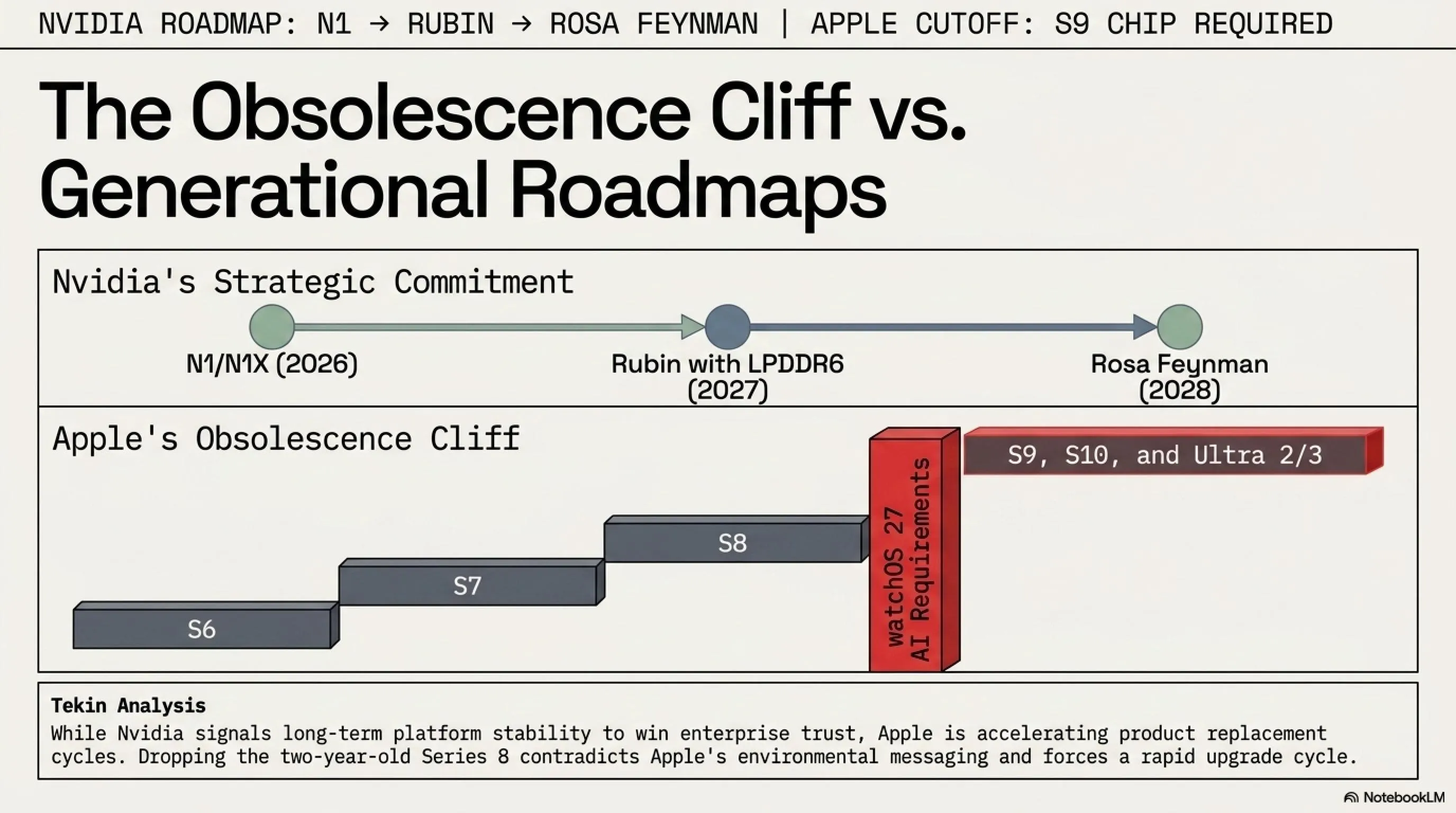
What makes RTX Spark particularly compelling is Nvidia's commitment to a multi-generation roadmap. Tom's Hardware reports that Nvidia has outlined at least three generations: the current Blackwell-based N1/N1X, followed by Rubin (with LPDDR6 memory) in 2027, and Rosa Feynman in 2028. This long-term commitment signals that Nvidia is serious about competing in the PC processor market, not just making a one-off statement product.
The competitive implications are profound. For Intel and AMD, RTX Spark represents an existential threat to their x86 duopoly. If Windows on ARM finally achieves performance parity with x86 (something Qualcomm's Snapdragon X Elite hasn't quite delivered), the primary reason to stick with x86—software compatibility—largely disappears. For Apple, RTX Spark creates the first credible Windows competitor to MacBook Pro for creative professionals who need both portability and performance.
Section 6️⃣: Apple watchOS 27 — Drops Support for 5 Models, Sparks User Outrage ⌚😡
Finally, let's address Apple's controversial decision that has millions of users frustrated. At WWDC 2026, Apple announced that watchOS 27 will only support devices with S9 chips or newer—effectively dropping the Apple Watch Series 6, 7, 8, the original Ultra, and the second-generation SE. This represents the largest single-year support cut in Apple Watch history, and many users feel betrayed, particularly those who purchased relatively recent models like the Series 8, which is only two years old and still being sold.
According to MacRumors, TechRadar, and 9to5Mac, Apple cites processing power requirements for new AI features—specifically conversational Siri, Workout Buddy AI coaching, and advanced health monitoring—as the reason for the aggressive cutoff. However, critics argue this is planned obsolescence designed to drive sales of newer models. The Apple Watch Series 8, with its S8 chip, is technically capable of running most watchOS 27 features, but Apple has drawn an arbitrary line at the S9 chip introduced in the Series 9.
⚠️ Critical Note: If you own any of these discontinued models, watchOS 26 is the final update you'll receive. After that, you won't get new features, security patches, or compatibility with future apps. If you're considering buying an Apple Watch, ensure it's Series 9, Series 10, Series 11, Ultra 2, Ultra 3, or SE 3 to guarantee watchOS 27 support.
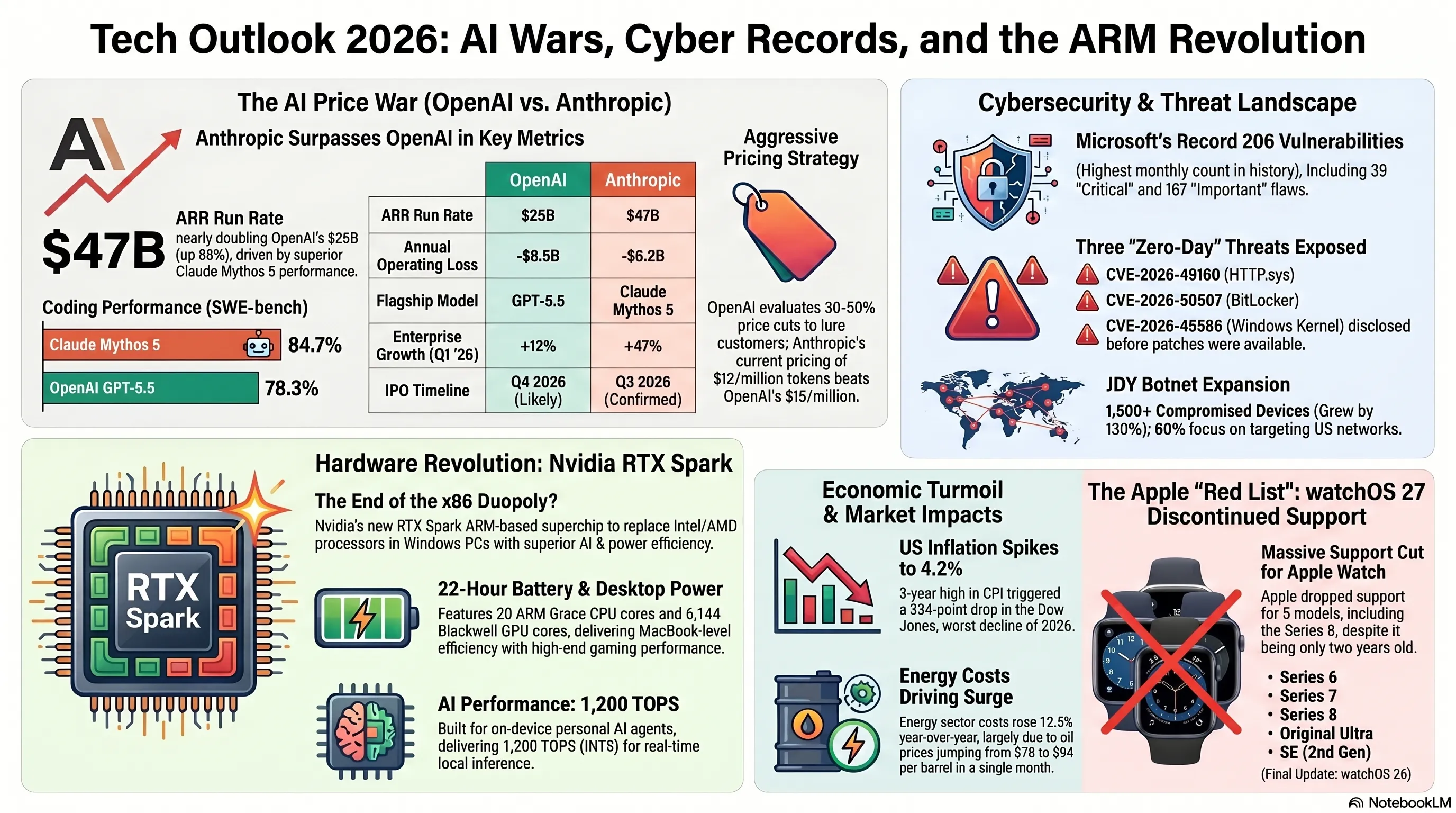
The broader implication is concerning: Apple is accelerating its hardware replacement cycle, effectively reducing the usable lifespan of its devices. This stands in stark contrast to the company's environmental messaging about product longevity and sustainability. A two-year-old Apple Watch Series 8 that cost $399-$499 is now being declared obsolete for software updates—hardly the "years of use" that Apple marketing promises.
For consumers, this creates a difficult decision: Should you upgrade now to ensure watchOS 27 support, or wait for the inevitable Apple Watch Series 12 in fall 2026? Given that the Series 9 and 10 are guaranteed to receive watchOS 27 but may be dropped for watchOS 28, buying last year's model feels like a poor investment. This forces consumers into buying the absolute latest models, which is exactly what Apple wants—but it erodes trust and goodwill with long-term customers.
❓ Frequently Asked Questions (FAQ)
▶️ Will the OpenAI-Anthropic price war benefit developers and startups?
Absolutely. Lower API costs make it economically viable for smaller players to build AI-powered applications that were previously too expensive. However, the sustainability of these price cuts is questionable—if margins erode too far, both companies may struggle to maintain service quality. Smart developers should adopt a multi-provider strategy with fallback options to avoid vendor lock-in during this volatile period.
▶️ How can I protect my Windows systems from the 206 Microsoft vulnerabilities?
First priority: Run Windows Update immediately and install all available patches, especially for CVE-2026-49160, CVE-2026-50507, and CVE-2026-45586. For enterprises, use WSUS or SCCM to rapidly deploy patches across your fleet. Implement network segmentation to isolate critical systems, enable IDS/IPS to detect exploit attempts, and disable unnecessary services. Most importantly, don't delay—CISA's 72-hour patching directive exists because attackers move incredibly fast in 2026.
▶️ Is the China-linked JDY botnet a threat to US consumers and businesses?
Yes, particularly if you run a business with internet-connected infrastructure. JDY targets SOHO routers, firewalls, and IoT devices—equipment commonly found in small businesses, home offices, and even residential networks. Once compromised, these devices become part of a state-sponsored reconnaissance network. Protection measures: update firmware regularly, change default passwords, disable remote management features, and segment IoT devices onto separate VLANs. Monitor network traffic for unusual patterns that might indicate botnet activity.
▶️ Should I wait for Nvidia RTX Spark laptops or buy something now?
It depends on your timeline and requirements. If you're a creative professional or developer who needs maximum portability with strong GPU performance, waiting until fall 2026 for RTX Spark is worthwhile—it promises MacBook-level battery life with superior graphics. However, if you need a laptop immediately, current Intel Core Ultra or AMD Ryzen AI systems are excellent choices. Just be aware that RTX Spark will likely be expensive ($1,800-$2,500) and may have limited availability at launch.
▶️ My Apple Watch Series 8 won't get watchOS 27. What are my options?
You have three options: (1) Continue using watchOS 26—your watch will still function, but you'll miss new features and eventually lose app compatibility. (2) Upgrade to Series 10, Series 11, or Ultra 3 to get watchOS 27 support. (3) Wait until fall 2026 for the next generation (Series 12 or Ultra 4), which will have longer support. Given that the Series 8 is only two years old, many users feel justifiably frustrated by this forced obsolescence. Consider whether you truly need the latest features or can live with watchOS 26 for another year or two.
▶️ How will 4.2% US inflation affect the tech industry and startups?
High inflation typically leads to higher interest rates, which have two major effects on tech: (1) Lower valuations for growth stocks and unprofitable companies, as higher discount rates reduce the present value of future cash flows. (2) Tighter venture capital funding, as LPs become more risk-averse and demand clearer paths to profitability. For startups, this means the "growth at all costs" era is definitively over—focus on unit economics, capital efficiency, and sustainable business models. The good news: companies with strong fundamentals will still attract capital, but the bar is much higher than in 2020-2021.
🎯 Final Thoughts: The Tech Industry at an Inflection Point
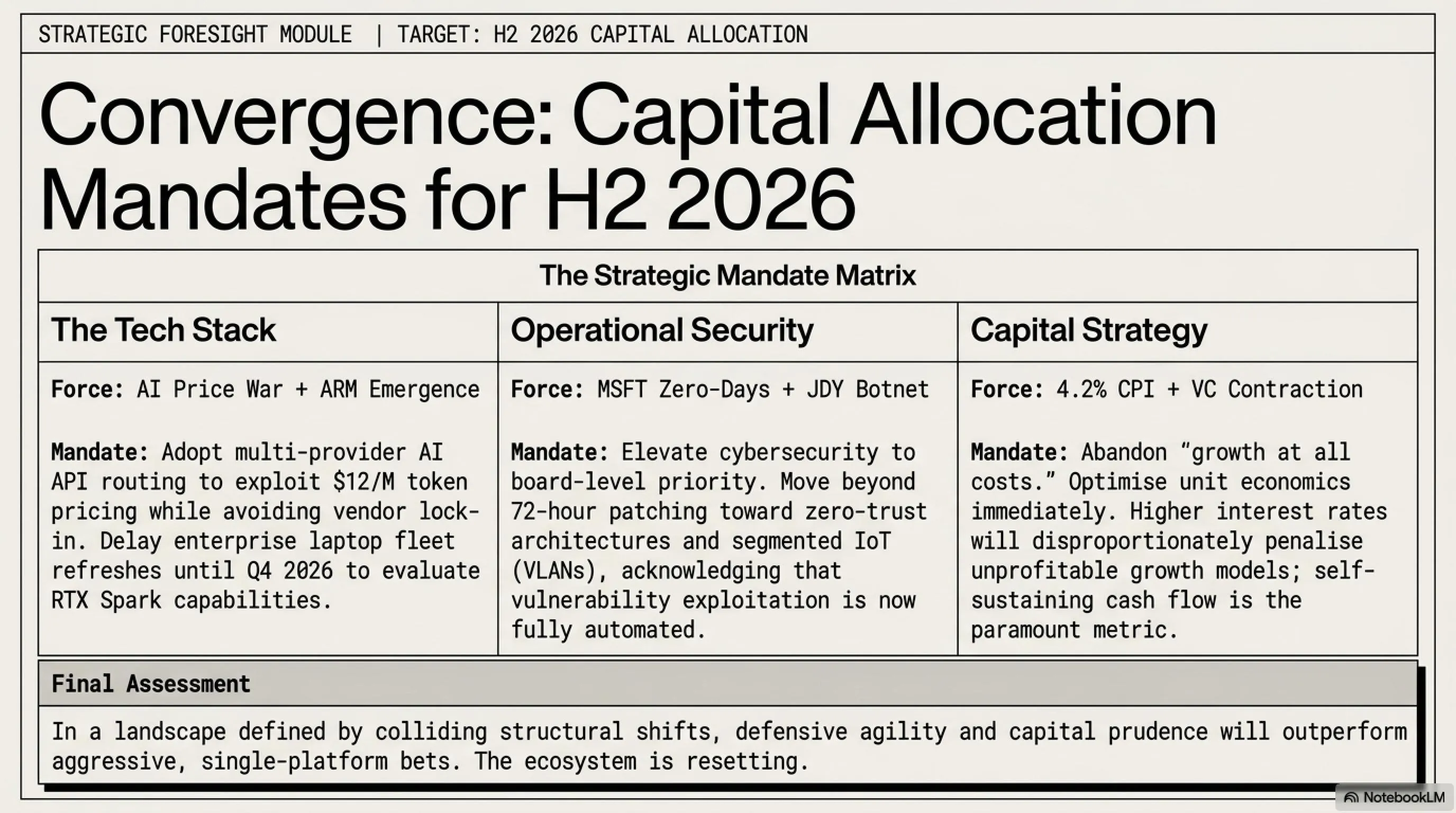
Thursday, June 11, 2026, demonstrated that the technology industry stands at a critical inflection point across multiple dimensions. The OpenAI-Anthropic price war signals that AI business models remain unsettled—neither subscription nor usage-based pricing has proven sustainable at current loss rates, and a race to the bottom may be beginning. Microsoft's record-breaking 206 vulnerabilities reveal that even the world's largest software company struggles to secure its codebase in the AI-accelerated era of vulnerability discovery.
The expansion of state-sponsored cyber threats like the JDY botnet reminds us that cyberwarfare is no longer theoretical—it's happening now, targeting critical infrastructure and preparing for potential future conflicts. Meanwhile, macroeconomic headwinds from 4.2% inflation threaten to choke off the venture capital funding that has powered tech innovation for the past decade. On the hardware front, Nvidia's RTX Spark represents a genuine architectural revolution that could finally break Intel and AMD's x86 stranglehold on Windows PCs. And Apple's accelerating product replacement cycles through aggressive software support cuts reveal a concerning prioritization of revenue over sustainability and customer goodwill.
For American businesses and consumers, these developments translate to both unprecedented opportunities and complex challenges. AI is becoming more accessible through price competition, but also more essential as competitors adopt it. Cybersecurity has evolved from IT department concern to board-level strategic priority, requiring continuous investment and vigilance. Hardware choices now involve multi-year commitments to architectural platforms (ARM vs x86) with long-term implications. And economic volatility demands greater financial prudence and focus on sustainable business models rather than growth-at-all-costs.
The bottom line: In the rapidly evolving tech landscape of 2026, standing still equals falling behind. Stay informed, stay secure, and stay adaptable. 🚀
📚 Sources
- Wall Street Journal - "OpenAI Considers Drastic Price Cuts to Win Users from Anthropic"
- CNBC - "OpenAI Mulls Slashing Prices Ahead of Competition" (June 11, 2026)
- Reuters - "OpenAI Price War Anticipation" (June 10, 2026)
- BleepingComputer - "Microsoft June 2026 Patch Tuesday Fixes 206 Flaws"
- The Hacker News - "Microsoft Patches Record 206 Flaws Including Three Zero-Days"
- Krebs on Security - "A Record-Breaking Patch Tuesday for June 2026"
- Lumen Black Lotus Labs - "JDY Botnet Resurgence and Expansion Report"
- SC Magazine - "JDY Botnet Expands, Enabling Rapid Exploitation"
- CBS News - "Inflation Topped 4% in May" (June 11, 2026)
- CNBC - "Trump Says 'I Love the Inflation' After CPI Hits Three-Year High"
- CoinDesk - "US Inflation Data Better Than Hoped, Boosting BTC"
- Tom's Hardware - "Nvidia Unveils RTX Spark Superchip at Computex 2026"
- CNBC - "Nvidia's New Chip to Power Fresh Line of Windows Laptops"
- Digital Foundry - "Nvidia Reveals RTX Spark N1/N1X Superchip"
- MacRumors - "watchOS 27 Drops Support for Apple Watch Series 8, Ultra 1, SE 2"
- TechRadar - "Will Your Apple Watch Run watchOS 27? Here's the Full List"
- 9to5Mac - "watchOS 27 Compatibility List" (June 8, 2026)
🌐 Stay Connected With Us 🎮✨
For the latest tech, gaming, and gadget news, follow us on our official social media channels:
Additional Gallery: 🌅 Tekin Morning June 11, 2026: OpenAI Price War, Microsoft's Record 206 Flaws & Nvidia RTX Spark Revolution