🕵️♂️ Welcome to Tekin Darkweb: Dark Web Radar (June 2026)
Good day, cyber analysts, pro gamers, and tech enthusiasts. Our early warning systems traversing the Dark Web and OSINT channels have been flashing bright red for the past 24 hours. Today, we are facing an unprecedented storm of 200+ critical vulnerabilities patched deep within Microsoft's core architecture, a terrifying collapse of enterprise supply chains via ServiceNow and Veeam, and massive moves by Valve to decapitate the physical Steam Gift Card market to combat global scam syndicates. Read this intelligence briefing carefully.
⚡ Today's Red-Alert Headlines:
🔴 The Microsoft Bloodbath: 206 flaws patched, including critical Exchange & RoguePlanet zero-days.
🚨 Enterprise Castles Crumble: Devastating exploits tearing through ServiceNow, Ivanti Sentry, and Veeam.
🛑 The End of Steam Gift Cards: Valve's radical decision to halt physical card sales to destroy fraud rings.
🎮 Gaming Radar: Massive leaks for Kingdom Hearts 4 release date and Dragon's Dogma 2 Switch 2 port.
Pour yourself a strong black coffee and buckle up; today's terror train has no brakes!
1. The Microsoft Bloodbath: 206 Vulnerabilities and the Awakening of Zero-Days
This month's Patch Tuesday will be etched into the annals of cybersecurity history. In an unprecedented and alarming move, Microsoft patched a staggering record of 206 security vulnerabilities simultaneously. This is not a routine update; we are witnessing the structural decay of the Windows security architecture. Among these, 39 bugs are rated Critical and 56 are classified as Remote Code Execution (RCE). But what has sent shivers down the spines of network administrators worldwide is the presence of three zero-day vulnerabilities that were already being actively exploited in the wild before the patches were even deployed.
🎯 Tekin Darkweb Strategic Analysis
Patching 206 bugs in a single day highlights a systemic problem with Windows legacy code debt. When the OS's default antivirus becomes a backdoor, defense strategies must be entirely reevaluated.
Autopsy of the Zero-Day Nightmares: Exchange and Defender on the Frontlines
According to leaked intel from BleepingComputer and TheHackerNews, the most dangerous of these zero-days directly targeted the central nervous system of enterprise communications: Exchange Server.
- The Exchange Server Exploit: Threat actors utilizing advanced Cross-Site Scripting (XSS) attacks have successfully executed malicious JavaScript code directly within the Outlook Web Access (OWA) environment of targeted users. This grants them full, unadulterated access to classified corporate emails without requiring any direct interaction from the victim!
- The Plasma Family and Privilege Escalation: Newly discovered bugs dubbed YellowKey, GreenPlasma, and MiniPlasma allow attackers to escalate their privileges to SYSTEM level on fully patched Windows machines. One of these bugs completely bypasses the encryption mechanisms of BitLocker drives.
- The RoguePlanet Catastrophe in Defender: An anonymous security researcher going by the moniker Chaotic Eclipse (or MSNightmare) released proof-of-concept (PoC) exploit code for a zero-day named RoguePlanet. By leveraging a Race Condition, this bug mocks the defensive capabilities of Microsoft Defender, granting the attacker SYSTEM access.
"When the primary defense mechanism itself (Microsoft Defender) becomes a backdoor for kernel-level infiltration, we have crossed the threshold from 'Risk Management' into absolute 'Crisis Management'. Patching 206 vulnerabilities in a single day is symptomatic of deep, underlying code rot." — Senior Analyst, TakinGame Security Operations Center (SOC)
Microsoft's woes do not end there. Parallel reports indicate that numerous devices upgraded to Windows 11 (24H2 and 25H2) are fundamentally failing to install these critical patches! This flaw in the update delivery system has left hundreds of thousands of enterprise workstations entirely defenseless against actively exploited zero-days.
⏳ Enterprise Collapse Timeline (June 2026)
- June 5: ServiceNow emergency patch to prevent CMDB database leaks.
- June 7: Disclosure of Root access vulnerability in Ivanti Sentry gateways.
- June 8: Critical alert for RCE in Veeam Backup servers.
2. The Collapse of Enterprise Castles: Disaster Strikes ServiceNow, Ivanti, and Veeam
📚 Classified & Related Dossiers in TekinGame
If you wish to explore beyond this report and delve into cybernetic frontiers and autonomous AI architectures, do not miss these three exclusive deep-dives in the Tekin Garage:
The attacks over the past week have proven that hackers are no longer interested in squeezing through small peripheral vulnerabilities; they are directly targeting the core infrastructure and cloud software of organizations. The very software designed to protect assets and databases has paradoxically become their Achilles' heel.
ServiceNow, the backbone of IT automation for thousands of major enterprises, was recently the victim of a massive exploit campaign. According to published reports, threat actors leveraged a security flaw to gain deep, unauthorized access into customer instances. This means an attacker, without needing any authentication, could potentially access support tickets, CMDB databases, and internal network architectures of targeted companies. ServiceNow rushed an emergency patch on June 5th, but for many organizations, the data exfiltration had already occurred.
- This vulnerability allows a remote attacker to execute malicious code with Root privileges (the highest level of access in Linux environments).
- The Sentry system typically sits at the edge of corporate networks to secure employee mobile traffic. Breaching this system essentially compromises the entire remote work infrastructure of a company.
- Combining this bug with traffic sniffing techniques allows state-sponsored actors to silently extract corporate encryption keys.
If you thought your backup files were at least secure, think again. The powerful Veeam Backup & Replication system—often considered the last line of defense against ransomware—has itself been targeted by a devastating Remote Code Execution (RCE) bug (CVE-2026-44963, carrying a near-maximum CVSS score of 9.4). This vulnerability allows any Authenticated Domain User to infiltrate the backup server and execute arbitrary code. If successful, a hacker can infect, delete, or encrypt the backup files before even initiating the main ransomware attack, leaving the organization with absolutely no avenue for recovery!
📌 Mid-Conclusion
It is evident that not only operating systems, but fundamental libraries and gaming platforms are rapidly shifting their defensive strategies. But this is just the beginning.
3. Programming Pitfalls & The End of Nostalgia: From protobuf.js to the Death of Physical Steam Cards
The software development ecosystem has not been spared from this storm. Security researchers have discovered a half-dozen critical vulnerabilities in the immensely popular protobuf.js library (the JavaScript and TypeScript implementation of Google's Protocol Buffers). This library is utilized in millions of Node.js applications globally for data serialization.
What is the core issue? Processing a single malicious or carefully crafted schema file through this library is enough to allow an attacker to seize control of the Node.js server, executing arbitrary code (RCE), or completely crashing the service via a Denial-of-Service (DoS) attack. This serves as a massive wake-up call for web developers, demonstrating how blind trust in NPM packages without continuous security auditing can lead to a catastrophic collapse of backend architecture.
💳 Steam's Bitter Decision: Halting Physical Gift Card Sales
While developers battle protocol bugs, Valve (the company behind Steam) has launched a physical war against global fraud syndicates. For years, cyber scammers have weaponized Steam Gift Cards, utilizing them as an untraceable currency for money laundering and extorting unsuspecting victims.
According to reports from Kotaku and Eurogamer, the volume of these scams has reached a critical mass, forcing Valve to make an unprecedented and difficult decision: the complete discontinuation of physical Steam Gift Card sales at retail stores worldwide. Moving forward, topping up a Steam wallet will only be possible through digital gateways using traceable bank cards. While this marks the end of a nostalgic era for gamers who loved purchasing physical cards, it is a monumental victory for cybercrime prevention teams.
4. Gaming Radar: Kingdom Hearts 4 Leaks and the Dragon's Dogma 2 Migration
But let us step away from the dark abyss of software bugs and cast our eyes upon leaked intelligence from the gaming industry. Data miners and inadvertently updated Australian store listings have seemingly leaked the highly anticipated release date for Kingdom Hearts 4. According to these listings, fans of Square Enix's magical franchise might be stepping into the world of Quadratum much sooner than industry analysts had predicted.
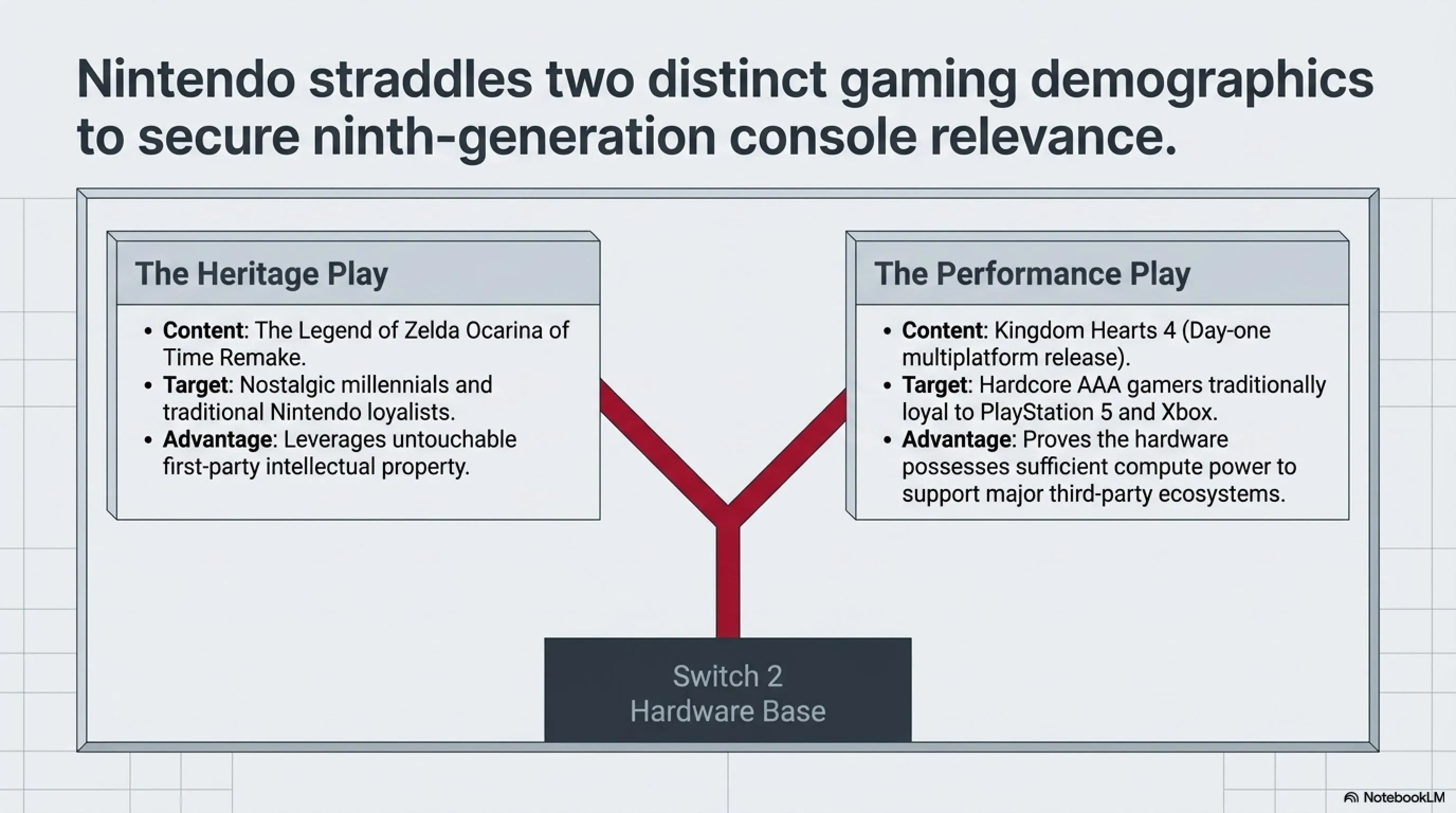
On another front, Capcom is preparing a massive bombshell for Nintendo's next-generation console. As predicted in our previous intelligence radars, a port of Dragon's Dogma 2 for the Nintendo Switch 2 has essentially been confirmed. But the truly exciting aspect is that this isn't just a basic port! Capcom is concurrently developing a massive expansion for the game, and the Switch 2 version will launch directly with this expansion, featuring significant technical optimizations to the RE Engine designed specifically to push the hardware limits of Nintendo's upcoming console.
⚙️ protobuf.js Exploit Specs
> Vector: Malicious Schema Parsing
> Payload: Prototype Pollution -> Remote Code Execution
> Target System: Node.js Backend Servers
> Mitigation: Immediate NPM Package Update
Strategic Conclusion: The Collapse of Edge Security Illusions
Tonight's radar reports definitively prove that perimeter-based defense models are dead. When attackers bypass the walls entirely by hacking the gatekeeper itself (Ivanti Sentry), or hold your absolute last line of defense—the backup server—hostage (Veeam), and when 206 flaws are discovered in an OS in a single day (with three being actively exploited zero-days), nowhere is truly safe. The IT industry is paying a heavy toll for decades of legacy code and layered, overly complex architectures. Conversely, Steam's decisive move to eradicate physical gift cards highlights that sometimes the only way to sever the financial lifelines of cyber syndicates is to completely destroy a beloved feature. Organizations must fundamentally rethink their zero-trust architectures today; tomorrow is already too late.
✅ PROS of Removing Steam Cards
- Severing the main financial artery for phone scammers.
- Complete transparency in Valve platform transactions.
❌ CONS and Collateral Damage
- Destroys the nostalgia of physical gaming gifts.
- Excludes users without valid international credit cards.
❓ Tekin Analytical FAQ
1. What is the risk of the Exchange Server zero-day?
This bug triggers via XSS and executes malicious JavaScript inside the victim's OWA without any direct interaction, exposing highly confidential corporate emails.
2. Why is the Veeam Backup bug so devastating?
It allows ransomware operators to completely wipe or encrypt enterprise backups remotely (via RCE) before deploying their ransomware, leaving zero chance of recovery.
3. Does the protobuf.js issue affect all websites?
No, it exclusively targets Node.js backend servers utilizing the vulnerable package to parse untrusted schema data, leading to RCE or DoS.
4. Does the ServiceNow bug affect isolated offline environments?
Generally no. Highly restricted environments not exposed to the public internet or utilizing localized alternative platforms have remained unaffected by this cloud-based breach.
5. What is the best alternative to physical Steam Gift Cards?
Utilizing verified digital gateways and charging accounts directly via virtual credit cards (Visa/Mastercard) remains the safest current method.
🏷️ Smart History Tags:
#Microsoft_ZeroDay_2026 #Veeam_Backup_Hack #Steam_Sales_Halt #ServiceNow_Vulnerability #Dark_Web_Radar
📚 Sources and OSINT Archive
- Microsoft Security Bulletin: Official patching details for the 206 flaws.
- Kotaku Editorial: Inside report on Valve's decision to halt physical Steam gift cards.
- Veeam Security Advisory: Alert regarding CVE-2026-44963 RCE in backup servers.
🌐 Stay Connected With Us 🎮✨
For the latest tech, gaming, and gadget news, follow us on our official social media channels:
Additional Gallery: 🛡️ Tekin Darkweb Radar: The Microsoft Zero-Day Bloodbath & Steam Ban