The shocking GDC 2026 report reveals 28% of devs have been laid off, 52% view AI as a severe threat, and 82% demand unionization. Tekin Garage's deep technical dive into gaming's future and the hardware wars.
🎮 Welcome to the State of the Game Industry 2026 Analysis
Welcome to Tekin Garage. Today, we are putting one of the most volatile documents in gaming history—the GDC 2026 State of the Industry report—under the cybernetic microscope. From unprecedented massive layoffs to the looming shadow of Generative AI and the hardware war of Steam Deck vs Switch 2, fasten your seatbelts; this is a strategic debug of the future of game development!
⚡ Today's Headlines:
📊 28% of game devs laid off in the past two years
🤖 52% believe AI is harming the game industry
✊ 82% support unionization
🎯 Steam Deck becomes fourth most popular development platform
💼 Investors and creators in two different worlds
🎨 Indie Games are the industry's innovation engine
☕ Grab your coffee and get ready for a comprehensive news journey in the world of technology!
The Layoff Wave: One-Quarter of Game Devs Lost Their Jobs 📉
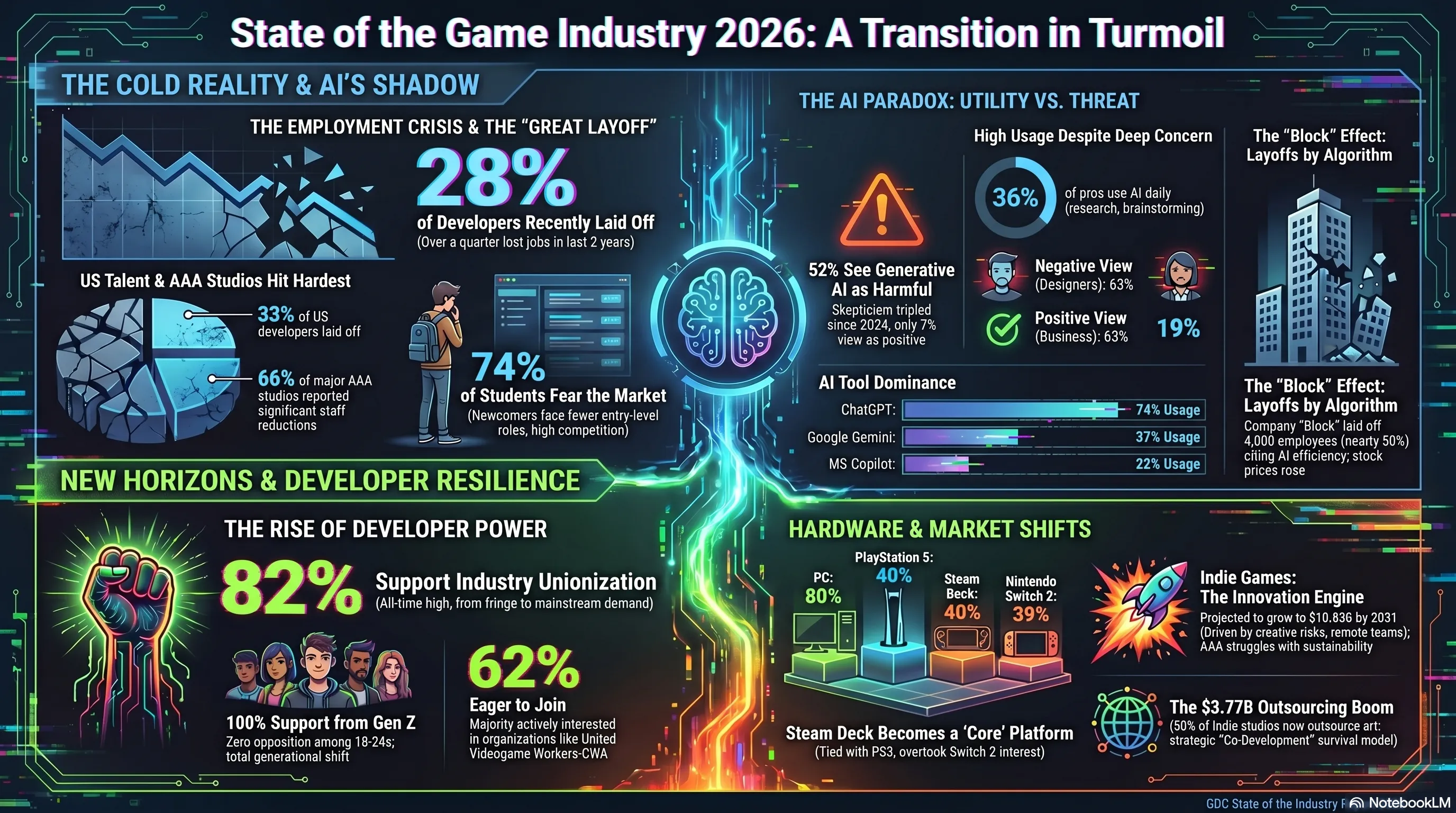
The State of the Game Industry 2026 report, published by the organizers of the GDC Festival of Gaming, presents a sobering picture of the job crisis in the game development industry. Based on a survey of over 2,300 game industry professionals, the report shows that 28% of respondents were laid off in the past two years.
The statistics are even worse for American developers: one-third of them (33%) lost their jobs during this period. Half of respondents reported that their current or recent employer conducted layoffs in the past 12 months. This isn't a crisis - it's a catastrophe.
🚨 Shocking Layoff Statistics
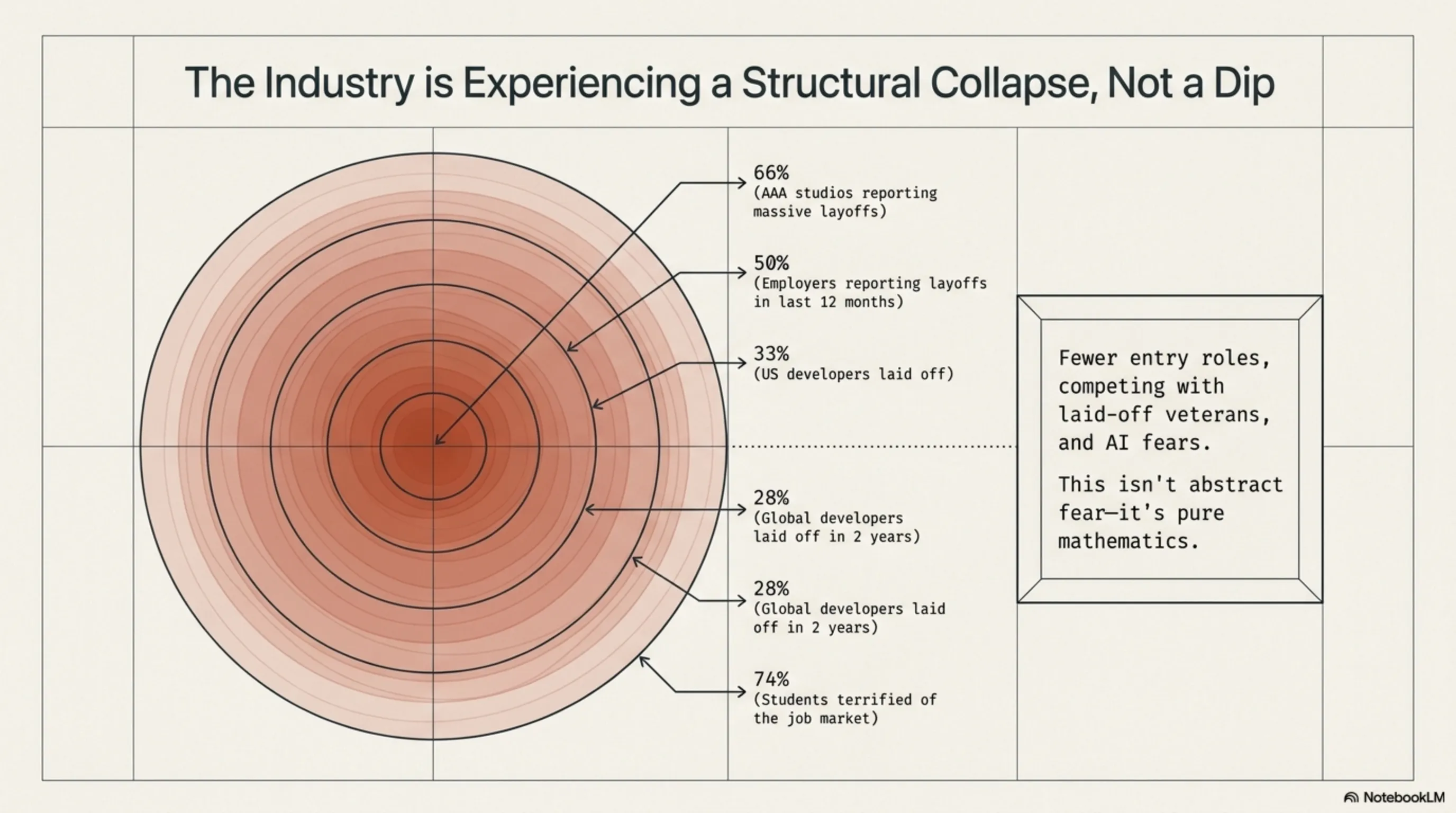
AAA studios took the hardest hit. Two-thirds of respondents at major studios reported company layoffs. Even indie developers weren't spared from this wave - one-third of them reported the same.
The damage extends beyond current workers. Ask students hoping to break into the industry, and 74% will tell you the job market terrifies them. Fewer entry-level positions, laid-off veterans competing for whatever's left, AI eating into the rest. This isn't abstract fear - it's pure mathematics.
Artificial Intelligence: From Hope to Concern - Why 52% Believe AI Harms 🤖
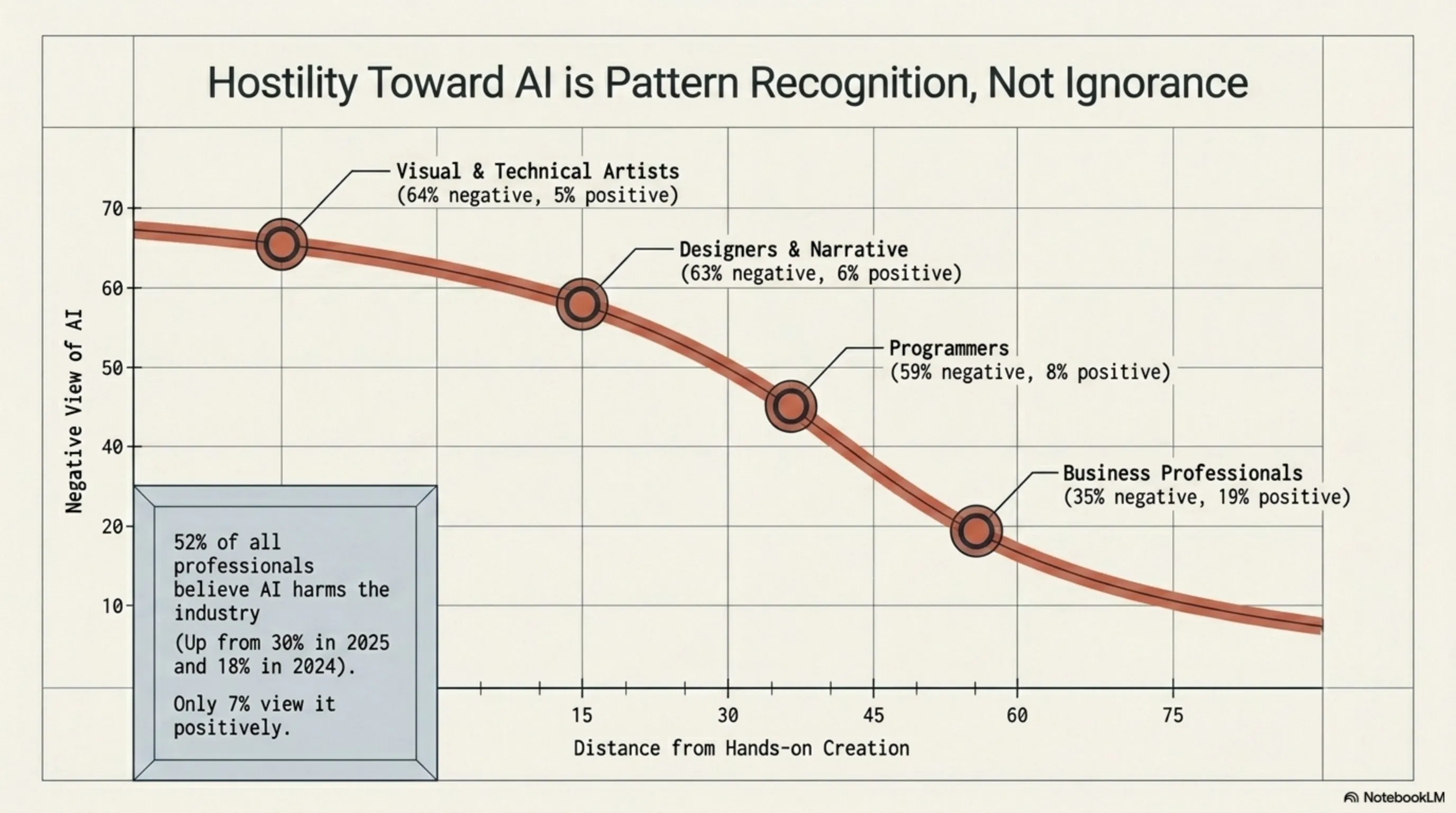
If you think the AI debate in game development is hot, the new statistics show just how serious this issue has become. 52% of game industry professionals now believe generative AI is harming the industry - up from 30% in 2025 and just 18% in 2024. The trend is clear: concerns are tripling.
In contrast, only 7% of respondents view AI as a positive force - down from 13% in last year's report. This shift in attitude isn't from ignorance, but from experience. Those who have the most contact with AI have the most concerns.
AI Sentiment by Job Role
| Job Role | Negative View | Positive View |
|---|---|---|
| Visual & Technical Artists | 64% | 5% |
| Game Designers & Narrative | 63% | 6% |
| Programmers | 59% | 8% |
| Business Professionals | 35% | 19% |
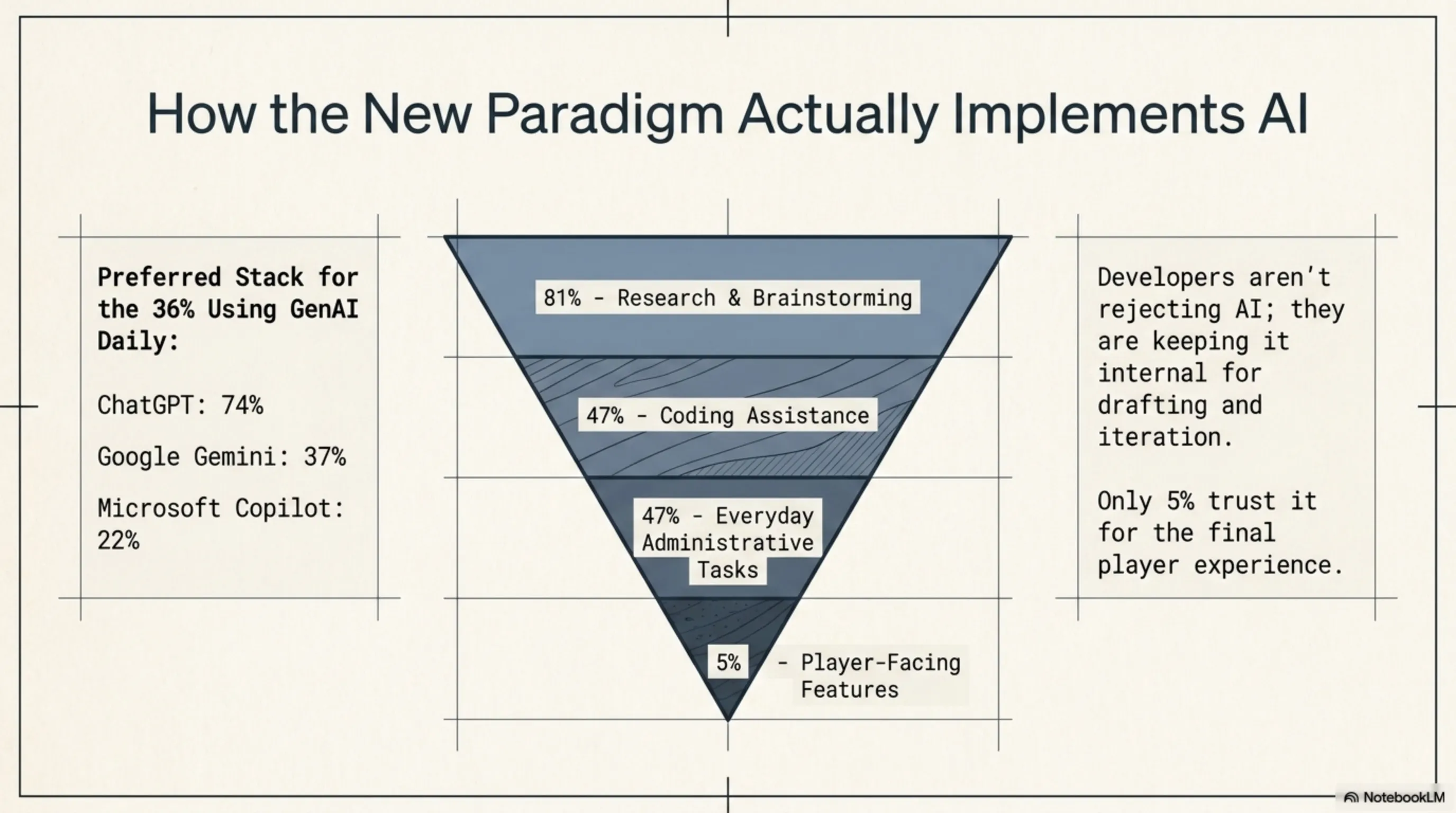
This opposition isn't ideological - it's practical. 64% of visual and technical artists, 63% of game designers and narrative writers, and 59% of programmers - the people making games every day - are concerned. They're not refusing to use AI; 81% use it for research and brainstorming. They just won't pretend this technology comes without costs.
Meanwhile, 36% of industry professionals currently use GenAI tools in their daily work. This strange coexistence - daily use alongside deep concern - shows the issue is more complex than a simple "for or against" binary.
Current AI Use Cases in Gaming
| Use Case | Usage Rate |
|---|---|
| Research & Brainstorming | 81% |
| Coding Assistance | 47% |
| Daily Tasks | 47% |
| Player-Facing Features | 5% |
💡 Note: Only 5% of studios use AI for player-facing features. The rest keep it internal - for drafts, iteration, and productivity.
Popular tools? ChatGPT leads at 74%, followed by Google Gemini at 37% and Microsoft Copilot at 22%. But using a tool doesn't mean endorsing it. By a 7-to-1 margin, developers believe AI does more harm than good.
Investors vs Creators: The GDC 2026 Divide 💼⚔️
GDC 2026 was a strange scene: in the main halls, developers attended sessions on unionization and job security. In a side theater, investors sold a very different vision of AI's future. The distance between those two rooms says more about the industry than any earnings call.
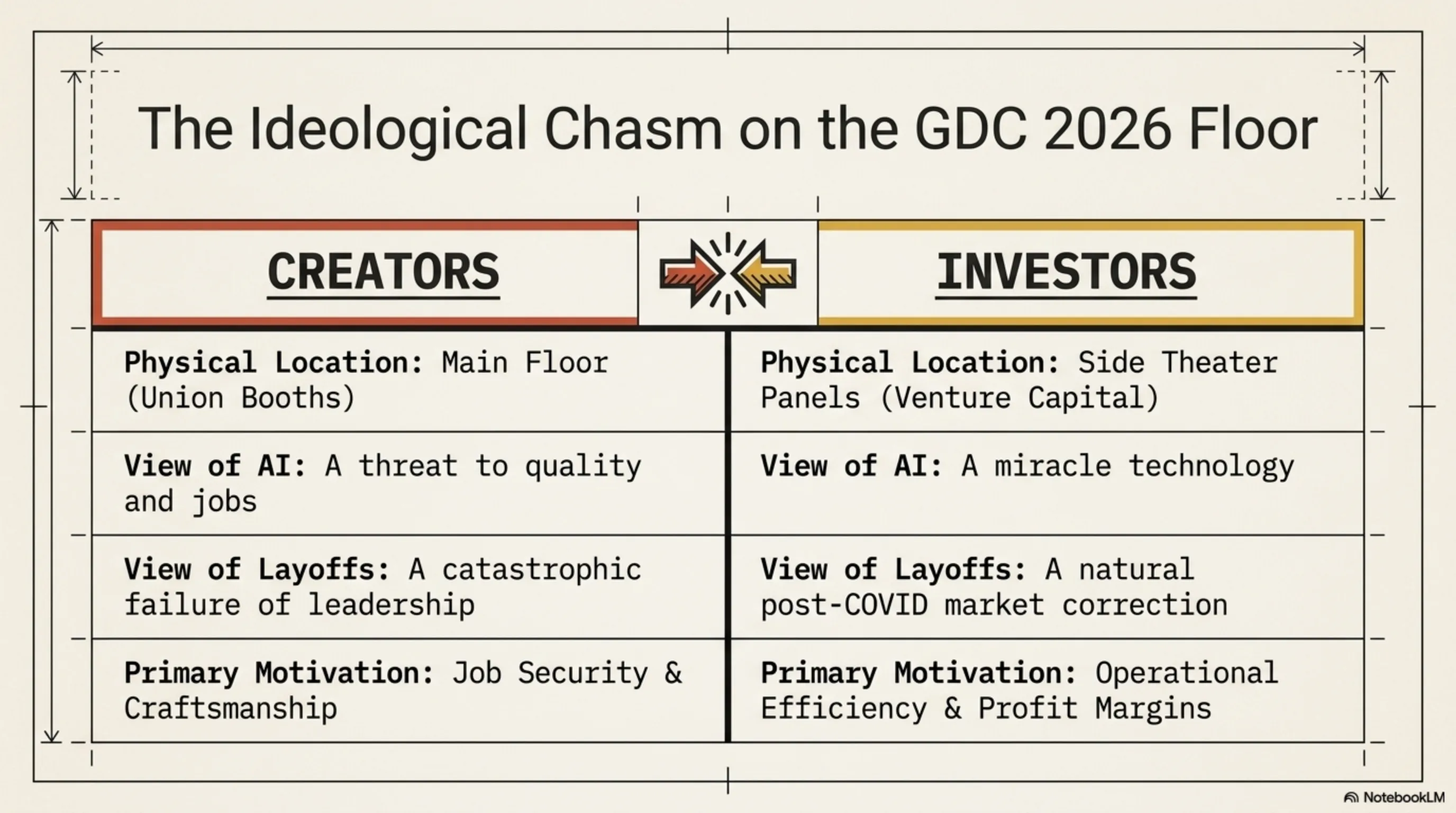
Moritz Baier-Lentz, head of gaming at Lightspeed Venture Partners (a firm with stakes in Anthropic and Epic Games), told a GDC panel on "capitalizing on shifting trends" that he was "shocked and sad" the industry hadn't embraced generative AI. He accused skeptics of "demonizing" a "marvelous new technology."
His explanation for the negativity? Developers are worried about their jobs after the "post-COVID correction." Baier-Lentz framed the layoffs as natural, a predictable adjustment from pandemic-era overinvestment in digital entertainment.
⚠️ The Block Case: 4,000 Layoffs Blamed on AI
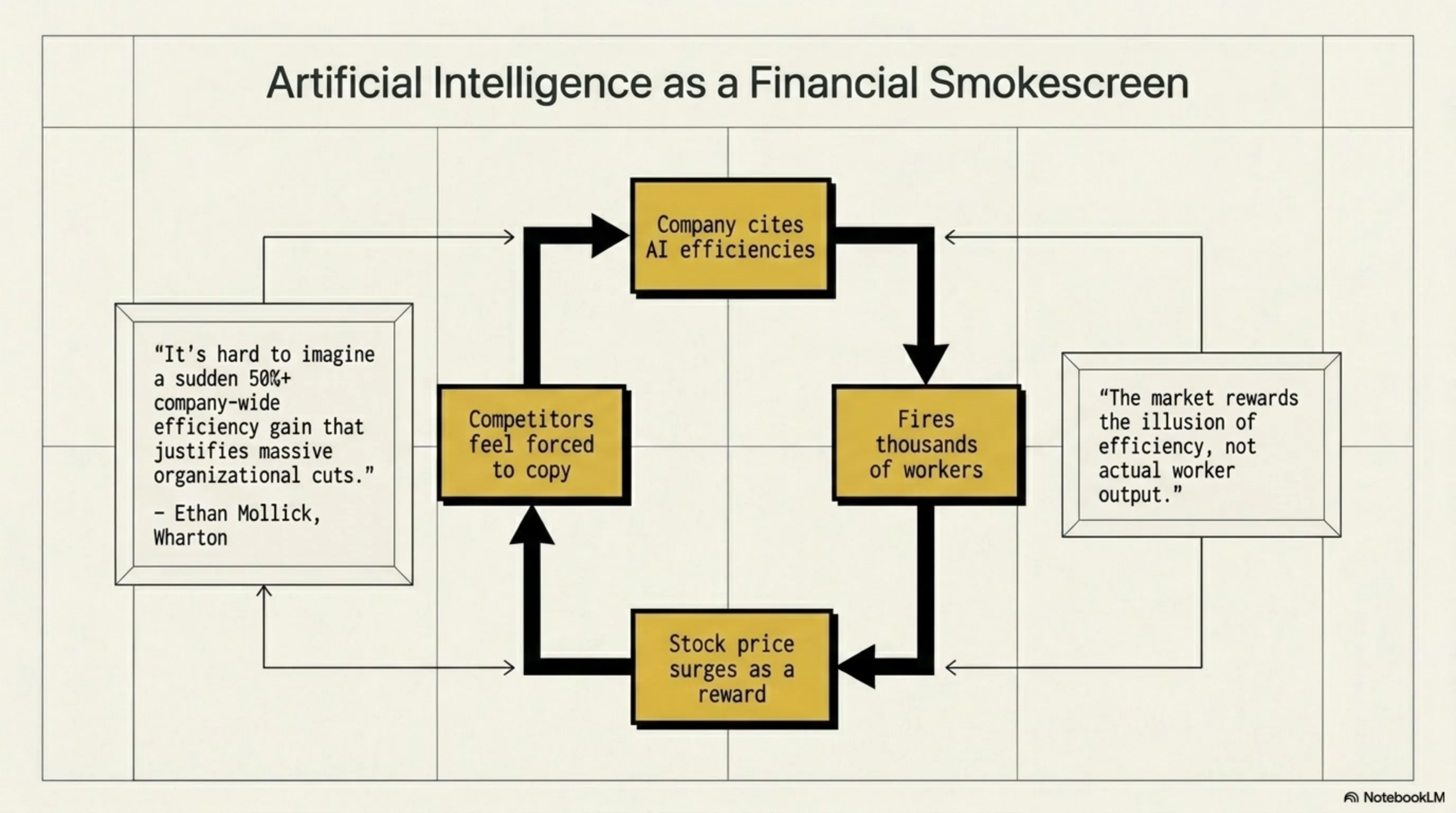
The GDC report dropped weeks after Block (parent of Square and Cash App) laid off roughly 4,000 workers citing AI. Nearly half the company gone. CEO Jack Dorsey told Wired that coding tool advances from Anthropic and OpenAI in December "presented an option to dramatically change how any company is structured."
Block's stock rose on the news. Investors rewarded the signal. Raffaella Sadun at Harvard Business School warned The Atlantic that the pattern feeds itself: one company blames AI for cuts, the stock bumps, and competitors feel obligated to match. Whether the technology justifies it barely matters.
Ethan Mollick at Wharton skipped the hedging: "It is hard to imagine a firm-wide sudden 50%+ efficiency gain that justifies massive organizational cuts."
But the survey data already answered him. Workers in visual and technical art hold the most unfavorable views at 64%, followed by game design and narrative at 63% and programming at 59%. The people closest to the work AI claims to automate are the ones most hostile to it. That's not irrational - that's pattern recognition.
And the conference floor staged the tension as if a political cartoonist had designed the layout: a Campaign to Organize Digital Employees booth promoting unionization sat directly next to a cluster of AI startups, one of which promises users can build entire games by "chatting with AI."
Unionization: 82% Support, Young Generation 100% in Favor ✊
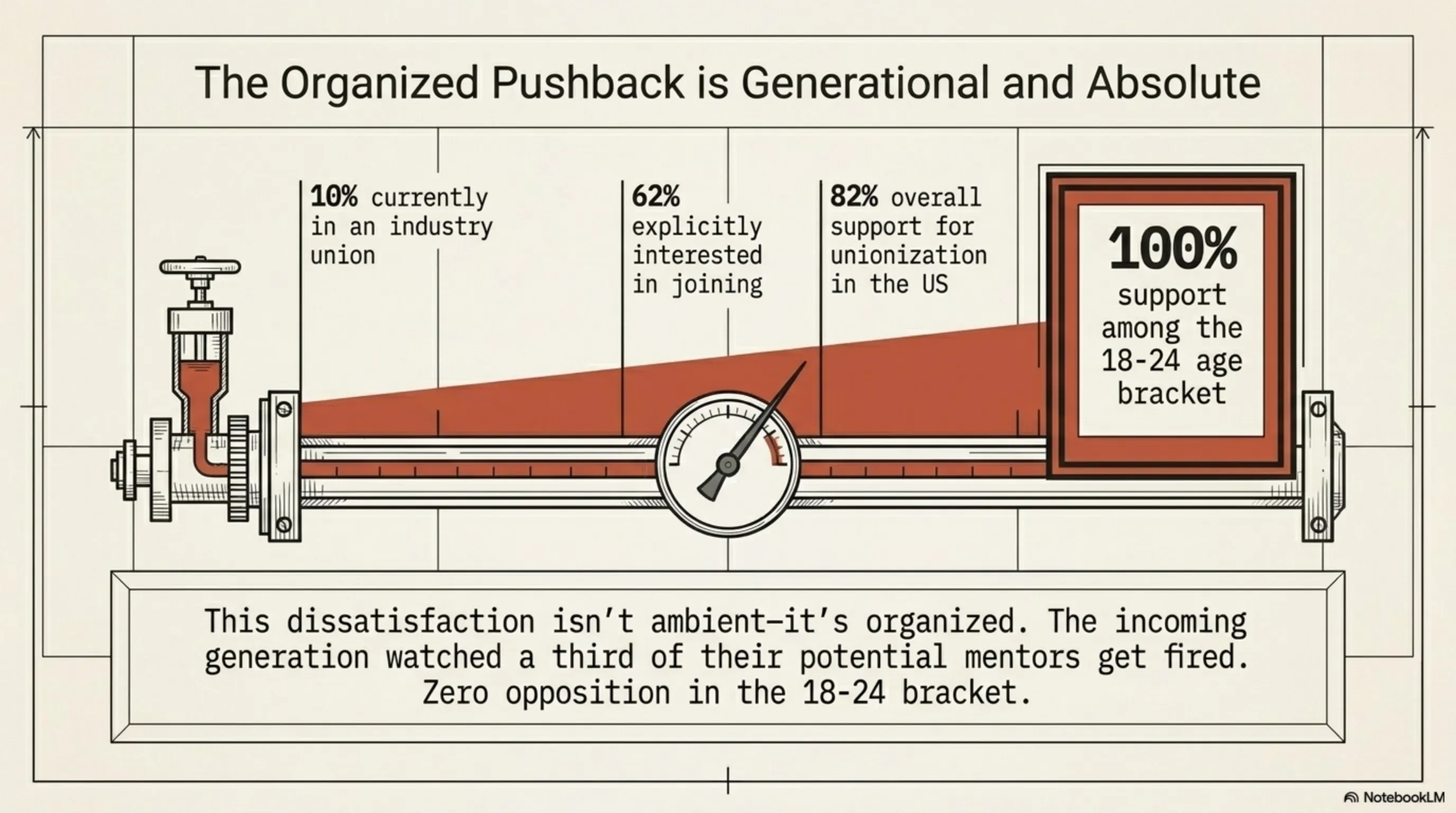
If you think unionization in the game industry is a fringe idea, think again. 82% of US-based respondents support unionization - the highest figure in the survey's history. And here's where it gets interesting: among 18-24 year old respondents, there is zero opposition to unions. Zero. None.
This isn't ambient discontent - it's organized. The generation entering the industry has watched a third of its potential mentors get shown the door. Students surveyed aren't just pessimistic - they're calculating.
Union Support Statistics
Ten percent of respondents already belong to an industry-wide union like the United Videogame Workers-CWA, which launched at GDC last year. Another 62% expressed interest in joining. These numbers represent a fundamental shift in how creators view their relationship with the companies they build for.
With 62% of respondents interested in joining a union and anti-AI sentiment tripling in two years, the pressure points are moving from survey responses toward organizing drives and contract negotiations. The investors made their case from a theater set off to the side of the main conference. The union booth sat on the expo floor, right next to the AI startups.
How Steam Deck Became the Fourth Most Popular Platform 🎮
One of the most interesting findings in the GDC 2026 report is that Steam Deck has become the fourth most popular platform for development - and this tells a bigger story about the changing gaming landscape.
Development Platform Rankings
| Rank | Platform | Interest % |
|---|---|---|
| 1 | PC | 80% |
| 2 | PlayStation 5 | 40% |
| 3 | Steam Deck | 40% |
| 4 | Nintendo Switch 2 | 39% |
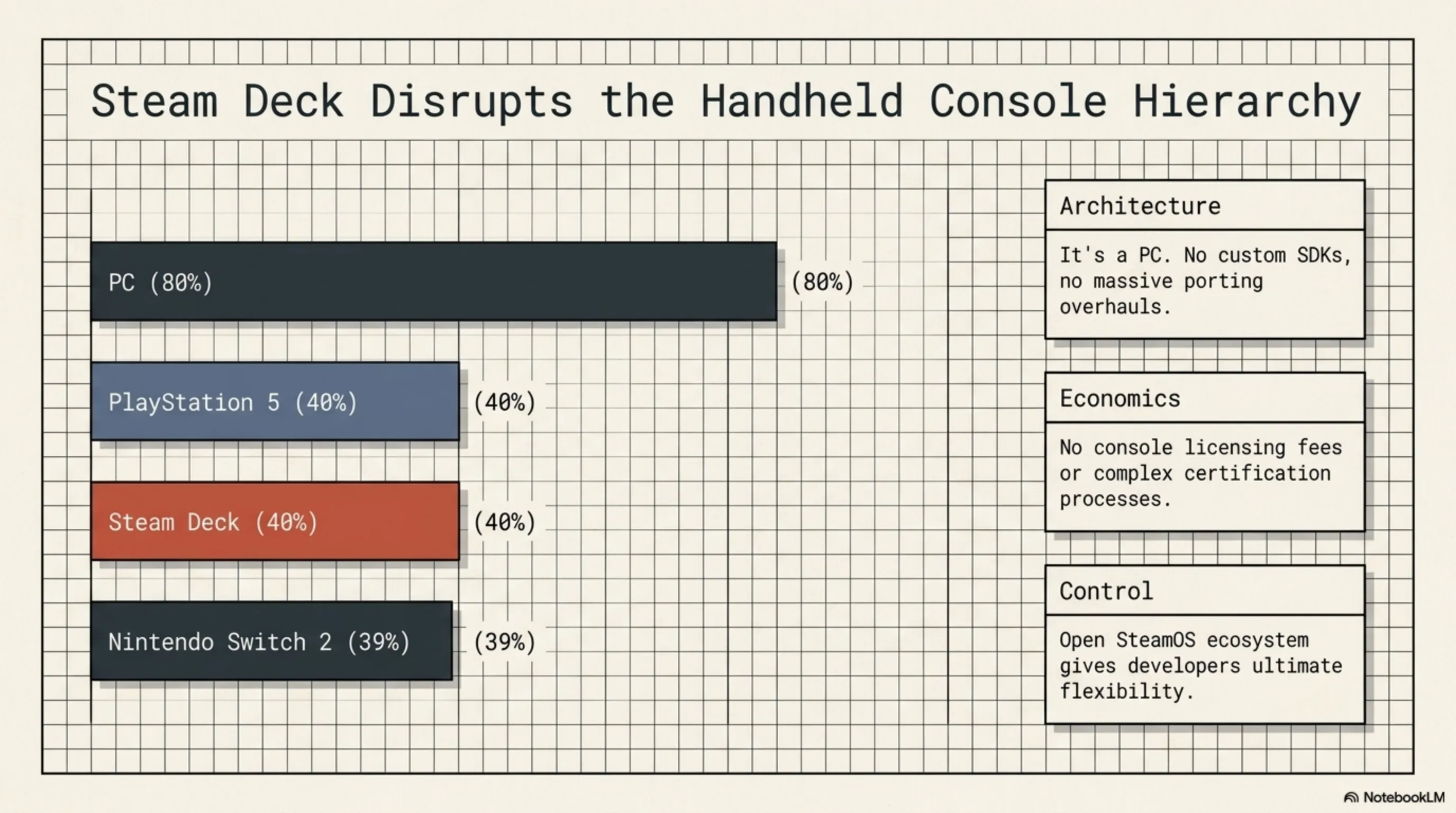
💡 Steam Deck at 40% developer interest sits alongside PS5 and just 1% ahead of Switch 2 - a console that hasn't even launched yet!
This figure is remarkable. Steam Deck - a handheld device that's only a few years old - sits at the same level as PS5 and just one percentage point ahead of Switch 2, Nintendo's next console that hasn't even been released yet. PC at 80% remains the undisputed king, but Steam Deck's rise signals something bigger.
Why has Steam Deck become so popular? Several reasons:
🔧 Easy Development: Steam Deck is essentially a PC. If your game works on PC, it'll probably work on Steam Deck. No special SDK, platform licenses, or major changes needed.
🎯 Growing Market: Steam Deck has an active and growing user base. Developers can reach millions of players without targeting an entirely new platform.
💰 No Extra Costs: Unlike consoles, there's no need to pay licensing fees or go through complex approval processes.
🌐 SteamOS & Flexibility: The platform is open, developers have more control, and the Steam ecosystem provides strong support.
But the real story is that Steam Deck is breathing down Switch 2's neck. Switch 2 hasn't launched yet, but already 39% of developers are interested in it. This shows Nintendo still has strong pull, but Steam Deck has proven that handheld gaming is no longer just Nintendo's territory.
This competition is great for developers - they now have more options to reach handheld gamers, and each platform offers unique advantages.
Co-Development and Reuse: Studios' Survival Model 🤝
One of the major shifts GDC 2026 highlighted is that collaboration with external partners is no longer a luxury - it's how studios survive. This is a shift that's been building quietly for years and has finally become impossible to ignore.
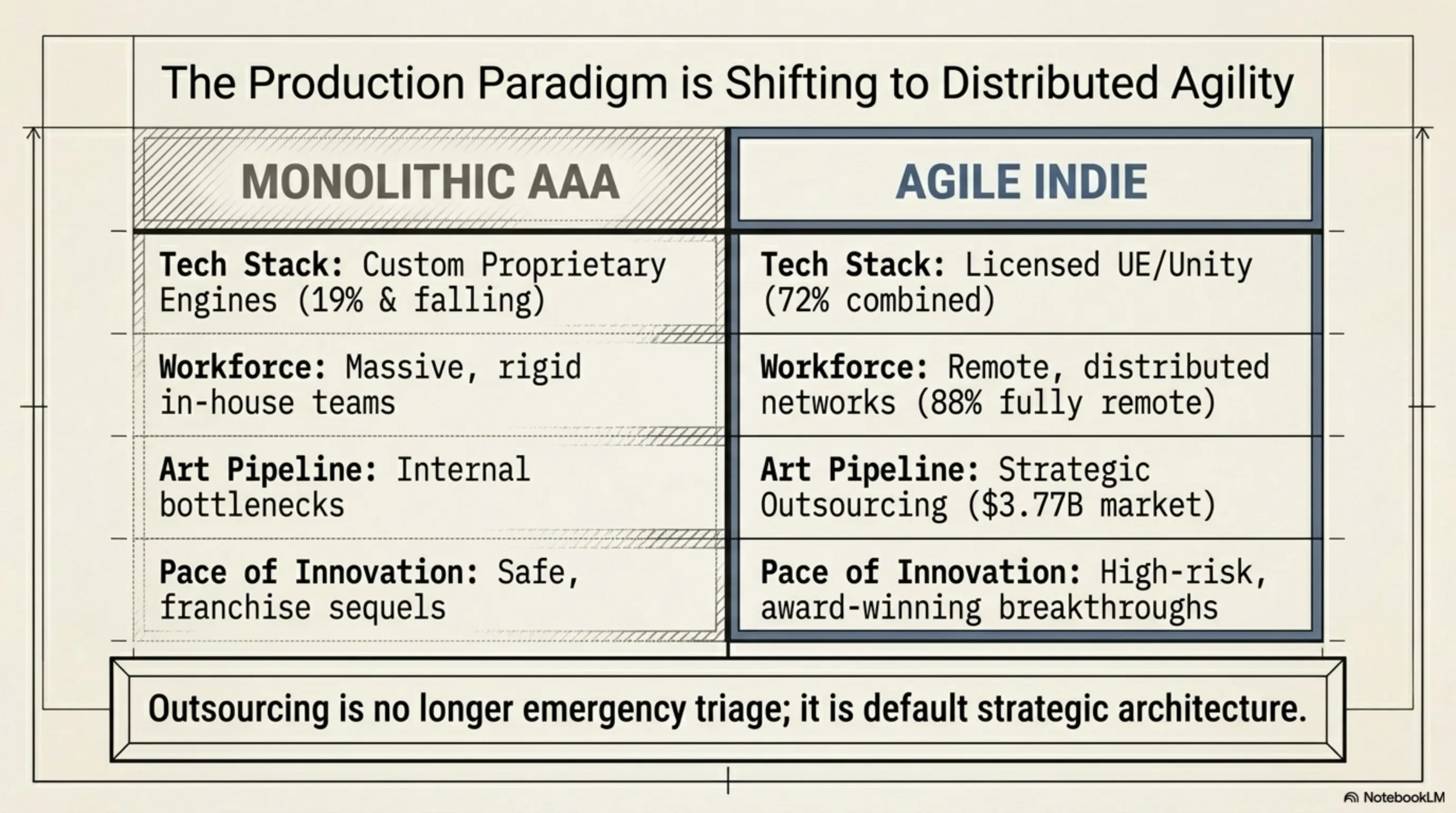
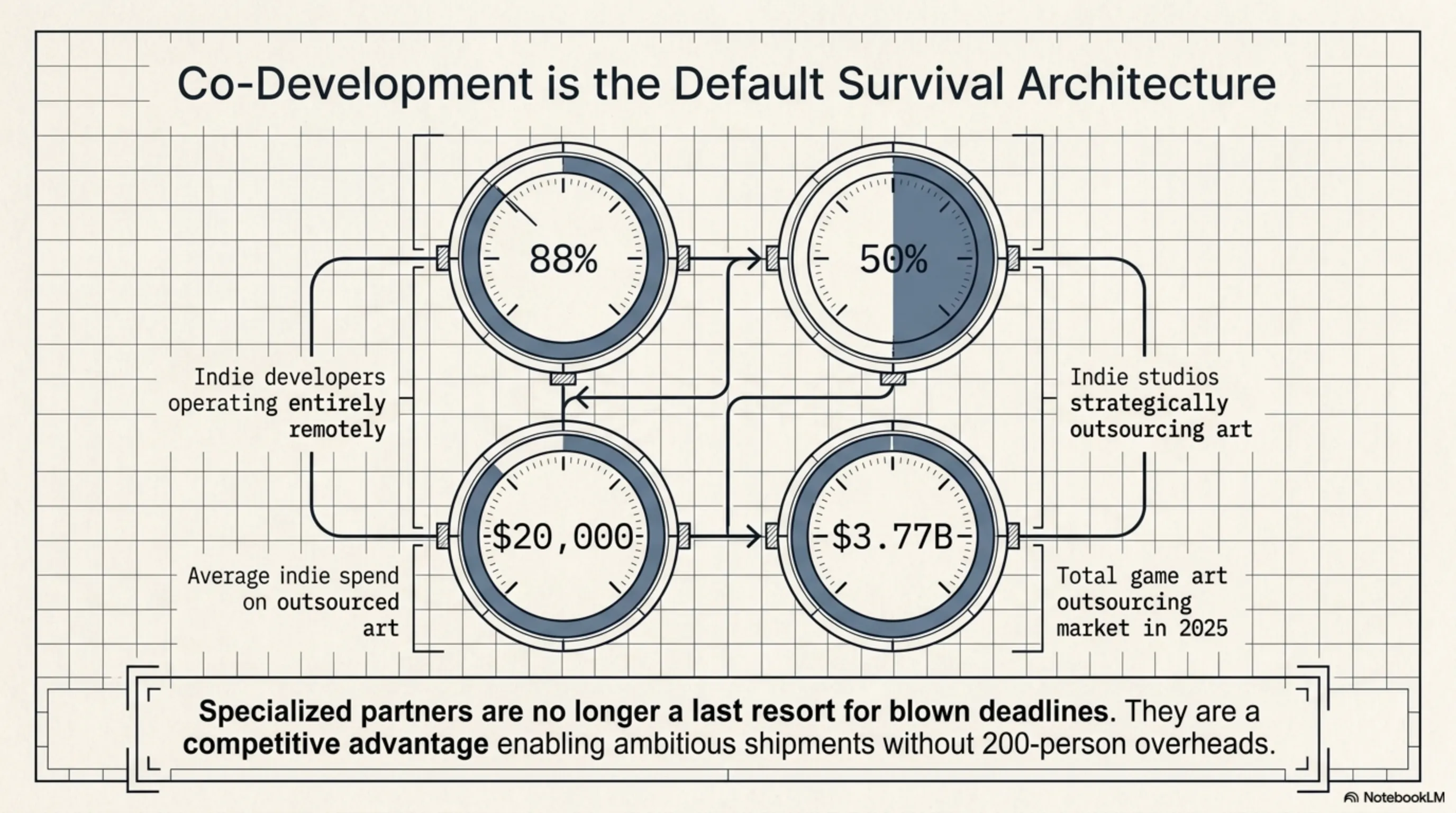
88% of indie developers work fully remote. 50% of indie studios outsource art, with an average spend of $20,000. The game art outsourcing market is $3.77B in 2025 and growing at ~14% annually. This isn't niche behavior - it's the default model.
Co-Development Statistics
What changed in 2026 is the intent. A few years ago, outsourcing was emergency triage - when internal capacity overflowed and a deadline was closing. Now it's strategic architecture. Studios plan for distributed production from pre-production, not after the team is overwhelmed.
Specialized partners aren't a last resort - they're a necessity. Studios that understand this - that a game development partner with deep domain expertise and production standards is a competitive advantage, not a cost line - are the ones shipping ambitious work without the overhead of a 200-person studio.
Engine Reuse: Don't Reinvent the Wheel 🔧
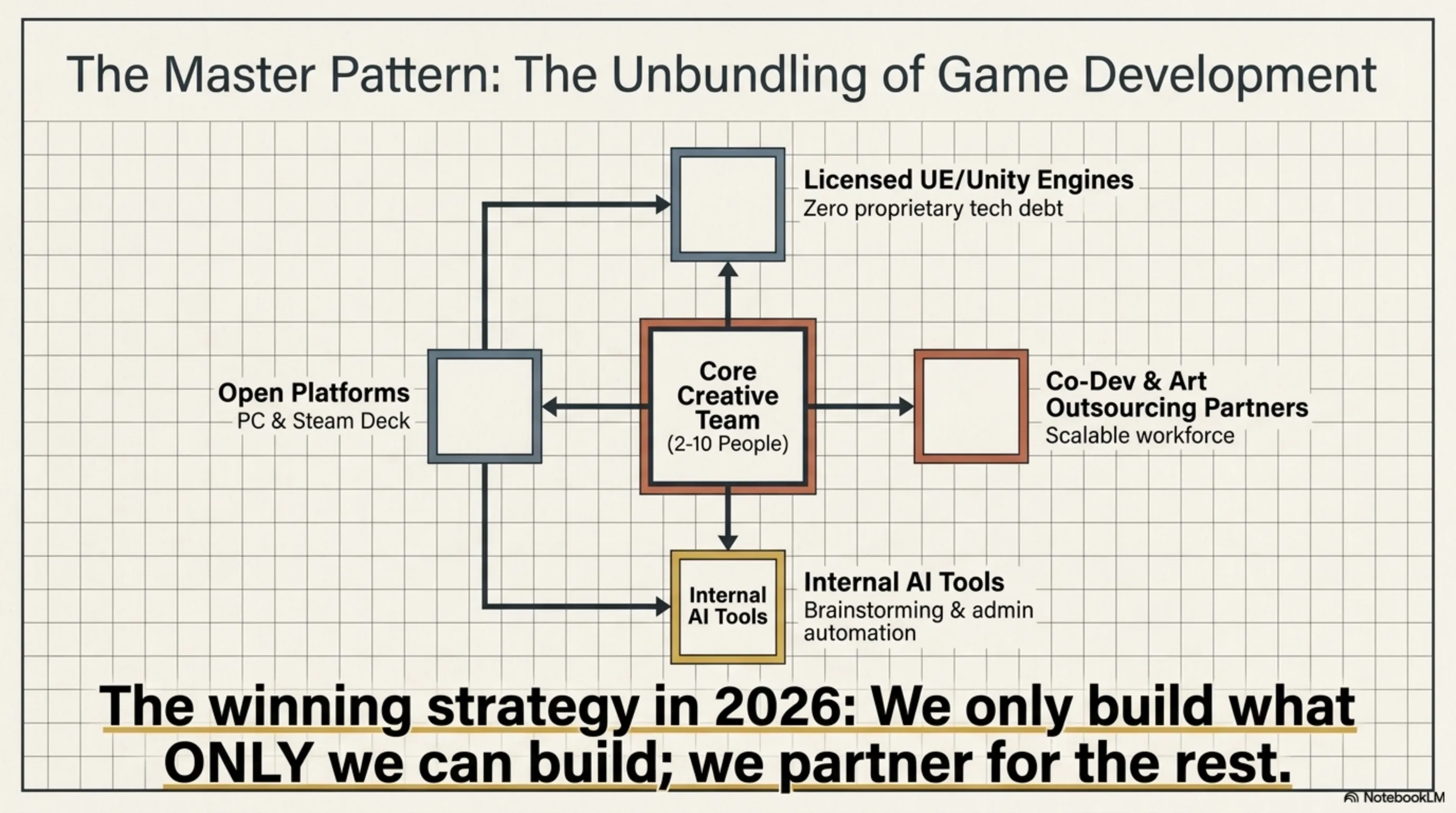
Another key trend GDC 2026 highlighted: reinventing the wheel is expensive, slow, and increasingly unnecessary. The studios winning in 2026 are the ones building on what already works.
Game Engine Usage
| Engine | Usage % | Type |
|---|---|---|
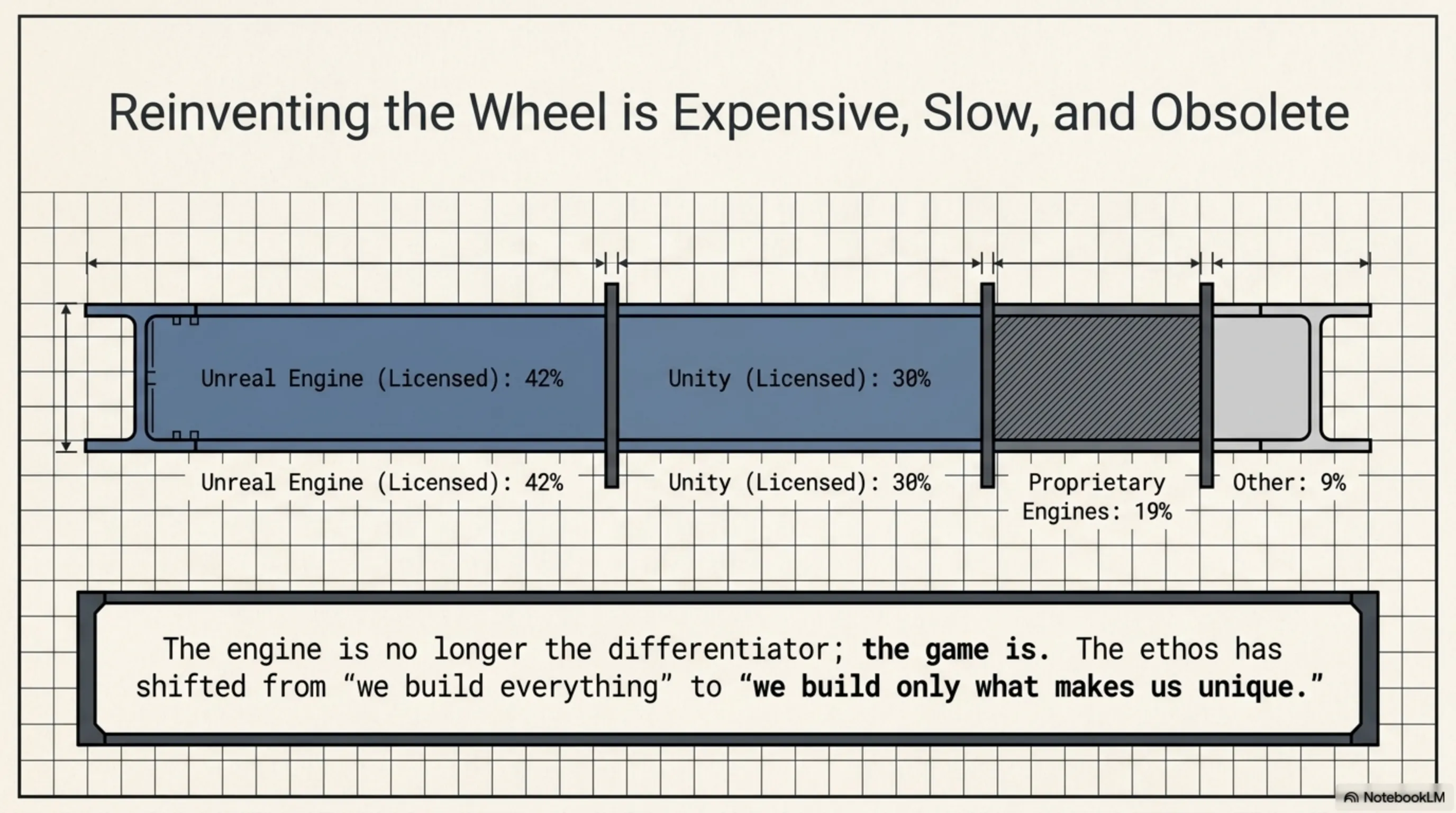
| Unreal Engine | 42% | Licensed |
| Unity | 30% | Licensed |
| Proprietary Engines | 19% | Custom |
| Other Engines | 9% | Various |
Unreal Engine adoption sits at 42% among GDC respondents, Unity at 30%, proprietary engines at 19%. The dominance of licensed engines reflects a matured industry understanding: the engine is not the differentiator - the game is.
Middleware dominated the GDC expo floor. Modular asset pipelines, shared toolsets, and co-development workflows were everywhere. The ethos has shifted from "we build everything ourselves" to "we build what only we can build - and we partner for the rest."
This is practical wisdom with direct business implications. Studios that invest their limited resources in what makes their game unique - the vision, the design, the creative direction - and lean on established infrastructure for everything else, move faster, spend less, and ship better.
Indie Games: The Industry's Innovation Engine 🎨
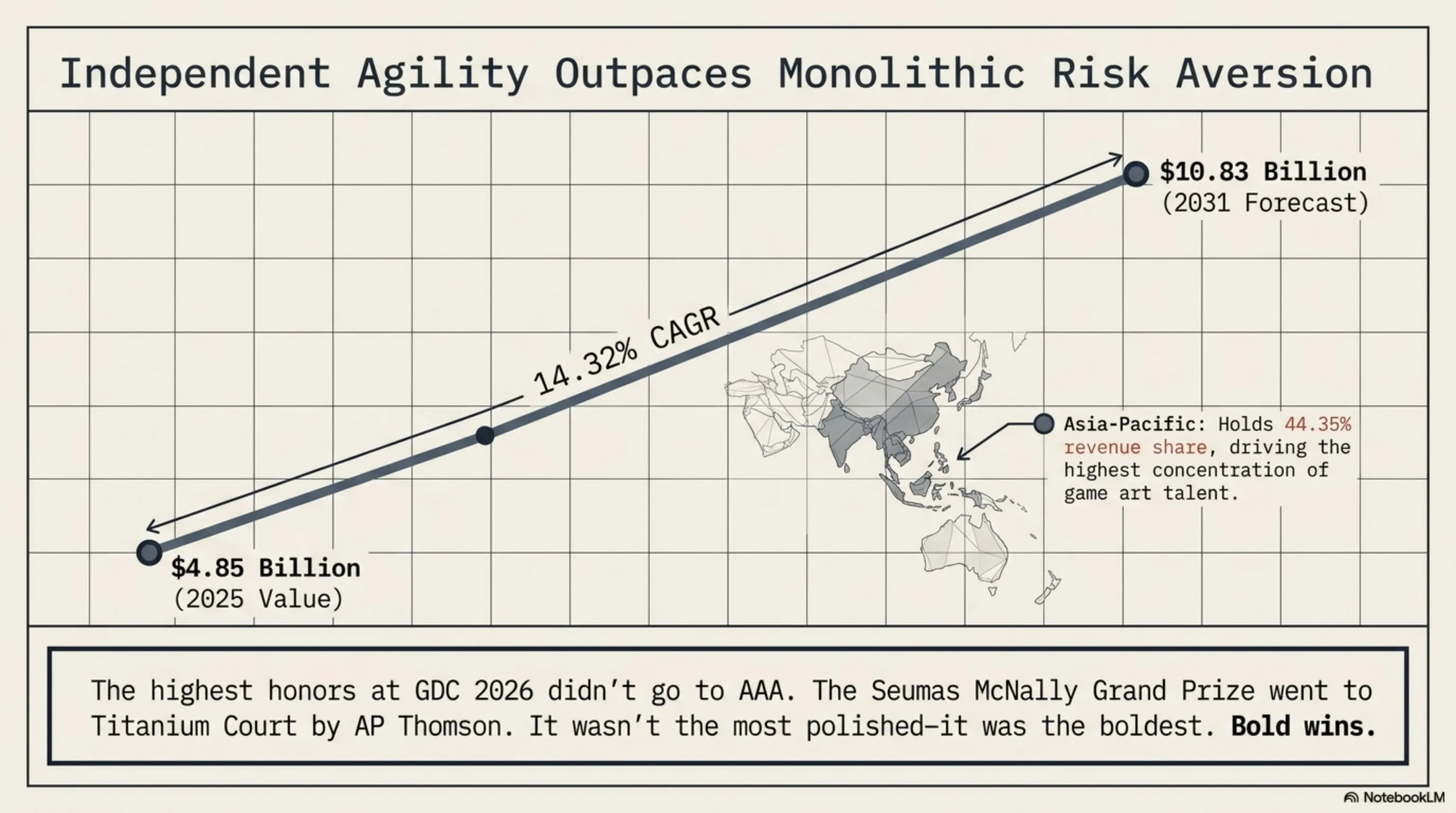
The most interesting games at GDC 2026 weren't in the biggest booths. The Independent Games Festival's Seumas McNally Grand Prize went to Titanium Court by AP Thomson. It wasn't the most polished game at the show - it was the most bold. And bold is winning right now.
This isn't a coincidence. As AAA studios consolidate, downsize, and play it safe - making sequels to sequels of proven franchises - the indie space has been filling with creative risk. Small teams with clear vision, distributed production tools, and global partner networks are shipping games that feel genuinely new.
Indie Games Market
The indie game market is forecast to reach $10.83B by 2031, growing from $4.85B in 2025 at a 14.32% CAGR. Asia-Pacific - where much of the world's best game art talent is concentrated - holds a 44.35% revenue share and 16.08% CAGR.
The indie scene isn't a side category anymore - it's the industry's innovation engine. The commercial ceiling for a 2-10 person studio has never been higher. And the tools, talent networks, and production partnerships available to small teams have never been better.
Students and the Next Generation: 74% Worried About Job Prospects 🎓
One of the most concerning findings in the GDC 2026 report is that 74% of students are worried about their future job prospects. This isn't abstract fear - it's a rational response to job market realities.
What are today's students witnessing? One-third of industry professionals laid off in the past two years. Fewer entry-level positions. Veterans with decades of experience competing for the same jobs students hope to get. And now AI added to the equation, potentially automating some entry-level roles.
📚 Next Generation Challenges:
• Fewer entry-level positions due to widespread layoffs
• Competition with laid-off veterans for the same jobs
• Uncertainty about AI's impact on entry-level roles
• Need for multiple skills and diverse specializations
• Pressure to learn new tools (including AI) while studying
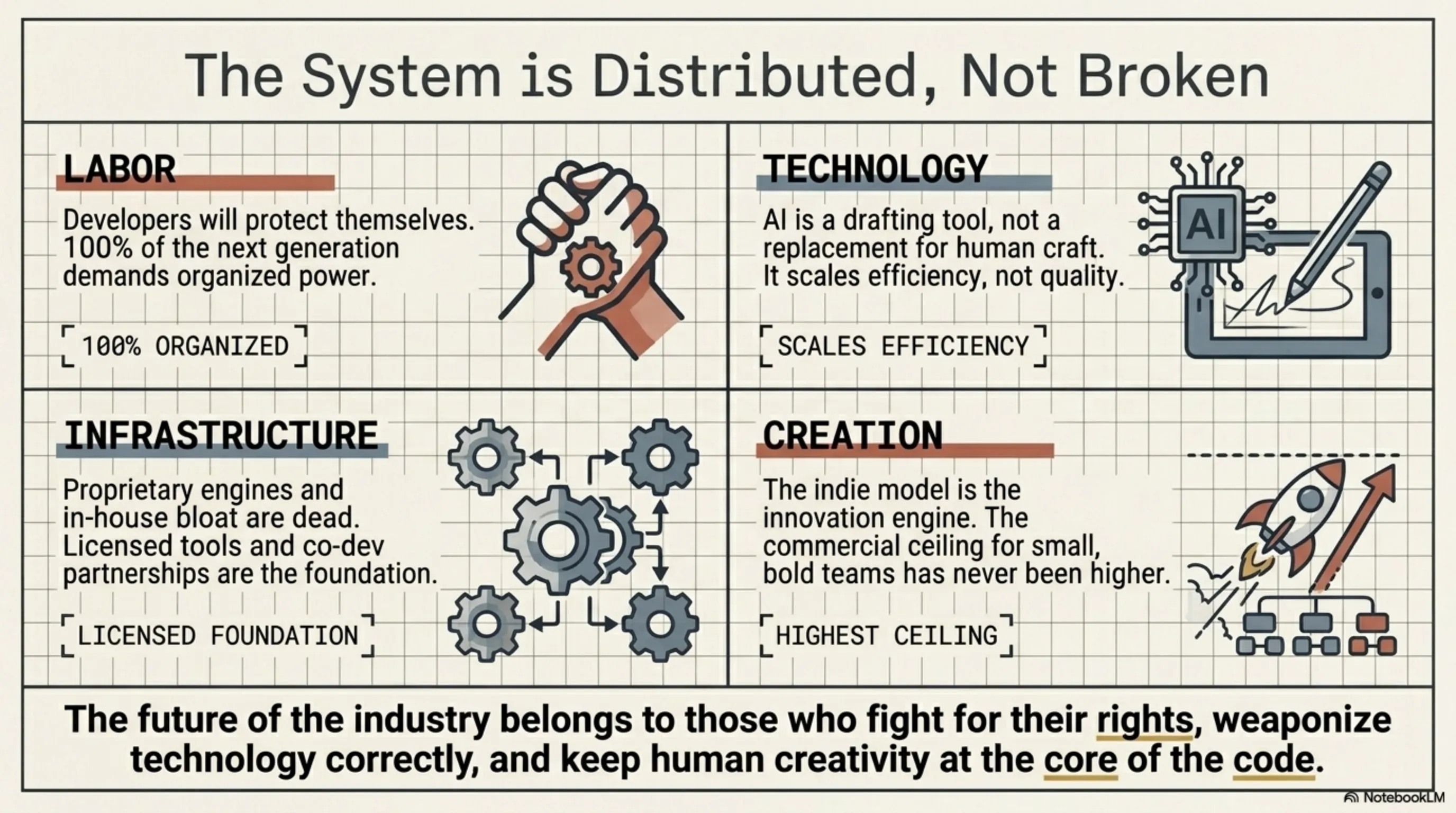
But this generation is also more aware and organized than previous ones. They support unionization 100%. They know how to use modern tools. And they're ready to fight for their rights.
Is AI a Tool or a Threat? The Answer Is More Complex Than You Think 🤔
The central question the GDC 2026 report raises is: Does artificial intelligence eat game developers' jobs, or will it ultimately lead to less work and bolder projects?
The answer isn't simple. The data shows both are happening - simultaneously. 36% of developers use AI and see real productivity gains. But 52% believe it's harming the industry. Both realities can be true.
💡 The Complex Reality of AI:
• AI can speed up repetitive tasks
• But it cannot replace human creativity
• Companies use it to justify layoffs
• Developers worry about job displacement
• Responsible use requires structural support
The main issue isn't what AI can do - it's how it's being used. When companies like Block lay off 4,000 people citing AI and their stock rises, the signal is clear: the market rewards efficiency, not quality or worker welfare.
But that's not the complete story. Studios that use AI as an assistive tool - not a replacement - get better results. They use AI for research, brainstorming, and repetitive work, but leave creative decisions to humans.
🎯 Conclusion: The Future Being Shaped
The GDC 2026 report presents a clear picture of the game development industry at a historic turning point. We're witnessing a fundamental transformation - not just in technology, but in how developers organize, work, and fight for their rights.
Key Takeaways to Remember:
📊 Layoff Crisis: 28% in 2 years, 33% in US, 74% students worried
🤖 AI: 52% believe it harms, 36% use it, the paradox continues
✊ Unions: 82% support, 100% young generation in favor, 62% want to join
🎮 Steam Deck: Fourth platform at 40%, breathing down Switch 2's neck
🤝 Co-Dev: 88% remote, 50% outsourcing, $3.77B growing market
🎨 Indie: $4.85B to $10.83B by 2031, the industry's innovation engine
🎯 The future of game development belongs to those who fight for their rights, use technology responsibly, and keep creativity at the center of their work.
📚 Sources & References
Sources: GDC Festival of Gaming 2026 State of the Game Industry Survey, Bloomberg Jason Schreier GDC 2026 Analysis, Implicator AI Industry Report, GIANTY Game Development Analysis, Business Wire Press Release, Harvard Business School Research, Wharton School Analysis, United Videogame Workers-CWA, Independent Games Festival, Game Industry Market Research 2025-2031
Game Development Revolution 2026 — Research and Analysis: Tekin Editorial Team
🌐 Stay Connected With Us
For the latest tech, gaming, and gadget news, follow us on social media:
Supplementary Image Gallery: 🎮 GDC 2026 Autopsy: The Layoff Storm, AI Rebellion, and Steam Deck's Rise