Tekin Versus | The Enterprise Agent Runtime Battle
An exhaustive technical teardown of TrueForge versus Claude Managed Agents and how context engineering slashes orchestration expenses by 75%.
- 🎮75% Operational Cost Reduction- Task execution expenses plunged from $11.80 to $2.90 on DevRev Enterprise-Bench utilizing open-source GLM-5.2.
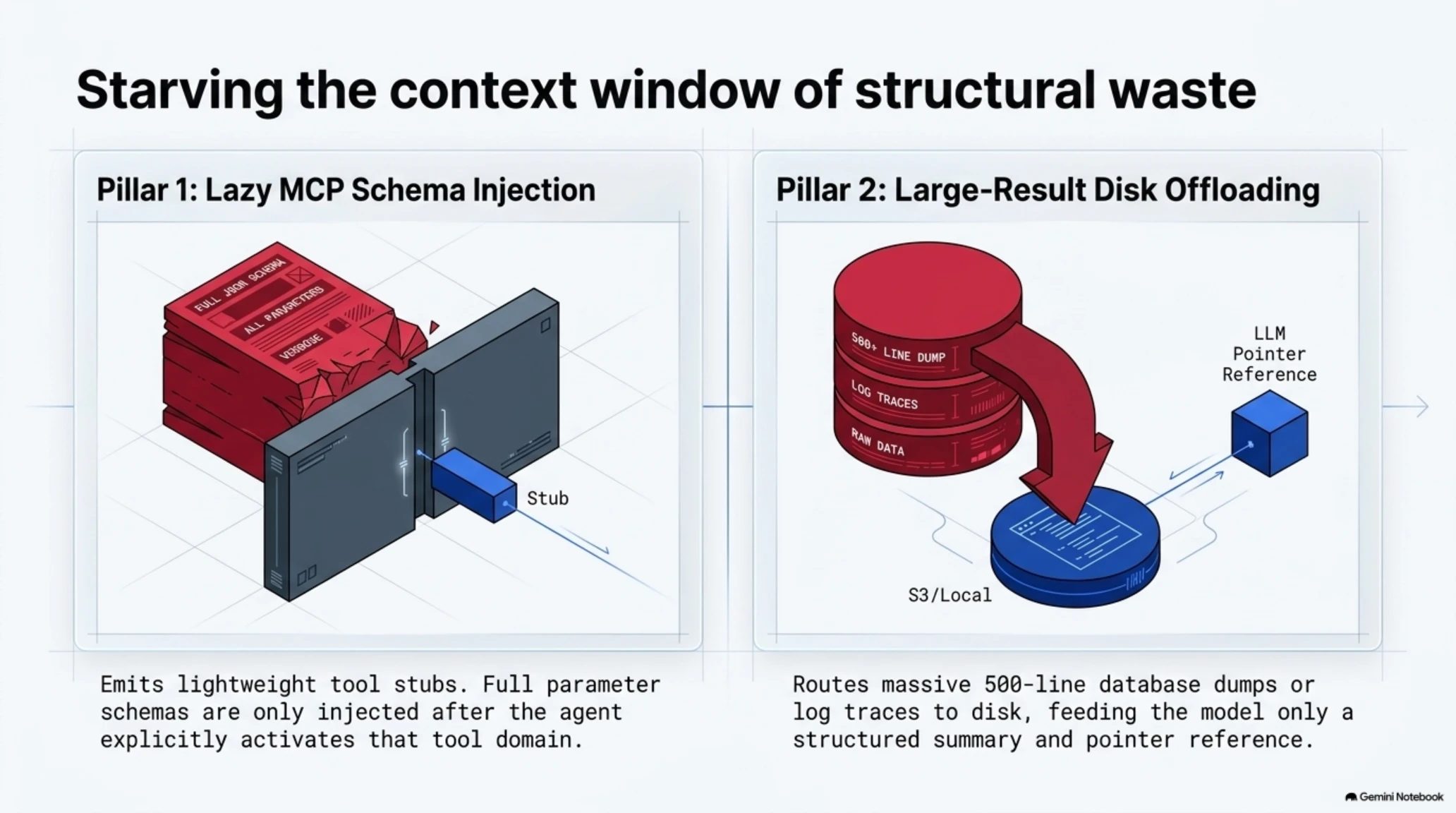
- 🎧Context Engineering Precision- Lazy schema injection for MCP tools and large-result disk offloading eliminate repetitive token waste.
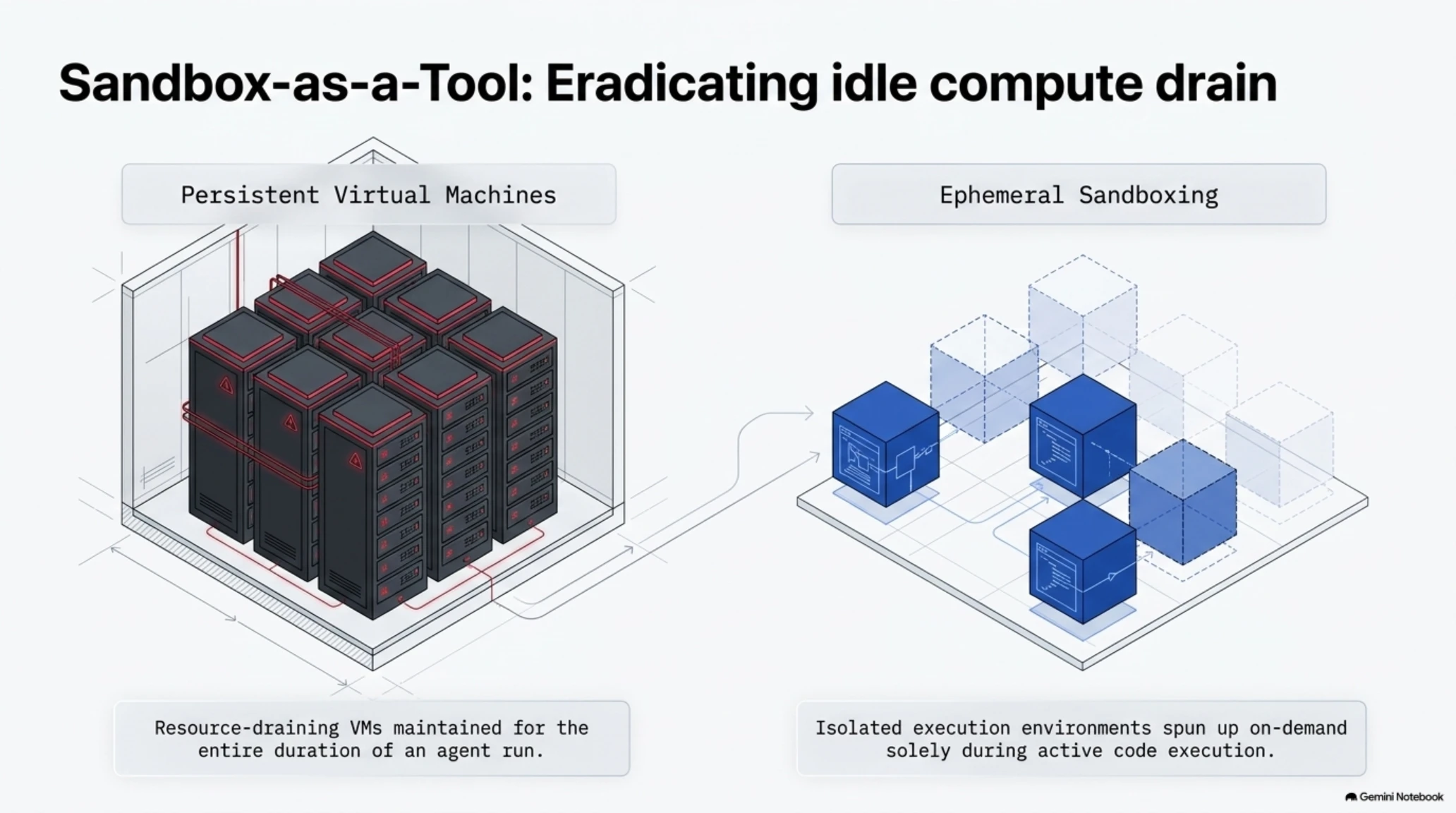
- 🚀Sandbox-as-a-Tool Architecture- Replaces persistent compute-heavy virtual containers with on-demand ephemeral sandboxes.
The enterprise software landscape is currently navigating a fundamental tectonic shift. As enterprise artificial intelligence matures beyond single-turn conversational chatbots and into autonomous, multi-step agentic workflows, engineering leaders are confronting an alarming operational reality: running autonomous agents across production environments has become prohibitively expensive, architecturally rigid, and riddled with proprietary cloud lock-in.
Addressing this mounting crisis, San Francisco-based machine learning infrastructure firm TrueFoundry co-founded by former Meta engineers has officially released TrueForge under the permissive MIT open-source license. Engineered from the ground up as a vendor-neutral, self-hosted agent harness, TrueForge directly challenges proprietary cloud runtimes like Anthropic's Claude Managed Agents and OpenAI Codex CLI.

The Battle for the Agent Runtime: Reclaiming the Control Plane
Over the past three years, the generative AI narrative centered predominantly on model parameters, pre-training compute, and raw benchmark intelligence. However, in enterprise production environments, the bottleneck has dramatically shifted toward what the industry defines as the "Agent Runtime" the stateful orchestration layer that governs how a model repeatedly reasons, invokes external Model Context Protocol (MCP) servers, maintains conversation state, manipulates structured files, and executes sandboxed code.
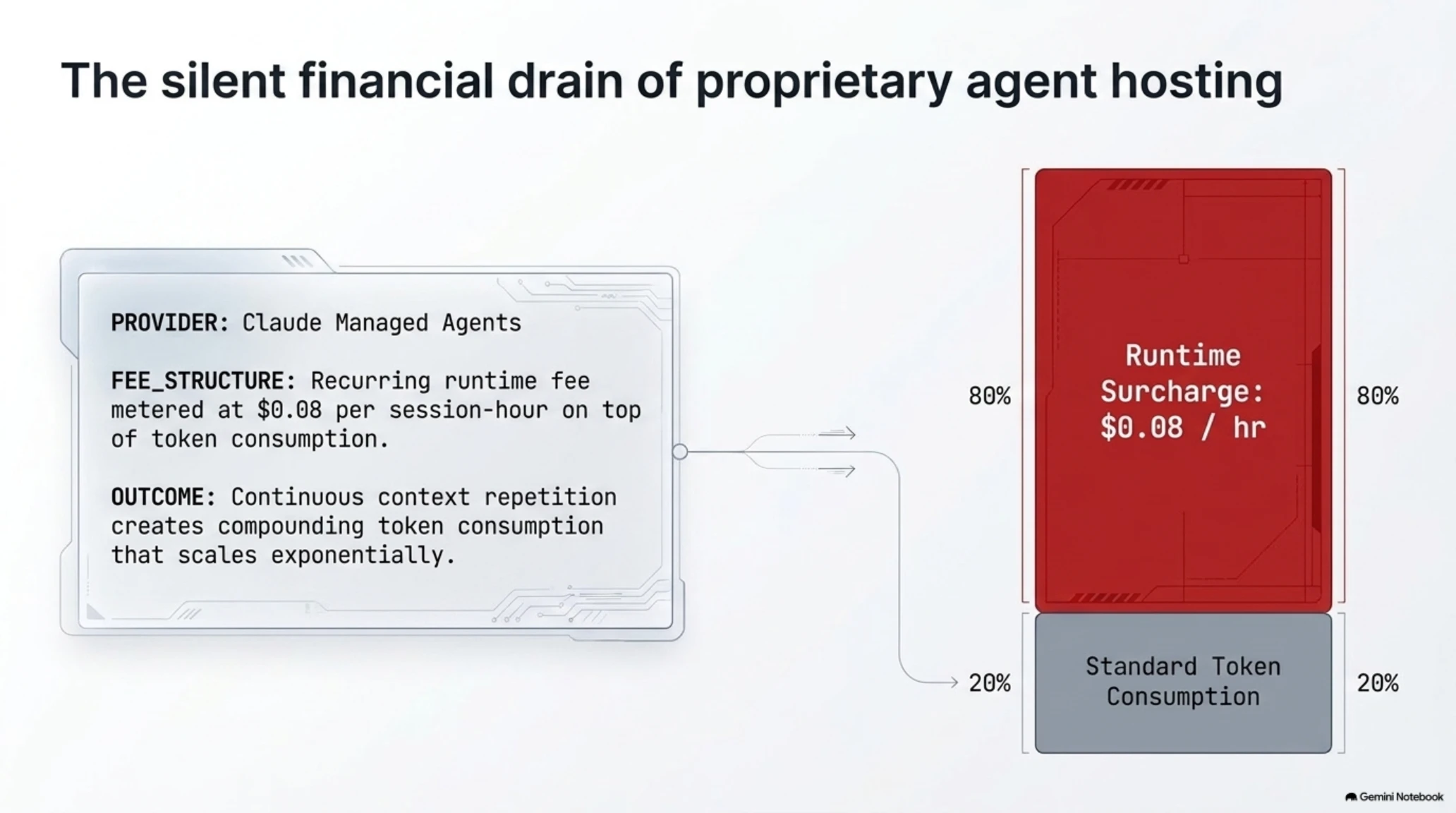
Until recently, enterprise engineering teams faced a stark dilemma. On one hand, deploying fully managed services like Claude Managed Agents offered instant operational convenience, but came at the steep price of complete platform coupling and recurring runtime fees metered at $0.08 per session-hour on top of token consumption. On the other hand, traditional DIY orchestration libraries frequently broke down under production concurrency, leaking memory, overflowing context windows, and spiraling token expenditures out of control.
Key Takeaways | TrueForge vs. Proprietary Agent Runtimes
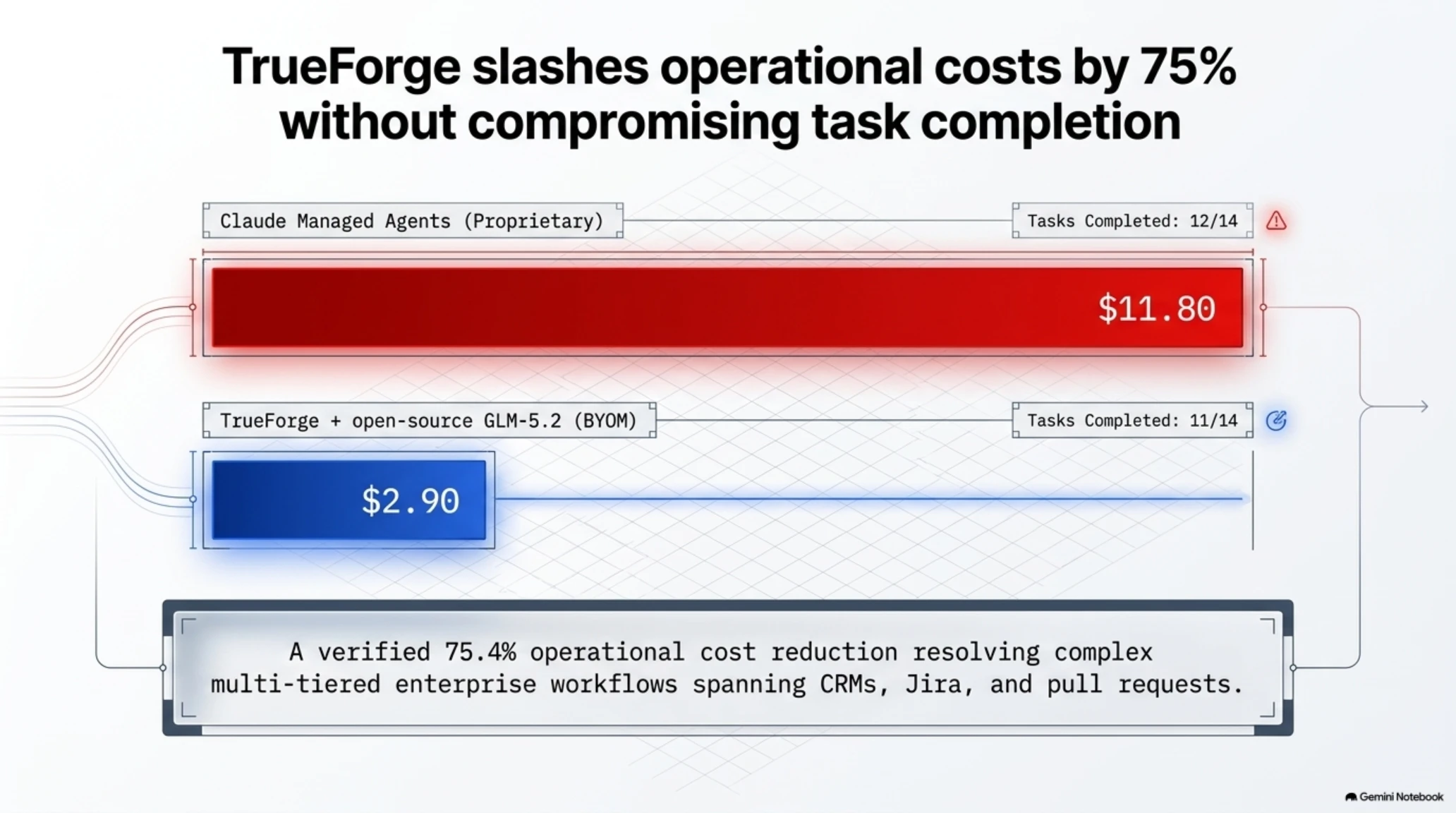
- A verified 75% cost reduction achieved on DevRev's Enterprise-Bench benchmark ($2.90 vs. $11.80) pairing TrueForge with open-source GLM-5.2.
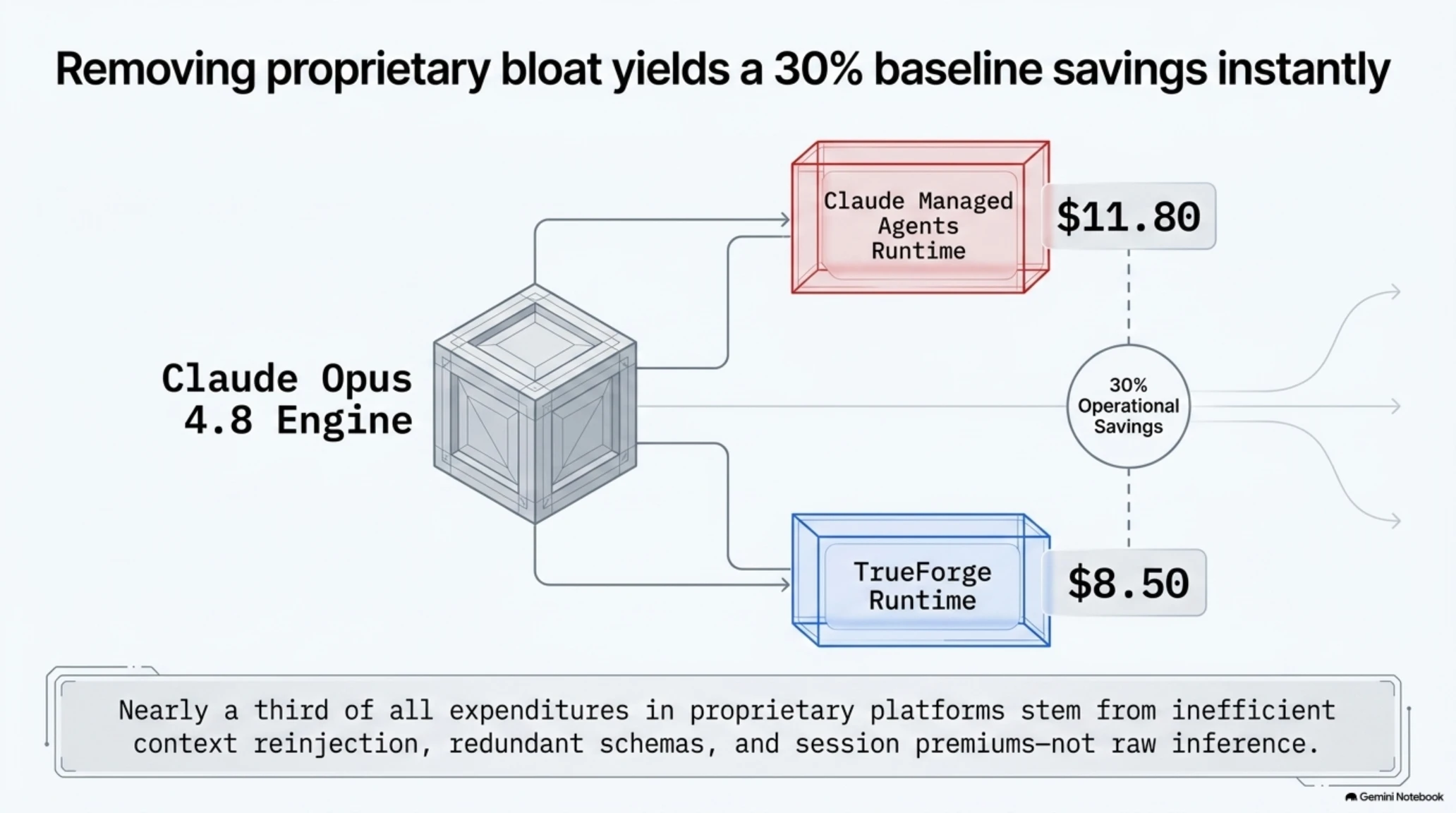
- A 30% baseline savings ($8.50 vs. $11.80) preserved even when running the identical Claude Opus 4.8 model across both harnesses due to superior context management.
- Seamless developer mobility transitioning from single-process local SQLite instances to distributed Docker Compose and Kubernetes Helm deployments.
- Elimination of mandatory vendor lock-in, enabling enterprise teams to bring their own models (BYOM) and host all workloads in private VPCs.
TrueForge establishes a vendor-neutral operational standard. By decoupling the core reasoning loop from proprietary hosting silos, it provides platform engineering teams with an open foundation capable of executing tasks locally on developer workstations or orchestrating thousands of concurrent production workflows within private cloud clusters.

Why It Matters: The Macroeconomics of Enterprise Agent Orchestration
Core Terminologies in Modern Agentic Infrastructure
To accurately assess the structural differences between TrueForge and managed agent ecosystems, platform architects must establish a rigorous understanding of the emerging agent infrastructure lexicon.
Technical Jargon Buster
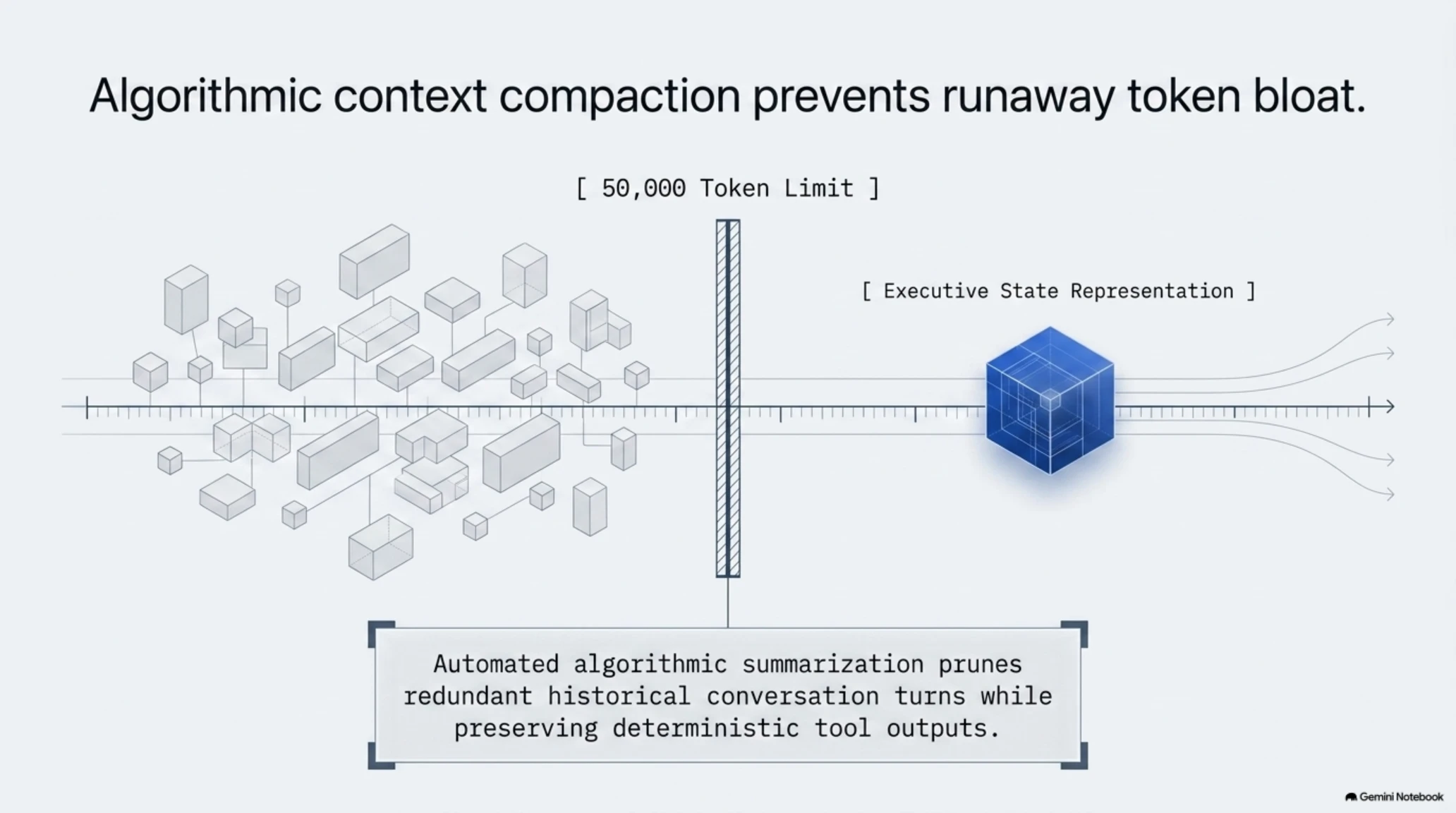
Context Compaction: An automated algorithmic summarization process that prunes redundant conversational history once a session exceeds a designated token threshold (e.g., 50,000 tokens).
Lazy MCP Schema Loading: An optimization mechanism that defers the injection of complex tool definitions into the active system prompt until the model specifically selects the tool category.
Ephemeral Sandboxing: A compute architecture where isolated execution environments are spun up on-demand as momentary tools rather than maintained as permanent, resource-draining VMs.
Deconstructing DevRev Enterprise-Bench: Where Theory Meets Production Reality
Traditional AI evaluations such as MMLU, GSM8K, or HumanEval have long proven inadequate for assessing real-world enterprise agent readiness. These academic tests evaluate isolated reasoning or single-function code synthesis within vacuum environments, completely ignoring the complex latency, fragmented databases, strict permission boundaries, and state drift endemic to enterprise IT ecosystems.
To establish a reproducible industry standard, DevRev introduced Enterprise-Bench, an open and vendor-neutral evaluation framework designed in collaboration with the Laude Institute and validated by Professor Alexandros Dimakis at UC Berkeley. The benchmark subjects autonomous agents to complex, multi-tiered enterprise workflows spanning CRM platforms, Jira issue trackers, pull request lifecycles, and internal knowledge bases.

In rigorous benchmark evaluations published by TrueFoundry, TrueForge paired with the open-source GLM-5.2 large language model successfully resolved 11 out of 14 complex enterprise tasks on Enterprise-Bench. The operational cost of this entire evaluation run tallied to a modest $2.90.
In stark contrast, executing the identical benchmark suite on Anthropic's proprietary Claude Managed Agents harness powered by Claude Opus 4.8 incurred an aggregate expense of $11.80. This demonstrates a staggering 75% cost reduction achieved through an open-source, self-hosted architecture without compromising task completion rates.
Quantitative Financial and Performance Analysis
Perhaps the most revealing revelation from the Enterprise-Bench data emerges when isolating the software harness itself from model capability. When TrueFoundry configured TrueForge to drive Anthropic's flagship Claude Opus 4.8 model, the total cost dropped from $11.80 (on Claude Managed Agents) down to $8.50.
This 30% cost variance confirms that nearly a third of all expenditures in proprietary managed agent platforms stem from inefficient context reinjection, redundant schema transmissions, and runtime session premiums rather than raw computational inference.
DevRev Enterprise-Bench Financial & Performance Breakdown
| Runtime Harness & LLM Combination | Tasks Completed | Total Suite Cost | Cost Delta vs Baseline | Runtime Surcharge |
|---|---|---|---|---|
| TrueForge + GLM-5.2 (Open-Source BYOM) | 11 / 14 | $2.90 | -75.4% | $0.00 / hr |
| TrueForge + Claude Opus 4.8 | 12 / 14 | $8.50 | -28.0% | $0.00 / hr |
| Claude Managed Agents (Anthropic Proprietary) | 12 / 14 | $11.80 | Baseline | $0.08 / session-hr |

Chronological Evolution of Agent Orchestration Paradigms (2023–2026)
The progression of AI agent frameworks over the past four years illustrates a steady transition from rigid hardcoded workflows toward adaptive, distributed context engineering.
Timeline of Agent Framework Architecture
Deep Technical Teardown: The Five Pillars of TrueForge Context Optimization
The economic and operational breakthrough of TrueForge is not rooted in model distillation or lossy pruning; rather, it is the direct consequence of rigorous systems engineering applied to the LLM context window. In conventional agent frameworks, massive volumes of redundant data full JSON schemas of inactive tools, verbose raw database query responses, and entire terminal logs are continuously stuffed into the active prompt on every reasoning step.
TrueForge eliminates this structural waste through five core architectural innovations designed to keep the active token payload exceptionally lean.

The 5 Technical Pillars of TrueForge Architecture
- 1. Lazy MCP Schema Injection: Instead of broadcasting dozens of intricate JSON tool schemas in every iteration, TrueForge exposes lightweight tool stubs and only injects the full parameter schema once the agent explicitly activates that tool domain.
- 2. Large-Result Disk Offloading: When an agent executes a command that generates massive output (such as a 500-line database dump or log trace), TrueForge offloads the raw content to local storage or S3 and feeds the model a structured summary alongside a pointer reference.
- 3. Algorithmic Context Compaction: TrueForge features a configurable sliding threshold (defaulting to 50,000 tokens) that periodically condenses historical conversation turns into a dense executive state representation while preserving deterministic tool outputs.
- 4. Sandbox-as-a-Tool Model: Rather than maintaining persistent, dedicated virtual machines for the entire duration of an agent run, TrueForge keeps the core loop on the lightweight server and provisions ephemeral containers solely during active code execution.
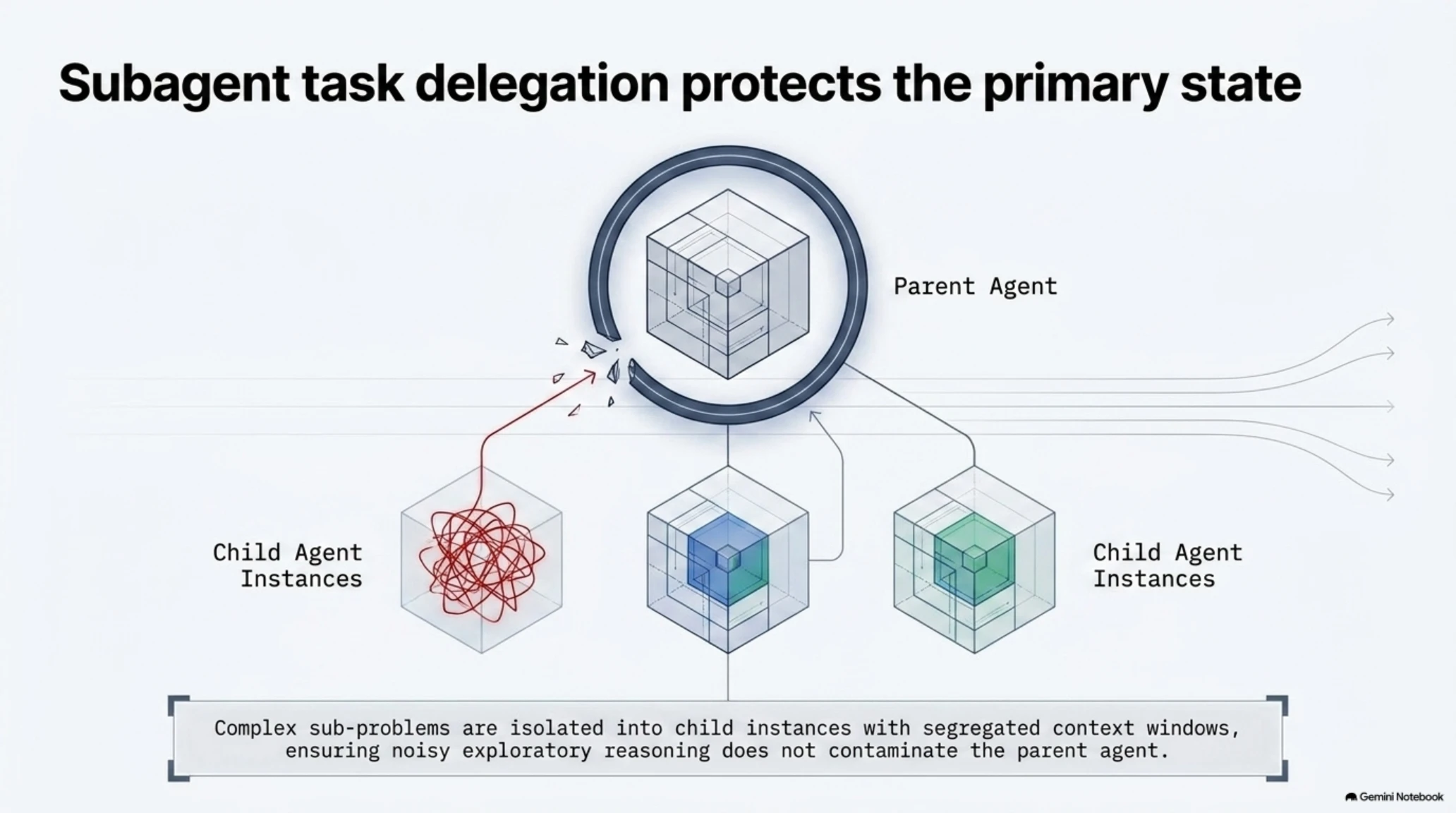
- 5. Subagent Task Delegation: Complex sub-problems are isolated and handed off to child agent instances with segregated context windows, ensuring that noisy exploratory reasoning does not contaminate the parent agent's primary state.
📚 Classified & Related Dossiers in TekinGame
If you wish to explore beyond this report and delve into cybernetic frontiers and autonomous AI architectures, do not miss these three exclusive deep-dives in the Tekin Garage:
As detailed in our previous investigative report on autonomous agent vulnerabilities in the AgentForger Cybersecurity Intelligence Special, poorly isolated agent runtimes and uncontrolled context injection present catastrophic data exfiltration risks alongside runaway financial bills.
Comparative Matrix: Evaluating the 4 Leading Agent Orchestrators in 2026
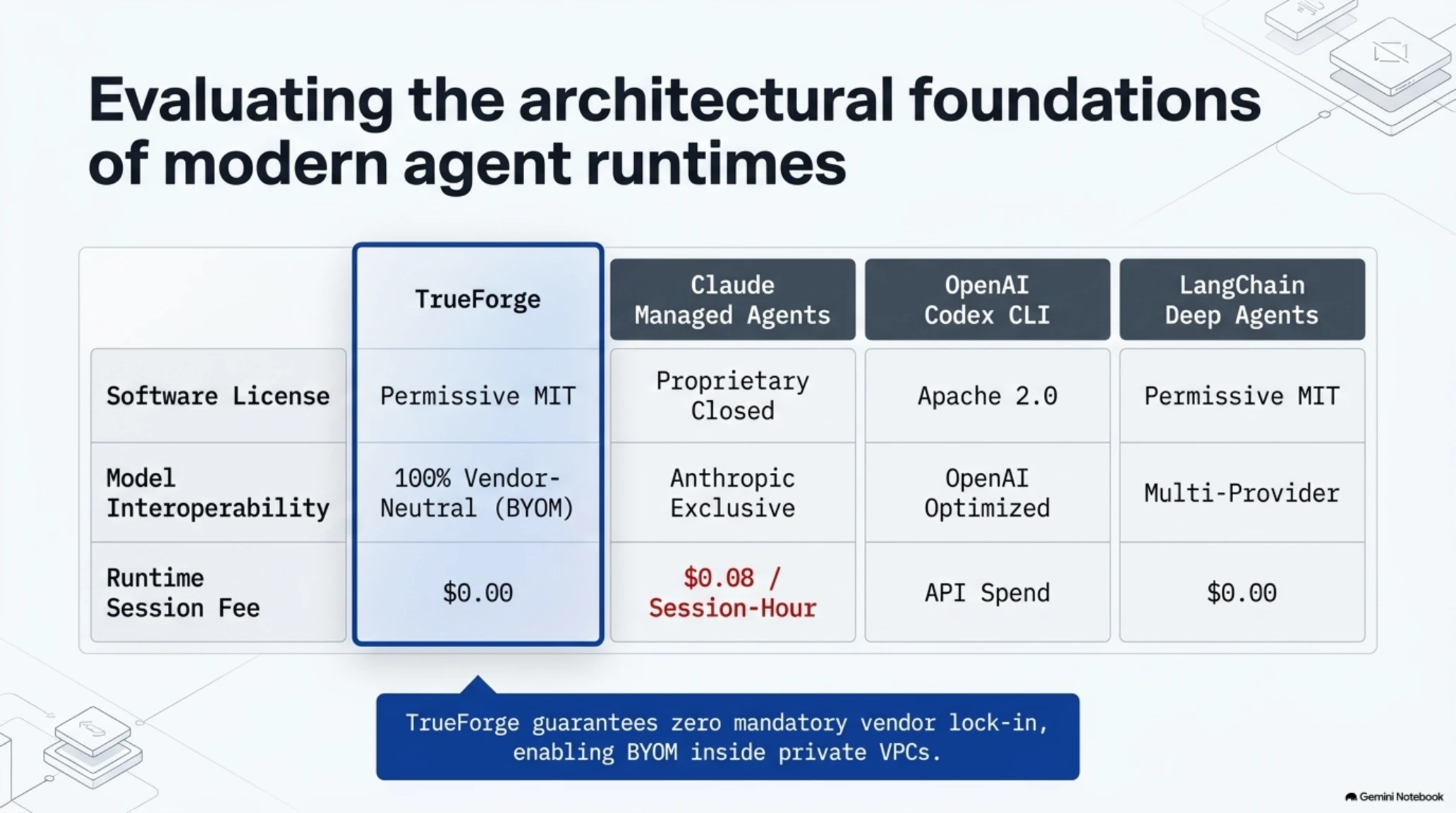
To provide enterprise technology leaders with an actionable blueprint, the matrix below details the foundational capabilities, licensing terms, governance models, and deployment topologies of the industry's four primary agent runtimes.
Comprehensive Enterprise Agent Framework Comparison Matrix
| Capability Dimension | TrueForge (TrueFoundry) | Claude Managed Agents | OpenAI Codex CLI | LangChain Deep Agents |
|---|---|---|---|---|
| Software License | Permissive MIT | Proprietary Closed Source | Apache 2.0 | Permissive MIT |
| Model Interoperability | 100% Vendor-Neutral (BYOM) | Anthropic Claude Exclusive | OpenAI Optimized / Configurable | Multi-Provider Ecosystem |
| Deployment Footprint | Local SQLite to K8s / Helm | Anthropic Managed Cloud | Developer CLI & Cloud | Self-Hosted / LangSmith Cloud |
| Runtime Session Fee | $0.00 (Self-Managed Infra) | $0.08 / Session-Hour | API Spend / Subscription | $0.00 (Self-Hosted) |
| Enterprise Governance | Central AI Gateway, SSO, RBAC | Anthropic Enterprise Console | Local Workspace Permissions | LangSmith Tracing & Ops |

For engineering organizations seeking further insight into systemic model failure modes and emerging AI safety regulations, explore our detailed analysis of Courtroom AI Prompt Injections and Hallucination Fallouts as well as the broader ecosystem trends documented in our Tekin Weekly Technology Roundup.
Enterprise Production Blueprint: From Local SQLite to Kubernetes
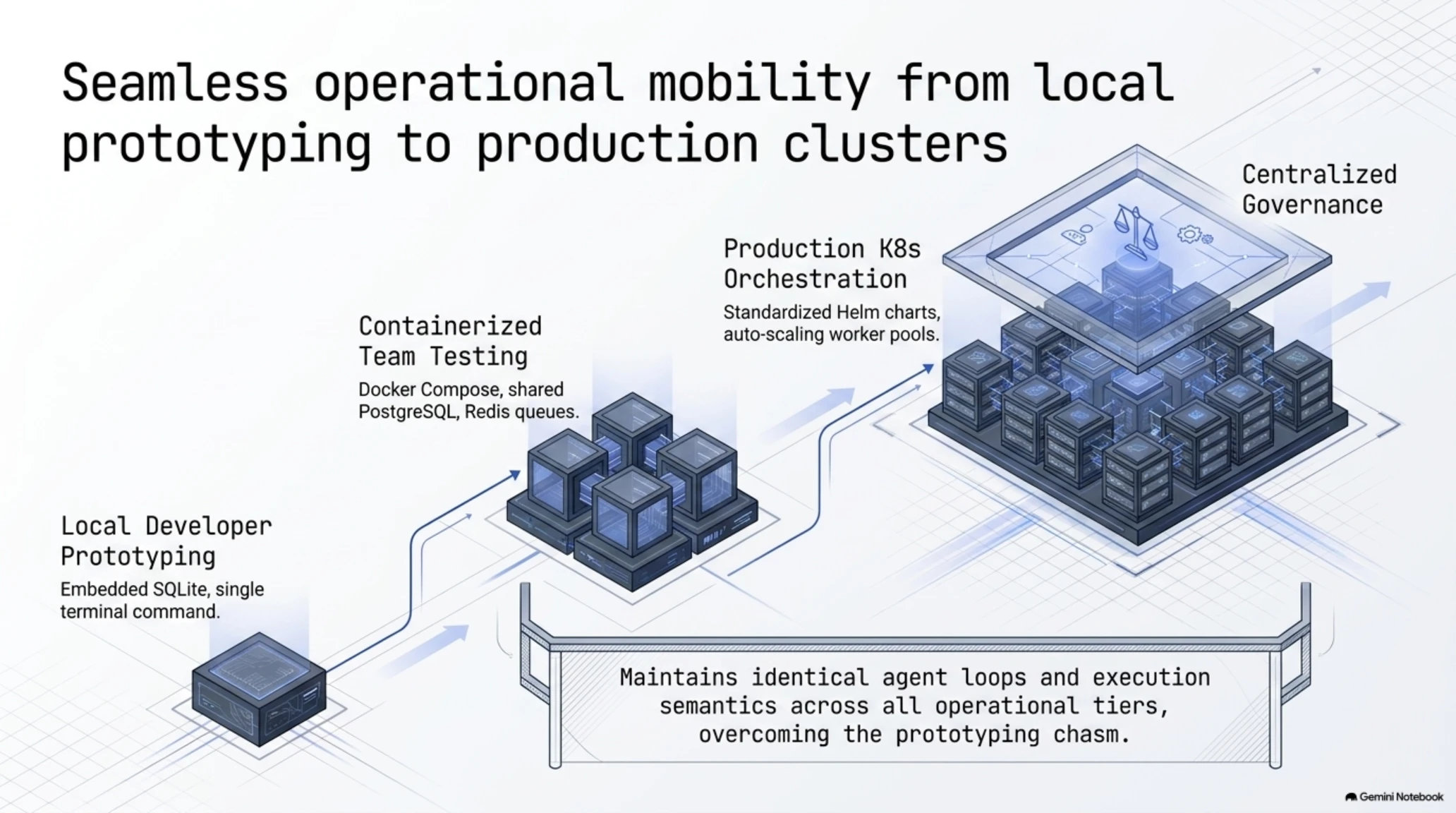
A primary friction point in enterprise agent adoption has been the jarring chasm between local developer experimentation and production deployment. Most prototyping frameworks rely on simplistic scripting paradigms that require complete architectural rewrites when migrating to multi-tenant, highly available cloud infrastructure.
TrueForge resolves this operational impedance mismatch by maintaining an identical agent loop and execution semantics across all operational tiers, allowing platform teams to transition smoothly from single-box workstations to enterprise-grade orchestration.
4-Stage Enterprise Deployment Progression
- Phase 1: Local Developer Prototyping: Developers initialize TrueForge with a single terminal command using an embedded SQLite database, developing agent logic and debugging tool invocations locally without cloud dependencies.
- Phase 2: Containerized Team Testing: Agent definitions and tool configs are packaged via Docker Compose, integrating shared PostgreSQL for state persistence and Redis for asynchronous job queues.
- Phase 3: Production Kubernetes Orchestration: The harness deploys via standardized Helm charts across multi-node Kubernetes clusters, leveraging auto-scaling worker pools for high-concurrency enterprise workloads.
- Phase 4: Centralized Governance Integration: The runtime connects to the enterprise AI Gateway, inheriting centralized OAuth/SSO identities, automated budget ceilings, and step-level telemetry.
Enterprise Governance: Open-Source Runtime vs. Commercial Control Plane
For Chief Information Security Officers (CISOs) and enterprise platform architects, understanding the boundary between TrueForge's open-source harness and TrueFoundry's commercial governance plane is essential. While the open-source MIT harness provides the fundamental agent runtime, enterprise deployments operating in regulated sectors (such as healthcare, banking, and defense) require centralized policy enforcement.
Early enterprise adopters including NetApp, Automattic, and Siemens Healthineers have validated this bifurcated architecture. By coupling TrueForge with TrueFoundry's commercial AI Gateway, organizations ensure that agents never hold hardcoded API credentials, and all tool invocations are filtered through centralized Role-Based Access Controls (RBAC) and real-time audit logging.
- Permissive MIT open-source license guaranteeing zero vendor lock-in and full code auditability
- Documented 30% to 75% cost reductions across standard enterprise benchmark workflows
- Seamless mobility from local single-process SQLite development to distributed Kubernetes Helm clusters
- Ephemeral sandbox architecture maximizing hardware concurrency and compute efficiency
- Enterprise SSO and centralized policy enforcement require manual integration or commercial gateway pairing
- Self-hosted deployments require in-house platform engineering expertise for cluster maintenance
Market Sentiment & Enterprise Adoption Trajectory
Industry surveys indicate that over 71% of Global 2000 technology leaders are actively seeking to repatriate generative AI workloads from closed proprietary runtimes to self-managed infrastructure to safeguard corporate IP and curb compounding inference overheads.
Conclusion & The Strategic Future of Autonomous Agent Infrastructure
The release and benchmark validation of TrueForge marks a defining milestone in the evolution of enterprise artificial intelligence. The era of paying opaque premiums for proprietary, black-box agent runtimes is drawing to a close. By applying disciplined context engineering, on-demand compute provisioning, and vendor-neutral orchestration, TrueFoundry has demonstrated that open-source software can outperform and out-economize the most heavily capitalized proprietary ecosystems in tech.
For engineering executives, the strategic mandate is clear: those who build upon open, modular, and self-hosted orchestration foundations will achieve superior architectural flexibility, lower operational expenditures, and uncompromised control over their organization's intellectual property.

Related Industry Features on Tekin Game
• 🤖 Tekin Analysis | Unitree Robotics IPO & AI Prompt Injection Court Battles
• ☀️ Tekin Morning Aug 17, 2026 | Halo Prototype Leaks & The Massive PS5 Account Purge
• 🎭 Tekin Feature | Gamification of Intimacy: How Couples are Using VR & Gaming Tech
Frequently Asked Questions About TrueForge & Enterprise Agent Runtimes
What is TrueForge and how does it differ from traditional orchestration frameworks?
TrueForge is an open-source (MIT), vendor-neutral enterprise agent harness developed by TrueFoundry. Unlike monolithic cloud platforms, it specializes in advanced context engineering, lazy MCP schema resolution, and ephemeral sandboxing to slash operational execution costs by 30% to 75%.
Is TrueForge completely free to use in commercial production?
Yes. The core TrueForge harness is licensed under the permissive MIT license, meaning it can be freely modified, self-hosted, and embedded into commercial products without licensing fees.
How did TrueForge achieve a 75% cost reduction on DevRev Enterprise-Bench?
By combining the efficient open-source GLM-5.2 model with intelligent context management specifically preventing repetitive tool schema broadcasts and offloading bulky terminal outputs to disk instead of filling the active prompt context.
Can TrueForge be deployed on air-gapped or private cloud infrastructure?
Yes. TrueForge natively supports local SQLite deployments and private Kubernetes clusters using self-hosted open-source models via vLLM or Ollama, eliminating external internet dependencies.
Official Sources & Benchmark References
- VentureBeat: TrueFoundry's open source AI agent harness TrueForge boasts 30%-75% cheaper task completion than Claude Managed Agents (Read Full Article)
- DevRev Official: Enterprise-Bench Methodology & Open Evaluation Harness (DevRev Research Portal)
- TrueFoundry Documentation: TrueForge GitHub Repository & Architecture Specifications (TrueFoundry Platform)
- The New Stack: Enterprise AI Agent Runtimes & MCP Protocol Evolution (The New Stack Analysis)
Additional Gallery: Tekin Versus | Enterprise Agent War: TrueForge Slashes Claude Runtimes by 75%