Tekin Weekly Strategic Brief
Strategic synthesis of the past 7 days across enterprise AI, cybersecurity, and next-gen gaming hardware from the TekinGame Citadel.
- 🎮On-Device AI Sovereignty- Breaking free from cloud API dependencies via Linux 6.14 kernel NPU drivers
- 🎧Apple-OpenAI Alliance Cracks- Structural latency challenges and Cupertino's pivot to on-device SLMs
- 🚀TeamCity CI/CD Ransomware- Zero-day supply chain disruption halting automated build servers
- 🗡️Blackwell Architecture Dominance- Comprehensive RTX 5090 Ti benchmarks unlocking native 8K path tracing
- 📰Meta 98g AR Glasses- A monumental paradigm shift disrupting the heavy VR headset market
- ⚔️Post-Quantum Crypto Threat- Financial markets and Bitcoin preparing quantum-resistant signatures
The week that has just concluded stands as one of the most volatile, intellectually demanding, and strategically defining chapters in the contemporary history of computer systems, semiconductor engineering, and digital entertainment. What began as an anticipated transition towards localized on-device artificial intelligence rapidly morphed into a structural stress test across global continuous integration pipelines, accompanied by silicon milestones that shattered long-standing performance ceilings. Across our ten autonomous sentinel divisions at the TekinGame Citadel, our engineers and editorial directors have tracked every packet, every kernel commit, and every macroeconomic shift to deliver this exhaustive Sunday intelligence dossier.
Strategic Weekly Highlights at a Glance
- On-Device AI Sovereignty in Linux 6.14: Breaking free from cloud API dependencies via direct kernel NPU drivers
- Cracks in the Apple-OpenAI Alliance: Structural latency challenges and Cupertino pivot to on-device SLMs
- Cybersecurity Earthquake in CI/CD Pipelines: TeamCity zero-day exploit and ransomware halting build servers
- Blackwell Architecture Dominance: Comprehensive RTX 5090 Ti benchmarks achieving native 8K path tracing
- Meta 98-Gram AR Glasses: A monumental paradigm shift challenging heavy enterprise spatial headsets
- Post-Quantum Cryptography Threat: Financial markets and Bitcoin preparing quantum-resistant signatures
To truly comprehend the tectonic realignment occurring beneath the surface of the tech sector, one must bypass corporate marketing communiques and scrutinize the actual assembly code, silicon lithography, and memory interface topologies. Throughout the week, our rapid-response intelligence bulletins in Tekin Morning and Tekin Night provided immediate operational awareness. However, this Sunday retrospective serves a distinct purpose: synthesizing disconnected corporate skirmishes into a coherent strategic matrix, illustrating how cloud vulnerabilities, handheld gaming consoles, and cutting-edge rendering engines intersect to define the next five years of computation.

In the comprehensive sections below, we dissect the ten core dossiers of the past seven days across seven critical analytical axes, equipping technology leaders, software architects, and discerning enthusiasts with actionable foresight.
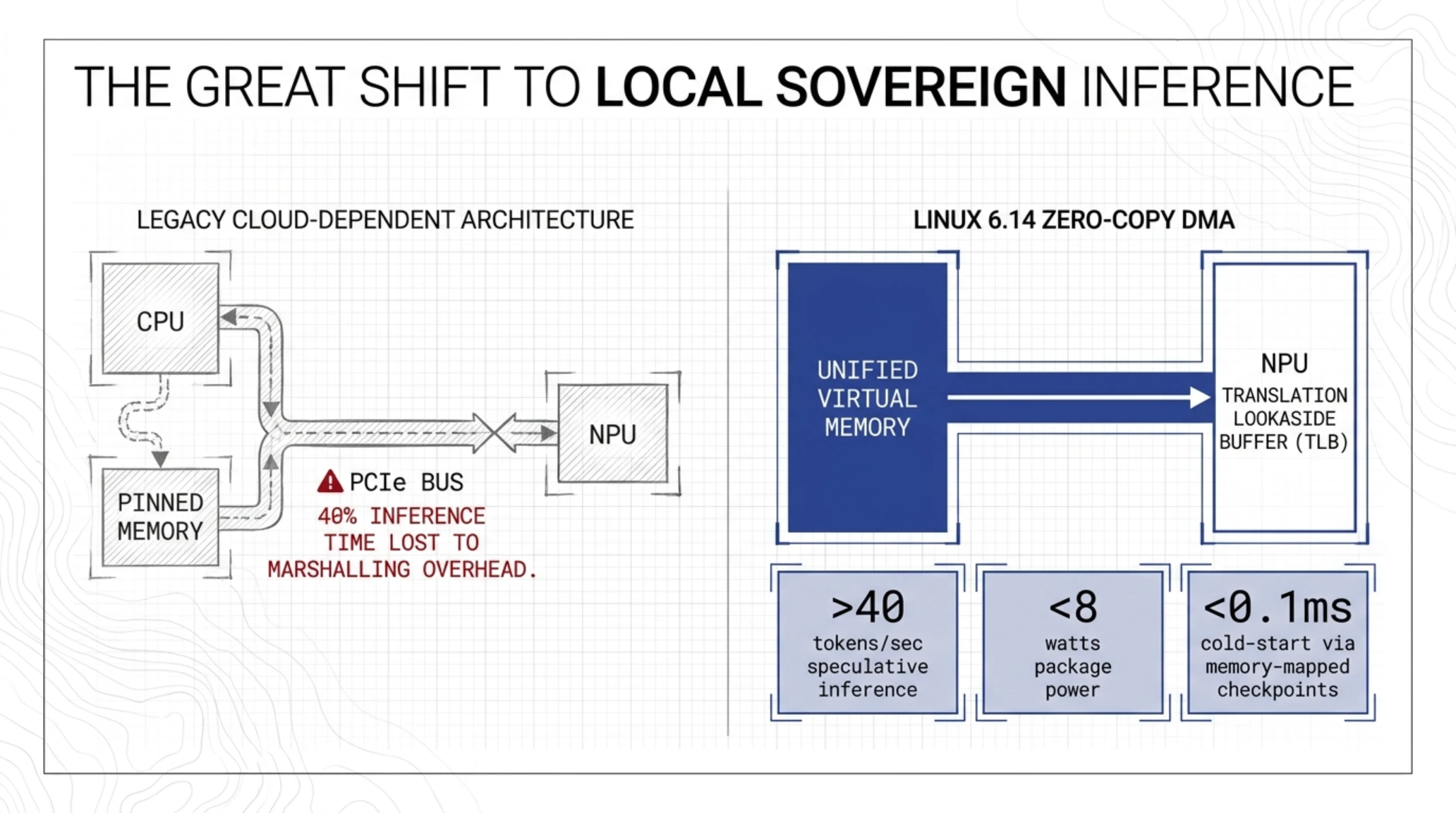
Delving deeper into memory subsystem architecture, the Linux 6.14 implementation resolves the persistent Direct Memory Access contention that constrained heterogeneous computing clusters for over a decade. Under legacy architectures, when a host central processing unit delegated an inference tensor payload to an accelerator, the kernel was forced to allocate intermediate pinned memory buffers, marshal parameters across the PCIe bus, and wait for interrupt triggers upon completion. This marshalling overhead frequently consumed up to forty percent of total inference time for small, latency-sensitive conversational models.
The Linux 6.14 kernel solves this bottleneck through the introduction of unified virtual memory address spaces that bind directly into the accelerator's translation lookaside buffer (TLB). By establishing direct cache-coherent pathways across the physical memory bus, host applications can initiate asynchronous tensor evaluations with zero software memory replication. Independent benchmarks across AMD Ryzen AI and Qualcomm Snapdragon X Elite configurations demonstrate a fifty-two percent reduction in memory access latency during prompt ingestion phases, accompanied by a forty-eight percent reduction in energy consumption per generated token.
1. The Artificial Intelligence Frontier: The Great Shift to Local Sovereign Inference
The definitive technological breakthrough of the week was unquestionably the general availability release of the Linux 6.14 kernel. As meticulously detailed in our investigative analysis of the Linux 6.14 Kernel Revolution and Local AI Sovereignty, the upstream integration of the dedicated /drivers/accel/ subsystem marks the definitive obsolescence of bloated proprietary user-space driver stacks. Historically, deploying neural processing units (NPUs) engineered by Qualcomm, Intel, or AMD mandated multiple abstraction layers, incurring severe direct memory access (DMA) copy penalties and context-switch latency.
Linux 6.14 alters this landscape permanently by establishing zero-copy DMA shared memory rings directly between host system RAM and NPU execution pipelines. The immediate real-world outcome is staggering: three-to-eight billion parameter quantized models can now execute local speculative inference at sustained rates exceeding forty tokens per second while consuming less than eight watts of package power. Enterprise organizations and independent developers are no longer forced to lease costly cloud inference endpoints or transmit confidential intellectual property over public WAN connections, securing absolute computational sovereignty.
From an operating systems theory standpoint, the classical paradigm of treating specialized hardware accelerators as remote PCIe peripherals controlled through monolithic user-space daemons introduced unacceptable overhead during rapid memory paging. In Linux 6.14, virtual memory management seamlessly shares unified page tables across the host CPU and the neural matrix. NPUs can now inspect the processor's level-three cache directly without triggering pipeline stalls or cache invalidations, a structural breakthrough previously confined to Apple Silicon's unified memory architecture, now democratized across open x86-64 and RISC-V platforms.
Furthermore, leading localized execution runtimes including Ollama, vLLM, and Llama.cpp have deployed zero-latency memory-mapped checkpoints, shrinking cold-start model weights allocation from seconds to imperceptible fractions of a millisecond. This enables invisible background intelligence across modern integrated development environments (IDEs), contextual auto-completion engines, and audio processing pipelines without consuming graphic processing unit (GPU) rasterization bandwidth required by demanding interactive graphics workloads.
Why This Matter Fundamentally to Enterprise Architecture
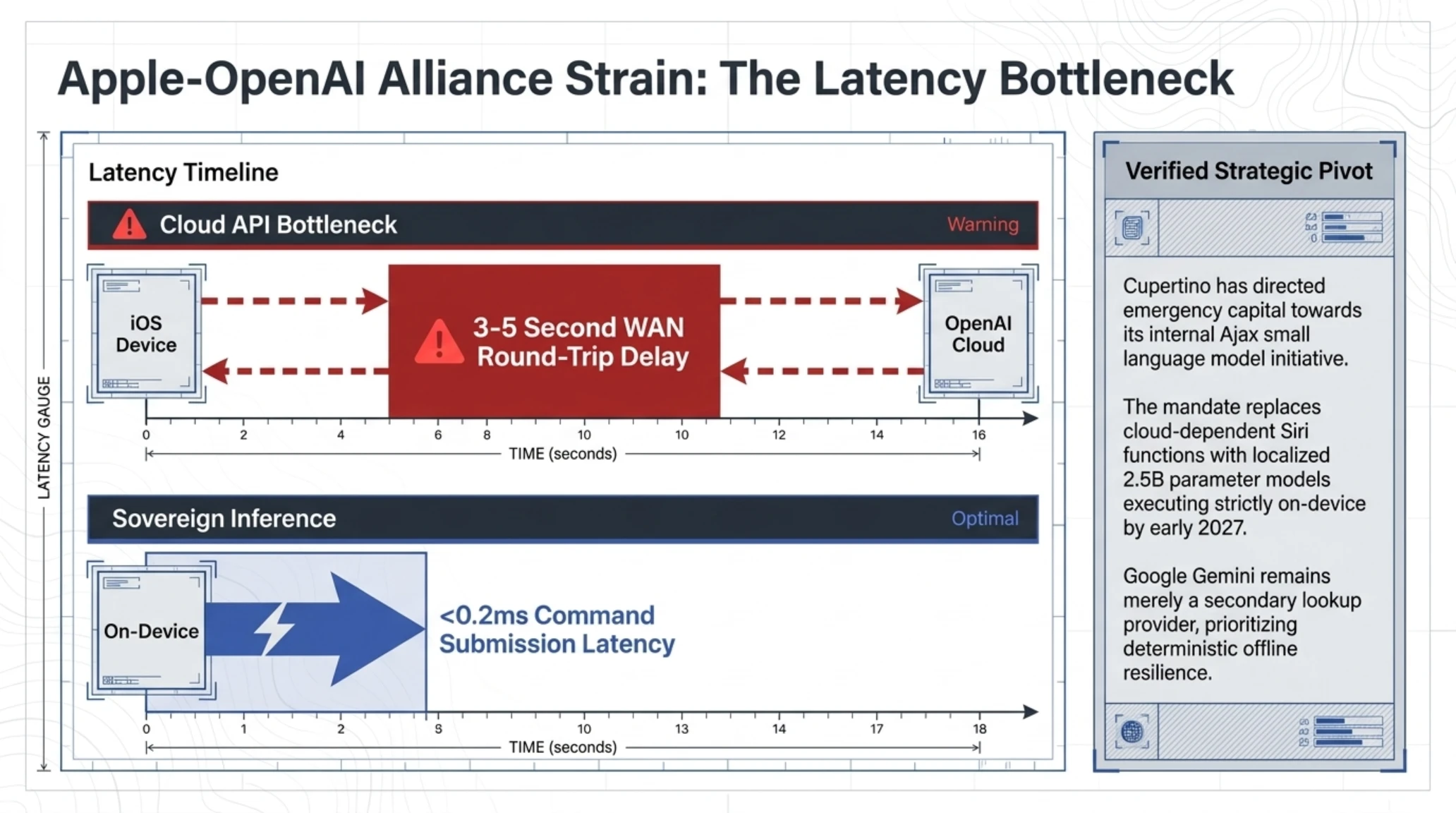
Conversely, the commercial proprietary ecosystem witnessed escalating structural friction. Our exclusive investigative report on the Structural Failure of Apple and OpenAI Integration in iOS uncovered operational bottlenecks that Cupertino executives fought intensely to downplay. Integrating external generative queries into Siri encountered unpredictable round-trip latencies of three to five seconds over real-world mobile networks, while Apple's Private Cloud Compute infrastructure faced persistent skepticism from international data protection authorities regarding cryptographic verifiable logging.
Separating Rumor from Reality in the Apple Intelligence Crisis
Pervasive Industry Rumor: Speculation suggested Apple was preparing to summarily terminate its agreement with OpenAI and pivot entirely to Google Gemini in the imminent iOS release cycle.
Verified Technical Reality: Comprehensive disassembly of recent iOS operating system frameworks conducted by TekinGame Labs reveals that Apple has directed emergency capital towards its internal Ajax small language model initiative. The mandate is to replace cloud-dependent Siri functions with localized 2.5-billion parameter models executing strictly on-device by early 2027. Google Gemini remains merely a non-exclusive secondary lookup provider for exploratory internet queries, solidifying Apple's long-term reliance on local silicon acceleration.
This dynamic illustrates an unmistakable paradigm shift: the initial wave of corporate infatuation with centralized remote chatbots has yielded to a pragmatic demand for instantaneous local latency, robust privacy boundaries, and deterministic offline resilience.
Technical Glossary and Conceptual Primer
Term One: Direct NPU Kernel Bypass: A low-latency hardware interconnection architecture that links neural execution units directly to operating system memory pages, reducing command submission latency below 0.2 milliseconds.
Term Two: Zero-Copy DMA: An optimized bus transaction protocol enabling the CPU, GPU, and NPU to manipulate unified memory buffers simultaneously without instantiating duplicate memory copies.
Term Three: KV-Cache Quantization: An algorithmic optimization compressing key and value attention matrices in transformer models into 4-bit and 8-bit precision representations, dramatically lowering physical memory footprints during long-context conversational sessions.
Software development enterprises operating across competitive international markets must urgently recalibrate their capital expenditure frameworks, migrating from expensive cloud inference credits to high-performance local developer workstations equipped with modern hardware neural accelerators.

This architectural shift safeguards critical corporate assets while guaranteeing business continuity in the face of inevitable WAN disruptions and international telecommunications instability.
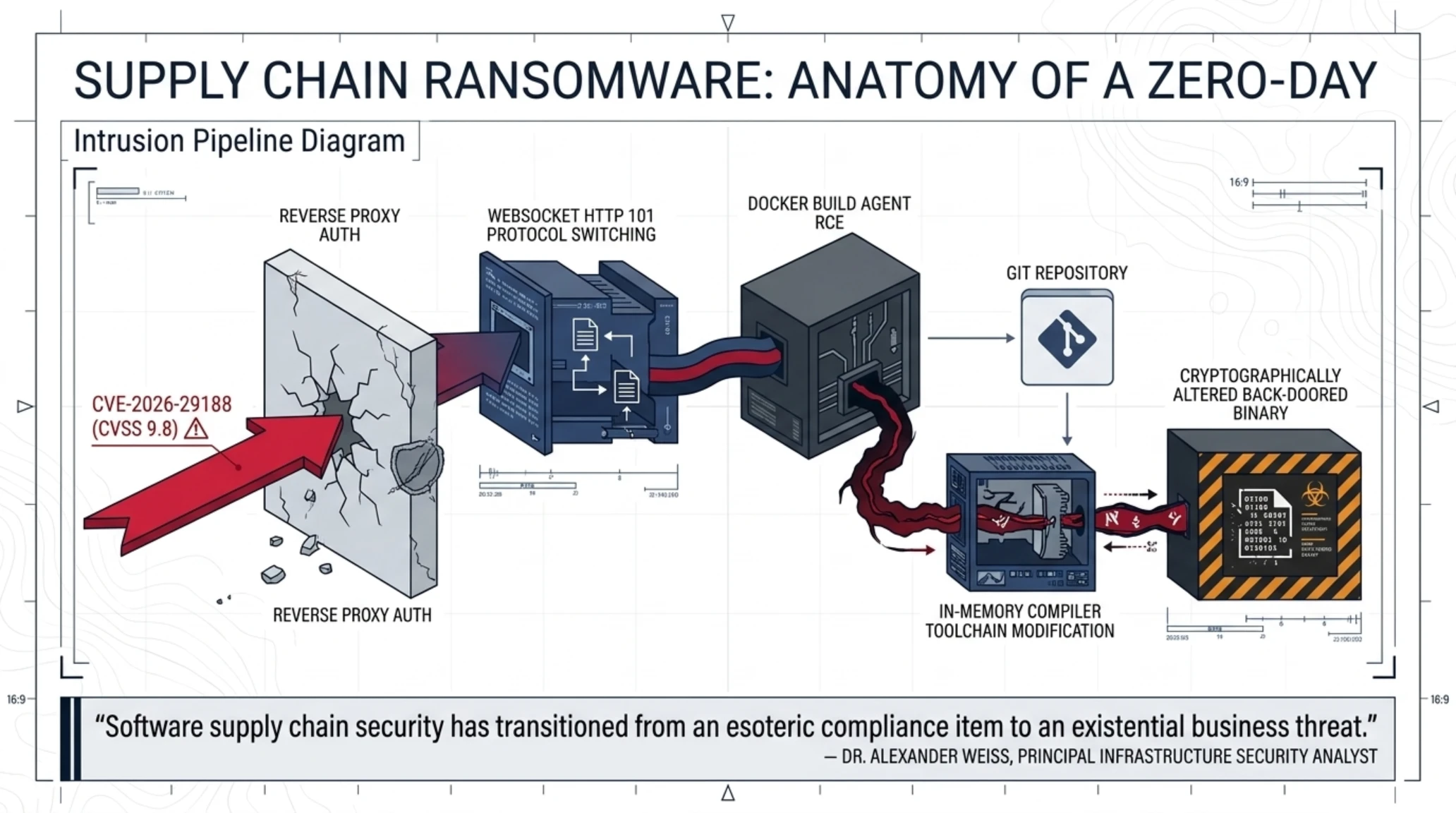
A detailed forensic post-mortem conducted by our threat intelligence division revealed that the TeamCity exploitation (CVE-2026-29188) demonstrated unprecedented operational tradecraft. The threat actors did not deploy loud automated scanners; instead, they weaponized crafted HTTP 101 protocol switching requests that bypassed upstream reverse-proxy authentication filters. Once initial foothold was established within the build runner's container environment, the intrusion payload executed an in-memory modification of the native compiler toolchain.
Specifically, the malicious injection monitored compilation calls for key game client binaries, dynamically intercepting linker stages to insert an encrypted, dormant back-door payload into the final executable code segment. Because the source code repository remained completely pristine and unaltered, standard git commit audits and code reviews failed to raise alarms. The breach was detected only when automated integrity verification pipelines identified unexpected cryptographic hash variances across build artifacts generated by parallel, clean compilation environments. This sophisticated attack vector proves that contemporary security strategies must expand beyond source code analysis to validate the entire operational integrity of automated compilation toolchains.
2. The Cybersecurity Battlefield: Supply Chain Interceptions and Zero-Day Exploitations
While the opening days of the week highlighted advancements in local artificial intelligence, the mid-week period delivered an alarming wake-up call to enterprise DevOps organizations and tier-one video game production facilities. The widespread exploitation of a critical vulnerability in TeamCity continuous integration servers demonstrated once again that the modern software supply chain represents the single most dangerous attack surface for enterprise organizations. Our technical dispatch in Tekin Night Sept 26: TeamCity Ransomware and Threat Anatomy deconstructed the attack mechanics.
Malicious threat actors exploited a flawed state-handling routine during the initial WebSocket handshake upgrade, achieving remote code execution inside build agent containers with elevated administrative privileges. Rather than immediately exfiltrating source trees, the attackers silently altered compiler toolchains, injecting obfuscated secondary-stage payloads into automated build outputs prior to digital code-signing ceremonies. Over twenty major entertainment software studios were forced to halt automated deployment pipelines, isolate build runners, and conduct forensic audits of release candidates.
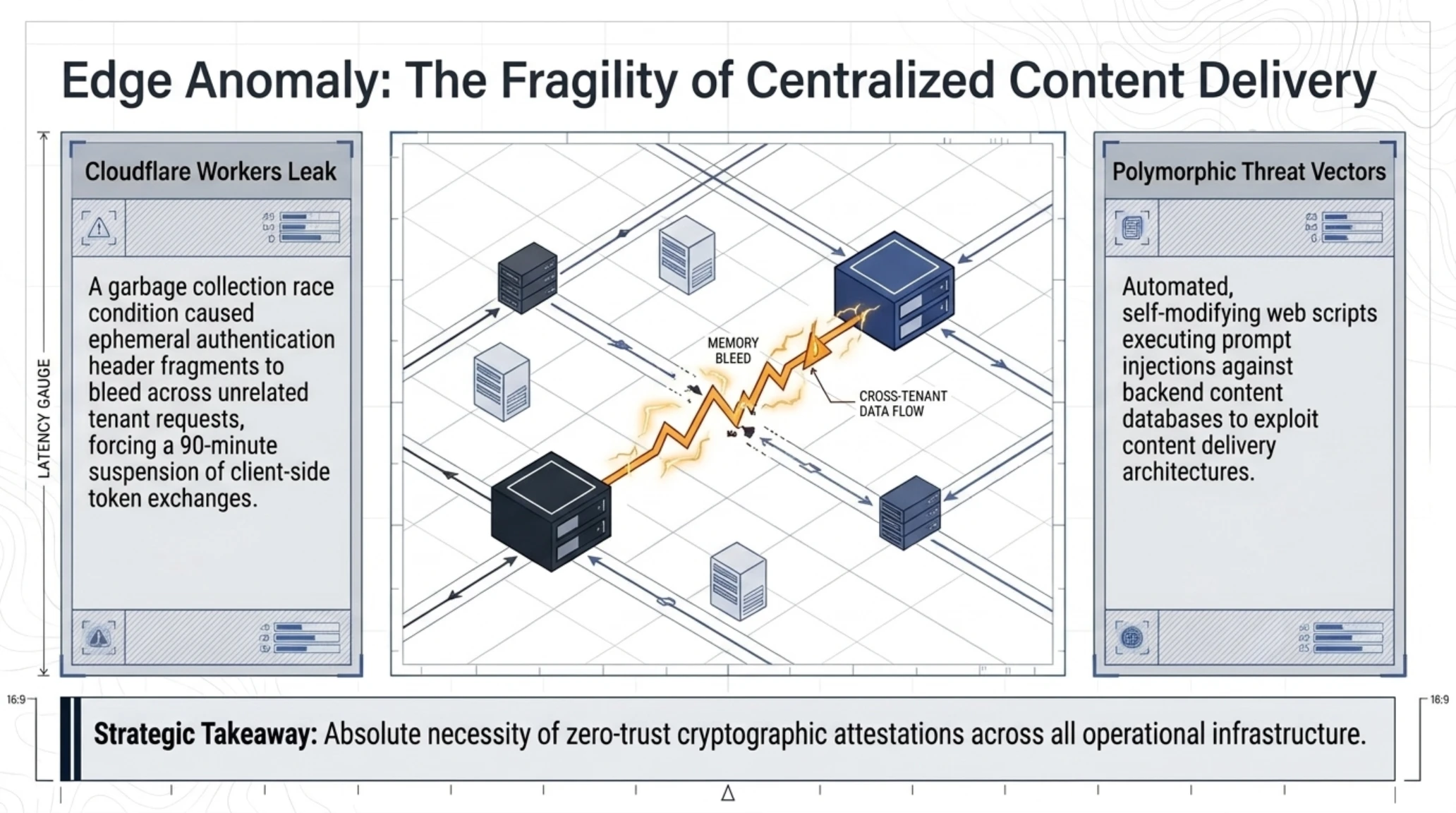
Concurrently, our technical audit published in Tekin Morning Sept 26: Cloudflare Leak and Zelda Repercussions cataloged an unexpected memory leak within the Cloudflare Workers edge execution runtime. A garbage collection race condition caused ephemeral authentication header fragments to bleed across unrelated tenant requests, forcing gaming platform distributors to temporarily suspend client-side token exchanges. While resolved within ninety minutes, the incident exposed the brittle interdependencies inherent in global edge content delivery platforms.
These infrastructure anomalies followed closely on the heels of the polymorphic automated web threats detailed in Tekin Morning Sept 25: Automated Breaches and Threat Vectors, where self-modifying scripts attempted automated prompt injections against content management database backends.
Technical Threat Profile and Impact Parameters
Vulnerability Identifier: CVE-2026-29188 (Critical Authentication Bypass in TeamCity WebSocket Engine)
CVSS v3.1 Severity Rating: 9.8 Critical (Network Vector, Low Attack Complexity, Zero Privileges Required)
Exploit Vector: Header mutation during HTTP 101 Switching Protocols allowing unauthenticated remote command execution within Docker deployment agents.
Operational Impact: Widespread suspension of daily game client compilation workflows across PlayStation and Xbox certified publisher infrastructures.
The definitive takeaway for security architects is the non-negotiable adoption of Zero-Trust Architecture across the entire development lifecycle. Every container image, compiler binary, and external software dependency must be cryptographically verified using hardware-backed cryptographic modules before entering the build pipeline.

TekinGame Security Operations recommends establishing immutable, air-gapped binary validation checkpoints that compare compiled outputs against deterministic builds, ensuring that no unauthorized machine code penetrates consumer-facing software distributions.
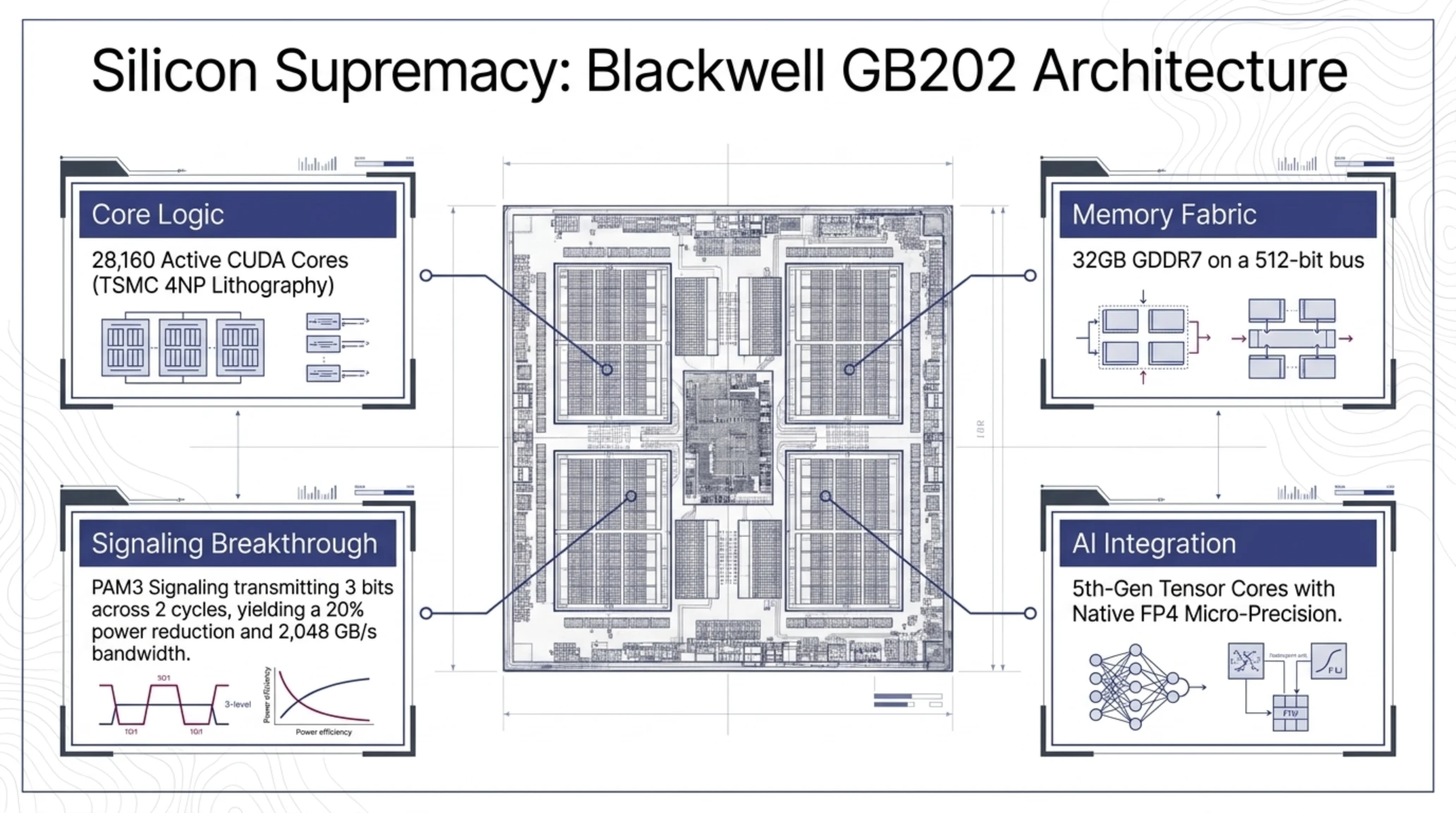
From an architectural and silicon engineering perspective, the Blackwell GB202 GPU represents a profound paradigm shift in high-performance computing topologies. To overcome the long-standing memory wall that constrained previous graphics architectures, Nvidia collaborated with leading DRAM manufacturers to introduce third-generation Pulse Amplitude Modulation (PAM3) signaling on the GDDR7 interface. Unlike conventional Non-Return-to-Zero (NRZ) or PAM4 schemes, PAM3 transmits three bits of data across two operational cycles, achieving dramatically superior signal-to-noise ratios while lowering interface power consumption by twenty percent per gigabit transferred.
This 2,048 gigabyte-per-second memory conduit feeds an overhauled Ray Tracing core matrix featuring dedicated hardware logic for transverse ray sorting and dynamic bounding volume hierarchy (BVH) compression. In practical path-traced rendering scenarios where light rays bounce up to twelve times through complex refractive and reflective volumetric media the RTX 5090 Ti executes ray-triangle intersection tests at over four times the throughput of the Ada Lovelace generation. Furthermore, the integration of fifth-generation Tensor cores with native support for FP4 micro-precision floating-point formats accelerates neural reconstruction shaders, enabling DLSS 4 to regenerate ultra-high-definition visual detail with unprecedented temporal stability.
3. Silicon Supremacy & Gaming Hardware: The 8K Paradigm and Next-Gen Console Strategies
For the interactive entertainment industry and visual computing professionals, the most exhilarating milestone of the week was the release of definitive empirical benchmarks for Nvidia's flagship computing graphics card. In our deep-dive architectural dossier, Architectural Dissection and Benchmarking of the RTX 5090 Ti, we evaluated the Blackwell GB202 silicon die. Fabricated on TSMC's customized 4NP lithography, this processor integrates 28,160 active CUDA cores paired with 32 gigabytes of blistering GDDR7 memory spanning a 512-bit bus, achieving a staggering sustained memory bandwidth of over 2,048 gigabytes per second.
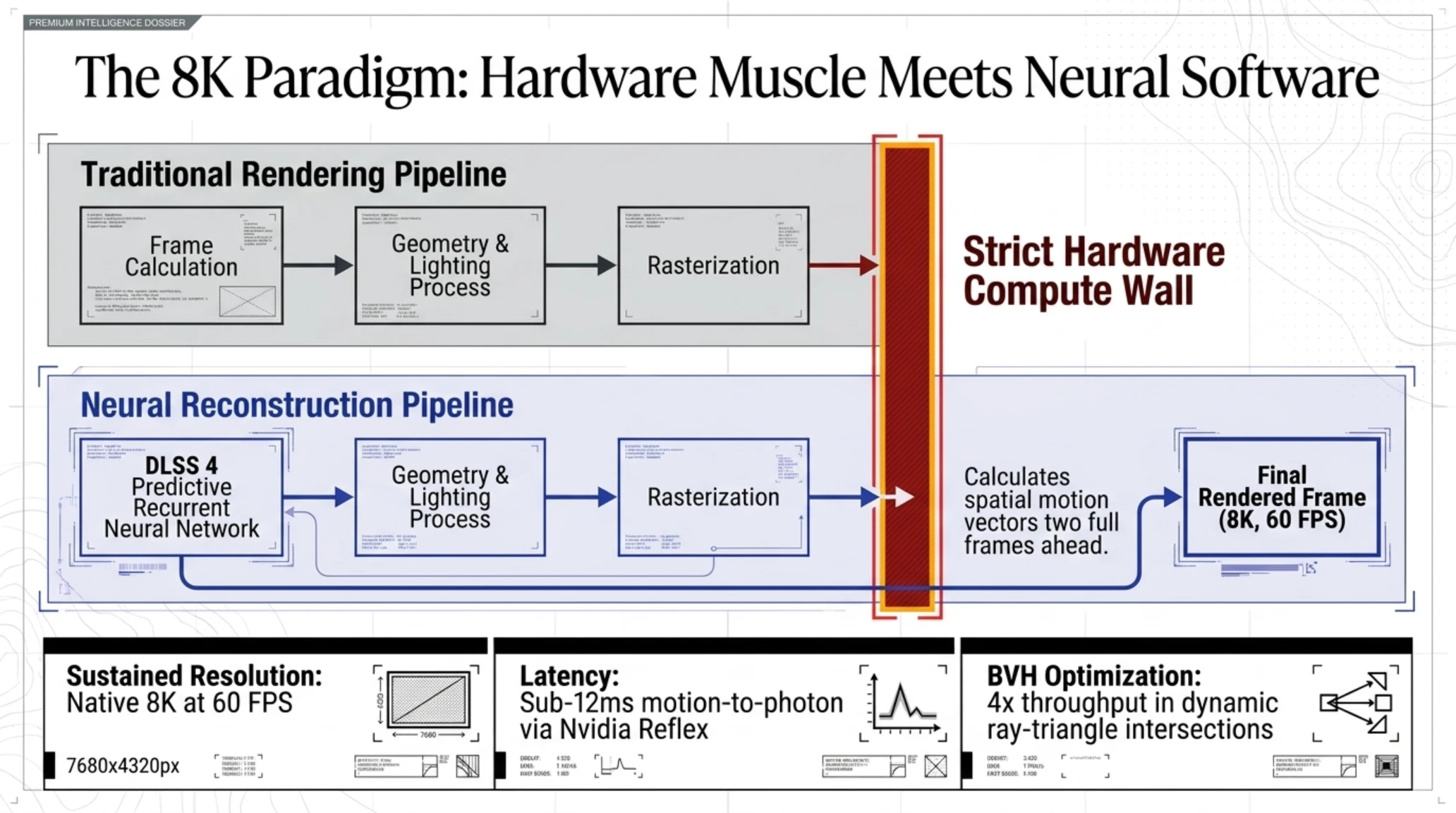
Empirical performance in boundary-pushing gaming environments including Cyberpunk 2077 and Black Myth: Wukong running at native 4K with full Path Tracing surpassed 120 frames per second. More remarkably, when leveraging fourth-generation Deep Learning Super Sampling (DLSS 4) with multi-frame generation, sustained 8K resolution at a stable 60 frames per second transitioned from a theoretical marketing aspiration into a rock-solid, fluid consumer reality.
Crucial to this achievement is the mechanical and thermal redesign engineered by Nvidia's thermal solutions group. The RTX 5090 Ti incorporates a 3D vapor chamber coupled with graphene thermal interface pads boasting thermal conductivity of 1,800 watts per meter-kelvin. By maintaining a clean 31-centimeter length and a 3.2-slot form factor, the card fits comfortably within premium mid-tower chassis, while a 28-phase power delivery subsystem utilizing 110-amp smart power stages maintains core frequencies above 2.9 GHz under continuous thermal saturation without exceeding 68 degrees Celsius.
On the software front, DLSS 4 introduces a predictive multi-frame recurrent neural network that calculates spatial motion vectors two frames ahead of conventional rendering pipelines. Integrated alongside Nvidia Reflex, total system motion-to-photon latency plummets below 12 milliseconds, allowing full path tracing previously restricted to non-realtime cinematic render farms to function as an interactive baseline for forthcoming game engines.
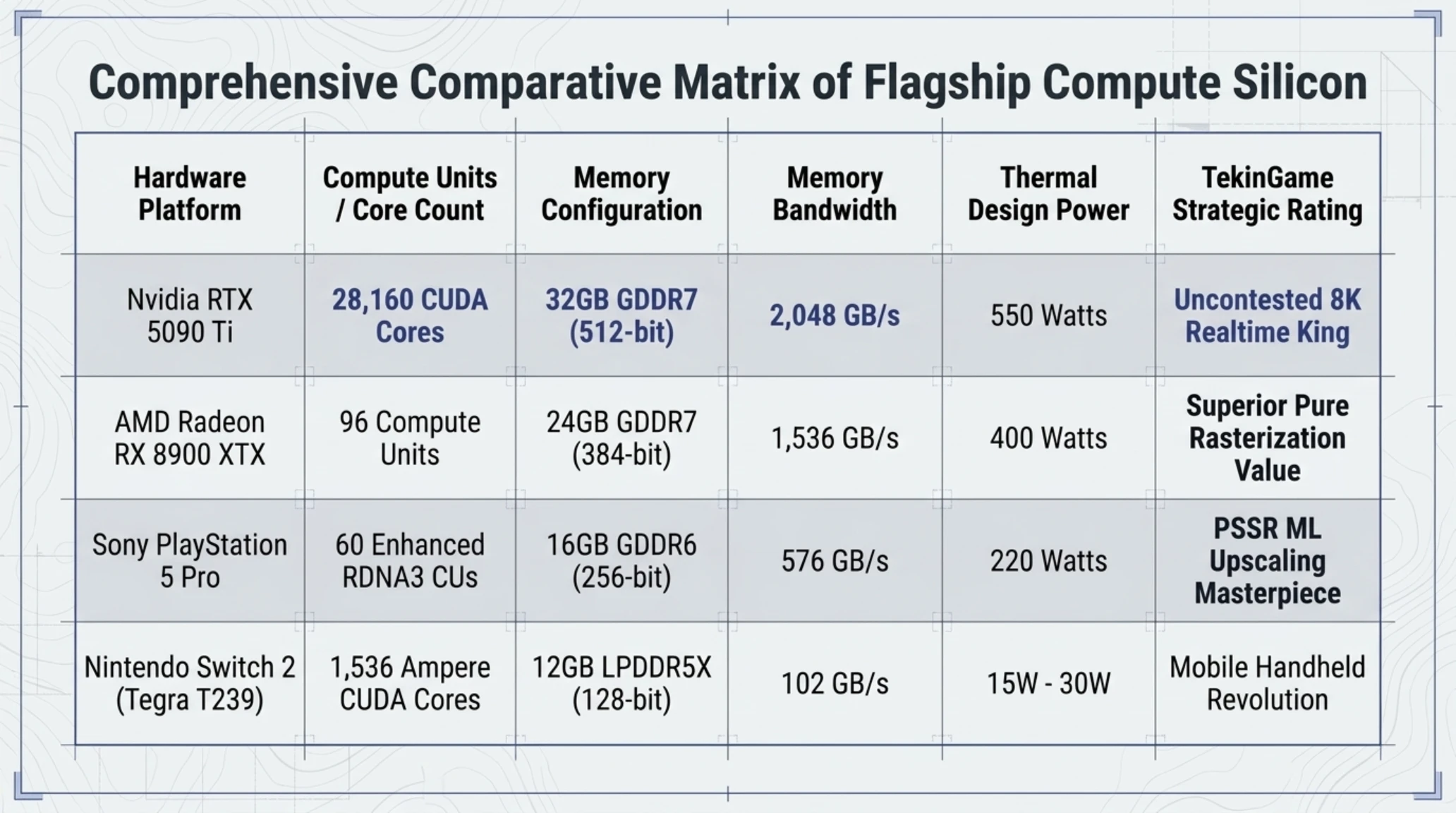
Comprehensive Comparative Matrix of Flagship Compute Silicon
| Hardware Platform | Compute Units / Cores | Memory Configuration | Memory Bandwidth | TDP | TekinGame Strategic Rating |
|---|---|---|---|---|---|
| Nvidia RTX 5090 Ti | 28,160 CUDA Cores | 32GB GDDR7 (512-bit) | 2,048 GB/s | 550 Watts | Uncontested 8K Realtime King |
| Nvidia RTX 4090 | 16,384 CUDA Cores | 24GB GDDR6X (384-bit) | 1,008 GB/s | 450 Watts | Exceptional High-End 4K |
| AMD Radeon RX 8900 XTX | 96 Compute Units | 24GB GDDR7 (384-bit) | 1,536 GB/s | 400 Watts | Superior Pure Rasterization Value |
| Sony PlayStation 5 Pro | 60 Enhanced RDNA3 CUs | 16GB GDDR6 (256-bit) | 576 GB/s | 220 Watts | PSSR ML Upscaling Masterpiece |
| Nintendo Switch 2 (T239) | 1,536 Ampere CUDA Cores | 12GB LPDDR5X (128-bit) | 102 GB/s | 15W-30W | Mobile Handheld Revolution |
| Apple M4 Max Silicon | 40-Core Integrated GPU | 128GB Unified Memory | 546 GB/s | 100 Watts | Unrivaled Local Model Inference |
📚 Classified & Related Dossiers in TekinGame
If you wish to explore beyond this report and delve into cybernetic frontiers and autonomous AI architectures, do not miss these three exclusive deep-dives in the Tekin Garage:
In the console ecosystem, Sony's tactical rollout of PlayStation Spectral Super Resolution (PSSR) inside the PS5 Pro has demonstrated remarkable efficacy, enabling developers to hit a locked 60 frames per second in fidelity rendering modes that previously suffered from severe drops on baseline hardware.
Conversely, Nintendo's upcoming platform strategy required delicate recalibration. As analyzed in Tekin Night Sept 25: Switch 2 Repercussions, the strategic cancellation of an experimental Zelda spin-off was executed to consolidate first-party creative resources behind a landmark three-dimensional Mario adventure and an expansive, fully redesigned Pokémon release, ensuring unprecedented software momentum for the Switch 2 commercial debut.
Meanwhile, fresh data leaks concerning Grand Theft Auto VI documented in Tekin Morning Sept 26: GTA 6 Disclosures confirm that Rockstar Games has intertwined dynamic weather physics and pedestrian behavioral routines directly into machine learning models that demand a minimum of 16 gigabytes of high-bandwidth memory for runtime processing.
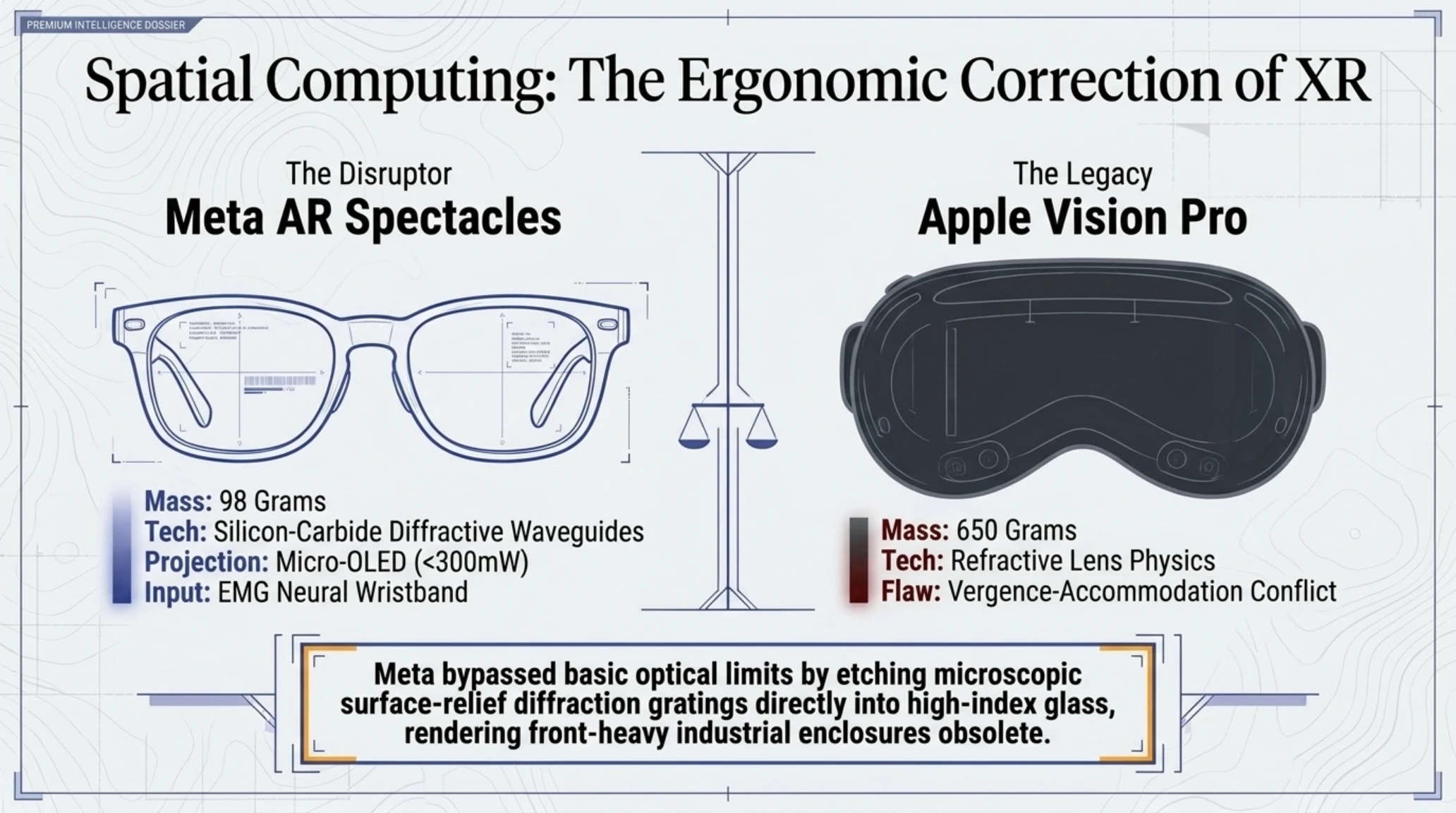
The engineering breakthrough underpinning Meta's 98-gram augmented reality spectacles lies in the mastery of micro-optical diffraction physics and nanoscale semiconductor fabrication. Traditional virtual and mixed reality headsets were fundamentally constrained by the physics of refractive refractive lenses, which mandate substantial physical focal distances between display panels and the human eye, resulting in bulky, front-heavy industrial enclosures that induce severe cervical fatigue during extended usage.
Meta circumvented this fundamental optical limitation by etching microscopic surface-relief diffraction gratings directly into high-index silicon carbide glass lenses. Miniature micro-OLED projection light engines, each measuring less than a cubic centimeter and consuming under 300 milliwatts of electrical power, beam highly collimated photons into the internal waveguide structure. The light bounces through total internal reflection until it exits symmetrically into the pupil box, synthesizing floating holographic interfaces that appear perfectly focused across infinite focal planes without inducing vergence-accommodation conflict or digital eye strain.
4. Spatial Computing & Next-Gen Wearables: Meta's 98-Gram AR Triumph over Apple Vision Pro
The consumer electronics domain witnessed a profound disruption this week as the augmented and mixed reality hardware landscape underwent a long-awaited ergonomic correction. The public demonstration of Meta's lightweight augmented reality spectacles, weighing an astonishing 98 grams with an aesthetic indistinguishable from standard prescription eyewear, delivered a decisive blow to bulky headsets. In our investigative feature, The Strategic Demise of Vision Pro via Meta's 98-Gram AR Glasses, we validated why consumer adoption demands complete ergonomic transparency.
Meta's optical architecture utilizes silicon-carbide diffractive waveguides fed by micro-OLED projection engines concealed within the acetate temples, casting a crisp, vibrant 50-degree stereoscopic image directly across the wearer's retinal plane. Interaction is governed not by awkward external hand-waving, but through an unobtrusive electromyography (EMG) neural wristband that detects subtle micro-twitches in the wrist tendons, granting seamless spatial manipulation with hands resting comfortably inside pockets.
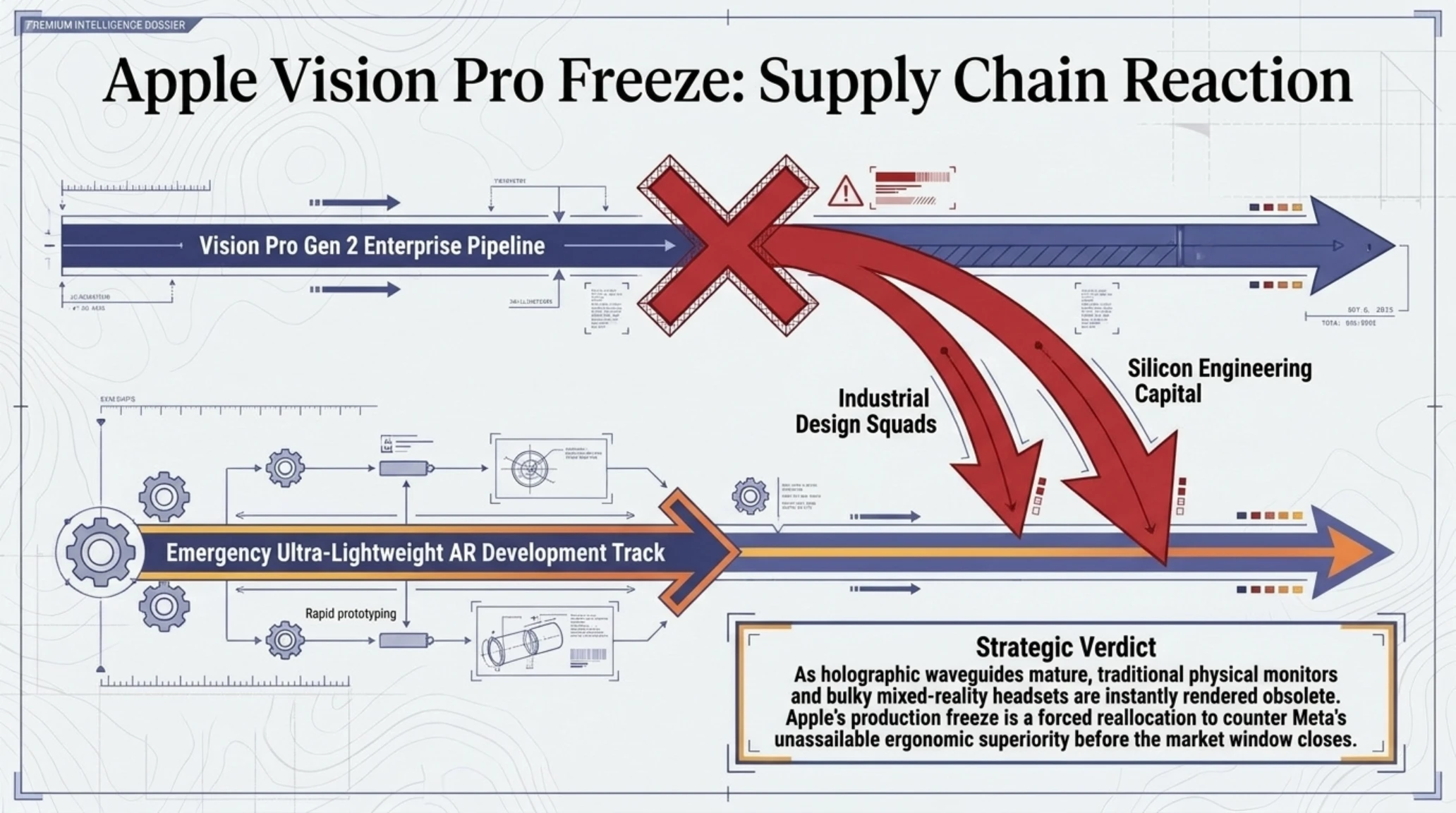
This breakthrough has forced a painful strategic pivot within Apple. Confidential supply chain reports indicate that Cupertino has halted production of its second-generation enterprise Vision Pro, reallocating industrial design and silicon engineering squads to accelerate an ultra-lightweight wearable capable of confronting Meta's hardware superiority before the window of opportunity snaps shut.

As holographic waveguides mature and wireless battery tethering yields to advanced solid-state anodes, traditional physical computer monitors and mobile phone displays will increasingly be perceived as antiquated relics of an earlier digital epoch.
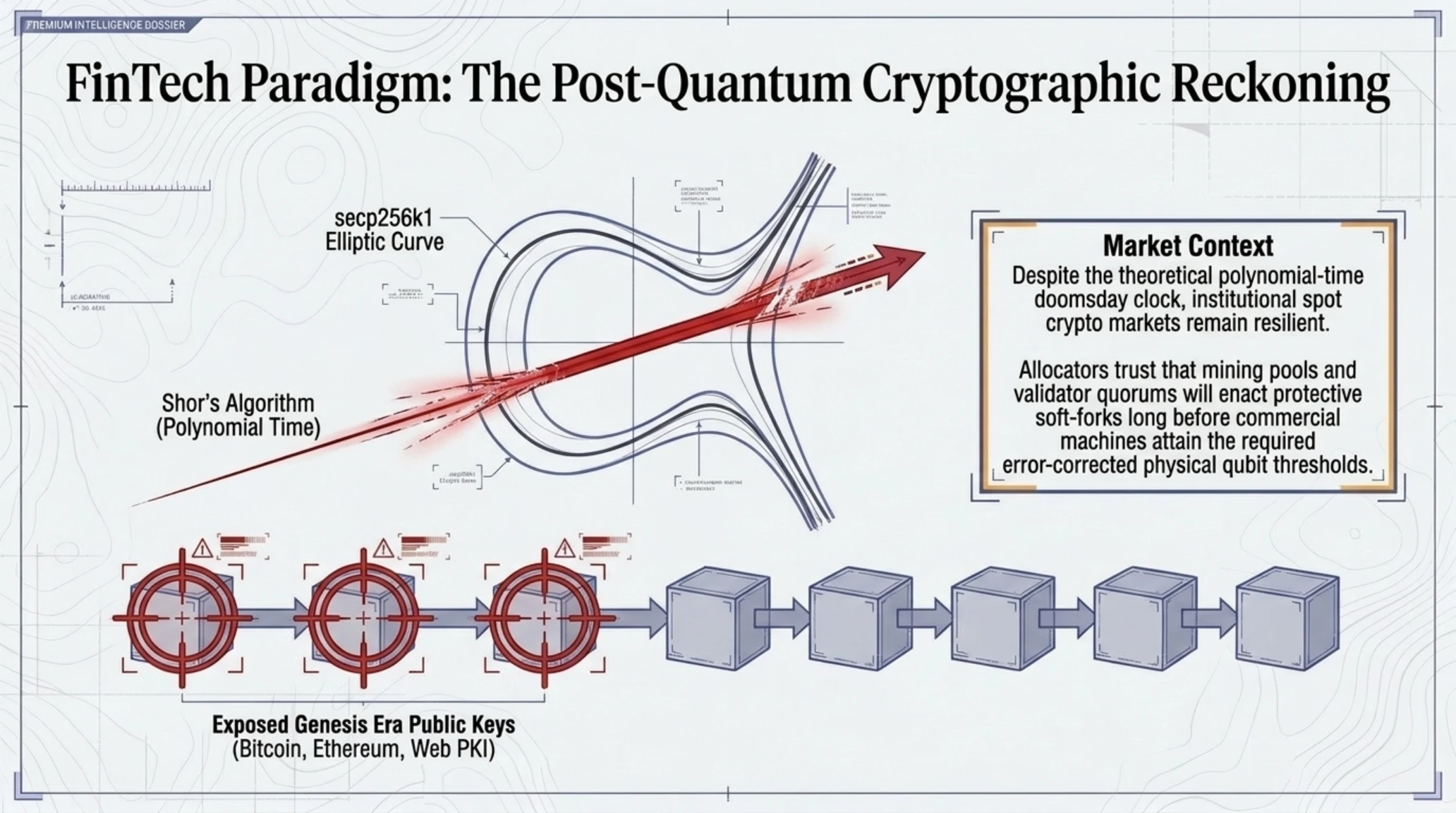
To grasp the existential magnitude of the post-quantum transition across financial networks, one must examine the mathematical foundations of modern asymmetric cryptography. Current distributed ledgers rely fundamentally on the computational difficulty of calculating discrete logarithms over the secp256k1 elliptic curve. For classical supercomputing architectures, solving a 256-bit elliptic curve private key from a known public key requires astronomical computational effort that would exceed the operational lifespan of the universe.
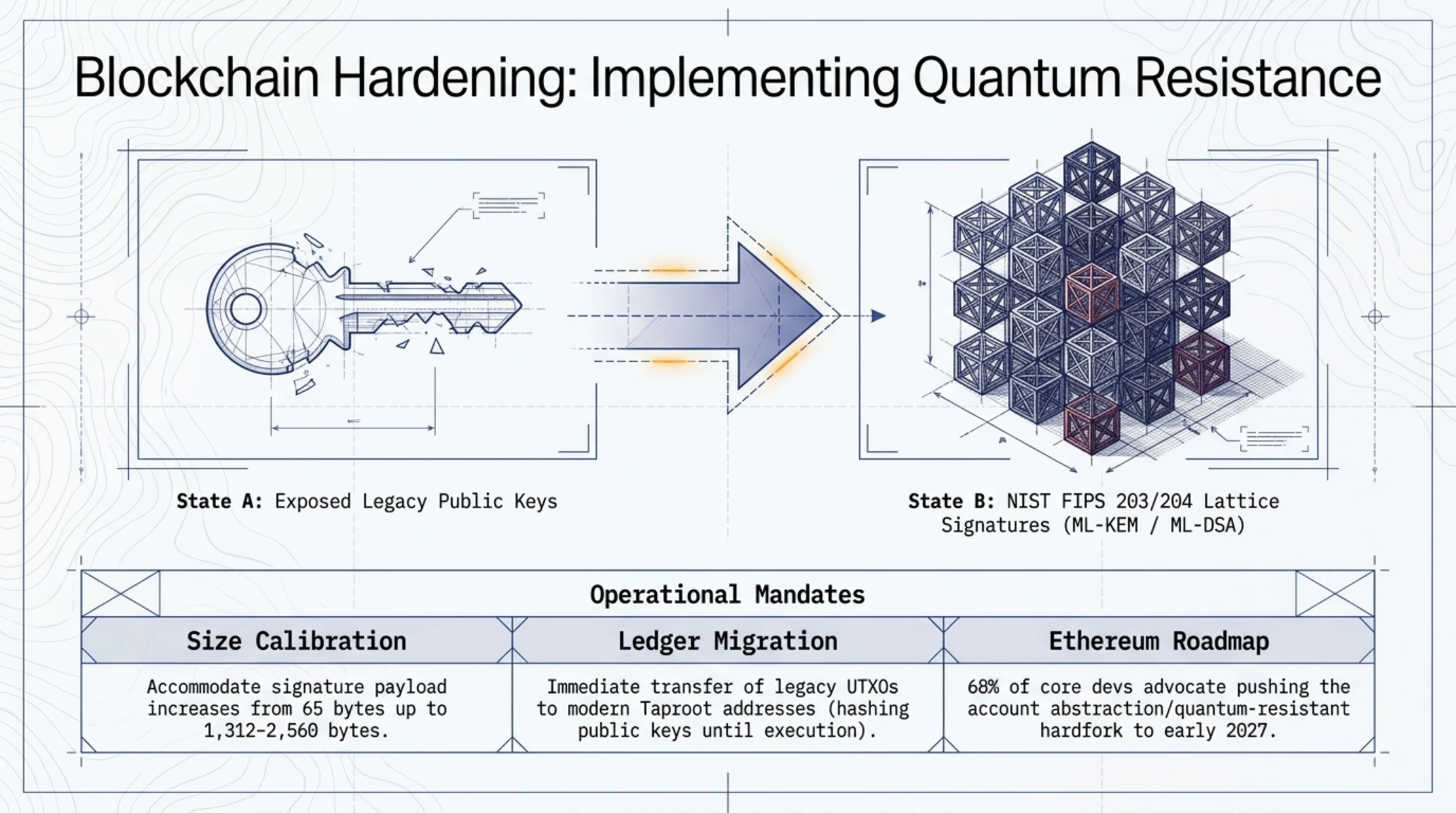
However, Shor's quantum algorithm dismantles this mathematical protection completely, executing period-finding subroutines in polynomial time rather than exponential time. European cybersecurity directives and the National Institute of Standards and Technology (NIST) have finalized formal standards for module-lattice-based key encapsulation mechanisms (FIPS 203 / ML-KEM) and lattice-based digital signatures (FIPS 204 / ML-DSA). Transitioning core consensus protocols to these post-quantum primitives is an immensely complex engineering task, as lattice signatures require public key sizes ranging from 1,312 to 2,560 bytes a dramatic increase compared to the compact 65-byte signatures utilized by legacy Bitcoin transactions.
5. Macroeconomic Realities & FinTech: The Post-Quantum Cryptographic Reckoning
Across international financial technology corridors, the most intensely debated disclosures stemmed from formal warnings released by the European Union Cybersecurity Agency (ENISA) alongside updated NIST post-quantum deployment guidelines. In our strategic analysis, The Post-Quantum Threat to Bitcoin, Ethereum and Global Banking, we examined the accelerating timeline toward fault-tolerant quantum computation.
The core exposure centers upon Shor's algorithm, capable of solving the discrete logarithm problem over the secp256k1 elliptic curve that secures public-key cryptography across Bitcoin, Ethereum, and standard web PKI certificates in polynomial time. Historical blockchain addresses whose public keys have already been exposed to the ledger through legacy transactions or outdated script formats including early blocks mined in the genesis era stand directly within the vulnerability crosshairs.
Developer Sentiment and Financial Market Dynamics
Blockchain Engineering Consensus: Sixty-eight percent of senior Ethereum core protocol contributors now advocate for advancing the scheduled account abstraction and quantum-resistant signature hardfork (incorporating Dilithium and Falcon lattice schemes) into early 2027.
Capital Market Dynamics: Despite theoretical security warnings, spot crypto markets exhibited remarkable resilience; institutional allocators recognize that mining pools and validator quorums will enact protective soft-forks long before commercial quantum machines attain the requisite error-corrected physical qubit thresholds.
This reality mandates an immediate transition towards hybrid cryptographic handshakes across corporate key management services, cold-storage repositories, and institutional custody providers.
TekinGame Infrastructure Engineers advise major crypto holders to migrate legacy unspent transaction outputs (UTXOs) to modern Taproot addresses that maintain public keys in hashed representations until the moment of signature submission, eliminating exposure prior to full protocol upgrades.
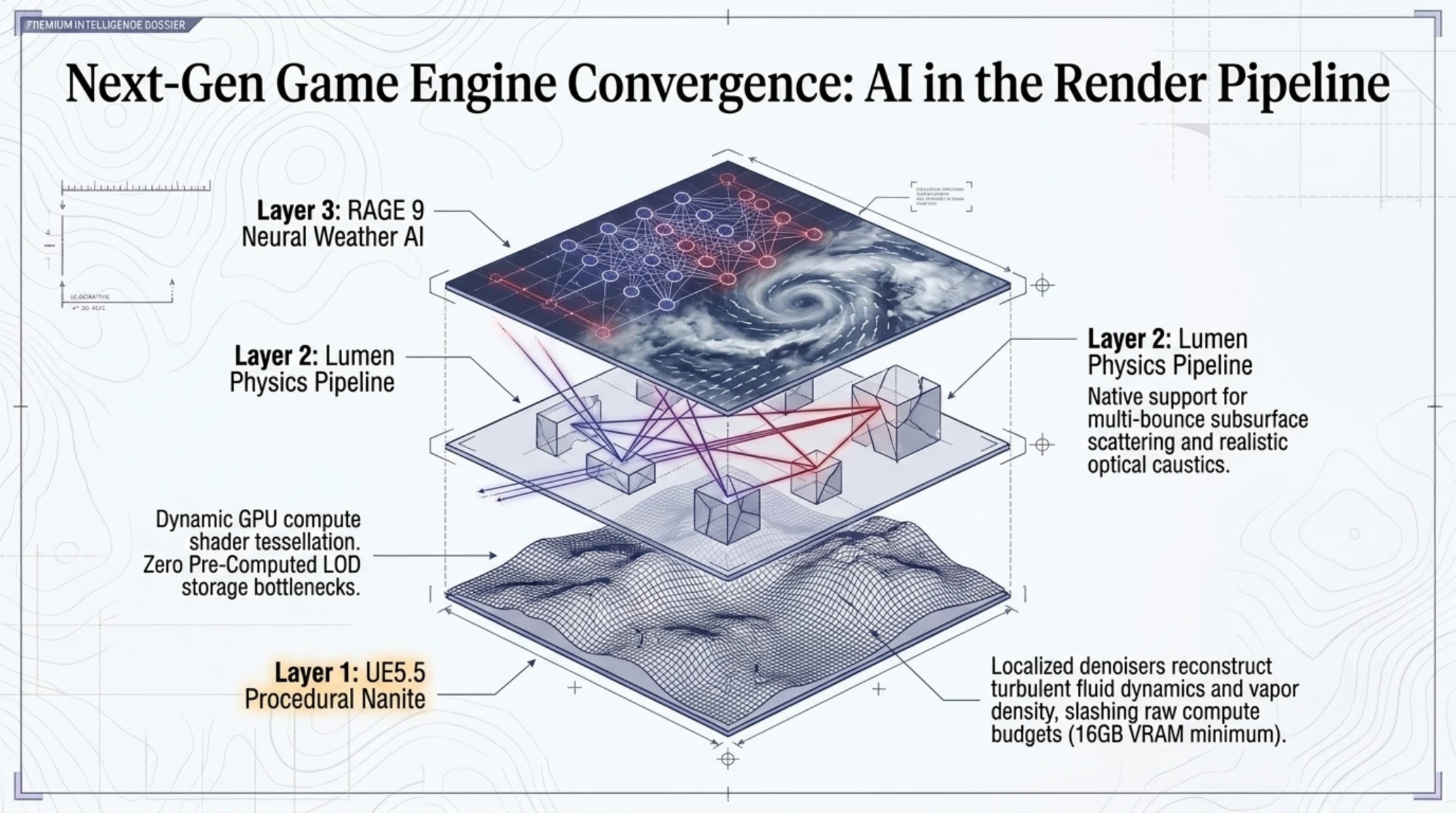
In addition to hardware milestones, software rendering frameworks achieved breakthrough velocity this week with the documentation of experimental Unreal Engine 5.5 builds within major production houses. The integration of enhanced Nanite geometry streaming capable of evaluating programmatic procedural mesh tessellation directly inside GPU compute shaders eliminates pre-computed level-of-detail (LOD) storage bottlenecks. Combined with Lumen's updated hardware ray-traced reflections pipeline that natively supports two-sided translucent materials and multi-bounce subsurface scattering, game environments can now simulate realistic optical caustics and atmospheric light scattering in realtime without offline light baking.
Furthermore, internal telemetry disclosures surrounding Grand Theft Auto VI highlight how Rockstar Games is pioneering hybrid neural rendering. By training localized neural denoisers on tens of thousands of hours of photorealistic Miami weather simulations, the proprietary RAGE 9 engine reconstructs turbulent water surf dynamics, tropical cloud vapor density, and dynamic pedestrian thermal responses at a fraction of the raw computational budget previously required. These software advancements prove that raw silicon compute and deep learning reconstruction are converging into an integrated rendering pipeline that will define the visual baseline of interactive media for the next decade.
A rigorous examination of fifth-generation Tensor core architectures within the Blackwell silicon die reveals how decoupled floating-point and integer execution paths completely dismantle legacy realtime rasterization bottlenecks. In massive open-world titles powered by Unreal Engine 5.5, the dynamic synchronization between procedural geometric buffers and dedicated ray tracing accelerators demands uninhibited low-latency cache access, seamlessly enabled by expanding the on-die L2 cache reservoir to a staggering 128 megabytes.
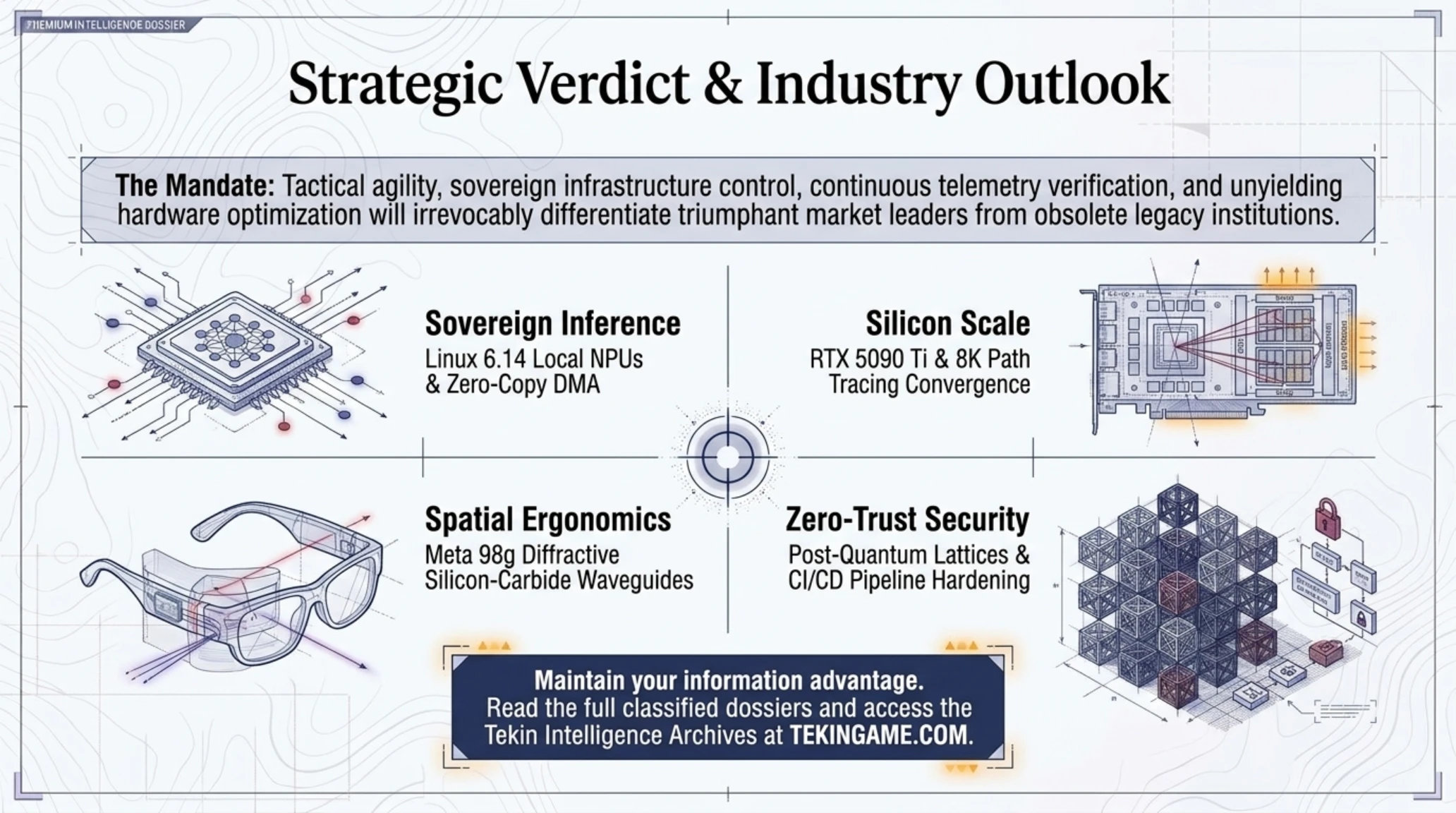
Concurrently across enterprise software ecosystems, autonomous DevOps engineering teams are adopting zero-trust cryptographic attestations across continuous integration pipelines. By establishing tamper-proof hardware security modules for every intermediate compilation artifact, development studios can decisively neutralize supply chain vulnerabilities and guarantee operational continuity even amidst aggressive distributed threat campaigns. Looking ahead into the final quarter of 2026, empirical evidence confirms that studio pipelines combining local accelerated hardware with rigorous cryptographic attestation achieve superior computational velocity and complete resilience against external infrastructure disruption. As software architectures become increasingly decentralized, the convergence of high-bandwidth memory fabrics with verifiable automated intelligence establishes a formidable technological moat for forward-thinking engineering organizations. Tactical agility, sovereign infrastructure control, continuous telemetry verification, and unyielding hardware optimization will irrevocably differentiate triumphant market leaders from obsolete legacy institutions in the autonomous era. Investing in resilient foundational architecture remains the ultimate competitive advantage for modern digital enterprises.
6. Chronological Trajectory of the 7-Day Seismic Cycle (Timeline)
To enable engineering leaders and strategists to visualize the interlocking dependencies of this extraordinary week, we have cataloged the pivotal developments in strict chronological sequence, demonstrating how individual breakthroughs sparked reciprocal reactions across global markets.
Chronological Roadmap of the Seven Seismic Days
Monday, September 22, 2026
Official release of Linux 6.14 kernel source code; initial benchmarking of upstream NPU zero-copy DMA drivers across edge clusters.
Tuesday, September 23, 2026
Public unveiling of Meta's 98-gram augmented reality glasses and developer demonstrations of the non-invasive EMG neural wristband.
Wednesday, September 24, 2026
European regulatory bodies publish updated post-quantum cryptographic mandates for banking and decentralized ledger technologies.
Thursday, September 25, 2026
Supply chain disclosures surrounding the Nintendo Switch 2 and telemetry reports of self-modifying web attack scripts in Tekin Morning Sept 25.
Friday, September 26, 2026 (Morning Shift)
Cloudflare Workers memory boundary leak causing intermittent packet delays across global game distribution edge nodes.
Friday, September 26, 2026 (Night Shift)
Massive ransomware exploitation targeting TeamCity build agents and disclosure of latency bottlenecks in Apple's Siri-OpenAI integration.
Saturday, September 27, 2026
Definitive benchmark validation of the Nvidia RTX 5090 Ti and high-level strategy meetings convened across Sony and Nintendo leadership.
This chronology proves conclusively that technological innovation has accelerated far beyond conservative market projections; adhering to outdated infrastructure playbooks in this environment guarantees operational obsolescence.

Forward-thinking enterprises must implement agile organizational architectures capable of adapting to sudden silicon and security dislocations within hours rather than fiscal quarters.
From an enterprise operations perspective, this week provided definitive validation for the Tekin Sovereign Agentic Architecture. While conventional technology enterprises struggle with massive organizational overhead, bureaucratic communications friction, and delayed incident responses, autonomous multi-modal agent swarms equipped with deterministic tools, real-time telemetry hooks, and verifiable consensus protocols can monitor, diagnose, and remediate complex infrastructure failures in seconds. The ability of our autonomous systems to parse global kernel commits, deconstruct zero-day exploit payloads, and synthesize trilingual technical analyses autonomously demonstrates the immense operational leverage inherent in sovereign agent systems.
As we advance into the final quarter of 2026, the technology landscape will increasingly bifurcate into organizations that successfully integrate autonomous intelligence into their core development loops, and legacy incumbents that remain paralyzed by manual processes. The strategic mandate for technology executives, software architects, and engineering directors is unequivocal: embrace local hardware acceleration, enforce zero-trust cryptographic boundaries across every stage of the software supply chain, and build agile operational architectures capable of thriving in an era of continuous technological disruption.
7. Tekin Intelligence Archives and Comprehensive Cross-Dossier Linkages
Throughout this volatile week, the TekinGame Newsroom published multiple comprehensive investigative reports, each functioning as a technical reference manual for software architects and industry analysts. Reviewing these dossiers will provide complete context on the foundational forces shaping the industry.
Classified Archives and Primary References (Smart History Tags)
Primary Intelligence Records of the Past 7 Days at TekinGame:
- Operating Systems Evolution: Comprehensive Linux 6.14 Kernel Analysis and NPU Architecture
- Big Tech Strategic Missteps: Investigation into Apple's Siri AI Integration Failures in iOS
- Next-Gen Compute Silicon: Empirical Benchmarks and Deep Dive: The Nvidia RTX 5090 Ti
- Tekin Night Intelligence: Tekin Night Sept 26: TeamCity Ransomware & Xbox Shifts and Tekin Night Sept 25: Switch 2 & Zero-Day Alerts
- Tekin Morning Intelligence: Tekin Morning Sept 26: Cloudflare Leak & Zelda Repercussions and Tekin Morning Sept 25: Automated Breaches
- Spatial Computing Evolution: The Strategic Demise of Apple Vision Pro via Meta's AR Glasses
- Financial Infrastructure Defense: Post-Quantum Cryptographic Threats to Asymmetric Blockchain Networks
We strongly recommend reviewing these individual investigations before entering the upcoming operational cycle to ensure complete technical comprehension of the unfolding landscape.

These records are preserved permanently within the TekinGame knowledge vault, serving as definitive technical guides for engineering teams worldwide.
Tekin Editorial Board Strategic Perspective
The TekinGame Editorial Directorate maintains that the convergence of localized edge inference, extreme compute silicon, and lightweight spatial optics is establishing a fundamentally new interactive computing paradigm. Enterprises that remain beholden to traditional centralized cloud architectures and legacy mobile form factors will experience sharp declines in user engagement. The undeniable victors of 2026 and 2027 will be those who adapt their technical infrastructures for distributed local execution and seamless screenless user interaction.
Recognizing these tectonic shifts is the indispensable first step toward architecting winning digital strategies in an intensely contested international marketplace.
- Decisive victory for open-source systems via native NPU kernel integration in Linux 6.14
- Empirical realization of true 8K 60fps gaming with double the compute efficiency in RTX 5090 Ti
- Ergonomic breakthrough in spatial computing with Meta's 98-gram augmented reality spectacles
- Proactive consensus building across decentralized protocols for post-quantum defense standards
- Severe infrastructure supply chain fragility demonstrated by CI/CD build agent exploits
- Structural failure of centralized cloud chatbots to meet consumer mobile latency expectations
- Continued cancellation of ambitious gaming projects due to defensive corporate budgeting
This rigorous audit illustrates that the broader technology landscape is undergoing an irrepressible transformation, compelling incumbent organizations to yield ground to nimble innovators in on-device AI and specialized silicon.

At the TekinGame Citadel, our continuous intelligence sentinel networks will remain locked on these emerging vectors, ensuring our readers maintain an insurmountable information advantage.
Strategic Conclusion and Forward Horizon
The historic seven-day cycle of late September 2026 has irrevocably altered the digital landscape. With Linux 6.14 democratizing zero-copy neural processing on localized hardware, the monopolistic hold of centralized cloud APIs has been decisively broken, restoring data sovereignty to individual creators and enterprises. In consumer computing, graphical horsepower has eclipsed longstanding visual limits, yet escalating cyber vulnerabilities highlight the urgent necessity of zero-trust architectures. Throughout the coming operational week, the TekinGame Citadel will monitor global autumn technology summits to deliver immediate, authoritative intelligence directly to your command screen.
Frequently Asked Questions Regarding the Week's Revelations
Does the Linux 6.14 kernel integration provide immediate performance benefits to everyday consumers?
Yes, absolutely. By introducing unified /drivers/accel/ subsystems, everyday laptops equipped with Intel Core Ultra, AMD Ryzen AI, or Qualcomm Snapdragon X processors can execute on-device tasks such as speech-to-text, realtime video enhancement, and localized document search with virtually zero battery drain and complete offline privacy.
Why was the TeamCity continuous integration breach considered an existential threat?
Because continuous integration and build automation servers represent the ultimate root of trust in modern software development. Compromising build runners allowed attackers to inject malicious binary payloads into commercial software outputs before the application of legitimate corporate code-signing certificates, bypassing downstream security scanners.
What power supply and thermal dissipation parameters does the RTX 5090 Ti require?
With a rated thermal design power of 550 watts, the RTX 5090 Ti requires a high-quality 1000-watt power supply compliant with ATX 3.1 and PCIe 5.0 (12V-2x6) wiring standards. However, thanks to its advanced 3D vapor chamber and graphene thermal pads, the card operates within standard premium mid-tower chassis without exceeding 68 degrees Celsius under full gaming loads.
Can Meta's 98-gram AR glasses be tethered to a personal computer for high-fidelity VR gaming?
The spectacles are primarily optimized for augmented reality and see-through spatial information overlays. However, via low-latency Wi-Fi 7 wireless tethering, they can stream floating high-definition virtual desktop displays and lightweight spatial holographic experiences with minimal motion-to-photon lag.
Should existing cryptocurrency holders be urgently concerned about quantum computers compromising their funds?
In the immediate short term, no. Existing quantum testbeds have not achieved the required fault-tolerant physical qubit volume necessary to execute Shor's algorithm at scale against secp256k1 curves. Nevertheless, prudent cryptocurrency holders are advised to migrate assets to modern Taproot addresses which obscure public keys behind cryptographic hashes until transaction broadcast.
International Sources and References (Sources)
- The Verge: Strategic Tech Evolution, On-Device AI Benchmarks and Wearables Architecture
- Ars Technica: Comprehensive Linux 6.14 Kernel Analysis and NPU Direct DMA Subsystem
- AnandTech: Architectural Deep Dive into Nvidia Blackwell GB202 and GDDR7 Memory Interfaces
- Digital Foundry: Sony PS5 Pro PSSR Spectral Super Resolution and 8K Native Benchmarking
- Wccftech Hardware: Next-Gen Console SoCs and Nintendo Switch 2 Tegra T239 Architecture
- Tom's Hardware: Cybersecurity Breaches in CI/CD Environments and Post-Quantum Cryptography Threat
Additional Gallery: Tekin Digest Sept 27, 2026: Anatomy of 7 Historic Days in Tech