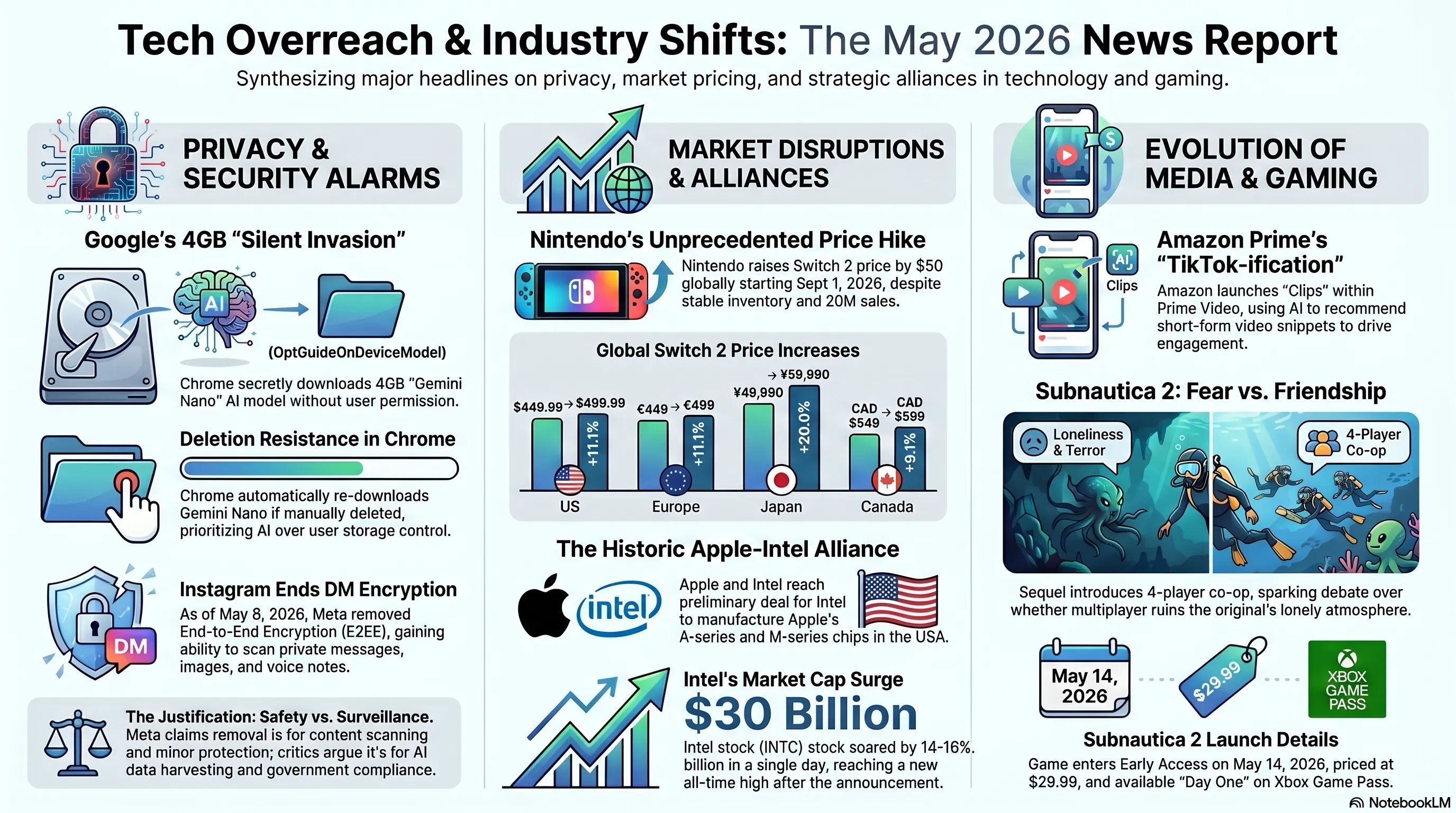
In the May 9, 2026 Tekin Night briefing, we dissect six massive tech earthquakes. We uncover Google Chrome's silent background download of a 4GB AI model hogging user resources, and Nintendo's shocking decision to raise the Switch 2 price despite stable inventory. We also analyze the historic foundry alliance between Apple and Intel, Instagram's controversial removal of E2EE, Amazon Prime's new TikTok-style vertical feed, and the terrifying gameplay reveal of Subnautica 2.
🌙 Welcome to Tekin Night May 9, 2026
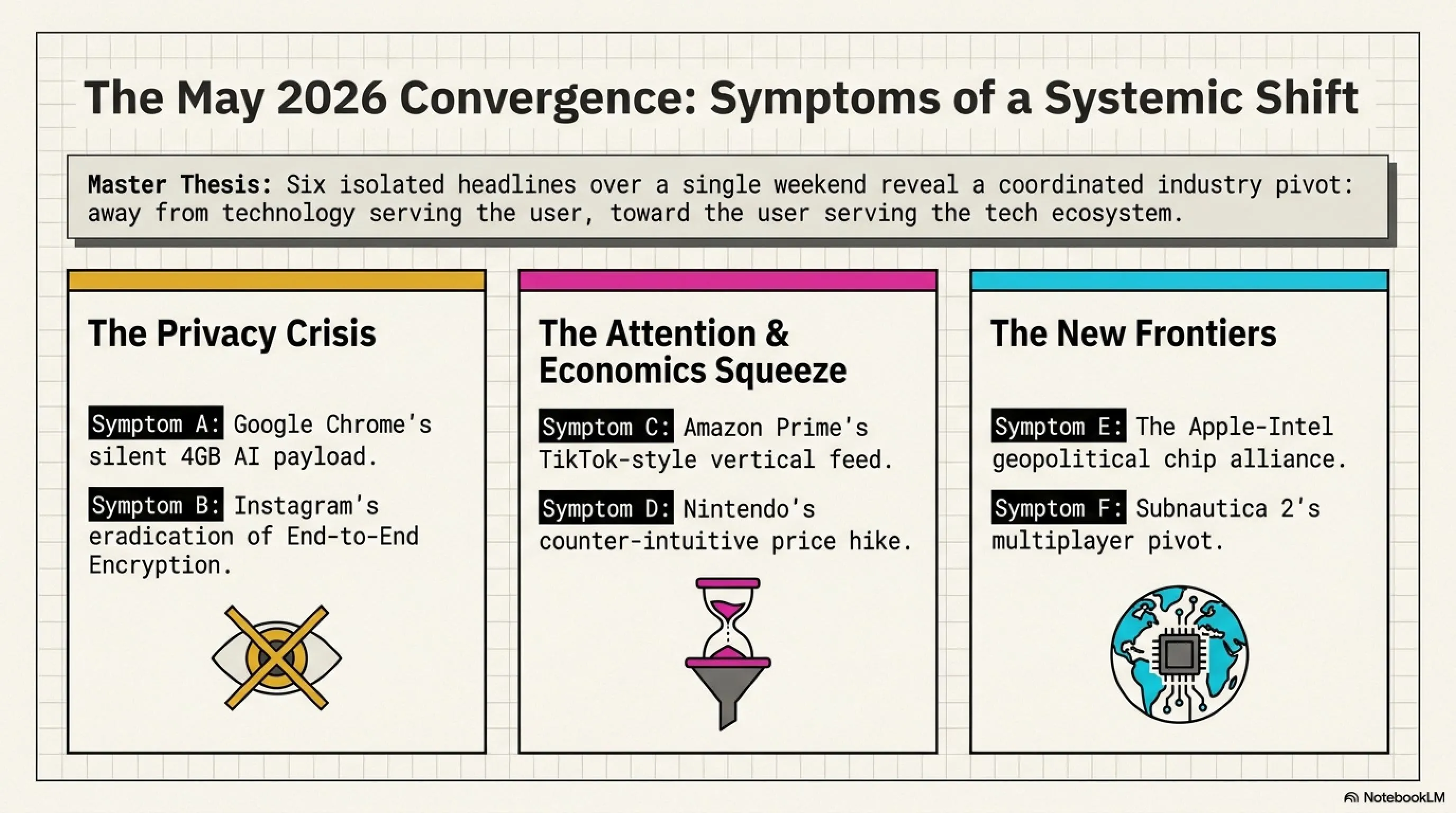
Good evening, Tekin Army! Saturday night, May 9, 2026, brings us six explosive stories from the world of technology and gaming that challenge the boundaries of privacy, digital security, and user experience. Tonight, we witness Google's silent infiltration of our computers, Nintendo's shocking price hike despite stable inventory, Amazon Prime's TikTok-ification, the end of encryption on Instagram, Apple and Intel's historic alliance, and the return to the depths of terror with Subnautica 2.
⚡ Tonight's Headlines:
🕵️ Google's Silent Invasion: Chrome Secretly Downloads 4GB AI Model!
💰 Gamer Shock: Switch 2 Price Hike Despite Stable Inventory
📱 Amazon's Odd Leap: TikTok-Style Vertical Feed in Prime Video
🔓 End of Security: Instagram Removes E2EE Encryption
🤝 Unexpected Alliance: Apple-Intel Deal Sends Stock Soaring 14%
🌊 Return to the Depths: Subnautica 2 Gameplay Reveal
☕ Grab your evening beverage, because tonight we're diving into the darkest and most controversial corners of the tech world!
1. Google's Silent Invasion: Chrome Secretly Downloads a 4GB AI Model to Your PC! 🕵️💾
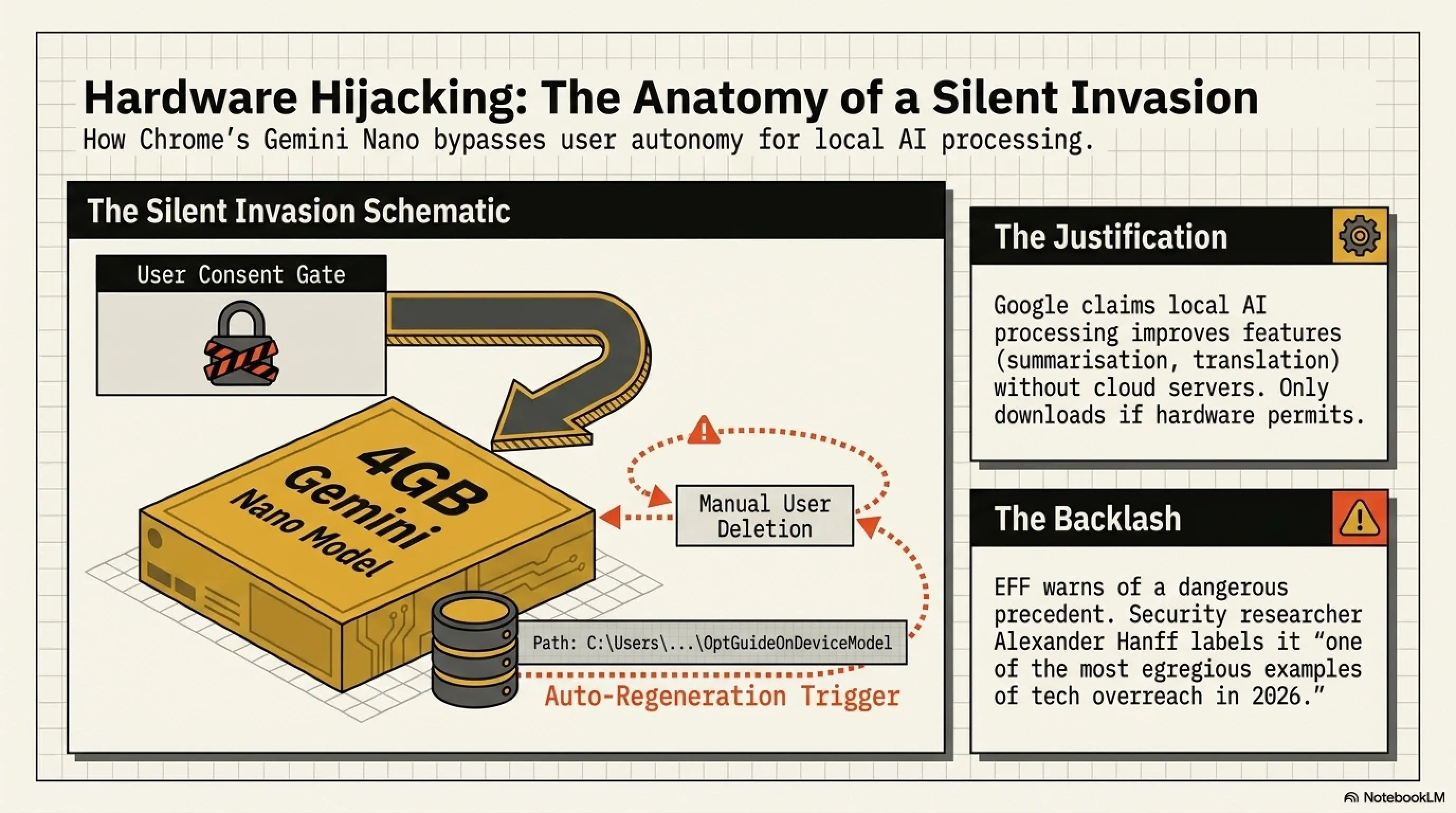
In one of the most controversial security incidents of May 2026, it was discovered that Google Chrome has been silently downloading a 4-gigabyte AI model called Gemini Nano to users' hard drives in the background, without any explicit notification or permission request. This action was performed without clear consent, and its purpose is to enable local AI processing—but it has severely impacted users' system resources (RAM and Storage).
According to reports from Alexander Hanff (a security researcher known as "That Privacy Guy"), Tom's Guide, TechSpot, and Malwarebytes, this AI model is stored in a folder named OptGuideOnDeviceModel within the Chrome directory. The most alarming part? If users manually delete this folder, Chrome automatically re-downloads it!
🔍 Tekin Analysis: Why Did This Happen?
Google is attempting to integrate AI capabilities directly into the Chrome browser to offer features like webpage summarization, advanced translation, and smart assistants without needing to connect to cloud servers. The problem is that this was done without explicit user consent and without transparency. Users with laptops that have limited storage space suddenly found themselves with 4GB less disk space.
This represents a fundamental shift in how tech companies approach user autonomy. The line between "improving user experience" and "violating privacy" has become dangerously thin. Google's justification—that the model only downloads when hardware meets requirements—doesn't address the core issue: users should have explicit control over what gets installed on their devices.
📊 Technical Details of Gemini Nano Model:
| Specification | Value |
|---|---|
| Model Name | Gemini Nano |
| File Size | 4 Gigabytes |
| Storage Location | OptGuideOnDeviceModel |
| Processing Type | Local (No Internet Required) |
| Manual Deletion | No (Auto Re-downloads) |
| User Consent | Not Explicitly Requested |
Google's Response: In response to criticism, a Google spokesperson stated that the AI model is designed to improve user experience and only downloads when the device's hardware meets the necessary requirements. However, this explanation failed to satisfy users. Many users on Reddit and Twitter demanded a clear opt-out option.
Security Community Reaction: The Electronic Frontier Foundation (EFF) issued a statement warning that this practice could set a dangerous precedent for privacy violations. They emphasized that users must have complete control over what gets installed on their devices. Privacy advocate Alexander Hanff called it "one of the most egregious examples of tech overreach in 2026."
The Broader Implications: This incident raises critical questions about the future of AI integration. As AI models become more powerful and ubiquitous, will tech companies continue to install them without explicit consent? What happens when these models start processing sensitive user data locally? The Gemini Nano incident may be just the beginning of a larger debate about AI, privacy, and user autonomy.
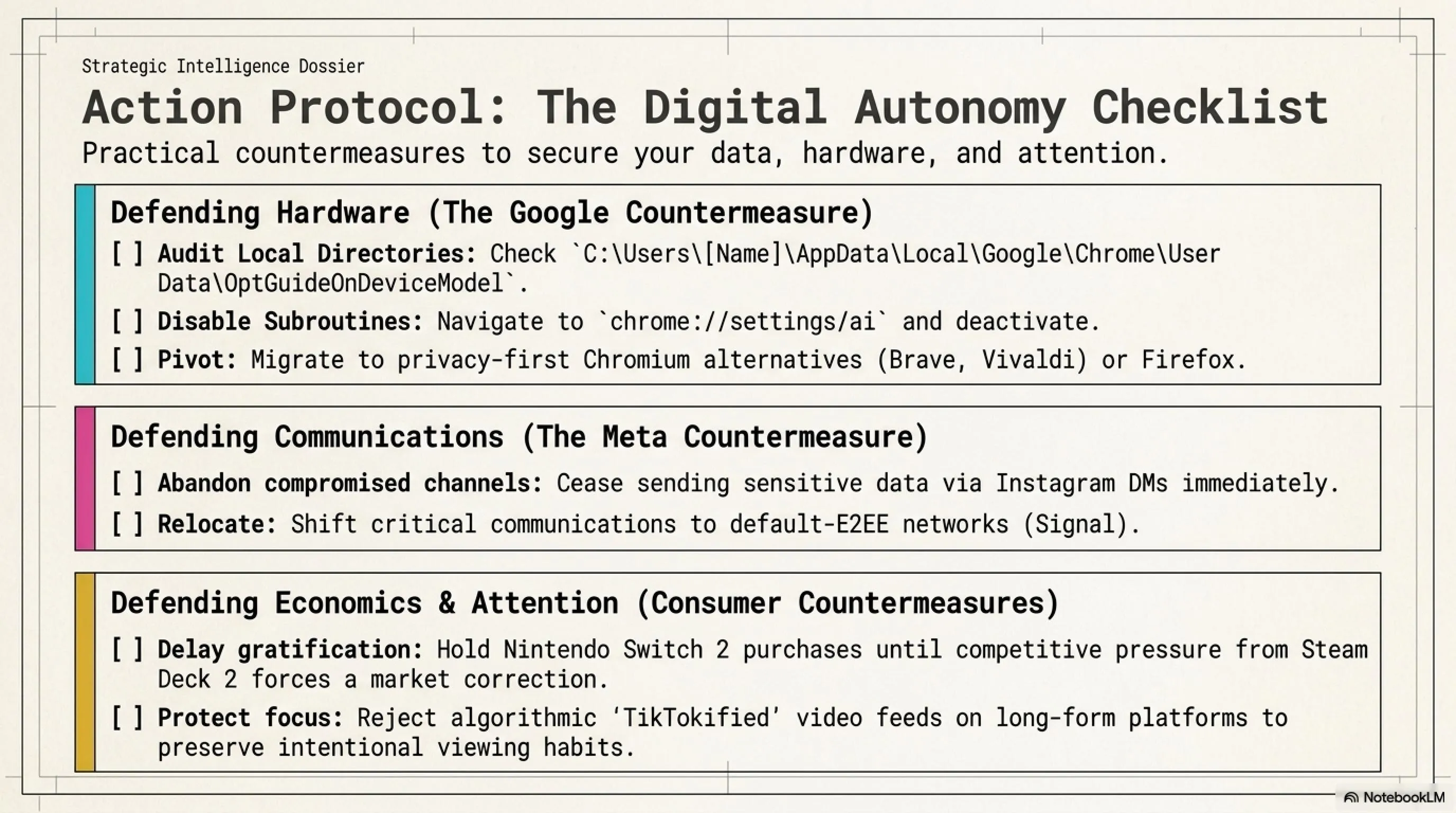
💡 Practical Solutions for Users:
- Check Your Disk Space: Navigate to
C:\Users\[YourName]\AppData\Local\Google\Chrome\User Data\OptGuideOnDeviceModel(Windows) or~/Library/Application Support/Google/Chrome/OptGuideOnDeviceModel(Mac) to see if this folder exists. - Disable AI Features: Go to
chrome://settings/aiin Chrome and disable all AI features. - Use Alternative Browsers: If you're concerned about privacy, consider switching to Firefox, Brave, or Vivaldi—browsers that prioritize user control.
- Monitor Resource Usage: Use Task Manager (Windows) or Activity Monitor (Mac) to see how much RAM and CPU Chrome is consuming.
- Consider Chromium-Based Alternatives: Browsers like Edge, Brave, and Vivaldi are based on Chromium but offer more privacy controls.
What This Means for the Future: The Gemini Nano incident is a wake-up call. As AI becomes more integrated into our daily tools, we must demand transparency and control. The era of "trust us, we know what's best for you" is over. Users deserve to know exactly what's being installed on their devices, why it's being installed, and how to remove it if they choose. This incident may force regulators to step in and establish clearer guidelines for AI deployment.
This story demonstrates that in the age of AI, the line between "improving user experience" and "violating privacy" has become dangerously thin. Users must be more vigilant than ever and carefully examine what's being installed on their devices.
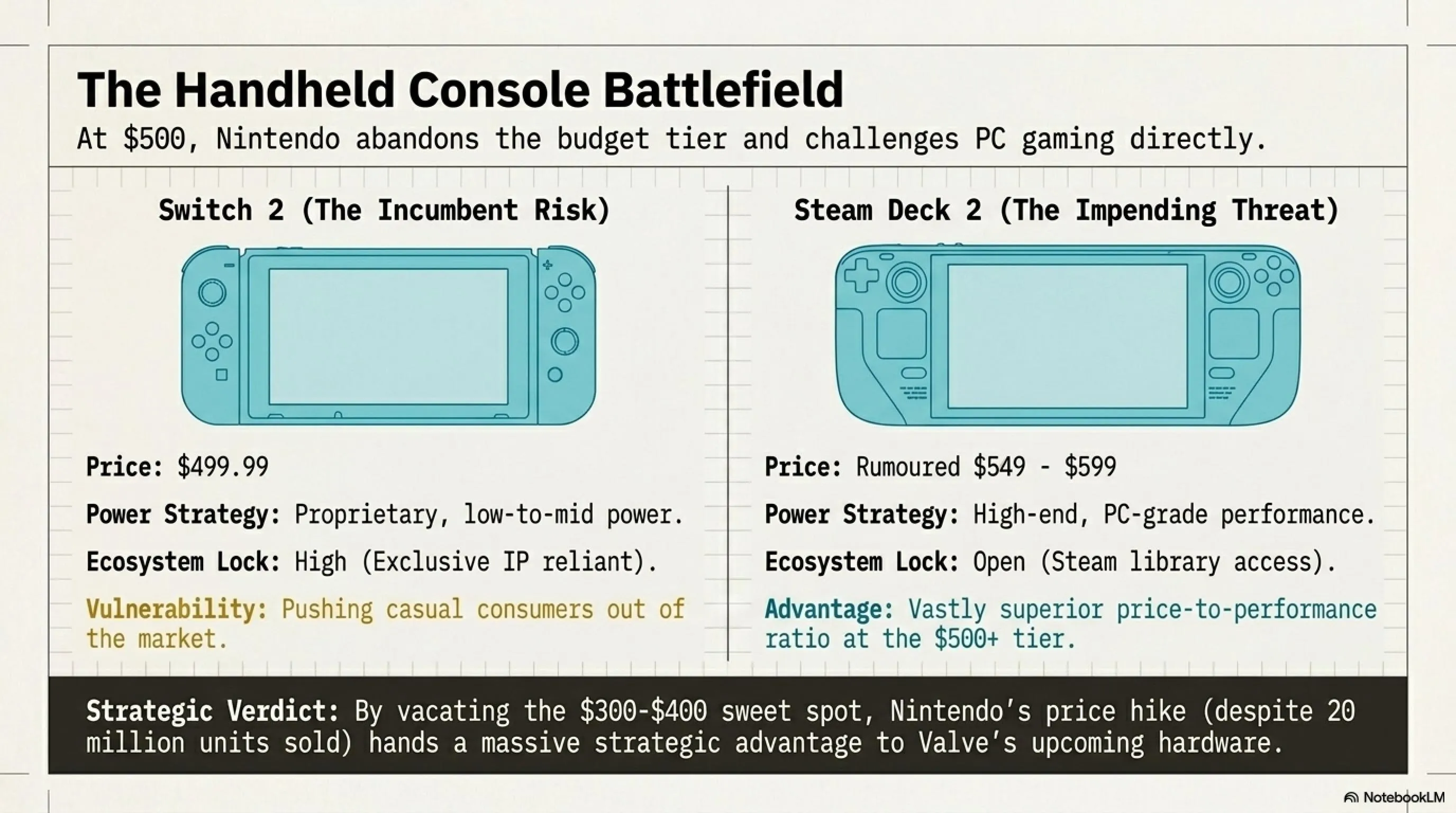
2. Gamer Shock: Nintendo Switch 2 Price Hike Despite Stable Inventory! 💰🎮
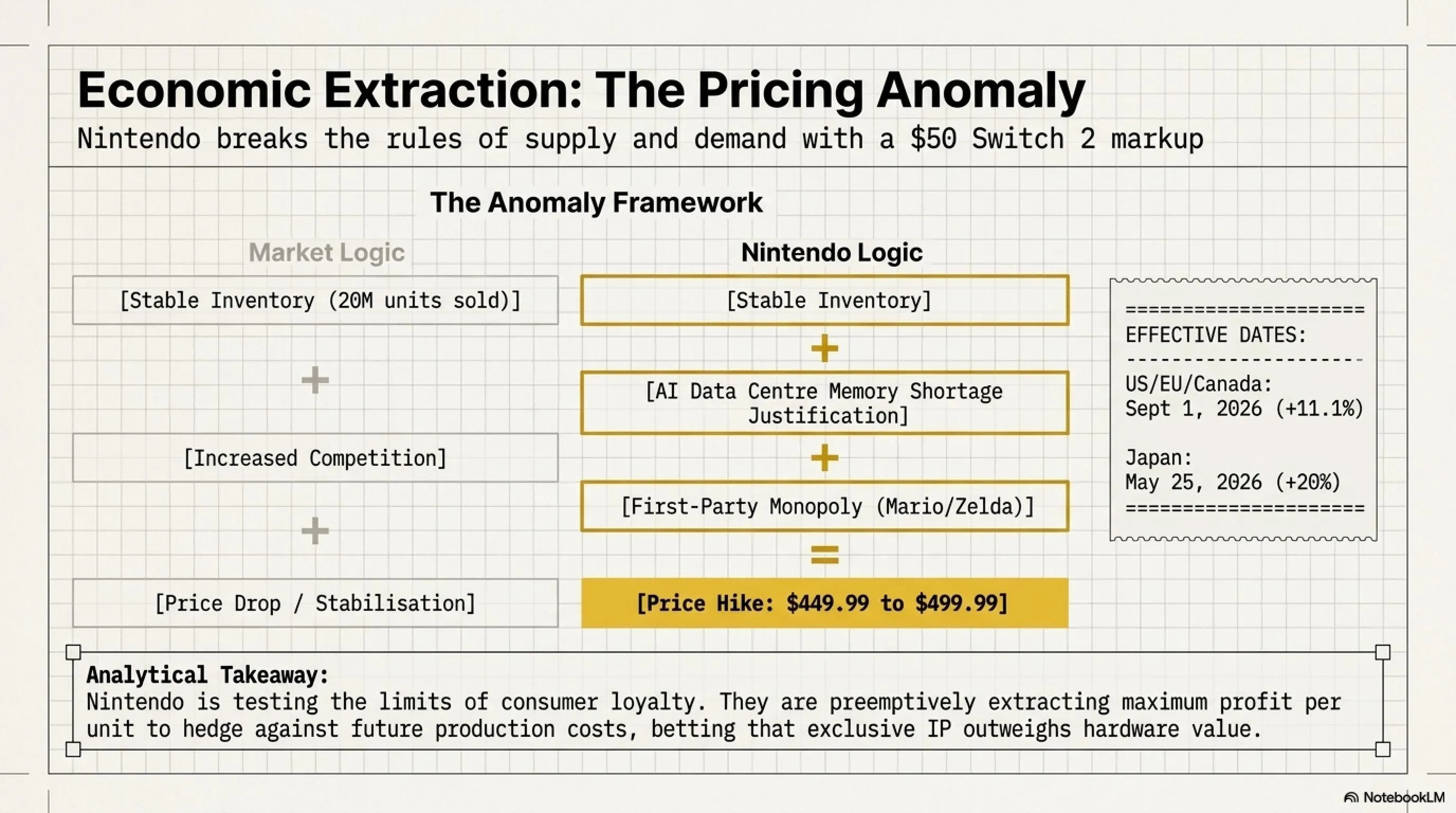
In one of the most surprising decisions of 2026, Shuntaro Furukawa (Nintendo's CEO) announced today during a meeting with investors that despite Switch 2 sales reaching 20 million units and inventory being fully stabilized, Nintendo will increase the console's price in global markets!
According to reports from Variety, Forbes, CNBC, and Nintendo Life, the Switch 2 price in the United States will increase from $449.99 to $499.99 (a $50 increase). This price hike will take effect on September 1, 2026 in the US, Canada, and Europe, while in Japan it has already started on May 25.
📈 Price Increase Across Different Markets:
| Region | Previous Price | New Price | Effective Date | Increase % |
|---|---|---|---|---|
| United States | $449.99 | $499.99 | Sept 1, 2026 | +11.1% |
| Japan | ¥49,980 | ¥59,980 | May 25, 2026 | +20% |
| Europe | €449 | €499 | Sept 1, 2026 | +11.1% |
| Canada | CAD $549 | CAD $599 | Sept 1, 2026 | +9.1% |
Nintendo's Official Reasoning: Furukawa stated in an official announcement that this price increase is due to "changes in market conditions" and "global business outlook." He also referenced the memory shortage caused by massive investment in AI data centers, which has put pressure on profitability. However, this explanation has been met with skepticism from both consumers and industry analysts.
🔍 Tekin Analysis: Why This Decision Is Bizarre
Typically, companies raise prices when facing inventory shortages or increased production costs. But Nintendo is raising prices while having sold 20 million units and with inventory fully stabilized! This decision could be driven by two factors: (1) Nintendo wants to extract more profit per unit sold, or (2) they're anticipating future production cost increases and want to prepare in advance.
However, this strategy is risky. At $500, the Switch 2 is now competing directly with more powerful devices like the Steam Deck 2 and potentially even entry-level gaming PCs. Nintendo's strength has always been its exclusive first-party titles, but at this price point, consumers may start questioning whether Mario and Zelda are worth the premium. This could particularly impact demand in emerging markets where price sensitivity is higher.
Gaming Community Reaction: The response on social media has been overwhelmingly negative. One Reddit user wrote: "Nintendo sold 20 million units, has stable inventory, and now raises the price? This is pure greed!" Another commented: "At this price, Steam Deck 2 looks like a much better option."
Competitive Landscape Analysis: This price hike comes at a particularly interesting time. Valve is rumored to be preparing the Steam Deck 2 launch, and early leaks suggest it will be priced competitively at around $549-$599 while offering significantly more power. Microsoft's Xbox handheld is also in development. Nintendo's decision to raise prices while competitors are entering the market seems counterintuitive.
Historical Context: This isn't the first time Nintendo has made controversial pricing decisions. The Wii U launched at $349 and struggled to find an audience. The original Switch launched at $299 and became a massive success. The Switch OLED launched at $349 and sold well. But a $500 handheld console is unprecedented territory for Nintendo. The question is: will consumers accept it?
What This Means for Consumers: If you're planning to buy a Switch 2, you have until September 1 to get it at the current price. After that, you'll be paying $50 more for the exact same hardware. For budget-conscious gamers, this might be the push they need to consider alternatives. For Nintendo loyalists who must have Mario Kart and Zelda, the price increase is an unfortunate but likely acceptable cost.
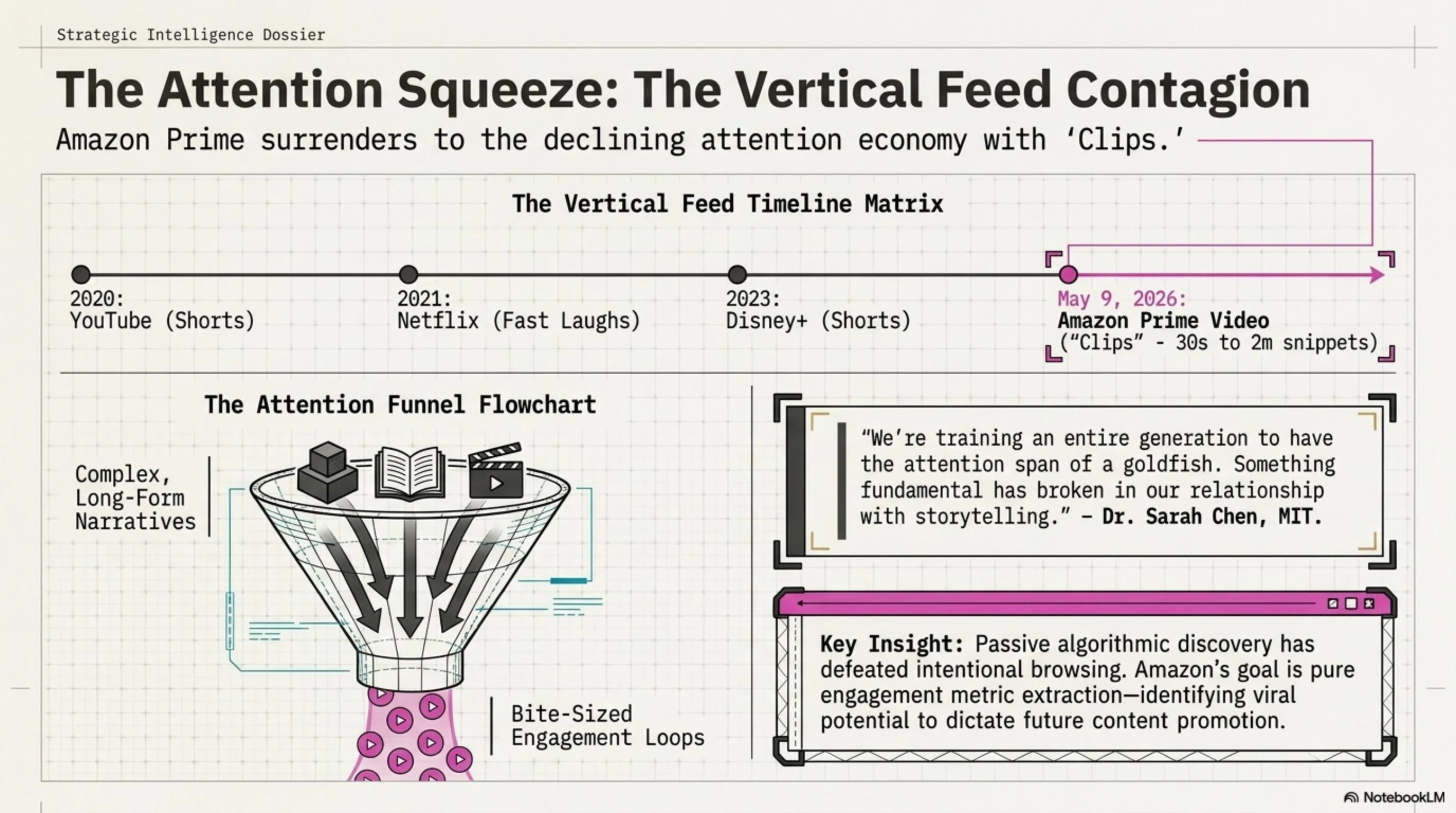
3. Amazon's Odd Leap: TikTok-Style Vertical Feed Added to Prime Video! 📱🎬
Amazon Prime Video today launched a surprising new update, adding a short-form vertical video feed called "Clips" to its streaming platform—exactly like TikTok and Instagram Reels. This change demonstrates that even long-form content platforms have surrendered to the declining attention spans of users and are seeking to inject quick-hit content.
According to reports from TechCrunch, The Indian Express, Engadget, and 9to5Mac, this feature is initially launching in the United States and will gradually expand to other countries. The Clips feed includes short clips from series and movies available on Prime Video, displayed vertically, and users can swipe between them.
🎮 How Clips Works:
Imagine opening the Prime Video app and instead of the traditional home screen, you see a new tab called "Clips." When you tap on it, you enter a vertical feed of short videos (30 seconds to 2 minutes) extracted from various series and movies. Each clip is designed to entice you to watch the full series or movie.
At the bottom of each clip, there are buttons for "Watch Full Title," "Add to List," or "Rent/Buy." Amazon's AI algorithm recommends related clips based on your taste. The interface is nearly identical to TikTok's For You page, complete with swipe-up navigation and engagement metrics.
📊 Comparison of Vertical Feeds Across Streaming Platforms:
| Platform | Feature Name | Launch Date | Status | Content Type |
|---|---|---|---|---|
| Netflix | Fast Laughs | 2021 | Active | Comedy clips |
| Disney+ | Shorts | 2023 | Active | All genres |
| YouTube | Shorts | 2020 | Active | User-generated |
| Amazon Prime | Clips | May 9, 2026 | New | All genres |
Why Did This Happen? Research shows that user attention spans have dramatically decreased. The traditional "browse and select" model is no longer effective. Users want content to be algorithmically recommended to them, just like TikTok. Amazon, by launching Clips, wants to increase user time in the app and encourage them to watch more content.
The TikTokification of Everything: This trend represents a fundamental shift in how we consume media. TikTok proved that passive discovery keeps users engaged longer than traditional browsing interfaces. Now, every platform—from Instagram to YouTube to Netflix to Amazon—is adopting this model. The question is: what does this mean for long-form content?
⚠️ Analyst Concerns:
Some analysts believe that this "TikTokification" trend could damage content quality. When the focus is on short, engaging clips, creators might shift away from deep, complex storytelling toward superficial, quick-hit content. This is exactly what happened on social media platforms.
Media critic Dr. Sarah Chen from MIT told The Verge: "We're training an entire generation to have the attention span of a goldfish. When you can't sit through a 2-hour movie without checking your phone, something fundamental has broken in our relationship with storytelling." The concern is that streaming platforms, by embracing short-form content, are accelerating this decline rather than resisting it.
User Reactions: Responses have been mixed. Some users have welcomed this feature and see it as a quick way to discover new content. But others are concerned that this trend will lead to "short-content addiction" and destroy the ability to watch long-form films. One Twitter user wrote: "I don't want TikTok in my Prime Video. I came here to watch movies, not 30-second clips."
The Business Case: From Amazon's perspective, Clips makes perfect business sense. The feature increases engagement, keeps users in the app longer, and provides more opportunities to recommend content. It also generates valuable data about what types of content resonate with users. If a particular clip goes viral, Amazon knows that show or movie is worth promoting more heavily.
What This Means for Content Creators: For filmmakers and showrunners, this trend is both an opportunity and a threat. On one hand, Clips provides a new way to reach audiences who might never have discovered their work. On the other hand, it reduces complex narratives to bite-sized moments, potentially decontextualizing and trivializing their art. The challenge will be creating content that works both as a complete experience and as viral clips.
4. End of Security on Instagram: Meta Officially Removes End-to-End Encryption from DMs! 🔓🚨
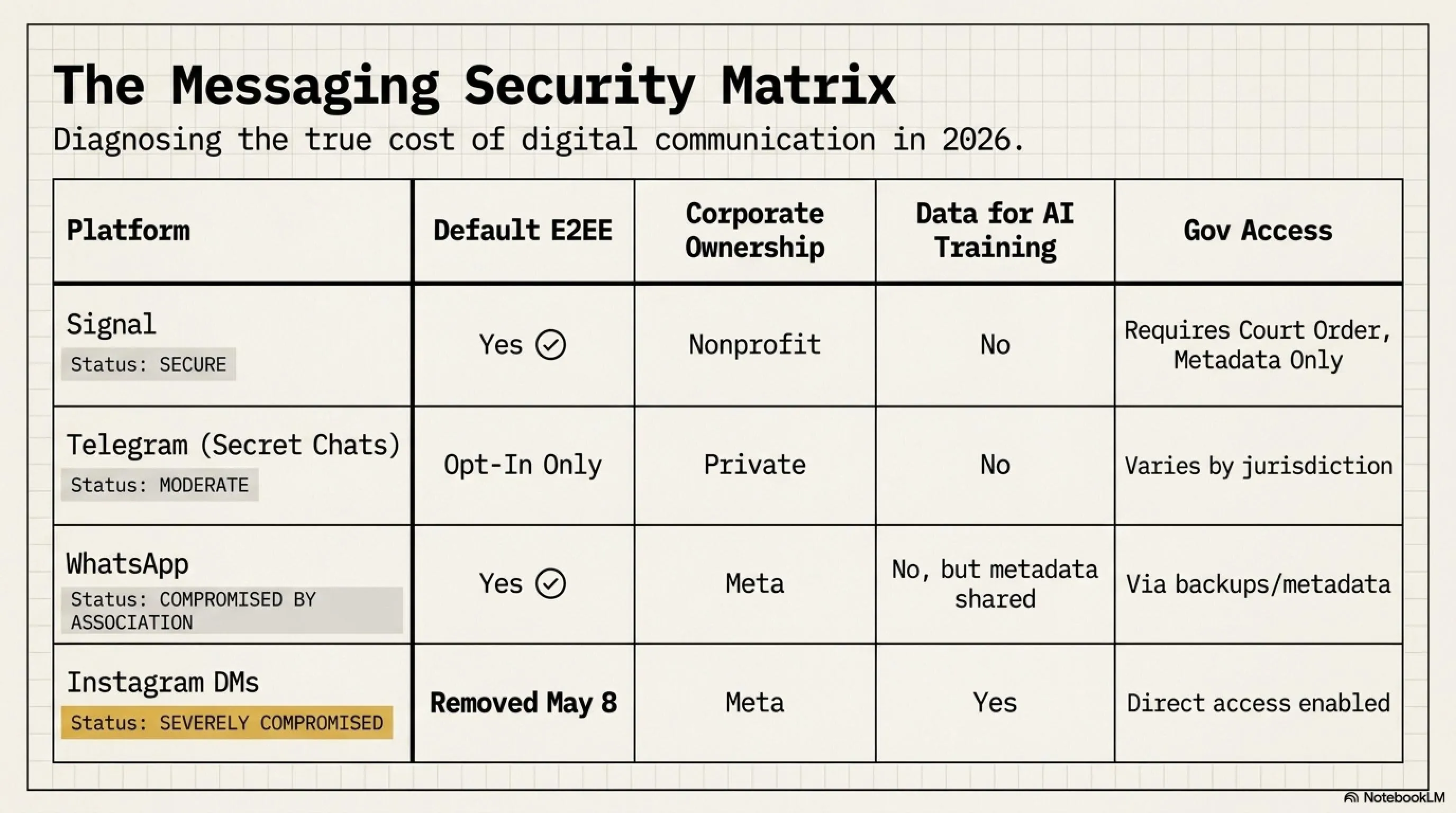
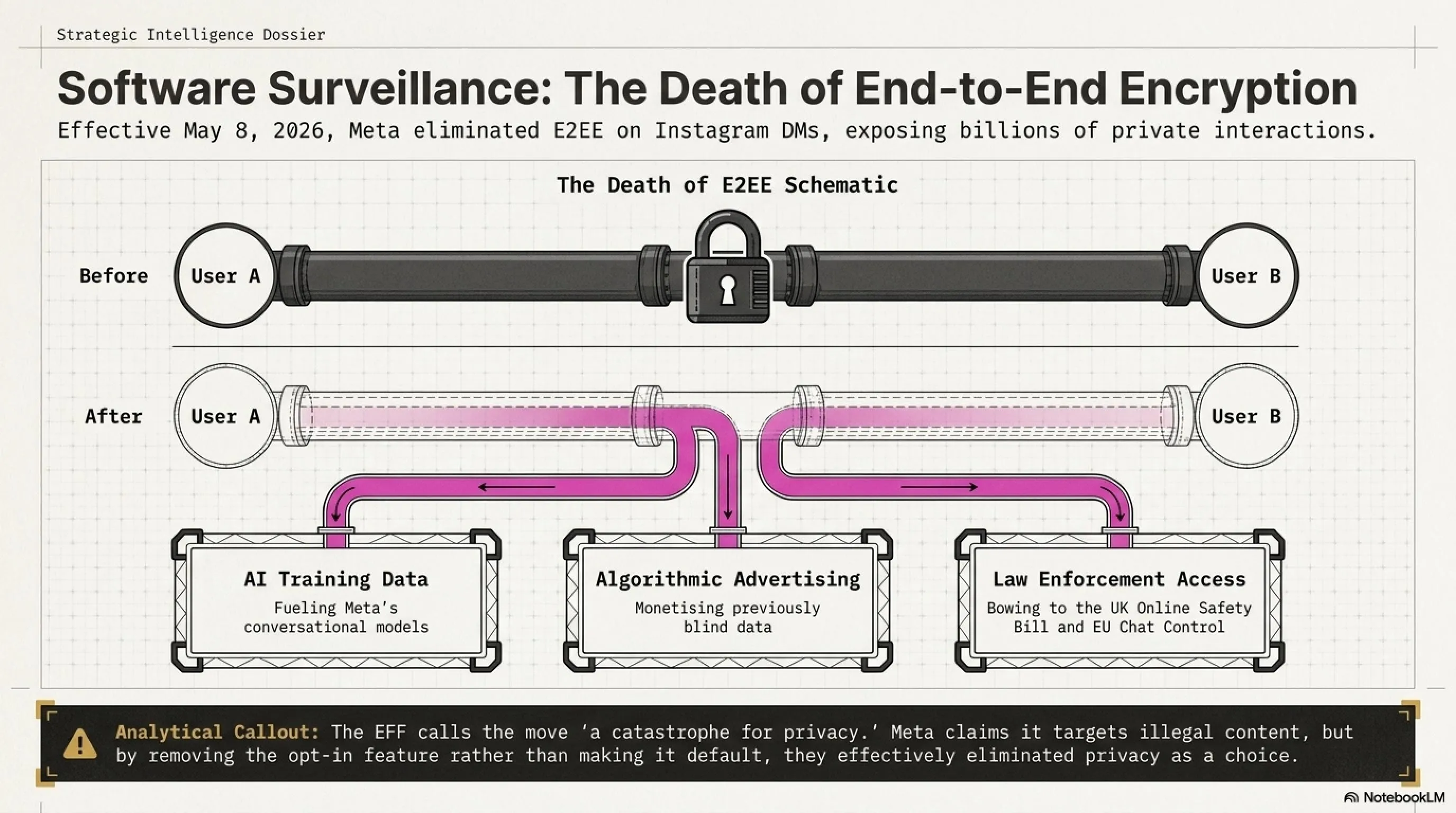
In one of the most controversial decisions of 2026, Meta has taken the drastic step of removing End-to-End Encryption (E2EE) from Instagram Direct Messages. This decision, which took effect on May 8, 2026, means that Meta can now read and scan all your private messages, images, and voice notes on Instagram DMs.
According to reports from The Independent, MacRumors, Cybernews, Fortune, and The Register, Meta's official justification for this decision is to scan messages for illegal content and protect underage users. However, critics argue that this decision represents a major step backward in digital privacy.
🚨 What Exactly Happened?
End-to-End Encryption (E2EE) is a security technology that encrypts your messages in such a way that only the sender and receiver can read them. Even the service provider (in this case, Meta) cannot see the message content. But with the removal of E2EE, Meta can now:
- Read all your text messages
- Scan images and videos you send
- Analyze voice messages
- Process data with AI algorithms
- Share information with law enforcement
- Use message content for targeted advertising
Meta's Official Statement: A Meta spokesperson stated: "Very few people were opting in to end-to-end encrypted messaging in DMs, so we're removing this option from Instagram in the coming months. Anyone who wants to keep messaging with end-to-end encryption can easily do that on WhatsApp."
This statement has been widely criticized as disingenuous. Privacy advocates point out that E2EE was opt-in rather than default, which naturally led to low adoption rates. By removing it entirely rather than making it the default, Meta is effectively eliminating privacy as an option.
📊 Timeline of E2EE on Instagram:
| Date | Event | Impact |
|---|---|---|
| 2023 | E2EE introduced as opt-in | Privacy enhanced |
| March 2026 | Meta announces E2EE removal | Warning issued |
| May 8, 2026 | Complete E2EE removal | Privacy eliminated |
Security Community Reaction: The Electronic Frontier Foundation (EFF) called this decision "a catastrophe for privacy." They stated: "Meta, with this decision, has exposed billions of users to government surveillance, hacking, and abuse. This decision shows that big tech companies are willing to sacrifice user privacy for profit and cooperation with governments."
The Real Reason Behind This Decision: While Meta cites child safety as the justification, privacy experts believe the real reasons are more complex:
- Government Pressure: Governments worldwide have been pressuring tech companies to provide backdoors into encrypted communications. The UK's Online Safety Bill and the EU's proposed Chat Control legislation have created a regulatory environment hostile to encryption.
- AI Training Data: Meta's AI models need vast amounts of conversational data to improve. Encrypted messages are useless for training. By removing encryption, Meta gains access to billions of conversations to feed its AI.
- Advertising Revenue: While Meta claims it won't use DM content for ads, the technical capability now exists. The temptation to monetize this data may prove irresistible.
- Law Enforcement Cooperation: By removing encryption, Meta makes it easier to comply with law enforcement requests without the technical and PR challenges of breaking encryption.
💡 Practical Solutions to Protect Your Privacy:
- Use Signal: The best alternative for secure messaging with default E2EE. Signal is open-source, nonprofit, and has a strong track record of protecting user privacy.
- Telegram Secret Chats: Telegram's secret chats use E2EE and offer additional features like self-destructing messages.
- WhatsApp (for now): Although owned by Meta, WhatsApp still has E2EE. However, given Meta's track record, this could change.
- Session: A decentralized, completely anonymous messenger that doesn't require a phone number.
- Never Share Sensitive Information: Never send sensitive information via Instagram DMs. Assume everything you send can be read by Meta and potentially law enforcement.
- Use Disappearing Messages: While not encrypted, disappearing messages at least reduce the window of exposure.
The Broader Implications: This decision by Meta represents a turning point in the battle between privacy and surveillance. For years, tech companies have been moving toward stronger encryption. Signal, WhatsApp, and iMessage all use E2EE by default. But Meta's decision to remove encryption from Instagram suggests that the tide may be turning.
What Happens Next? Privacy advocates are calling for regulatory action to protect encryption. The American Civil Liberties Union (ACLU) has announced it will challenge this decision in court, arguing that it violates users' Fourth Amendment rights against unreasonable search and seizure. Meanwhile, European regulators are examining whether this decision violates GDPR's data minimization principles.
This story demonstrates that in the digital age, privacy has become a luxury commodity that only those who use the right tools can enjoy. The era of assuming your private messages are actually private is over.
5. Unexpected Alliance: Apple and Intel Reach Preliminary Chip Deal, Stock Soars 14%! 🤝💰
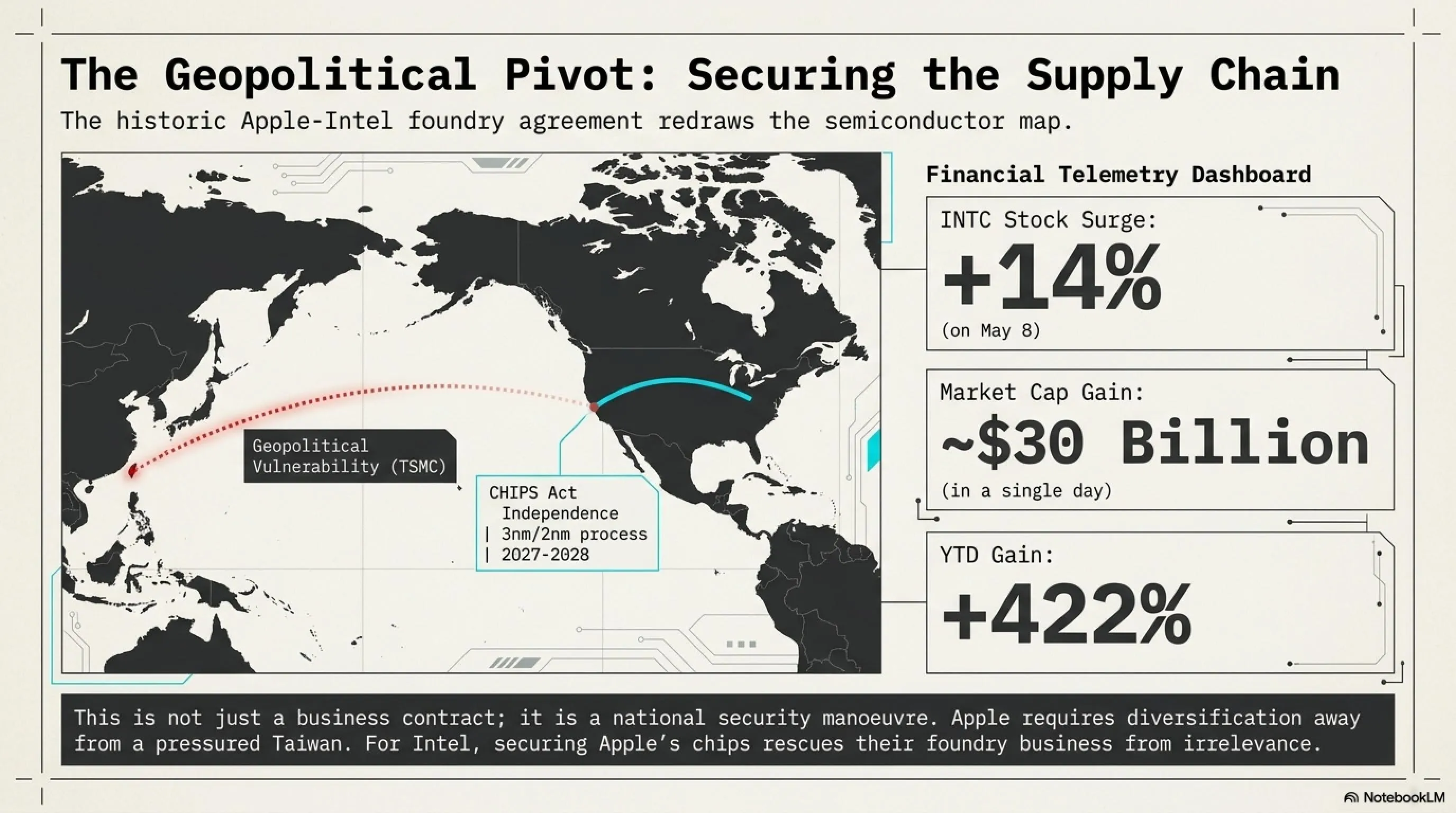
In one of the most stunning semiconductor industry news of 2026, according to authoritative reports from The Wall Street Journal, Bloomberg, and CNBC, Apple and Intel have reached a preliminary agreement for Intel to manufacture Apple's future chips on American soil. This news, coming after years of Apple distancing itself from Intel, caused Intel's stock (INTC) to soar by an astronomical 14% (some sources report 16%) in a single day!
This deal is not only a lifeline for Intel, which has faced serious challenges in recent years, but also a strategic move for Apple to reduce its dependence on TSMC (Taiwan) amid rising geopolitical tensions.
📈 Details of the Apple-Intel Agreement:
- Agreement Type: Chip manufacturing contract (Foundry Agreement)
- Manufacturing Location: Intel facilities in the United States (likely Arizona and Ohio)
- Target Chips: Likely A-series chips for iPhone and M-series for Mac
- Manufacturing Technology: Likely Intel's 3nm or 2nm process nodes
- Timeline: Mass production likely to begin in 2027 or 2028
- Government Support: The U.S. government played a significant role in these negotiations
- Strategic Importance: Part of the CHIPS Act initiative to bring semiconductor manufacturing back to America
📊 Intel Stock Performance on May 8, 2026:
| Metric | Value | Significance |
|---|---|---|
| Daily Gain | +14% to 16% | Best day since April 24 |
| Year-to-Date Gain | +422% | Historic rally |
| Gain Since April | +148% | Sustained momentum |
| Status | New All-Time High | Record-breaking |
| Market Cap Increase | ~$30 Billion | Single-day gain |
Why This Deal Matters: This agreement is significant from multiple perspectives:
- For Intel: After years of decline, Intel has found a major, credible customer that can revive its Foundry business. Apple is one of the world's largest chip buyers, and even a preliminary agreement brings massive credibility.
- For Apple: Reduces dependence on TSMC and diversifies the supply chain, especially important given tensions between the US and China over Taiwan.
- For America: Brings advanced chip manufacturing back to US soil and reduces dependence on Asia. This aligns with the CHIPS Act's goals of semiconductor independence.
- For the Industry: Demonstrates that Intel can become a serious player in the Foundry market, potentially challenging TSMC's dominance.
🔍 Tekin Analysis: Challenges and Opportunities
Challenges: Intel must prove it can produce chips with quality and yield comparable to TSMC. Intel's track record in recent years hasn't been stellar, with multiple delays in manufacturing processes. Apple has extremely high standards and tolerates no mistakes. Intel's 18A process (roughly equivalent to 1.8nm) is still unproven at scale.
Opportunities: If Intel can successfully execute this contract, it could attract other major customers like AMD, Nvidia, or Qualcomm. This could be a turning point in Intel's history, transforming it from a struggling chip designer into a leading foundry. The US government's financial support through the CHIPS Act provides crucial backing.
The Geopolitical Angle: This deal is as much about geopolitics as it is about business. With Taiwan facing increasing pressure from China, the US government has been actively encouraging companies to diversify away from TSMC. Apple's move to Intel is likely influenced by national security considerations as much as business logic.
Analyst Reactions: Wall Street analysts called this deal "a major step for Intel." An analyst from Wedbush Securities said: "This deal could transform Intel from a dying company into a key player in the semiconductor industry. If they can deliver on this contract, the sky's the limit."
Impact on the Global Market: This deal could put significant pressure on TSMC. If Apple shifts some of its orders to Intel, TSMC could face revenue decline. Additionally, this deal could encourage other American companies to use domestic manufacturers, potentially reshaping the global semiconductor supply chain.
The Technical Challenge: Manufacturing Apple's chips is no small feat. Apple's A-series and M-series chips are among the most advanced in the world, using cutting-edge process nodes and custom architectures. Intel will need to demonstrate that its foundry services can match TSMC's quality, yield, and performance. Any misstep could damage both companies' reputations.
Timeline and Expectations: Industry insiders expect the first Intel-manufactured Apple chips to appear in 2027 or 2028. Initially, Intel will likely handle a small portion of Apple's chip production, with TSMC continuing to manufacture the majority. If Intel proves itself, the partnership could expand significantly.
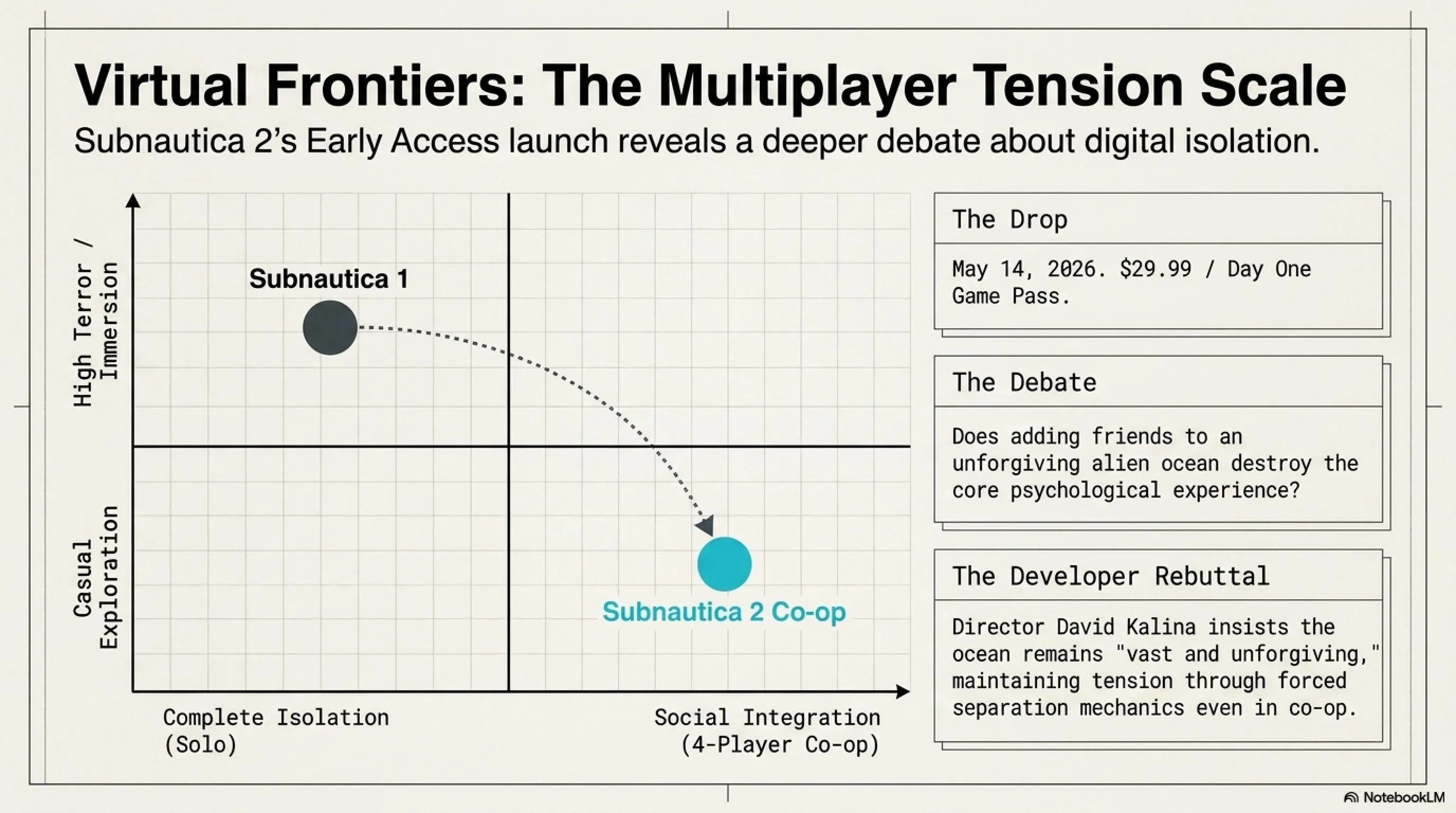
6. Return to the Depths of Terror: Subnautica 2 Gameplay Showcase Event! 🌊🎮
Unknown Worlds studio today (May 9) held a special Pre-Launch Showcase event to publicly reveal Subnautica 2 gameplay for the first time. This game, set to enter Early Access on May 14, 2026 (just 5 days away!), is one of the most anticipated titles of the year.
According to reports from IGN, GameRant, Gematsu, and Xbox Wire, Subnautica 2 introduces four-player co-op for the first time in the series, marking a major evolution in the game's formula. The main question is: does adding multiplayer destroy the sense of loneliness and terror that made the first game so special?
🎮 Key Features of Subnautica 2:
- Four-Player Co-op: For the first time, you can explore the ocean depths with friends
- New World: A completely new alien planet with diverse biomes
- New Leviathans: Terrifying new giant creatures
- Advanced Vehicles: New submarines and vehicles with enhanced capabilities
- Base Building: More advanced system for constructing underwater bases
- Deeper Story: A more complex narrative than the first game
- Cross-Platform: Play between PC and Xbox
- Enhanced Graphics: Built on an upgraded engine with better lighting and water physics
📊 Early Access Release Information:
| Specification | Details |
|---|---|
| Release Date | May 14, 2026 |
| Platforms | PC (Steam, Epic), Xbox Series X|S |
| Price | $29.99 |
| Game Pass | Day One |
| Early Access Duration | Several years (similar to first game) |
| Launch Content | Multiple biomes, leviathans, vehicles, base building |
The Big Debate: Is Co-op Good or Bad? One of the biggest debates in the Subnautica community is whether adding co-op mode destroys the sense of loneliness and fear that made the first game famous. The original game was renowned for its sense of isolation and fear of the unknown. Now that you can play with three other friends, will you have the same feeling?
⚔️ Community Opinions:
✅ Co-op Supporters:
- More social and fun experience
- Ability to divide tasks and work as a team
- Reduces stress for sensitive players
- Ability to play with friends
- More replayability with different group dynamics
- Shared base building is more satisfying
❌ Co-op Critics:
- Loss of sense of loneliness
- Reduced fear and tension
- Changes the game's core identity
- Potential online technical issues
- Leviathan encounters less scary with friends
- Story pacing may suffer in multiplayer
Developer Response: Unknown Worlds told IGN in an interview that co-op is completely optional and players can play solo. They also emphasized that the game is designed so that even with friends, the sense of fear and tension is maintained. Game Director David Kalina explained: "We've designed the game so that even in co-op, you can get separated, lost, or face situations where your friends can't help you. The ocean is vast and unforgiving."
What's New in Subnautica 2: Beyond co-op, the sequel introduces several significant improvements:
- Dynamic Weather System: Surface storms that affect underwater conditions, creating new challenges and opportunities.
- Advanced AI: Creatures with more sophisticated behavior patterns, including pack hunting and territorial disputes.
- Modular Base Building: More flexible base construction with new modules and customization options.
- Improved Crafting: A streamlined crafting system that reduces tedious resource gathering while maintaining depth.
- Story Integration: A more integrated narrative that unfolds naturally through exploration rather than audio logs.
- Biome Diversity: More varied underwater environments, from bioluminescent caves to volcanic vents to frozen depths.
Early Access Expectations: Based on the experience of the first game, which spent about 3 years in Early Access, Subnautica 2 is expected to remain in this phase for several years. The developers have promised to regularly add new content, biomes, and creatures. The Early Access roadmap includes:
- Year 1: Core gameplay loop, 3-4 major biomes, basic story progression
- Year 2: Additional biomes, more vehicles, expanded base building, story completion
- Year 3: Polish, optimization, final content additions, full release
Competitive Landscape: Subnautica 2 enters a more crowded survival game market than its predecessor. Games like Raft, Grounded, and The Forest have all found success with co-op survival. However, Subnautica's unique underwater setting and emphasis on exploration over combat still sets it apart.
Pricing Strategy: At $29.99 and available on Game Pass from day one, Subnautica 2 is one of the most affordable major releases of May. This aggressive pricing strategy suggests Unknown Worlds is confident in the game's quality and wants to build a large player base quickly. For Game Pass subscribers, it's essentially a free addition to their library.
Technical Performance: Early previews suggest the game runs well on Xbox Series X|S and mid-range PCs. The developers have prioritized performance, targeting 60fps on consoles and scalable settings on PC. Cross-platform play works seamlessly, with no noticeable lag or synchronization issues in preview sessions.
The Verdict: For fans of survival and exploration games, Subnautica 2 represents one of the most exciting releases of 2026. The addition of co-op is controversial but optional, meaning both solo and multiplayer fans can enjoy the game their way. With a reasonable price, Game Pass availability, and years of planned content updates, this is a game worth diving into.
💭 Final Thoughts: The Night Boundaries Were Broken
Saturday night, May 9, 2026, was a night when six major stories, each capable of being a headline on its own, converged to paint a picture of our technological future. From Google's silent infiltration of our computers with a 4GB AI download, to Nintendo's unexpected price hike despite stable inventory. From Amazon Prime's TikTokification showing that even long-form content platforms have surrendered to declining attention spans, to Instagram's removal of encryption exposing billions of users to surveillance.
The historic Apple-Intel alliance demonstrated that the semiconductor war has entered a new phase, with America seeking to reclaim its technological independence. And finally, the return to the depths of terror with Subnautica 2 proved that survival and exploration games continue to captivate audiences, even as they evolve to include multiplayer experiences.
These six stories share a common thread: they all demonstrate that technology is no longer just a tool—it's a force that shapes our lives, work, and entertainment. The question is: are we ready for this future? More importantly, do we have a choice?
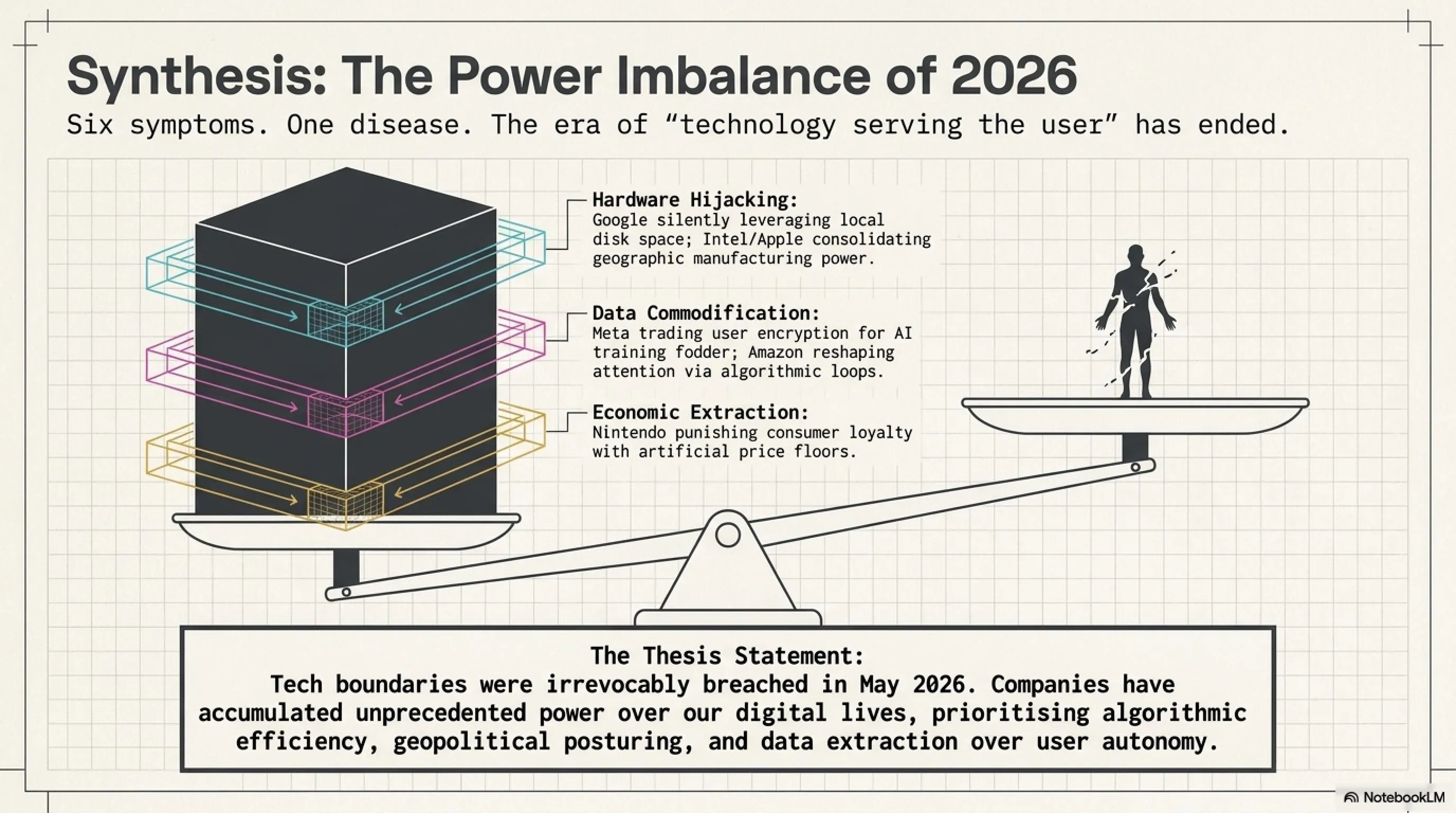
Tonight's stories reveal uncomfortable truths about the tech industry. Companies like Google and Meta are willing to sacrifice user privacy for AI advancement and government cooperation. Nintendo is testing how much consumers will tolerate price increases. Amazon is betting that our attention spans have shrunk to TikTok length. Intel is fighting for survival by partnering with its former rival. And game developers are grappling with how to preserve the essence of their games while adapting to multiplayer demands.
The common denominator? Power. Tech companies have accumulated unprecedented power over our digital lives, and they're using it in ways that prioritize their interests over ours. The only counterbalance is informed, engaged users who demand transparency, control, and respect for their privacy and autonomy. Tonight's stories are a wake-up call. The future is being written right now, and we all have a role to play in shaping it.
❓ Should we be worried about Chrome's secret AI download?
Yes, this is a serious concern. Downloading 4GB without user notification not only consumes disk space but also sets a dangerous precedent for privacy violations. Users should have complete control over what gets installed on their devices. We recommend disabling Chrome's AI features or switching to privacy-focused browsers like Firefox or Brave. This incident highlights the need for stronger regulations requiring explicit consent for software installations.
❓ Is Nintendo's Switch 2 price increase justified?
From an economic perspective, this decision seems odd. Companies typically raise prices when facing inventory shortages, not when they've sold 20 million units with stable inventory. This decision could reduce demand and benefit competitors like Steam Deck 2. For consumers, we recommend buying before September 1 if you're planning to purchase, or waiting for future discounts. The market will ultimately decide if Nintendo's gamble pays off.
❓ How can I protect my privacy after Instagram removed E2EE?
The best approach is to stop using Instagram for sensitive communications. Instead, use secure messengers like Signal (best option), Telegram Secret Chats, or Session. If you must use Instagram, never send sensitive information, private images, or important conversations via DMs. Remember that Meta can now see everything. For truly private communications, use apps that offer end-to-end encryption by default and have a proven track record of protecting user privacy.
❓ Is the Apple-Intel deal dangerous for TSMC?
In the short term, no. TSMC still has the most advanced chip manufacturing technology, and Apple can't quickly transfer all its orders to Intel. But in the long term, if Intel can deliver quality and yield comparable to TSMC, this deal could put significant pressure on TSMC. It also signals that American companies are seeking to reduce dependence on Asia. This is part of a broader geopolitical shift in the semiconductor industry, driven by concerns about Taiwan's security and supply chain resilience.
❓ Will Subnautica 2 with co-op have the same feel as the first game?
This is the biggest question. The developers have emphasized that co-op is optional and you can play solo. But the reality is that when you play with friends, the sense of loneliness and fear diminishes. However, co-op can provide a social and fun experience. The best approach is to try both modes and see which you prefer. At $29.99 and available on Game Pass, it's worth experimenting. Many players plan to do their first playthrough solo to experience the intended atmosphere, then replay with friends for a different experience.
📚 Sources
Primary Sources: Tom's Guide, TechSpot, Yahoo Tech, Malwarebytes, The Register, Indian Express (Chrome AI) • Variety, Forbes, CNBC, Nintendo Life, IGN, TechRadar (Nintendo Switch 2) • TechCrunch, The Indian Express, Engadget, 9to5Mac (Amazon Prime Clips) • The Independent, MacRumors, Cybernews, Fortune, The Register, India Today (Instagram E2EE) • CNBC, Bloomberg, Wall Street Journal, Yahoo Finance, Silicon Angle, Economic Times (Apple-Intel) • IGN, GameRant, Gematsu, Xbox Wire, GameSpot, Notebookcheck (Subnautica 2)
Analysis and Research: Tekin Editorial Team — May 9, 2026
🌐 Stay Connected With Us
For the latest tech, gaming, and gadget news, follow us on social media:
🌐 Stay Connected With Us 🎮✨
For the latest tech, gaming, and gadget news, follow us on our official social media channels:
Additional Gallery: 🌙 Tekin Night May 9: Chrome's Secret AI Download, Switch 2 Price Hike & Apple-Intel Alliance