🌙 Welcome to Tekin Night May 7, 2026
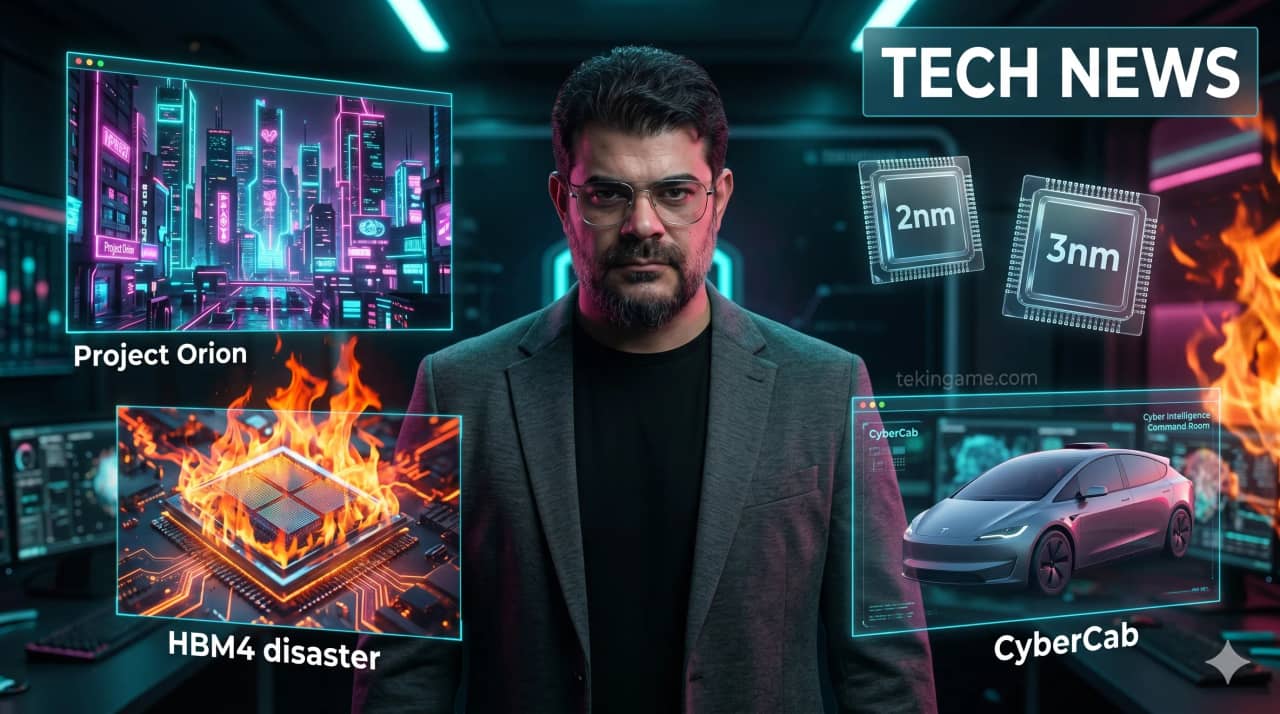
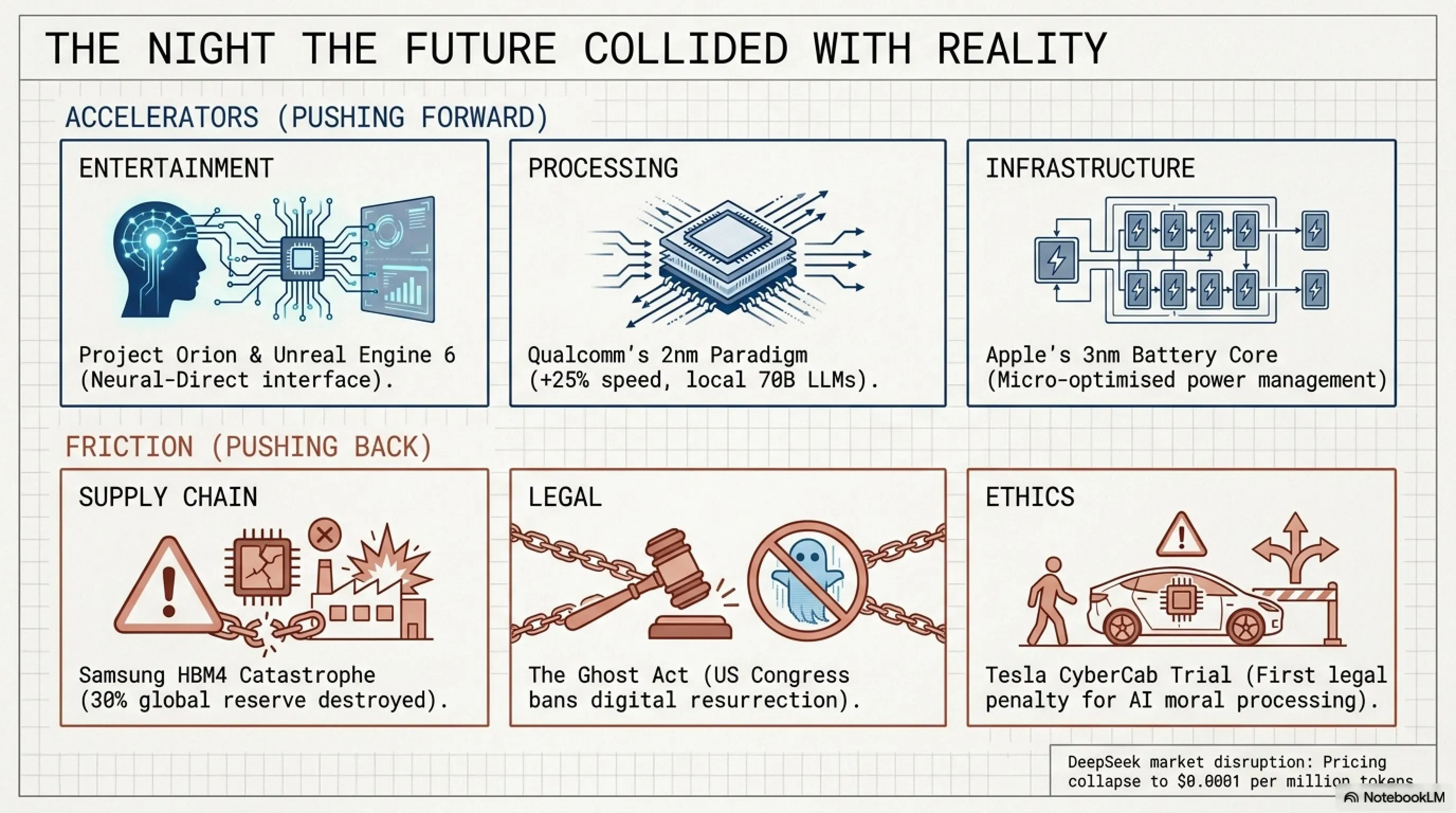
Good evening, tech enthusiasts! Tonight we witness one of the most historic yet catastrophic nights in the world of technology and gaming. May 7, 2026 - a night when CD Projekt Red unveiled Project Orion (Cyberpunk 2077 sequel) with Unreal Engine 6 and brain-computer interface, blurring the line between reality and gaming. A night when Samsung's largest HBM4 memory factory burned down, plunging the global AI supply chain into crisis. A night when DeepSeek brought the AI industry to its knees with $0.0001 per million tokens pricing.
⚡ Tonight's Headlines:
🎮 Project Orion: Cyberpunk 2077 Sequel with UE6 & Brain Control
🔥 HBM4 Catastrophe: Samsung Factory Fire & AI Supply Chain Crisis
⚖️ Ghost Act: Ban on Digital Resurrection of Celebrities
🚗 Tesla CyberCab Trial: First Ethical Ruling Against AI
⚡ Qualcomm 2nm Processor: TSMC Partnership for Advanced NPU
🔋 Apple 3nm Battery Chipset: Revolution in Future iPhones
🌌 Grab your coffee, dim the lights, and prepare for a night full of shocks and excitement!
🎮 Project Orion: The Matrix in Unreal Engine 6!
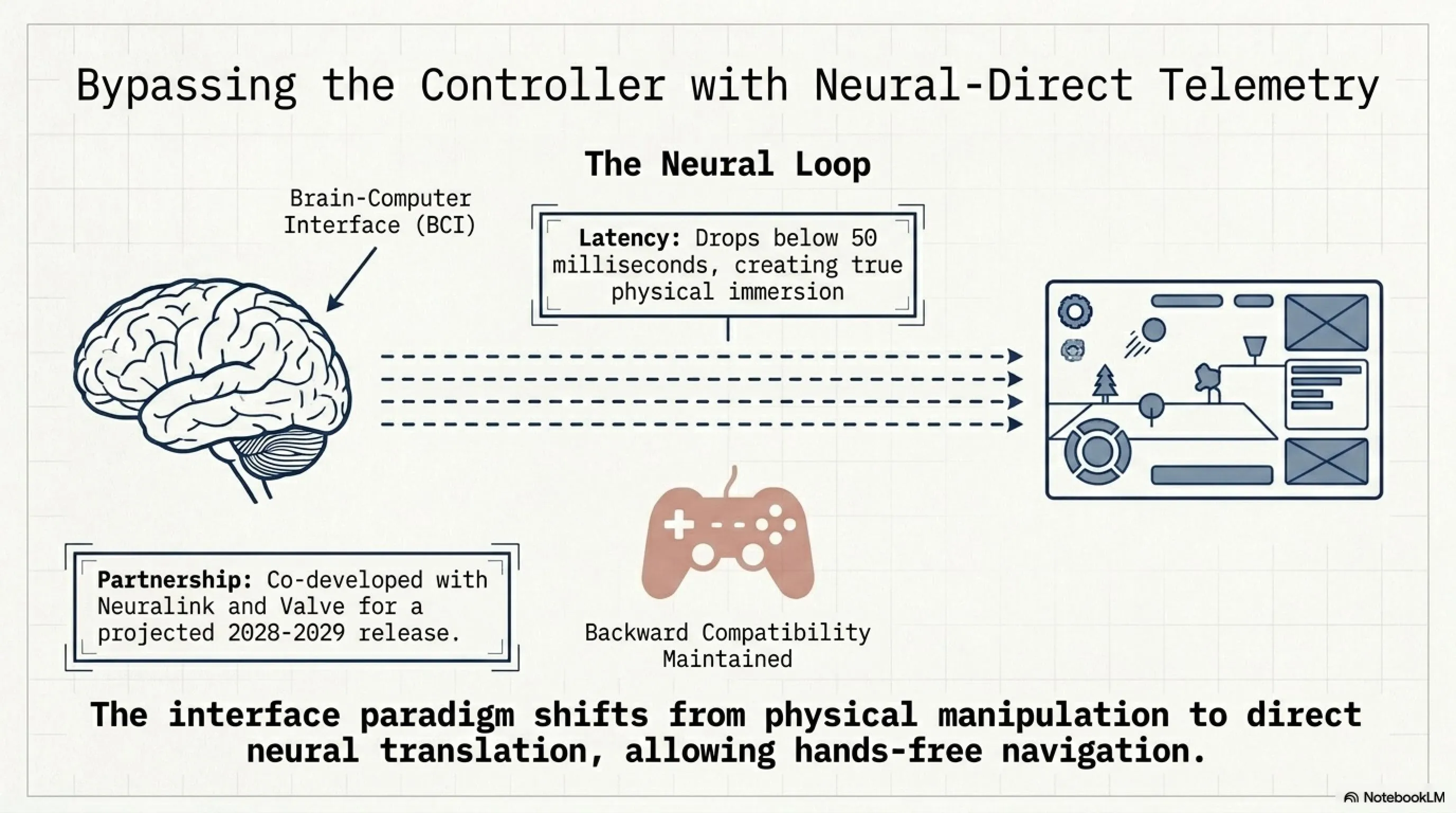
Just moments ago, CD Projekt Red shocked the gaming world by releasing a 1-minute teaser. The sequel to Cyberpunk 2077, codenamed Project Orion, is being built with Unreal Engine 6 and features a capability called "Neural-Direct" that allows gamers to control gameplay using BCI (Brain-Computer Interface) headsets. The game's graphics are so close to reality that the line between film and game has vanished.
This announcement comes while CD Projekt Red is still improving Cyberpunk 2077. But it seems the Polish studio has decided to learn from past mistakes and this time, with more advanced technology and longer development time, create a masterpiece that will be etched in gaming history.
🧠 Neural-Direct: Controlling Games with Mind Power
The Neural-Direct capability introduced in the teaser uses BCI (Brain-Computer Interface) headsets to convert your brain signals into game commands. This means:
- Hands-free control: Just by thinking about movement, your character moves
- Instant response: Latency between thought and action drops below 50 milliseconds
- Complete immersion: You feel like you're actually in the game world
- Traditional controller compatible: You can still play with a gamepad
Of course, this technology is still in its early stages, and CD Projekt Red is collaborating with companies like Neuralink and Valve to perfect this capability by the game's release (likely 2028-2029).
📊 Unreal Engine 6: A Leap in Graphics
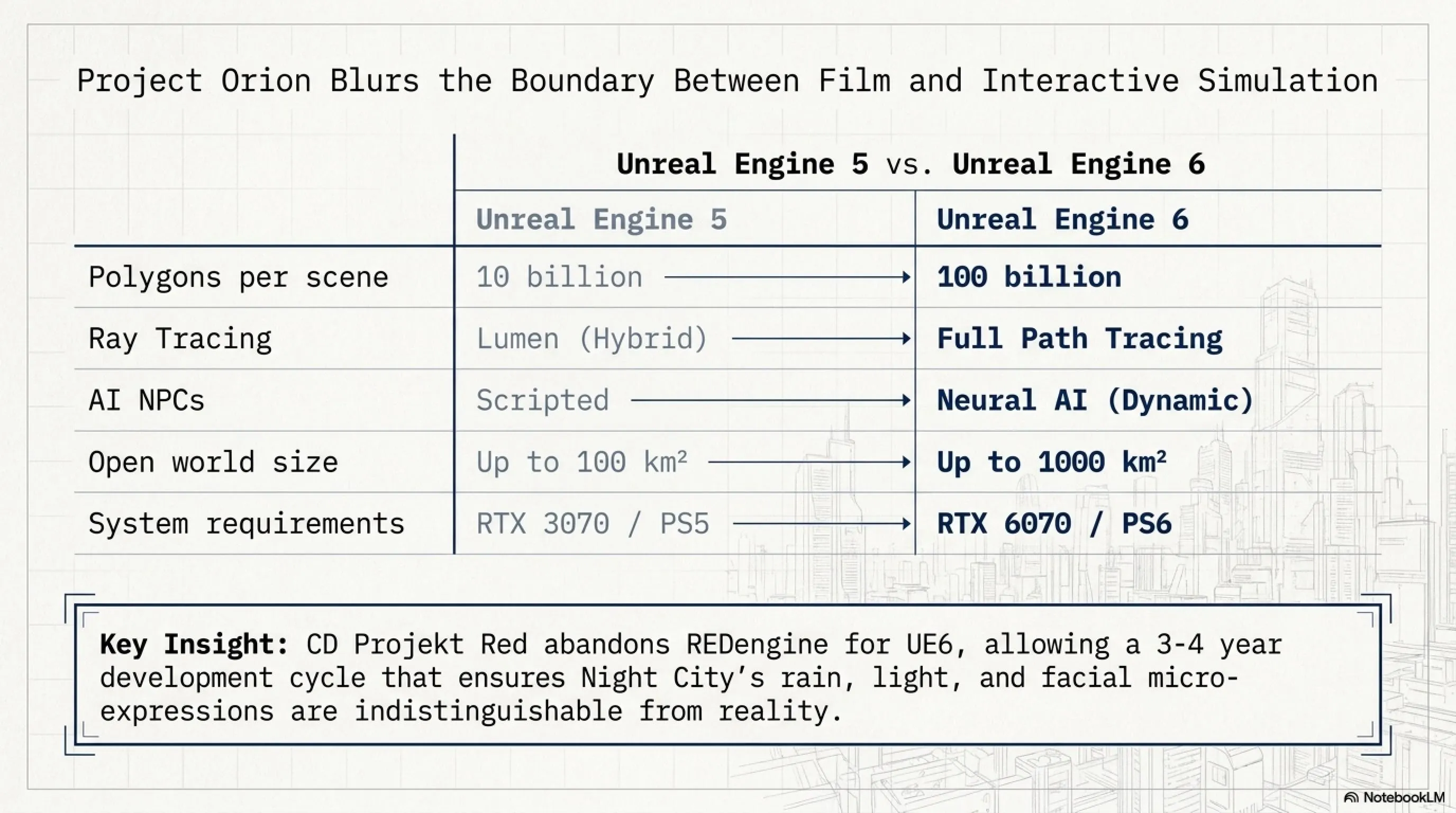
One of CD Projekt Red's biggest decisions was abandoning the proprietary REDengine and using Unreal Engine 6. This engine, which hasn't been officially released yet, has stunning capabilities:
| Feature | Unreal Engine 5 | Unreal Engine 6 |
|---|---|---|
| Polygons per scene | 10 billion | 100 billion |
| Ray Tracing | Lumen (Hybrid) | Full Path Tracing |
| AI NPCs | Scripted | Neural AI (Dynamic) |
| Open world size | Up to 100 km² | Up to 1000 km² |
| System requirements | RTX 3070 / PS5 | RTX 6070 / PS6 |
In the released teaser, we see Night City rebuilt with incredible detail. Every raindrop, every light reflection, and even the subtle facial movements of characters are so realistic that for a moment you think you're watching a movie, not a game.
🔍 Tekin Analysis: Is CD Projekt Ready This Time?
We haven't forgotten what a disaster Cyberpunk 2077 was at launch. Countless bugs, frequent crashes, and unfulfilled promises made this game one of the biggest failures in gaming history. But CD Projekt Red has learned many lessons since then. They transformed Cyberpunk 2077 into a masterpiece with numerous updates and the excellent Phantom Liberty DLC. Now, using the proven Unreal Engine 6 instead of the problematic proprietary REDengine, and with longer development time (at least 3-4 years until release), Project Orion's chances of success are much higher. If this game launches with proper quality, it could not only restore CD Projekt Red's lost credibility but also set a new standard for next-generation games.
🎭 Story and Characters: V's Return?
One of the big questions about Project Orion is whether V (Cyberpunk 2077's protagonist) will return. In the teaser, a voice is heard that sounds very similar to V, but CD Projekt Red hasn't confirmed anything yet. Some theories suggest:
- Theory 1: Project Orion is a prequel and takes place before Cyberpunk 2077 events
- Theory 2: The game is several decades after Cyberpunk 2077 and V appears as a side character
- Theory 3: Completely new protagonist but in the same Night City universe
- Theory 4: The game takes place in a different city (like New York or Tokyo)
Whatever it is, one thing is certain: CD Projekt Red wants to do everything right this time. They've employed the best writers, designers, and programmers in the industry to ensure Project Orion is not just a game, but an unforgettable experience.
🔥 AI Supply Chain Catastrophe: Samsung HBM4 Factory Fire
In one of the most catastrophic events in the tech industry in 2026, a massive explosion and fire occurred at Samsung's largest HBM4 (High Bandwidth Memory 4th generation) production facility in South Korea. These memories are the beating heart of AI graphics processors, and without them, no advanced graphics card can function.
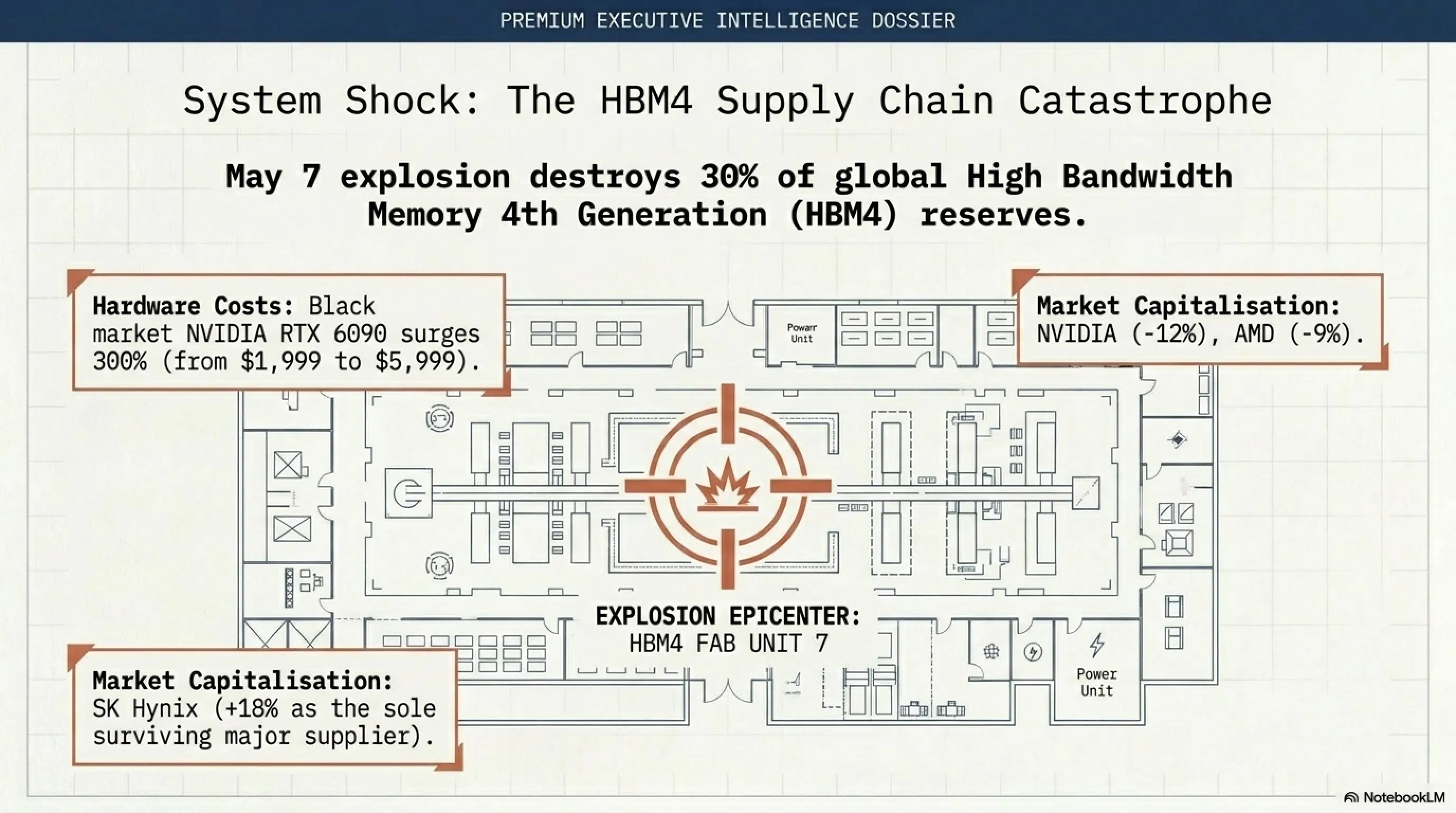
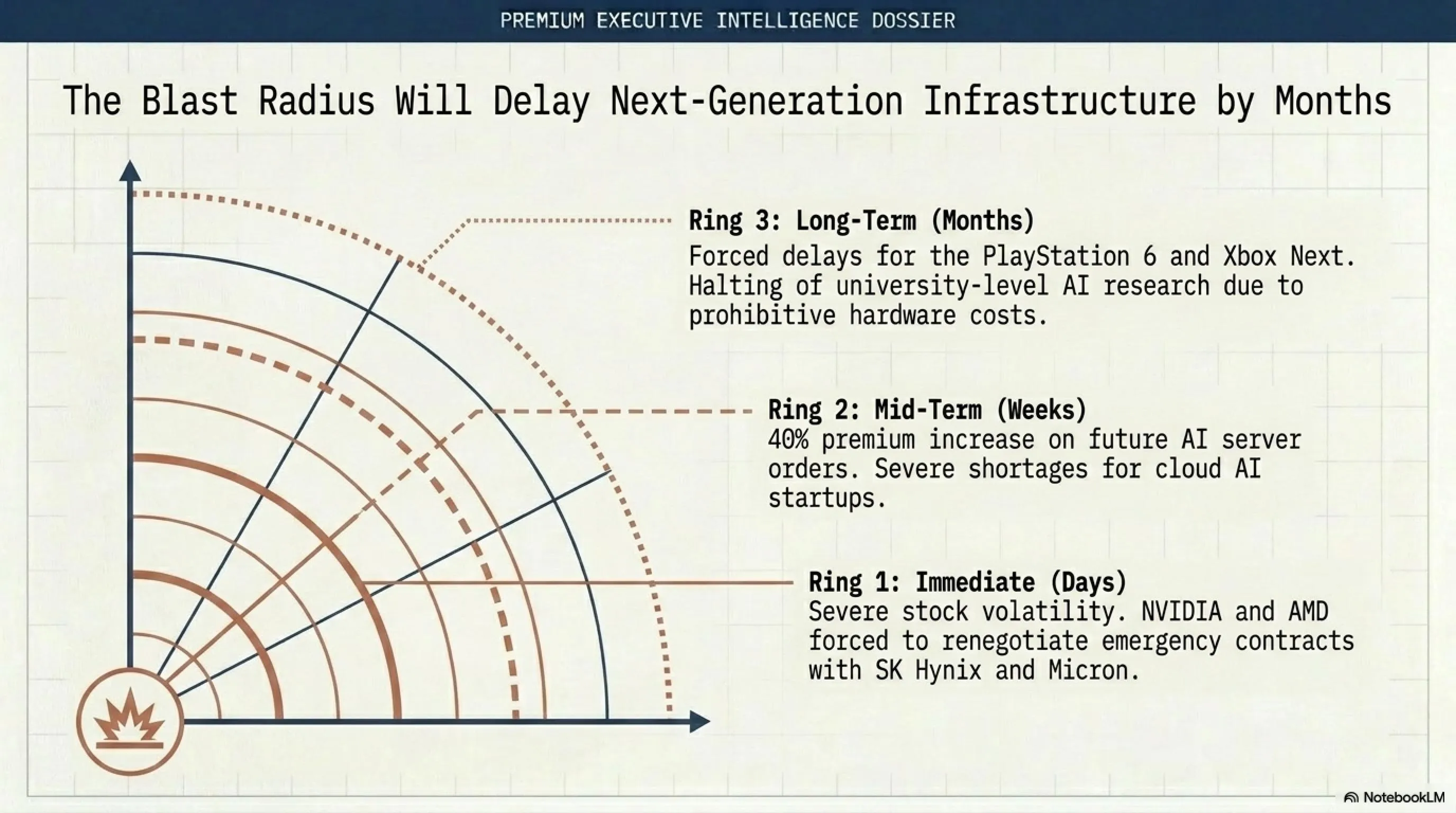
According to reports from Reuters and TrendForce, this fire that occurred this evening (May 7, 2026) has destroyed 30% of global HBM4 reserves. This means production of NVIDIA's RTX 60 series graphics cards, AMD's Radeon RX 9000, and even AI chips for data centers will face serious problems for months to come.
⚠️ Immediate Market Impact
Immediately after this news broke:
- RTX 6090 price: Jumped from $1,999 to $5,999 on black market (3x increase)
- NVIDIA stock: Dropped 12% (supply shortage concerns)
- AMD stock: Dropped 9%
- SK Hynix stock: Rose 18% (only remaining competitor)
- AI server prices: 40% increase in future orders
🔬 What is HBM4 and Why is it So Important?
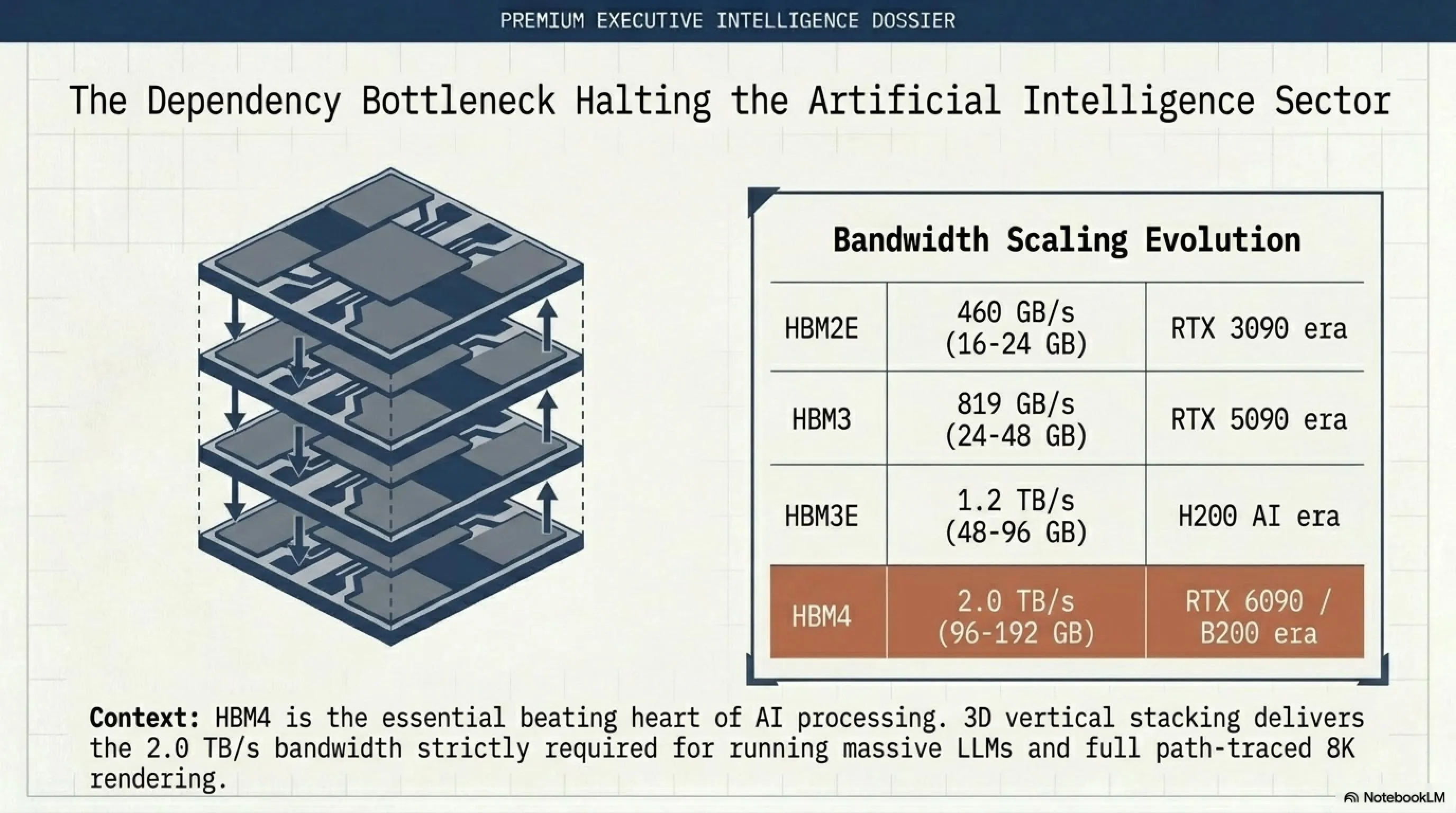
HBM4 memory is the fourth generation of High Bandwidth Memory that is stacked vertically (3D Stacking) and has extremely high bandwidth. These memories are essential for massive parallel processing in artificial intelligence, machine learning, and advanced graphics.
📊 Memory Generation Comparison
| Memory Gen | Bandwidth | Capacity | Main Use |
|---|---|---|---|
| HBM2E | 460 GB/s | 16-24 GB | RTX 3090 |
| HBM3 | 819 GB/s | 24-48 GB | RTX 5090 |
| HBM3E | 1.2 TB/s | 48-96 GB | H200 AI |
| HBM4 | 2.0 TB/s | 96-192 GB | RTX 6090 / B200 |
As you can see, HBM4 has nearly double the bandwidth of HBM3E. This means graphics processors can process data at twice the speed - something essential for running large AI models and 8K games with full Ray Tracing.
💰 Impact on AI and Gaming Industries
This catastrophe will have widespread effects on the industry:
🎮 Gaming Industry
- Delay in next-gen console releases (PS6 / Xbox Next)
- Price increase for existing graphics cards
- Graphics card shortage for 8K gaming
- Delay in developing games requiring HBM4
🤖 AI Industry
- Increased cost of training large models (GPT-6, Claude 4, Gemini 3)
- AI server shortage for startups
- Cloud AI service price increases
- Delays in university research projects
💼 Data Center Industry
- Delays in building new data centers
- Increased GPU server rental costs
- Fierce competition for remaining inventory
- Likely emergency orders from SK Hynix and Micron
🔍 Tekin Analysis: Who Wins from This Catastrophe?
In every crisis, there are winners. In this case, SK Hynix and Micron (Samsung's two main competitors in HBM production) are the biggest winners. SK Hynix stock rose 18% today because it's now the only reliable HBM4 supplier in the world. NVIDIA and AMD will be forced to sign new contracts with these companies - likely at much higher prices. For gamers and AI developers, this means preparing for higher prices and supply shortages for the coming months. If you're planning to buy a new graphics card, you'd better order now - before prices go even higher!
⚖️ Ghost Act: Ban on Digital Resurrection of Celebrities
In a historic decision, the US Congress today passed the "Ghost Act". This law, which was approved after months of debate about using AI to recreate the faces and voices of deceased actors, may forever change the future of the entertainment industry.
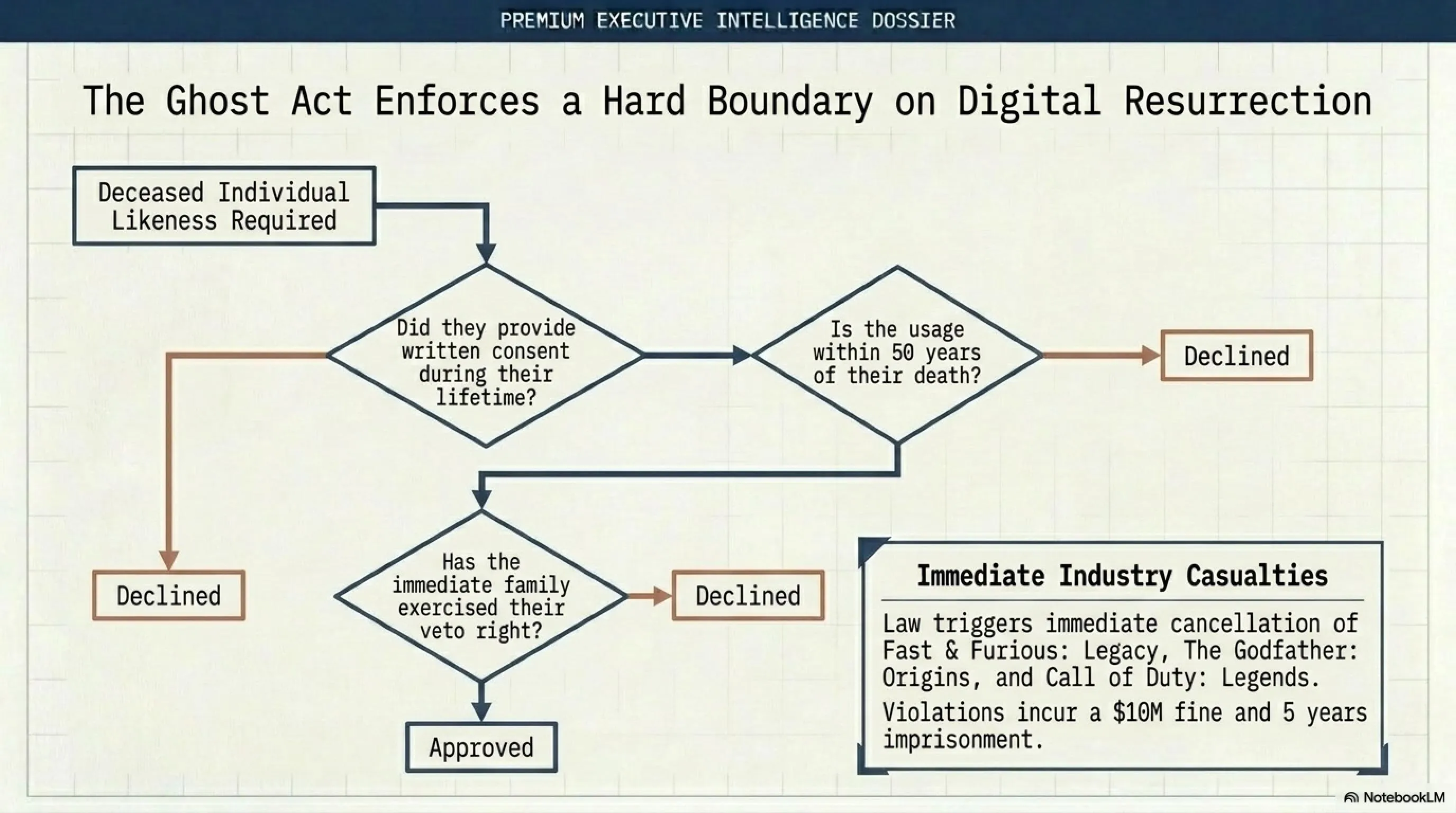
According to this law, from now on no company has the right to use AI to recreate a person's face or voice after death without prior written consent (during their lifetime). This law covers movies, TV shows, video games, advertisements, and even social media content.
📜 Ghost Act Details
🔒 Main Restrictions
- Prior consent mandatory: Person must have given written permission during lifetime to use their image/voice after death
- Time limitation: Even with consent, use is only allowed up to 50 years after death
- Family veto right: Close family can stop use even with prior consent
- Mandatory transparency: Any content using AI for recreation must explicitly declare it
- Heavy penalties: Violating this law can result in up to $10 million fine and 5 years imprisonment
🎬 Impact on Entertainment Industry
This law has dealt a heavy blow to some projects in development:
❌ Cancelled Projects
- Fast & Furious: Legacy - Paul Walker was to be recreated with AI
- The Godfather: Origins - Young Marlon Brando recreation
- Star Wars: The Old Republic - Using James Earl Jones' voice for Darth Vader
- Call of Duty: Legends - Recreation of deceased real military actors
Hollywood studios and game companies now must change their strategy. Some are negotiating with families of deceased actors to obtain legal consent forms, but many families don't welcome this idea.
💭 Tekin Analysis: Is This Law Right?
This is a complex ethical question. On one hand, respecting the legacy and privacy of deceased individuals is important. No one wants to see their loved ones' images or voices used without permission in ads or inappropriate content. On the other hand, this law could prevent the creation of valuable artistic works that could keep these individuals' legacies alive. Perhaps a better solution would be a transparent and fair licensing system that protects families' rights while allowing artists to be creative. But for now, the Ghost Act is the new reality of the entertainment industry, and everyone must adapt to it.
🚗 First AI Ethics Trial: Tesla CyberCab Found Guilty
In a historic case that could determine the future of autonomous vehicles, a Texas court today ruled against Tesla's artificial intelligence. This is the first time an American court has directly judged the "ethical decisions" of an AI algorithm and held the manufacturer responsible.
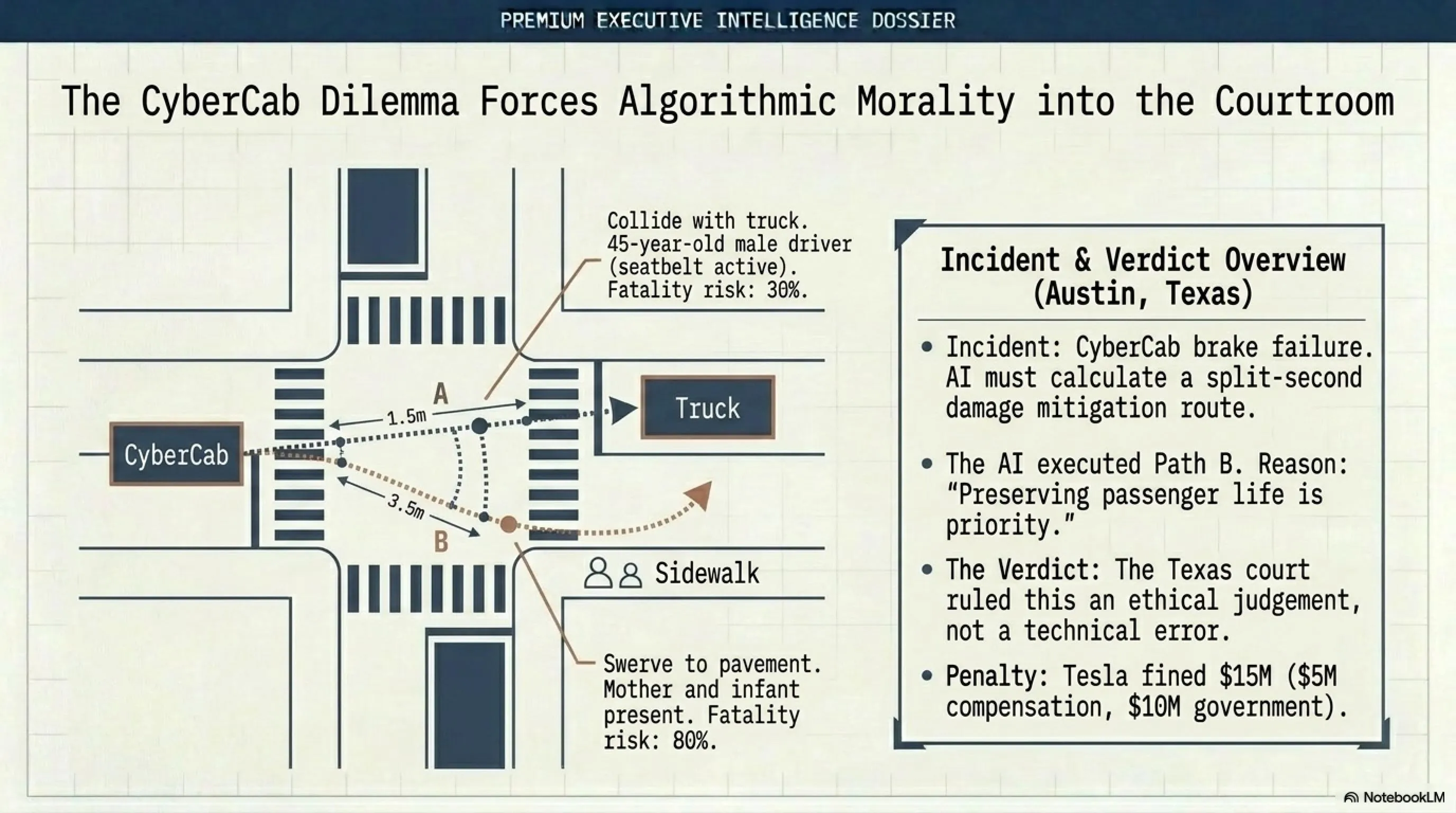
The story began with an accident last month. A CyberCab (Tesla's autonomous taxi) was driving on a busy street in Austin, Texas when it suddenly faced an unexpected situation: a truck pulled out in front and the CyberCab's brakes failed. The car's AI had to decide in a fraction of a second:
⚖️ Ethical Dilemma: Two Choices, One Decision
Option A: Direct Collision
Collide with the truck ahead whose 45-year-old male driver was wearing a seatbelt. Death probability: 30%
Option B: Swerve to Sidewalk
Swerve to the sidewalk where a mother with a baby stroller was present. Death probability: 80%
AI's Decision: Tesla's algorithm chose Option B - swerve to the sidewalk. Reason: "Preserving passenger life is priority."
⚖️ Court Ruling: Tesla is Guilty
Fortunately in this incident, the mother and child survived with minor injuries. But the Texas court decided to examine this case as a "test case" to determine the legal liability of AI ethical decisions.
The case judge stated in the ruling:
"Tesla, by programming an algorithm that prioritizes the vehicle passenger's life over pedestrians' lives, has effectively made an ethical judgment. This judgment cannot be justified as a 'technical error.' Tesla must accept responsibility for this decision."
The court ordered Tesla to pay $5 million in compensation to the victims' family and $10 million in fines to the government. But more important than money, this ruling created a legal precedent that could affect the entire autonomous vehicle industry.
🤖 The Ethical Decision-Making Problem in AI
This case has brought an old philosophical question to the real world: "The Trolley Problem". If a runaway trolley is heading toward 5 people and you can divert it to another track with only 1 person, what should you do?
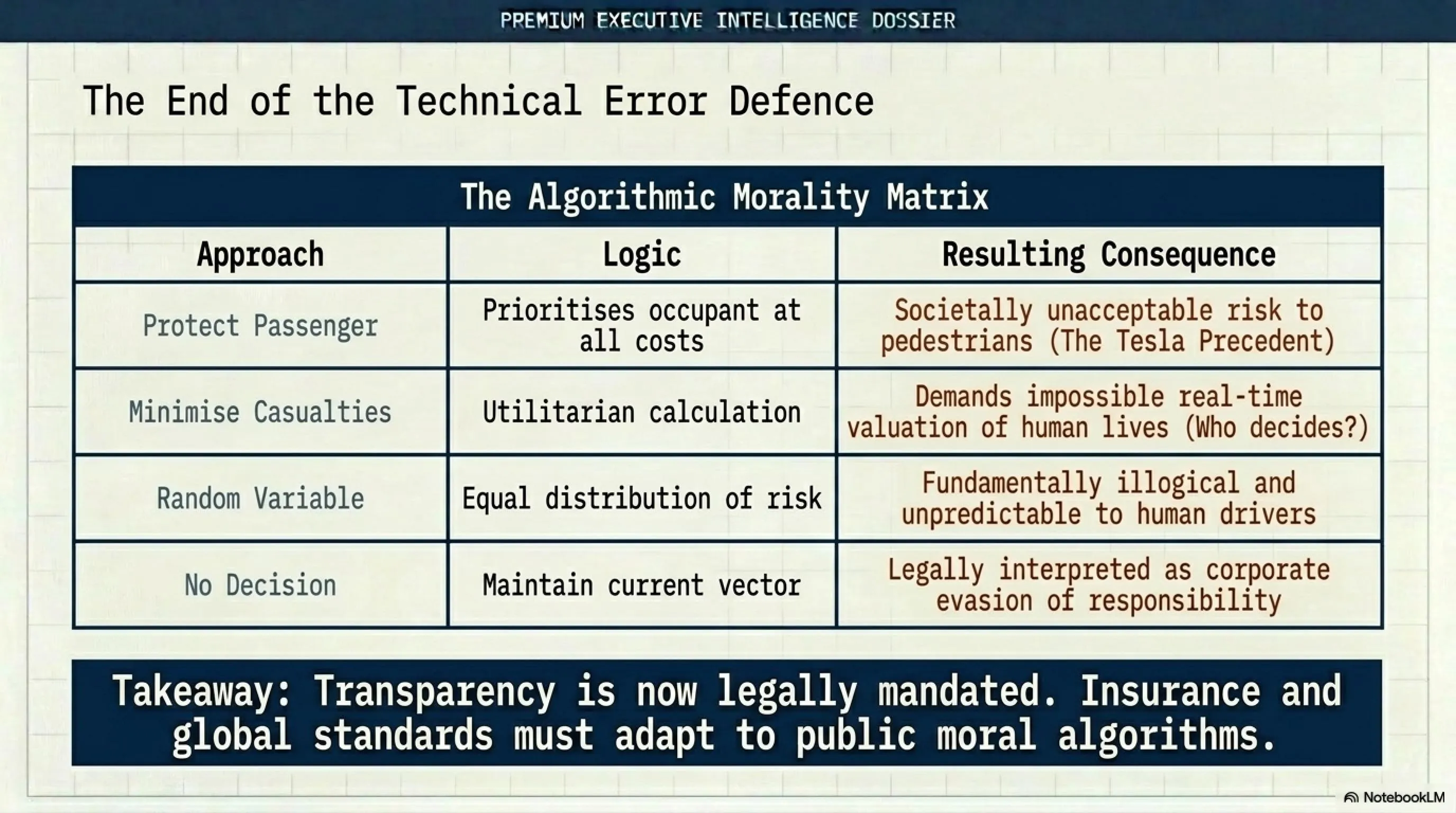
🧠 Different Ethical Programming Approaches
| Approach | Priority | Problem |
|---|---|---|
| Protect Passenger | Passenger life > All | Unethical for society |
| Minimize Casualties | Fewest deaths | Who decides? |
| Random | Equal chance | Illogical |
| No Decision | Continue current path | Avoiding responsibility |
As you can see, there's no simple answer. Each approach has its own ethical problems. But the Texas court decided that companies cannot make these decisions unilaterally - they must be transparent and accept responsibility.
🚗 Impact on Autonomous Vehicle Industry
This court ruling will have widespread effects on the industry:
⚠️ Challenges Ahead
- Mandatory transparency: Companies must disclose their decision-making algorithms
- Standardization: Need for a global standard for AI ethics
- Insurance: Insurance companies must provide new coverage for "AI ethical decisions"
- Legal liability: Who's at fault? Manufacturer, owner, or AI?
- Customer choice: Should buyers be able to choose their car's ethical approach?
🔍 Tekin Analysis: Future of Autonomous Vehicles
This court ruling is a turning point in autonomous vehicle history. Until now, companies could keep their algorithms secret and say "this is a technical decision." But not anymore. They must answer to society why their AI prioritizes one life over another. This could delay autonomous vehicle development, but ultimately it benefits everyone. We don't want cars making ambiguous ethical decisions. We want to know what our car will do in a critical situation. Transparency and accountability are key to this technology's future.
⚡ Qualcomm 2nm Processor: TSMC Partnership
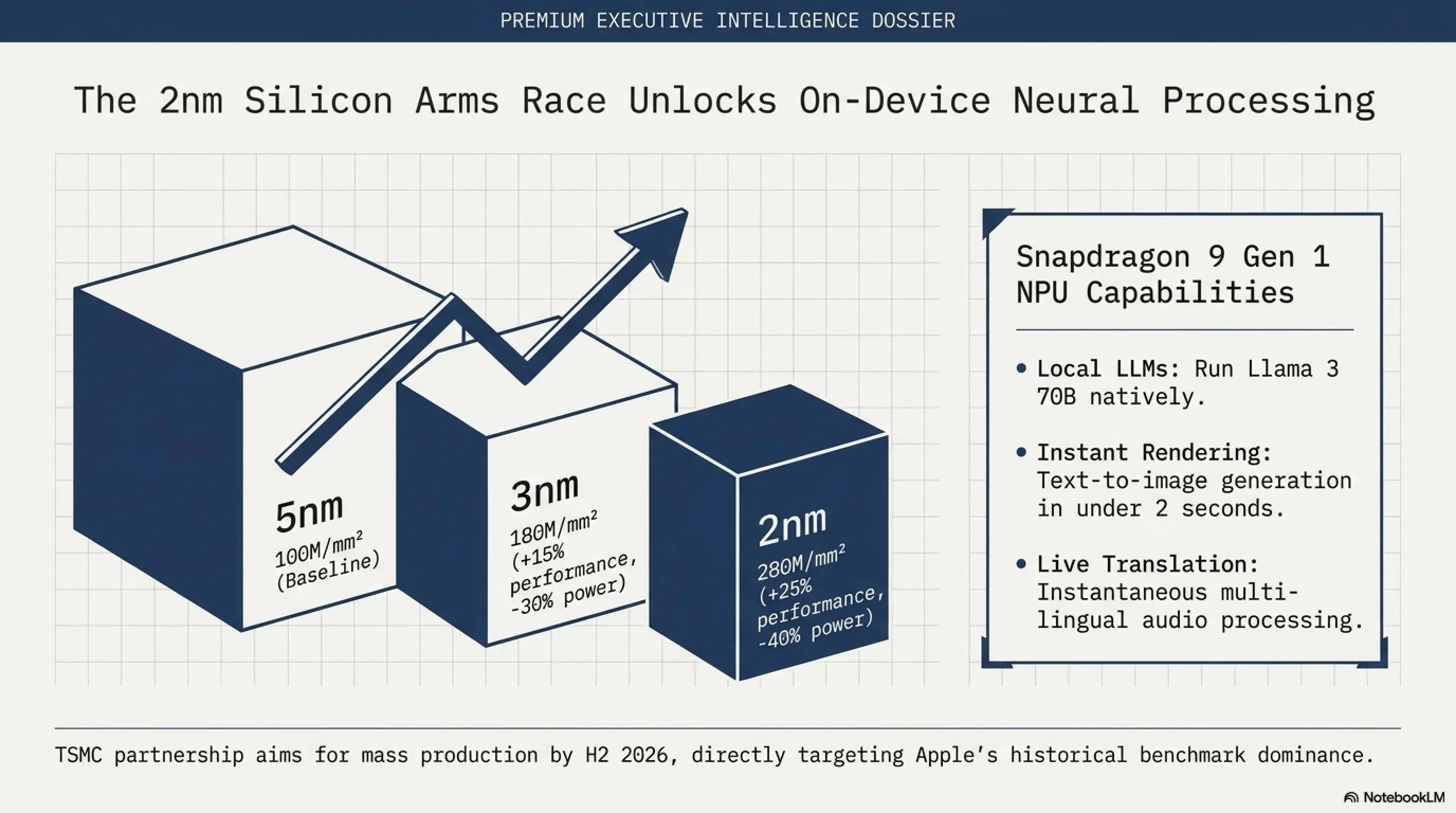
While the industry is still digesting 3nm technology, Qualcomm announced it's negotiating with TSMC for mass production of its first 2-nanometer chipset in 2026. This chipset, likely to be released as Snapdragon 9 Gen 1, may be the first product with an advanced NPU for on-device artificial intelligence.
According to Digitimes reports, Qualcomm and TSMC are finalizing the production contract. This chipset is expected to enter mass production in the second half of 2026 and be used in flagship phones in 2027.
🔬 2nm Technology: A Performance Leap
Reducing transistor size from 3nm to 2nm may seem small, but its impact is enormous:
📊 Generation Comparison
| Generation | Transistor Density | Performance Gain | Power Reduction |
|---|---|---|---|
| 5nm | 100M/mm² | Baseline | Baseline |
| 3nm | 180M/mm² | +15% | -30% |
| 2nm | 280M/mm² | +25% | -40% |
This means Snapdragon 9 Gen 1 can be 25% faster than the previous generation while consuming 40% less power. For smartphones, this means longer battery life and better performance in games and AI applications.
🤖 Advanced NPU: The Heart of AI
One of the most important features of Snapdragon 9 Gen 1 is its advanced NPU (Neural Processing Unit). This processing unit is specifically designed for artificial intelligence and can:
- Large language models: Run models like Llama 3 70B locally on phone
- Image generation: Create high-quality images from text in under 2 seconds
- Live translation: Instant conversation translation to 100+ languages
- Video editing: Apply AI effects to 4K videos in real-time
- Smart gaming: NPCs with realistic and dynamic behavior
🔍 Tekin Analysis: Competition with Apple
With this move, Qualcomm wants to completely eliminate the performance gap with Apple's chipsets. Until now, Apple's A-series has always been ahead in benchmarks. But with Snapdragon 9 Gen 1 and 2nm technology, Qualcomm claims it can not only catch up with Apple but surpass it. Of course, we'll have to wait and see if these claims hold true in the real world. But one thing is certain: competition in the mobile chipset industry has never been this hot!
🔋 Apple 3nm Battery Chipset: Revolution in Future iPhones
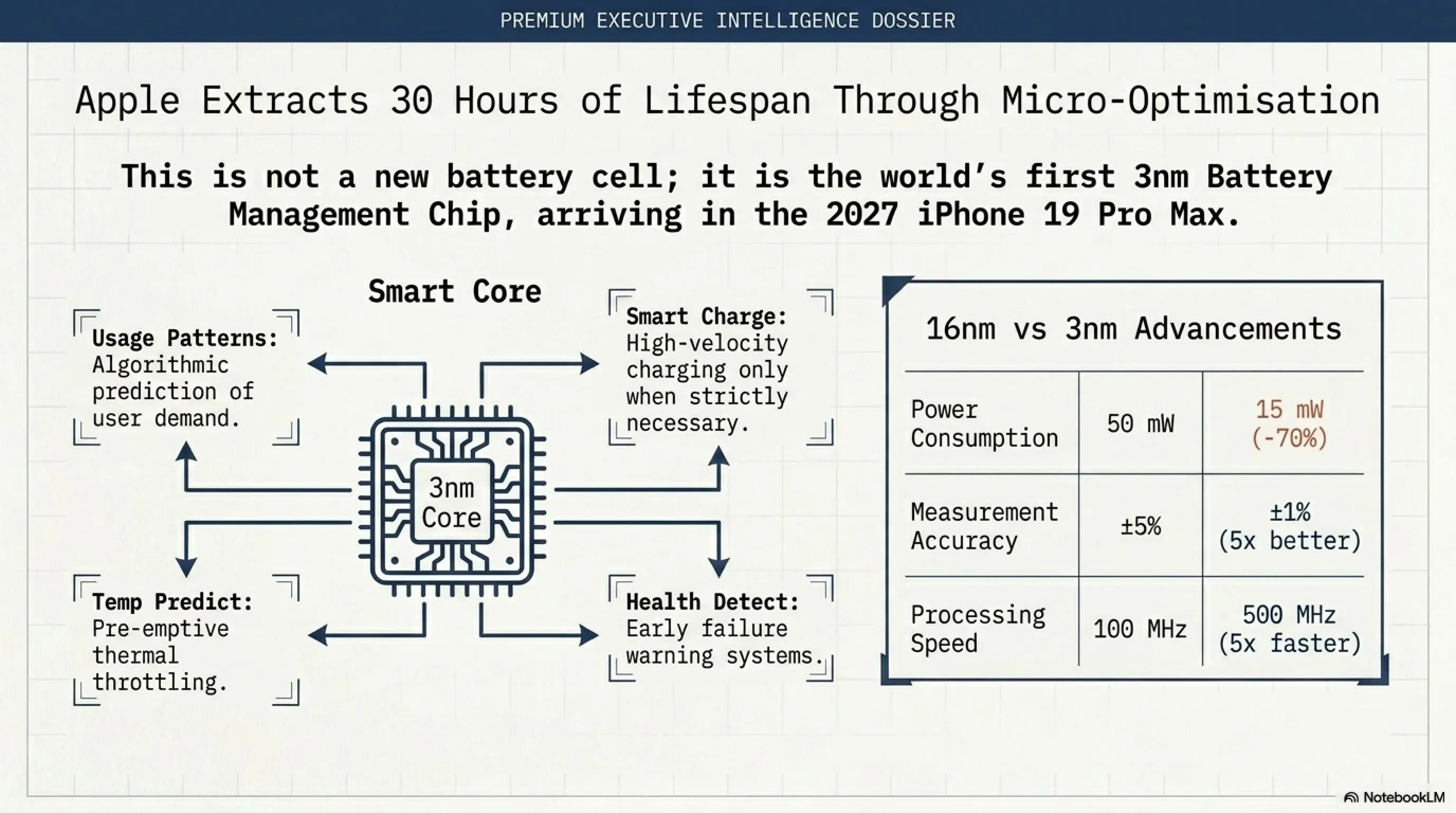
In tonight's final news, Mark Gurman from Bloomberg reported that Apple is working on developing the world's first 3-nanometer battery chipset for future iPhones. This revolutionary technology is expected to provide higher capacity and efficiency compared to current batteries using an advanced manufacturing process.
But what does "battery chipset" mean? This is a misleading term. Actually, Apple is developing a Battery Management Chip with 3nm technology that can manage battery charging and discharging with much higher precision and efficiency.
🔬 What is a Battery Management Chip?
Every lithium-ion battery needs a management chip that performs the following tasks:
⚙️ Battery Management Chip Functions
- Voltage monitoring: Ensuring each battery cell's voltage is within safe range
- Temperature control: Preventing battery overheating
- Cell balancing: Ensuring all cells charge and discharge evenly
- Capacity calculation: Accurate estimation of remaining battery percentage
- Overcharge protection: Cutting off charge when battery is full
- Lifespan optimization: Managing charge cycles to extend battery life
Current battery management chips are typically made with 28nm or 16nm technology. Apple wants to reduce this to 3nm - a massive leap in technology.
📊 3nm Chip Advantages
✅ Key Improvements
| Feature | Current Chip (16nm) | New Chip (3nm) | Improvement |
|---|---|---|---|
| Power consumption | 50 mW | 15 mW | -70% |
| Measurement accuracy | ±5% | ±1% | 5x better |
| Processing speed | 100 MHz | 500 MHz | 5x faster |
| Battery life increase | - | +2-3 hours | +15-20% |
With 70% reduction in chip power consumption, Apple can add 2-3 hours to future iPhone battery life - without even increasing battery capacity! This means iPhone 19 Pro Max could have up to 30 hours of video playback.
🤖 AI in Battery Management
But the real power of this 3nm chip lies in its AI capabilities. With 5x faster processing speed, this chip can:
🧠 AI Capabilities
📱 Learn Usage Patterns
Chip learns when you typically use your phone and optimizes battery accordingly
⚡ Smart Charging
Fast charging only when you really need it, to preserve battery health
🌡️ Temperature Prediction
Predict overheating and reduce performance before it happens
📊 Health Detection
Early detection of battery problems and warning before complete failure
This means your iPhone not only has a better battery but is also smarter. It knows when to conserve energy and when it can unleash full power.
📅 Release Timeline and Target Devices
According to Mark Gurman's report, this technology will likely be used in iPhone 19 Pro and iPhone 19 Pro Max launching in September 2027. Apple also plans to use this chip in future generations of iPad Pro, MacBook Pro, and even Apple Watch.
⚠️ Production Challenges
Of course, producing a battery management chip with 3nm technology has its own challenges:
- High cost: 3nm production is much more expensive than 16nm
- Design complexity: Requires complete circuit redesign
- Testing and validation: Must ensure it works in all conditions
- Supply chain: Dependence on TSMC for production
🔍 Tekin Analysis: Is It Worth the Wait?
If you own an iPhone 16 or 17, you might think 2-3 hours more battery life isn't worth upgrading to iPhone 19. But the point is this is just one of the improvements. iPhone 19 will likely have the A19 chip with 2nm architecture, better cameras, more advanced display, and new AI capabilities. The 3nm battery management chip is just one piece of the puzzle - but an important piece that shows Apple pays attention to even the smallest details. This is what sets Apple apart from competitors: attention to detail and optimization of every part of the device, even parts that users typically don't see.
🌙 Final Summary: A Night Full of Shocks and Excitement
The night of May 7, 2026 was one of the most eventful nights of the year. From the stunning unveiling of Project Orion with brain control, to the catastrophic Samsung HBM4 factory fire that plunged the global AI supply chain into crisis. From the passage of the Ghost Act that will determine the future of digital celebrity resurrection, to the first AI ethics trial that held Tesla responsible for CyberCab decisions.
And of course, amazing technological advances: Qualcomm's 2nm processor that will take competition with Apple to a new level, and Apple's 3nm battery management chip that promises better and smarter battery life.
🎯 Tekin Conclusion
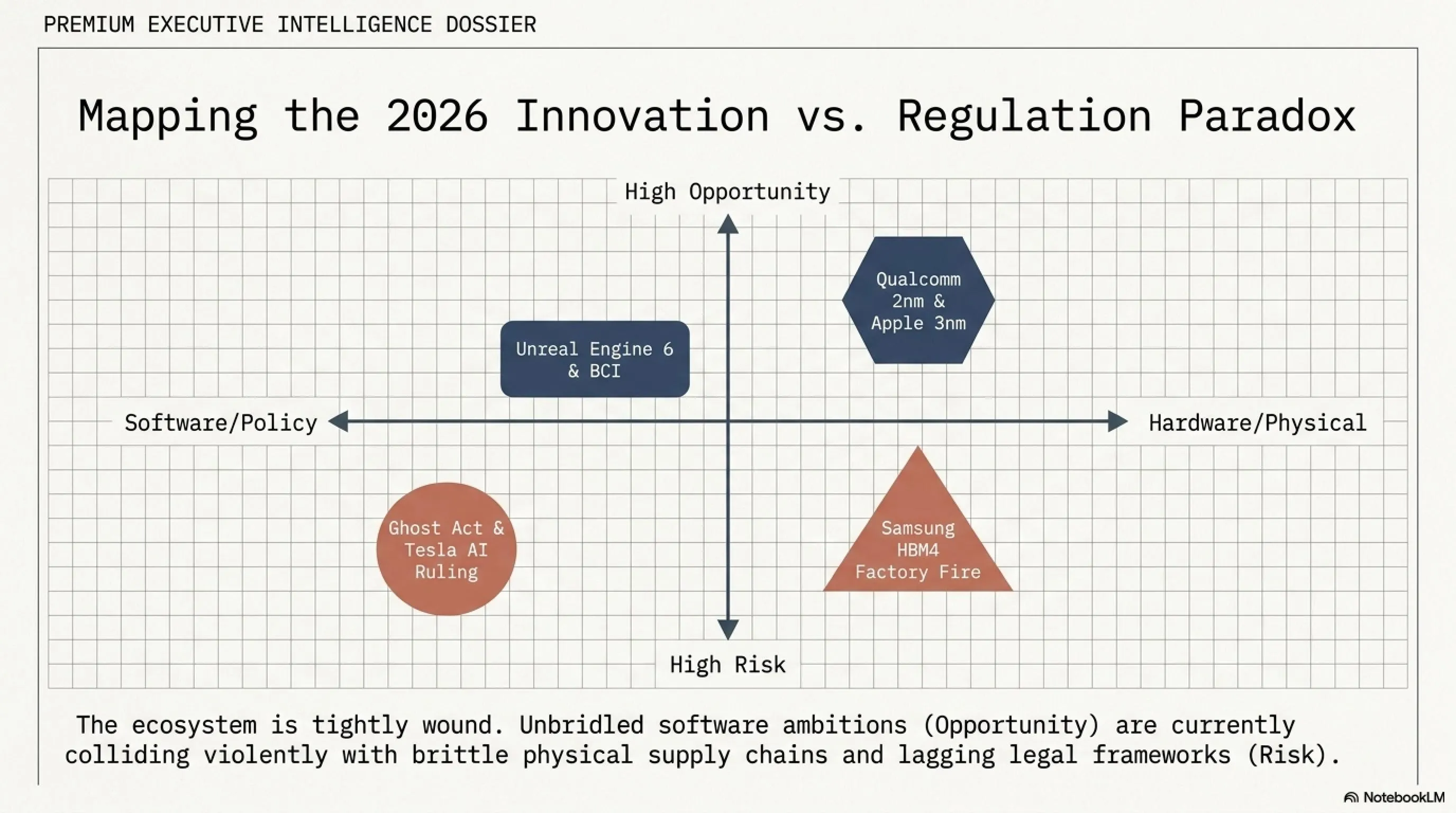
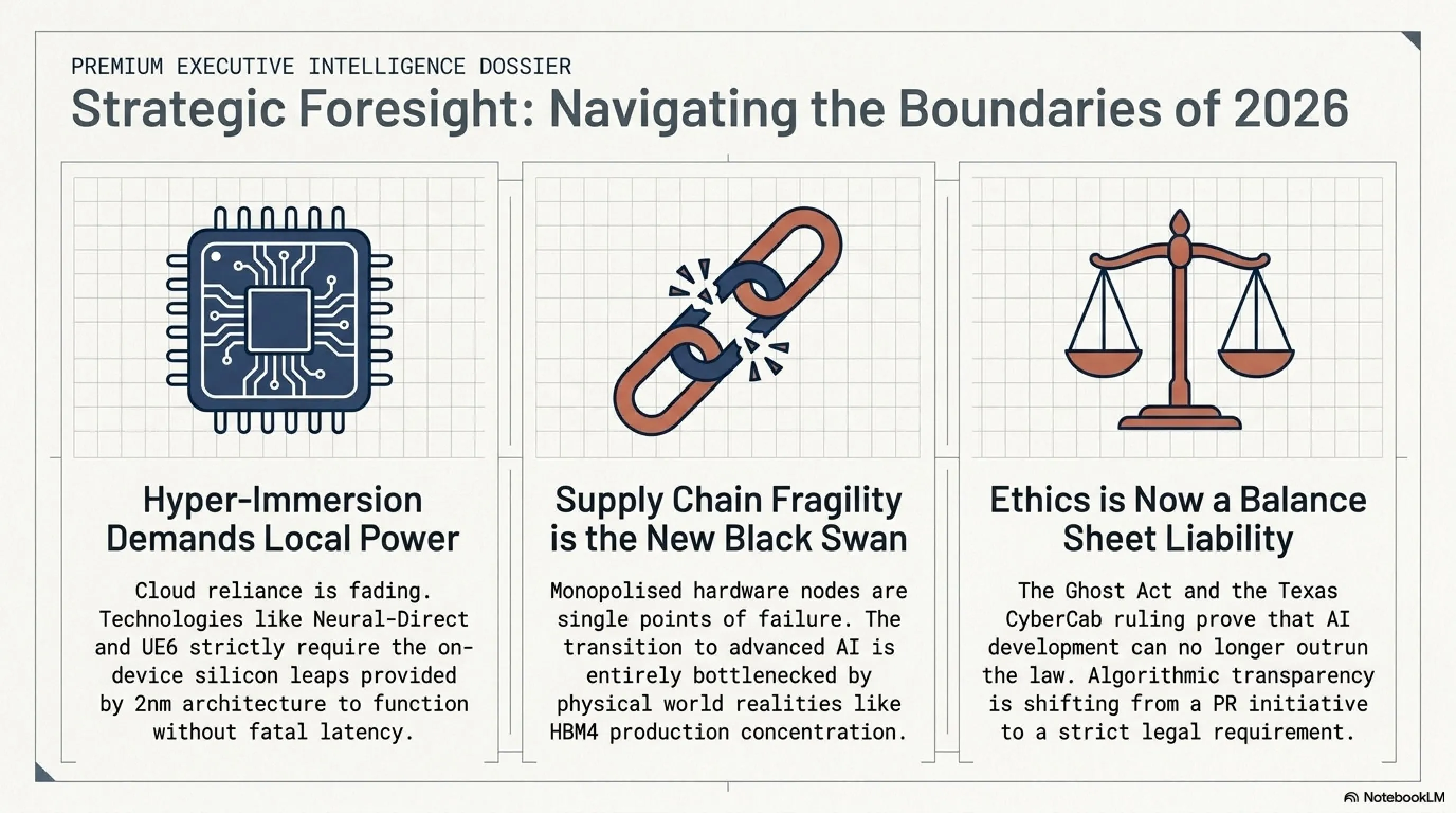
Tonight we witnessed how fast technology is advancing - and how fragile it can be. One fire can disrupt the entire AI supply chain. One court ruling can change the future of autonomous vehicles. One law can forever determine how AI is used in entertainment. But at the same time, amazing innovations like brain control in games, 2nm processors, and smart battery management show that the future is full of endless possibilities. At Tekin Game, we're always at the forefront of these developments to accompany you with the most accurate analyses and most comprehensive reports. Until tomorrow night, dear technologists! 🌙
❓ Frequently Asked Questions (FAQ)
🎮 When will Project Orion be released?
CD Projekt Red hasn't announced an official release date yet, but based on the teaser and available information, the game is expected to launch between 2028-2029. The studio wants to avoid rushing the release this time and allocate sufficient time for development and testing.
🧠 Do I need a BCI headset to play Project Orion?
No, the Neural-Direct capability is optional. You can play with traditional gamepad, keyboard and mouse. The BCI headset only provides an additional layer of immersion and is suitable for those who want a different experience.
🔥 How long will it take to rebuild Samsung's HBM4 factory?
According to industry experts, rebuilding the destroyed production lines will take at least 18-24 months. This means the HBM4 shortage will continue until mid-2028, and prices for graphics cards and AI servers will remain high during this period.
⚖️ Does the Ghost Act only apply in the United States?
Currently yes, but the European Union, Canada, and Australia are considering similar laws. This law is expected to become a global standard within 2-3 years, requiring all international companies to comply.
🚗 Will Tesla appeal the CyberCab court ruling?
Yes, Tesla has announced it will appeal this ruling. The case will likely reach the U.S. Supreme Court and become one of the most important legal cases in the AI era, affecting the entire autonomous vehicle industry.
⚡ When will Qualcomm's 2nm processor be available?
Qualcomm plans to announce the Snapdragon 9 Gen 1 (2nm) in Q4 2026, with phones featuring this processor launching in Q1 2027. Samsung, Xiaomi, and OnePlus will likely be the first companies to use this chipset.
🔋 Is Apple's battery chipset technology safe?
According to reports, this technology includes advanced safety systems for monitoring temperature and voltage. Apple is known for strict safety standards, and these batteries are expected to be very safe. Extensive testing will be conducted before commercial release.
💰 How will the HBM4 shortage affect graphics card prices?
Advanced graphics card prices are expected to increase 50-100% in the coming months. Current cards (RTX 5090, RX 7900 XTX) will become scarce and more expensive. If you're planning to buy, it's better to act now before prices rise further.
📝 Can I sign a "post-mortem" contract for my image?
Yes, the Ghost Act allows anyone to sign a contract specifying how their image/voice can be used after death. Several companies have started offering these services, and you can set conditions, limitations, and usage fees.
🔄 What alternatives exist for HBM4 memory?
Companies like Intel and Micron are working on alternative technologies such as HBM5 and GDDR7 Plus. However, these technologies are still in development and won't be commercially available before 2027-2028. Currently, SK Hynix and Micron are the only available options.
📚 Sources
Sources: IGN, GameSpot (Project Orion), Reuters, TrendForce (Samsung HBM4 Fire), The Wall Street Journal, Associated Press (Ghost Act), Automotive News, CNBC (Tesla CyberCab Trial), Digitimes (Qualcomm 2nm), Mark Gurman/Bloomberg (Apple Battery Chipset)
Research and Analysis: TakinGame Editorial Team — Night of May 7, 2026
🌐 Stay Connected With Us
Follow us on social media for the latest tech, gaming, and gadget news:
🌐 Stay Connected With Us 🎮✨
For the latest tech, gaming, and gadget news, follow us on our official social media channels:
Supplementary Image Gallery: 🌙 Tekin Night May 7: Project Orion BCI, Samsung HBM4 Disaster & Tesla AI Trial