🌙 TEKIN NIGHT | Monday, June 29, 2026
Late-night energy with the hottest news in security, AI, and crypto
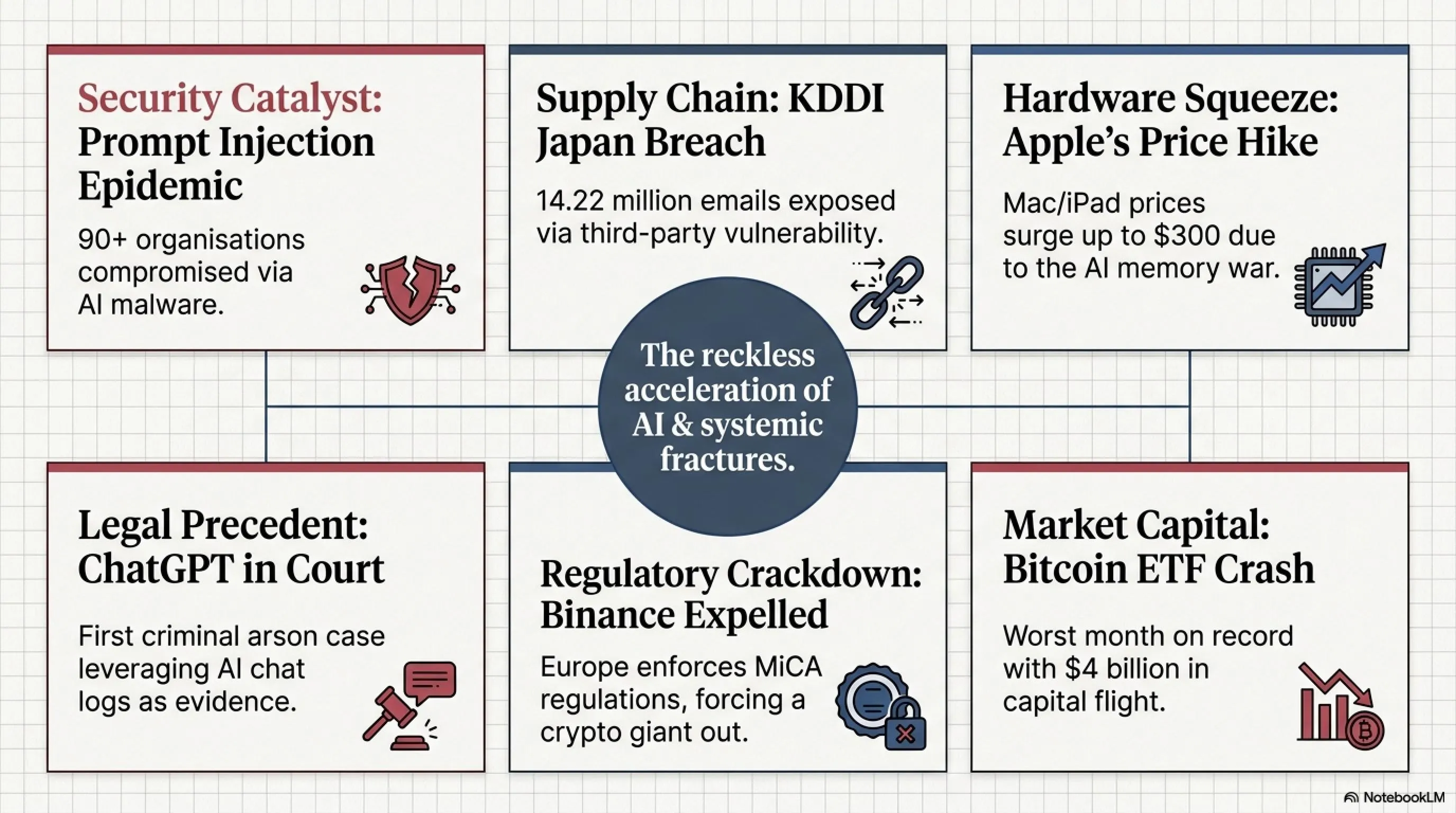
- 🎮Prompt Injection: The New Malware- CrowdStrike: 90+ organizations compromised
- 🎧KDDI Japan Security Breach- 14.2 million emails and passwords exposed
- 🚀Apple's Shocking Price Hikes- Mac and iPad prices jump up to $300
- 🗡️ChatGPT Goes to Court- First criminal case using AI chat logs
- 📰Binance Kicked Out of Europe- MiCA enforcement begins July 1st
- 🎮Bitcoin Drops to $59,700- Worst ETF month ever: $4B in outflows
At a Glance: The New Era of Digital Threats
- Prompts have become weaponized - CrowdStrike reports 90+ successful attacks targeting enterprise AI systems
- Japan's biggest data breach: KDDI and 6 ISPs lost 14.2 million email accounts to attackers exploiting third-party software
- AI memory crisis forces Apple to raise Mac and iPad prices up to $300 - Tim Cook calls it a 'hundred-year flood'
- ChatGPT conversation history used as courtroom evidence for the first time in California's Palisades wildfire arson case
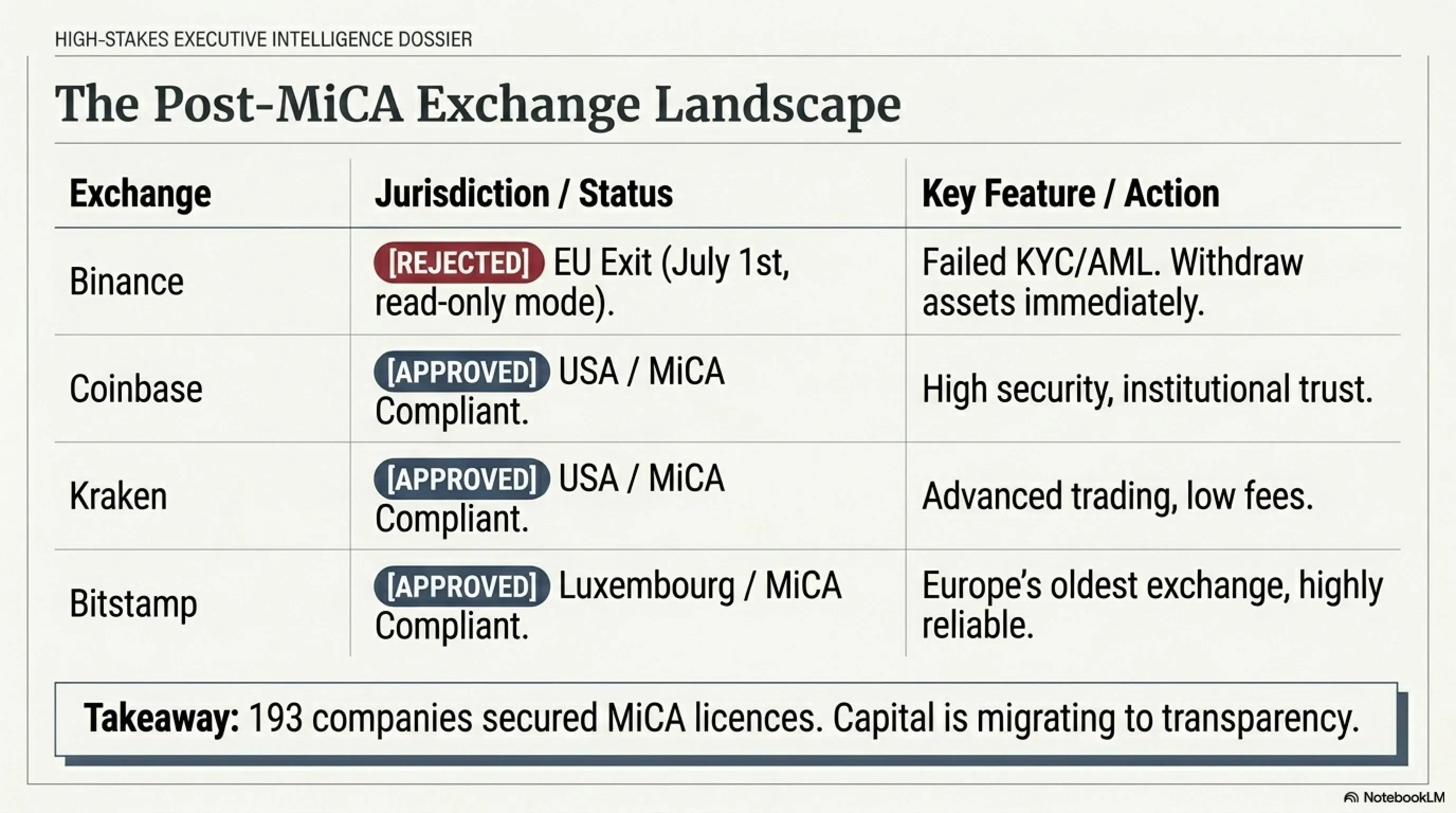
- Binance expelled from European Union - MiCA regulations take effect July 1st, forcing service shutdown
- Bitcoin crashes to $59,700 as spot ETFs record worst month ever with $4 billion in capital outflows
When Prompts Become Malware: Why Prompt Injection is Enterprise AI's Achilles Heel
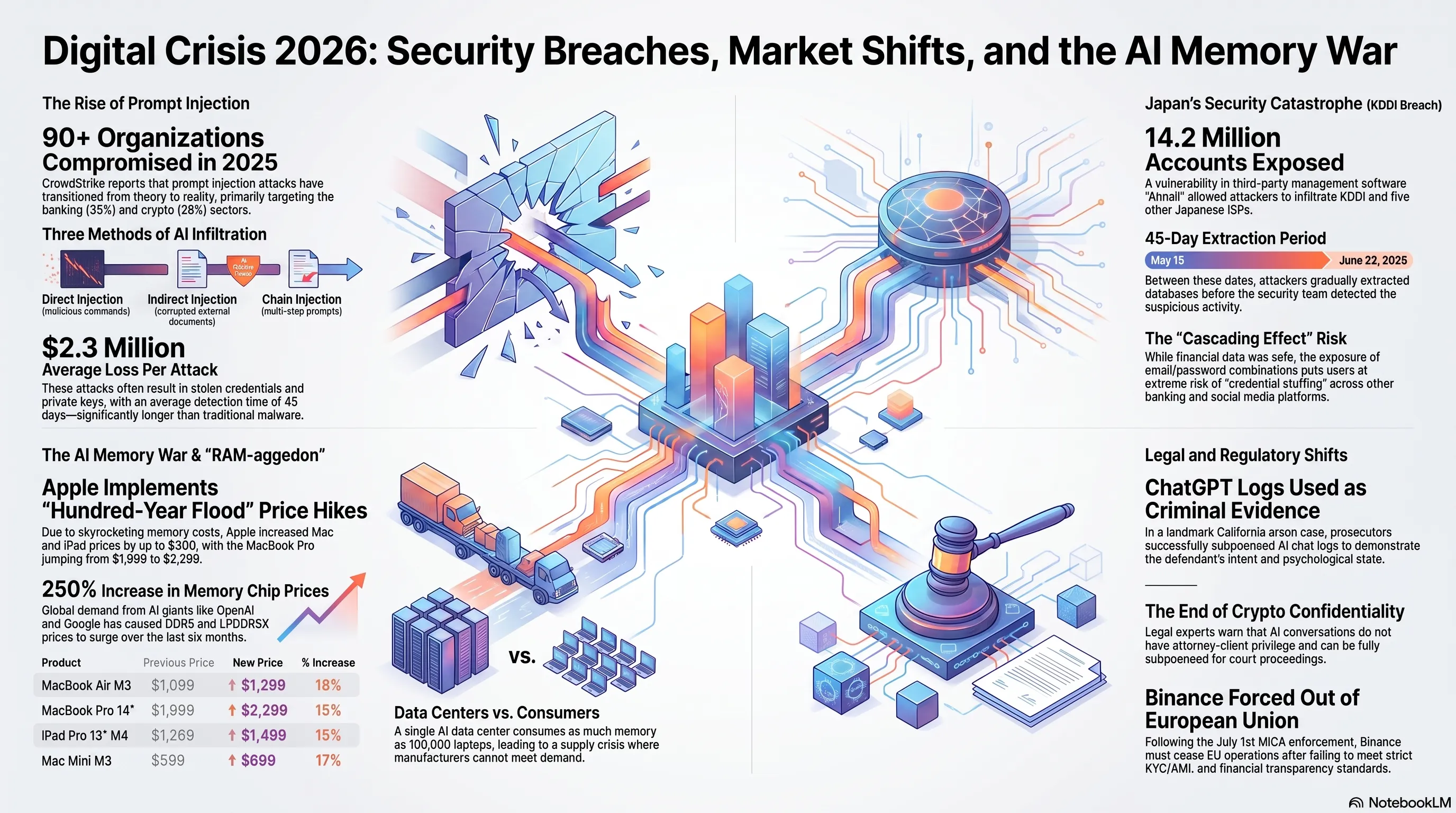
On June 27, 2026, CrowdStrike released its 2026 Global Threat Report—and the headline was what everyone had been dreading: prompt injection attacks hit 90+ organizations in 2025, resulting in stolen credentials and cryptocurrency theft.
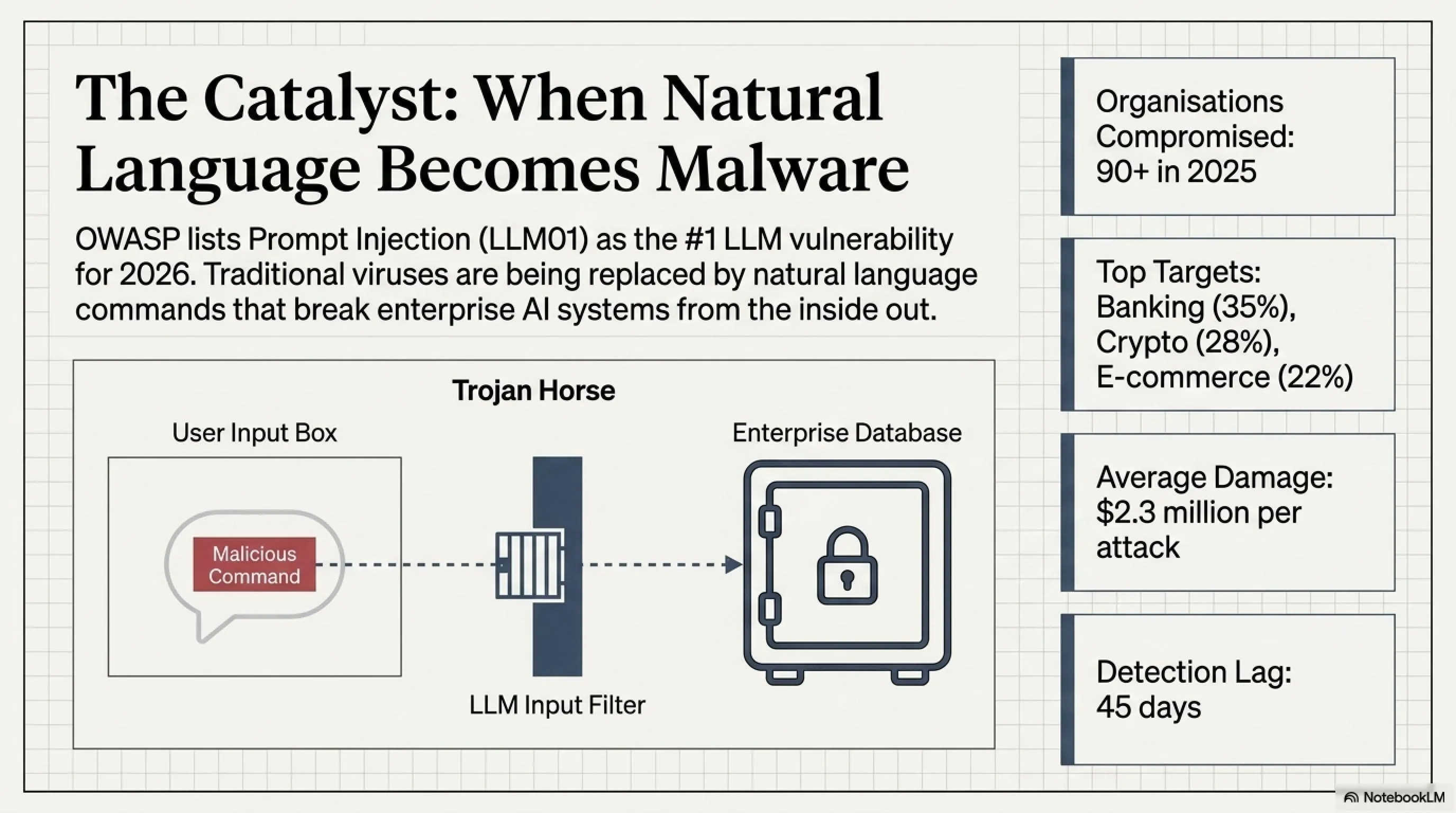
This is no longer a theoretical threat. Prompt injection has become a real weapon that cybercriminals are using to infiltrate enterprise AI systems. VentureBeat reported that OWASP has listed this attack as the #1 LLM vulnerability for the second consecutive year—LLM01.
But what exactly is prompt injection? In simple terms, this type of attack occurs when an attacker hides malicious commands in user inputs to trick the AI system into performing actions it shouldn't. For example, imagine you have an AI chatbot connected to your company database. An attacker could use a cleverly crafted prompt to instruct the chatbot to dump all user information or even execute administrative commands.
90+ Organizations Fell Victim: What Happened
CrowdStrike's report reveals the attack details. In one case, attackers used prompt injection to infiltrate a bank's support chatbot and extract credit card information from thousands of customers. In another case, a cryptocurrency exchange was compromised, and attackers managed to steal private keys from hot wallets.
But why are these attacks so successful? The answer lies in the architecture of enterprise AI systems. Many companies have rapidly deployed LLM-based chatbots without implementing adequate security measures. They assumed that large language models were inherently secure—but that was a big mistake.
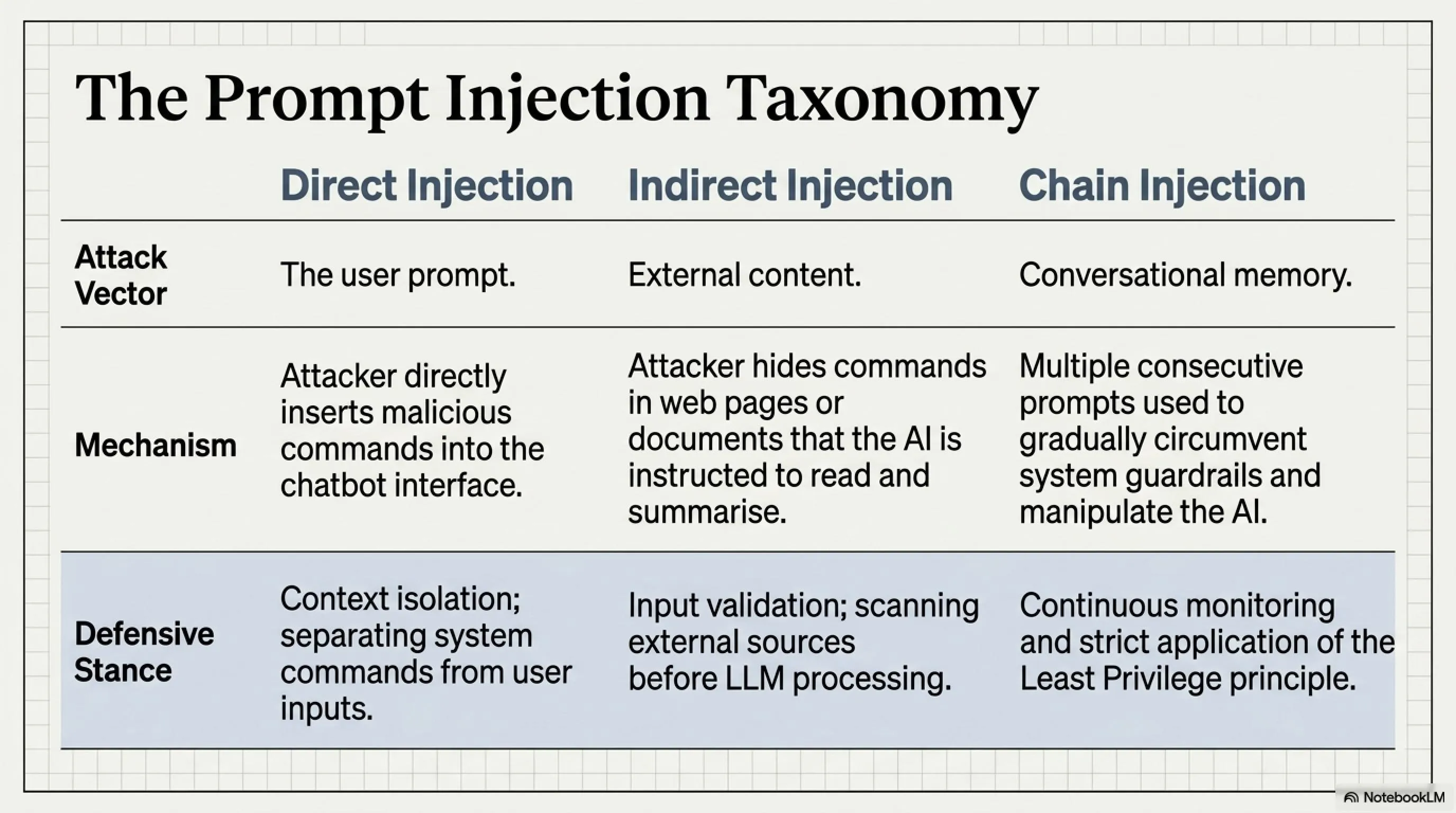
Three Types of Prompt Injection Attacks
2. Indirect Injection: Attacker hides malicious commands in external content (like web pages or documents) that the AI system reads
3. Chain Injection: Attacker uses multiple consecutive prompts to gradually circumvent the system
Prompt Injection Attack Statistics for 2025
| Organizations Affected | 90+ organizations |
| Target Industries | Banking (35%), Crypto (28%), E-commerce (22%), Healthcare (15%) |
| Average Financial Damage | $2.3 million per attack |
| Average Time to Detection | 45 days (much longer than traditional attacks) |
Why Defending Against Prompt Injection is So Difficult
The fundamental problem is that distinguishing between a normal prompt and a malicious one is extremely challenging. Unlike traditional cyberattacks that have identifiable patterns, prompt injection attacks can look exactly like regular user inputs.
Security researchers have proposed several solutions: using advanced input filters, separating system commands from user inputs, and applying the Least Privilege principle (minimum necessary access). However, so far there is no comprehensive solution that can prevent 100% of these attacks.
The challenge is compounded by the fact that AI systems are designed to be helpful and follow instructions. This inherent characteristic makes them vulnerable to social engineering-style attacks where malicious actors manipulate the AI through carefully crafted language.
Jargon Buster: Key Terms Explained
Prompt: The command or question you give to an AI system
OWASP: Open Web Application Security Project, a global organization that defines security standards
Least Privilege: Security principle stating that each system should only have the minimum access necessary to perform its function
Defense Strategies: What Organizations Must Do
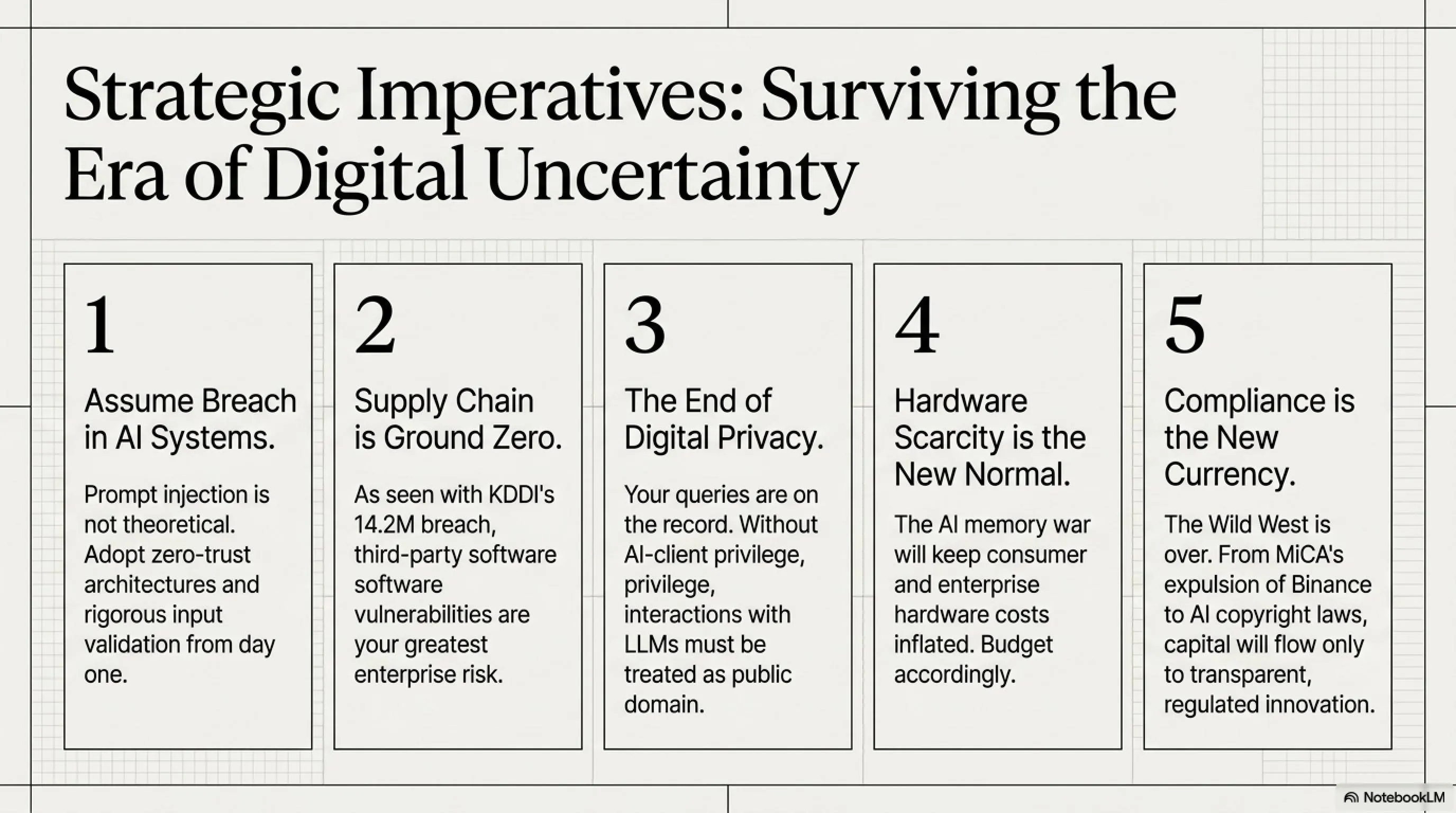
According to CrowdStrike, organizations need to implement a multi-layered defense strategy. This includes rigorous input validation, context isolation between system commands and user inputs, output filtering, rate limiting, continuous monitoring, and adopting a zero-trust architecture where all inputs are considered potentially malicious until proven otherwise.
Additionally, companies should conduct regular security audits of their AI systems, train development teams on prompt injection vulnerabilities, and establish incident response procedures specifically designed for AI-related security breaches. The key is to treat AI systems with the same level of security scrutiny as any other critical infrastructure component.
Japan's Security Catastrophe: 14.2 Million Email Credentials Exposed in KDDI Breach
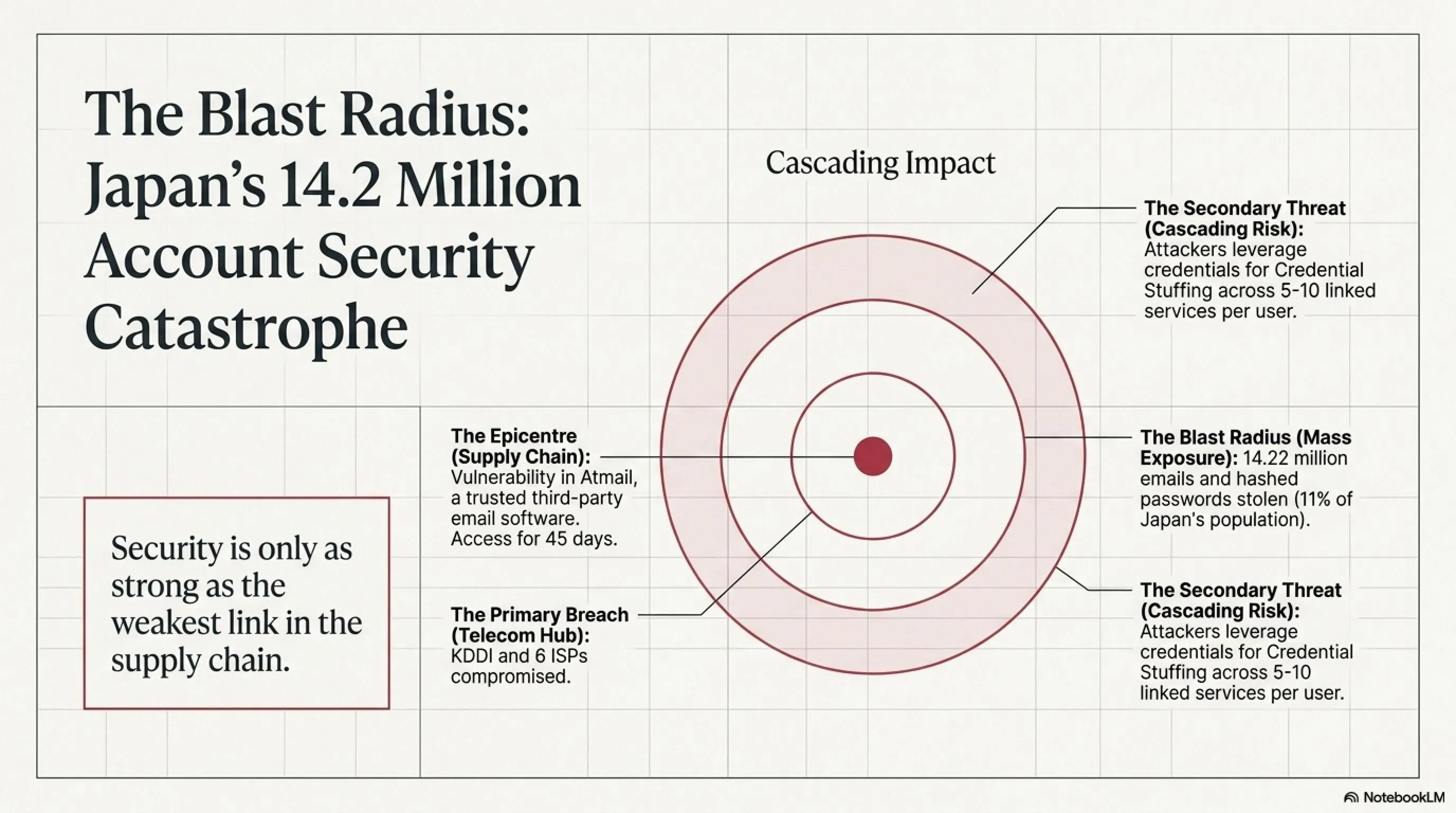
On June 28, 2026, Japanese telecom giant KDDI announced it had fallen victim to a major security breach. The attack affected six ISPs and potentially exposed up to 14.22 million email addresses and passwords.
BleepingComputer reported that the affected ISPs include nifty, BIGLOBE, J:COM, Commufa, and two smaller providers. Attackers exploited a vulnerability in third-party software to gain access to email systems.

What makes this breach particularly devastating is that KDDI is one of Japan's largest telecommunications companies, serving millions of households and businesses. This means the impact of this attack could extend far beyond the number of compromised accounts—many of these email addresses are linked to other services like online banking, e-commerce, and social networks.
Why This Breach Matters
Cascading Effect: Each email is typically connected to 5-10 other online services
Secondary Attacks: Attackers can use this data for Credential Stuffing attacks across multiple platforms
Targeted Phishing: With access to email addresses, attackers can send highly convincing phishing messages
What Data Was Exposed
According to KDDI's official statement, the leaked information includes email addresses, passwords (which were stored in hashed format but could potentially be cracked), and some account metadata. The good news is that credit card information and financial data were not involved in this breach.
But the bad news is that with email and password combinations, attackers can conduct credential stuffing attacks—trying the same email/password combination across different websites and services. Unfortunately, many users reuse the same password across multiple sites, which multiplies the impact of this breach exponentially.
Attack Timeline
| Date | Event |
| Early May 2026 | Attackers discover Atmail software vulnerability |
| May 15, 2026 | Initial breach of KDDI servers |
| May-June 2026 | Gradual database extraction (45 days) |
| June 22, 2026 | KDDI security team detects suspicious activity |
| June 28, 2026 | Public disclosure and user notification |
Why Third-Party Software Is to Blame
KDDI stated that attackers exploited a vulnerability in third-party email management software. This software, developed by a French company called Atmail, was used by many Japanese ISPs.
The vulnerability has now been patched, but the damage has been done. This is a bitter reminder that security is only as strong as your weakest link—and in this case, the weakest link was third-party software that many trusted implicitly.
This incident highlights a growing problem in the tech industry: supply chain security. Companies often rely on dozens or even hundreds of third-party vendors and software solutions. Each one represents a potential entry point for attackers. As one cybersecurity expert put it, "You can have the best security team in the world, but if your email software has a backdoor, you're compromised."
- KDDI responded quickly with public disclosure within 6 days
- Passwords were stored in hashed format (not plain text)
- No financial or credit card information was exposed
- Atmail vulnerability was patched rapidly
- 14.2 million accounts at risk—one of Japan's largest breaches
- Attackers had unrestricted access to systems for 45 days
- Hashed passwords can potentially be cracked using Rainbow Table attacks
- No financial compensation offered to affected users
When Memory Becomes Gold: Why Mac and iPad Just Got $300 More Expensive
On June 28, 2026, Apple made an announcement that shocked the tech market: unprecedented mid-cycle price increases for MacBook and iPad—up to $300 for some models. The MacBook Air, previously priced at $1,099, now costs $1,299. The 14-inch MacBook Pro jumped from $1,999 to $2,299.
The reason? The AI-driven memory crisis. Tim Cook stated in a press conference that this is a hundred-year flood in memory pricing. AI data centers are consuming the entire global RAM supply, and prices have risen to extraordinary levels.
What Happened? The RAM-aggedon Crisis Continues
This crisis began in late 2025 and has now reached its peak in 2026. The main cause? Fierce competition between the personal computer industry and the AI industry for access to high-quality memory. Major AI companies like OpenAI, Google, and Microsoft are buying up every memory chip being produced to build their massive data centers.
According to 9to5Mac's report, DDR5 and LPDDR5X chip prices (used in MacBooks and iPads) have increased by over 250% in the past six months. CNBC reported that memory manufacturers like Samsung and SK Hynix cannot meet demand—even with factories running at full capacity.
Before and After Price Comparison
| Product | Previous Price | New Price | Increase |
| MacBook Air M3 | $1,099 | $1,299 | +$200 (18%) |
| MacBook Pro 14" M3 Pro | $1,999 | $2,299 | +$300 (15%) |
| iPad Pro 13" M4 | $1,299 | $1,499 | +$200 (15%) |
| Mac Mini M3 | $599 | $699 | +$100 (17%) |
Why the AI Industry Is to Blame
AI companies are building massive data centers, each requiring tens of thousands of high-quality memory chips. A typical AI data center needs as much memory as 100,000 laptops combined. And these data centers are being built at an unprecedented pace.
OpenAI has announced plans to build 5 new data centers in 2026. Google is making a $75 billion investment in AI infrastructure. Microsoft has signed a $10 billion contract with memory manufacturers. All of this is eating up the global memory supply.
The situation has become so dire that some tech analysts are calling it the "Great Memory War of 2026." One semiconductor industry insider told Bloomberg: "It's not just about money anymore. Even if you're willing to pay double, you might not be able to get the chips you need because they're all allocated to AI giants."
What This Means for Consumers
For consumers, the message is clear: if you need a new Mac or iPad, buy it now. Prices are unlikely to come down in the near term, and there's a real possibility they could increase further if the memory crisis deepens. Apple's competitors are facing the same supply constraints, so don't expect better deals from Dell, HP, or Lenovo.
Some industry observers are predicting that this crisis could accelerate the adoption of cloud-based computing solutions. Why buy an expensive local machine when you can rent computing power from the cloud? However, that strategy only works if you have reliable, high-speed internet access—something many parts of the world still lack.
When ChatGPT Goes to Court: First Criminal Case Using AI Conversation Logs
On June 27, 2026, The Verge reported that Los Angeles prosecutors used a defendant's ChatGPT conversation history as evidence in court. This marks the first time AI chat logs have been used as evidence in a major criminal case.
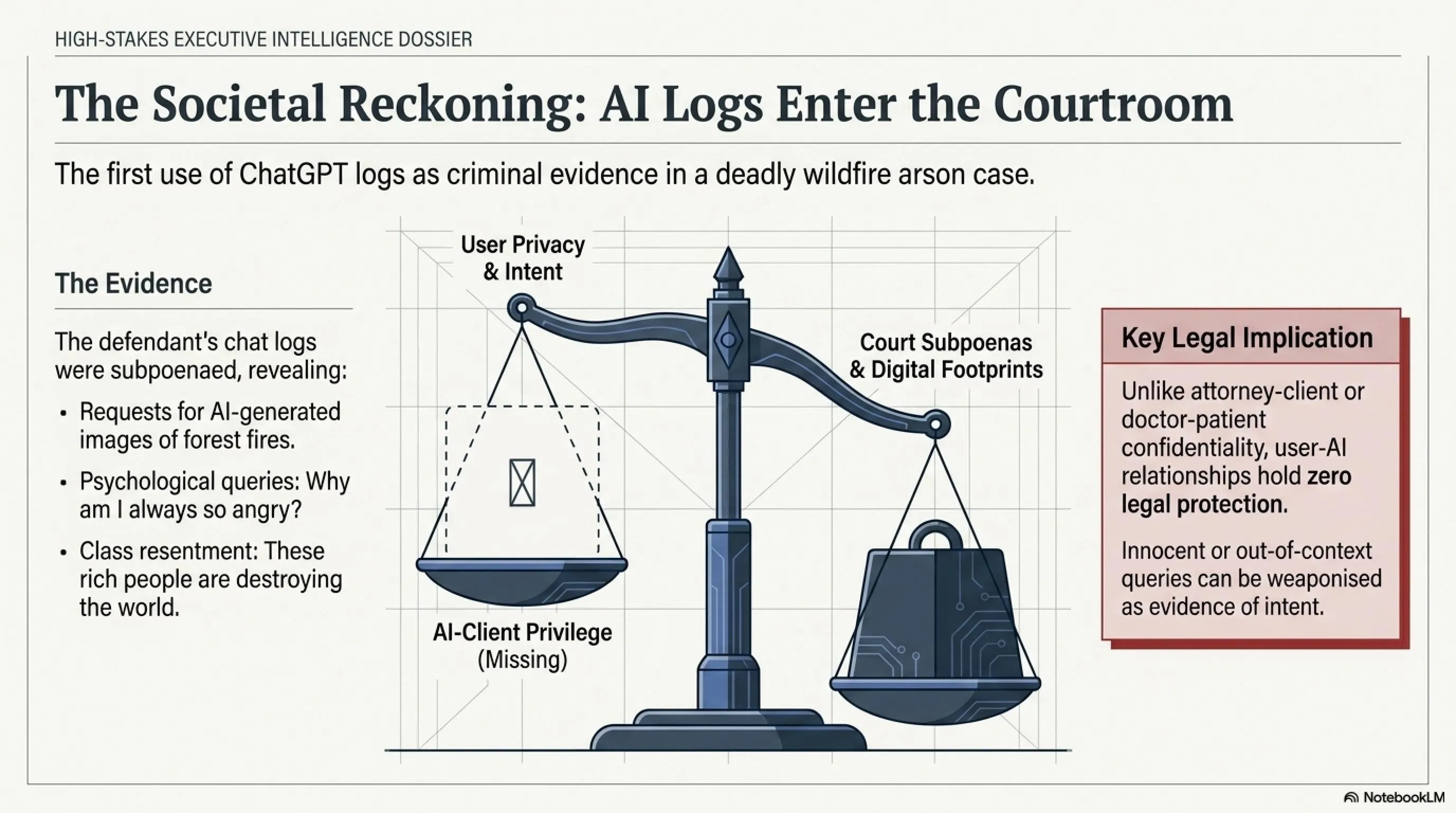
The case involves the deadly Palisades wildfire in California, which killed 17 people and caused billions in damages. The defendant is charged with arson. Prosecutors claim that the defendant's ChatGPT logs show he generated fire images, asked "Why am I so angry all the time?", and ranted about wealthy people destroying the world.
What Was in the ChatGPT Logs
According to court documents, the defendant had multiple conversations with ChatGPT in the weeks leading up to the fire, generating disturbing content. In one instance, he asked ChatGPT to create an image of a forest fire. In another, he asked "Why am I always so angry?" and ChatGPT provided psychological responses.
But the key piece of evidence is conversations about the wealthy and social inequality. He wrote that "these rich people are destroying the world and nobody is doing anything about it." The Palisades neighborhood is one of the wealthiest areas in Los Angeles.
Evidence Used in Court
2. Psychological Questions: Asked 'Why am I always angry?' and 'How can I control my rage?'
3. Class Resentment: Complained about wealthy people 'destroying the world'
4. Information Seeking: Asked 'How does fire spread quickly?' and 'What effect does wind have on fire?'
Legal Challenges: Can ChatGPT Conversations Be Used as Evidence?
The defense attorney has argued that ChatGPT conversations cannot be used as evidence because they don't demonstrate actual intent. He argues that people ask AI all sorts of strange questions, and this doesn't mean they intend to commit crimes.
But prosecutors argue that these conversations demonstrate a pattern of behavior—someone who was constantly thinking about fire, anger, and hatred of the wealthy, and then did exactly what was on his mind.
This case raises profound questions about privacy, intent, and the nature of thought crimes. If asking an AI system about something can be used as evidence of intent, where do we draw the line? Is researching poison evidence of intent to murder? Is asking about lock-picking evidence of intent to burglarize?
Legal Implications for AI Users
Nothing Is Confidential: Unlike attorney-client or doctor-patient privilege, user-AI relationships have no legal confidentiality
Out-of-Context Interpretation: An innocent question could be interpreted maliciously in court
Recommendation: Be Cautious: Never discuss illegal activities or intent to harm with AI systems
The Broader Implications
Legal experts are watching this case closely because it could set a precedent for how AI conversations are treated in future cases. If the evidence is admitted and the defendant is convicted, we can expect to see ChatGPT logs used in more criminal cases.
This also raises questions for AI companies. Should they be required to turn over user conversations? Should they warn users that their conversations are not private? Should there be any legal protections similar to doctor-patient confidentiality?
OpenAI, the company behind ChatGPT, has stated that they comply with all legal requests for user data but declined to comment on this specific case. However, privacy advocates are calling for stronger protections and clearer disclosure about what data is retained and how it can be used.
The End of Binance in Europe: MiCA Enforcement and the Great Crypto Exodus
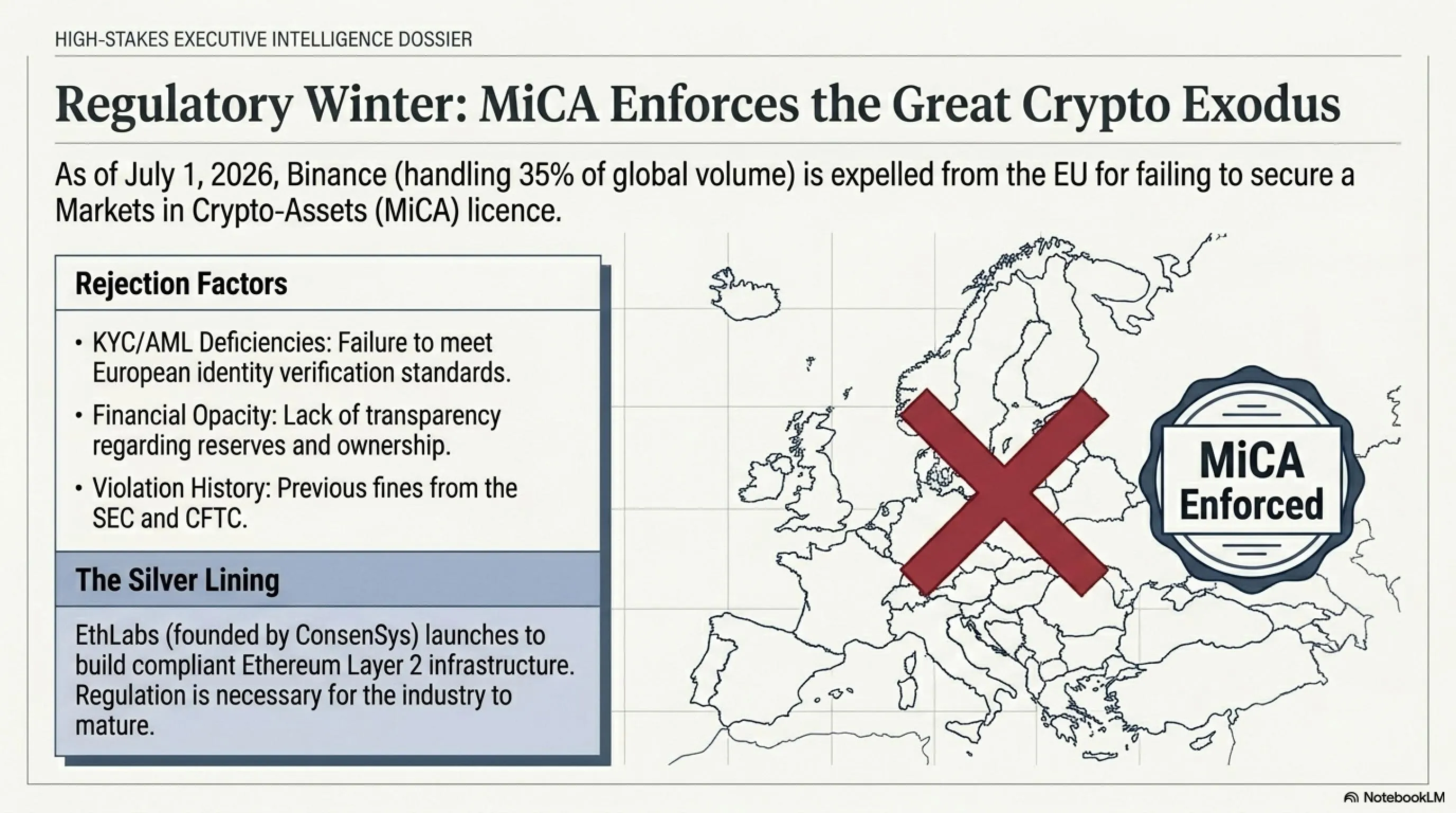
On June 28, 2026, CoinTelegraph confirmed that Binance failed to secure a MiCA license and will be forced to shut down its services in the European Union starting July 1, 2026. This is a massive blow to the world's largest crypto exchange, which handles approximately 35% of global trading volume.
MiCA (Markets in Crypto-Assets) is the European Union's latest regulatory framework for the crypto industry, setting strict standards for licensing, transparency, and consumer protection. Binance has been unable to meet these standards—particularly in the areas of anti-money laundering and user identity verification.
Why Binance Was Rejected
Financial Transparency: Binance couldn't provide full transparency about reserves and ownership structure
Violation History: Previous fines from SEC, CFTC, and other regulatory bodies
Corporate Structure Complexity: Binance's multi-jurisdictional structure makes legal accountability difficult
What European Users Should Do
Binance has notified its European users that they have until June 30, 2026, to withdraw their assets. After that date, accounts will become read-only, and users won't be able to trade—they'll only be able to withdraw their assets.
The good news is that 193 other crypto companies have successfully obtained MiCA licenses, including Coinbase, Kraken, Bitstamp, and other reputable exchanges. Users can migrate to these platforms.
However, the transition won't be seamless. Many users are reporting difficulties transferring large positions, especially in less liquid altcoins. Some tokens available on Binance aren't supported on other exchanges, forcing users to convert to more common cryptocurrencies and potentially realize capital gains.
MiCA-Licensed Exchanges
| Exchange | Home Country | Features |
| Coinbase | USA | User-friendly interface, high security |
| Kraken | USA | Low fees, advanced trading |
| Bitstamp | Luxembourg | Europe's oldest exchange, reliable |
| Bitpanda | Austria | Excellent EU localization |
Meanwhile: The Rise of EthLabs to Save Ethereum
In more positive news, BitMine and Joe Lubin (founder of ConsenSys) have launched a new nonprofit organization called EthLabs to accelerate Ethereum adoption. The organization will focus on developing tools and Layer 2 infrastructure.
EthLabs' goal is to make Ethereum ready for mass adoption—particularly in payments, DeFi, and real-world asset tokenization. This is an encouraging sign that despite regulatory challenges, innovation in the crypto space continues.
Joe Lubin stated in the announcement: "Regulation is necessary for the industry to mature. While it's painful to see major players like Binance exit certain markets, it creates opportunities for compliant, well-structured organizations to lead the next phase of crypto adoption."
The Bigger Picture: Regulation vs. Innovation
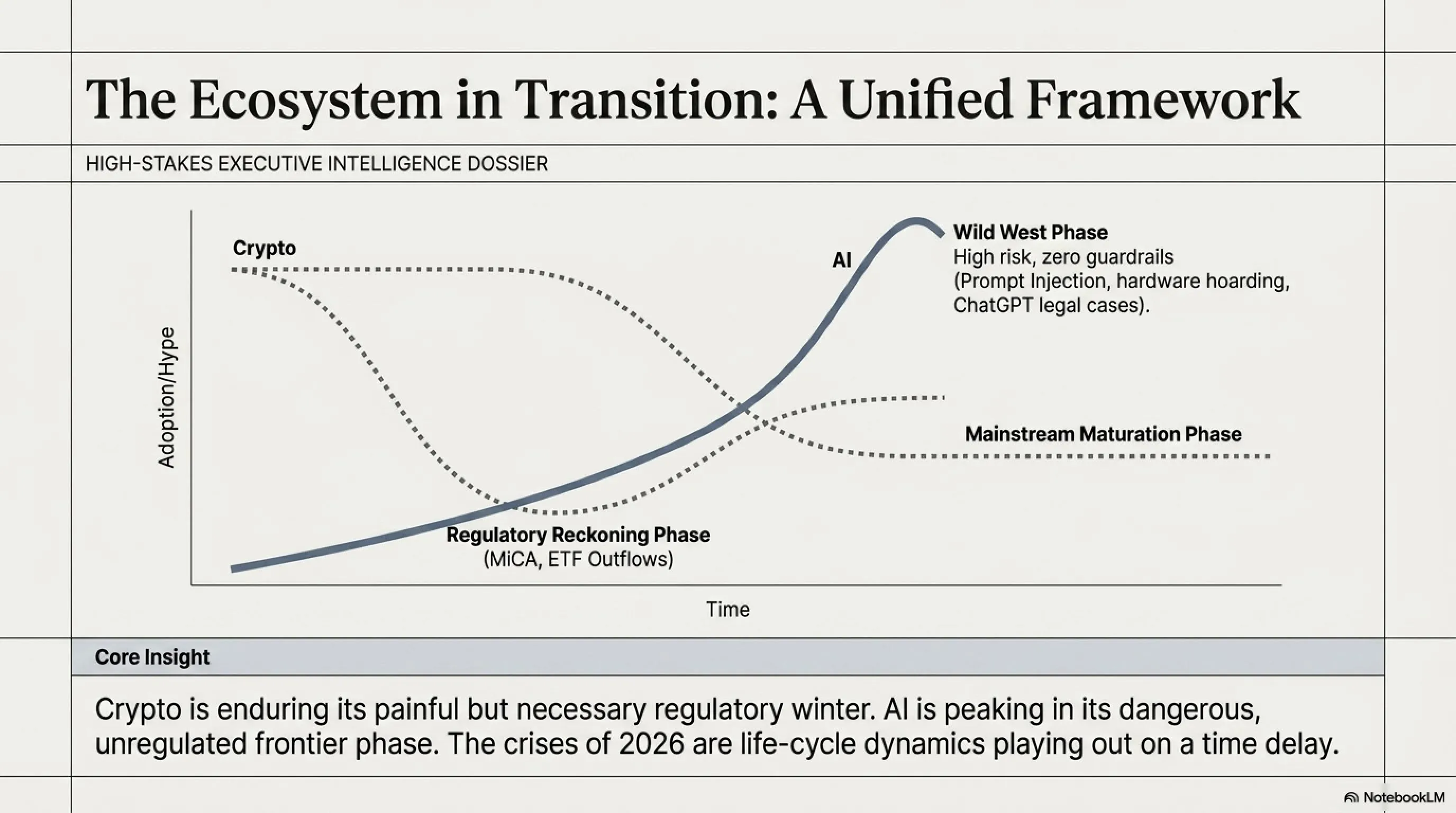
The Binance exodus from Europe represents a larger trend: the Wild West era of crypto is ending. Regulators worldwide are implementing stricter rules, and companies that can't or won't comply are being shut out of major markets.
Some see this as the maturation of the industry—a necessary step toward mainstream adoption. Others worry that heavy-handed regulation will stifle innovation and push crypto activities underground or to less regulated jurisdictions.
What's clear is that the crypto industry of 2026 looks very different from the free-wheeling, anything-goes environment of just a few years ago. The question now is whether the remaining players can balance regulatory compliance with the innovation and decentralization that made crypto appealing in the first place.
Bitcoin Crashes to $59,700: Worst ETF Month Ever with $4B in Outflows
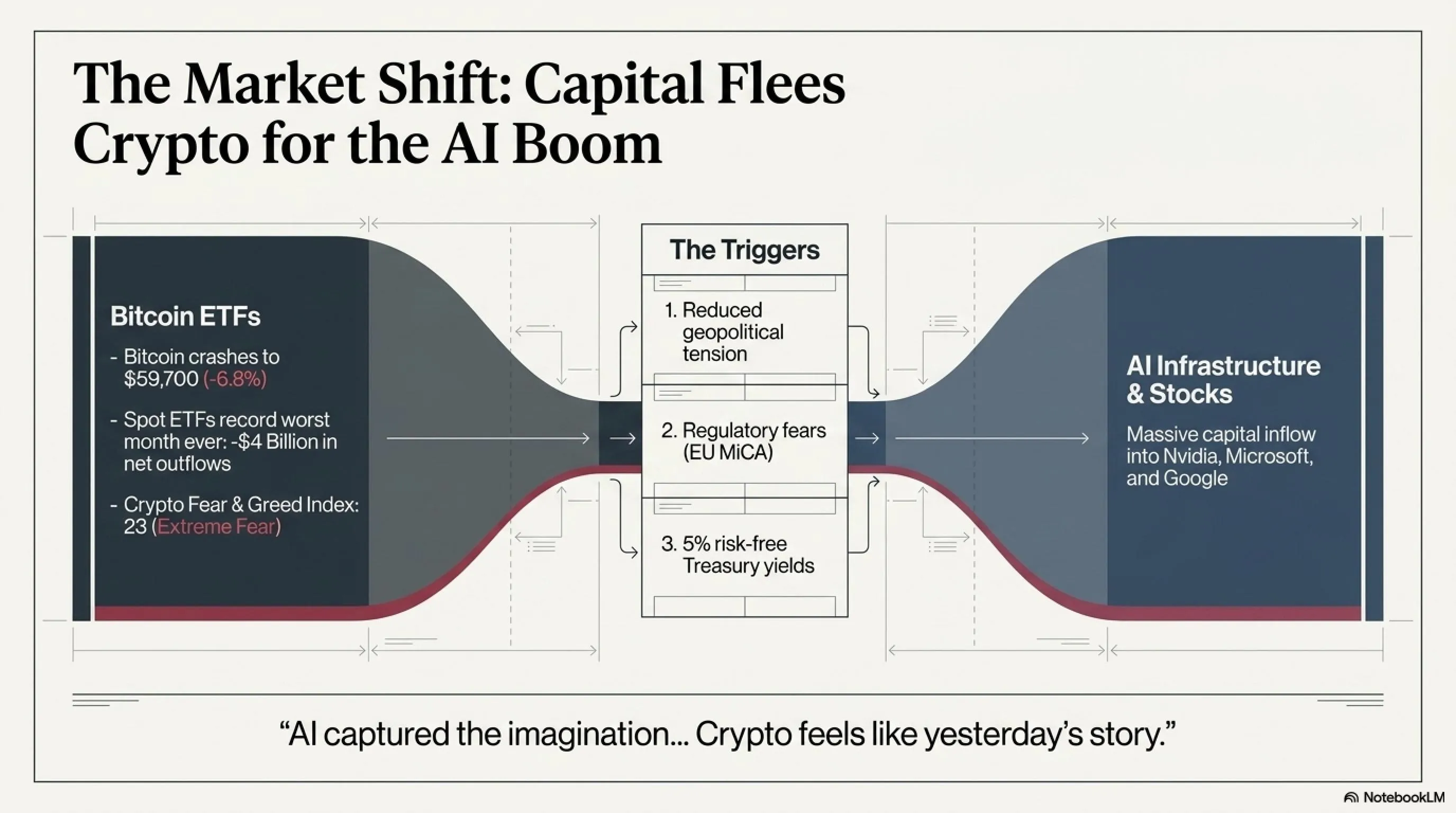
On June 29, 2026, Bitcoin dropped to $59,700—a 6.8% decline from the previous week. But the real story is in the ETFs. CoinDesk reported that spot Bitcoin ETFs are on track for their worst month ever, with over $4 billion in capital outflows.
This number is shocking. When Bitcoin ETFs launched in January 2024, everyone thought a massive wave of institutional capital would flow into crypto. But now, just 18 months later, we're seeing the opposite—mass capital flight.
Crypto Market Thermometer
24-Hour Trading Volume: -35%
Liquidation Rate: $1.2 billion (24 hours)
Short-Term Outlook: Continued downward trend likely
Why Investors Are Fleeing
Several factors are driving this capital exodus. First, reduced geopolitical tensions. When tensions between the US and Iran decreased, stocks rallied but crypto crashed. This shows that institutional investors still view crypto as a risk-on asset, not a safe haven.
Second, competition with AI. Capital is fleeing crypto and flowing into AI company stocks. Nvidia, Microsoft, and Google are all hitting new records while crypto bleeds. The narrative has shifted from "crypto is the future" to "AI is the future."
Third, regulatory uncertainty. Binance being kicked out of Europe, Coinbase's legal challenges, and SEC threats have all made institutional investors cautious. When you're managing billions of dollars, you can't afford to be in an asset class that might be regulated out of existence.
ETF Statistics: The Complete Picture of Disaster
| Metric | June 2026 | Change |
| Net Capital Outflow | -$4.0 billion | Worst month on record |
| Daily Trading Volume | $1.2 billion | -65% vs. March |
| Active Investors | 450,000 | -28% |
| Average Holding Period | 18 days | Down from 45 days |
Is This the End of the Bull Market?
Analysts are divided. Some say this is just a healthy correction and Bitcoin will bounce back to $70,000 soon. Others warn we might see further decline to $50,000 or even lower.
What's clear is that the market narrative has changed. Nobody's talking about Bitcoin as digital gold or a hedge against inflation anymore. Now everyone's talking about AI, semiconductor chips, and data centers. The zeitgeist has shifted.
One crypto hedge fund manager told Bloomberg: "The problem isn't that crypto is dead—it's that something more exciting came along. AI captured the imagination of both retail and institutional investors. Crypto feels like yesterday's story."
The Role of Macro Economics
It's worth noting that crypto's struggles aren't happening in a vacuum. The broader economic environment has shifted dramatically. Interest rates remain elevated, traditional finance is offering attractive yields again, and risk appetite has decreased across all asset classes.
When you can get 5% risk-free from Treasury bonds, why take the volatility of crypto? This is the question many institutional investors are asking. And for now, more are choosing bonds over Bitcoin.
Late Night Conclusion: The New Era of Digital Uncertainty
Tonight's six stories paint a clear picture of the tech world in 2026—a world full of security challenges, financial volatility, and regulatory upheaval. Prompts have become weapons. Memory has become gold. Our private conversations with AI are no longer private. And crypto is wrestling with an identity crisis.
But amid all this pessimism, there are also signs of innovation and progress. EthLabs is working on Ethereum's future. MiCA is setting higher standards for consumer security. And companies are learning hard lessons about AI security.
The key question is: Are we learning fast enough? Can companies secure their systems before the next attacker strikes? Can users protect their privacy in the age of AI? The answers to these questions will determine what our digital future looks like.
One thing is certain: the comfortable assumption that technology always progresses smoothly has been shattered. We're entering an era where every advancement brings new risks, where every innovation creates new vulnerabilities, and where the line between progress and peril is increasingly blurred.
Tekin's Final Analysis: What We Must Learn
2. Nothing Is Truly Private: Your ChatGPT conversations, Google searches, emails—everything can be subpoenaed
3. Volatility Is the New Normal: Whether crypto, tech stocks, or memory prices—expect wild swings
4. Regulation Is Tightening: The Wild West era is over—digital industries are coming under scrutiny
5. Innovation Continues: Despite all challenges, technology keeps moving forward
Frequently Asked Questions
Should I be worried about using ChatGPT for everyday tasks?
If you're using ChatGPT for legal, normal activities, don't worry. But never share sensitive information, illegal plans, or private content with AI. Always assume your conversations could be accessed.
Should I buy a MacBook now or wait?
If you need it urgently, buy now—prices will likely go higher. But if you can wait, the memory crisis might ease slightly by fall 2026. Don't expect prices to return to 2025 levels anytime soon though.
Was my email affected by the KDDI breach?
Only if you use nifty, BIGLOBE, J:COM, or Commufa email services. If yes, immediately change your password on all services and enable Two-Factor Authentication. If you don't use these services, your email is not affected.
Will Binance shut down completely?
Only in the European Union. Users in the Americas, Asia, Middle East, and other regions can continue using Binance. However, this is a warning that Binance may face more regulatory challenges in other jurisdictions.
Should I buy Bitcoin now that the price has dropped?
It depends on your investment strategy. If you believe in crypto's long-term future and are prepared for a multi-year hold, this might be a buying opportunity. But if you're looking for short-term gains, wait for the market to stabilize. Never invest more than you can afford to lose.
How can I prevent Prompt Injection in my AI systems?
Key solutions include rigorous input validation, separating system commands from user input, limiting AI access to sensitive systems, and implementing continuous monitoring. We recommend consulting with a cybersecurity expert.
Sources
- VentureBeat: Prompt injection is exploiting enterprise AI's biggest design flaws
- BleepingComputer: Data breach exposes up to 14.2 million email logins at six ISPs
- 9to5Mac: Here's why your iPad and Mac just got much more expensive
- The Verge: Prosecutors used ChatGPT logs in Palisades wildfire arson case
- CoinTelegraph: Hodler's Digest: Binance kicked out of EU as MiCA deadline bites
- CoinDesk: Bitcoin Dips to $59,700 as Iran De-escalation Lifts Stocks But Not Crypto
Supplementary Image Gallery: 🌙 TEKIN NIGHT | Monday June 29: When Prompts Become Weapons & Apple Hikes Prices