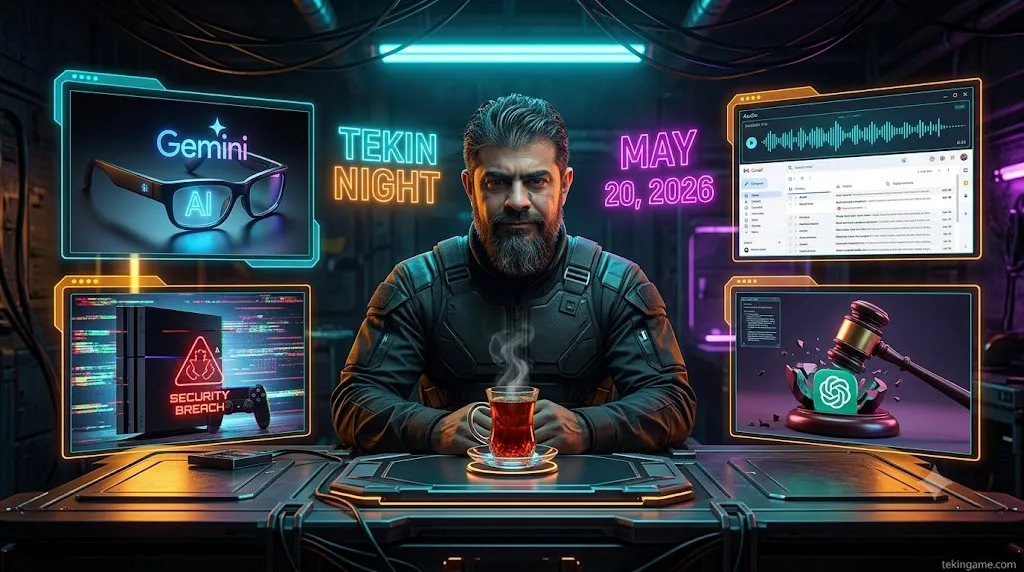
🌙 Tekin Night | Sunday, June 28, 2026
Late-night energy with the hottest tech, gaming, and crypto news
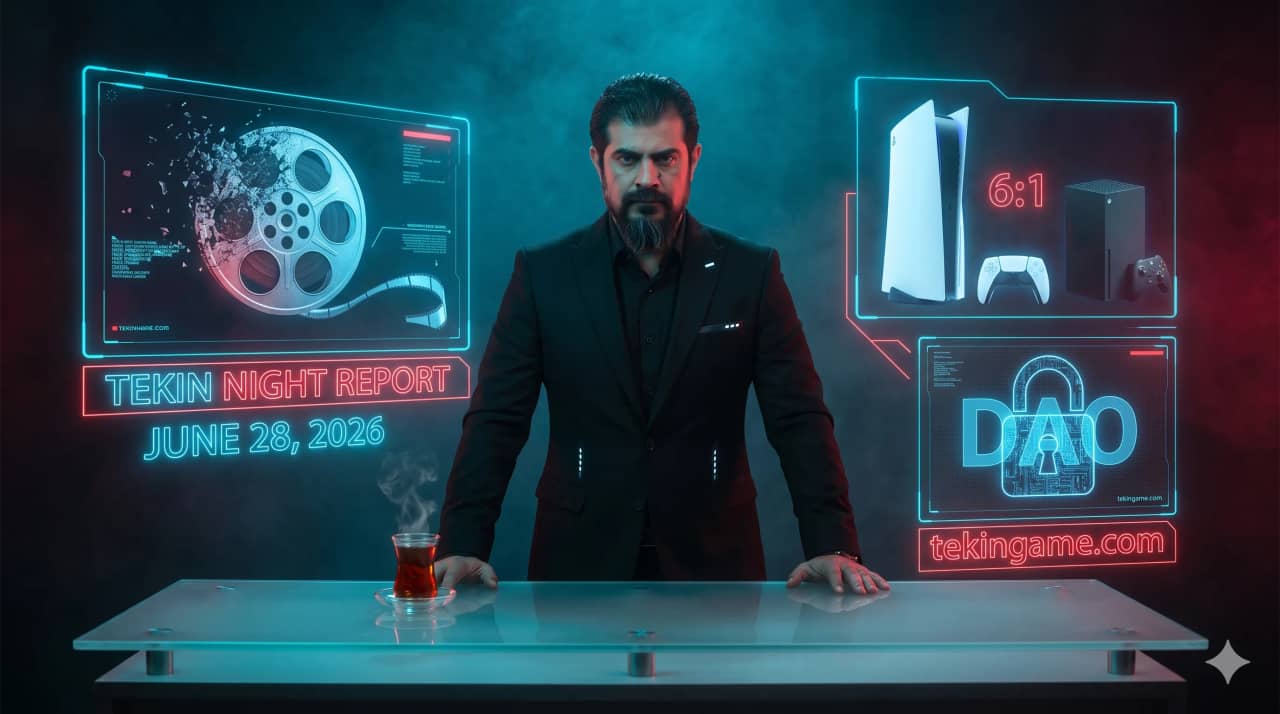
- 🎮Sony Deletes 551 Movies- You don't own it, you rent it
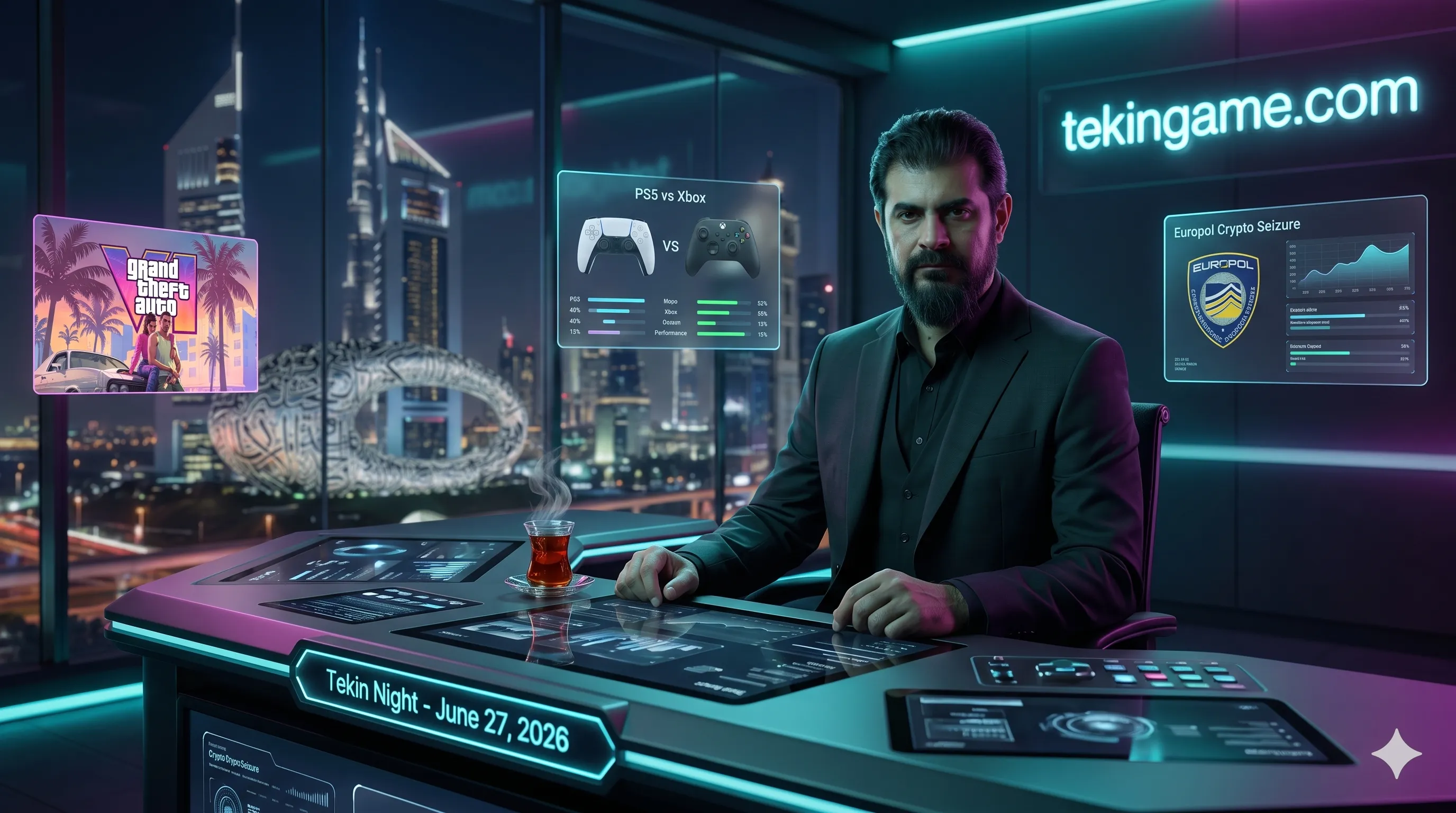
- 🎧6-to-1 Ratio for GTA 6- PS5 is crushing Xbox in pre-orders
- 🚀Digital Scalping- People pay more for GTA 6 codes
- 🗡️Ripple CEO vs. Saylor- Leverage strategy hurts crypto
- 📰$223M DAO Vote- Governance becomes cash-out button
- 🎮Granblue for Switch 2- First franchise entry on Nintendo
When "Buying" Means "Temporary Rental": Sony and the Digital Ownership Crisis
Morning of June 26, 2026. Thousands of PlayStation Store users received an email from Sony that read like a joke—but unfortunately, it was very real.
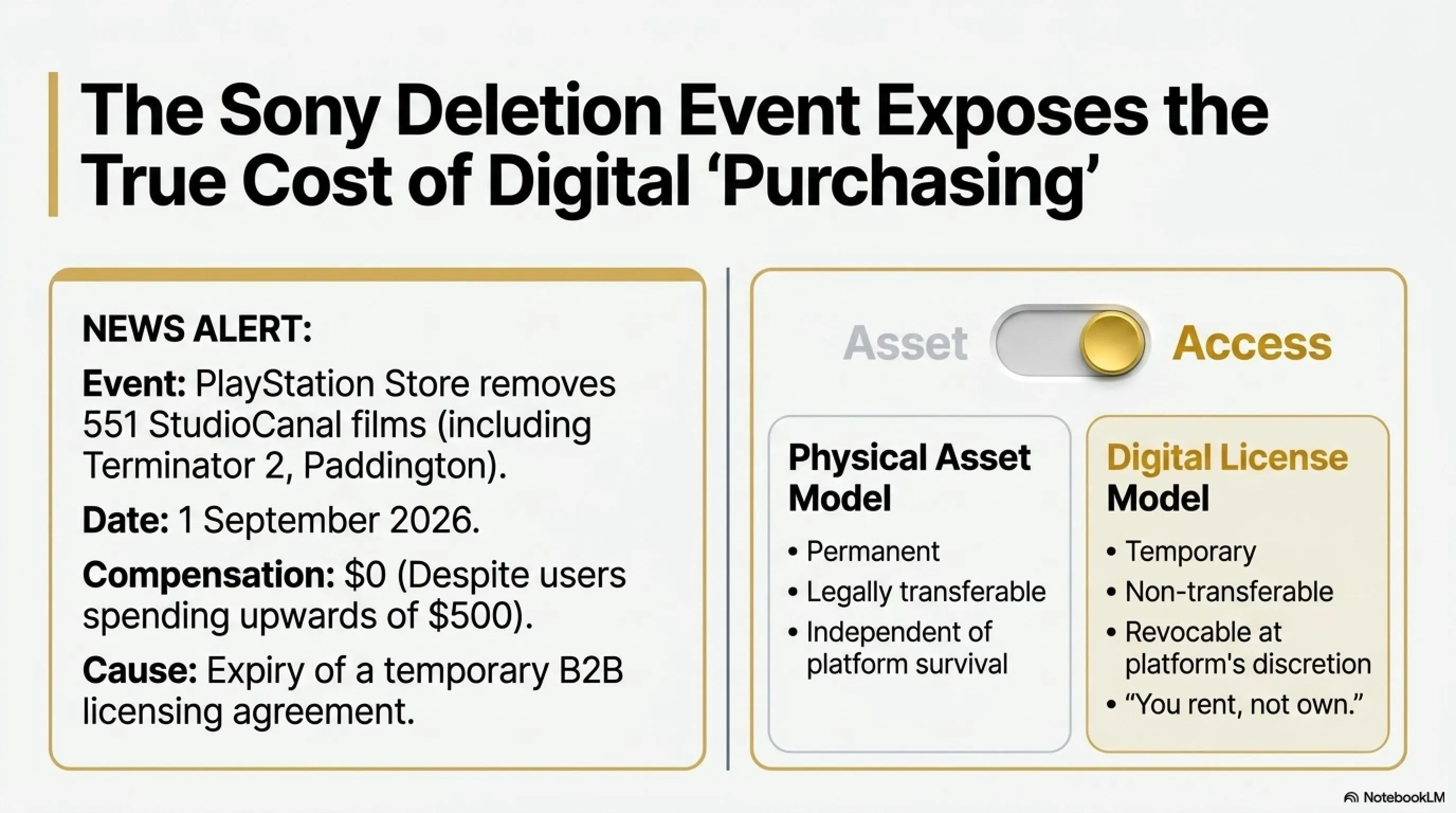
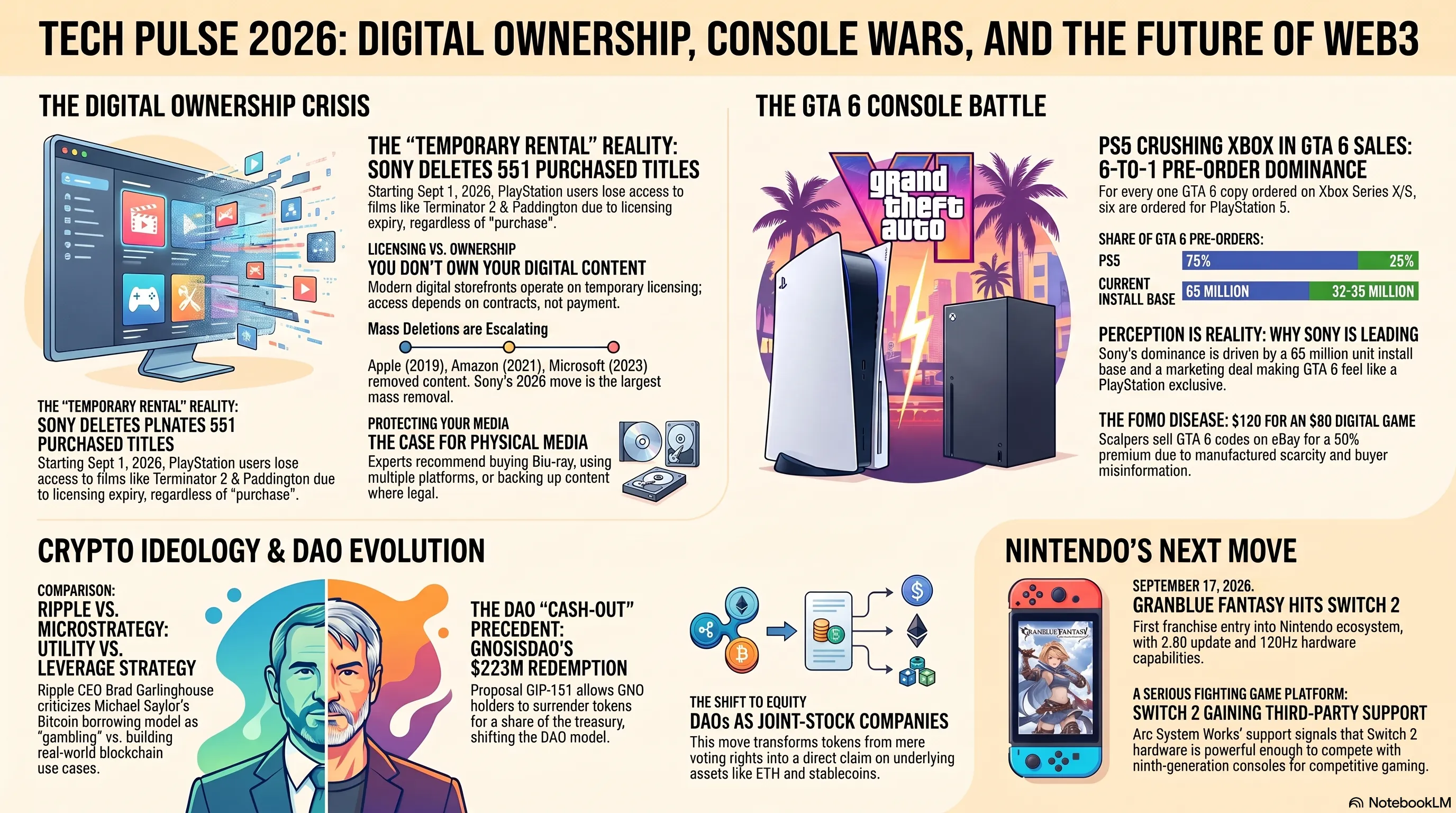
Sony informed users that starting September 1, 2026, they will no longer be able to access 551 films and TV titles they had purchased from the PlayStation Store. The reason? The end of a licensing agreement with StudioCanal. Films like Terminator 2: Judgment Day, Total Recall, Paddington, the Bridget Jones series, and dozens of other titles will simply vanish from users' digital libraries.
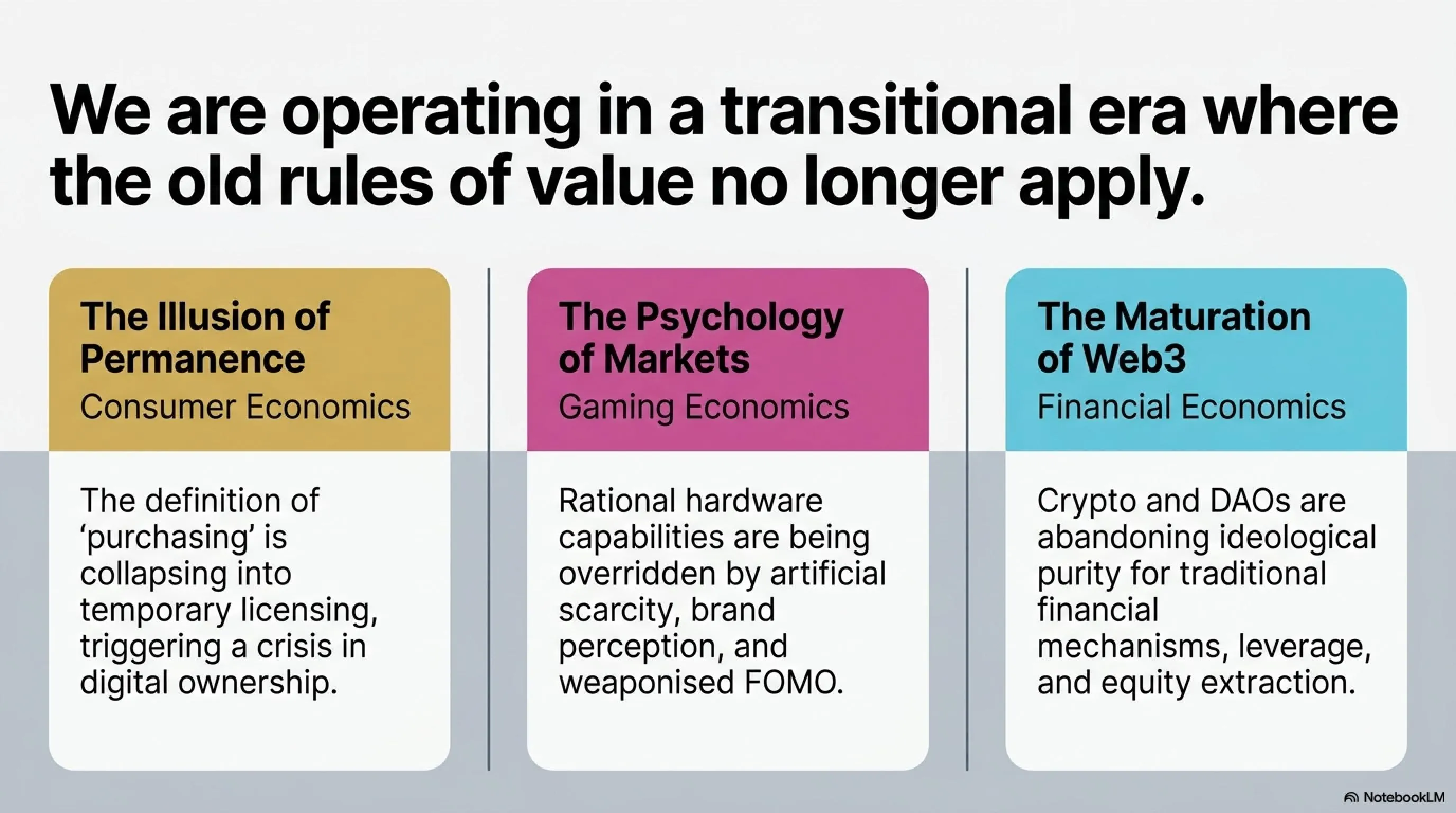
Let's be honest: this isn't the first time something like this has happened. But this time it goes far beyond one or two titles—this time it's 551 titles. Eurogamer wrote in its coverage that this is a painful reminder that you don't own digital content—you only have a license to access it, which can be revoked at any moment.
The reactions were fierce. IGN reported that some users had spent over $500 on these films, and now no compensation is being offered. One Reddit user wrote that they "bought" these movies, they didn't rent them. If it was meant to be a rental, it should have been priced as a rental.
Why Does This Happen? Understanding the Root Problem
Kotaku's analysis got to the heart of the issue: the digital content industry operates on a temporary licensing model. When you buy a movie from PlayStation Store or iTunes, you're actually buying a license to access it—not ownership of the file. This license depends on the contract between the platform (Sony) and the content distributor (StudioCanal).
When that contract ends—whether due to pricing disputes, business strategy changes, or simply a unilateral decision—the content gets removed from the platform. And since users don't own the file, there's no legal way to keep it.
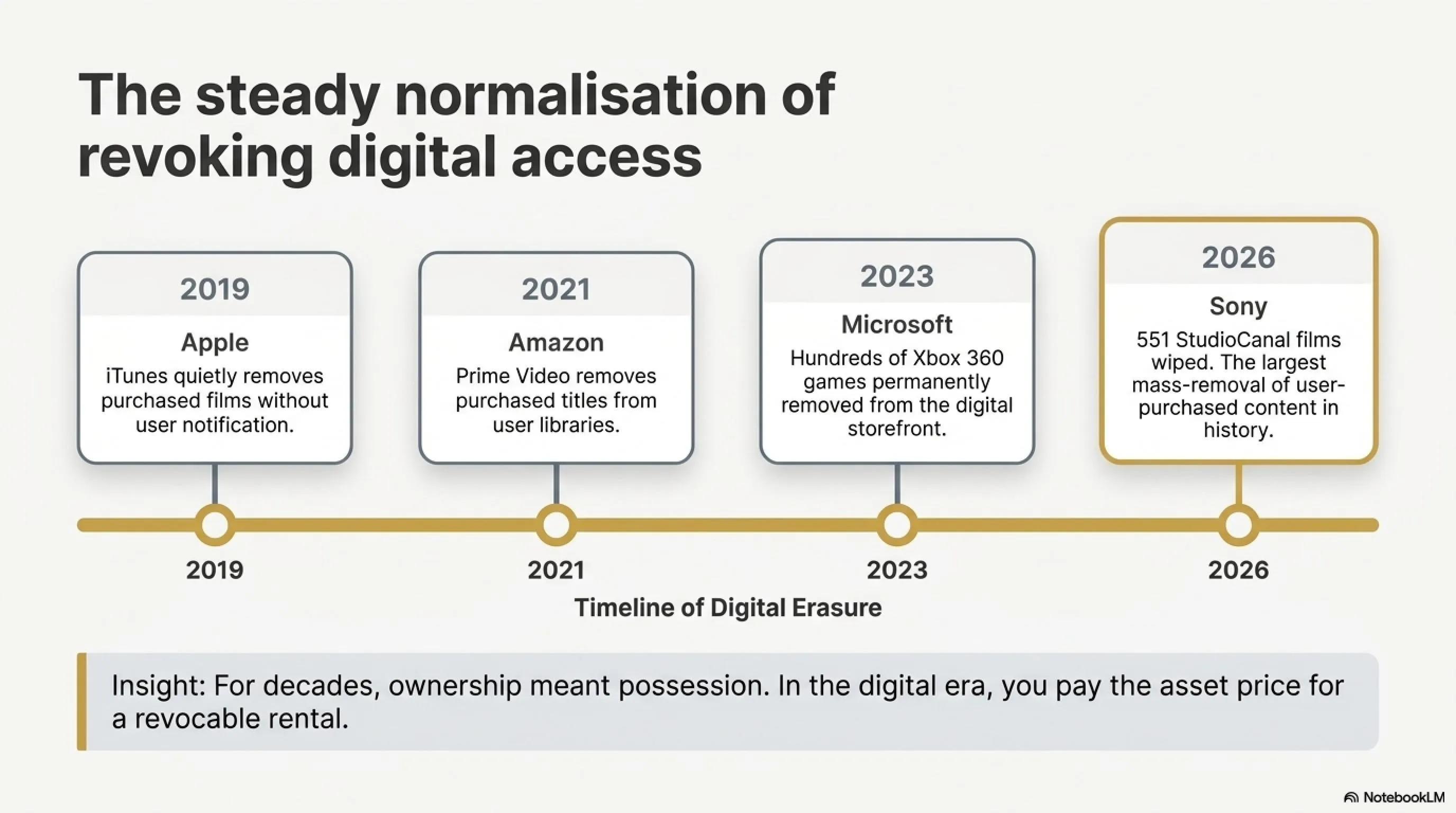
History of Digital Content Removal
2021: Amazon Prime removed purchased videos from user libraries
2023: Microsoft Store removed hundreds of Xbox 360 games from the store
2026: Sony removes 551 StudioCanal films—the largest mass removal to date
What's the Solution? Return to Physical or Other Strategies
This saga has revived an old debate: should we return to physical media? Physical media advocates say look, we were always right. You buy a Blu-ray disc, it's yours forever. No one can take it from you.
And honestly, in the current situation, their argument is strong. But here's the problem: the physical market is dying. Many retailers no longer sell Blu-rays, and even major studios are reducing physical disc production.
Protecting Your Digital Purchases
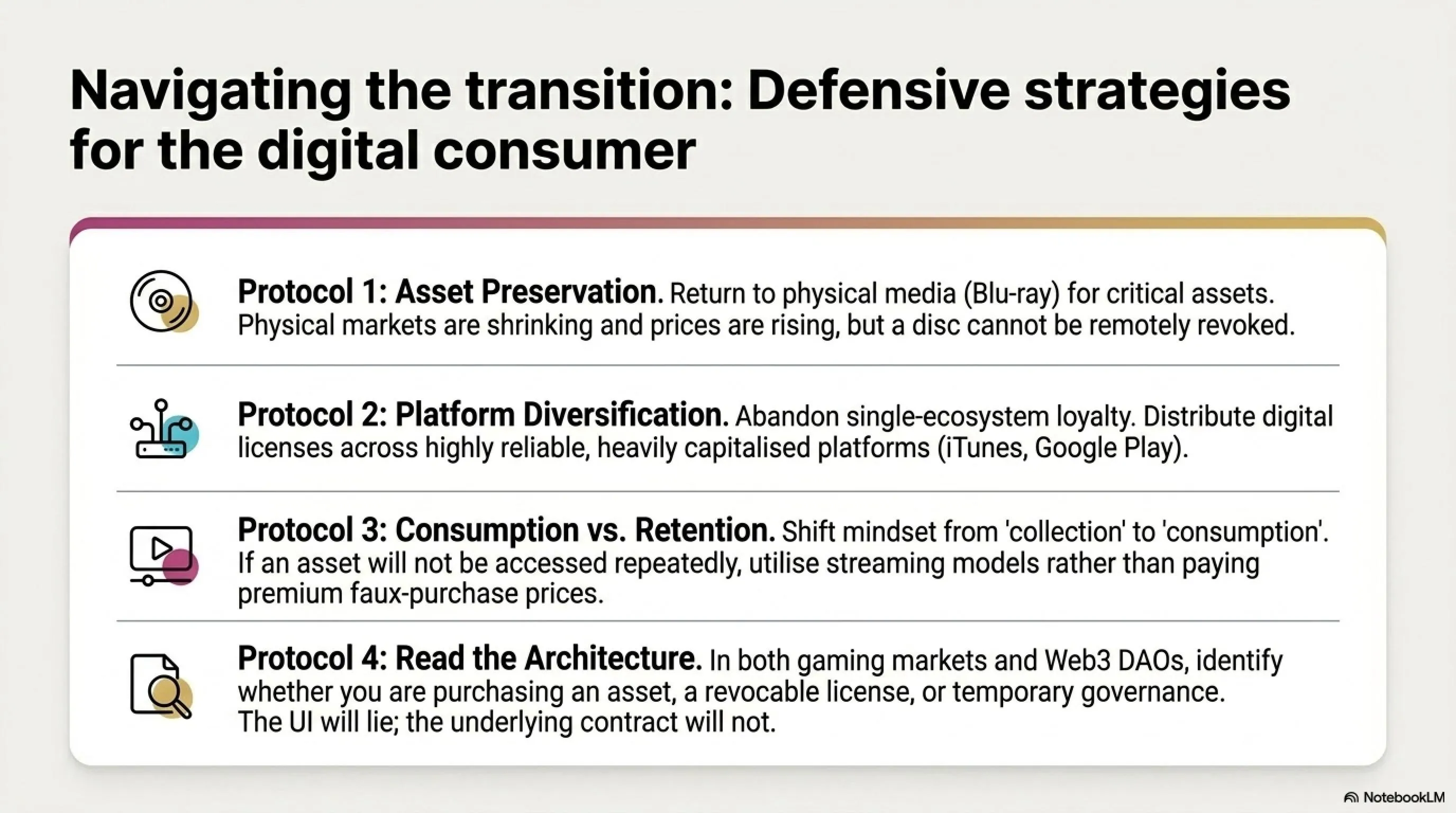
- Buy physical: If a film matters to you, buy the Blu-ray version
- Use multiple platforms: Stick to more reliable platforms like iTunes and Google Play
- Streaming services: If you won't watch it multiple times, stream instead of buying
- Backup: Where possible and legal, back up your purchased content
- Read the terms: Before buying, know what you're actually purchasing
Console Wars: When PS5 GTA 6 Pre-Orders Crush Xbox by a 6-to-1 Ratio
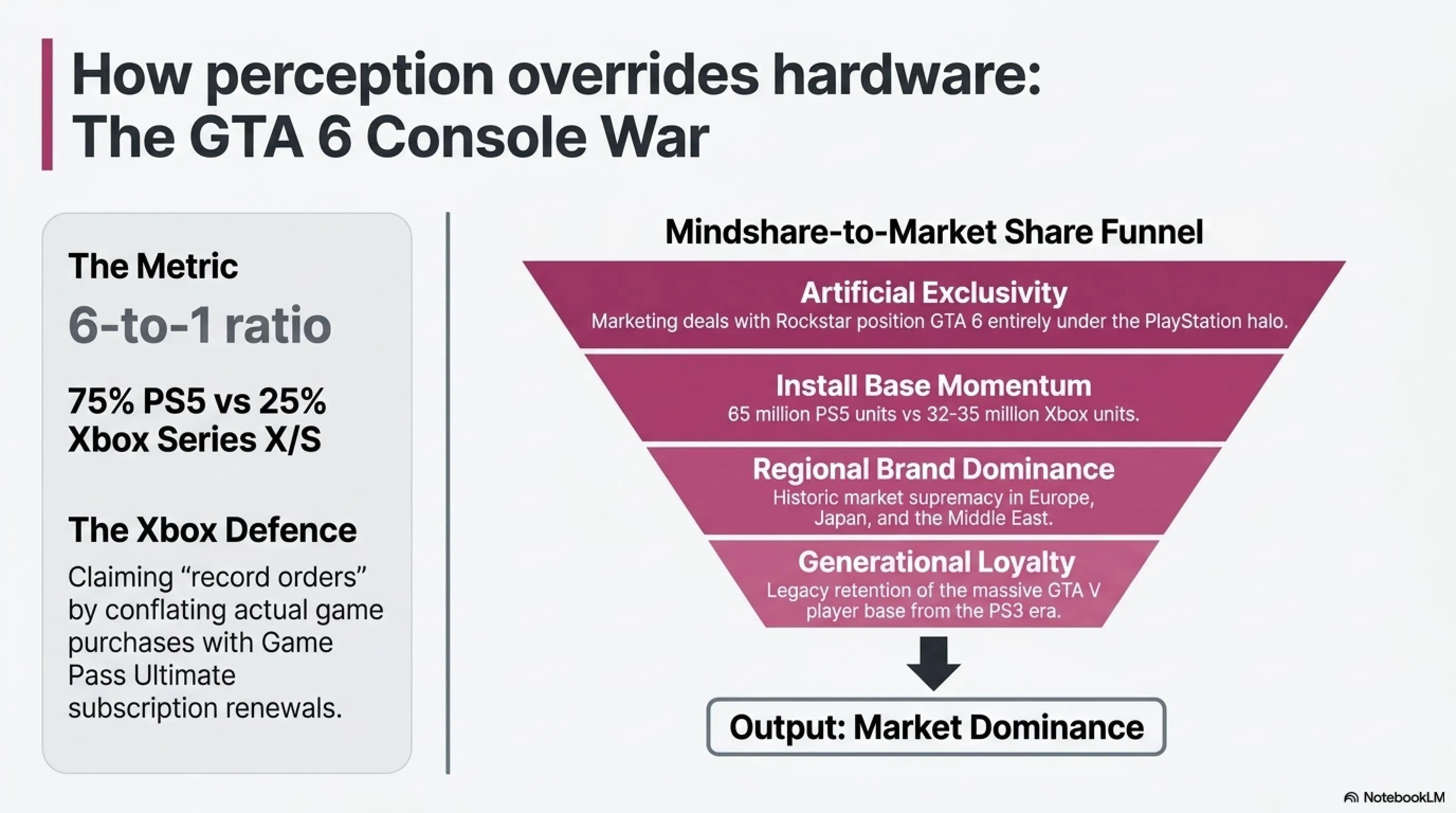
On June 26-27, 2026, IGN published a report that put Xbox on the defensive: GTA 6 pre-order data shows PS5 is outselling Xbox Series X/S by a ratio of 6 to 1. Some sources even claim the ratio is 8 to 1.
What does this mean? It means for every one copy of GTA 6 ordered for Xbox, six copies have been ordered for PS5. Polygon wrote in its report that this is a disaster for Xbox. GTA 6 is the biggest launch of the decade, and if this ratio holds, it means Xbox has lost the most important battle of this console generation.
Xbox's Response: This Isn't Pre-Order Data
But Microsoft has disputed this data. An Xbox spokesperson told Push Square that these figures don't represent reality. We've recorded record orders for GTA 6 on Xbox, and people should wait for the real data.
This statement prompted analysts to ask: if IGN's data is wrong, what is the real data? And why won't Xbox release precise figures?
Technobezz analyzed in its coverage that Xbox might be confusing its pre-order data with Game Pass Ultimate subscriptions. Many Game Pass users have renewed their subscriptions because of day-one access to GTA 6 in the service—but that doesn't mean they've "purchased" the game. This is probably the "record order" Xbox is referring to.
GTA 6 Pre-Order Comparison
| PlayStation 5 | Xbox Series X/S |
| 75% of orders | 25% of orders |
| 6 out of every 8 orders | 1 to 2 out of every 8 orders |
Final ratio: 6-to-1 in favor of PlayStation 5
Source: IGN, retail data from June 2026
Why Does PS5 Have Such an Advantage? Analyzing the Factors
There are several reasons for this massive gap. First and foremost, Sony has a marketing deal with Rockstar and is promoting GTA 6 like it's an exclusive title. Game trailers begin with the PlayStation logo, and many believe GTA 6 is only for PS5.
Second, a larger install base. PS5 has sold over 65 million units as of June 2026, compared to Xbox Series X/S which has sold around 32-35 million units. Third, a stronger brand in key markets. In Europe, Japan, and the Middle East, PlayStation has a stronger brand than Xbox.
And fourth, prior experience with GTA V. That game was initially released for PS3 and sold better on PlayStation. Many GTA fans remain loyal to the PlayStation platform.
Push Square predicted in its report that if this ratio holds until the GTA 6 launch in Fall 2025, console sales will also be affected. Many people buy a console just to play GTA 6—and if they think PlayStation is the "primary" platform, that's what they'll buy.
Strange eBay Scalpers: When People Pay More for Digital GTA 6 Codes
Now let's get to tonight's strangest story: GTA 6 scalping on eBay. In a logical world, scalping makes sense for products with limited supply. For example, the PS5 console was scarce in 2021, so scalpers charged premium prices.
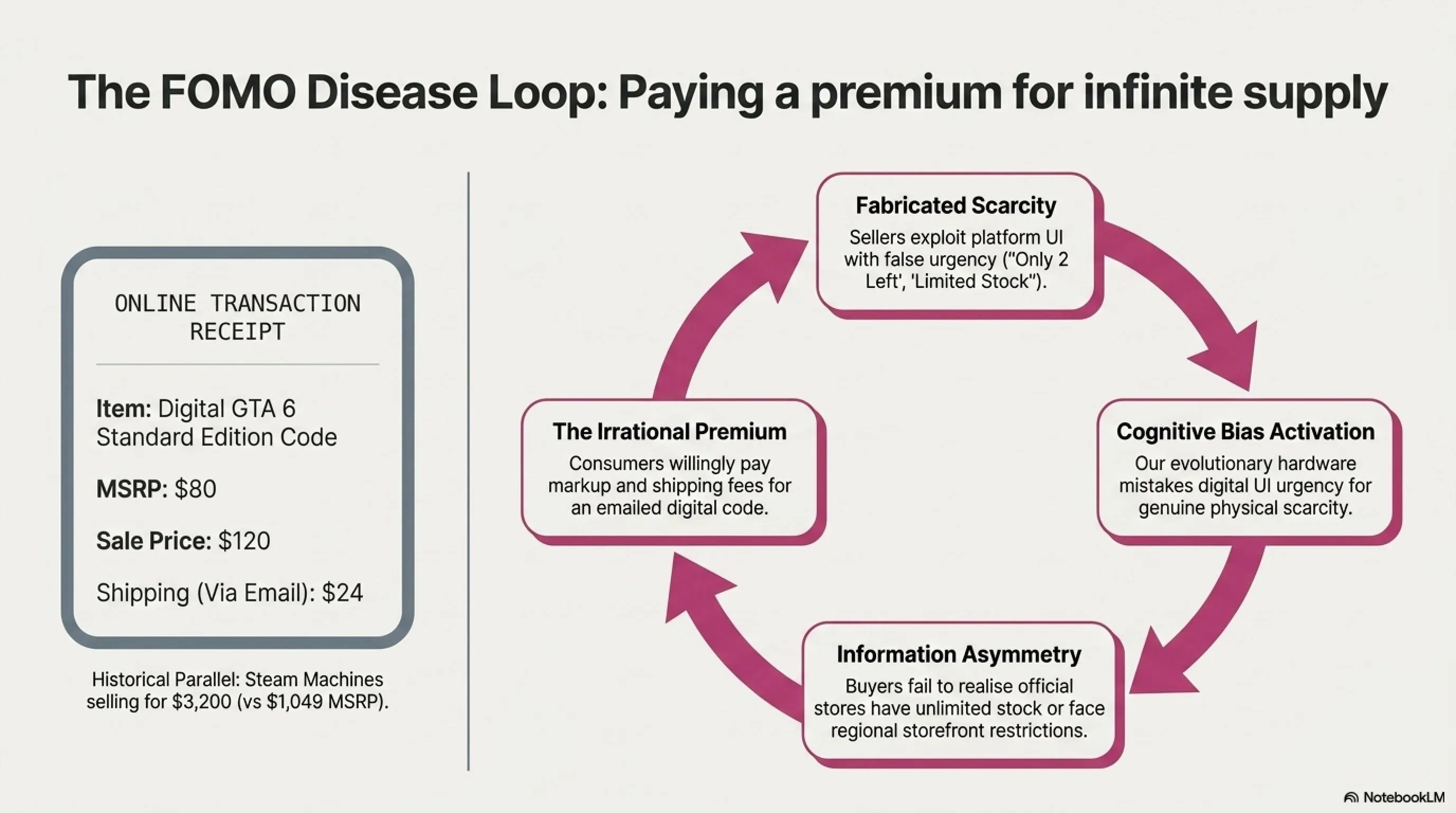
But GTA 6 is a digital game—there's no physical limitation. Anyone can buy it from PlayStation Store, Xbox Store, or Steam. There's no shortage. Yet IGN reported that some eBay sales have reached $120 plus $24 shipping—while the official price for GTA 6 Standard Edition is just $80.
Dexerto wrote in its analysis that one buyer paid $9 for "shipping" of a digital code. A digital code. That gets sent via email. With no need for physical shipping. Vice called this phenomenon "FOMO disease" in its article: people are so afraid the game will run out that they're willing to pay more—even when there's no shortage whatsoever.
Why Do People Do This? The Psychology of Digital Scalping
There are several theories. First, fear of missing out. Some genuinely think the game will "sell out"—even though it's digital. Second, lack of information. Some people don't know they can buy directly from official stores.
Third, regional restrictions. In some countries where PlayStation Store or Steam has limited access, eBay is the only option. And fourth, exploiting urgency. Sellers deliberately post misleading information like "Limited Stock" or "Only 2 Left" to create a sense of urgency.
This phenomenon isn't unique to GTA 6. The same thing happened with Steam Machine—some sales reached $3,200 even though it could be purchased from Valve for $1,049. This shows that hype and FOMO can override logic.
Ripple CEO vs. Michael Saylor: Your Leverage Strategy Has Hurt Crypto
In the crypto world, a new verbal war has erupted. Brad Garlinghouse, Ripple's CEO, attacked Michael Saylor and Strategy (formerly MicroStrategy) on June 27, 2026. Garlinghouse told CoinDesk that he's very bullish on Bitcoin and thinks it will reach $180,000 by the end of 2026.
But Saylor's financing model—which is based on borrowing to buy more Bitcoin—is dangerous financial engineering that has hurt the entire crypto market. These statements sparked a heated debate in the crypto community.
What Is Saylor's Strategy? Leveraged Bitcoin Buying
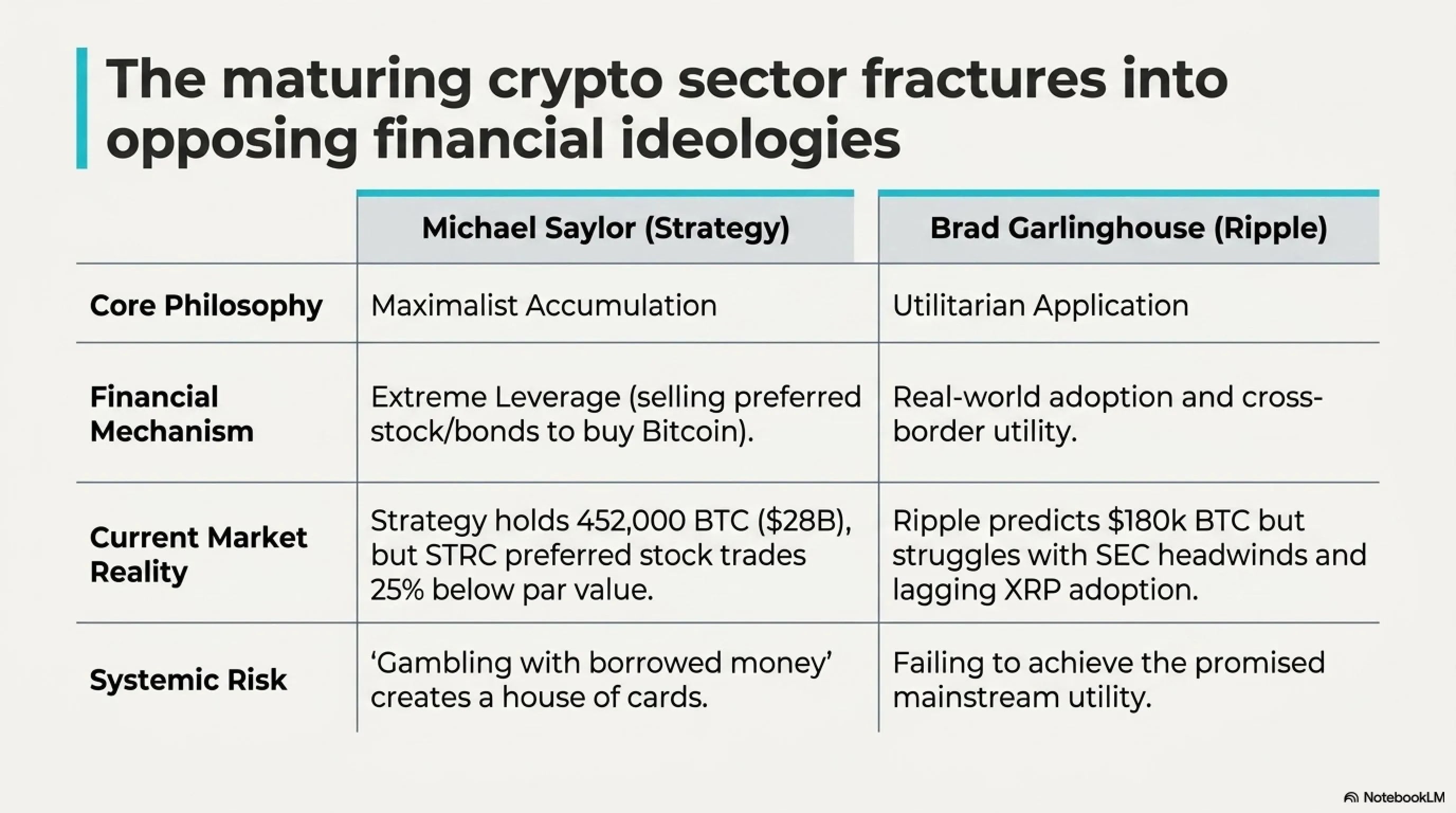
Michael Saylor, CEO of Strategy, has had one simple strategy since 2020: borrow, buy Bitcoin, repeat. Strategy has accumulated over 452,000 Bitcoin so far, currently worth approximately $28 billion.
But these Bitcoins weren't purchased with cash—they were financed through the sale of preferred stock and low-interest bonds. This strategy works great when Bitcoin's price rises—Strategy makes massive profits. But when Bitcoin declines, STRC stock plummets dramatically.
Bitcoin.com reported that in June 2026, STRC preferred stock has fallen to 25 percent below par value—meaning investors who bought this stock have lost a quarter of their value.
Garlinghouse's Criticism: Where Does Real Value Come From?
Garlinghouse says the main problem is that Strategy offers no "real use case" for Bitcoin. It just buys and holds. According to him, crypto's long-term value should come from real adoption, practical applications, and blockchain adoption—not from companies that keep buying more and more Bitcoin with leverage.
BeInCrypto wrote in its analysis that Garlinghouse has a logical point. Strategy has no way to generate actual revenue—it's only dependent on Bitcoin. If Bitcoin drops 50 percent, Strategy goes bankrupt.
Saylor Supporters' Response and Community Debate
Of course, Saylor's supporters disagree with this criticism. They say Strategy holds more Bitcoin than any other public company—that's a success. Saylor is bold and takes risks—exactly what crypto needs.
They also argue that shareholders are satisfied—Strategy has made massive profits over the long term. Others believe Garlinghouse is speaking jealously because Ripple and XRP haven't performed like Bitcoin.
Crypto Twitter is divided on this debate. Some agree with Garlinghouse, others with Saylor. But one thing is clear: this debate shows crypto is maturing and is no longer just one unified community—it now has different schools of thought.
GnosisDAO's $223M Vote: When Governance Becomes a Cash-Out Button
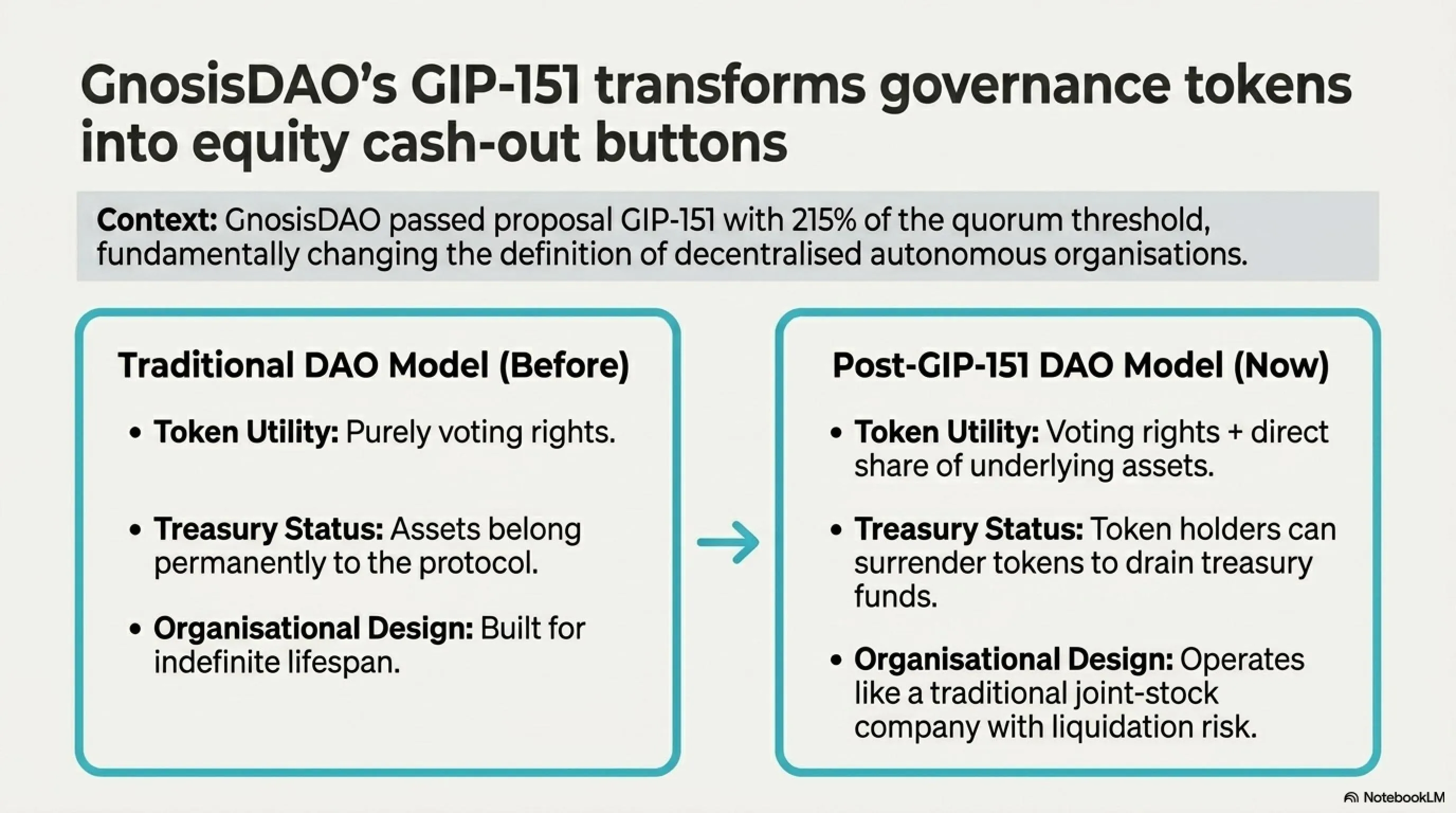
The next story comes from the DAO world—and this story could change the future of Web3 governance. GnosisDAO—one of the oldest and most reputable DAOs—passed proposal GIP-151 on June 26-27, 2026, with 215 percent of the quorum threshold.
What did this proposal say? It's simple: any GNO token holder can surrender their token and receive a proportional share of the DAO's treasury in cash. This is a fundamental shift in the nature of DAOs.
How Much Is the GnosisDAO Treasury Worth? Asset Analysis
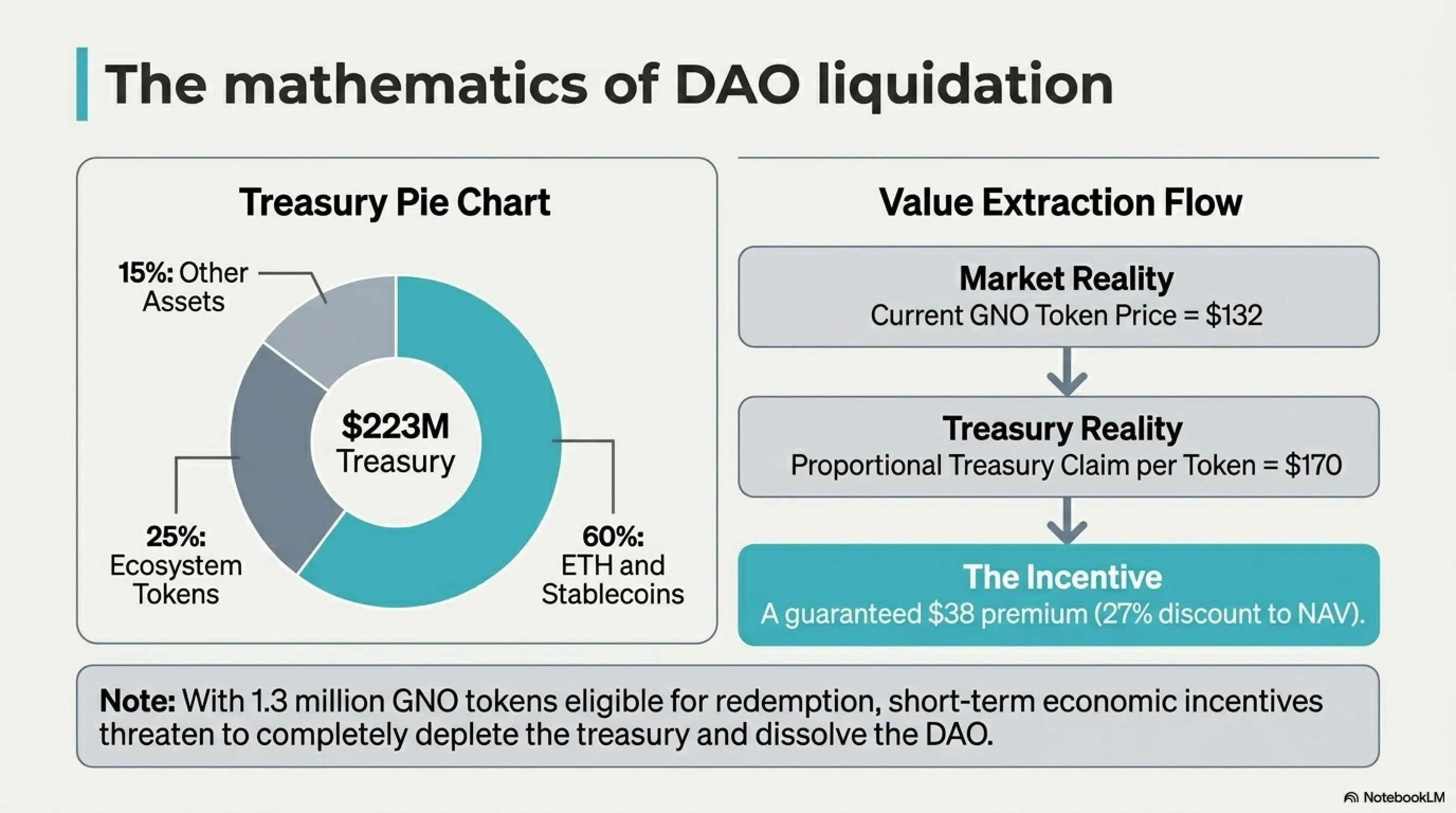
CryptoSlate reported that the GnosisDAO treasury is worth approximately $223 million. This treasury includes ETH and stablecoins comprising roughly 60 percent, ecosystem tokens at about 25 percent, and other assets at 15 percent.
According to Longbridge's calculations, each GNO token entitles the holder to receive approximately $170 from the treasury. But the current market price of GNO is around $132—a 27 percent discount. This means if you hold GNO, you can surrender your token to the DAO and receive $170—$38 more than the market price.
Why Does This Matter? The Evolution of DAOs
This decision creates a fundamental transformation in the nature of DAOs. Until now, DAO tokens only gave voting rights—you could participate in decisions, but you had no claim on the treasury's assets. But now, with GIP-151, the GNO token is no longer just a governance token—it's a share in the underlying assets.
DAO Evolution: From Governance to Equity
DAO token = voting rights
Treasury assets belong to the protocol
Token holder has no claim on assets
Now (GnosisDAO):
DAO token = voting rights + share of assets
Token holder can cash out their share
DAO operates like a joint-stock company
TheDefiant warned in its analysis that this could set a dangerous precedent. If every DAO allows redemption, it means DAOs are no longer long-term organizations—they're short-term investment funds where shareholders can exit at any moment.
What Happens Next? GnosisDAO's Future
The big question: will GNO holders surrender their tokens? According to CryptoSlate, approximately 1.3 million GNO tokens are eligible for redemption. If all these tokens are surrendered, the GnosisDAO treasury will be completely depleted and the DAO will dissolve.
But that probably won't happen. Some GNO holders still believe in the project and don't want to exit. Others think GNO's long-term value will exceed $170. But one thing is clear: this vote showed that DAOs are no longer immutable entities—they can decide to shut down and distribute assets among members.
Granblue Fantasy Versus: Rising for Switch 2—A Historic Step for Nintendo
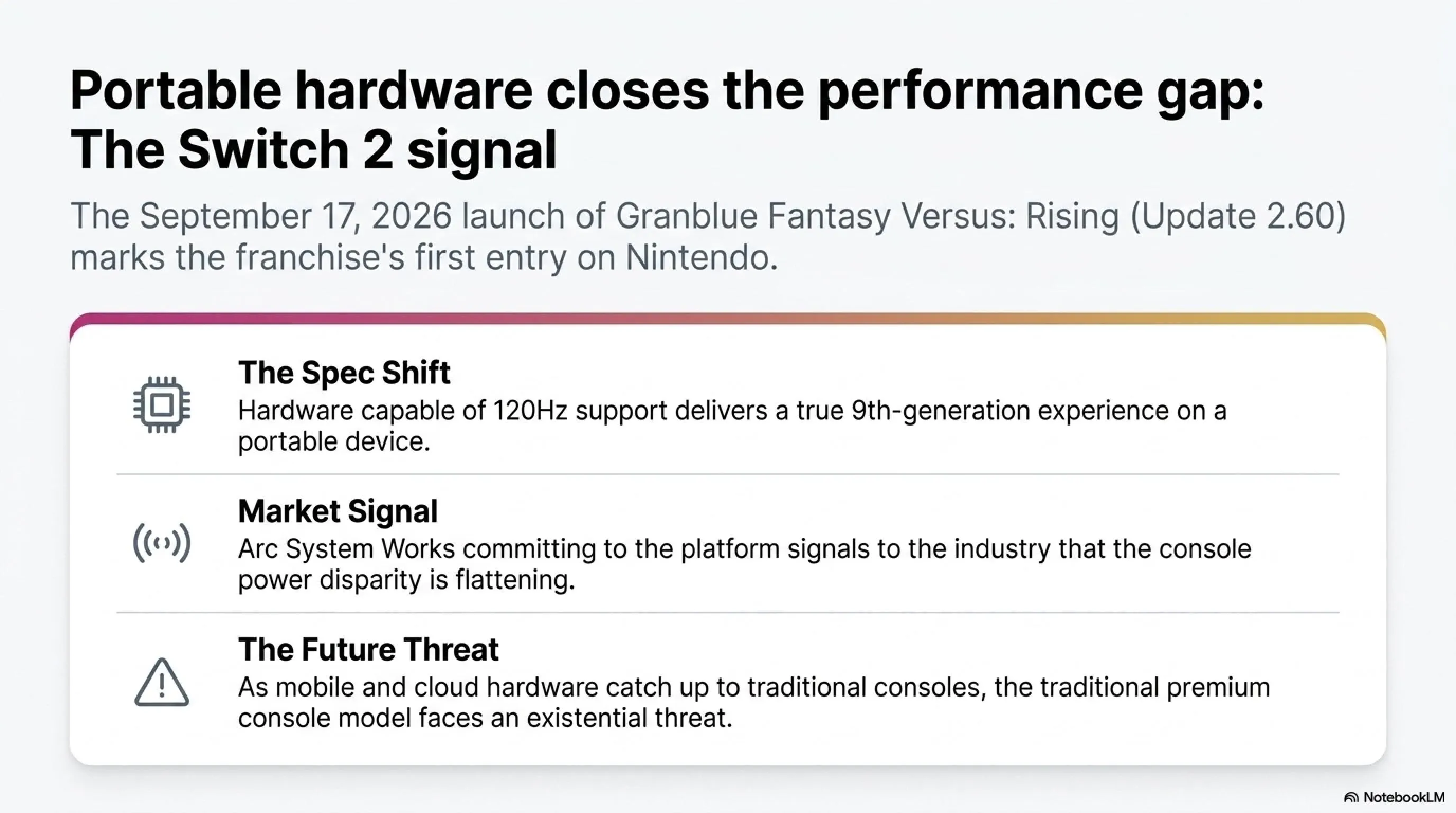
Amid all this heavy news, we do have some positive news: Cygames and Arc System Works announced that Granblue Fantasy Versus: Rising will launch for Switch 2 on September 17, 2026. This is the first time a title from the Granblue Fantasy franchise has been released on a Nintendo platform.
Nintendo Life reported that the Switch 2 version will launch simultaneously with the game's 2.60 update. This update includes new DLC character Id from Granblue Fantasy: Relink, a new stage, new gameplay mechanics, and character adjustments for better balance.
Why Does This Matter? Fighting Game Market Analysis
Gematsu wrote in its report that this is an important signal. Arc System Works—the studio behind Guilty Gear and Dragon Ball FighterZ—is taking Switch 2 seriously. If they provide support, other studios will follow.
For fighting game fans, this is excellent news. Switch 2 is gradually becoming a serious platform for the fighting genre—something the original Switch could never fully achieve. With better hardware power and support for 120Hz, Switch 2 can deliver fighting games with an experience close to ninth-generation consoles.
Key Features of Granblue Fantasy Versus: Rising for Switch 2
- Release date: September 17, 2026
- New DLC character: Id from Granblue Fantasy: Relink
- New stage and new gameplay mechanics
- Update 2.60 launching simultaneously with Switch 2
- First Granblue franchise entry on Nintendo
- Full support for Switch 2 hardware capabilities
The Bigger Picture: What These Stories Tell Us About Tech's Future
Each of tonight's stories reveals something profound about where technology is heading. The Sony movie deletion isn't just about 551 films—it's about a fundamental shift in how we think about ownership in the digital age. For decades, ownership meant possession. You bought something, you held it, you could pass it down to your children. But in the digital era, ownership has become nebulous. You pay the same price, but what you receive is fundamentally different: a revocable license.
This matters because we're at an inflection point. As more of our lives move digital—our games, our movies, our books, our music, even our art—the question of ownership becomes existential. If companies can revoke access to things we've "purchased," then what do we actually own? The answer, increasingly, is nothing. We own access, not assets. We rent, not own. And that rental can be terminated at the platform's discretion.
The Console War Reveals Market Psychology
The GTA 6 pre-order battle between PlayStation and Xbox tells a different story: the story of perception versus reality. Xbox claims to have record orders, but won't provide data. PlayStation's 6-to-1 advantage isn't just about install base or marketing deals—it's about brand perception that has been built over decades.
Console Marketing Psychology
Result: Consumer perception = "GTA is a PlayStation game"
Xbox's Problem: Better hardware specs don't matter if consumers don't perceive you as the gaming platform
Lesson: In 2026, perception beats reality in console wars
This matters because it shows that in 2026, the console war isn't being fought with hardware specs or exclusive games. It's being fought with perception, with marketing, with the subtle psychological manipulation of making consumers believe one platform is the "right" choice. Sony has mastered this game. They've made GTA 6 feel like a PlayStation game, even though it's multiplatform. That's marketing genius, and Xbox is paying the price.
But there's a deeper lesson here about market dynamics. When you lose mindshare, you lose market share. Xbox might have the better hardware (many argue Series X is more powerful than PS5), they might have the better value proposition (Game Pass is revolutionary), but none of that matters if consumers don't perceive them as the place to play the year's biggest game.
The eBay Scalping Phenomenon: A Case Study in Behavioral Economics
The eBay scalping story is perhaps the most fascinating from a behavioral economics perspective. Why would rational consumers pay more for a digital good that has infinite supply? The answer reveals uncomfortable truths about human psychology and how easily it can be manipulated.
FOMO—fear of missing out—isn't just a buzzword. It's a powerful psychological driver that overrides rational decision-making. When scalpers post "Only 2 Left" or "Limited Edition," they're not just lying—they're exploiting a cognitive bias that makes scarcity feel real even when it's fabricated. This works because our brains evolved in an environment of genuine scarcity. For 200,000 years, if food was scarce, you needed to act fast. That instinct doesn't disappear just because we now live in an age of digital abundance.
Scarcity Exploitation Tactics
Fake Stock Numbers: "Only 2 remaining" updated hourly with same message
Artificial Exclusivity: "Limited Edition Digital Code" for standard releases
Urgency Language: "Act now or miss out forever" for products always available
Result: Consumers pay 50-150% markups for products with infinite supply
The implications go beyond gaming. This same psychology is exploited in cryptocurrency pumps, in NFT drops, in limited sneaker releases, in every market where perceived scarcity can be manufactured. Understanding this helps us resist it—but only if we're vigilant.
The Crypto Ideological Battle: Saylor vs. Garlinghouse
The confrontation between Brad Garlinghouse and Michael Saylor represents a fundamental ideological divide in cryptocurrency. On one side, you have Saylor's maximalist approach: Bitcoin is sound money, accumulate as much as possible, use any financial tool necessary to acquire more. On the other side, you have Garlinghouse's utilitarian view: crypto's value comes from real-world usage, not speculation.
Who's right? The answer probably lies somewhere in between. Saylor's strategy has worked brilliantly during Bitcoin's bull runs, generating massive returns for Strategy shareholders. But it's also incredibly risky—a house of cards that collapses if Bitcoin enters a prolonged bear market. Garlinghouse's criticism that this hurts crypto is fair: when a major public company has its entire strategy built on leveraged Bitcoin bets, it makes the whole ecosystem look less legitimate, more like a casino than a technology revolution.
But Garlinghouse isn't entirely innocent either. Ripple has faced its own struggles, including a prolonged legal battle with the SEC. Criticizing Saylor while Ripple's XRP hasn't achieved the widespread adoption Garlinghouse promised could be seen as throwing stones from a glass house.
The real lesson is that crypto has matured enough to have genuine ideological diversity. In crypto's early days, everyone was united by a common enemy: the traditional financial system. Now that crypto has achieved some legitimacy, internal divisions are emerging. That's actually healthy—it means the space is growing up.
The DAO Redemption: Governance Meets Capitalism
The GnosisDAO vote represents perhaps the most significant development in decentralized governance to date. For years, the DAO model promised a new form of organization: truly decentralized, community-owned, operating without traditional corporate structures. But GIP-151 reveals a contradiction at the heart of this vision.
If token holders can vote to liquidate the treasury and distribute assets, does that make a DAO fundamentally different from a traditional corporation? Shareholders in a company can vote to liquidate and distribute assets too. The main difference is legal structure, not fundamental governance model.
This isn't necessarily bad. Perhaps DAOs were always going to evolve toward hybrid models that combine decentralized governance with traditional financial structures. But it does raise questions about what "decentralization" really means. Is a DAO still decentralized if it operates like a liquid investment fund where members can cash out at any time?
The risk is that this sets a precedent where every DAO becomes short-term focused. Why build for the long term if token holders can vote to dissolve the organization and take their share? This could fundamentally undermine the DAO model's potential to create lasting, community-owned institutions.
But there's a counterargument: maybe this is exactly what DAOs should be. Maybe giving token holders true economic rights—not just governance rights—is what makes DAOs superior to traditional organizations. Maybe the ability to exit and receive your fair share is a feature, not a bug.
Looking Ahead: What These Trends Mean for 2027 and Beyond
Each of these stories points toward larger trends that will define technology's trajectory over the next several years.
Digital Ownership Will Face Regulatory Scrutiny
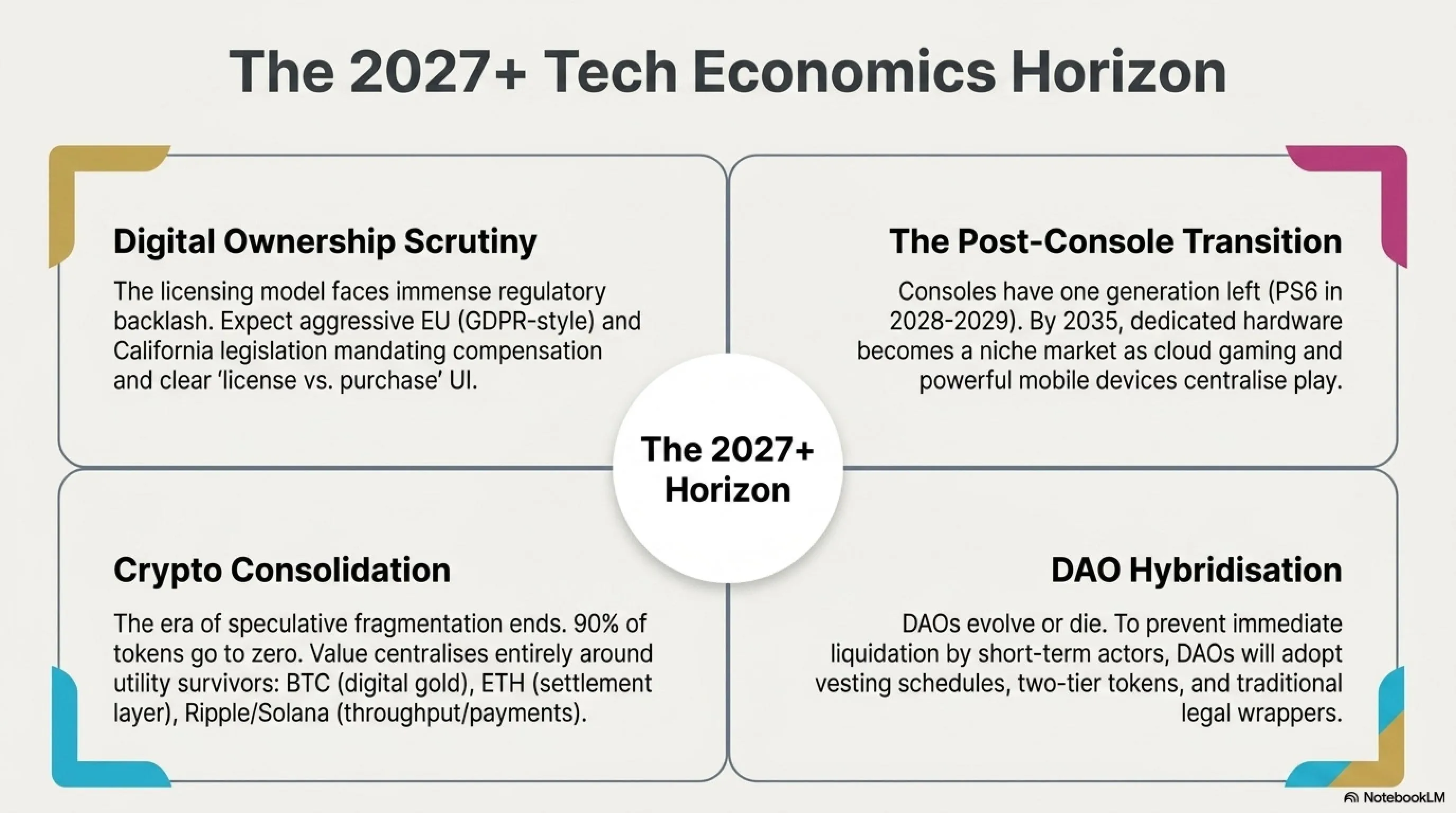
The Sony movie deletion won't be the last. As more consumers lose access to content they've "purchased," regulatory pressure will build. We're likely to see legislation in Europe first (GDPR showed how aggressive European regulators can be about consumer protection), followed eventually by US states like California.
This regulation might take several forms: requiring platforms to clearly distinguish between "purchasing" (which implies ownership) and "licensing" (which is temporary); mandating compensation when licensed content is removed; or even requiring platforms to provide downloadable DRM-free copies for permanently "purchased" content.
The industry will resist, arguing that the current licensing model is necessary for content distribution economics. But consumer anger is real, and politicians respond to angry voters. Change is coming.
Future Regulatory Scenarios
California (2028): Mandatory compensation when purchased content is removed
Federal US (2029+): Possible legislation requiring DRM-free backups for permanent purchases
Industry Response: Shift to transparent subscription models rather than pseudo-ownership
This will be painful for true believers who thought every new token represented a revolutionary new idea. But it's necessary. Markets mature by eliminating noise and concentrating value in genuine winners. Crypto is finally growing up.
Crypto Consolidation: Winners & Losers by 2030
- Bitcoin: Survives as digital gold and store of value
- Ethereum: Dominant smart contract platform
- 90% of altcoins: Will go to zero or become irrelevant
- Utility tokens: Only those solving real problems survive
- Speculation tokens: Almost complete wipeout expected
DAOs Will Evolve or Die
The GnosisDAO redemption vote is a warning sign. If DAOs become just liquid investment funds where members can exit at any time, they lose their unique value proposition. Why have a DAO instead of a traditional investment fund with better legal protections and tax treatment?
For DAOs to survive, they need to find sustainable models that balance member rights with organizational longevity. This might mean vesting periods where you can't immediately cash out. It might mean two-tier token structures where governance tokens and economic tokens are separate. It might mean hybrid models that combine DAO governance with traditional legal entities.
Whatever the solution, DAOs need to solve this problem quickly. The technology is promising, but without sustainable organizational models, DAOs will remain an interesting experiment that never achieves mainstream adoption.
Conclusion: Sunday Night Lessons in Technology's Evolution
As Sunday night on June 28, 2026 comes to a close, we're left with stories that each illuminate different facets of how technology is reshaping our world.
Sony's movie deletion reminds us that in the digital age, ownership is a privilege that can be revoked, not a right to be assumed. The GTA 6 console war shows that perception often matters more than reality, and that marketing can trump technology. The eBay scalping phenomenon reveals how easily human psychology can be exploited, even when scarcity is entirely fabricated.
In crypto, the Saylor-Garlinghouse debate shows a maturing industry grappling with fundamental questions about value creation versus speculation. And the GnosisDAO vote demonstrates that even revolutionary organizational models like DAOs must eventually confront age-old tensions between member rights and institutional permanence.
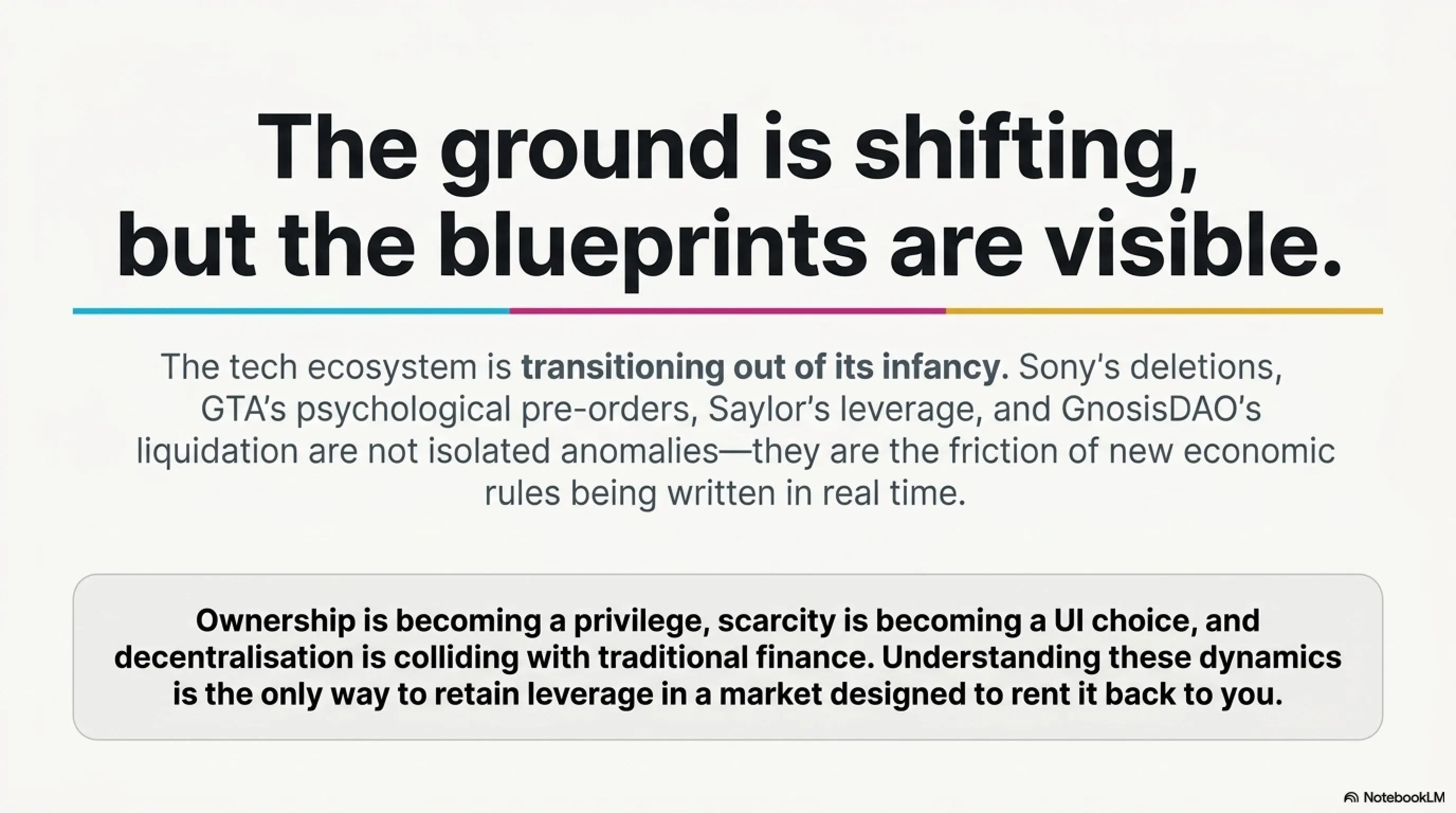
These aren't just isolated stories—they're symptoms of a broader technological transformation. We're living through a period where old rules no longer apply but new rules haven't yet been established. The ground is shifting beneath our feet.
The question is: how do we adapt? How do we protect our interests as consumers when ownership becomes a revocable license? How do we make smart choices when our psychology is being exploited by sophisticated marketing? How do we invest in emerging technologies like crypto without getting burned by speculation? How do we build new organizational structures like DAOs that actually work?
There are no easy answers. But awareness is the first step. Understanding these dynamics helps us navigate them. Tonight's stories aren't just news—they're lessons about the world we're building, one digital transaction at a time.
Frequently Asked Questions
Will Sony compensate users for the removed movies?
No, Sony has stated that no compensation will be provided for the removed films. According to the PlayStation Store's terms and conditions, users only purchase a license to access content, not ownership of the content itself.
Why is the GTA 6 pre-order ratio so heavily in favor of PS5?
Several major reasons: Sony's marketing deal with Rockstar, PS5's larger install base (65 million vs 32-35 million Xbox), PlayStation's stronger brand in key markets, and GTA fan loyalty to PlayStation dating back to GTA V.
Is it safe to buy GTA 6 from eBay?
No, it's not recommended. Digital codes are reversible, and sellers can cancel the code after receiving payment. Always buy from official stores like PlayStation Store, Xbox Store, or Steam. Additionally, there is no shortage of GTA 6—it's readily available.
What's wrong with Strategy's financing model?
Strategy borrows money by selling preferred stock and bonds to buy Bitcoin. The problem is that if Bitcoin's price crashes, the company might not be able to pay its debts. According to reports, STRC stock is currently trading 25 percent below par value.
What is a DAO and why is the GnosisDAO vote significant?
DAO stands for Decentralized Autonomous Organization—entities governed by token holders. The GnosisDAO vote is significant because for the first time, it allows token holders to cash out their share of the treasury, transforming the DAO from a governance organization into an entity resembling a joint-stock company.
When will Switch 2 be released?
Nintendo hasn't announced an official date yet, but given that Granblue Fantasy Versus: Rising launches for Switch 2 on September 17, 2026, the console will likely be available by then or earlier.
How can I protect my digital purchases?
Several strategies: 1) Buy physical copies when possible 2) Read platform terms to understand what you're actually buying 3) Use more reliable platforms like iTunes or Google Play 4) For important content, buy from multiple platforms 5) If you won't consume content repeatedly, stream instead of buying.
Has Xbox really broken pre-order records for GTA 6?
Xbox has claimed this but hasn't released specific figures. Analysts suggest Xbox might be counting Game Pass Ultimate subscriptions that include day-one access to GTA 6, which is different from direct game purchases. IGN's retail data shows a 6-to-1 ratio favoring PS5.
Why are people willing to pay more for digital codes?
Several reasons: fear of missing out (FOMO), lack of information about official purchasing channels, regional restrictions in some countries, and seller tactics using messages like Limited Stock to create false urgency. It's a psychological phenomenon, not a logical one.
Have Blu-ray prices increased too?
Yes, with declining demand and production, physical discs—especially collector's editions—have become more expensive. However, for popular films, buying Blu-ray is still cheaper than digital purchase—and more importantly, no one can take it from you.
Sources
Polygon: Console war analysis and Microsoft's response
Push Square: Detailed PlayStation pre-order data
Technobezz: Analysis of 6-to-1 ratio and Game Pass
Eurogamer: Comprehensive coverage of StudioCanal film removal
Kotaku: Digital ownership crisis analysis
Dexerto: GTA 6 eBay scalping report
Vice: FOMO phenomenon analysis in digital purchases
CoinDesk: Interview with Brad Garlinghouse about Bitcoin and Strategy
Bitcoin.com: Analysis of Saylor's strategy and STRC stock status
BeInCrypto: Ripple's criticism of MicroStrategy
CryptoSlate: GnosisDAO vote coverage and treasury analysis
Longbridge: GNO token redemption value calculations
TheDefiant: DAO evolution analysis and dangerous precedent
Nintendo Life: Granblue Fantasy Versus: Rising announcement for Switch 2
Gematsu: DLC character and update 2.60 details
Supplementary Image Gallery: 🌙 Tekin Night | Sunday, June 28, 2026 - When Digital Ownership Means Temporary Rental