Tekin Night: Nocturnal Gaming & Tech Intelligence
Dive into today's top gaming news and exclusive breakdowns.
- 🎮Apple developing first-party gaming controllers under the Beats brand featuring four-channel linear haptics.
- 🎧Sony Legal shuts down ambitious PC multiplayer PvP mod for The Last of Us Part 2 days before public deployment.
- 🚀Nintendo officially revises Legend of Zelda timeline, confirming the contentious 'Two Hyrules' theory ahead of Switch 2.
- 🗡️Microsoft brings 1440p streaming and AI Voice Clarity noise suppression to Xbox Remote Play on Series X|S.
- 📰Saber Interactive CCO Tim Willits warns North American AAA development is unsustainable with $2M monthly burn rates.
- ⚔️JeetBot malicious browser extension hijacks 31,000 Twitch streamer accounts by siphoning active OAuth bearer tokens.
Welcome to the Tuesday, September 15, 2026 nocturnal edition of Tekin Night, your premier analytical radar tracking seismic transformations across video game development pipelines, mobile hardware convergence, console ecosystem rivalries, and platform security. As the traditional boundaries separating mobile silicon, dedicated home consoles, and cloud infrastructure continue to erode, the gaming industry is entering a high-stakes crucible where architectural execution, cost-structure discipline, and intellectual property governance dictate corporate survival.
Tonight’s intelligence brief uncovers a sequence of extraordinary developments that will reverberate across the global entertainment landscape for years to come. In Cupertino, long-standing rumors of Apple’s indifference toward hardcore gaming have been decisively shattered by forensic revelations indicating that the iPhone maker is secretly engineering dedicated first-party game controllers under its youth-focused Beats brand. Meanwhile, in Tokyo, Sony Interactive Entertainment’s legal apparatus has struck with surgical precision, shutting down an ambitious, community-engineered PC multiplayer project for The Last of Us Part 2 just days before its worldwide launch, underscoring the platform holder's uncompromising defense of its flagship franchise. Across Kyoto, Nintendo has quietly restructured the canonical timeline of The Legend of Zelda, validating a historic fan theory regarding two separate founding eras of Hyrule and setting the stage for its next-generation console reveal.
Simultaneously, Microsoft has unleashed a formidable technological leap for Xbox Remote Play, pushing local streaming resolutions to crisp 1440p while deploying advanced neural noise cancellation directly to console audio pipelines. In the executive sphere, industry luminary Tim Willits of Saber Interactive has delivered a brutal reality check to Western publishers, declaring North American AAA game development economically unviable under catastrophic two-million-dollar monthly studio burn rates. Finally, a severe supply-chain intrusion has struck the streaming community, where a compromised browser utility quietly hijacked tens of thousands of authenticated Twitch accounts without requiring user credentials.
Executive Overview: Key Takeaways of Tonight's Intelligence
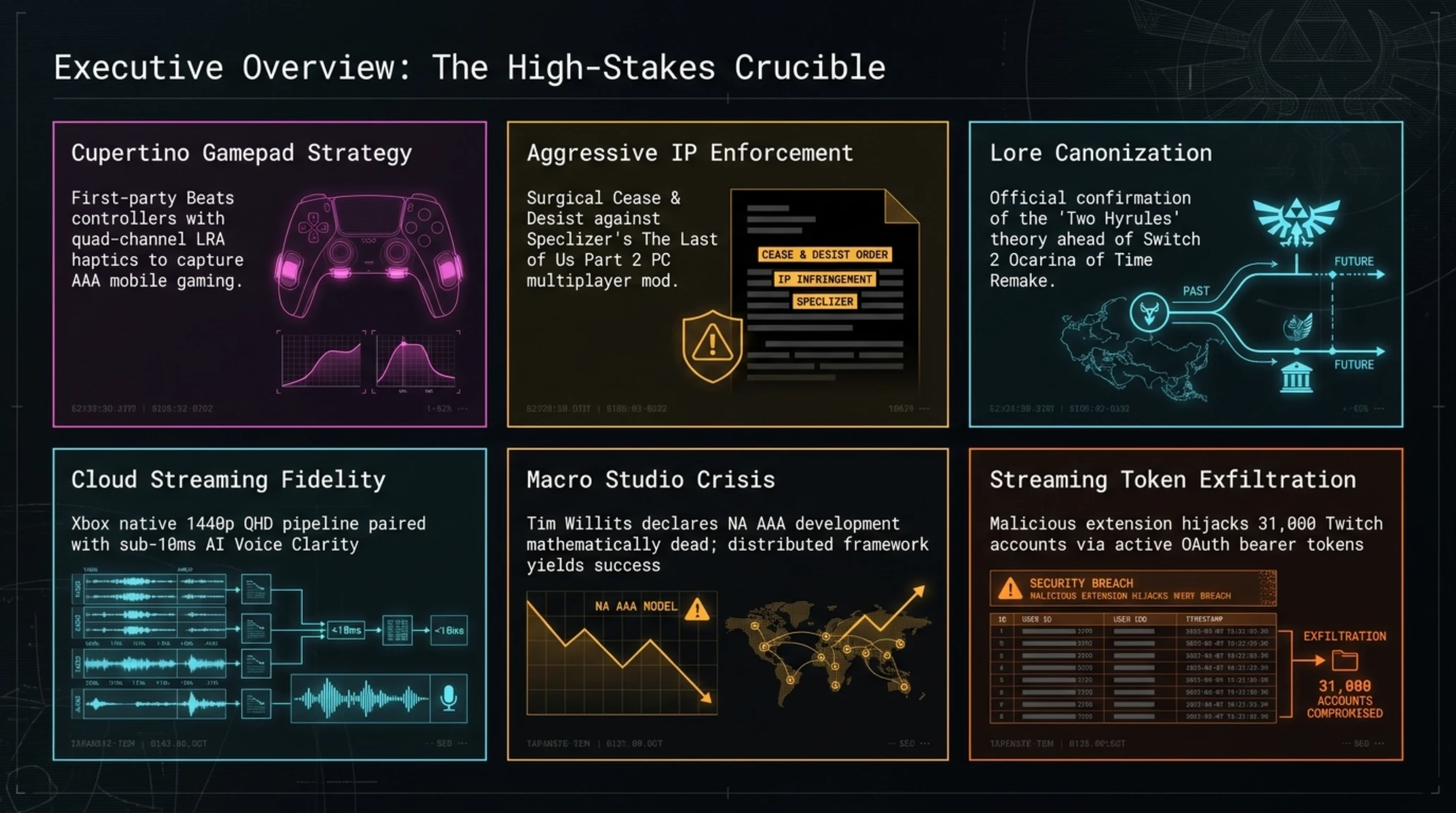
- Cupertino Gamepad Strategy: Apple is developing two distinct physical gaming controllers branded under Beats, combining four-channel LRA haptics, low-latency USB-C, and modular Bluetooth connectivity to capture AAA mobile gaming.
- Aggressive IP Enforcement: Sony’s legal counsel issued an emergency Cease and Desist against Speclizer’s community-funded PC multiplayer mod for The Last of Us Part 2, extinguishing hope for an unofficial Factions successor.
- Lore Canonization: Nintendo's updated Japanese Zelda timeline officially confirms that the ancient kingdom witnessed two distinct foundings, bridging Skyward Sword and Tears of the Kingdom prior to the Switch 2's Ocarina of Time remake.
- Cloud Streaming Fidelity: Xbox Series X|S Remote Play receives a native 1440p QHD pipeline paired with lightweight, on-device AI Voice Clarity to suppress mechanical background clatter with sub-10ms latency.
- Macro Studio Crisis: Saber Interactive CCO Tim Willits attributes the critical and commercial success of Space Marine 2 to a globally distributed development framework operating at one-third the cost of traditional Californian studios.
- Streaming Token Exfiltration: Malicious Chrome and Firefox extension 'JeetBot' weaponized wide domain permissions to steal live auth-token cookies and OAuth bearer credentials, compromising over 31,000 Twitch broadcaster profiles.
1. Apple Enters First-Party Gaming Hardware: Engineering iPhone Controllers Under Beats Brand With Quad-Channel Linear Haptics
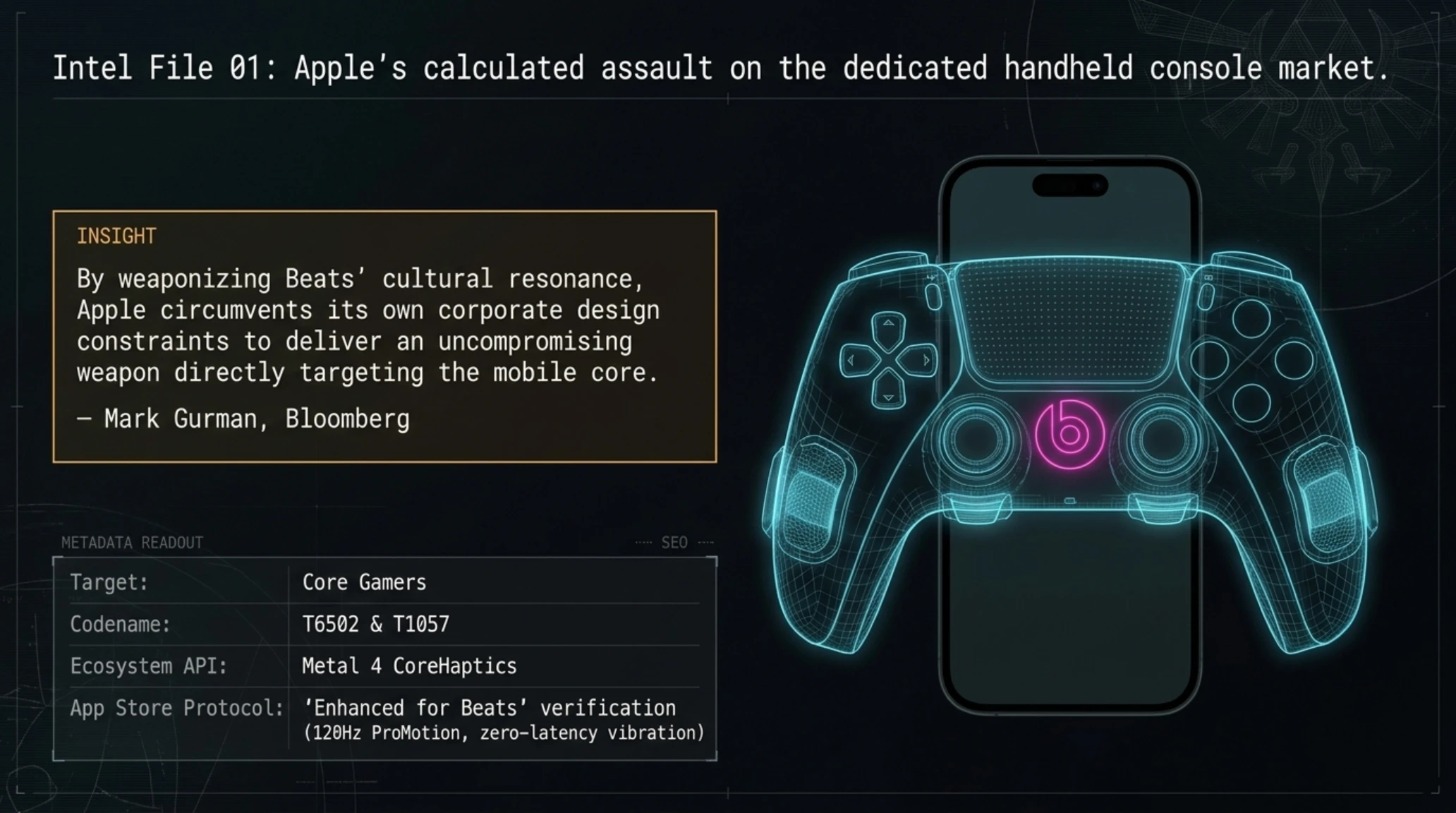
In what represents one of the most audacious hardware diversions in Apple’s modern history, renowned Bloomberg analyst Mark Gurman has revealed that the Cupertino technology giant has spent over twelve months secretly designing and prototyping dedicated, first-party physical gaming controllers tailored specifically for the iPhone and broader Apple silicon ecosystem. Crucially, the hardware will not carry the traditional minimalist, monochromatic Apple logo; instead, the company has elected to deploy the controllers under its wholly owned Beats electronics brand. This tactical brand dissociation grants Apple complete design latitude to embrace aggressive ergonomics, textured gaming grips, and vibrant aesthetic palettes without diluting the corporate prestige of its luxury consumer hardware portfolio.
Forensic analysis of binary assets and internal driver strings discovered within recent macOS 26.7 and iOS developer builds reveals references to two distinct hardware configurations, designated under engineering codenames T6502 and T1057. The T6502 represents a premium clamping split-controller that latches directly to the sides of recent iPhone models via a physical USB-C port, guaranteeing sub-one-millisecond input response times while routing power through a high-bandwidth 45W passthrough channel. The T1057, by contrast, is an independent, modular wireless gamepad utilizing Apple’s proprietary low-latency wireless protocol alongside standard Bluetooth 5.4, featuring an internal six-axis inertial measurement unit (IMU) capable of sub-millimeter motion tracking across iPad, Mac, and Apple Vision Pro displays.

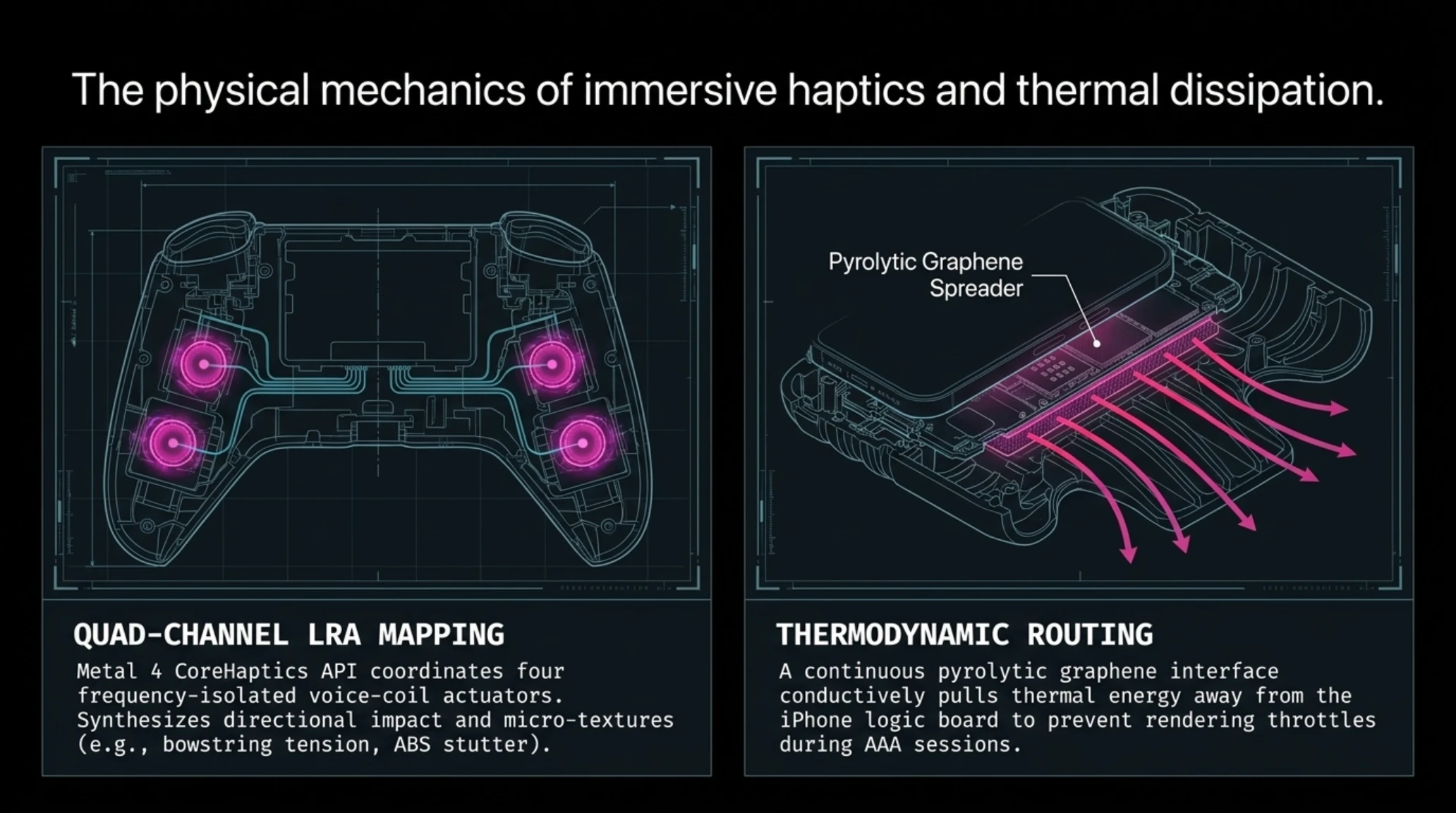
The centerpiece of both controller architectures is an extraordinarily sophisticated quad-channel linear resonant actuator (LRA) haptic subsystem. Rather than relying on traditional off-center rotating mass (ERM) rumble motors that produce blunt, indiscriminate vibrations, the Beats controller integrates four localized, frequency-isolated voice-coil actuators positioned within the hand grips and trigger housings. By coordinating these actuators through Apple’s Metal 4 CoreHaptics API, game engines can synthesize micro-textures with surgical fidelity allowing players to physically perceive the distinct mechanical resistance of a bowstring, the hydraulic stutter of an anti-lock braking system, or the directional impact of incoming shrapnel across distinct quadrants of their palms.
Technical Architecture: Comparative Specifications of Apple Beats Gaming Hardware
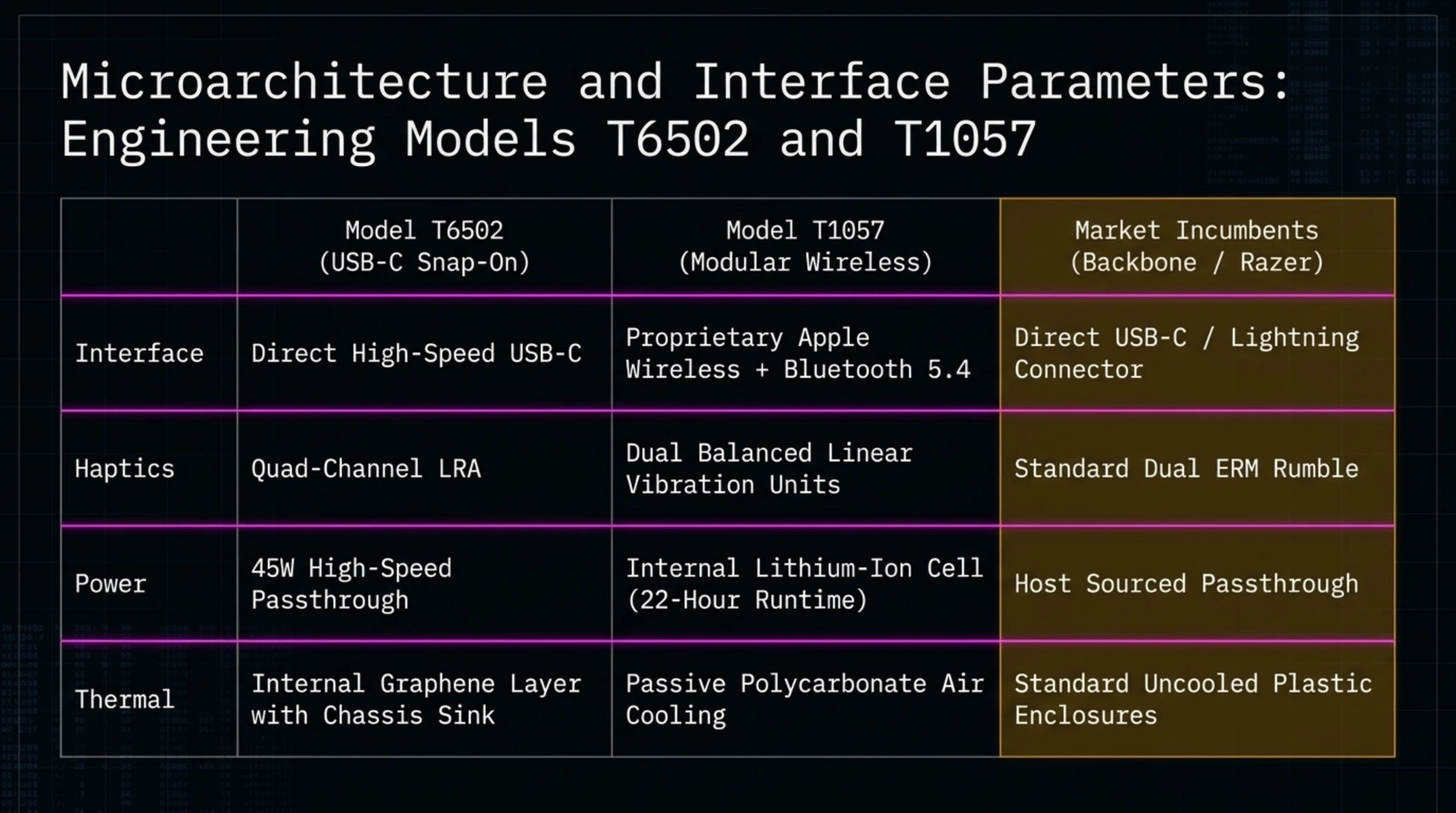
Microarchitecture and Interface Parameters of Engineering Models T6502 and T1057
| Parameter | Model T6502 (USB-C Snap-On) | Model T1057 (Modular Wireless) | Market Incumbents (Backbone / Razer) |
|---|---|---|---|
| Physical Interface | Direct High-Speed USB-C Interface | Proprietary Apple Wireless + Bluetooth 5.4 | Direct USB-C / Lightning Connector |
| Haptic Actuation | Quad-Channel Linear Resonant Actuators (LRA) | Dual Balanced Linear Vibration Units | Standard Dual Rotational Mass (ERM Rumble) |
| Platform Synergy | iPhone 15 Series and Newer, iPad mini | iPhone, iPad, Mac, Apple TV, Vision Pro | Broad Cross-Platform Host Support |
| Spatial Tracking | Host Phone Gyroscope Reliance | Integrated 6-Axis IMU (Gyro + Accelerometer) | Absent in Majority of Mobile Clamping Pads |
| Thermal Dissipation | Internal Graphene Layer with Chassis Sink | Passive Polycarbonate Air Cooling | Standard Uncooled Plastic Enclosures |
| Power Delivery | Host Sourced with 45W High-Speed Passthrough | Internal Lithium-Ion Cell (22-Hour Runtime) | Host Sourced Passthrough Without Internal Cell |
This hardware offensive directly confronts the glaring contradiction that has plagued Apple’s gaming initiatives since the autumn of 2023. When Apple executive teams paraded AAA console conversions of Death Stranding, Resident Evil 4 Remake, and Assassin’s Creed Mirage running natively on the A17 Pro and subsequent M-series processors, critics and gamers universally praised the raw silicon throughput of Apple's graphics architecture. However, the software launch stumbled over ergonomics; clumsy on-screen virtual touch overlays proved virtually unplayable for complex console mechanics, while fragmented third-party Bluetooth controllers lacked standardized button mappings and deep operating system integration.
Supply chain telemetry emanating from manufacturing hubs in Shenzhen and Taoyuan indicates that Beats hardware designers have worked hand-in-hand with Apple’s Metal engineering divisions to embed controller calibration data directly into modern middleware solutions, including Unreal Engine 5.5 and Unity 6. Developers can now map dynamic trigger resistance curves, deadzone thresholds, and analog stick polling rates up to 1,000Hz without authoring customized device drivers. Furthermore, the controllers incorporate an instant proximity-pairing sequence identical to AirPods; snapping the T6502 onto an iPhone immediately initializes an exclusive Game Mode overlay that allocates maximum GPU clock cycles to active rendering tasks while enabling instantaneous 4K game capture and direct Twitch streaming pipelines.
From a thermodynamic engineering standpoint, internal Apple testing revealed that prolonged AAA rendering sessions on mobile silicon frequently encountered thermal throttling when external plastic controller grips insulated the device's rear casing. To mitigate this structural failure, Beats engineers engineered a continuous pyrolytic graphene heat spreader beneath the controller's central mounting bracket. This interface conductively pulls thermal energy away from the iPhone’s logic board, channeling excess heat across the controller’s structural aluminum skeleton to maintain maximum sustained frame rates without blistering the player's fingertips. This obsessive attention to microarchitecture underscores Apple’s unwavering determination to establish iOS as an unassailable bastion of premium gaming.
Historically, Apple's relationship with dedicated gaming peripherals has been defined by hands-off detachment. When the original Made for iPhone (MFi) controller program launched alongside iOS 7 in 2013, Apple relied entirely on third-party manufacturers such as SteelSeries, Moga, and Logitech to produce gamepads. However, inconsistent build quality, exorbitant licensing markups, and absence of standardized click-in thumbstick buttons severely damaged consumer confidence. While recent partnerships with Backbone and Razer partially revived interest, Apple’s lack of first-party hardware ownership left developers hesitant to invest tens of millions of dollars in exclusive console-tier mobile ports. By seizing direct hardware control through Beats, Apple establishes a permanent reference platform that studio heads can target with total commercial certainty.
Looking ahead to commercial distribution, industry retail channels indicate Apple will launch an aggressive developer verification program titled 'Enhanced for Beats' across the iOS App Store. Games qualifying for this prestigious certification must support 120Hz ProMotion frame pacing, zero-latency controller vibration routing, and custom haptic profiles that adapt automatically to weapon loadouts and environmental conditions. By pairing native silicon hardware with curated developer incentives, Apple is constructing a closed-loop gaming engine designed to capture billions in recurring consumer entertainment revenue.
Furthermore, the strategic rollout of Beats gaming hardware is expected to inject urgent vitality into Apple Arcade. While the subscription service originally focused on family-friendly casual experiences, slowing subscriber growth has prompted Apple services executives to seek out mid-core and hardcore action titles. By providing a hardware bundle that includes six months of complimentary Apple Arcade access alongside day-one controller support for premier cross-platform titles, Apple directly challenges Nintendo’s iron grip on portable gaming, transforming the iPhone in every consumer's pocket into an uncompromising mobile gaming powerhouse.
2. Sony Legal Intervention Halts PC Multiplayer Mod for The Last of Us Part 2 Days Before Public Launch
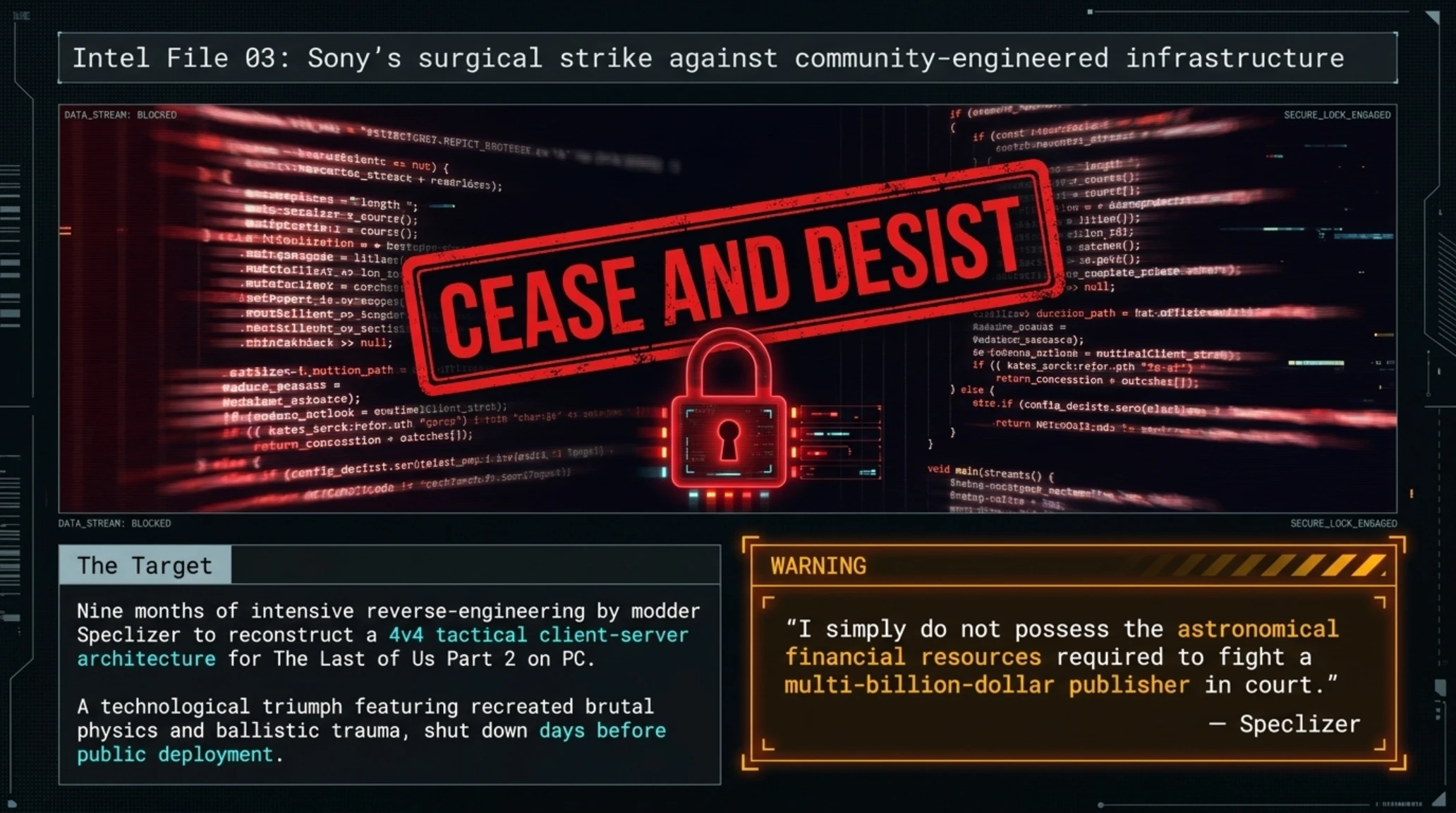
In a decisive and controversial display of corporate copyright enforcement, Sony Interactive Entertainment (SIE) has officially served a formal Cease and Desist notice through its primary intellectual property litigation counsel, permanently terminating the development and public deployment of an ambitious fan-engineered PC multiplayer modification for The Last of Us Part 2. The project, developed over nine months of intensive technical labor by renowned Australian software engineer and modder Speclizer, was scheduled to release its initial public build worldwide in the final week of September 2026, completely free of charge.
Technical analyses of the leaked pre-release builds and developer gameplay demonstrations revealed an astonishing level of engineering competence. By reverse-engineering internal debug routines and network replication protocols embedded within the PC release of the title, Speclizer had successfully reconstructed a robust, low-latency client-server architecture supporting four-versus-four tactical faction warfare and a restricted survival battle royale mode across meticulously rebalanced quarantine zones in Seattle. The mod faithfully replicated Naughty Dog’s brutal physics-driven melee combat, dynamic prone maneuvering, and visceral ballistic trauma mechanics that global players had fervently yearned to experience in an online multiplayer arena ever since the catastrophic cancellation of the studio's official standalone project.

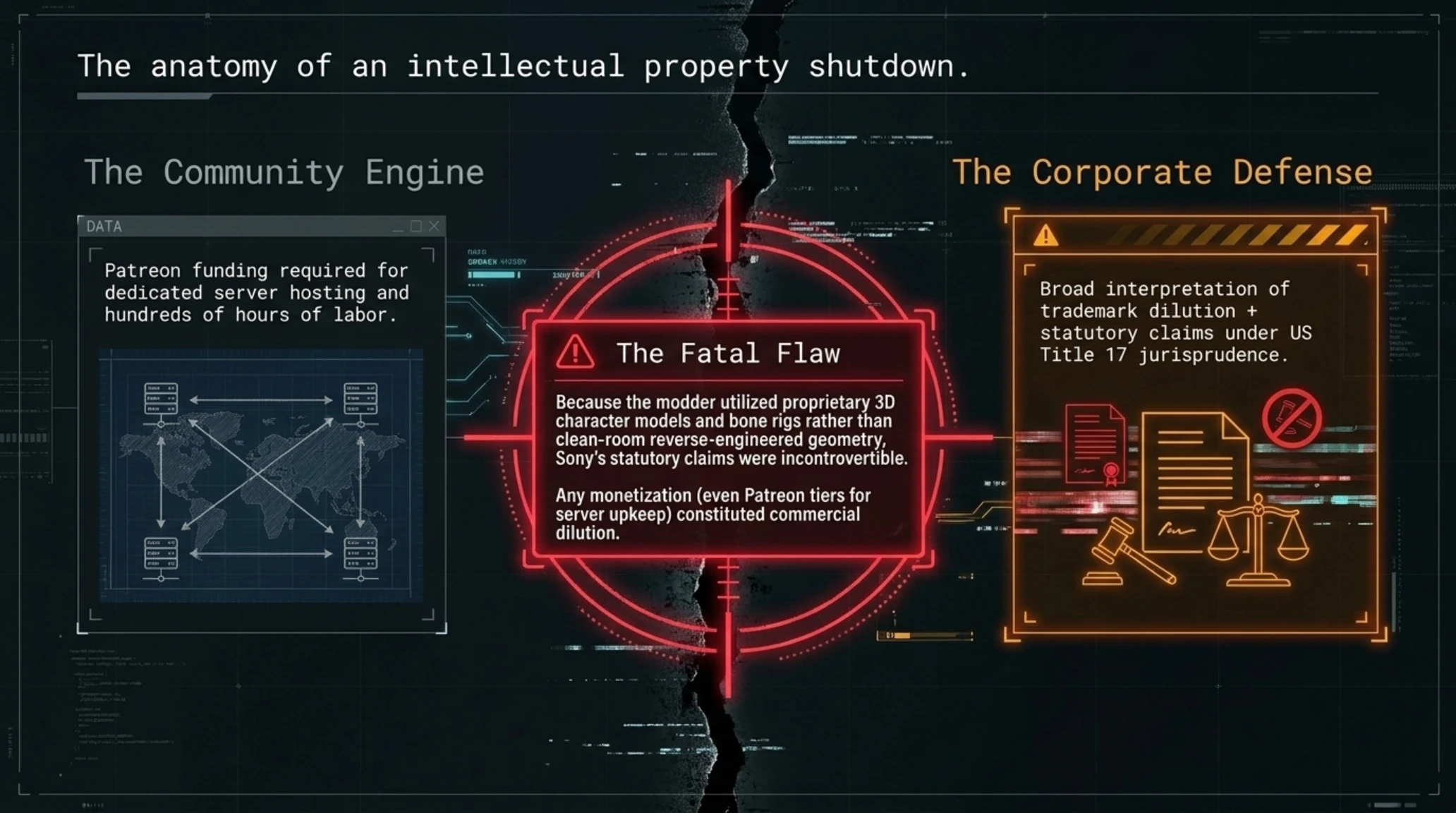
However, the project’s fatal vulnerability stemmed from its financial structure. To offset continuous dedicated server hosting expenses and sustain hundreds of hours of reverse-engineering labor, Speclizer maintained a tiered Patreon account offering subscribers gated development updates, early access playtests, and private Discord builds. While the developer maintained that the ultimate consumer release would remain entirely gratis, Sony’s legal division argued that any monetization adjacent to proprietary 3D geometry, proprietary audio samples, and copyrighted character assets constituted blatant copyright infringement and commercial dilution of PlayStation’s trademarked properties.
The strategic timing and uncompromising severity of Sony’s intervention must be contextualized within the traumatic corporate legacy surrounding the demise of The Last of Us Online. In December 2023, following extensive external audits by Bungie and internal evaluations that revealed the project would consume the vast majority of Naughty Dog’s studio resources for years, Sony leadership made the agonizing decision to cancel the multi-million-dollar live-service title. For an independent modder to subsequently produce a stable, highly engaging online multiplayer client using the game’s retail assets represented an intolerable reputational embarrassment to PlayStation’s executive hierarchy.
This shutdown reignites the perennial philosophical schism dividing Western modding communities and Japanese platform holders. While progressive publishers like Valve Corporation and Bethesda Softworks actively institutionalized community modifications giving rise to legendary multi-billion-dollar commercial franchises including Counter-Strike, Team Fortress, and DayZ Sony Interactive Entertainment maintains an archaic, risk-averse doctrine of absolute perimeter defense. While this draconian stance undoubtedly safeguards core copyright boundaries, it alienates the very enthusiast PC communities whose long-term goodwill is vital as Sony seeks to accelerate its cross-platform desktop publishing strategy.
Legal scholars tracking interactive entertainment intellectual property note that Cease and Desist letters within the gaming sphere frequently rely on broad interpretations of trademark dilution rather than narrow copyright claims. By arguing that a public multiplayer build bearing 'The Last of Us' branding creates commercial confusion among consumers leading casual players to mistakenly assume that an unoptimized, fan-hosted server infrastructure reflects official PlayStation Network service quality Sony constructs an unassailable defensive wall. Furthermore, because Speclizer utilized proprietary character models and bone rigs rather than clean-room reverse-engineered geometry, Sony's statutory claims were effectively incontrovertible under United States Title 17 jurisprudence.
3. Nintendo Officially Updates Legend of Zelda Timeline, Validating the 'Two Hyrules' Fan Theory Ahead of Switch 2
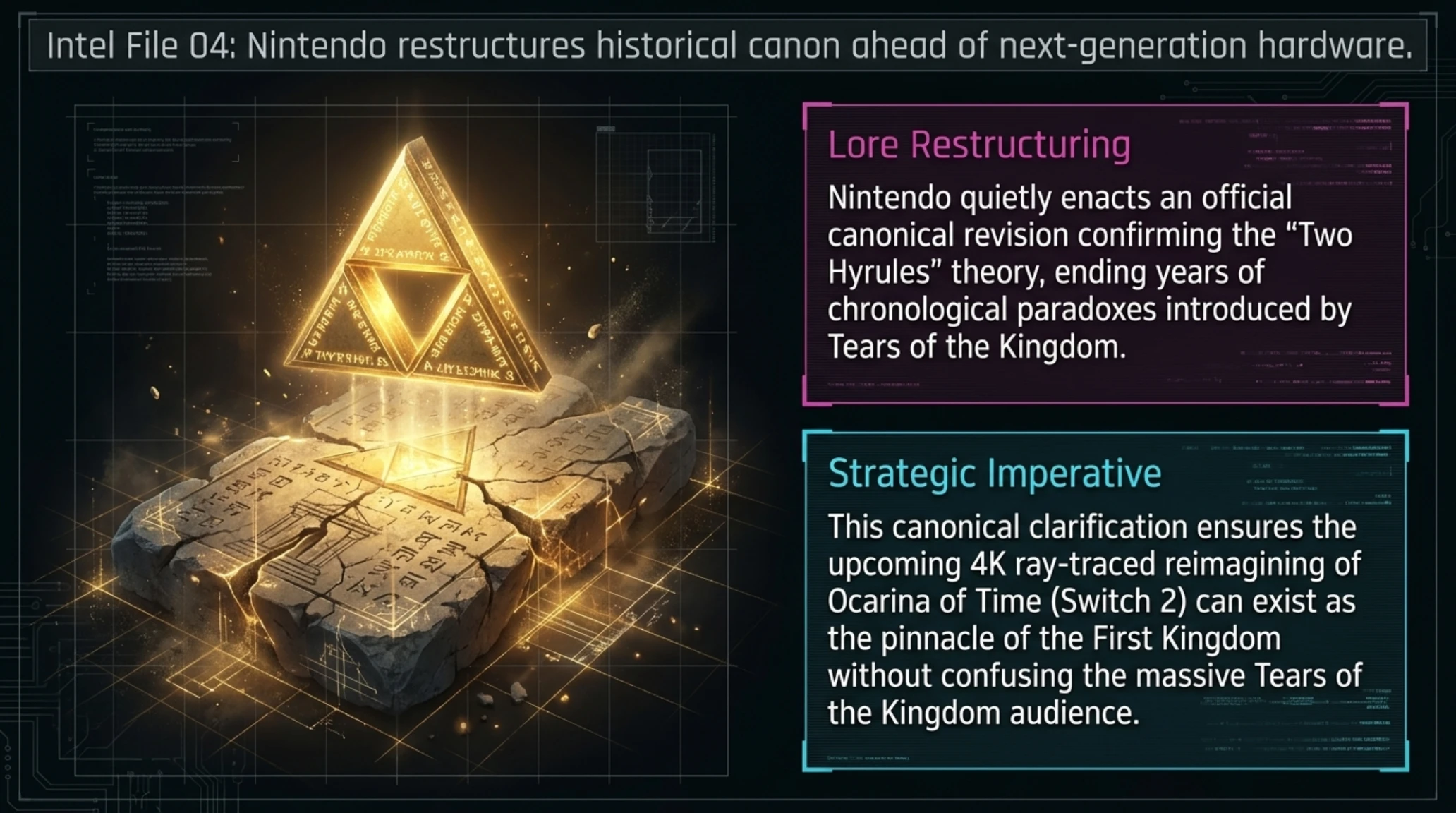
In a momentous development that has reverberated throughout the global gaming academy, Nintendo of Japan has quietly enacted an official canonical revision to its centralized The Legend of Zelda portal in Kyoto. This archival update formally and incontrovertibly canonizes one of the most rigorously debated historical fan theories in modern video game storytelling: the confirmation that the mythical kingdom of Hyrule has experienced two entirely separate, historically decoupled foundation eras throughout its multi-millennial existence.
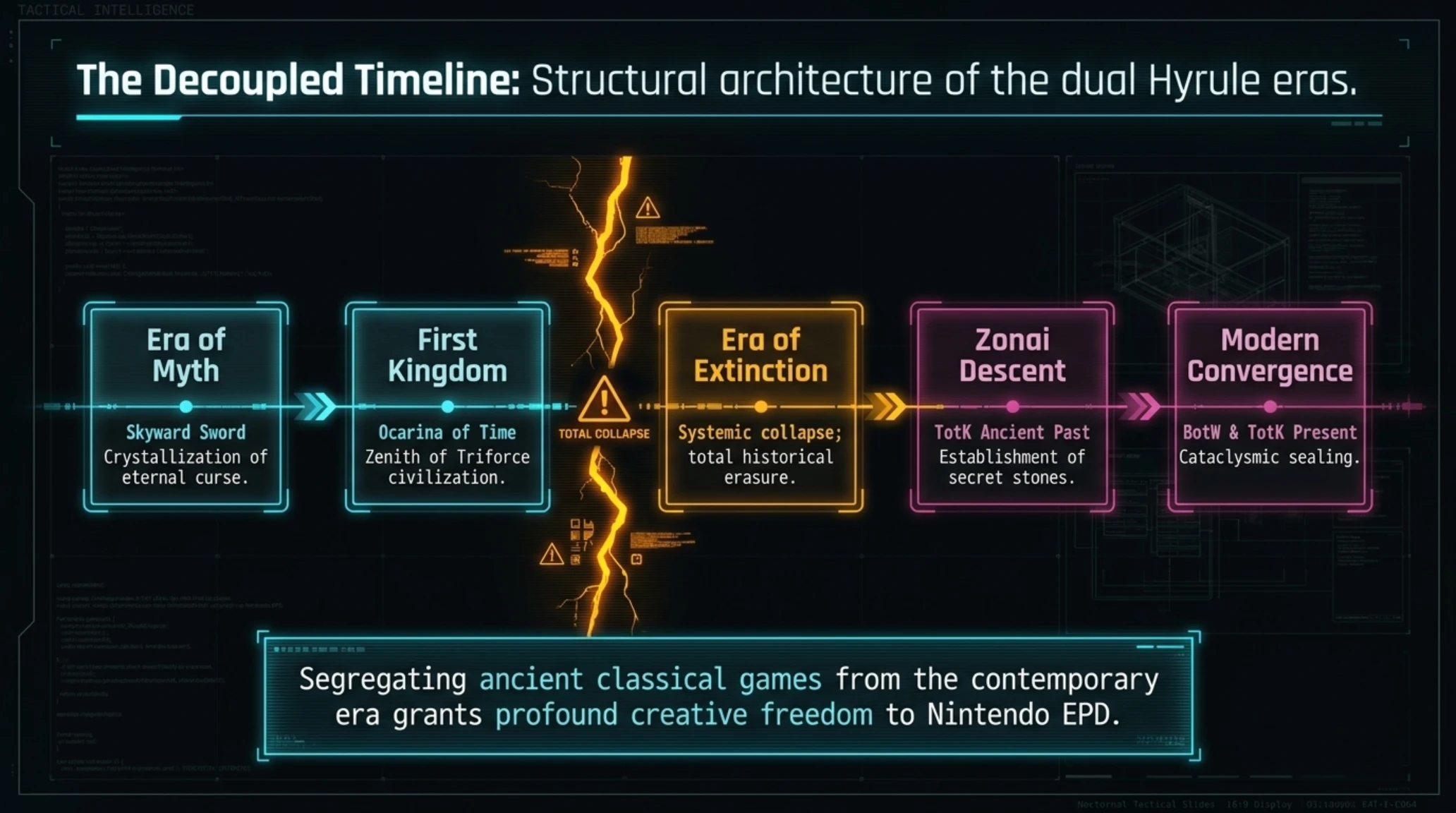
For over three years, Zelda narrative scholars and enthusiasts struggled to reconcile the glaring chronological paradox introduced in Tears of the Kingdom. In the ancient memories witnessed by Princess Zelda, King Rauru is unambiguously hailed as the 'First King of Hyrule.' Yet, established canonical lore documented in the official Hyrule Historia established that the original kingdom of Hyrule had already been established countless eons earlier following the cataclysmic celestial events of Skyward Sword, thriving across the classical eras of The Minish Cap and Ocarina of Time. The revised Japanese timeline resolves this apparent contradiction by clarifying that the original civilization experienced complete catastrophic collapse and systemic societal extinction, after which the celestial Zonai descended to found a second, distinct sovereign entity bearing the ancestral name.
Canonical Chronology: Structural Architecture of the Dual Hyrule Eras in Zelda Lore
| Historical Epoch | Key Canonical Software | Governing Sovereign Dynasty | Lore Significance & World Evolution |
|---|---|---|---|
| Era of Myth & Creation | Skyward Sword | Pre-Monarchical Era (Goddess Hylia) | Vanquishing of Demise; crystallization of the eternal reincarnating curse. |
| First Kingdom of Hyrule (Classical) | The Minish Cap / Ocarina of Time | Original Royal Dynasty of Hyrule | Zenith of the Triforce civilization; tripartite fracture of the Prime Timeline. |
| Era of Decline & Extinction | Twilight Princess / The Wind Waker | Decline of First Kingdom | Systemic collapse of original institutions; total historical erasure of the ancient empire. |
| Zonai Descent & Second Kingdom | Tears of the Kingdom (Ancient Past) | Second Hyrule Dynasty (King Rauru) | Union of King Rauru and Queen Sonia; establishment of secret stones and Imprisoning War. |
| Wild Era & Modern Convergence | Breath of the Wild / TotK (Present) | Restored Royal Line (King Rhoam / Zelda) | Cataclysmic sealing of Demon King Ganondorf; architectural unification of the cosmos. |
This structural recalibration provides Nintendo's internal narrative architects with profound creative freedom. By segregating the ancient classical games from the contemporary Wild Era through the historical barrier of civilizational collapse and rebirth, legacy visual motifs such as ancient artifacts evoking the Minish or architectural carvings depicting Ocarina of Time sages can exist harmoniously as mythological relics of a forgotten world without generating catastrophic continuity errors in modern titles.
Deep architectural analysis of the Forgotten Temple in Tears of the Kingdom corroborates this dual-kingdom framework. Environmental storytellers have noted that the monumental stone carvings of the Goddess Statue within the canyon base date back to the immediate aftermath of Skyward Sword, while the surrounding Zonai columns and relief panels were constructed thousands of years later directly into the decaying stone walls. By establishing that the Zonai did not replace the original Hylian religion but rather synthesized their secret stone technology with ancient historical ruins, Nintendo provides a rich geopolitical framework that bridges archaic divine magic with advanced celestial engineering.
Industry analysts emphasize that the timing of this canonical clarification is directly linked to Nintendo’s upcoming hardware transition. Confidential development timelines in Kyoto indicate that Nintendo’s internal Entertainment Planning & Development (EPD) division is putting the finishing touches on a ground-up, masterwork remake of The Legend of Zelda: Ocarina of Time, intended to serve as a flagship technological demonstration for the Nintendo Switch 2 in late 2026. By solidifying the timeline boundaries now, Nintendo ensures that the upcoming 4K ray-traced reimagining of Link’s time-traveling odyssey can stand tall as the definitive pinnacle of the First Kingdom without confusing tens of millions of new players whose introduction to the franchise occurred during the open-world expanse of Hyrule’s second civilization.
4. Microsoft Overhauls Xbox Remote Play With 1440p Streaming, Higher Bitrates, and AI Voice Clarity
Microsoft’s Xbox core platform engineering division has officially begun flighting an architectural overhaul to its native Remote Play subsystem for preview participants enrolled in the Alpha and Alpha Skip-Ahead rings of the Xbox Insider Program. This landmark firmware upgrade delivers two transformative enhancements to local and remote console streaming for Xbox Series X and Series S hardware: first, elevating maximum render and stream encoding targets from legacy 1080p to an ultra-sharp 1440p (Quad HD, 2560x1440 pixels) at a locked 60 frames per second; and second, deploying Microsoft's proprietary deep neural network audio filter, Voice Clarity, across party chat and communications channels.
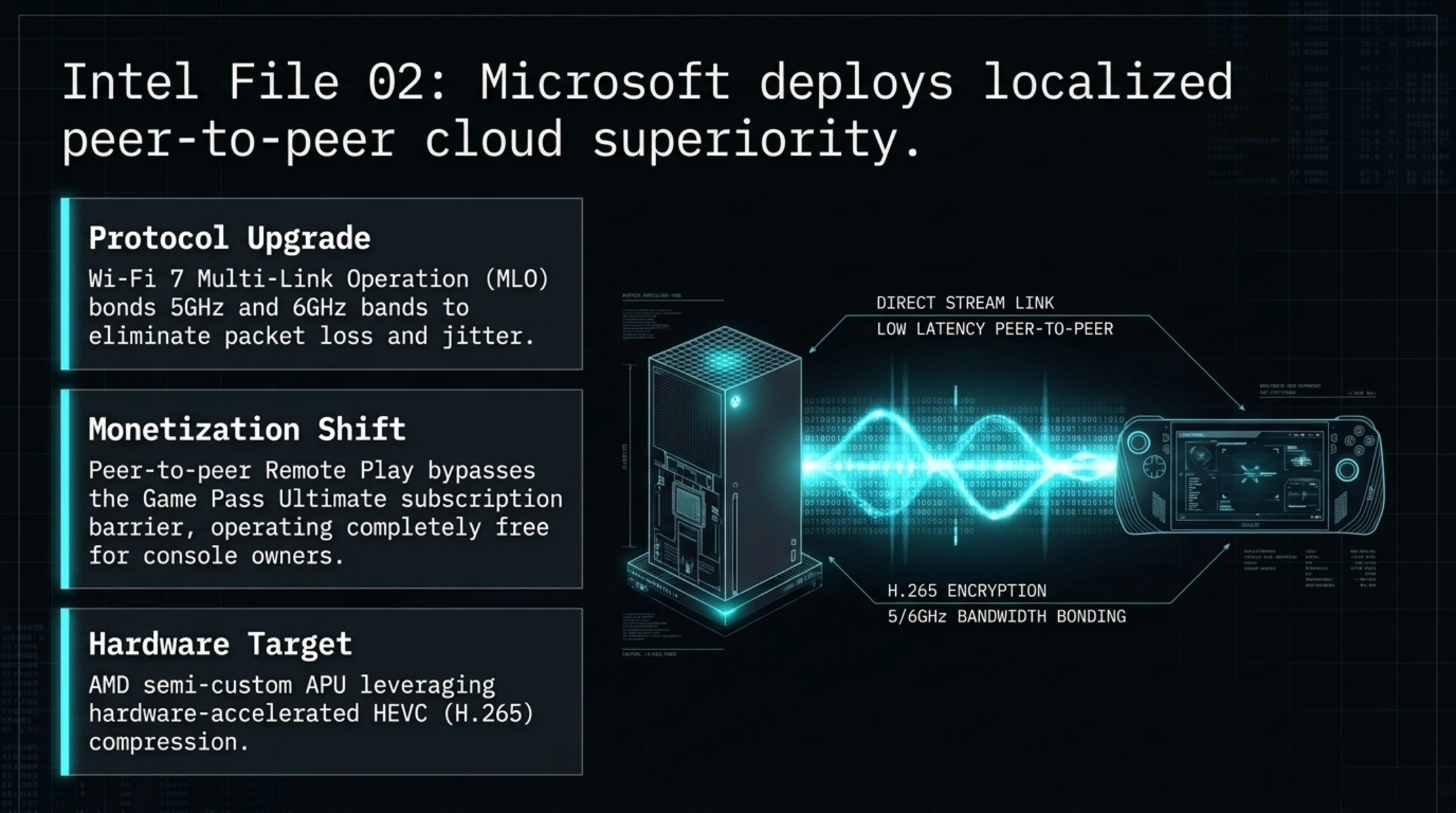
Prior to this deployment, users streaming gameplay from their local Xbox consoles to high-density portable displays such as gaming laptops, the ASUS ROG Ally, Lenovo Legion Go, or OLED iPad tablets were constrained by fixed 1080p AVC (H.264) video pipelines. On screens exceeding 300 pixels per inch, this resolution ceiling resulted in noticeable edge softening, text compression artifacts, and color band degradation. By upgrading the host console’s media processing pipeline to leverage hardware-accelerated HEVC (H.265) compression directly within the AMD semi-custom APU, Microsoft has enabled adaptive dynamic bitrates scaling smoothly up to 30 megabits per second, maintaining immaculate visual clarity without introducing perceptible input latency.

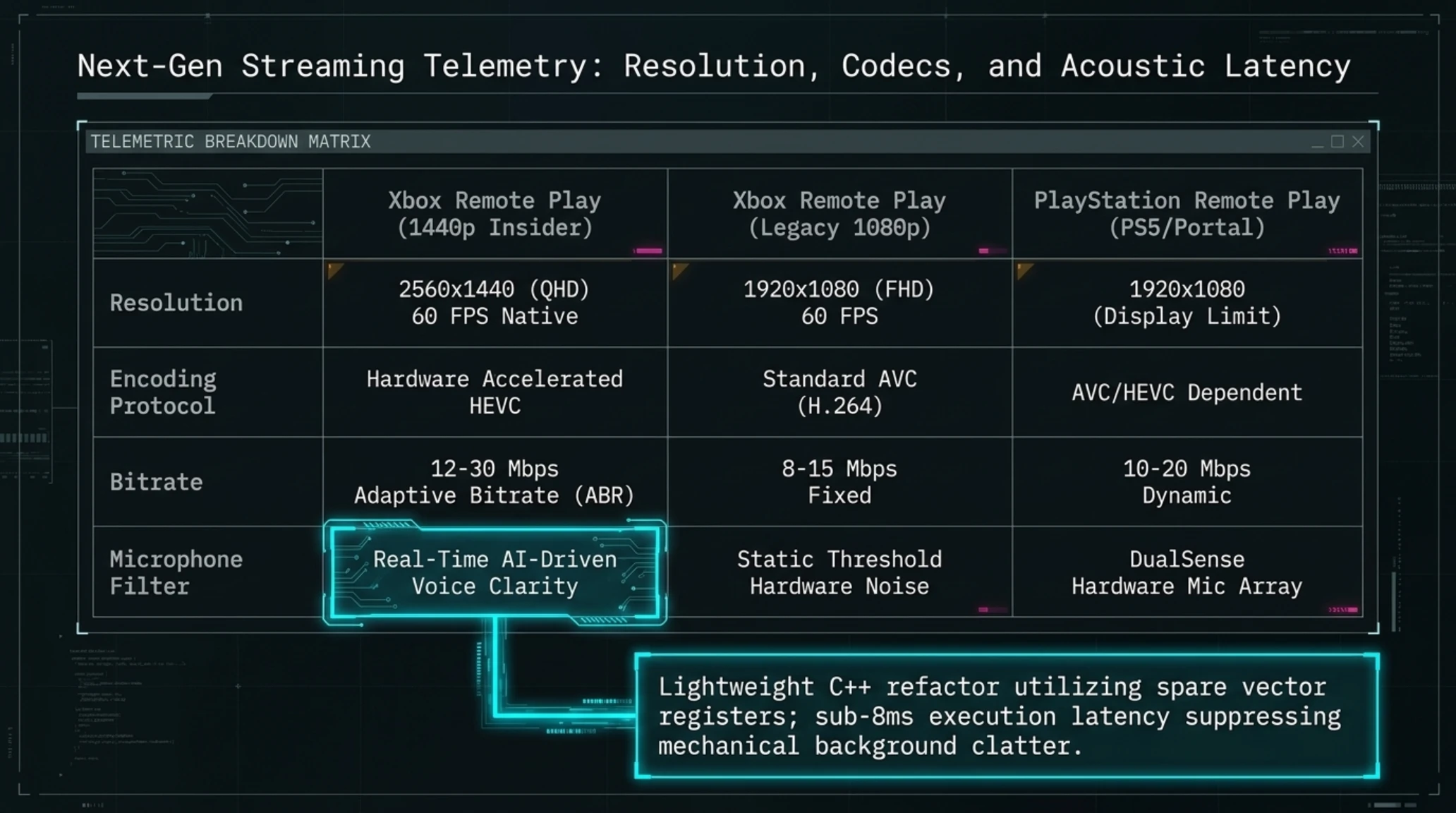
Parallel to the visual upgrade, the integration of Voice Clarity redefines the acoustic landscape of console multiplayer. Originally engineered as an enterprise-grade artificial intelligence feature for Microsoft Surface hardware utilizing specialized Neural Processing Units, the algorithmic core has been completely refactored in lightweight C++ to run efficiently on the spare vector registers of the Xbox CPU cores. With an execution latency budget under 8 milliseconds, the model analyzes real-time microphone telemetry, instantly isolating and extinguishing disruptive ambient noise including the sharp clatter of mechanical keyboard switches, high-RPM cooling fans, barking pets, and background television audio while preserving the natural timbre, depth, and spatial presence of the speaker’s voice.
Performance Matrix: Comparative Benchmarks of Next-Gen Console Remote Streaming
Telemetric Breakdown of Resolution, Codecs, and Acoustic Latency in Remote Play
| Operational Metric | Xbox Remote Play (1440p Insider) | Xbox Remote Play (Legacy 1080p) | PlayStation Remote Play (PS5 / Portal) |
|---|---|---|---|
| Max Render Resolution | 2560x1440 (QHD) 60 FPS Native | 1920x1080 (FHD) 60 FPS | 1920x1080 (Display Limit on PlayStation Portal) |
| Video Encoding Protocol | Hardware Accelerated HEVC (H.265) | Standard AVC (H.264) Baseline | AVC / HEVC Dependent on Target Client Hardware |
| Microphone Noise Filtering | Real-Time AI-Driven Voice Clarity Engine | Static Threshold Hardware Noise Gate | DualSense Hardware Mic Array Isolation |
| Subscription Mandate | Completely Free (Zero Subscription Tier) | Free for All Console Hardware Owners | Free for All Console Hardware Owners |
| Dynamic Bitrate Range | 12 Mbps to 30 Mbps Adaptive | 8 Mbps to 15 Mbps Fixed Ceiling | 10 Mbps to 20 Mbps Dynamic Adaptive |
A crucial commercial distinction lies in the monetization model: unlike Xbox Cloud Gaming, which remains gated behind the recurring monthly subscription of Xbox Game Pass Ultimate, Remote Play operates entirely peer-to-peer using the player’s owned hardware as a private localized cloud node. By eliminating subscription barriers and elevating visual throughput to 1440p, Microsoft is strategically positioning the Xbox Series X as an ultra-high-performance headless rendering engine capable of beaming rich, lag-free graphical experiences directly to the rapidly expanding handheld PC gaming ecosystem.
Under the hood of the network stack, Microsoft's engineering teams overhauled the transport layer protocols governing Remote Play, integrating support for Wi-Fi 7 Multi-Link Operation (MLO). This protocol enhancement enables client devices to bond concurrent 5GHz and 6GHz radio frequency bands, distributing UDP video packets across multiple physical channels simultaneously. If micro-burst interference causes packet loss on one frequency, the receiver transparently reconstructs the missing frame slices from redundant parity packets delivered via the alternate band, virtually eliminating the jitter and audio stutter that traditionally degraded remote console gaming sessions.
5. Saber Interactive CCO Tim Willits Declares North American AAA Game Development Unsustainable Due to $2M/Month Studio Burn Rates
In a candid and searing assessment of the systemic macroeconomic rot plaguing Western video game publishing, Tim Willits the legendary former id Software director and current Chief Creative Officer of Saber Interactive has pulled back the curtain on the catastrophic cost structures currently paralyzing North American blockbuster game development. In an expansive interview with GamesIndustry.biz, Willits confirmed that Saber Interactive has deliberately divested from active software production facilities across North America, retaining only core corporate, administrative, and legal personnel within the United States.
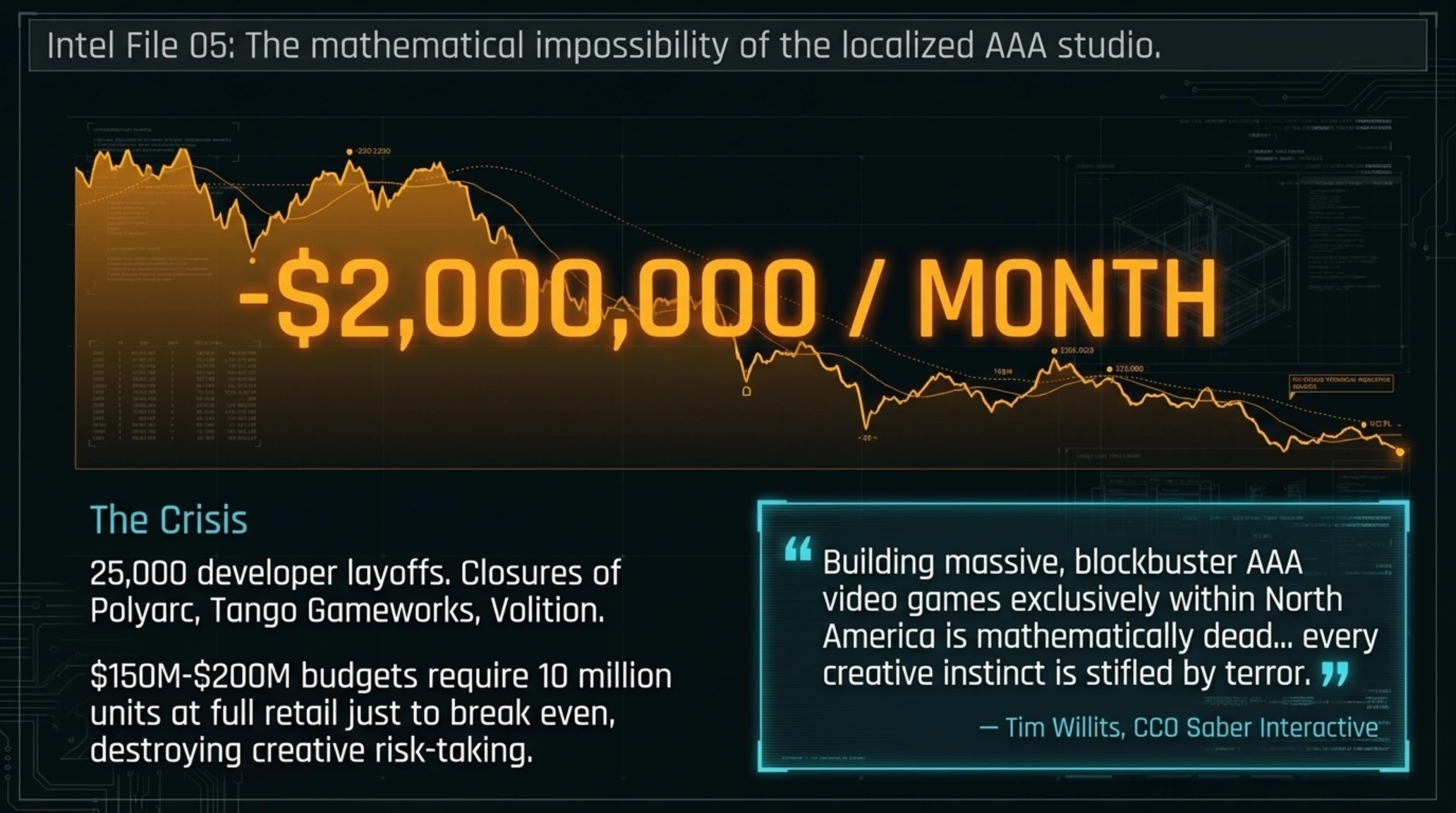
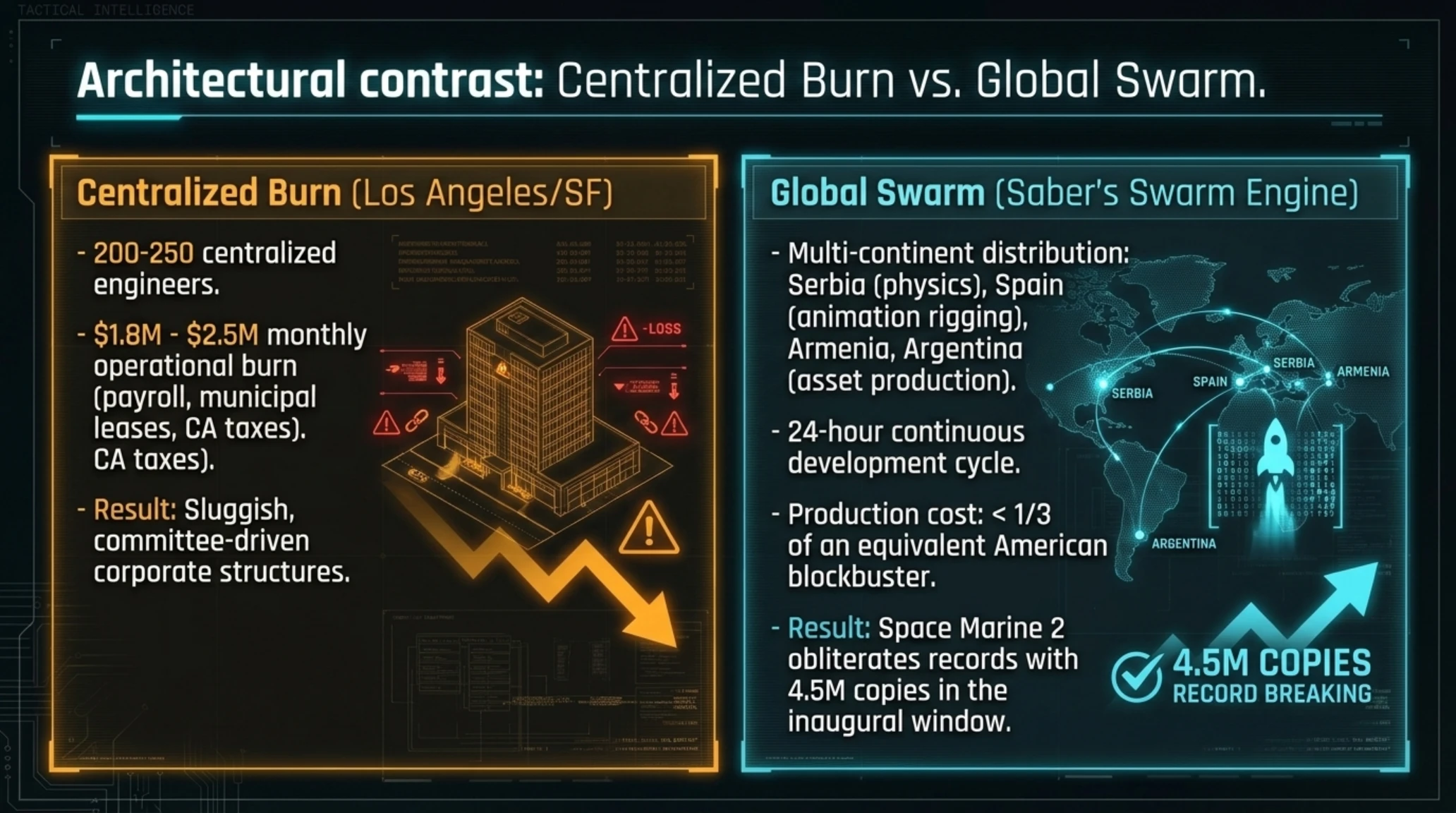
Addressing the unprecedented crisis that has seen over 25,000 developers laid off across the industry alongside the abrupt liquidation of venerable studios such as Polyarc, Tango Gameworks, and Volition, Willits laid bare the raw financial mechanics. A conventional Tier-1 game development studio employing 200 to 250 engineers, technical artists, and designers in tech hubs such as Los Angeles, Seattle, or San Francisco burns between $1.8 million and $2.5 million in cold cash every single month simply to cover base payroll, exorbitant municipal real estate leases, and California employer taxes. Over a typical five-to-six-year production cycle, baseline production budgets routinely breach $150 million to $200 million before allocating a single dollar to global marketing campaigns.

This astronomical financial overhead creates a toxic development climate where creative risk-taking is mathematically impossible. A title with a $200 million capital footprint must generate upwards of 10 million units at full retail price merely to reach capital break-even, transforming any slight gameplay experimentation or niche aesthetic deviation into an existential threat to corporate survival. Willits contrasted this grim reality with Saber Interactive’s radically divergent operational framework, which powered the sensational critical and commercial triumph of Warhammer 40,000: Space Marine 2.
With Space Marine 2 obliterating franchise sales records by moving over 4.5 million copies within its inaugural release window, Saber’s distributed paradigm stands as a vindication of geopolitical labor decentralization. By sourcing elite mathematical and graphics programming talent across emerging Eastern European and Latin American technology corridors where cost-of-living metrics allow developers to live extraordinarily prosperous lives on competitive salaries that represent a fraction of Silicon Valley rates Saber achieved technical parity with the finest studios in the world while protecting its balance sheet from lethal inflationary drag. Willits’ revelations serve as an undeniable manifesto signaling that the historic center of gravity for AAA game production has permanently migrated outside North America.
Technologically, this decentralized methodology was made possible by Saber’s proprietary Swarm Engine, an in-house rendering and simulation framework engineered specifically to orchestrate tens of thousands of dynamic, AI-driven Tyranid organisms on screen simultaneously without crushing console hardware. By developing and maintaining their own engine technology rather than paying hefty licensing tithes to third-party commercial middleware providers, Saber retained absolute control over low-level optimization. Specialized animation rigging teams in Madrid coordinated seamlessly with core physics engineers in Belgrade and asset production pipelines in Buenos Aires, establishing a 24-hour continuous development cycle that outpaced sluggish, committee-driven American corporate structures.
This structural triumph has ignited a wider industry resurgence in the mid-tier 'Double-A' production bracket. While Western mega-publishers spent the past decade pursuing bloated $200 million spectacles that took seven years to release, agile studios operating in the $30 million to $60 million corridor exemplified by Saber's Space Marine 2 and Game Science's Black Myth: Wukong are demonstrating that intense, focused design delivers vastly superior return on equity. By prioritizing polished, visceral mechanics over bloated, procedural open-world filler, these distributed teams are proving that the future of interactive entertainment belongs to sharp, disciplined execution rather than runaway capital expenditure.
6. Malicious Browser Extension 'JeetBot' Hijacks 31,000 Twitch Accounts by Leaking OAuth Session Bearer Tokens
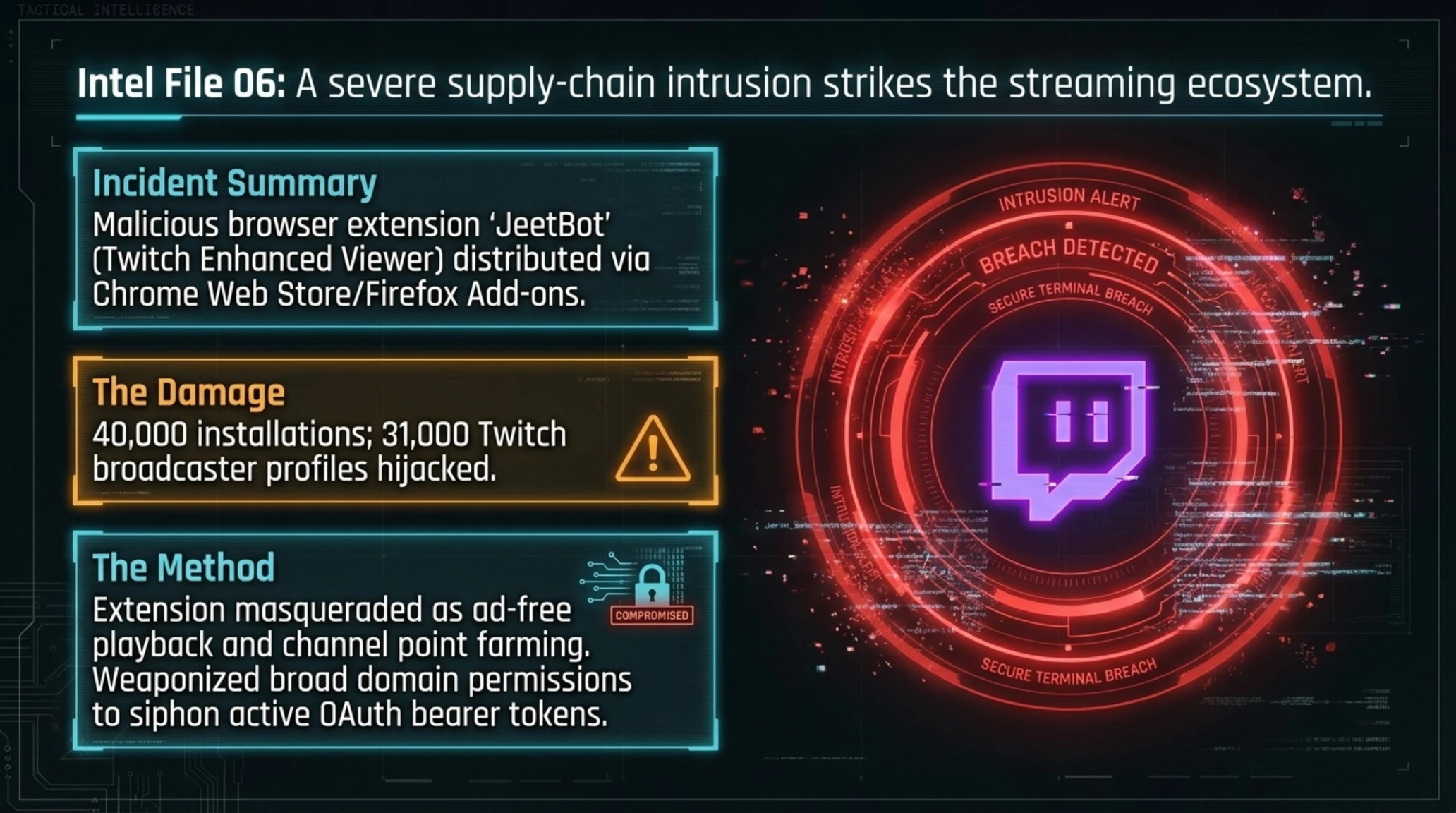
In one of the most stealthy and pervasive credential exfiltration campaigns targeting the livestreaming ecosystem, cybersecurity researchers and threat analysts at The Hacker News have identified and neutralized a malicious browser extension entitled 'Twitch Enhanced Viewer | JeetBot' distributed across the official Google Chrome Web Store and Mozilla Firefox Add-ons repository. Masquerading as an essential quality-of-life utility promising ad-free playback, automated channel point farming, and region-bypass proxy capabilities, the extension accumulated over 40,000 installations before security telemetry flagged unauthorized network activity.
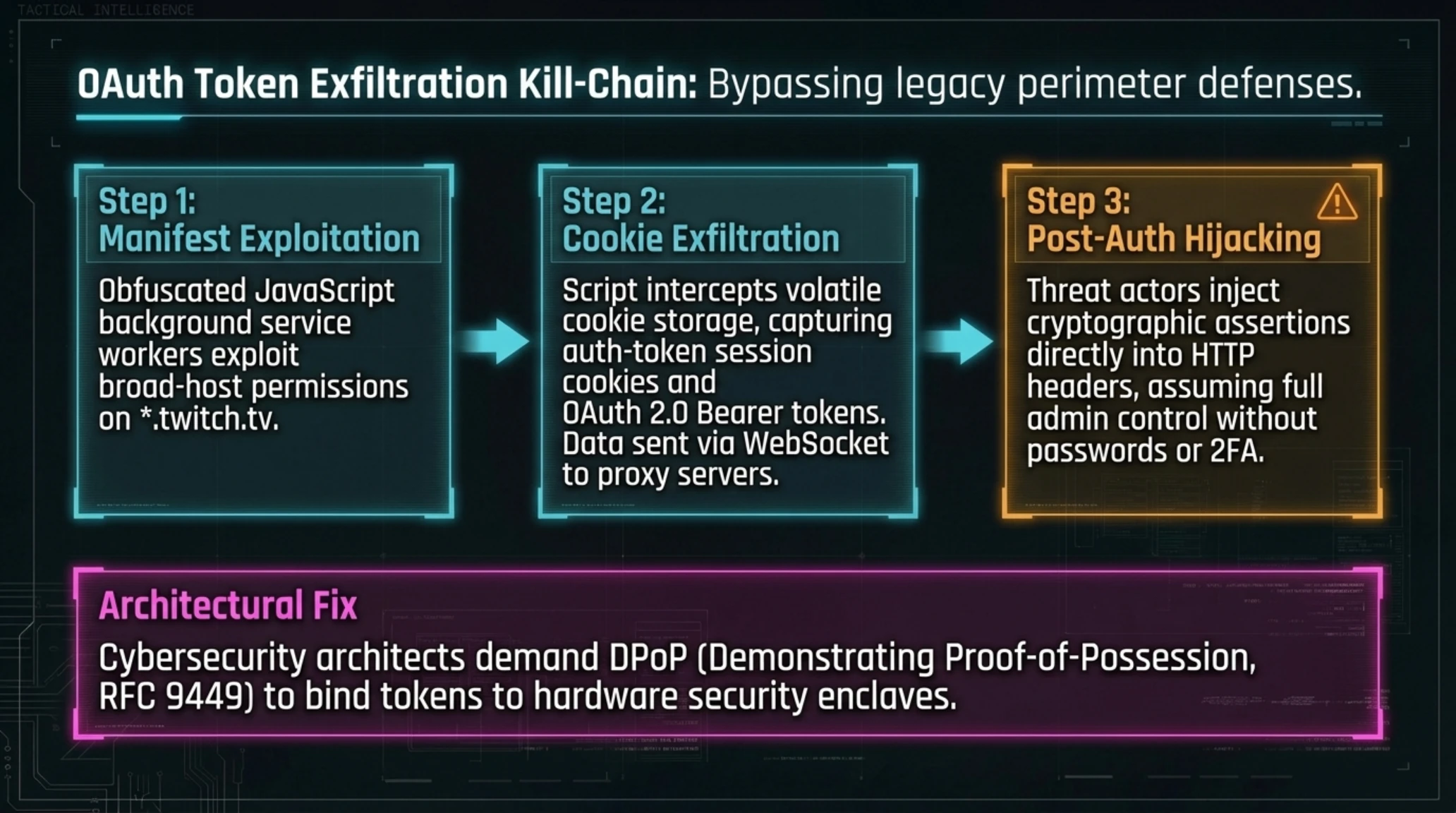
Decompilation of the extension’s heavily obfuscated JavaScript background service workers revealed an insidious session-hijacking payload. Exploiting overly permissive broad-host manifest permissions across the `*.twitch.tv` domain, the script continuously monitored the browser's volatile cookie storage, intercepting the critical `auth-token` session cookie alongside valid OAuth 2.0 Bearer tokens generated during normal user authentication. These active credentials were subsequently encrypted and exfiltrated over secure WebSocket connections to proxy servers controlled by a commercial botnet syndicate headquartered in Eastern Europe.
The severity of this attack vector lies in its fundamental circumvention of perimeter defenses. Because OAuth session bearer tokens represent post-authentication cryptographic assertions, threat actors holding these strings could inject them directly into HTTP request headers, instantly assuming full administrative control of broadcaster accounts without ever prompting for usernames, master passwords, or two-factor authentication (2FA) verification prompts. Compromised accounts were systematically leveraged to broadcast automated cryptocurrency phishing URLs, spam malicious links across high-visibility live chat rooms, artfully inflate viewer metrics for rogue affiliate streams, and liquidate stored Twitch Bits and gift subscription balances.

While Google and Mozilla promptly removed the offending package from their digital marketplaces and remotely disabled existing client installations, cybersecurity experts emphasize that browser removal does not remediate an active session compromise. Because exfiltrated OAuth tokens remain cryptographically valid until server-side expiration or manual revocation, all Twitch streamers, content creators, and casual viewers are urgently advised to log into their Twitch web consoles, navigate to Settings > Connections & Security, invoke the 'Disconnect All Other Sessions' command, and execute an immediate password reset to force a global revocation of all historical authentication tokens.
From an identity architecture perspective, the JeetBot incident exposes a critical design flaw in modern web authentication: the lack of cryptographic proof-of-possession. While enterprise identity providers are rapidly adopting Demonstrating Proof-of-Possession (DPoP, codified in RFC 9449), consumer platforms like Twitch still rely on bearer tokens where anyone holding the string can impersonate the user. Cybersecurity architects urge streaming platforms to bind access tokens directly to client-side WebAuthn public keys or hardware security enclaves, ensuring that an exfiltrated token cannot be replayed from an external server without the original device's private cryptographic signature.
To contextualize the advanced technological frameworks, hardware architectures, and industry paradigms explored throughout tonight’s intelligence report, the comprehensive technical glossary below provides precise industry definitions.
Technical Glossary: Essential Engineering & Industry Definitions of Tekin Night
Definitive Reference for Hardware Engineering, Narrative Canon, and Cyber Security
| Technical Term | Rigorous Scientific, Architectural, and Industry Definition |
|---|---|
| Linear Resonant Actuator (LRA) | An electromagnetic haptic motor utilizing a voice coil and resonant spring mass to generate directional, high-frequency tactile vibrations with microsecond transient response. |
| OAuth Bearer Token | A cryptographic security credential issued upon successful authentication that grants access to protected APIs without re-submitting user passwords. |
| Studio Burn Rate | The net negative cash flow rate at which a game studio exhausts capital reserves to cover fixed operating expenditures (payroll, leases, infrastructure) prior to revenue generation. |
| Adaptive Bitrate (ABR) | A dynamic network streaming algorithm that continuously modulates video resolution, quantization, and bandwidth consumption in response to real-time packet loss. |
| Decoupled Timeline | A narrative continuity model wherein distinct story eras operate as historically independent sovereign civilizations separated by total cultural extinction. |
| Cease and Desist (C&D) | A formal legal injunction issued by an intellectual property holder demanding the immediate cessation of alleged infringement under threat of statutory damages. |
These specialized paradigms demonstrate that modern interactive entertainment represents a high-velocity intersection of advanced microelectronics, complex geopolitical economics, strict intellectual property law, and real-time network defense.
Why this matters: Tonight’s developments signal an accelerating tectonic shift across the global gaming ecosystem. Apple’s calculated entry into first-party gamepad manufacturing under the Beats banner threatens to crack open the multi-billion-dollar handheld console market, pitting iPhone silicon directly against Nintendo and PlayStation portables. Concurrently, Saber Interactive’s unfiltered exposure of North America’s $2 million monthly studio burn rates confirms that the traditional blockbuster publishing model has entered an unsustainable death spiral, forcing publishers to embrace decentralized global engineering or face corporate oblivion.

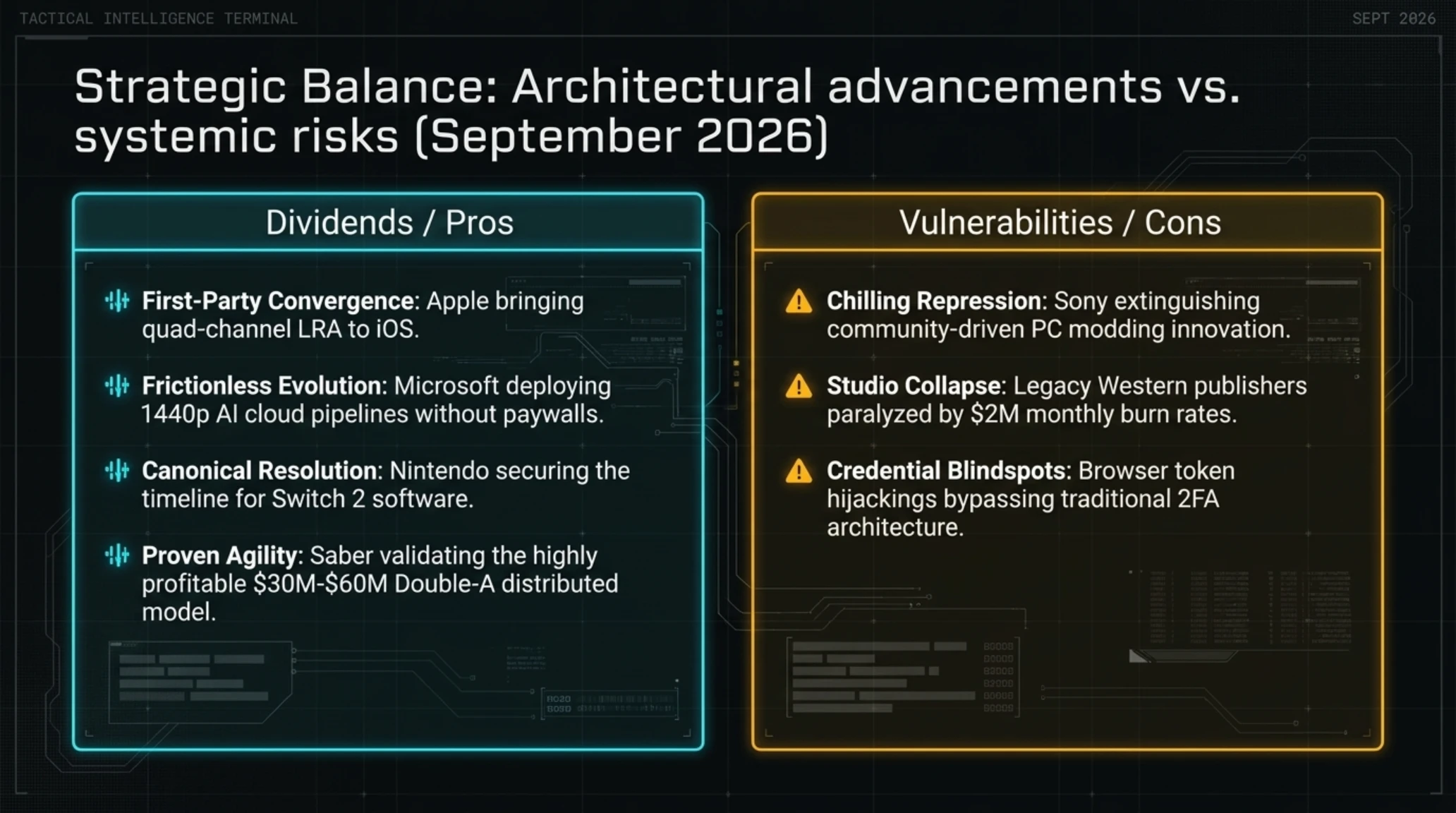
The strategic matrix below synthesizes the primary technological dividends and systemic vulnerabilities observed across tonight's critical dispatches.
- First-Party Hardware Convergence: Apple bringing quad-channel LRA haptics and standardized controller profiles to iOS via the Beats gaming offensive.
- Frictionless Remote Play Evolution: Microsoft deploying native 1440p streaming and AI Voice Clarity without subscription paywalls for Series X|S owners.
- Canonical Narrative Resolution: Nintendo officially canonizing the Two Hyrules timeline to pave the way for Ocarina of Time Remake on Switch 2.
- Proven Economic Agility: Space Marine 2 validating Saber Interactive's globally distributed model by delivering AAA perfection at one-third of Western costs.
- Chilling Modding Repression: Sony's aggressive Cease and Desist against Speclizer extinguishing community-driven PC multiplayer innovation.
- North American Studio Collapse: Devastating $2M monthly burn rates driving further studio liquidations and industry-wide developer displacement.
- Critical Credential Blindspots: JeetBot malware exposing the vulnerability of browser session tokens to post-auth hijackings without 2FA triggers.
- Publisher Inertia: Legacy Western publishers continuing to pour astronomical budgets into unsustainable single-location development hubs.
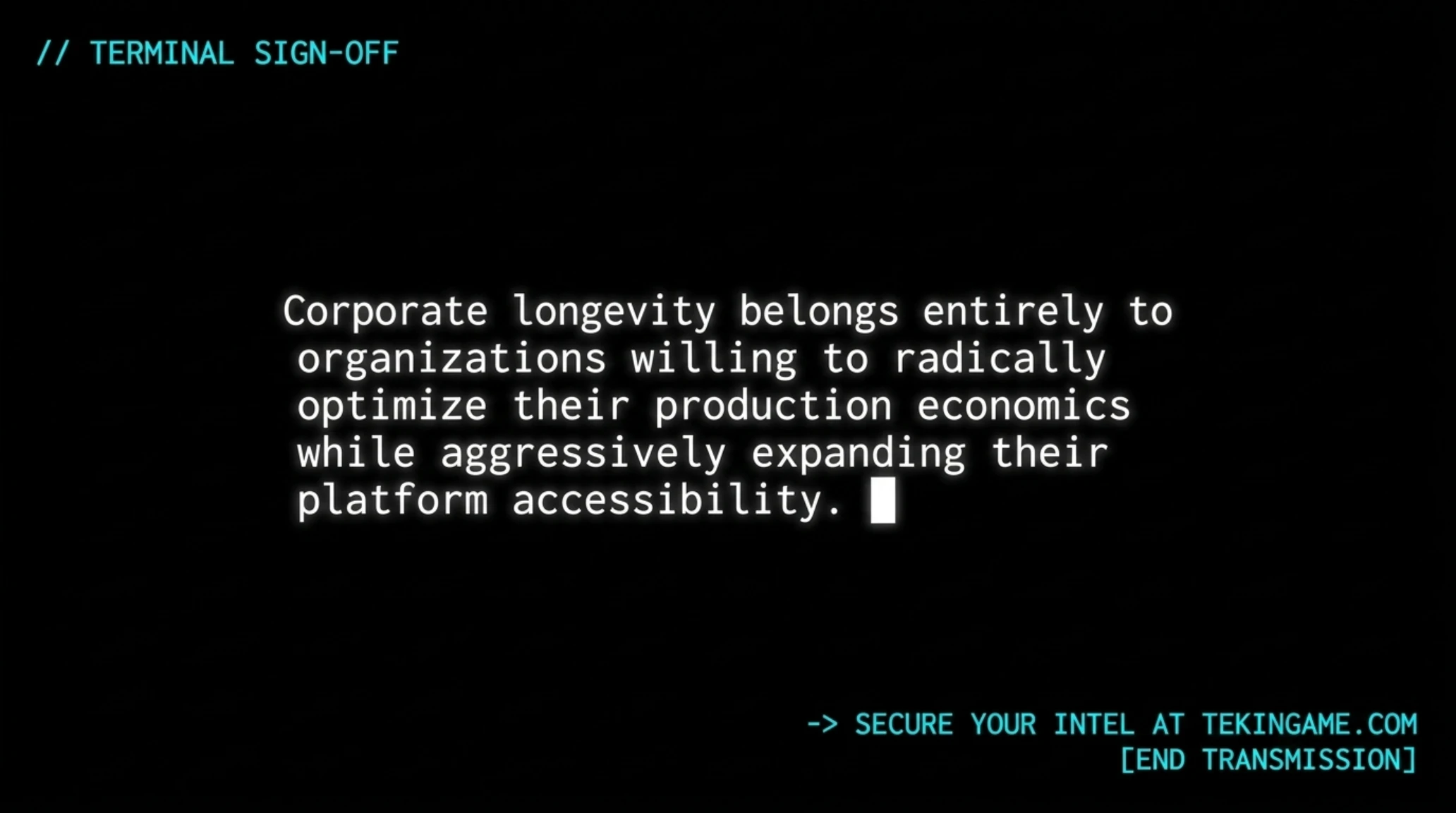
This balanced synthesis underscores that corporate longevity in interactive entertainment belongs entirely to organizations willing to radically optimize their production economics while aggressively expanding their platform accessibility.
Tekin Analysis: Strategic Imperatives for Developers, Executives, and Investors
Executive Intelligence and Actionable Forecasting from the Tekin Command Briefing
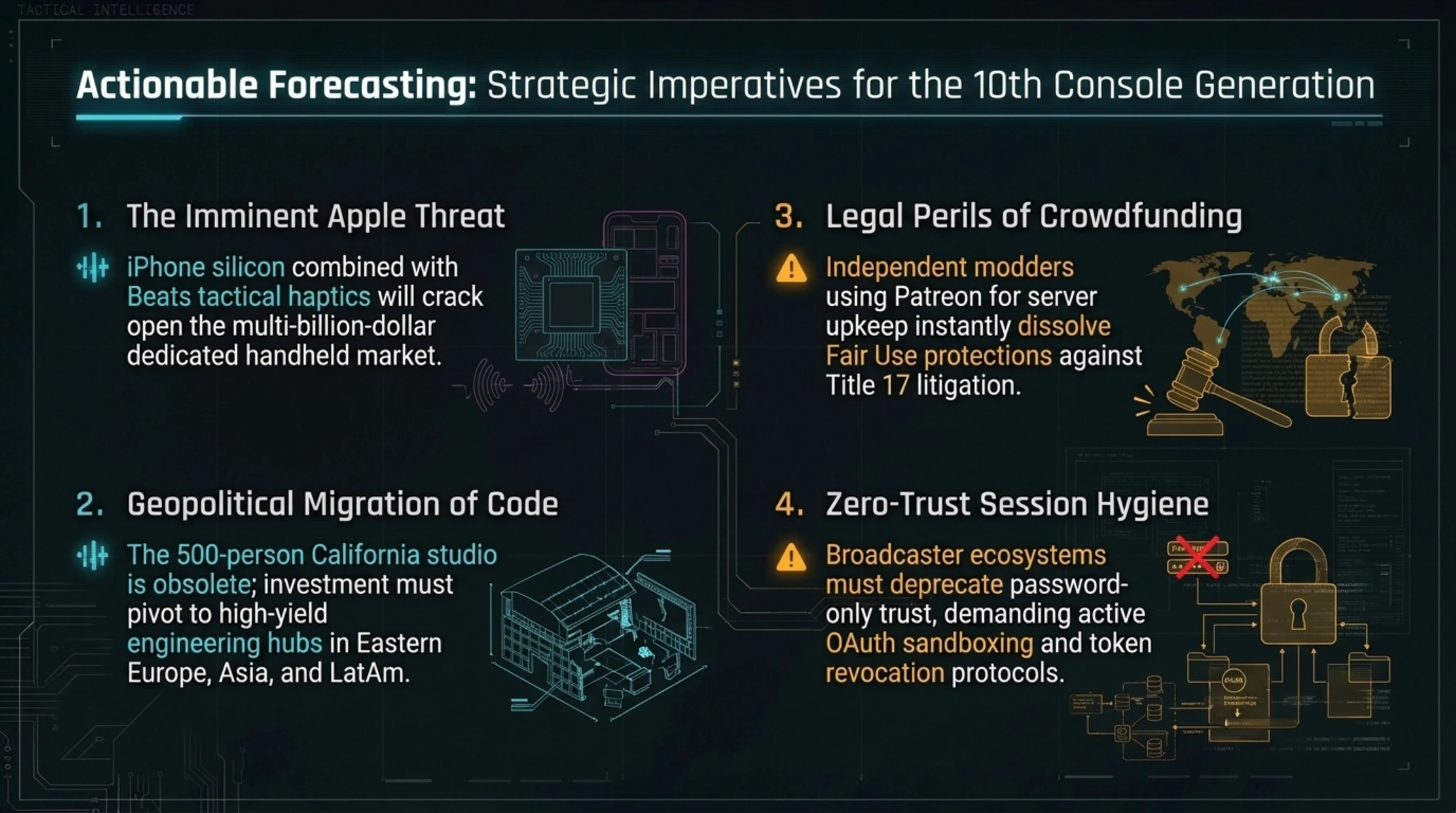
- The Imminent Apple Handheld Threat: If Beats controllers deliver console-grade physical tactile feedback, Apple silicon's multi-terabyte memory bandwidth will position the iPhone and iPad as formidable existential rivals to dedicated handheld consoles.
- The Geopolitical Migration of Game Code: The era of 500-person development teams concentrated in California or London is economically finished; future game engineering will concentrate in high-yield hubs across Eastern Europe, Asia, and Latin America.
- The Legal Perils of Community Crowdfunding: Independent modders must recognize that utilizing platforms like Patreon even for developmental upkeep instantly dissolves Fair Use protections against multi-billion-dollar IP holders like Sony.
- Zero-Trust Session Hygiene: Broadcaster communities must transition away from trusting passwords alone; active OAuth session management, explicit browser extension sandboxing, and routine token revocation are now mandatory baseline protocols.
Market sentiment indices indicate that consumer appetite for premium gaming hardware and agile cloud infrastructure is experiencing unprecedented acceleration, yet established publishers who remain entrenched in bloated single-location development frameworks face profound structural obsolescence as the industry transitions into the tenth console generation.
Strategic Synthesis and Nocturnal Outlook
The nocturnal dispatches of September 15, 2026 present a vivid cross-section of an entertainment sector navigating hyper-accelerated structural evolution. From the secretive engineering corridors of Cupertino where Apple is forging its physical Beats gaming vanguard, to the judicial chambers where Sony’s legal apparatus guards its intellectual property with unyielding ferocity, the high-stakes chess match for gaming dominance has never been more intense. Apple’s recognition that silicon supremacy is meaningless without physical ergonomic immersion marks the beginning of an aggressive convergence between mobile devices and traditional gaming consoles, while Sony’s preemptive strike against community modding illustrates the profound corporate anxieties surrounding flagship IP custody.
Concurrently, Tim Willits’ devastating financial audit of North American game development shatters the lingering illusions of Hollywood-scale budget inflation. The triumph of Space Marine 2 crafted in decentralized studios across Eastern Europe and Latin America at a fraction of Californian expenditures provides an undeniable blueprint for the future of interactive entertainment. When paired with Nintendo’s meticulous canonical timeline curation and Microsoft’s relentless democratization of 1440p cloud streaming, tonight’s developments affirm that technical discipline, narrative reverence, and economic pragmatism constitute the only reliable trinity for sustainable success in the digital age.
On a macroeconomic level, the interactive entertainment sector is grappling with a profound renegotiation of platform rent extraction. For decades, console gatekeepers collected unconditional thirty-percent platform cuts while subsidizing massive domestic development studios. Today, as hardware margins compress and development costs surge, platform holders are forced to expand across competing ecosystems whether through Sony's reluctant PC initiatives, Microsoft's cross-platform streaming democratization, or Apple's hardware-led monetization. Those who master decentralized production while securing direct consumer engagement across open protocols will dominate the next decade of gaming commerce.
Recommended In-Depth Gaming & Tech Dossiers on TekInGame
• 🛡 Inside the FBI & NSA Takedown of Chinese Cyber Network QTFY | Deconstructing QScan IoT Botnets & QTRouter Proxy Meshes
• 🎬 Deconstructing Alibaba Wan 3.0 Video AI | The Chinese Tech Breakthrough Disrupting Hollywood & Sora
• 🧪 Inside Inherent's Faraday AI | How a 27-Million-Parameter Model Beat DeepSeek-R1 in Biochemical Reasoning
As the nocturnal hours give way to tomorrow's market open, the technology and gaming communities brace for further hardware reveals and community responses that promise to reshape the competitive boundaries of global entertainment.
Ultimately, tonight's revelations illuminate an inescapable truth: the interactive entertainment ecosystem is undergoing an irreversible transition toward distributed talent networks, high-fidelity cloud pipelines, and multi-platform consumer freedom. Studios that stubbornly cling to insular regional hierarchies and unchecked budget escalation will inevitably be supplanted by agile, globally integrated creators who harness decentralized engineering to deliver timeless artistic triumphs. As players demand greater platform mobility and uncompromising visual fidelity, the industry’s pioneers are actively laying the foundational rails for the next golden era of interactive gaming.

Below, we provide exhaustive, verified answers to the most urgent technical, operational, and strategic questions generated by tonight's reporting.
Frequently Asked Questions Regarding Tonight's Tekin Night Intelligence
Why has Apple chosen to launch first-party game controllers under the Beats brand instead of its primary logo?
The Beats brand possesses an established cultural resonance with youth and gaming demographics, granting Apple complete design freedom to implement aggressive ergonomics, bright colors, and textured grips without diluting the minimalist luxury aesthetic of its core hardware.
What was the decisive legal mechanism that allowed Sony to shut down the TLOU Part 2 PC Multiplayer mod?
The developer maintained an active Patreon subscription tier offering gated development updates, which provided Sony Interactive Entertainment's corporate legal team with definitive evidence of commercial monetization utilizing proprietary Naughty Dog assets and trademarks.
How does Nintendo's 'Two Hyrules' timeline revision resolve canonical contradictions in Tears of the Kingdom?
The updated timeline establishes that the original kingdom founded after Skyward Sword collapsed into complete historical extinction, and the Zonai King Rauru subsequently founded a second sovereign kingdom that carries the historical name into the modern Wild Era.
What technical advancements distinguish Xbox Remote Play's 1440p update from previous streaming iterations?
The firmware flight upgrades output to 2560x1440 at 60 FPS using hardware-accelerated HEVC encoding with bitrates up to 30 Mbps, alongside on-device neural Voice Clarity noise cancellation that eliminates keyboard clatter with sub-10ms latency at zero subscription cost.
How did the JeetBot browser extension compromise authenticated Twitch broadcaster accounts without passwords?
The extension exploited broad host permissions to extract active auth-token cookies and OAuth 2.0 bearer tokens from browser memory, enabling threat actors to inject these pre-authenticated credentials directly into API requests, bypassing two-factor authentication entirely.
Sources: Verified Primary Documentation & References of Tekin Night
- The Verge: Mark Gurman Investigation into Apple Beats iPhone Gaming Hardware
- Eurogamer: Official Cancellation of The Last of Us Part 2 PC Multiplayer Mod Following Sony Cease & Desist
- Nintendo Life: Analysis of Nintendo's Revised Official Zelda Timeline & Dual Hyrule Canon
- Thurrott: Technical Breakdown of Xbox Remote Play 1440p Streaming & AI Voice Clarity Firmware Flight
- Insider Gaming: Tim Willits on the Unviability of $2M/Month North American AAA Game Development
- The Hacker News: Forensic Report on JeetBot Browser Extension Hijacking 31,000 Twitch Profiles
Additional Gallery: Tekin Night Sep 15, 2026: 🎮 Apple Gamepads, TLoU Mod Halt & Xbox 1440p