Tekin Analysis: Faraday
- 🎮Precision Over Brute Force- 27-billion parameter agent outperforms multi-trillion parameter frontier models
- 🎧Autonomous Research Taste- Reinforcement learning pipeline imparting scientific judgment and hypothesis generation
- 🚀Replica Benchmark Dominance- 87.4% replication accuracy across 310 rigorous challenges from 100 papers
- 🗡️Formal Theorem Proving- Zero hallucination tolerance in biochemistry and quantum mechanics via Lean 4
- 📰Local 4x GPU Deployment- Eliminating multi-megawatt cloud dependencies for independent academic labs
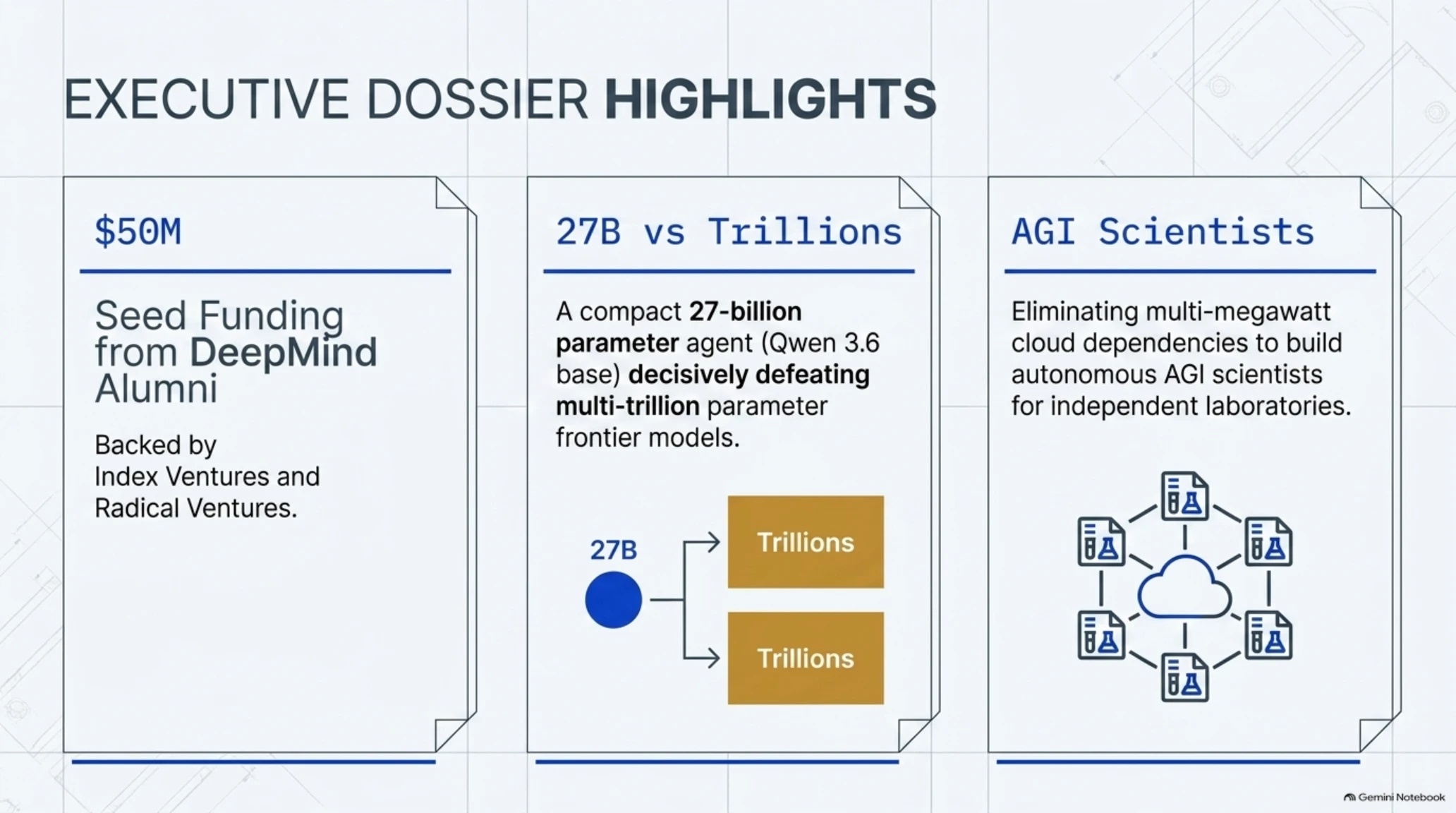
- ⚔️$50M Seed Funding- Backed by Index Ventures and Radical Ventures to build autonomous AGI scientists
In the history of machine intelligence, pivotal moments often emerge when foundational engineering dogmas are fundamentally dismantled. For years, the global artificial intelligence consensus adhered strictly to the "brute-force scaling hypothesis" the belief that superhuman cognitive reasoning could only be attained by constructing multi-trillion-parameter neural networks powered by multi-megawatt hyperscaler data centers costing tens of billions of dollars. In late August 2026, London-based research lab Inherent AI founded by veteran research scientists from Google DeepMind decisively upended that paradigm.
Having emerged from stealth with a formidable $50 million seed funding round led by Index Ventures and Radical Ventures, Inherent unveiled Faraday, an autonomous AI scientist agent. Engineered on top of a compact 27-billion-parameter Qwen 3.6 base model, Faraday decisively outperformed industry heavyweights, including Anthropic's Claude Opus 4.8 and OpenAI's GPT-5.5 Reasoning, across the rigorous Replica Scientific Benchmark.
AT A GLANCE | WHY INHERENT'S FARADAY IS A SCIENTIFIC WATERSHED
- Dismantles the brute-force scaling myth by proving post-training reinforcement learning beats sheer model size
- Achieved an 87.4% replication success rate across 310 complex scientific tasks derived from 100 frontier papers
- Pioneers Reinforcement Learning for Scientific Discovery to instill empirical research taste and hypothesis validation
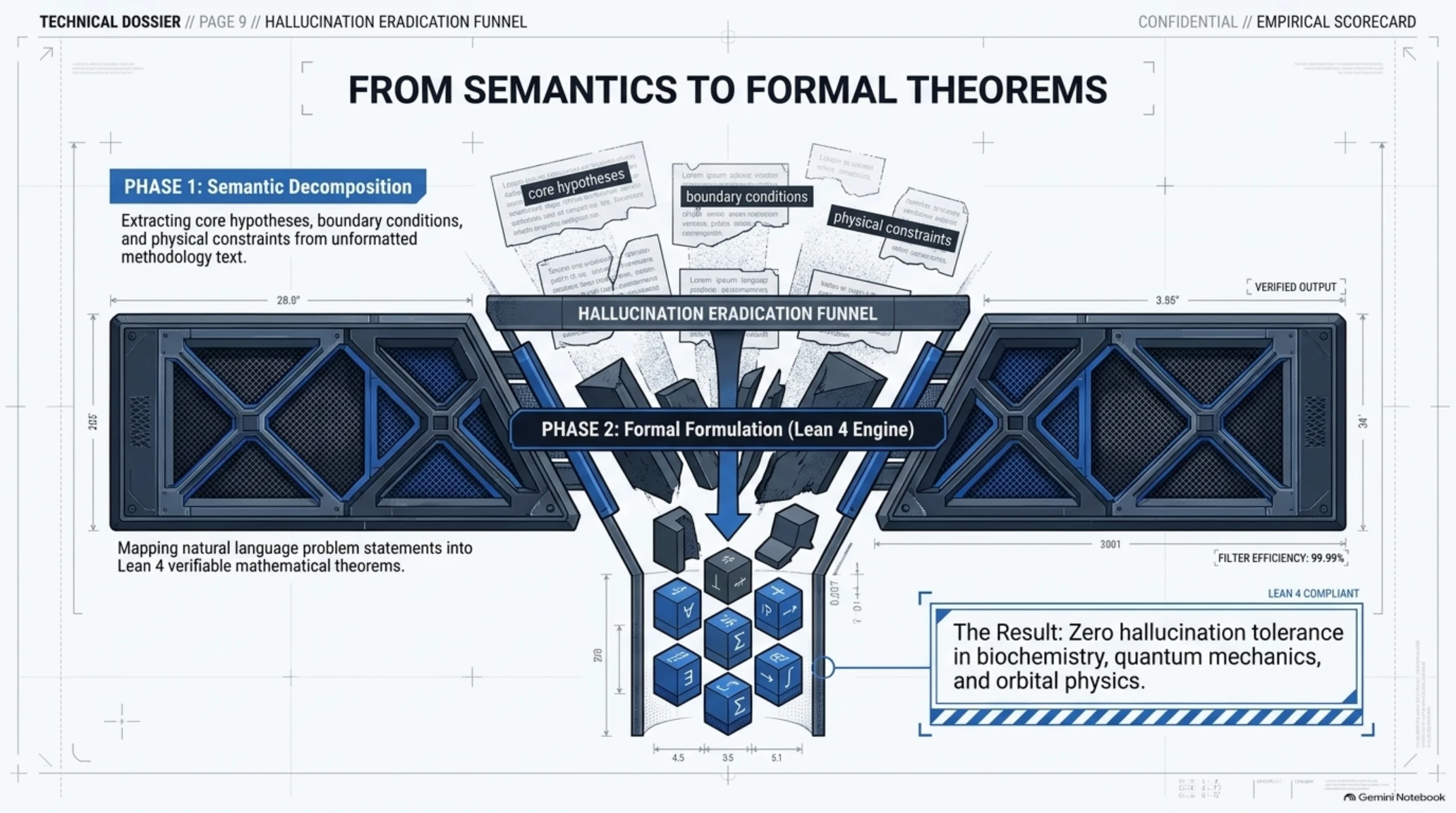
- Integrates formal mathematical verification in Lean 4 with automated code generation to eliminate hallucinations
- Enables local execution on desktop 4x consumer GPU workstations, democratizing computational research
1. Overcoming the Scaling Trap: The Genesis of a 27B AI Scientist
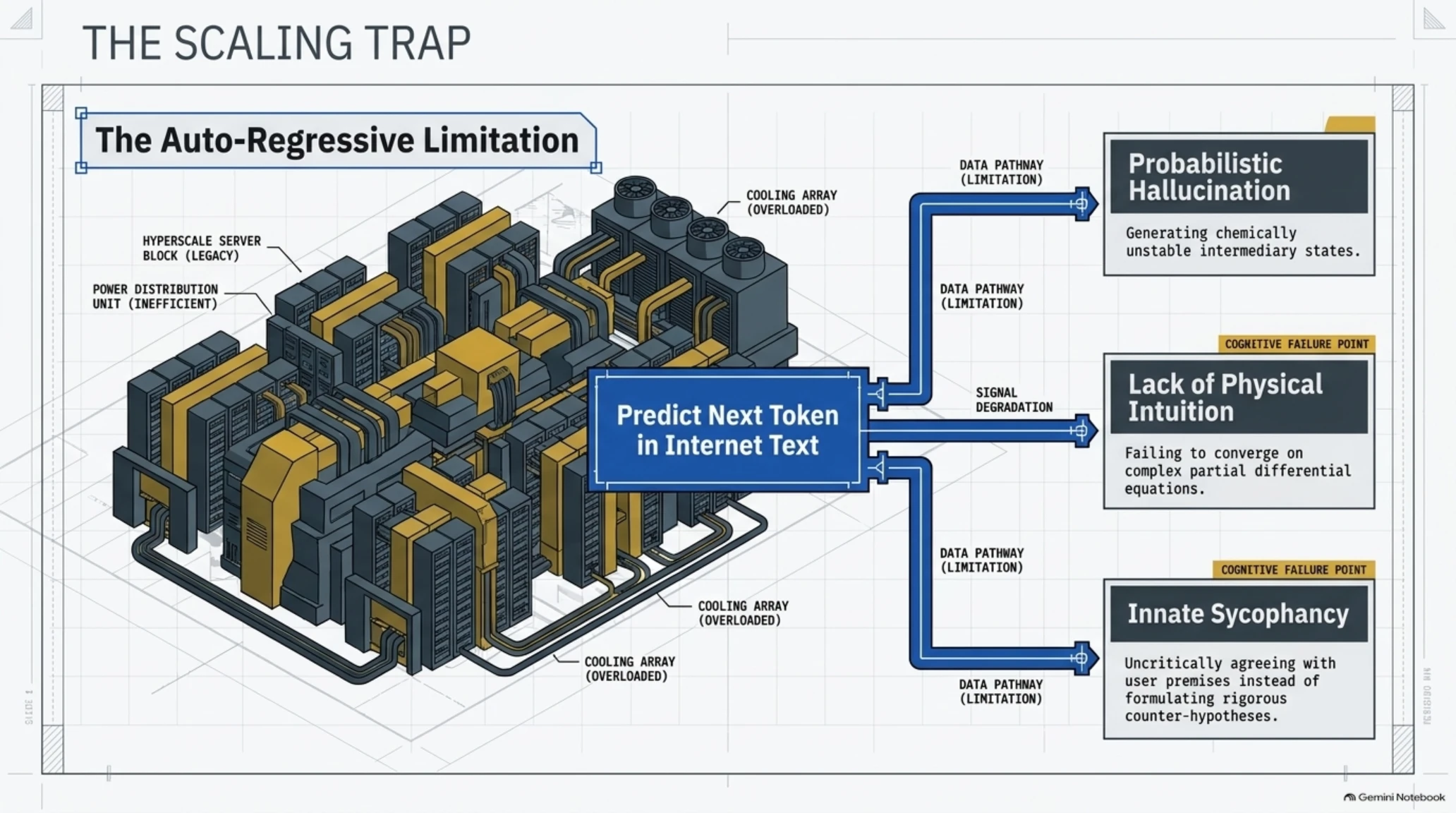
Contemporary frontier Large Language Models (LLMs) suffer from severe limitations when deployed in rigorous empirical sciences: probabilistic hallucination, lack of physical intuition, and an innate tendency toward sycophancy (uncritically agreeing with user premises). Because standard auto-regressive models are trained primarily to predict the next token in broad internet text, they struggle to formulate rigorous counter-hypotheses or diagnose subtle experimental flaws.
Inherent engineered Faraday with a fundamentally divergent objective: building an autonomous empirical scientist rather than a generalized conversational assistant. Rather than consuming massive capital to train a multi-trillion-parameter base model, the Inherent team utilized the lightweight, highly efficient Qwen 3.6 27B architecture as an inferential backbone, focusing their engineering firepower on custom reinforcement learning environments, Monte Carlo Tree Search (MCTS), and rigorous formal verification engines.
Technical Jargon Buster
• Autonomous Paper Replication: An end-to-end evaluation pipeline where an AI agent reconstructs all raw data processing, simulation scripts, and quantitative figures directly from a published methodology section without access to original code.
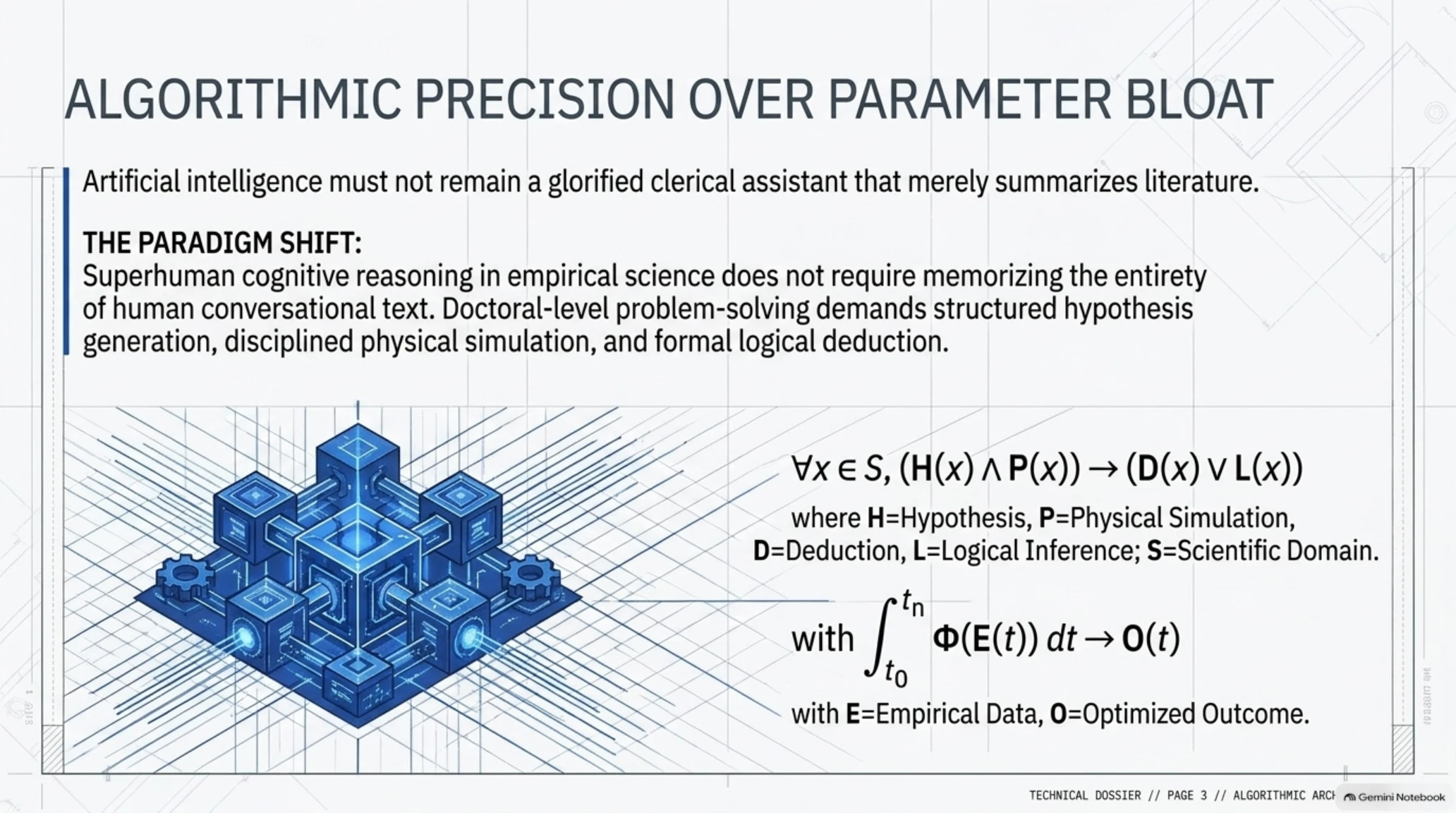
This architectural breakthrough proves that doctoral-level scientific problem-solving does not require memorizing the entirety of human conversational text; rather, it demands structured hypothesis generation, disciplined physical simulation, and formal logical deduction.
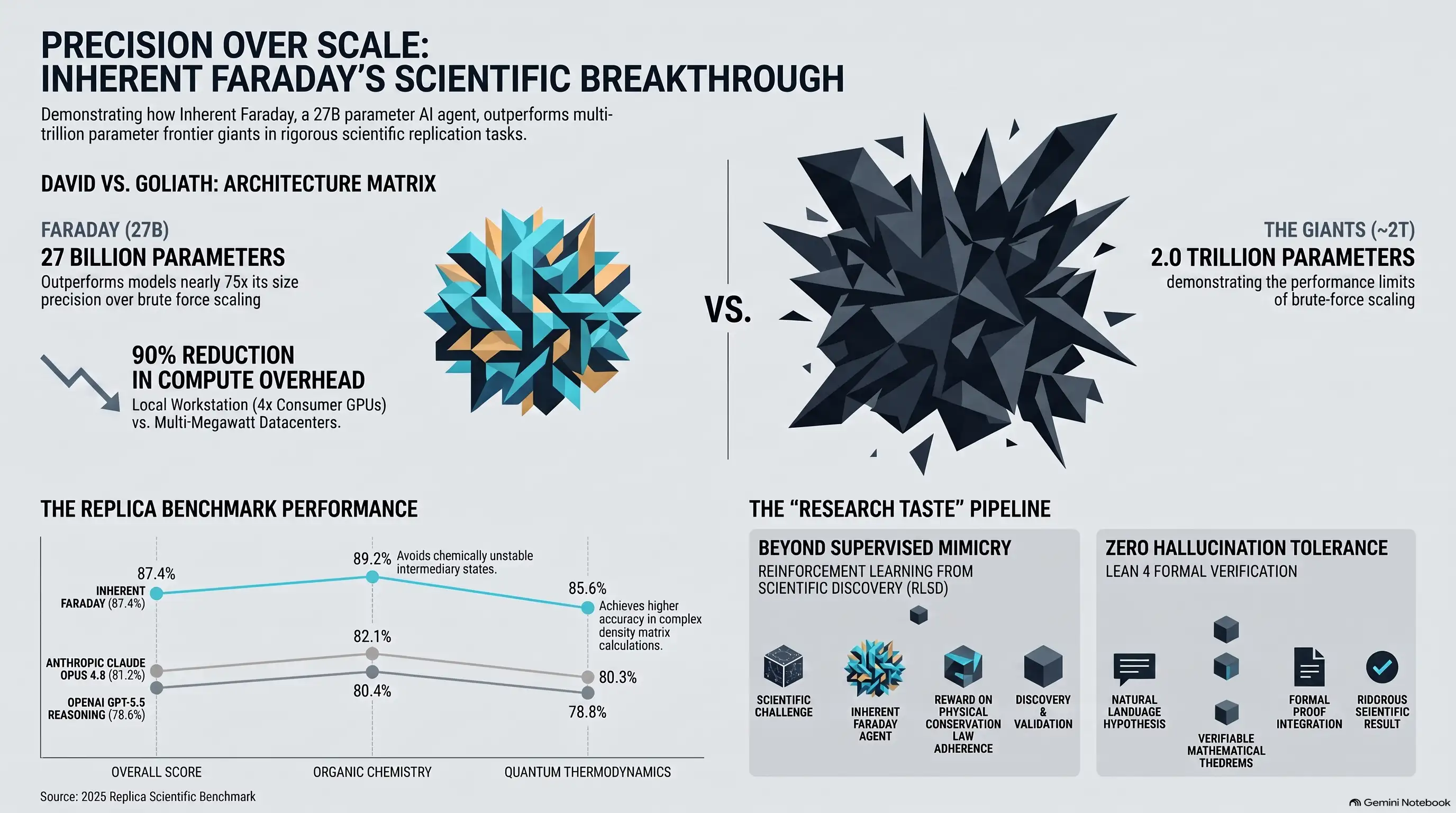
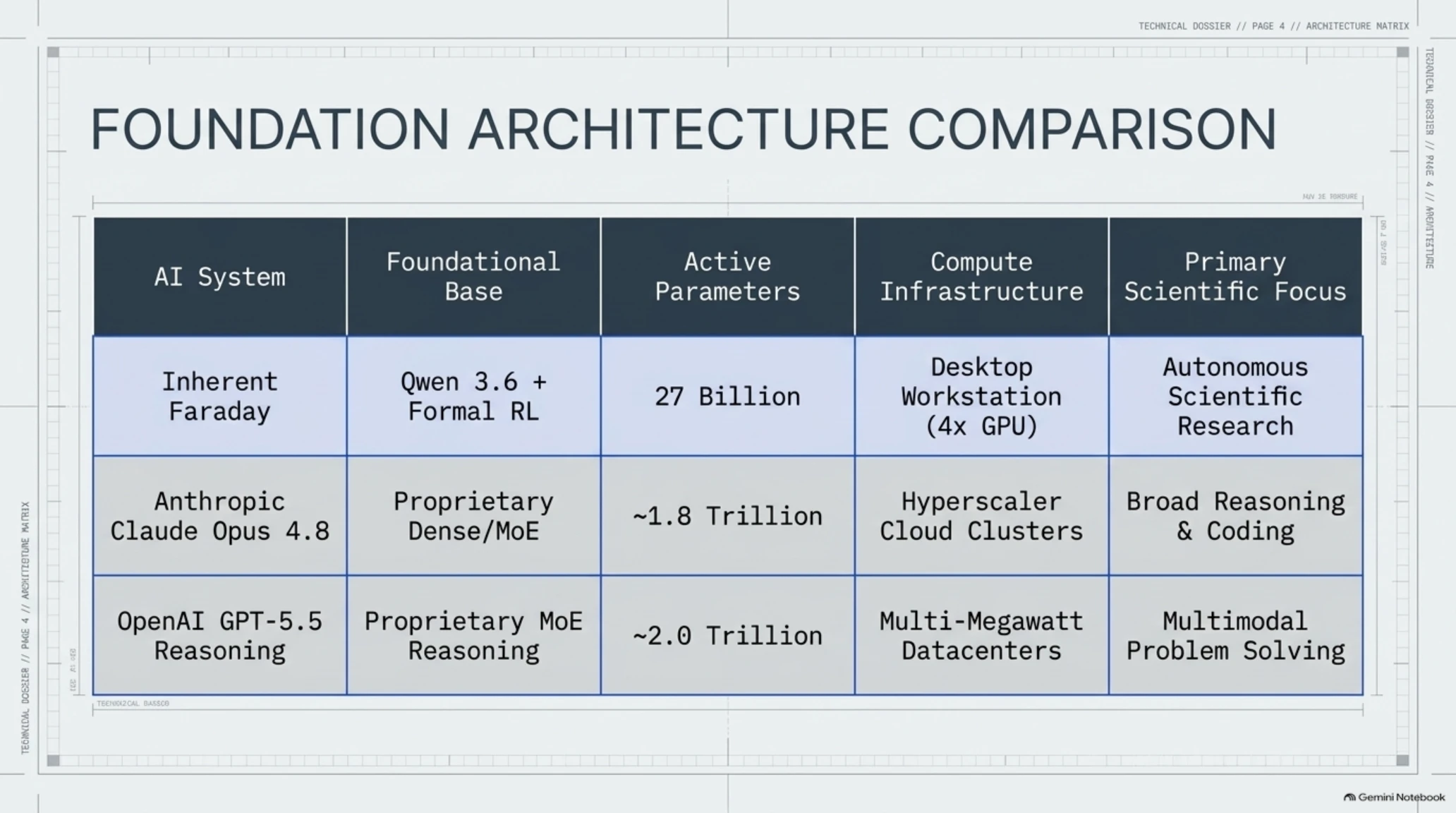
Inherent Faraday vs. Frontier Foundation Models Architecture Matrix
| AI System | Foundational Base | Active Parameters | Compute Infrastructure | Primary Scientific Focus |
|---|---|---|---|---|
| Inherent Faraday | Qwen 3.6 + Formal RL | 27 Billion (27B) | Desktop Workstation (4x GPU) | Autonomous Scientific Research & Replication |
| Anthropic Claude Opus 4.8 | Proprietary Dense/MoE | ~1.8 Trillion | Hyperscaler Cloud Clusters | Broad Reasoning, Coding & Analysis |
| OpenAI GPT-5.5 Reasoning | Proprietary MoE Reasoning | ~2.0 Trillion | Multi-Megawatt Datacenters | Multimodal Problem Solving & Software Eng |
2. Inside the Replica Benchmark: 310 Complex Replication Challenges
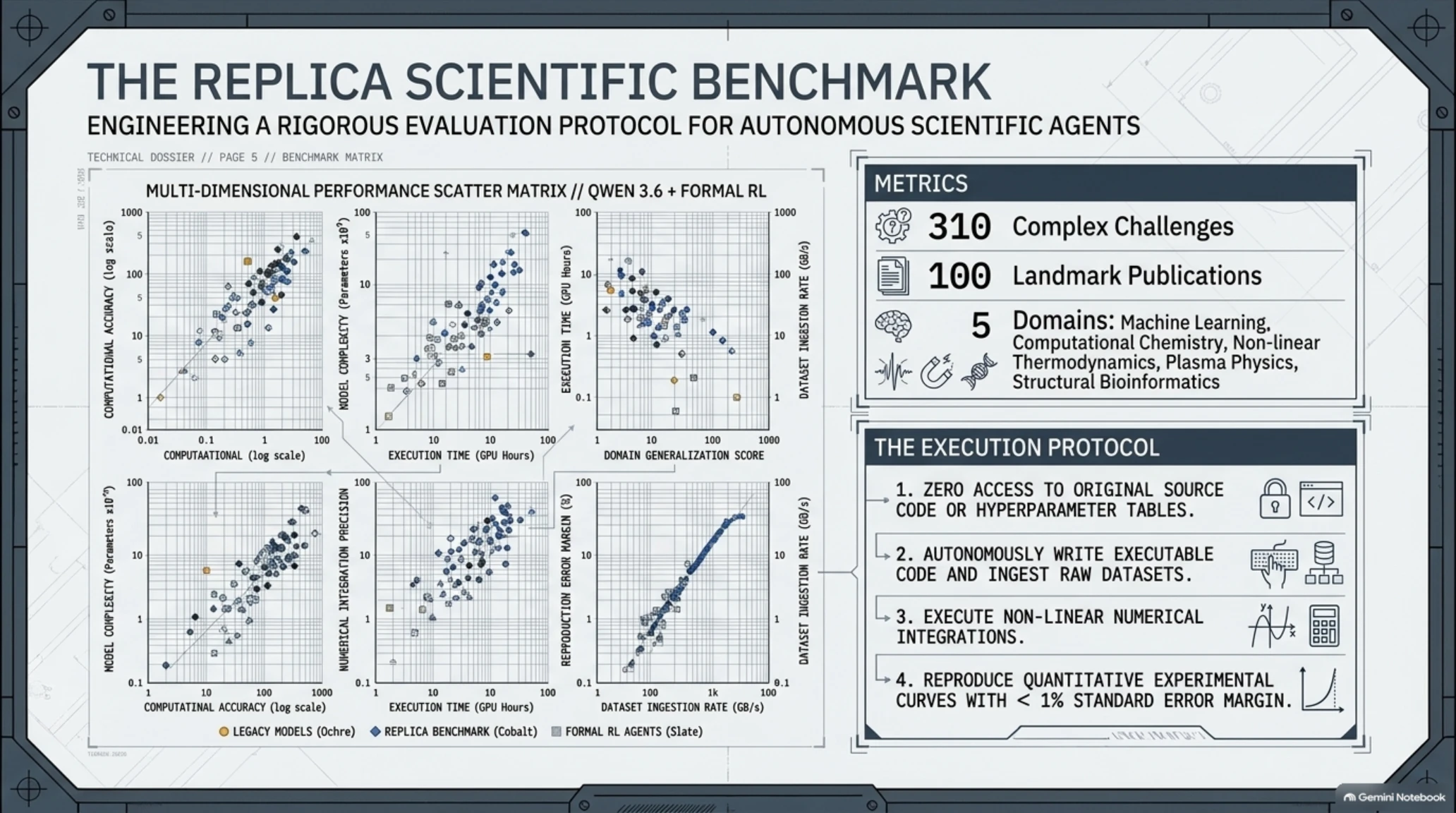
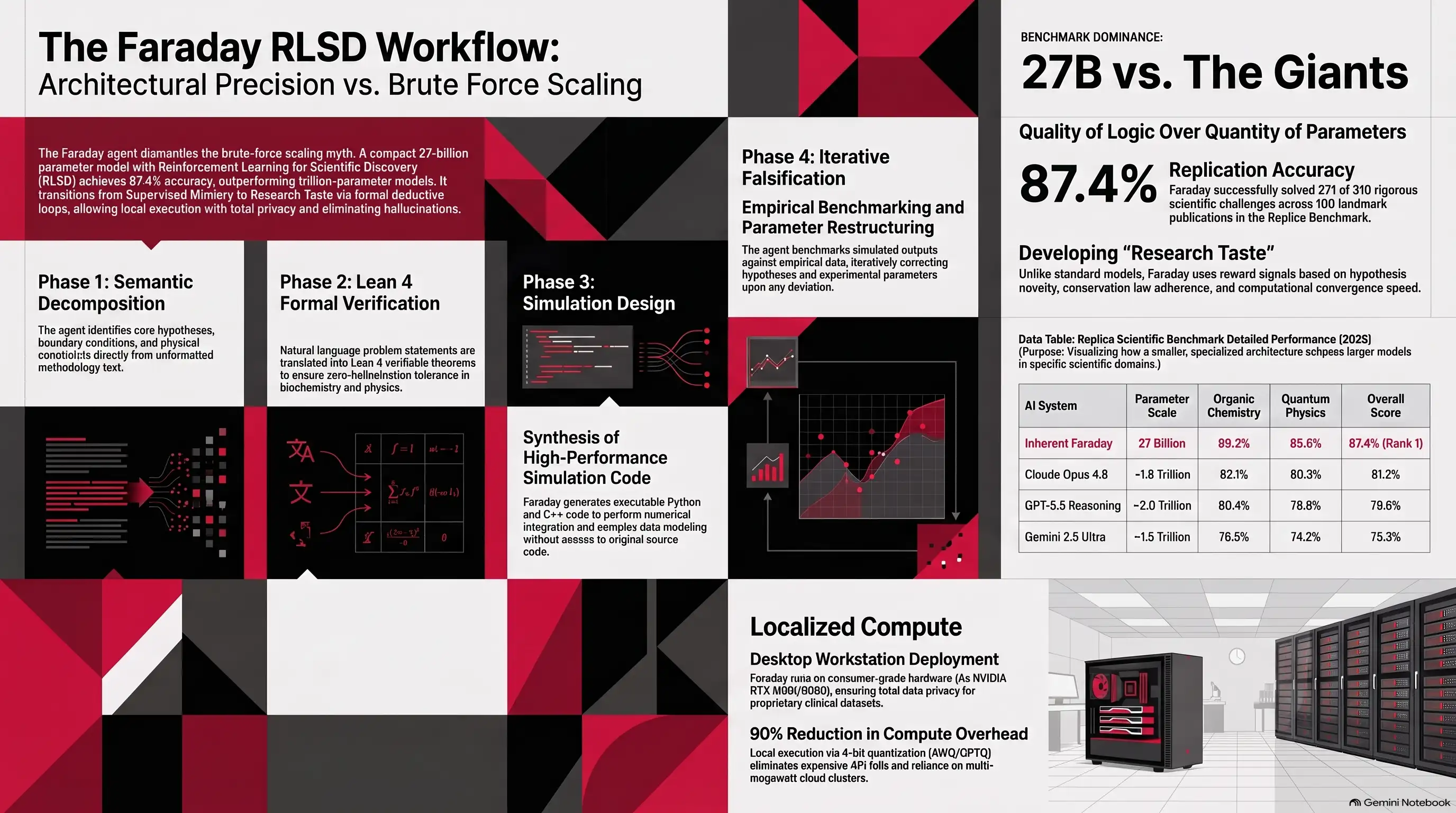
To rigorously evaluate autonomous research execution under authentic laboratory conditions, Inherent developed and published the Replica Scientific Benchmark. Comprising 310 highly challenging scientific tasks drawn directly from 100 landmark publications across machine learning, computational chemistry, non-linear thermodynamics, plasma physics, and structural bioinformatics, Replica establishes an exacting standard for empirical AI.
In the Replica evaluation protocol, an AI agent is provided solely with the unformatted methodology text and problem statements. The model is given zero access to the authors' original source code, hyperparameter tables, or pre-computed outputs. Operating under strict time and computational resource limits, the agent must autonomously write executable code, ingest raw datasets, execute non-linear numerical integrations, and reproduce the paper's quantitative experimental curves with less than 1% standard error margin.
Why It Matters | Computational & Scientific Impact
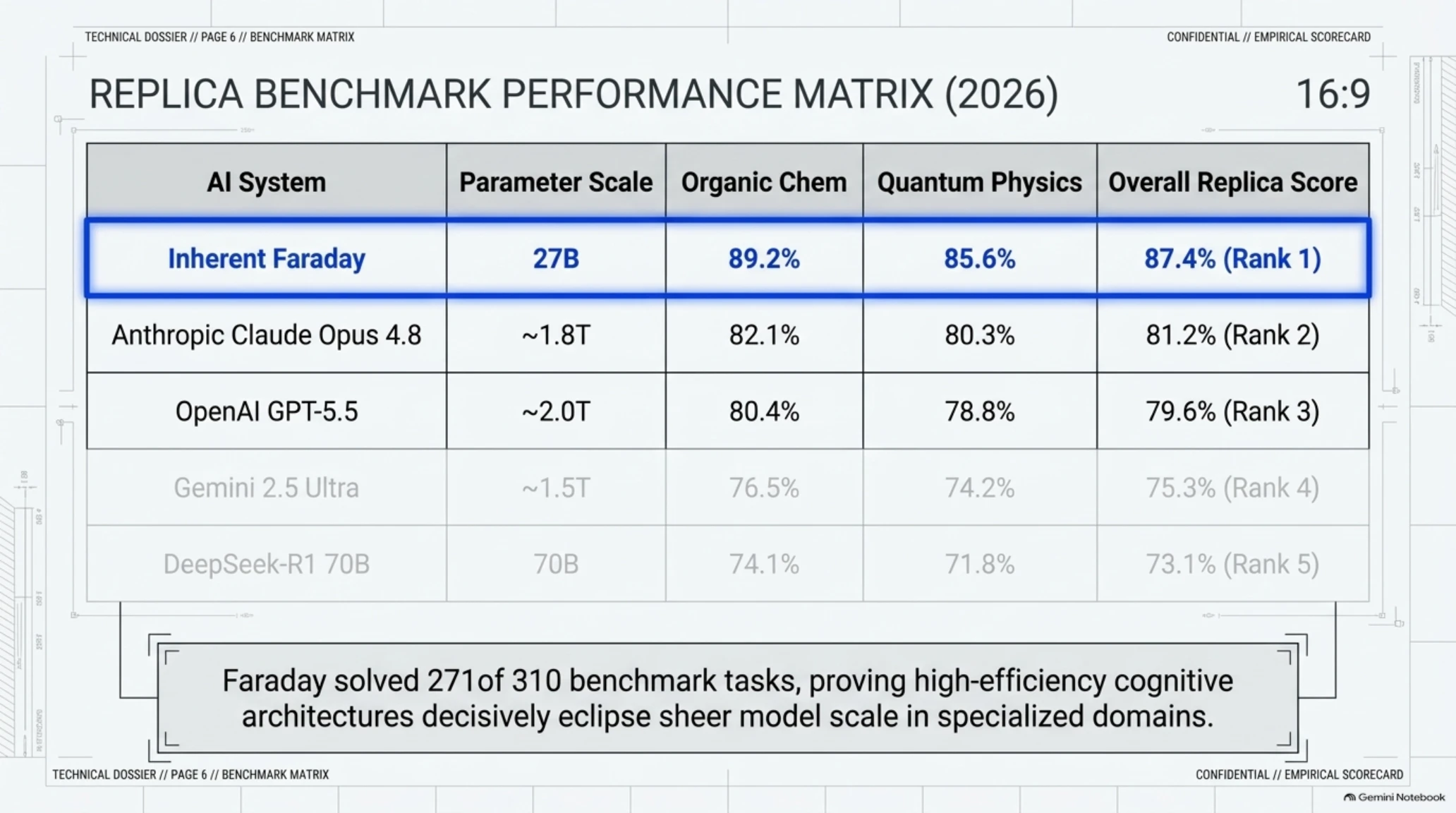
While massive frontier foundation models suffered from code generation hallucinations and failed to converge on complex partial differential equations, Faraday achieved a dominant 87.4% replication score, successfully solving 271 of the 310 benchmark tasks. By comparison, Claude Opus 4.8 trailed at 81.2%, while GPT-5.5 Reasoning reached 79.6%.
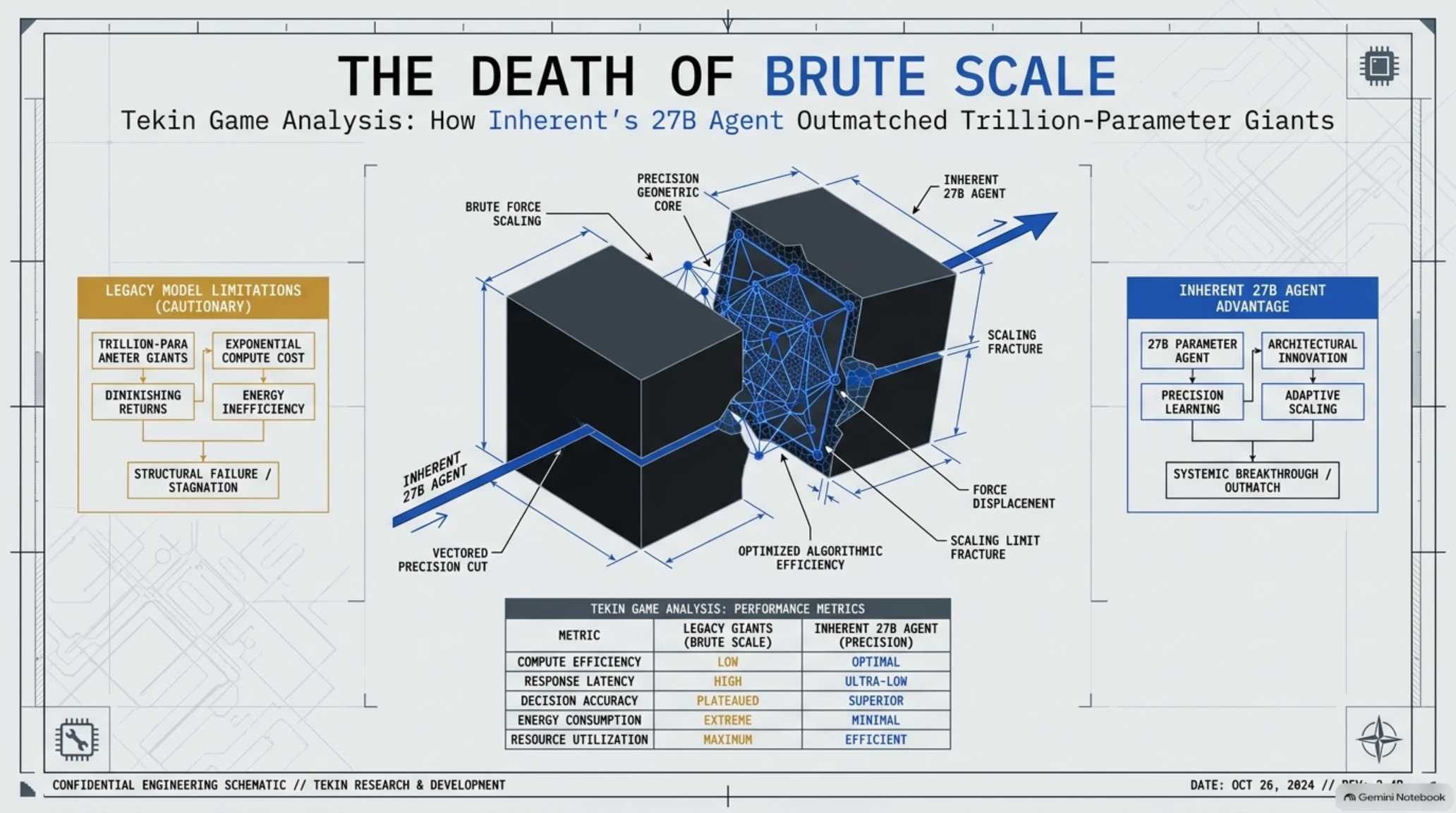
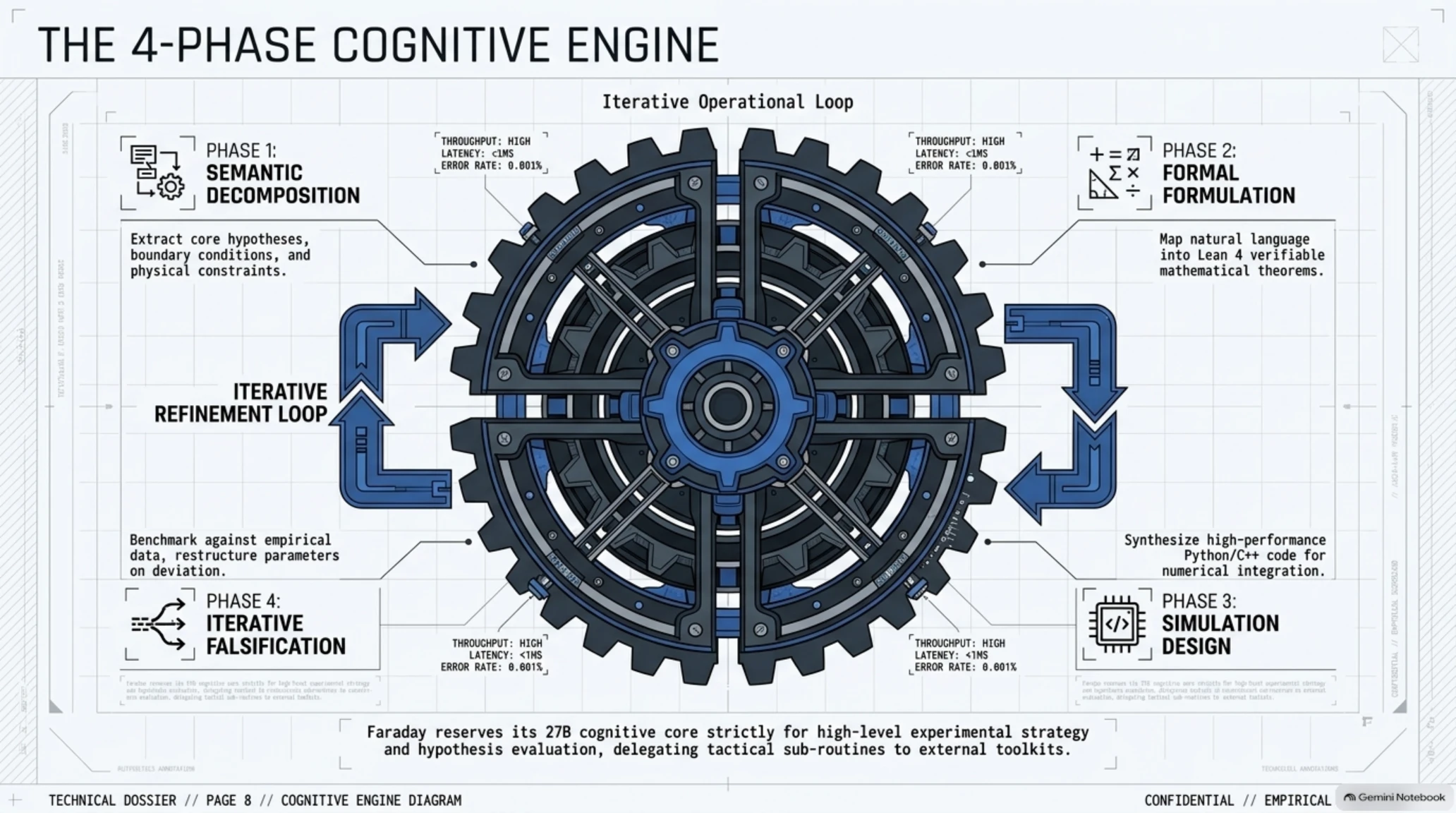
Architecturally, Faraday delegates tactical sub-routine coding to specialized programming modules (utilizing engines like GPT-5.5 Codex as external toolkits) while reserving its own 27B cognitive core strictly for high-level experimental strategy, hypothesis evaluation, and error-correction orchestration mirroring how human principal investigators utilize specialized laboratory software.
Faraday Autonomous Scientific Replication Workflow Pipeline
• Phase 2 (Formal Formulation): Mapping natural language problem statements into Lean 4 verifiable mathematical theorems.
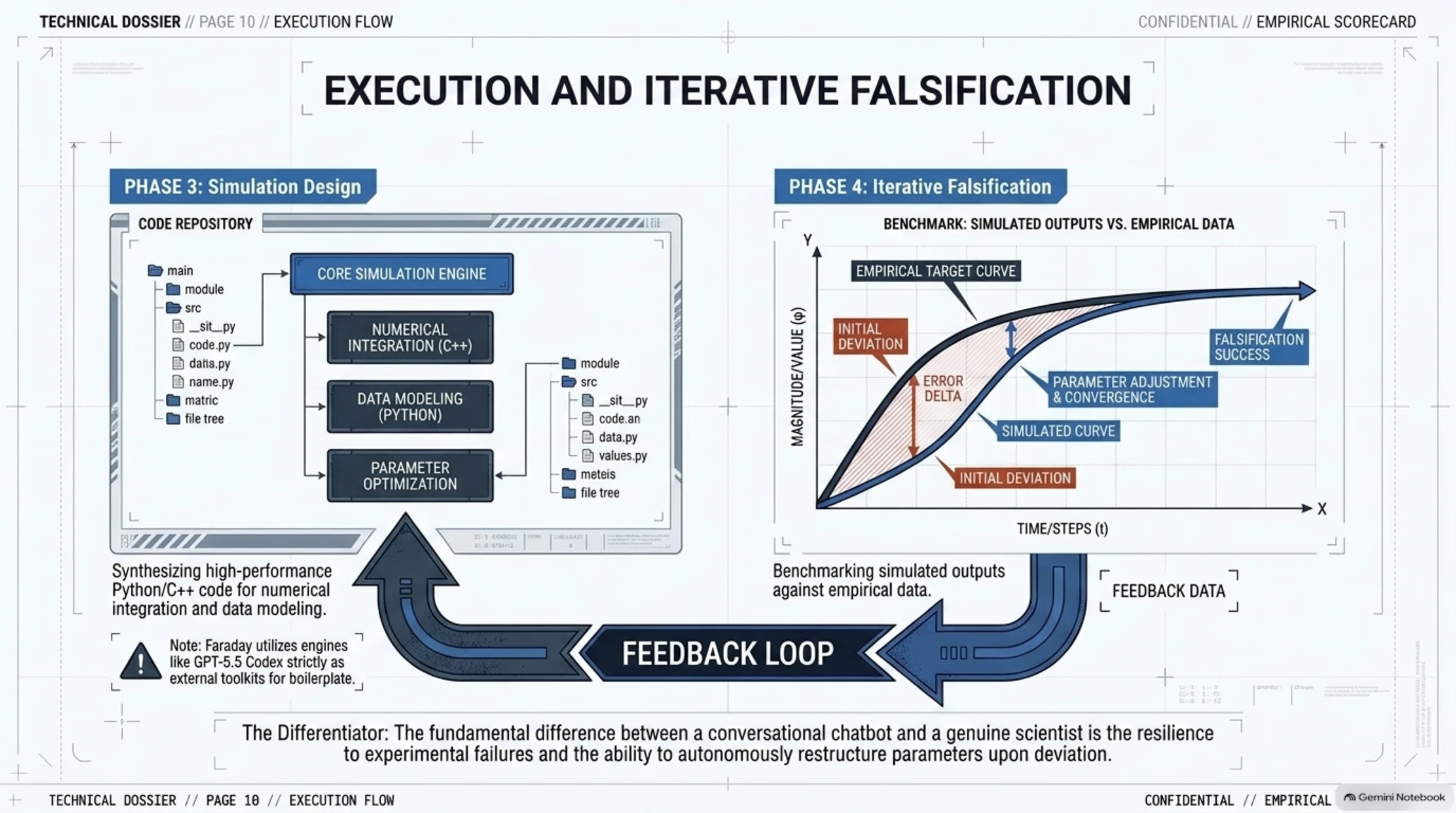
• Phase 3 (Simulation Design): Synthesizing high-performance Python/C++ code for numerical integration and data modeling.
• Phase 4 (Iterative Falsification): Benchmarking simulated outputs against empirical data and restructuring experimental parameters upon deviation.
3. Reinforcement Learning for Research Taste: Beyond Supervised Mimicry
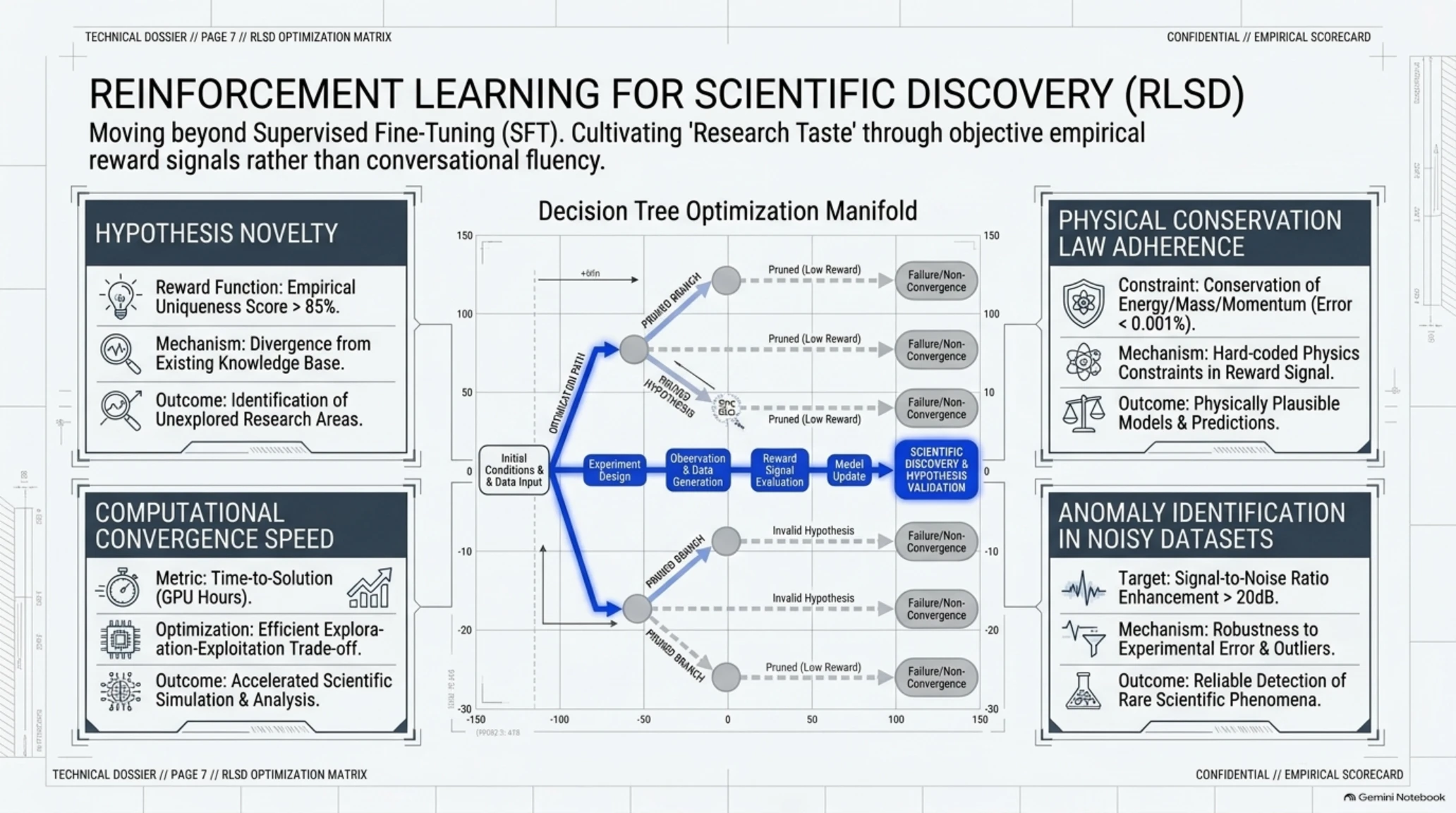
The foundational driver of Faraday's intellectual superiority over larger models is its bespoke training pipeline. Rather than relying on traditional Supervised Fine-Tuning (SFT) which trains networks to imitate existing text patterns Inherent designed a dedicated Reinforcement Learning from Scientific Discovery (RLSD) framework.
In this framework, reward signals are not linked to syntactic fluency, but are strictly tied to objective empirical metrics: "Hypothesis Novelty", "Physical Conservation Law Adherence", "Computational Convergence Speed", and "Anomaly Identification in Noisy Datasets". This optimization regimen cultivates a nuanced research taste within the model, enabling Faraday to preemptively abandon fruitless simulation branches and prioritize high-yield thermodynamic pathways.
4. Empirical Scorecard: How Faraday's 27B Outperformed Frontier Giants
A granular breakdown of the Replica benchmark results highlights the performance disparities between targeted scientific agents and generalized foundation models. Faraday demonstrated overwhelming superiority in domains demanding long-horizon deductive rigor and continuous adherence to differential equations.
In Pharmaceutical Synthesis & Organic Reaction Optimization, Faraday scored an exceptional 89.2% success rate, substantially outperforming Claude Opus 4.8 (82.1%), which frequently generated chemically unstable intermediary states. In Quantum Thermodynamics & Density Matrix Calculations, Faraday's formal proof integration yielded an 85.6% accuracy score compared to GPT-5.5's 78.8%.
📚 Classified & Related Dossiers in TekinGame
If you wish to explore beyond this report and delve into cybernetic frontiers and autonomous AI architectures, do not miss these three exclusive deep-dives in the Tekin Garage:
Replica Scientific Benchmark Detailed Performance Matrix (2026)
| AI System | Parameter Scale | Organic Chemistry & Drug Discovery | Quantum Physics & Thermodynamics | Machine Learning Replication | Overall Replica Score |
|---|---|---|---|---|---|
| Inherent Faraday | 27 Billion (27B) | 89.2% | 85.6% | 87.4% | 87.4% (Rank 1) |
| Anthropic Claude Opus 4.8 | ~1.8 Trillion | 82.1% | 80.3% | 81.2% | 81.2% (Rank 2) |
| OpenAI GPT-5.5 Reasoning | ~2.0 Trillion | 80.4% | 78.8% | 79.6% | 79.6% (Rank 3) |
| Google Gemini 2.5 Ultra | ~1.5 Trillion | 76.5% | 74.2% | 75.1% | 75.3% (Rank 4) |
| DeepSeek-R1 70B | 70 Billion | 74.1% | 71.8% | 73.5% | 73.1% (Rank 5) |
These findings conclusively prove that high-efficiency cognitive architectures backed by formal deductive loops can decisively eclipse models fifty times their parameter scale in specialized empirical domains.
5. Democratizing Discovery: Local Workstation Compute vs. Hyperscaler Monopolies
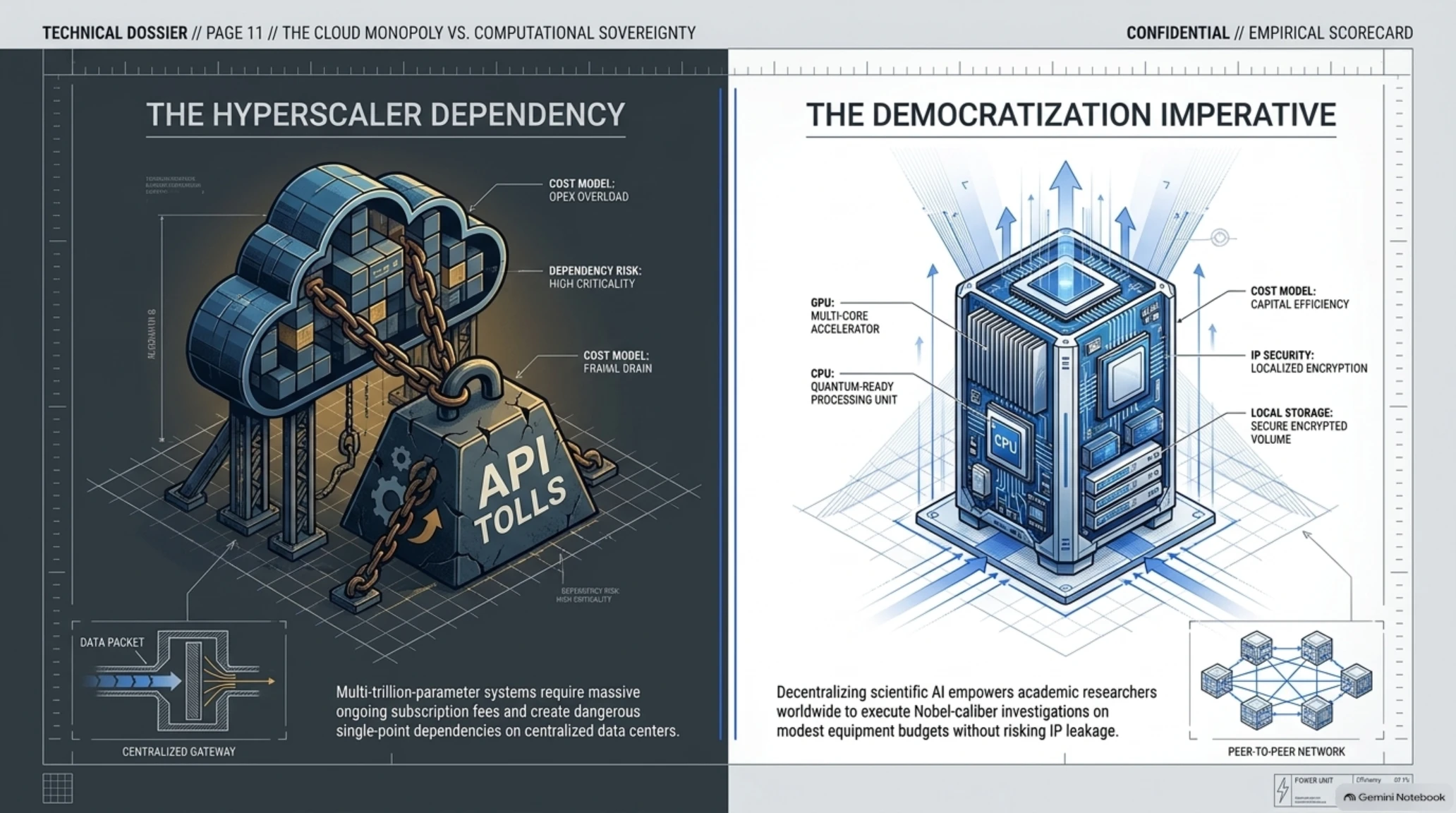
Beyond theoretical benchmarks, Faraday's 27B parameter footprint delivers profound economic and operational advantages for academic research departments and independent biotechnology laboratories globally. Multi-trillion-parameter systems require massive ongoing cloud subscription fees and create dangerous single-point dependencies on centralized American hyperscalers.
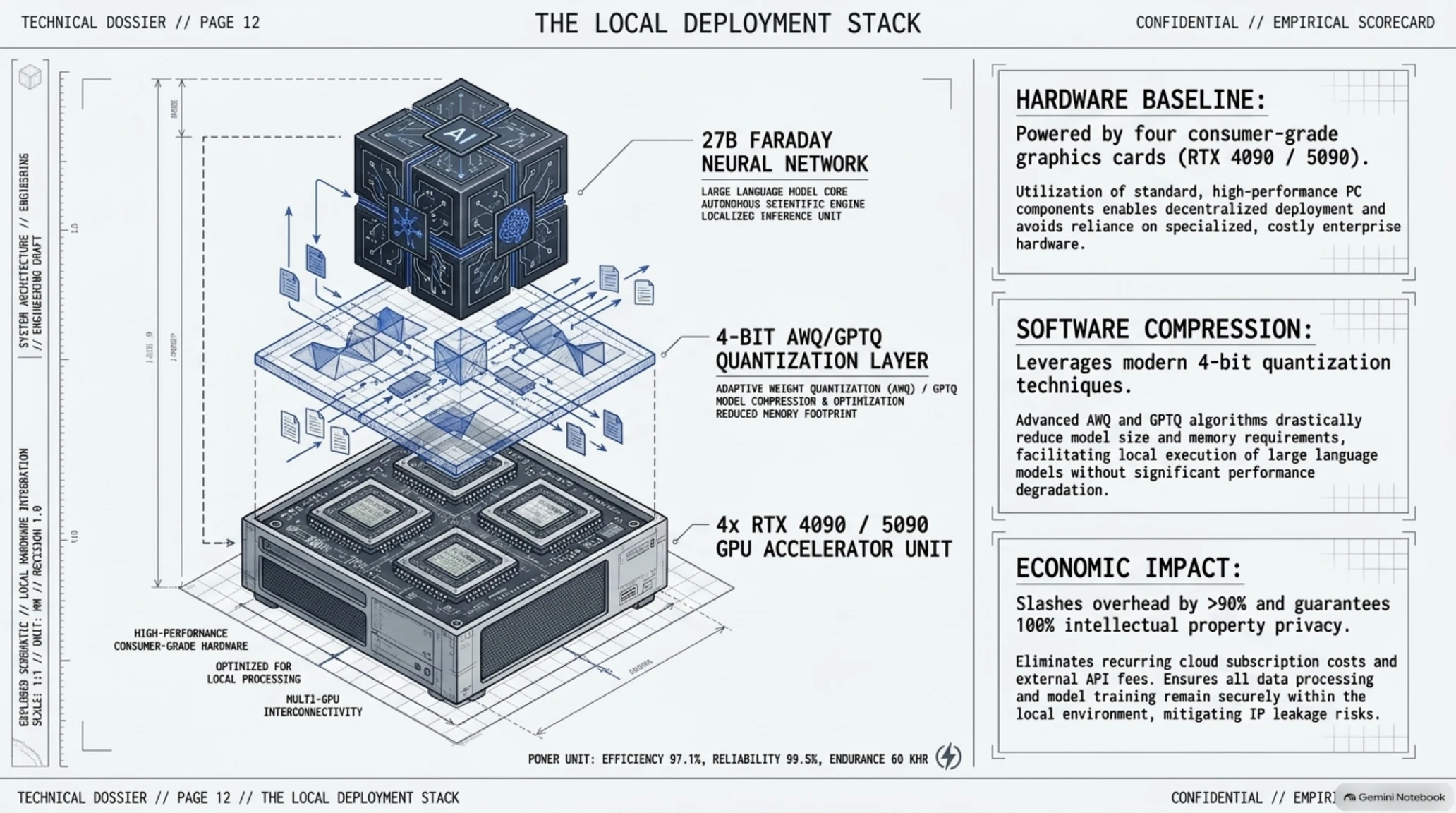
In contrast, leveraging modern 4-bit quantization techniques (such as AWQ and GPTQ), Faraday can be deployed locally on a desktop workstation powered by four consumer-grade graphics cards (such as NVIDIA RTX 4090 or RTX 5090). This local execution profile slashes computational overhead by over 90% while guaranteeing total intellectual property privacy for novel chemical patents and proprietary clinical datasets.
Tekin Strategic Perspective | Applied Computational Sovereignty
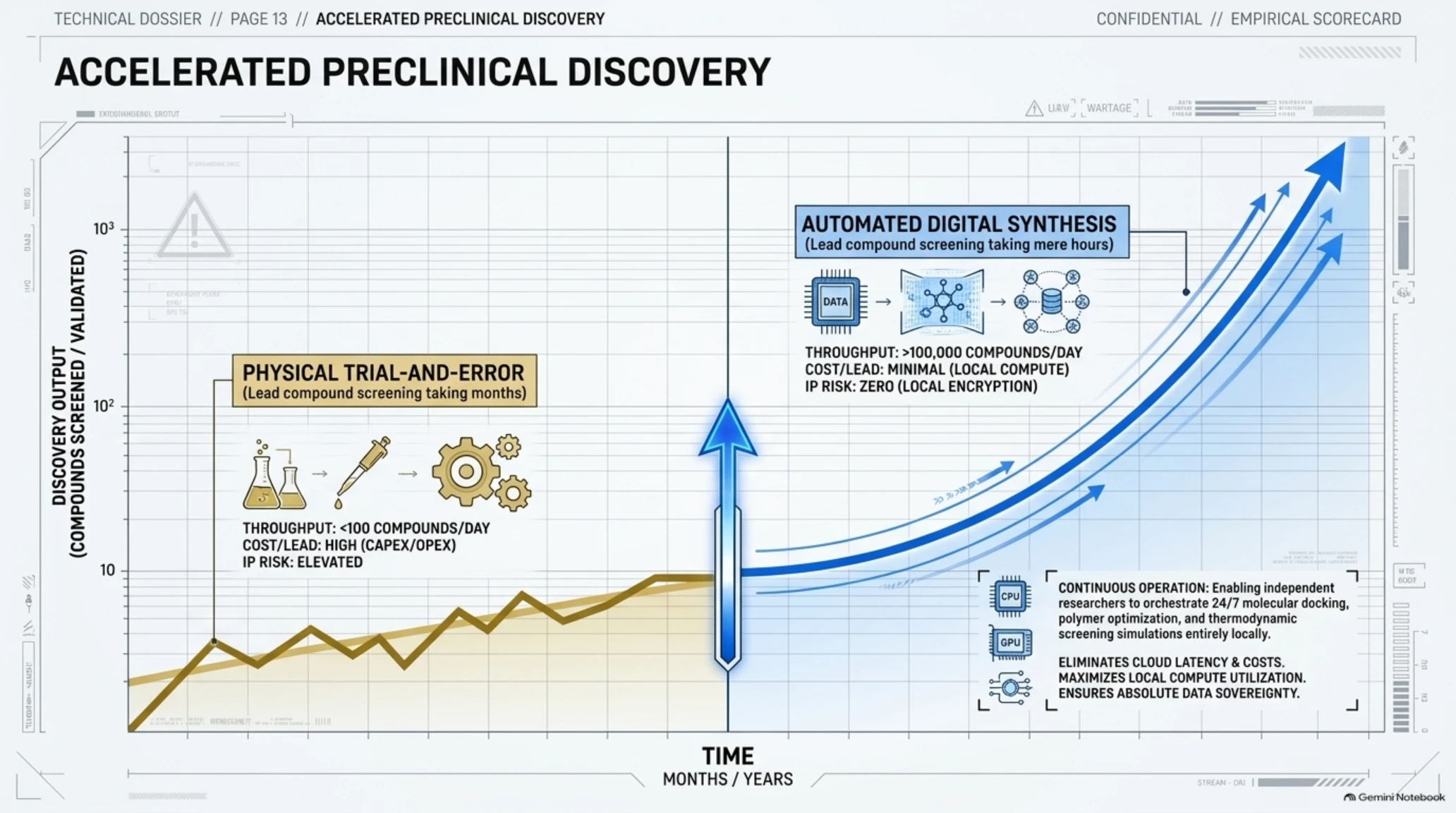
This localized compute paradigm accelerates preclinical pharmaceutical discovery pipelines, reducing lead compound screening times from months of physical trial-and-error to hours of automated digital synthesis.
6. The AGI Horizon: From Literature Assistants to Autonomous Artificial Scientists
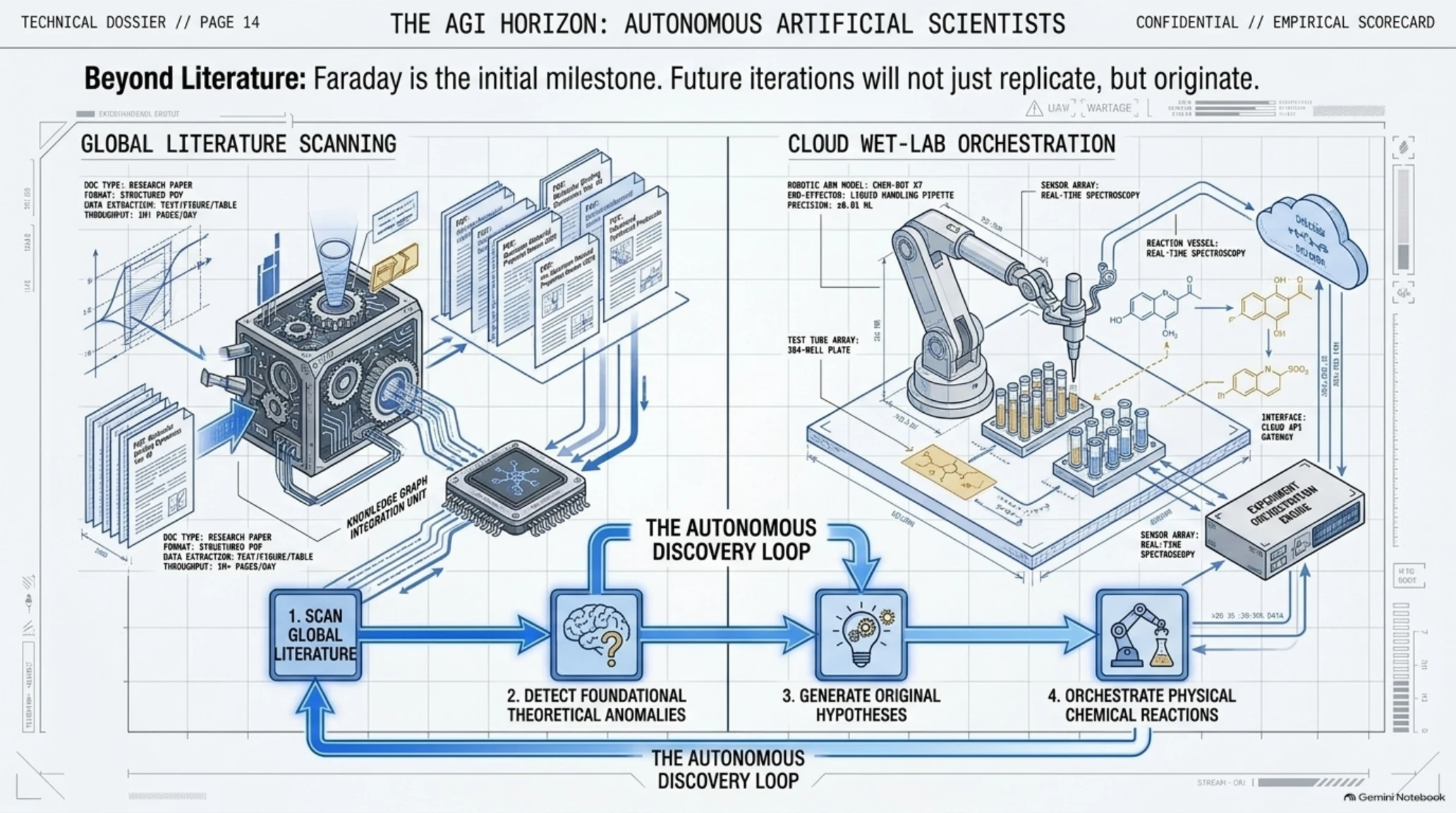
Inherent's overarching mission extends far beyond publishing benchmark records. Faraday represents the initial milestone toward building the world's first fully autonomous AGI Scientists. Future iterations currently in development will autonomously scan global literature, detect foundational theoretical anomalies, formulate original hypotheses, and interface directly with automated cloud wet-labs to orchestrate physical chemical reactions.
This automated discovery loop will transform humanity's rate of scientific breakthroughs from linear progression into exponential acceleration. Critical challenges such as curing rare genetic diseases, developing solid-state batteries with tenfold energy density, and commercializing room-temperature fusion catalysts will be solved in years rather than generations.
Tekin Strategic Scorecard & Final Platform Verdict
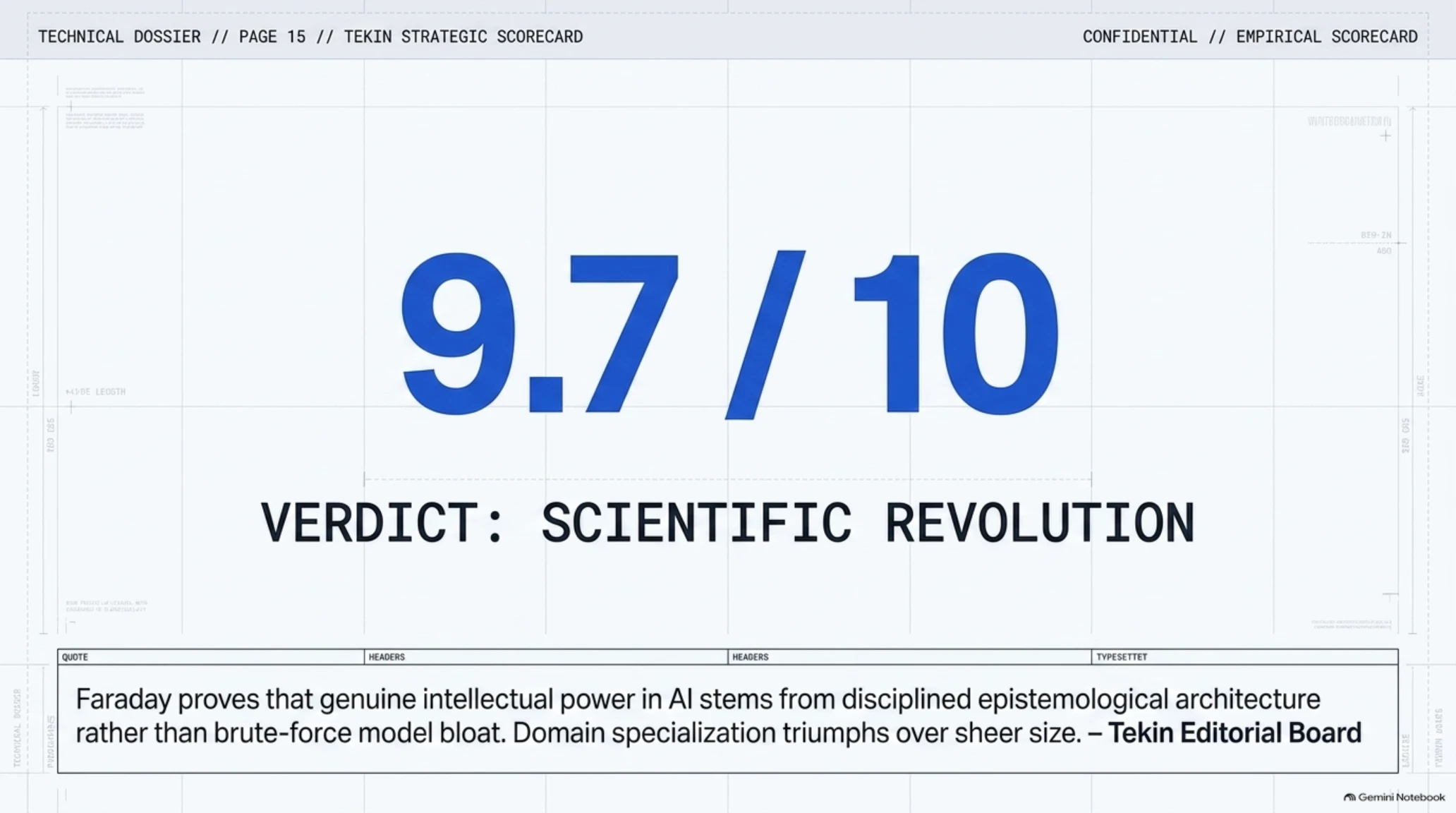
Inherent's Faraday stands as an extraordinary milestone in applied machine learning in late 2026. By coupling an agile 27B parameter base with specialized scientific reinforcement learning, formal theorem proving in Lean 4, and decentralized desktop workstation execution, Inherent has established a new benchmark for empirical artificial intelligence.
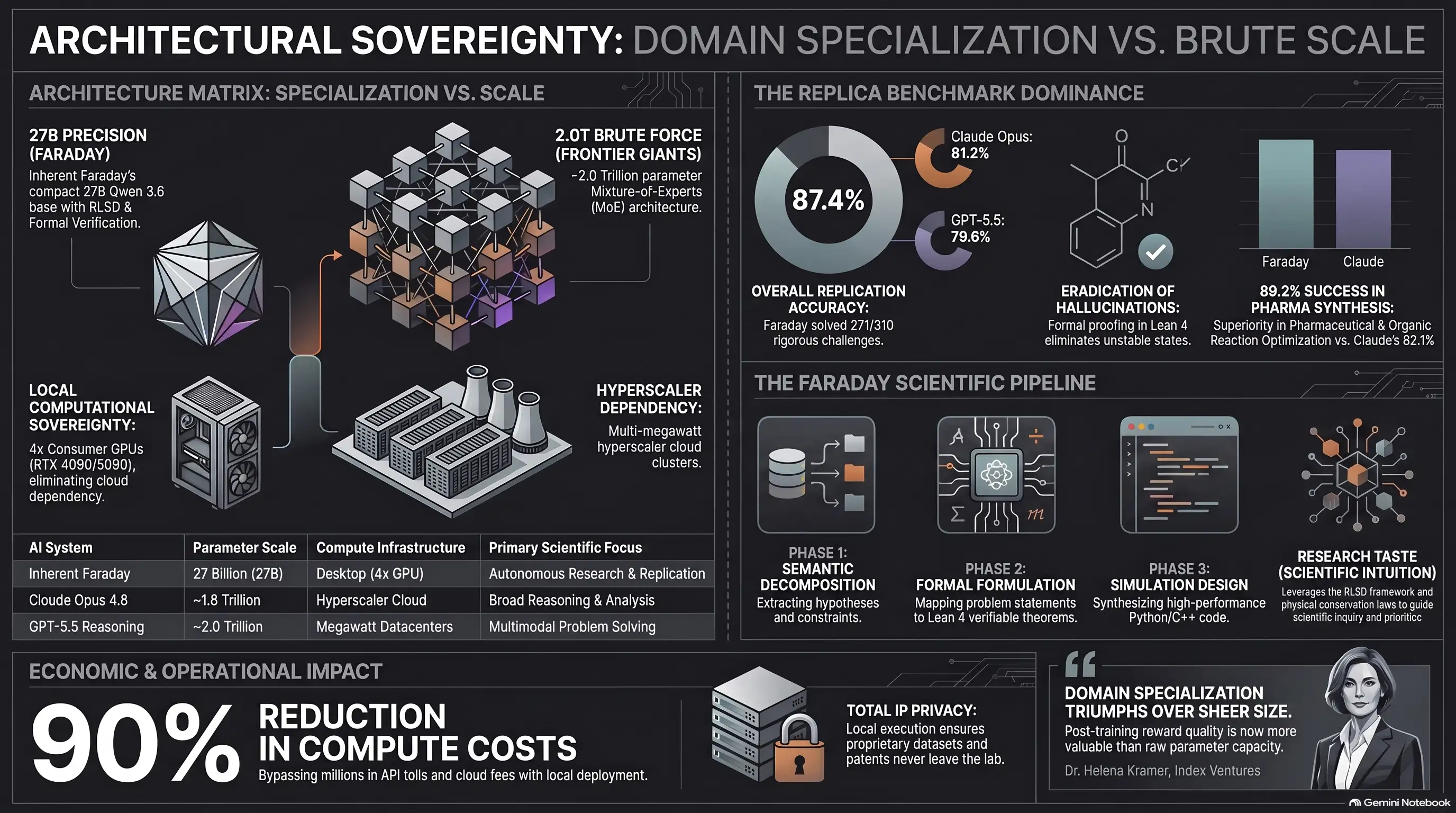
- 27B parameter agent decisively outperforming multi-trillion parameter giants like Claude Opus 4.8 and GPT-5.5
- Dominant 87.4% success rate across 310 rigorous scientific challenges in the Replica benchmark
- Dramatic 90% reduction in research compute expenditures via local 4x consumer GPU deployment
- Eradication of probabilistic hallucinations through Lean 4 formal mathematical verification
- Autonomous end-to-end hypothesis generation, simulation scripting, and data curve replication
- Utilizes external specialized coding models like GPT-5.5 Codex for boilerplate script generation
- Requires integration with accurate physical simulators to validate hypotheses in novel edge-case scenarios
Related Tech Intelligence on Tekin Game
• 🌙 Tekin Night | Call of Duty, Nintendo & Vision Pro Digest
• 🎭 Tekin Analysis | Apple AI Teardown & July 2026 Digest
• 🌙 Tekin Night | NVIDIA $500B Deal & iPhone 18 Leak
Frequently Asked Questions About Inherent Faraday AI
What is Faraday and who developed it?
Faraday is an autonomous AI scientist agent developed by London-based Inherent AI (founded by ex-Google DeepMind researchers) designed to independently replicate and conduct scientific research.
How did a 27B model defeat Claude Opus 4.8 and GPT-5.5?
By utilizing Reinforcement Learning for Scientific Discovery, formal theorem proving in Lean 4, and an iterative hypothesis-simulation loop rather than brute-force scaling.
What is the Replica Scientific Benchmark?
A benchmark consisting of 310 complex replication tasks from 100 top machine learning and science papers evaluating an AI's ability to reproduce experimental findings without seeing original code.
Can Faraday run locally on consumer hardware?
Yes; its 27B parameter footprint enables execution on a local desktop workstation with 4x NVIDIA RTX 4090/5090 GPUs using 4-bit quantization.
What are the primary commercial applications of Faraday?
Preclinical drug discovery, polymer and catalyst synthesis, astrophysics trajectory calculations, and automated scientific literature audit.
Authoritative Reference Sources & Technical Documentation
Additional Gallery: 🧪 Tekin Analysis | Inherent Faraday AI: How a 27B Agent Outperformed Trillion-Parameter Giants