Tekin Morning: Sept 4
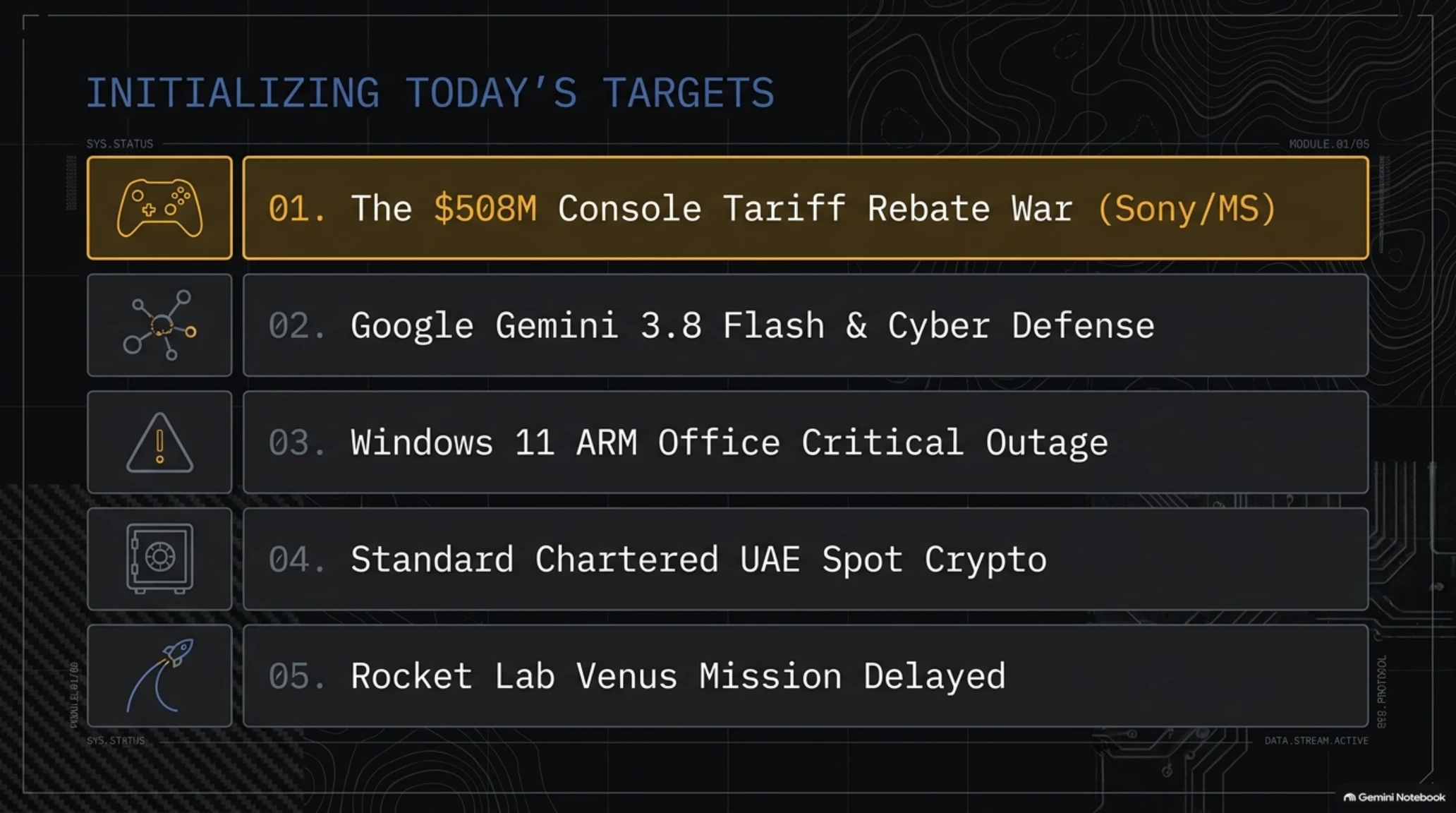
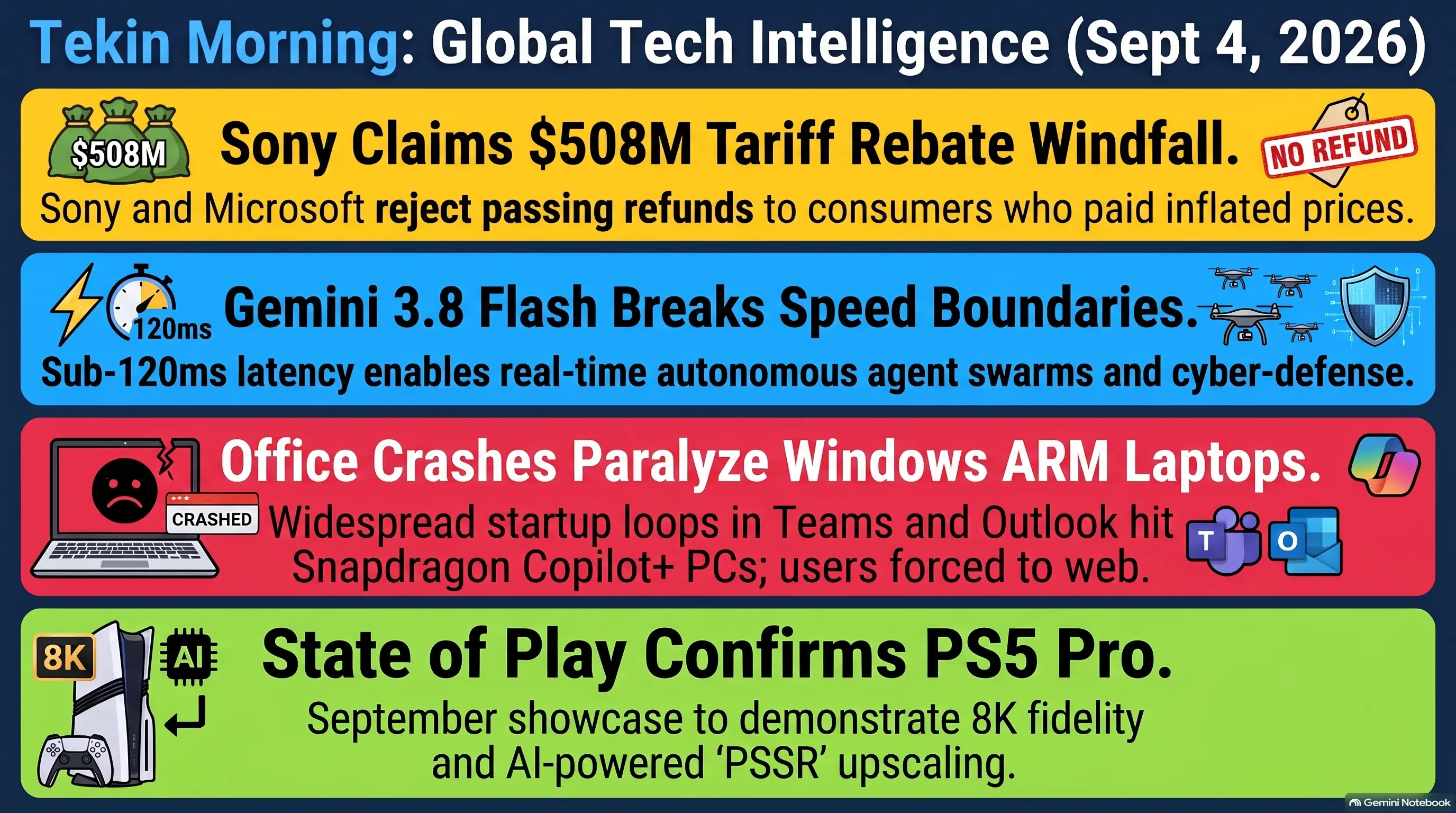
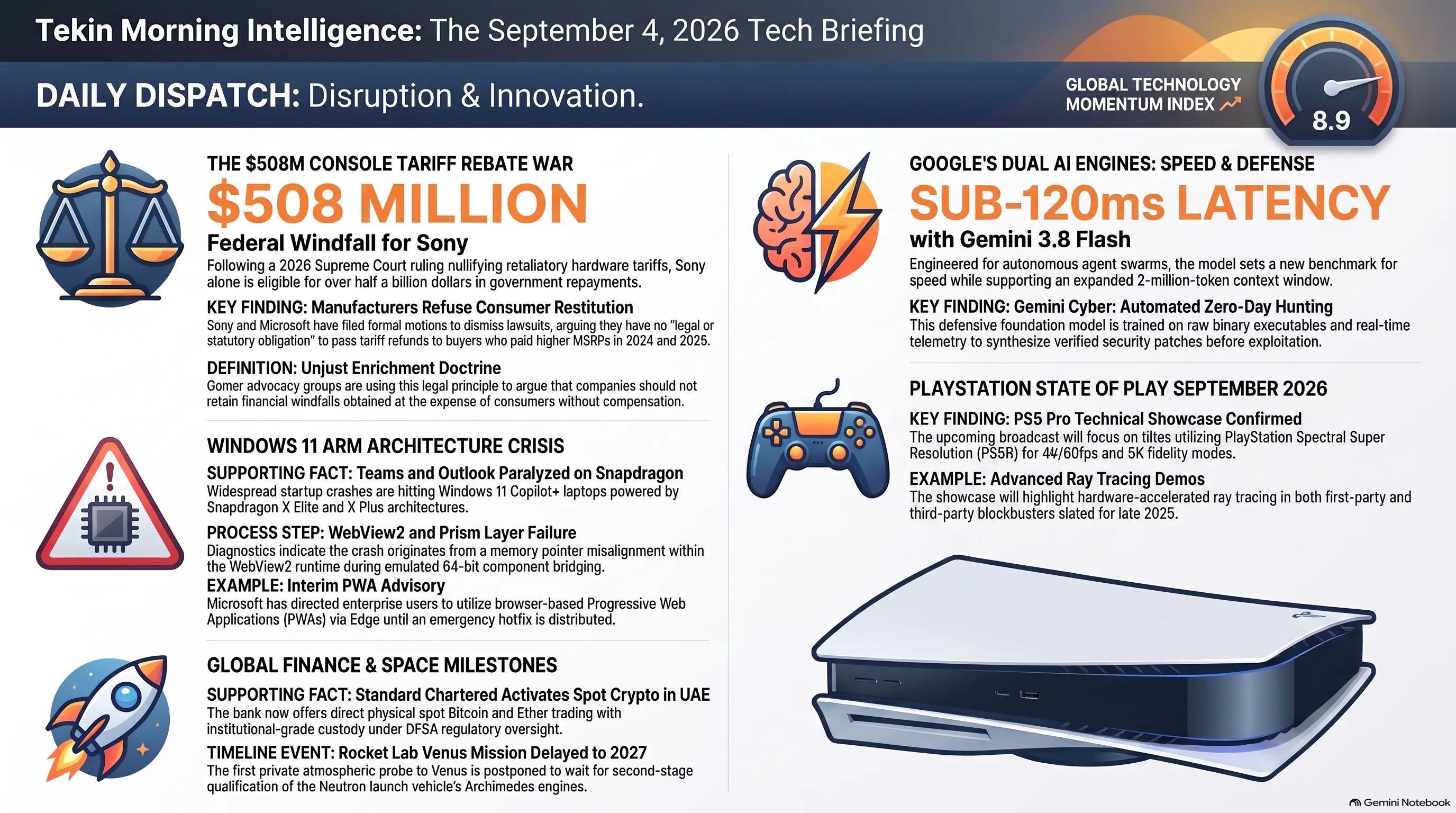
- 🎮$508M Tariff Windfall- Sony and Microsoft refuse to pass hardware tariff rebates to consumers
- 🎧Google Dual AI Launch- Sub-120ms Gemini 3.8 Flash and Gemini Cyber for automated defense
- 🚀Windows 11 ARM Crisis- Widespread startup crashes paralyze Teams and Outlook on Snapdragon PCs
- 🗡️Institutional Crypto in UAE- Standard Chartered launches direct spot Bitcoin trading in Dubai
- 📰Venus Mission Delayed- Rocket Lab postpones planetary probe awaiting Neutron rocket readiness
- ⚔️State of Play Confirmed- Sony sets broadcast date focusing on enhanced PS5 Pro titles
Good morning and welcome to the Friday, September 4, 2026 edition of Tekin Morning, your premier global technology, gaming, and systems engineering intelligence briefing. As global markets transition into the weekend, the consumer technology and interactive entertainment landscapes are experiencing significant legal, architectural, and strategic disruptions.
Today’s analysis spans high-stakes courtroom battles over multi-million-dollar hardware tariffs, foundational advancements in agentic and defensive artificial intelligence, enterprise operating system regressions on emerging silicon architectures, institutional digital asset liquidity across the Middle East, deep-space planetary exploration timelines, and the hardware-accelerated future of PlayStation gaming.
Executive Summary | Morning Dispatch Highlights
- Sony and Microsoft file formal motions to dismiss class-action lawsuits demanding tariff rebate pass-throughs to console buyers
- Google launches Gemini 3.8 Flash optimized for autonomous agent tool execution alongside Gemini Cyber for defensive binary analysis
- Enterprise IT deployments face severe disruption as Microsoft Teams and Outlook crash upon startup on ARM-powered Windows 11 PCs
- Standard Chartered activates direct spot Bitcoin and Ether trading and institutional custody under UAE DFSA regulatory oversight
- Rocket Lab delays the historic first private planetary mission to Venus, awaiting second-stage qualification of the Neutron launch vehicle
- Sony Interactive Entertainment sets the broadcast date for PlayStation State of Play September 2026 with a focus on PS5 Pro titles
1. The $508M Tariff Windfall: Sony and Microsoft Refuse to Refund Console Gamers
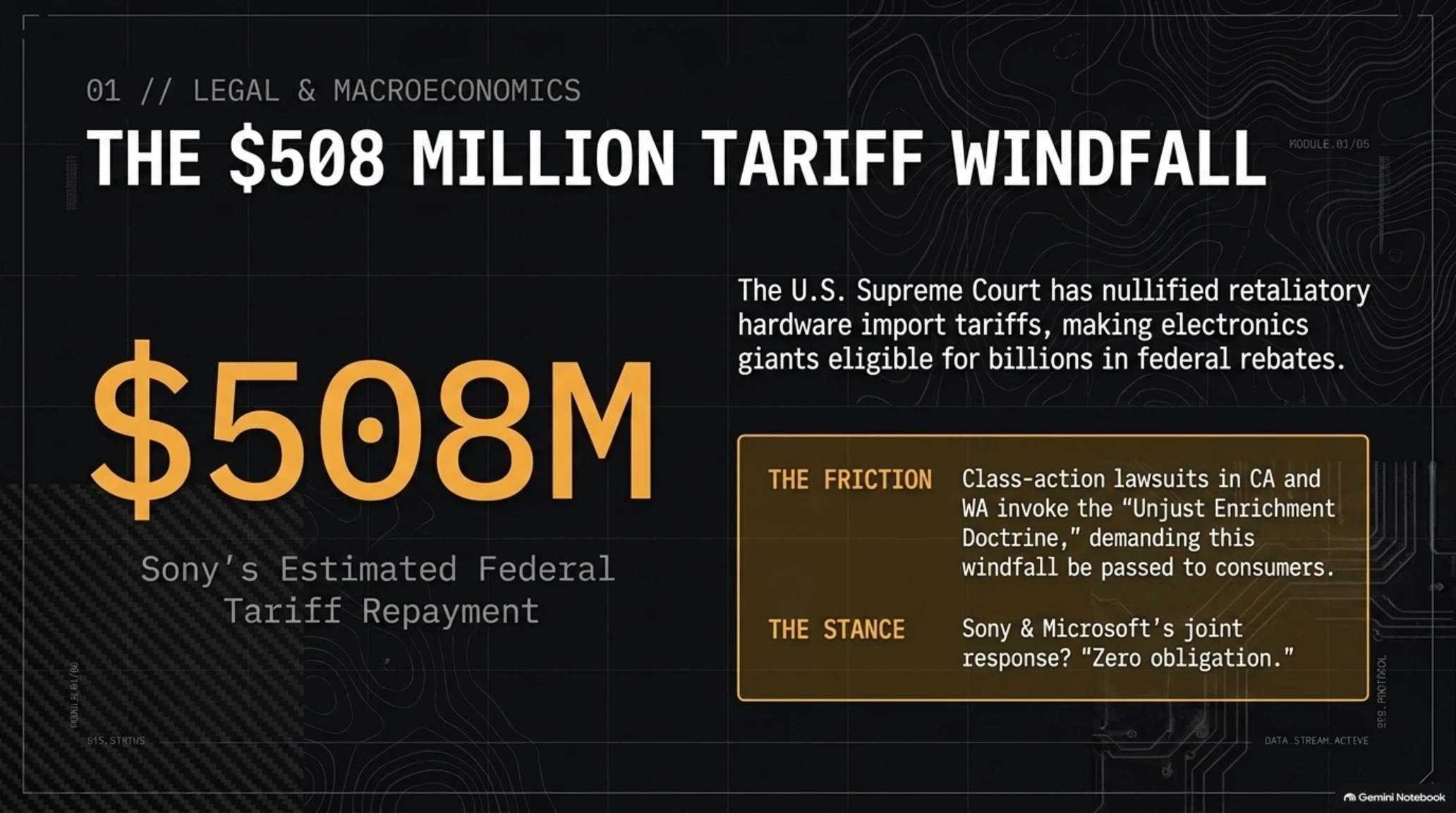
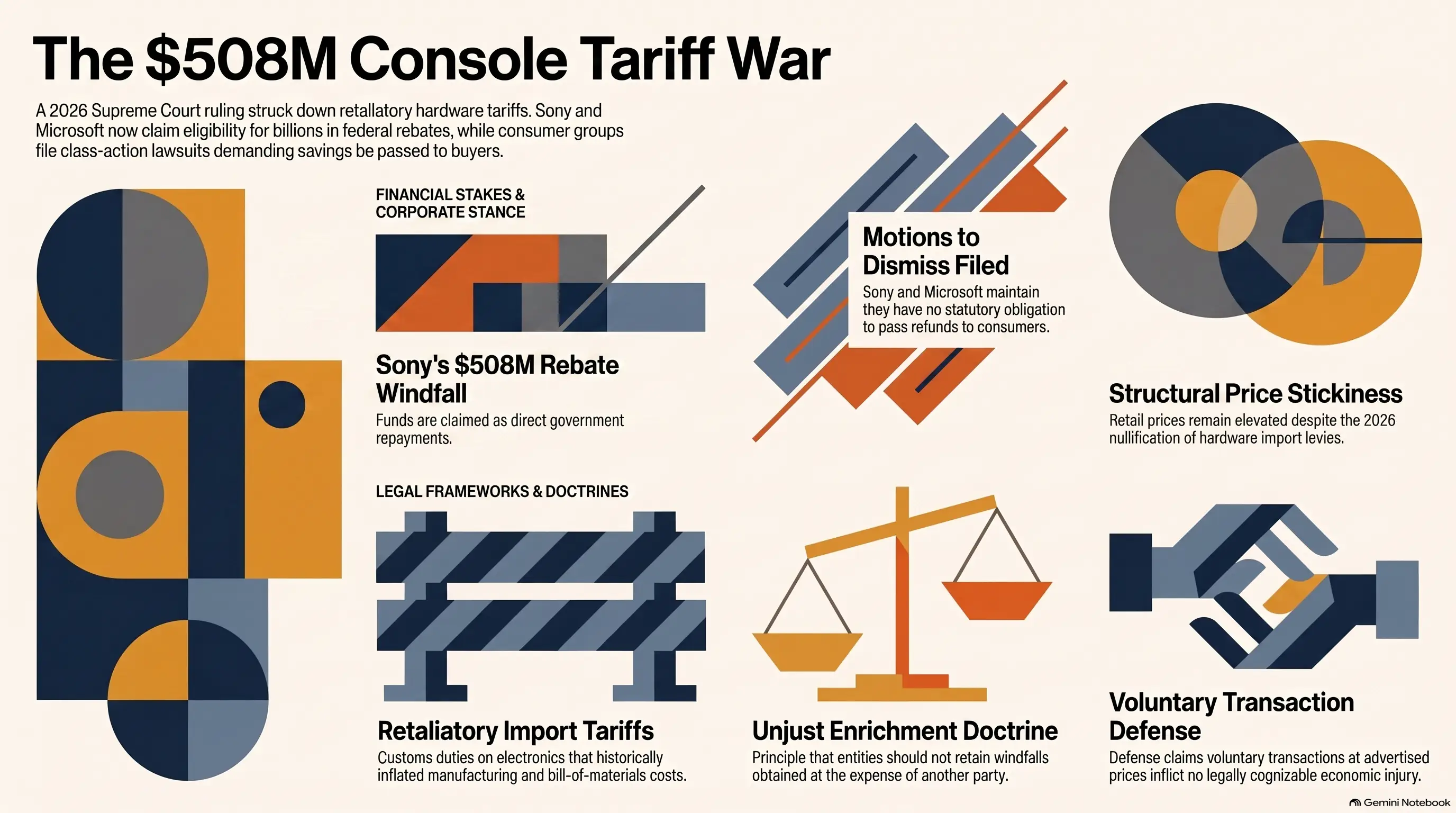
A contentious legal confrontation in the consumer technology sector reached a critical juncture today as Sony Interactive Entertainment and Microsoft Corporation formally responded to high-profile consumer class-action lawsuits. The dispute stems from the landmark U.S. Supreme Court decision earlier in 2026 that struck down retaliatory hardware import tariffs as unlawful, rendering electronics manufacturers eligible for billions of dollars in federal tariff rebates. Filings reveal that Sony alone stands to receive an estimated $508 million in direct government repayments.
Following the ruling, consumer rights coalitions and gamer advocacy groups in California and Washington filed class-action complaints, arguing that both companies systematically elevated the retail prices of the PlayStation 5, Xbox Series X, and related accessories throughout 2024 and 2025 citing heavy tariff pressures. Plaintiffs asserted that retaining the government rebates without providing consumer restitution or lowering MSRP constitutes unjust enrichment under commercial trade statutes.
In joint legal filings submitted to federal courts, counsel for Sony and Microsoft rejected the allegations in their entirety, arguing that hardware manufacturers hold "no legal or statutory obligation to pass tariff refunds onto end-market consumers." The defense posits that consumers entered into voluntary transactions at fair market prices, emphasizing that receiving a merchantable console at the advertised retail price inflicts no legally cognizable economic injury. With Sony absorbing a half-billion-dollar rebate directly into operating margins, the ruling underscores the persistent decoupling of macroeconomic cost relief from consumer pricing.
Legal & Macroeconomic Terminology: Hardware Tariffs & Class Actions
Retaliatory Import Tariff: Protective customs duties levied on imported computing hardware and assembled electronics, historically driving up manufacturing and bill-of-materials (BOM) costs.
Unjust Enrichment Doctrine: A legal principle under contract and tort law asserting that an entity should not retain financial windfalls or profits obtained at the direct expense of another party without equitable compensation.
2. Google Unveils Dual AI Engines: Gemini 3.8 Flash & Cyber Defense Twin
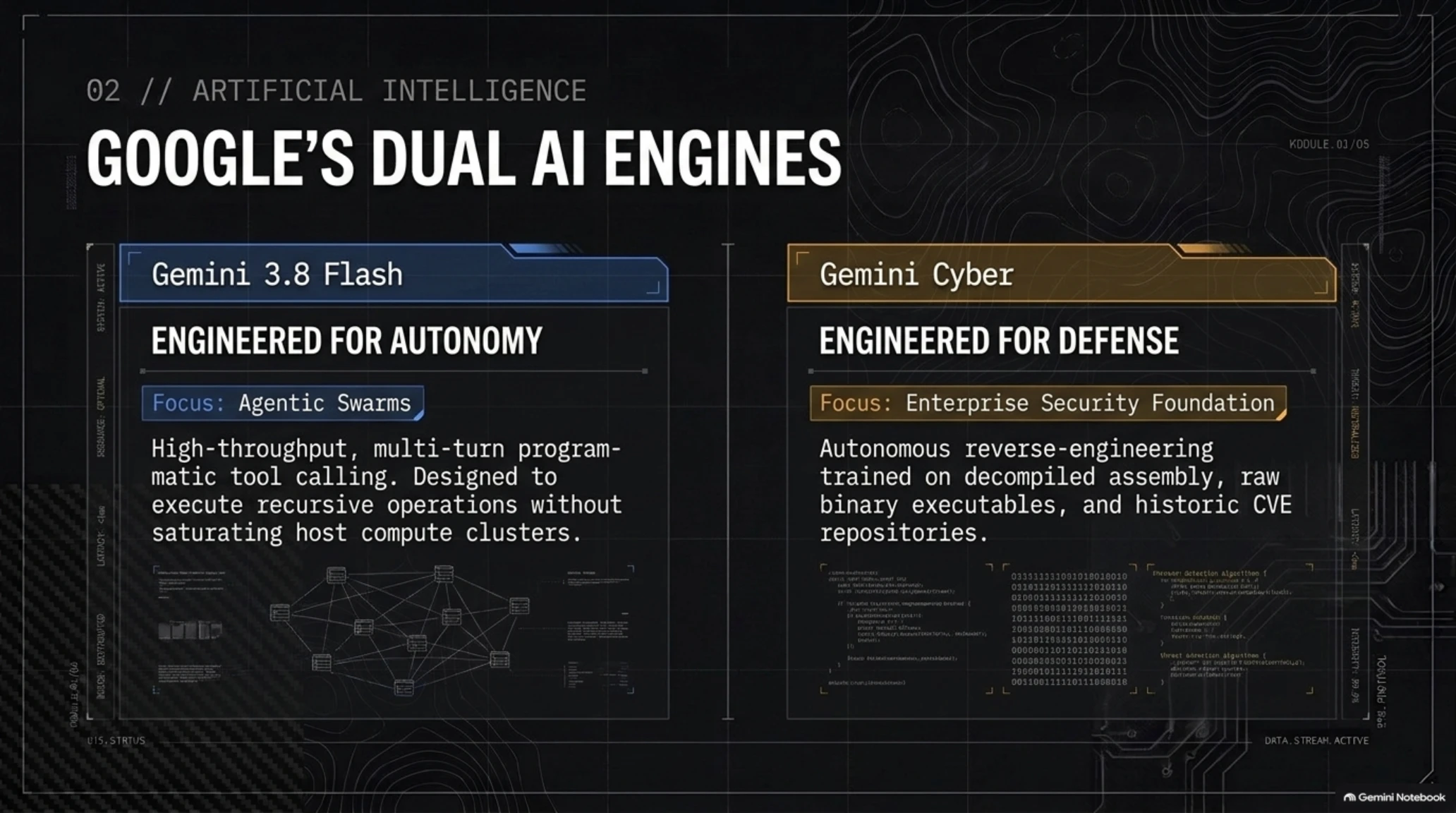
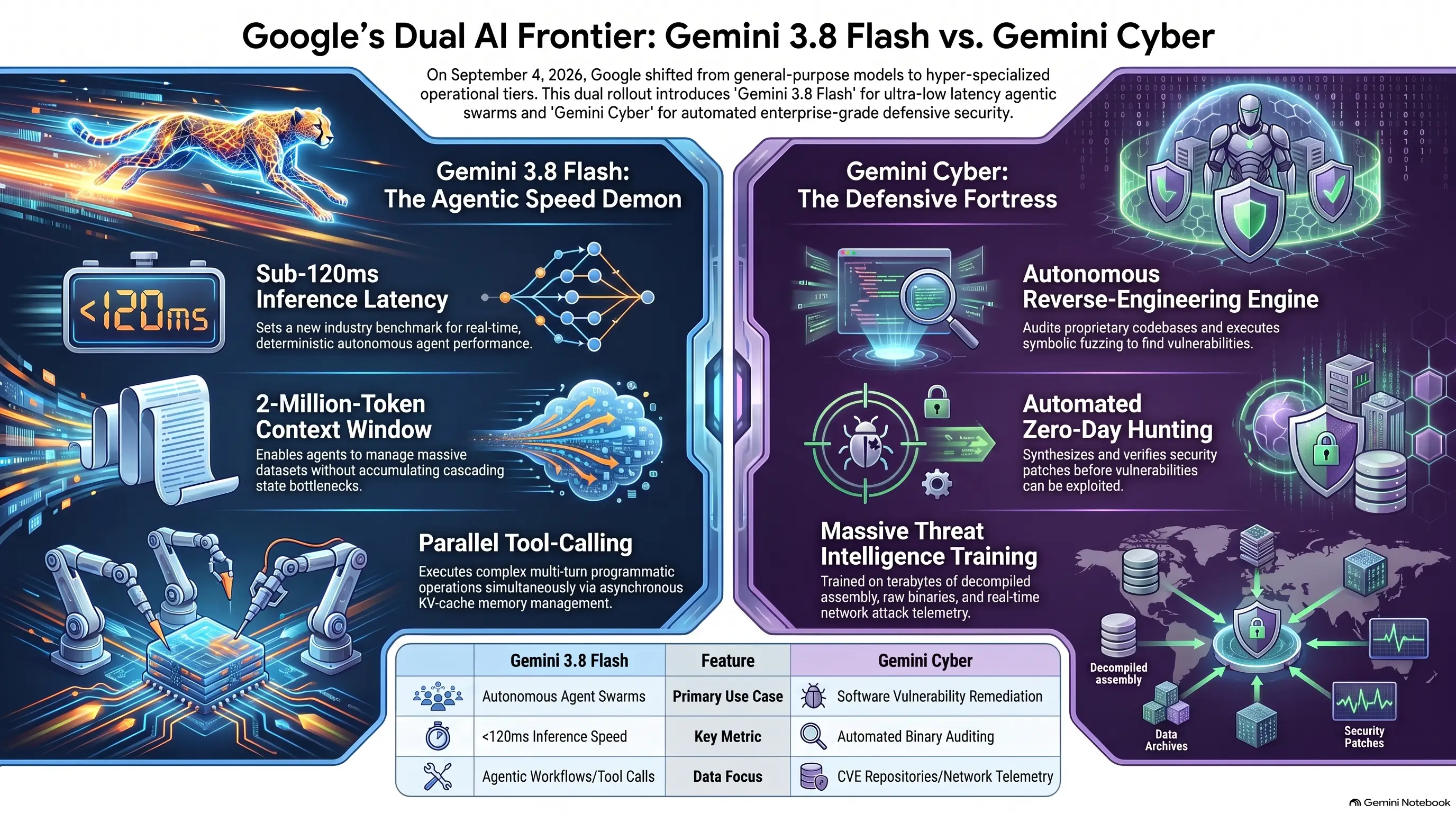
In a major dual product release, Google today expanded its generative intelligence portfolio by introducing Gemini 3.8 Flash alongside an enterprise-grade defensive security foundation model designated as Gemini Cyber. The synchronized rollout addresses two distinct high-priority frontiers: ultra-low latency agentic task execution and automated software vulnerability remediation.
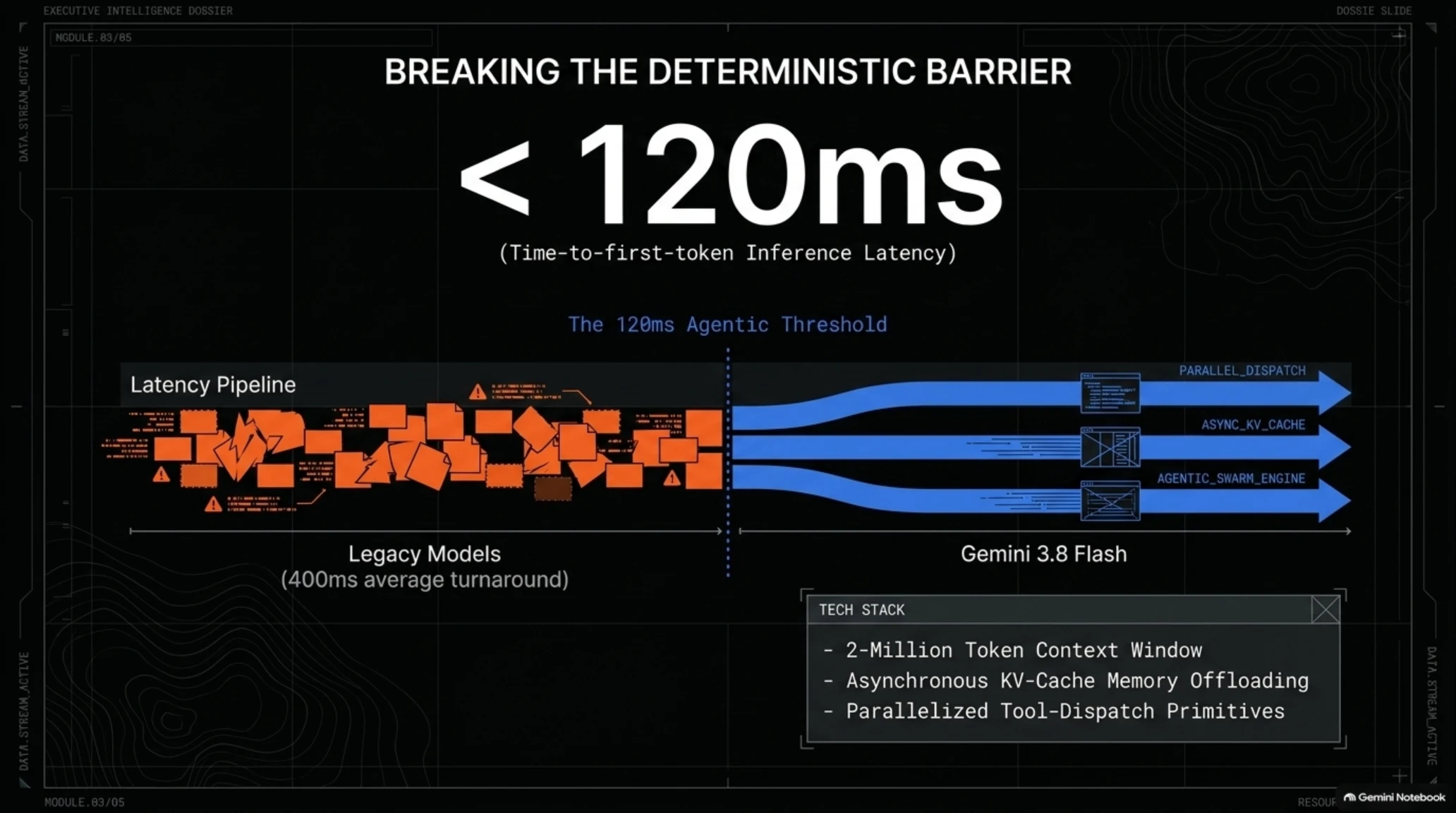
Engineered specifically for autonomous multi-agent pipelines, Gemini 3.8 Flash establishes an industry benchmark by compressing inference latency to under 120 milliseconds. Featuring an expanded 2-million-token context window with asynchronous KV-cache memory management, the model enables autonomous agents to execute complex, multi-turn programmatic tool calls in parallel without accumulating cascading state bottlenecks.
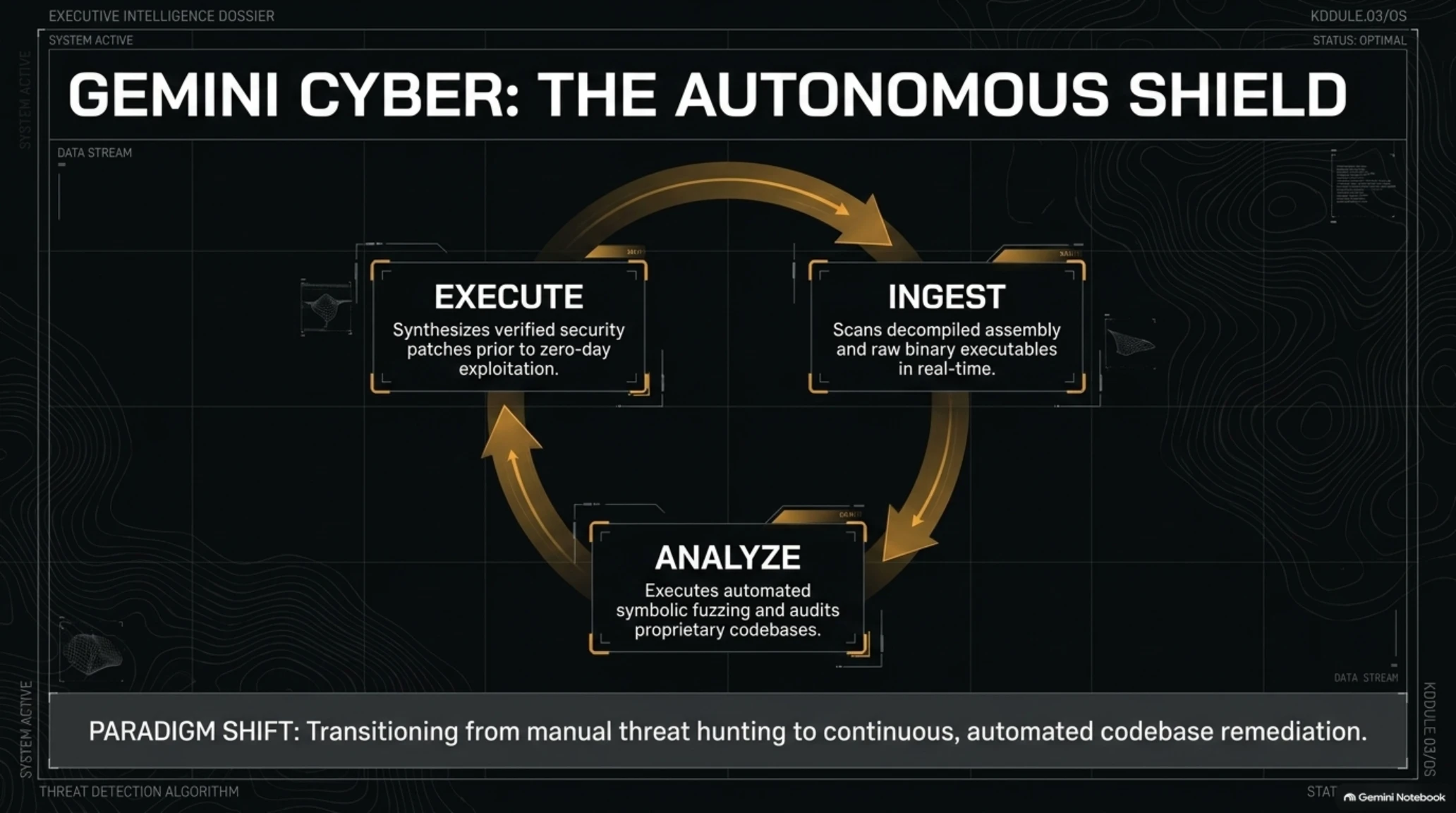
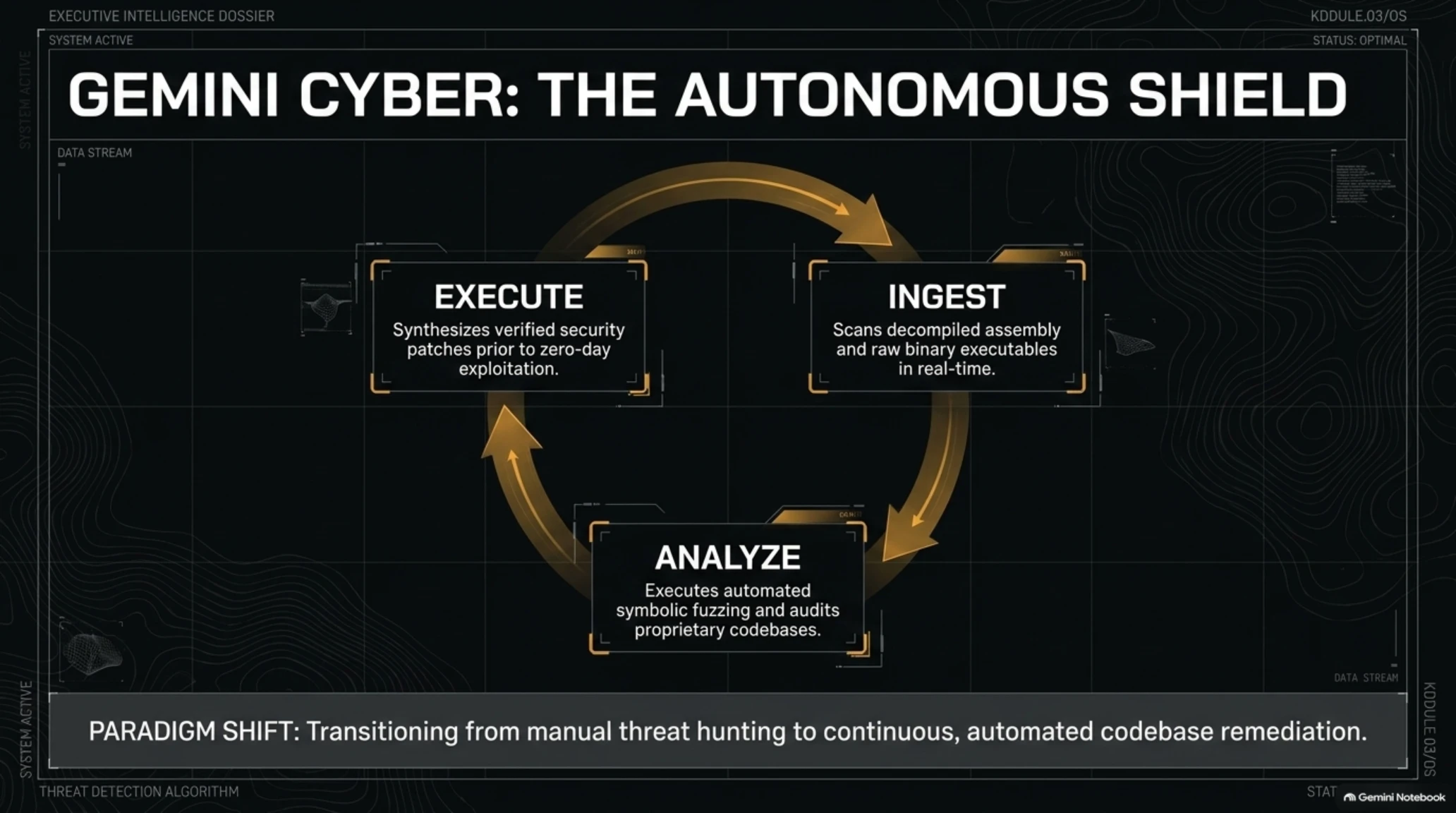
Complementing the consumer and developer-facing Flash release, Gemini Cyber represents Google’s bid to dominate automated enterprise defense. Trained on hundreds of terabytes of decompiled assembly, raw binary executables, historic CVE repositories, and real-time network attack telemetry, Gemini Cyber serves as an autonomous reverse-engineering engine capable of auditing proprietary codebases, executing automated symbolic fuzzing, and synthesizing verified security patches prior to zero-day exploitation.
Comparative Architectural & Systems Benchmark: Morning Tech Developments
| Domain & Parameter | Legacy Baseline / Prior Status | September 4, 2026 New Standard | Strategic Ecosystem Impact |
|---|---|---|---|
| Gaming Hardware Tariffs | Manufacturers absorb 25% import levies | Supreme Court nullification; Sony retains $508M rebate | Zero consumer retail price reductions; margins retained |
| Agentic Model Latency | 400ms average turnaround (Gemini 1.5/2.0) | Sub-120ms inference with parallel tool-calling (Gemini 3.8 Flash) | Accelerated enterprise agentic workflows and real-time execution |
| Windows 11 ARM Stability | Native Office 365 compatibility | Widespread startup crash loop across Teams & Outlook | Critical friction in enterprise Snapdragon Copilot+ adoption |
| Institutional MENA Crypto | Restricted to offshore derivative venues | Physical spot execution & custody via Standard Chartered UAE | Surge in institutional capital inflow from sovereign wealth funds |
3. Windows 11 ARM Office Outage: Startup Crashes Paralyze Teams and Outlook
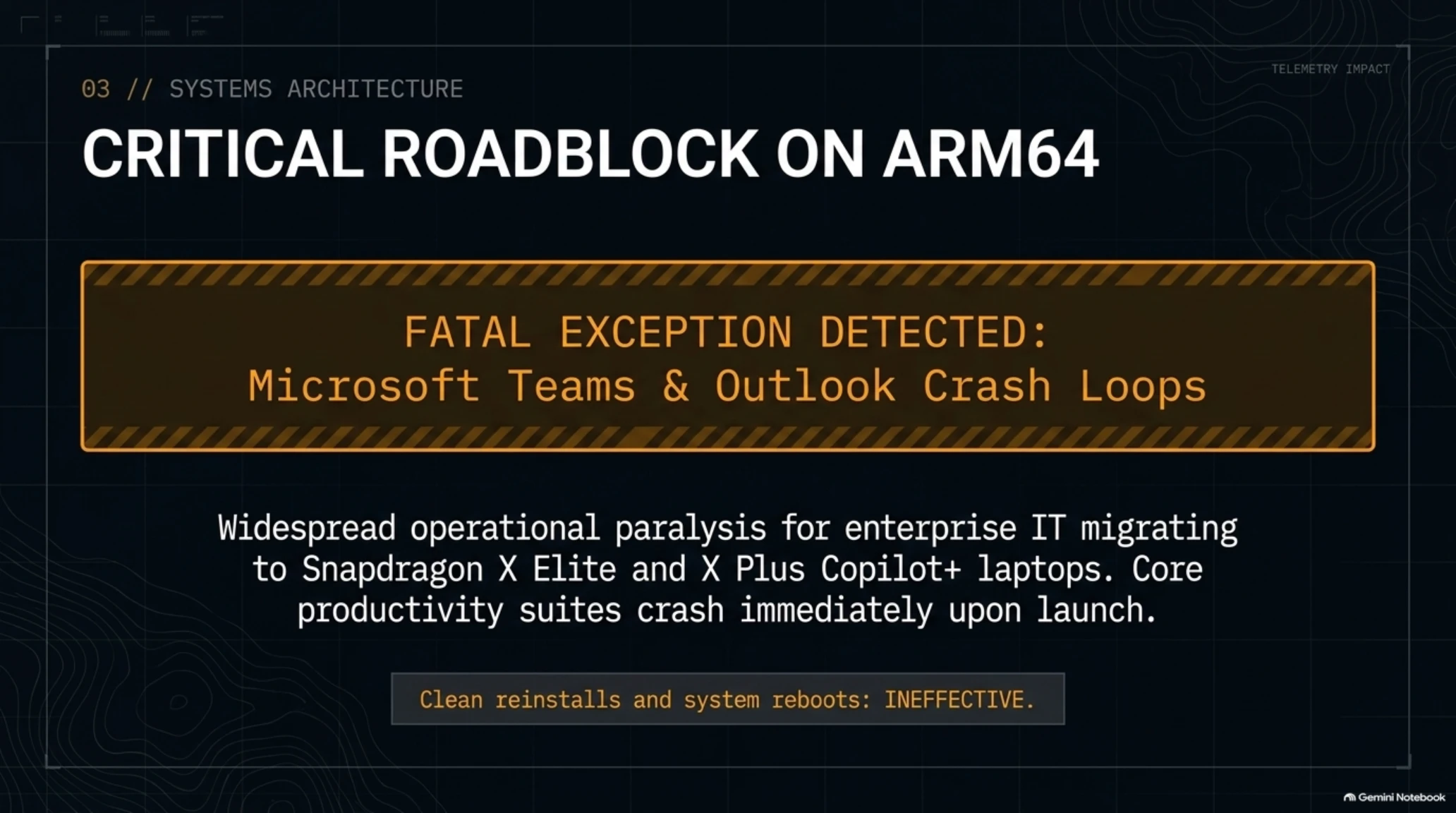
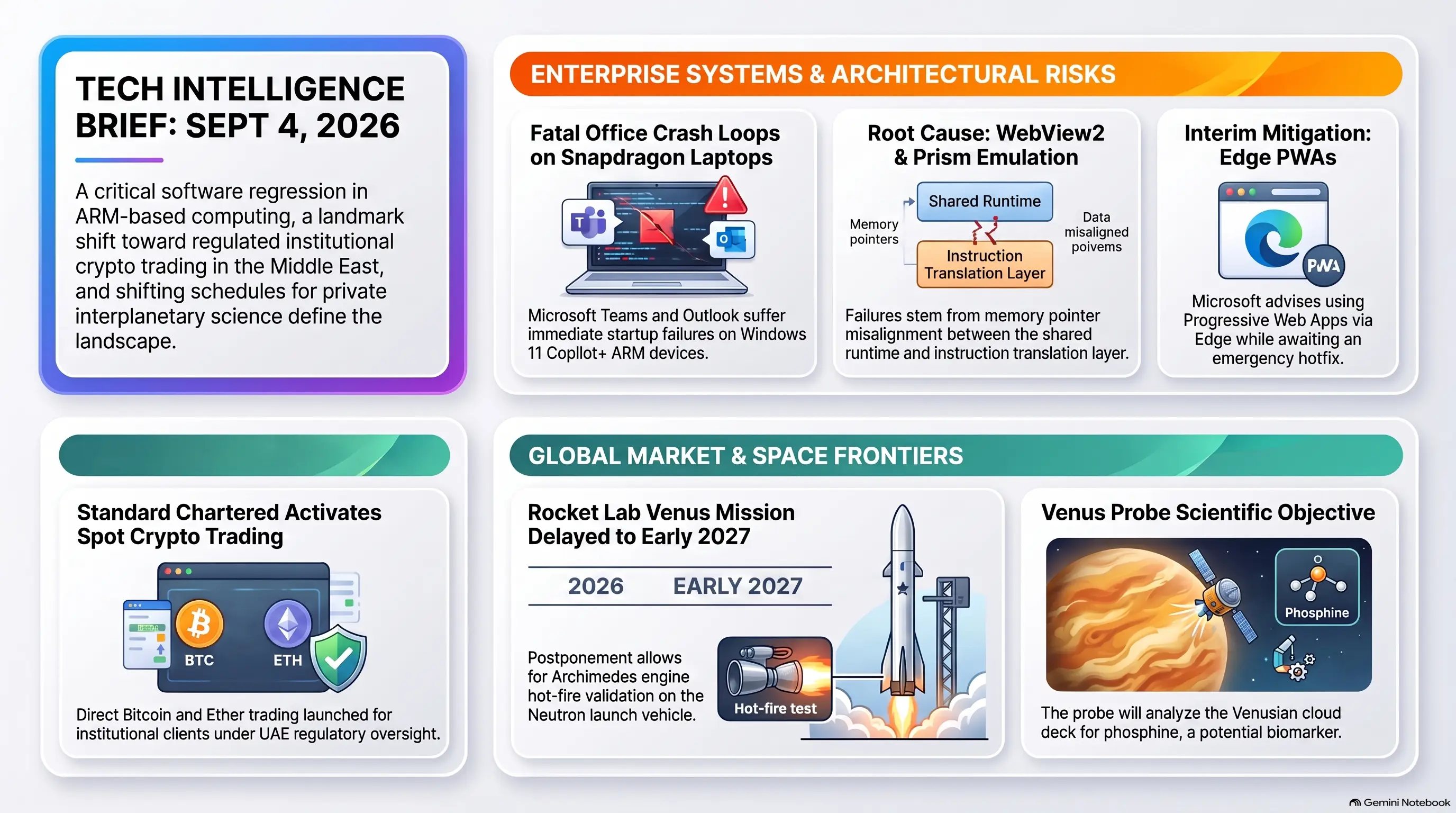
Enterprise IT administrators overseeing hardware migrations to Qualcomm Snapdragon-based Windows 11 Copilot+ laptops faced acute operational paralysis this morning following a critical regression in core productivity suites. Global telemetry confirms that both Microsoft Teams and Microsoft Outlook suffer fatal crashes immediately upon launch on devices powered by the Snapdragon X Elite and Snapdragon X Plus architectures.
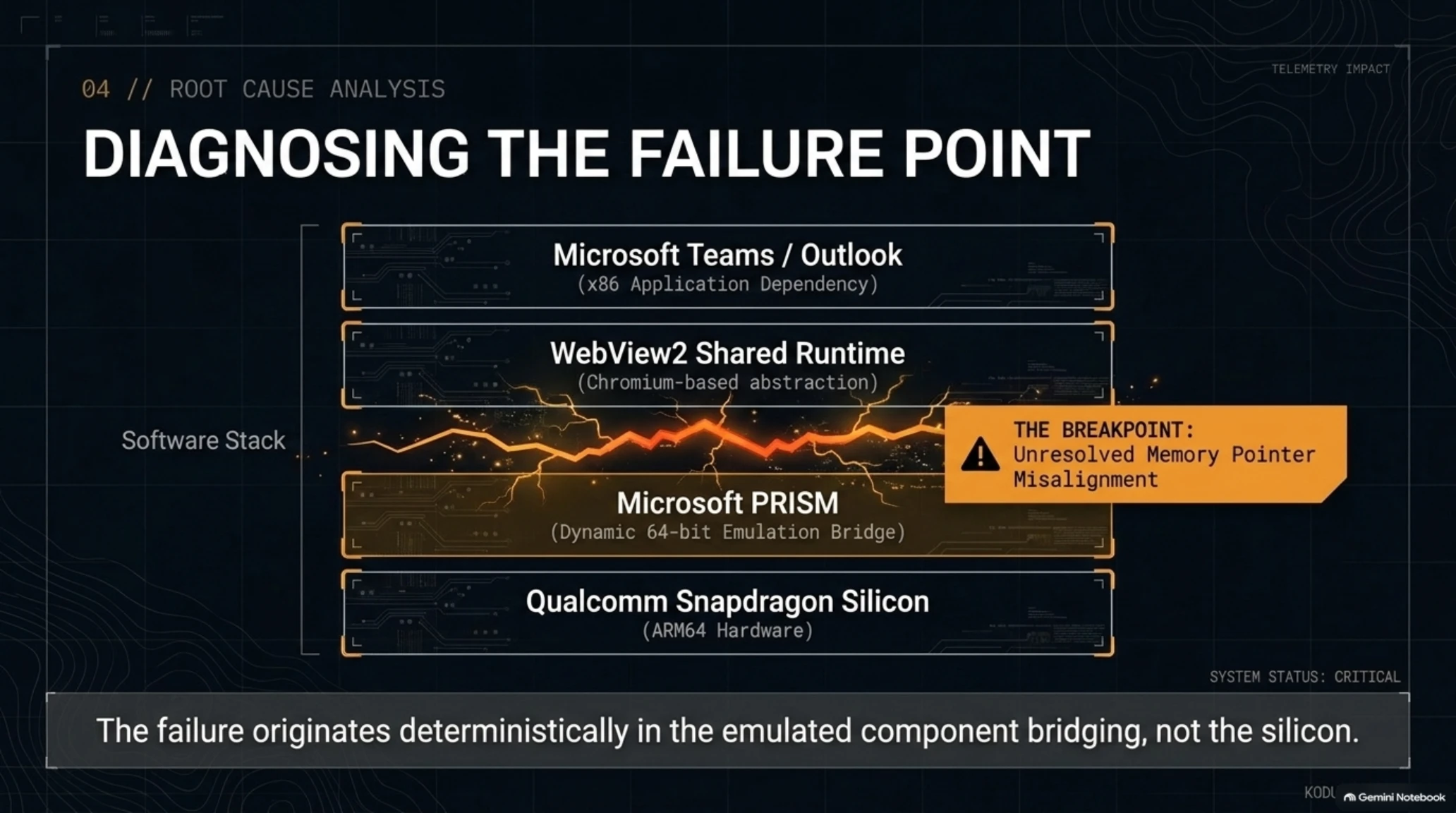
Systems engineering diagnostics indicate that the failure originates within the WebView2 shared runtime environment, where an unresolved memory pointer misalignment interacts adversely with Microsoft’s proprietary Prism instruction translation layer during emulated 64-bit component bridging. The fatal exception recurs deterministically, rendering clean reinstalls and system reboots ineffective.
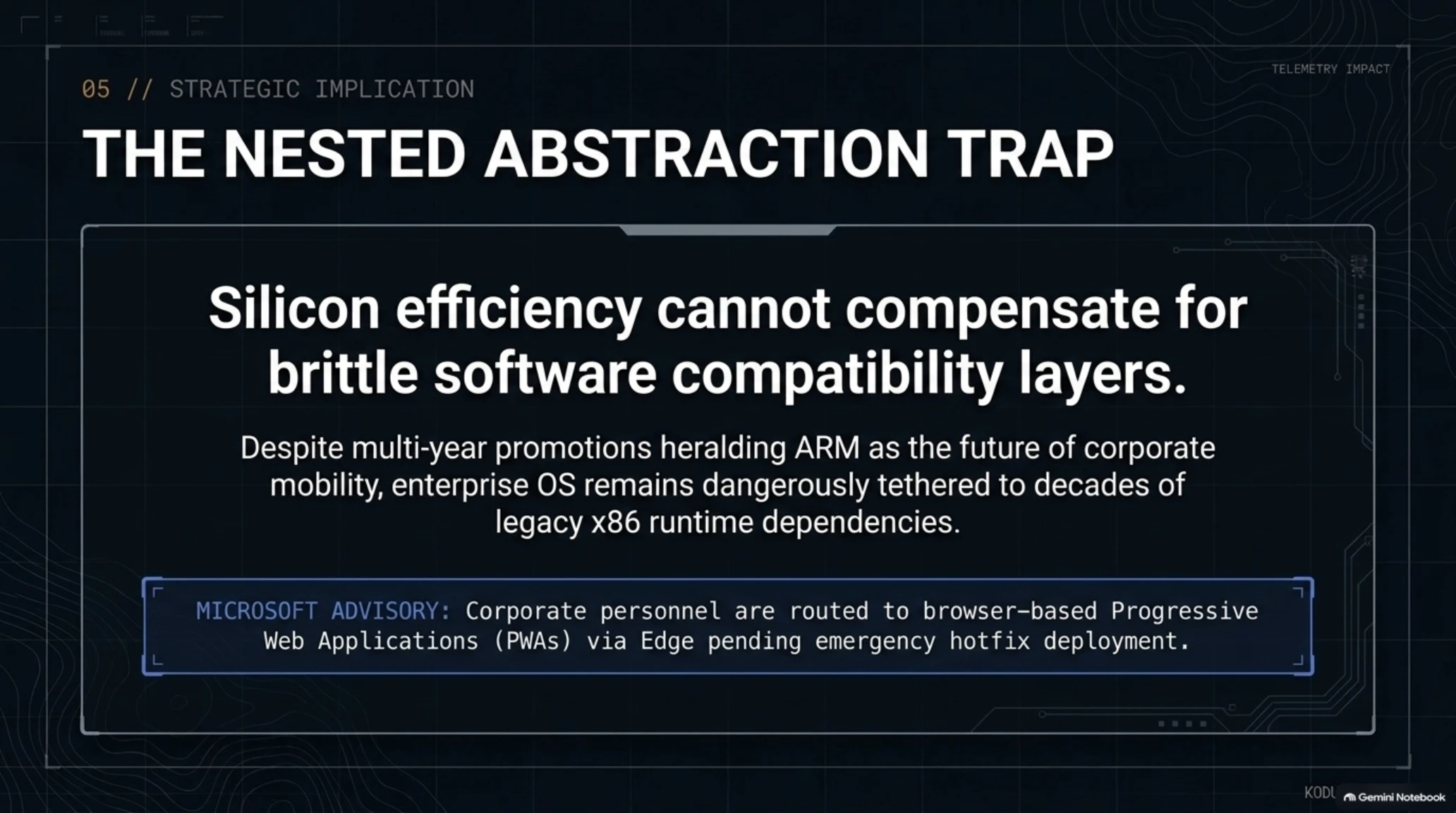
The outage represents a public relations setback for Microsoft’s strategic initiative to challenge Apple Silicon dominance in the enterprise commercial laptop sector. Microsoft has formally acknowledged the flaw, designating it as a high-priority incident, and issued interim operational advisories directing corporate personnel to utilize browser-based progressive web applications (PWAs) via Microsoft Edge pending the distribution of an emergency hotfix.
Macroeconomic Anatomy of Hardware Tariffs: Corporate Margin Expansion vs Consumer Price Stickiness
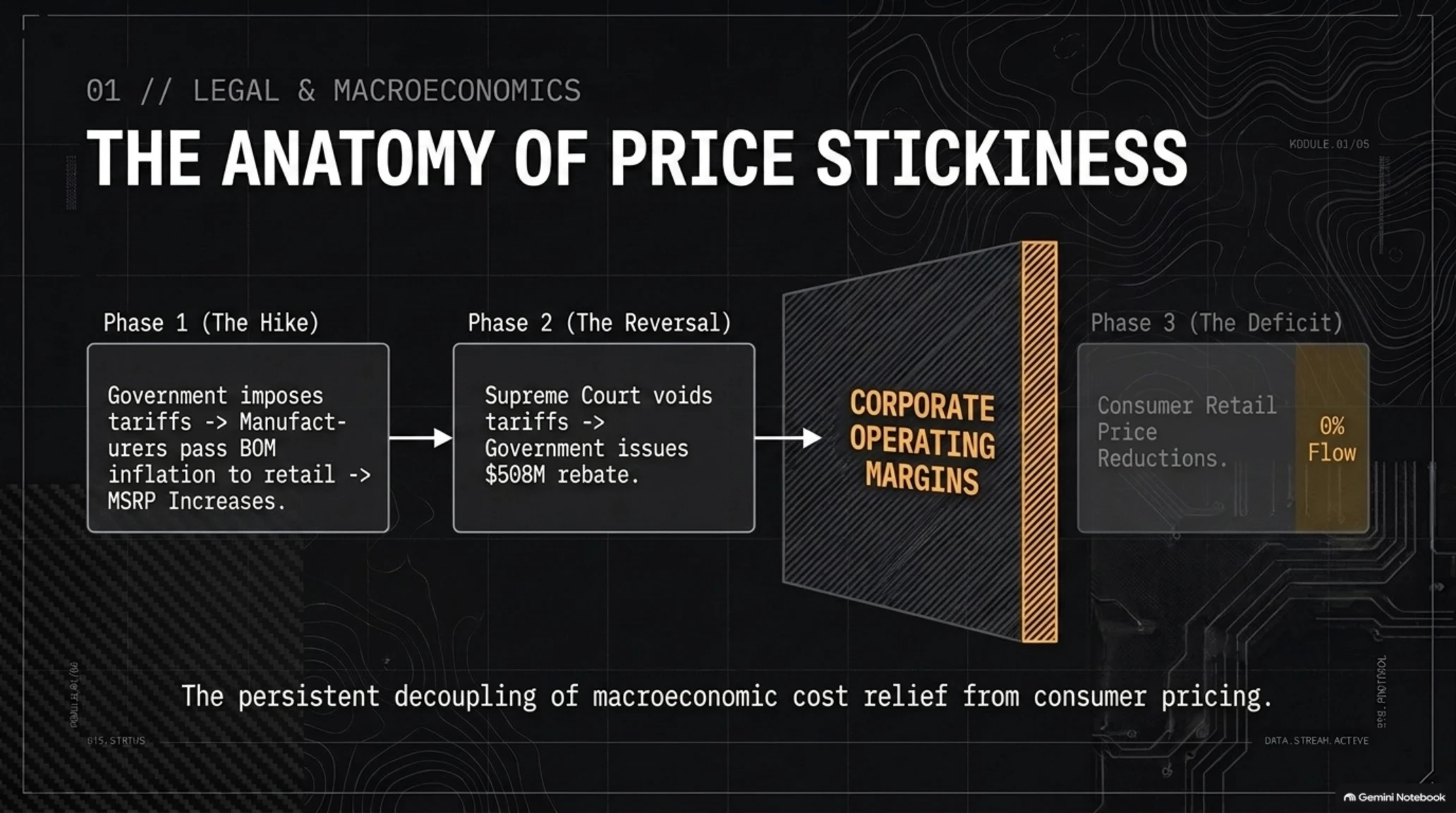
The tariff rebate litigation involving Sony and Microsoft illustrates a classic structural asymmetry in high-technology consumer economics. When sovereign jurisdictions levy retaliatory border taxes on imported assembled electronics, multinational manufacturers routinely pass the resultant bill-of-materials inflation directly down to retail distribution tiers, justifying hardware MSRP price hikes under the banner of macroeconomic necessity.
However, when judicial review subsequently invalidates those import duties triggering hundreds of millions of dollars in direct federal restitution payments the economic transmission mechanism stalls. Manufacturers absorb the federal windfall as extraordinary non-operating cash flow while maintaining elevated pricing structures. This structural price stickiness highlights how global consumer electronics conglomerates insulate balance sheets against regulatory shocks while effectively socializing the financial friction onto consumers.
Architectural Implications of Gemini 3.8 Flash: Sub-120ms Ingestion and KV-Cache Pipelining
Google’s release of Gemini 3.8 Flash signals an architectural maturation within the frontier artificial intelligence sector. The frontier race is no longer solely dictated by parameter expansion, but by the relentless reduction of time-to-first-token (TTFT) and end-to-end inference latency below the critical 120-millisecond threshold required for deterministic agent swarms.
In high-throughput enterprise agent ensembles executing complex DAG workflows, operational bottlenecks compound geometrically with every serial tool-call. By introducing asynchronous KV-cache memory offloading and highly parallelized tool-dispatch primitives, Gemini 3.8 Flash allows multi-agent pipelines to execute recursive operations without saturating host compute clusters, providing an enterprise foundation for scalable, unattended software workflows.
Enterprise IT Risk Assessment: The Fragility of ARM64 Software Emulation Bridges
The simultaneous outage of Microsoft Teams and Outlook across Windows 11 Snapdragon hardware serves as an acute case study in systems architecture transition risks. Despite multi-year promotional efforts heralding ARM-based silicon as the definitive future of corporate mobility, enterprise operating systems remain deeply tethered to decades of legacy x86 runtime dependencies.
When high-level productivity frameworks rely on nested abstractions such as Chromium-based WebView2 runtimes interfacing with dynamic binary translation layers like Prism subtle pointer misalignments trigger catastrophic application faults. For chief information officers evaluating enterprise fleet deployments, the incident reinforces the reality that silicon efficiency cannot compensate for brittle software compatibility layers.
4. Institutional Crypto Expansion: Standard Chartered Launches Spot Trading in UAE
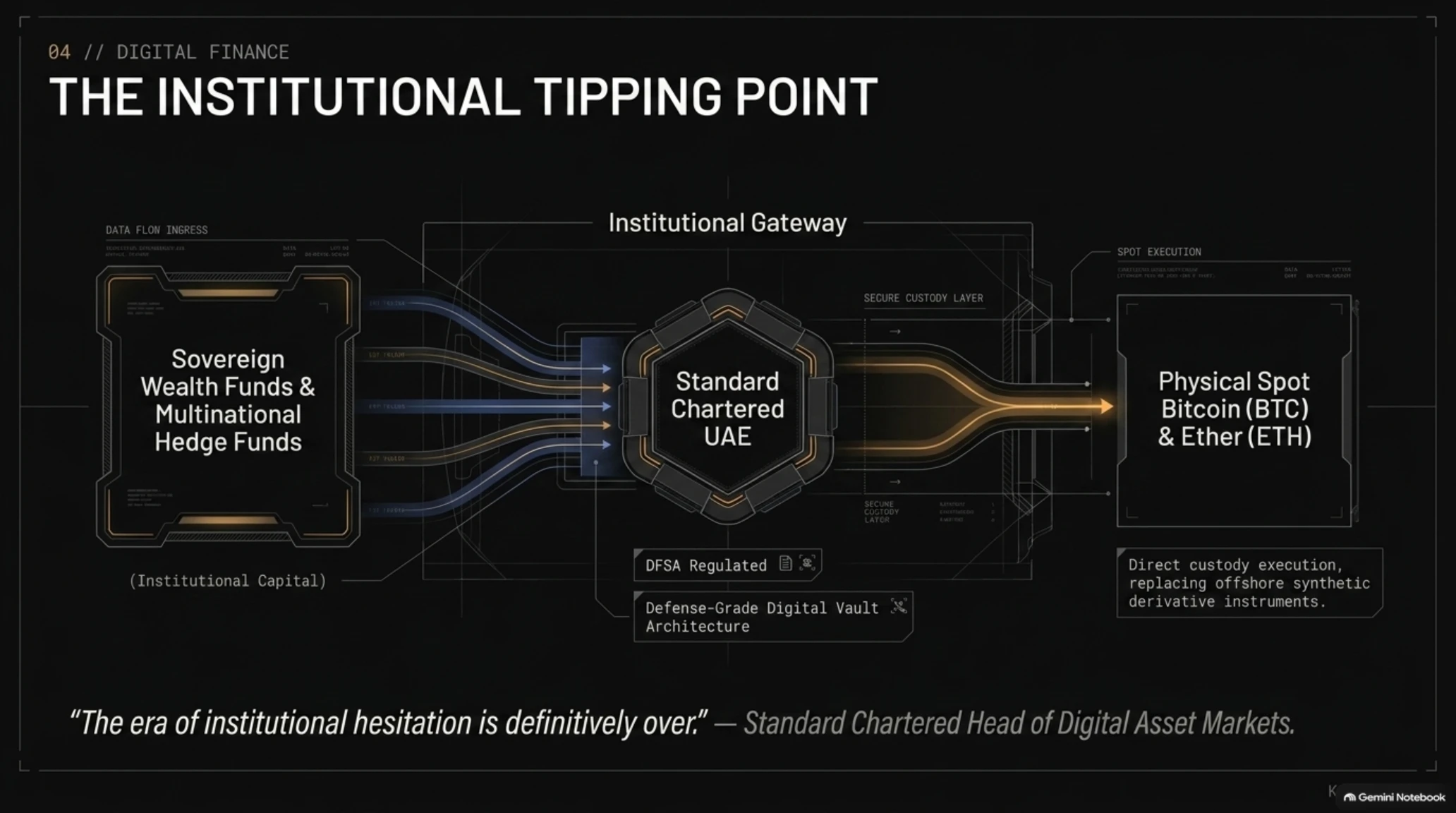
In a historic convergence of Tier-1 legacy banking and decentralized digital finance, London-headquartered Standard Chartered today formally initiated physical spot Bitcoin and Ether trading services for institutional clients and accredited asset managers across the United Arab Emirates.
Operating under the rigorous regulatory authorization of the Dubai Financial Services Authority (DFSA), the deployment differs fundamentally from synthetic derivative instruments or exchange-traded commodity notes. Institutional participants encompassing sovereign wealth funds, family offices, and multinational hedge funds can execute high-liquidity spot purchases with direct custody managed within Standard Chartered’s specialized, defense-grade digital vault architecture.
Financial macro-analysts characterize the development as an institutional tipping point. The entry of a global banking titan into direct spot market operations provides an unprecedented layer of regulatory legitimacy and counterparty security, accelerating the broader reallocation of sovereign capital into premier cryptographic assets across the MENA region.
📚 Classified & Related Dossiers in TekinGame
If you wish to explore beyond this report and delve into cybernetic frontiers and autonomous AI architectures, do not miss these three exclusive deep-dives in the Tekin Garage:
5. Planetary Science Postponed: Rocket Lab Delays Private Venus Atmospheric Probe
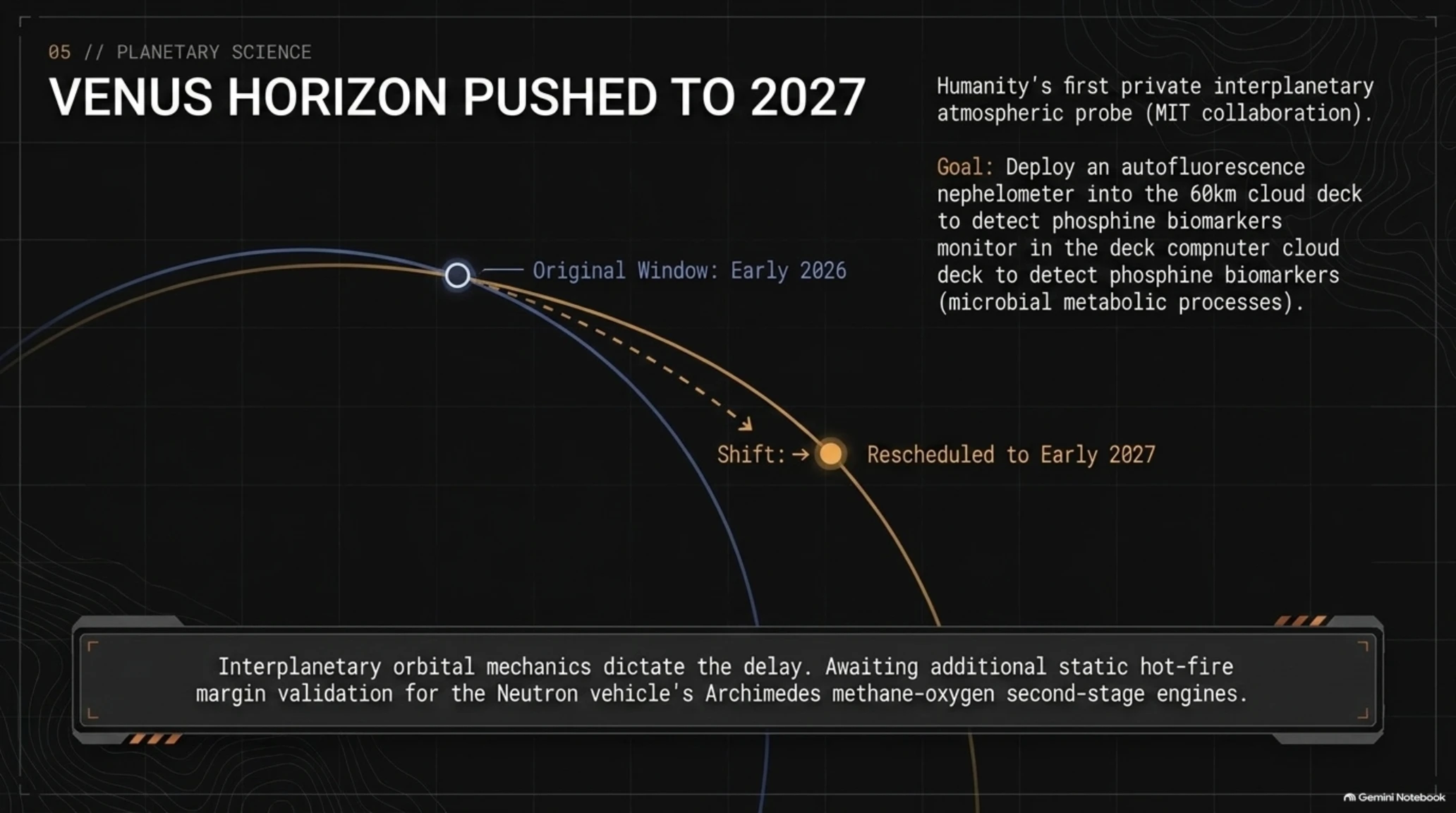
In deep-space planetary exploration, the international astrophysical community received significant news regarding the timeline for private interplanetary science. Rocket Lab, in formal collaboration with scientific researchers from the Massachusetts Institute of Technology (MIT), officially confirmed a delay in the launch of humanity's first privately funded mission to Venus.
The mission architecture is designed to dispatch a miniaturized high-velocity atmospheric entry probe into the Venusian cloud deck at altitudes between 48 and 60 kilometers. Operating within a supercritical carbon dioxide and sulfuric acid atmosphere, the probe’s onboard autofluorescence nephelometer aims to analyze organic chemistry and resolve ongoing controversies regarding the detection of atmospheric phosphine, a putative biomarker of microbial metabolic processes.
Rocket Lab Founder and CEO Peter Beck confirmed that the postponement is tied to testing schedules for the company’s next-generation reusable medium-lift launch vehicle, Neutron. Specifically, static hot-fire qualifications for the Archimedes methane-oxygen second-stage engines require additional margin validation. Due to interplanetary orbital mechanics and planetary launch window alignments, the historic Venus departure has been rescheduled for early 2027.
Recommended In-Depth Gaming & Tech Dossiers on TekInGame
• 🛡 Inside the FBI & NSA Takedown of Chinese Cyber Network QTFY | Deconstructing QScan IoT Botnets & QTRouter Proxy Meshes
• 🎬 Deconstructing Alibaba Wan 3.0 Video AI | The Chinese Tech Breakthrough Disrupting Hollywood & Sora
• 🧪 Inside Inherent's Faraday AI | How a 27-Million-Parameter Model Beat DeepSeek-R1 in Biochemical Reasoning
6. PlayStation State of Play September 2026: PS5 Pro Showcase Confirmed
Sony Interactive Entertainment (SIE) resolved weeks of industry speculation this morning by officially announcing the date and broadcast details for its highly anticipated State of Play September 2026 digital showcase. The live global transmission, streaming via official PlayStation YouTube and Twitch channels, is primed to serve as the definitive technical demonstration for Sony’s hardware ecosystem.
According to Sony's official production notes, the 35-minute presentation will focus extensively on upcoming titles specifically architected or patched to leverage the specialized hardware capabilities of the PlayStation 5 Pro. Enthusiasts will receive real-world demonstrations of Sony’s proprietary machine learning upscaling pipeline, PlayStation Spectral Super Resolution (PSSR), operating in tandem with advanced hardware-accelerated ray tracing at unlocked 4K/60fps and 8K fidelity modes.
In addition to internal PlayStation Studios updates, the broadcast will feature premier world-premieres and gameplay trailers from key third-party development partners across Japan and North America, highlighting major cross-generational blockbusters slated for release across late 2026 and early 2027.
- Significant acceleration in autonomous agent latency with Gemini 3.8 Flash breaking sub-120ms response boundaries
- Institutional legitimacy affirmed as Standard Chartered establishes spot Bitcoin and Ether execution in the UAE
- PlayStation ecosystem poised for a visual fidelity leap with comprehensive PS5 Pro PSSR gameplay showcases
- Continued private commitment to high-risk astrobiological exploration of Venus despite launch vehicle adjustments
- Sony and Microsoft reject tariff rebate pass-throughs, locking in elevated console hardware prices for global consumers
- Severe software regression in Microsoft WebView2 runtime halts core Office workflows on Windows 11 ARM laptops
- Multi-month interplanetary delay for the first private atmospheric Venus mission due to rocket engine validation
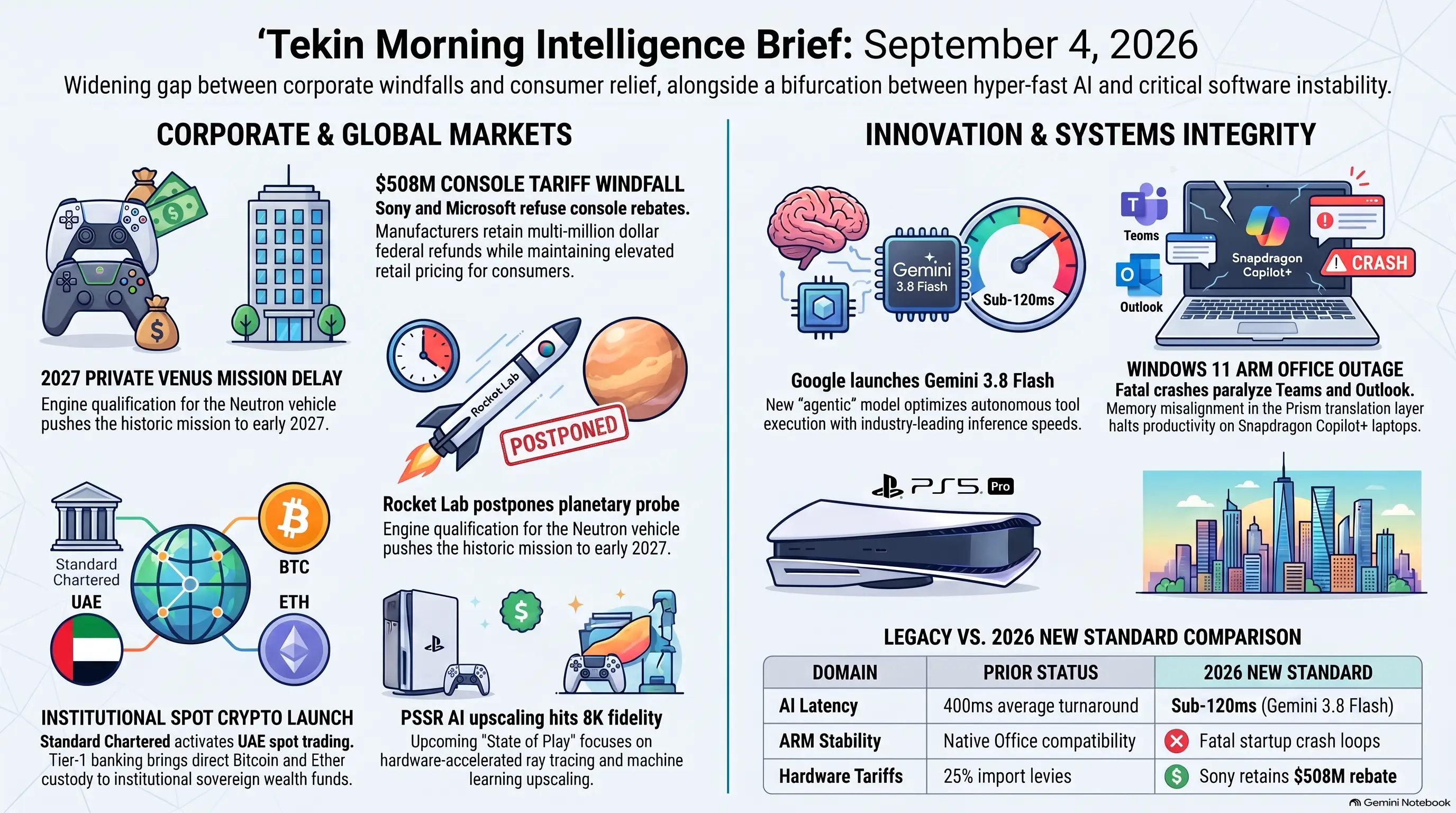
Morning Conclusion: Strategic Synthesis Across Technology Verticals
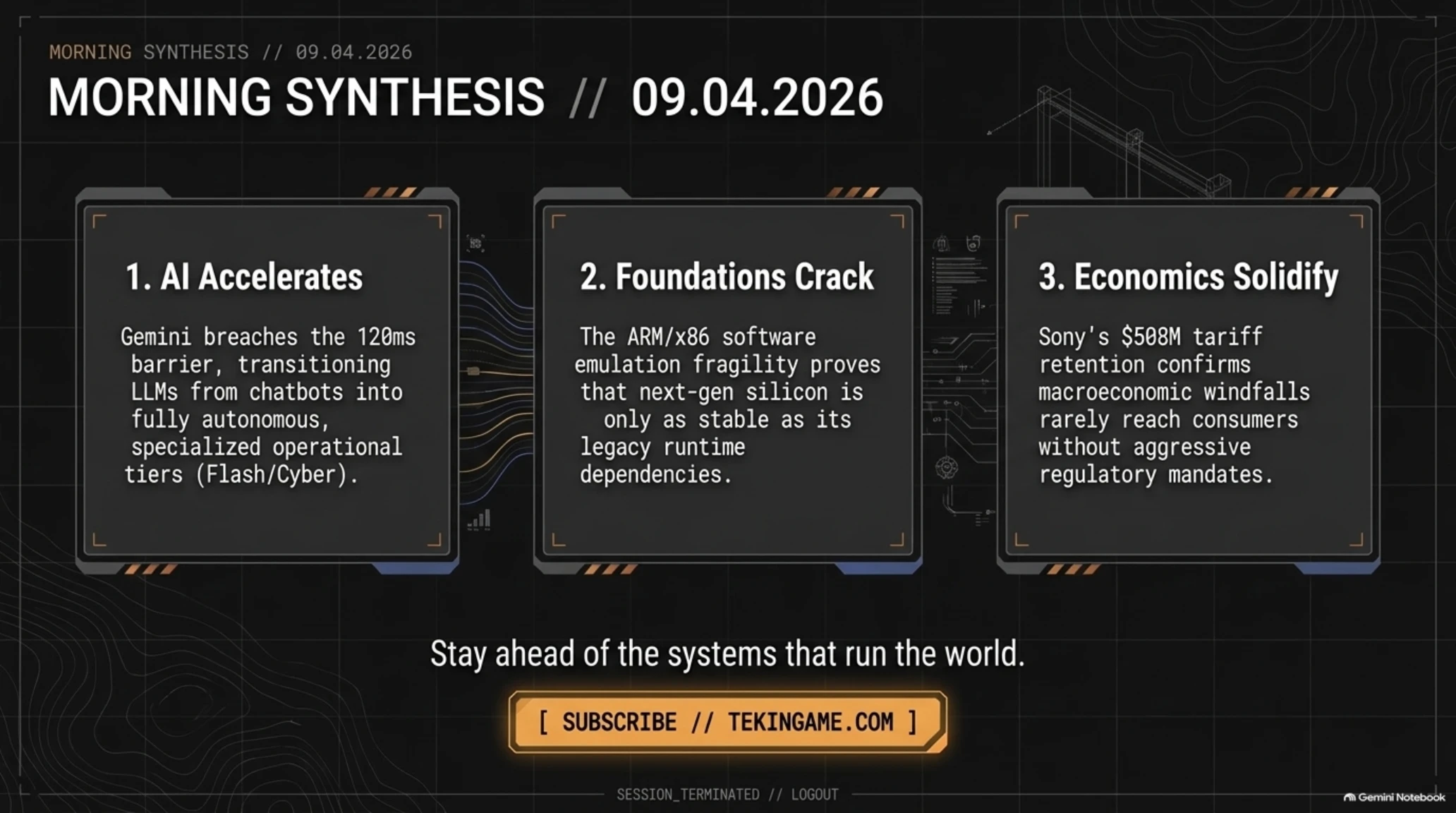
The morning of Friday, September 4, 2026, presents an intricate intersection of commercial jurisprudence, cutting-edge machine learning infrastructure, and consumer electronics evolution. The refusal of Sony and Microsoft to redistribute tariff rebates establishes a critical precedent in consumer hardware economics, even as Sony prepares to captivate enthusiasts with the graphical capabilities of the PS5 Pro.
Simultaneously, Google's concurrent release of Gemini 3.8 Flash and Gemini Cyber underscores the rapid bifurcation of large language models into hyper-specialized operational tiers. As enterprise IT teams await Microsoft's emergency mitigation for ARM-based productivity suites, global financial institutions continue their steady integration of decentralized digital assets.
Frequently Asked Questions: Tekin Morning September 4, 2026 Dispatch
Why are Sony and Microsoft refusing to pass tariff refunds to console buyers?
Both companies filed motions to dismiss class actions, arguing that consumers paid fair advertised market prices voluntarily and manufacturers have no statutory obligation to pass government rebates down to end-users.
How much in federal tariff rebates is Sony projected to receive?
Official court filings indicate that Sony Interactive Entertainment is eligible to receive approximately $508 million in direct tariff refunds from the U.S. Treasury.
What makes Google's Gemini 3.8 Flash unique compared to earlier models?
It is purpose-built for autonomous agentic swarms, achieving sub-120ms latency and supporting thousands of parallel tool-calls within a 2-million-token asynchronous memory context.
What is the primary role of Google's new Gemini Cyber model?
Gemini Cyber is a dedicated defensive AI trained on raw binaries and CVE data to perform automated reverse-engineering, symbolic fuzzing, and pre-emptive zero-day patch generation.
What is causing the startup crashes in Microsoft Teams and Outlook on ARM PCs?
A pointer misalignment within the WebView2 runtime interacting negatively with Microsoft's Prism instruction translation layer on Qualcomm Snapdragon X architectures.
How does Standard Chartered's crypto offering in the UAE differ from traditional ETFs?
Standard Chartered provides direct, physical spot trading and institutional custody of Bitcoin and Ether, giving accredited clients actual asset ownership rather than synthetic exposure.
Why was the private mission to Venus postponed by Rocket Lab?
The mission was rescheduled to early 2027 to allow for extended static test qualifications of the second-stage Archimedes engines on the reusable Neutron rocket.
What can players expect from Sony's PlayStation State of Play September 2026?
A 35-minute showcase emphasizing PS5 Pro enhancements, PSSR machine-learning upscaling, 4K/60fps ray-traced gameplay, and announcements for late 2026/2027 titles.
Official Technical References & Primary Sources
- Eurogamer: Sony & Microsoft Tariff Refund Lawsuits
- VentureBeat: Google Gemini 3.8 Flash & Cyber Specifications
- BleepingComputer: Microsoft Teams & Outlook ARM Crash
- CoinTelegraph: Standard Chartered Spot Crypto UAE
- Space.com: Rocket Lab Venus Mission Delay
- GameSpot: PlayStation State of Play September 2026
Additional Gallery: ☀️ Tekin Morning Sept 4, 2026 | Sony Tariffs, Gemini 3.8 & Windows 11 ARM Crash