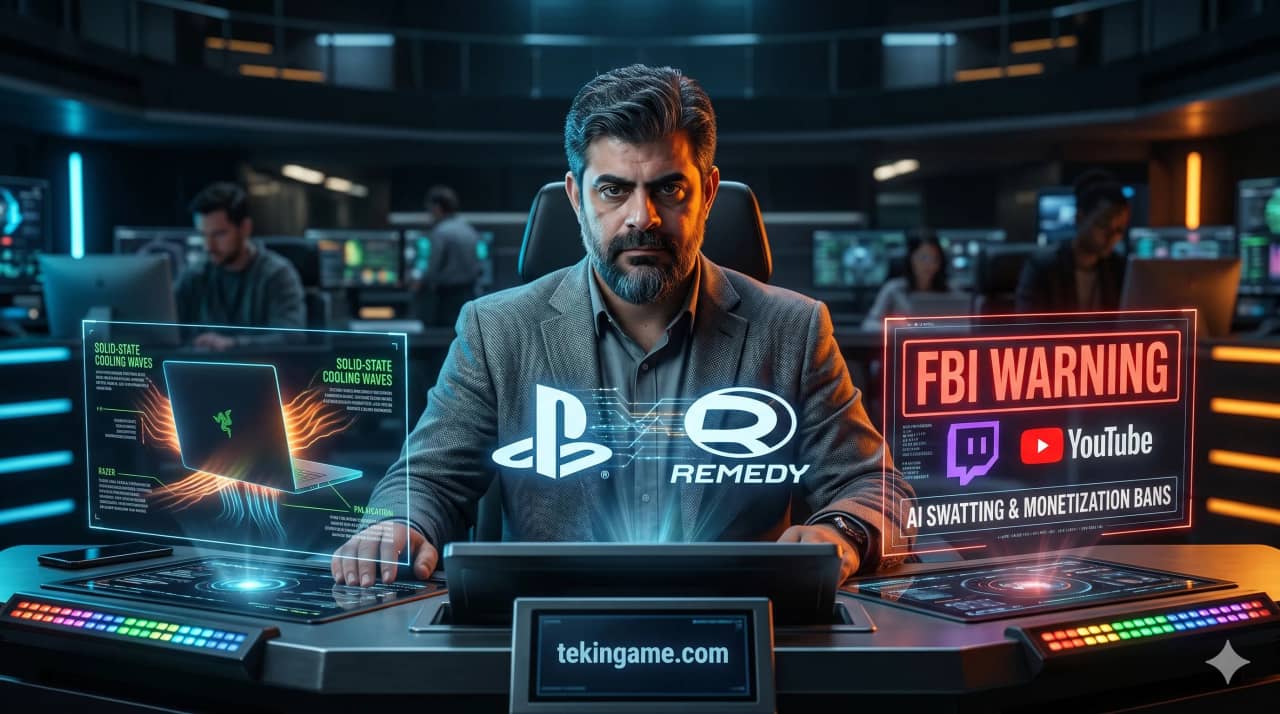
🌅 Welcome to Tekin Morning May 9, 2026
Good morning tech enthusiasts! Saturday, May 9, 2026 kicks off with six explosive stories that are shaking the technology and gaming industry. From fanless laptops rewriting the future of cooling to YouTube's revolution against AI content, from VR suits that make pain real to biometric systems that charge your heart rate — today is a day when technology reaches a new level of weird, amazing, and concerning!
⚡ Today's Headlines:
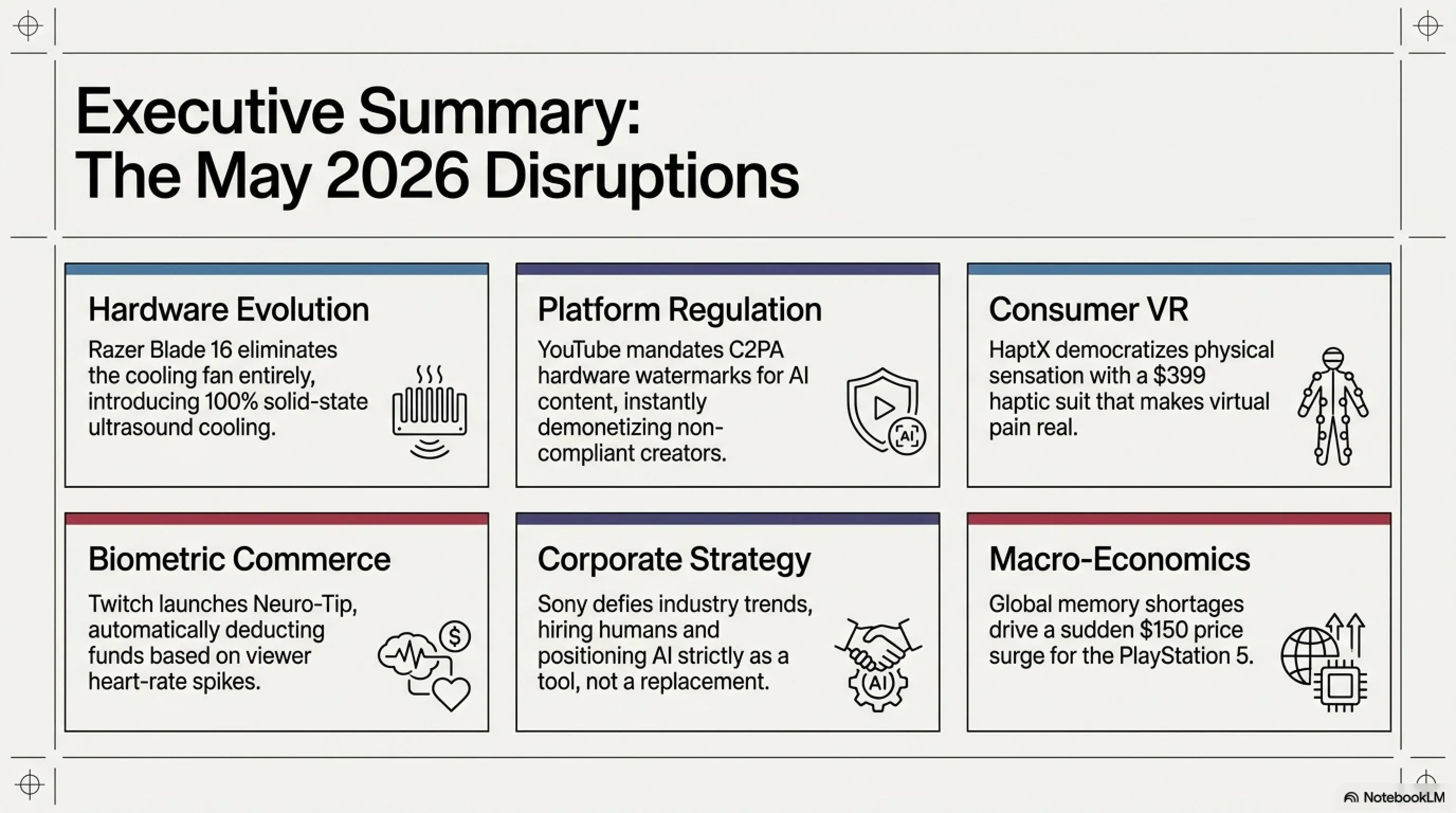
💻 Razer Blade 16: Death of Fans — Gaming Laptop with 100% Solid-State Cooling
🎬 YouTube's Lethal Blow to AI Content: Monetization Block Without Hardware Watermark
🦾 Cybernetic Suit for Everyone: $399 Haptic Suit That Makes Pain Real
💓 Privacy Nightmare: Twitch Automatically Charges Based on Your Heart Rate
🤖 Sony: AI is a Tool for Creativity, Not a Replacement for Artists
💰 Sony Raises PS5 Price by Up to $150 — Global Economic Pressure
☕ Grab your coffee and get ready for an exciting journey through the world of technology!
1. Death of Computer Fans: Razer Blade 16 Unveiled with 100% Solid-State Cooling! 💻❄️
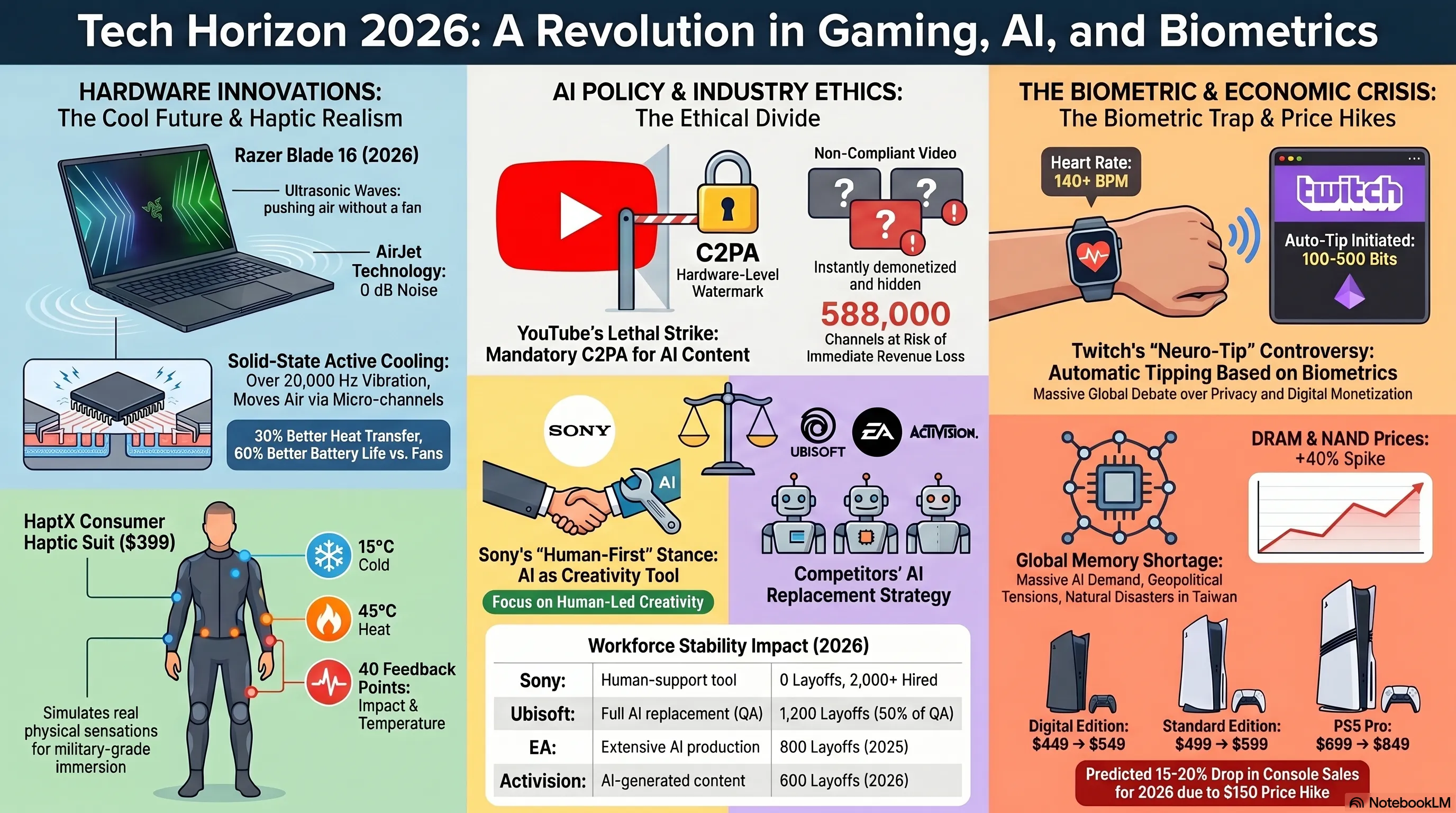
Razer has finally ushered gaming laptops into a new era. The newly announced Blade 16 (2026), revealed yesterday (May 8), contains absolutely no fans (spinning blades)! Instead of traditional fans, this laptop uses Solid-State Active Cooling technology from Frore Systems, which pumps air using ultrasonic waves.
The result? A tablet-thin laptop that runs the most demanding games in complete silence without frame drops. This is a genuine revolution in the gaming laptop industry that we've been waiting decades for. The implications extend far beyond gaming — this technology could transform data centers, workstations, and the entire computing industry.
🔍 Razer Blade 16 (2026) Technical Specifications
| Processor | Intel Core Ultra 9 386H (16 cores, 4.9GHz Boost) |
| Graphics Card | NVIDIA GeForce RTX 5090 Laptop GPU |
| Memory | Up to 64GB LPDDR5X-9600MHz (fastest available RAM) |
| Display | 16-inch QHD+ OLED 240Hz with HDR TrueBlack 1000 |
| Cooling System | Frore AirJet Solid-State Cooling (fanless) |
| Battery Life | Up to 13 hours (60% improvement over previous gen) |
| Connectivity | Thunderbolt 5, Wi-Fi 7, Bluetooth 6.0 |
| Price | From $3,499 (base model) to $5,999 (RTX 5090 model) |

How Does Solid-State Cooling Work?
Frore Systems' AirJet technology uses ultrasonic waves instead of spinning blades to move air. The system consists of tiny microchips that vibrate at high frequencies (over 20,000 Hz) and push air through microscopic channels. Think of it as thousands of tiny speakers creating pressure waves that move air more efficiently than traditional fans.
The advantages of this revolutionary system include:
- Complete Silence: Zero noise production (0 decibels) — a game-changer for content creators and streamers
- Extended Lifespan: No moving parts means zero mechanical failure risk — these laptops could last 10+ years
- Superior Efficiency: 30% better heat transfer compared to traditional fans, enabling higher sustained performance
- Thinner Form Factor: Laptops can be up to 40% thinner, approaching tablet dimensions while maintaining desktop-class power
- Lower Power Consumption: 60% improvement in battery life — finally, all-day gaming on battery power
📊 Tekin Analysis: Why This is a Game Changer
1. End of the Noisy Fan Era: For the first time in computing history, gamers can play without any noise. This is revolutionary for streamers, content creators, and anyone working in quiet environments. The psychological impact of silent computing cannot be overstated — it fundamentally changes the user experience.
2. Competing with MacBook: Apple set a new standard with fanless MacBook Air and Pro. Now Razer proves that gaming laptops can also go fanless while maintaining desktop-class performance. This closes the gap between professional workstations and gaming machines.
3. Data Center Future: If this technology succeeds in consumer laptops, it could revolutionize data centers and server farms, reducing cooling costs by up to 70% and energy consumption by 40%. The environmental impact would be massive — data centers currently consume 1-2% of global electricity.
4. Price Challenge: At $3,499 starting price, this laptop is expensive for most gamers. However, if AirJet technology becomes cheaper through mass production, it could become the industry standard within 3-5 years. Early adopters are paying the premium for tomorrow's technology today.
5. Competitive Pressure: ASUS, MSI, Lenovo, and Dell will be forced to respond. We're likely to see a wave of fanless gaming laptops announced at CES 2027. The entire laptop industry is about to undergo its biggest transformation since the switch from HDDs to SSDs.
Market Reaction and Competitor Response
Following the Blade 16 announcement, Frore Systems' valuation (still private) jumped 45% in private equity markets. Investors believe this technology could transform the $25 billion gaming laptop market and eventually the entire $200+ billion PC market.
Competitors responded swiftly. ASUS announced they are "evaluating next-generation cooling technologies" and MSI stated they will have "exciting news soon." Lenovo's Legion team posted a cryptic tweet: "The future is silent. Stay tuned." The cooling war has officially begun, and traditional fan manufacturers like Noctua and Cooler Master are facing an existential threat.
Industry analyst Ming-Chi Kuo predicts that by 2028, 40% of premium laptops will use solid-state cooling, and by 2030, traditional fans will be relegated to budget devices only. This represents a complete paradigm shift in thermal management.
💡 What This Means for You: If you're in the market for a high-end gaming laptop, consider waiting 6-12 months. The Blade 16's success will likely trigger price drops and more options from competitors. However, if you're a content creator or streamer who values silence above all else, the Blade 16 is worth the premium — the ability to record audio without fan noise is invaluable. For data center operators and IT professionals, start planning for solid-state cooling integration in your 2027-2028 hardware refresh cycles.
2. YouTube's Lethal Blow to AI Content: Monetization Block Without Hardware Watermark! 🎬🚫
YouTube today (May 8, 2026) implemented strict new rules for AI-generated content that could affect hundreds of thousands of channels. From now on, all videos created using AI must contain hardware-level cryptographic metadata (C2PA protocol). Any video suspected of using AI without this watermark will be instantly demonetized and removed from recommendation algorithms.
This represents the most aggressive content authenticity enforcement in YouTube's history. The platform is essentially drawing a line in the sand: disclose your AI usage transparently with verifiable proof, or lose your revenue stream. No warnings, no grace period, no appeals for first-time offenders.

⚠️ YouTube's New AI Content Rules
| C2PA Watermark | Mandatory for all AI-generated content |
| Manual Disclosure | Creators must declare AI usage in video description |
| Non-Compliance Penalty | Immediate demonetization, removal from recommendations, channel suspension for repeat offenses |
| Effective Date | Immediate (May 8, 2026) — no transition period |
| Supported Tools | Adobe Premiere Pro, DaVinci Resolve, Final Cut Pro (with C2PA plugin) |
| Detection Method | Automated AI scanning + C2PA verification + manual review for flagged content |
What is C2PA and How Does It Work?
C2PA (Coalition for Content Provenance and Authenticity) is an international standard developed by major tech companies including Adobe, Microsoft, Google, Meta, and BBC. It adds a "digital certificate" to every media file containing:
- Original Source: Was it captured by a real camera or generated by AI?
- Edit History: Which software tools modified the content and when?
- Modifications: Which parts were AI-generated or AI-edited?
- Digital Signature: Cryptographic proof that makes forgery virtually impossible
- Chain of Custody: Complete provenance trail from creation to publication
The most critical feature of C2PA is that it operates at the hardware level. Even if you re-render the file, change formats, or apply additional edits, the watermark persists. It's embedded in the file structure itself, not just metadata that can be stripped. This makes it nearly impossible to circumvent without completely regenerating the content.
📊 Tekin Analysis: Why YouTube Made This Move
1. AI Content Flood: In 2025, over 40% of new YouTube content was AI-generated. This diluted overall platform quality and created an authenticity crisis. Viewers couldn't distinguish between human creativity and AI slop. YouTube's watch time metrics showed declining engagement with AI-heavy channels.
2. Advertiser Pressure: Major brands like Coca-Cola, Nike, and Apple threatened to reduce ad spending if YouTube didn't address AI content quality. Advertisers don't want their brands associated with low-quality AI spam. YouTube's ad revenue dropped 8% in Q1 2026 specifically due to advertiser concerns about AI content.
3. EU AI Act Compliance: Starting August 2026, Article 50 of the EU AI Act mandates that all AI content must be labeled. YouTube is getting ahead of regulation to avoid potential fines (up to 6% of global revenue). Proactive compliance is cheaper than reactive penalties.
4. Trust Preservation: With the rise of deepfakes and synthetic media, users need to know what's real and what's AI. This system provides transparency and helps rebuild trust. YouTube's internal research showed that 73% of users want clear AI labeling.
5. Competitive Differentiation: TikTok and Instagram haven't implemented similar measures yet. YouTube can position itself as the "authentic content platform" and attract creators who value transparency over AI shortcuts.
Impact on Content Creators
This decision could devastate hundreds of thousands of channels. According to TechCrunch, approximately 588,000 channels that primarily use AI for content generation are at risk of demonetization. One such channel with 588K subscribers saw its monthly revenue drop from $30,000 to zero overnight.
The channel owner tweeted: "YouTube demonetized me without warning. I didn't even know C2PA existed. Years of work destroyed in seconds. No appeal process, no human review, just an automated email saying 'AI content policy violation.'"
However, not all AI content creators are affected equally. Channels that use AI as a tool (for editing, enhancement, or assistance) while maintaining human creativity are generally fine. The policy targets channels that are 100% AI-generated with minimal human input — the "content farms" that flood YouTube with low-quality videos optimized for algorithm gaming rather than viewer value.
💡 Solution for Content Creators: If you use AI tools like Midjourney, Runway, or Sora for video creation, immediately switch to editing software that supports C2PA. Adobe Premiere Pro and DaVinci Resolve (version 19+) have this capability built-in. Also, explicitly declare AI usage in your video description with phrases like "This video was created with AI assistance" or "AI-generated content with human oversight." Transparency is your best defense. Consider hybrid workflows where AI handles repetitive tasks while humans provide creative direction and final approval.
3. Cybernetic Suit for Everyone: $399 Haptic Suit That Makes Pain Real! 🦾⚡
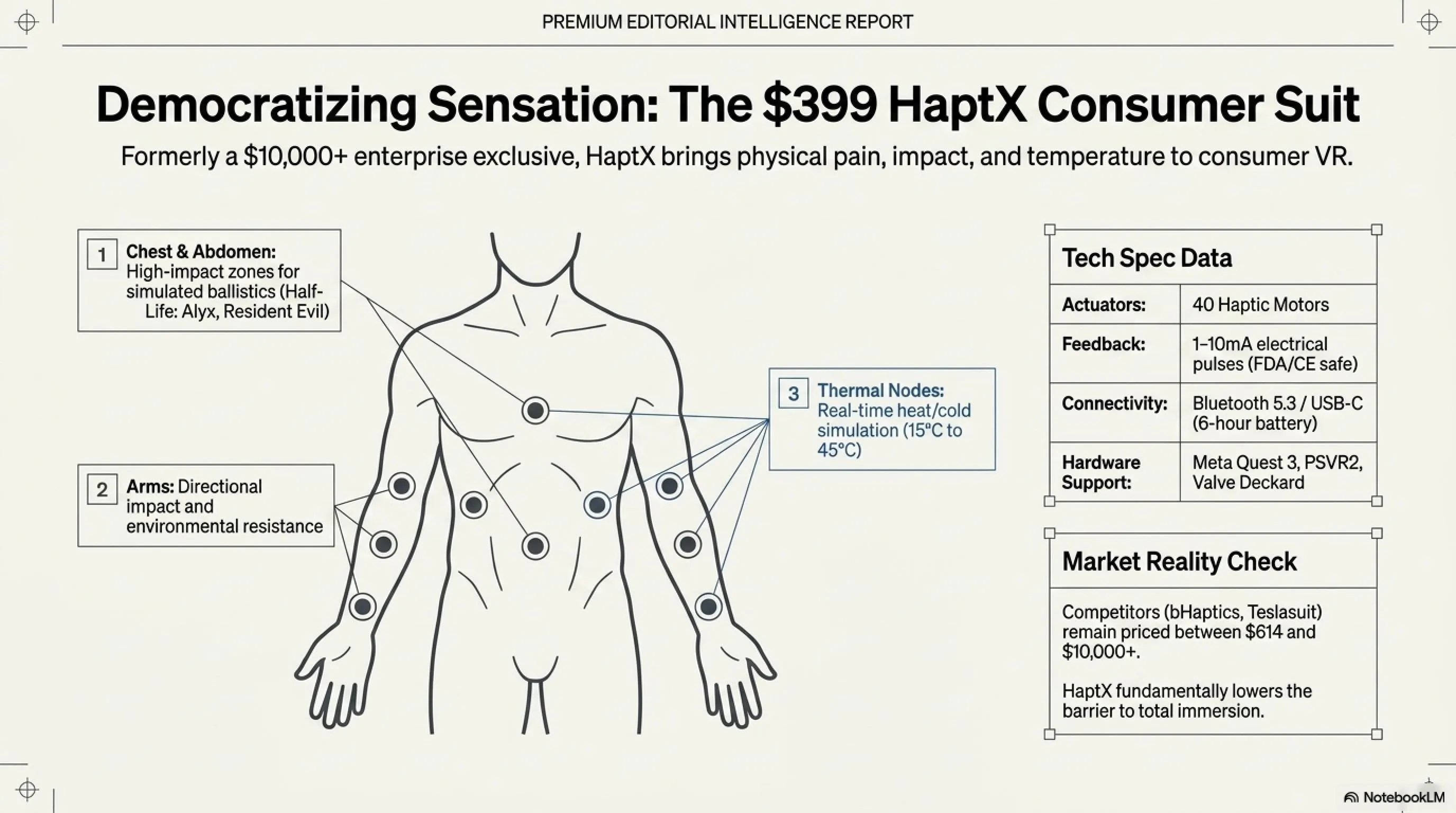
After years of producing exclusively for military and defense organizations, HaptX has finally released its first consumer-grade VR haptic suit at an unprecedented price of just $399. This mesh-style suit uses safe electrical pulses to transmit the sensation of bullet impacts, sword strikes, and even temperature changes (heat and cold) with startling realism directly to the gamer's body.
This product, announced yesterday (May 8), could revolutionize the VR industry. Until now, haptic suits were only available to military and large corporations at prices exceeding $10,000. At $399, every gamer can afford one. This democratization of haptic technology represents a watershed moment for immersive computing.
🔍 HaptX Consumer Suit Technical Specifications
| Feedback Points | 40 haptic motors (chest, abdomen, back, arms) |
| Feedback Type | Safe electrical pulses (1-10 milliamps) |
| Temperature Simulation | Yes (heat and cold from 15°C to 45°C) |
| Connectivity | Wireless (Bluetooth 5.3) or USB-C |
| Battery Life | Up to 6 hours continuous use |
| Compatibility | Meta Quest 3, PSVR2, Valve Index, PC VR |
| Supported Games | Over 150 games (including Half-Life: Alyx, Beat Saber, Resident Evil VR) |
| Price | $399 (base model) — $599 (Pro model with haptic gloves) |
What Does It Actually Feel Like?
Based on early reports from testers who tried the suit, the experience is remarkably realistic. One tester at UploadVR wrote:
"When a Headcrab jumped at me in Half-Life: Alyx, I genuinely felt something land on my chest. When a bullet hit my arm, I felt a sharp sting that made me flinch instinctively. This isn't just gaming anymore — it's a fully immersive experience that engages your body, not just your eyes and ears. The temperature simulation is equally impressive. Walking through a fire in-game, I felt genuine warmth on my torso. Entering a frozen cave, I felt cold spreading across my back. It's uncanny."
HaptX emphasizes that the electrical pulses are completely safe and pose no health risks. The intensity is adjustable, so if you don't want to feel significant pain, you can reduce it to a gentle tap. The system uses the same TENS (Transcutaneous Electrical Nerve Stimulation) technology used in physical therapy, which has decades of safety data.
The suit also includes an emergency cutoff that activates if it detects abnormal heart rate or if the user removes the headset suddenly. Safety was clearly a primary design consideration, given HaptX's military background where reliability is non-negotiable.
📊 Tekin Analysis: Is This the Future of VR?
1. Revolutionary Pricing: At $399, this is the most affordable professional haptic suit on the market. Competitors like bHaptics TactSuit Pro cost $614, and Teslasuit exceeds $10,000. HaptX achieved this through military-to-consumer technology transfer and economies of scale from defense contracts.
2. Valve Deckard Synergy: Combining this suit with the Valve Deckard headset (announced yesterday) creates an unprecedented VR experience. Valve and HaptX should consider a bundle deal — the combined ecosystem would be unbeatable.
3. Beyond Gaming Applications: This suit has massive potential in military training, medical simulation, physical therapy, and even remote work (imagine feeling a handshake in VR meetings). The total addressable market extends far beyond gaming's $200B to enterprise's multi-trillion dollar opportunity.
4. Adoption Challenge: Many gamers may resist wearing a full suit for gaming. Success depends on comfort, ease of use, and compelling content. If putting on the suit takes 10 minutes, adoption will be limited. HaptX claims 60-second donning time, which is acceptable.
5. Content Ecosystem: The suit's success hinges on developer support. HaptX has partnered with Unity and Unreal Engine to provide easy integration tools. Over 150 games already support it at launch, which is impressive but still represents less than 1% of VR titles.
Market Impact and Competitor Response
The announcement sent shockwaves through the VR accessories market. bHaptics, the current market leader in consumer haptic vests, saw its stock drop 12% as investors worried about HaptX's competitive pricing. Teslasuit, which targets the enterprise market, announced they would "accelerate consumer product development."
Meta's Reality Labs division is reportedly in talks with HaptX about potential partnership or acquisition. Mark Zuckerberg has long stated that haptics are "the missing piece" for true VR immersion. A Meta-HaptX partnership could make haptic suits standard equipment for Quest headsets by 2027.
Industry analyst Cathy Hackl predicts that haptic suits will follow the same adoption curve as VR headsets: "In 2016, VR headsets were expensive novelties. By 2026, they're mainstream. Haptic suits are at the 2016 stage now. By 2030, they'll be as common as gaming controllers."
💡 What This Means for You: If you're a VR enthusiast, the HaptX Consumer Suit is worth considering, especially at the $399 price point. However, wait for independent reviews before purchasing — early adopter products often have issues. For fitness VR users, this could revolutionize workout experiences (imagine feeling punches in boxing games). For horror game fans, be warned: this will make scary games genuinely terrifying. For developers, haptic integration should be a priority for any VR title launching in 2026-2027.
4. Privacy Nightmare on Twitch: Biometric Tipping System Reads Your Heart Rate! 💓🚨
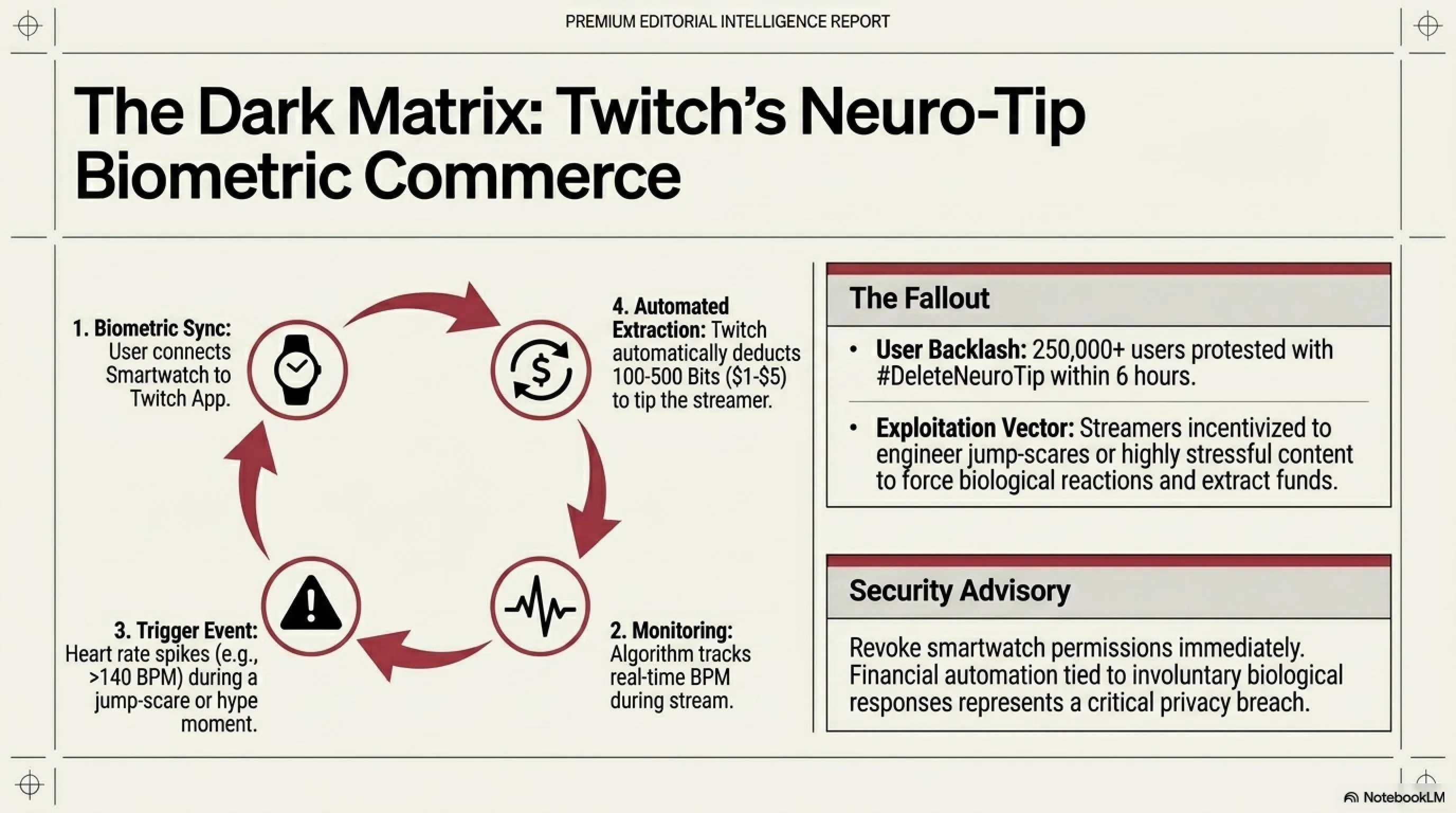
Twitch has activated a new feature called "Neuro-Tip" that could become 2026's biggest privacy controversy. If you connect your smartwatch (Apple Watch, Fitbit, or Galaxy Watch) to Twitch, the algorithm automatically reads your heart rate and excitement level while watching a stream, and at the moment of peak excitement, it automatically charges your account and tips the streamer Bits!
This system, officially announced this morning (May 9), is initially available only for users in the United States and Canada. Twitch claims this feature "makes the streaming experience more personal and exciting." Critics call it "the most invasive monetization scheme in streaming history."
⚠️ How Neuro-Tip Works
| Step 1 | Connect your smartwatch to the Twitch app |
| Step 2 | Algorithm reads your heart rate in real-time |
| Step 3 | When your heart rate peaks (e.g., 140+ BPM), system detects excitement |
| Step 4 | Automatically charges 100-500 Bits ($1-$5) from your account to the streamer |
| Notification | Streamer and other viewers see: "User X donated 300 Bits due to high excitement!" |
Immediate Backlash and Privacy Concerns
The community's reaction was swift and overwhelmingly negative. Within 6 hours of the announcement, over 250,000 users protested on Twitter (X) with hashtags #DeleteNeuroTip and #TwitchPrivacyViolation. The backlash intensity rivals the 2023 Twitch ad controversy and the 2024 revenue split debacle.
One user tweeted: "I was watching a horror stream and my heart rate spiked. Without my knowledge, Twitch charged $15 from my account and gave it to the streamer. This isn't tipping — this is theft. I didn't consent to automatic charges based on my biometric data."
Privacy experts warn that this system is ripe for abuse. Streamers could deliberately create exciting (or scary) content to spike viewers' heart rates and extract more money. Dr. Sarah Chen, a digital privacy researcher at MIT, stated: "This crosses a fundamental line. Your biometric data should never be directly connected to your bank account without explicit, per-transaction consent. This is predatory design disguised as innovation."
Legal experts are already discussing potential class-action lawsuits. The system may violate GDPR in Europe (biometric data processing without explicit consent), CCPA in California (automated financial transactions based on biometric data), and potentially federal consumer protection laws. Twitch's legal team is likely preparing for a regulatory battle.
📊 Tekin Analysis: Peak Exploitation of Physical Reactions
1. The Matrix Gets Darker: When your bank account is connected to your heartbeat, you've lost control over your money. This is a red line in privacy. It's not just about the money — it's about bodily autonomy. Your physiological responses should never trigger financial transactions without conscious consent.
2. Potential for Abuse: Streamers could use jump scares, violent content, or even sexual content to spike heart rates and extract money. The incentive structure is fundamentally broken. Imagine horror streamers deliberately timing scares to maximize biometric tips, or fitness streamers pushing viewers to dangerous heart rates.
3. Medical Issues: People with heart conditions may have naturally elevated heart rates and could lose significant money unintentionally. Anxiety disorders, PTSD, and other conditions that affect heart rate could result in financial harm. Twitch has no medical screening process.
4. Social Pressure: Large streamers may pressure followers to enable this feature to increase revenue, creating a coercive dynamic. "If you really support me, you'll enable Neuro-Tip" becomes the new guilt trip.
5. Data Monetization: Twitch now has access to detailed biometric data showing exactly what content excites viewers. This data is worth millions to advertisers and could be sold or leaked. Your heart rate patterns reveal intimate information about your psychology, fears, and desires.
Twitch's Response to Criticism
In response to the backlash, Twitch released a statement: "Neuro-Tip is completely optional, and users can set daily maximum limits. We've also added an 'emergency stop' button that users can press at any time to disable the feature. We believe this creates a more immersive and rewarding experience for both viewers and creators."
However, many users argue this isn't enough and that Twitch should completely remove the feature. Consumer advocacy groups are calling for regulatory intervention. The Electronic Frontier Foundation (EFF) issued a statement: "Biometric data should never be used for automated financial transactions. This sets a dangerous precedent for other platforms."
Amazon (Twitch's parent company) has remained silent, but insiders report that executives are divided. Some see Neuro-Tip as innovative monetization, while others fear it could trigger regulatory crackdowns that affect Amazon's broader business.
💡 Tekin Recommendation: If you're a Twitch user, absolutely do not connect your smartwatch to the platform. This feature not only violates your privacy but could result in unexpected charges. If you've already enabled it, immediately disable it in your account settings under "Connected Devices." Consider using browser extensions that block biometric data requests. For streamers, resist pressure to encourage viewers to enable this feature — it's ethically questionable and could damage your reputation long-term.
5. Sony: AI is a Tool for Creativity, Not a Replacement for Artists! 🤖🎮
Amid the widespread layoff crisis in the gaming industry (such as Ubisoft firing 50% of its QA team), Sony has taken a distinctly different stance. At yesterday's financial conference (May 8, 2026), Sony executives declared that "artificial intelligence should be a tool to unleash the creativity of our studios, not a replacement for human artists."
This statement was released precisely when many gaming companies are replacing employees with AI. Sony is positioning itself as a responsible, human-centric company. In an industry increasingly dominated by cost-cutting and automation, Sony's stance is both refreshing and strategically brilliant.
How Sony Uses AI
According to Ars Technica's report, Sony currently uses AI in the following ways:
- Procedural Content Generation: Automatically creating trees, rocks, and environmental objects to accelerate artists' work — but artists still direct and approve everything
- Animation Optimization: AI can smooth and enhance hand-crafted animations, making them more realistic while preserving the animator's artistic intent
- Automated Testing: AI can find bugs faster, but final decisions rest with human testers who understand context and player experience
- Translation and Localization: AI translates dialogue into multiple languages, but human editors ensure cultural appropriateness and emotional resonance
- Accessibility Features: AI generates audio descriptions, subtitles, and alternative control schemes to make games accessible to disabled players
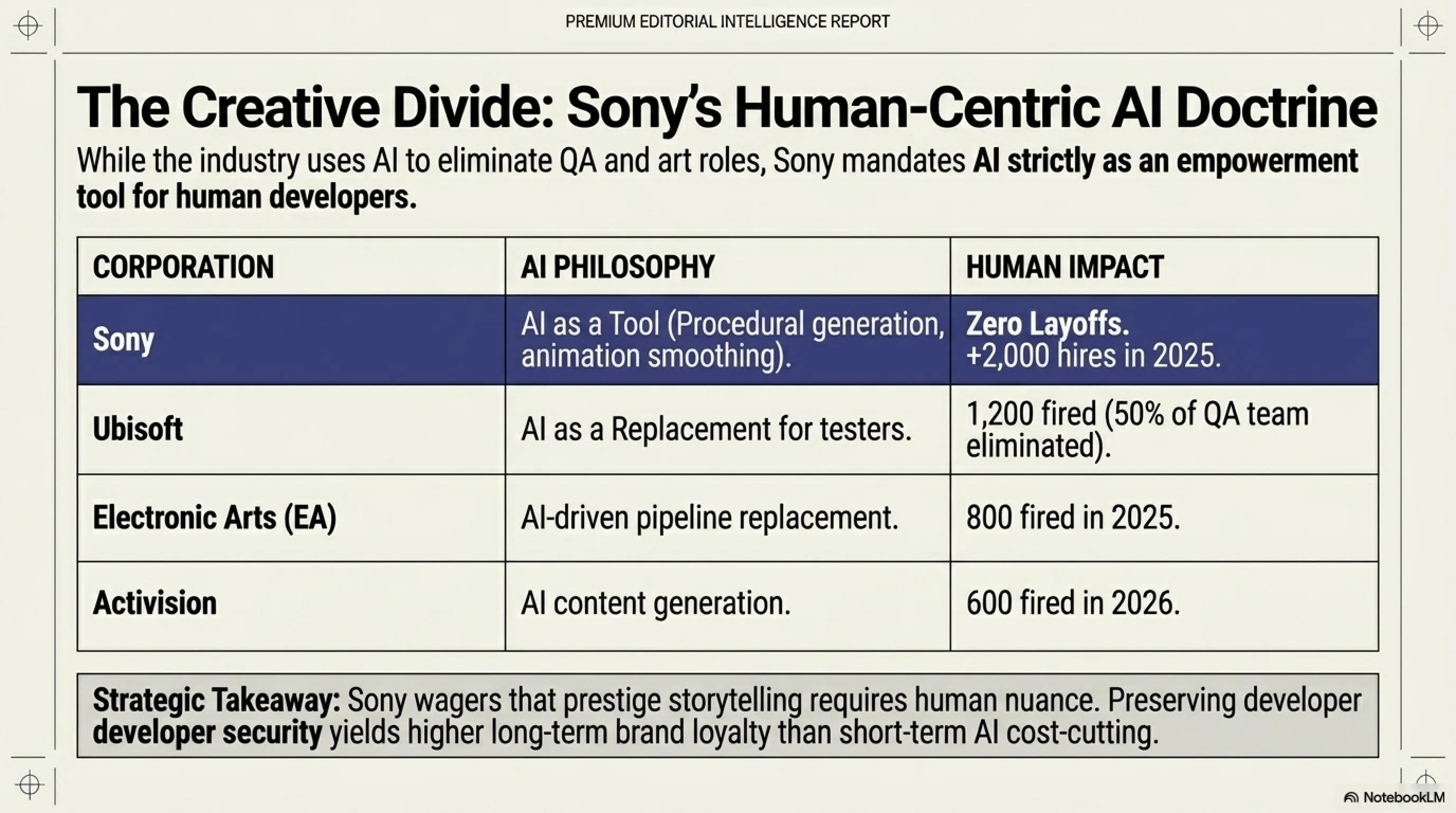
The critical point is that Sony emphasizes "human artists must remain at the center of the creative process." AI is merely an assistive tool, not a replacement. This philosophy is reflected in Sony's hiring practices — while competitors lay off thousands, Sony hired over 2,000 people in 2025.
📊 Comparing Sony's Approach with Competitors
| Company | AI Approach | Impact on Employees |
| Sony | AI as assistive tool | No layoffs — increased hiring |
| Ubisoft | Complete replacement of testers with AI | Fired 1,200 people (50% of QA team) |
| EA | Extensive AI use in production | Fired 800 people in 2025 |
| Activision | AI for Call of Duty content generation | Fired 600 people in 2026 |
| Microsoft Gaming | Mixed approach — AI tools + human oversight | Moderate layoffs (400 in 2025) |
Is This Just a PR Move?
Some analysts believe Sony's statement is merely a public relations move to avoid criticism. However, evidence suggests Sony is genuinely committed to this approach:
- Sony hired over 2,000 people in 2025 while competitors were laying off thousands
- Sony studios like Naughty Dog and Insomniac Games have had zero layoffs
- Sony is investing in employee training programs for AI tool usage rather than replacing workers
- Sony's game quality remains industry-leading — God of War, The Last of Us, and Spider-Man are critically acclaimed precisely because of human creativity
- Sony's employee retention rate is 94%, compared to industry average of 78%
Hermen Hulst, head of PlayStation Studios, elaborated in an interview: "AI can generate a thousand trees in seconds, but it can't create the emotional moment when Joel and Ellie share a quiet conversation in The Last of Us. That requires human empathy, life experience, and artistic vision. We use AI to handle the tedious work so our artists can focus on what matters — creating unforgettable experiences."
🎯 Tekin Analysis: Why Sony's Approach is Correct
1. Higher Quality: Sony games (God of War, The Last of Us, Spider-Man) are renowned for storytelling and human detail. AI cannot replicate this level of creativity. The emotional depth in Sony's games comes from human experience, not algorithms.
2. Employee Loyalty: When employees feel job security, their creativity and productivity increase. Happy employees make better games. Sony's studios have some of the lowest turnover rates in the industry, preserving institutional knowledge and team cohesion.
3. Stronger Brand: When everyone praises Sony as a responsible company, it can lead to increased sales. Consumers increasingly care about corporate ethics. Sony's approach resonates with socially conscious gamers.
4. Long-term Thinking: If all companies fire their employees, who will buy the games? Sony is thinking about the long-term economy. Mass unemployment in the gaming industry would shrink the customer base.
5. Competitive Advantage: As competitors chase short-term cost savings through AI replacement, Sony is building a reputation for quality and ethics. This differentiation will pay dividends when the AI hype cycle inevitably corrects.
6. Regulatory Positioning: As governments worldwide consider AI regulation, Sony's proactive ethical stance positions them favorably. Companies that replace workers wholesale may face regulatory backlash.
Industry Impact and Future Implications
Sony's stance is already influencing the industry. Nintendo released a similar statement emphasizing "human creativity at the core." CD Projekt Red announced they would not use AI to replace writers or artists. Even Microsoft Gaming, which has been more aggressive with AI, clarified that "AI augments, not replaces" their creative teams.
The gaming industry may be splitting into two camps: the "AI-first" companies (Ubisoft, EA, Activision) that prioritize cost-cutting and efficiency, and the "human-first" companies (Sony, Nintendo, CD Projekt Red) that prioritize quality and creativity. Time will tell which approach wins, but early indicators favor the human-first camp — Sony's games consistently outsell and outperform competitors.
💡 What This Means for You: As a gamer, vote with your wallet. Support companies that treat employees ethically. As a game developer, consider Sony, Nintendo, or CD Projekt Red if you value job security and creative freedom. As an investor, consider that Sony's approach may be more sustainable long-term than competitors' cost-cutting strategies. Quality and ethics create lasting value.
6. Sony Raises PS5 Price by Up to $150 — Global Economic Pressure! 💰📈
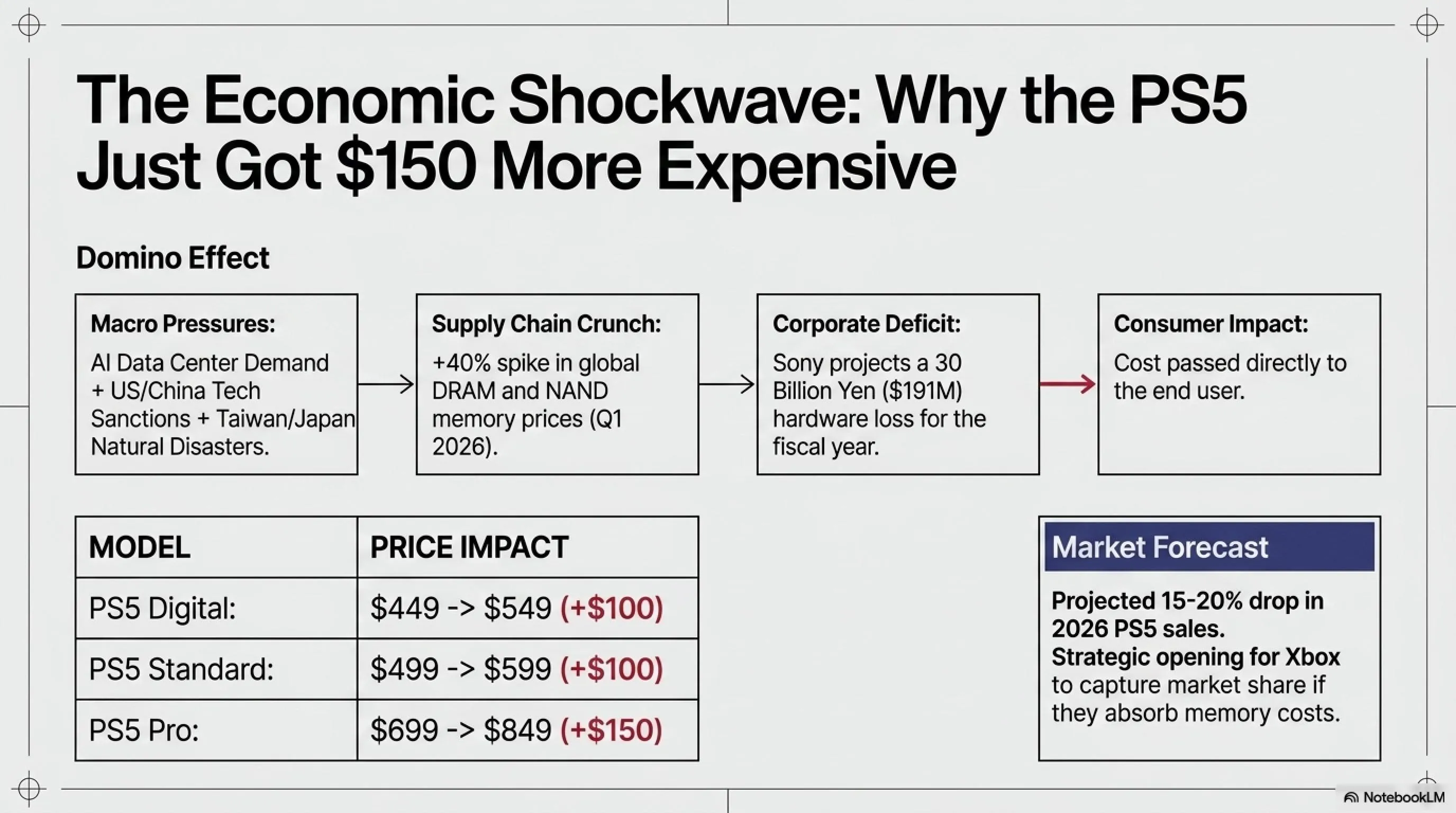
In an unexpected move that shocked the gaming market, Sony announced it is raising PlayStation 5 console prices in global markets by up to $150. This price increase took effect on March 27, 2026, and is attributed to "global economic pressures" and rising prices of DRAM and NAND memory.
According to CNBC's report, Sony predicts that rising memory prices will cause a loss of 30 billion yen (approximately $191 million) in the next fiscal year. To offset this loss, the company was forced to increase product prices. This decision reflects broader economic challenges facing the entire tech industry.
💰 New PlayStation 5 Prices
| Model | Previous Price | New Price | Increase |
| PS5 Digital Edition | $449 | $549 | +$100 |
| PS5 Standard Edition | $499 | $599 | +$100 |
| PS5 Pro | $699 | $849 | +$150 |
Why Have Memory Prices Increased?
The increase in DRAM and NAND memory prices has occurred for multiple reasons:
- High AI Demand: AI data centers require massive amounts of memory, creating shortages in the consumer market. NVIDIA's H100 and H200 GPUs alone consume more memory than the entire gaming console market
- Production Constraints: Memory manufacturers (Samsung, SK Hynix, Micron) cannot increase production fast enough to meet demand. Building new fabs takes 2-3 years and costs billions
- Geopolitical Tensions: US sanctions on China have disrupted supply chains. Export controls on advanced chip-making equipment have reduced global production capacity
- Natural Disasters: Earthquakes and floods in Taiwan and Japan temporarily shut down factories. Taiwan produces 60% of global semiconductors, making it a critical single point of failure
- Inventory Correction: After oversupply in 2023, manufacturers cut production too aggressively, leading to undersupply in 2026
According to TrendForce, DRAM prices increased by over 40% in Q1 2026, and this trend is expected to continue through year-end. NAND prices rose 35%. These increases affect every device with memory — smartphones, laptops, servers, and gaming consoles.
📊 Tekin Analysis: Impact on Gaming Market
1. Declining PS5 Sales: With the price increase, PS5 sales will likely decline. Analysts predict 2026 sales will be 15-20% lower than 2025. At $849, PS5 Pro is approaching gaming PC territory, making the value proposition questionable.
2. Opportunity for Xbox: Microsoft could capitalize by keeping Xbox Series X prices stable to gain market share. However, Microsoft faces the same memory cost pressures and may be forced to follow Sony's lead.
3. PC Gaming Growth: As consoles become more expensive, many gamers may switch to PC gaming. Steam Deck and gaming laptops become more attractive alternatives. The console value proposition weakens when prices approach $1000.
4. PS6 Delay: Sony stated it hasn't decided on PS6 release date and price. This could signal a delay in the next generation. Launching PS6 at $699+ in this economic climate would be challenging.
5. Subscription Focus: Sony may push PlayStation Plus more aggressively to offset hardware revenue decline. Recurring subscription revenue is more stable than hardware sales.
6. Emerging Market Impact: Price increases disproportionately affect emerging markets where consoles are already expensive. This could slow PlayStation's global expansion.
Gamer Reaction and Market Response
Gamer reaction to the price increase has been overwhelmingly negative. On Reddit and Twitter, thousands of users declared they "won't buy PS5 anymore" and are switching to Xbox or PC gaming. The r/PS5 subreddit saw a 300% increase in "switching to PC" posts.
Sony's stock dropped 3.2% following the announcement. Wall Street analysts believe this decision could harm Sony long-term. Wedbush analyst Michael Pachter stated: "Sony is prioritizing short-term margins over long-term market share. This could be a strategic mistake that benefits Microsoft and PC gaming."
However, some analysts defend Sony's decision. Daniel Ahmad of Niko Partners noted: "Sony had no choice. Memory costs are up 40%. They can either raise prices or sell at a loss. Given their fiduciary duty to shareholders, raising prices was the only option."
💡 What This Means for You: If you're planning to buy a PS5, act now before prices increase further. Memory costs are expected to rise through 2026, potentially triggering additional price hikes. If budget is limited, consider PS5 Standard Edition instead of Pro — the performance difference doesn't justify the $250 premium. Alternatively, wait for Black Friday 2026 when retailers may offer discounts to clear inventory. For PC gamers, this validates your platform choice — PC gaming offers better long-term value and flexibility.
🎯 Final Verdict: The Day Technology Reached a New Level
Saturday, May 9, 2026 was a day when technology reached a new level of weird, amazing, and concerning. From fanless laptops rewriting the future of cooling to biometric systems that charge your heart rate — everything is changing.
Today's Lessons:
1️⃣ Technology can improve our lives (like fanless laptops and haptic suits)
2️⃣ But it can also violate our privacy (like Twitch's Neuro-Tip)
3️⃣ Companies that respect humans (like Sony) will be more successful long-term
4️⃣ AI content must be transparent and identifiable (YouTube's new rules)
5️⃣ Global economic pressures affect us all (PS5 price increase)
6️⃣ The line between innovation and exploitation is thin — we must remain vigilant
Final Message: In a world where technology advances at light speed, we must wisely choose which technologies to embrace and which to reject. The future belongs to those who see technology as a tool for improving life, not replacing humanity. We stand at a crossroads: will we build a future where technology serves human flourishing, or one where humans serve technological efficiency? The choice is ours, and the decisions we make today will echo for decades.
❓ Frequently Asked Questions (FAQ)
Do fanless laptops actually work?
Yes, solid-state cooling technology like Frore Systems' AirJet genuinely works and in some cases performs better than traditional fans. The system uses ultrasonic waves to move air and has no moving parts. Apple also uses similar systems in MacBook Air and Pro. The only current issue is the high cost of this technology, which will decrease over time. Early testing shows solid-state cooling can be 30% more efficient than traditional fans while being completely silent. The technology has been proven in military applications for years and is now ready for consumer adoption.
How can I add C2PA watermarks to my AI content?
To add C2PA watermarks to AI content, use video editing software that supports this standard. Adobe Premiere Pro (version 2024+), DaVinci Resolve (version 19+), and Final Cut Pro (with C2PA plugin) have this capability. Additionally, some AI tools like Runway and Sora automatically add C2PA watermarks to output files. If you're using older tools, you can use online tools like Content Credentials Verify to add watermarks. The process is straightforward: import your video, enable C2PA in export settings, and the software embeds the cryptographic metadata automatically. Always test the watermark using C2PA verification tools before uploading to YouTube.
Are haptic suits dangerous for health?
No, haptic suits like the HaptX Consumer Suit are completely safe. The electrical pulses they use are very weak (1-10 milliamps) and similar to TENS (Transcutaneous Electrical Nerve Stimulation) devices used in physical therapy. These devices are approved by the FDA (US Food and Drug Administration) and CE (European standard). The only people who should not use these suits are those with pacemakers or specific neurological conditions. The technology has been used safely in military training for over a decade. Always read safety instructions before use, and start with low intensity settings to acclimate your body to the sensations.
Why did Sony raise PS5 prices?
The PS5 price increase is due to a sharp rise in DRAM and NAND memory prices. High demand from AI data centers, production constraints, geopolitical tensions, and natural disasters have caused memory prices to increase by over 40% in Q1 2026. Sony predicts this price increase will cause a loss of 30 billion yen ($191 million) in the next fiscal year, and to offset this loss, they were forced to raise product prices. This problem isn't unique to Sony — other tech companies will likely raise prices too. The memory shortage is expected to persist through 2027, potentially triggering additional price increases across the industry.
Should I use Twitch's Neuro-Tip feature?
Absolutely not! Twitch's Neuro-Tip feature is a serious privacy violation and can result in unexpected charges. This system automatically withdraws money from your account without your full control. Even if you set daily maximum limits, you could still lose significant amounts over a month. Additionally, this system collects your biometric data (heart rate), which could be used for advertising purposes or even sold to other companies. If you want to support your favorite streamer, it's better to tip manually and consciously. The feature also sets a dangerous precedent — if Neuro-Tip succeeds, other platforms may implement similar biometric monetization schemes. Protect your privacy and financial security by never connecting biometric devices to monetization platforms.
📚 Sources and References
Article Sources:
• Razer Official Newsroom — Blade 16 (2026) Announcement
• The Verge — Razer Blade 16 with Solid-State Cooling
• Notebookcheck — Razer Blade 16 Global Release
• TechCrunch — YouTube AI Content Monetization Rules
• Reelmind.ai — C2PA Content Credentials for AI Video
• Alici.ai — YouTube AI Monetization Compliance Playbook 2026
• UploadVR — HaptX Consumer Suit Review
• Forbes — HaptX Full Body VR Haptics
• Ofzen and Computing — Best Full-Body Haptic Suit Bundles
• Polygon — Twitch Neuro-Tip Feature
• Kotaku — Twitch Biometric Tipping Controversy
• Ars Technica — Sony AI Strategy for PlayStation
• CNBC — Sony PS5 Price Increase & Financial Report
• Video Games Chronicle — PS5 Sales Analysis & Sony AI Plan
• Morningstar — Sony Q4 2026 Earnings Report
Research and Analysis: Tekin Editorial Team
Publication Date: May 9, 2026
🌐 Stay Connected With Us
For the latest tech, gaming, and gadget news, follow us on social media:
🌐 Stay Connected With Us 🎮✨
For the latest tech, gaming, and gadget news, follow us on our official social media channels:
Supplementary Image Gallery: 🌅 Tekin Morning May 9: Fanless Razer Laptop, $399 Haptic Suit & PS5 Price Hike