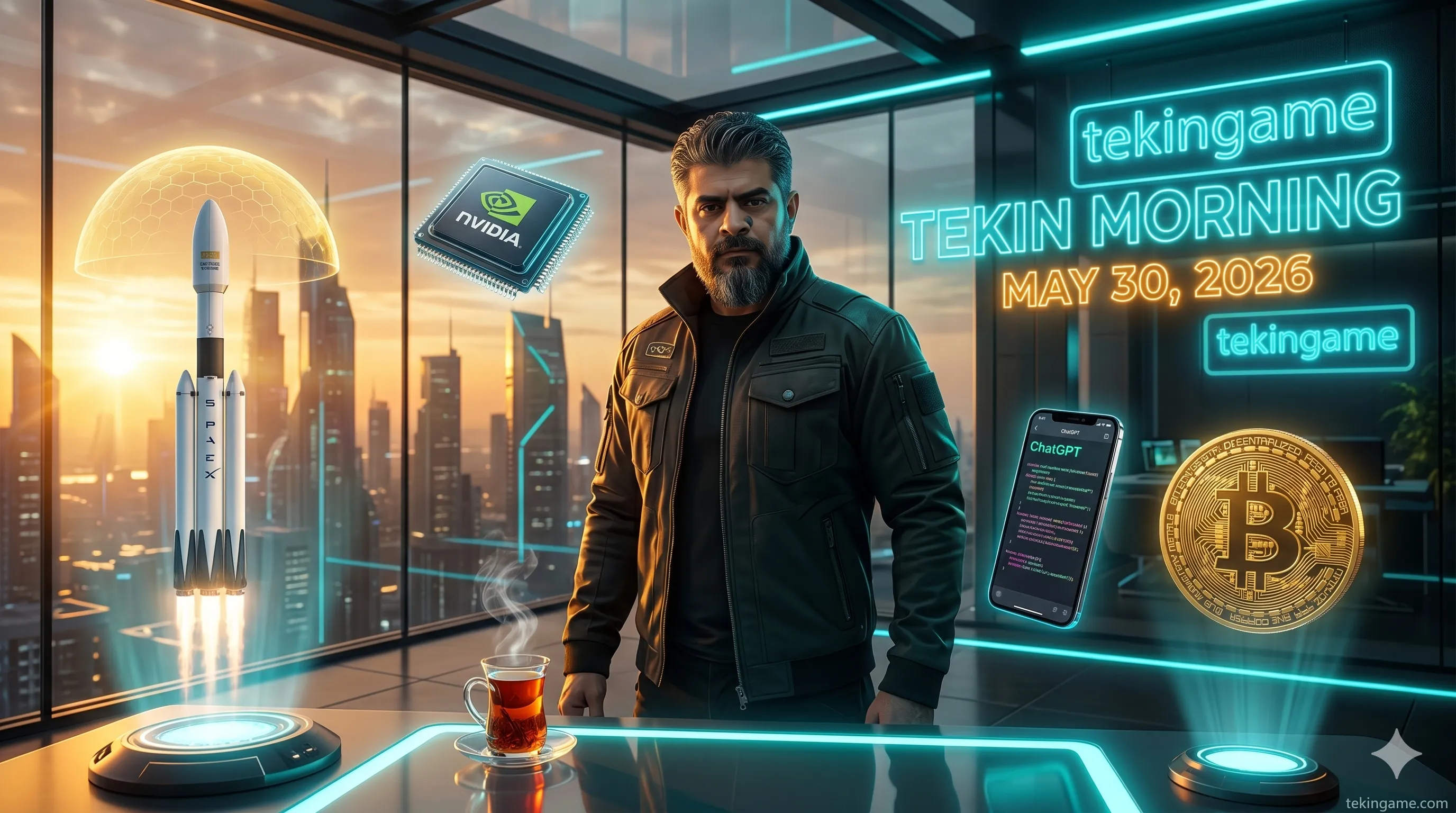
🌅 Welcome to Tekin Morning May 30, 2026
Good morning, tech enthusiasts! We're kicking off Saturday with six strategic stories from the world of technology. Today we witness SpaceX's stunning victory over Blue Origin, multi-billion dollar space defense contracts, the Arm processor revolution, AI-powered coding advances, gaming industry strategy, and quantum security warnings that could reshape cryptocurrency.
⚡ Today's Headlines:
🚀 SpaceX launches 29 satellites - 12 hours after Blue Origin explosion
💰 $4.16B Golden Dome contract with Pentagon
💻 Nvidia N1X: End of Qualcomm's Windows on Arm monopoly
🤖 ChatGPT mobile + Codex: Remote coding on Windows
🎮 Fable delayed to 2027: Escaping GTA VI's shadow
🔐 Bitcoin's quantum threat: Bigger than wallet keys
☕ Grab your coffee and get ready for a comprehensive journey through the tech world!
1. SpaceX Triumph: 29 Starlink Satellites Launched 12 Hours After Blue Origin Explosion 🚀
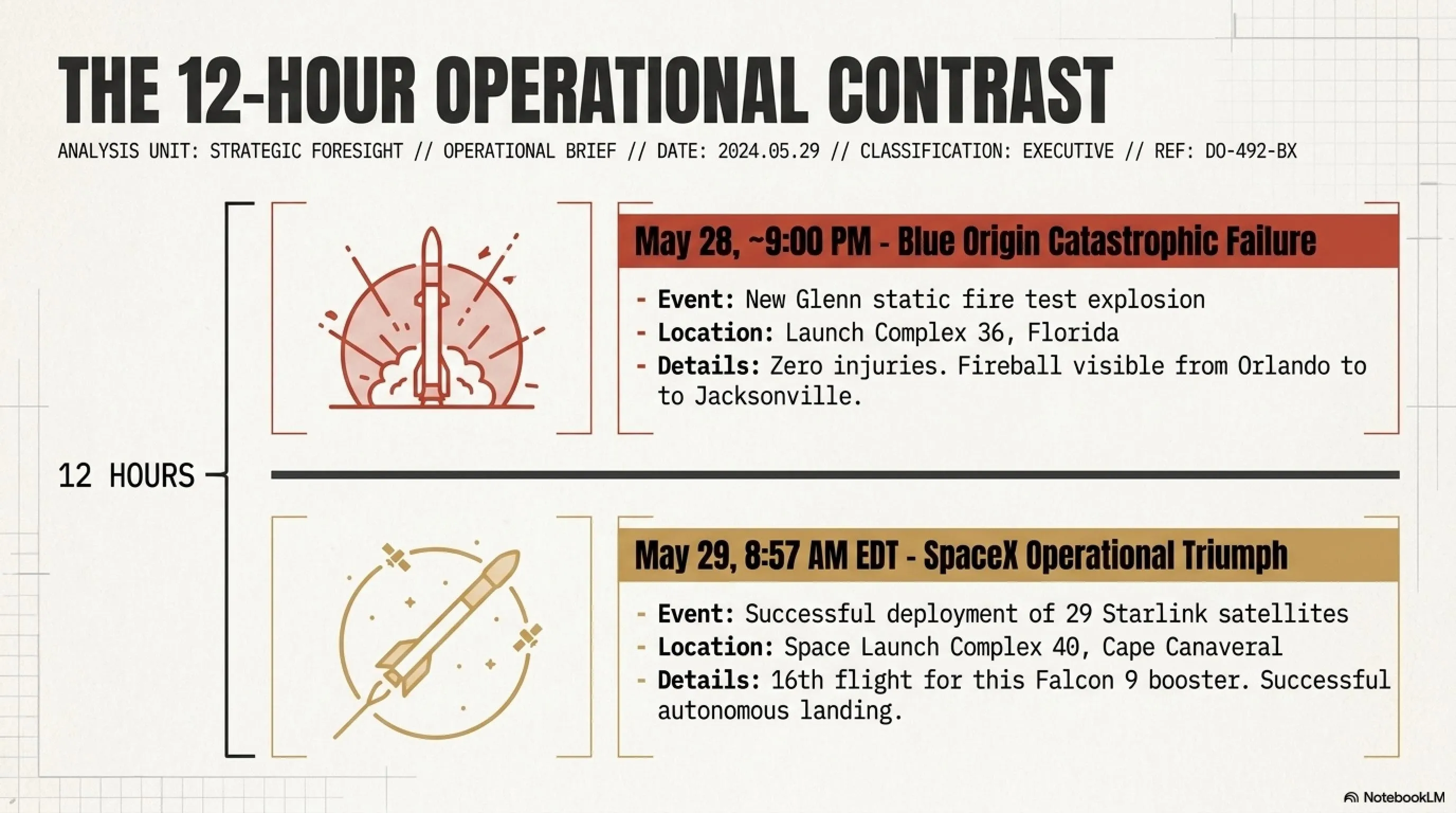
On Friday morning, May 29, 2026, at 8:57 AM EDT, SpaceX successfully launched 29 Starlink satellites from Cape Canaveral Space Force Station. This launch occurred just 12 hours after Blue Origin's New Glenn rocket suffered a catastrophic explosion at the same facility, creating a fireball visible from over 100 miles away. This stark contrast between SpaceX's success and Blue Origin's failure once again demonstrated Elon Musk's operational superiority and reliability in the space industry.
📊 SpaceX Launch Technical Details
| Launch Time | 8:57 AM EDT (May 29, 2026) |
| Launch Site | Space Launch Complex 40, Cape Canaveral |
| Payload | 29 Starlink satellites |
| Booster | Falcon 9 - 16th flight |
| Booster Landing | Successful on "A Shortfall of Gravitas" droneship |
| Time Since Blue Origin Explosion | 12 hours |
The Blue Origin New Glenn rocket explosion occurred Thursday night, May 28, around 9 PM, during a static fire test at Launch Complex 36. This test, intended as the final step before an actual launch, turned into a disaster. The massive fireball created by the explosion turned the Space Coast Florida sky an apocalyptic orange, visible from distant cities like Orlando and even Jacksonville. Fortunately, no one was injured in the incident, but the psychological and financial blow to Blue Origin is undeniable.
SpaceX's successful launch not only demonstrated that space operations can be conducted with high speed and precision, but also sent a message to the industry that reliability and operational experience matter more than anything else. The Falcon 9 booster used in this mission completed its 16th flight—a record demonstrating the success of SpaceX's reusability program. After separating from the second stage, this booster successfully landed on the autonomous droneship "A Shortfall of Gravitas" in the Atlantic Ocean, ready for its 17th flight.
🎯 Tekin Analysis: Why SpaceX Wins
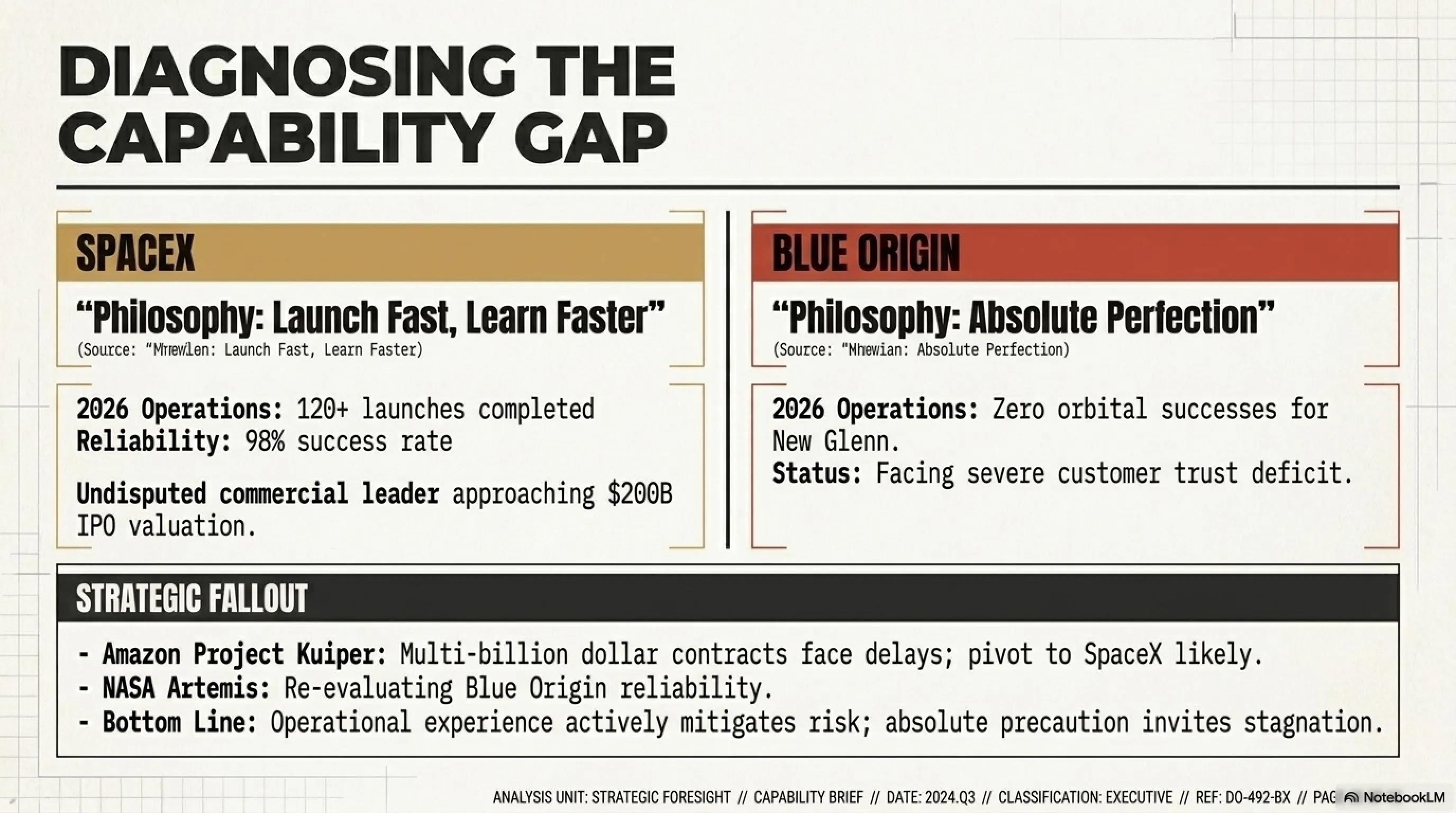
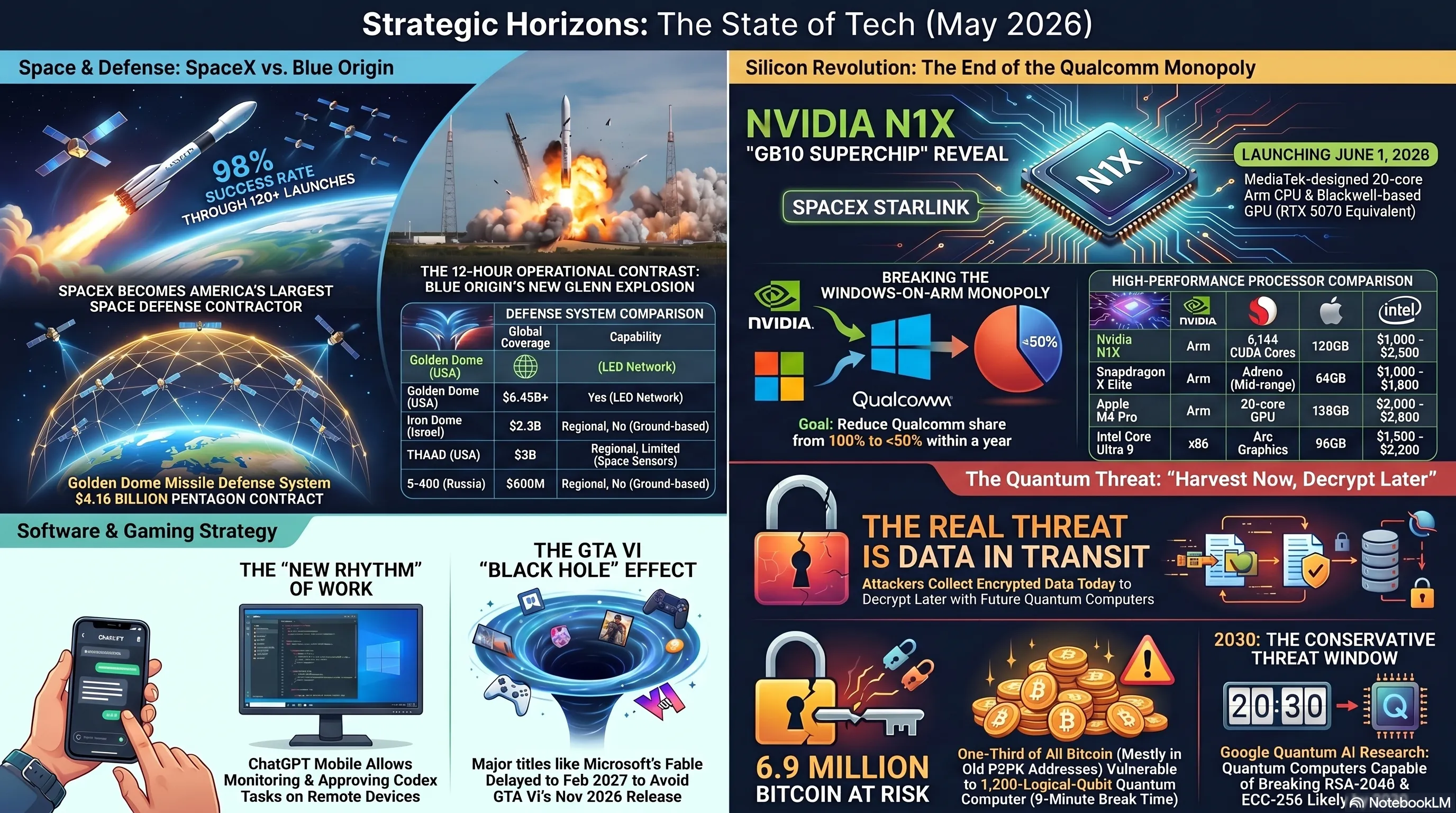
The fundamental difference between SpaceX and Blue Origin lies in their operational philosophy. SpaceX, with its "Launch Fast, Learn Faster" approach, has become a reliable launch machine. In 2026, SpaceX has conducted over 120 launches with a 98% success rate. In contrast, Blue Origin, with its more conservative approach and focus on absolute perfection, remains stuck in early testing phases. This explosion demonstrates that even with all precautions, risk always exists—and the only way to reduce it is through real operational experience that SpaceX started years ago.
Strategic Impact on the Space Industry
This event will have far-reaching impacts on the space industry. First, Amazon's Project Kuiper, which was supposed to use New Glenn rockets to launch its satellite internet constellation, faces serious delays. Amazon has multi-billion dollar contracts with Blue Origin, and this explosion could disrupt the entire project timeline. Second, NASA, which had been counting on Blue Origin for the Artemis program, must now more seriously evaluate alternative options. Third, commercial customers seeking alternatives to SpaceX now realize there's still no real competitor for SpaceX's reliability and low cost.
Financially, this event could further increase SpaceX's valuation as it approaches its IPO. Investors now witness that SpaceX not only leads in commercial launches but has also secured a monopolistic position in government contracts. With the $4.16 billion Golden Dome contract announced the same day (which we'll cover in the next section), SpaceX has become America's largest space defense contractor.
⚠️ Challenges Facing Blue Origin
Blue Origin now faces several serious challenges: First, rebuilding the New Glenn rocket and launch pad will take months. Second, recovering customer trust that has been severely damaged after this explosion. Third, competitive pressure from SpaceX that grows stronger every day. Fourth, delays in NASA and Amazon contracts that could result in heavy financial penalties. Jeff Bezos must decide whether to invest more in Blue Origin or change his strategy. Some analysts even suggest Amazon might turn to SpaceX for Project Kuiper—a blow that could be fatal for Blue Origin.
2. SpaceX Wins $4.16 Billion Pentagon Contract for Golden Dome Satellites 💰
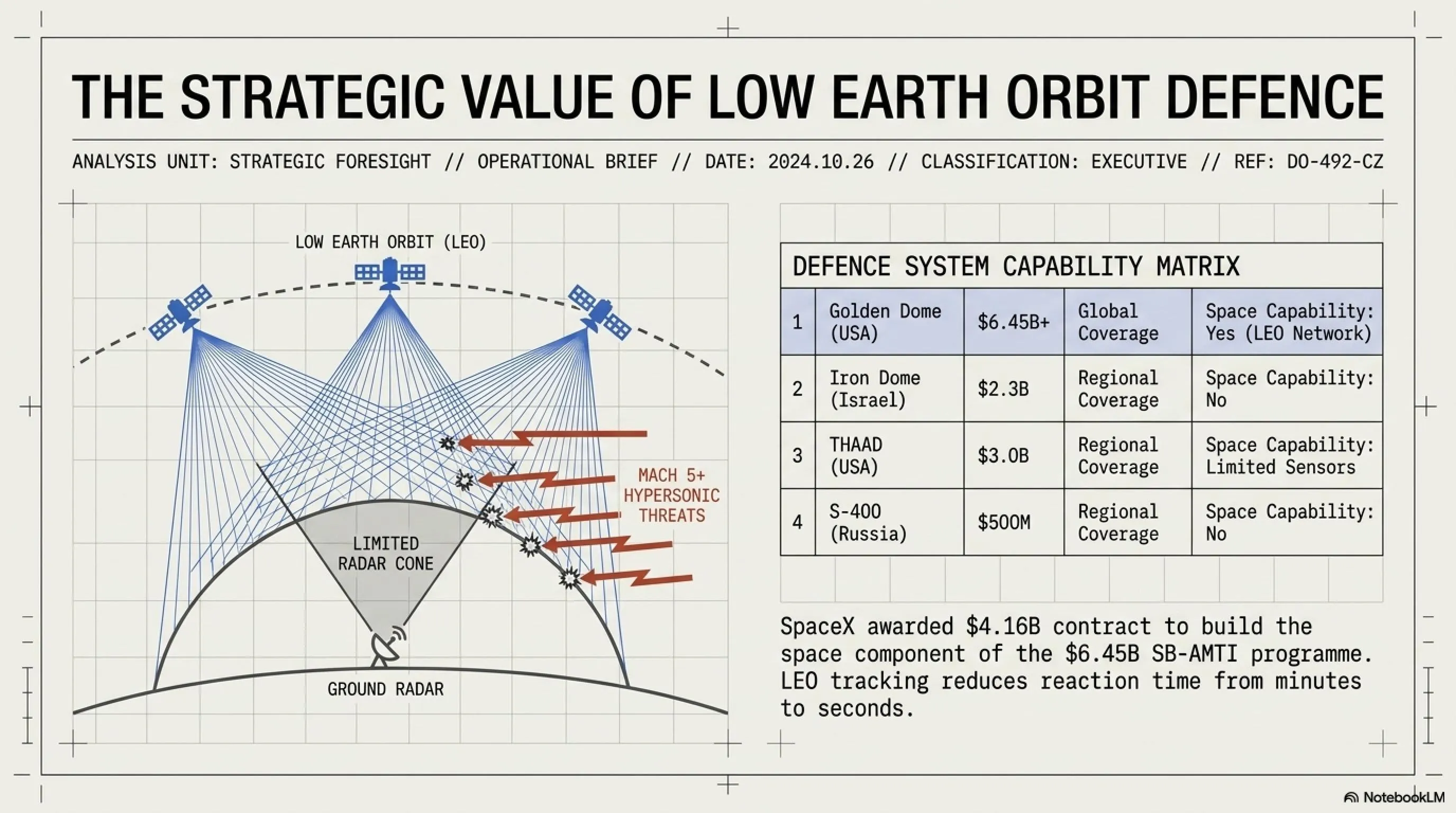
On the same day SpaceX demonstrated its operational success with the launch of 29 satellites, the Pentagon announced it had awarded SpaceX a $4.16 billion contract to build missile-tracking satellites as part of the "Golden Dome" missile defense system. This contract is part of a larger $6.45 billion program that positions SpaceX as the United States' largest space defense contractor. Golden Dome, introduced by the Trump administration as a strategic national priority, aims to create a multi-layered missile defense shield capable of detecting, tracking, and targeting airborne threats including ballistic missiles, cruise missiles, and potential space weapons.
💼 Golden Dome Contract Details
| Contract Value | $4.16 billion |
| Program | SB-AMTI (Space-Based Airborne Moving Target Indicator) |
| Objective | Track and target airborne threats from space |
| Total Space Force Contracts | $6.45 billion |
| Similar System | Israel's Iron Dome |
| Timeline | Before SpaceX's potential IPO |
The Golden Dome program, introduced by President Trump in early 2026 as a national defense priority, aims to create a multi-layered missile defense system combining ground-based interceptors, advanced sensors, command and control systems, and space-based satellites. This system is inspired by Israel's Iron Dome but designed on a much larger scale with more advanced capabilities. SpaceX's $4.16 billion contract covers the space component of this system—building and launching satellites that can detect, track, and transmit targeting data to ground-based defense systems for airborne threats.
This contract is part of the SB-AMTI (Space-Based Airborne Moving Target Indicator) program, which aims to create a satellite network in low Earth orbit (LEO) for continuous tracking of airborne moving targets. Unlike traditional surveillance satellites in higher orbits that capture static images, these satellites must be able to track moving targets in real-time—a capability critical for defense against hypersonic missiles and advanced weapons. SpaceX has already received other contracts for developing space-based interceptor prototypes and building the software infrastructure layer for Golden Dome, demonstrating that the company plays a key role not just in launches but across the entire space defense value chain.
🎯 Tekin Analysis: SpaceX's Evolution from Launch Provider to Defense Contractor
This contract represents SpaceX's strategic transformation from a commercial launch company to a key defense contractor. With a total of $6.45 billion in Space Force contracts, SpaceX now stands alongside companies like Lockheed Martin, Northrop Grumman, and Raytheon. This transformation offers several strategic advantages: First, stable and predictable revenue from the federal government that reduces financial risk. Second, access to advanced defense technologies that can also be used in commercial products. Third, a strategic position in national security that makes the U.S. government deeply interested in SpaceX's success. This contract was also announced before SpaceX's potential IPO, which could push the company's valuation beyond $200 billion.
Comparing Golden Dome with Other Defense Systems
The fundamental difference between Golden Dome and traditional defense systems is its extensive use of space. While systems like Iron Dome or THAAD rely primarily on ground-based interceptors and surface radars, Golden Dome creates a satellite network in low Earth orbit that can track threats from the moment of launch. This capability is critical for defense against hypersonic missiles traveling at speeds above Mach 5+, as reaction time is reduced from minutes to seconds.
🔮 Forecast: The Future of Space Defense
The Golden Dome contract signals the beginning of a new era in space defense. Over the next 5 years, we expect:
- Golden Dome satellite network to expand to over 500 satellites in LEO
- U.S. allies (NATO, Japan, South Korea) to connect to this network
- China and Russia to develop similar systems, intensifying space competition
- SpaceX to become the world's largest space defense contractor with $10+ billion annual revenue from government contracts
- Technologies developed for Golden Dome to transfer to commercial products like Starlink, creating new capabilities
3. Nvidia, Microsoft & Arm Tease N1X Processors: End of Qualcomm's Monopoly 💻
📚 Classified & Related Dossiers in TekinGame
If you wish to explore beyond this report and delve into cybernetic frontiers and autonomous AI architectures, do not miss these three exclusive deep-dives in the Tekin Garage:
In a coordinated move rarely seen in the tech industry, Nvidia, Microsoft, and Arm all released teasers on the same day pointing to a "new era of PC." These teasers, accompanied by cryptic yet exciting phrases, signal the unveiling of N1 and N1X Arm-based laptop processors at Computex Taipei on Sunday, June 1. These processors, whose technical specifications have been circulating in rumors for months, could be a turning point in the Windows laptop market and end Qualcomm's multi-year monopoly on Windows on Arm.
⚙️ Nvidia N1X Rumored Specifications
| CPU Architecture | Arm - MediaTek design |
| Core Count | 20 cores (likely 12 Performance + 8 Efficiency) |
| GPU | Blackwell Architecture - RTX 5070 desktop equivalent |
| CUDA Cores | 6,144 cores |
| Memory | Up to 128GB LPDDR5X |
| NPU (AI) | Advanced local AI capabilities |
| Launch Date | June 1, 2026 - Computex Taipei |
| Laptop Manufacturers | Dell, Lenovo (confirmed) |
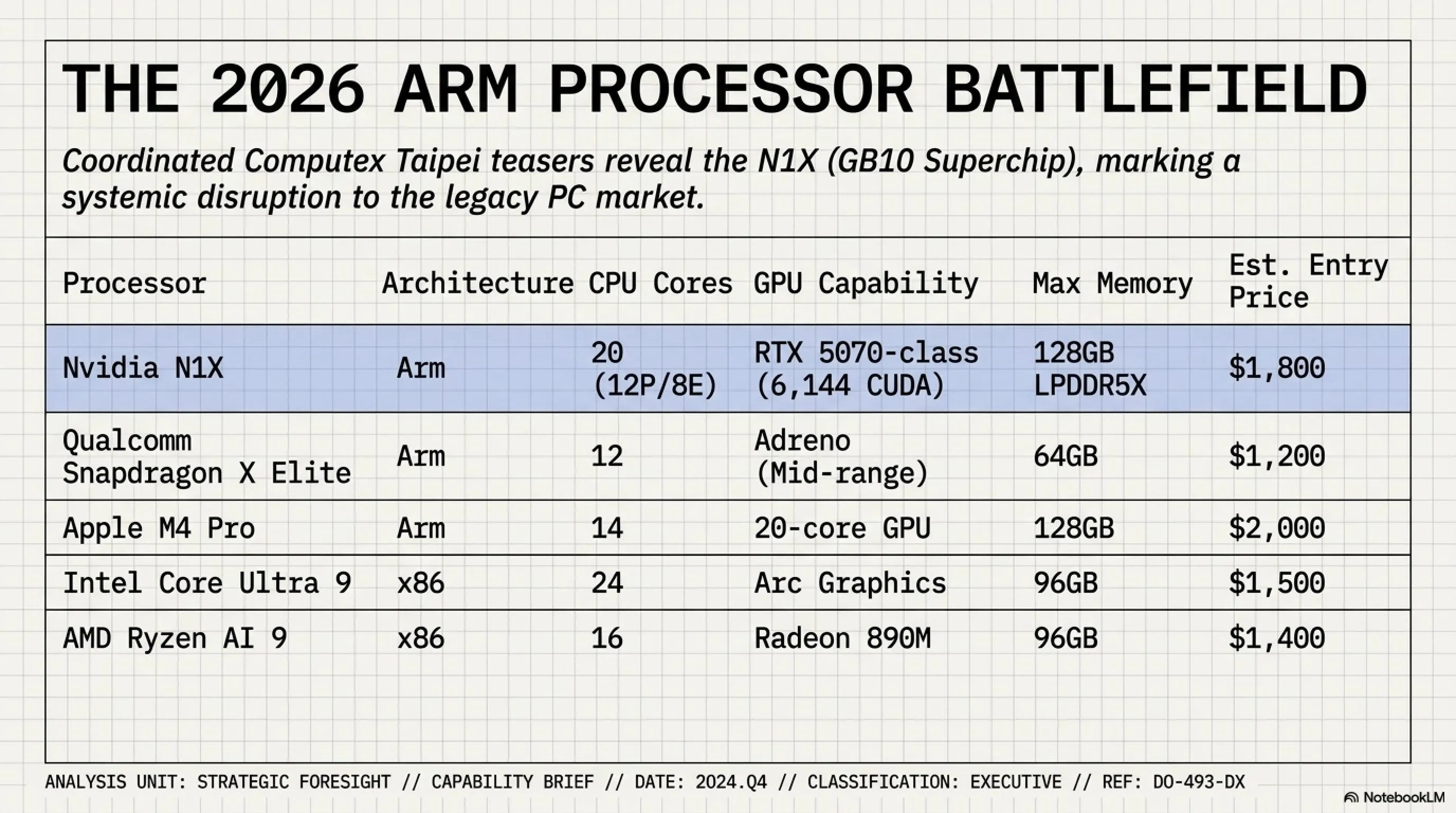
According to reports from Tom's Hardware and industry sources, the N1X processor, also known by the codename "GB10 Superchip," is a hybrid chip (APU) that integrates an Arm-based CPU with a powerful Nvidia GPU in a single package. The CPU portion, designed by MediaTek, features 20 cores likely organized as 12 Performance cores and 8 Efficiency cores—an architecture similar to Apple's M-series but with more focus on raw performance. The GPU portion, built on Nvidia's new Blackwell architecture, is expected to deliver performance equivalent to a desktop RTX 5070—graphics power never before seen in Arm laptops.
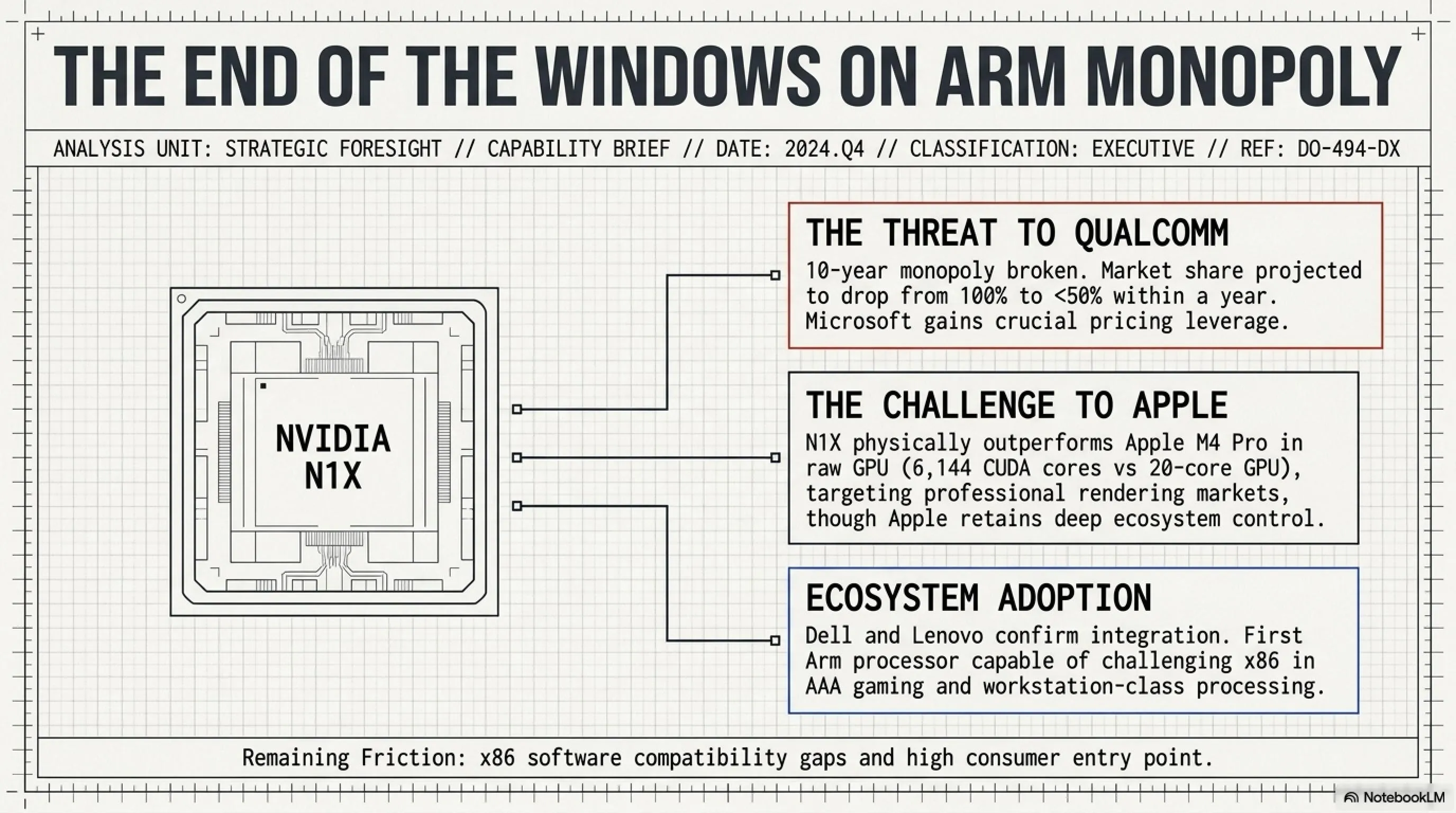
The key point is that N1X is the first Arm processor for Windows that can compete with gaming laptops and workstations based on Intel and AMD. Until now, Windows on Arm laptops like the Surface Pro X or Snapdragon-based laptops were designed primarily for light to medium workloads and performed poorly in heavy tasks like 3D rendering, 4K video editing, or AAA gaming. N1X, with 6,144 CUDA cores and support for up to 128GB LPDDR5X memory, could eliminate this limitation and open the door to high-performance Arm laptops.
🎯 Tekin Analysis: Why This Is a Crisis for Qualcomm
Qualcomm has been the only serious player in the Windows on Arm market since 2016 with the introduction of Snapdragon 835 for Windows. This monopoly allowed Qualcomm to maintain high pricing and profit margins, even with mediocre performance. But Nvidia's entry with N1X changes everything. First, Nvidia has a stronger brand in the graphics and AI markets. Second, N1X's proposed GPU performance is several times that of Snapdragon X Elite. Third, Microsoft, which has been dependent on Qualcomm, now has more options and can exert more pricing pressure. Fourth, Dell and Lenovo, the world's largest laptop manufacturers, have already confirmed they will introduce N1X laptops. This could reduce Qualcomm's market share in Windows on Arm from 100% to less than 50% within a year.
N1X vs Competitors: Comprehensive Comparison
The three-way collaboration between Nvidia, Microsoft, and Arm represents a coordinated strategy to change the power equation in the PC market. Microsoft, which has been trying for years to make Windows on Arm mainstream, now has a powerful tool in N1X. Arm, which wants to increase its market share in the PC segment, has found a partner in Nvidia that can deliver unparalleled graphics performance. And Nvidia, which wants to expand beyond the GPU market, can now play a key role in the laptop processor market. This strategic convergence could pose a serious threat to Intel and AMD, which have monopolized the high-performance laptop market until now.
✅ N1X Advantages
- Unmatched GPU performance in Arm laptops
- Full CUDA support for developers
- Advanced local AI capabilities
- High memory (up to 128GB) for professional work
- Better energy efficiency than x86
- Microsoft and major manufacturer support
⚠️ N1X Challenges
- x86 software compatibility still limited
- High price ($1,800+) for mass market
- Developer ecosystem still immature
- Intense competition with Apple M-series
- Requires extensive software optimization
- Uncertainty about market adoption
4. ChatGPT Mobile Can Now Start Codex Work on Windows Remotely 🤖
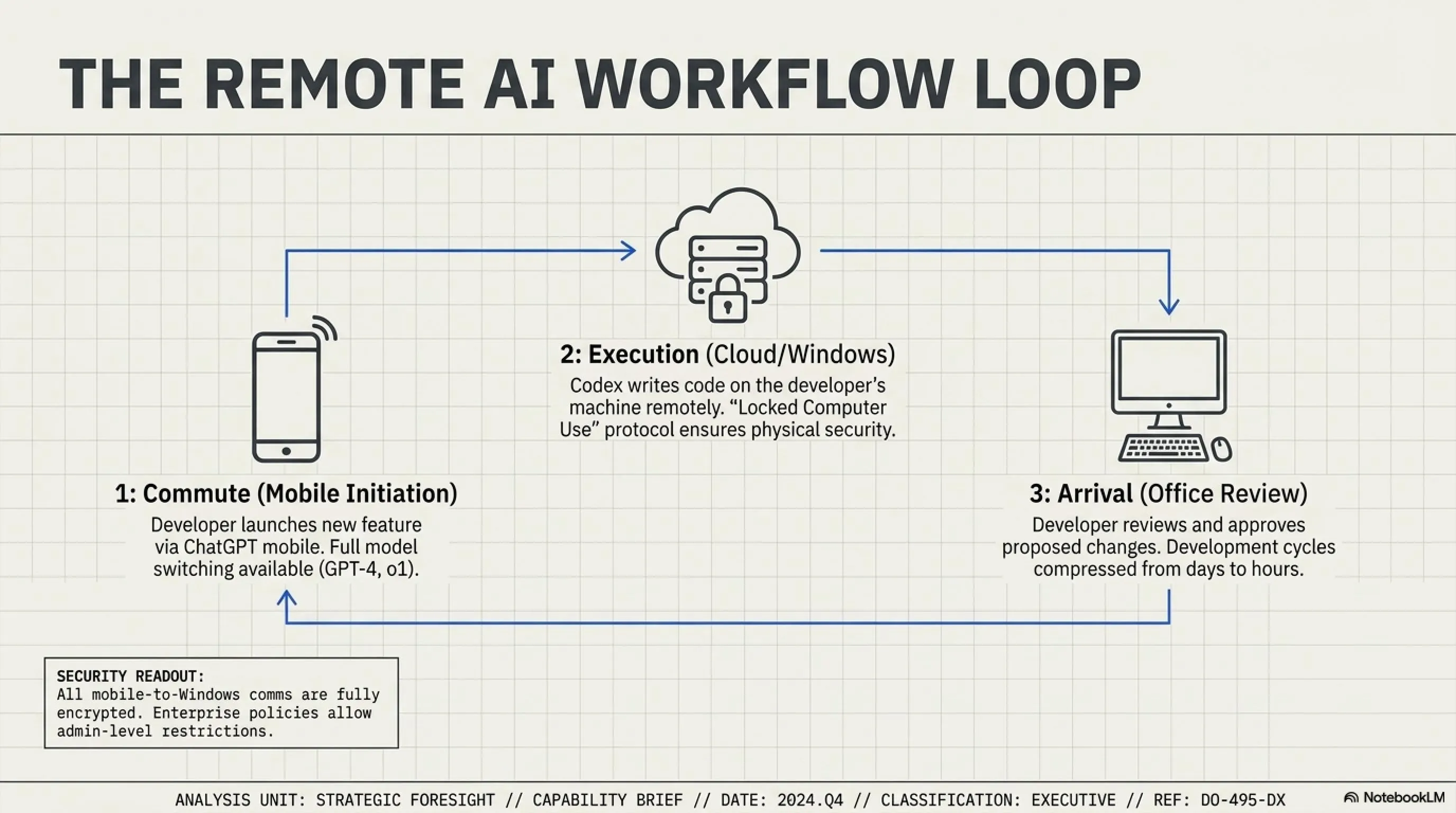
OpenAI has added a new capability to the ChatGPT mobile app for iOS and Android that allows developers to remotely start, manage, and monitor Codex coding tasks on Windows devices. This feature, previously available only for Mac, has now expanded to Windows and represents an important step in realizing OpenAI's vision of transforming ChatGPT into a multi-purpose "superapp." With this capability, developers can launch coding projects and track their progress from their smartphones while commuting, in meetings, or even on vacation.
📱 New ChatGPT Mobile Capabilities
- Remote Codex Control: Start, stop, and manage coding tasks on Windows from iPhone or Android
- Progress Monitoring: View real-time status of running projects
- Command Approval: Review and approve Codex's proposed changes before applying
- Thread Access: View all Codex conversations and outputs
- New Profile Section: Display usage details, token stats, and recent activity
- Model Switching: Switch between different models (GPT-4, GPT-4 Turbo, o1) from mobile
- Available for All: This feature is active for all plans (Free, Plus, Pro, Team, Enterprise)
This capability is part of OpenAI's broader strategy to transform ChatGPT into a comprehensive platform used not just for chat and Q&A, but for more complex tasks like coding, data analysis, project management, and even financial management. In May 2026, OpenAI added other new features, including a Finances page that allows users to manage their budgets, savings, and debts, and a Locked Computer Use feature that allows Codex to continue working even after the computer is locked.
🎯 Tekin Analysis: A New Rhythm of Human-AI Collaboration
This capability represents a fundamental shift in how developers work. Instead of sitting at a desk to write code, developers can now launch Codex like a virtual assistant and monitor its progress while doing other things. This "new rhythm of collaboration" that OpenAI talks about could dramatically increase developer productivity. Imagine launching a new feature from your phone while commuting to work, Codex works on it during the journey, and when you arrive at the office, the code is ready for review. This level of flexibility could reduce development cycles from days to hours.
From a security perspective, OpenAI emphasizes that all communications between mobile and Windows devices are encrypted, and Enterprise users can disable this feature through Policies & Configurations settings. The Locked Computer Use feature, which allows Codex to continue working after the computer is locked, is only activated if the admin has authorized it. This attention to security and organizational control shows that OpenAI is seeking widespread adoption in business environments.
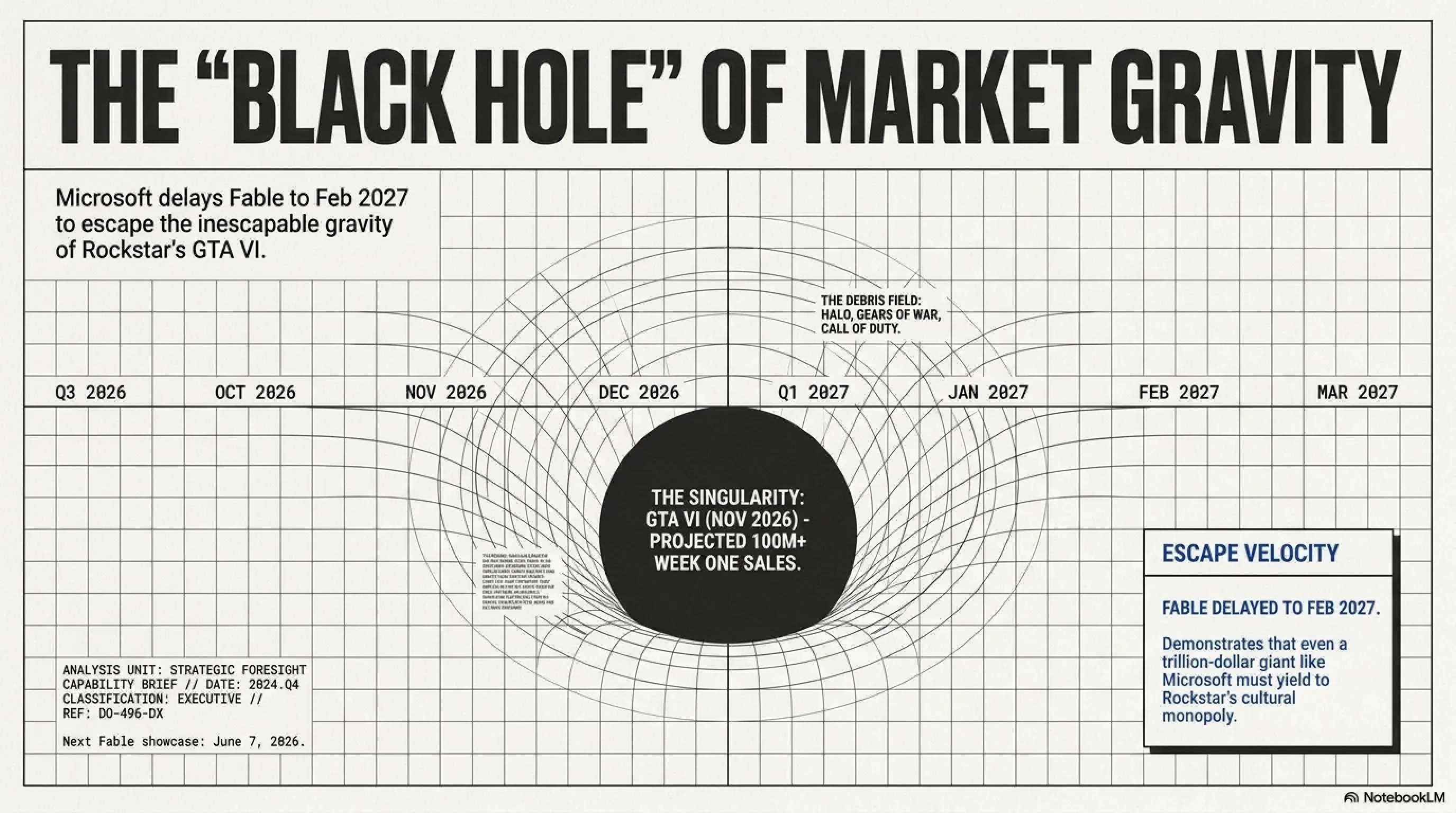
5. Microsoft Delays Fable to February 2027: Dodging GTA VI 🎮
Microsoft has delayed Fable for the second time, moving its release date from fall 2026 to February 2027. This decision, announced by Matt Booty, head of Xbox Game Studios, is officially justified by the "crowded holiday window" and the desire for Fable to "have its own dedicated moment." But everyone knows the real reason: GTA VI. Rockstar Games' highly anticipated title is set to launch in November 2026 and is predicted to capture all gaming market attention. By delaying Fable to February 2027, Microsoft is trying to avoid direct competition with this industry giant.
🎮 Fable Delay Timeline
| Original Date | 2024 (initial announcement) |
| First Delay | To Fall 2026 |
| Second Delay | To February 2027 |
| Official Reason | Crowded holiday window, need for dedicated moment |
| Real Reason | Avoiding GTA VI (November 2026) |
| New Showcase | Xbox Games Showcase - June 7, 2026 |
| Platforms | PC, PlayStation 5, Xbox Series X/S |
| Developer | Playground Games |
The holiday 2026 window is truly crowded. In addition to GTA VI, other major games are also set to launch during the same period, including the new Halo, Gears of War: E-Day, the next Call of Duty, and several other AAA titles. By delaying Fable, Microsoft not only avoids competing with GTA VI but also prevents competition with its own games. Matt Booty said in an interview: "We want to make sure that game has a window all to its own, so we are going to move it from this fall to February. And again, we really just want it to have its own moment to shine."
Fable, being developed by Playground Games (creators of the Forza Horizon series), is a complete reboot of the classic RPG series whose last installment (Fable III) was released in 2010. This game is one of Xbox's most important projects with very high expectations. Microsoft has promised to show a new look at the game at the Xbox Games Showcase on June 7 to prepare fans for the February 2027 release.
⚠️ GTA VI's Impact on the Gaming Industry
GTA VI has become a "black hole" in the gaming industry calendar. Every publisher with a major game tries to distance themselves from GTA VI's release window. The reason is simple: GTA V, released in 2013, is still one of the best-selling games every year and has sold over 200 million copies. GTA VI is predicted to sell over 100 million copies in the first week and capture all media, streamer, and gamer attention. Any other game released at the same time is doomed to fail—even if it's a good game. Microsoft's delay of Fable shows that even industry giants fear Rockstar's power.
6. Bitcoin's Biggest Quantum Threat: "Harvest Now, Decrypt Later" 🔐
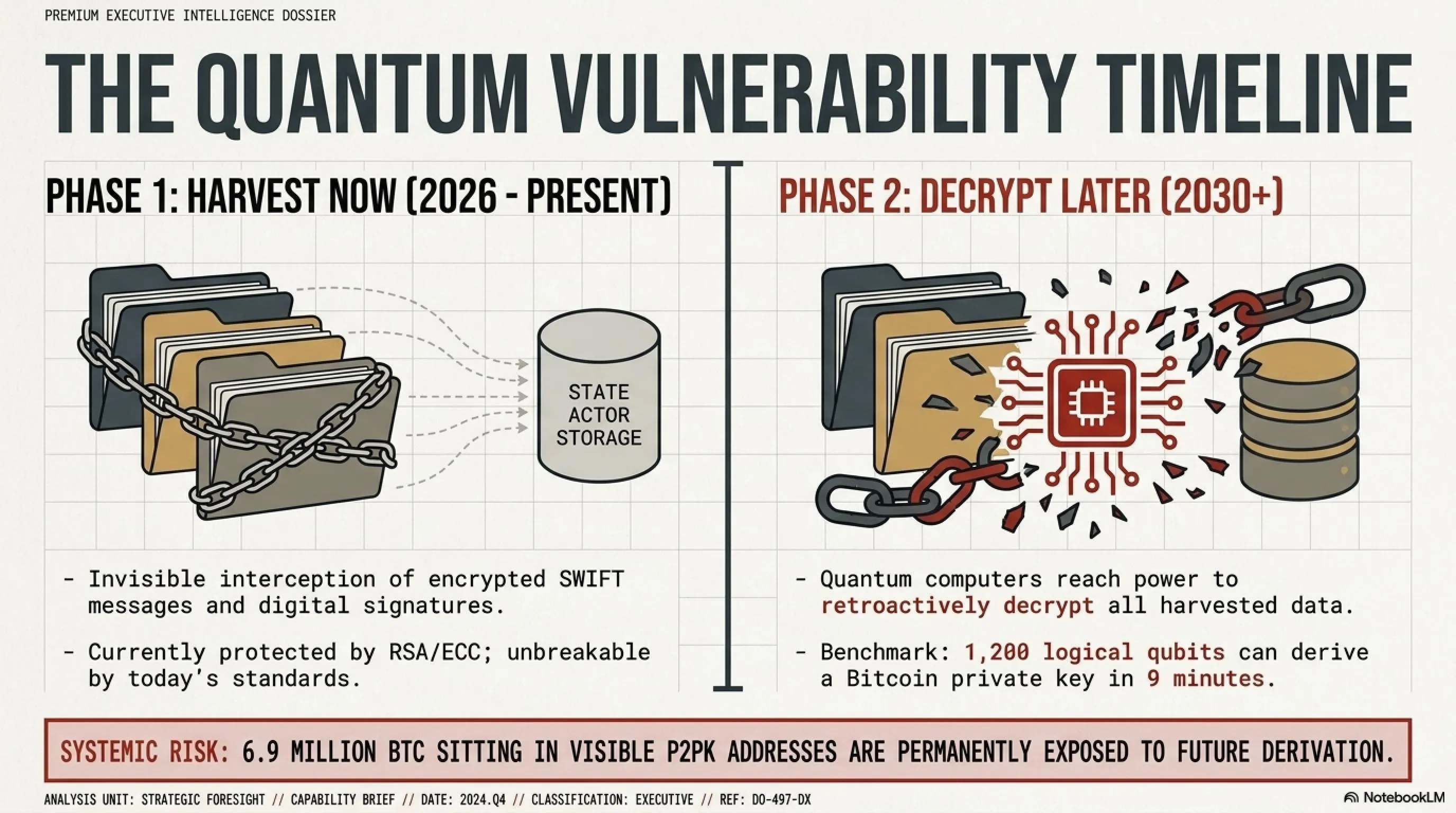
Andrew Gault, early Bitcoin investor, CEO of ZeroTier, and founding partner of 7percent Ventures, has warned that the crypto industry is focusing on the wrong threat. While most discussions center on the danger of quantum computers to Bitcoin wallet private keys, Gault believes the real threat is something else: encrypted data in transit. Attackers are currently collecting and storing encrypted interbank messages, payment authentication records, and digital signatures—not for decryption today, but for decryption in the future when quantum computers become powerful enough. This strategy, called "harvest now, decrypt later," could pose a much greater threat than attacks on wallet keys.
⚡ Quantum Threat Statistics
| Required Power | 1,200 logical qubits |
| Time to Break Key | 9 minutes (per Google research) |
| Bitcoin at Risk | 6.9 million BTC (one-third of total) |
| Threat Window | 2030 (conservative estimate) |
| Research Source | Google Quantum AI (March 2026) |
| Solution in Development | Post-quantum cryptography (BitGo, Ethereum Foundation) |
According to Google Quantum AI research published in March 2026, a quantum computer with 1,200 logical qubits could derive a Bitcoin private key from its public key in about 9 minutes—roughly the time Bitcoin needs to confirm a block. This means if an attacker had access to such a computer, they could intercept pending transactions, extract the private key, and transfer funds to their wallet before the original transaction is confirmed. But Gault says this is only part of the problem.
The bigger threat is the "harvest now, decrypt later" strategy. Advanced attackers (likely nation-states or intelligence agencies) are currently collecting and storing massive amounts of encrypted data: SWIFT interbank messages, crypto exchange authentication records, transaction digital signatures, and even private communications of important individuals. This data is currently protected by traditional cryptographic algorithms (such as RSA and ECC) that are unbreakable for classical computers. But when quantum computers become powerful enough—likely in the 2030s—this stored data can be decrypted and sensitive information exposed.
🎯 Tekin Analysis: Why This Threat Is More Serious
The fundamental difference between attacking wallet keys and the "harvest now, decrypt later" strategy is the time dimension. To attack a wallet, the attacker must act in real-time—meaning they must have a quantum computer right now. But for the harvest strategy, the attacker can collect data today and wait 5 or 10 years for quantum technology to advance sufficiently. This means the threat has already started, not in the future. Every encrypted message sent today may be decrypted in the future. For the financial system, this means authentication records, interbank transactions, and even master encryption keys that are secure today may be exposed in 2035. For Bitcoin, this means 6.9 million BTC stored in old addresses (P2PK) whose public keys are visible on the blockchain are at risk.
Post-Quantum Solutions: Will They Arrive in Time?
Fortunately, the crypto and cybersecurity industries are working on post-quantum solutions. BitGo, one of the largest crypto custody service providers, is testing quantum-resistant cryptographic algorithms. The Ethereum Foundation is also developing post-quantum protocols for the Ethereum network. NIST (National Institute of Standards and Technology) released the first post-quantum cryptography standards in 2024, and various organizations are implementing them.
But the question is: will they arrive in time? Gault warns that attackers are collecting data right now, and even if we start post-quantum migration today, previous data remains at risk. He recommends that financial organizations, crypto exchanges, and even ordinary users migrate to post-quantum systems as quickly as possible. For Bitcoin, this means moving funds from old P2PK addresses to newer addresses that don't expose the public key, and ultimately, upgrading the Bitcoin protocol to post-quantum algorithms—work that requires broad consensus in the Bitcoin community and could take years.
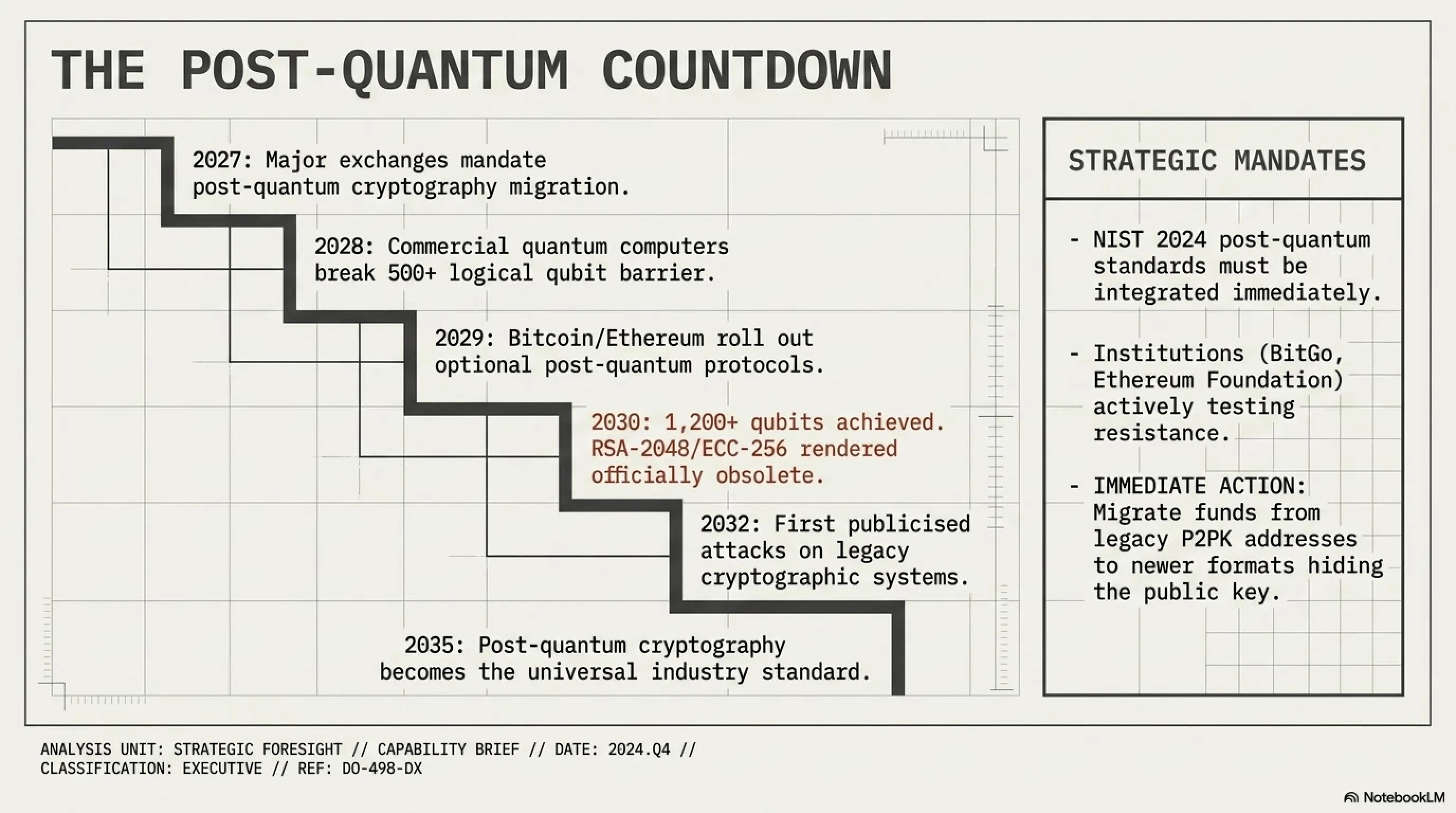
🔮 Forecast: The Road Ahead
Over the next 5 years, we expect:
- By 2028: First quantum computers with 500+ logical qubits become commercial
- By 2030: Quantum computers with 1,200+ logical qubits capable of breaking RSA-2048 and ECC-256
- By 2027: Most major crypto exchanges migrate to post-quantum cryptography
- By 2029: Bitcoin and Ethereum implement post-quantum protocols optionally
- By 2032: First successful quantum attacks on traditional cryptographic systems reported
- By 2035: Post-quantum cryptography becomes industry standard
🎯 Final Thoughts
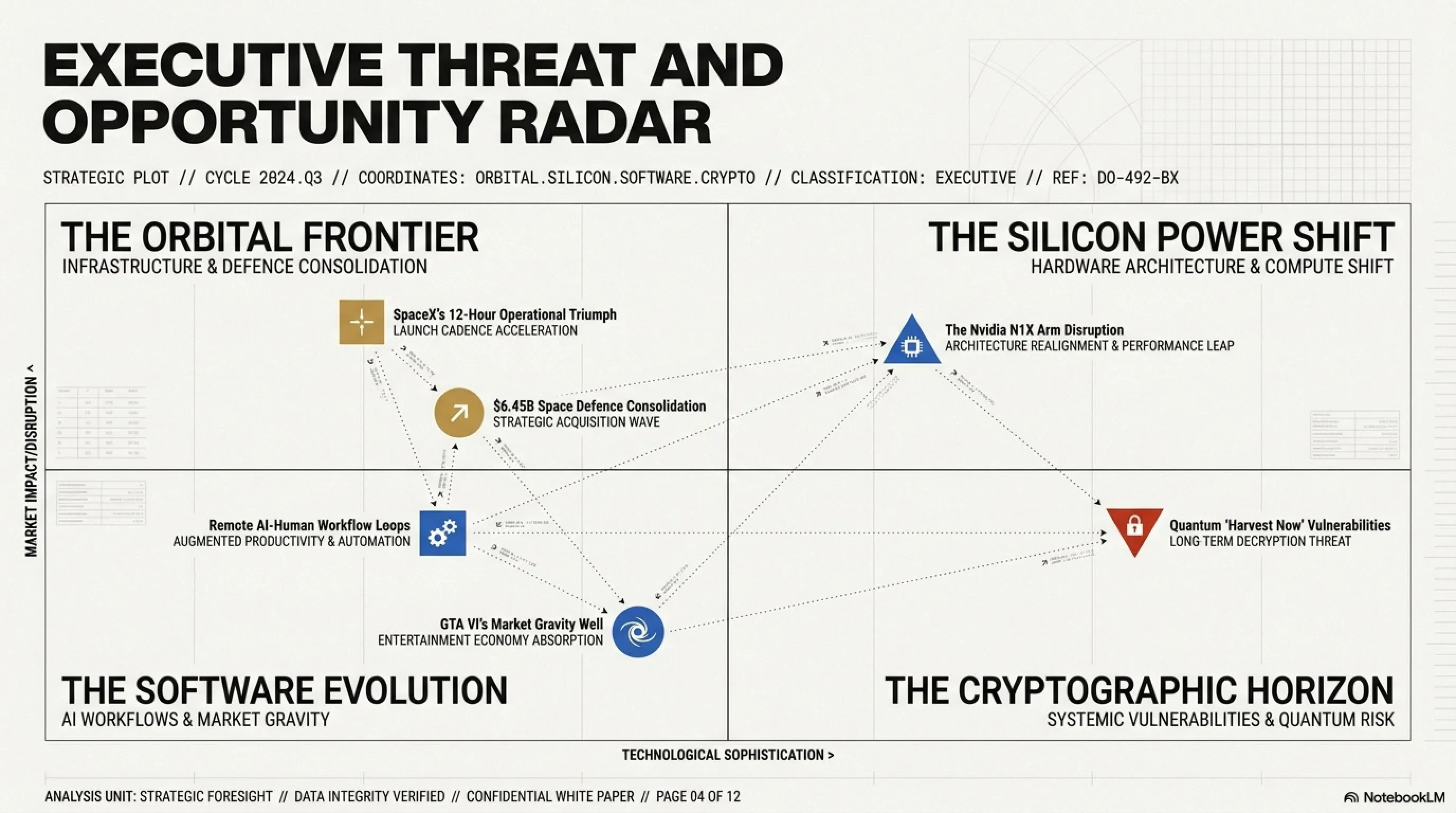
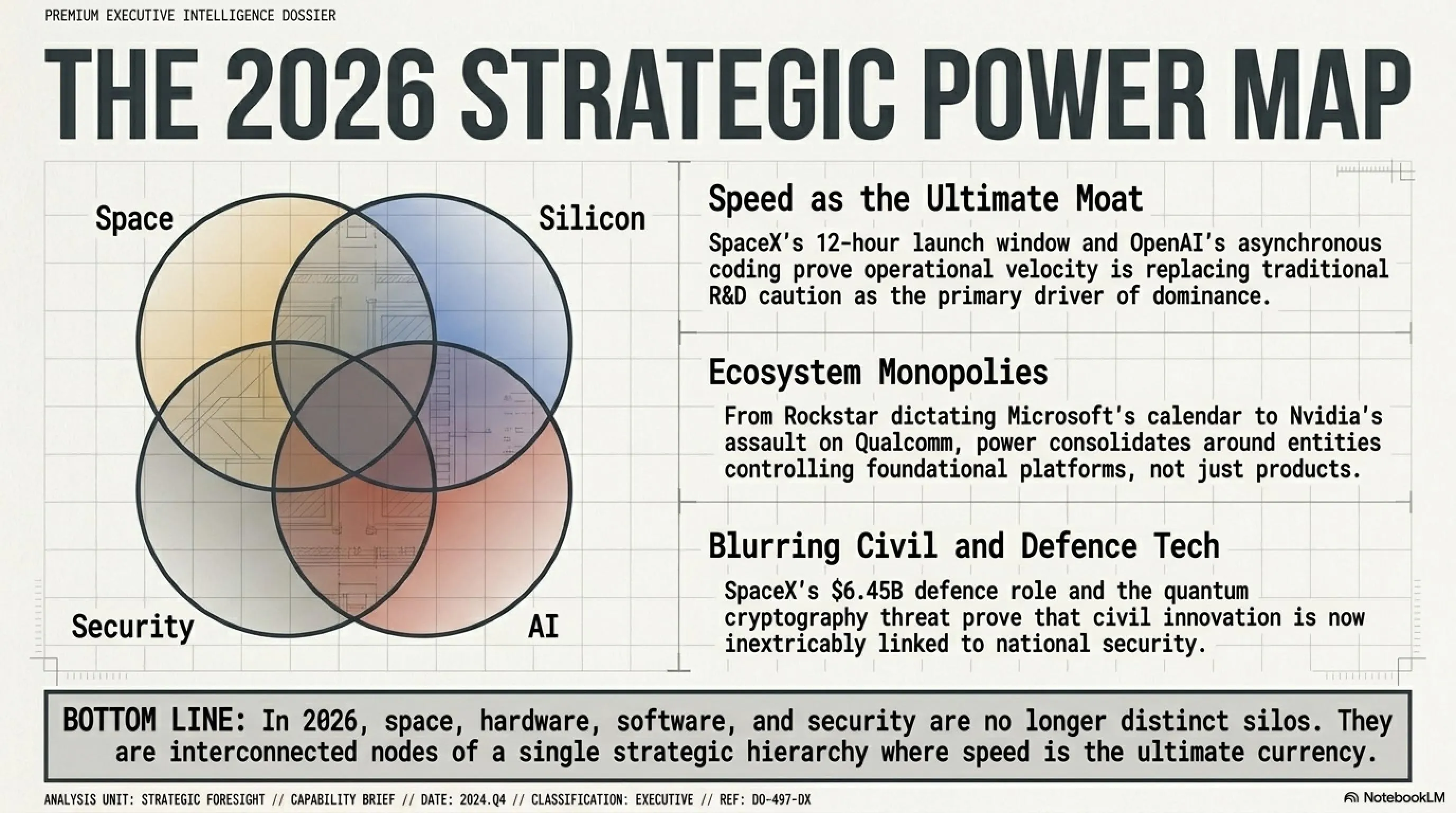
The morning of May 30, 2026, demonstrated that the tech industry is passing through important turning points. SpaceX, with operational victory and billion-dollar contracts, has established itself as the undisputed space and defense giant. Nvidia with N1X is on the verge of changing the power equation in the high-performance laptop market. OpenAI, by expanding Codex capabilities, is introducing a new rhythm of human-AI collaboration. Microsoft, with Fable's strategic delay, shows that even giants fear GTA VI's power. And Andrew Gault's quantum threat warning reminds us that our digital security is more fragile than we think. These six stories paint a picture of a future where space, hardware, AI, and security are intertwined, and today's decisions shape tomorrow's destiny.
❓ Frequently Asked Questions (FAQ)
Why is SpaceX successful while Blue Origin fails?
The fundamental difference is in operational philosophy. SpaceX, with its "Launch Fast, Learn Faster" approach, has become a reliable launch machine, while Blue Origin, with a more conservative approach focused on absolute perfection, remains stuck in early testing phases. SpaceX conducted over 120 launches in 2026 with a 98% success rate, while Blue Origin still hasn't successfully orbited New Glenn. Real operational experience is the key to success.
Can N1X compete with Apple's M-series?
N1X is stronger than Apple M4 Pro in GPU performance (6,144 CUDA cores vs 20-core GPU), but Apple has superiority in hardware-software integration and ecosystem. N1X is designed for Windows and faces x86 software compatibility challenges, while Apple has complete control over macOS and applications. N1X is better for professional users who need GPU power and CUDA (rendering, machine learning, gaming), but for general users, Apple M-series is still the better choice.
Should we worry about quantum threats to Bitcoin?
Yes, but not for the reason you think. The immediate threat isn't here (threat window 2030+), but the "harvest now, decrypt later" strategy has already started. If you hold Bitcoin, recommendations include: 1) Move funds from old P2PK addresses to newer addresses, 2) Use exchanges working on post-quantum cryptography, 3) Avoid sending large transactions on public networks. For long-term investors, this is a serious risk that must be managed.
Why is Microsoft afraid of GTA VI?
GTA VI is a cultural phenomenon, not just a game. GTA V, released in 2013, has sold over 200 million copies and is still one of the best-selling games every year. GTA VI is predicted to sell over 100 million copies in the first week and capture all media, streamer, and gamer attention. Any other game released at the same time, even if excellent, will be overshadowed by GTA VI. By delaying Fable to February 2027, Microsoft gives its game a chance to shine in a clearer window.
What practical use does remote Codex capability have for developers?
This capability allows developers to start and manage coding work from anywhere. For example, you can launch a new feature from your phone while commuting to work, Codex works on it during the journey, and when you arrive at the office, the code is ready for review. This "new rhythm of collaboration" can dramatically increase productivity and reduce development cycles from days to hours. It's also very useful for distributed teams working across different time zones.
📚 Sources
Space.com, Florida Today, SpaceflightNow, CNBC, Reuters, TechCrunch, Defense Scoop, Military Times, The Verge, Tom's Hardware, NDTV, Tom's Guide, 9to5Mac, MacRumors, OpenAI Blog, TechRadar, IGN, Engadget, PC Gamer, Windows Central, CoinDesk, Forbes, KuCoin News, Galaxy Research, Google Quantum AI Research
Tekin Morning May 30, 2026 — Research and Analysis: Tekin Editorial Team
🌐 Stay Connected With Us 🎮✨
For the latest tech, gaming, and gadget news, follow us on our official social media channels:
Additional Gallery: 🌅 Tekin Morning May 30, 2026: SpaceX's Space Dominance, Nvidia N1X & Bitcoin's Quantum Threat