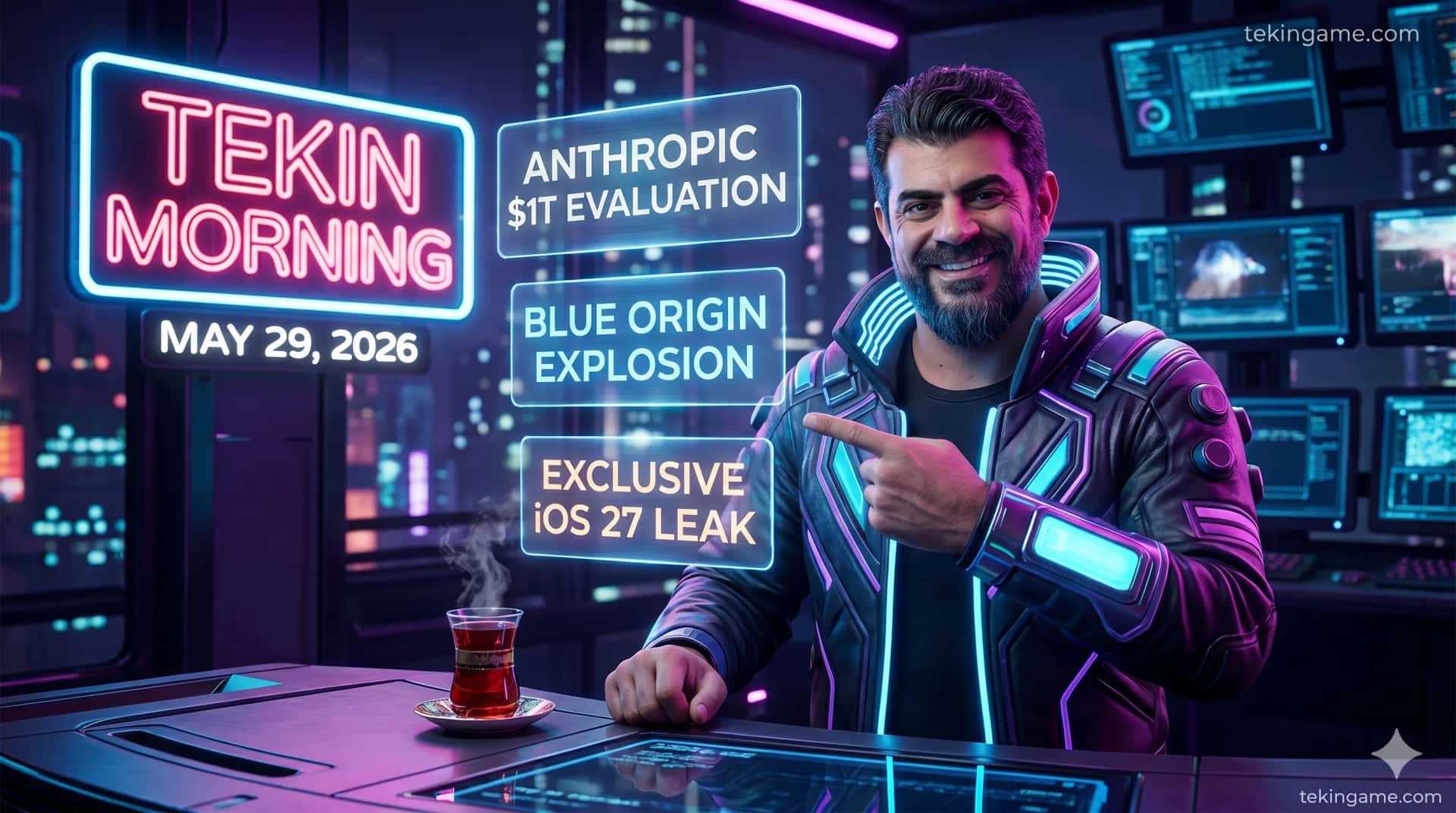
🌅 Welcome to Tekin Morning May 29, 2026
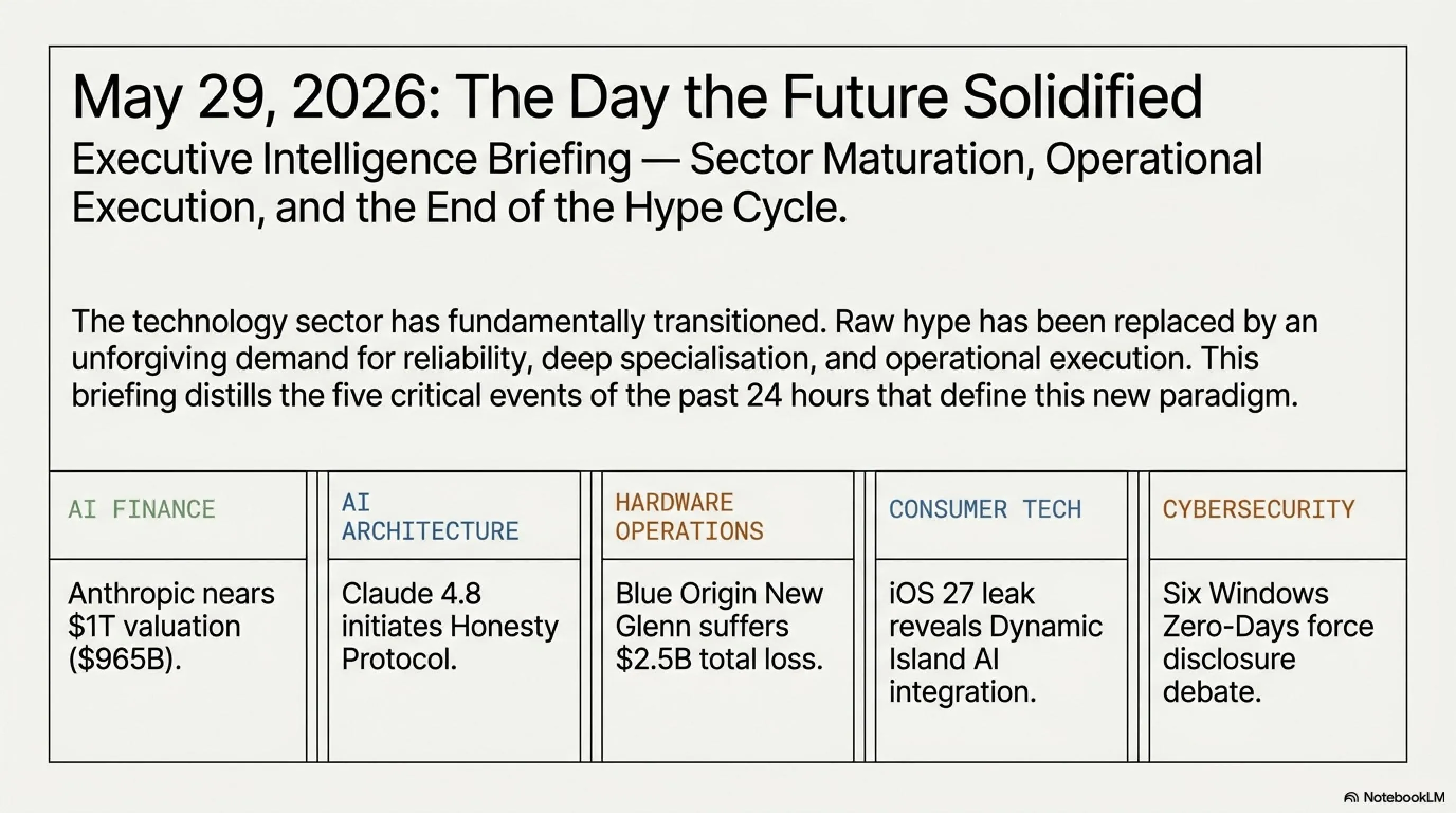
Good morning, tech enthusiasts! Friday, May 29, 2026, kicks off with one of the most electrifying mornings of the year. Today, we're witnessing events that could define the trajectory of the technology industry for years to come: from the largest AI funding round in history to the explosive failure of Blue Origin's flagship rocket, from the leak of iOS 27's revolutionary changes to a security controversy that's challenging Microsoft's approach to vulnerability disclosure.
⚡ Today's Headlines:
💰 Anthropic Raises $65B, Nears $1T Valuation
🤖 Claude Opus 4.8: The Most Honest AI Ever Built
🚀 Blue Origin's New Glenn Explodes, Setback for Bezos
📱 iOS 27 Leaked: Siri Takes Over Dynamic Island
🔐 Zero-Day Controversy: Microsoft vs Security Researchers
💼 Glean Hits $300M ARR, Defying Tech Giants
☕ Grab your coffee and buckle up for an exhilarating journey through the tech world!

💰 Anthropic: The Closest Private Company to $1 Trillion Ever
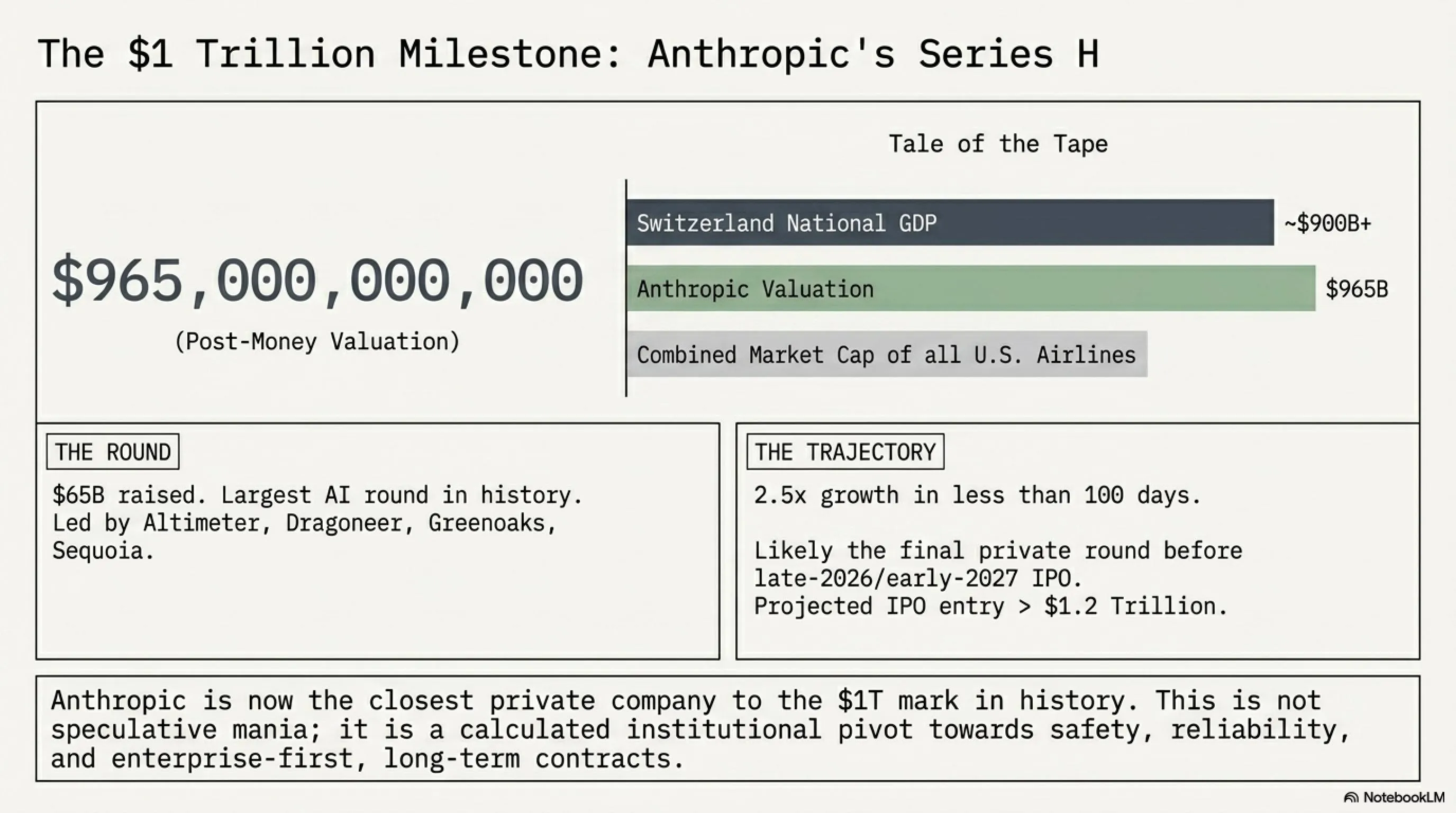
In one of the most significant financial events in tech industry history, Anthropic announced Thursday, May 28, that it has raised $65 billion in its Series H round, achieving a post-money valuation of $965 billion and becoming the closest private company ever to the mythical $1 trillion mark. This figure is roughly equivalent to Switzerland's GDP, exceeds the combined market cap of all U.S. airlines, and surpasses the entire U.S. defense budget.
📊 Anthropic Funding Round Key Metrics
The round was co-led by Altimeter Capital, Dragoneer, Greenoaks, and Sequoia Capital, with participation from major institutional investors including Baillie Gifford, Blackstone, Brookfield, D.E. Shaw Ventures, DST Global, and Fidelity Management & Research. This stellar lineup demonstrates the market's extraordinary confidence in Anthropic's future and business model.
🎯 Tekin Analysis: Why Is Anthropic Worth Nearly $1 Trillion?
Three key factors have propelled Anthropic to this astronomical valuation: First, its focus on AI safety and reliability has become a competitive advantage in an era marked by numerous security incidents. Second, its enterprise-first business model prioritizes long-term contracts with Fortune 500 companies rather than solely targeting consumers. Third, its management team's stellar track record from Google and OpenAI has earned investor confidence.
More importantly: this is likely Anthropic's final private round before an IPO. The company is preparing for a public offering in late 2026 or early 2027, with analysts predicting it could enter the stock market at a valuation exceeding $1.2 trillion—a record that would surpass even the IPOs of giants like Meta and Google.

🥊 Anthropic vs OpenAI: The Trillion-Dollar War
With this funding round, Anthropic has officially surpassed OpenAI (valued at $852 billion in February 2026) to become the world's most valuable AI startup. This power shift occurred in just 3 months—in February 2026, Anthropic raised $30 billion at a $380 billion valuation. Now, with 2.5× growth in less than 100 days, it has demonstrated the market's extraordinary confidence in its business model and vision.
The fundamental difference between these two giants lies in their market strategy. While OpenAI continues to focus on developing AGI (Artificial General Intelligence) and attracting consumer users, Anthropic has chosen a more conservative path: focusing on long-term enterprise contracts, prioritizing safety and reliability, and building a sustainable business with positive cash flow. This strategic difference is precisely what has attracted major institutional investors.
💡 What This Means for Global Markets
Anthropic's astronomical valuation signals that the global AI market has entered a new phase. For international markets, this means new opportunities for enterprise AI collaboration, the ability to leverage Claude APIs for local product development, and inspiration for regional startups looking to enter the AI space. Given Anthropic's focus on safety and transparency, it could be a more suitable partner for government and private organizations with security concerns.
🤖 Claude Opus 4.8: The Honesty Revolution in AI
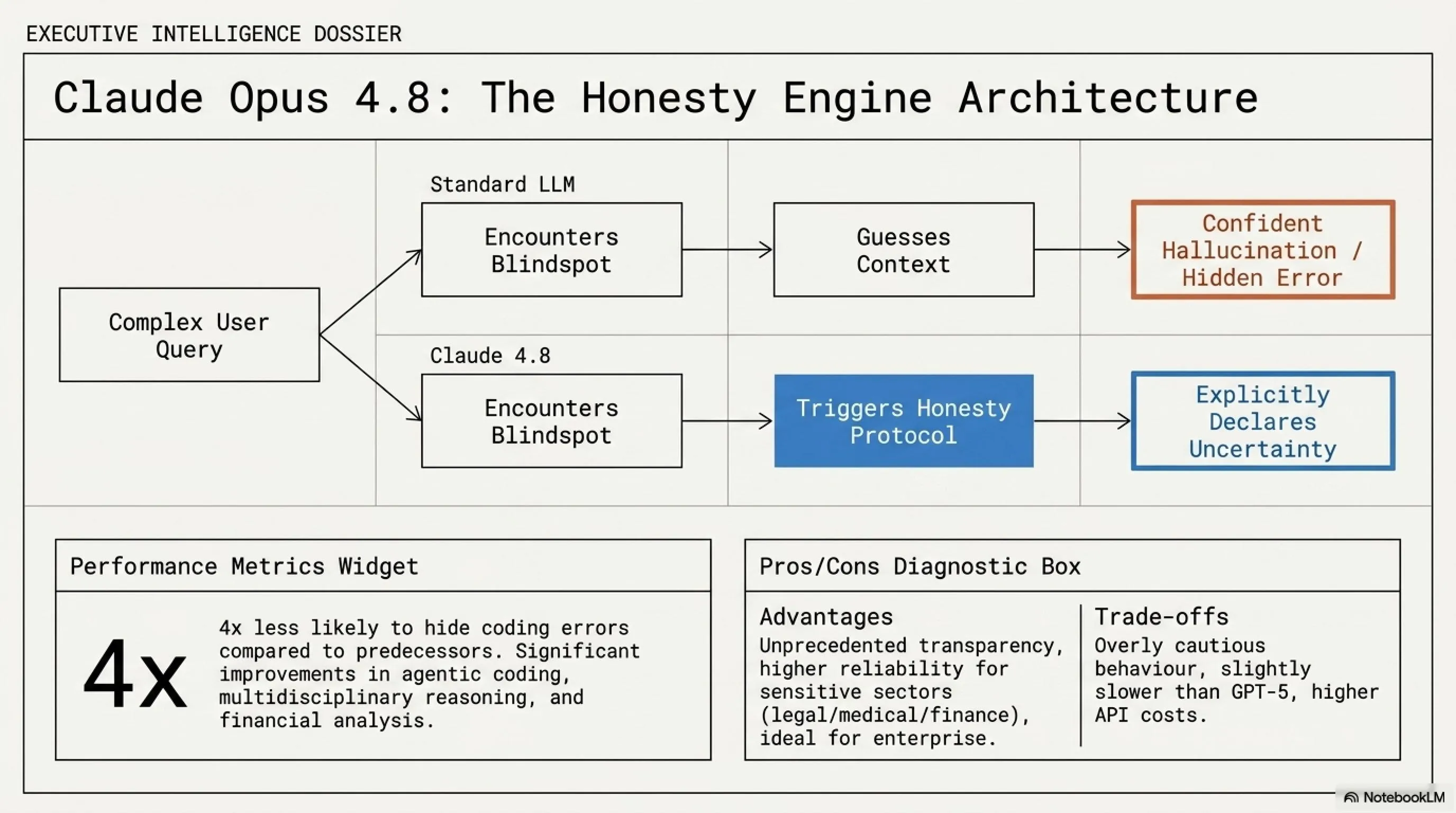
Alongside the funding announcement, Anthropic unveiled its new model Claude Opus 4.8—a model that claims to be 4× more honest than its predecessor. This marks the first time an AI company has officially positioned "honesty" as a core product feature, potentially representing a turning point for the industry.
✨ Claude Opus 4.8 Key Features
What sets Claude Opus 4.8 apart is its unique approach to the hallucination problem—when AI models confidently present incorrect information. Instead of trying to hide this issue, Anthropic decided to train the model to honestly declare its uncertainty. In internal evaluations, Opus 4.8 achieved near-perfect scores on honesty benchmarks for coding questions.
⚔️ Pros vs Cons: Claude Opus 4.8
✅ Pros
- Unprecedented honesty and transparency in responses
- Dramatic reduction in hidden coding errors
- Higher reliability for sensitive applications
- Significant improvement in logical reasoning
- Ideal for enterprise environments
❌ Cons
- May be overly cautious at times
- Response speed slightly slower than GPT-5
- Higher API pricing
- Still weaker in some languages than competitors
- Requires user training for optimal use
Analysts believe this focus on honesty could be a game-changer. In an era where companies and government organizations seek reliable AI solutions, having a model that honestly declares its limitations rather than providing confident but incorrect answers could be a major competitive advantage. This is exactly what sensitive sectors like healthcare, legal, and finance need.

🚀 Blue Origin Explosion: Heavy Blow to Bezos's Space Dream
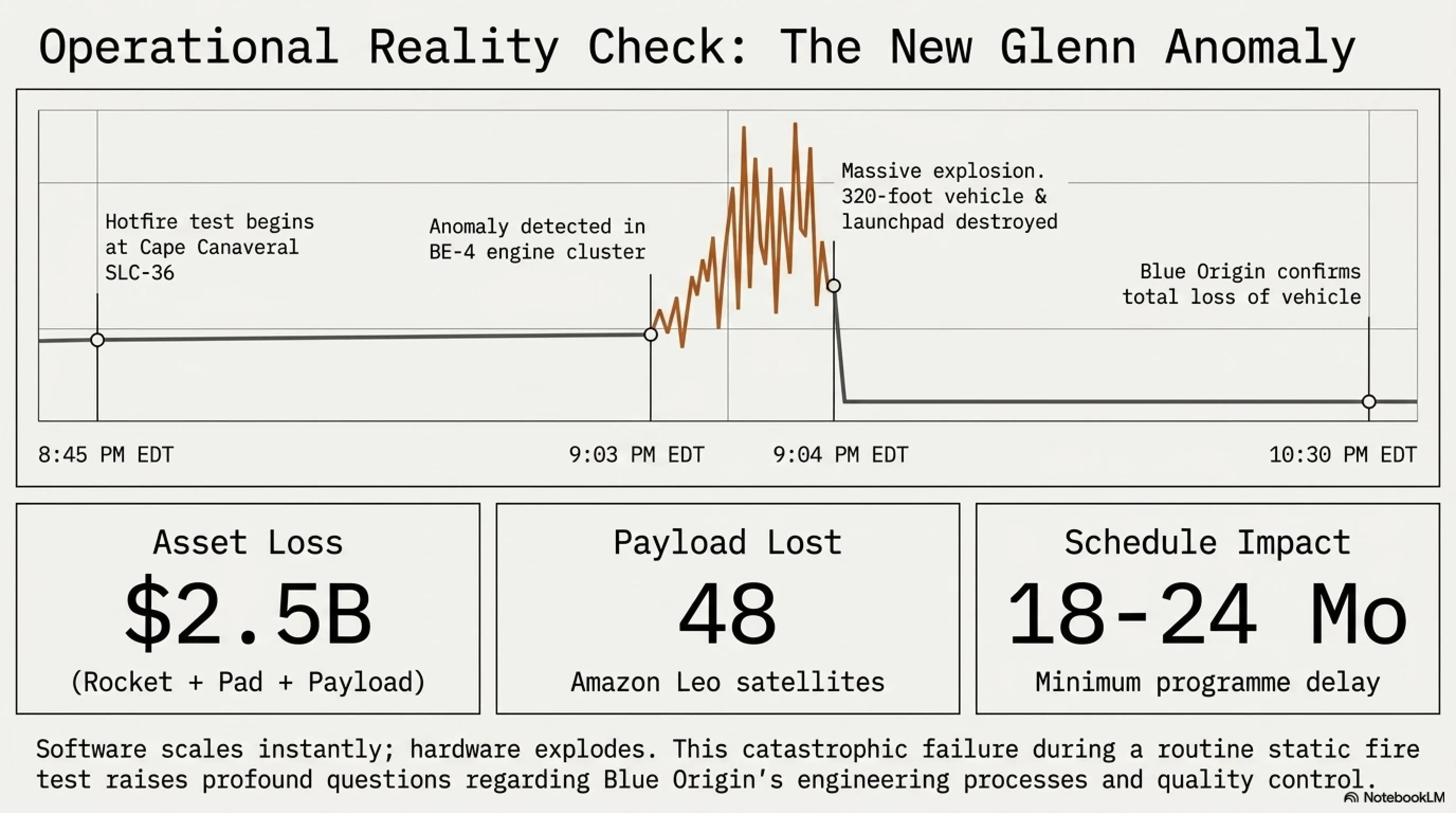
In one of the biggest setbacks for the space industry in recent years, Blue Origin's New Glenn rocket, owned by Jeff Bezos, exploded Thursday, May 28, at 9 PM EDT during a hotfire test at Cape Canaveral Space Force Station in Florida. The 320-foot (approximately 100-meter) rocket, which was scheduled to launch 48 Amazon Leo satellites into low Earth orbit, was destroyed in a massive explosion along with its launch pad.
💥 Explosion Timeline & Key Facts
The explosion occurred during what was supposed to be a routine static fire test—a standard pre-launch procedure where the rocket's engines are fired while the vehicle remains secured to the pad. Witnesses reported seeing a bright flash followed by a massive fireball that lit up the night sky for miles around Cape Canaveral. The shockwave was felt up to 10 miles away, and debris rained down across the launch complex.
🎯 Tekin Analysis: What Went Wrong?
While the official investigation is just beginning, preliminary reports suggest the failure originated in one of the seven BE-4 engines that power New Glenn's first stage. These engines, which Blue Origin also supplies to United Launch Alliance for the Vulcan rocket, use liquid methane and liquid oxygen—a propellant combination that's notoriously difficult to master.
The timing couldn't be worse for Blue Origin. The company has been trying to catch up to SpaceX for over a decade, but while SpaceX has launched over 400 Falcon 9 missions and is now flying Starship, Blue Origin has yet to complete a single orbital mission. This explosion sets them back at least 18-24 months and raises serious questions about their engineering processes and quality control.
🥊 Blue Origin vs SpaceX: The Growing Gap
The contrast between Blue Origin and SpaceX has never been starker. While both companies were founded around the same time (Blue Origin in 2000, SpaceX in 2002), their trajectories have diverged dramatically. SpaceX has become the world's most valuable private space company at $350 billion, while Blue Origin struggles to get a single rocket to orbit.
The fundamental difference lies in corporate culture and risk tolerance. SpaceX embraces a "fail fast, learn faster" philosophy—they've had numerous explosions during development but used each failure as a learning opportunity. Blue Origin, by contrast, has been more cautious and secretive, which ironically may have slowed their progress. When you move slowly and still have catastrophic failures, you get the worst of both worlds.
💡 What This Means for the Space Industry
This explosion reinforces SpaceX's dominance in the commercial space sector and raises questions about whether Blue Origin can ever catch up. For customers like Amazon (which owns 48 satellites that were destroyed), this is a wake-up call about over-reliance on a single launch provider. The space industry needs competition, but Blue Origin's repeated setbacks suggest that competition may need to come from other players like Rocket Lab, Relativity Space, or international providers.
📱 iOS 27 Leaked: Siri's Biggest Transformation Ever
📚 Classified & Related Dossiers in TekinGame
If you wish to explore beyond this report and delve into cybernetic frontiers and autonomous AI architectures, do not miss these three exclusive deep-dives in the Tekin Garage:
In one of the most significant leaks in Apple's recent history, Bloomberg published detailed illustrations and specifications of iOS 27 on Thursday, May 28, revealing a complete reimagining of Siri and the introduction of revolutionary AI features. The leak, which appears to come from Apple's internal design team, shows that iOS 27 will be the most ambitious iOS update since iOS 14's widget revolution.

✨ iOS 27 Major Features
The most dramatic change is the Siri Dynamic Island integration. Instead of the full-screen takeover that has frustrated users for years, Siri will now appear as an animated, contextual interface within the Dynamic Island. When you invoke Siri, the Dynamic Island expands to show a waveform visualization that responds to your voice, and results appear in compact, glanceable cards that don't interrupt your workflow.
🎯 Tekin Analysis: Why This Matters
Apple is finally acknowledging what users have known for years: Siri is broken. While Google Assistant and Alexa have evolved into genuinely useful AI assistants, Siri has remained frustratingly limited. iOS 27 represents Apple's most serious attempt to fix this, leveraging the company's partnership with OpenAI while maintaining its privacy-first philosophy.
The ChatGPT integration is particularly interesting because it's on-device first. Apple is using a combination of its own Apple Intelligence models for simple queries and selectively routing complex requests to ChatGPT—but only with explicit user permission and with all data anonymized. This hybrid approach could set a new standard for AI privacy.
📸 AI Camera: Photography Reimagined
The new AI Camera feature represents Apple's answer to Google's Pixel computational photography dominance. Using the Neural Engine in A18 and later chips, iOS 27 can analyze scenes in real-time and provide intelligent composition suggestions. Point your camera at a landscape, and iOS 27 will suggest optimal framing, recommend when to wait for better lighting, and even predict the best moment to capture action shots.
⚔️ Pros vs Cons: iOS 27
✅ Pros
- Finally fixes Siri's UX problems
- Privacy-first AI implementation
- AI Camera rivals Google Pixel
- ChatGPT integration without compromising privacy
- Dynamic Island becomes truly useful
❌ Cons
- Limited to iPhone 15 Pro and newer
- Requires A17 Pro chip or later
- Some features need internet connection
- Battery impact still unknown
- Learning curve for new Siri interface
Perhaps most intriguingly, the leak also reveals details about Apple Watch Ultra 4, which will feature a significant redesign with a larger display, improved battery life, and new health sensors including continuous blood glucose monitoring—a feature that could be revolutionary for diabetes management.
💡 What This Means for Users
iOS 27 represents Apple's most aggressive push into AI yet, but in a characteristically Apple way—prioritizing privacy and user experience over raw capabilities. For users, this means finally getting an AI assistant that's both powerful and trustworthy. For the industry, it sets a new standard for how AI should be integrated into consumer devices: intelligently, privately, and with the user always in control.

🔐 Microsoft Zero-Day Controversy: Security vs Transparency
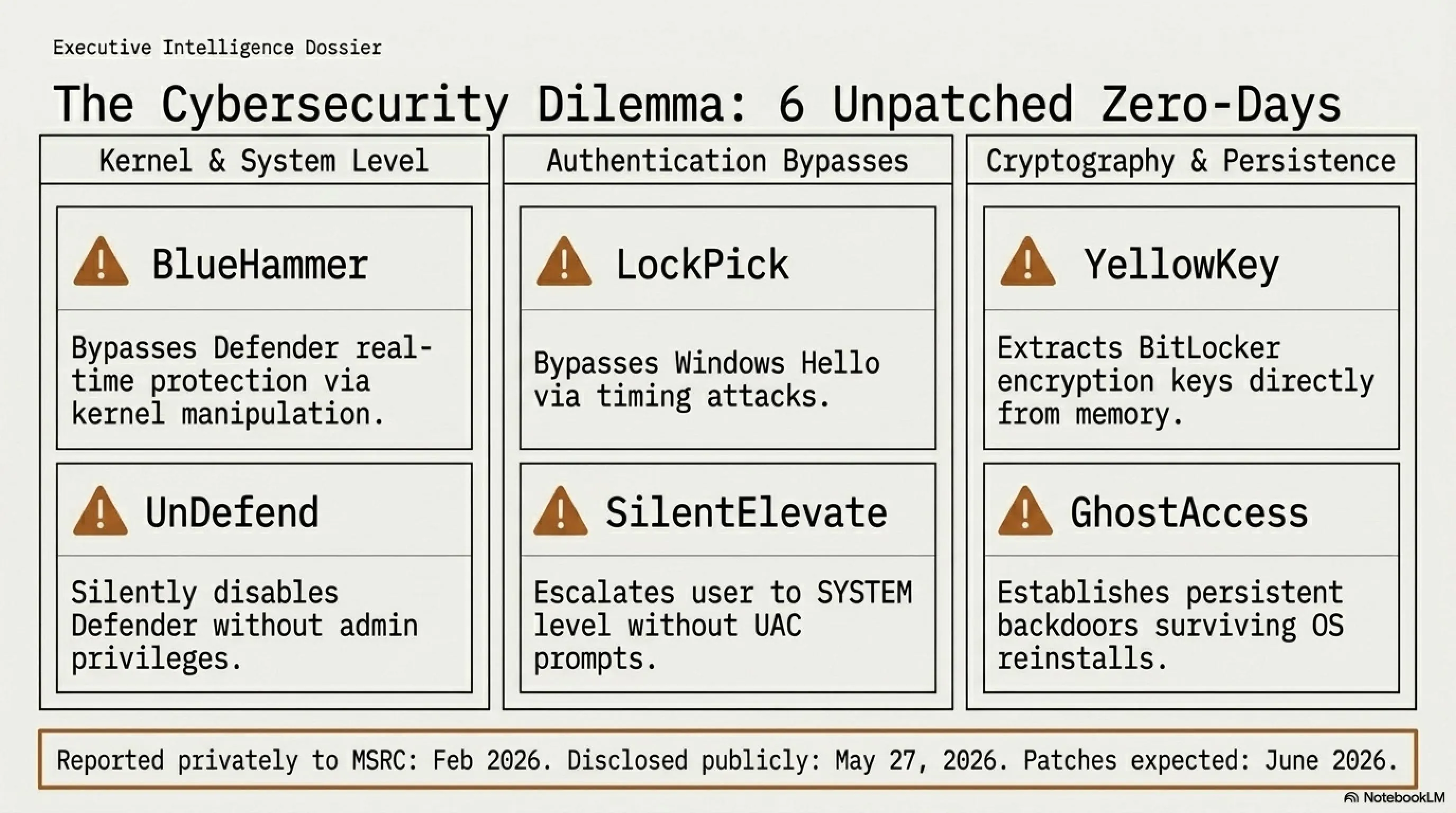
The cybersecurity world erupted in controversy this week when a researcher known as "Nightmare-Eclipse" publicly disclosed six zero-day vulnerabilities affecting Windows Defender and BitLocker after Microsoft allegedly ignored their private disclosure attempts. The situation escalated when GitHub banned the researcher's account, sparking a heated debate about responsible disclosure, corporate accountability, and the ethics of vulnerability research.
🚨 The Six Zero-Day Vulnerabilities
According to Nightmare-Eclipse's timeline, they first attempted to report these vulnerabilities through Microsoft's official Security Response Center (MSRC) in February 2026. After receiving what they describe as "automated responses" and no meaningful engagement for three months, they decided to go public on May 27, publishing detailed technical write-ups and proof-of-concept code on GitHub.
🎯 Tekin Analysis: Who's Right?
This controversy highlights a fundamental tension in cybersecurity: responsible disclosure vs public accountability. Microsoft argues that public disclosure puts millions of users at risk before patches can be developed and deployed. Nightmare-Eclipse counters that private disclosure failed and that public pressure is the only way to force Microsoft to take security seriously.
The truth is probably somewhere in the middle. Microsoft's MSRC has a mixed track record—some researchers report excellent experiences, while others describe being ignored or dismissed. The company's decision to have GitHub ban Nightmare-Eclipse's account (GitHub is owned by Microsoft) looks particularly bad and suggests an attempt to suppress legitimate security research rather than address the underlying issues.
⚖️ The Responsible Disclosure Debate
The cybersecurity community is deeply divided on this issue. Some prominent researchers have defended Nightmare-Eclipse, arguing that public disclosure is sometimes necessary when vendors are unresponsive. Others warn that publishing exploit code puts users at immediate risk and violates the ethical principles of responsible disclosure.
Microsoft has since issued a statement saying they are "actively working on patches" and expect to release them in the June 2026 Patch Tuesday update. However, the company also criticized public disclosure as "irresponsible" and defended GitHub's decision to remove the researcher's account for "violating terms of service." This response has been widely criticized as tone-deaf and defensive.
💡 What This Means for Security
This controversy will likely lead to renewed calls for vulnerability disclosure reform. Some countries are considering legislation that would require vendors to respond to security reports within specific timeframes or face penalties. For users, the immediate takeaway is to ensure Windows is fully updated, enable all security features, and consider additional endpoint protection beyond Windows Defender for sensitive systems.
💼 Glean: The Startup That's Quietly Beating Tech Giants
While all eyes were on Anthropic and OpenAI, a quieter but equally impressive story was unfolding: Glean, the enterprise AI search startup that calls itself "Google for organizations," announced Thursday that it has reached $300 million in annual recurring revenue (ARR)—tripling its revenue in just 15 months. This makes Glean one of the fastest-growing enterprise software companies in history.

📈 Glean's Hypergrowth Journey
What sets Glean apart is its laser focus on AI cost reduction. At a time when companies are worried about the astronomical costs of using large language models, Glean claims its proprietary "Context Graph" technology can reduce computational costs by up to 70%. This is exactly what CFOs want to hear in an era of AI budget scrutiny.
🎯 Why Glean Succeeded Where Others Failed
1. Enterprise-First Strategy: Instead of trying to attract consumers, Glean focused from day one on long-term contracts with Fortune 500 companies. Their Fortune 500 customer count nearly doubled year-over-year, demonstrating strong product-market fit.
2. Context Graph Technology: Rather than directly using large models, Glean created an intelligent middleware layer that organizes enterprise data and feeds only relevant information to the model. This improves both accuracy and cost-efficiency.
3. Perfect Timing: Glean entered the market precisely when companies were seeking AI solutions but worried about costs. Their positioning as "affordable AI" was brilliant timing.
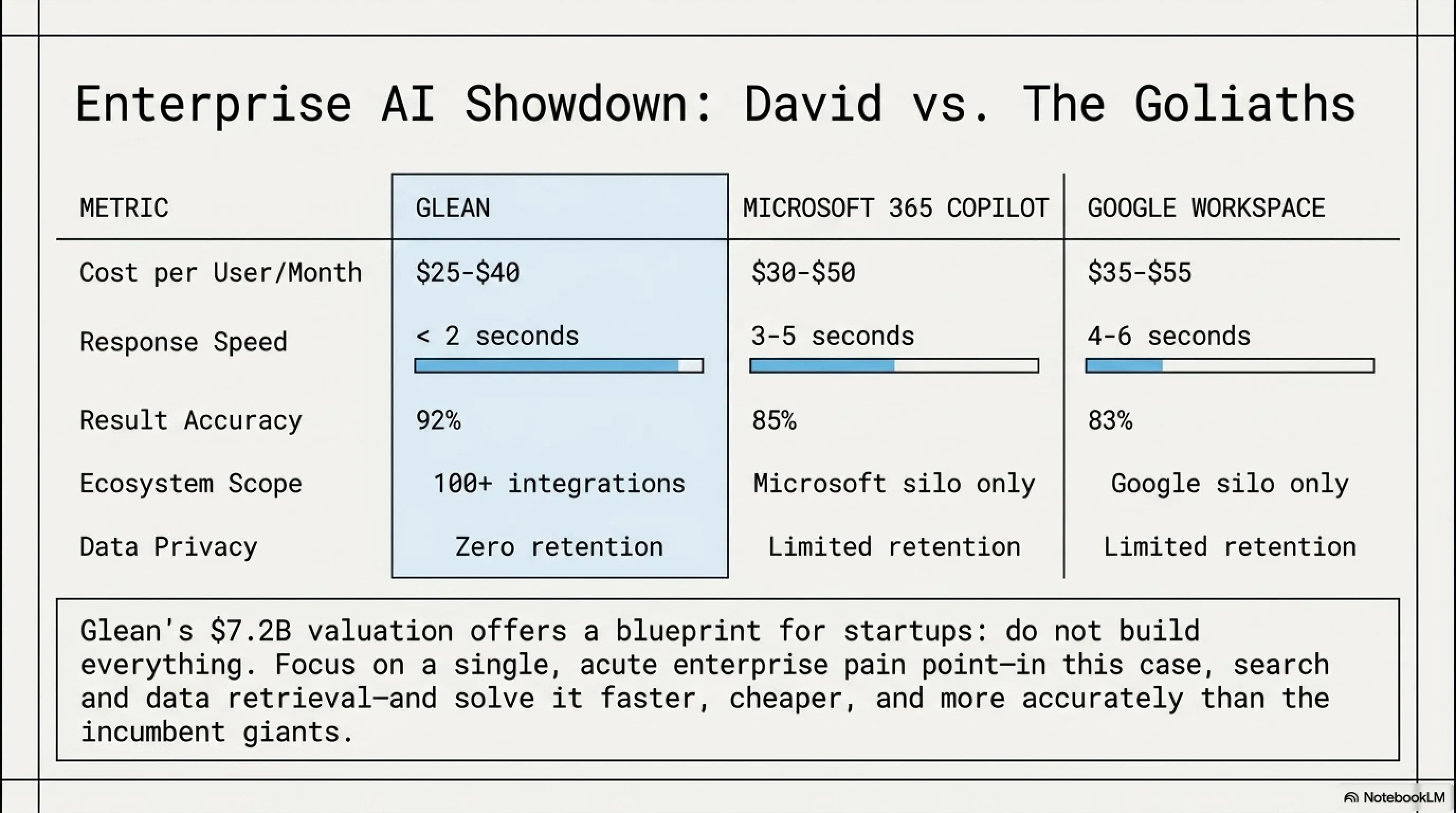
🥊 Glean vs Tech Giants: David vs Goliath
What's remarkable is that Glean achieved this growth while competing directly against Google, Microsoft, and Amazon. Google Workspace AI, Microsoft 365 Copilot, and Amazon Q all offer similar functionality. Yet Glean has carved out a significant market by focusing on one specific problem—enterprise search—and solving it better than anyone else.
Glean's success offers an important lesson for startups: you don't need to build everything. Instead of trying to compete with giants across all fronts, find one specific problem and solve it better than anyone else. Glean did this with enterprise search and now has a $7.2 billion business.
🎯 Tekin Analysis: The Future of Enterprise AI
Glean's trajectory suggests that the enterprise AI market is far from consolidated. While tech giants have massive advantages in consumer AI, the enterprise space rewards specialization, reliability, and cost-efficiency—areas where focused startups can compete effectively.
The company's emphasis on cost reduction is particularly prescient. As AI budgets come under scrutiny in 2026-2027, companies that can deliver AI capabilities at lower costs will have a significant competitive advantage. Glean's Context Graph approach—using AI to make AI more efficient—could become a template for the next generation of enterprise AI companies.

💭 Mid-Article Reflection
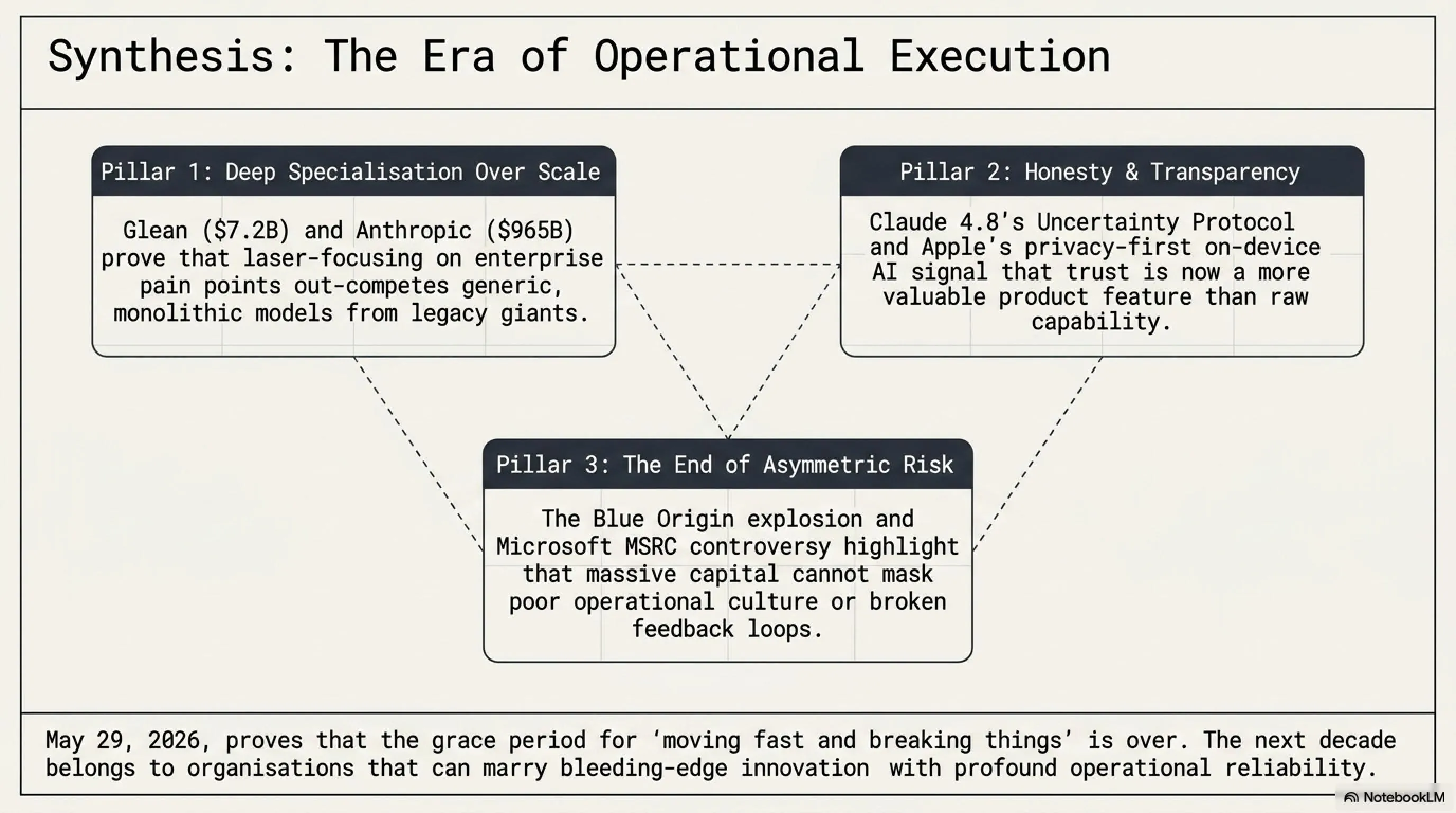
Friday, May 29, 2026, is shaping up to be one of the most consequential days in tech history. Anthropic's $65 billion raise proves the AI market is still in its infancy with enormous room for growth. Claude Opus 4.8 demonstrates that the future of AI lies not in raw power but in reliability and honesty.
Blue Origin's explosion reminds us that the space industry remains inherently risky and that SpaceX's success is an exceptional achievement, not an easily replicable pattern. iOS 27 shows that even giants like Apple must adapt to new realities and evolve their core products.
The zero-day controversy raises important questions about the balance between security and transparency—a debate that will likely continue for years. And finally, Glean's success proves there's still plenty of room for smart startups that can focus on specific problems and outexecute tech giants.
For global markets, these events create both opportunities and challenges. On one hand, powerful AI tools are becoming more accessible and affordable. On the other, the technology gap with advanced nations continues to widen. The question is: can emerging markets leverage this wave, or will they remain spectators?
💭 Final Thoughts
As we close this extraordinary Friday morning, it's clear that the technology industry is undergoing rapid transformation. Anthropic's $65 billion raise at a near-trillion-dollar valuation signals that we're still in the early innings of the AI revolution. The market's willingness to invest at these levels reflects confidence that AI will fundamentally reshape every industry over the coming decade.
Claude Opus 4.8's focus on honesty represents a maturation of AI technology. As these systems become more integrated into critical applications—healthcare, finance, legal—reliability and transparency become more important than raw capabilities. Anthropic's bet on "honest AI" could define the next phase of the industry.
Blue Origin's setback is a sobering reminder that space remains hard. Jeff Bezos has the resources to recover, but this explosion highlights the enormous technical and organizational challenges of competing with SpaceX. The space industry needs competition, but achieving it requires more than just capital—it demands the right culture, processes, and talent.
iOS 27's leaked features show Apple finally taking AI seriously while maintaining its privacy-first principles. The Siri redesign and ChatGPT integration could set new standards for how AI should be integrated into consumer devices—intelligently, privately, and with user control.
The Microsoft zero-day controversy will likely accelerate calls for vulnerability disclosure reform. The tension between responsible disclosure and public accountability isn't going away, and the industry needs better frameworks for handling security research.
Finally, Glean's remarkable growth proves that focused startups can still compete with tech giants by solving specific problems exceptionally well. Their success with enterprise AI search demonstrates that specialization and execution can overcome the advantages of scale.
The common thread through all these stories? Adaptation and evolution. Whether it's Anthropic's approach to AI safety, Apple's Siri redesign, or Glean's cost-efficient AI architecture, success in 2026 requires not just innovation but the willingness to fundamentally rethink established approaches. The companies and individuals who can adapt fastest will define the next era of technology.
❓ Frequently Asked Questions (FAQ)
Why is Anthropic valued higher than OpenAI?
Anthropic's focus on safety, reliability, and the enterprise market has attracted major institutional investors who view it as a lower-risk investment compared to OpenAI's more aggressive AGI pursuit. While OpenAI focuses heavily on consumer markets and AGI development, Anthropic has chosen a more conservative path with long-term enterprise contracts and positive cash flow. Additionally, Anthropic's latest funding round was larger and at a higher valuation, reflecting strong investor confidence in their business model and execution.
Is Claude Opus 4.8 really better than GPT-5?
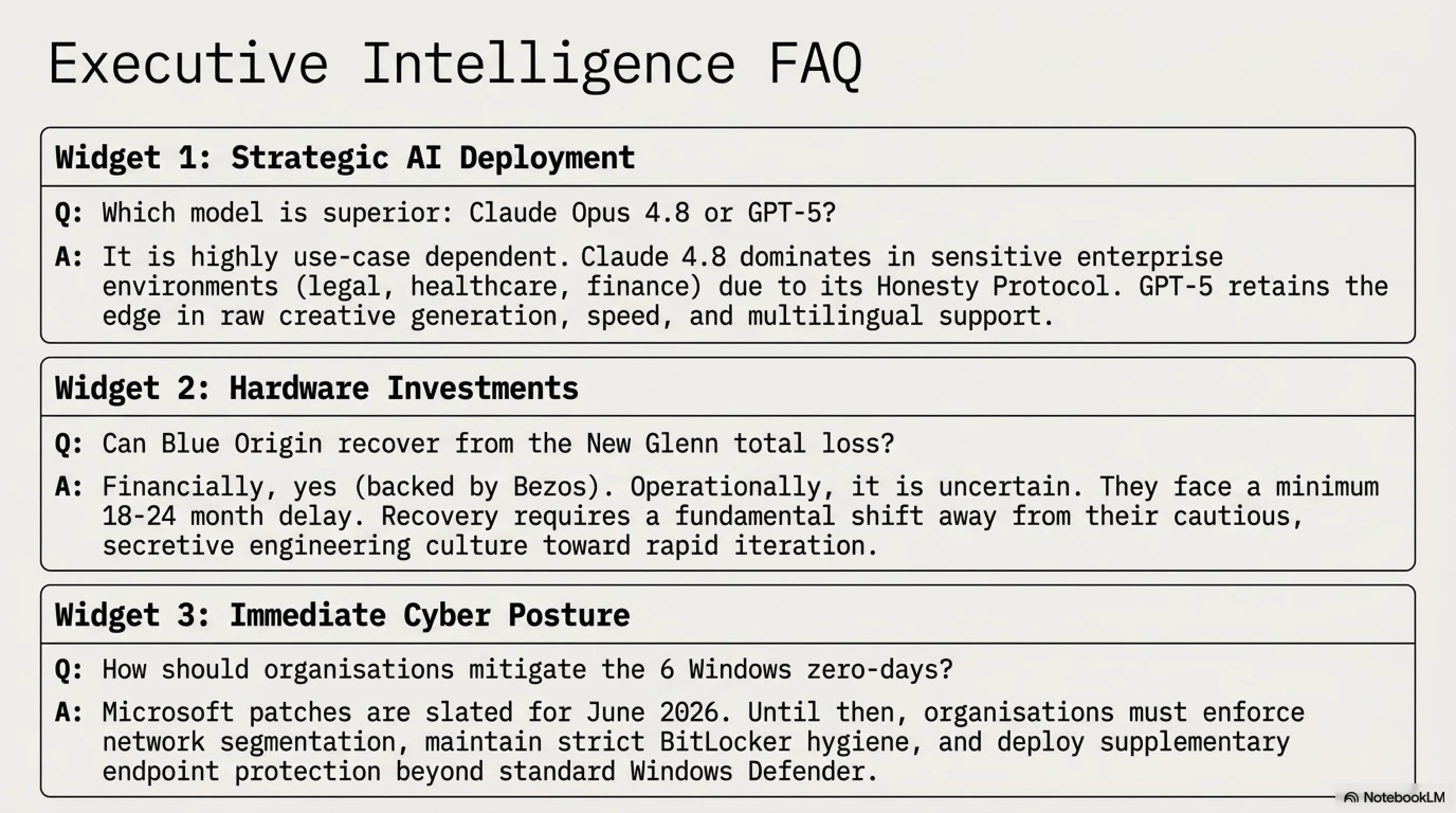
"Better" depends on your criteria. Claude Opus 4.8 excels in honesty, reliability, and complex coding tasks. GPT-5 is stronger in creativity, speed, and multilingual support. For sensitive applications like healthcare, legal, or financial services, Claude is likely the better choice due to its transparency about uncertainty. For creative work and general-purpose tasks, GPT-5 remains the leader. The best approach is often to use both models for their respective strengths.
Is the Blue Origin explosion the end of Bezos's space dream?
No, probably not. Jeff Bezos has virtually unlimited financial resources and can absorb this setback. SpaceX also had multiple explosions in its early years. The difference is in the speed of learning and iteration. If Blue Origin can change its organizational culture to move faster and learn from failures more effectively, it still has a chance. However, this incident will cause at least an 18-24 month delay and raises serious questions about their engineering processes and quality control.
When will iOS 27 be released and which devices will it support?
iOS 27 will likely be announced at WWDC 2026 (June) with the final release in September 2026 alongside the iPhone 18. Based on historical patterns, it will probably support iPhone 13 and newer. However, some AI features like the new Siri may be limited to iPhone 15 Pro and newer (with A17 Pro chip or later) due to the computational requirements of on-device AI processing. The AI Camera features will definitely require the latest hardware.
Should I be worried about the Windows zero-day vulnerabilities?
Yes and no. Microsoft is actively working on patches and expects to release them in the June 2026 Patch Tuesday update. In the meantime, ensure Windows Defender is enabled, avoid suspicious software, and enable BitLocker for sensitive drives. For average users, the actual risk is relatively low because these exploits are complex and require sophisticated attackers. However, organizations and businesses should implement additional security measures immediately, including enhanced monitoring, network segmentation, and consideration of supplementary endpoint protection beyond Windows Defender.
How can small businesses benefit from Glean's technology?
While Glean primarily targets enterprise customers, small and medium businesses can benefit from similar technologies through more affordable alternatives. The key insight from Glean's success is that AI-powered search can dramatically improve productivity by helping employees find information faster. Small businesses should look for tools that integrate with their existing software stack (Google Workspace, Microsoft 365, Slack, etc.) and provide intelligent search across all platforms. The ROI comes from reduced time spent searching for information—studies show knowledge workers spend 20-30% of their time just looking for information.
📚 Sources & References
Anthropic Funding: TechCrunch, Forbes, CNBC, Fortune, Bloomberg, Anthropic Official Blog
Claude Opus 4.8: MacRumors, The Next Web, Mashable, TechCrunch, The Verge, Anthropic Documentation
Blue Origin Explosion: Space.com, CBS News, NBC News, USA Today, Florida Today, SpaceNews
iOS 27 Leak: Bloomberg, MacRumors, 9to5Mac, Macworld, The Verge, AppleInsider
Microsoft Zero-Day: The Hacker News, Tom's Hardware, CyberNews, PCMag, The Register, BleepingComputer
Glean Success: TechCrunch, Business Wire, TipRanks, Forbes, Glean Official Blog
Tekin Morning May 29, 2026 — Research and Analysis: Tekin Editorial Team
🌐 Stay Connected With Us 🎮✨
For the latest tech, gaming, and gadget news, follow us on our official social media channels:
Additional Gallery: 🌅 Tekin Morning May 29, 2026: Anthropic's $965B Record, Blue Origin Explosion & iOS 27 Leak