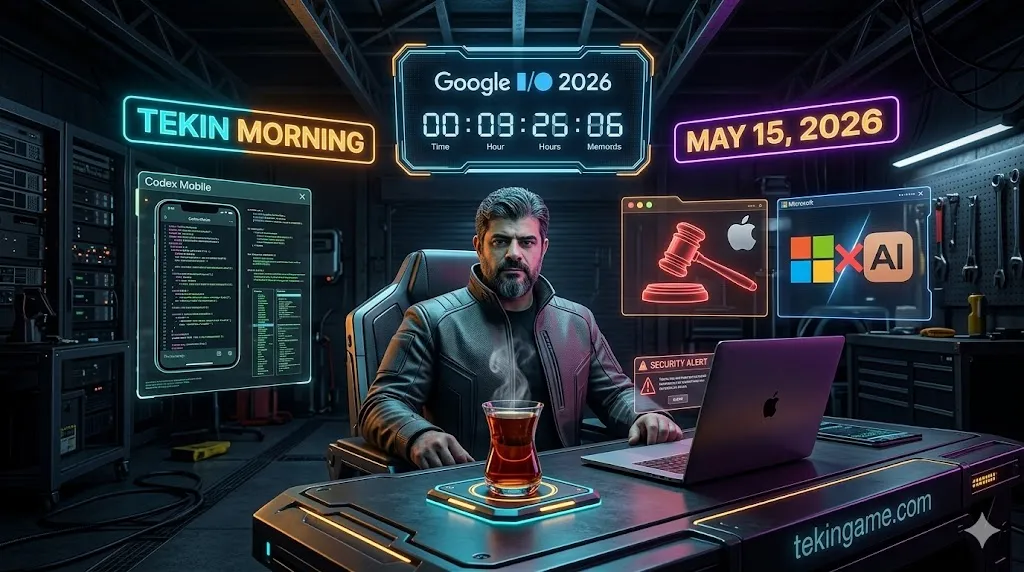
🌅 Welcome to Tekin Morning — May 15, 2026
Good morning, Tekiners! Today is one of the most packed news days in recent memory. OpenAI is making moves on multiple fronts — launching Codex on mobile while simultaneously preparing legal action against Apple. Microsoft is pulling the plug on Claude Code. And Meta just unlocked neural handwriting for everyone. Let's break it all down.
⚡ Today's Top Headlines:
🤖 OpenAI Codex lands on iOS & Android — code from anywhere
⚖️ OpenAI preparing legal action against Apple over failed ChatGPT deal
🔄 Microsoft cancels Claude Code licenses, pushes Copilot CLI
🔒 ChatGPT Mac App security breach — mandatory update by June 12
👓 Meta Ray-Ban Display neural handwriting goes live for all users
🎯 Google I/O 2026 preview — Gemini, Android XR glasses, and more
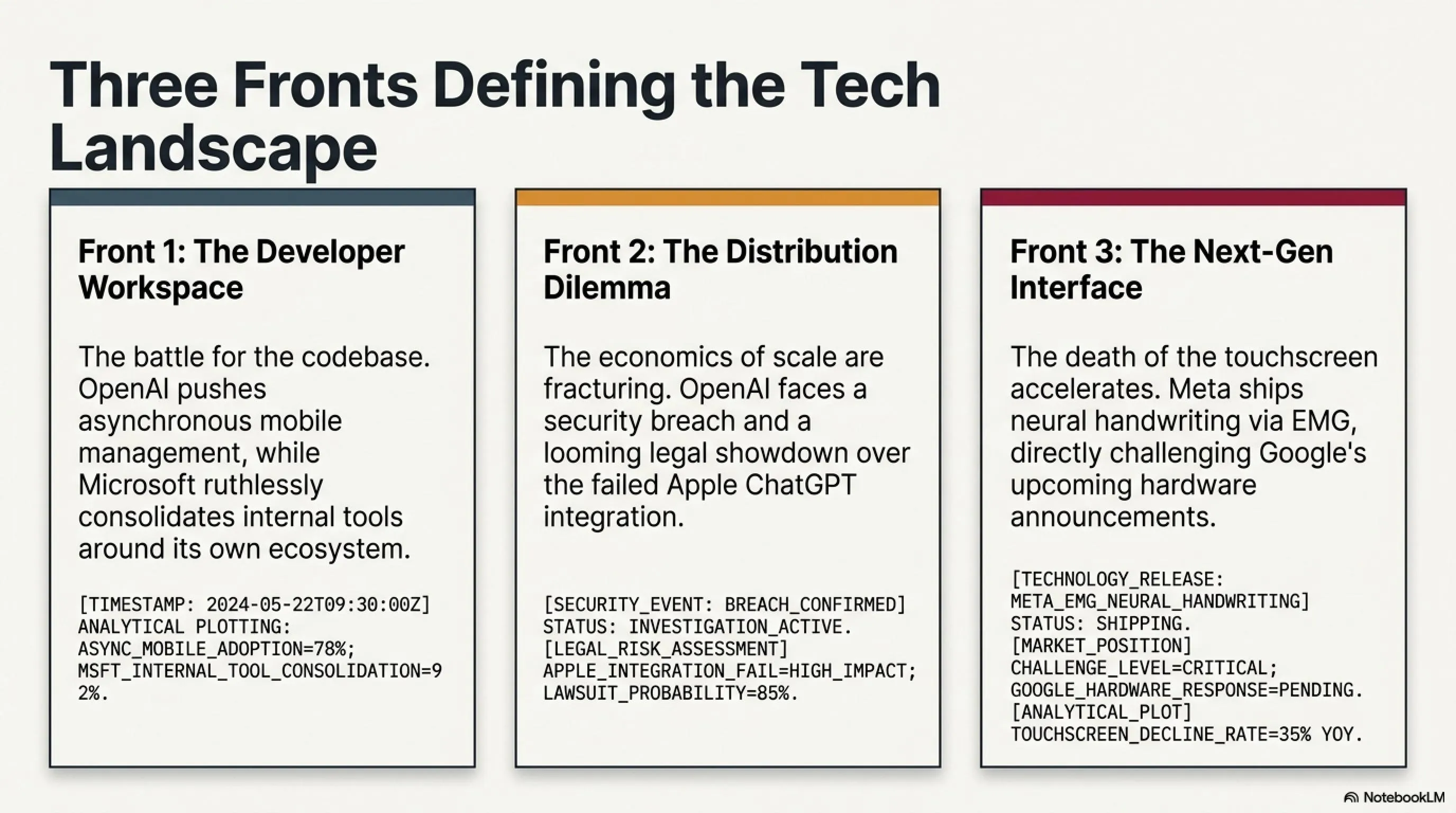
Image: Tech news overview — May 15, 2026 | Source: Tekin Editorial
🤖 Story 1: OpenAI Codex Comes to Mobile — Code From Anywhere
OpenAI has officially brought its AI coding tool Codex to the ChatGPT mobile app, available on iOS, iPad, and Android. This isn't a standalone coding environment on your phone — it's something more interesting: a remote control for your coding workflows, wherever they're running.
Codex, powered by GPT-5.5, can handle hours-long programming tasks autonomously. The mobile integration means developers can now monitor, approve, redirect, and manage those tasks from their phones — whether the environment is a Mac mini on their desk, a company devbox, or a remote cloud server. OpenAI describes this as "a new rhythm for collaboration" between humans and AI agents.
From the mobile app, users can work across all their Codex threads, review outputs, approve commands, change models, or start something entirely new. The app loads live context from the machine where Codex is operating — including project context, approvals, plugins, screenshots, terminal output, diffs, and test results.
📱 What You Can Do With Codex on Mobile:
- ✅ Thread Management: Start, continue, and manage all coding projects
- ✅ Output Review: See results, diffs, and terminal output in real time
- ✅ Command Approval: Approve or reject Codex actions remotely
- ✅ Model Switching: Change between AI models on the fly
- ✅ Live Context: Access project context, screenshots, and test results
- ✅ Multi-Environment: Connect to laptops, devboxes, and remote environments
🔍 Tekin Analysis: The Async Developer Workflow Is Here
This is a paradigm shift. Imagine a developer on the subway while Codex is running a complex refactor on their company server — they can now monitor, approve, and redirect from their phone. OpenAI calls this "a new rhythm for collaboration," and it's exactly right.
What this means for you: If you're a developer, this is the closest thing to having a junior engineer working 24/7 while you sleep. The mobile interface means you're never truly "away" from your codebase. This is OpenAI's direct counter to Anthropic's Claude Code surge — and it's a strong move. The race for the AI coding crown is intensifying.
⚖️ Story 2: OpenAI Prepares Legal Action Against Apple
In what may be the most consequential tech legal battle since Epic vs. Apple, OpenAI is actively exploring legal action against Apple over their ChatGPT-Siri integration deal. According to Bloomberg's Mark Gurman — one of the most reliable sources in tech journalism — OpenAI lawyers are working with an outside legal firm on a range of options, including a formal breach-of-contract notice.
The core of the dispute: OpenAI expected the Apple partnership — which wove ChatGPT into Siri and Apple's operating systems — to deliver a flood of paid subscribers and prominent placement. Instead, users simply used the free tier and moved on. Apple, for its part, had little incentive to push users toward paid ChatGPT plans when it wasn't sharing in that revenue.
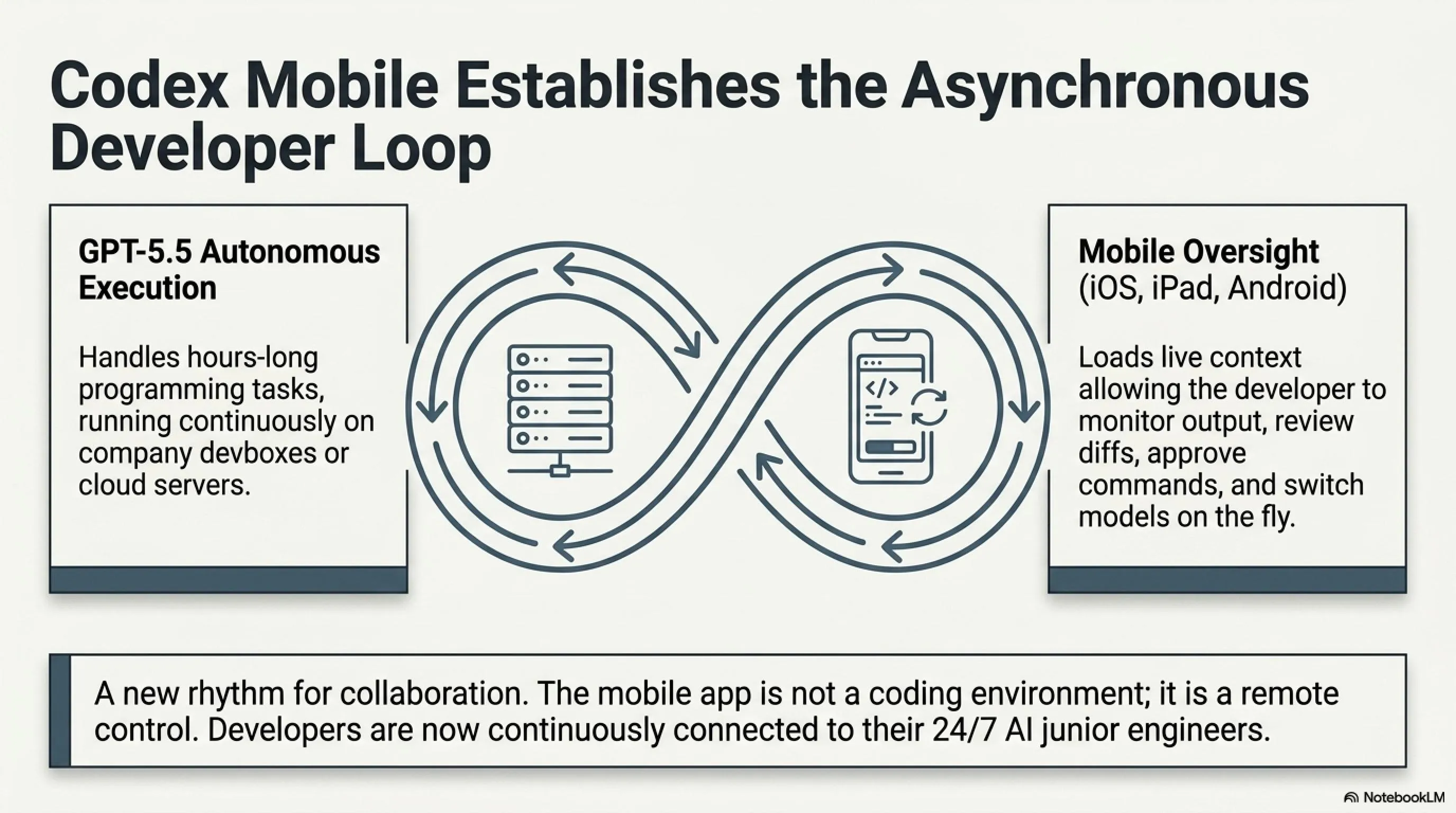
Image: The OpenAI-Apple partnership fracture | Source: Tekin Editorial
📊 OpenAI's Expectations vs. Reality:
| Metric | OpenAI Expected | What Happened |
|---|---|---|
| New Paid Subscribers | Massive growth | Below expectations |
| Siri Prominence | Central, featured | Marginal placement |
| Revenue Share | "iPhone gold mine" | Disappointing |
| Partnership Status | Long-term strategic | Unraveling |
✅ Why Legal Action Could Work for OpenAI
- Forces renegotiation of terms
- Potential financial damages
- Signals strength to future partners
- Could secure better Siri placement
❌ Risks of Going Legal
- Losing Apple partnership entirely
- Damaging other Big Tech relationships
- Massive legal costs and distraction
- Apple's legal team is formidable
🔍 Tekin Analysis: The AI Distribution Problem
This dispute reveals a fundamental tension in AI distribution: access to users ≠ revenue from users. Apple gave OpenAI access to hundreds of millions of iPhone users. But Apple had zero incentive to convert those users to paid ChatGPT subscribers — that money goes to OpenAI, not Apple.
What to watch next: If OpenAI files suit, Apple could respond by building its own LLM into Siri and cutting OpenAI out entirely. That would be catastrophic for OpenAI's consumer distribution strategy. The smarter play for OpenAI might be to use the legal threat as leverage for a better deal — not actually go to court.
🔄 Story 3: Microsoft Cancels Claude Code Licenses — The Paradox of Success
In a move that perfectly encapsulates the competitive dynamics of the AI tools market, Microsoft is canceling most of its internal Claude Code licenses and redirecting thousands of developers to use GitHub Copilot CLI instead. The reason? Claude Code was too popular — and that popularity was a problem for Microsoft's own AI ambitions.
Back in December 2025, Microsoft opened Claude Code access to thousands of internal developers — engineers, designers, product managers — as part of an experiment to democratize coding across the company. The tool proved wildly popular over six months. Sources tell The Verge that Claude Code became deeply embedded in daily workflows across Microsoft's Experiences + Devices division.
📋 The Microsoft Decision — Key Details:
- 🔴 Canceling: Most Claude Code licenses for internal developers
- 🟢 Replacing with: GitHub Copilot CLI (Microsoft-owned)
- 💰 Primary reason: Cost reduction (not quality issues)
- 🏗️ Strategic reason: Control, security, and direct product influence
- 📅 Timeline: Gradual rollout over coming weeks
- 👥 Affected: Thousands of Microsoft developers
In an internal memo, Microsoft's Jha wrote: "When we began offering both Copilot CLI and Claude Code, our goal was to learn quickly, benchmark the tools in real engineering workflows, and understand what best supported our teams. Claude Code was an important part of that learning… at the same time, Copilot CLI has given us something especially important: a product we can help shape directly with GitHub for Microsoft's repos, workflows, security expectations, and engineering needs."
⚔️ Claude Code vs. GitHub Copilot CLI — Head to Head:
| Feature | Claude Code | Copilot CLI |
|---|---|---|
| Developer | Anthropic | Microsoft/GitHub |
| Internal Popularity | ⭐⭐⭐⭐⭐ Very High | ⭐⭐⭐ Moderate |
| Microsoft Control | ❌ None | ✅ Full |
| Cost | Higher | Lower |
| Data Security | ⚠️ Third-party concerns | ✅ Full control |
| Customization | Limited | Deep integration possible |
🔍 Tekin Analysis: The Paradox of Success
Here's the brutal irony: Claude Code was so good that Microsoft decided to remove it. When a competitor's tool becomes more popular than your own inside your company, you have two choices — make your tool better, or restrict the competitor. Microsoft chose the latter.
What this means for Anthropic: Losing thousands of enterprise licenses at Microsoft is a significant financial hit. But more importantly, it signals that enterprise AI tool adoption is fragile — companies will always prefer tools they control. Anthropic needs to build deeper integrations and data security guarantees to compete at the enterprise level. What to watch: Will other large enterprises follow Microsoft's lead and pull back on Claude Code?
🔒 Story 4: ChatGPT Mac App Security Breach — Update Now
📚 Classified & Related Dossiers in TekinGame
If you wish to explore beyond this report and delve into cybernetic frontiers and autonomous AI architectures, do not miss these three exclusive deep-dives in the Tekin Garage:
If you use the ChatGPT desktop app on Mac, you need to update it before June 12, 2026. OpenAI has disclosed a security breach involving two employee devices. The good news: OpenAI found no evidence that user data was accessed, and production systems were not affected. The bad news: hackers did get in, and the mandatory update deadline is firm.
According to TechCrunch, the breach was limited to the personal devices of two OpenAI employees. OpenAI confirmed that no intellectual property was stolen and no user data was compromised. The company is being transparent about the incident — a positive sign — but the forced update requirement suggests the vulnerability was serious enough to warrant immediate patching across all installations.
🚨 Security Alert — Action Required
- ⚠️ Deadline: Update before June 12, 2026 (mandatory)
- ⚠️ Affected: ChatGPT Desktop App users on Mac
- ✅ User data: OpenAI says no user data was accessed
- ✅ Production systems: Not affected
- ✅ IP: No intellectual property stolen
- 🔧 How to update: App Store → ChatGPT → Update
🔍 Tekin Analysis: OpenAI's Rough May
May 2026 has been a brutal month for OpenAI: the Musk v. Altman trial closing arguments, the Apple partnership unraveling, a security breach, and fierce competition from Claude Code. Yet OpenAI keeps shipping — Codex on mobile is a strong product move.
The transparency angle: OpenAI's decision to publicly disclose this breach — even when user data wasn't compromised — is the right call. In an era where AI companies are under intense regulatory scrutiny, proactive disclosure builds trust. Compare this to how some companies have handled breaches in the past. What to watch: Whether regulators in the EU or US use this incident to push for stricter AI company security standards.
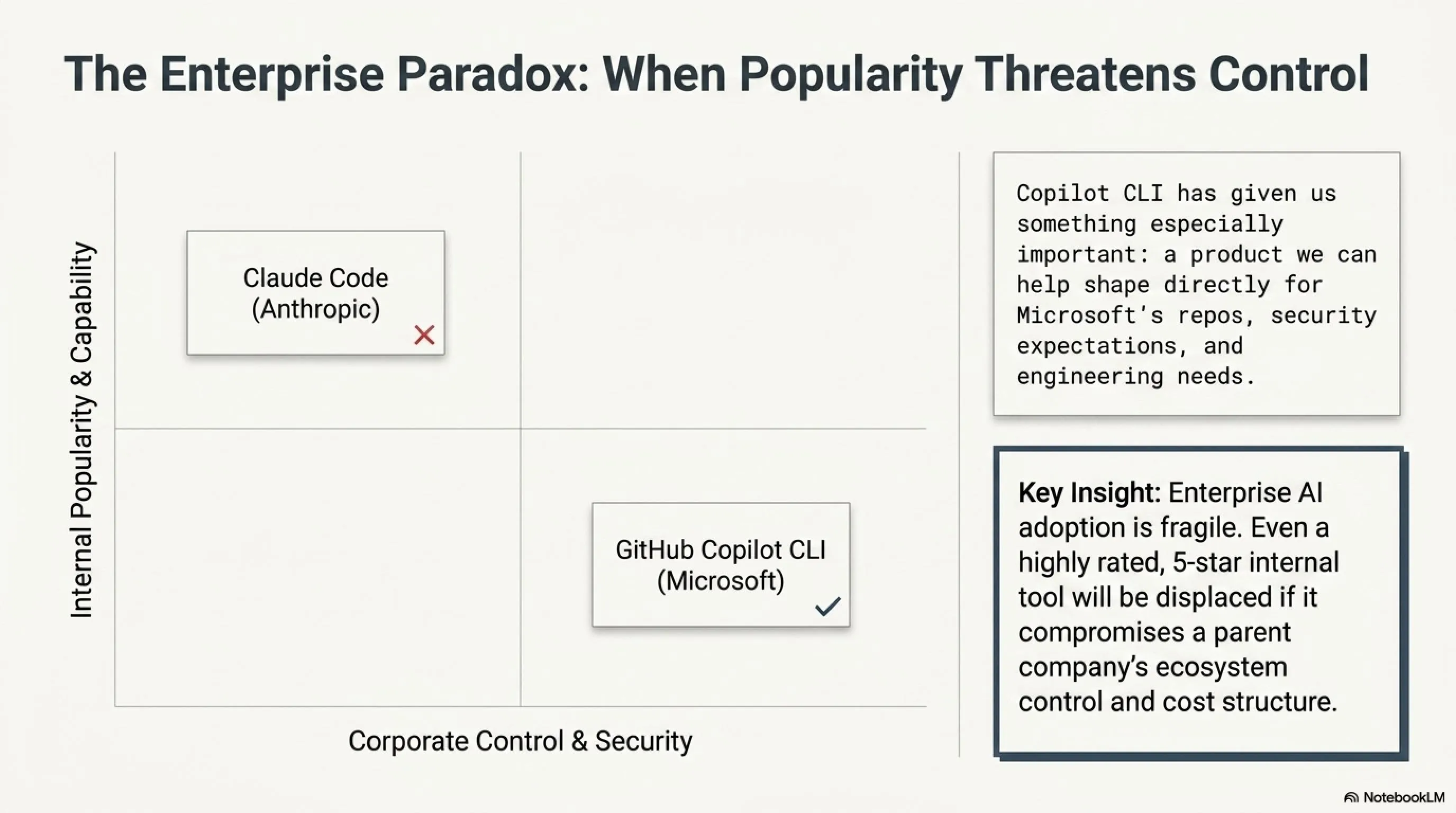
Image: AI security in 2026 | Source: Tekin Editorial
👓 Story 5: Meta Ray-Ban Display — Neural Handwriting Goes Live for Everyone
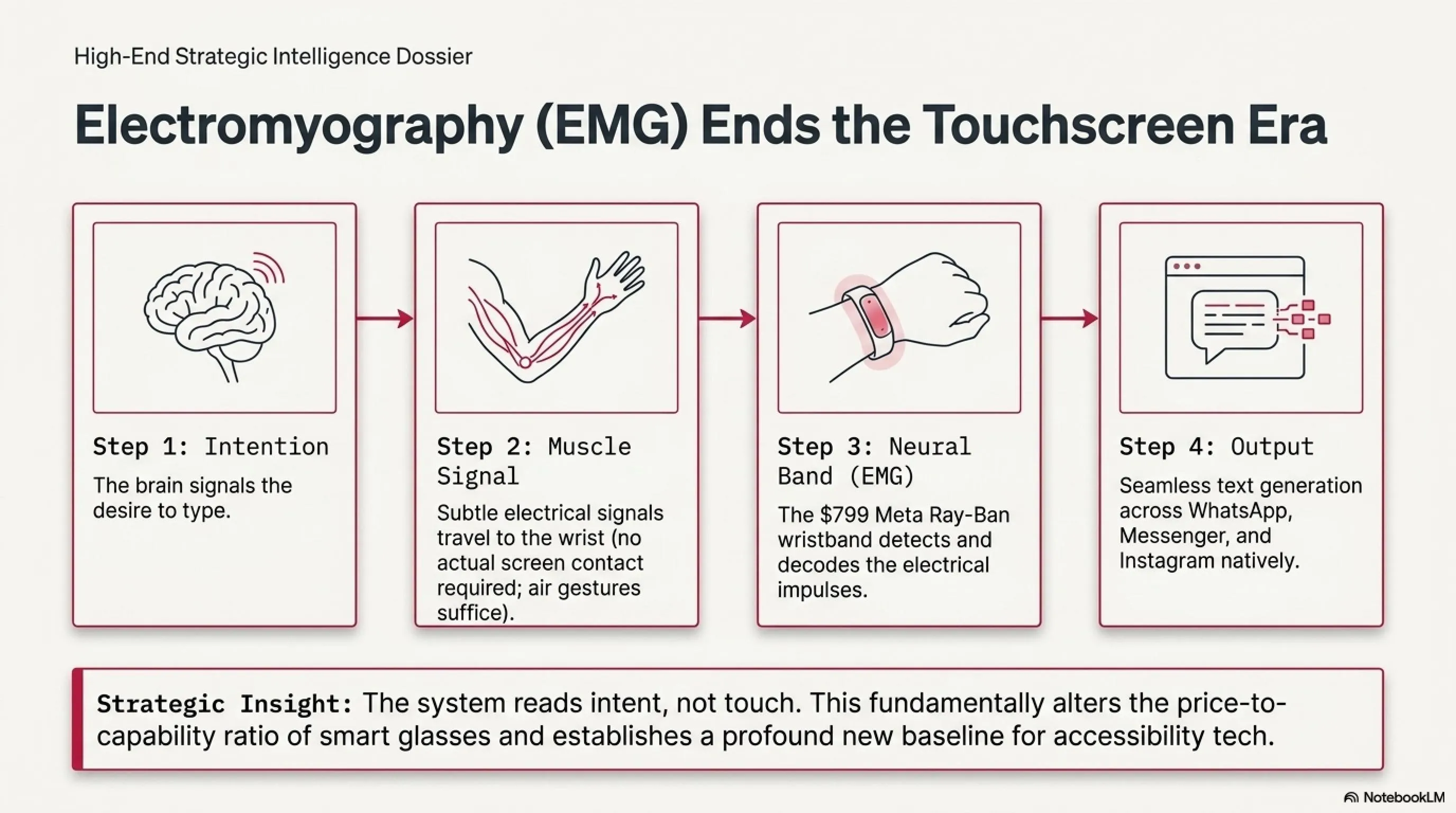
Meta has rolled out a significant update to its Meta Ray-Ban Display smart glasses, unlocking one of its most impressive features for all users: neural handwriting input. Previously available only in early access for WhatsApp and Messenger, the ability to write messages using only finger movements is now available across WhatsApp, Messenger, Instagram, and native Android and iOS messaging apps.
The feature relies on the Meta Neural Band — a wristband that reads electromyography (EMG) signals from your muscles. When you move your fingers, the band detects the subtle electrical signals from your muscles and translates them into text. You don't need to touch anything. You can write on your leg, in the air, or on any surface — the band reads your intent, not your touch.
🔧 Meta Ray-Ban Display — Full Specs:
- Price: $799
- Control: Meta Neural Band (EMG)
- Writing: Air finger gestures
- Recording: Lens + real world + audio
- Apps: WhatsApp, Messenger, Instagram
- AI: Meta AI integrated
- 3rd-party apps: Coming soon
- Games: In development
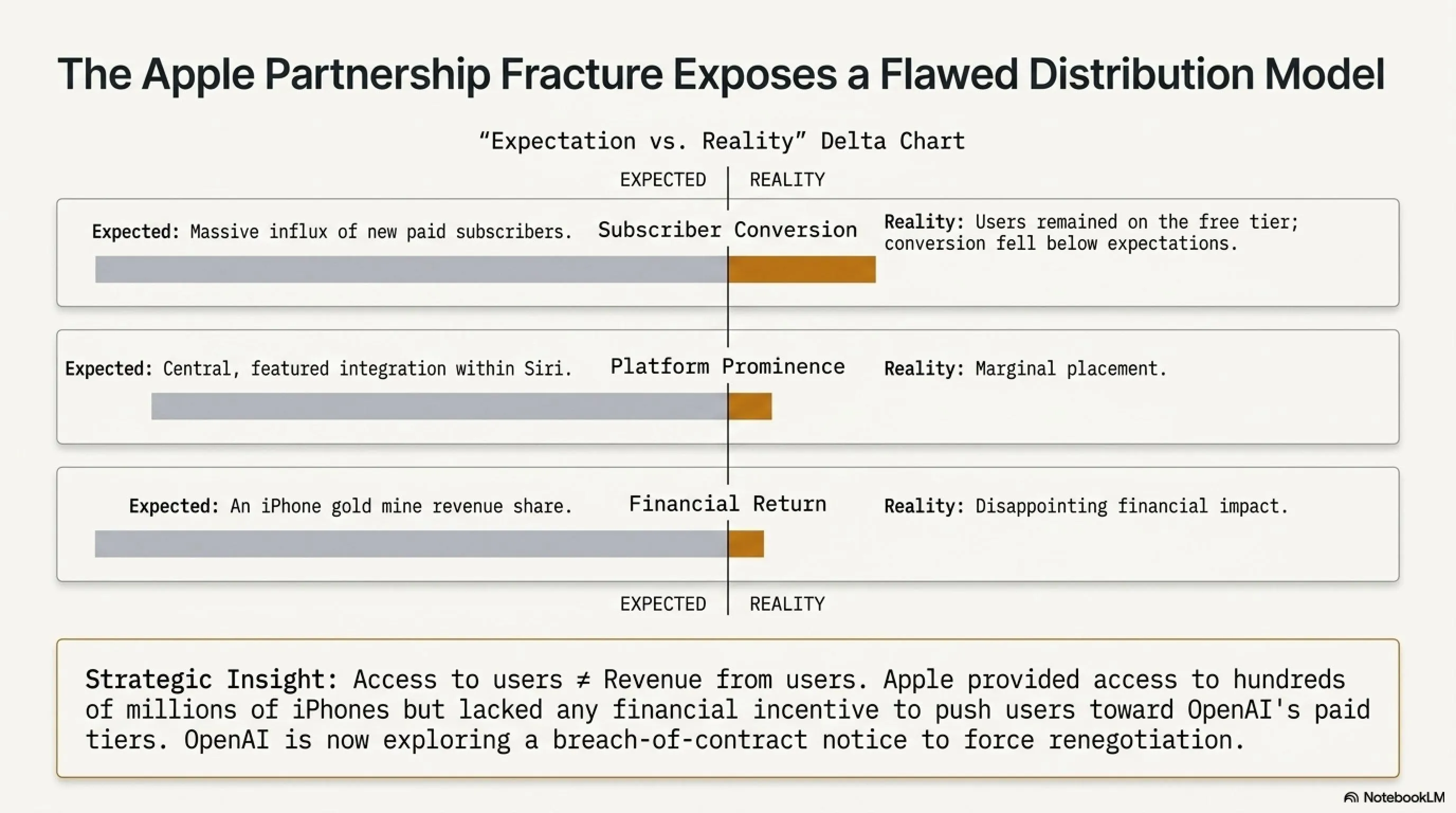
Image: Meta Ray-Ban Display with Neural Band | Source: Meta
🔍 Tekin Analysis: The Wearable That Actually Works
At $799 with a normal glasses form factor, Meta has the best price-to-capability ratio in the smart glasses market. The neural handwriting feature is a genuine breakthrough — for the first time, you can send a message without touching any screen. This also has profound implications for accessibility: people with limited hand mobility can now interact with messaging apps through subtle finger movements.
What to watch next: Google I/O 2026 on May 19 will almost certainly feature Android XR Glasses — Google's answer to Meta. The battle for the smart glasses market is just getting started, and Meta has a significant head start with real users and real features shipping today.
🎯 Story 6: Google I/O 2026 Preview — What to Expect on May 19
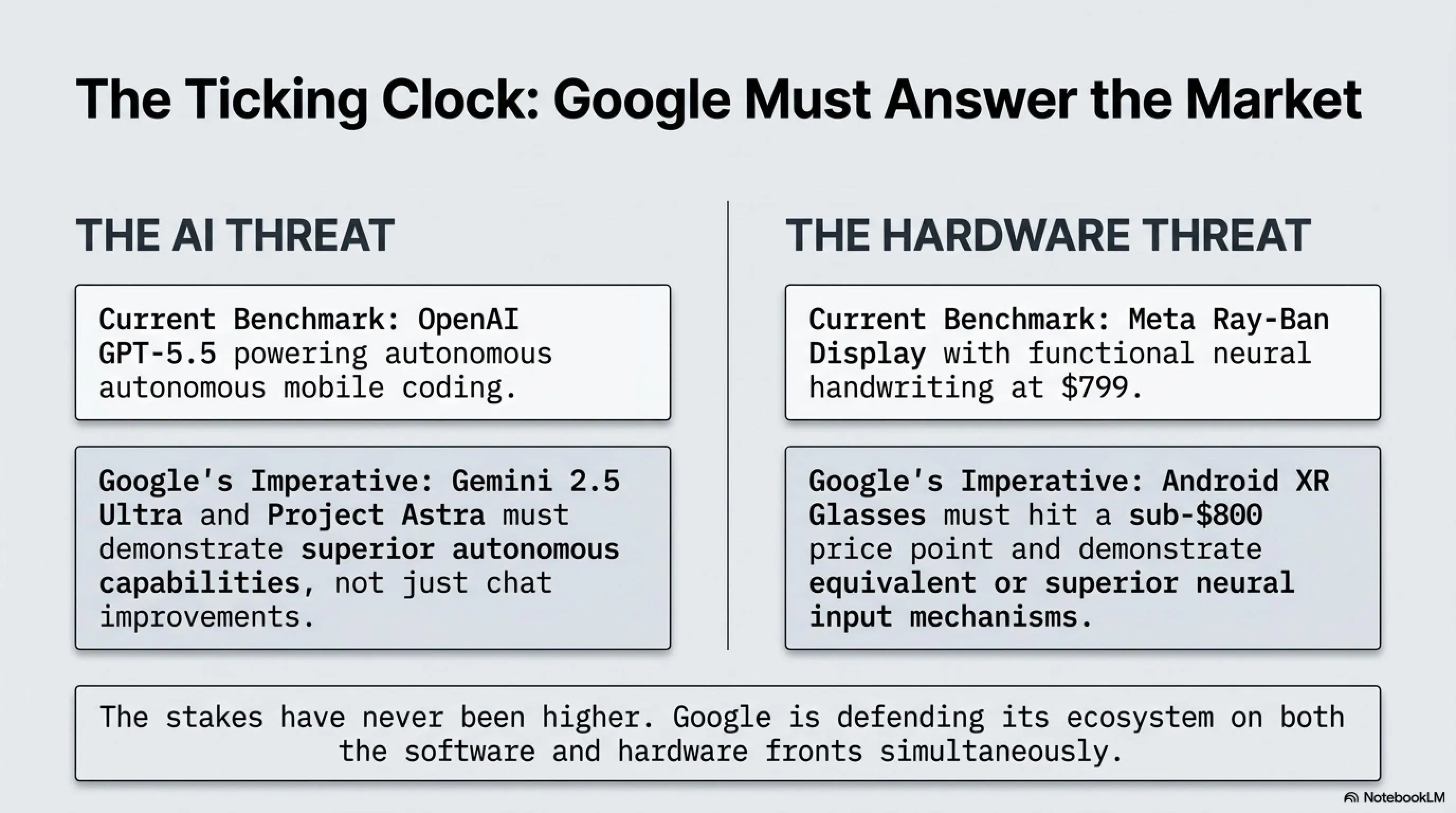
Google I/O 2026 is four days away — May 19 — and it may be the most consequential developer conference Google has held in years. The company needs to answer a simple but urgent question: can Gemini compete with GPT-5.5? Can Android XR Glasses match Meta Ray-Ban Display? The stakes have never been higher.
🔮 Google I/O 2026 — What We Expect:
🤖 AI Announcements:
- Gemini 2.5 Ultra reveal
- Project Astra — universal AI assistant
- Veo 3 — AI video generation
- Gemini in all Google products
🔧 Hardware:
- Android XR Glasses reveal
- Pixel 10 Series details
- Googlebook AI laptop
- Pixel Watch 4
🔍 Tekin Analysis: Google Must Deliver
Google I/O 2026 arrives at a critical moment. OpenAI has Codex on mobile. Meta has Ray-Ban Display with neural handwriting. Apple won a design award for iOS 26 Liquid Glass. Google needs to show that Gemini can genuinely compete with GPT-5.5 and that Android XR Glasses are a compelling answer to Meta.
What to watch: If Google announces Android XR Glasses with a sub-$800 price point and real neural input, it changes the wearables race entirely. If Gemini 2.5 Ultra benchmarks above GPT-5.5 on coding tasks, the AI race gets a lot more interesting. Tekin will be covering every announcement live.
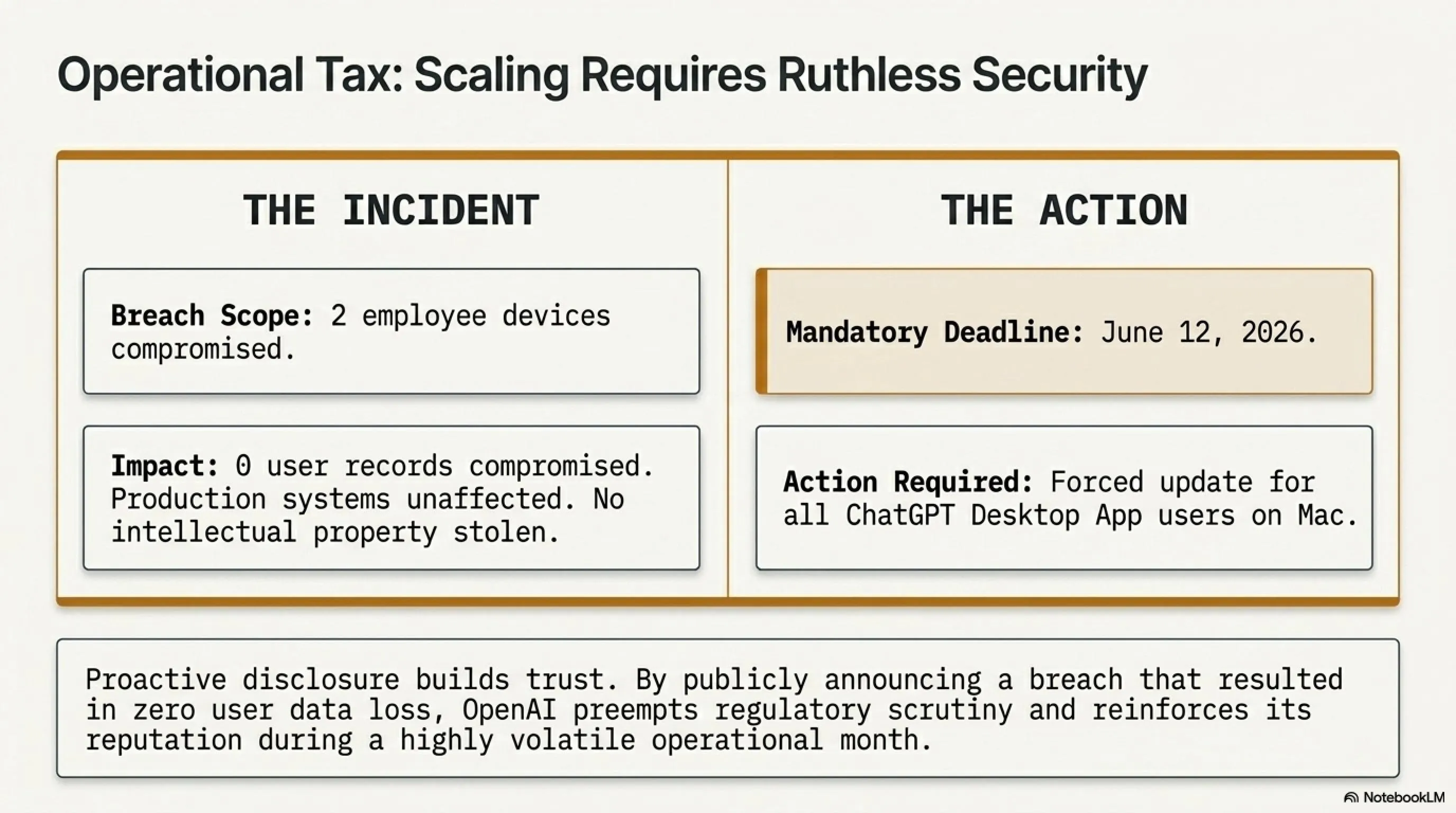
Image: Google I/O 2026 expectations | Source: Tekin Editorial
📊 Tekin Morning May 15, 2026 — Full Summary
| Story | Company | Impact | Key Takeaway |
|---|---|---|---|
| Codex on Mobile | OpenAI | 🔥🔥🔥 | Async dev workflow revolution |
| Legal Action vs Apple | OpenAI | 🔥🔥🔥 | AI distribution model broken |
| Claude Code Canceled | Microsoft | 🔥🔥 | Enterprise prefers own tools |
| Mac App Breach | OpenAI | 🔥🔥 | Update before June 12 |
| Ray-Ban Neural Writing | Meta | 🔥🔥 | Wearables future is here |
| Google I/O 2026 | 🔥🔥🔥 | Watch May 19 |
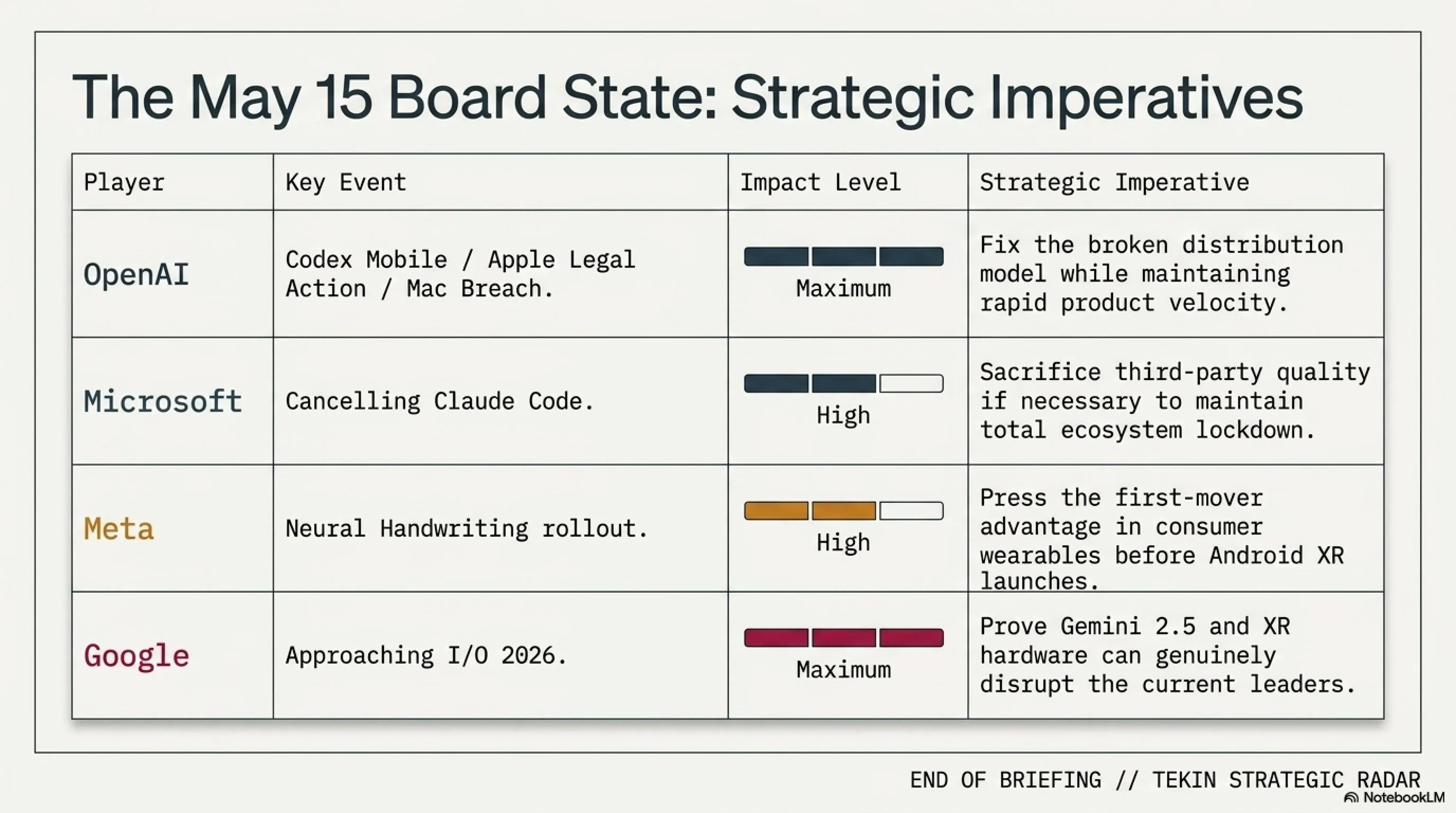
Image: The tech landscape — May 2026 | Source: Tekin Editorial
💡 Final Thoughts: OpenAI's Best and Worst Day
May 15, 2026 will be remembered as a day when OpenAI made headlines for all the right and wrong reasons simultaneously. Codex on mobile is a genuine product win. The Apple legal dispute is a strategic crisis. The security breach is a reputational challenge. All three happened on the same day.
Meanwhile, Microsoft's Claude Code cancellation shows that even the best AI tools can be displaced by corporate politics and cost-cutting. Meta's neural handwriting update proves that the wearables race is real and moving fast. And Google I/O 2026 — just four days away — could reshape the entire competitive landscape.
This is the most exciting — and chaotic — period in tech history. Tekin is here for every moment. Stay tuned. 🚀
❓ Frequently Asked Questions
▶ Is Codex on mobile free for all ChatGPT users?
Yes. Codex in the ChatGPT mobile app is rolling out across all plans — Free, Go, Pro, and Team — in supported regions. You still need Codex running on a Mac or remote environment to use it as a remote control.
▶ Will OpenAI actually sue Apple?
Not necessarily. OpenAI is exploring options including a breach-of-contract notice short of a full lawsuit. The legal threat is likely leverage for renegotiation. A full lawsuit against Apple would be costly and risky for both sides.
▶ Should I update ChatGPT on Mac right now?
Yes, update immediately. While OpenAI says no user data was compromised, the mandatory update deadline of June 12 means the vulnerability is real. Go to App Store, find ChatGPT, and hit Update.
▶ How do I watch Google I/O 2026?
Google I/O 2026 keynote streams live on May 19 at 10am PT (1pm ET) on Google's YouTube channel and io.google.com. Tekin will have full live coverage and analysis.
📚 Sources and References
- 9to5Mac — OpenAI brings Codex to ChatGPT for iPhone, iPad, and Android (May 14, 2026)
- The Verge — OpenAI's Codex is now in the ChatGPT mobile app (May 14, 2026)
- TechCrunch — OpenAI is reportedly preparing legal action against Apple (May 14, 2026)
- Bloomberg / Mark Gurman — Apple-OpenAI Alliance Frays (May 14, 2026)
- The Verge — Microsoft starts canceling Claude Code licenses (May 14, 2026)
- 9to5Mac — PSA: A security breach means you must update the ChatGPT Mac app (May 14, 2026)
- TechCrunch — OpenAI says hackers stole some data (May 14, 2026)
- The Verge — Meta brings virtual writing to everyone with Meta Ray-Ban Display (May 15, 2026)
- Mashable — What to expect from Google I/O 2026 (May 14, 2026)
- Tekin Editorial Team — Research and Analysis
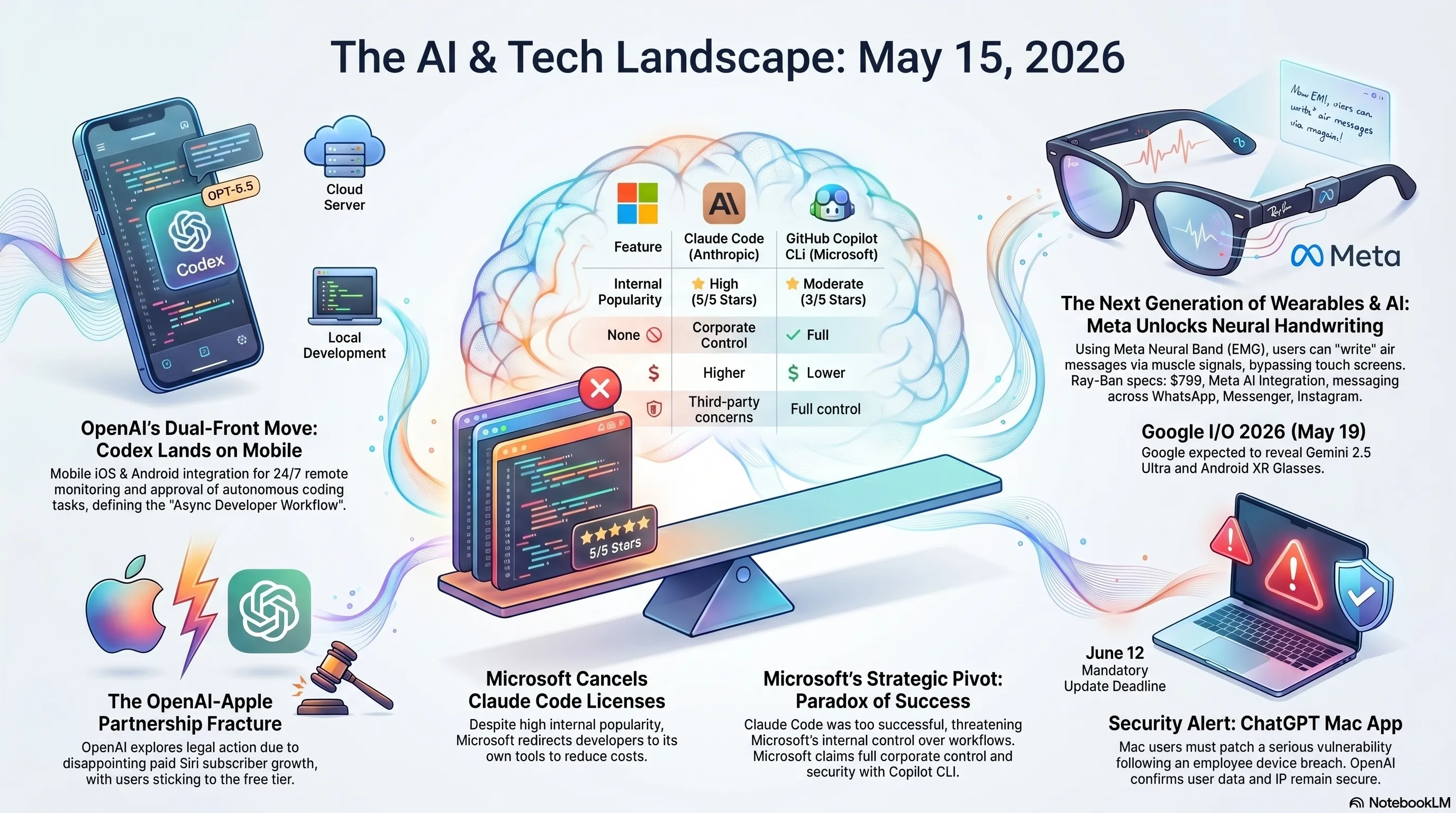
Image: Tekin — Always at the forefront of tech news | Source: Tekin Editorial
🏷️ Related Articles on Tekingame:
🌐 Stay Connected With Us
For the latest tech, gaming, and gadget news, follow us on social media:
🌐 Stay Connected With Us 🎮✨
For the latest tech, gaming, and gadget news, follow us on our official social media channels:
Additional Gallery: 🌅 Tekin Morning May 15: Codex Mobile, OpenAI Sues Apple & Microsoft Drops Claude Code