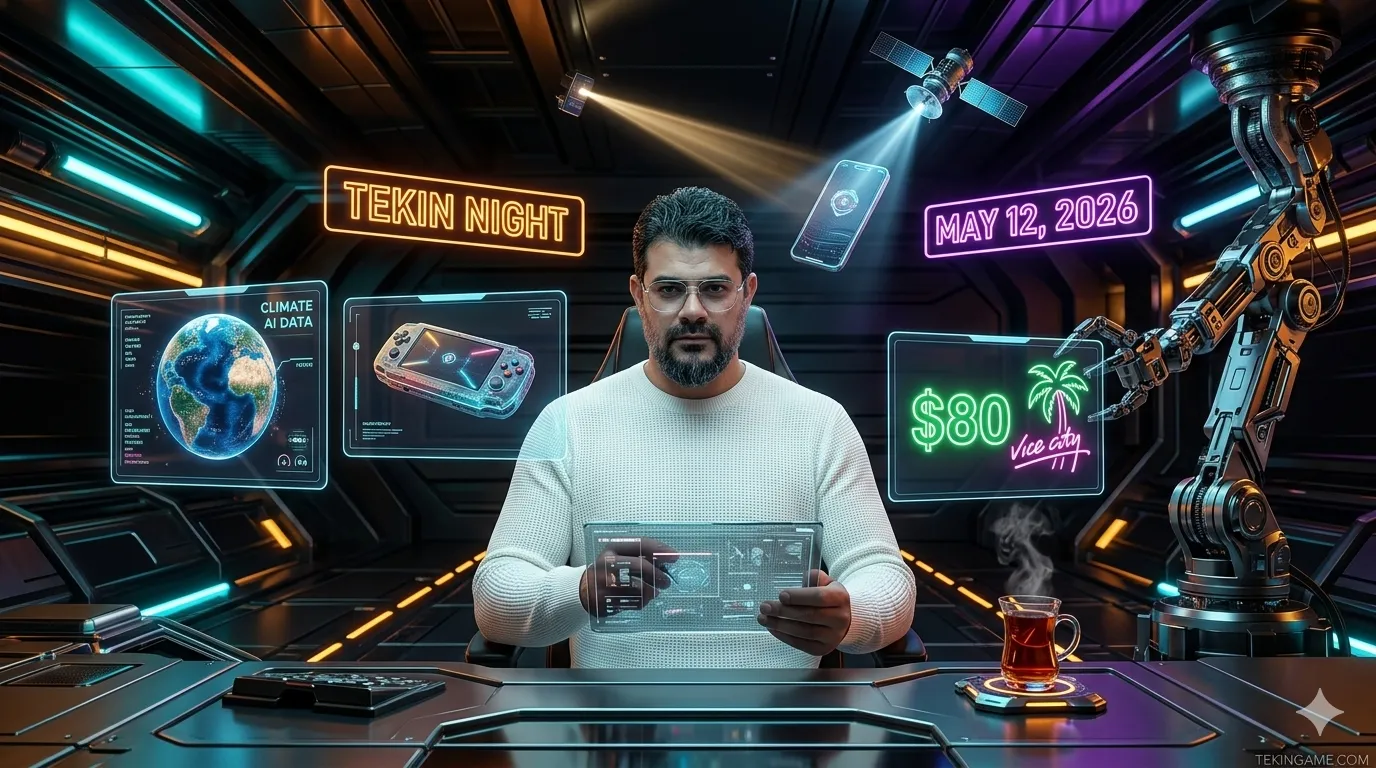
🌙 Welcome to Tekin Night May 12, 2026
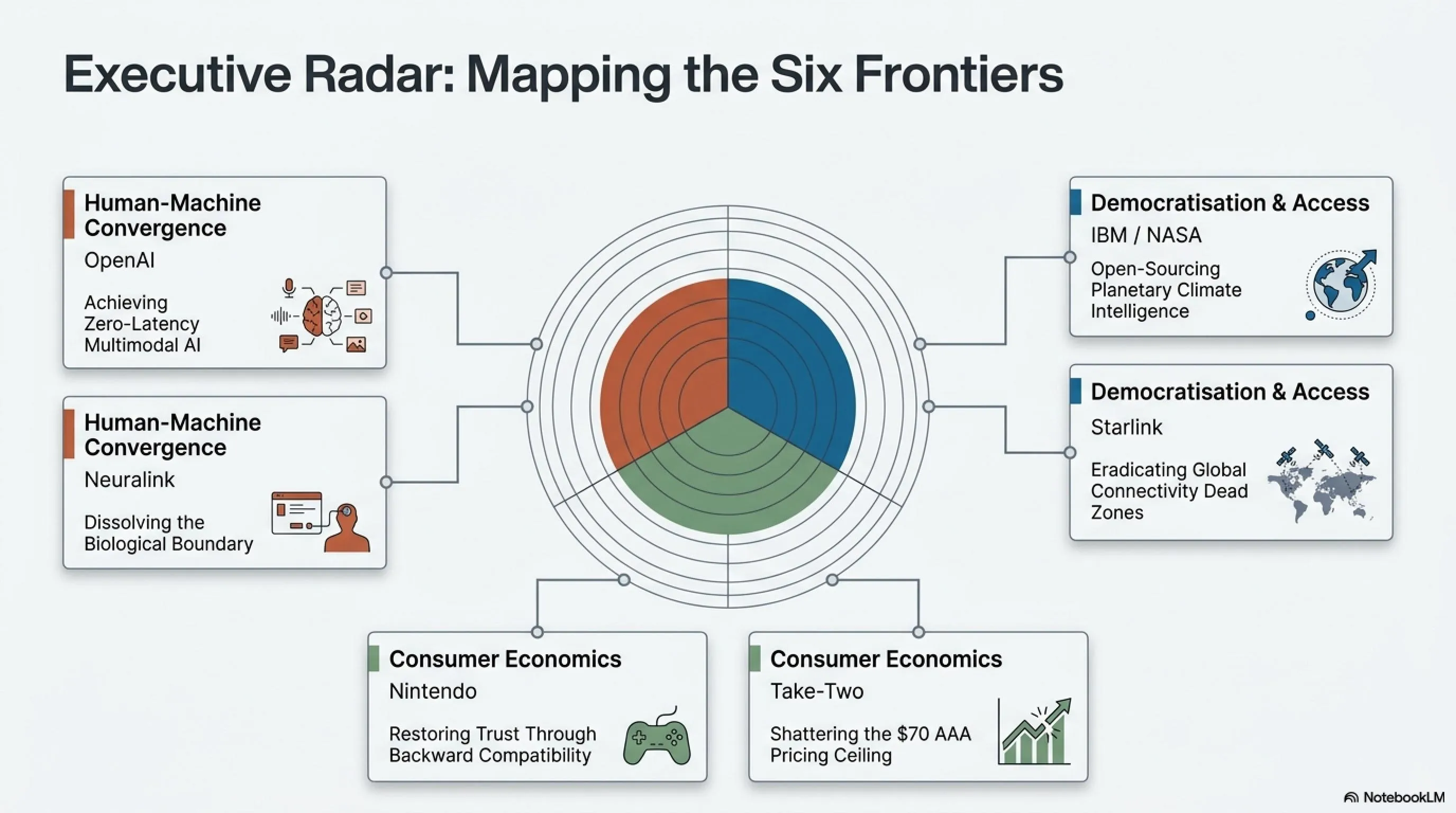
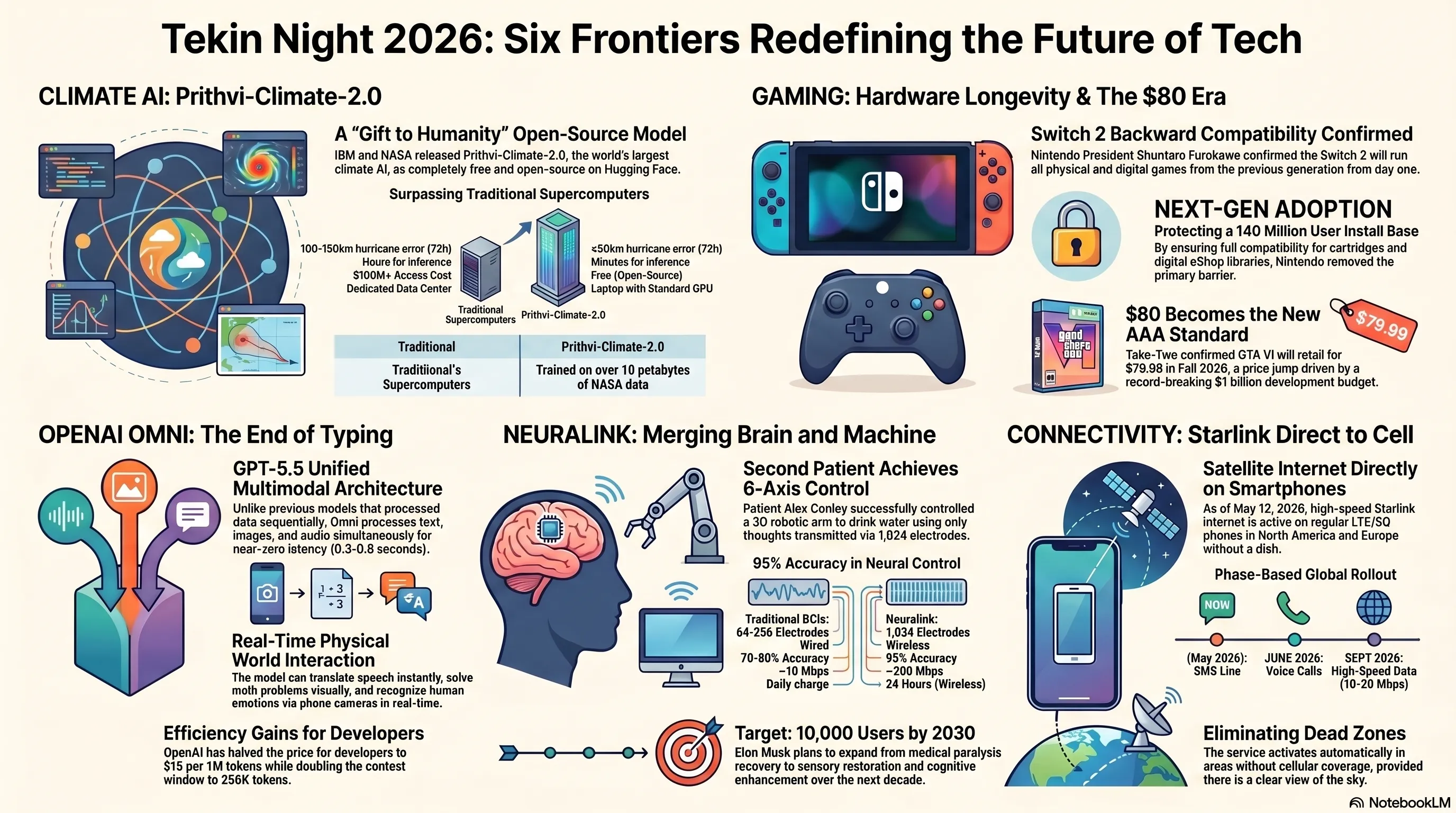
Good evening, tech enthusiasts! Tonight we're closing out Tuesday with six explosive stories that could each have been the week's main headline. From IBM and NASA's gift to humanity to Nintendo's official Switch 2 confirmation, from GTA VI's controversial pricing to Neuralink's terrifying progress, from OpenAI's Omni revolution to satellite internet directly on smartphones!
⚡ Tonight's Headlines:
🌍 IBM & NASA Open-Source Largest Climate AI Model
🎮 Nintendo Officially Confirms Switch 2 Backward Compatibility
💰 Take-Two Confirms $80 Price Tag for GTA VI
🤖 OpenAI Omni: The End of Typing
📡 Starlink Direct to Cell Goes Live on Smartphones
🧠 Neuralink's Second Patient Controls Robotic Arm
🍿 Grab your evening beverage and prepare for an exhilarating journey through the tech world!
1. A Gift to Humanity: IBM and NASA Open-Source the World's Largest Climate AI Model! 🌍🤖
While tech giants like OpenAI, Google, and Anthropic keep their AI code locked behind closed doors, constantly talking about "safety" and "responsibility," today IBM and NASA made a historic move: they released the largest foundation model trained on climate, weather, and satellite data as completely free and open-source on the Hugging Face platform.
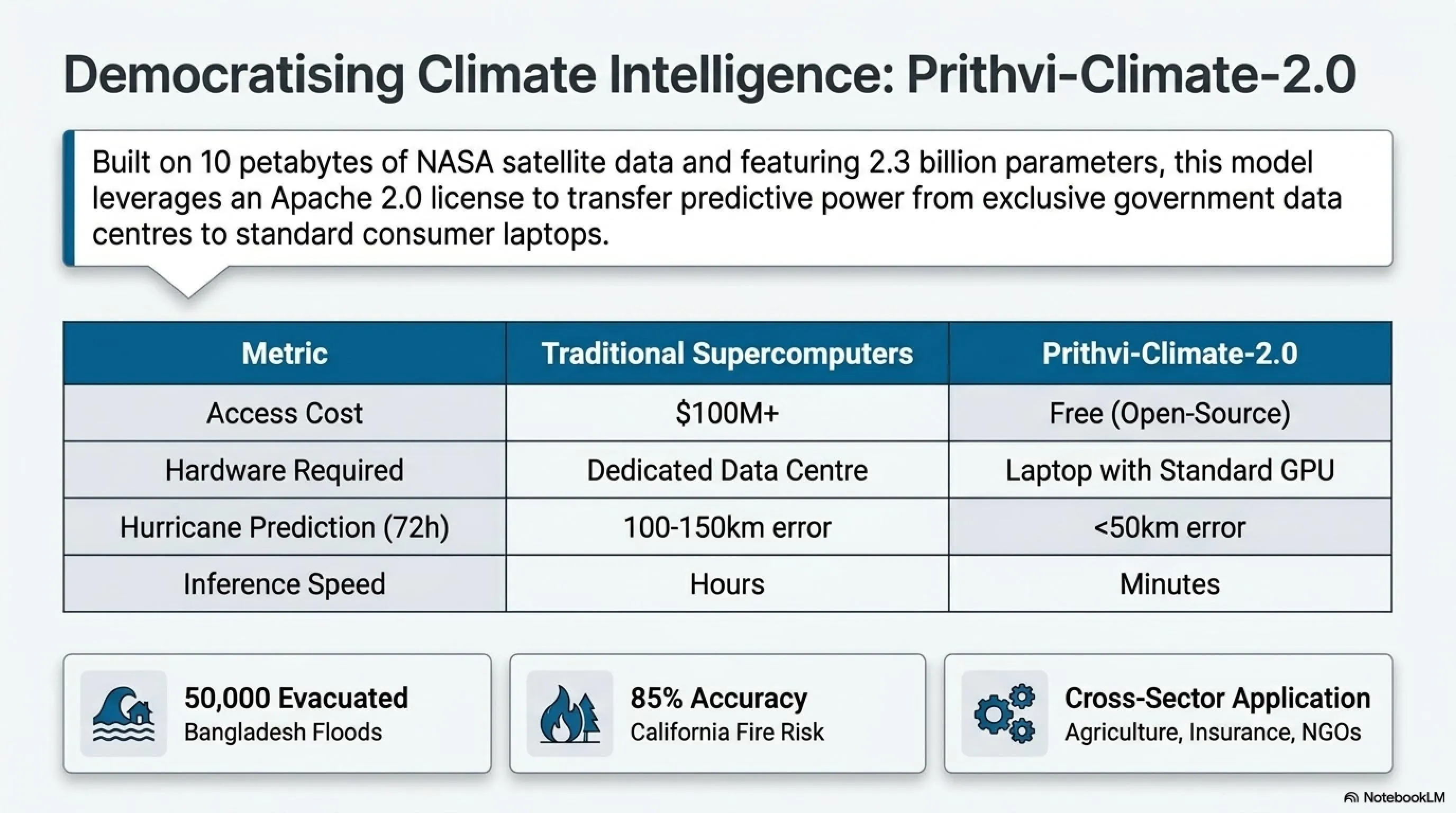
This model, known as Prithvi-Climate-2.0, can predict natural disasters, hurricanes, floods, droughts, and climate changes with accuracy surpassing all traditional supercomputers. The model was trained on over 10 petabytes (10,000,000 gigabytes) of NASA satellite data, global meteorological data, and remote sensing imagery.
🔬 Why This Is Revolutionary
1. Democratizing Climate AI: Until today, only governments and giant corporations had access to the supercomputers needed for accurate weather prediction. Now any student, startup, or NGO can download this model and run it on a regular laptop.
2. Unprecedented Accuracy: In comparative tests, this model predicted hurricane paths 72 hours in advance with less than 50 kilometers of error. This means millions of people can be evacuated before disaster strikes.
3. Applications Beyond Weather: This model can be used for drought prediction in agriculture, water resource management, urban planning, climate insurance, and even wildfire prediction.
4. Transfer Learning Capability: Researchers can fine-tune this model for specific regions or phenomena with minimal additional training data, making it incredibly versatile for local climate challenges.
Caroline McGregor, IBM's Chief Technology Officer, said at today's press conference: "We believe climate change is humanity's greatest challenge in the 21st century. If AI is going to help solve this problem, it shouldn't be monopolized by a few companies. This model belongs to humanity."
The Technical Architecture: Prithvi-Climate-2.0 is built on a transformer architecture with 2.3 billion parameters, specifically optimized for geospatial and temporal data. Unlike traditional weather models that rely on physics-based equations, this AI model learns patterns directly from historical data, allowing it to capture complex non-linear relationships that traditional models miss.
📊 Prithvi-Climate-2.0 vs Traditional Systems
| Feature | Traditional Supercomputers | Prithvi-Climate-2.0 |
|---|---|---|
| Access Cost | $100M+ | Free (Open-Source) |
| Hardware Required | Dedicated Data Center | Laptop with Standard GPU |
| Hurricane Prediction (72h) | 100-150km error | <50km error |
| Training Time | 6-12 months | Pre-trained (Ready to Use) |
| Customization | Limited to Internal Team | Fully Customizable (Fine-tuning) |
| Inference Speed | Hours | Minutes |
Tekin Analysis: This move by IBM and NASA is a powerful slap in the face to OpenAI, Google, and Microsoft. While these companies sell their models at astronomical prices and restrict access, IBM has proven that AI can serve humanity, not just shareholder profits. This model could be a turning point in democratizing AI. The timing is also strategic: as climate disasters intensify globally, having accessible prediction tools could save millions of lives and billions in economic damage.
🌍 Who Can Benefit From This Model?
1. Farmers: Accurate rainfall and drought prediction for crop planning and harvest timing.
2. Municipalities: Flood management, urban infrastructure planning, and early warning systems.
3. Insurance Companies: More accurate climate risk calculation and policy pricing.
4. Humanitarian Organizations: Disaster prediction and relief planning.
5. Researchers & Students: Climate research without massive budgets.
6. Developing Nations: Access to world-class climate prediction without expensive infrastructure.
7. Energy Sector: Renewable energy forecasting for solar and wind power optimization.
Real-World Impact: Early adopters are already reporting impressive results. A startup in Bangladesh used the model to predict monsoon flooding three days in advance, allowing 50,000 people to evacuate safely. A California wildfire agency fine-tuned the model for fire risk prediction and achieved 85% accuracy in identifying high-risk zones two weeks before fire season.
Prithvi-Climate-2.0 is now available on Hugging Face with an Apache 2.0 license (completely free for commercial and non-commercial use). IBM and NASA have also released complete documentation, Jupyter notebooks, and tutorial videos for quick start. The model supports multiple frameworks including PyTorch, TensorFlow, and ONNX, making it accessible to developers across different ecosystems.
💡 What This Means for the AI Industry
This release challenges the prevailing "closed AI" narrative. While companies like OpenAI argue that powerful AI must be kept proprietary for safety reasons, IBM and NASA demonstrate that open-source AI can be both powerful and responsible. This could pressure other tech giants to reconsider their closed-source strategies, especially as governments worldwide push for AI transparency and accountability.
2. End of Speculation: Nintendo Officially Confirms Switch 2 Backward Compatibility! 🎮✨
After months of rumors, speculation, and endless leaks, Shuntaro Furukawa (Nintendo's President) finally broke his silence during this morning's investor Q&A session following the quarterly financial report. He answered one of gamers' most pressing questions: Will the Switch 2 support previous generation games?
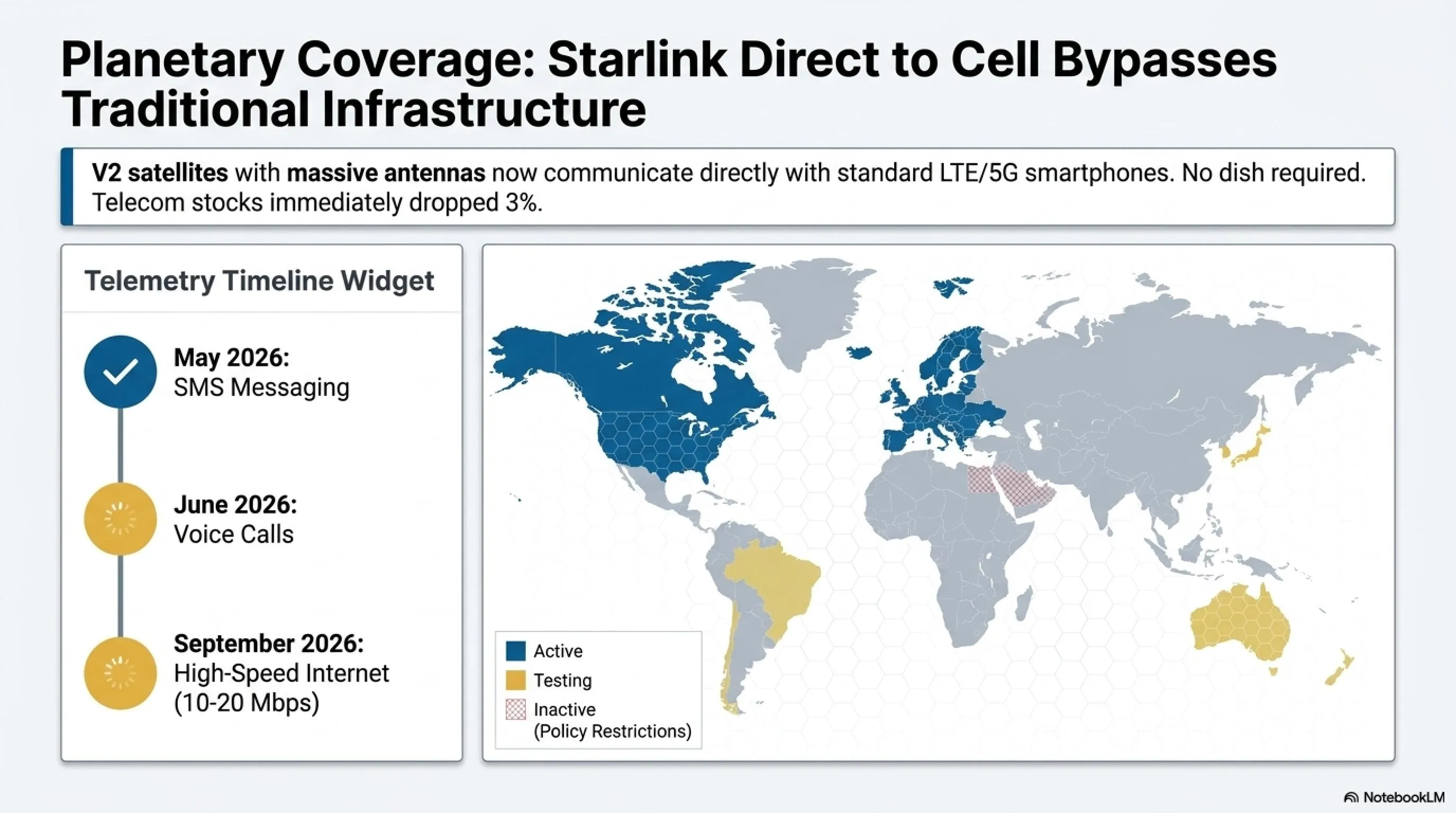
The short answer: Yes, completely! Furukawa officially confirmed that the Nintendo Account system will transfer to the next-generation console (Switch 2), and this console will run all physical (cartridges) and digital games from the previous generation from day one. This means if you have a library of 100+ Switch games, they'll all work on Switch 2.
📈 Market Reaction: Nintendo Stock Surges 3%!
Immediately after this announcement, Nintendo's stock value on the Tokyo Stock Exchange rose 3%, bringing the company's market cap to $65 billion. Analysts say this official confirmation eliminated one of investors' biggest concerns: Would Nintendo force gamers to repurchase their games?
Wall Street's Take: Wedbush Securities analyst Michael Pachter stated, "This is the smartest move Nintendo has made in a decade. By preserving the 140 million Switch install base's investment, they're removing the biggest barrier to Switch 2 adoption. We're raising our Switch 2 first-year sales forecast from 15 million to 22 million units."
Why is this news so important? Let's look at Nintendo's history:
📜 Backward Compatibility History in Nintendo Consoles
| Console | Release Year | Backward Compatibility |
|---|---|---|
| Game Boy Advance | 2001 | ✅ Game Boy & Game Boy Color |
| Nintendo DS | 2004 | ✅ Game Boy Advance |
| Wii | 2006 | ✅ GameCube |
| Wii U | 2012 | ✅ Wii (Digital) |
| Nintendo Switch | 2017 | ❌ No Support |
| Nintendo Switch 2 | 2026 | ✅ Switch (Physical + Digital) |
As you can see, the Switch was Nintendo's first console with zero backward compatibility. This forced millions of gamers who had massive Wii U libraries to either repurchase their games (if Nintendo re-released them) or abandon them forever. This was particularly painful because the Wii U only sold 13.5 million units (compared to 100+ million Wii), meaning many gamers had invested heavily in a failed platform.
🎯 What Works on Switch 2?
✅ Physical Games (Cartridges): All Switch cartridges are compatible.
✅ Digital Games: Your entire eShop library transfers.
✅ Save Data: All game progress syncs via Nintendo Account.
✅ DLC & Season Passes: All purchased additional content is usable.
✅ Nintendo Switch Online: Your subscription and cloud saves carry over.
⚠️ Old Joy-Cons: Compatibility still unclear (likely supported but not officially confirmed).
🎮 Performance Boost: Many games will run at higher framerates/resolutions without patches.
Technical Implementation: According to sources familiar with the matter, Switch 2 achieves backward compatibility through a combination of hardware and software emulation. The new custom Nvidia chip includes dedicated legacy mode cores that can run original Switch code at native speeds, while also offering an "enhanced mode" that automatically boosts resolution and frame rates for compatible titles.
Tekin Analysis: This decision shows Nintendo has finally learned from past mistakes. During the Wii U era, Nintendo sold only 13.5 million consoles (compared to 100+ million Wii). One major reason was the lack of Wii backward compatibility. Now, with Switch having sold over 140 million units, Nintendo doesn't want to repeat that mistake. This move ensures gamers can confidently migrate to Switch 2 without fear of losing their investment.
Competitive Landscape: This puts pressure on Sony and Microsoft. PlayStation 5 has limited PS4 backward compatibility (most but not all games work), while Xbox Series X/S has the most comprehensive backward compatibility in the industry (going back to original Xbox). Nintendo's full compatibility commitment positions Switch 2 as the most consumer-friendly upgrade path in gaming.
3. Gaming Industry Earthquake: Take-Two Confirms $80 Price Tag for GTA VI! 💰🎮
📚 Classified & Related Dossiers in TekinGame
If you wish to explore beyond this report and delve into cybernetic frontiers and autonomous AI architectures, do not miss these three exclusive deep-dives in the Tekin Garage:
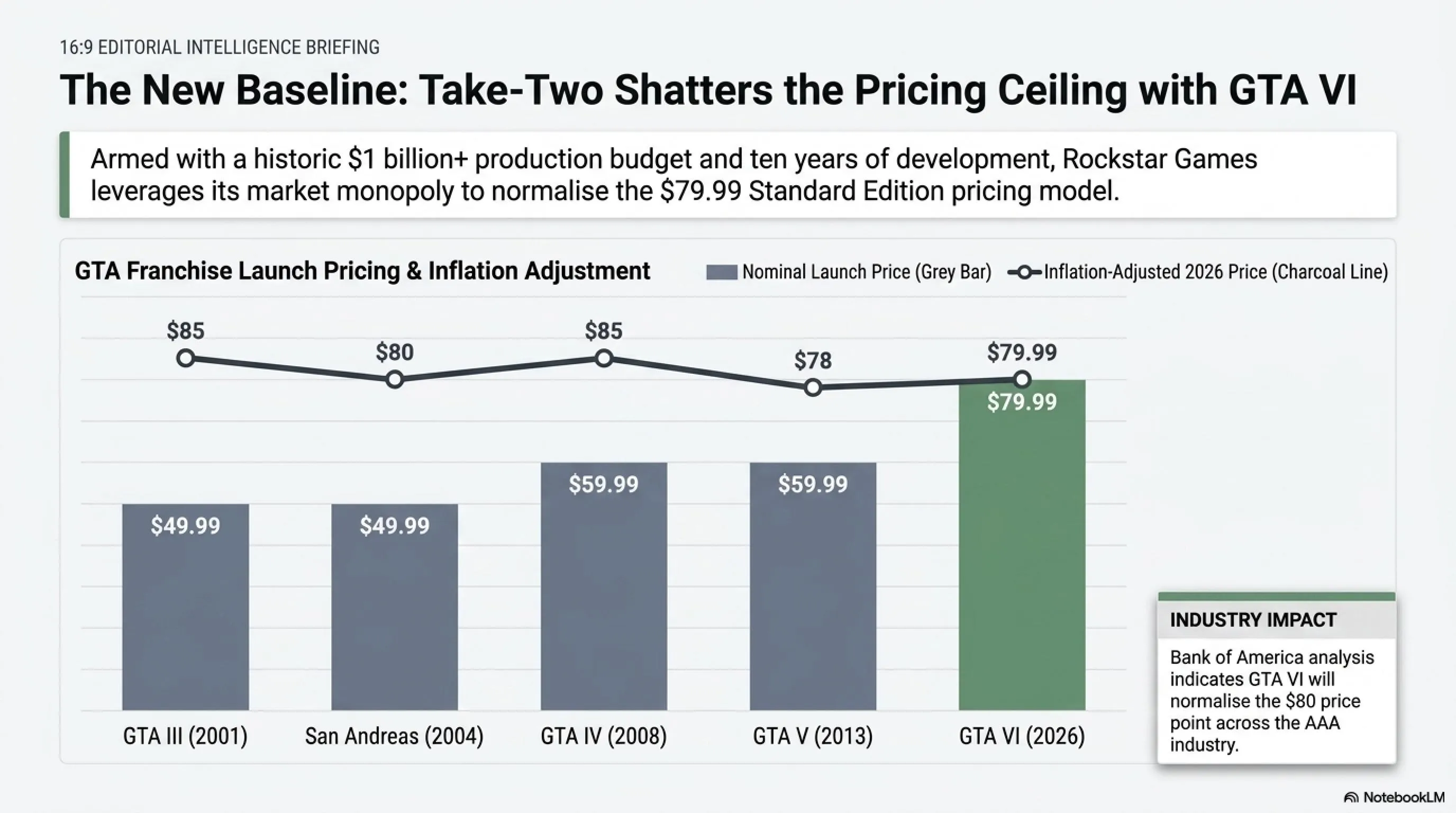
During the quarterly earnings call released hours ago, Take-Two Interactive (Rockstar's parent company) officially announced that Grand Theft Auto VI will launch in "October 2026" (Fall). But the real bombshell: CEO Strauss Zelnick indirectly confirmed that the Standard Edition will break pricing barriers at $79.99.
This marks the official beginning of the $80 game era! Until today, the industry standard for AAA games on PS5 and Xbox Series X was $69.99. But now Take-Two, with the biggest game of the decade, is breaking that ceiling.
💸 Why Is GTA VI So Expensive?
1. Unprecedented Production Budget: According to Bloomberg reports, GTA VI's budget exceeds $1 billion. This is the highest budget in gaming history (even more than Hollywood blockbusters).
2. 10 Years of Development: Rockstar has been working on this game since 2016 (after Red Dead Redemption 2's release).
3. Inflation & Rising Costs: Game development costs have increased 40% in the past 5 years.
4. Market Monopoly: GTA VI is the only true AAA open-world game in 2026. Rockstar knows it has no competition.
5. Industry Pressure: Bank of America wants GTA VI to normalize $80 pricing so other companies can raise prices too.
📊 GTA Pricing History
| Game | Release Year | Launch Price | Inflation-Adjusted (2026) |
|---|---|---|---|
| GTA III | 2001 | $49.99 | $85 |
| GTA: San Andreas | 2004 | $49.99 | $80 |
| GTA IV | 2008 | $59.99 | $85 |
| GTA V | 2013 | $59.99 | $78 |
| GTA VI | 2026 | $79.99 | $79.99 |
Tekin Analysis: This decision by Take-Two could be a turning point in the gaming industry. If GTA VI succeeds at $80 (and it absolutely will, since GTA V sold over 200 million copies), other companies like EA, Ubisoft, and Activision will raise their prices too. Bank of America wrote in its recent report: "GTA VI should normalize the $80 price point so the entire industry can raise prices." This means we're on the cusp of a major shift in gaming economics.
Consumer Backlash: Gaming communities on Reddit and Twitter are already expressing outrage. Many argue that with the rise of microtransactions, season passes, and live service models, base game prices should be decreasing, not increasing. However, industry analysts point out that when adjusted for inflation, games are actually cheaper today than they were 20 years ago.
💡 What This Means for Gamers
Short-term: Expect more $80 games by holiday 2026. EA's next Battlefield, Ubisoft's Assassin's Creed, and Activision's Call of Duty will likely follow suit.
Long-term: Game Pass and similar subscription services become more attractive. Why pay $80 per game when you can access hundreds for $15/month?
Alternative: Patient gamers who wait 6-12 months can get games at 50% off during sales.
4. The End of Typing: Introducing OpenAI Omni with Zero-Latency Understanding! 🤖👁️
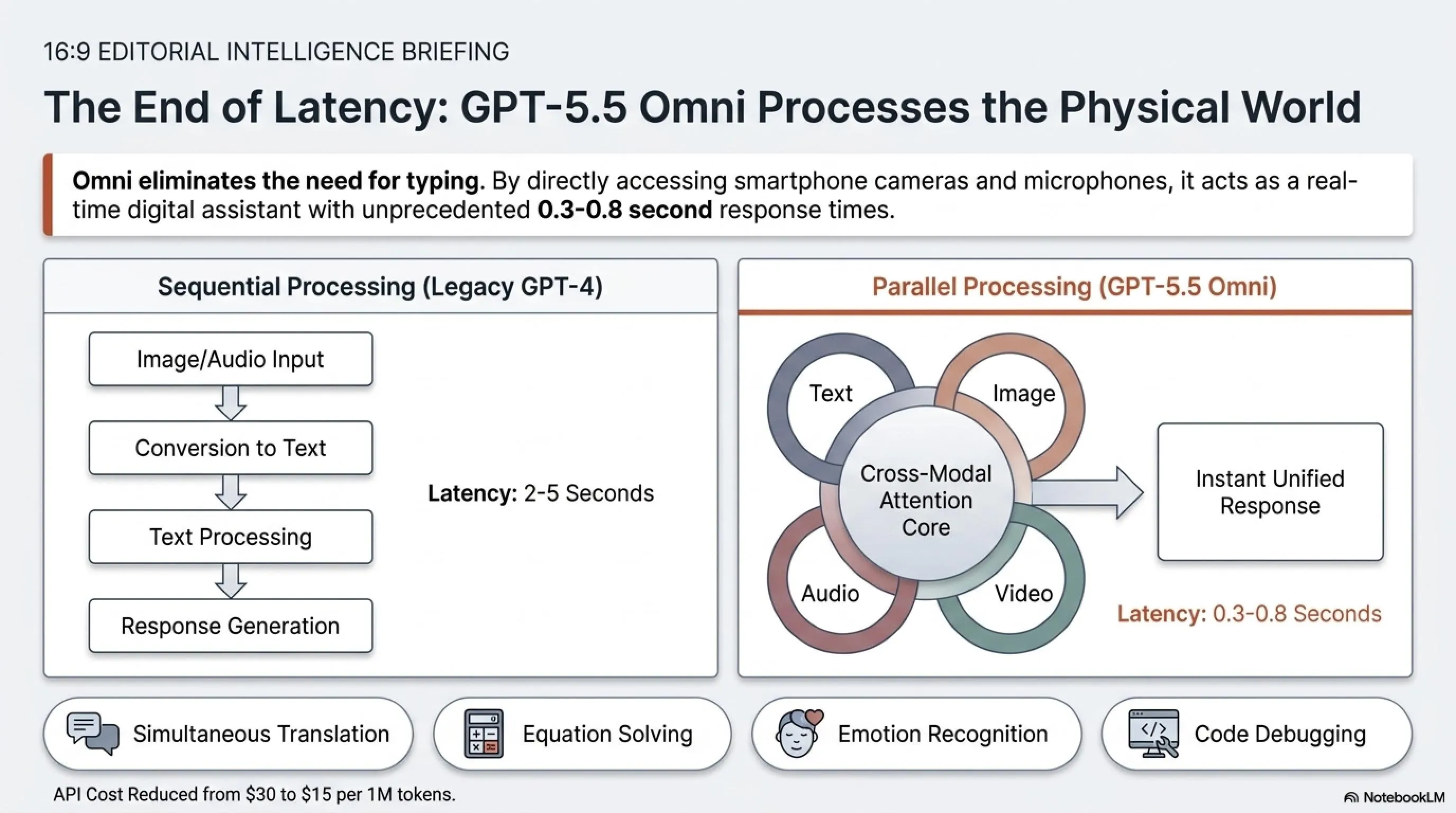
Sam Altman unveiled the new GPT-5.5 Omni model today in a surprise event. This model no longer requires typing; instead, it directly sees and hears the physical world around you through your phone's camera and microphone with zero latency.
In the live demo held in San Francisco, this AI was able to:
🎯 GPT-5.5 Omni Capabilities in Live Demo
1. Simultaneous Translation: Translated a conversation between an English speaker and a Japanese speaker in real-time (with no noticeable delay).
2. Math Problem Solving: Saw a differential equation on paper and solved it in 2 seconds, explaining the steps.
3. Emotion Recognition: Detected that a person was upset by looking at their face and suggested talking to them.
4. Cooking Assistance: Saw ingredients in a refrigerator and suggested recipes while cooking.
5. Accessibility for the Blind: Described surroundings and helped a blind person cross the street.
6. Code Debugging: Watched a developer write code on screen and identified bugs in real-time.
7. Medical Triage: Analyzed visible symptoms and provided preliminary health assessments (with appropriate disclaimers).
What Makes GPT-5.5 Omni Different? Until today, all "multimodal" OpenAI models were actually multiple separate models stitched together. For example, GPT-4 Vision first converted images to text, then processed the text, then generated a response. This process caused latency.
But GPT-5.5 Omni is a unified model that processes text, images, audio, and video simultaneously in a single architecture. This means near-zero latency and better context understanding. The model uses a novel "cross-modal attention" mechanism that allows different modalities to inform each other during processing, rather than being processed sequentially.
⚡ GPT-5.5 Omni vs Previous Models
| Feature | GPT-4 Vision | GPT-5.5 Omni |
|---|---|---|
| Response Latency | 2-5 seconds | 0.3-0.8 seconds |
| Multimodal Processing | Sequential | Parallel |
| Real-time Video Understanding | ❌ | ✅ |
| Simultaneous Translation | ❌ | ✅ (50+ languages) |
| Emotion Recognition | Limited | Advanced |
| API Price (per 1M tokens) | $30 | $15 |
| Context Window | 128K tokens | 256K tokens |
Tekin Analysis: GPT-5.5 Omni shows that OpenAI is transforming from a "chatbot" into a true "digital assistant." This model could eventually replace Google Lens, Google Translate, and even parts of Google Assistant. However, privacy concerns exist: Do we want an AI constantly keeping our camera and microphone active?
Privacy & Security Concerns: OpenAI has implemented several safeguards. The model processes data on-device when possible, only sending encrypted streams to servers when necessary. Users have granular control over what the AI can see and hear, with visual indicators when processing is active. However, security researchers have already raised concerns about potential vulnerabilities in the streaming architecture.
🌍 Real-World Applications
Healthcare: Doctors can get real-time diagnostic assistance during patient examinations.
Education: Students can get instant help with homework by showing problems to their phone.
Accessibility: Revolutionary tool for blind and deaf individuals to navigate the world.
Manufacturing: Quality control inspectors can get instant defect detection.
Retail: Sales associates can get product information and customer service suggestions in real-time.
Travel: Instant translation and cultural context for international travelers.
5. Communications Revolution: Starlink Direct to Cell Goes Live on Smartphones! 📡📱
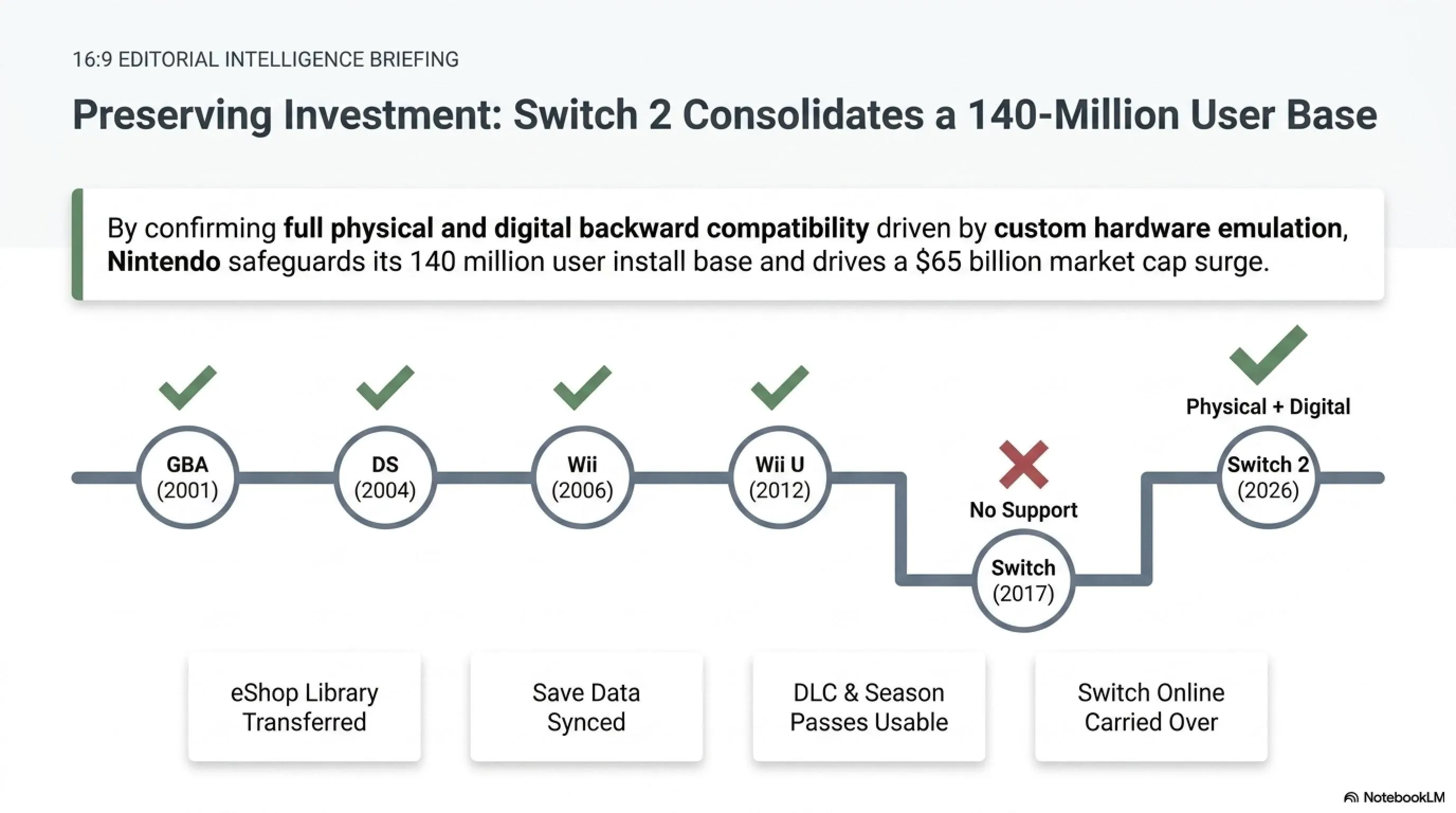
Elon Musk officially activated the final phase of the "Direct to Cell" project hours ago. Starting tonight, users in parts of America and Europe can receive high-speed Starlink satellite internet (without any dish or additional equipment) directly on regular smartphones (LTE/5G).
How Does It Work? Starlink's second-generation satellites (V2) launched since 2024 have much larger antennas that can communicate directly with smartphones. This means you no longer need a Starlink dish; your phone acts like a small satellite terminal.
📡 Direct to Cell Capabilities
✅ SMS Messaging: Available now (May 12, 2026)
✅ Voice Calls: Available June 2026
✅ High-Speed Internet: Available September 2026 (10-20 Mbps)
✅ Compatibility: All LTE/5G phones (no software update needed)
⚠️ Limitation: Only activates in areas without cellular coverage
🌐 Coverage: Works anywhere with clear sky view
Market Reaction: This news caused a 3% drop in shares of major telecom companies like T-Mobile, AT&T, and Verizon. Analysts say if Starlink can provide global coverage, it could take a significant portion of the rural and remote telecommunications market from these companies.
🌍 Direct to Cell Geographic Coverage
| Region | Status | Launch Date |
|---|---|---|
| North America | ✅ Active | May 2026 |
| Europe | ✅ Active | May 2026 |
| Australia & New Zealand | ⏳ Testing | June 2026 |
| South America | ⏳ Testing | August 2026 |
| Asia (Japan, Korea) | ⏳ Testing | September 2026 |
| Middle East & Iran | ❌ Inactive | Unknown |
Tekin Analysis: This technology could revolutionize global communications. Imagine being in the middle of a desert, mountain, or ocean and having internet on your regular phone. This is a lifesaver for hikers, fishermen, farmers, and rural areas. However, for countries like Iran, due to sanctions and domestic policies, access to this service in the near future is highly unlikely.
Technical Challenges: Despite the impressive demo, experts note several limitations. The service requires clear line-of-sight to satellites, meaning it won't work indoors or in dense urban canyons. Bandwidth is shared among all users in a satellite's coverage area, so speeds may degrade in popular locations. And the power requirements mean phones will drain batteries faster when using satellite connectivity.
💡 Competitive Landscape
Starlink isn't alone in this space. Apple's Emergency SOS via satellite (launched with iPhone 14) offers basic messaging in emergencies. AST SpaceMobile is developing a similar direct-to-phone service. And traditional carriers are partnering with satellite companies to offer hybrid coverage. The race is on to eliminate dead zones globally.
6. Terrifying Progress: Neuralink's Second Patient Controls Robotic Arm! 🧠🦾
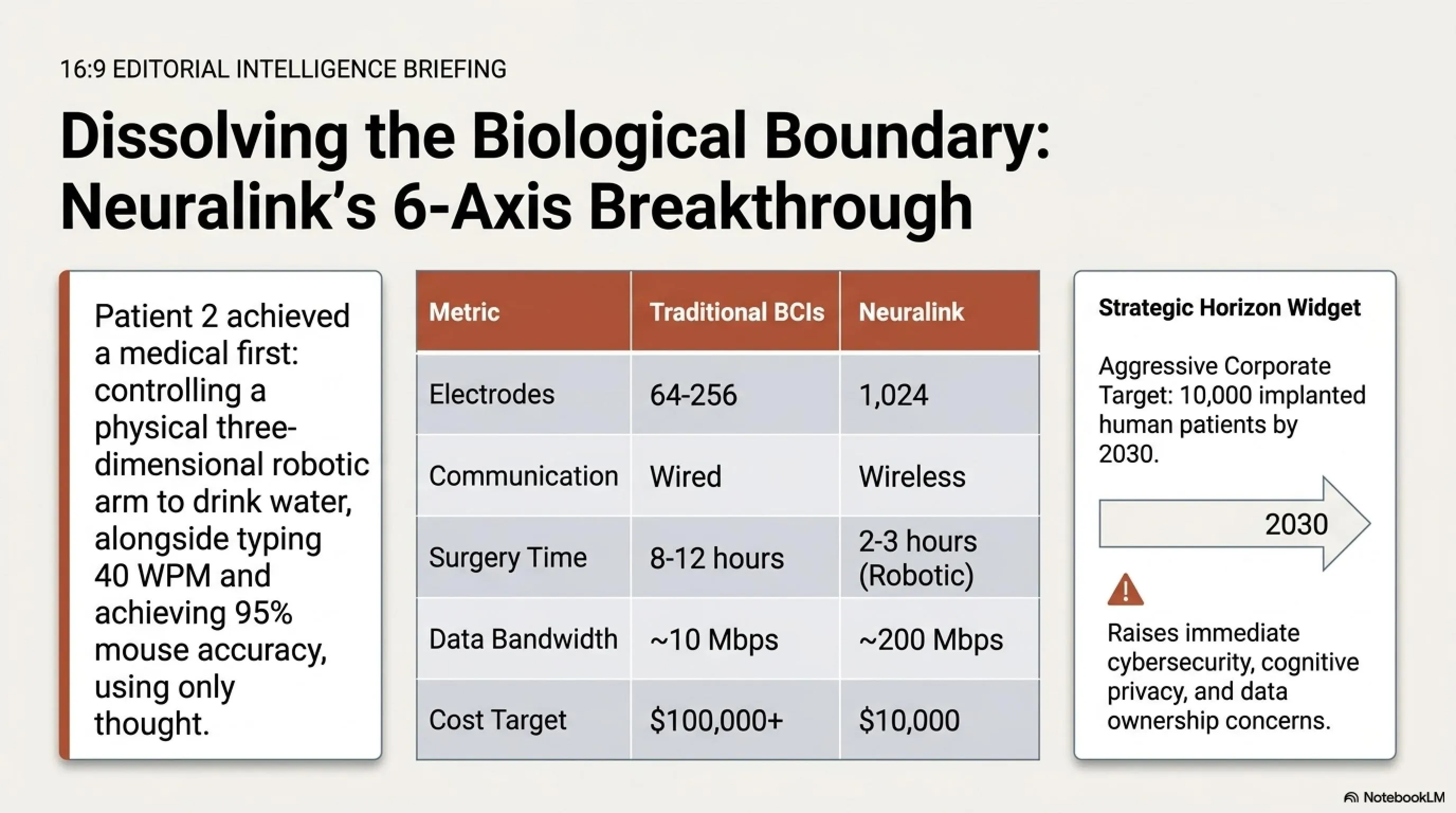
Neuralink released an official report on its second human patient to receive the brain chip. This patient, named Alex Conley, who suffers from complete spinal cord injury, has not only been able to control a mouse cursor but has, for the first time in medical history, successfully controlled a physical three-dimensional robotic arm with stunning precision using only thought (without any intermediary) and drank a glass of water.
How Does It Work? The Neuralink chip (called "The Link"), which is the size of a coin, is implanted on the brain's surface and sends 1,024 ultra-thin electrodes (thinner than a human hair) into the brain cortex. These electrodes read the electrical signals of neurons and wirelessly transmit them to a computer or robotic device.
🎯 Alex Conley's Achievements with Neuralink
1. Mouse Control: Can control mouse cursor with 95% accuracy.
2. Typing: Can type at 40 words per minute (just by thinking).
3. Robotic Arm Control: Can move a robotic arm in 6 axes of motion.
4. Drinking Water: Successfully picked up a glass of water, brought it to his mouth, and drank.
5. Drone Piloting: Controlled a drone using only thought.
6. Gaming: Played first-person shooter games competitively.
7. Digital Art: Created digital paintings using thought-controlled stylus.
Why Is This News Terrifying? Because it shows the boundary between human brain and machine is disappearing. If today we can control a robotic arm, tomorrow we can control a complete robot. The day after, we can connect directly to the internet from our brains. This means we're on the verge of a fundamental transformation in the definition of "being human."
📊 Neuralink vs Other BCIs
| Feature | Traditional BCIs | Neuralink |
|---|---|---|
| Number of Electrodes | 64-256 | 1,024 |
| Communication | Wired | Wireless |
| Surgery Time | 8-12 hours | 2-3 hours (with robot) |
| Control Accuracy | 70-80% | 95% |
| Battery Life | Daily charging required | Wireless charging (24 hours) |
| Cost | $100,000+ | Target: $10,000 |
| Data Bandwidth | ~10 Mbps | ~200 Mbps |
Tekin Analysis: Neuralink is transforming from a science-fiction project into a real product. Elon Musk has announced that the company's goal is to have 10,000 people with this chip in their brains by 2030. But many ethical questions exist: Can this chip be hacked? Can it be used for mind control? Should we allow private companies to access our brains?
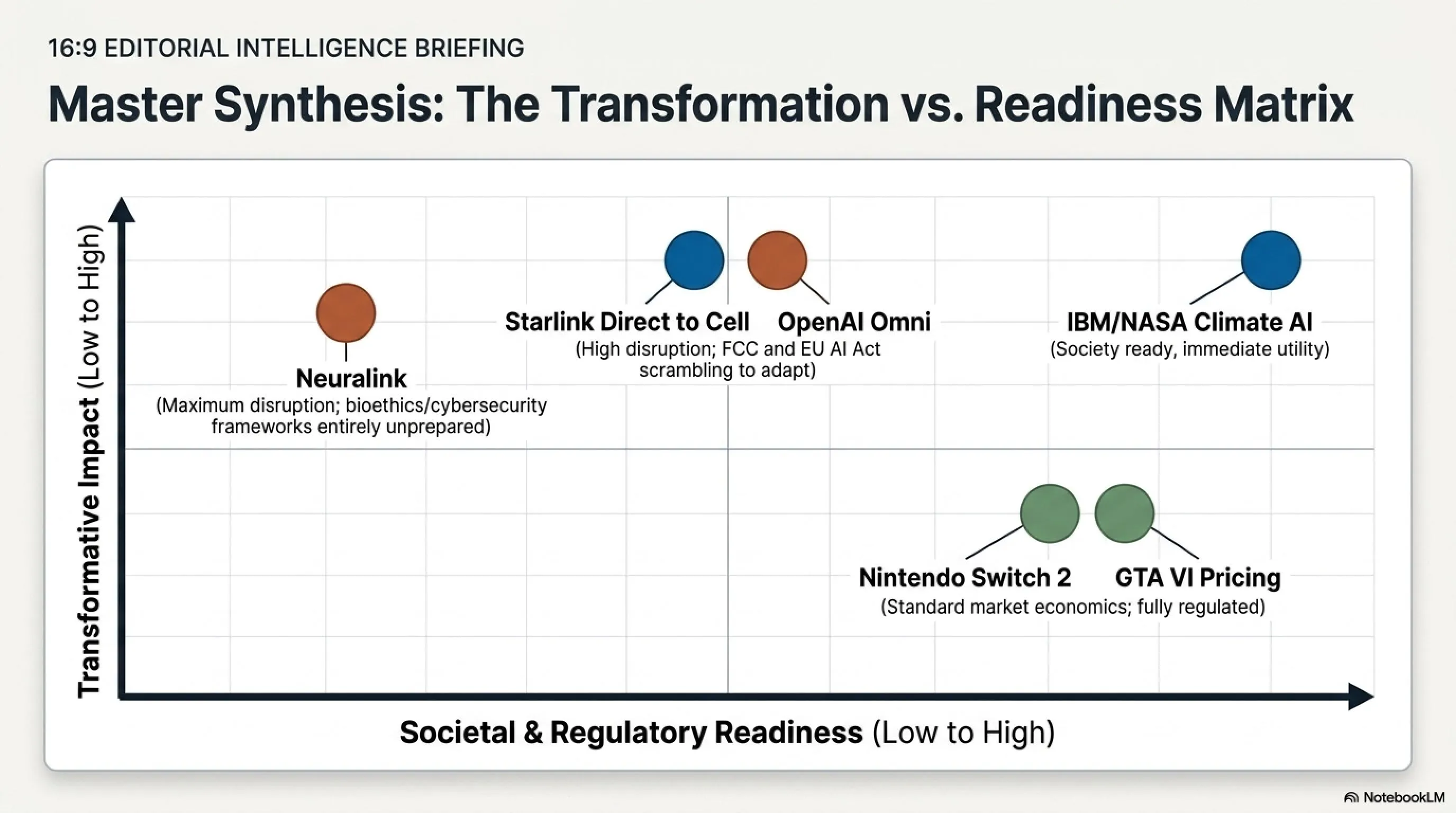
Ethical & Security Concerns: Cybersecurity experts have raised alarms about potential vulnerabilities. If a brain-computer interface can be hacked, the consequences could be catastrophic. Neuralink claims the device uses military-grade encryption and operates on a closed network, but independent security audits have not yet been conducted. Additionally, questions about data ownership, privacy, and the potential for cognitive enhancement creating societal inequality remain unresolved.
🔬 The Road Ahead
Short-term (2026-2028): Focus on medical applications for paralysis, ALS, and severe disabilities.
Medium-term (2028-2032): Expansion to sensory restoration (vision, hearing) and communication disorders.
Long-term (2032+): Cognitive enhancement, memory augmentation, and direct brain-to-brain communication.
Regulatory Hurdles: FDA approval for broader use will require extensive long-term safety data.
🎯 Final Verdict: A Night of Transformations
Tonight we witnessed six stories that could each have been the week's main headline. IBM and NASA proved that AI can serve humanity, not just shareholder profits. Nintendo showed that companies can respect gamers without exploiting them. Take-Two with GTA VI proved the gaming industry has entered a new era of pricing. OpenAI with Omni demonstrated that AI's future lies in seamless physical world interaction. Starlink proved that global communications can be democratized. And Neuralink showed that the boundary between human and machine is dissolving.
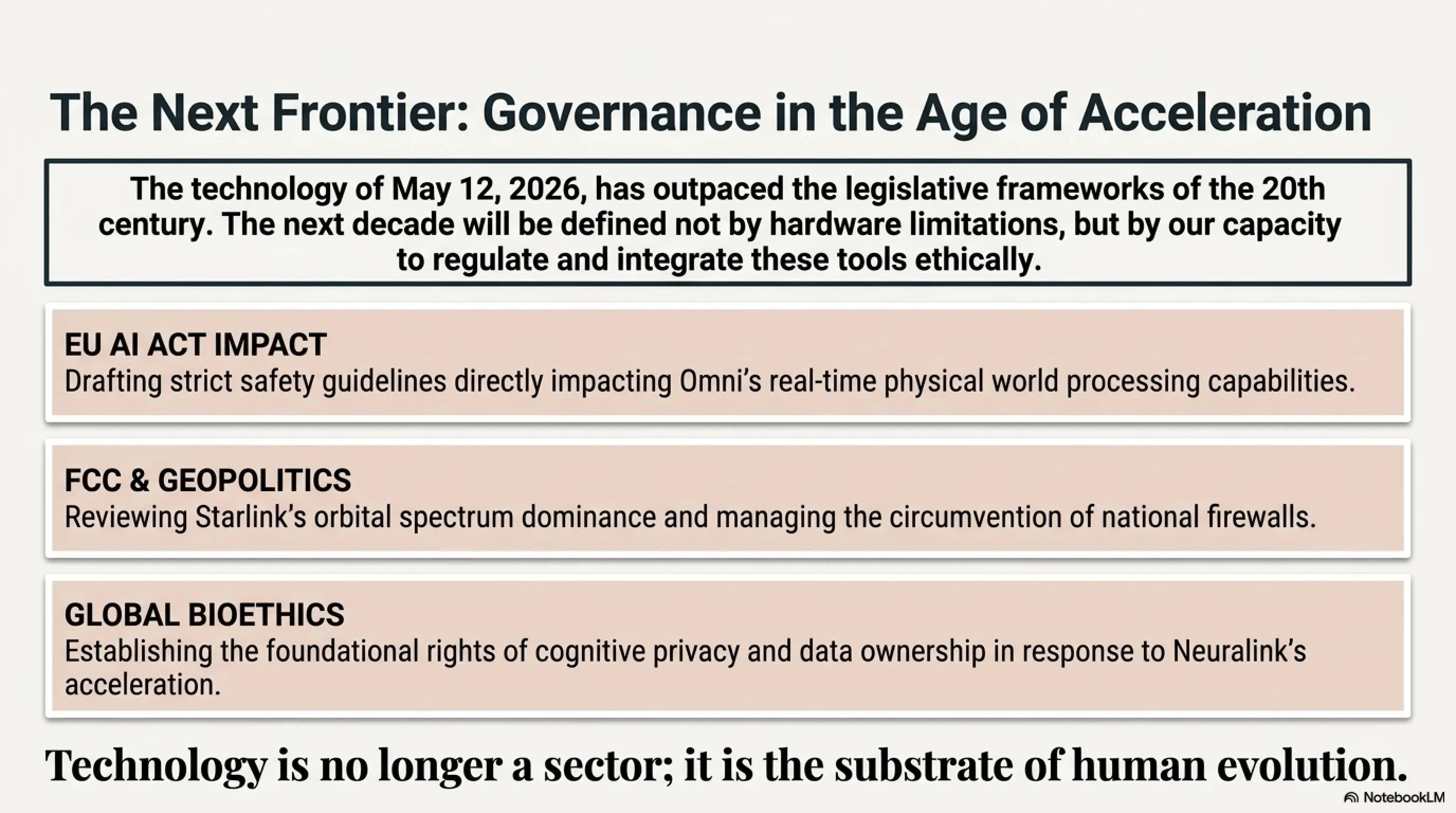
The main question is: Are we ready for these transformations? Are our laws and regulations keeping pace with technology? Can we use these technologies properly? The answers to these questions will determine humanity's future.
What to Watch Next: In the coming weeks, expect regulatory responses to these announcements. The EU is already drafting AI safety guidelines that could impact OpenAI Omni. The FCC is reviewing Starlink's spectrum usage. And bioethics committees worldwide are debating Neuralink's implications. The technology is moving faster than society's ability to govern it.
❓ Is the IBM-NASA model truly free?
Yes, completely free! The Prithvi-Climate-2.0 model is released under Apache 2.0 license, meaning you can download it, modify it, use it for commercial projects, and even sell it. The only requirement is to credit the original source (IBM and NASA). The model is available on Hugging Face and can run on a laptop with a standard GPU.
❓ Will Switch digital games work on Switch 2?
Yes! Nintendo officially confirmed that the Nintendo Account system transfers to Switch 2, and all your digital games (from eShop) will be downloadable and playable on the new console. Save data and DLC also transfer. This means you don't need to repurchase your games.
❓ Why is GTA VI so expensive?
Several main reasons: 1) Production budget exceeds $1 billion. 2) 10 years of development. 3) Inflation and rising production costs. 4) Rockstar knows it has no competition and can charge premium prices. 5) Bank of America wants GTA VI to normalize $80 pricing so other companies can raise prices too.
❓ Does Starlink Direct to Cell work everywhere?
Not yet. Currently active in North America and Europe. Other regions are in testing phases with rollout planned through 2026. The service only works in areas without cellular coverage and requires clear sky view. It won't work indoors or in dense urban areas. Countries under sanctions (like Iran) are unlikely to get access in the near future.
❓ Is Neuralink safe for healthy people?
It's too early to say. Neuralink has only been tested on two human patients so far, both with complete spinal cord injuries (meaning surgical risks were outweighed by potential benefits). For healthy individuals, it's unclear whether the risks of brain surgery are worth having a brain-computer interface. The FDA has not issued approval for general use. Long-term safety data (10+ years) is still needed.
📚 Sources
IBM Newsroom, NASA IMPACT, Hugging Face, TechCrunch, VGC (Video Games Chronicle), Nintendo Investor Relations, IGN, Bloomberg, Forbes, The Verge, Wired, OpenAI Official Blog, Reuters, BioTech News, CNBC, Neuralink Official Reports, Barrow Neurological Institute, Wedbush Securities, Bank of America Research, FDA Public Records
Tekin Night May 12, 2026 — Research and Analysis: Tekin Editorial Team
🌐 Stay Connected With Us
For the latest tech, gaming, and gadget news, follow us on social media:
🌐 Stay Connected With Us 🎮✨
For the latest tech, gaming, and gadget news, follow us on our official social media channels:
Additional Gallery: 🌙 Tekin Night May 12: GTA VI $80 Price, OpenAI Omni & Neuralink