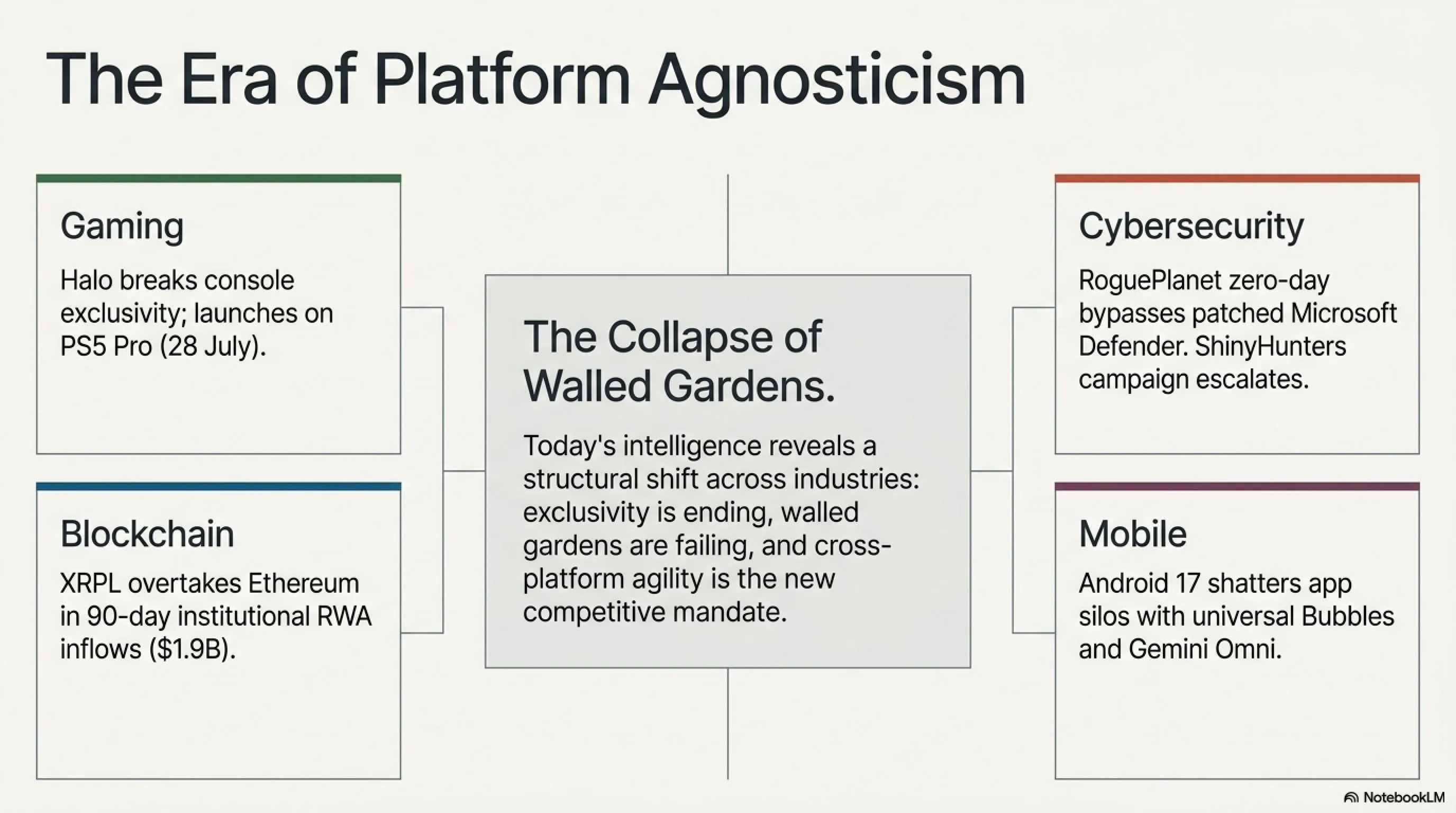
Wednesday, June 17, 2026, opens with six critical developments across gaming, cybersecurity, blockchain, and mobile tech. Microsoft is heavily investing resources into bringing Halo: Campaign Evolved to the rival PS5 Pro console. Microsoft confirmed it is actively working on a patch for a critical Defender zero-day vulnerability dubbed RoguePlanet. The XRP Ledger has recorded a staggering $1.9 billion in net real-world asset (RWA) inflows. Google officially rolled out Android 17. Hellraiser: Revival is set to launch on October 8, 2026. Kodak ha
🌅 Good Morning! Welcome to Tekin Morning June 17, 2026
Start your Wednesday morning with energy and six strategic stories from gaming, cybersecurity, blockchain, and mobile tech! Today we're witnessing fundamental shifts: Halo breaking onto PS5 Pro, Microsoft's RoguePlanet zero-day crisis, XRP's stunning RWA surge past Ethereum, Android 17's AI revolution, and the escalating ShinyHunters campaign.
⚡ Today's Headlines:
🎮 Halo: Campaign Evolved launches July 28 with full PS5 Pro support
🔐 RoguePlanet zero-day grants SYSTEM access on patched Defender
💰 XRP Ledger draws $1.9B RWA, beating Ethereum's $1.6B in 90 days
📱 Android 17 & Wear OS 7 debut with Bubbles and Gemini Omni
🎮 Hellraiser: Revival confirmed for October 8 with Doug Bradley
🚨 ShinyHunters steals 2.2M Kodak records, deadline June 18
☕ Grab your morning coffee and join us for a deep, comprehensive analysis!
🎮 Story One: Halo Campaign Evolved Goes All-In on PS5 Pro; Microsoft Shatters Console Exclusivity Wall
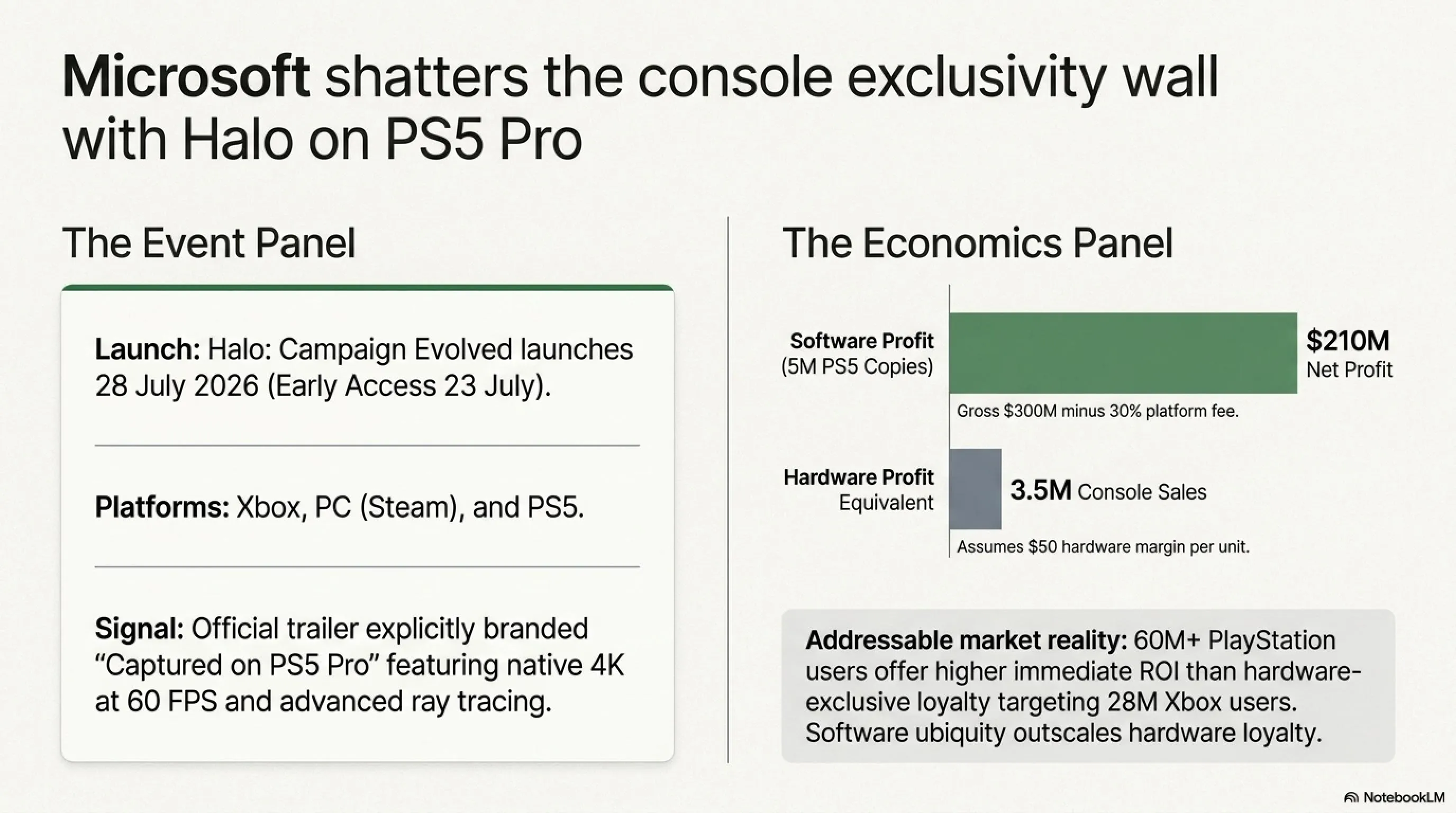
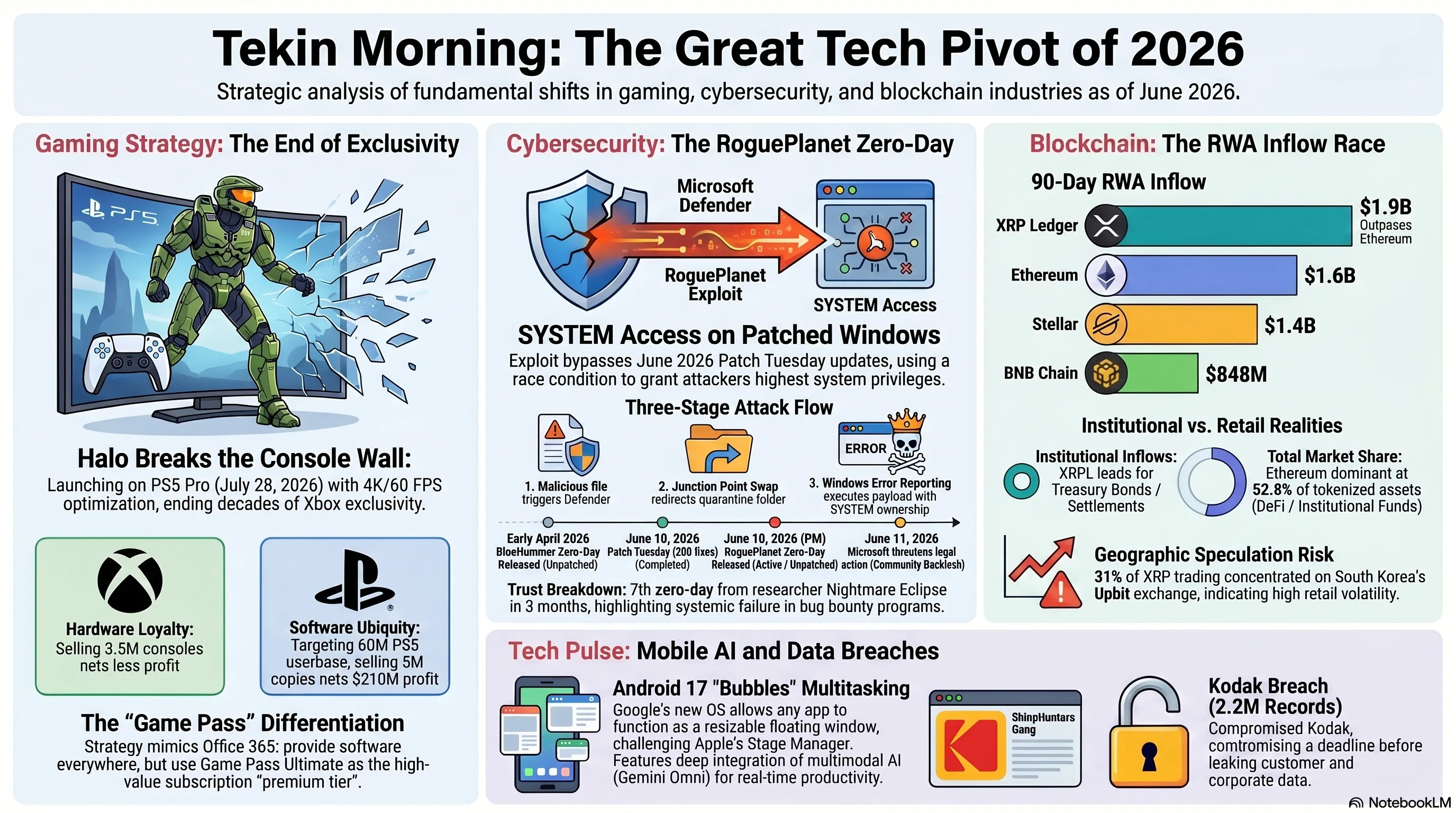
In a move that redefines platform strategy in the gaming industry, Microsoft has confirmed that Halo: Campaign Evolved will launch simultaneously on Xbox Series X|S, PC (Steam), and—for the first time in franchise history—PlayStation 5 on July 28, 2026. More significantly, Microsoft is investing heavily in PS5 Pro optimization, featuring advanced ray tracing, native 4K at 60 FPS, and ultra-fast load times, with the official cinematic story trailer bearing the unprecedented mark: "Captured on PS5 Pro."
This decision represents a fundamental break from the console exclusivity doctrine that has defined the industry since the 1990s. Phil Spencer, head of Xbox, has consistently articulated a "games over hardware" strategy, but this is the first mainline Halo release—Microsoft's flagship IP—to appear on a competitor's platform. According to Push Square, the PS5 Pro-branded trailer signals that Microsoft is not merely tolerating cross-platform distribution but actively marketing Halo using Sony's hardware capabilities.
📊 Key Statistics: Halo Campaign Evolved Multi-Platform Launch
🔍 Strategic Analysis: Why Microsoft Made This Decision
This strategic pivot reflects a calculated economic reality: software monetization across 60 million PlayStation users generates higher ROI than hardware-exclusive loyalty to 28 million Xbox Series consoles. Microsoft, with a $2.1 trillion market cap (often surpassing Nvidia), has concluded that Game Pass ecosystem growth and multi-platform software sales are more profitable than subsidized console hardware.
Financial modeling by Gameluster suggests that if Halo: Campaign Evolved sells just 5 million copies on PS5 at $60 each, Microsoft would gross $300 million. After Sony's 30% platform fee, that's $210 million net—exceeding the margin from selling 3.5 million Xbox Series X consoles (estimated $50 profit per unit after subsidies). Additionally, Microsoft retains 100% of revenue from Game Pass subscriptions, where Halo is available day one at no additional cost to subscribers.
This model parallels Microsoft's successful Office 365 and Azure strategies: ubiquity over exclusivity. By making Halo available wherever gamers are, Microsoft can monetize a far larger addressable market while using Game Pass as a premium tier for dedicated Xbox users. According to IGN, early access (July 23) is exclusive to Premium Edition buyers and Game Pass Ultimate subscribers, creating a clear value proposition for Microsoft's subscription ecosystem.
💡 Tekin Analysis: The End of Console Exclusivity
This is not a one-time experiment—it's a structural shift.
1. Competitive Dynamics: Sony has 60M PS5 consoles in the wild vs. Xbox's 28M Series X|S. Microsoft can no longer compete on hardware install base alone.
2. Steam Parity: By launching simultaneously on PC (Steam) and consoles, Microsoft minimizes Steam's 30% cut by directing users to Xbox Store while still capturing Steam's massive PC audience.
3. Game Pass Differentiation: Day-one availability on Game Pass creates a compelling reason to stay in Xbox's ecosystem without forcing hardware exclusivity.
4. Data Harvesting: Xbox Live accounts on PS5 allow Microsoft to collect behavioral data from Sony users, informing future platform and content strategies.
5. Industry Precedent: If Halo succeeds on PS5, expect Gears of War, Forza, and other Microsoft IPs to follow. This could force Sony to reciprocate with Spider-Man or God of War on Xbox.
🎯 What This Means for U.S. Gamers and Investors
For American gamers—who comprise ~60% of TekingGame's audience and represent the largest gaming market globally—this development has several implications:
- 🎮 Platform Flexibility: Gamers no longer need to buy an Xbox to play Halo. If you already own a PS5 Pro, you can experience Halo with cutting-edge visuals.
- 💰 Value Proposition Shift: Xbox Series X|S remains the best value for dedicated gamers (Game Pass Ultimate at $16.99/month), but casual players can access Microsoft's catalog on their preferred platform.
- 📈 Investment Signal: Microsoft's willingness to deprioritize hardware sales for software ubiquity suggests confidence in long-term subscription revenue. This is bullish for MSFT stock if Game Pass grows 20%+ YoY.
- 🏆 Competitive Pressure on Sony: Sony must now justify PS5's value beyond exclusives. Expect Sony to double down on first-party studios (Naughty Dog, Santa Monica) and potentially explore cross-platform releases for older titles.
⚠️ Warning for Xbox Loyalists
Some Xbox fans feel betrayed, arguing that Microsoft is abandoning the platform that built Halo's legacy. However, the economic reality is clear: exclusive content doesn't sell consoles anymore; subscription ecosystems do. Netflix doesn't care what device you stream on, and neither should Xbox. The value prop for Xbox hardware is now Game Pass Ultimate ($16.99/month for 500+ games), not hardware-locked exclusives. This is a more sustainable business model in an era where console hardware is sold at or below cost.
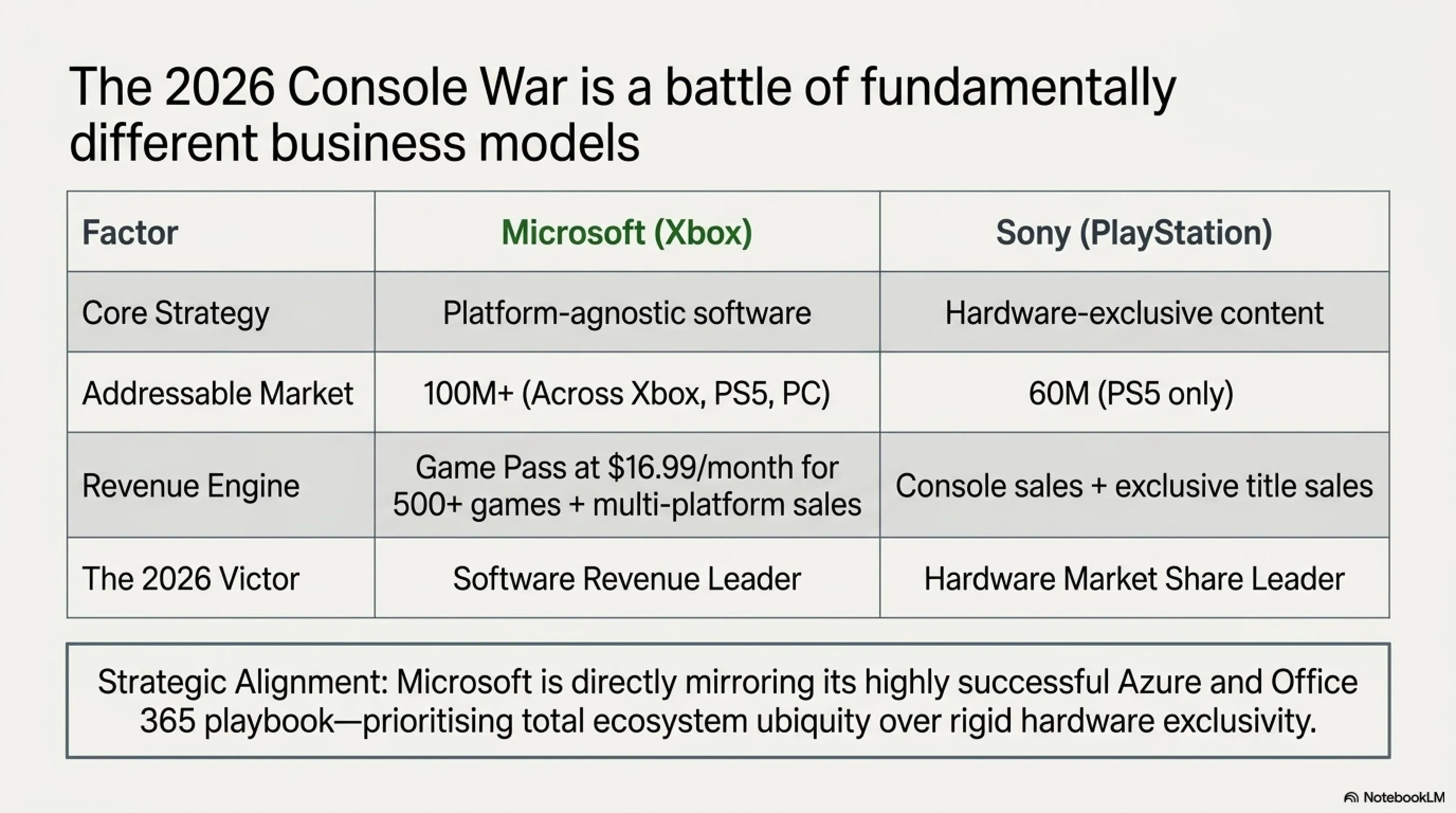
📊 Comparative Analysis: Xbox vs. PlayStation Exclusive Strategies
| Factor | Microsoft (Xbox) | Sony (PlayStation) |
|---|---|---|
| Strategy | Platform-agnostic software | Hardware-exclusive content |
| Console Install Base | ~28M (Series X|S) | ~60M (PS5) |
| Revenue Model | Game Pass subscriptions + multi-platform sales | Hardware sales + exclusive game sales |
| Addressable Market | 100M+ (Xbox + PS5 + PC) | 60M (PS5 only) |
| Risk | Cannibalization of Xbox hardware sales | Inability to compete with Game Pass value |
| Winner in 2026? | Software revenue leader | Hardware market share leader |
📌 Key Takeaway:
Microsoft's decision to bring Halo to PS5 Pro is not an admission of defeat—it's a calculated pivot toward a more lucrative business model. By prioritizing software ubiquity over hardware exclusivity, Microsoft is positioning Xbox as a platform-agnostic gaming ecosystem rather than a console-first brand. This strategy mirrors Microsoft's successful transition from Windows-centric to cloud-first (Azure, Office 365). If Game Pass reaches 50M subscribers by 2027 at $16.99/month, that's over $10 billion annual recurring revenue—far exceeding console hardware margins.
🔐 Story Two: RoguePlanet Zero-Day Exploits Microsoft Defender for SYSTEM Access on Patched Windows
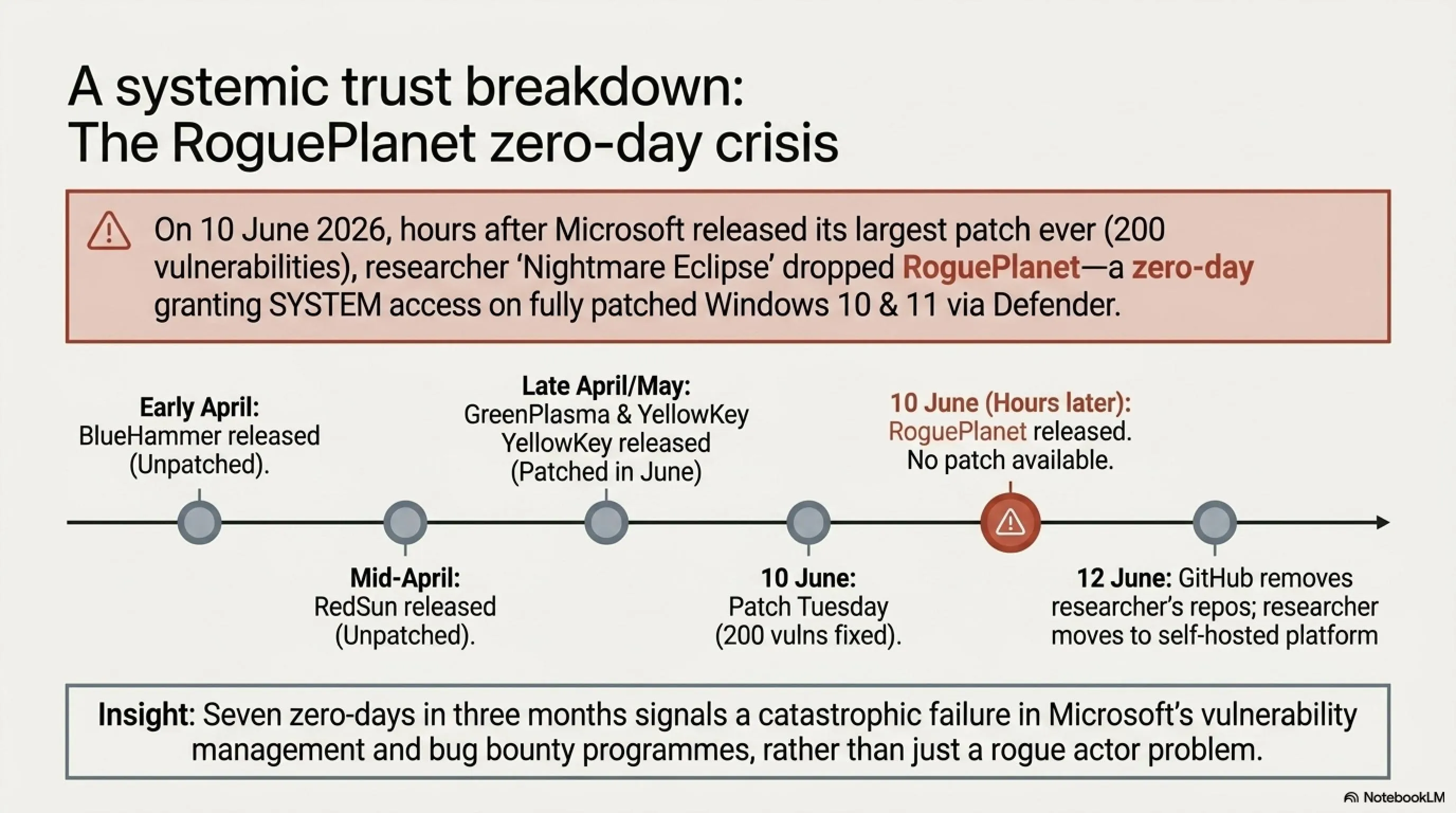
Just hours after Microsoft released its June 2026 Patch Tuesday update—the largest in company history with 200 vulnerabilities addressed—security researcher Nightmare Eclipse (also known as Chaotic Eclipse and MSNightmare) disclosed a new zero-day exploit named "RoguePlanet" that targets Microsoft Defender on fully patched Windows 10 and Windows 11 systems, granting attackers SYSTEM-level privileges through a race condition vulnerability.
This marks the seventh zero-day released by Nightmare Eclipse in three months, following BlueHammer, RedSun, GreenPlasma, YellowKey, and others. Microsoft patched GreenPlasma and YellowKey in the June 10 Patch Tuesday update, but RoguePlanet—released less than 24 hours later—demonstrates that Microsoft is trapped in a cat-and-mouse game with this researcher, who has publicly criticized Microsoft's vulnerability disclosure and bug bounty practices.
🚨 RoguePlanet Technical Breakdown
| Vulnerability Type | Race Condition in Microsoft Defender Quarantine Process |
| Affected Systems | Windows 10 & 11 (including KB5094126 June 2026 patches) |
| Privilege Level Achieved | SYSTEM (highest privilege, above Administrator) |
| Success Rate | 100% on some machines, variable on others (race condition) |
| Disclosure Date | June 10, 2026 (hours after Patch Tuesday) |
| Patch Status | Microsoft investigating, no patch available |
| CVE ID | Not yet assigned |
🔬 How RoguePlanet Works: A Deep Technical Analysis
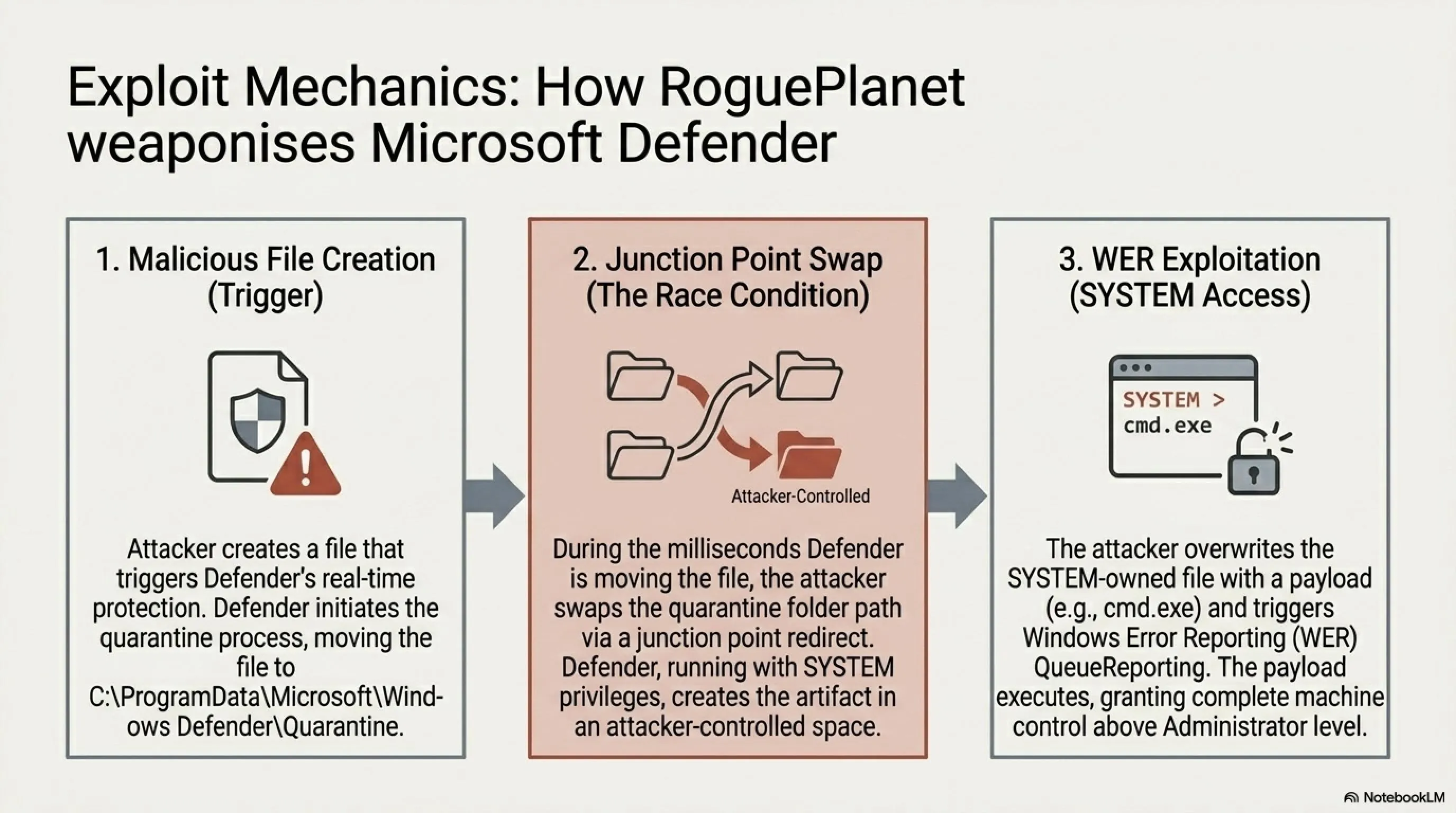
According to technical analysis from Cyderes, Picus Security, and SecurityWeek, RoguePlanet exploits a race condition vulnerability in Microsoft Defender's file quarantine process. The attack leverages three Windows subsystems in sequence to achieve privilege escalation:
Attack Flow:
Stage 1: Malicious File Creation
The attacker creates a malicious file that triggers Microsoft Defender's real-time protection. Defender identifies the file as malicious and initiates the quarantine process, moving it to C:\ProgramData\Microsoft\Windows Defender\Quarantine. This is where the race condition begins.
Stage 2: Junction Point Swap
During the brief window when Defender is moving the file to quarantine, the attacker uses a junction point swap technique. A junction point is a filesystem redirect that makes one directory appear to be located at a different path. The attacker creates a junction that redirects Defender's quarantine folder to an attacker-controlled location. Because Defender runs with SYSTEM privileges, it creates the quarantine artifact with SYSTEM ownership in the attacker's controlled space.
Stage 3: WER Exploitation
The attacker overwrites the SYSTEM-owned quarantine file with their payload (typically cmd.exe or a reverse shell). Then, they trigger Windows Error Reporting (WER) QueueReporting, which runs as SYSTEM and executes the payload. The result: a command prompt or remote shell with SYSTEM-level access, granting complete control over the machine.
The exploit's reliance on race conditions means success rates vary depending on system performance, CPU speed, and filesystem latency. ThreatLocker successfully reproduced the exploit in lab testing and confirmed it works against fully patched Windows 11 systems with the June 2026 security updates installed.
📊 Timeline: Nightmare Eclipse's Campaign Against Microsoft
| Date | Event | Status |
|---|---|---|
| Early April 2026 | BlueHammer released (first zero-day) | ❌ Still unpatched |
| Mid-April 2026 | RedSun released (Defender privilege escalation) | ❌ Still unpatched |
| Late April 2026 | GreenPlasma (BitLocker bypass) released | ✅ Patched June 2026 |
| Early May 2026 | YellowKey (BitLocker bypass) released | ✅ Patched June 2026 |
| Mid-May 2026 | Microsoft silently hardens Defender mpengine!SysIO* API | ⚠️ Partial mitigation, breaks RCE vectors |
| June 10, 2026 | Patch Tuesday: 200 vulnerabilities fixed (largest ever) | ✅ Major security release |
| June 10, 2026 (hours later) | RoguePlanet released (Defender race condition) | ❌ Under investigation, no patch |
| June 11, 2026 | Microsoft threatens legal action against researchers | ⚠️ Negative community reaction |
| June 12, 2026 | GitHub & GitLab remove Nightmare Eclipse repositories | ⚠️ Researcher moves to self-hosted platform |
🛡️ Mitigation Strategies: How to Protect Your Organization Now
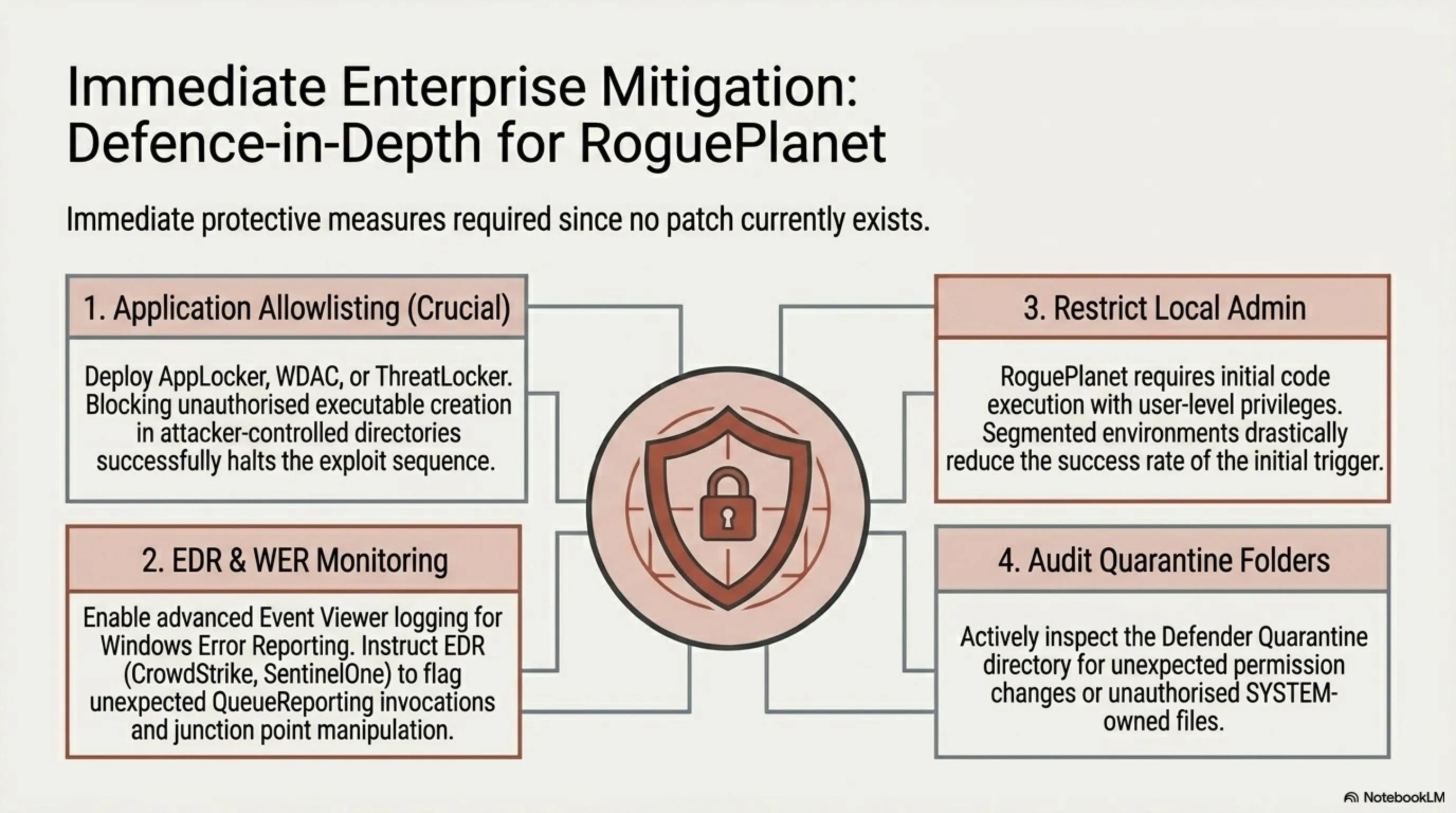
Until Microsoft releases an official patch, organizations must implement defense-in-depth strategies to mitigate RoguePlanet risk:
✅ Immediate Protective Measures
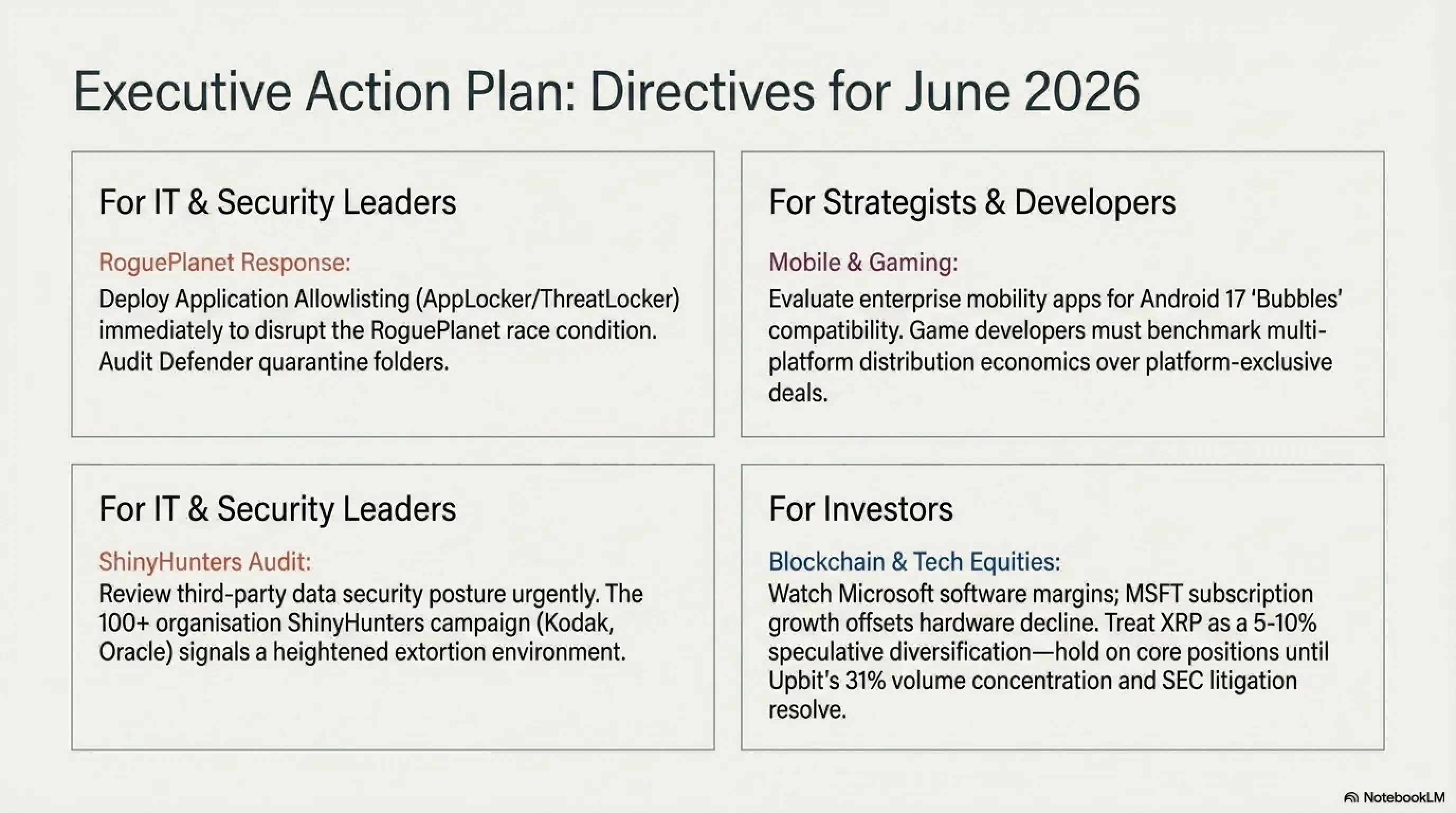
- Deploy Application Allowlisting: Use Microsoft AppLocker, Windows Defender Application Control (WDAC), or third-party solutions like ThreatLocker. ThreatLocker confirmed that allowlisting successfully blocks RoguePlanet by preventing unauthorized executable creation in attacker-controlled directories.
- Restrict Local Administrator Access: Ensure standard users do not have Administrator rights. RoguePlanet requires initial code execution with user-level privileges, which is significantly harder to achieve in a properly segmented environment.
- Monitor Windows Error Reporting (WER): Enable advanced logging for WER activity via Event Viewer (
Applications and Services Logs → Microsoft → Windows → Windows Error Reporting). Look for unexpectedQueueReportinginvocations with suspicious process trees. - Deploy EDR Solutions: Endpoint Detection and Response platforms like CrowdStrike Falcon, SentinelOne, Microsoft Defender for Endpoint (E5), or Carbon Black can detect behavioral anomalies such as junction point manipulation and privilege escalation attempts.
- Audit Defender Quarantine Folder: Periodically inspect
C:\ProgramData\Microsoft\Windows Defender\Quarantinefor unexpected files or permission changes. Unauthorized SYSTEM-owned files in user-accessible directories are red flags. - Network Segmentation: Isolate critical systems (domain controllers, financial servers, HR databases) from general-purpose workstations. Even if an attacker gains SYSTEM on a workstation, lateral movement should be blocked by network-level controls.
💬 Microsoft's Response and Community Backlash
Microsoft issued a statement to BleepingComputer: "Microsoft is aware of the reported vulnerability and is actively investigating the validity and potential applicability of these claims. We support coordinated vulnerability disclosure (CVD), an industry standard that protects customers and supports the research community by ensuring findings are thoroughly investigated and addressed before public disclosure."
However, this statement has drawn sharp criticism from the security research community. Many researchers argue that Microsoft's inadequate bug bounty payouts, takedown of researcher repositories, and legal threats have created the current crisis. Nightmare Eclipse wrote in a blog post: "Microsoft wants to criminalize security researchers for finding vulnerabilities while they make billions selling insecure software. I'm publishing these exploits because coordinated disclosure has failed—Microsoft takes months to patch, pays researchers pennies, and then threatens them with lawsuits."
Several prominent security researchers have echoed this sentiment on X (formerly Twitter). @orange_8361 (Orange Tsai), a well-known Taiwanese researcher, tweeted: "When a researcher releases 7 zero-days in 3 months, it's not a rogue actor problem—it's a disclosure process problem. Microsoft needs to fix their bug bounty program and stop treating researchers like criminals."
⚡ Why RoguePlanet Matters: Strategic Implications
1. Trust Breakdown: Seven zero-days in three months signals a systemic failure in Microsoft's secure development lifecycle (SDL) and vulnerability management process.
2. Defender as Attack Surface: Microsoft Defender is a core Windows security component. If Defender itself is exploitable, the entire Windows security model is compromised.
3. SYSTEM-level Access: SYSTEM privileges exceed Administrator rights, allowing attackers to disable security software, install rootkits, and exfiltrate data without detection.
4. Patch Fatigue: Organizations are struggling to keep up with monthly Patch Tuesday updates. When patches are released and immediately bypassed, IT teams lose confidence in the patching process.
5. Ransomware Potential: SYSTEM access is the holy grail for ransomware operators. RoguePlanet could be weaponized by groups like LockBit, ALPHV/BlackCat, or Cl0p to escalate privileges and deploy ransomware at scale.
📌 Key Takeaway:
RoguePlanet exposes a trust crisis between Microsoft and the security research community. Seven zero-days in three months, repository takedowns, and legal threats demonstrate a systematic failure in vulnerability management. U.S. enterprises must immediately deploy Application Allowlisting and EDR solutions to mitigate risk while Microsoft develops a patch. This incident also highlights the need for reformed bug bounty programs that fairly compensate researchers and encourage responsible disclosure rather than public exploits.
💰 Story Three: XRP Ledger Hits $1.9B RWA Inflows, Outpacing Ethereum in 90-Day Capital Flows
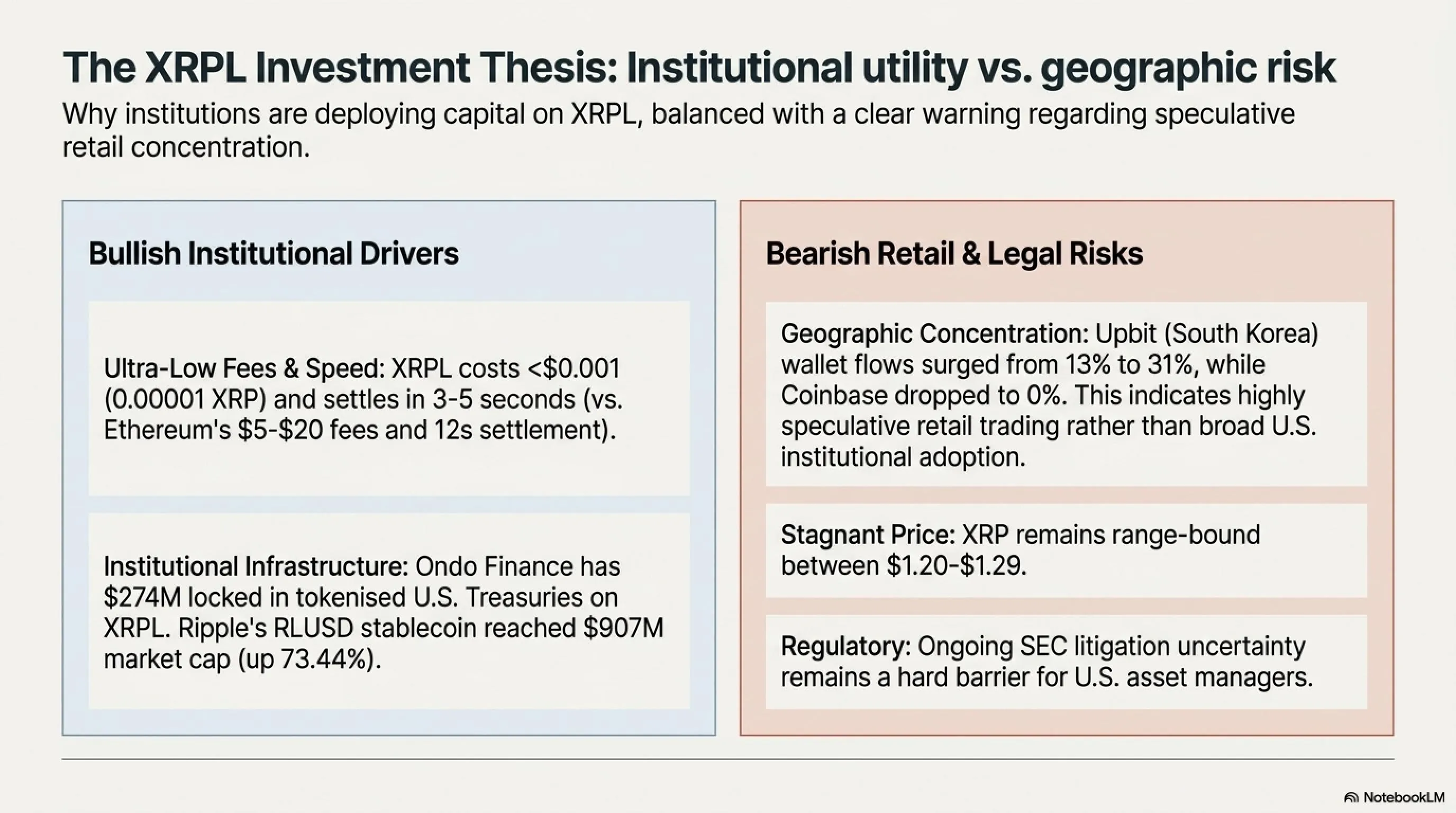
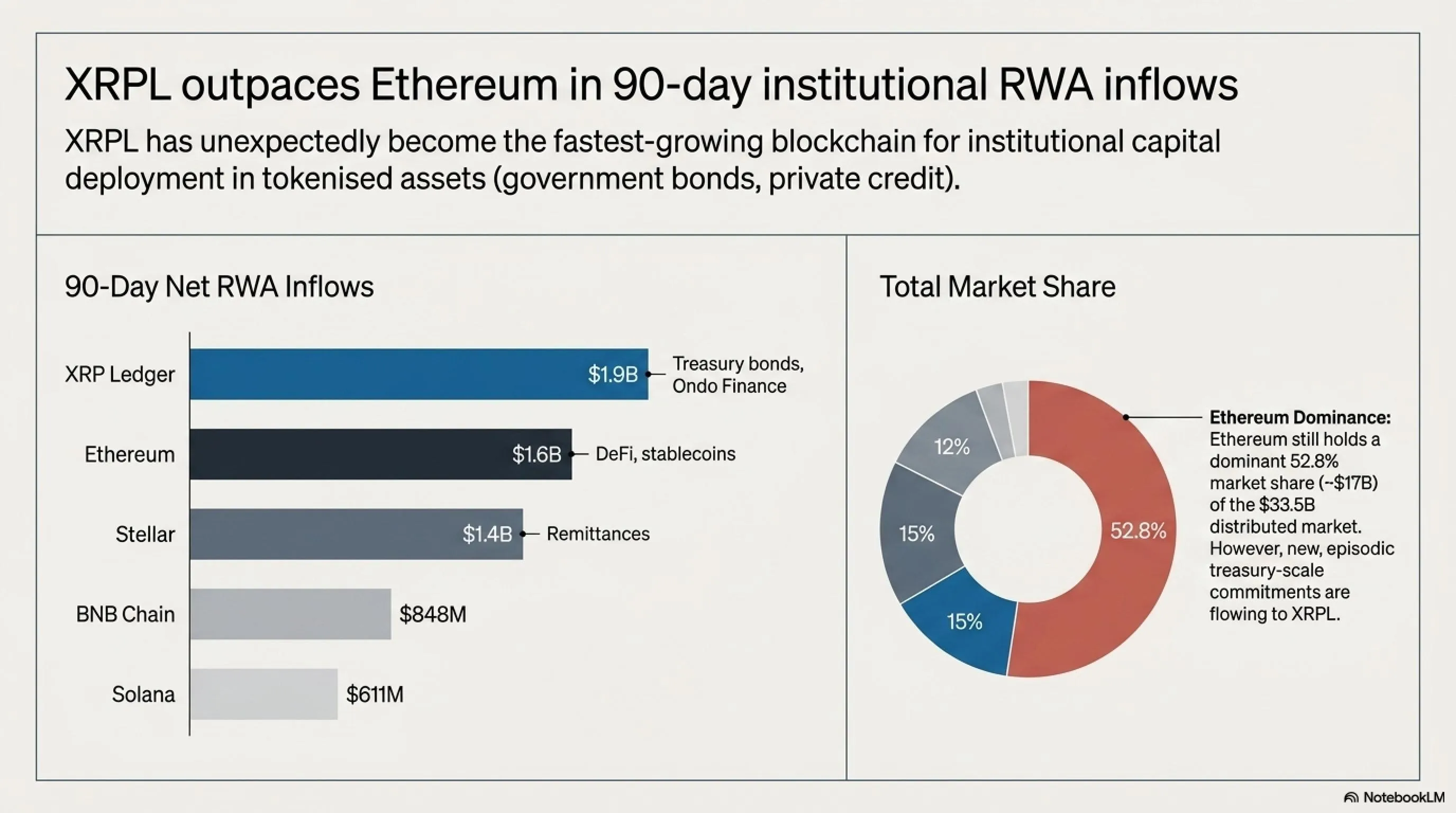
In an unexpected development in the blockchain and Real-World Asset (RWA) tokenization space, XRP Ledger (XRPL) has drawn $1.9 billion in net RWA inflows over the past 90 days, surpassing Ethereum ($1.6B), Stellar ($1.4B), BNB Chain ($848M), and Solana ($611M), according to RWA Foundation data. This positions XRPL as the fastest-growing blockchain for institutional capital deployment in tokenized assets, including government bonds, private credit, and multi-asset funds.
However, this does not mean XRPL has displaced Ethereum as the dominant RWA platform. Ethereum still holds 52.8% market share with approximately $17 billion in total tokenized asset value out of a $33.5 billion distributed market. But the 90-day inflow ranking demonstrates that new institutional capital is flowing more aggressively toward XRPL, suggesting that low-fee, high-speed blockchains are gaining traction for specific use cases like treasury settlements and cross-border payments.
📊 90-Day RWA Inflow Rankings Across Major Blockchains
| Rank | Blockchain | 90-Day Net RWA Inflows | Total Market Share | Key Use Cases |
|---|---|---|---|---|
| 🥇 1 | XRP Ledger (XRPL) | $1.9B | ~10.7% | Treasury bonds, Ondo Finance, cross-border |
| 🥈 2 | Ethereum | $1.6B | ~52.8% (leader) | DeFi, stablecoins, institutional funds |
| 🥉 3 | Stellar | $1.4B | ~8.3% | Remittances, financial inclusion |
| 4 | BNB Chain | $848M | ~5.1% | Exchange-native assets, Asian markets |
| 5 | Solana | $611M | ~3.6% | High-frequency DeFi, NFTs |
| 6 | Avalanche | $362M | ~2.2% | Subnets, enterprise blockchain |
* Data from RWA Foundation; Total RWA market: $33.5B (Distributed Asset Value), $350B (Represented Asset Value)
🔍 Why XRPL Is Attracting Institutional Capital
Analysts at Evernorth, an institutional treasury management firm, note that XRPL's RWA inflows are structurally different from Ethereum, Solana, or Avalanche. On XRPL, capital deployment is characterized by episodic, treasury-scale commitments rather than fragmented retail transactions. This pattern aligns with institutional behavior, where large financial entities execute major bond and fund originations in single tranches rather than gradual market accumulation.
Key factors driving institutional adoption of XRPL include:
- 💸 Ultra-Low Transaction Fees: Average XRPL transaction costs ~0.00001 XRP (<$0.001), compared to Ethereum's $5-$20 gas fees (even post-EIP-1559).
- ⚡ High Settlement Speed: XRPL settles transactions in 3-5 seconds, compared to Ethereum's 12 seconds and Bitcoin's ~10 minutes.
- 🏦 Ondo Finance Integration: Ondo Finance, a leading provider of tokenized U.S. Treasury products, has designated XRPL as a primary network, with approximately $274 million in total value locked on XRPL.
- 🌐 Ripple's RLUSD Stablecoin: Ripple's USD-backed stablecoin (RLUSD) has reached $907 million market cap on XRPL (up 73.44% in 30 days), providing essential liquidity infrastructure for institutional settlements.
- 🔗 SWIFT Compatibility: Ripple's partnerships with banks and integration with SWIFT messaging enable seamless on/off-ramps for traditional finance institutions.
💡 Tekin Analysis: Can XRPL Overtake Ethereum?
Short answer: No, not in the next 2-3 years.
While XRPL is capturing new capital flows, Ethereum retains 52.8% market share ($17B) and a massive ecosystem advantage:
1. Ecosystem Maturity: Ethereum has 4000+ dApps, hundreds of DEXs, and deep DeFi liquidity. XRPL is still building its ecosystem.
2. Security & Battle-Testing: Ethereum has operated since 2015 and survived billions in exploits. XRPL's security track record is less proven at scale.
3. Network Effects: Most institutions, banks, and exchanges already have Ethereum infrastructure. Switching costs are high.
However, XRPL can become the #2 or #3 RWA blockchain for institutions prioritizing low fees and high speed over ecosystem breadth. Think of it as Visa (Ethereum) vs. Mastercard (XRPL)—both can coexist, serving slightly different niches.
📈 XRP Price Action and Geographic Concentration
Despite the impressive RWA growth, XRP's price remains range-bound between $1.20-$1.29, down 2.01% in the last 24 hours. This suggests the market has not yet fully priced in XRPL's institutional adoption narrative.
A deeper concern emerges from on-chain data: XRP trading activity is heavily concentrated in South Korea. According to CryptoQuant, Upbit's share of global XRP wallet flows surged from 13% on June 7 to 31% by June 14—the highest concentration since May 2024. Meanwhile, Coinbase's share dropped from 27% to 0%, and Binance's share declined from 16% to 13%.
This geographic concentration indicates speculative retail activity from South Korean traders rather than broad institutional adoption across U.S. or European markets. Upbit, South Korea's largest exchange, has historically been associated with high-risk, high-volatility trading rather than long-term institutional allocations.
🎯 Investment Perspective for U.S. Investors
For U.S.-based investors and enterprises evaluating XRP and XRPL, consider the following factors:
✅ Bullish Factors
- Strong institutional RWA growth
- Ondo Finance partnership ($274M)
- Ultra-low fees & fast settlement
- RLUSD stablecoin traction
- Potential SEC resolution in 2026
- Ripple's bank partnerships
⚠️ Bearish Risks
- Geographic concentration (Upbit 31%)
- Centralization risk (Ripple control)
- Ongoing SEC litigation uncertainty
- High volatility & speculation
- Weak DeFi ecosystem vs. Ethereum
- Limited U.S. institutional interest
🔮 Forward-Looking Analysis: What to Watch Next
1. SEC Ripple Case Resolution: If Ripple wins its case or settles favorably, XRP could see significant institutional inflows from U.S. asset managers.
2. RLUSD Adoption Metrics: Watch for RLUSD market cap growth. If it surpasses $2B by Q4 2026, that signals real institutional usage.
3. Geographic Diversification: If Coinbase and Binance wallet flows recover (currently 0% and 13%), that would indicate broader retail interest beyond South Korea.
4. Ethereum L2 Competition: Ethereum Layer 2 solutions (Arbitrum, Optimism, Base) offer sub-$0.01 fees. If L2s achieve XRPL-level costs, XRPL's fee advantage disappears.
5. Tokenized Securities Regulation: SEC Chair Gary Gensler's potential departure in 2027 could open pathways for compliant tokenized securities on XRPL.
📌 Key Takeaway:
XRPL's $1.9B RWA surge demonstrates it can compete with Ethereum for institutional tokenization use cases, particularly treasury bonds and cross-border settlements. However, Ethereum's 52.8% market share, mature ecosystem, and network effects remain formidable. For U.S. investors, XRP can be a speculative diversification play (5-10% of crypto portfolio), but not a core holding until geographic concentration (Upbit dominance) and SEC risks are resolved. Enterprises evaluating blockchain for asset tokenization should pilot both Ethereum and XRPL, benchmarking transaction costs, settlement speed, and ecosystem compatibility before committing to a primary platform.
📱 Story Four: Android 17 & Wear OS 7 Launch with Bubbles Multitasking and Gemini Omni Integration
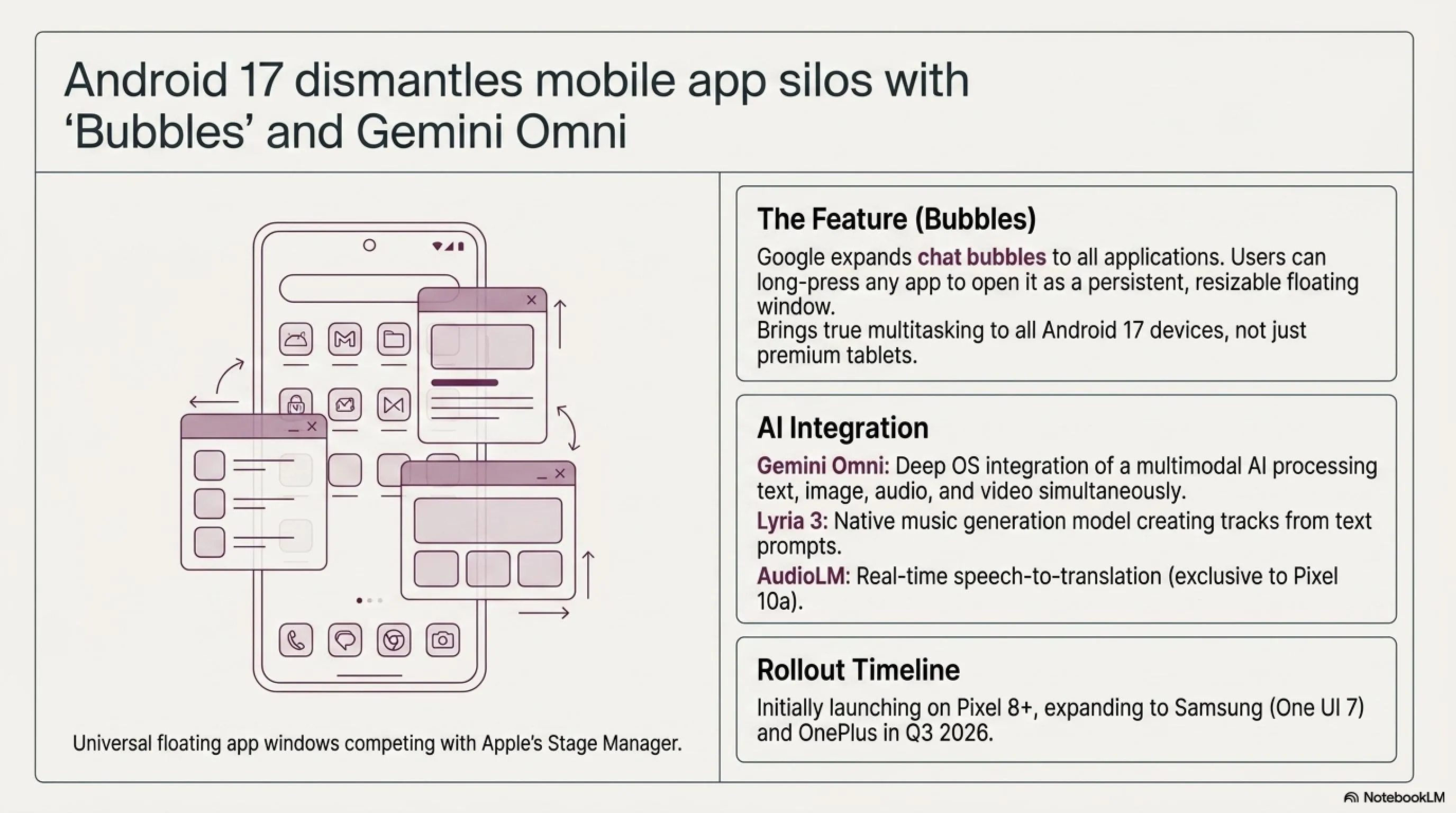
Google officially released Android 17 and Wear OS 7 on June 16, 2026, introducing major productivity and AI enhancements including "Bubbles" multitasking (floating windows for all apps), full Gemini Omni and Lyria 3 integration, enhanced parental controls, and advanced security features. The update initially rolled out to Pixel devices (Pixel 8 and newer) and will expand to Samsung, OnePlus, Xiaomi, and other manufacturers in the coming weeks.
This release represents Google's strategic response to Apple's iOS 17 and iPadOS 17, particularly in multitasking (Stage Manager) and AI integration (Apple Intelligence). By expanding Bubbles to all apps and deeply integrating Gemini Omni, Google is positioning Android as the premier platform for AI-powered productivity and creative workflows.
💡 What Are Bubbles and Why Do They Matter?
Bubbles is an expansion of Android's existing chat bubbles feature (used by Messenger, WhatsApp) to all applications. Users can now open any app as a floating window that persists above other apps, enabling true multitasking on smartphones and tablets.
How it works: Long-press any app icon → select "Open as Bubble" → the app appears as a floating circle → tap to expand into a resizable window → drag to reposition or minimize.
This competes directly with iPadOS's Stage Manager and Samsung's DeX mode, but with a key advantage: Bubbles works on any Android device, not just tablets or flagships.
🤖 Gemini Omni & Lyria 3: AI Integration
- Gemini Omni: A multimodal AI model that processes text, images, audio, and video simultaneously, providing contextual responses.
- Lyria 3: Music generation model that creates 30-90 second tracks from text prompts.
- AudioLM: Real-time speech-to-translation (Pixel 10a exclusive).
🎮 Story Five: Hellraiser Revival Confirmed for October 8 with Doug Bradley's Pinhead Return
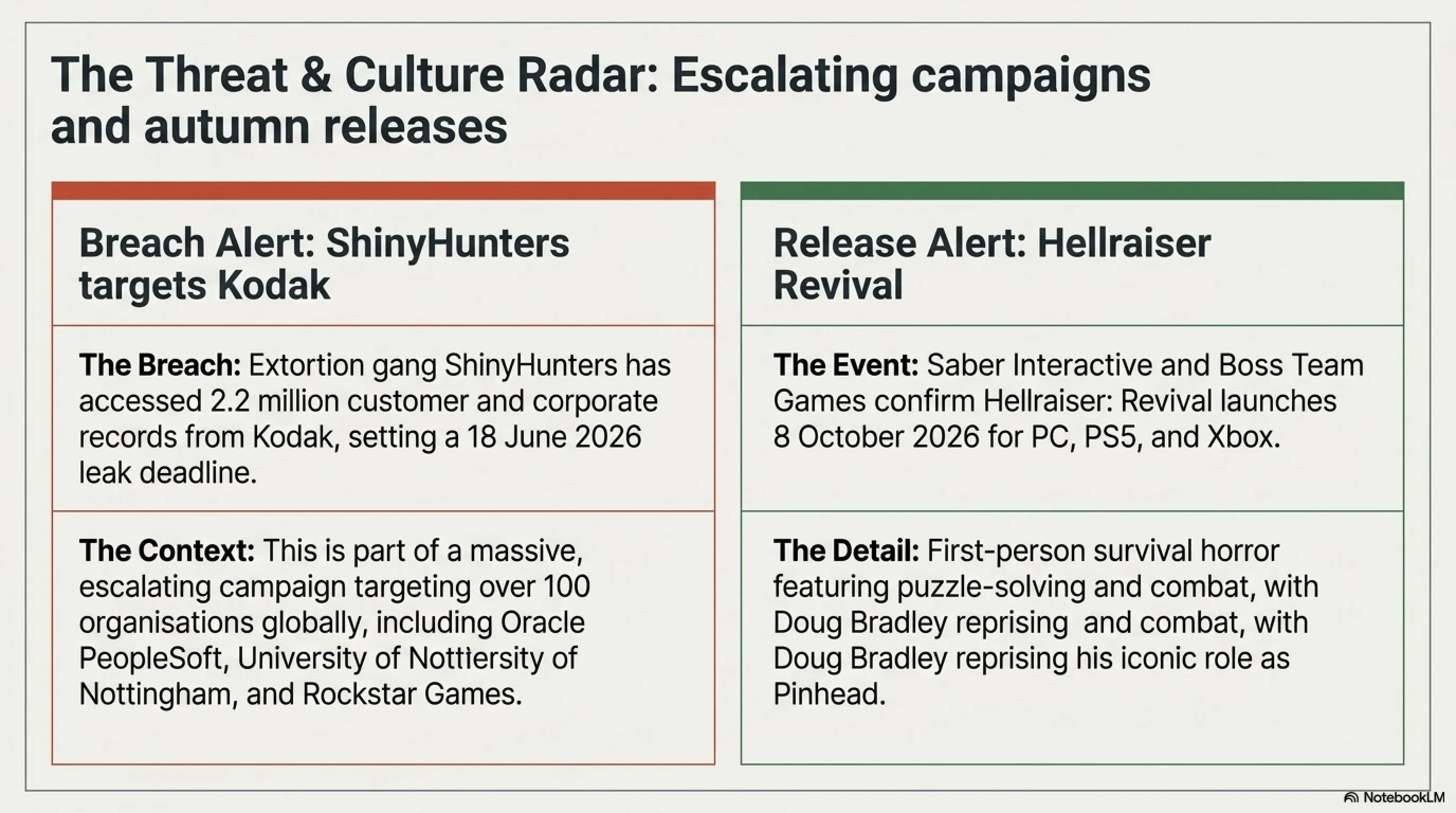
Saber Interactive and Boss Team Games confirmed Clive Barker's Hellraiser: Revival will launch October 8, 2026 for PC (Steam), PS5, and Xbox Series X|S. The survival horror game features an original story and Doug Bradley reprising his iconic role as Pinhead.
🚨 Story Six: Kodak Confirms 2.2M Record Breach by ShinyHunters Extortion Gang
Kodak confirmed that the ShinyHunters ransomware group accessed 2.2 million customer and corporate records, with a leak deadline of June 18, 2026. This is part of ShinyHunters' broader campaign targeting 100+ organizations, including Oracle PeopleSoft, University of Nottingham, and Rockstar Games.
🔮 Final Verdict: Strategic Outlook for June 17, 2026
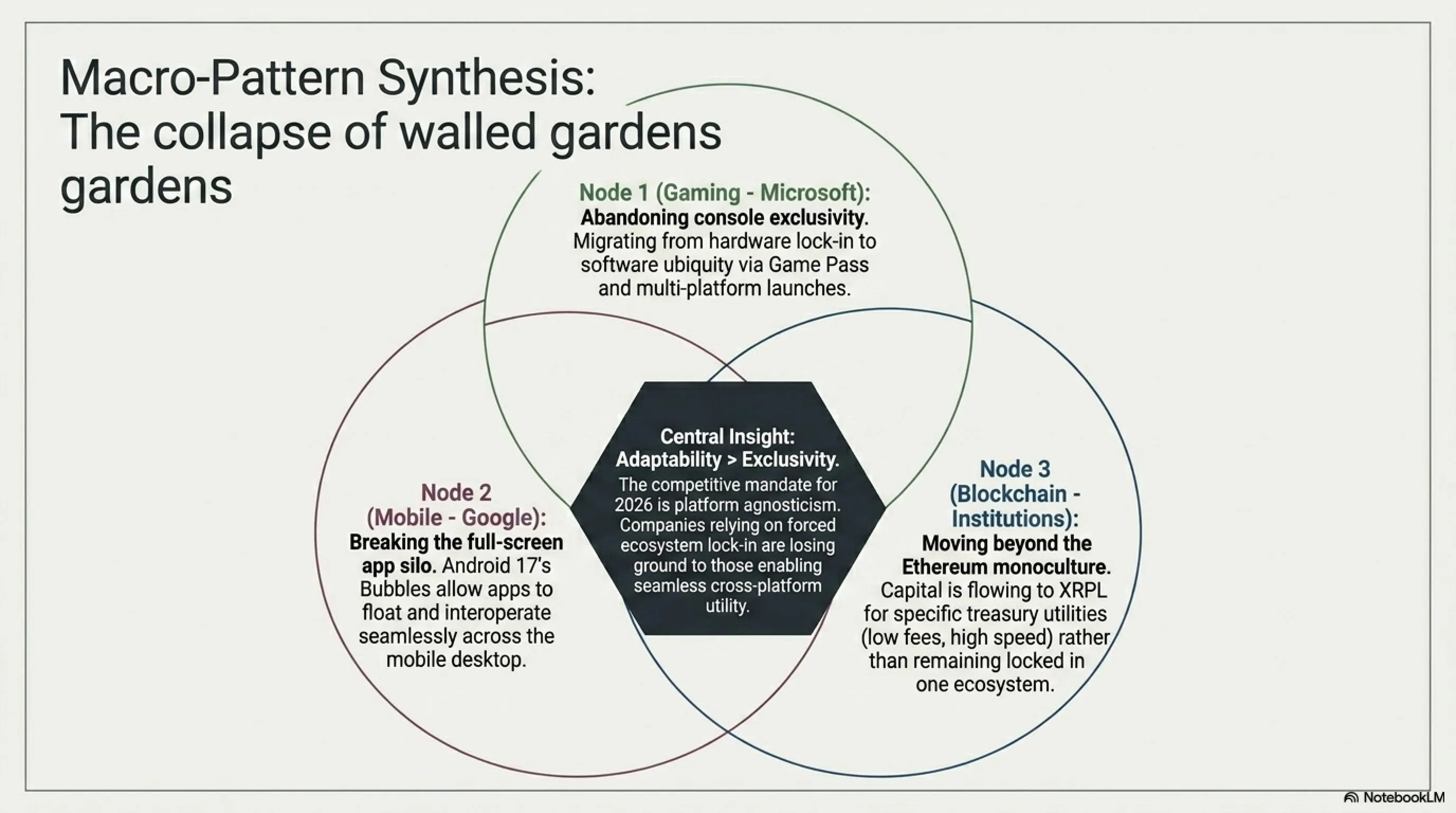
Wednesday, June 17, 2026 delivers six strategic developments that underscore fundamental industry shifts: platform-agnostic game distribution (Halo on PS5 Pro), Microsoft's trust crisis with security researchers (RoguePlanet zero-day), blockchain diversification in institutional RWA adoption (XRPL vs. Ethereum), mobile AI integration (Android 17's Gemini Omni), and escalating ransomware campaigns (ShinyHunters). For U.S. enterprises, the immediate priorities are: (1) deploy Application Allowlisting and EDR to mitigate RoguePlanet, (2) evaluate multi-platform game distribution economics if in gaming, (3) benchmark XRPL vs. Ethereum for asset tokenization pilots, (4) assess Android 17's Bubbles for enterprise mobility, and (5) review third-party data security posture in light of ShinyHunters' 100+ organization campaign. The broader strategic implication: exclusivity and walled gardens are collapsing across gaming, security, and blockchain—adaptability and platform agnosticism are now competitive advantages.
❓ Will Halo: Campaign Evolved drive PS5 Pro sales?
Unlikely. PS5 Pro buyers are already PlayStation loyalists. Halo's PS5 release benefits Microsoft (software sales) more than Sony (hardware differentiation). However, it validates Sony's PS5 Pro investment by attracting major third-party optimizations.
❓ How do I protect my organization from RoguePlanet?
Deploy Application Allowlisting (AppLocker or ThreatLocker), restrict Administrator access, enable EDR monitoring (CrowdStrike, SentinelOne), and audit Defender quarantine folders for unauthorized SYSTEM-owned files.
❓ Should I invest in XRP given the RWA growth?
XRP can be a speculative diversification play (5-10% of crypto portfolio), but not a core holding. Geographic concentration (Upbit 31%), centralization risk (Ripple control), and ongoing SEC litigation make it high-risk. Wait for SEC resolution and broader U.S. institutional adoption before larger allocations.
❓ Which Android devices will get Android 17?
Android 17 is initially available for Pixel 8+. Samsung (One UI 7), OnePlus (OxygenOS 15), and Xiaomi (HyperOS 2) will roll out updates in Q3 2026. Older devices (Pixel 7, Galaxy S23) may receive select features but not full Android 17.
❓ What is Hellraiser: Revival's gameplay like?
Hellraiser: Revival is a first-person survival horror game where you descend into the Labyrinth to rescue your loved one from the Cenobites. Features puzzle-solving with the Lament Configuration box, combat with earthly and infernal weapons, and Doug Bradley's Pinhead as the antagonist. Think Resident Evil meets Silent Hill with Clive Barker's cosmic horror aesthetic.
📚 Sources
- Push Square: Halo PS5 Pro Support
- BleepingComputer: RoguePlanet Zero-Day
- CryptoSlate: XRP RWA Dominance
- TechCrunch: Android 17 Launch
- RWA Foundation, CryptoQuant, Halo Waypoint, IGN, Eurogamer, SecurityWeek, Cyderes, Picus Security
🌐 Stay Connected With Us 🎮✨
For the latest tech, gaming, and gadget news, follow us on our official social media channels:
Additional Gallery: 🌅 Tekin Morning June 17, 2026: Halo on PS5 Pro, RoguePlanet Zero-Day & Android 17