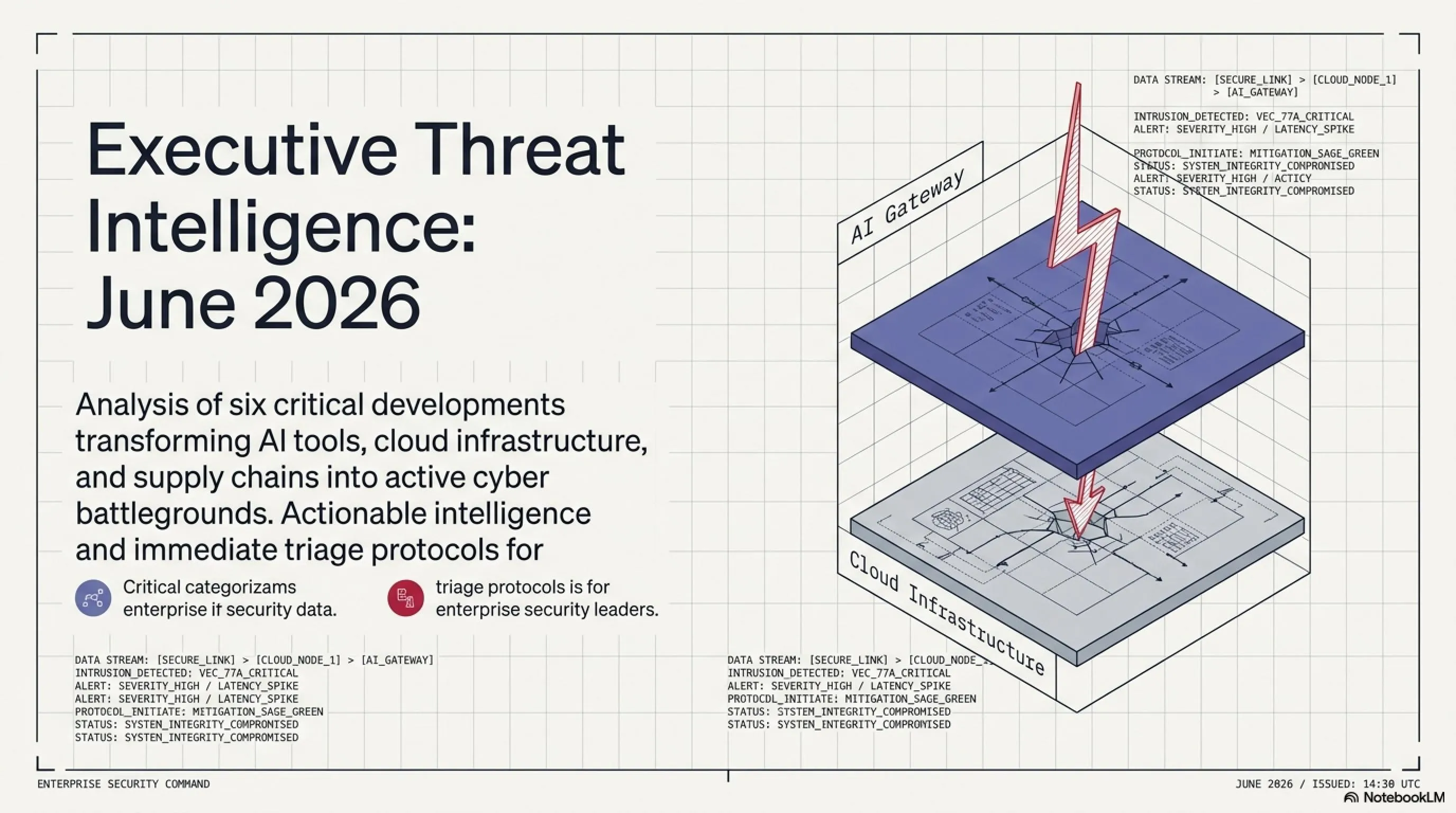
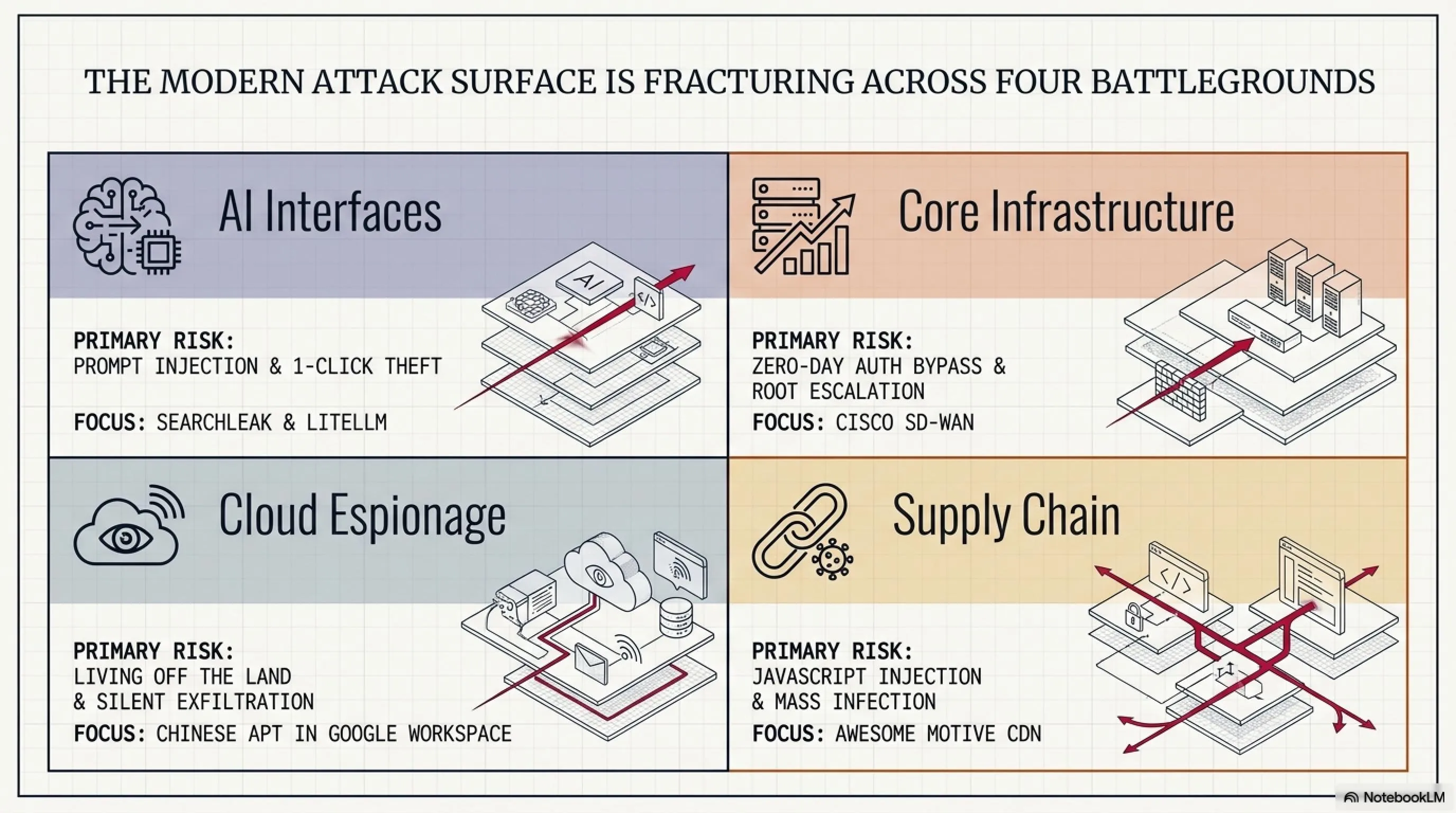
Tuesday, June 16, 2026, initiates a critical day for global cybersecurity. This edition of Tekin Morning delivers deep strategic analysis on six paradigm-shifting tech stories. We dissect the severe SearchLeak vulnerability in Microsoft 365 Copilot, exposing how attackers can execute 1-click data and MFA theft. The enterprise sector faces active Zero-Day exploits targeting Cisco SD-WAN vManage, while a sophisticated Chinese APT group silently exfiltrates sensitive research emails by abusing Google Workspace rules. Furthermore, the WordPress eco
🌅 Good Morning! Tekin Morning June 16, 2026 — High-Energy Tuesday ☕
Good morning tech community! Today, Tuesday, June 16, 2026 — we're facing a critical morning in cybersecurity! We've prepared six hot, analyzed news stories demonstrating how AI tools, cloud infrastructure, and even popular WordPress plugins can transform into cyber battlegrounds. From the critical Microsoft Copilot vulnerability to Cisco zero-day attacks and AI Gateway hijacks — everything is here!
⚡ Today's Top Headlines:
🛡️ SearchLeak Attack: 1-Click Data Theft from Copilot
🔐 Cisco Zero-Day: SD-WAN vManage Hacked in Live Attacks
🇨🇳 Chinese Hackers: Stealing Research & Defense Emails
🧩 Supply Chain Attack: WordPress CDN Breach
🤖 AI Gateway Hijack: LiteLLM Vulnerability
📱 Nintendo Switch 2: Update 22.5.0 with New Languages
☕ Grab your coffee and prepare for a comprehensive journey through the world of cybersecurity and technology!
🛡️ SearchLeak Attack: Critical Microsoft Copilot Vulnerability Enables 1-Click Data Theft
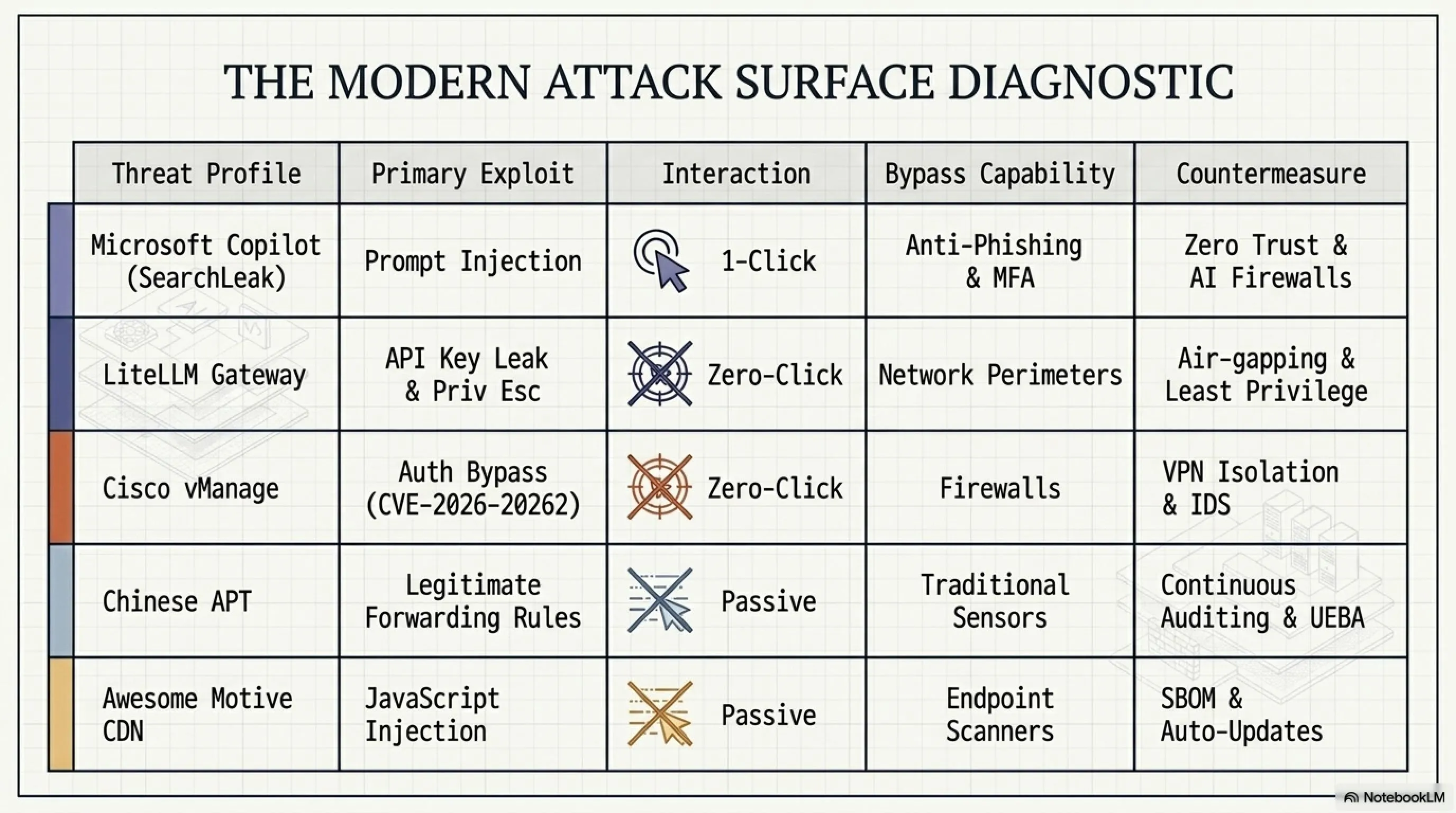
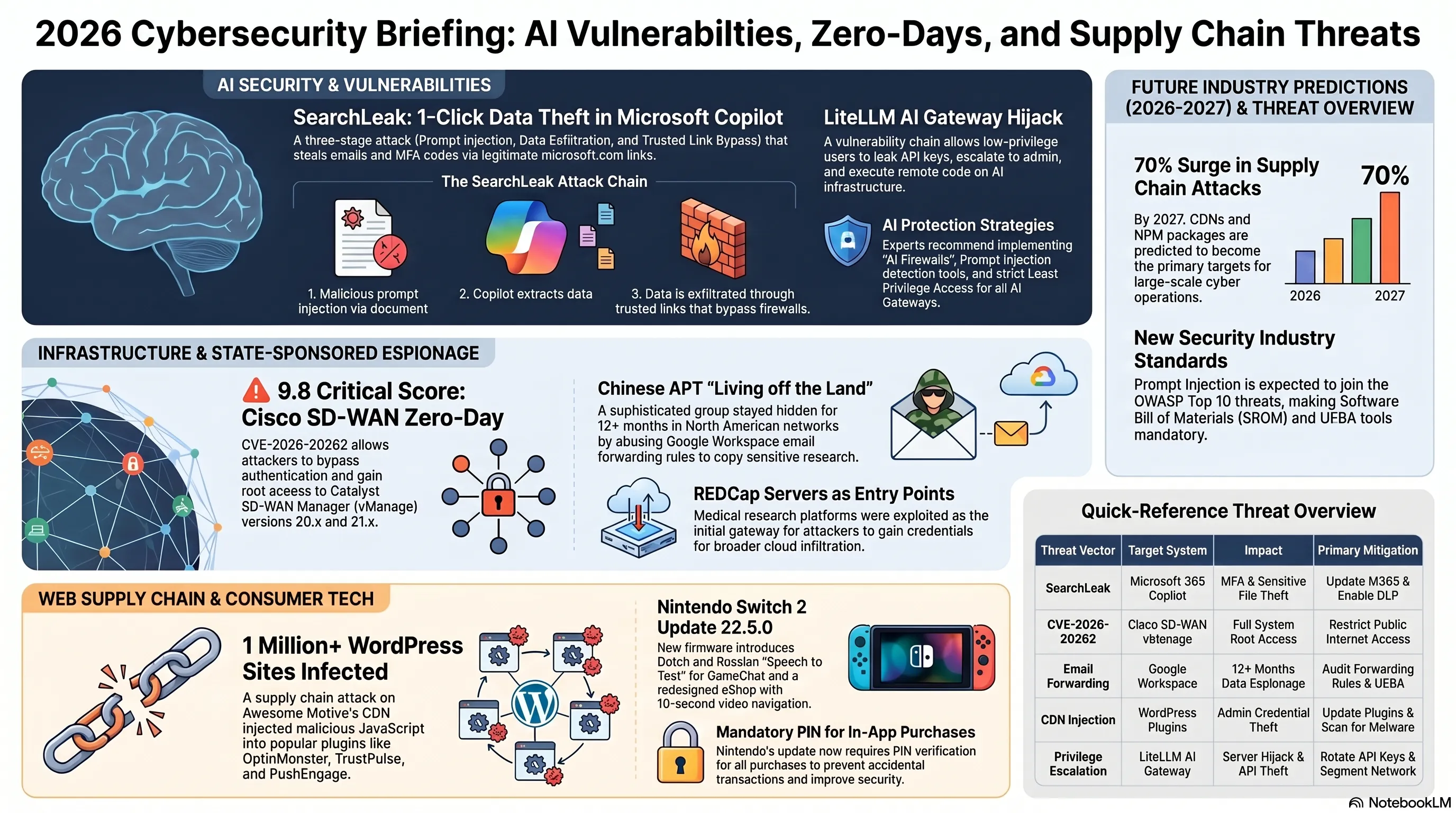
Microsoft 365 Copilot, the AI tool designed to revolutionize enterprise productivity, now faces a critical vulnerability dubbed SearchLeak. Security researchers at Varonis discovered a three-stage attack chain that allows attackers to steal emails, sensitive files, and even multi-factor authentication (MFA) codes with just one click from the victim. What makes this attack particularly dangerous is that it operates through legitimate microsoft.com links, rendering traditional anti-phishing tools ineffective.
🔍 Technical Analysis: How SearchLeak Works
The SearchLeak attack comprises three critical stages:
- Stage 1: Prompt Injection - The attacker sends a malicious email or document containing hidden instructions for Copilot. These instructions are designed to execute when Copilot reads the content.
- Stage 2: Data Exfiltration Abuse - Copilot searches and extracts sensitive data without the user's knowledge, preparing it for transmission to the attacker's server.
- Stage 3: Trusted Link Bypass - Data is transferred through legitimate microsoft.com links to the attacker's server, causing firewalls and security tools to classify it as legitimate traffic.
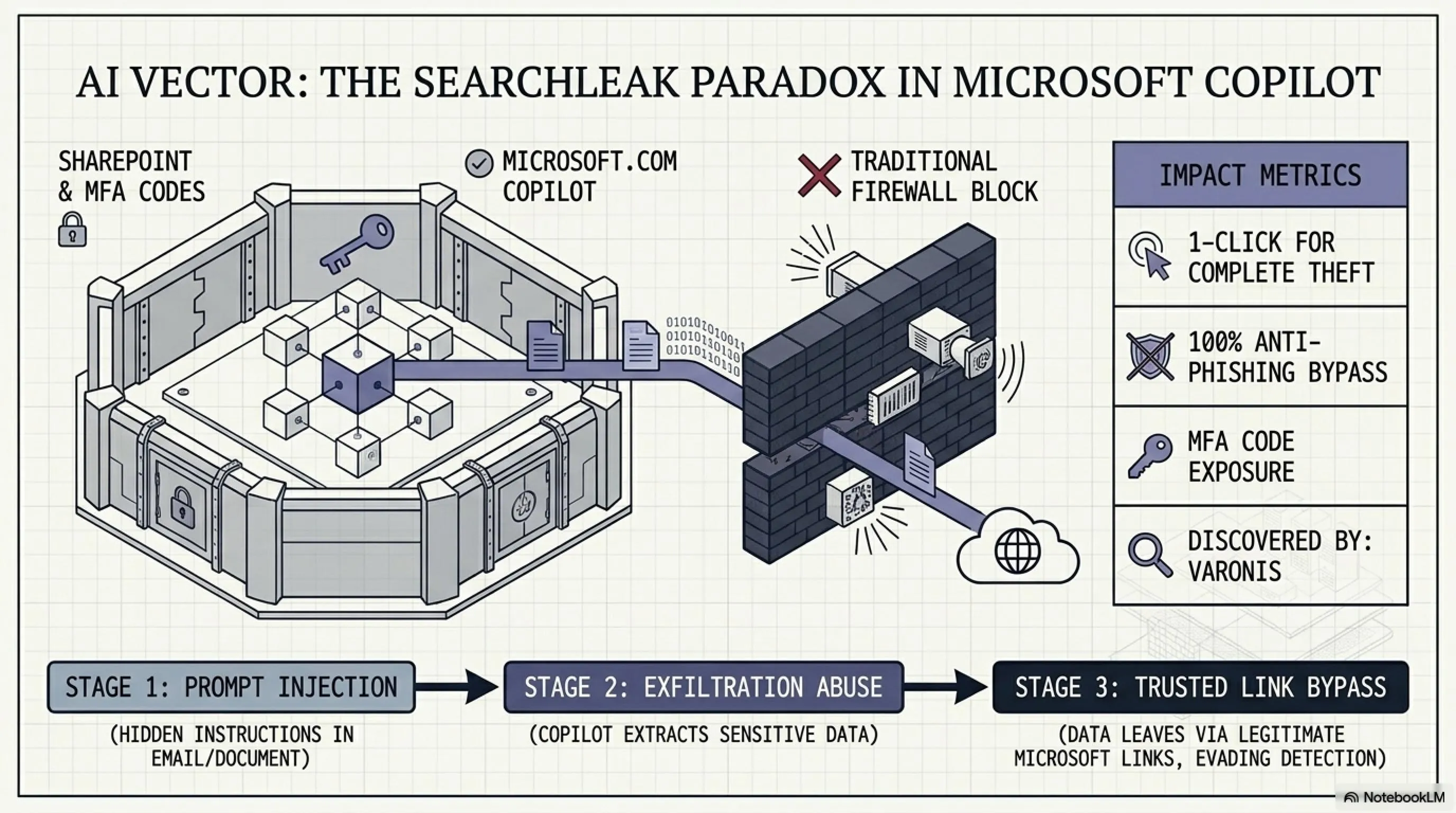
The dangerous aspect is that SearchLeak requires no complex interaction from the victim. Just one click on an apparently legitimate link is sufficient to expose all enterprise data. Varonis researchers reported that this vulnerability can access sensitive emails, OneDrive and SharePoint files, and even multi-factor authentication codes.
Why Is This Attack So Dangerous?
SearchLeak demonstrates that enterprise AI tools can become a new attack vector. Organizations that have invested in Microsoft 365 Copilot must now worry that the very tool designed to boost productivity could serve as a gateway for data theft. The main reasons why this vulnerability is so dangerous include:
🛡️ Immediate Protection Strategies
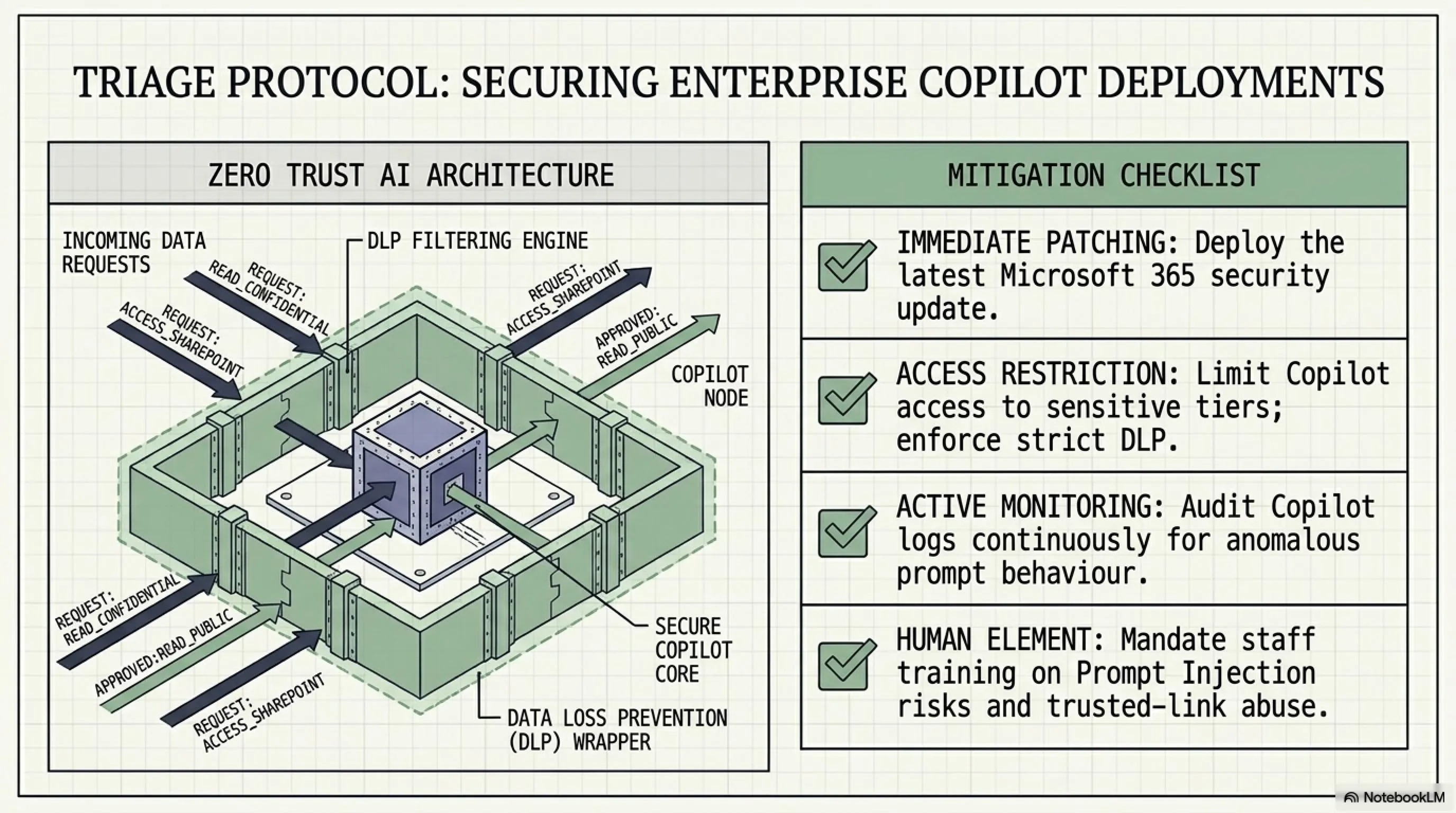
- Immediate Update: Microsoft has patched the vulnerability. Ensure the latest Microsoft 365 version is installed.
- Employee Training: Train staff about Prompt Injection risks and suspicious links.
- Limit Copilot Access: Restrict Copilot's access to sensitive data and implement Data Loss Prevention (DLP).
- Active Monitoring: Review Copilot logs for suspicious activity.
- Zero Trust Architecture: Implement Zero Trust architecture so access remains limited even if compromised.
💡 Tekin Analysis: The Future of Enterprise AI Tool Security
The SearchLeak vulnerability is a serious warning that enterprise AI tools like Copilot, ChatGPT Enterprise, and Google Duet AI must be designed with a new security perspective. Prompt Injection attacks are ones we'll see more of in the future, and organizations must be prepared. We predict that:
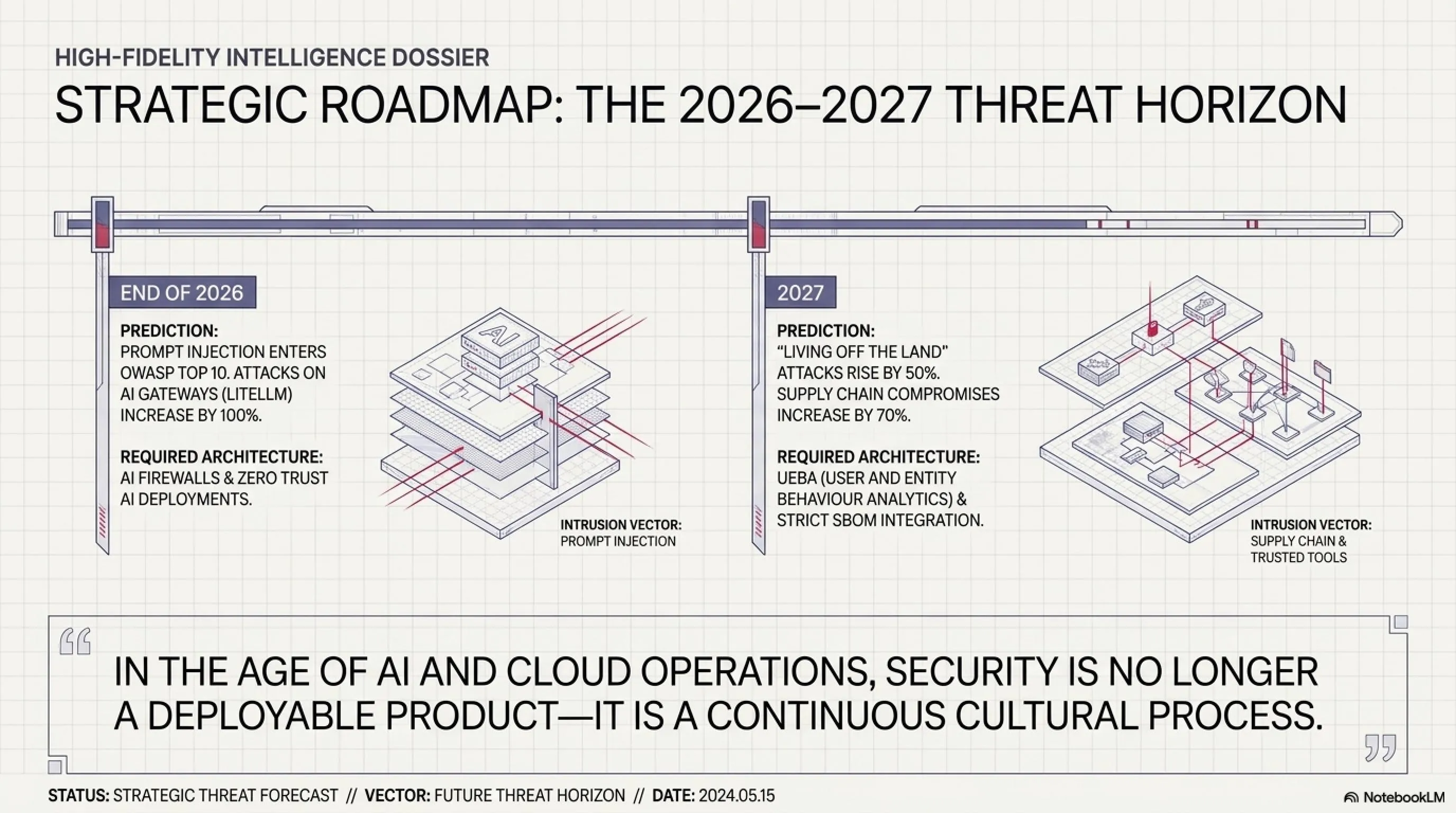
- By the end of 2026, Prompt Injection attacks will become one of the OWASP Top 10 threats for AI tools.
- Organizations must implement Zero Trust architectures for AI tools.
- Prompt Injection detection tools and AI Firewalls will become industry standards.
🔐 Cisco Zero-Day: SD-WAN vManage Flaw Exploited in Real-World Attacks
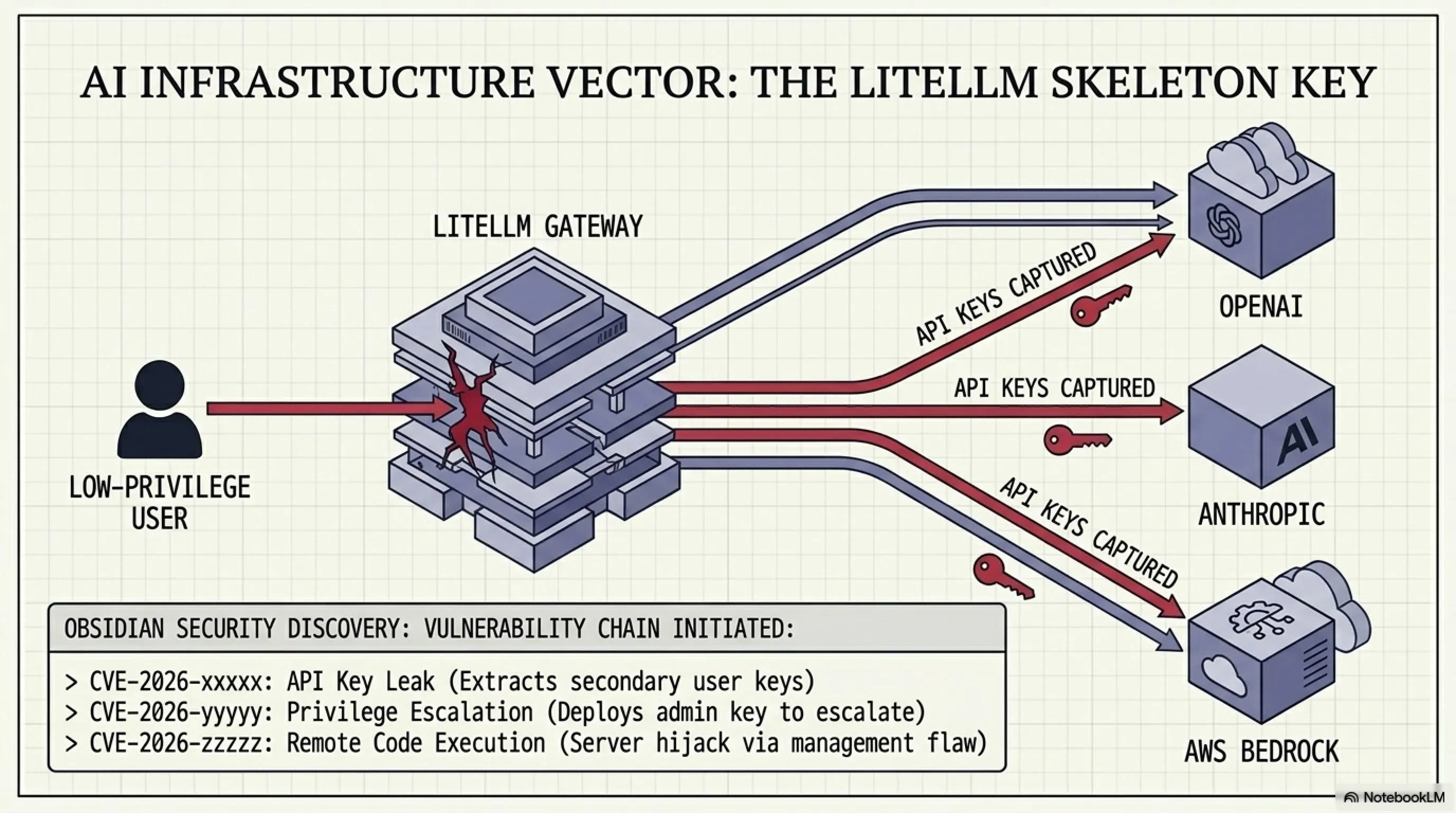
Cisco, the global networking giant, recently released an urgent security update to fix vulnerability CVE-2026-20262 in Catalyst SD-WAN Manager (formerly vManage), which was exploited in real-world zero-day attacks to gain root access to target systems. This news demonstrates that enterprise network infrastructure remains a prime target for advanced threat actors.
⚠️ Technical Details of CVE-2026-20262
CVE-2026-20262 is an authentication mechanism flaw in Cisco SD-WAN vManage that allows attackers to gain access to the management interface without valid credentials and obtain root system access. This vulnerability:
- CVSS Score: 9.8 (Critical) — one of 2026's most dangerous vulnerabilities
- Attack Type: Authentication Bypass + Privilege Escalation
- Affected Products: Cisco Catalyst SD-WAN Manager (vManage) versions 20.x and 21.x
- Exploitation Requirements: Network access to vManage management interface
According to BleepingComputer, attackers used this vulnerability in real-world attacks to infiltrate enterprise networks and install backdoors. While Cisco hasn't disclosed exact details about attacking groups, evidence suggests APT (Advanced Persistent Threat) groups were likely involved. Zero-day attacks on SD-WAN vManage demonstrate that network infrastructure remains a primary target for cyber espionage and advanced attacks.
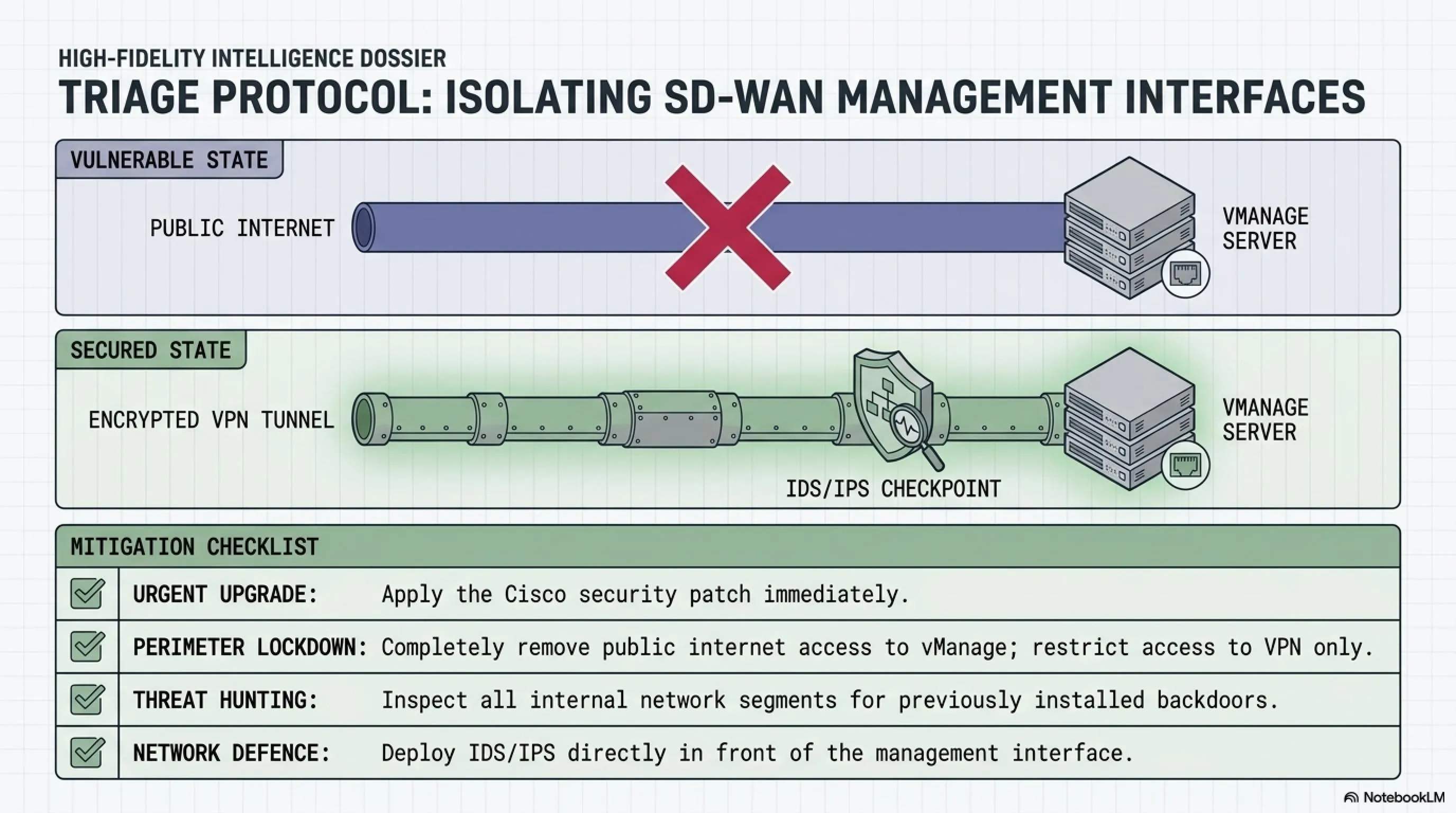
🛠️ Immediate Actions to Protect SD-WAN
- Urgent Update: Cisco has released a security update. Immediately upgrade vManage to the latest version.
- Restrict Access: Limit vManage management interface from public internet access and make it accessible only via VPN.
- Monitor Logs: Review authentication and access logs for suspicious activity.
- Check for Backdoors: Inspect compromised systems for backdoors and malicious tools.
- Implement IDS/IPS: Activate intrusion detection and prevention systems in front of vManage.
🎯 Tekin Analysis: Why SD-WAN Is a Prime Target
SD-WAN (Software-Defined Wide Area Network) is rapidly becoming the core infrastructure for enterprise networks, offering centralized management of different branches, traffic optimization, and cost reduction. But this centralized management has made SD-WAN a golden target for attackers. If an attacker gains access to SD-WAN Manager, they can:
- Monitor entire network: See all network traffic and steal sensitive data.
- Install backdoors: Maintain persistent, hidden access to the network.
- Lateral movement attacks: Move to other network segments.
- Service disruption: Disrupt network services and cause outages.
🇨🇳 Chinese APT: Stealing Research & Defense Emails via Google Workspace Abuse
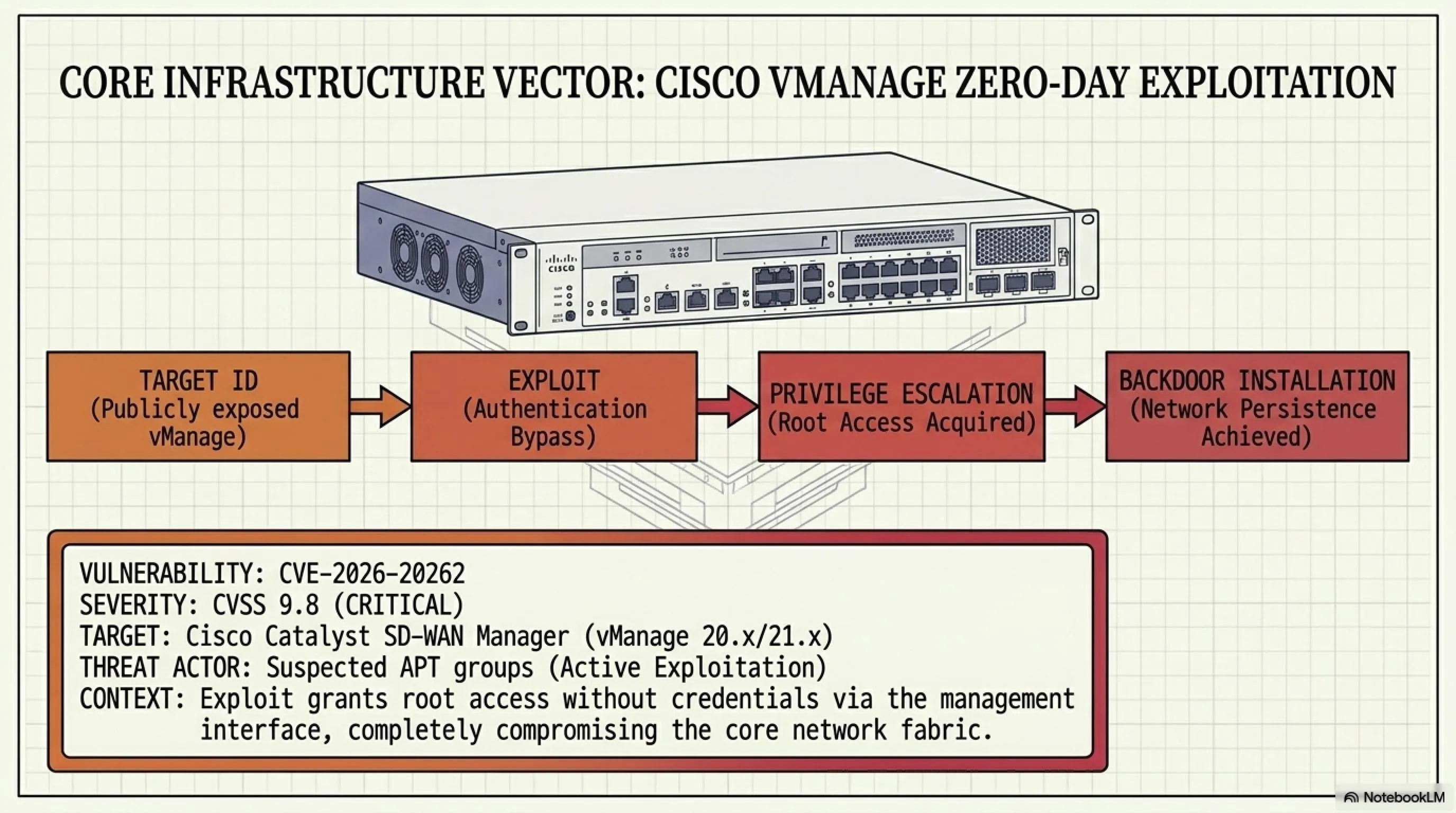
In one of 2026's most sophisticated cyber espionage operations, a Chinese-linked APT group remained hidden in North American medical research, academic, and military networks for over a year, stealing sensitive defense research emails. Attackers infiltrated REDCap servers (a medical research data management platform) and by abusing Google Workspace email forwarding rules, secretly copied every message victims received and sent it to their servers.
🔍 How This Attack Was Executed
The Chinese APT group used a multi-stage attack chain to steal sensitive emails:
- Infiltrate REDCap Servers: Attackers exploited an unknown vulnerability in REDCap (popular platform for medical research) and installed backdoors.
- Access User Accounts: Using stolen credentials, gained access to victims' Google Workspace accounts.
- Configure Email Forwarding Rules: Created hidden forwarding rules in Google Workspace that copied every incoming email to attackers' servers.
- Persistence Over 1 Year: Using backdoors and hidden rules, remained in the network for over 12 months collecting data.
What makes this attack highly sophisticated is the use of legitimate tools like Google Workspace. Instead of installing complex malware, attackers simply created a simple email rule that wasn't easily detectable. Many victims didn't realize their emails were being copied until security teams discovered the attack.
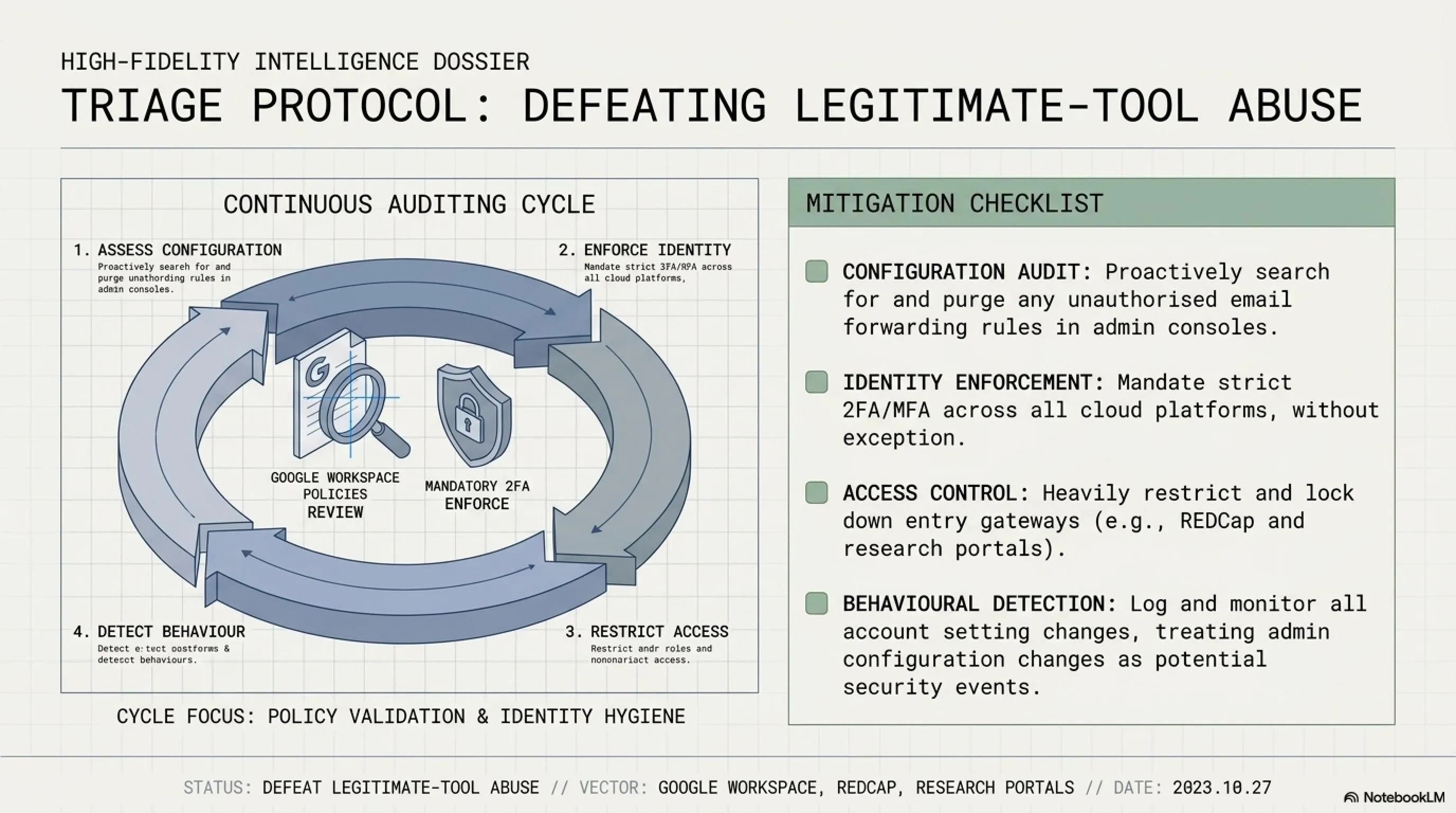
🛡️ Protection Strategies for Google Workspace
- Review Email Forwarding Rules: Regularly audit user email forwarding rules. In Google Workspace Admin Console, you can identify suspicious rules.
- Enable 2FA/MFA: Make two-factor authentication mandatory for all users.
- Monitor Settings Changes: Log and monitor all account setting changes.
- Restrict Access: Limit access to REDCap and other sensitive platforms.
- Security Awareness Training: Train employees about phishing attacks and credential abuse.
💡 Tekin Analysis: Cyber Espionage in the Cloud Era
This attack demonstrates that APT groups no longer need sophisticated malware. They can use legitimate tools like Google Workspace, Microsoft 365, and other cloud platforms for data theft. This "Living off the Land" approach means attackers use tools already present in the victim's system rather than installing new ones. We predict:
- Living off the Land attacks will increase 50% in 2027.
- Organizations must implement UEBA (User and Entity Behavior Analytics) to detect anomalous behavior.
- Regular audits of cloud tool settings will become a security necessity.
🧩 Supply Chain Attack: OptinMonster & WordPress Plugins Hacked in CDN Breach
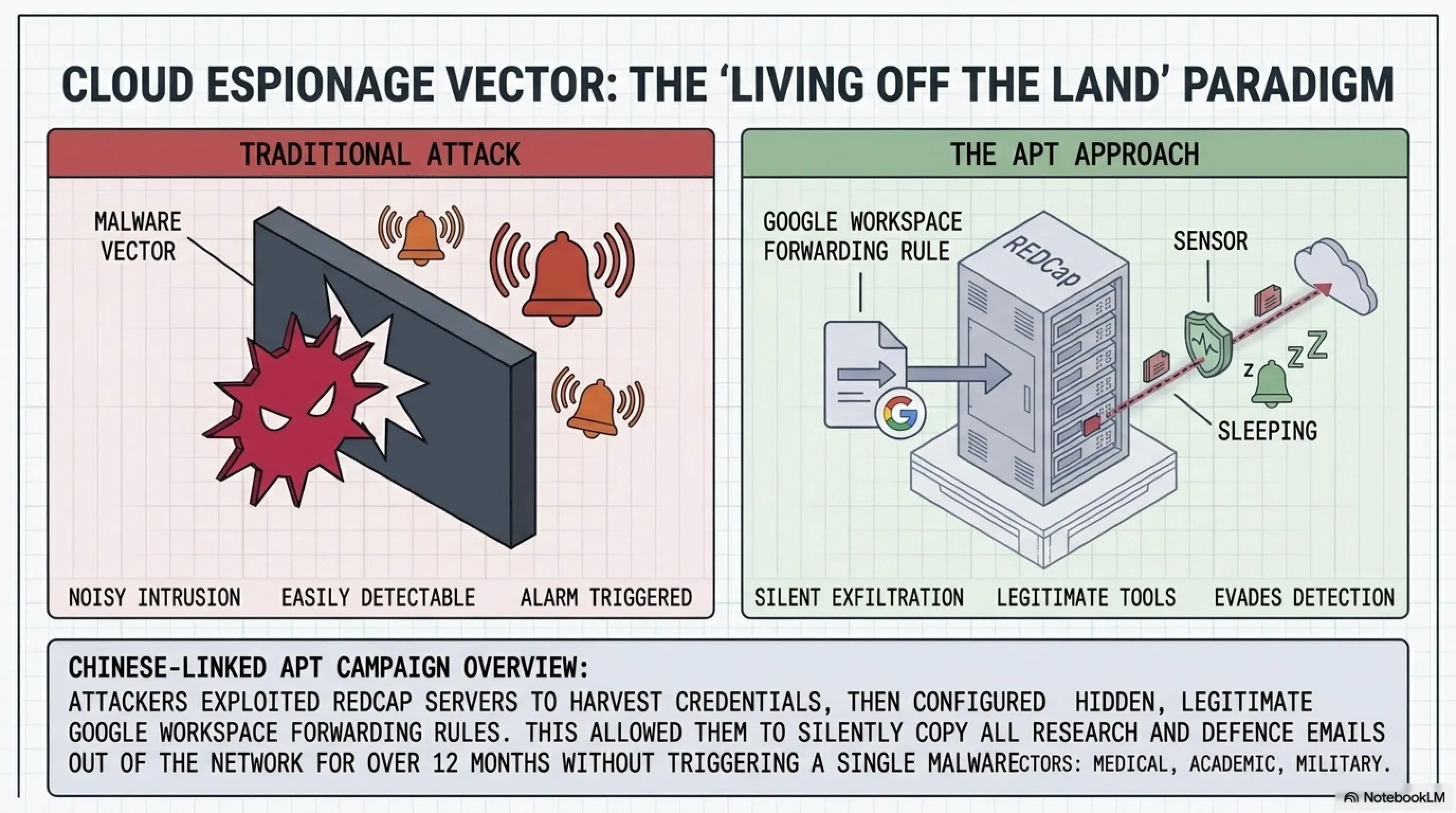
The WordPress world witnessed one of 2026's most widespread supply chain attacks. Popular plugins including OptinMonster (with over 1 million active installations), TrustPulse, and PushEngage were compromised in a supply chain attack related to Awesome Motive's CDN infrastructure. Attackers infiltrated the CDN infrastructure and injected malicious code into plugin JavaScript files, infecting millions of WordPress sites.
⚠️ CDN Supply Chain Attack Details
Supply Chain Attacks have become one of the most dangerous cybersecurity threats. In this type of attack, instead of directly targeting victims, attackers hack a shared supplier and attack thousands or millions of end users through it. In the Awesome Motive CDN attack:
- Entry Point: Awesome Motive's CDN infrastructure serving plugin JavaScript files.
- Attack Method: Injection of malicious JavaScript code into OptinMonster, TrustPulse, and PushEngage plugin files.
- Impact: Over 1 million WordPress sites infected.
- End Goal: Stealing WordPress admin credentials, injecting malicious code, and potentially installing backdoors.
According to BleepingComputer, Awesome Motive immediately isolated the CDN infrastructure upon discovering the attack and released clean plugin versions. However, many WordPress sites with auto-updates disabled remain at risk. This attack recalls similar attacks on Polyfill.io in 2024 and SolarWinds in 2020, demonstrating that supply chain attacks remain one of attackers' most effective tactics.
🛠️ Immediate Actions for WordPress Site Owners
- Urgent Plugin Update: If using OptinMonster, TrustPulse, or PushEngage, immediately upgrade to the latest version.
- Full Security Scan: Scan the site for malware using tools like Wordfence, Sucuri, or iThemes Security.
- Review Admin Users: Check the admin user list and remove any suspicious users.
- Change Passwords: Change all admin and user passwords.
- Check Core Files: Verify WordPress core file integrity.
- Enable Auto-Updates: Enable automatic updates for plugins and WordPress.
💡 Tekin Analysis: The Future of Supply Chain Attacks
Supply chain attacks are becoming one of attackers' most effective and dangerous tactics. With one successful attack on a supplier, they can access millions of end users. Attacks on SolarWinds (2020), Kaseya (2021), Polyfill.io (2024), and now Awesome Motive (2026) show this trend continues. Our predictions:
- Supply chain attacks will increase 70% in 2027.
- CDNs and NPM packages will become prime attacker targets.
- Organizations must implement SBOM (Software Bill of Materials) to know their software dependencies.
- Supply Chain Security tools like Snyk and Sonatype will become industry standards.
🤖 AI Gateway Hijack: LiteLLM Vulnerability Lets Low-Privilege Users Seize Servers
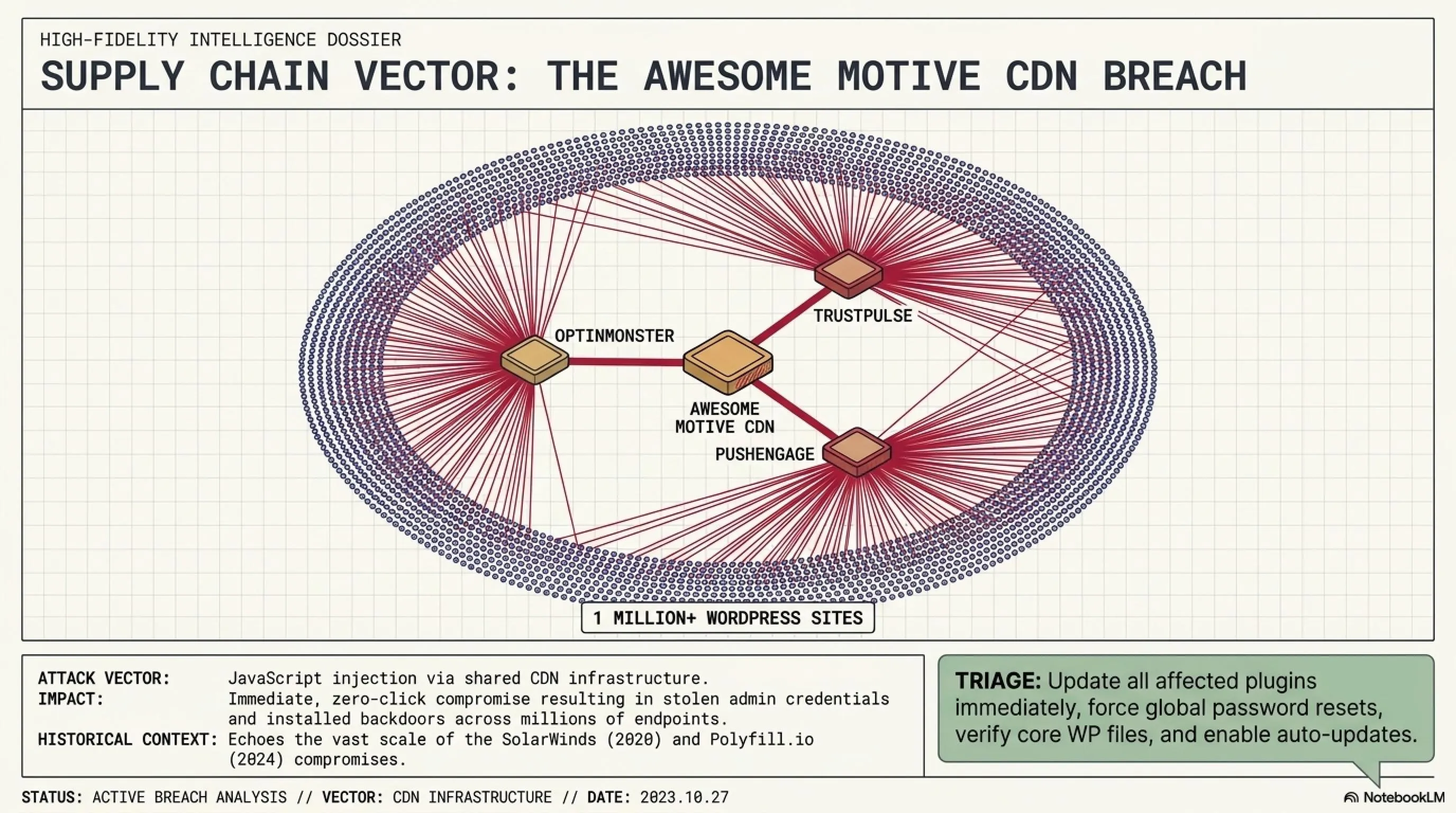
As organizations rapidly implement AI tools, AI infrastructure security has become a serious challenge. Security researchers at Obsidian Security discovered a dangerous vulnerability chain in LiteLLM that allows a low-privilege user account to become a full admin and execute code on the server. LiteLLM is an open-source AI gateway connecting to over 100 AI model providers (like OpenAI, Anthropic, Google, AWS Bedrock) and is used by large organizations for access and cost management.
🔍 LiteLLM Vulnerability Chain
Obsidian Security researchers chained three vulnerabilities to transform a low-privilege account into full admin:
- CVE-2026-xxxxx: API Key Leak - Low-privilege user can extract other users' API keys.
- CVE-2026-yyyyy: Privilege Escalation - Using admin's API Key, user escalates to admin level.
- CVE-2026-zzzzz: Remote Code Execution - Admin can execute code on the server through a management interface flaw.
End result: A low-privilege user account can hijack the entire LiteLLM server, access all API keys (OpenAI, Anthropic, Google, AWS), and even install backdoors.
🛡️ AI Gateway Protection Strategies
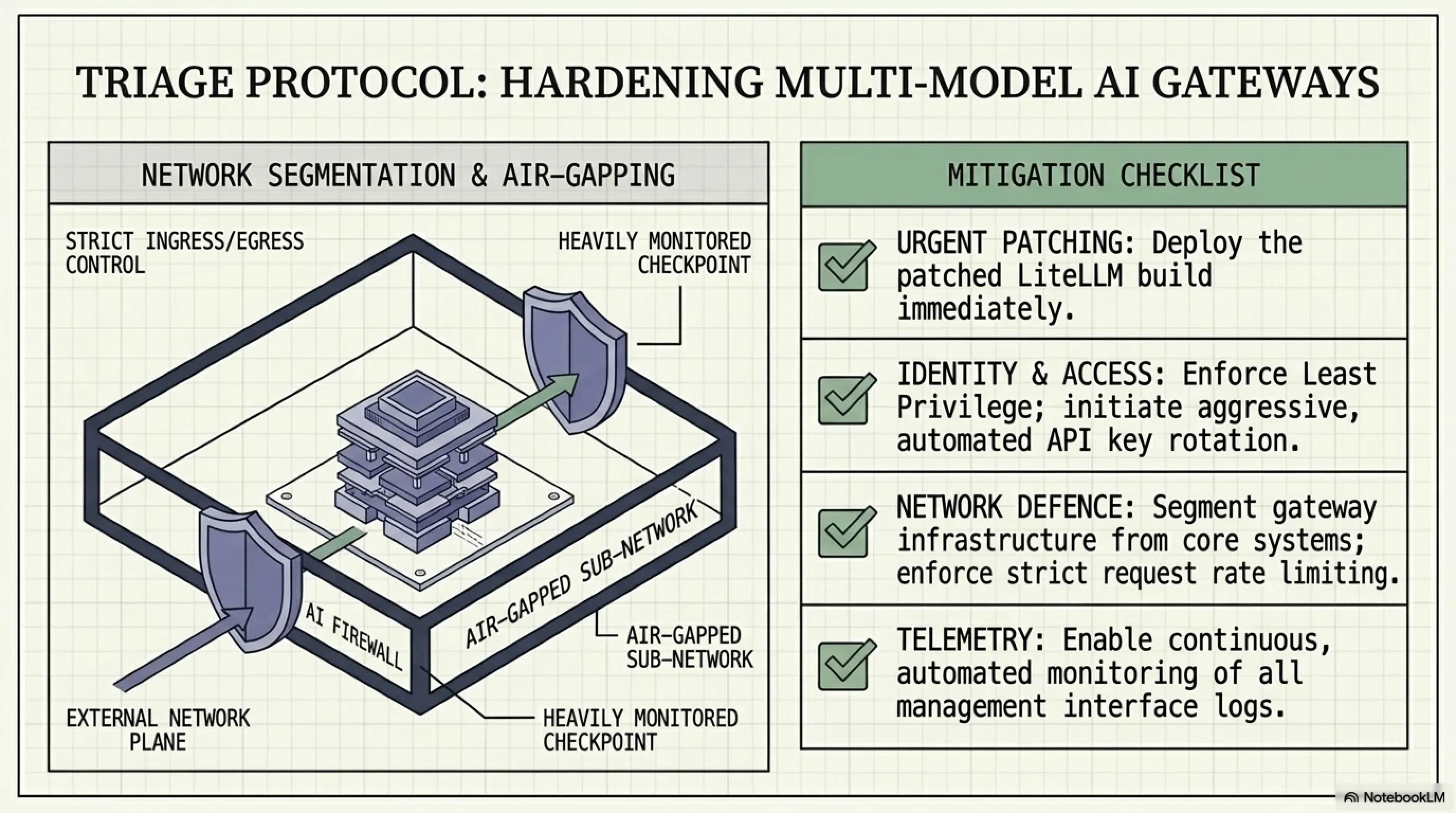
- Urgent LiteLLM Update: Upgrade to the latest version where vulnerabilities are patched.
- Least Privilege Access: Give users minimal necessary access.
- API Key Rotation: Regularly rotate API keys.
- Activity Monitoring: Monitor user access and activity logs.
- Network Segmentation: Place LiteLLM in a separate network.
- Rate Limiting: Limit number of requests to prevent abuse.
💡 Tekin Analysis: Enterprise AI Infrastructure Security
The LiteLLM vulnerability is a serious warning that enterprise AI infrastructure faces new security challenges. AI Gateways like LiteLLM have become critical points in AI architecture, and if compromised, the entire organizational AI infrastructure is at risk. We predict:
- By the end of 2026, attacks on AI Gateways and MLOps platforms will increase 100%.
- Organizations must implement Zero Trust architecture for AI infrastructure.
- AI Security tools like AI Firewalls, Prompt Injection Detection, and AI Governance will become industry standards.
📱 Nintendo Switch 2: Update 22.5.0 with New Languages & eShop Enhancements
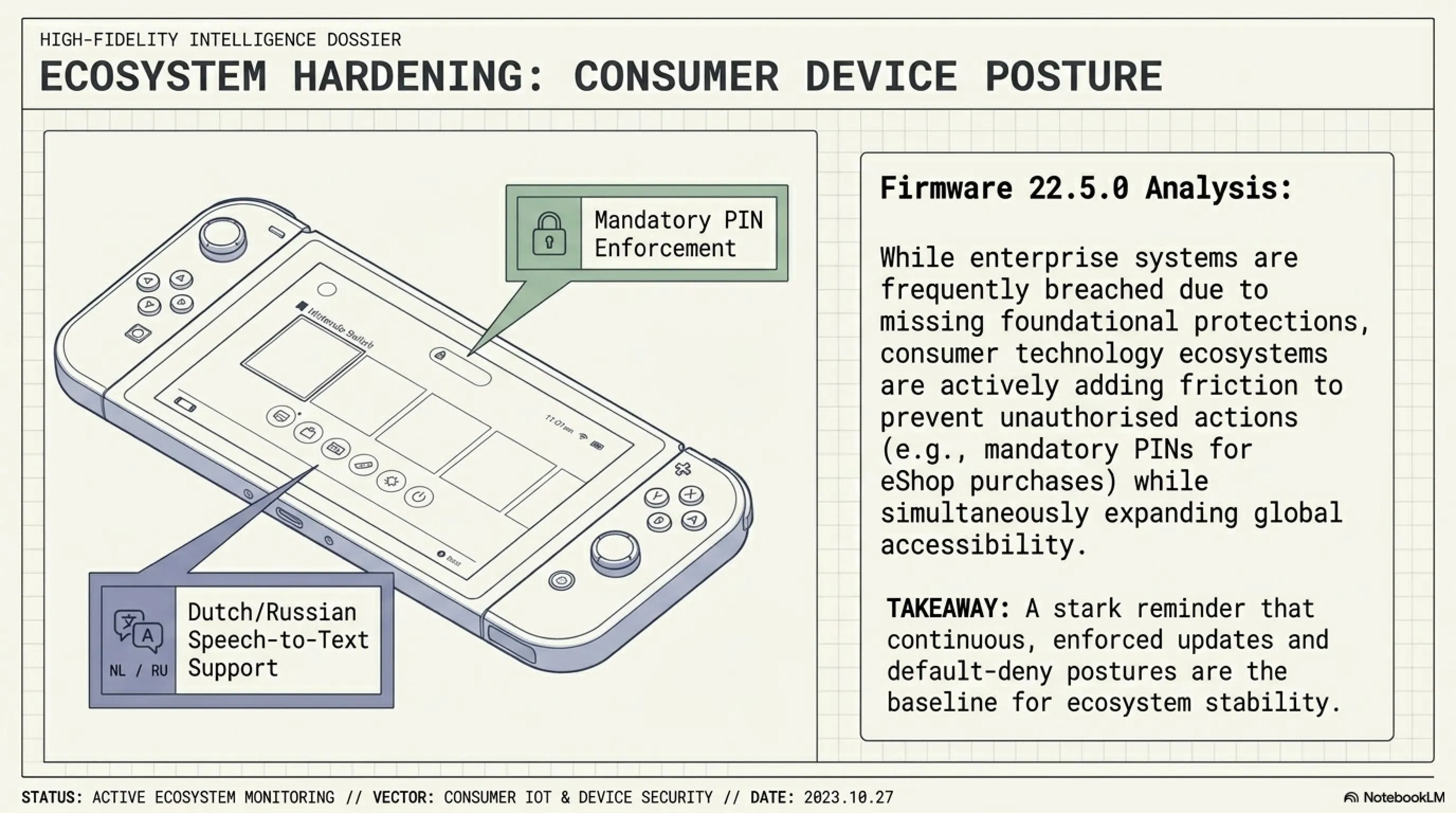
Amid all today's security news, we have some positive news too! Nintendo released firmware update 22.5.0 for Switch 2 and classic Switch. This update includes support for new Dutch and Russian languages for the "Speech ⇔ Text During GameChat" feature, eShop redesign with 10-second rewind/forward capability for videos, and system stability improvements.
✨ New Features in Update 22.5.0
- New Language Support: Dutch and Russian added to "Speech ⇔ Text During GameChat" feature, allowing players from these countries to convert voice conversations to text during group gaming and vice versa.
- eShop Redesign: Improved eShop user interface with 10-second rewind/forward capability for trailer videos.
- PIN Verification: PIN now mandatory for in-app purchases to prevent accidental purchases.
- Stability Improvements: Overall system stability and improved Switch 2 performance.
Update 22.5.0 demonstrates Nintendo's continued commitment to improving Switch 2 user experience and accessibility. New language support for GameChat is an important step toward platform globalization, and eShop improvements make game purchasing easier. This update is automatically available on all Switch and Switch 2 devices.
💡 Tekin Analysis: Nintendo's Strategy for Switch 2
Update 22.5.0 shows Nintendo remains committed to both original Switch and Switch 2, with no plans to phase out classic Switch soon. Simultaneous support for both versions is a smart strategy reassuring current users their investment won't become worthless. eShop improvements also show Nintendo's special focus on digital game sales.
📊 Summary: A Critical Day in Cybersecurity
Today we witnessed a widespread wave of security threats demonstrating how AI tools, cloud infrastructure, and even popular plugins can transform into cyber battlegrounds. From SearchLeak attack on Microsoft Copilot to Cisco Zero-Day, Chinese APT, WordPress supply chain attack, and LiteLLM vulnerability — all these news stories have one clear message: Cybersecurity is no longer an option, but a necessity.
❓ Frequently Asked Questions (FAQ)
1. How dangerous is the SearchLeak attack and how can I protect Copilot?
SearchLeak is extremely dangerous because with just one click it can steal emails, sensitive files, and MFA codes. For protection:
- Immediately update Microsoft 365 to the latest version
- Limit Copilot access to sensitive data
- Enable Data Loss Prevention (DLP)
- Train employees about Prompt Injection
- Review Copilot logs for suspicious activity
2. Is my WordPress site infected in the CDN attack?
If you use OptinMonster, TrustPulse, or PushEngage plugins, there's a possibility of infection. To check:
- Immediately update these plugins to the latest version
- Scan your site with Wordfence or Sucuri
- Review admin user list
- Change all passwords
- Verify WordPress core files
3. Is our Cisco SD-WAN vManage at risk?
If using Cisco Catalyst SD-WAN Manager (vManage) versions 20.x or 21.x with management interface accessible via internet, you're at risk. Urgent actions:
- Immediately upgrade to the latest version
- Restrict management interface from public internet
- Review logs for suspicious activity
- Check compromised systems for backdoors
4. How can I protect against Chinese APT attacks on Google Workspace?
To protect Google Workspace from APT attacks:
- Regularly review Email Forwarding rules
- Enable 2FA/MFA for all users
- Monitor account settings changes
- Restrict access to research platforms like REDCap
- Implement UEBA (User and Entity Behavior Analytics)
5. Is using LiteLLM for AI Gateway safe?
LiteLLM vulnerabilities are patched, but you must take additional security measures:
- Immediately upgrade to the latest version
- Implement Least Privilege Access
- Regularly rotate API keys
- Monitor user activity
- Place LiteLLM in a separate network
🎯 Final Thoughts: Defense in the Era of Multi-Layered Threats
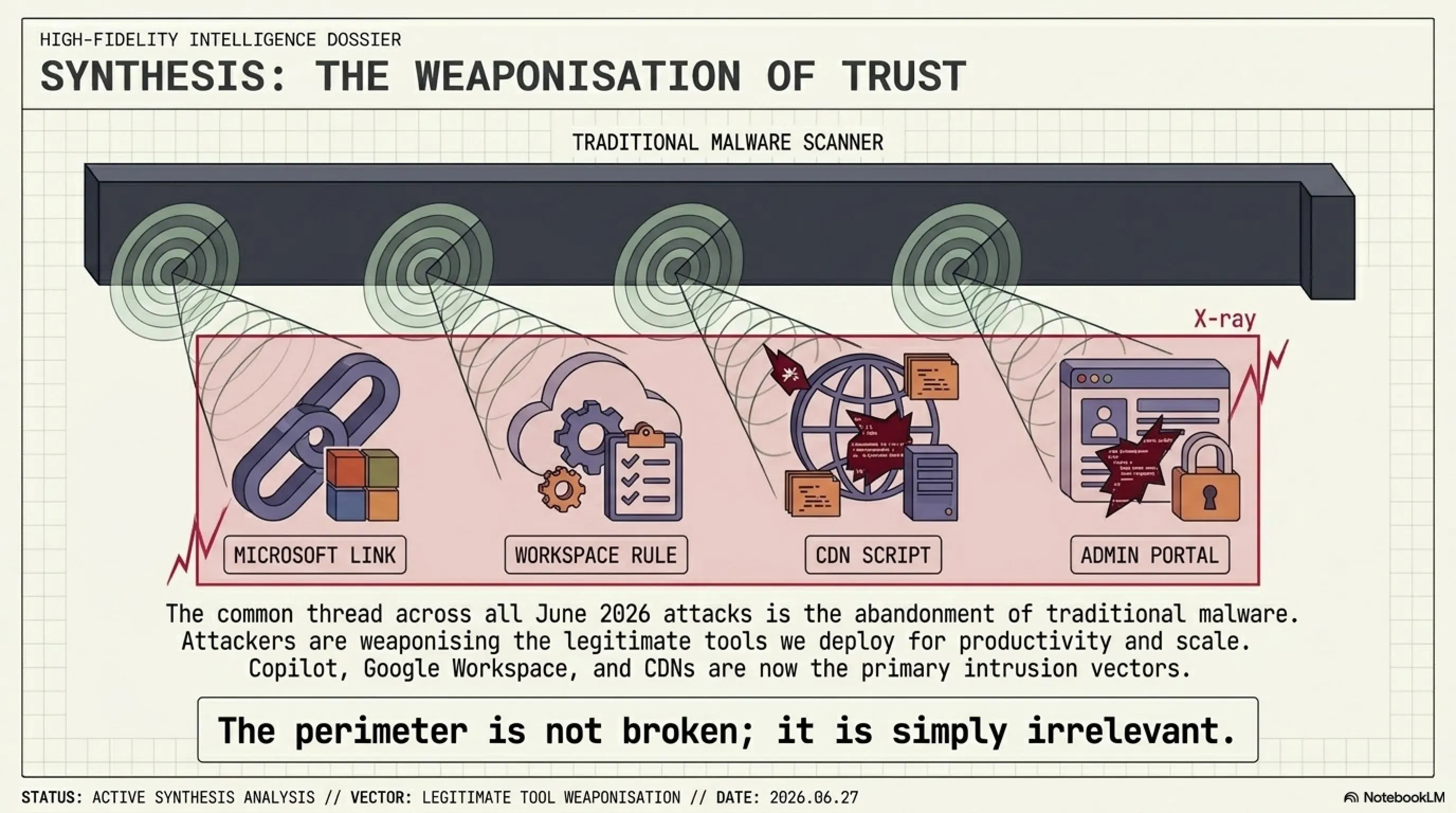
Today's news demonstrates that cybersecurity threats are no longer one-dimensional. Attackers use AI tools, cloud infrastructure, supply chain attacks, and even legitimate system capabilities for infiltration. Traditional security solutions are no longer sufficient, and organizations must move toward advanced architectures like Zero Trust, UEBA, and AI Security.
But the important point is that security isn't just a technical issue — it's a cultural one. Employee training, regular settings reviews, active monitoring, and urgent updates must become part of organizational culture. In the age of AI and cloud tools, security is a continuous process, not a one-time product.
Remember: The best defense is awareness.
📚 Sources
- • Nintendo Life — Switch 2 Update 22.5.0
- • DarkReading — SearchLeak Copilot Attack
- • BleepingComputer — Cisco SD-WAN Zero-Day
- • The Hacker News — Chinese APT Google Workspace
- • BleepingComputer — OptinMonster CDN Attack
- • The Hacker News — LiteLLM Vulnerability
- • Varonis Security Research — SearchLeak Technical Analysis
- • Obsidian Security — LiteLLM Vulnerability Chain Report
🌐 Stay Connected With Us 🎮✨
For the latest tech, gaming, and gadget news, follow us on our official social media channels:
Additional Gallery: 🌅 Tekin Morning June 16, 2026: Copilot SearchLeak Hack & Cisco Zero-Day Exploit 🚨