Tekin Morning: Aug 31
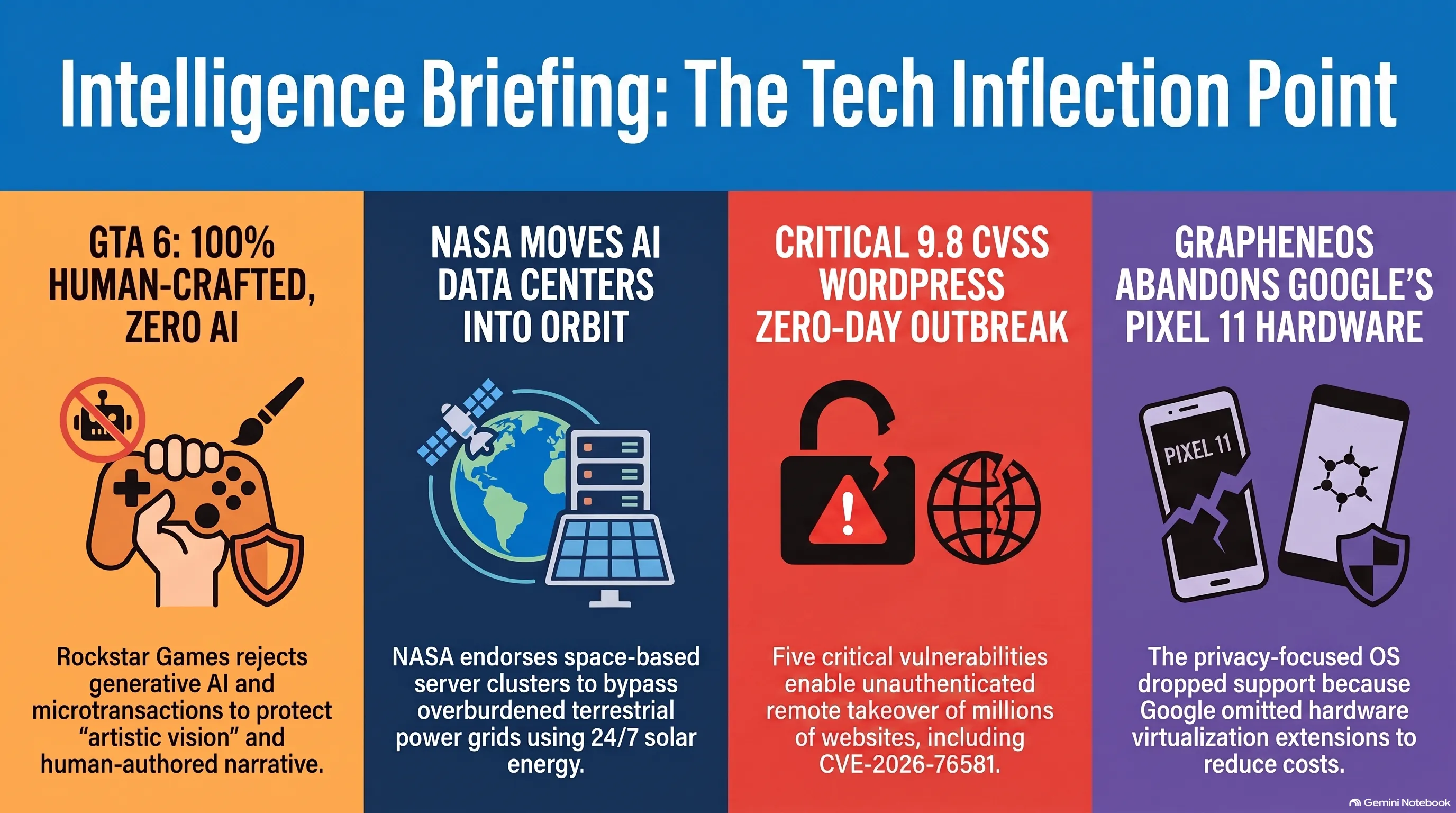
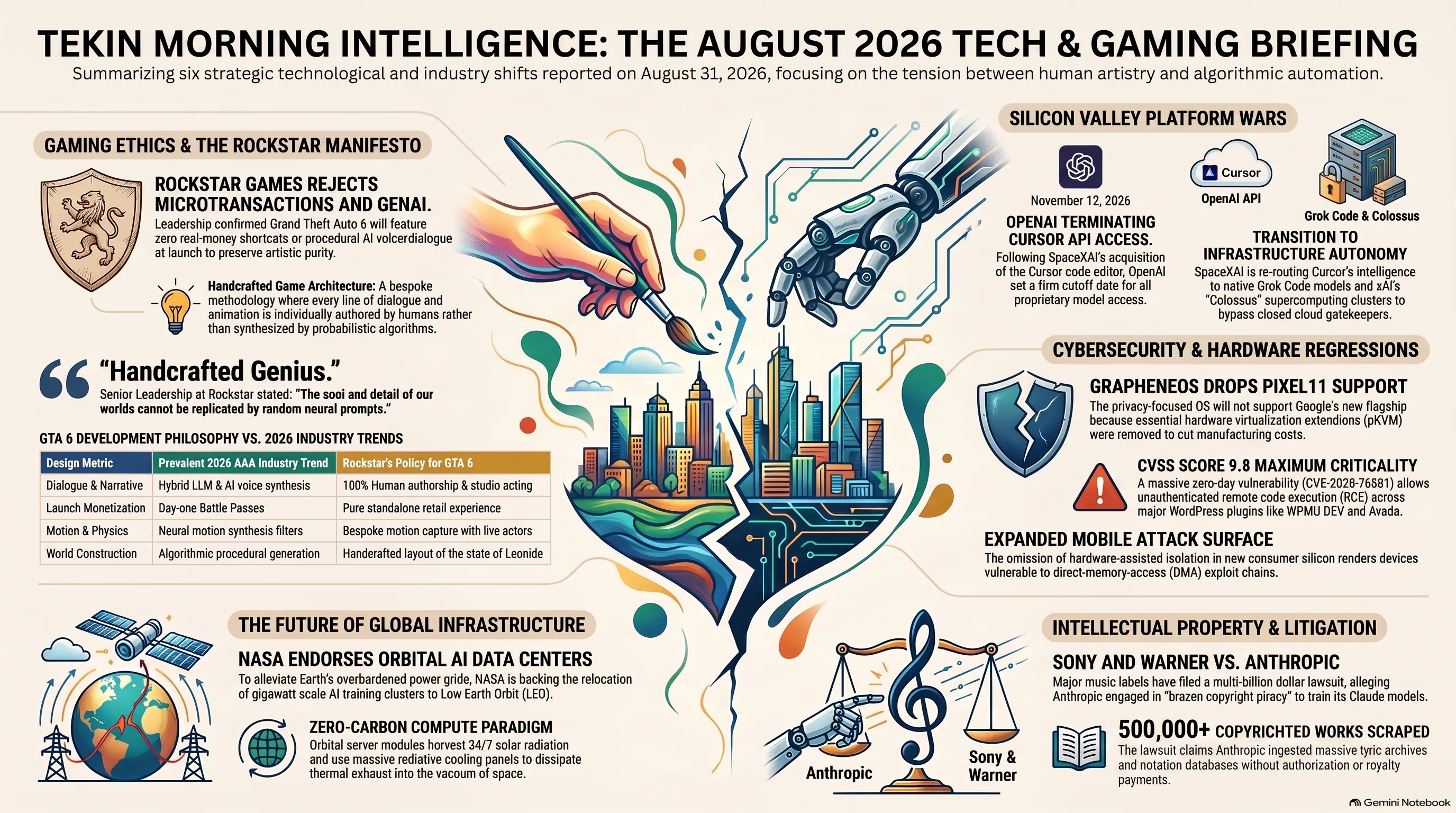
- 🎮Rockstar's GTA 6 Manifesto- Studio confirms launch with zero microtransactions and zero generative AI
- 🎧OpenAI Terminates Cursor Access- Altman-Musk rivalry deepens as OpenAI sets November 12 API cutoff
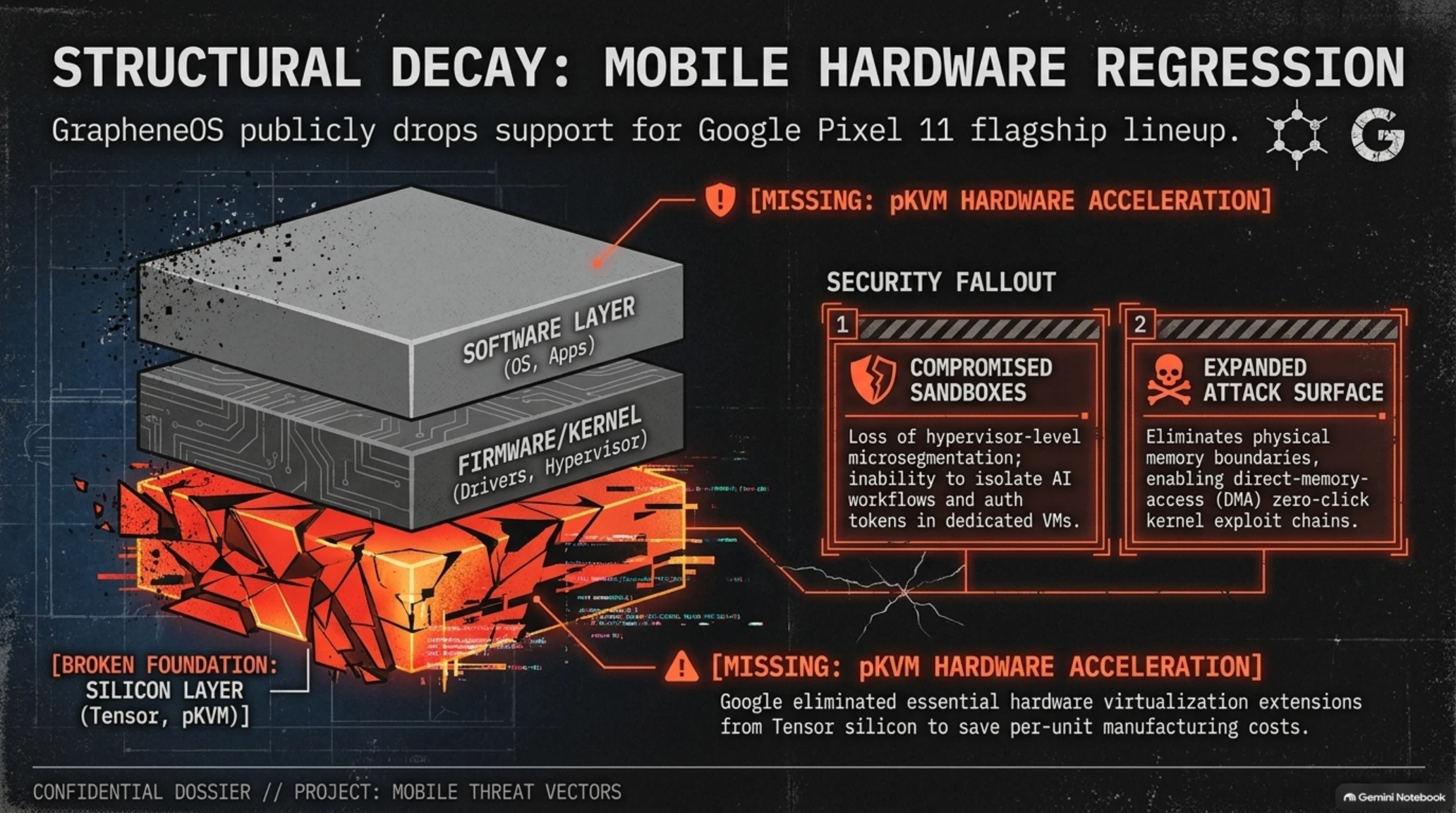
- 🚀GrapheneOS Drops Google Pixel 11- Google omitted critical virtualization hardware to save production costs
- 🗡️NASA Backs Orbital AI Data Centers- Solar-powered gigawatt server clusters proposed to bypass electric grids
- 📰Critical WordPress Plugin Flaws- CVE-2026-76581 (CVSS 9.8) enables full unauthenticated server takeover
- ⚔️Music Labels Sue Anthropic- Sony and Warner accuse AI lab of brazen copyright piracy for Claude models
Good morning and welcome to Tekin Morning for Monday, August 31, 2026! As the global technology and entertainment industries open the final business day of August, this morning's briefing examines six foundational shifts across game design ethics, platform exclusivity rivalries, hardware-level security compromises, space-based computing infrastructure, and intellectual property litigation.
AT A GLANCE | KEY MORNING DEVELOPMENTS
- Rockstar Games confirms GTA 6 will feature zero microtransactions and zero generative AI at launch
- OpenAI announces it will revoke Cursor's API access on November 12 following its SpaceXAI buyout
- GrapheneOS explicitly drops Pixel 11 support due to Google omitting hardware virtualization extensions
- NASA endorses orbital AI data center clusters to harness continuous solar energy and alleviate power grids
- Wordfence and Patchstack uncover CVSS 9.8 zero-days across major WordPress plugins and themes
- Sony Music and Warner Music sue Anthropic over unauthorized music and lyric ingestion for Claude models
1. Rockstar's Artistic Manifesto: GTA 6 Launches Without Microtransactions or Generative AI
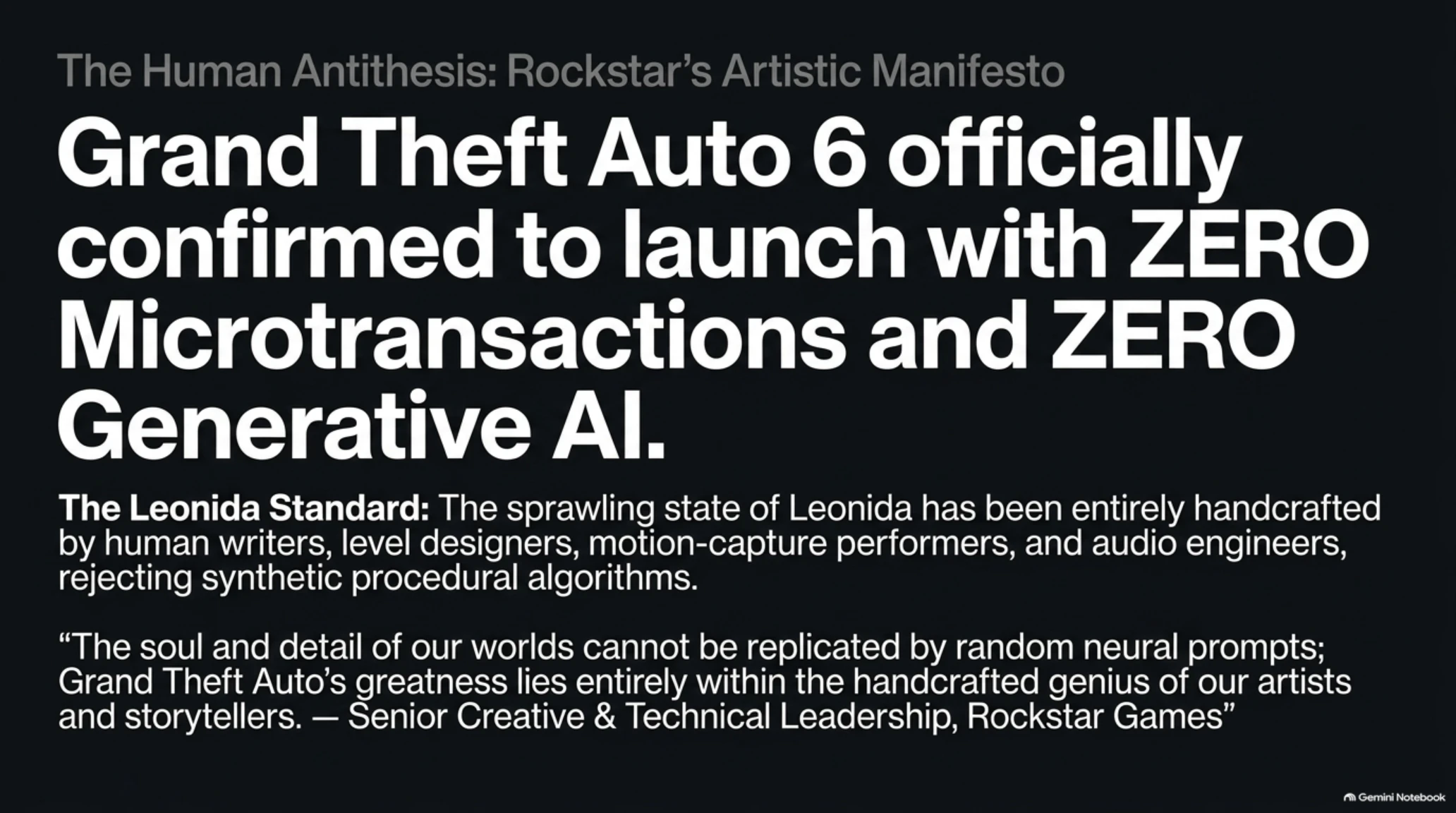
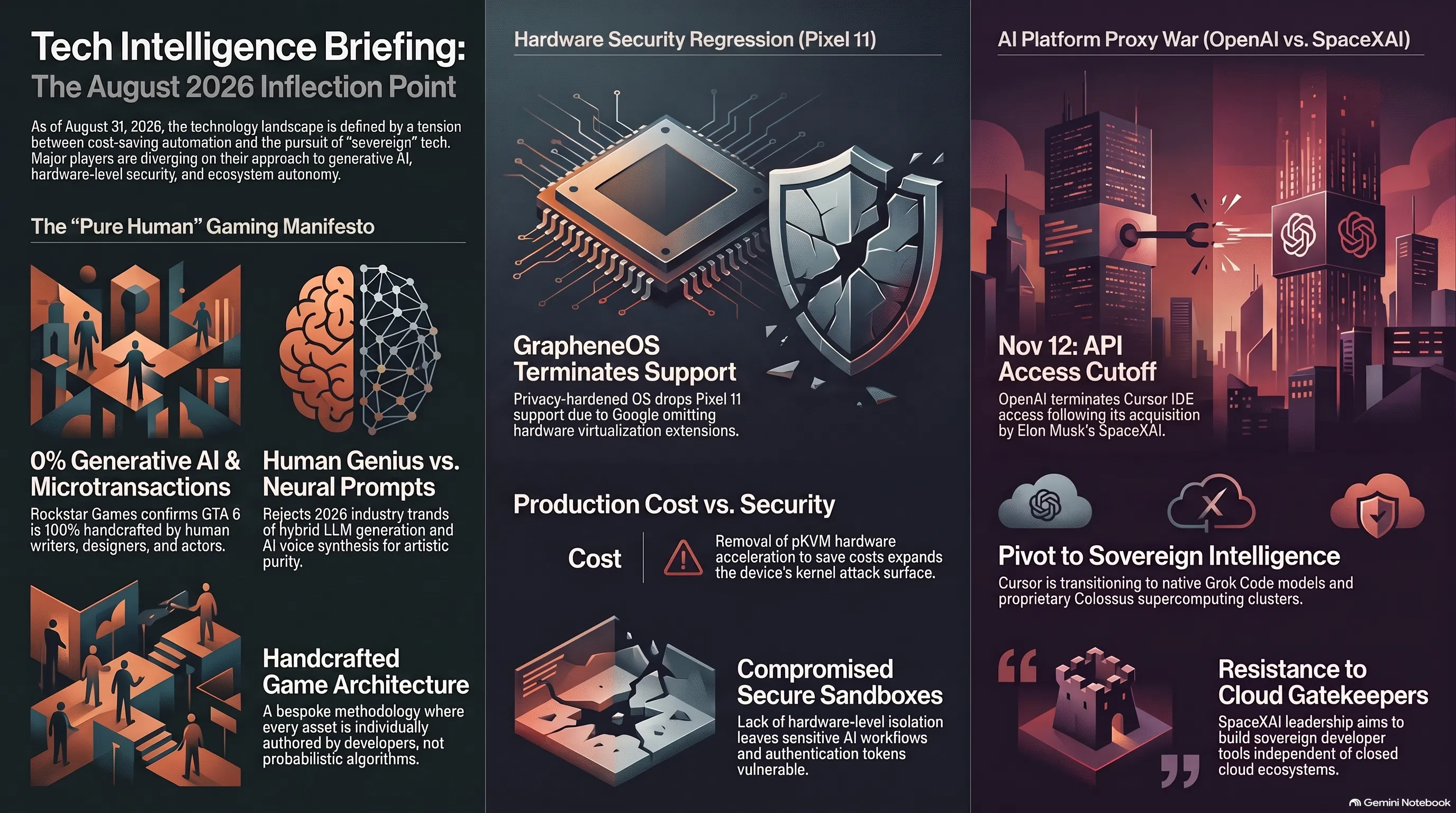
In a historic declaration celebrated across the global interactive entertainment landscape, Rockstar Games has officially confirmed that Grand Theft Auto 6 will launch without microtransactions or generative AI. Addressing widespread industry speculation regarding automated asset generation and post-launch monetization, studio leadership reaffirmed that the sprawling state of Leonida has been entirely handcrafted by human writers, level designers, motion-capture performers, and audio engineers.
By rejecting real-money transactional shortcuts in the single-player narrative and refusing to utilize synthetic procedural AI algorithms for character dialogue or quest generation, Rockstar has drawn a clear line between commodified live-service architectures and uncompromising artistic vision. This move sets a benchmark for the AAA gaming sector, demonstrating that authentic creative fidelity remains the ultimate competitive differentiator.
Technical & Industry Jargon Buster
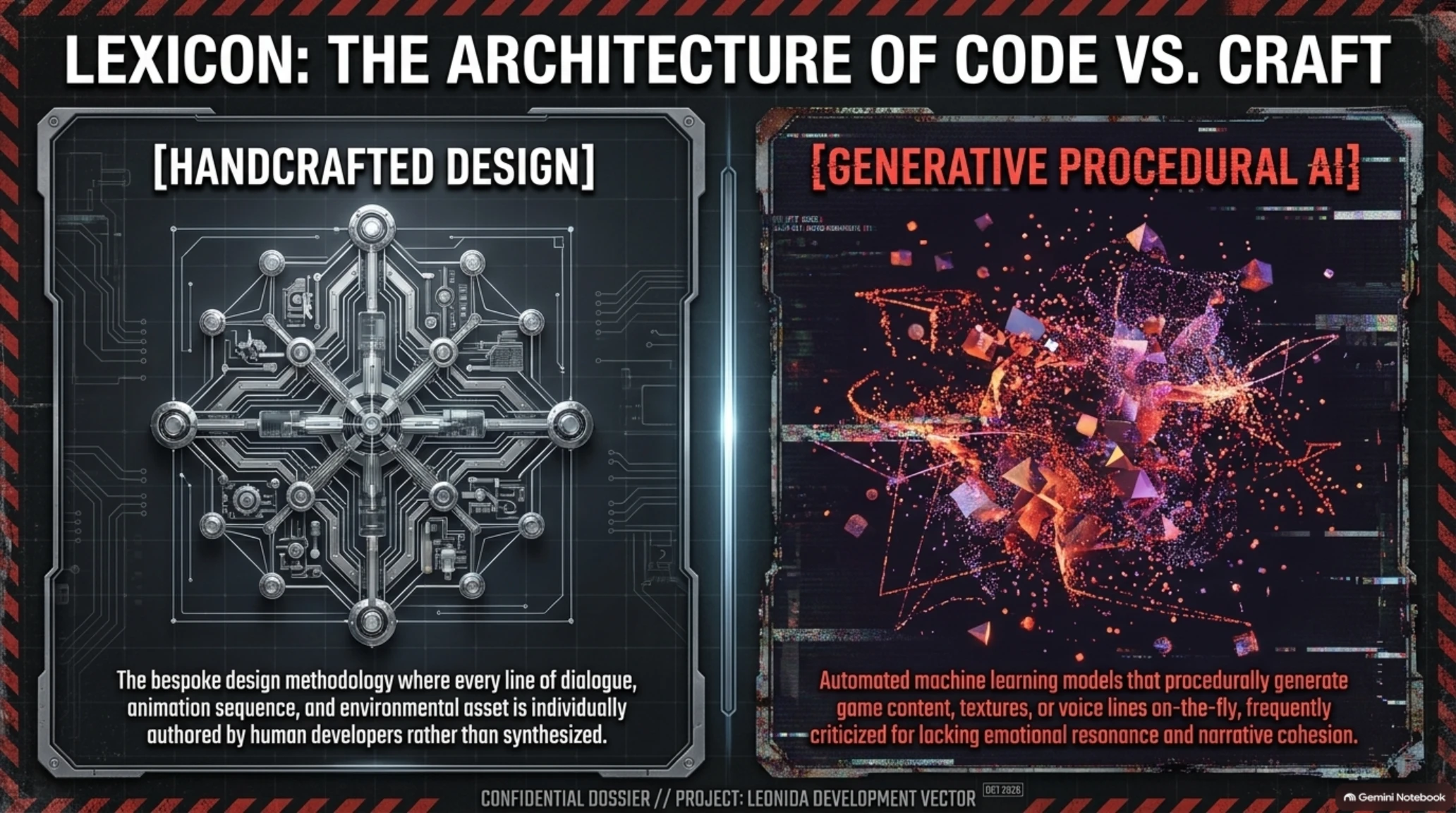
• Handcrafted Game Architecture: The bespoke design methodology where every line of dialogue, animation sequence, and environmental asset is individually authored by human developers rather than synthesized by probabilistic algorithms.
• Generative Procedural AI: Automated machine learning models that procedurally generate game content, textures, or voice lines on-the-fly, frequently criticized for lacking emotional resonance and narrative cohesion.
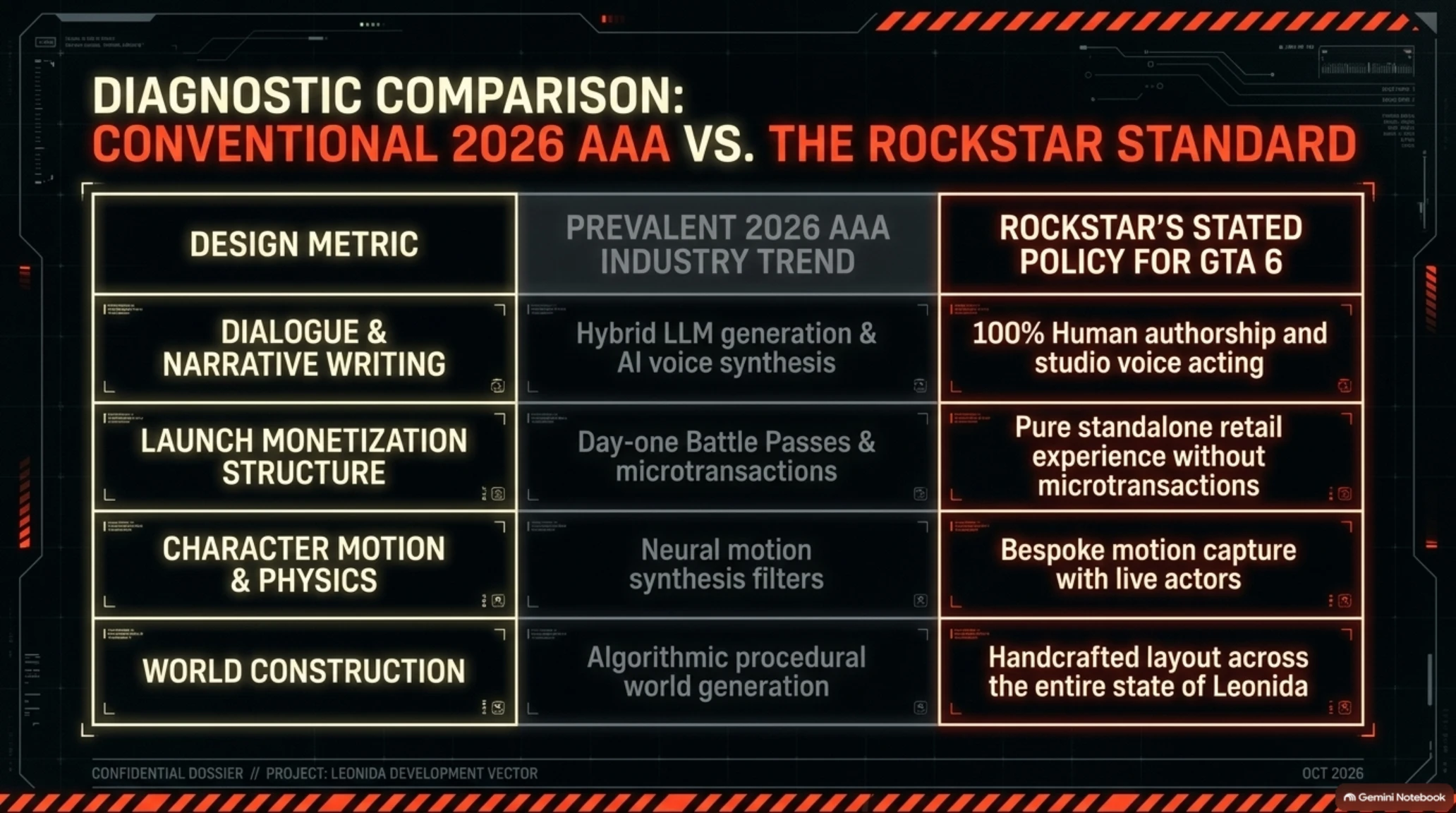
Development Philosophy Comparison: GTA 6 vs Conventional 2026 AAA Standards
| Design Metric | Prevalent 2026 AAA Industry Trend | Rockstar's Stated Policy for GTA 6 |
|---|---|---|
| Dialogue & Narrative Writing | Hybrid LLM generation & AI voice synthesis | 100% Human authorship and studio voice acting |
| Launch Monetization Structure | Day-one Battle Passes & microtransactions | Pure standalone retail experience without microtransactions |
| Character Motion & Physics | Neural motion synthesis filters | Bespoke motion capture with live actors |
| World Construction | Algorithmic procedural world generation | Handcrafted layout across the entire state of Leonida |
2. Silicon Valley Platform Wars: OpenAI Cuts Off Cursor IDE Following SpaceXAI Buyout
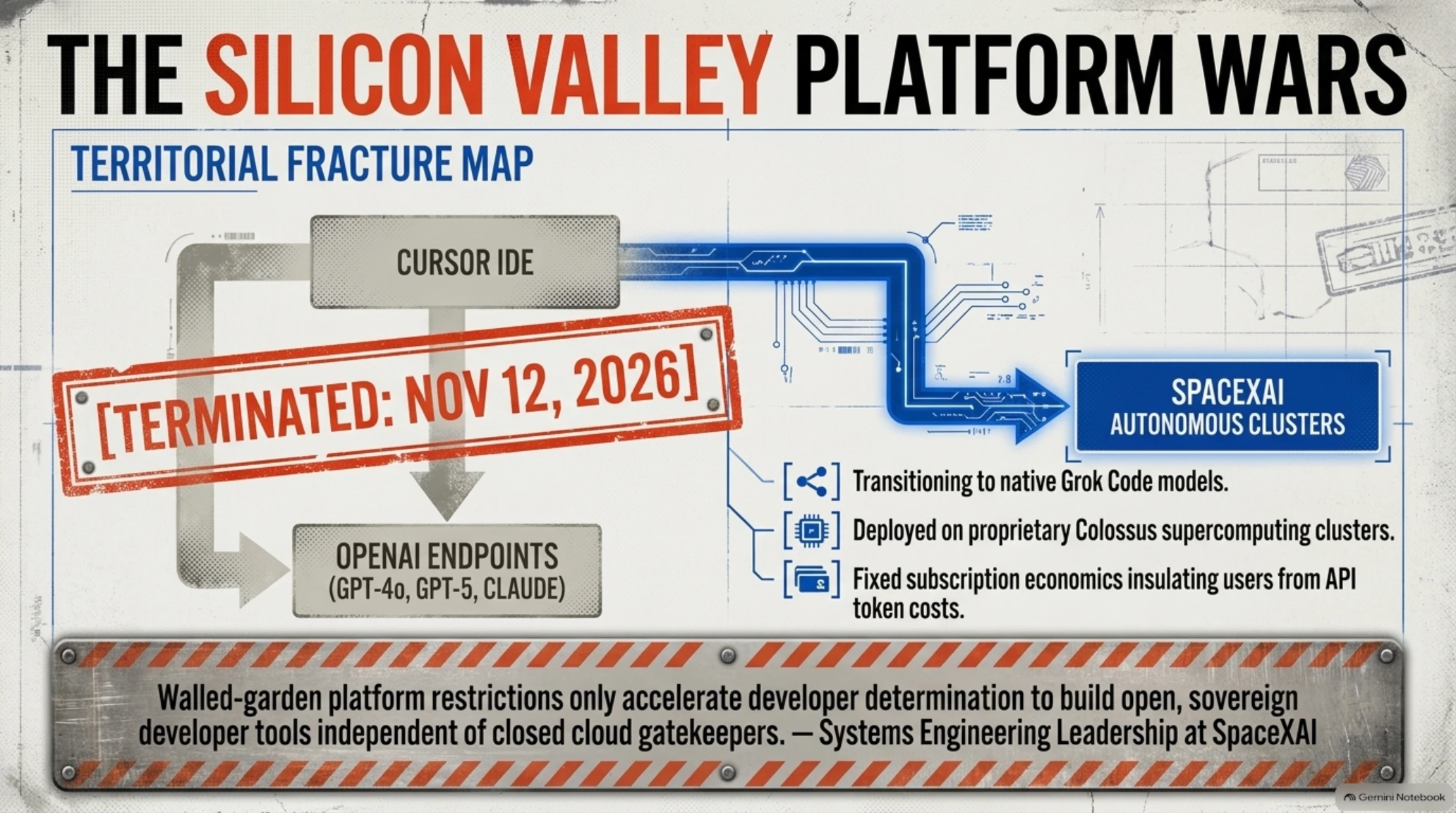
The intensifying rivalry between Sam Altman and Elon Musk has escalated into direct enterprise ecosystem partitioning, as OpenAI officially notified developers that it will terminate all model access for the AI-assisted code editor Cursor on November 12, 2026. The decisive API shutdown directly follows the high-profile acquisition of Cursor by Elon Musk's SpaceXAI consortium earlier this month.
Cursor, which rapidly grew into a dominant coding platform by leveraging composite inference pipelines combining GPT-4o, GPT-5, and Claude models, will no longer be permitted to query proprietary OpenAI endpoints. In response, SpaceXAI announced that Cursor is transitioning its core intelligence engine to native Grok Code models alongside fine-tuned open-weights deployed across its proprietary Colossus supercomputing clusters, ensuring complete infrastructure autonomy from commercial cloud incumbents.
Strategic Ramifications for Enterprise Developers on Cursor
• Migration to Grok & Autonomous Clusters: Re-routing contextual code assistance through xAI's ultra-low-latency dedicated developer endpoints.
• Fixed Subscription Economics: Insulating end-users from escalating third-party API token costs through vertically integrated compute hardware.
3. Mobile Hardware Regression: GrapheneOS Drops Pixel 11 Over Dropped Security Features
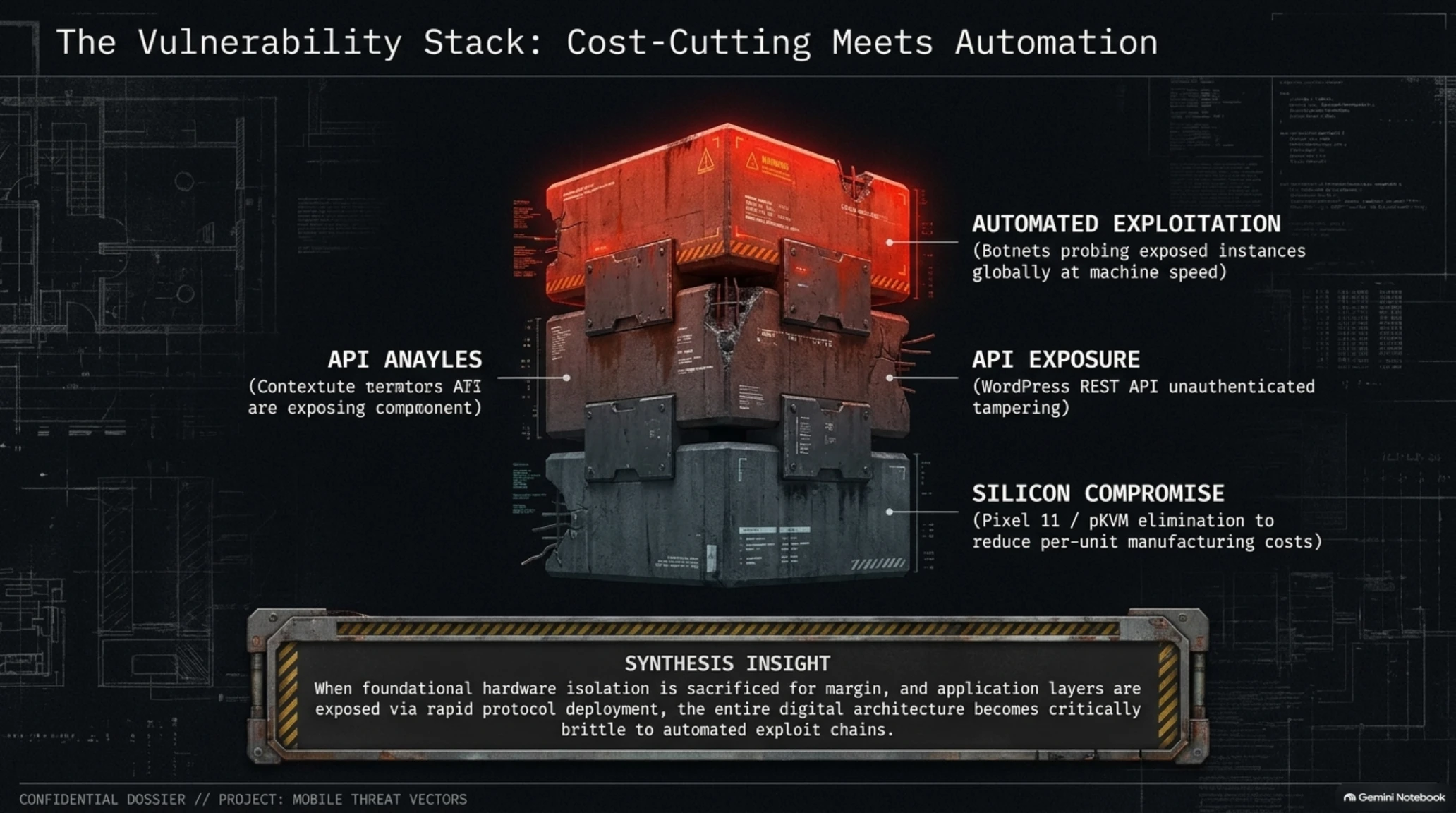
In a rare public rebuke of a major hardware manufacturer, the maintainers of the privacy-hardened GrapheneOS mobile operating system announced that they will not support Google's new Pixel 11 flagship lineup. The core technical barrier stems from Google's quiet decision to eliminate essential hardware virtualization extensions (pKVM hardware acceleration) from its next-generation Tensor silicon architecture in an effort to reduce per-unit manufacturing costs.
For nearly a decade, security researchers and enterprise defenders favored Google Pixel hardware due to its robust Titan security chip and hypervisor-level microsegmentation. By dropping hardware-assisted isolation, the Pixel 11 compromises GrapheneOS's ability to enforce military-grade application sandboxes and protect memory heaps against zero-click kernel exploits, prompting widespread concern across the cybersecurity community.
Why Hardware Virtualization Omissions Threaten Mobile Security
• Compromised Secure Sandboxes: Inability to isolate sensitive AI workflows and authentication tokens within dedicated, hardware-partitioned virtual machines.
• Expanded Kernel Attack Surface: Eliminates physical memory boundaries, rendering mobile devices vulnerable to direct-memory-access (DMA) exploit chains.
📚 Classified & Related Dossiers in TekinGame
If you wish to explore beyond this report and delve into cybernetic frontiers and autonomous AI architectures, do not miss these three exclusive deep-dives in the Tekin Garage:
4. Orbital AI Infrastructure: NASA Backs Space-Based Data Centers to Solve Power Crunch
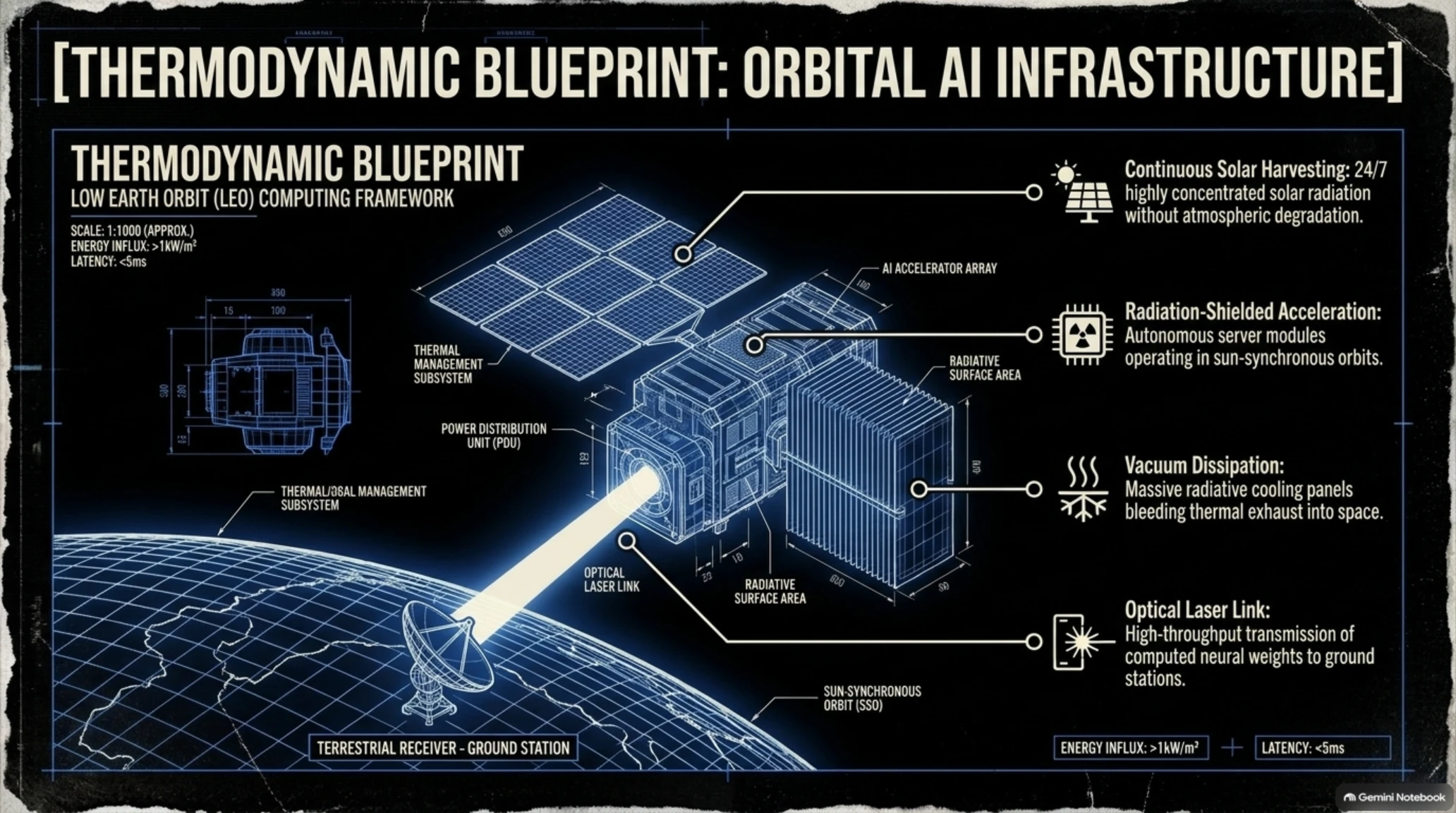
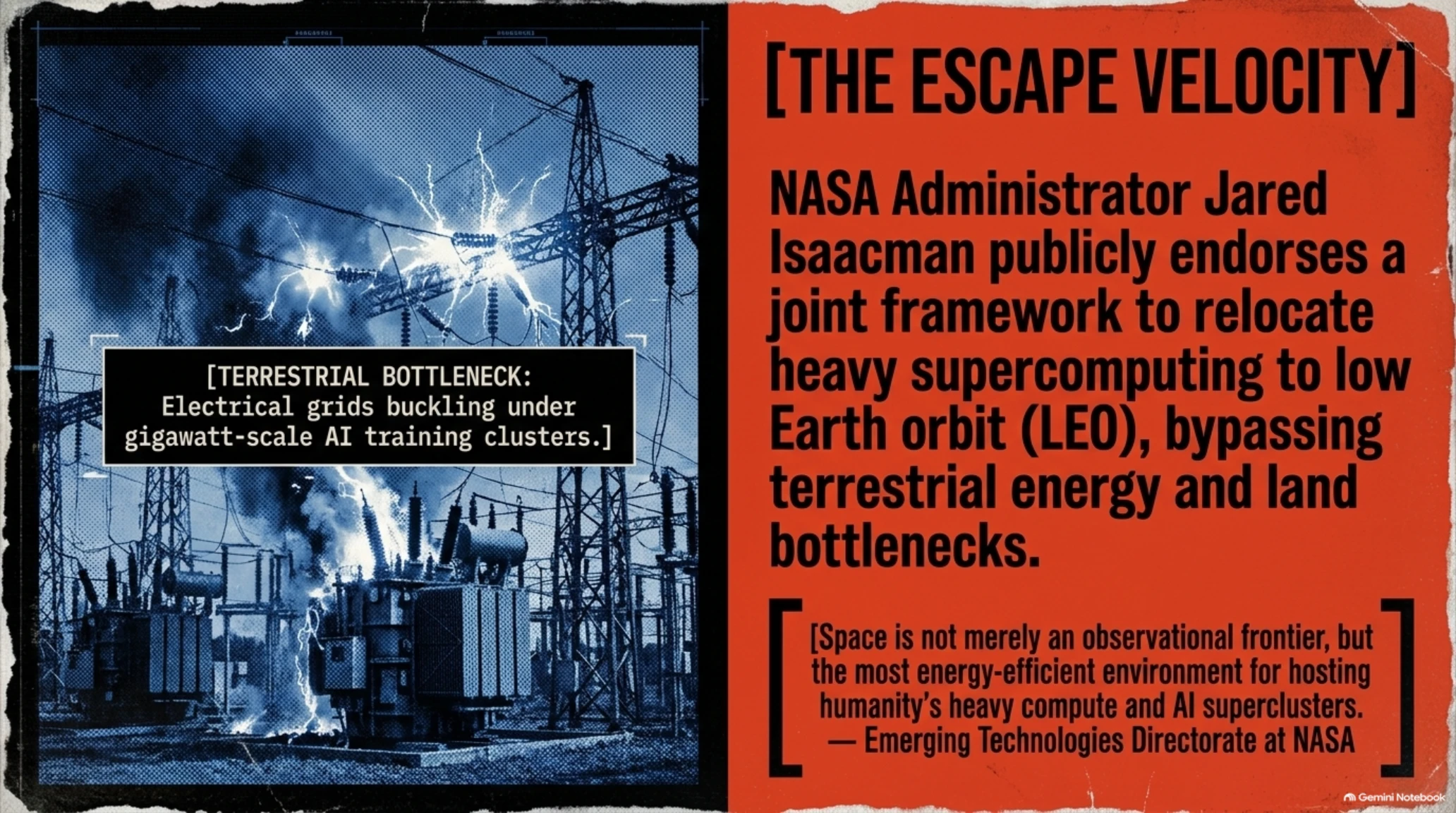
As terrestrial electrical grids buckle under the staggering energy demands of gigawatt-scale AI training clusters, NASA has officially endorsed the visionary moonshot proposal to relocate supercomputing data centers to low Earth orbit (LEO). NASA Administrator Jared Isaacman publicly praised the joint conceptual framework championed by tech leaders including Elon Musk and Sundar Pichai as an indispensable thermodynamic solution to the planet's energy and land bottlenecks.
Under the orbital computing blueprint, autonomous server modules equipped with radiation-shielded AI accelerators will operate within sun-synchronous orbits, harvesting uninterrupted, highly concentrated solar radiation 24/7 without atmospheric degradation. Massive radiative cooling panels will dissipate thermal exhaust into the vacuum of space, while high-throughput optical laser links transmit computed neural weights directly to ground stations, establishing a truly zero-carbon compute paradigm.
5. WordPress Zero-Day Outbreak: Five Critical Vulnerabilities Enable Site Takeover
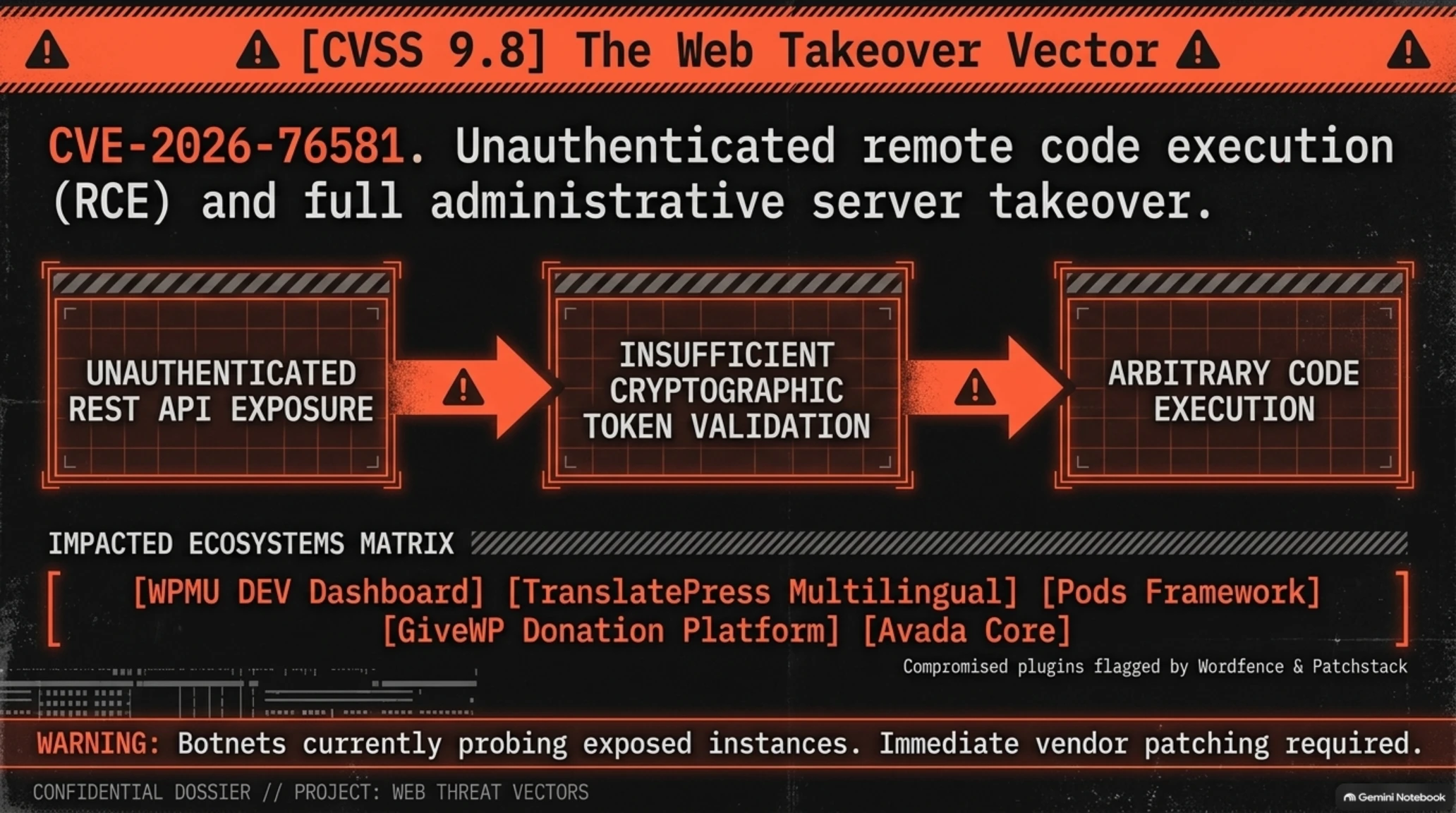
Cybersecurity researchers at Wordfence and Patchstack have issued high-priority security advisories detailing five maximum-severity vulnerabilities impacting prominent WordPress plugins and themes. The most severe flaw, cataloged as CVE-2026-76581 with a critical CVSS score of 9.8, enables unauthenticated remote attackers to execute arbitrary code (RCE) and achieve full administrative server takeover across WPMU DEV Dashboard, TranslatePress, Pods, GiveWP, and the Avada theme ecosystem.
Affecting millions of active websites worldwide, the vulnerabilities stem from unauthenticated REST API endpoint exposures and insufficient cryptographic session token validation. Threat intelligence analysts warn that automated botnets have already begun probing exposed instances, urging system administrators to apply emergency vendor patches and inspect web server access logs immediately.
Technical Breakdown of WordPress Plugin Zero-Day Vulnerabilities
• Primary Vulnerability Tracking: CVE-2026-76581 (CVSS Score: 9.8 / Maximum Criticality)
• Attack Vector: Unauthenticated REST API parameter tampering leading to privilege escalation and remote code execution.
• Impacted Software: TranslatePress Multilingual, WPMU DEV Dashboard, GiveWP Donation Platform, Pods Framework, and Avada Core.
6. Copyright Litigation Matrix: Sony Music & Warner Sue Anthropic for IP Piracy
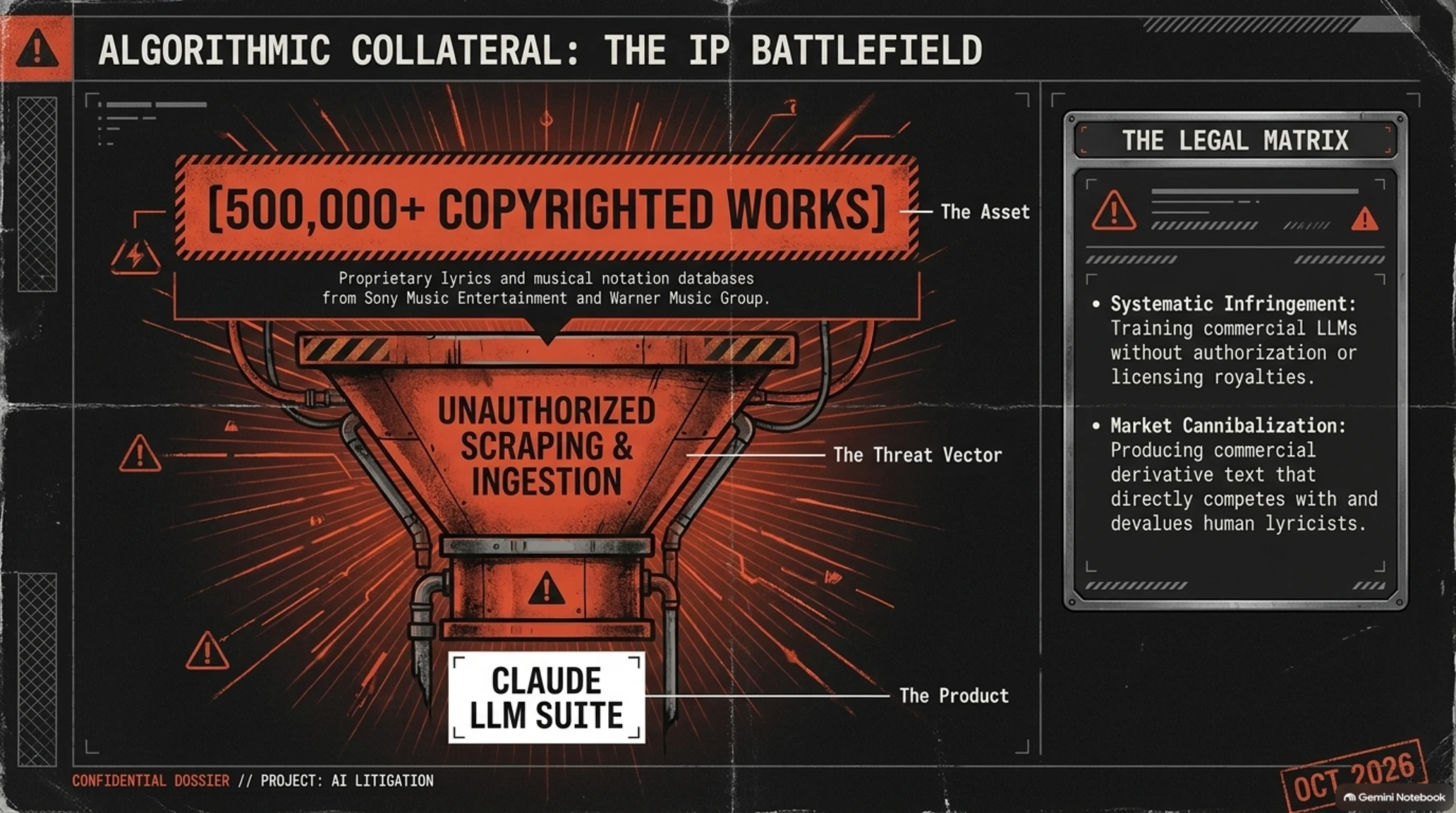
The global music recording industry, spearheaded by Sony Music Entertainment and Warner Music Group, has filed a landmark multi-billion-dollar federal lawsuit against AI research laboratory Anthropic. The comprehensive legal complaint alleges that Anthropic engaged in widespread, systematic copyright infringement by scraping and ingesting over 500,000 copyrighted musical compositions and lyrical works to train its Claude suite of large language models without authorization or licensing royalties.
Seeking statutory damages and immediate injunctive relief, the music publishers argue that Claude's ability to generate verbatim lyrical outputs and closely replicate the distinctive artistic styles of renowned songwriters directly cannibalizes human creative livelihoods. This high-stakes confrontation is set to define the legal boundaries of fair use within generative AI training across the international entertainment economy.
Core Legal Pillars of the Music Industry Complaint Against Anthropic
• Systematic Copyright Infringement: Unauthorized scraping of copyrighted lyric archives and musical notation databases to train commercial LLMs.
• Direct Market Cannibalization: Producing commercial derivative musical text that directly competes with and devalues human lyricists and recording artists.
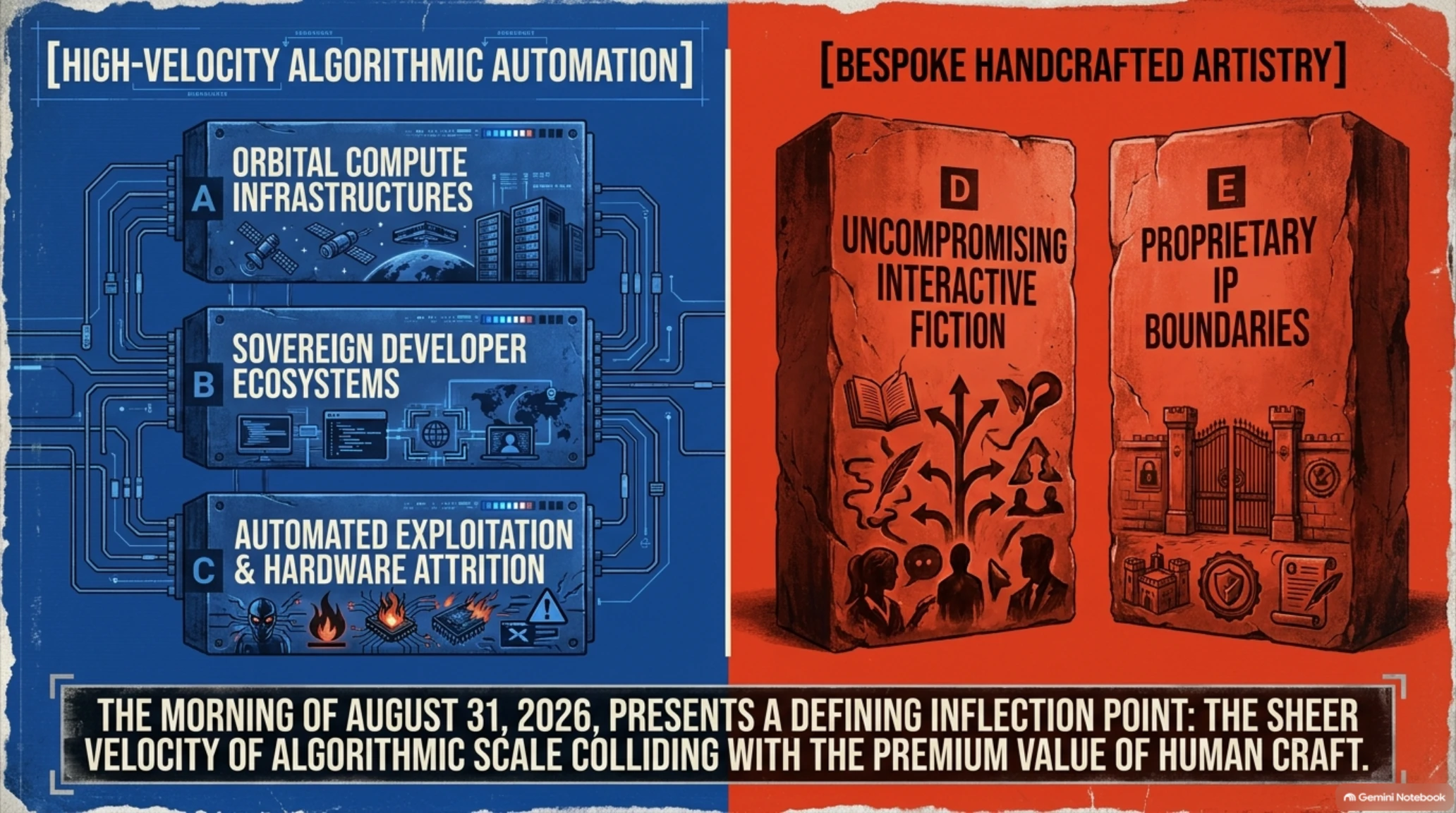
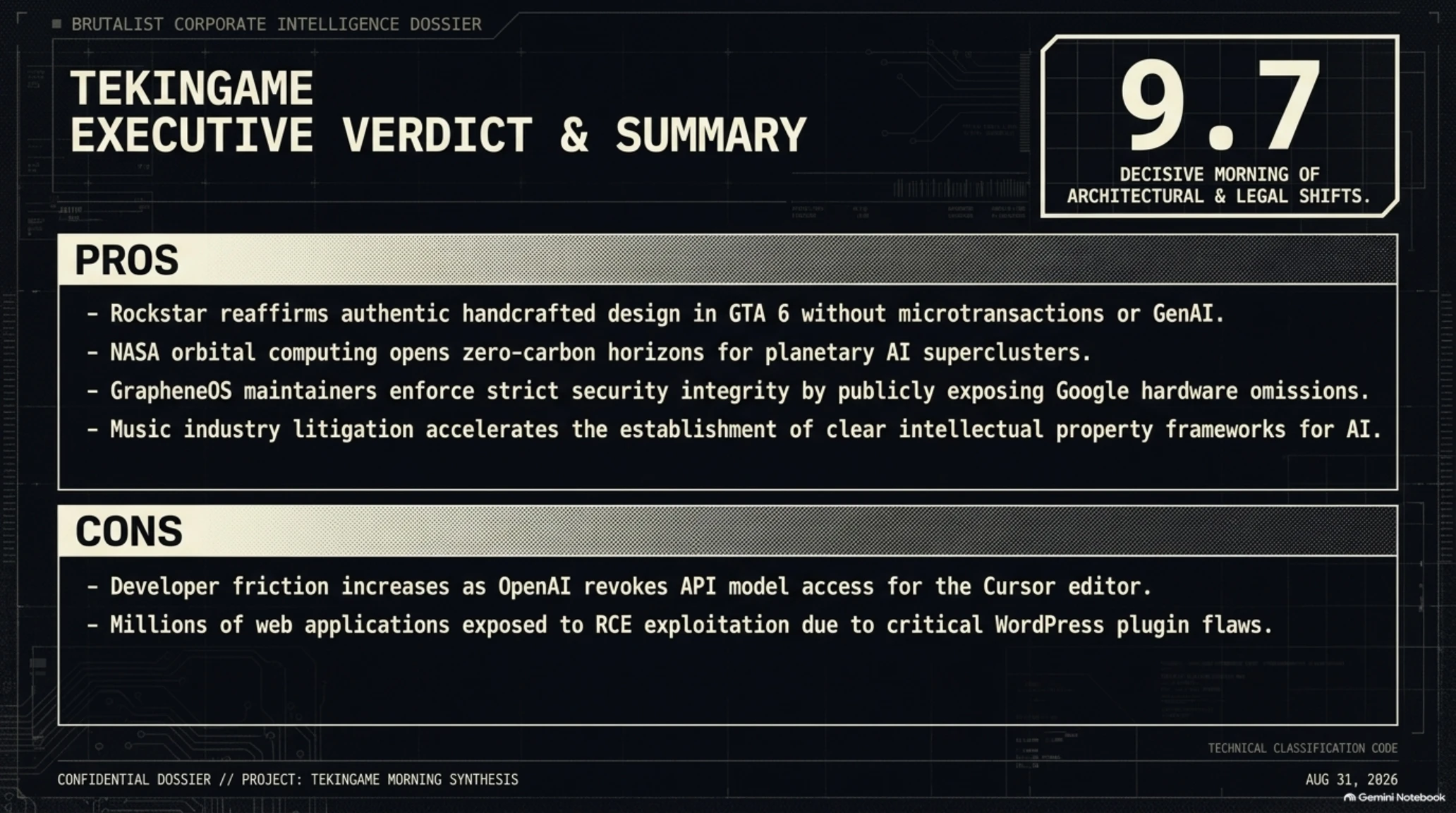
TekInGame Morning Synthesis: Human Artistry vs Algorithmic Automation
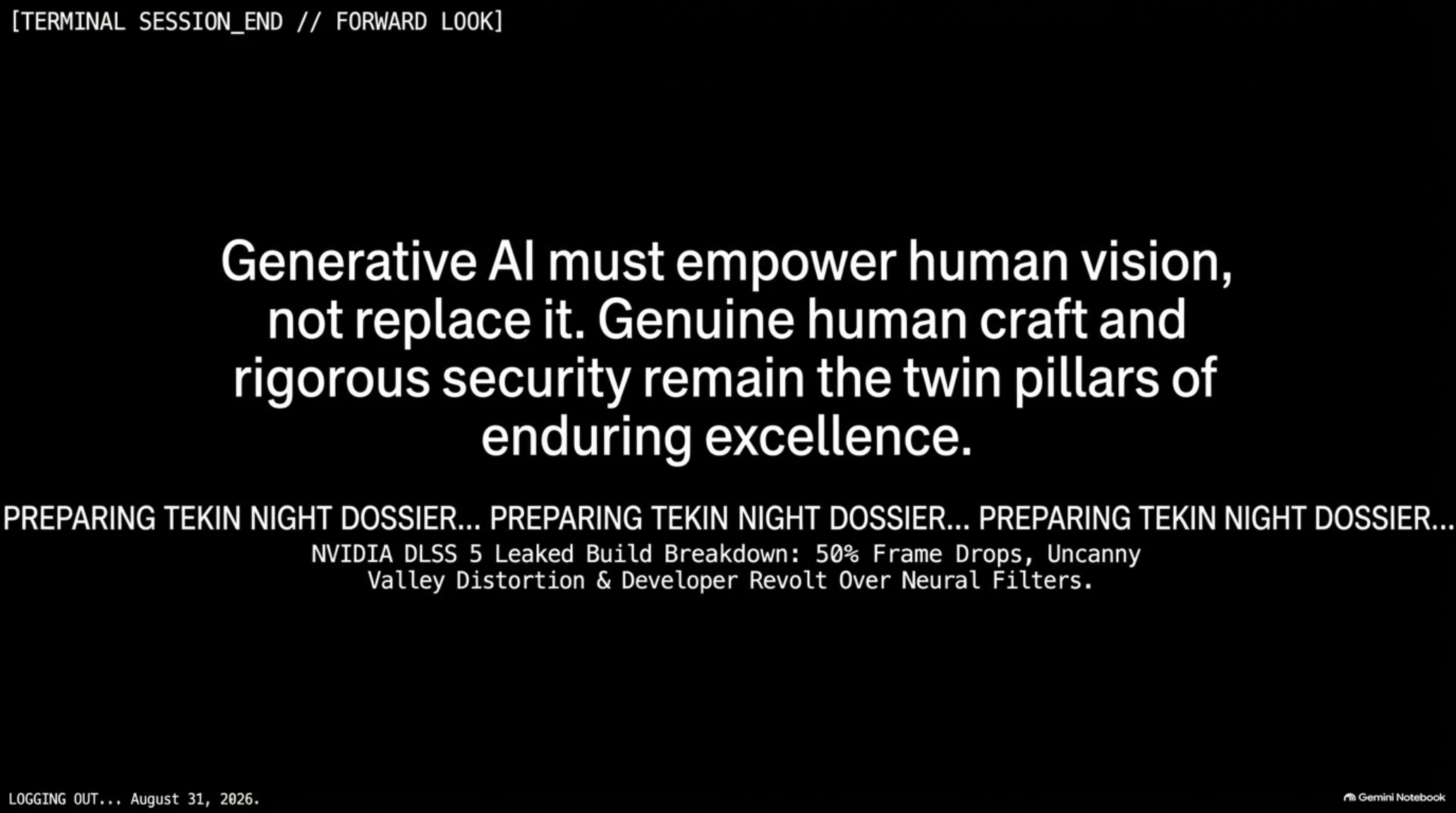
The intelligence landscape of Monday morning, August 31, 2026, presents a defining cultural and technological inflection point. Rockstar's firm rejection of microtransactions and generative AI in GTA 6 stands as a monumental defense of human craft, proving that bespoke creative mastery remains the gold standard of interactive art. Meanwhile, the escalating platform wars between OpenAI and Musk, hardware compromises in consumer silicon, and space-based computing initiatives illustrate the sheer velocity of modern digital evolution. Join us this evening for our comprehensive Tekin Night dossier.
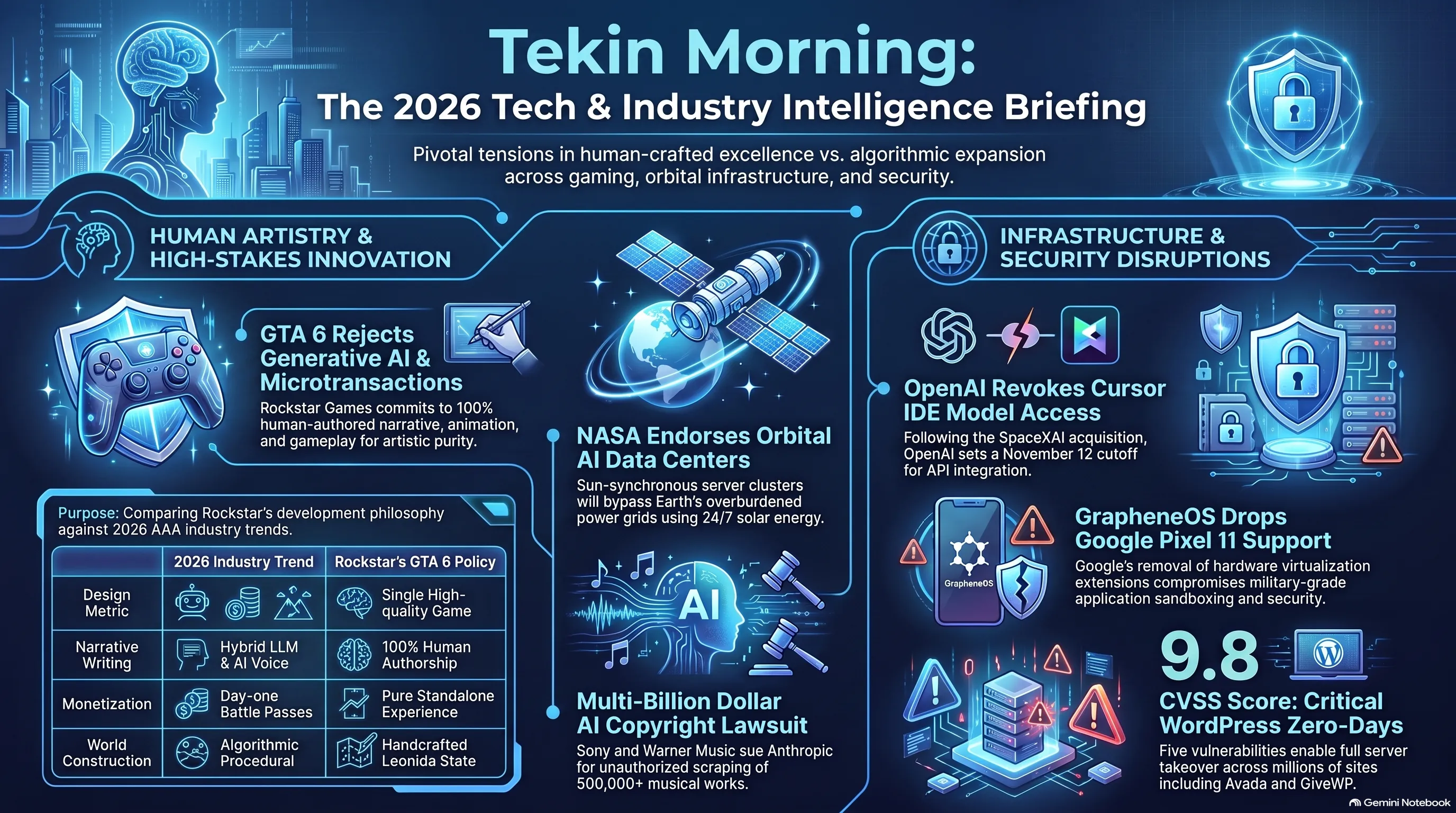
- Rockstar reaffirms commitment to authentic handcrafted design in GTA 6 without microtransactions or GenAI
- NASA orbital computing endorsement opens zero-carbon horizons for planetary AI superclusters
- GrapheneOS maintainers maintain strict security integrity by publicly exposing hardware omissions
- Music industry litigation accelerates the establishment of clear intellectual property frameworks for AI
- Developer friction increases as OpenAI revokes API model access for the Cursor editor
- Millions of web applications exposed to remote exploitation due to critical WordPress plugin flaws
Recommended In-Depth Gaming & Tech Dossiers on TekInGame
• 🛡 Inside the FBI & NSA Takedown of Chinese Cyber Network QTFY | Deconstructing QScan IoT Botnets & QTRouter Proxy Meshes
• 🎬 Deconstructing Alibaba Wan 3.0 Video AI | The Chinese Tech Breakthrough Disrupting Hollywood & Sora
• 🧪 Inside Inherent's Faraday AI | How a 27-Million-Parameter Model Beat DeepSeek-R1 in Biochemical Reasoning
Frequently Asked Questions | Morning Briefing
Will GTA 6 feature generative AI or microtransactions at launch?
No, Rockstar Games has officially confirmed that GTA 6 will launch with zero generative AI and zero microtransactions, built entirely through handcrafted human artistry.
Why is OpenAI terminating Cursor's API access on November 12?
Following Cursor's acquisition by Elon Musk's SpaceXAI consortium, OpenAI has moved to cut off proprietary endpoint integration, prompting Cursor to transition to Grok models.
Why won't GrapheneOS support the Google Pixel 11?
Google removed key hardware virtualization and security extensions from the Tensor silicon to save production costs, making military-grade sandboxing impossible.
What is the primary benefit of orbital AI data centers endorsed by NASA?
They harness uninterrupted 24/7 solar energy in space, radiate heat directly into the cosmic vacuum, and completely eliminate power grid strain on Earth.
What is the severity of the newly discovered WordPress plugin zero-day?
The CVE-2026-76581 flaw carries a critical CVSS score of 9.8, allowing unauthenticated attackers to execute arbitrary code and seize complete server control.
Official Technical References & Primary Sources
Additional Gallery: ☀️ Tekin Morning August 31, 2026 | Rockstar's GTA 6 Manifesto & OpenAI Cuts Cursor