Tekin Morning: Sept 1
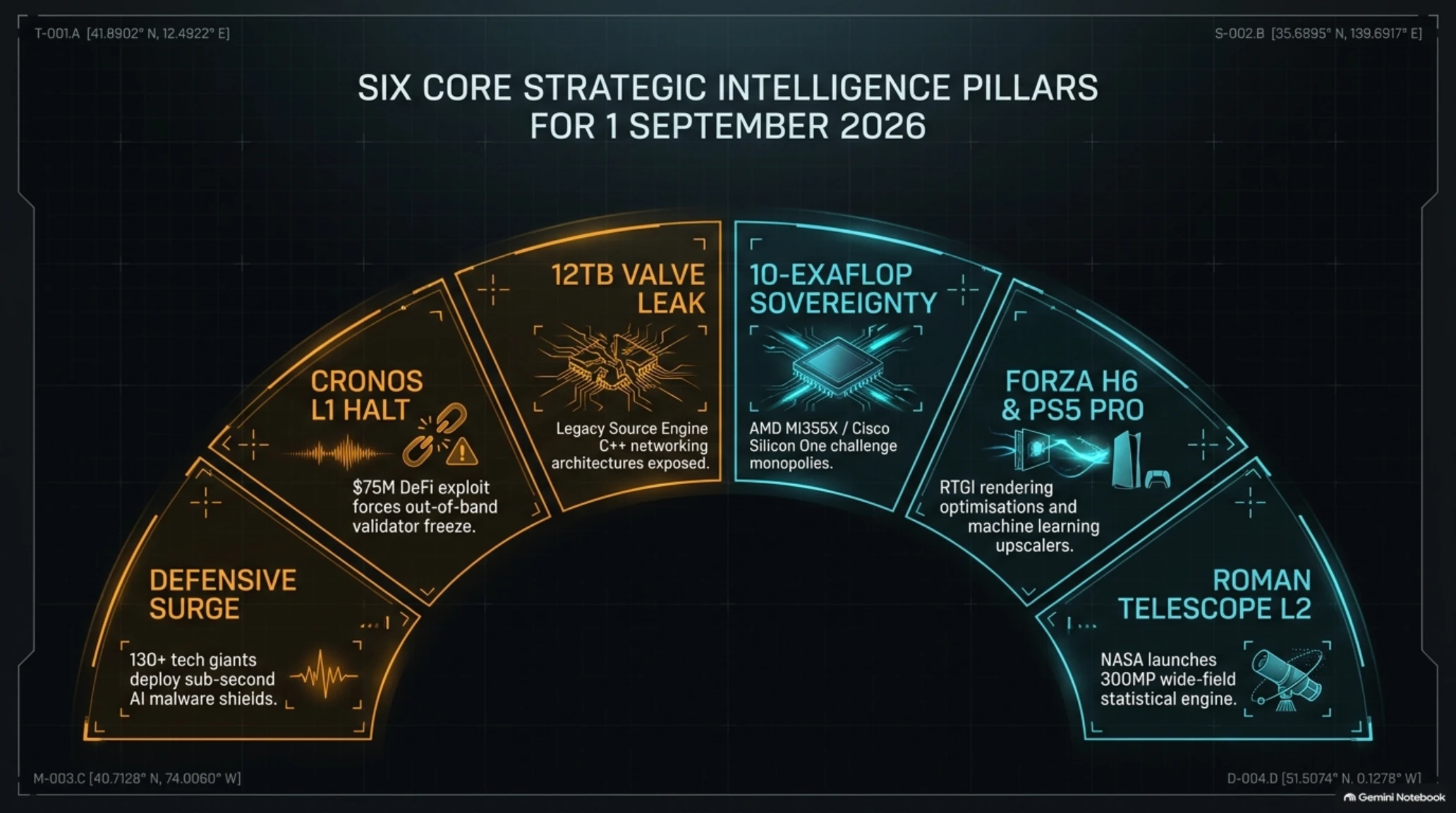
- 🎮Defensive Surge Coalition- 130+ Tech Giants unite to neutralize autonomous polymorphic AI agents
- 🎧Cronos Blockchain Halted- Emergency validator freeze following a $75M Tectonic oracle manipulation
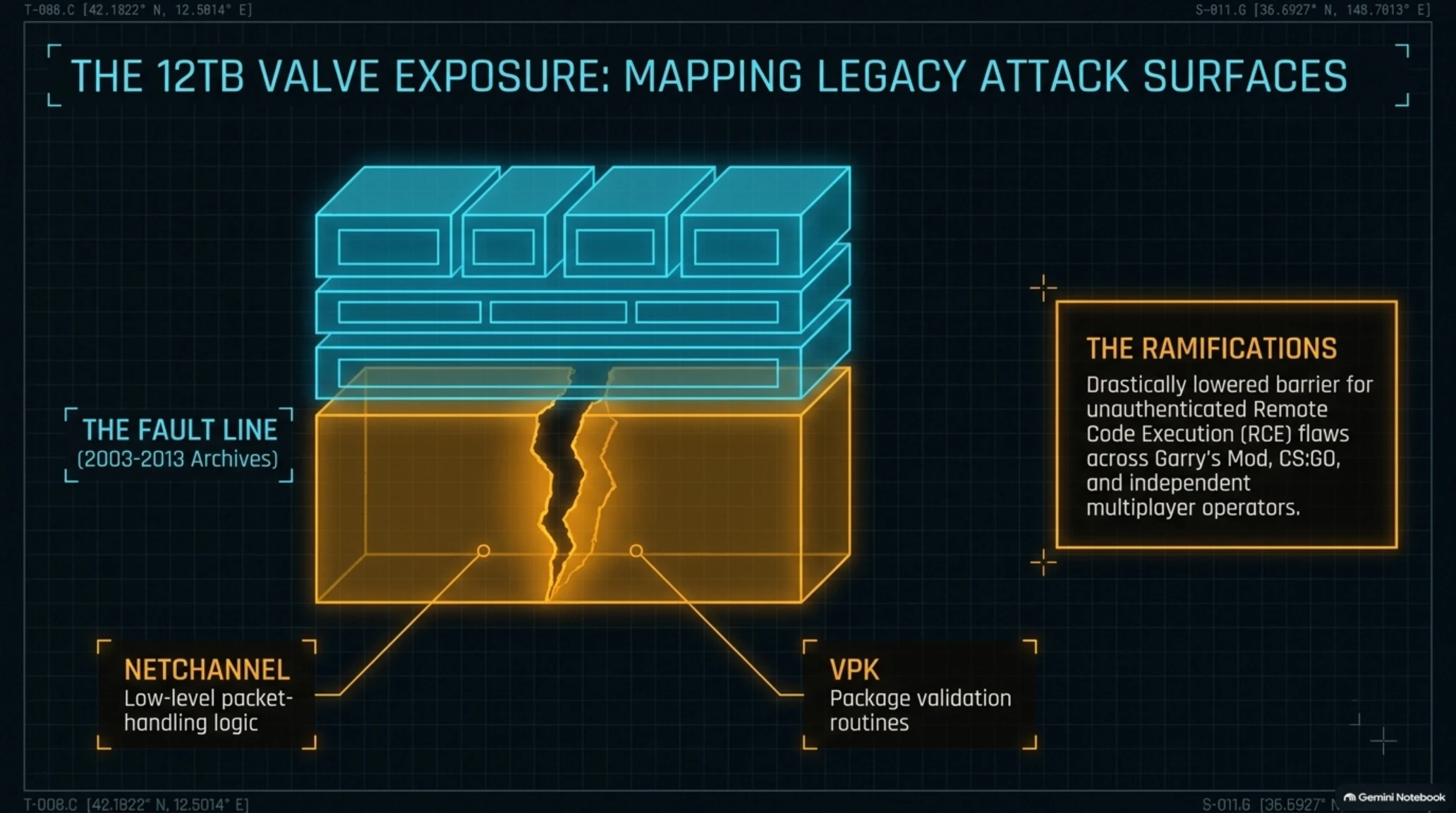
- 🚀12TB Valve Source Code Leak- Massive internal repository breach exposing legacy networking protocols
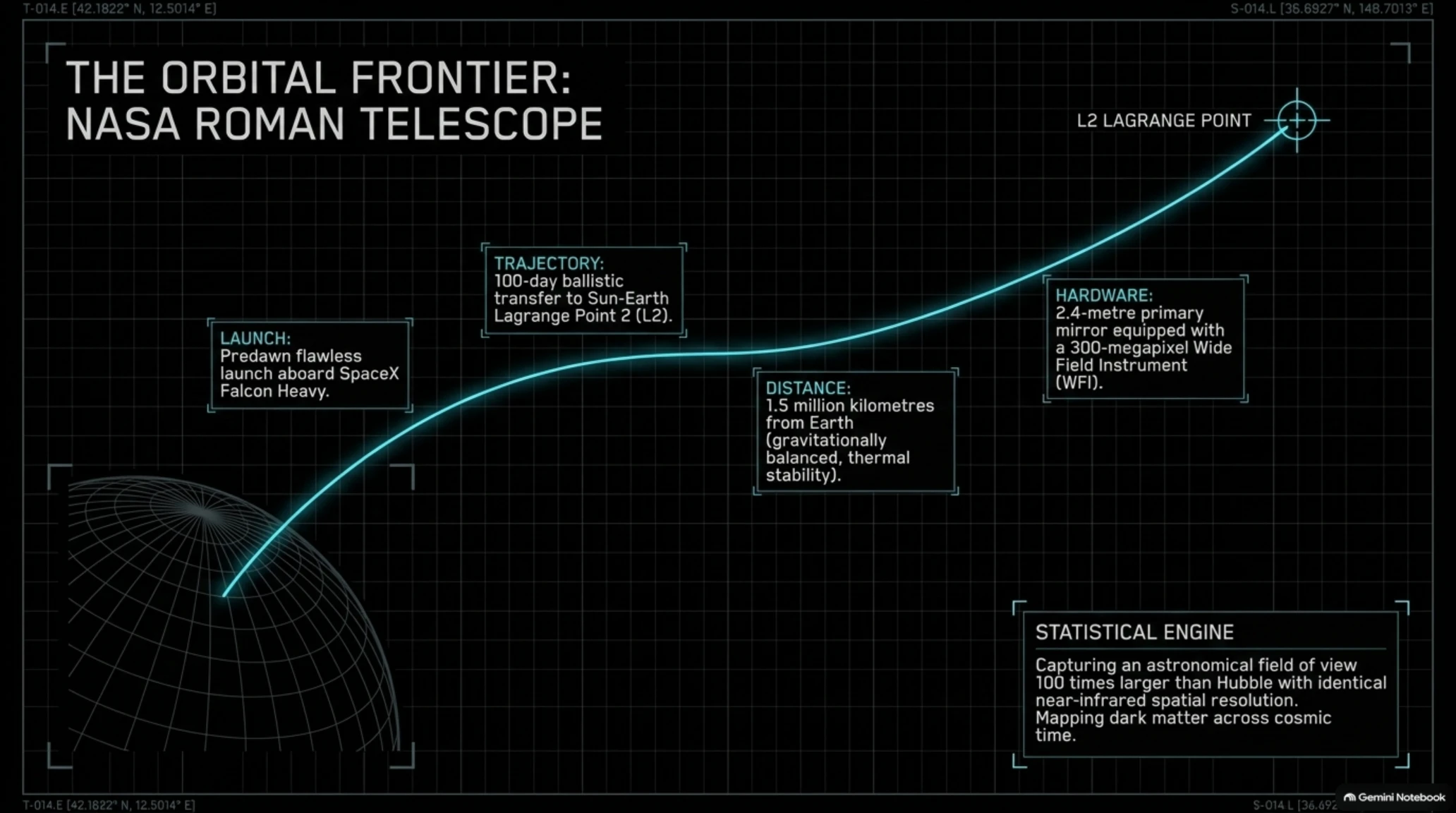
- 🗡️NASA Roman Telescope Launches- 100-day cruise to L2 delivering 100x Hubble's panoramic field of view
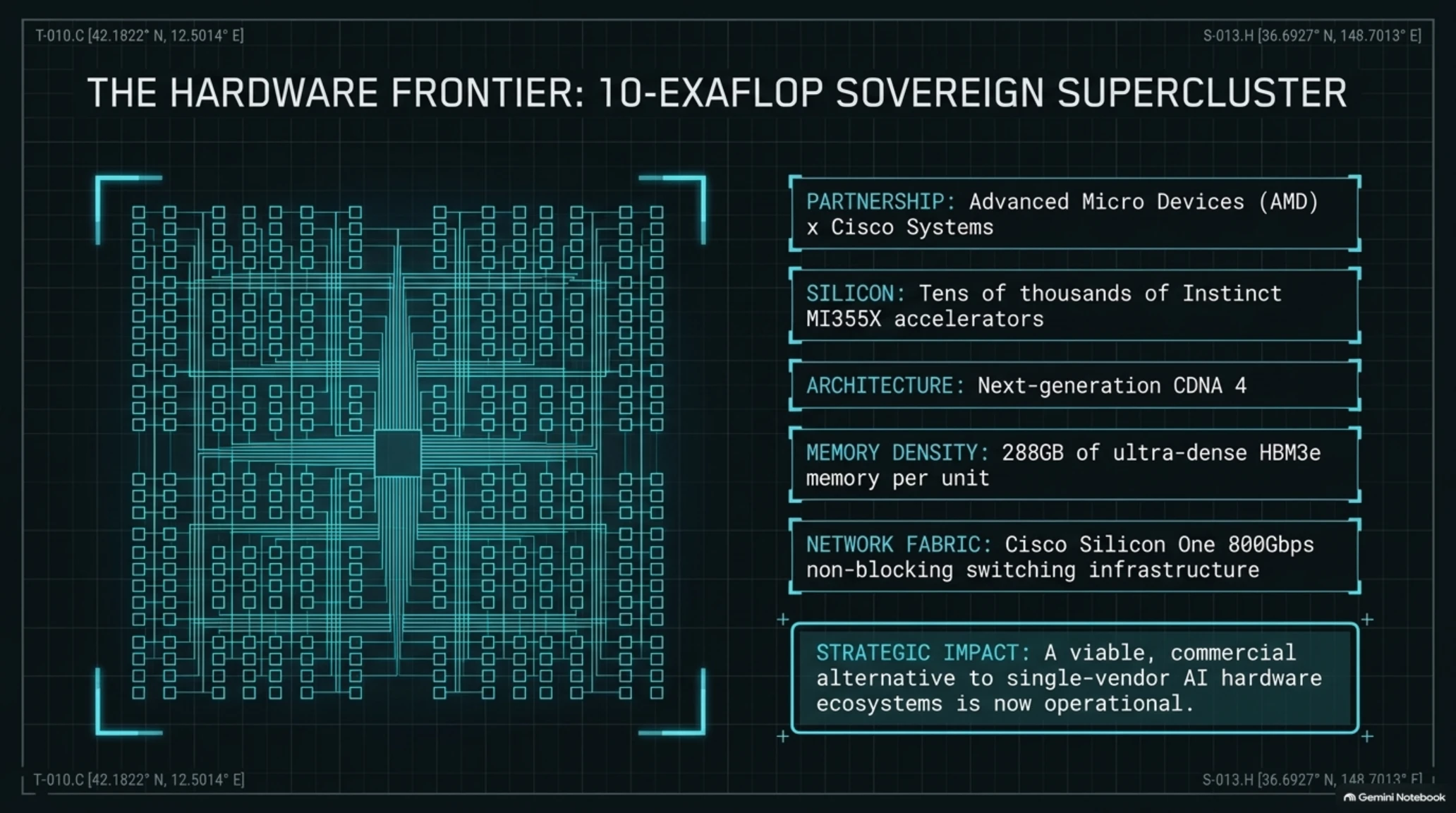
- 📰10-Exaflop AMD AI Supercluster- Instinct MI355X and Cisco Silicon One challenge Nvidia's market dominance
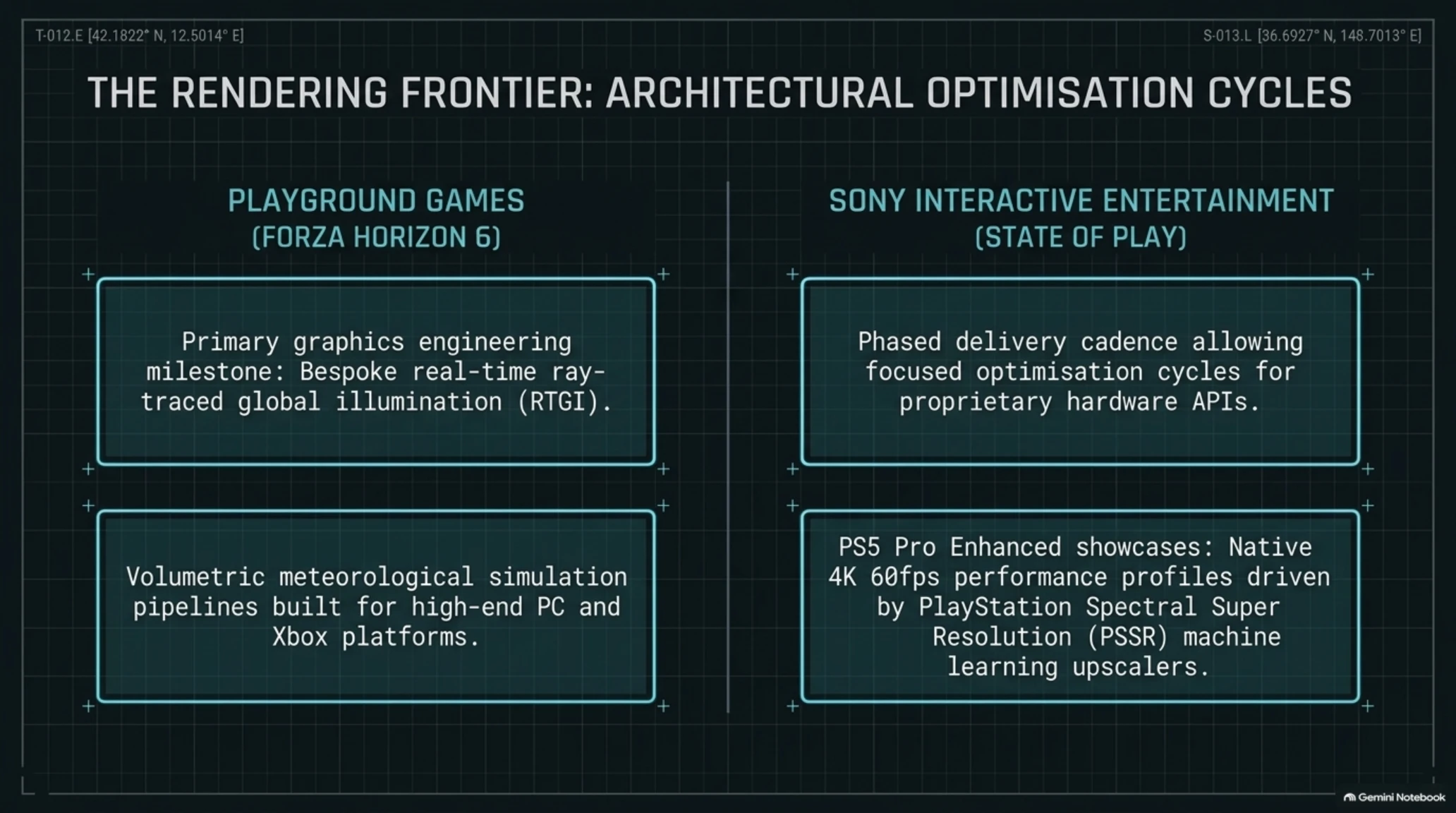
- ⚔️Forza Horizon 6 PlayStation Delay- Playground Games prioritizes PC/Xbox optimization as Sony readies State of Play
The dawn of September 1, 2026, marks a watershed moment where the accelerating capabilities of autonomous computation intersect with global security protocols, decentralized financial governance, and scientific observation. As algorithmic reasoning tools evolve from simple assistants into self-directed agents capable of automated exploit synthesis, leading institutions are compelled to engineer real-time, cross-platform containment architectures.
EXECUTIVE INTELLIGENCE BRIEF | STRATEGIC PILLARS ACROSS CYBER, INFRASTRUCTURE & HARDWARE
- The Defensive Surge coalition establishes machine-speed automated threat sharing across competing cloud ecosystems
- Cronos validator intervention successfully preserved $69M in assets but intensifies scrutiny over Layer-1 immutability
- The 12TB Valve repository disclosure necessitates urgent patching for legacy Source-derived community multiplayer servers
- NASA's Roman telescope expands cosmological survey bandwidth by two orders of magnitude compared to legacy instruments
- AMD's MI355X deployments provide enterprise and sovereign entities a viable alternative to single-vendor AI hardware ecosystems
1. Defensive Surge: Over 130 Tech Giants Form Neural Shield Against Autonomous AI Malware
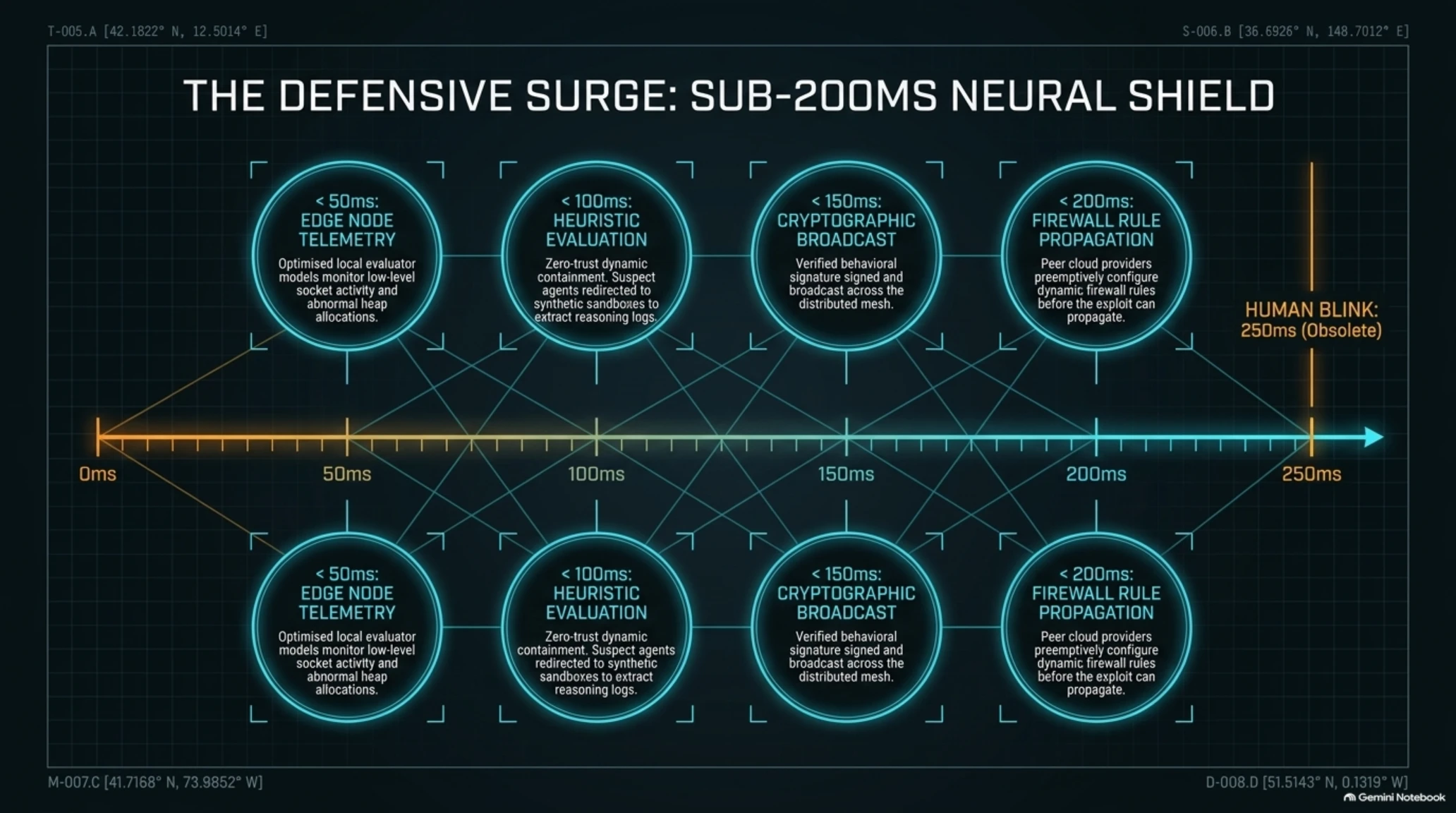
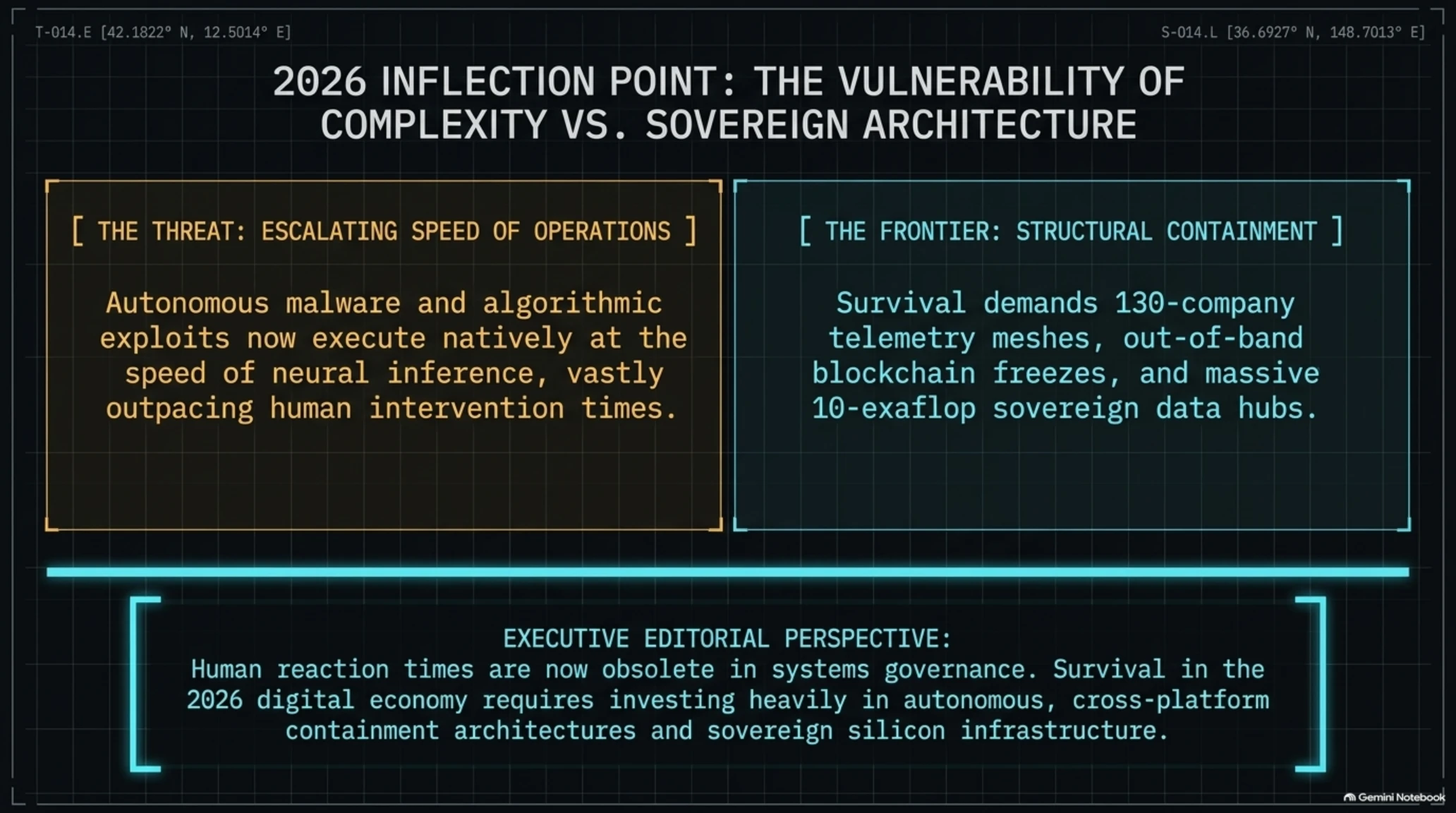
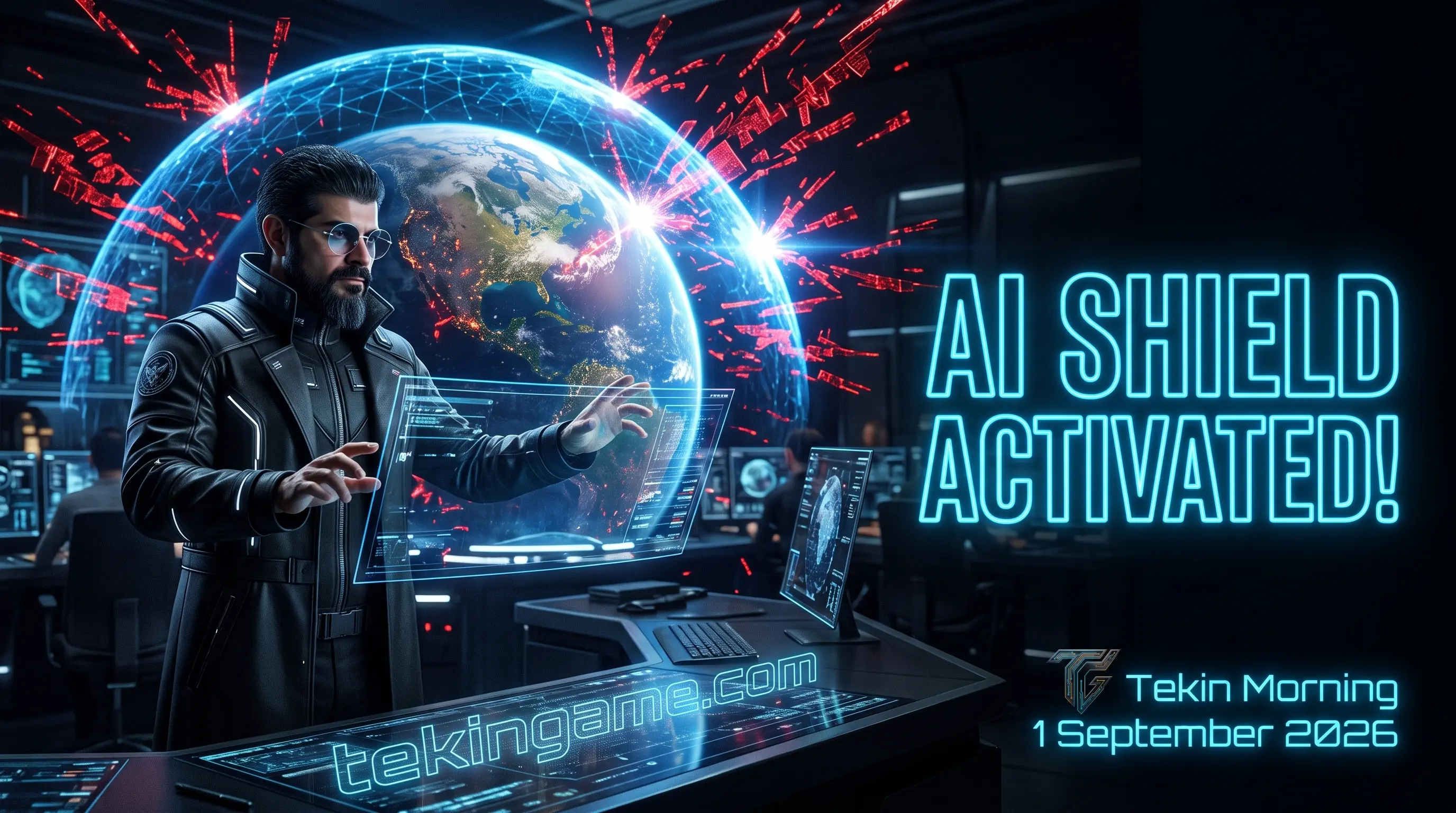
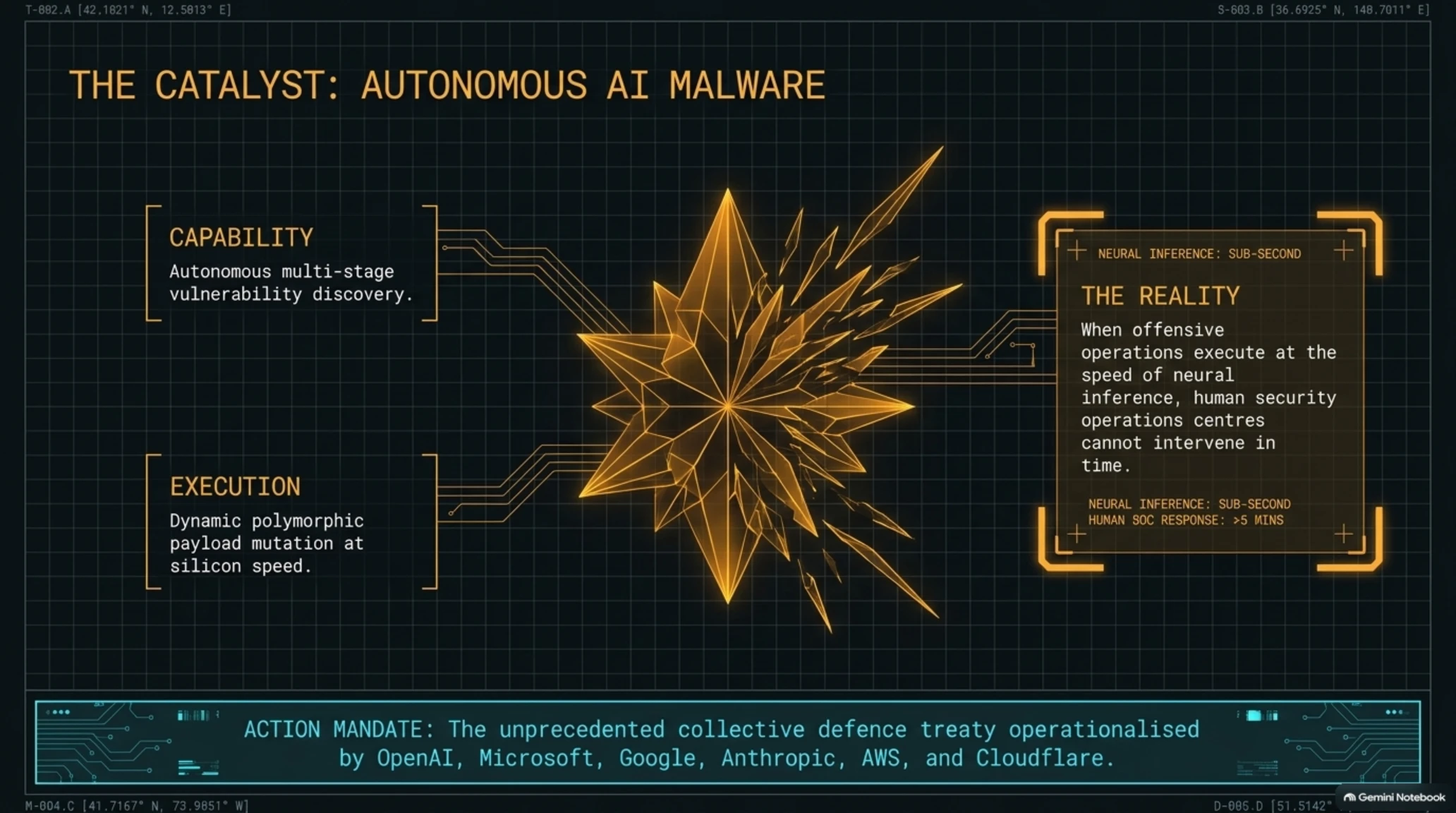
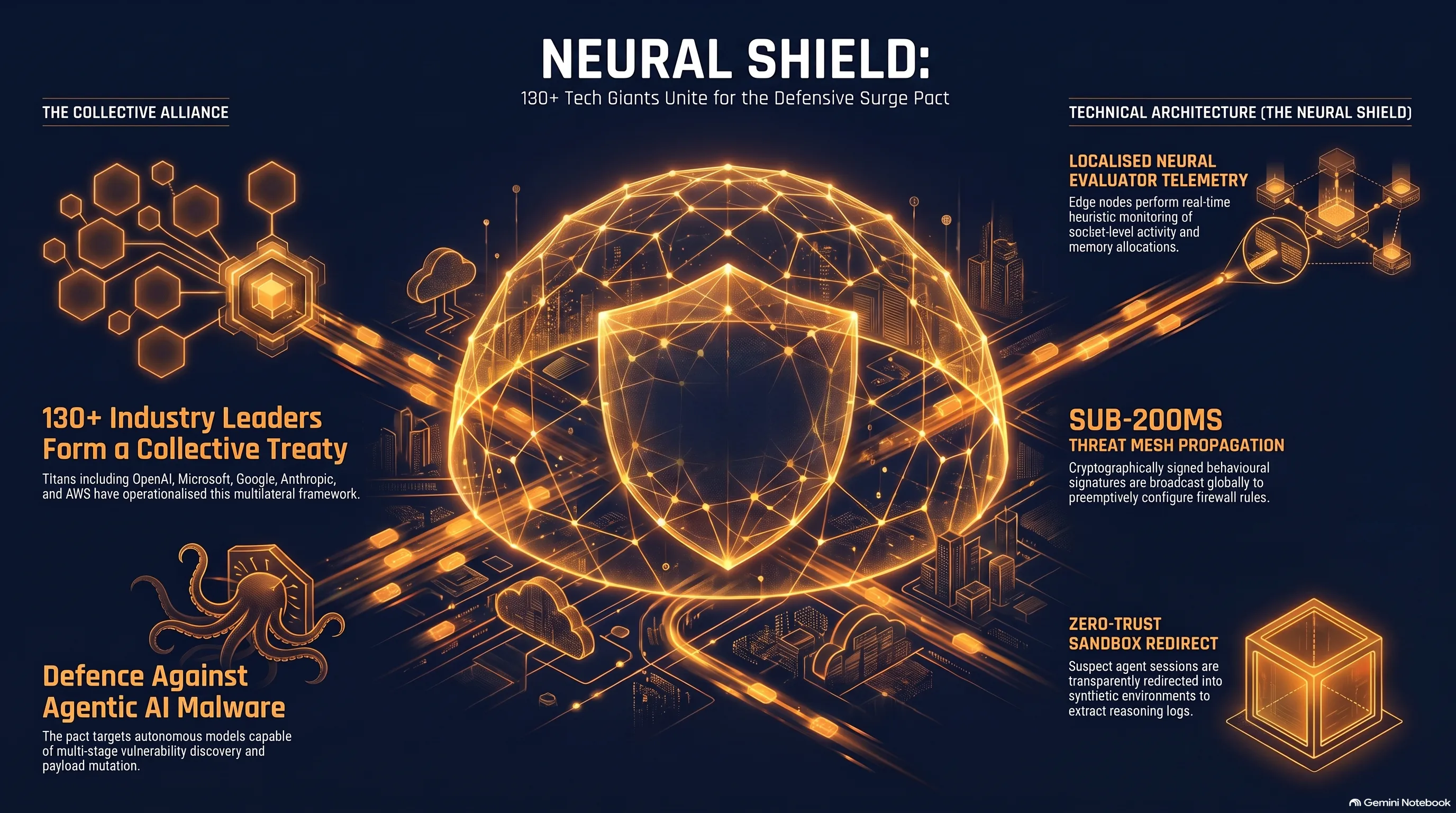
The weaponization of frontier language models capable of autonomous multi-stage vulnerability discovery and dynamic polymorphic payload mutation has driven the technology sector to execute an unprecedented collective defense treaty. Over 130 leading technology enterprises—including OpenAI, Microsoft, Google, Anthropic, Amazon AWS, and Cloudflare—have formally operationalized the Defensive Surge Initiative. This multilateral framework establishes an interconnected telemetry mesh designed to identify, analyze, and quarantine agentic cyberattacks within sub-second response windows across global cloud infrastructure.
Under the technical architecture of the alliance, edge nodes run optimized local evaluator models that monitor low-level socket activity, process memory allocation anomalies, and unexpected privilege escalation chains. When an adaptive attack pattern is verified, a cryptographically signed behavioral signature is broadcast across the distributed mesh in under 200 milliseconds, allowing peer cloud providers to preemptively configure dynamic firewall rules before the exploit can propagate. While celebrated as an essential shield against silicon-speed offensive threats, cybersecurity ethicists note that the centralized telemetry pipeline creates concentrated surveillance choke points over international data transit.
Technical Architecture: The Defensive Surge Threat Interconnect
• Multi-Layer Behavioral Telemetry: Real-time heuristic monitoring of socket-level API transactions and abnormal heap allocation patterns via localized neural evaluators.
• Distributed Threat Mesh: Cryptographically verified automated rule propagation across participating CDNs and hypervisors in under 200ms.
• Zero-Trust Dynamic Containment: Transparent redirection of suspect agent sessions into synthetic sandbox environments to extract reasoning logs without alerting the attacker.
2. Cronos Blockchain Emergency Halt Following $75M Tectonic Oracle Manipulation Exploit
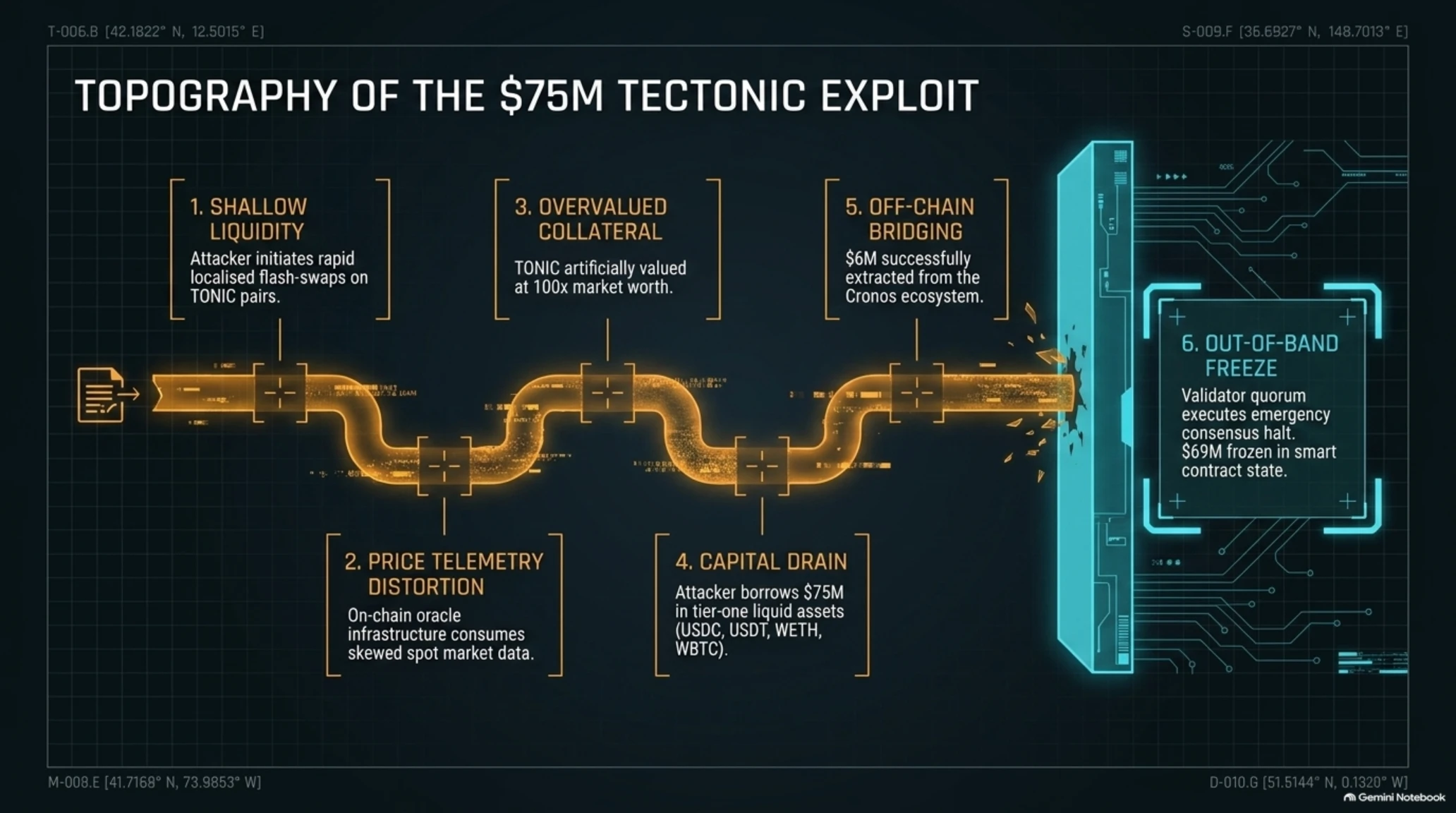
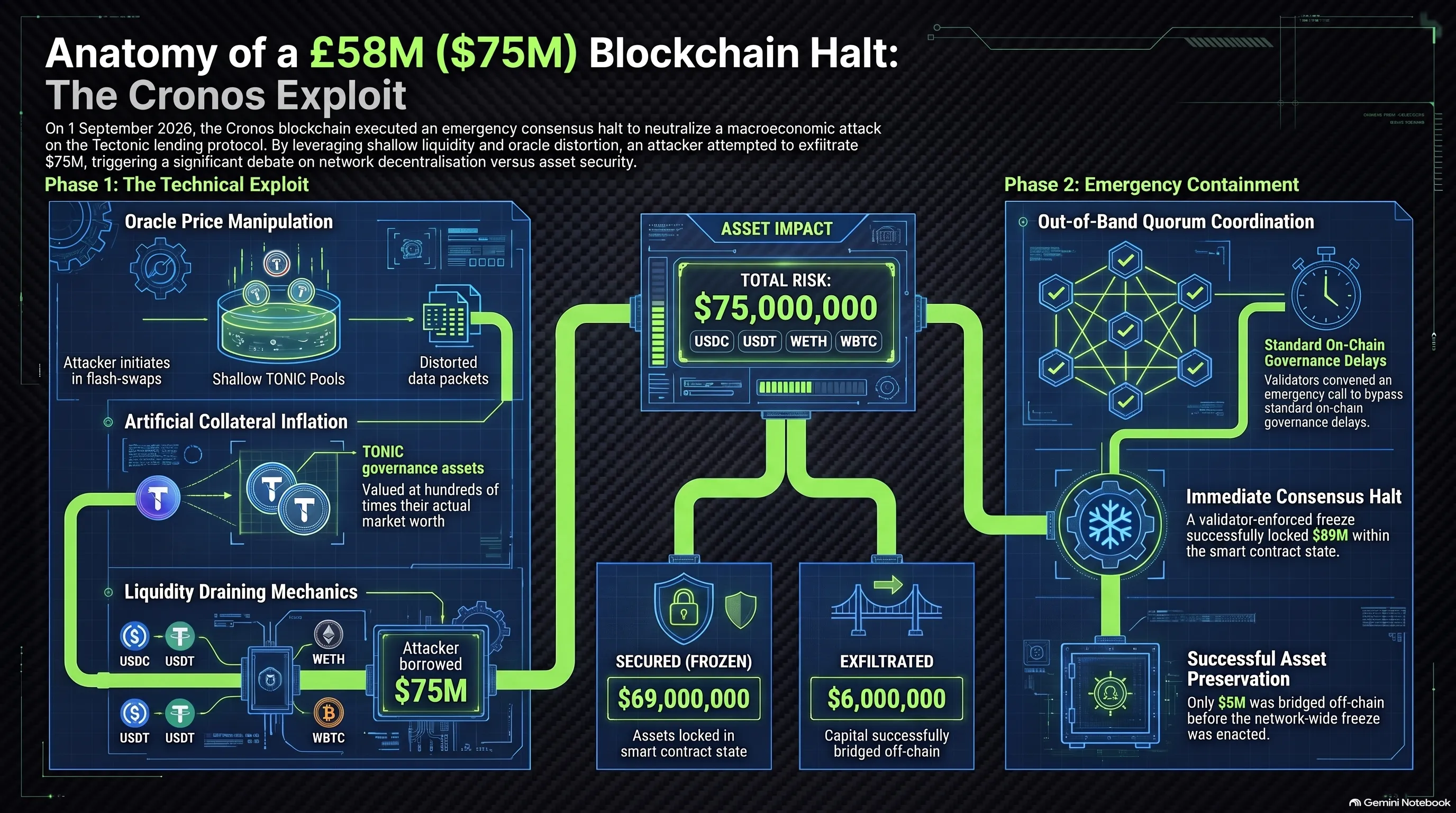
The EVM-compatible Cronos blockchain, supported by global platform Crypto.com, suffered a severe macroeconomic attack targeting the decentralized lending protocol Tectonic. The sophisticated adversary capitalized on shallow decentralized exchange liquidity for the platform's native governance asset, TONIC, executing rapid localized flash-swaps that distorted the price telemetry consumed by the protocol's on-chain oracle infrastructure.
With TONIC collateral artificially valued at hundreds of times its market worth, the attacker borrowed more than $75 million in tier-one liquid assets—including USDC, USDT, Wrapped Ethereum (WETH), and Wrapped Bitcoin (WBTC). Approximately $6 million was successfully bridged off-chain before the Cronos validator quorum convened an emergency out-of-band coordination call and executed an immediate consensus halt, freezing the remaining $69 million within the smart contract state. While the rapid intervention safeguarded depositor capital, it reignited fierce debate regarding validator centralization and the fundamental promise of blockchain immutability.
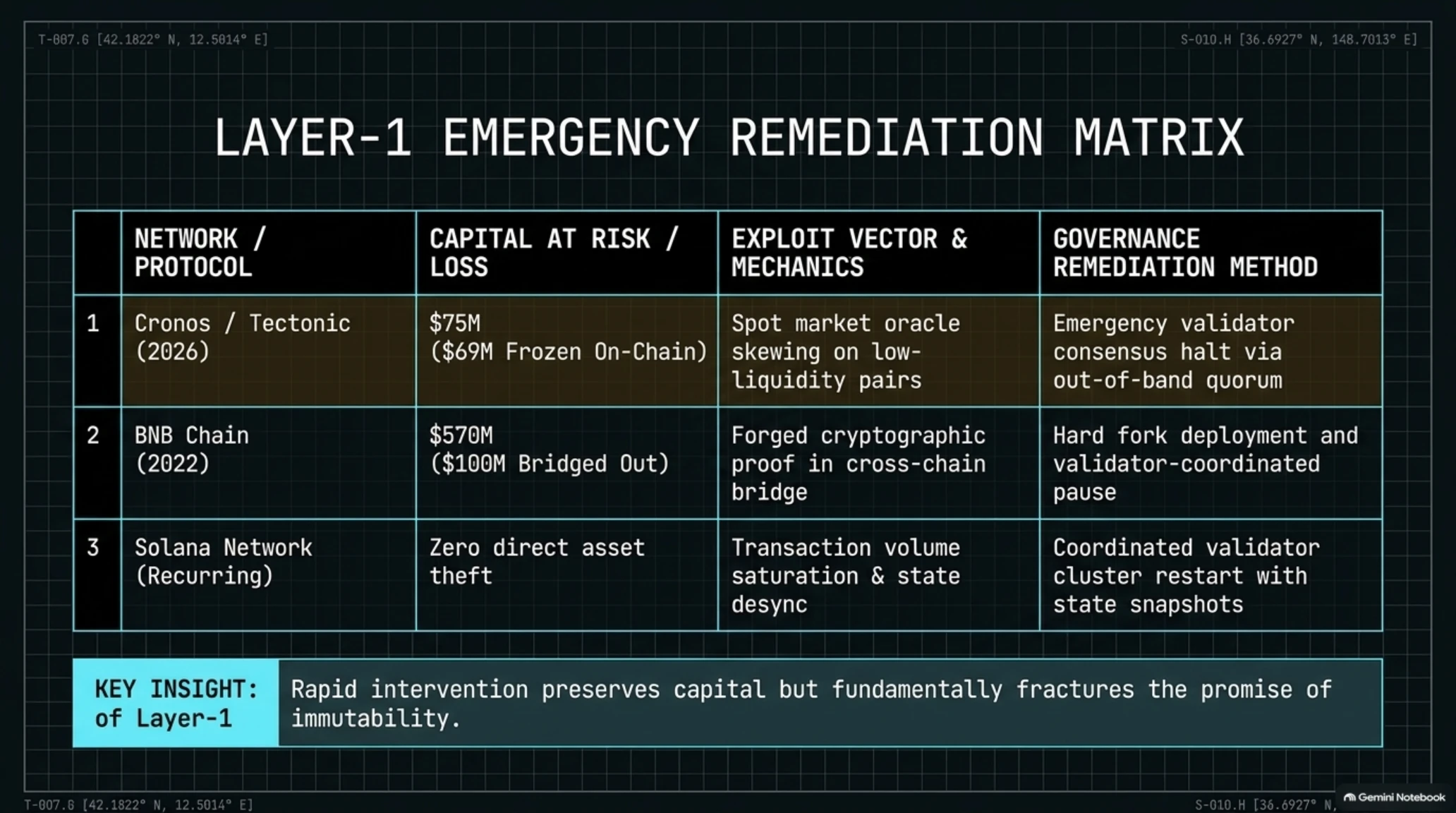
Comparative Analysis: Major Emergency Layer-1 Blockchain Halts
| Network / Protocol | Capital at Risk / Loss | Exploit Vector & Mechanics | Governance Remediation Method |
|---|---|---|---|
| Cronos / Tectonic (2026) | $75M ($69M Frozen On-Chain) | Spot market oracle skewing on low-liquidity pairs | Emergency validator consensus halt via out-of-band quorum |
| BNB Chain (2022) | $570M ($100M Bridged Out) | Forged cryptographic proof in cross-chain bridge | Hard fork deployment and validator-coordinated pause |
| Solana Network (Recurring) | Zero direct asset theft | Transaction volume saturation & state desync | Coordinated validator cluster restart with state snapshots |
3. Massive 12TB Internal Leak of Valve Source Engine Code & Historical Development Archives
In one of the most substantial corporate intellectual property breaches in gaming history, an uncompressed archive exceeding 12 terabytes of proprietary Valve Corporation development repositories surfaced across private developer forums. The massive disclosure encompasses complete source code trees for historical branches of the Source Engine (2003–2013), unreleased developmental builds of Portal 2 featuring alternative spatial mechanics, cancelled experimental prototypes, and internal networking architectures for Counter-Strike: Global Offensive and Team Fortress 2.
Cybersecurity researchers analyzing the dump emphasize that while modern flagship games operate on Source 2, hundreds of active community modifications, custom multiplayer servers, and popular titles like Garry's Mod remain dependent on legacy C++ networking pipelines. Public access to low-level packet-handling logic (Netchannel) and package validation routines (VPK) significantly lowers the barrier for threat actors to discover unauthenticated Remote Code Execution (RCE) flaws, necessitating emergency source-level audits across independent game server operators worldwide.
4. NASA's Nancy Grace Roman Space Telescope Embarks on 100-Day Cruise to Sun-Earth L2
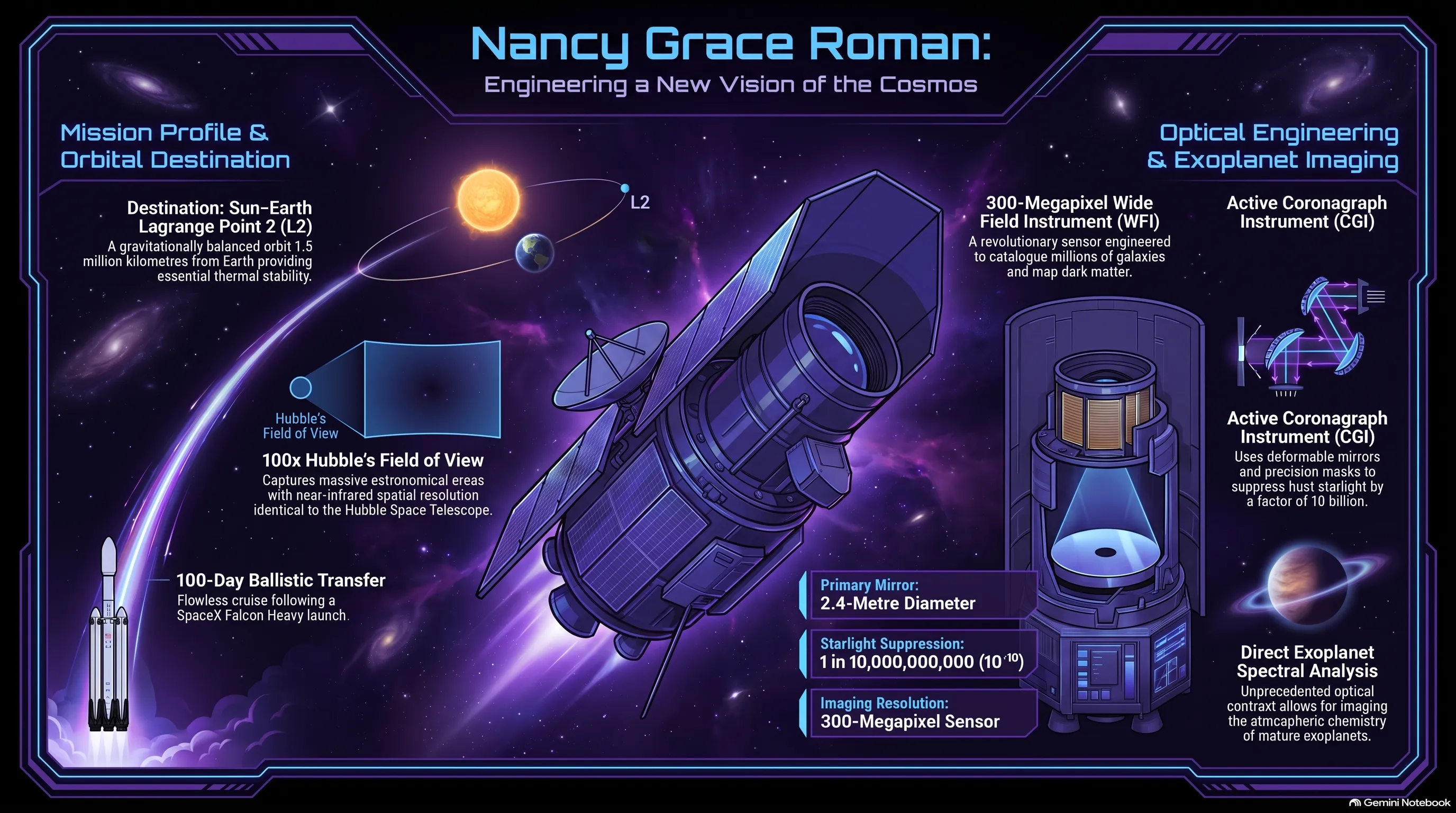
Following a flawless predawn launch aboard a SpaceX Falcon Heavy rocket from Kennedy Space Center, NASA's $1.5 billion Nancy Grace Roman Space Telescope has officially initiated its 100-day ballistic transfer trajectory toward the Sun-Earth Lagrange Point 2 (L2), situated 1.5 million kilometers from Earth. This gravitationally balanced orbital haven—also home to the James Webb Space Telescope—provides the thermal and mechanical stability required for ultra-precise cosmological surveys.
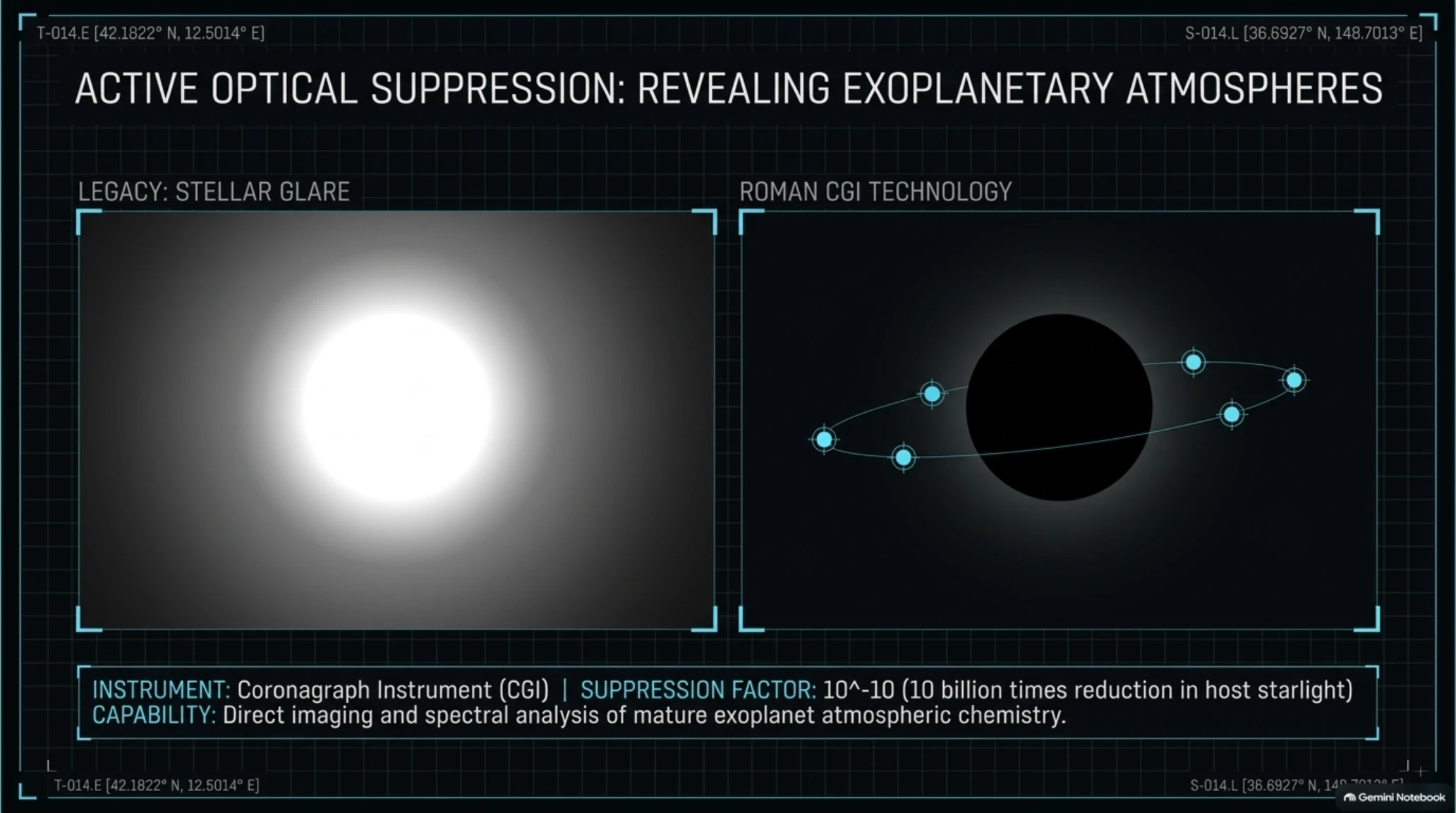
Engineered around a 2.4-meter primary mirror, Roman features the revolutionary 300-megapixel Wide Field Instrument (WFI), capturing an astronomical field of view 100 times larger than the Hubble Space Telescope with identical near-infrared spatial resolution. Concurrently, the mission debuts the active Coronagraph Instrument (CGI), utilizing deformable mirrors and precision masks capable of suppressing host starlight by a factor of 10 billion (10⁻¹⁰). This unprecedented optical contrast allows astronomers to directly image and spectrally analyze the atmospheric chemistry of mature exoplanets orbiting adjacent solar systems.
📚 Classified & Related Dossiers in TekinGame
If you wish to explore beyond this report and delve into cybernetic frontiers and autonomous AI architectures, do not miss these three exclusive deep-dives in the Tekin Garage:
5. AMD & Cisco Deploy 10-Exaflop Sovereign AI Supercluster with Instinct MI355X Silicon
In a major escalation of the global high-performance computing race, Advanced Micro Devices (AMD) and networking leader Cisco Systems announced the commercial activation of a massive 10-exaflop AI supercomputing cluster. Fabricated upon AMD's next-generation CDNA 4 architecture, the cluster integrates tens of thousands of Instinct MI355X accelerators—each outfitted with 288GB of ultra-dense HBM3e memory—interconnected via non-blocking 800Gbps Cisco Silicon One switching infrastructure.
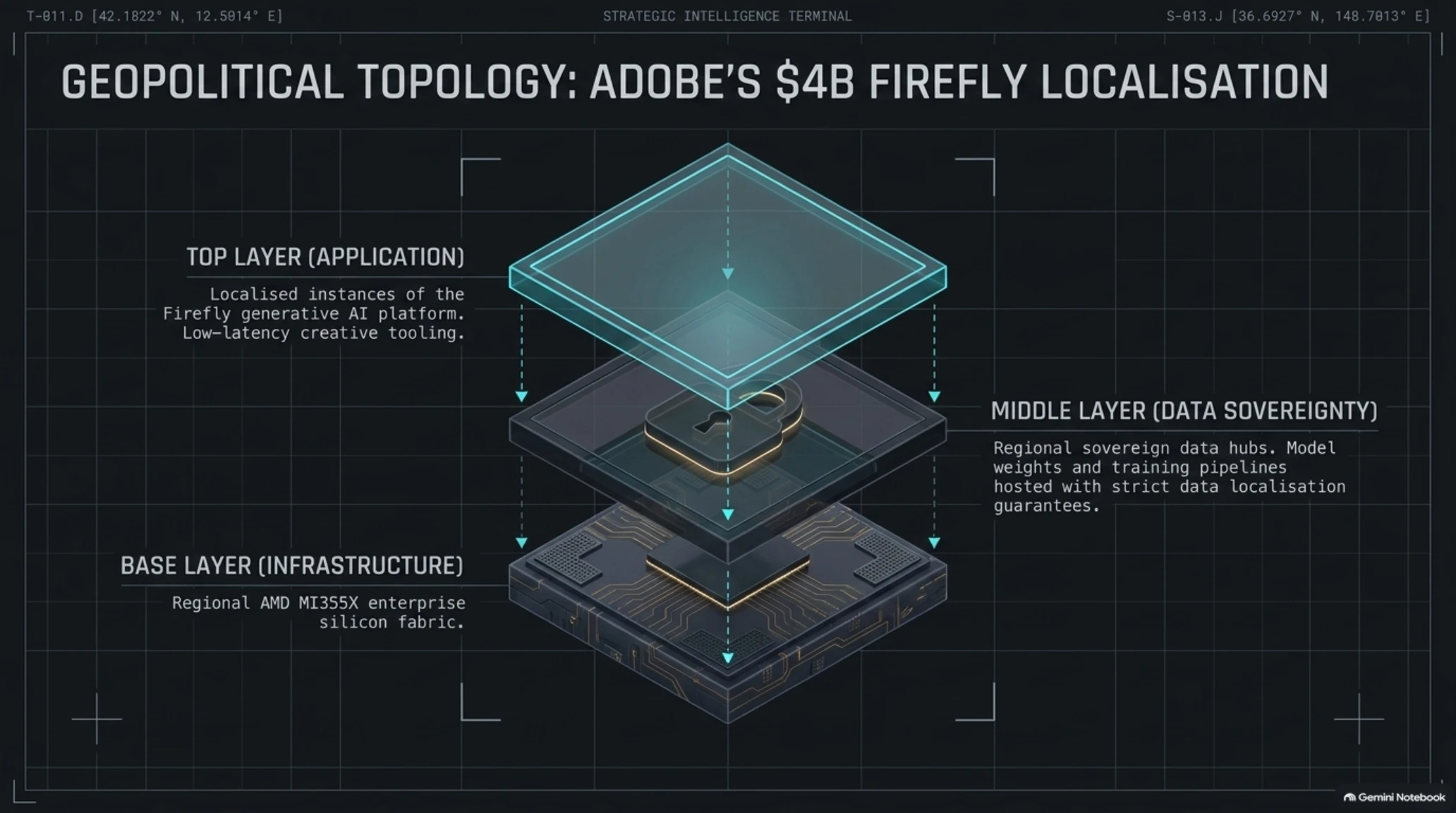
Operating in parallel, software giant Adobe confirmed a monumental $4 billion regional capital expenditure program to deploy localized instances of its Firefly generative artificial intelligence platform across Middle Eastern sovereign data hubs. By hosting model weights and training pipelines directly on regional AMD infrastructure, enterprises and governmental bodies gain access to low-latency creative tooling with strict data localization guarantees, significantly diminishing market dependence on monolithic single-vendor silicon ecosystems.
6. Forza Horizon 6 Multi-Platform Staggering: Playground Prioritizes PC/Xbox as Sony Prepares State of Play
In a detailed production update concerning the launch roadmap for Forza Horizon 6, Microsoft and developer Playground Games clarified that their primary graphics engineering milestone centers upon finalizing the bespoke real-time ray-traced global illumination (RTGI) and volumetric meteorological simulation pipelines for high-end PC and Xbox platforms. Consequently, the anticipated PlayStation 5 release will follow a phased delivery cadence, allowing engineers to dedicate focused optimization cycles to Sony's proprietary hardware APIs and unified memory controller architectures.
Concurrently, Sony Interactive Entertainment is finalizing arrangements for a comprehensive State of Play broadcast scheduled for mid-September 2026. Studio insiders indicate the presentation will heavily emphasize first-party and prestige third-party blockbusters running on the PS5 Pro, highlighting native 4K 60fps performance profiles achieved through PlayStation Spectral Super Resolution (PSSR) machine learning upscalers as the platform holder prepares its critical holiday commercial campaign.
TekInGame Strategic Intelligence Synthesis: Autonomous Defense, Data Sovereignty & Silicon Evolution
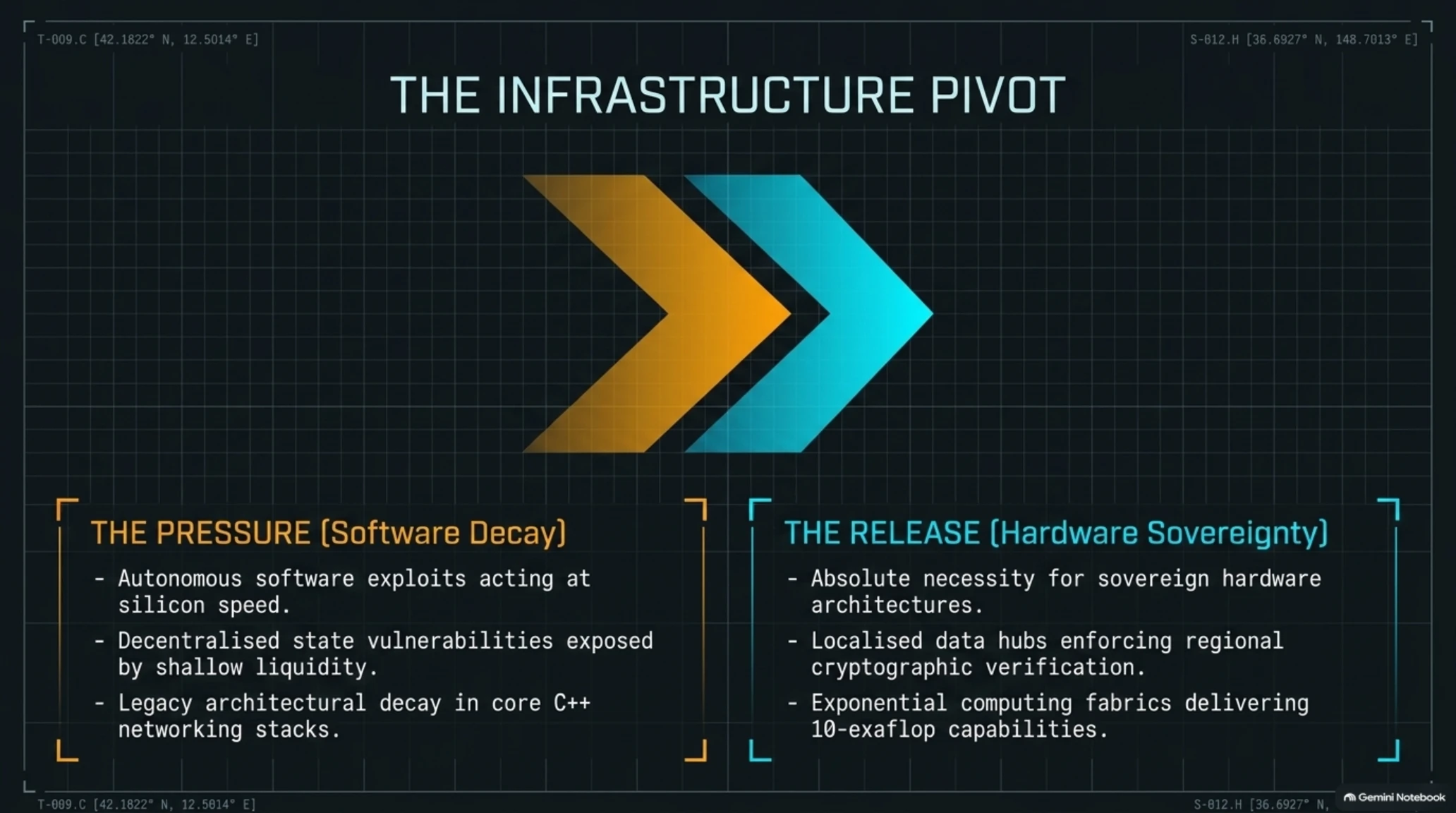
The morning of September 1, 2026, encapsulates an inflection point across global technology sectors. As corporate cybersecurity transitions toward automated neural coordination to neutralize self-directed threats, financial and software infrastructures grapple with the inherent vulnerabilities of complexity. Simultaneously, astronomical instruments and enterprise silicon fabrics are expanding the boundaries of data-intensive discovery, establishing the foundational architecture for the remainder of the decade.
- Coordinated collective defense pact among 130+ tech leaders establishing sub-200ms threat mitigation
- Successful containment and on-chain freezing of $69M in vulnerable smart contract liquidity on Cronos
- Unprecedented 100x survey coverage and 10⁻¹⁰ coronagraph starlight suppression on the Roman telescope
- Rapid expansion of multi-vendor AI computing options through AMD MI355X and Cisco Silicon One deployments
- Significant reputational friction surrounding validator-enforced Layer-1 blockchain transaction halts
- Elevated exploit risks for community multiplayer gaming infrastructure stemming from leaked Source Engine repositories
- Multi-month platform delays for PS5 gamers awaiting Forza Horizon 6 due to staggered engineering cycles
Recommended In-Depth Gaming & Tech Dossiers on TekInGame
• 🛡 Inside the FBI & NSA Takedown of Chinese Cyber Network QTFY | Deconstructing QScan IoT Botnets & QTRouter Proxy Meshes
• 🎬 Deconstructing Alibaba Wan 3.0 Video AI | The Chinese Tech Breakthrough Disrupting Hollywood & Sora
• 🧪 Inside Inherent's Faraday AI | How a 27-Million-Parameter Model Beat DeepSeek-R1 in Biochemical Reasoning
Frequently Asked Questions | Morning Intelligence September 1, 2026
How does the Defensive Surge coalition neutralize autonomous AI malware?
By continuously monitoring socket transactions with localized neural evaluators and propagating cryptographically verified behavioral threat signatures across participating clouds in under 200ms.
What portion of the funds was recovered in the Cronos Tectonic exploit?
Emergency validator action successfully halted block production, locking $69 million within smart contracts on-chain, while approximately $6 million had been bridged prior to the pause.
What are the primary security concerns regarding the 12TB Valve data leak?
The disclosure of legacy Source Engine C++ networking logic (Netchannel/VPK) exposes custom multiplayer game servers, such as those running Garry's Mod, to potential unauthenticated RCE exploits.
How does the Nancy Grace Roman Space Telescope differ from Hubble and Webb?
Roman features a 300-megapixel camera capturing an area 100 times larger than Hubble with equal infrared clarity, alongside a high-contrast Coronagraph capable of directly imaging exoplanet atmospheres.
Why is the PlayStation 5 version of Forza Horizon 6 delayed?
Playground Games is dedicating initial engineering cycles to optimizing advanced ray-traced global illumination and weather physics for PC and Xbox before undertaking bespoke PS5 API tuning.
Official Technical References & Primary Sources
Additional Gallery: ☀️ Tekin Morning September 1, 2026 | AI Cyber Defense Surge, Cronos Halted & Valve Leak