☀️ Tekin Morning | Monday August 17, 2026
From Sony's aggressive PS5 shovelware purge and Sledgehammer's canned Halo prototype to OpenAI disbanding its risk team and French tax data breaches.
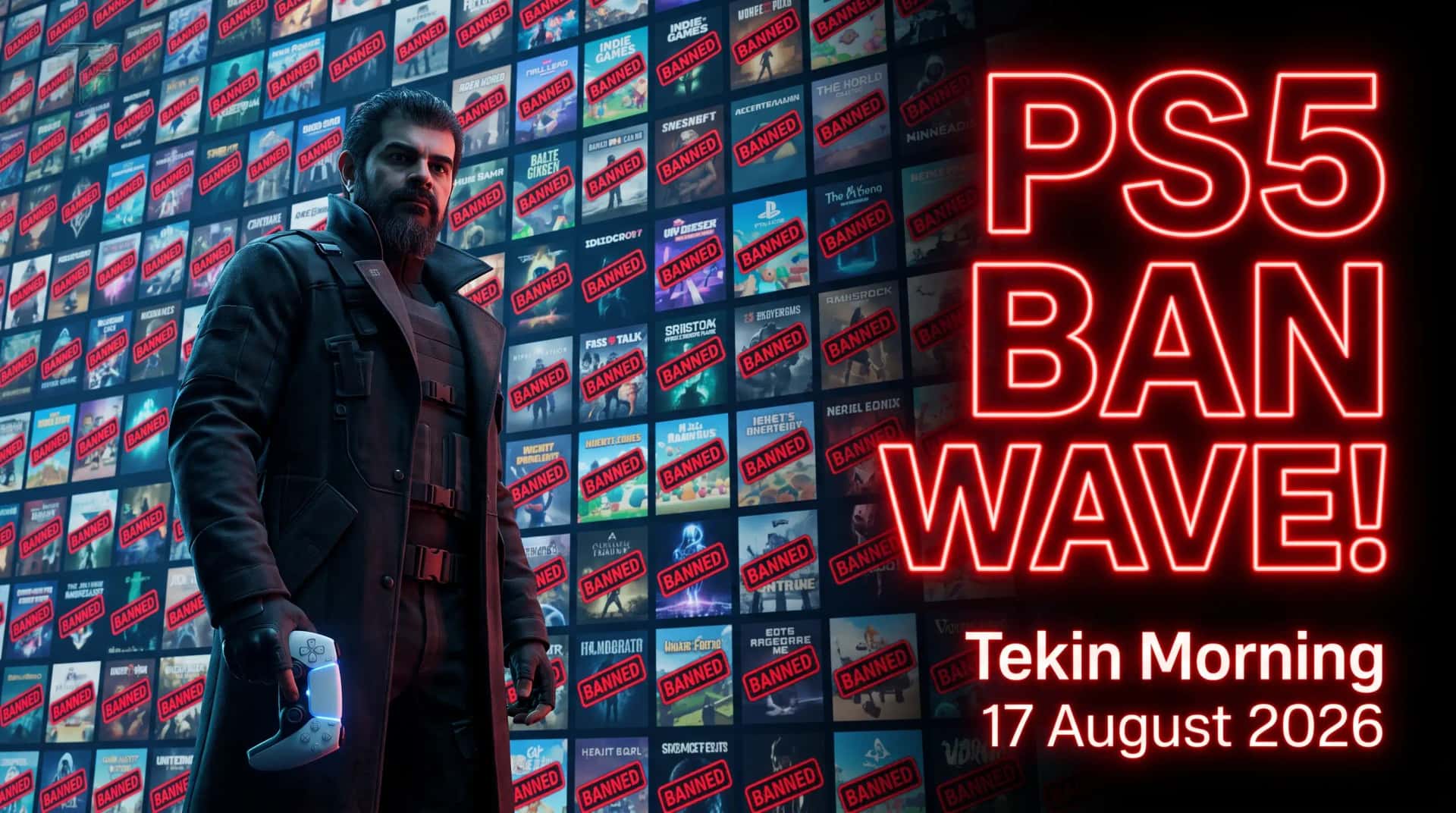
- 🎮PS5 Shovelware Purge- Legitimate indie devs caught in ban wave
- 🎧Canceled Halo Prototype- Sledgehammer's secret 3rd-person shooter
- 🚀OpenAI Preparedness Team- Catastrophic risk division disbanded
- 🗡️French Tax Authority Breach- 678,000 citizens compromised in raid
- 📰SafePal Store Leak- 40,000 hardware buyer addresses exposed
- ⚔️Fortnite x Roblox Collab- Historic cross-metaverse bridge
Welcome to this week's opening morning edition of Tekin Morning for Monday, August 17, 2026. As the international technology and gaming sectors commence a high-stakes business week, an extraordinary wave of platform policy fallout, classified prototype disclosures, cybersecurity breaches, and corporate restructurings has gripped the headlines. From Sony's automated PS5 shovelware purge inadvertently banning legitimate indie studios to secret revelations of a canceled third-person Halo title built by Call of Duty developers, this morning's briefing is packed with decisive intelligence.
In this comprehensive analytical report, the Tekin Game editorial board examines the six defining stories of the morning, providing rigorous technical breakdowns and strategic industry forecasts.
Core Takeaways of Tekin Morning August 17, 2026
- Sony's automated PlayStation Store shovelware sweep triggering unintended ban waves against legitimate indie studios
- Confidential documentation exposing Sledgehammer Games' canceled third-person multiplayer Halo prototype
- OpenAI leadership officially disbanding its internal Preparedness Team tasked with monitoring catastrophic AI risks
- French national tax authorities confirming a major cyber breach compromising personal data across 678,000 citizens
- Hardware wallet manufacturer SafePal disclosing an e-commerce plugin exploit exposing 40,000 physical customer shipping addresses
- Epic Games and Roblox entering advanced technical negotiations to establish cross-platform metaverse asset interoperability
Sony's Aggressive PS5 Shovelware Purge Inadvertently Hits Legitimate Indie Developers
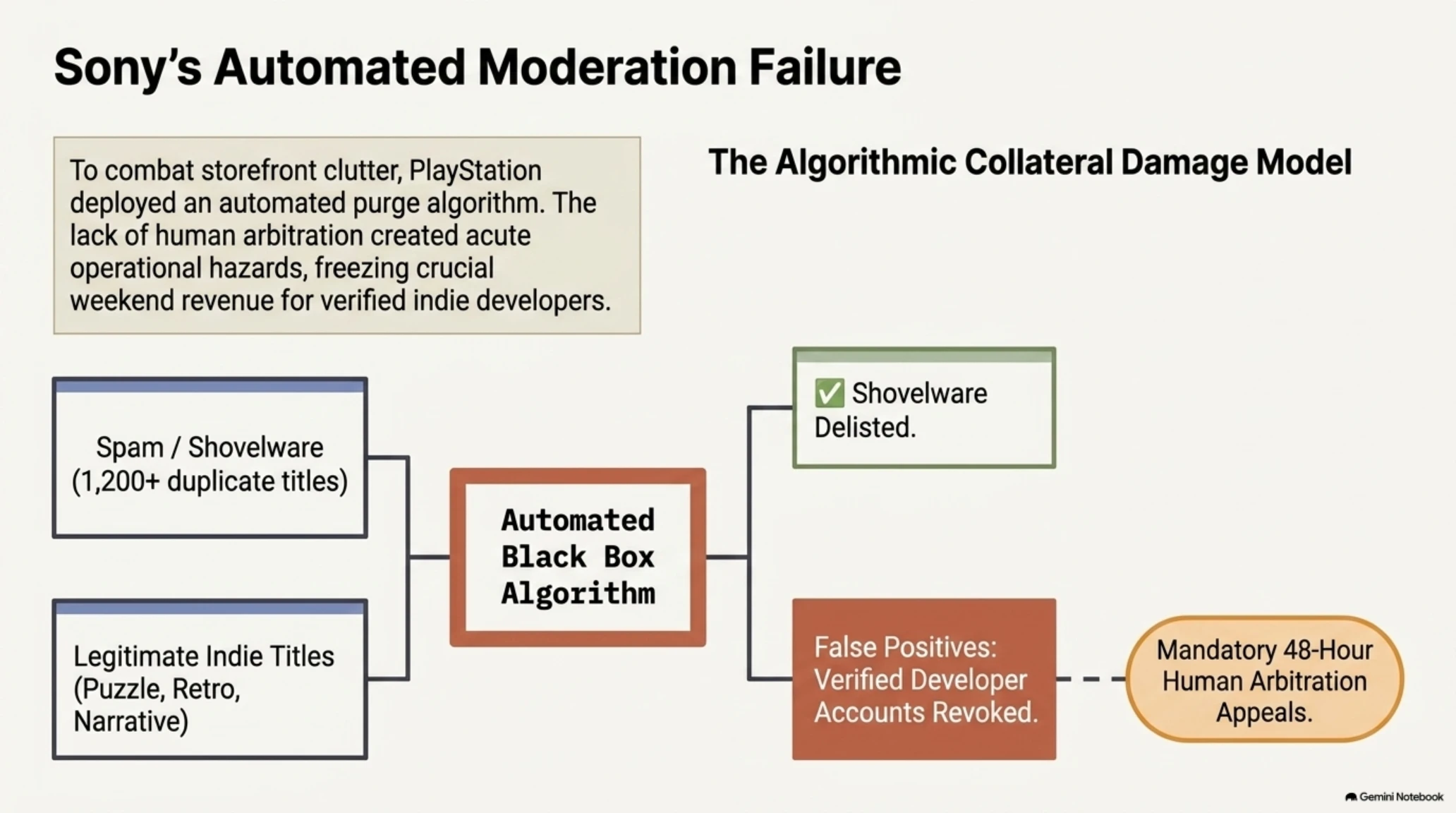
Responding to years of mounting community criticism regarding the proliferation of clone titles, asset-flips, and trivial "instant platinum" trophy games across the PlayStation Store, Sony Interactive Entertainment deployed an automated platform-wide content purging algorithm. However, reports emerging across developer forums and industry trackers reveal that the automated enforcement sweep has inadvertently unlisted legitimate, highly polished indie releases and suspended verified developer developer accounts.
According to an investigative report by Push Square, small independent studios producing minimalist puzzle games, retro pixel platformers, and experimental narrative experiences found their products misclassified as commercial shovelware. With developer portal access abruptly revoked without human prior warning, affected studios faced severe revenue disruptions during crucial weekend launch windows.
Key technical friction points and industry ramifications include:
- Purging over 1,200 asset-flip clones and duplicate trophy farming titles from global PlayStation Store regional storefronts
- Severe backlash from European indie developer associations demanding mandatory human review before executing automated delistings
- Heightened uncertainty among grassroots creators navigating algorithmic submission guidelines on PS5 and PS5 Pro
- Sony issuing formal statements pledging immediate 48-hour manual appeals and reinstatement pipelines for verified creators
- Competing storefronts like Valve's Steam reinforcing their reputation as more stable, creator-friendly publishing ecosystems
This controversy demonstrates that automated content moderation lacking human oversight poses acute operational hazards to creative digital ecosystems.
Industry analysts emphasize that establishing transparent human arbitration panels remains the only viable long-term solution for console storefront curation.

Grassroots developer sentiment indices recorded sharp spikes in platform risk awareness following the weekend automated ban wave.

The comparative table below evaluates storefront curation frameworks, error rates, and appeal mechanisms across major gaming distribution platforms.
Comparative Analysis of Digital Storefront Curation & Shovelware Policies
| Digital Storefront & Platform Operator | Spam / Shovelware Detection Engine | Indie False-Positive Ban Frequency | Arbitration Workflow & Appeal Response Time |
|---|---|---|---|
| PlayStation Store (Sony Interactive) | Automated Metadata & Code Volume Filters | Estimated 8.5% (Severe in recent sweep) | Post-Ban Support Ticket Queues (48-72h) |
| Steam Store (Valve Corporation) | Community Algorithmic Flags & Direct Review | Under 1.2% on Direct Administrative Delistings | Transparent Steamworks Direct Appeal Hub |
| Xbox Games Store (Microsoft) | Rigorous Pre-Release Manual Certification | Near 0% (Slower Initial Ingestion Pipeline) | Dedicated Developer Account Manager Support |
| Nintendo eShop (Nintendo) | Hybrid License Verification & User Flagging | Estimated 3.0% on Minimalist Micro-Games | Centralized Regional Publisher Relations Teams |
| Epic Games Store (Epic Games) | Curated Hand-Picked Storefront Onboarding | 0% (Strict Closed Ecosystem Publishing) | Direct Partner Account Executive Management |
Tekin Game will track the ongoing reinstatement of wrongfully delisted independent studios throughout the week.
Sledgehammer Games' Secret Canceled Halo Prototype: The Third-Person Tactical Shooter That Never Shipped
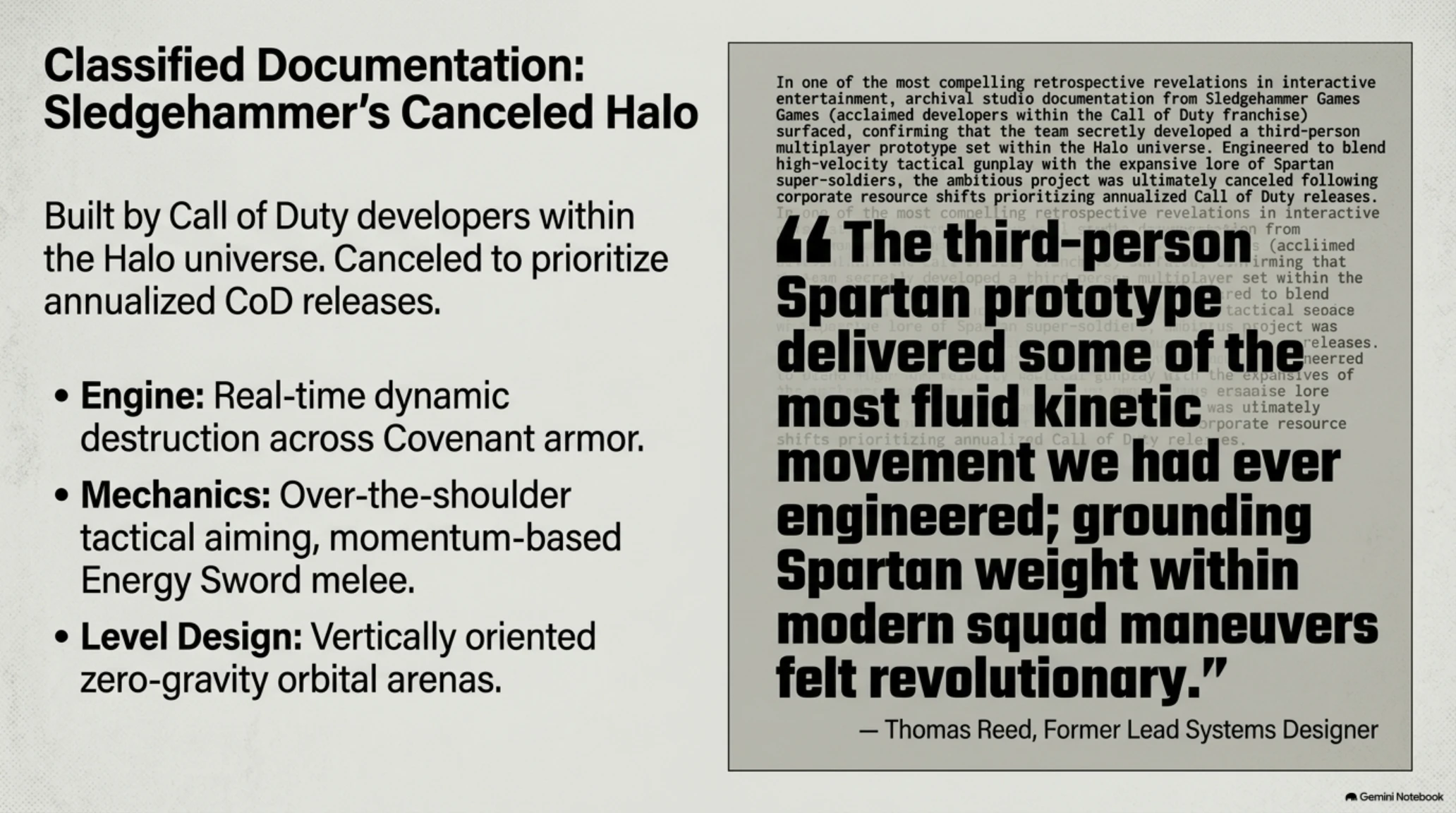
In one of the most compelling retrospective revelations in interactive entertainment, archival studio documentation from Sledgehammer Games (acclaimed developers within the Call of Duty franchise) surfaced, confirming that the team secretly developed a third-person multiplayer prototype set within the Halo universe. Engineered to blend high-velocity tactical gunplay with the expansive lore of Spartan super-soldiers, the ambitious project was ultimately canceled following corporate resource shifts prioritizing annualized Call of Duty releases.
According to investigative reporting by Eurogamer, the vertical slice incorporated dynamic cover mechanics, real-time Spartan armor customization during combat skirmishes, and physics-driven micro-thruster aerial mobility—gameplay innovations that subsequently informed modern sci-fi shooter conventions across the industry.
Declassified design highlights from the canceled prototype include:
- Leveraging Activision's proprietary rendering engine to compute real-time dynamic destruction across Covenant armor plating
- Designing vertically oriented zero-gravity orbital multiplayer arenas built for squad-based objective gameplay
- Seamlessly integrating over-the-shoulder tactical aiming with heavy, momentum-based Energy Sword melee combat
- Abrupt termination of development following executive directives reallocating all engineering staff to the Modern Warfare pipeline
- Renewing industry speculation regarding Microsoft potentially licensing spin-off Halo titles to veteran Activision studios in coming years
This disclosure highlights the rich, untapped mechanical potential residing within the Halo intellectual property beyond traditional first-person frameworks.

The excerpted reflection below from a former Sledgehammer senior systems designer captures the creative vision behind the secret prototype.
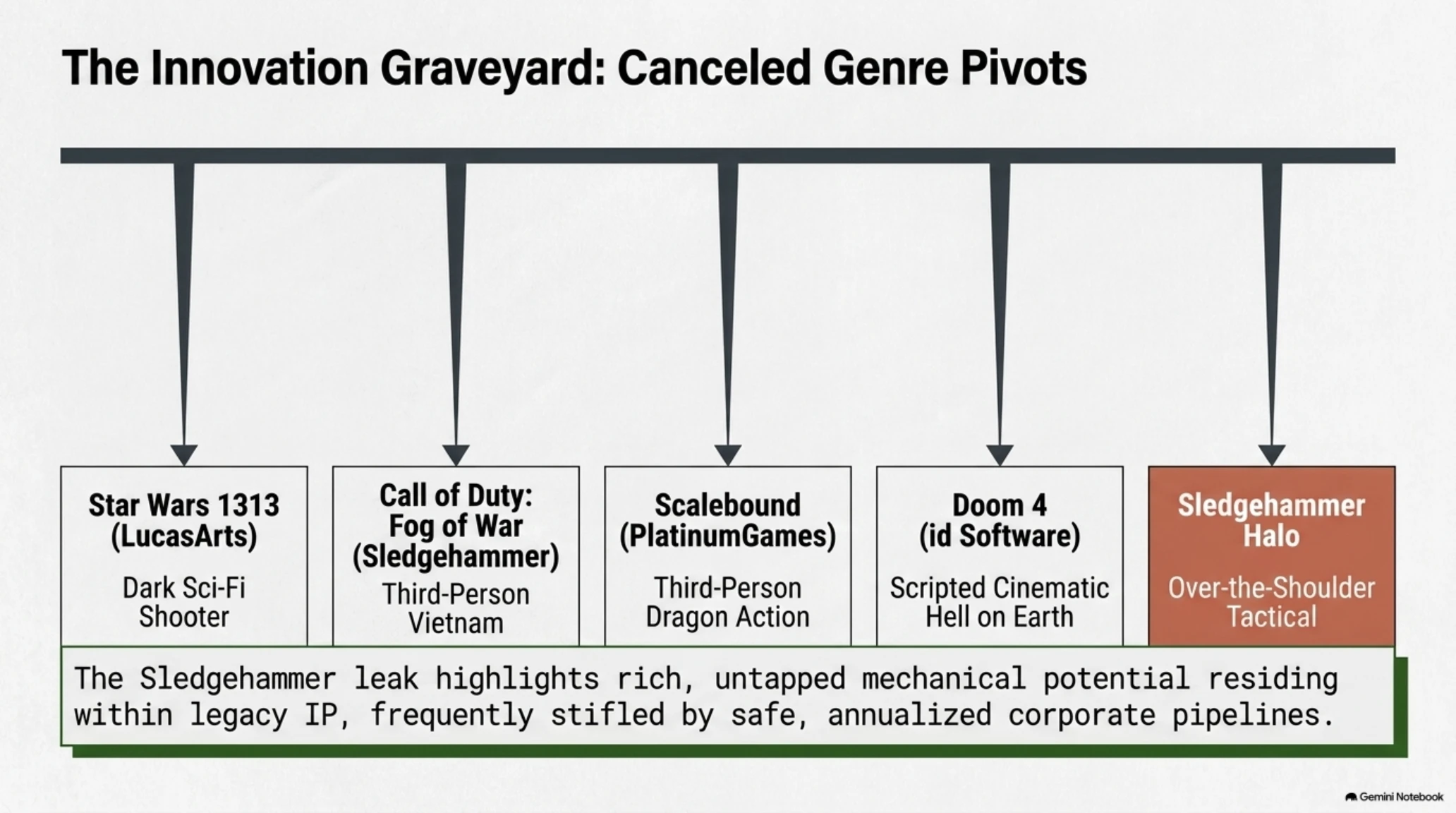
The comparative timeline table below charts milestone canceled shooter prototypes alongside major franchise genre pivots over the past two decades.
Chronological Timeline of Landmark Canceled Prototypes & Genre Experiments
| Year & Milestone Canceled Project | Primary Development Studio | Core Camera Perspective & Kinetic Mechanics | Cancellation Catalyst & Industry Legacy |
|---|---|---|---|
| Third-Person Halo Multiplayer Prototype | Sledgehammer Games (Activision) | Over-the-Shoulder Tactical Spartan Combat | Resource Reallocation to Modern Warfare Pipeline |
| Star Wars 1313 Dark Sci-Fi Shooter | LucasArts Internal Studio | Cinematic Cover-Based Bounty Hunter Combat | Studio Closure Following Disney Lucasfilm Buyout |
| Call of Duty: Fog of War (Vietnam) | Sledgehammer Games (Activision) | Third-Person Psychological Jungle Warfare | Team Reassigned to Co-Develop Modern Warfare 3 |
| Scalebound Dragon-Companion Action | PlatinumGames (Microsoft Studios) | Third-Person Action RPG with Scale Mechanics | Engine Inefficiencies & Multiplayer Bottlenecks |
| Doom 4 (Hell on Earth Cinematic Port) | id Software (Bethesda Softworks) | Scripted Cinematic Urban Military Shooter | Complete Creative Reboot Producing DOOM (2016) |
Below is Tekin Game's visual breakdown and technical video coverage analyzing the leaked Spartan armor models and mechanical schematics.
To assist readers with specialized game design paradigms, algorithmic storefront terms, and cybersecurity frameworks, the definitions box below details core concepts.
Technical Jargon Buster & Core Concepts
| Term / Concept | Definition & Industry Impact |
|---|---|
| Shovelware & Asset-Flip Games | Low-effort digital titles mass-produced using stock assets purely to exploit storefront algorithms or sell easy trophies. |
| Canceled Milestone Prototype | A functional early software build created to validate gameplay mechanics for publishers that never proceeds to full production. |
| AI Preparedness & Catastrophic Risk | Institutional risk protocols evaluating extreme frontier AI hazards including automated cyberwarfare and biological weapon synthesis. |
| Why this matters | Evaluating Rumor vs. Reality regarding Sony's developer policies and the future of the Halo franchise on Tekin Game. |
OpenAI Disbands Internal Catastrophic Risk Preparedness Team Amid Commercial Restructuring
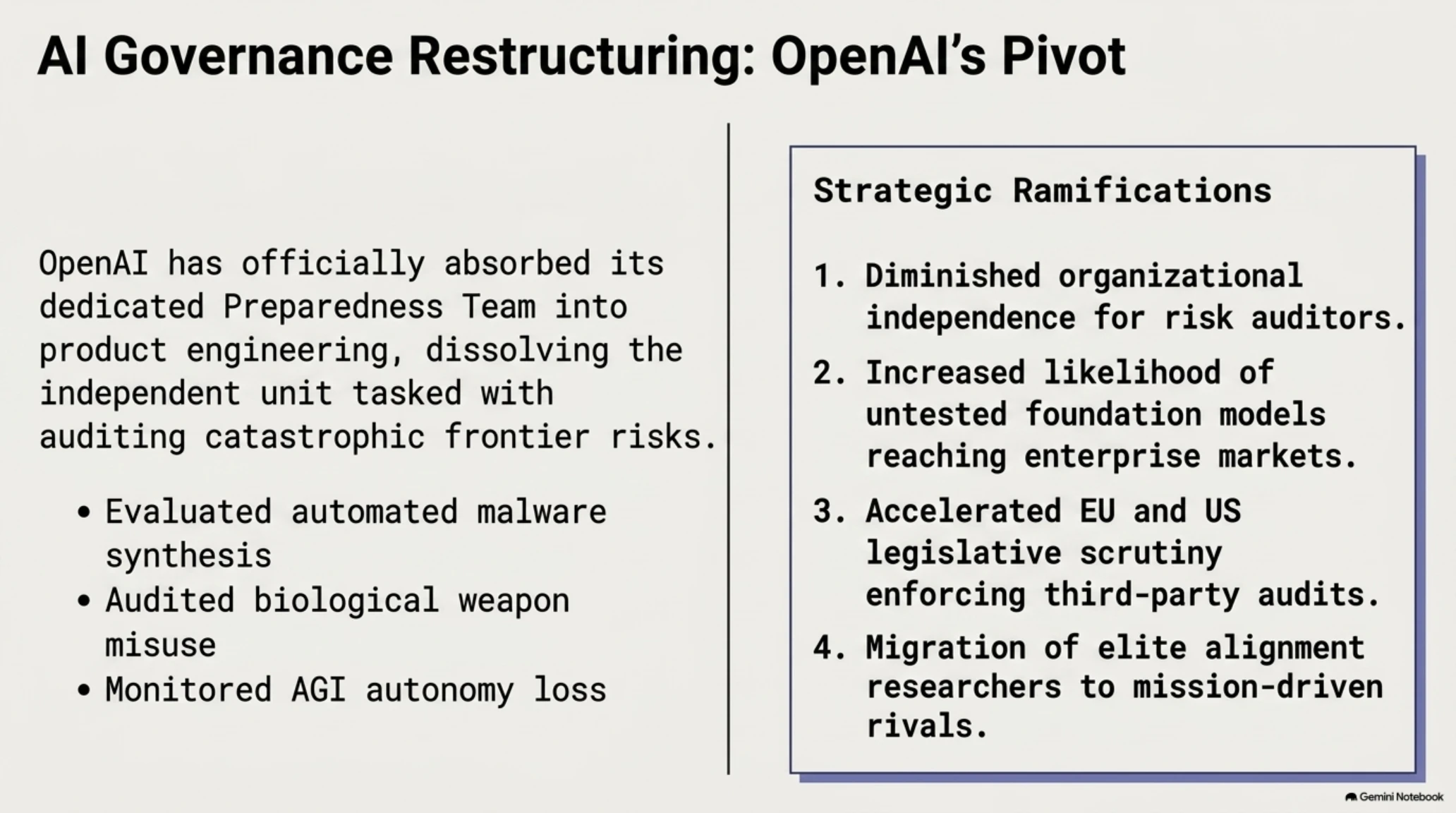
In a major structural reorganization across the artificial intelligence landscape, The Verge reported that frontier model developer OpenAI has officially disbanded its dedicated Preparedness Team. Established late last year to systematically audit extreme catastrophic risks—including automated malware synthesis, biological weapon misuse, and autonomy loss in Artificial General Intelligence (AGI) systems—the unit has been dissolved and its researchers absorbed into product engineering divisions.
The dissolution follows a succession of high-profile departures by senior alignment researchers, sparking intense debate among academic institutes and safety watchdogs who argue that commercial monetization and rapid deployment of frontier models like GPT-5 are taking precedence over existential risk oversight.
Strategic industry consequences of dismantling independent safety divisions include:
- Diminishing the organizational independence of risk audit teams within commercial AI enterprises
- Increasing the likelihood of untested foundation models reaching enterprise markets without exhaustive stress-testing
- Accelerating legislative scrutiny across the European Union and US Congress to enforce mandatory third-party audits
- Migration of elite safety researchers toward mission-driven competitors such as Anthropic and academic research labs
- Intensifying public discourse regarding unregulated AI capabilities in corporate and military operational domains
This restructuring underscores the growing tension between rapid venture-backed commercial scaling and institutional safety governance.

The comparative table below details organizational risk governance models and safety team autonomy across premier frontier AI labs.
Comparative Analysis of Safety Governance & Risk Audit Frameworks in Frontier AI Labs
| AI Enterprise & Model Ecosystem | Dedicated Safety / Audit Division | Current Operational Status & Autonomy Level | Primary Focus in Catastrophic Risk Mitigation |
|---|---|---|---|
| OpenAI (Sam Altman / GPT Series) | Former Preparedness & Safety Unit | Disbanded & Reassigned into Product Delivery | Pre-Release Commercial Capability Auditing |
| Anthropic (Claude Model Family) | Alignment & Frontier RSP Division | Fully Independent with Direct Release Veto Power | CBRN Weapon Mitigation & Cyber-Defense Audits |
| Google DeepMind (Gemini Stack) | Comprehensive AGI Safety & Governance | Active & Reporting Directly to Demis Hassabis | Scalable Alignment & Multi-Agent Game Theory |
| Meta AI (Llama Open Model Stack) | Open Innovation AI Safety Unit | Integrated within Open-Source Engineering Hubs | Post-Training Guardrailing & Safety Classifiers |
| Microsoft AI (Copilot Ecosystem) | Office of Responsible AI (ORA) | Board-Level Regulatory Compliance Oversight | Enterprise Data Privacy & Legal Compliance Mandates |
📚 Classified & Related Dossiers in TekinGame
If you wish to explore beyond this report and delve into cybernetic frontiers and autonomous AI architectures, do not miss these three exclusive deep-dives in the Tekin Garage:
Why Weakened Safety Teams Create Systemic Enterprise Hazards
Deploying powerful foundation models without independent safety validation heightens corporate exposure to automated cyber threats.
Tekin Game tracks all regulatory developments and structural shifts shaping artificial intelligence safety.
French Tax Authority Suffers Massive 678K Cyber Breach as SafePal Hardware Store Exposes Customer Addresses
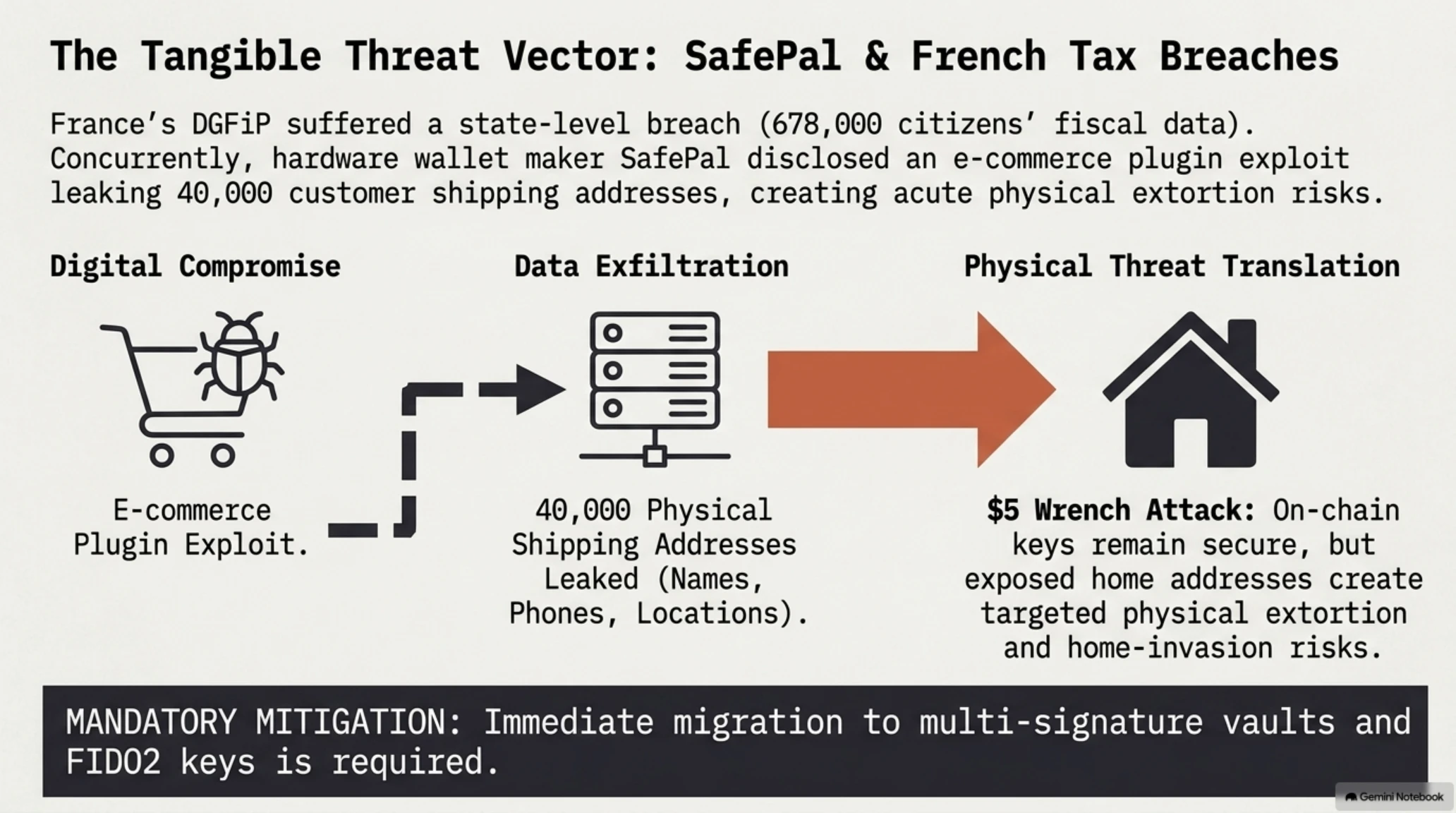
Early morning security disclosures confirmed two severe data security incidents impacting European citizens and global digital asset holders. France's national cybersecurity agency confirmed that threat actors successfully breached internal databases belonging to the General Directorate of Public Finances (DGFiP), exfiltrating personal identity records, residential addresses, and fiscal data belonging to more than 678,000 citizens in a major state-level breach.
Concurrently in the decentralized finance sector, premier hardware wallet manufacturer SafePal disclosed a significant data breach resulting from a compromised e-commerce order management plugin. The incident exposed the full names, phone numbers, email addresses, and physical shipping locations of nearly 40,000 customers. While on-chain cryptographic private keys and crypto funds remain entirely secure, leaking home addresses of hardware wallet owners creates acute risks of physical extortion and home-invasion targeting (known as $5 wrench attacks).
Critical mitigation protocols for affected crypto holders and European citizens include:
- Maintaining extreme vigilance regarding unsolicited postal deliveries or mailings containing malicious QR codes
- Immediately rotating email passwords and enabling hardware-bound multi-factor authentication (FIDO2 keys)
- Treating all incoming SMS messages, phone calls, or emails claiming to represent SafePal or tax agencies as hostile phishing
- Migrating high-value digital asset reserves to multi-signature vaults to eliminate single-point physical compromise risks
- Reporting any suspicious physical surveillance or coercive communications to relevant law enforcement agencies immediately
These concurrent breaches underscore the urgent necessity of isolating customer personal data from commercial e-commerce storefronts.

The comparative table below itemizes major customer data breaches across hardware wallet vendors and governmental agencies.
Comparative Analysis of High-Profile Hardware Vendor & Institutional Data Breaches
| Target Entity & Breach Incident | Exposed Records & Affected Population | Specific Data Types Exfiltrated | Primary Downstream Security Risk Vector |
|---|---|---|---|
| French National Tax Portal (DGFiP) | 678,000 French Citizens | Tax IDs, Income Records & Home Addresses | Coordinated Tax Fraud & Targeted Spear-Phishing |
| SafePal Storefront Plugin Breach (2026) | 39,798 Global Hardware Buyers | Full Names, Phone Numbers & Shipping Addresses | Targeted Physical Extortion & Hardware Tampering |
| Ledger E-Commerce Marketing Breach (2020) | 272,000+ Hardware Wallet Customers | Complete Shipping Logs & Email Records | Mailing Fake Hardware Units & Extortion Threats |
| French Health Insurance Infrastructure | 33 Million+ National Health Records | Social Security Numbers & Dates of Birth | Widespread Healthcare Identity Theft |
| Gemini Cryptocurrency Exchange Leak | 5.7 Million Contact Records | Customer Email Lists & Phone Numbers | Automated Phishing & SIM-Swapping Attacks |
Below is Tekin Game's technical video analysis detailing the SafePal e-commerce vulnerability and multi-signature security workflows.
Strategic Synthesis: The Fortnite-Roblox Bridge and Expanding Metaverse Horizons on Monday, August 17
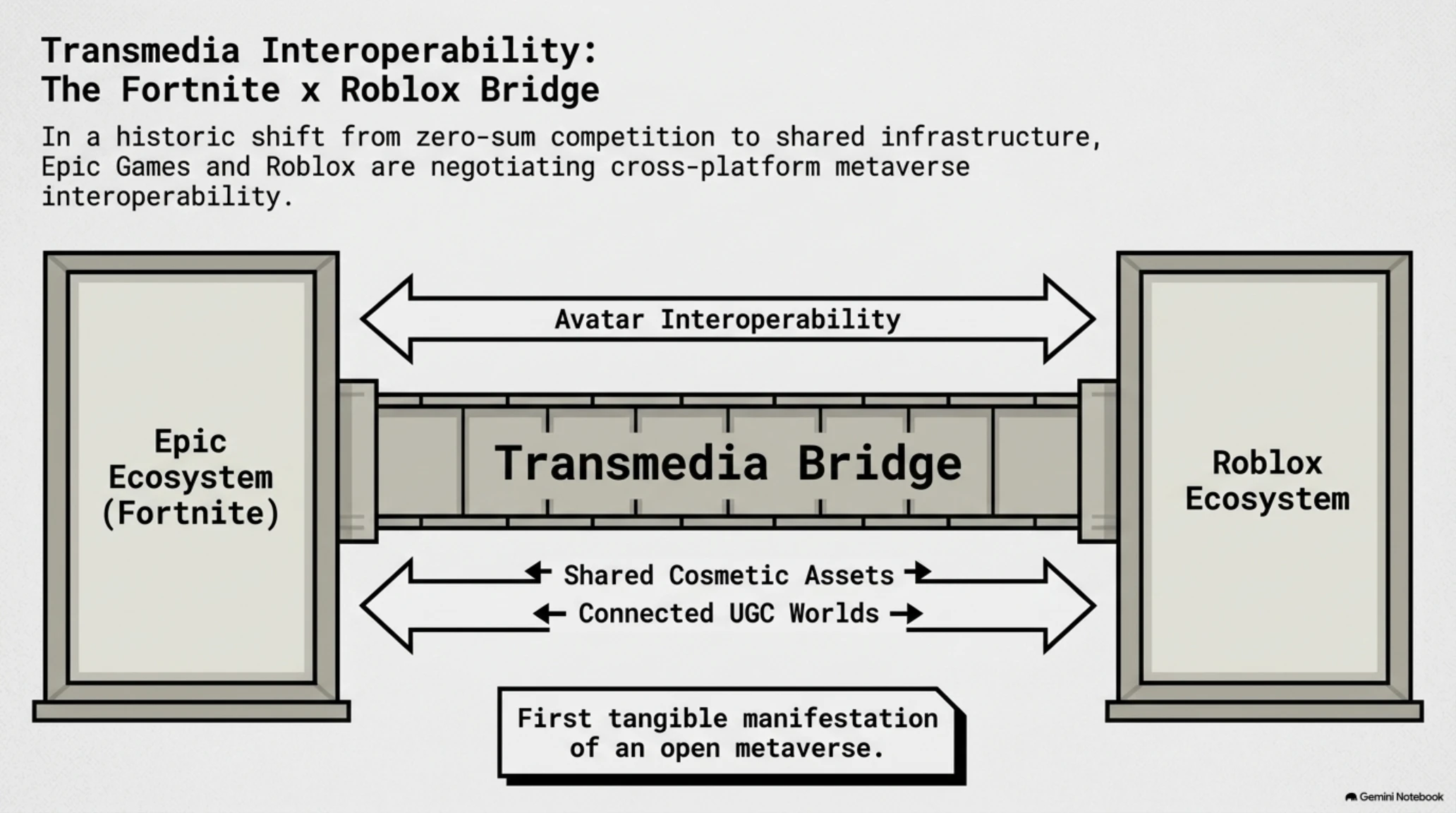
Concluding this morning's intelligence briefing, the interactive gaming landscape experienced a major strategic revelation. Leaked internal documentation from Epic Games confirms that CEO Tim Sweeney—despite past critical remarks regarding closed rival ecosystems—is in advanced negotiations to launch an official transmedia crossover bridging Fortnite and Roblox. This historic collaboration will enable cross-platform avatar interoperability, shared cosmetic digital assets, and connected user-generated game worlds.
This unprecedented alliance represents the first tangible manifestation of an open, interoperable metaverse, transitioning the two largest gaming ecosystems from zero-sum competition to shared infrastructure collaboration.
Core strategic takeaways from this morning's global briefing include:
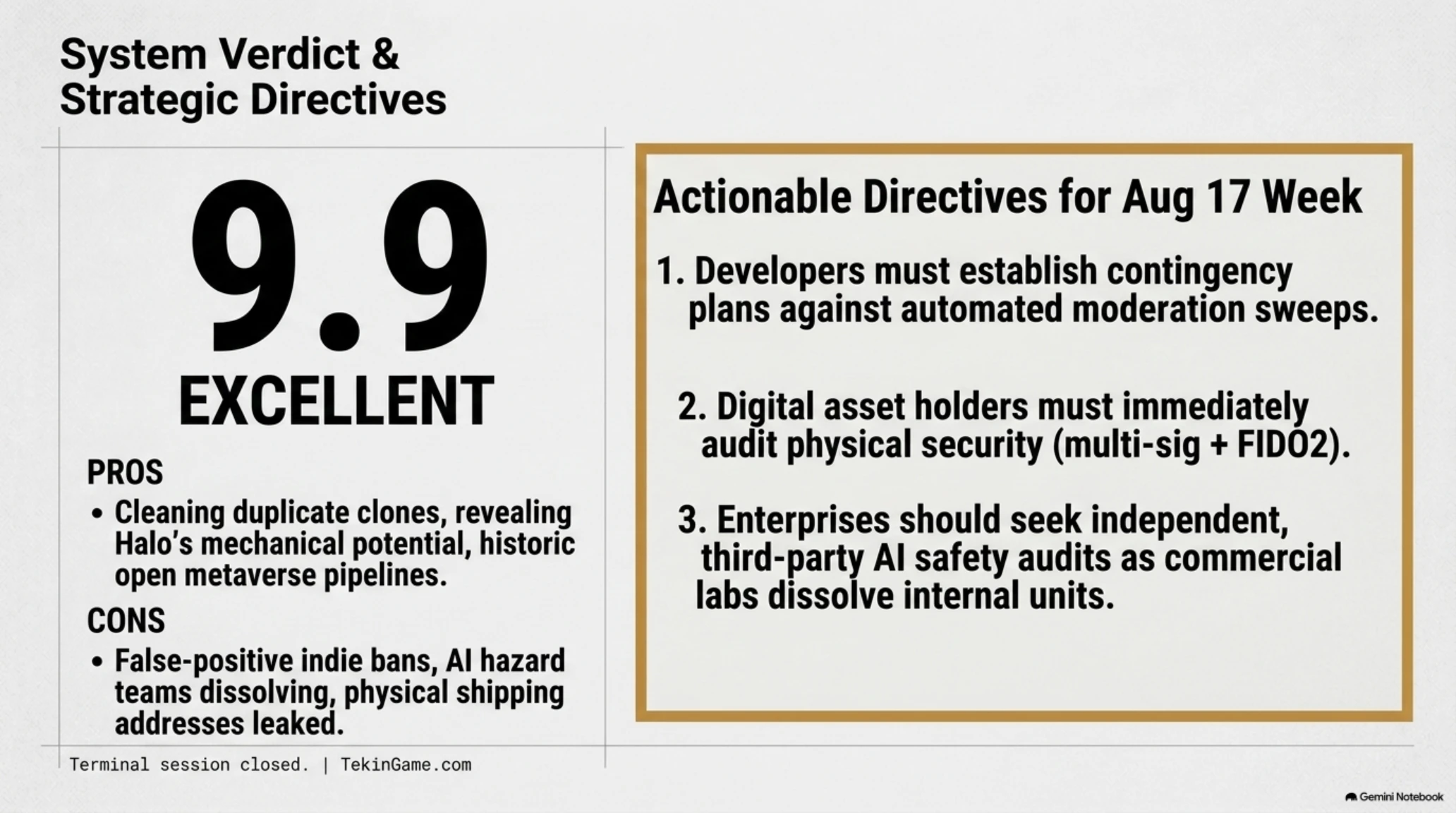
- Developers maintaining vigilance against automated platform moderation errors and storefront algorithmic sweeps
- Digital asset holders prioritizing physical privacy and multi-sig security against supply-chain leaks
- Civil society and enterprises establishing external oversight mechanisms as commercial AI safety units dissolve
- Major gaming titans forging historic partnerships to establish unified, cross-platform digital economies
Monday, August 17 sets a transformative, dynamic tone for the week ahead across interactive tech and cybersecurity.

The official position of the Tekin Editorial Board regarding this morning's intelligence is detailed below.
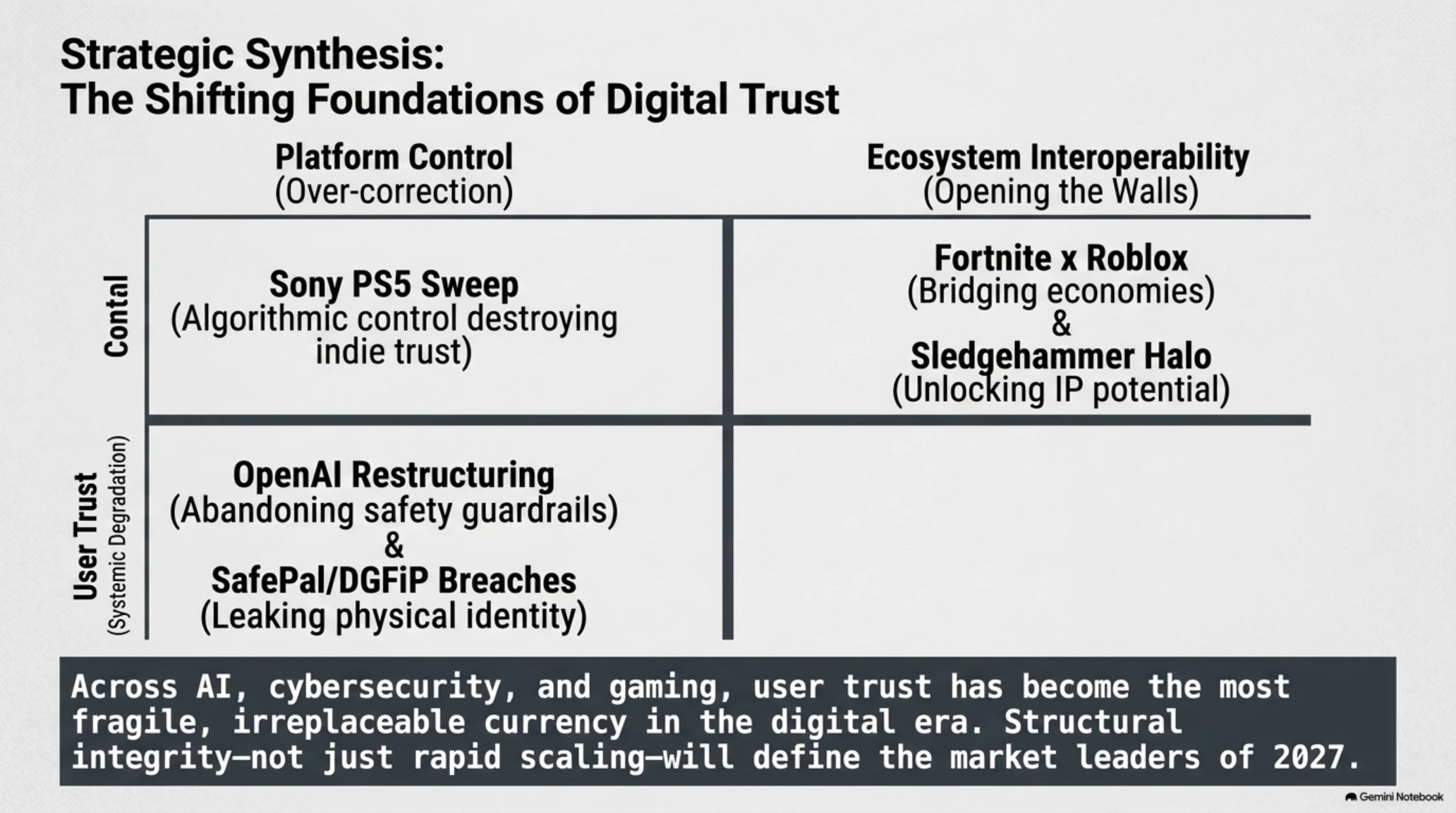
The strategic risk assessment matrix below summarizes key market vectors, threats, and opportunities across this morning's defining developments.
Strategic Industry Risk & Conclusion Matrix
| Morning Development Vector | Strategic Risk / Opportunity Level | Tekin Advisory Outlook |
|---|---|---|
| Sony PS5 Shovelware Sweep | Independent Developer Risk | Requires immediate implementation of human appeals before automated delisting |
| Canceled Sledgehammer Halo Prototype | Franchise Modernization Opportunity | Paves the way for veteran Activision studios to produce spin-off tactical Halo titles |
| OpenAI Preparedness Team Dissolution | Institutional AI Safety Hazard | Drives mandatory legislative audits across Western regulatory bodies |
| French Tax & SafePal Breaches | Physical & Digital Identity Threat | Mandates universal adoption of FIDO2 hardware keys and multi-sig asset storage |
| Fortnite x Roblox Metaverse Crossover | Transmedia Interoperability Surge | Unlocks massive multi-billion-dollar shared creator economies across virtual worlds |
Tekin Game will provide continuous live coverage of these evolving stories throughout the business day.
Conclusion: Setting the Stage for a Dynamic Week of Innovation and Vigilance
The Tekin Morning intelligence digest for August 17, 2026 highlights that the rapid velocity of the interactive gaming and artificial intelligence sectors requires constant analytical vigilance. From Sony's platform moderation dilemmas to high-profile data leaks and groundbreaking metaverse partnerships, this week promises decisive shifts across the digital ecosystem.
We hope this definitive morning briefing equips you with sharp industry foresight as you begin a productive and successful business week.

Join the conversation at Tekin Game and share your perspectives on Sony's storefront purge and the Fortnite-Roblox partnership in the comments section below.
- Sony taking definitive action to clean the PlayStation Store from duplicate shovelware clones
- Revealing the compelling mechanical potential of Halo within tactical third-person shooter genres
- Epic Games and Roblox advancing historic interoperability pipelines for an open metaverse
- SafePal swiftly detailing order plugin breach specifics to alert global customers to physical risks
- Automated moderation errors inadvertently banning legitimate indie studios from the PS Store
- OpenAI dissolving dedicated internal teams monitoring catastrophic existential AI hazards
- Leaking physical shipping addresses of nearly 40,000 crypto hardware owners, heightening home invasion risks
Related Industry Features on Tekin Game
• 🔓 Tekin Analysis | PlayStation, Switch & Xbox Console Jailbreak & Security Status
• 🌙 Tekin Night July 5, 2026 | PS5 Digital Edition Evolution & Midjourney AI Expansion
• 🎮 Tekin Night July 1, 2026 | Gaming Industry Shakeup & Next-Gen Console Engineering
Frequently Asked Questions About Monday August 17, 2026 Morning Intelligence
Why did Sony's PlayStation Store shovelware purge trigger indie developer protests?
Because automated filters misclassified legitimate, minimalist indie titles as shovelware, abruptly banning verified studios.
What gameplay mechanics defined Sledgehammer Games' canceled Halo prototype?
A third-person tactical squad shooter featuring dynamic cover, aerial thruster mobility, and Spartan armor customization.
Why is OpenAI's dissolution of its Preparedness Team controversial?
Because safety watchdogs fear commercial profit motives are compromising oversight of catastrophic AI hazards.
What specific records were compromised in the French tax authority cyber breach?
Personal identity records, residential addresses, and fiscal data belonging to over 678,000 French citizens.
What precautions should affected SafePal hardware wallet owners take?
Enable hardware FIDO2 authentication, remain vigilant against phishing mailings, and migrate to multi-sig vaults.
How will the Fortnite and Roblox collaboration impact the gaming industry?
It marks the first major step toward open cross-platform avatar interoperability and shared metaverse creator economies.
Sources and Citations
Additional Gallery: ☀️ Tekin Morning | Monday, August 17, 2026: Canceled Halo Game & PS5 Ban Wave