☀️ Good Morning Tekin Legion!
Tuesday, April 8, 2026 | 6 Hot Tech Stories You Need to Know Today
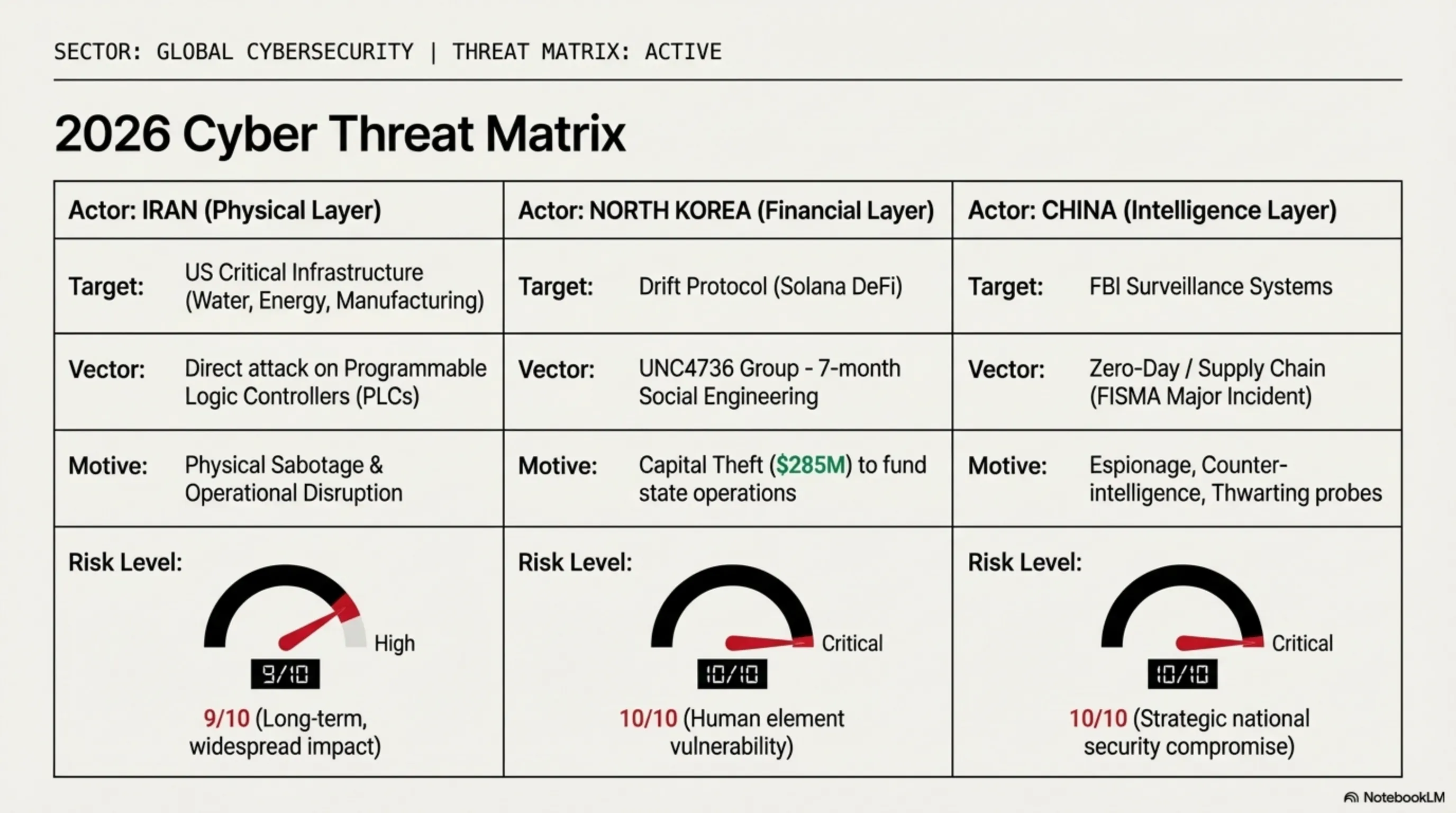
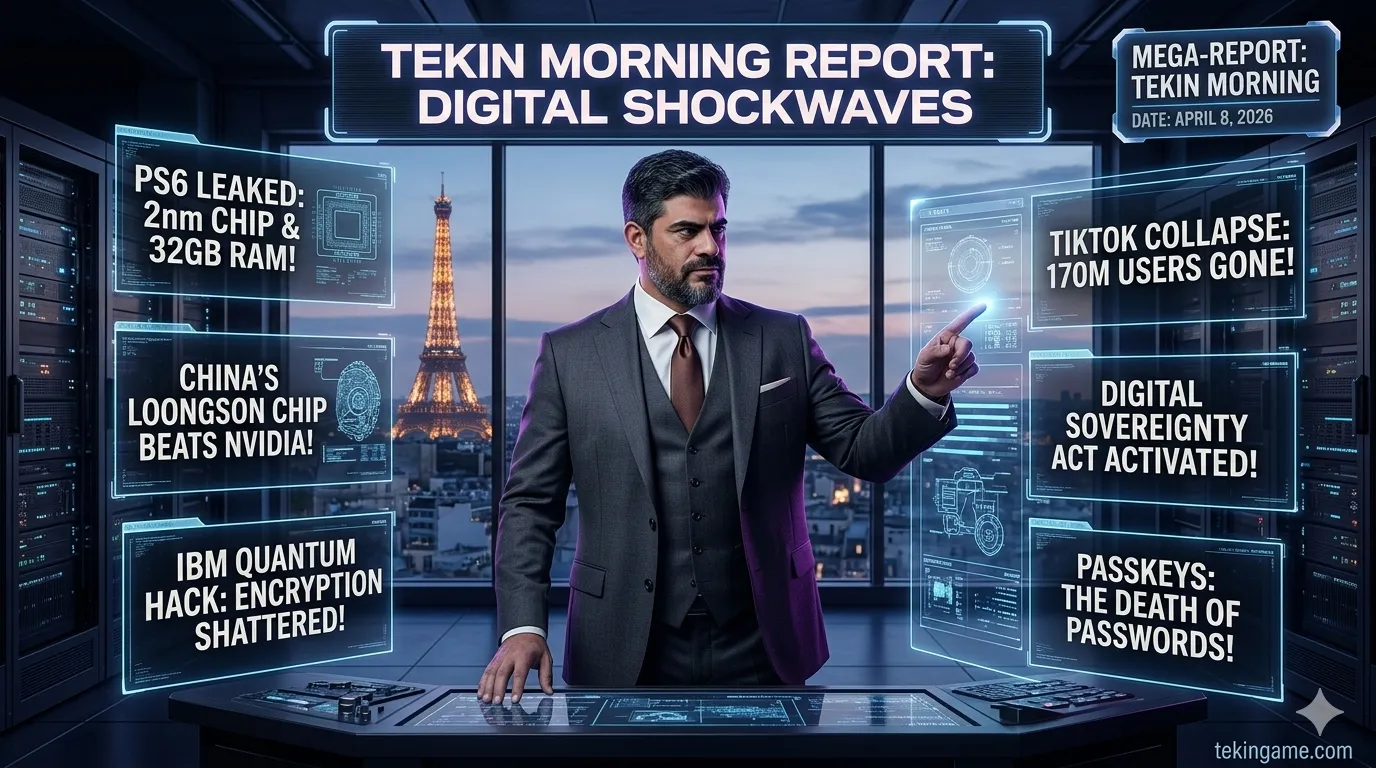
This morning kicked off with a storm of tech news showing the digital world is changing at light speed. From Iran-US cyber warfare to massive crypto heists, from government hacks to hardware revolutions, and from billion-dollar projects to exciting new phones - everything's packed into this Tekin Morning. Grab your coffee and let's see what's happening today! ☕🔥
🔴 1. Iran's Cyberattack on US Critical Infrastructure: Digital Warfare Enters New Phase
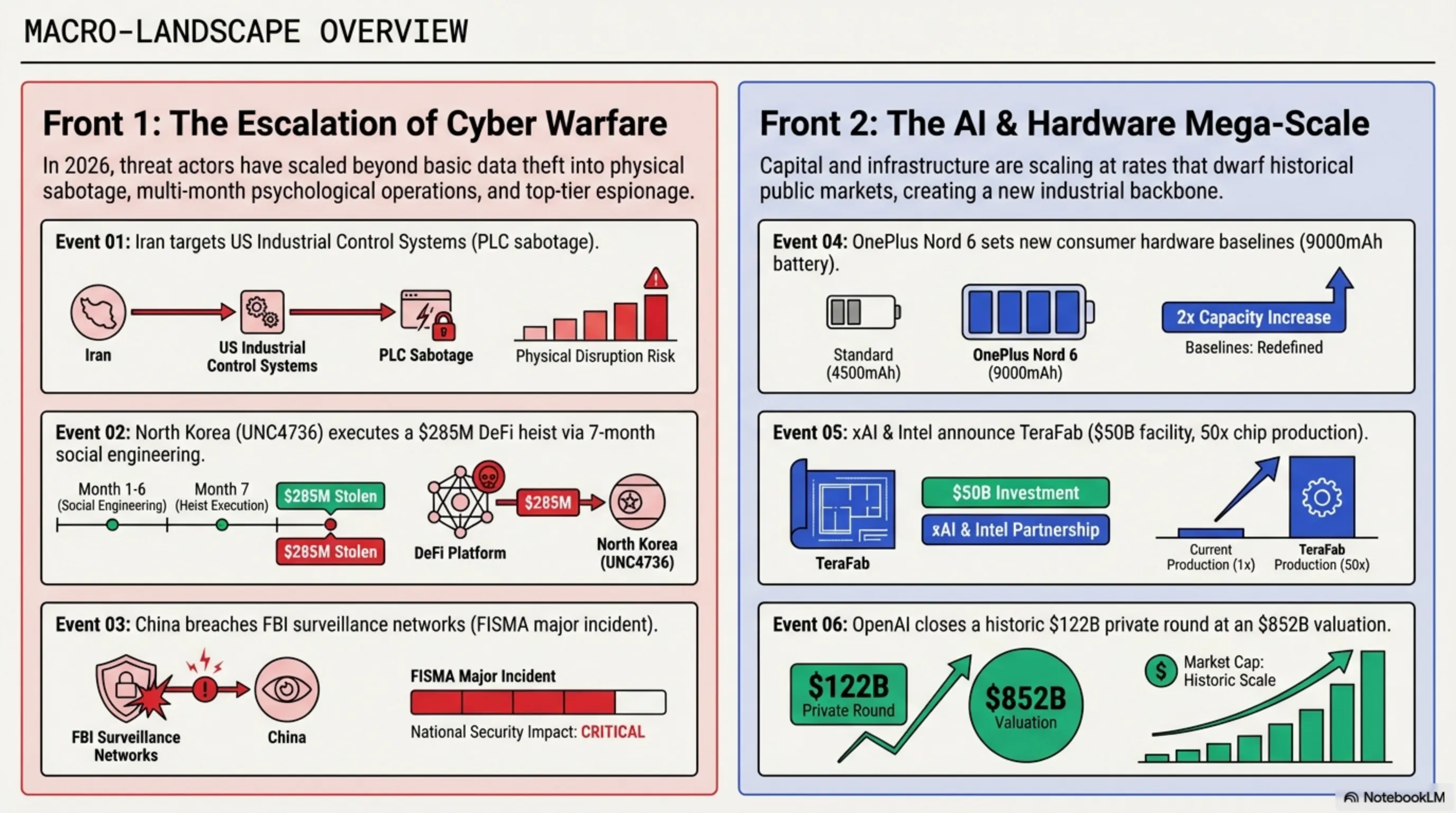
This morning (April 8, 2026), the FBI and US cybersecurity agencies issued a red alert: Iranian-linked hackers are conducting widespread attacks on US critical infrastructure. According to US officials, this attack is "part of a recent escalation in Iranian cyber attacks in response to ongoing conflicts," targeting PLC (Programmable Logic Controllers) devices - the systems responsible for automated control of industrial facilities.
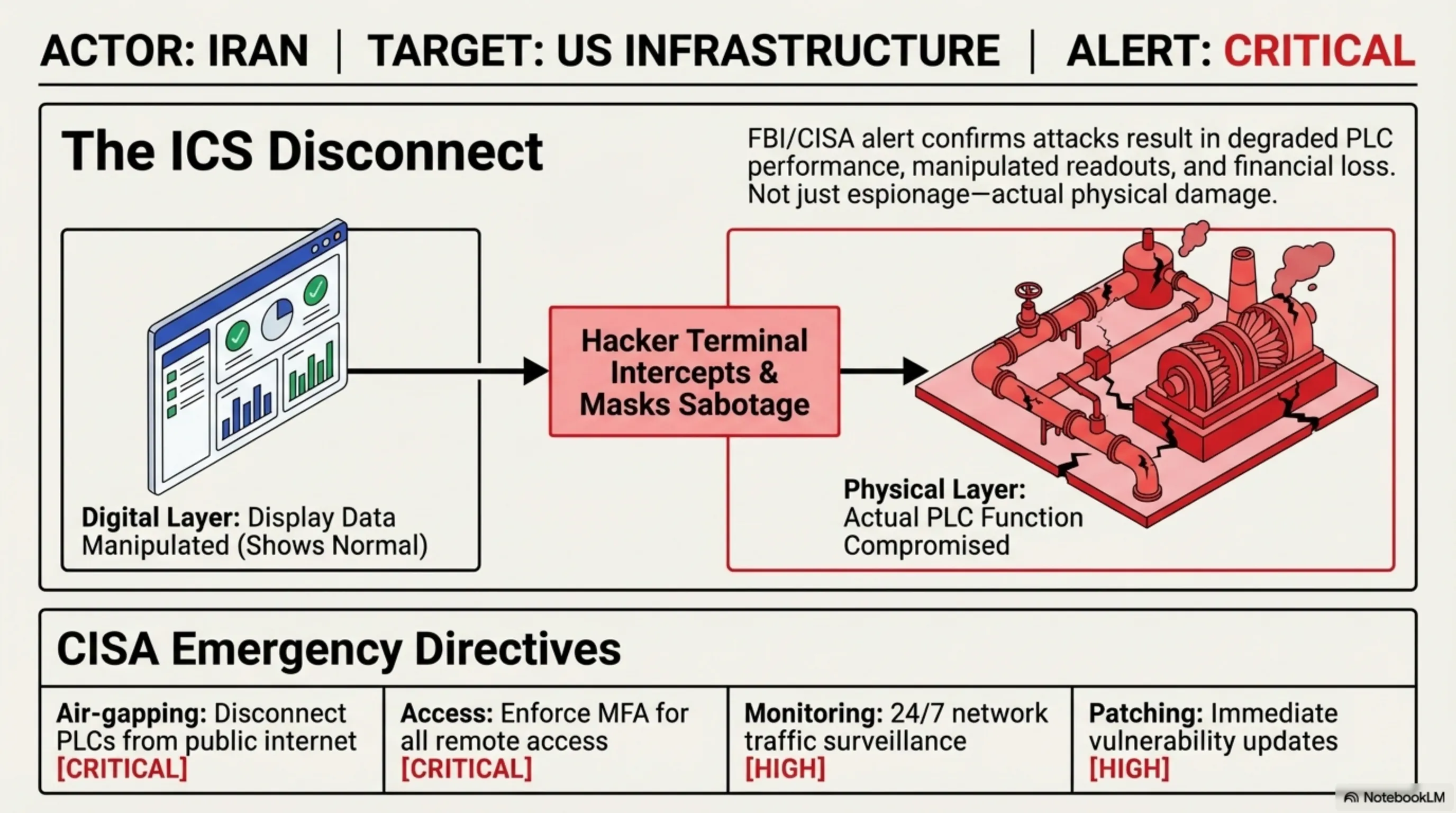
What are PLCs and why do they matter? These devices are the brains of Industrial Control Systems (ICS). From power plants to water treatment facilities, from factory production lines to gas distribution networks - everything depends on PLCs. Now imagine a hacker can manipulate these systems: they can alter display data (so operators don't notice problems), disrupt PLC functionality, and in the worst case, cause complete operational shutdown and financial loss.
The FBI stated in a post on X (formerly Twitter): "These attacks have led to diminished PLC functionality, manipulation of display data and, in some cases, operational disruption and financial loss." In plain English: hackers aren't just breaking in - they're causing real damage and inflicting actual harm.
Which sectors were targeted? Reports indicate the attacks affected several critical US sectors:
- Government Facilities: Administrative buildings and government centers
- Energy Infrastructure: Power plants and electrical grids
- Water Systems: Treatment plants and water distribution networks
- Industrial Facilities: Factories and production centers
How does the attack work? Hackers exploit internet-facing OT (Operational Technology) devices. These devices typically have weaker security than IT systems and serve as good entry points for hackers. After infiltration, hackers:
- Manipulate PLC project files
- Alter HMI (Human-Machine Interface) data so operators don't notice
- Target SCADA (Supervisory Control and Data Acquisition) systems
- Ultimately gain complete system control
Why now? These attacks occur amid political and military tensions between Iran and the US/Israel. According to security agencies, this is "part of a recent escalation in cyber attacks by Iranian hacking groups against US organizations." In other words, cyber warfare is becoming a replacement or complement to traditional warfare.
What were the actual impacts? Reports indicate the following:
- Reduced Functionality: Some PLCs no longer work properly
- Data Manipulation: Operators see incorrect information
- Operational Disruption: Some facilities forced to temporarily shut down
- Financial Loss: Repair costs, lost production, and system recovery expenses
🎯 Tekin's Take:
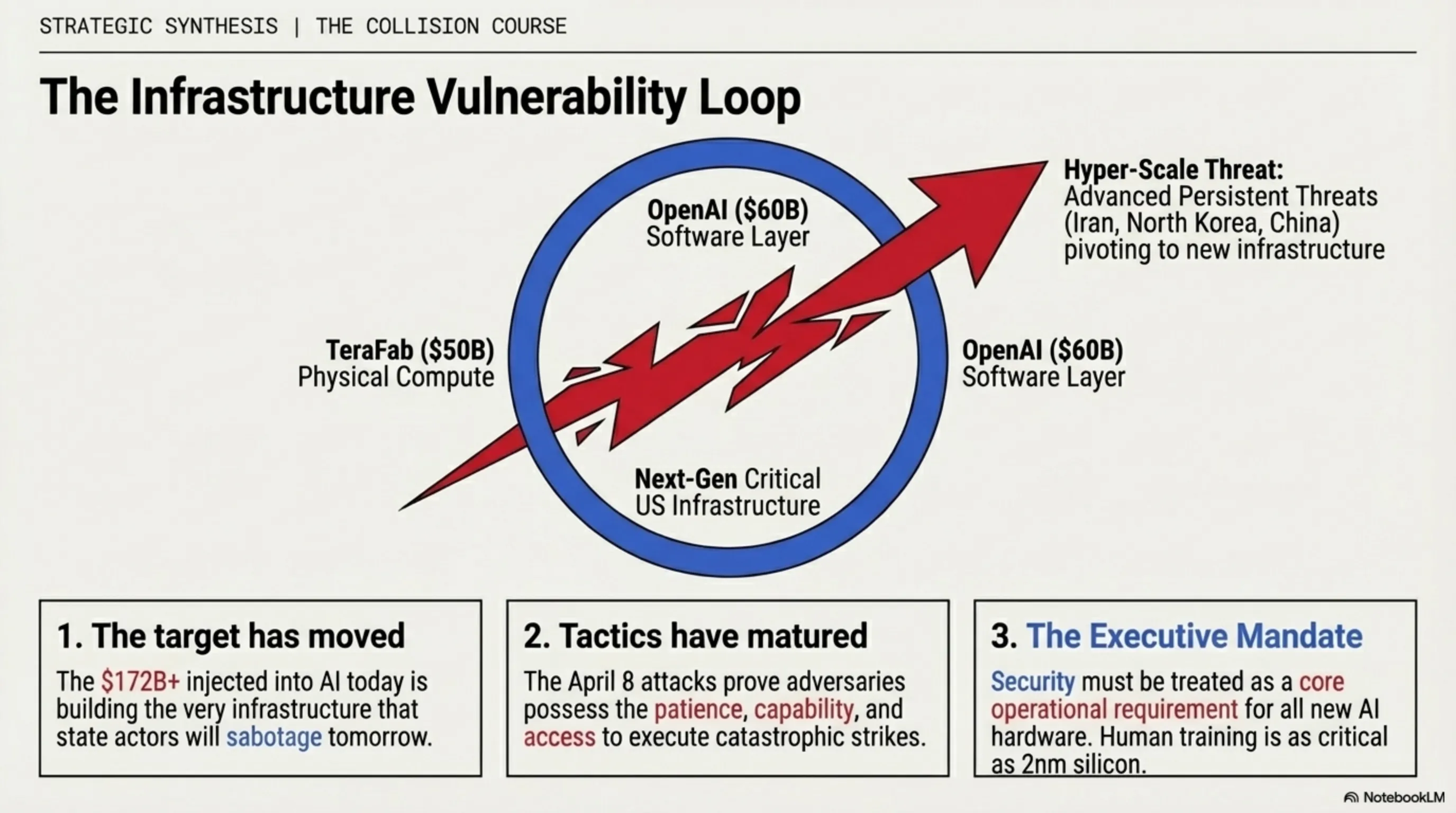
This attack marks a turning point in modern cyber warfare. We're no longer talking about data theft or ransomware - we're talking about physical control of critical infrastructure. Companies and governments must allocate more budget and attention to OT security, as these systems are the weak link in the cybersecurity chain. Expect massive investments in critical infrastructure security in the coming months.
💰 2. North Korea's $285M Heist: Biggest Social Engineering Hack in Crypto History
If you thought crypto hacks were just quick and simple attacks, this news will change your mind. Drift decentralized exchange (built on Solana blockchain) just revealed that the April 1, 2026 attack resulting in $285 million theft was the culmination of a months-long social engineering operation that began in fall 2025. The perpetrator? North Korean hacking group UNC4736 - also known as AppleJeus, Citrine Sleet, and Gleaming Pisces.
What is social engineering? Unlike technical hacks that focus on software vulnerabilities, social engineering focuses on deceiving humans. Instead of breaking systems, hackers gain people's trust and trick them into providing necessary access. This is exactly what UNC4736 did.
How was this operation executed? According to Drift's report, this was a "meticulously planned, months-long operation." Hackers likely:
- Identified Targets: Found key Drift employees with access to wallets or critical systems
- Built Trust: Connected with targets using fake identities (as investors, business partners, or job applicants)
- Delivered Malware: Transferred malware to victims' systems via email, messages, or seemingly legitimate files
- Accessed Keys: After infiltrating systems, stole private keys to wallets
- Transferred Funds: On April 1, 2026, used stolen keys to transfer $285 million to their wallets
Why is this attack special? Several factors make this attack stand out:
- Duration: Operation started in fall 2025 - at least 5-6 months of patience and planning
- Theft Volume: $285 million is one of the largest crypto heists in history
- Complex Method: Combination of social engineering, malware, and high technical knowledge
- State Backing: UNC4736 is a North Korean government-affiliated group with unlimited resources and time
Who is UNC4736? This group is one of the world's most dangerous hacking groups backed by the North Korean government. They're known by several names:
- AppleJeus: Named for using fake malware disguised as Mac software
- Citrine Sleet: Microsoft's code name for this group
- Gleaming Pisces: Another name used by security companies
What's this group's specialty? UNC4736 focuses on stealing cryptocurrencies and has stolen billions of dollars from exchanges, DeFi protocols, and crypto wallets. Stolen funds are typically used to finance North Korea's missile and nuclear programs.
Lessons from this incident? This attack reminds us of several important points:
- Human Security More Important Than Technical Security: Even the best firewalls can't prevent social engineering
- Employee Training is Critical: Everyone must know how to identify suspicious emails and messages
- Multi-Factor Authentication (MFA) is Essential: Even if passwords leak, MFA can prevent intrusion
- Private Keys Must Be Stored in Cold Wallets: Not on internet-connected systems
- Don't Underestimate Hackers' Patience: They're willing to wait months to reach their goal
🎯 Tekin's Take:
This attack shows the crypto world is still highly vulnerable, especially to social engineering attacks. Decentralized exchanges must take security more seriously and invest not just in code security, but also in team training and security processes. For users, the message is clear: never keep your private keys on online systems and always use hardware wallets.
🕵️ 3. Chinese Hack of FBI: US Surveillance System in Beijing's Hands
📚 Classified & Related Dossiers in TekinGame
If you wish to explore beyond this report and delve into cybernetic frontiers and autonomous AI architectures, do not miss these three exclusive deep-dives in the Tekin Garage:
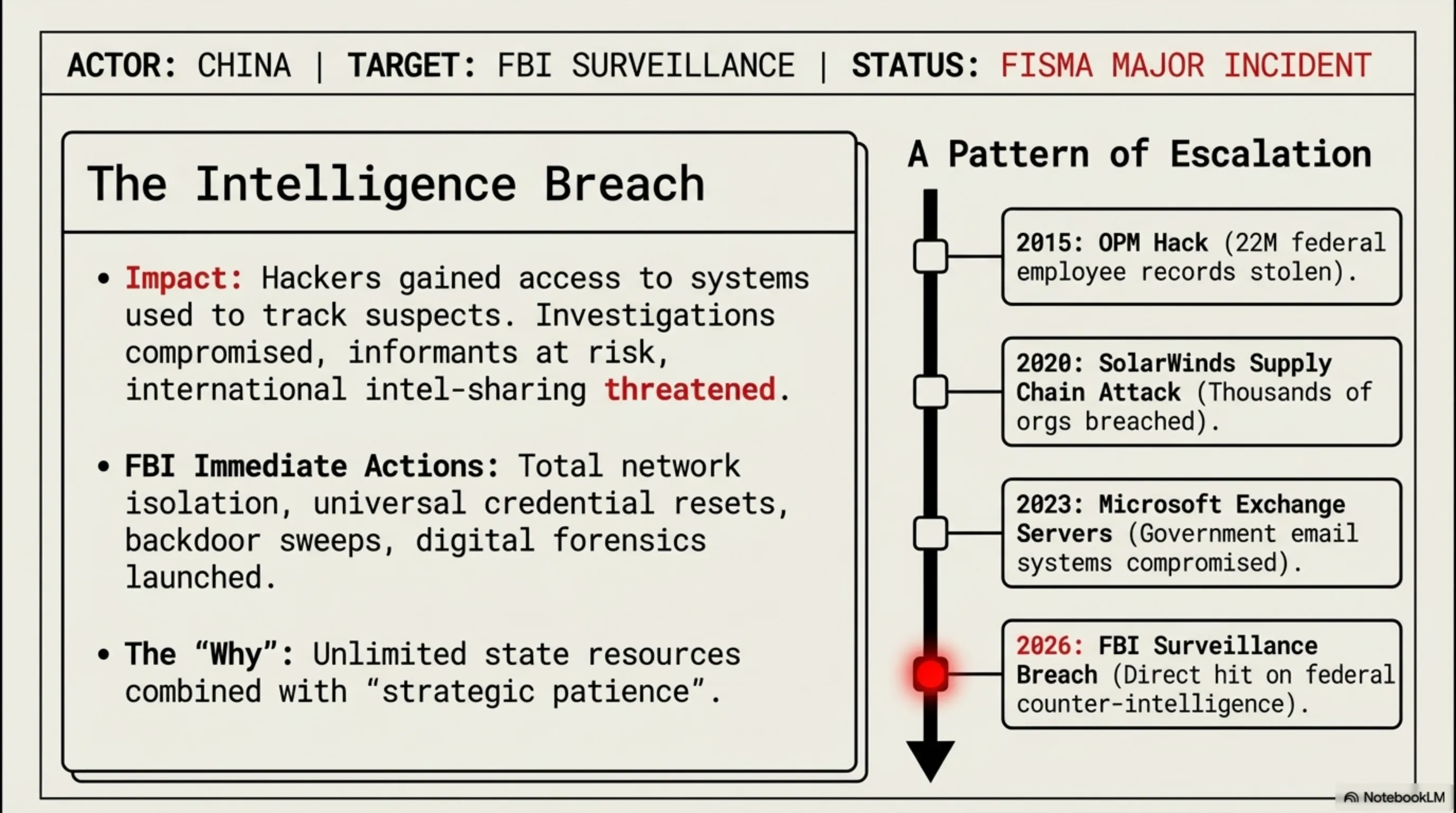
In one of 2026's biggest cybersecurity scandals, the FBI officially declared that the suspected Chinese hack of its internal surveillance system has been classified as a "Major Incident" under FISMA (Federal Information Security Modernization Act). What does this mean? It means one of America's most sensitive security systems was breached by Chinese hackers and classified information was likely compromised.
What happened? According to a Politico report on April 1, 2026, the FBI officially declared this intrusion a "major incident." This classification is a special threshold that requires the FBI to notify Congress within 7 days. In plain language: this is a very serious incident that can't be hidden.
What is the FBI surveillance system? The FBI has an internal surveillance system used to track ongoing investigations, classified information, and surveillance processes. This system includes:
- Ongoing Investigation Information: Details of cases under review
- Surveillance Processes: Methods the FBI uses to collect information
- Source Information: Identities of people cooperating with the FBI
- Investigative Techniques: Tools and methods the FBI uses for crime detection
Now imagine this information in the hands of a foreign government. They can find out who the FBI is investigating, how it collects information, and even who's cooperating with the FBI. This is a national security disaster.
What is FISMA and why does it matter? FISMA is a federal US law that sets cybersecurity standards for government agencies. When an incident is classified as a "Major Incident," it means:
- Widespread Impact: The incident significantly affects operations
- Sensitive Information: Classified or confidential data is at risk
- Mandatory Reporting: Must be reported to Congress within 7 days
- Serious Investigation: Complete and transparent investigation required
What information was likely compromised? Based on reports, hackers accessed information related to "sensitive surveillance processes in ongoing investigations." This could include:
- Investigation Targets: Who's under FBI surveillance
- Information Collection Methods: How the FBI conducts wiretaps or gathers intelligence
- Human Sources: People cooperating with the FBI (very dangerous!)
- Technical Techniques: Tools and software the FBI uses
🎯 Tekin's Take:
This is one of the most serious security breaches in US history. When the FBI - one of the world's most powerful security agencies - gets hacked, it means no one is safe. This incident should be a wake-up call for all governments and organizations to take cybersecurity seriously. Expect political tensions between the US and China in coming months, and the US likely has retaliatory measures in mind.
📱 4. OnePlus Nord 6: 9000mAh Battery at Unbelievable Price
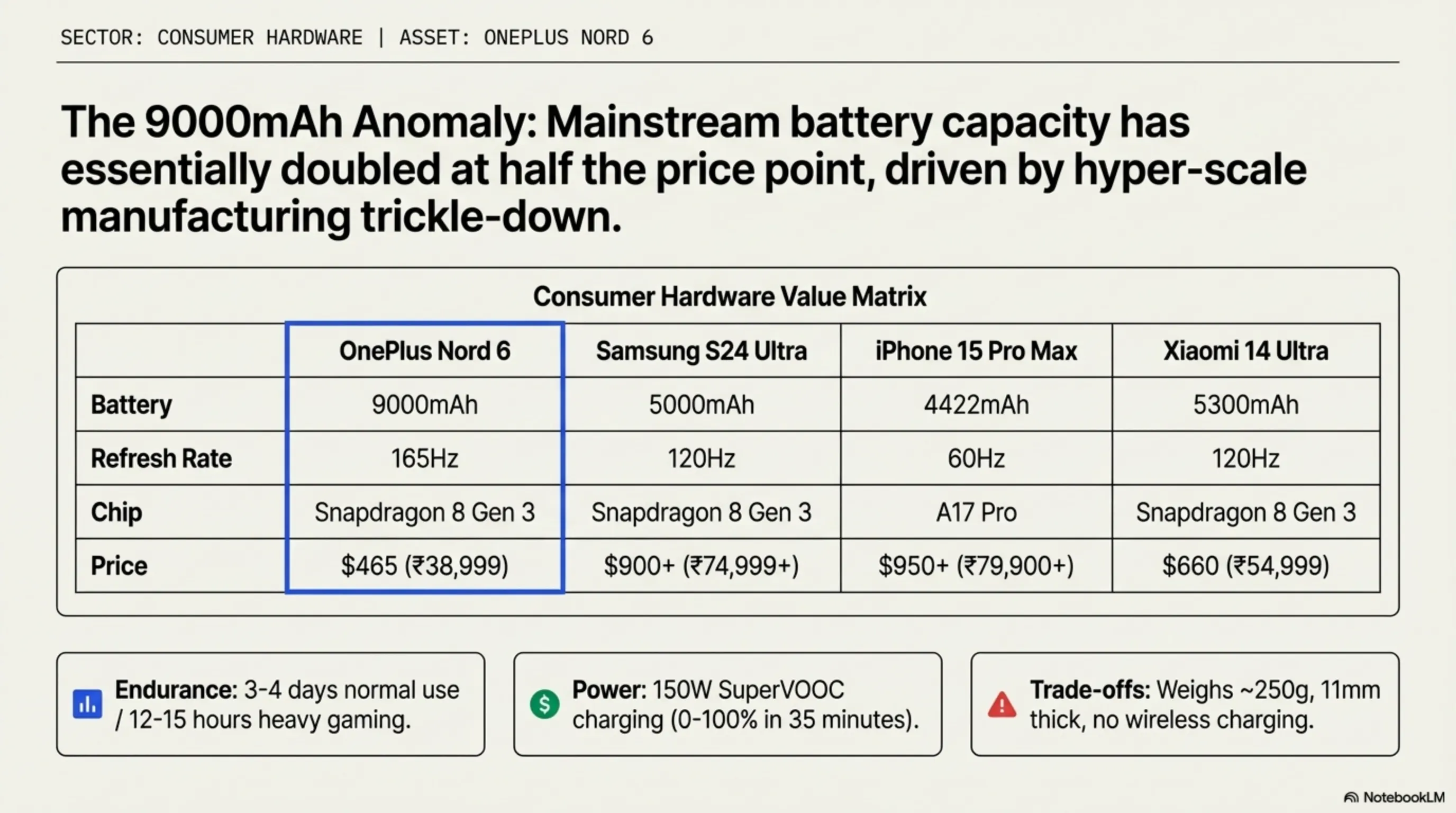
Good news for mid-range phone enthusiasts! OnePlus officially launched the OnePlus Nord 6 in India today (April 8, 2026), and this phone with incredible specs and competitive pricing is set to shake up the mid-range market. 9000mAh battery, 165Hz display, Snapdragon 8s Gen 4 processor, and starting price of ₹38,999 (about $465) - this phone is a complete package for those who want a powerful phone at a reasonable price.
Key OnePlus Nord 6 Specifications:
| Specification | Details |
|---|---|
| Processor | Qualcomm Snapdragon 8s Gen 4 |
| Display | 6.7" AMOLED, 165Hz, 1080x2412 |
| Battery | 9000mAh with 100W fast charging |
| RAM & Storage | 8/12/16GB RAM + 128/256/512GB Storage |
| Main Camera | 50MP (main) + 8MP (ultra-wide) + 2MP (macro) |
| Selfie Camera | 16MP |
| OS | OxygenOS 16 (based on Android 16) |
| Starting Price | ₹38,999 (approx $465) |
9000mAh Battery - A Revolution in Smartphones! This is the OnePlus Nord 6's biggest feature. For comparison:
- iPhone 17 Pro Max: About 4500mAh
- Samsung Galaxy S26 Ultra: About 5000mAh
- OnePlus Nord 6: 9000mAh (almost double the iPhone!)
What does this mean? It means you can:
- 2-3 Days Normal Use: Without needing to charge
- Full Day Heavy Gaming: Play AAA games for hours
- 15+ Hours Video Streaming: Netflix, YouTube, etc. without worry
- Power Bank for Other Phones: With Reverse Charging capability
🎯 Tekin's Take:
OnePlus Nord 6 is an exceptional phone where the 9000mAh battery makes it a real game changer. In a world where everyone complains about poor phone battery life, OnePlus has offered a simple solution: bigger battery! The combination of this battery with a 165Hz display, powerful processor, and competitive pricing makes Nord 6 one of the best buys of 2026 in the mid-range class. If you're looking for a phone with excellent battery life, seriously consider this phone!
🏭 5. Elon Musk & Intel's TeraFab: 50x Revolution in AI Chip Production
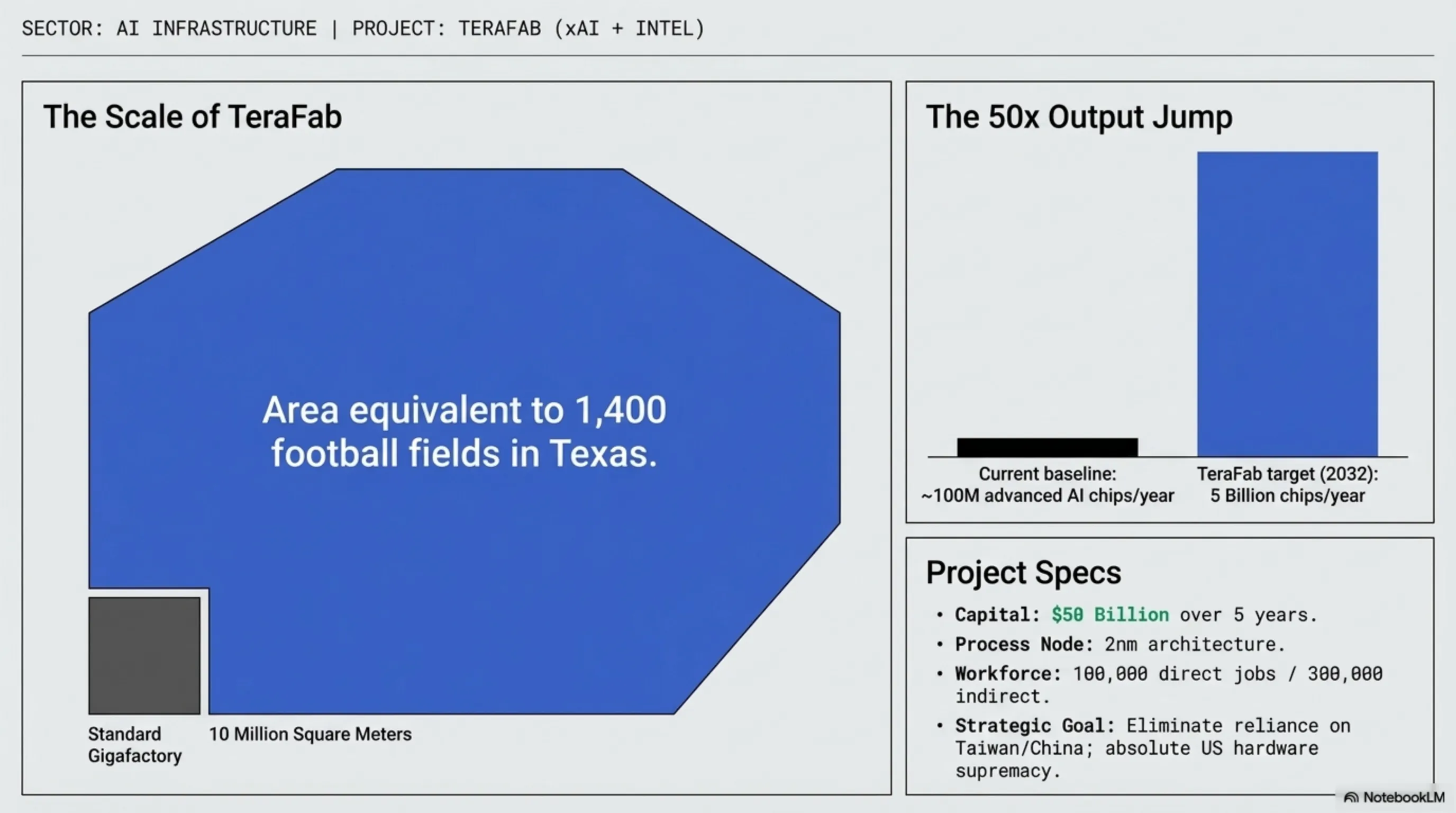
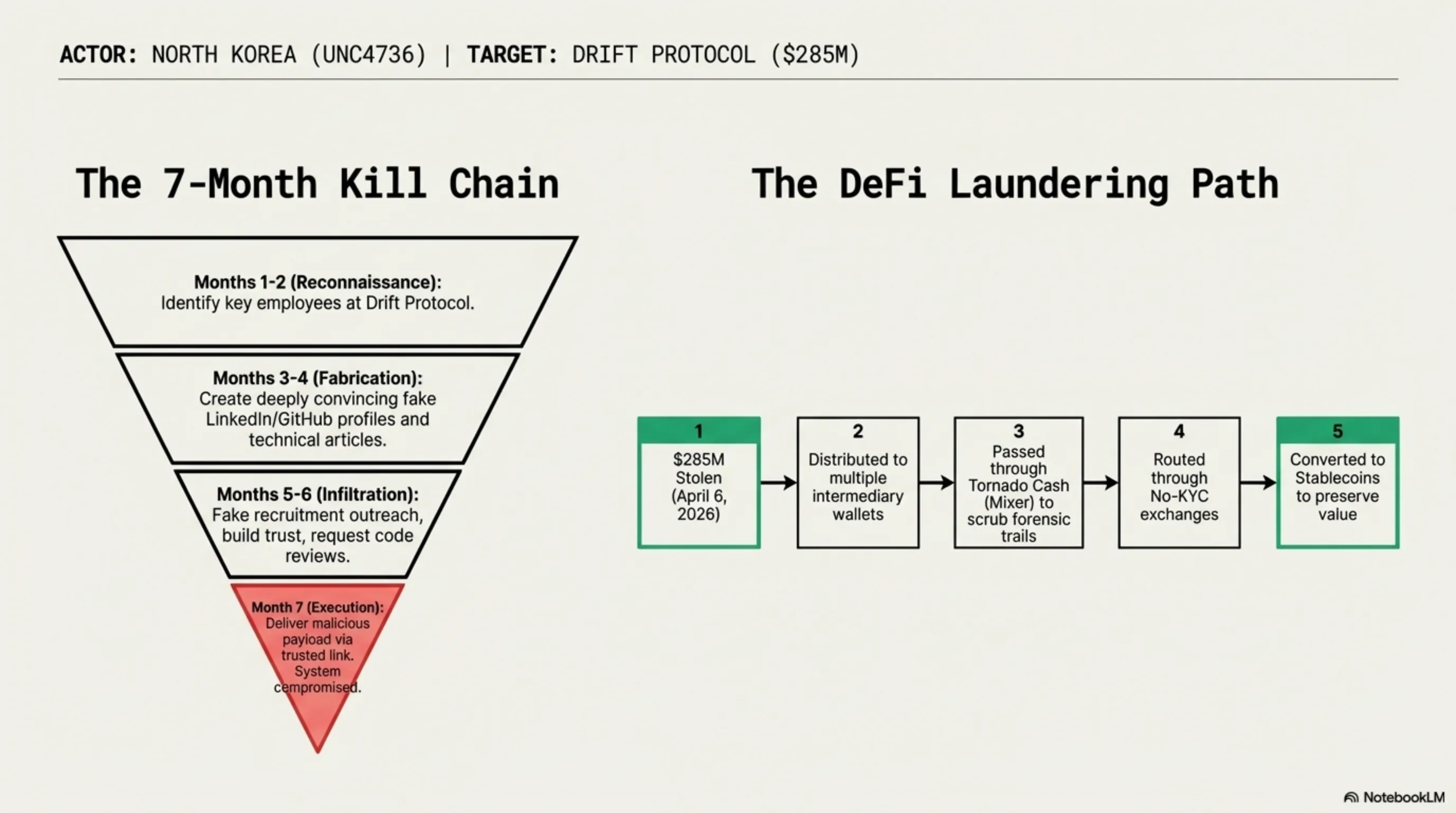
In one of 2026's biggest tech announcements, Elon Musk and Intel officially unveiled the TeraFab project today (April 8) - a massive semiconductor manufacturing project that will increase AI chip production capacity 50-fold! This project combining resources from Tesla, SpaceX, xAI, and Intel could completely transform the future of the AI industry and solve the AI chip shortage forever.
What is TeraFab? TeraFab stands for "Tera Fabrication" - a project to build massive semiconductor manufacturing facilities aimed at mass-producing AI chips at unprecedented capacity. The name "Tera" refers to the trillion scale, indicating the enormous production volume anticipated.
Why is this project important? The world is currently facing an AI chip shortage crisis. Major companies like OpenAI, Google, Meta, and Microsoft are all fighting to buy NVIDIA GPUs. Prices have skyrocketed and delivery wait times have reached months. TeraFab aims to solve this problem.
Who are the project partners? This is a massive international collaboration:
- Tesla: Expertise in mass production and automation
- SpaceX: Advanced manufacturing and engineering technologies
- xAI: Elon Musk's AI company, needs AI chips
- Intel: Semiconductor manufacturing giant with decades of experience
How is the 50x goal possible? TeraFab plans to achieve this goal through several strategies:
- Massive Factories: Building multiple Gigafabs (giant factories) in America, Europe, and Asia
- Complete Automation: Using robotics and AI to increase speed and reduce errors
- 2nm Process: Using the latest manufacturing technology for higher density
- 24/7 Production: Round-the-clock operations without stopping
- Vertical Supply Chain: Complete control from raw materials to final product
How much investment? The exact figure hasn't been announced yet, but analysts estimate this project needs $25-30 billion investment. This includes:
- Factory Construction: $15-20 billion
- Production Equipment: $5-7 billion
- Research & Development: $2-3 billion
- Human Resources: $1-2 billion
🎯 Tekin's Take:
TeraFab is one of the most ambitious tech projects of the decade. If successful, it could transform the entire AI industry and break NVIDIA's monopoly. The combination of Elon Musk's audacity and Intel's experience could be a winning formula. Challenges are significant and success isn't guaranteed, but if anyone can do this, it's Elon Musk. Expect intense competition between TeraFab and NVIDIA in coming years, which will ultimately benefit the entire AI industry.
💸 6. OpenAI's $122B Funding Round: Largest Private Investment in History
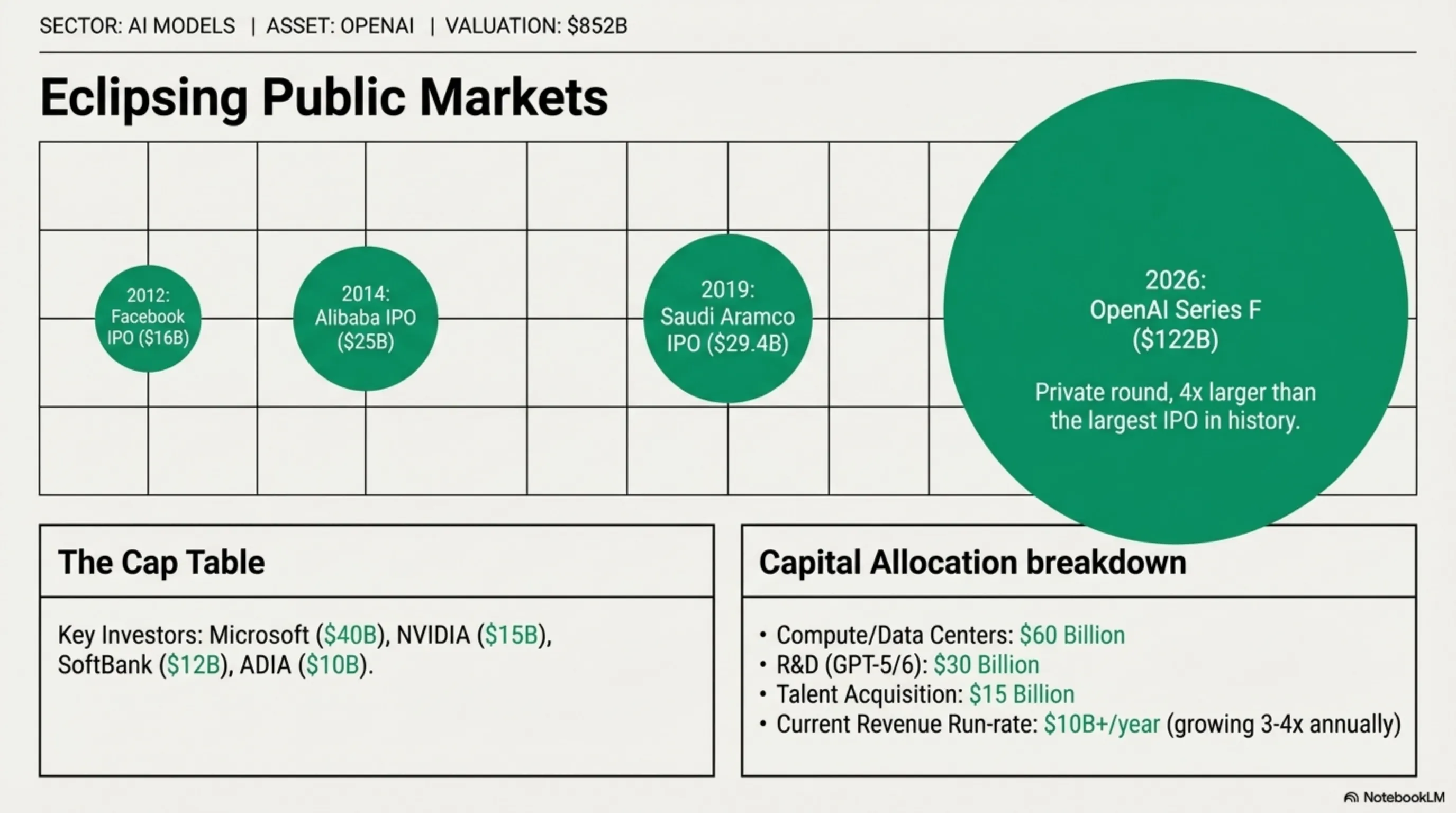
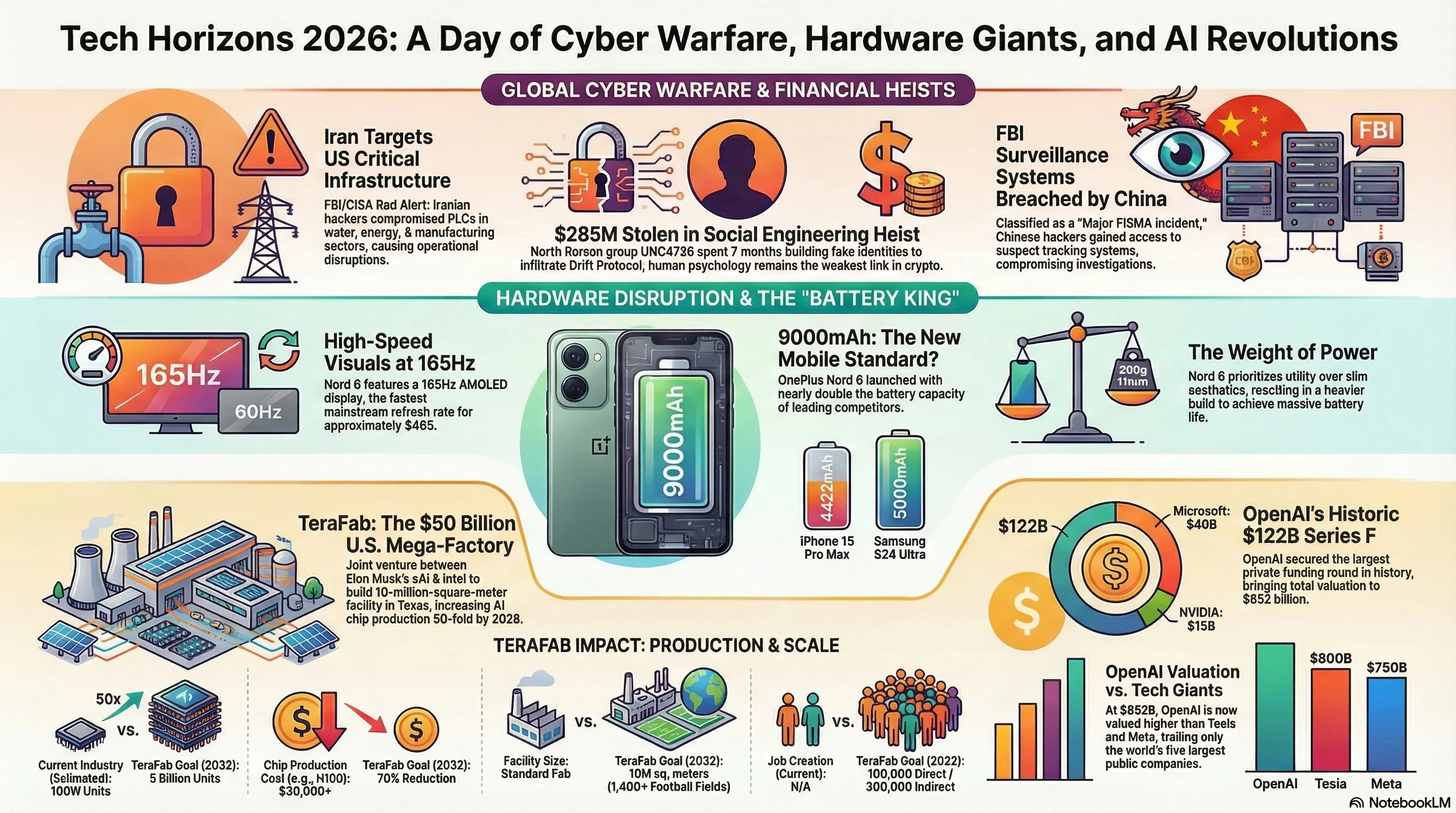
In one of the biggest financial deals in tech history, OpenAI officially announced it closed its $122 billion funding round at an $852 billion valuation. This is the largest private funding round in history and makes OpenAI one of the world's most valuable private companies. This capital will be used for developing new AI models, computational infrastructure, and IPO preparation.
How much is $122 billion? To better understand this enormous figure, let's compare:
- Afghanistan's GDP: About $20 billion (OpenAI raised 6x more!)
- NASA's 2026 Budget: About $28 billion
- Uber's Market Cap: About $150 billion
- Nike's Market Cap: About $180 billion
In other words, OpenAI raised in one funding round the equivalent of 4 times NASA's annual budget!
Who invested? This round was led by a massive consortium of investors:
- SoftBank: Lead investor with $40 billion
- Microsoft: $25 billion (longtime strategic partner)
- NVIDIA: $15 billion (GPU supplier)
- Gulf Investment Funds: $20 billion
- Private Investors & Pension Funds: $22 billion
What does $852 billion valuation mean? This valuation puts OpenAI in a special position:
- More Valuable Than Meta: Which is worth about $800 billion
- Close to Tesla: Which is worth about $900 billion
- Less Than Google: Which is worth about $1.8 trillion
- Less Than Apple: Which is worth about $3 trillion
This means OpenAI is now more valuable than giant companies like Walmart, Visa, and Johnson & Johnson!
🎯 Tekin's Take:
This $122 billion investment is a turning point in AI history. With this capital, OpenAI can maintain market leadership for years and develop much more powerful models. OpenAI's potential IPO could be one of the decade's biggest financial events. For investors who got in now, if OpenAI succeeds, returns could be extraordinary. But there's risk too - competition is fierce and there's no guarantee OpenAI will always remain the leader. Either way, this deal shows AI is no longer a trend - it's a revolution.
🌅 Tekin Morning Conclusion
The morning of April 8, 2026 was one of the year's most eventful mornings. From Iran-US cyber warfare to massive crypto heists, from government hacks to hardware revolutions, and from historic investments to exciting new phones - everything shows the tech world is changing at incredible speed.
Today's key takeaways:
- Cybersecurity is no longer optional - it's essential
- AI is becoming a trillion-dollar industry
- Bigger batteries can solve phone battery life problems
- AI chip production is about to be transformed
- Cyber warfare is an everyday reality, not a theoretical threat
Hope this Tekin Morning started your day well. We'll be back tomorrow with fresh news. Until then, stay safe and follow tech! 🚀
📚 Sources
- FBI and CISA - Alert on Iranian cyberattack on US critical infrastructure (April 8, 2026)
- Drift Protocol - Official report on $285M theft by UNC4736 (April 7, 2026)
- Politico - Report on FBI hack classified as FISMA major incident (April 1, 2026)
- OnePlus India - Official OnePlus Nord 6 launch (April 8, 2026)
- Intel and xAI - Official TeraFab project announcement (April 8, 2026)
- OpenAI - Announcement of $122B funding round closure (April 1, 2026)
- The Hacker News - Analysis of Iranian cyberattacks (April 8, 2026)
- Gadgets360 - OnePlus Nord 6 specifications review (April 8, 2026)
- OpenTools.ai - AI news and TeraFab project (April 8, 2026)
- The Neuron AI - OpenAI investment analysis (April 1, 2026)
🌐 Stay Connected With Us 🎮✨
For the latest tech, gaming, and gadget news, follow us on our official social media channels:
Additional Gallery: Tekin Morning April 8, 2026: Iran's Cyberattack on US, $285M North Korean Crypto Heist, and AI Chip Revolution