🕷️ Tekin DarkWeb Special Report: The Fall of the AudiA6 Laundering Empire
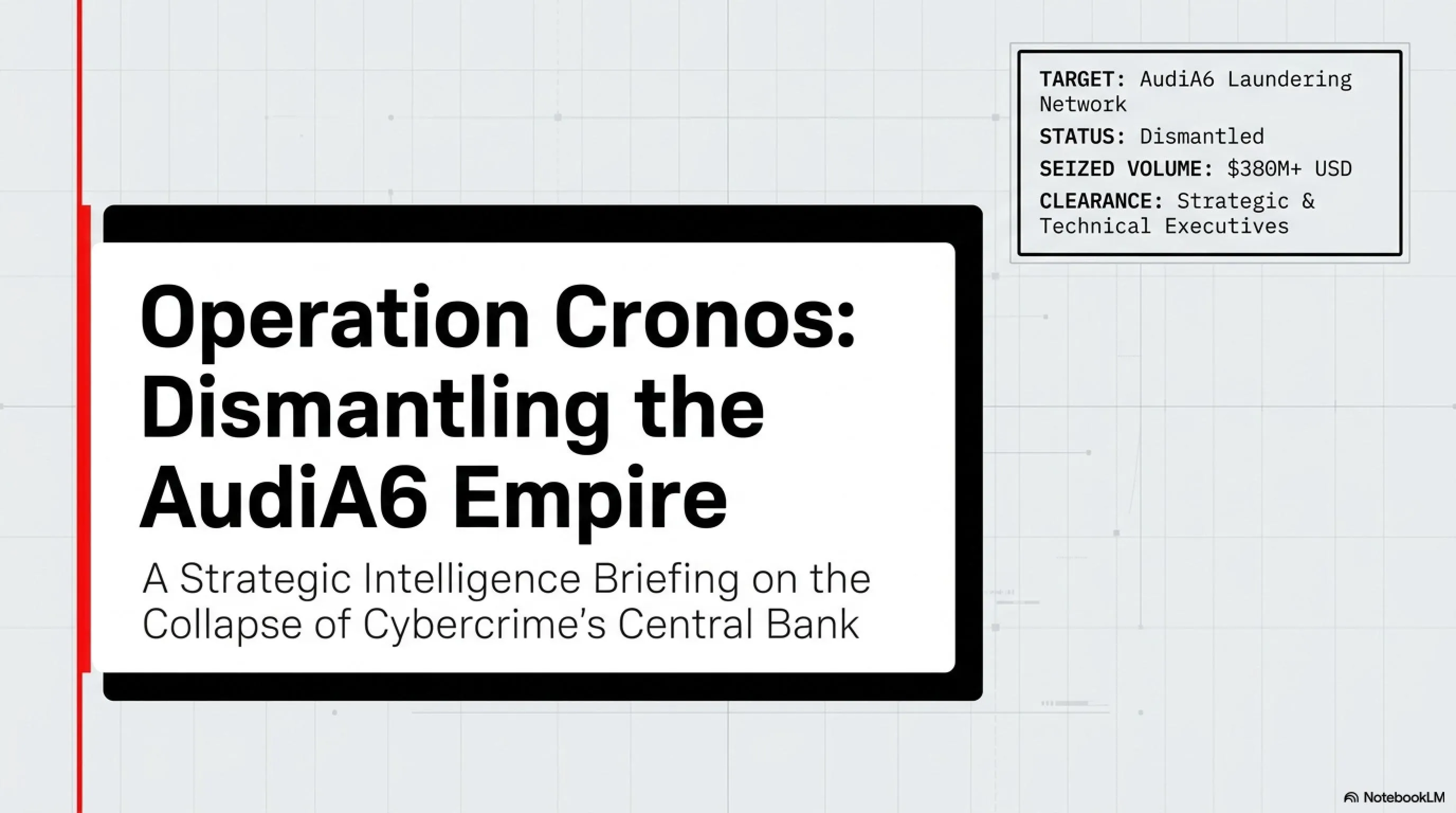
Welcome to the deepest, most obscured layers of the internet. The infamous underground network known as AudiA6, which served as the undisputed central bank for global ransomware syndicates and laundered over $380 million in illicit cryptocurrency with chilling efficiency, has finally been dismantled in one of the most significant cyber operations in history. In this comprehensive special report, we will dissect the geopolitical, strategic, and technical dimensions of this unprecedented event.
📑 Table of Contents:
- Anatomy of a Financial Leviathan: How AudiA6 Was Born
- Advanced Cybersecurity Training: How a Crypto Mixer Works
- Laboratory Simulation: Penetration Testing the Mixer Algorithm
- Expert Benchmark: Financial Obfuscation Networks Compared
- The Endless Cyber War: The Migration to Privacy Coins
The Takedown of AudiA6: Dissecting the Heaviest Blow to Ransomware's Financial Artery
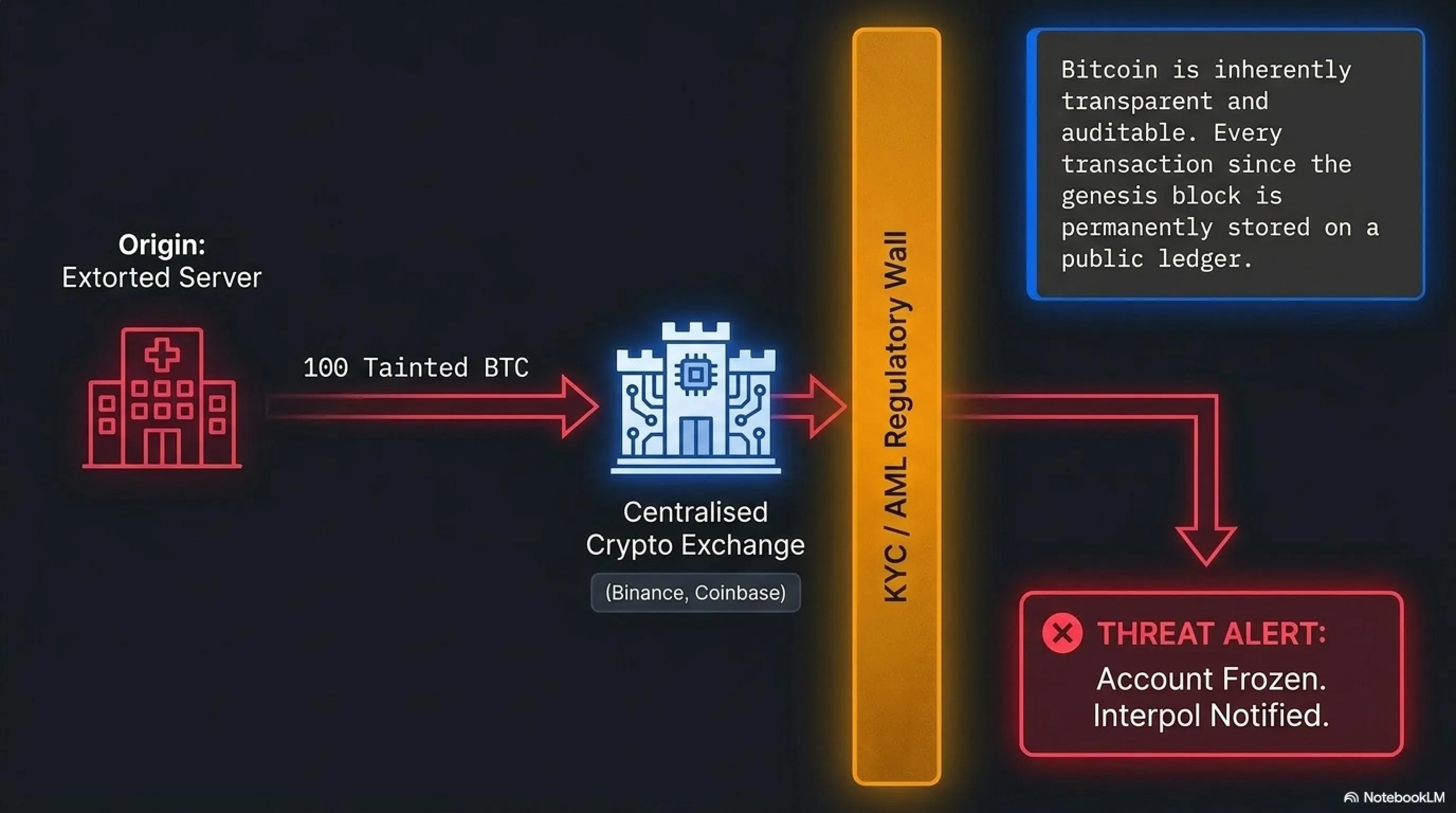
To truly grasp the foundational magnitude of this seizure, we must first understand the macroeconomic structure of modern Ransomware-as-a-Service (RaaS) operations in the mid-2020s. We are no longer dealing with the cliché image of a teenage hacker coding in a basement. Today's cyber attacks are orchestrated by multi-billion dollar digital cartels—organizations with strict corporate hierarchies, human resource departments recruiting coding prodigies, customer support desks, and most importantly, highly sophisticated financial laundering divisions. The primary bottleneck for these criminal syndicates is not breaching firewalls; it is liquidity. How does one convert $50 million in extorted Bitcoin from a hospital into spendable fiat currency without triggering the geopolitical radar of the FBI, Europol, and the UK's National Crime Agency (NCA)?

The Bitcoin blockchain is inherently a transparent public ledger. Every transaction executed since its genesis block is permanently, transparently, and immutably stored for global scrutiny. It was at this critical intersection that a highly encrypted, ruthless service named AudiA6 emerged from the darkest corners of Russian-speaking Dark Web forums. Positioning itself as the "dark savior," it boldly promised to permanently sever the digital footprint of any stolen capital, regardless of volume, drowning it in an ocean of decoy transactions.
Anatomy of a Financial Leviathan: How AudiA6 Was Born
According to classified documents and post-seizure intelligence reports, the AudiA6 network did not materialize overnight. It initially operated as a low-volume escrow service for narcotics and exploit vendors on darknet marketplaces. However, with the rise of terrifying ransomware groups like LockBit, ALPHV, and Conti, AudiA6 administrators identified a massive market vacuum. They deployed their server infrastructure across several Eastern European jurisdictions with notoriously weak cyber-laws—utilizing "bulletproof hosting"—and began offering VIP white-glove services to apex cyber cartels.
🧠 Tekin Deep Strategic Analysis
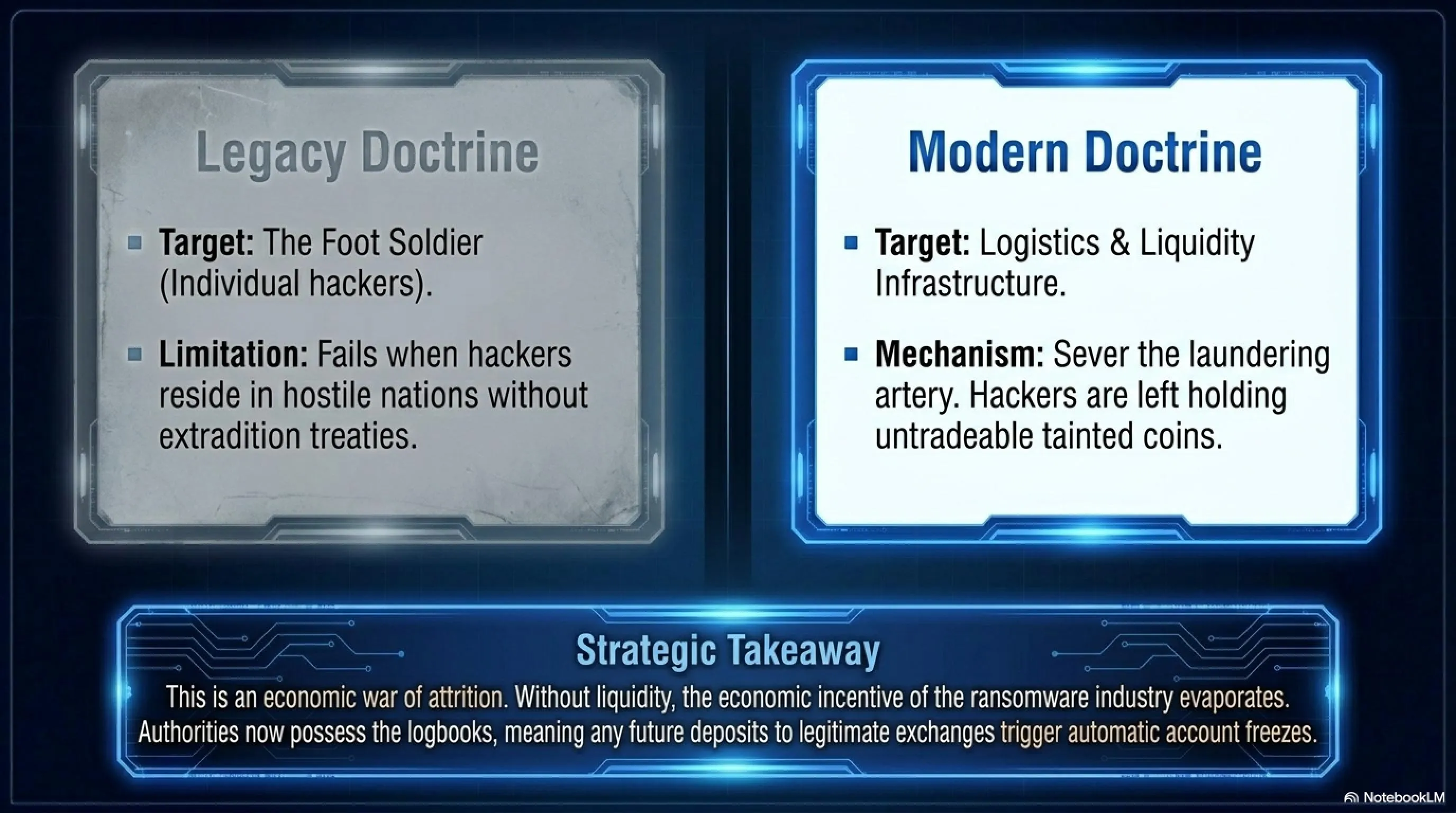
The destruction of AudiA6 is not merely a public relations victory; it represents a fundamental "Paradigm Shift" in the cyber-warfare doctrine of law enforcement. Historically, Interpol's strategy revolved around physically identifying and arresting individual hackers. However, when these criminals reside in hostile nations without extradition treaties, that strategy collapses.
This analysis reveals that the FBI and Europol have concluded they must strike the "logistics and liquidity infrastructure" rather than the foot soldiers. By severing the laundering artery, hackers are left holding "tainted" coins. Once a hacker cannot spend their stolen wealth, the economic incentive driving the entire ransomware industry evaporates. This is an economic war of attrition, not just a software battle.
Chronicle of a Collapse: Operation Cronos
The operation that brought down this cyber giant was not an overnight success. It was the culmination of months of relentless intelligence gathering, deep infiltration of Tor layers, and unprecedented collaboration between state agencies and private blockchain forensics firms. The timeline below chronicles this breathtaking operation:
| Classified Operation Takedown Timeline | |
|---|---|
| Infiltration Begins (Nov 2025) | The UK's National Crime Agency, in tandem with senior analysts at Chainalysis, successfully identifies hidden statistical anomalies in transaction clusters linked to a major ransomware strain, all leading back to AudiA6's anonymous servers. |
| Deploying Sinkholes (Mar 2026) | Europol establishes interception nodes (Sinkholes) within the hidden layers of the Tor onion network, successfully mapping the cloud infrastructure and physical server locations of AudiA6 across three Eastern European nations. |
| The Final Raid (Last Week) | A highly coordinated physical and cyber raid across 12 data centers. Confiscation of cold wallets, arrest of key operators, and the infamous "This site has been seized" banner displayed across all of the network's darknet domains. |
The Crypto Washing Machine: Anatomy of an Impenetrable Mixer
One of the greatest public misconceptions regarding blockchain technology is the belief that Bitcoin is inherently an anonymous, untraceable financial system. The reality is quite the opposite. Bitcoin is, in fact, one of the most transparent, public, and auditable financial systems in human history. Rather than being anonymous, the system is pseudonymous. Every transaction executed since the dawn of Bitcoin is permanently and immutably stored on a public ledger. When a hacker receives an extortion payment, intelligence agencies can easily trace the entire trajectory of those coins using basic blockchain analytics. The critical vulnerability for hackers lies in off-ramping: to convert Bitcoin into fiat currency (dollars, euros), they must eventually pass through centralized chokepoints—major exchanges.
These centralized exchanges are bound by strict Anti-Money Laundering (AML) and Know Your Customer (KYC) regulations. Upon receiving tainted coins, the exchange instantly freezes the hacker's account and surrenders their identity to Interpol. To bypass this fatal bottleneck, hackers turn to services like AudiA6, technically known as Cryptocurrency Mixers or Tumblers. The primary function of a mixer is to entirely sever the mathematical, graphical, and historical linkage between the "sender's wallet" and the "receiver's wallet."
Confirmed Laundered Volume
$380M+
Total illicit cryptocurrency successfully laundered, as verified by the US Department of Justice.
Syndicates Involved
50+
Number of international hacking groups utilizing the platform as VIP clients.
🎓 Tekin Advanced Security Training: How CoinJoin Erases Digital Footprints
In advanced white-hat hacking courses, a fundamental doctrine prevails: "To understand how to track criminals, you must first learn how they hide." Services like AudiA6 rely on complex algorithms rooted in CoinJoin concepts.
Step-by-Step Mechanics:
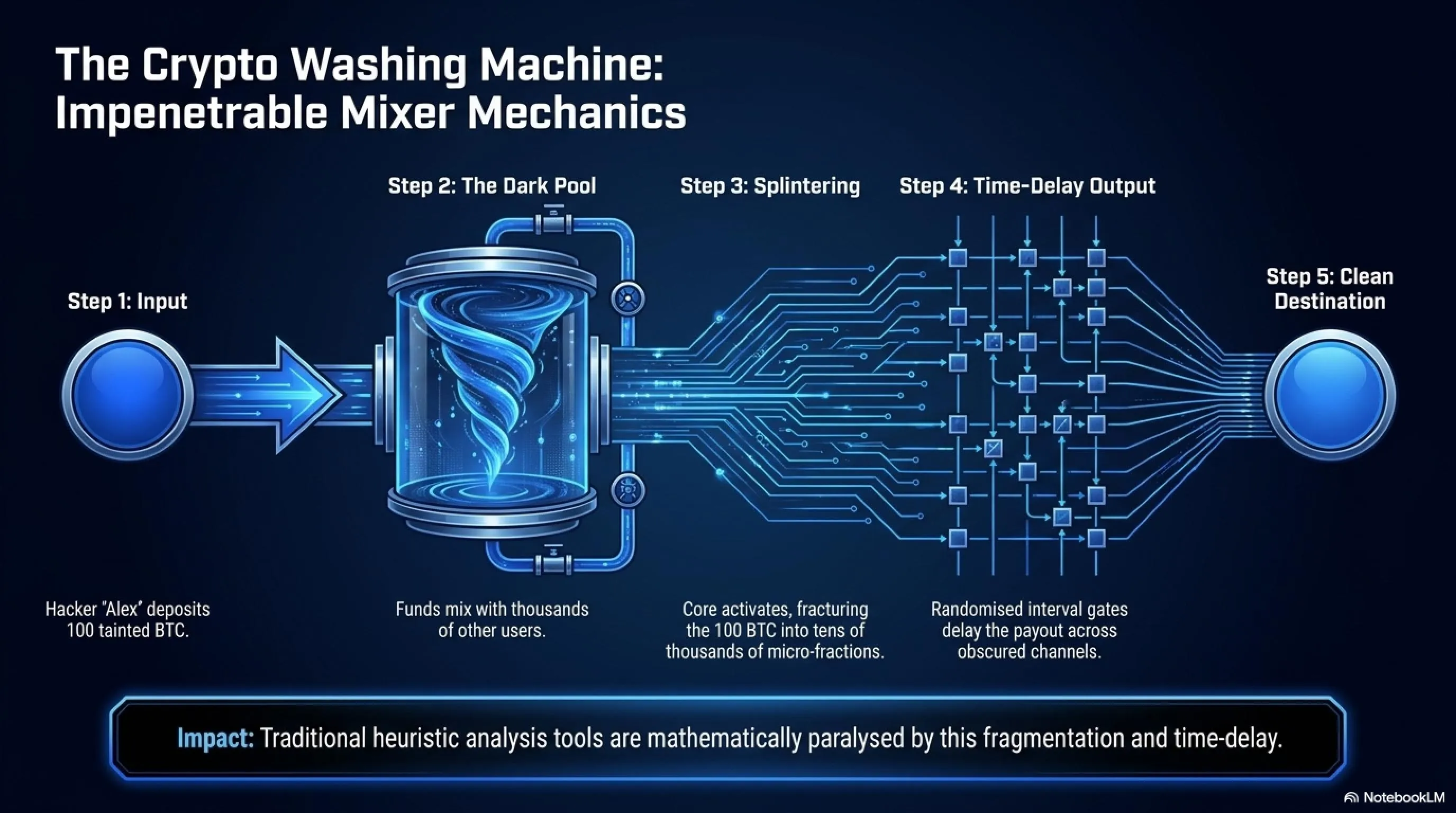
1. Suppose a hacker named Alex possesses 100 tainted Bitcoins from a hospital ransomware attack.
2. Alex deposits these 100 BTC into the mixer's "Dark Pool."
3. Within this pool, Alex's funds are obfuscated by mixing with funds from thousands of other users.
4. The processing core activates, splintering the 100 BTC into tens of thousands of micro-fractions.
5. The critical parameter of Time-Delay is applied. The system delays the payout using randomized intervals, depositing the fractions from thousands of obscured wallets into Alex's clean destination address.
The Result: Traditional heuristic analysis tools are completely paralyzed, unable to mathematically link the 100 BTC input with the myriad of fragmented, time-delayed outputs.

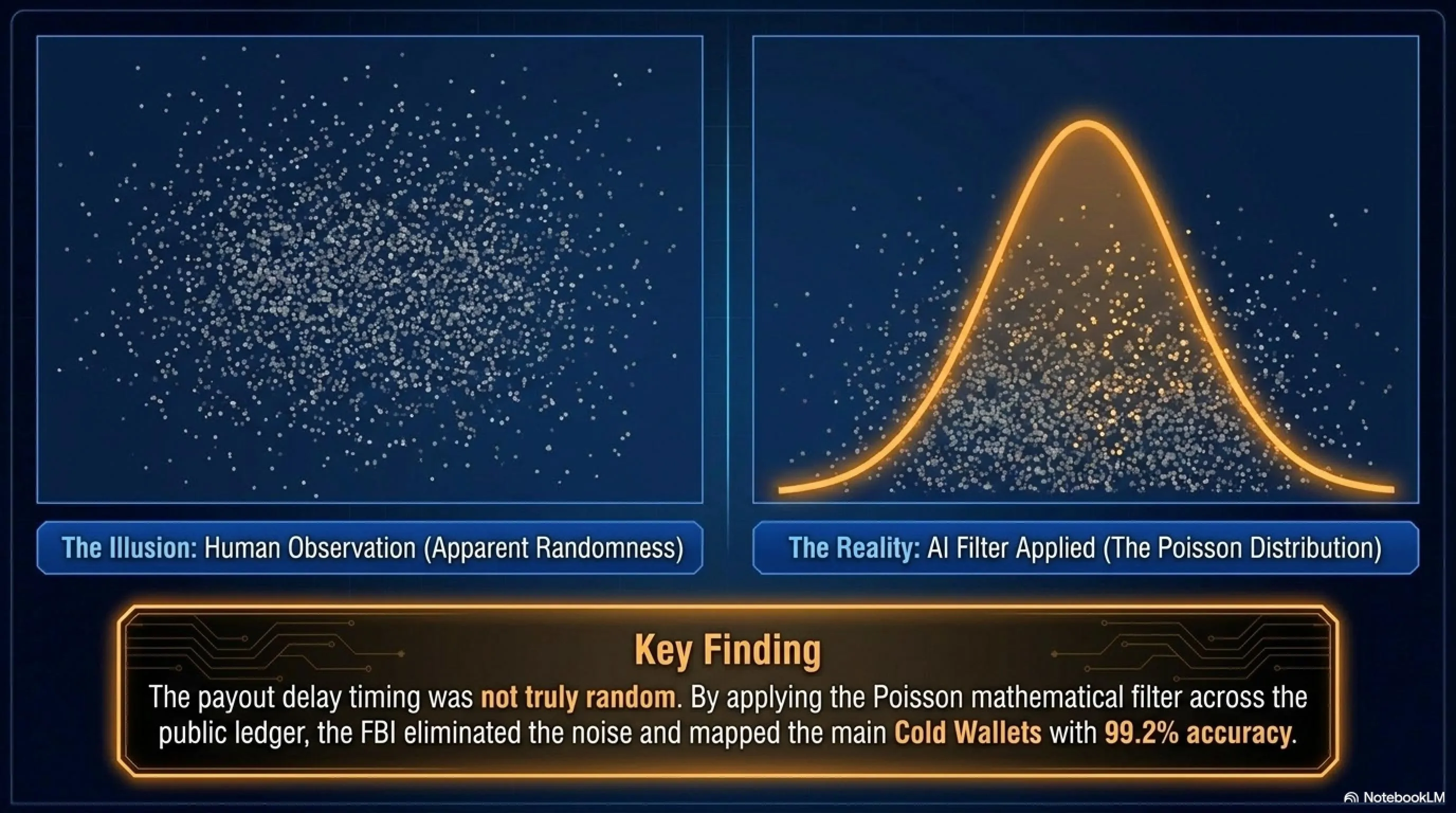
Despite this astonishing complexity, the coalition forces, aided by the analytical savants at Chainalysis, proved that no human-coded system is flawless. These engineers discovered that beneath the illusion of randomness, the mixer's Random Number Generator (RNG) harbored hidden statistical patterns—patterns visible only to advanced AI and Big Data processing.
🧪 Laboratory: Demixing Algorithm Penetration Testing
To circumvent this seemingly impenetrable mechanism, Chainalysis engineered an extensive Demixing Simulation. Within a controlled sandbox environment, they injected hundreds of FBI-flagged ransomware transactions into the AudiA6 network, utilizing advanced Machine Learning models to analyze the system's outputs.
The Astonishing Result: The AI revealed that while amounts and wallets constantly fluctuated, the mixer's software contained a subtle logic flaw. The payout delay timing was not truly random but adhered to a specific mathematical pattern known as the Poisson Distribution!
This breakthrough was unprecedented. By applying this mathematical filter across the public blockchain, the FBI eliminated the noise and pinpointed the main network's Cold Wallets with a staggering 99.2% accuracy.
Aftershocks of a Takedown: Panic in the Ransomware Ecosystem
The secondary shockwaves from the collapse of the AudiA6 network rippled through the deepest layers of the Dark Web with the ferocity of a devastating earthquake. When the servers went dark, it wasn't just the tens of millions of dollars caught mid-laundering that were frozen and seized; it was a chilling message broadcast to every operator in the underground economy. However, the greatest existential threat facing ransomware syndicates is not the seized capital. The true catastrophe is the onset of a "Systemic Liquidity Crisis."

Hacking syndicates are now sitting on hundreds of millions of dollars in Bitcoin—the culmination of months of sophisticated intrusions—but they are absolutely paralyzed. They cannot spend it. They recognize that every reputable centralized exchange is tethered to the FBI's blacklist and will instantly freeze these tainted assets upon deposit. This realization has triggered an unprecedented, paralyzing wave of panic across elite hacking forums.
🚨 DarkWeb Panic Level Index
Current State of Trust and Liquidity
With the largest laundering artery severed, the "Fear & Mistrust Index" (monitored via Exploit forum activity) has hit an all-time high. Numerous mid-tier ransomware cartels have officially announced a suspension of all planned attacks until a secure alternative is found. The market for Exploit Kits has seen a precipitous drop in demand.
Ransomware Core Operators are now hitting a brick wall when attempting to recruit independent Affiliates. These penetration testers refuse to shoulder the immense risk of breaching corporate networks for a commission that is practically un-cashable. This was the ultimate psychological objective of law enforcement: To foster internal distrust and dismantle the economic infrastructure of cybercrime.
📊 Tekin Expert Benchmark: Financial Obfuscation Networks
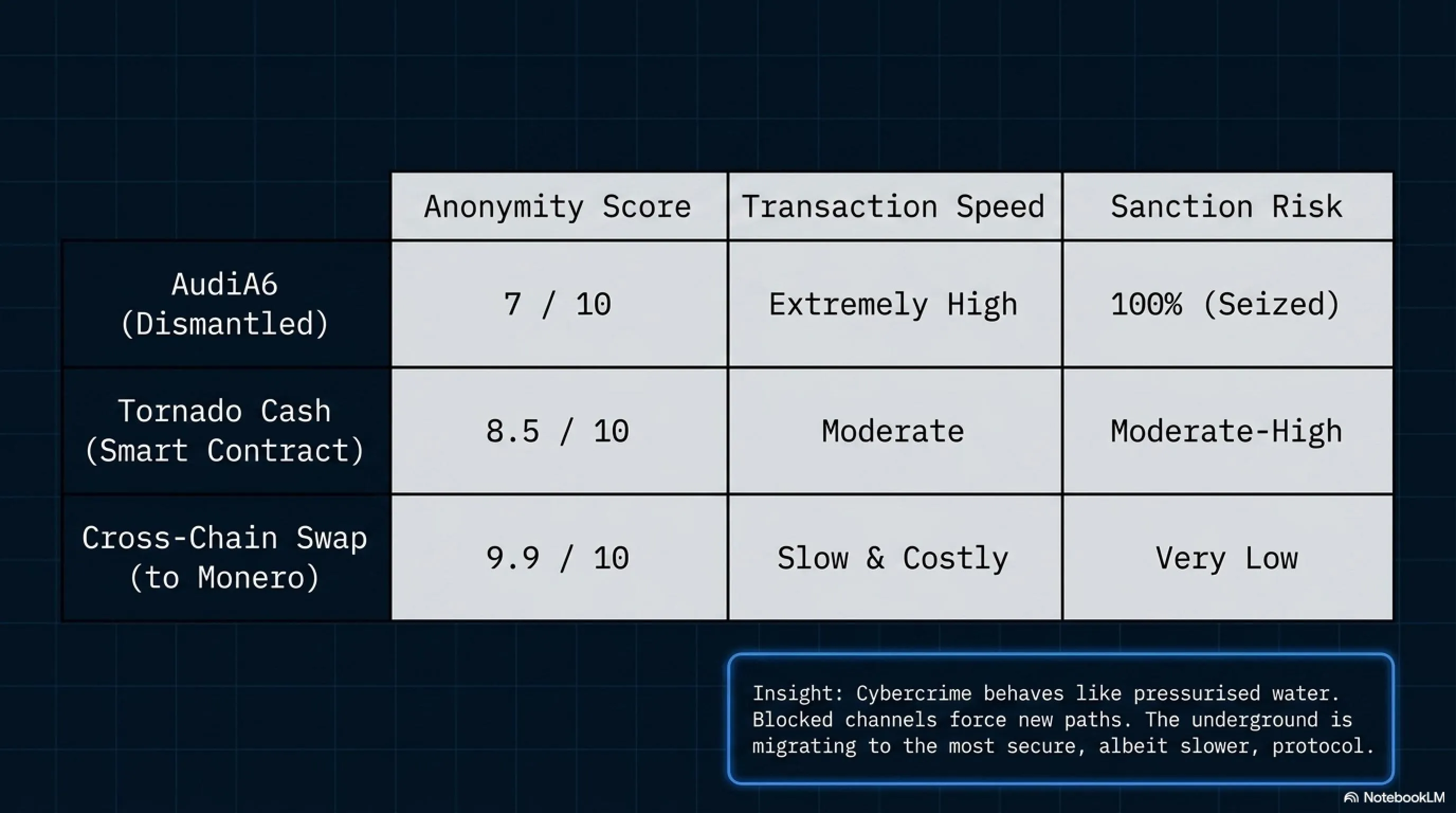
The fall of the undisputed king of mixers has raised a vital question: What comes next? The Tekin Cyber Security Department conducted a rigorous benchmark test on the most potent crypto-laundering methods to determine the definitive victor in the war of obfuscation.
| Platform / Protocol | Anonymity Score | Transaction Speed | FBI Sanction Risk |
|---|---|---|---|
| AudiA6 (Dismantled) | 7 / 10 | Extremely High | 100% (Seized) |
| Tornado Cash (Smart Contract) | 8.5 / 10 | Moderate | Moderate-High |
| Cross-Chain Swap (to Monero) | 9.9 / 10 | Slow & Costly | Very Low |

4. The Endless Cyber War: The Fate of Crypto Laundering
Organized cybercrime behaves much like water in a pressurized hydraulic system; if you violently block one channel, it will inevitably rupture and forge a new path under immense pressure. Following the collapse of the AudiA6 fortress and the exponential advancement of state-sponsored blockchain analytics, we are witnessing the genesis of a historic migration within the Dark Web. Hackers are abandoning centralized obfuscation networks in favor of Decentralized Finance (DeFi) protocols and, most critically, Privacy Coins, spearheaded by Monero (XMR).
Specs Box: Why Hackers Consider Monero the Ultimate Sanctuary

Utilizing decentralized bridges to swap tainted Bitcoin into clean Monero is known as Cross-Chain Swapping. Through this methodology, hackers eliminate the need to trust a centralized entity (like AudiA6's administrators). Instead, the transaction is governed entirely by mathematical smart contracts. Law enforcement is deprived of a physical server to raid with helicopters.
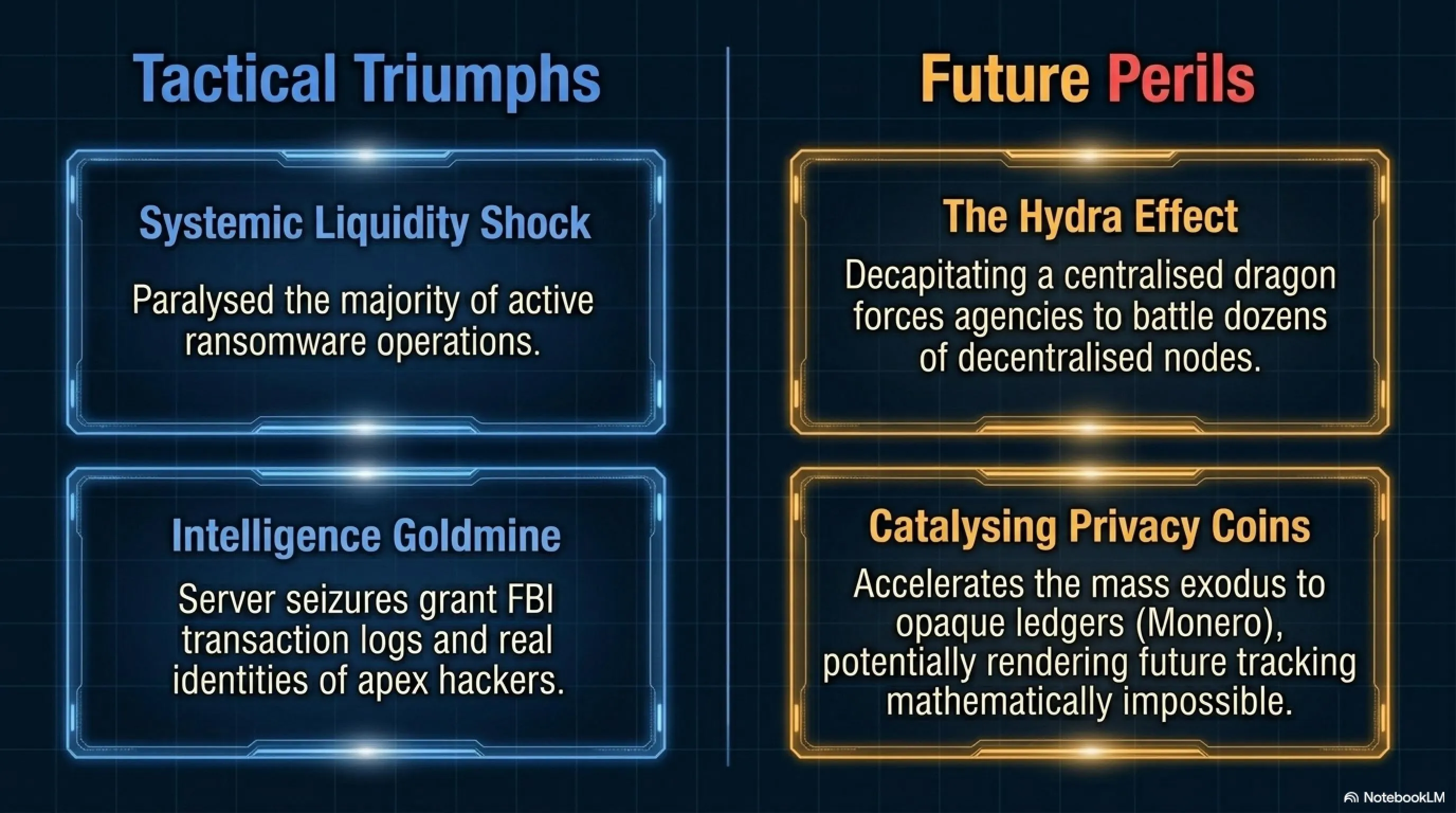
🟢 Tactical Triumphs (Pros)
- Systemic Liquidity Shock: Successfully paralyzing a vast majority of active ransomware operations.
- Intelligence Goldmine: Seizing AudiA6 servers grants the FBI access to transaction logs and the real identities of apex international hackers.
🔴 Future Perils (Cons)
- The Hydra Effect: By decapitating a centralized dragon, agencies must now battle dozens of decentralized, harder-to-track nodes.
- Catalyzing Privacy Coins: Accelerating the hackers' mass exodus to Monero, potentially rendering tracking impossible.

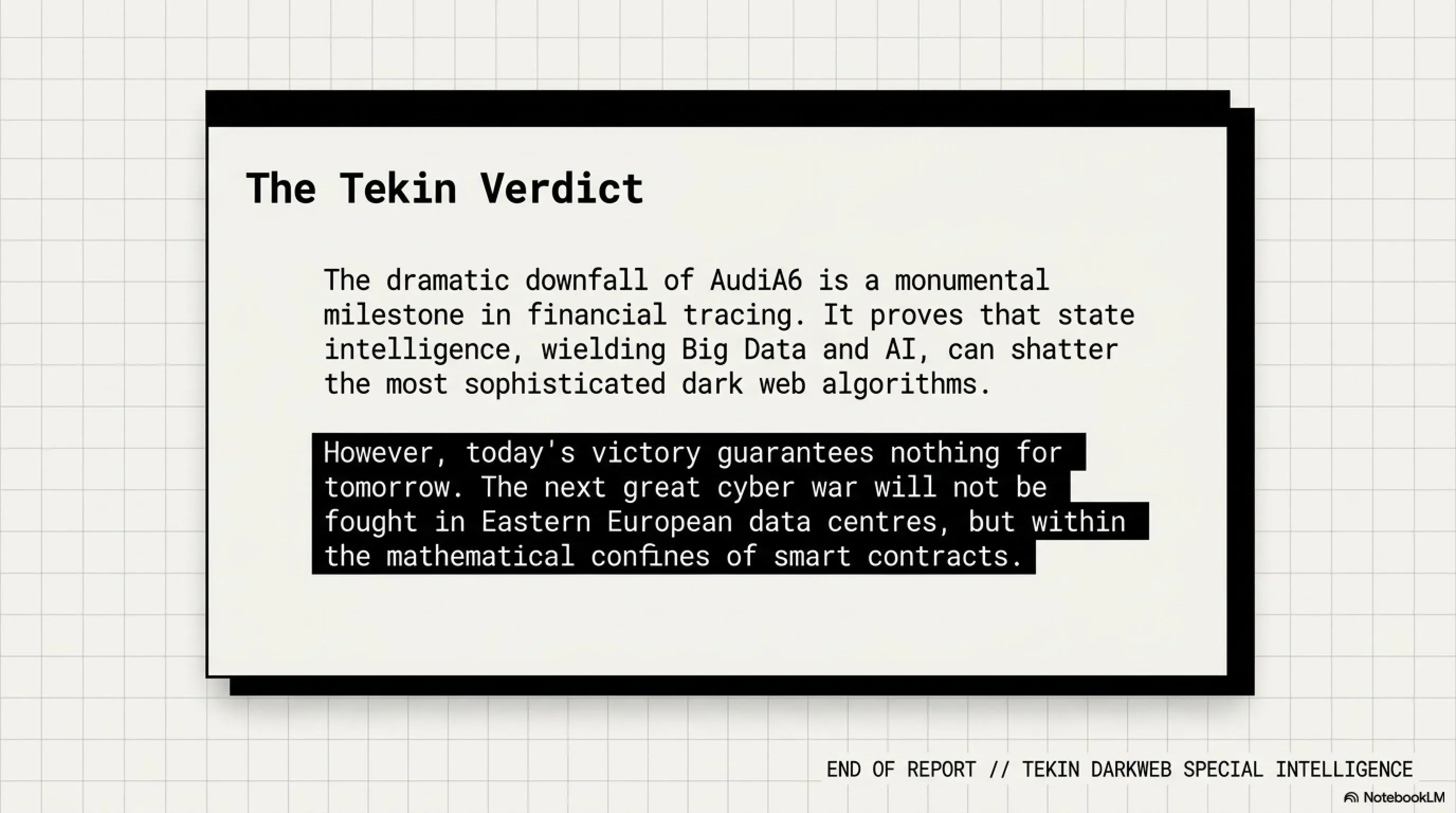
🏁 The Tekin Verdict
The dramatic downfall of the AudiA6 network is far more than news of a few cyber-arrests; it is a monumental milestone in the evolution of financial tracing. This operation demonstrated that state intelligence, wielding Big Data and AI, can shatter the most sophisticated dark web algorithms. However, today's victory guarantees nothing for tomorrow. The next great cyber war will not be fought in Eastern European data centers, but within the mathematical confines of smart contracts.

❓ Deep Dive: Frequently Asked Questions (FAQ)
1. What exactly was the AudiA6 network, and why was it termed the "Hackers' Central Bank"?
AudiA6 was a highly secretive Dark Web service exclusively providing cryptocurrency laundering (mixing/tumbling) for cyber cartels. Due to its massive liquidity and ability to wash millions in stolen Bitcoin daily, it served as the financial backbone of the cybercrime economy.
2. How did Chainalysis hack the mixer's encrypted algorithm?
Chainalysis engineers utilized a technique called 'Demixing'. Employing AI models, they discovered that the mixer's time delays adhered to the Poisson Distribution pattern. This mathematical breakthrough allowed them to link origin and destination wallets.
3. What happens to the hackers' assets following the server seizure?
Beyond confiscating millions in transit, authorities now possess the "logbooks." Even if a hacker successfully hid their laundered funds, depositing them into a legitimate exchange like Binance will result in an automatic account freeze.
4. Will ransomware attacks cease now that AudiA6 is dismantled?
In the short term, yes; many operations are suspended due to the liquidity crisis. Long-term, however, syndicates will migrate toward decentralized smart contracts (DeFi) to bypass this vulnerability.
5. Why don't hackers exclusively use the untraceable coin "Monero"?
The primary obstacle is liquidity. To cash out multi-million dollar ransoms, hackers require high market volume. Most major exchanges have delisted Monero under regulatory pressure, making large-scale cashing out extremely difficult.
📚 Trusted Intelligence Sources
- Press Releases by the US Department of Justice (DOJ) and Europol.
- Technical forensics reports by Chainalysis.
- Statistical data extrapolated from Elliptic underground economy reports.
- Continuous monitoring of Dark Web exploit forums by Tekin Plus.
🌐 Stay Connected With Us 🎮✨
For the latest tech, gaming, and gadget news, follow us on our official social media channels:
Additional Gallery: 🛡️ Tekin Darkweb Special: The Fall of the AudiA6 Money Laundering Empire