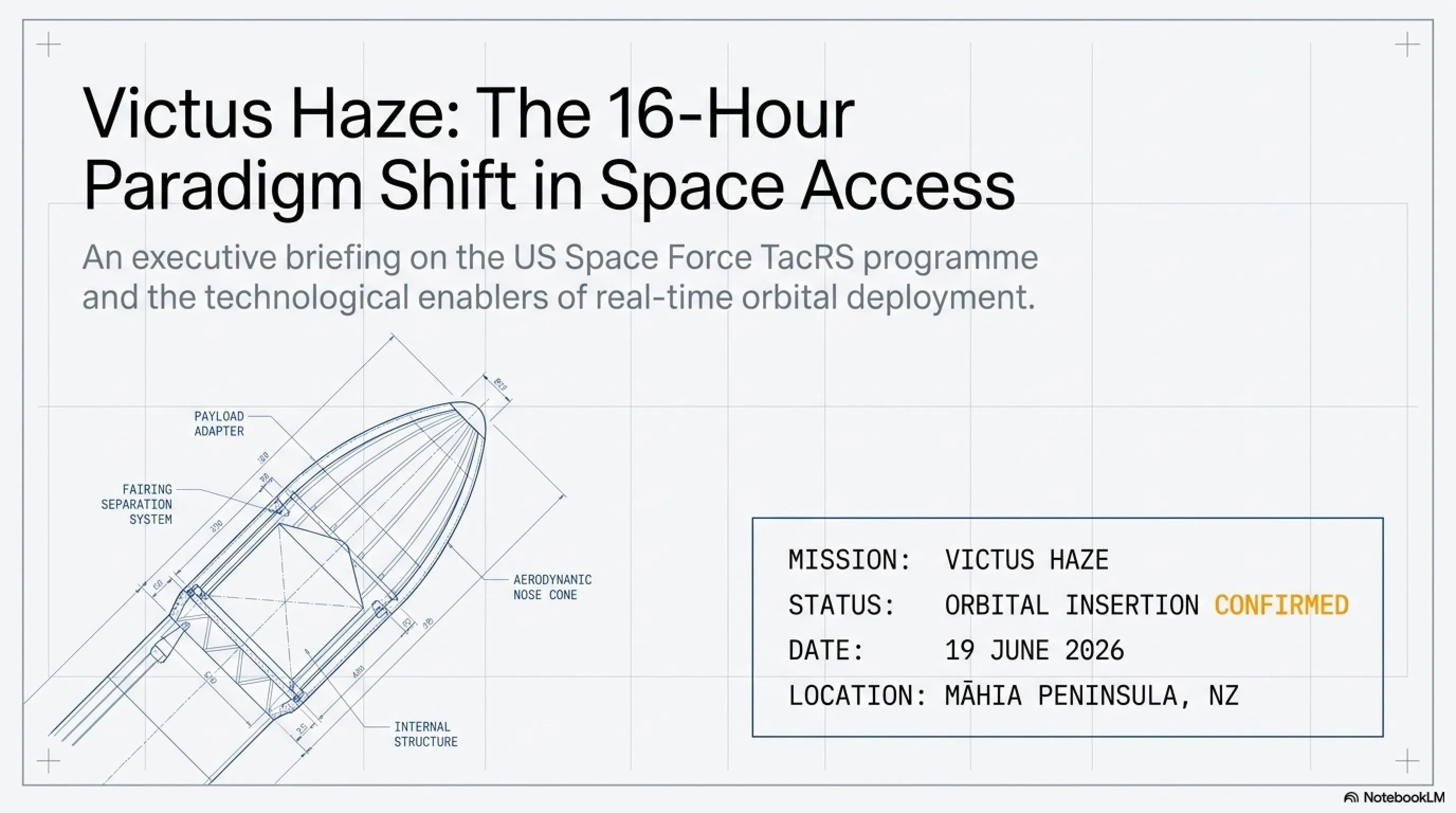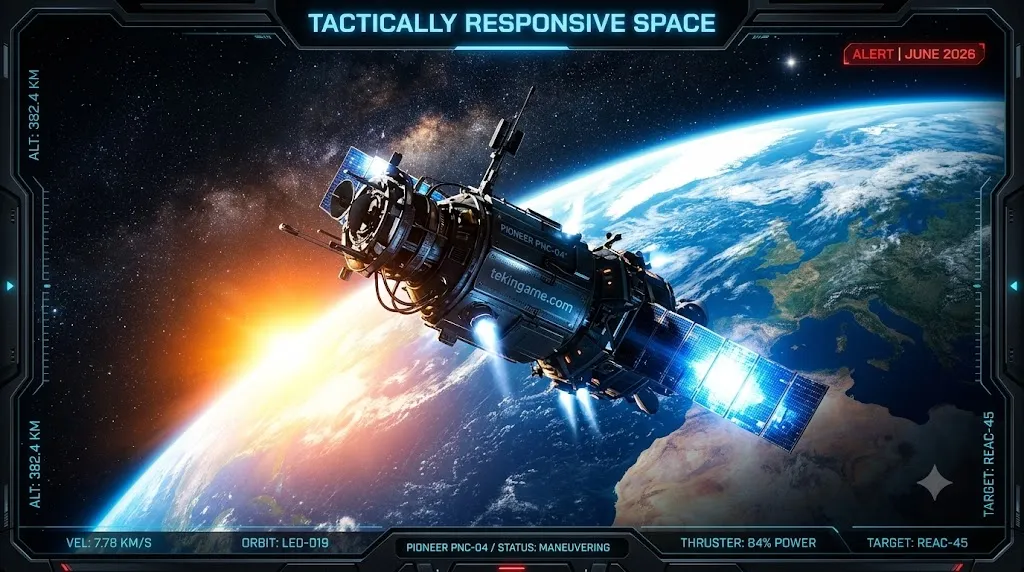
Historic Record: Satellite Launch in 16 Hours 42 Minutes
- 🎮New World Record- 16 hours 42 minutes from order to launch - 10 hours better than previous record
- 🎧Victus Haze Mission- Part of US Space Force TacRS program for rapid response
- 🚀New Zealand Launch- Electron rocket launched from Launch Complex 1 on June 19
When Speed of Response Becomes the Difference Between Victory and Defeat
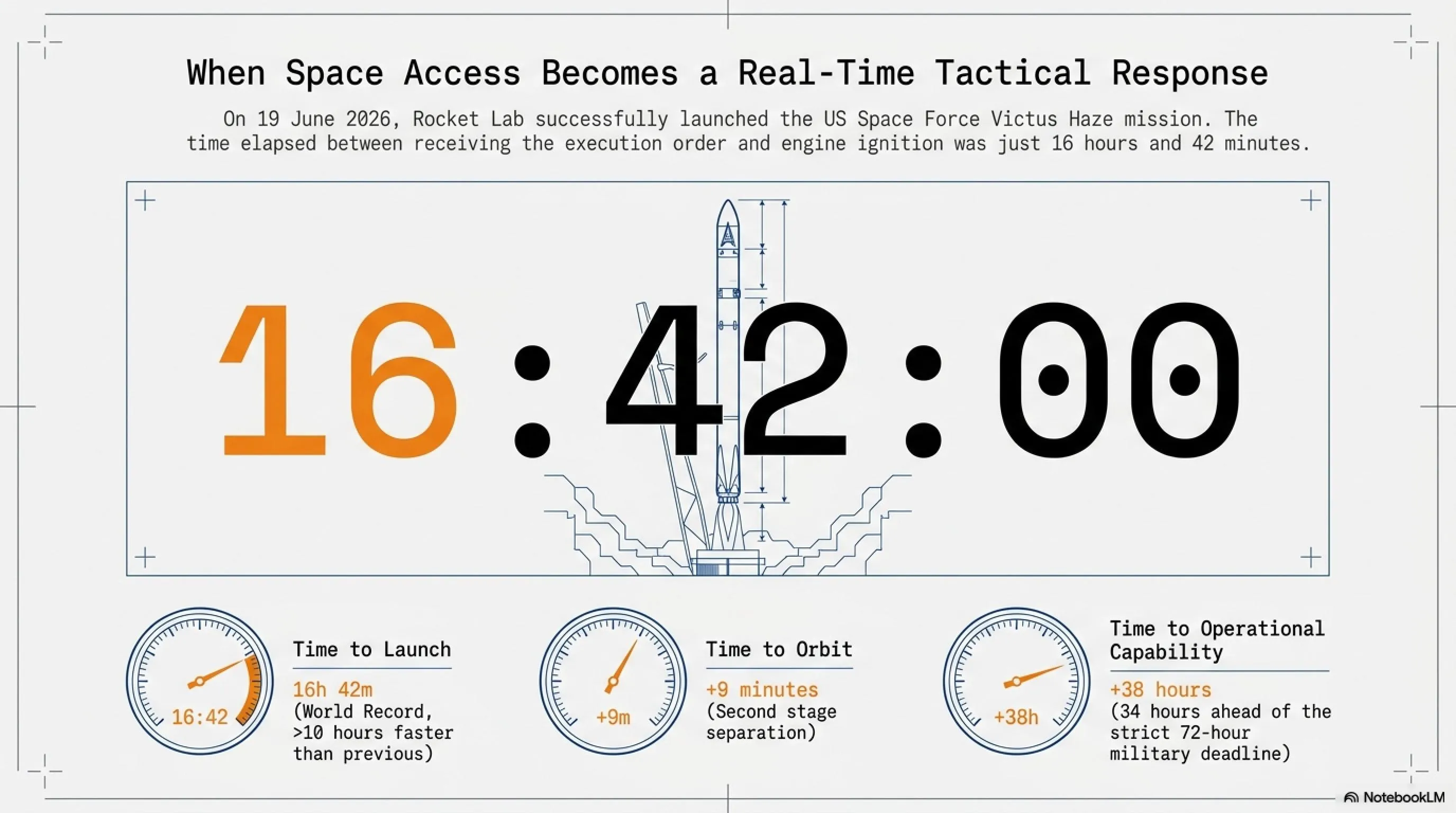
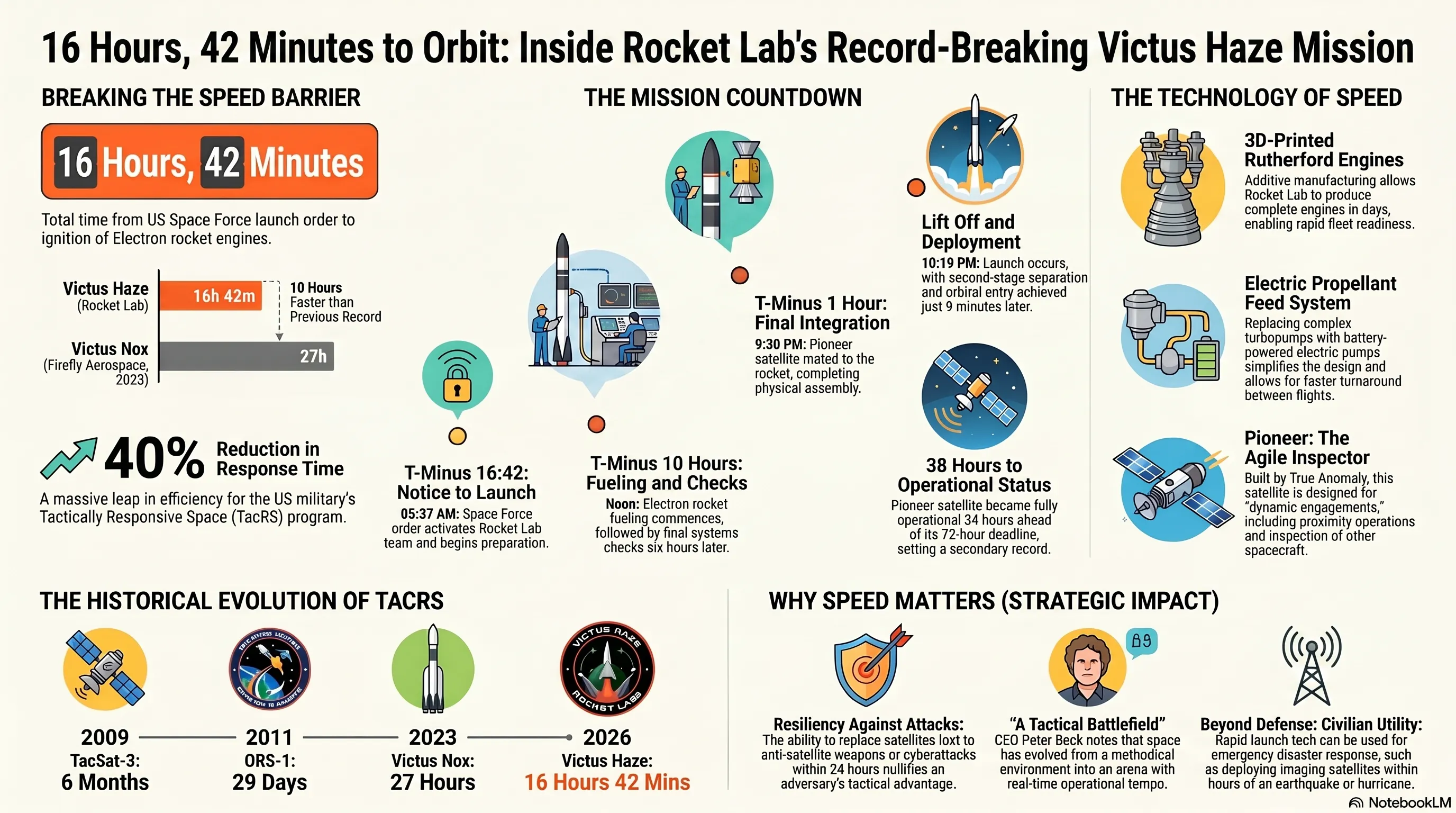
At 10:19 PM local New Zealand time on June 19, 2026, Rocket Lab's Electron rocket lifted off from the launch pad on the Māhia Peninsula toward Earth orbit. But what distinguished this launch from thousands of others was the extraordinarily short time that elapsed between receiving the launch order from the United States Space Force and the moment the engines ignited: just 16 hours and 42 minutes.
This record, more than 10 hours faster than the previous record set by Firefly Aerospace in September 2023, demonstrates how the space industry is transforming from a months-long planning process into a real-time tactical response capability. This transformation has strategic importance not only for the US Space Force but for the entire commercial space industry.
The achievement represents a fundamental shift in how military and national security organizations conceive of space access. For decades, satellite deployment was a deliberate, methodical process involving extensive planning, preparation, and coordination across multiple agencies. Launch schedules were set months or even years in advance, with limited flexibility to respond to emerging threats or urgent operational needs.
The Victus Haze mission demonstrates that this paradigm is rapidly becoming obsolete. In an era where space assets are increasingly vulnerable to anti-satellite weapons, cyberattacks, and other forms of interference, the ability to rapidly reconstitute lost capabilities or deploy new assets in response to changing conditions is becoming a strategic necessity.
The Victus Haze Mission: Real-World Test of Responsive Space
Victus Haze is part of the United States Space Force's Tactically Responsive Space (TacRS) program, executed by the Space Safari Program Office. The program's goal is to develop capabilities that allow the Space Force to respond to threats or urgent operational needs in orbit in the shortest possible time.
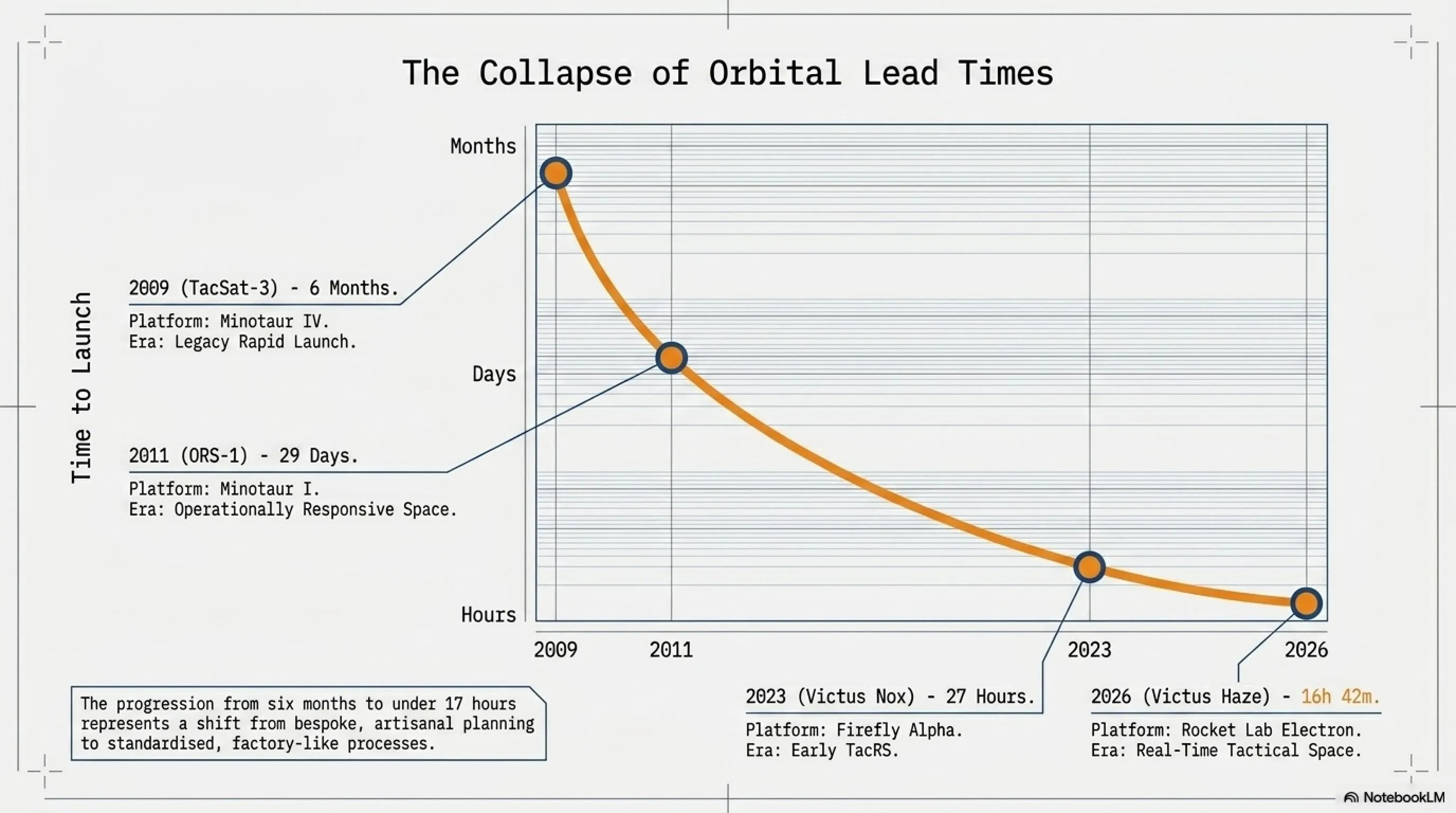
This mission is the second live TacRS test. The previous mission, Victus Nox, was conducted by Firefly Aerospace in September 2023 and set the previous record at 27 hours from notice to launch. Rocket Lab has now shattered that record with approximately a 40% reduction in response time.
Understanding TacRS: Tactically Responsive Space
Tactically Responsive Space (TacRS) is a US military program aimed at developing the capability to rapidly launch and deploy satellites in response to emerging threats or urgent operational needs.
In modern warfare, satellites are critical for communications, intelligence gathering, navigation, and coordinating forces. If an adversary can disable critical satellites, the ability to quickly respond by launching replacement satellites could determine the outcome of a conflict.
The TacRS program tests this scenario under real conditions: the Space Force orders a private company to place a satellite in orbit in the shortest possible time. Success requires not just fast launch vehicles, but also rapid payload integration, streamlined regulatory processes, and highly automated ground systems.
The program measures success across multiple dimensions: time from notice to launch, time from launch to orbital insertion, time from insertion to operational capability, and overall system reliability under compressed timelines.
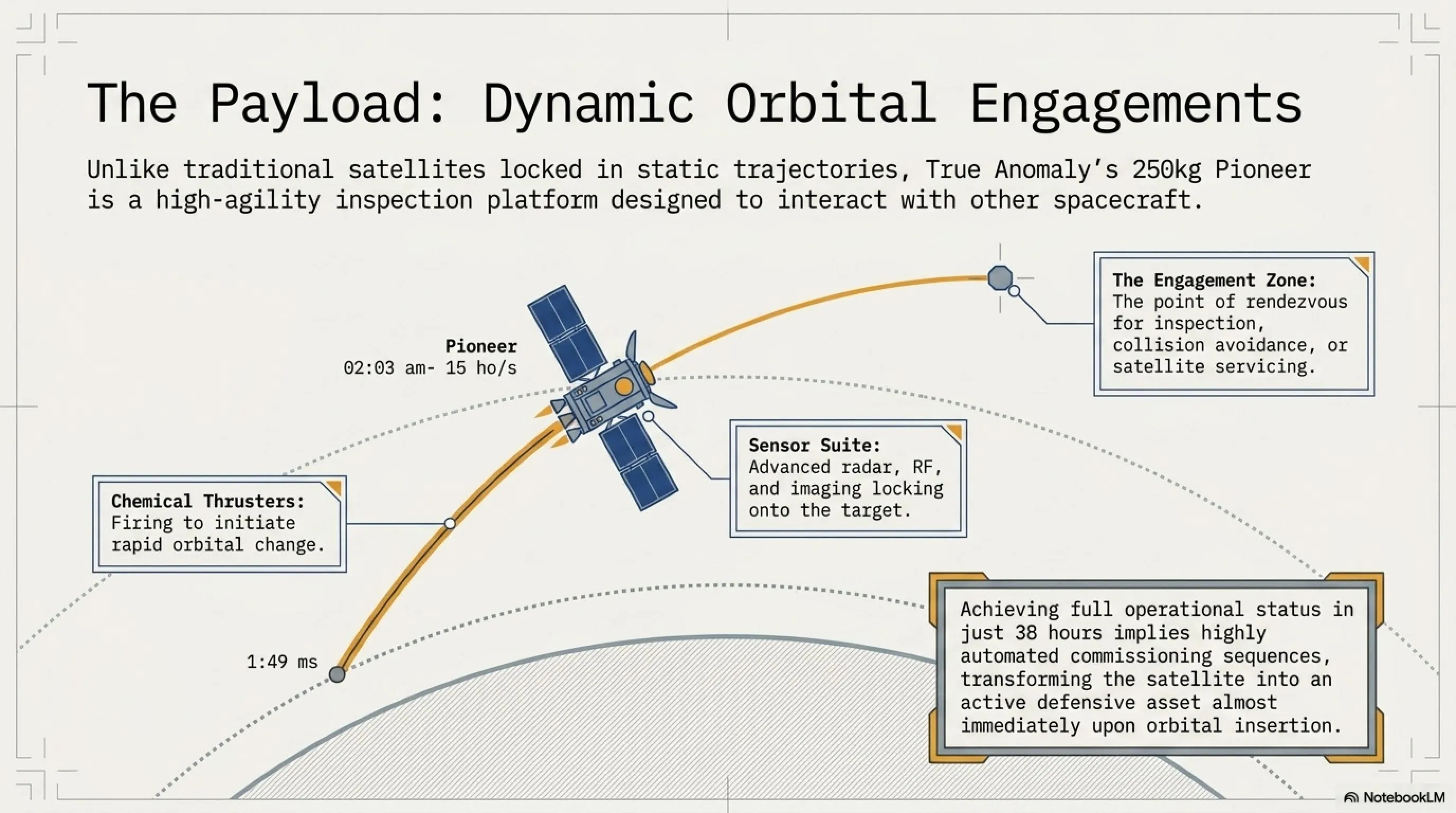
The Pioneer satellite launched in this mission was built by True Anomaly and is an inspection and orbital maneuvering platform. This satellite can perform complex movements in orbit and engage in "dynamic engagements" with other satellites—a capability that is critical for military and defensive missions.
According to official Space Force statements, Pioneer is designed to rendezvous with another satellite already in orbit and perform proximity operations. This capability has applications ranging from satellite servicing and debris removal to inspection of potentially hostile spacecraft.
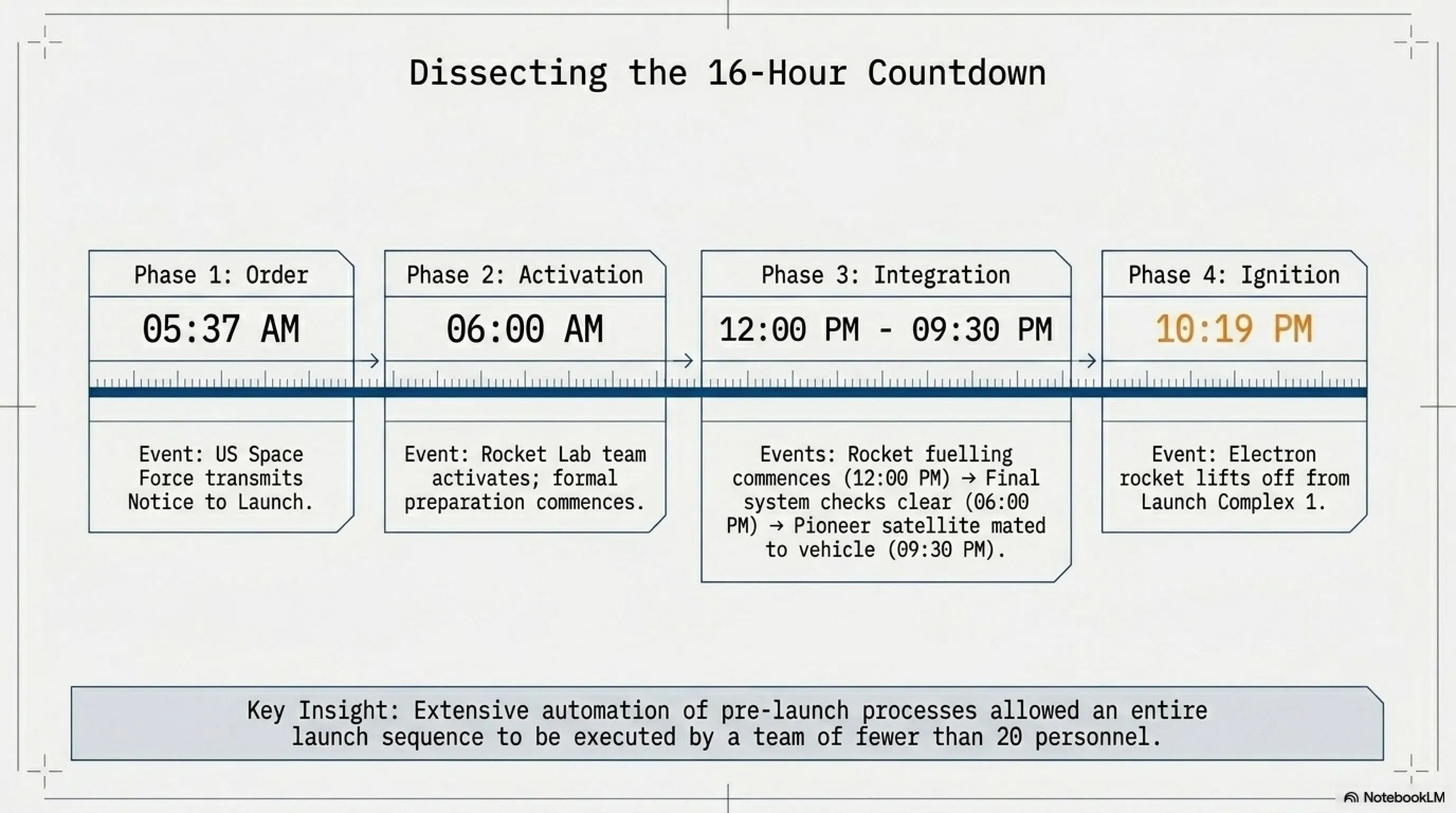
How 16 Hours and 42 Minutes Became Possible
To understand why this record is revolutionary, it's important to recognize that launching a rocket typically involves a process requiring months of planning. From procuring propellant to conducting safety reviews, coordinating with air traffic control, confirming weather conditions, and preparing the payload, each of these steps traditionally requires weeks of lead time.
But Rocket Lab and the US Space Force were able to compress this entire process to less than 17 hours. This required extensive pre-positioning of assets, automation of processes, and precise coordination between different teams.
Precise Timeline: Victus Haze Mission
| Time | Event |
|---|---|
| Day 1 - 05:37 AM | Space Force sends Notice to Launch to Rocket Lab |
| Day 1 - 06:00 AM | Rocket Lab team activates, preparation process begins |
| Day 1 - 12:00 PM | Electron rocket fueling commences |
| Day 1 - 06:00 PM | Final launch system checks |
| Day 1 - 09:30 PM | Pioneer satellite mated to rocket |
| Day 2 - 10:19 PM | Electron rocket launches from Launch Complex 1 |
| +9 minutes | Second stage separation, satellite enters orbit |
| +38 hours | Pioneer satellite becomes operational (34 hours ahead of 72-hour deadline) |
Source: Official Rocket Lab and Space Force announcements
Notably, the Pioneer satellite itself also set a record: the spacecraft became fully operational within 38 hours after launch, which was 34 hours ahead of the 72-hour deadline. This demonstrates that not only the launch but the entire space operations chain is accelerating.
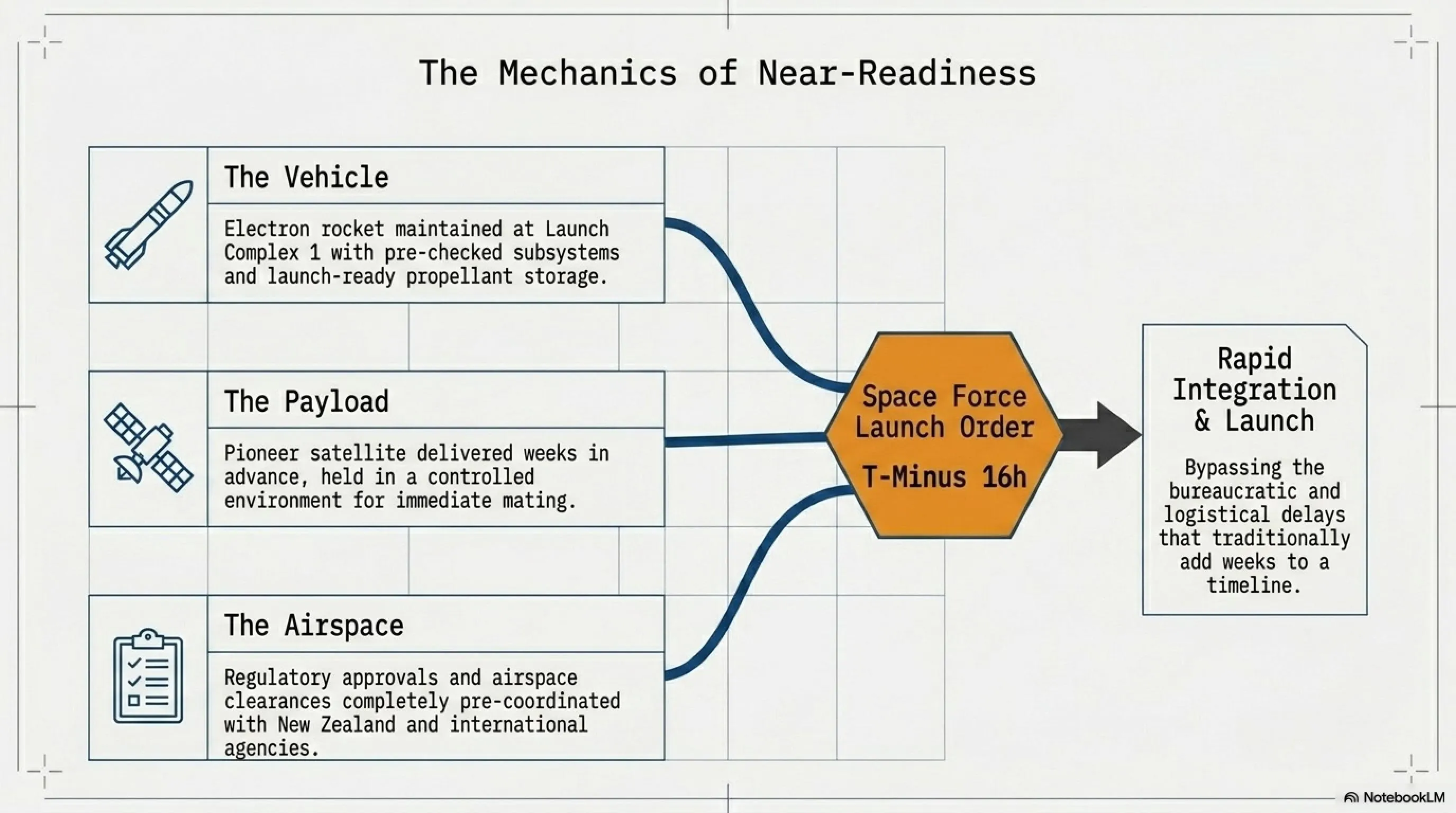
The speed achieved required several key enablers. First, Rocket Lab maintained the Electron vehicle in a state of near-readiness at Launch Complex 1, with most subsystems pre-checked and propellant storage facilities maintained at launch-ready status. Second, the Pioneer satellite was delivered to the launch site weeks in advance and kept in a controlled environment, allowing for rapid integration once the launch order arrived.
Third, all necessary regulatory approvals and airspace clearances were pre-coordinated with New Zealand aviation authorities and international space agencies. This eliminated bureaucratic delays that typically add days or weeks to launch preparation. Fourth, Rocket Lab's highly automated launch operations reduced the number of required personnel and minimized human error factors.
Comparing with Previous Records: A Dramatic Leap Forward
To better understand the significance of this achievement, let's compare it with similar previous missions.
TacRS Missions Comparison Table
| Mission | Launch Provider | Date | Response Time | Details |
|---|---|---|---|---|
| Victus Haze | Rocket Lab | June 2026 | 16 hours 42 minutes | New world record, Electron launch from New Zealand |
| Victus Nox | Firefly Aerospace | September 2023 | 27 hours | Previous record, Alpha launch from Vandenberg |
| ORS-1 | Minotaur I | June 2011 | 29 days | First Operationally Responsive Space mission |
| TacSat-3 | Minotaur IV | May 2009 | 6 months | Previous generation rapid launch |
As demonstrated, progress from 6 months (2009) to 16 hours (2026) represents an enormous technological and operational leap.
In 2009, the TacSat-3 mission required six months for preparation. In 2011, this was reduced to 29 days. In 2023, Firefly Aerospace brought it down to 27 hours. And now in 2026, Rocket Lab has reduced it to less than 17 hours.
This progression reflects not just incremental improvements but fundamental changes in how launch operations are conducted. Modern launch providers have moved away from bespoke, artisanal approaches to highly standardized, factory-like processes. Rocket Lab, in particular, has pioneered the concept of treating rocket production and launch operations more like manufacturing than traditional aerospace.
Electron Rocket Technology: Designed for Speed
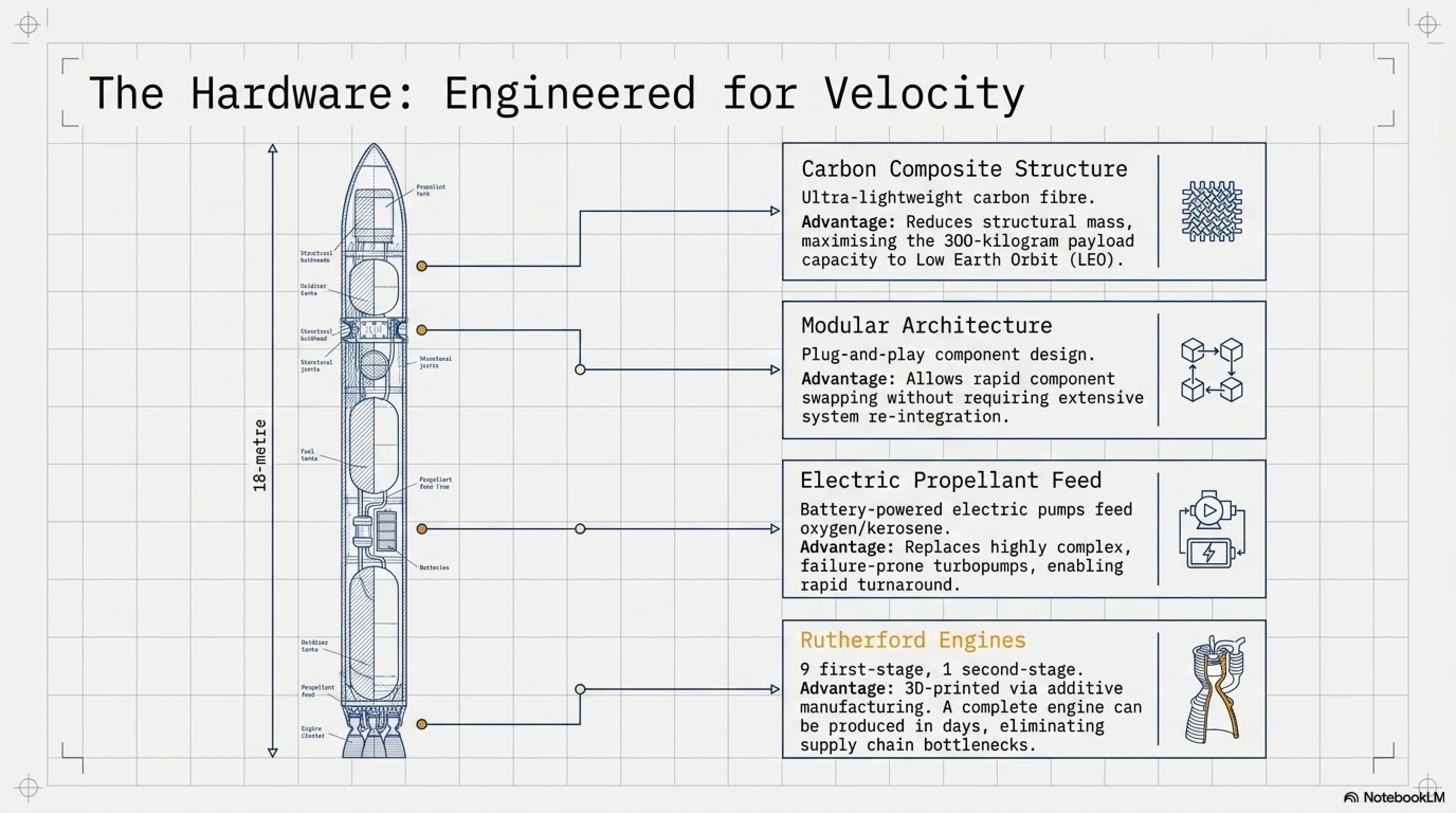
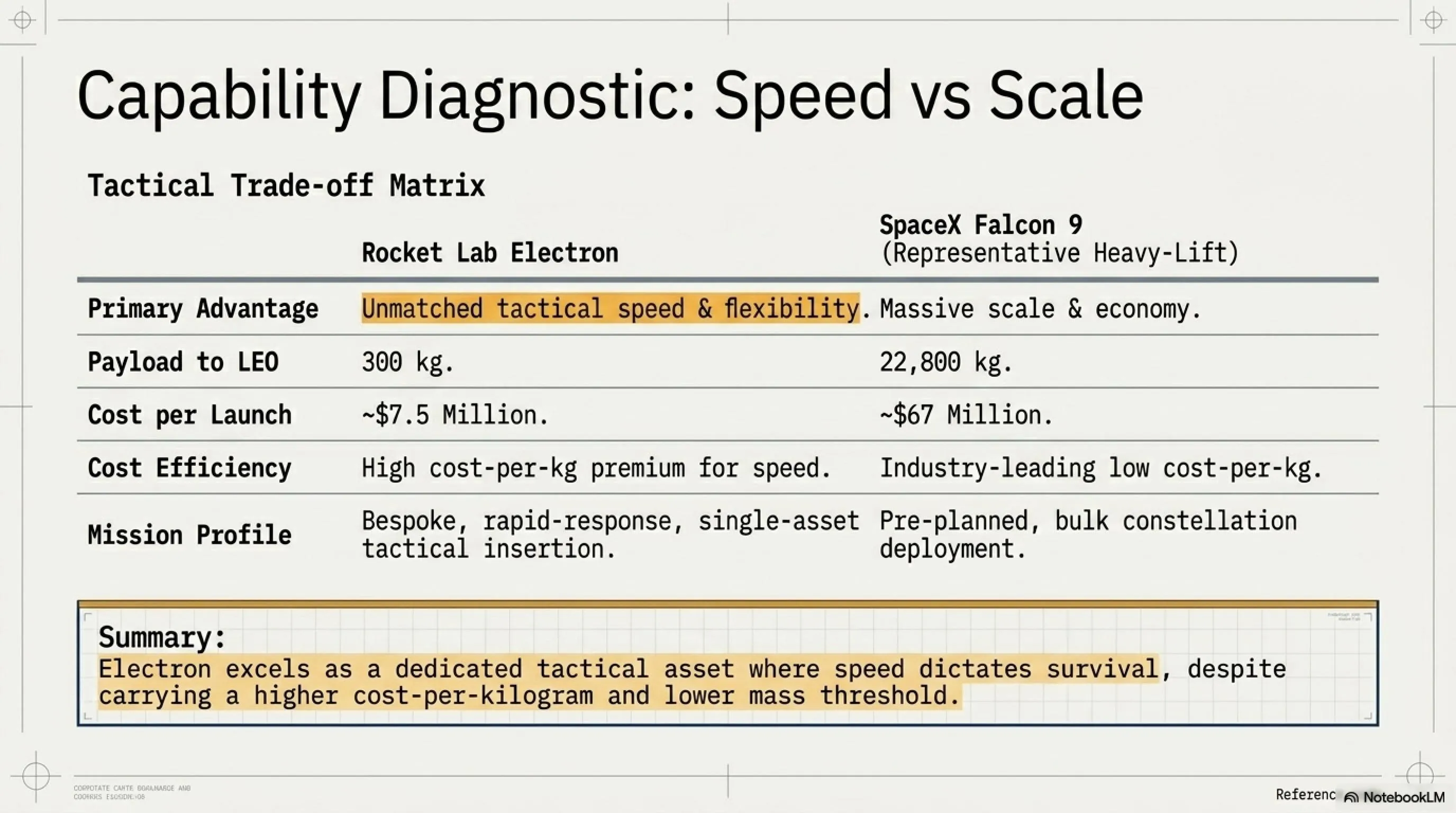
The Electron rocket is one of the lightest and most efficient orbital rockets in the world. This two-stage vehicle stands 18 meters tall with a 1.2-meter diameter and can deliver payloads up to 300 kilograms to low Earth orbit (LEO).
What makes Electron ideal for tactically responsive missions are several key features:
- 3D-printed Rutherford engines: All nine first-stage engines and the single second-stage engine are manufactured using additive manufacturing, dramatically accelerating production and repair timelines. Rocket Lab can produce a complete engine in days rather than months.
- Electric propellant feed system: Instead of complex turbopump systems, Electron uses battery-powered electric pumps to feed propellant to the engines. This eliminates one of the most failure-prone subsystems in traditional rockets and enables rapid turnaround between flights.
- Carbon composite structure: The rocket body is constructed from carbon fiber composites that are both lightweight and strong, reducing structural mass and improving payload fraction.
- High automation: Pre-launch processes are heavily automated, reducing required personnel count and preparation time. The entire launch can be conducted by a team of fewer than 20 people.
- Modular design: Electron's modular architecture allows for rapid component replacement or upgrade without extensive system re-integration.
The Rutherford engine, in particular, represents a breakthrough in rocket propulsion. Named after New Zealand-born physicist Ernest Rutherford, these engines are the first oxygen/kerosene engines to use electric pumps fed by onboard lithium polymer batteries. The electric pump approach eliminates the gas generator or staged combustion cycle used in traditional rocket engines, simplifying the design and improving reliability.
Pioneer Satellite: The Space Force's Eye and Hand in Orbit
The satellite launched on this mission, Pioneer, was built by True Anomaly and represents a new class of orbital inspection and maneuver platforms. Unlike traditional satellites that maintain relatively static orbits, Pioneer is designed for high-agility operations that allow it to rapidly change orbital position and interact with other spacecraft.
Pioneer is equipped with advanced propulsion systems that enable it to perform complex orbital maneuvers. This capability is essential for missions such as inspecting other satellites, rescuing or servicing damaged spacecraft, or even active defense against orbital threats.
In official Space Force statements, it was noted that Pioneer would perform "dynamic engagements" with another satellite already in orbit. This military terminology refers to pursuit, approach, and interaction with moving targets in space—a capability with obvious national security implications.
Pioneer Satellite Technical Specifications
- Manufacturer: True Anomaly
- Mass: Approximately 250 kilograms
- Dimensions: Classified (military security)
- Propulsion System: Multiple chemical thrusters for rapid maneuvers
- Sensors: Advanced imaging systems, radar, and RF sensors
- Capabilities: Close-proximity inspection, moving target tracking, collision avoidance maneuvers
- Mission Lifetime: Minimum 2 years
- Orbit: Low Earth Orbit (LEO) with variable altitude
- Communication: Encrypted military-grade communications systems
Note: Some technical details are classified for national security reasons.
The satellite's rapid commissioning—fully operational 38 hours after launch—is as impressive as the launch itself. Traditional satellites often require weeks or even months of on-orbit checkout and calibration before beginning operations. Pioneer's accelerated timeline suggests extensive ground testing and simulation, as well as highly automated commissioning sequences that minimize the need for manual intervention.
Strategic Importance: Why Speed in Space Matters
The question may arise: why is the ability to launch a satellite in 16 hours so important? The answer lies in the nature of 21st-century warfare and geopolitical competition.
In modern conflicts, satellites are a cornerstone of military power. From secure communications to GPS navigation systems, from intelligence gathering and reconnaissance to precision strike coordination, everything depends on satellites. If an adversary can disable a nation's satellites (whether through anti-satellite weapons, jamming, or cyberattacks), that nation becomes severely compromised.
In this scenario, the ability to rapidly replace damaged or lost satellites could determine the outcome of a conflict. Previously, this would have taken months, but now with technologies like Electron, it can be accomplished within hours.
This capability transforms the strategic calculus of space warfare. An adversary considering attacking space assets must now account for the fact that those assets can be rapidly reconstituted, potentially nullifying the advantage gained from the initial attack.
Space Warfare Scenario: Why Speed is Critical
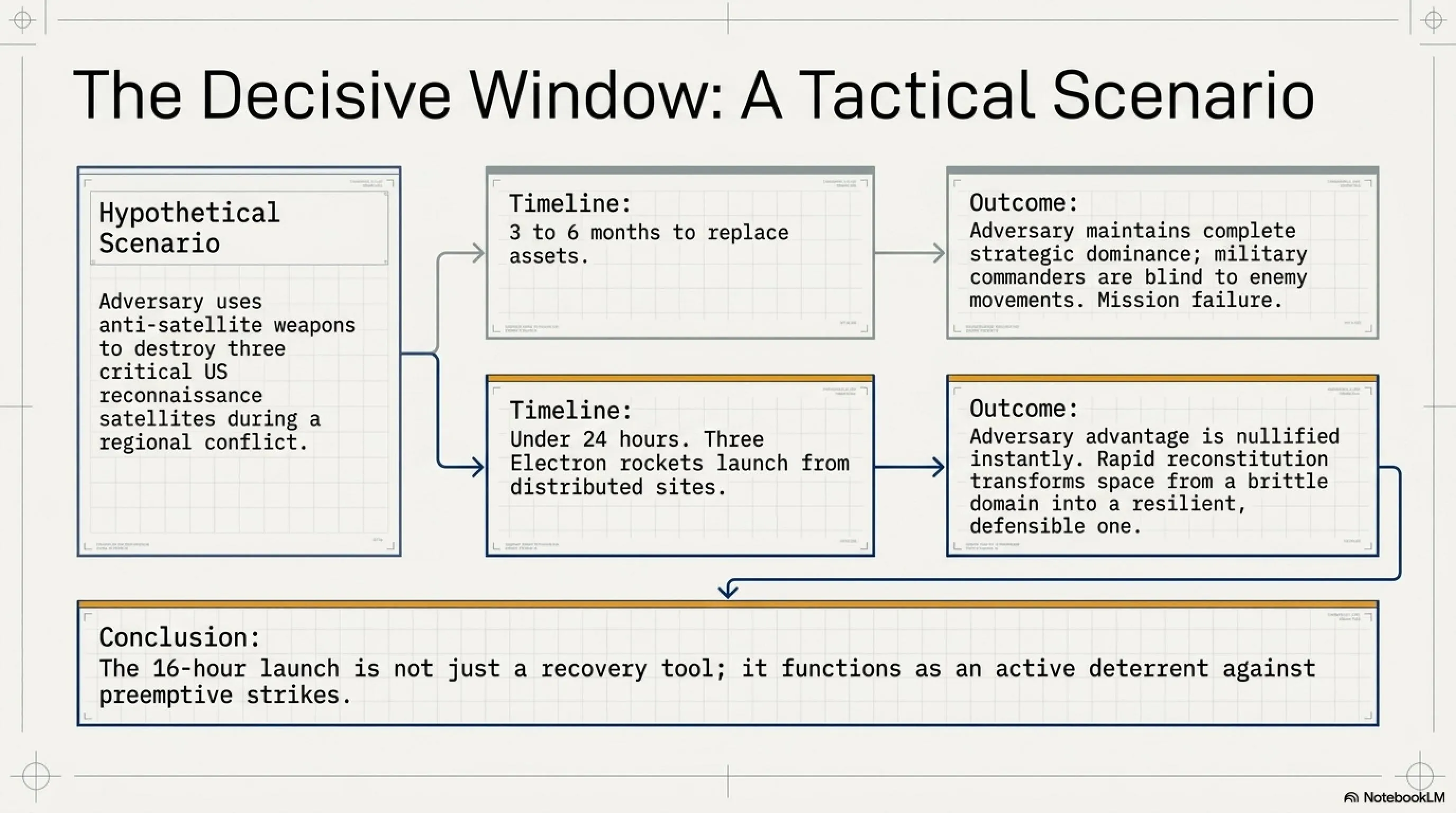
Hypothetical Scenario: Imagine a rival power, during a regional conflict, uses anti-satellite weapons to destroy three critical US reconnaissance satellites in low Earth orbit. Without these satellites, US military commanders can no longer monitor enemy force movements.
Response Before TacRS: Replacing the satellites would take 3-6 months. During this time, the adversary has complete strategic advantage.
Response With TacRS: Within 24 hours, three Electron rockets launch from different sites and place replacement satellites in orbit. The adversary's advantage evaporates within one day.
This is the difference between victory and defeat in modern conflict. The ability to rapidly reconstitute space capabilities transforms space from a brittle, fragile domain into a resilient, defensible one.
Moreover, the mere existence of this capability serves as a deterrent. If an adversary knows that attacking space assets will provide only a fleeting advantage, they may be less likely to initiate such attacks in the first place.
📚 Classified & Related Dossiers in TekinGame
If you wish to explore beyond this report and delve into cybernetic frontiers and autonomous AI architectures, do not miss these three exclusive deep-dives in the Tekin Garage:
Launch Complex 1: New Zealand's Gateway to Space
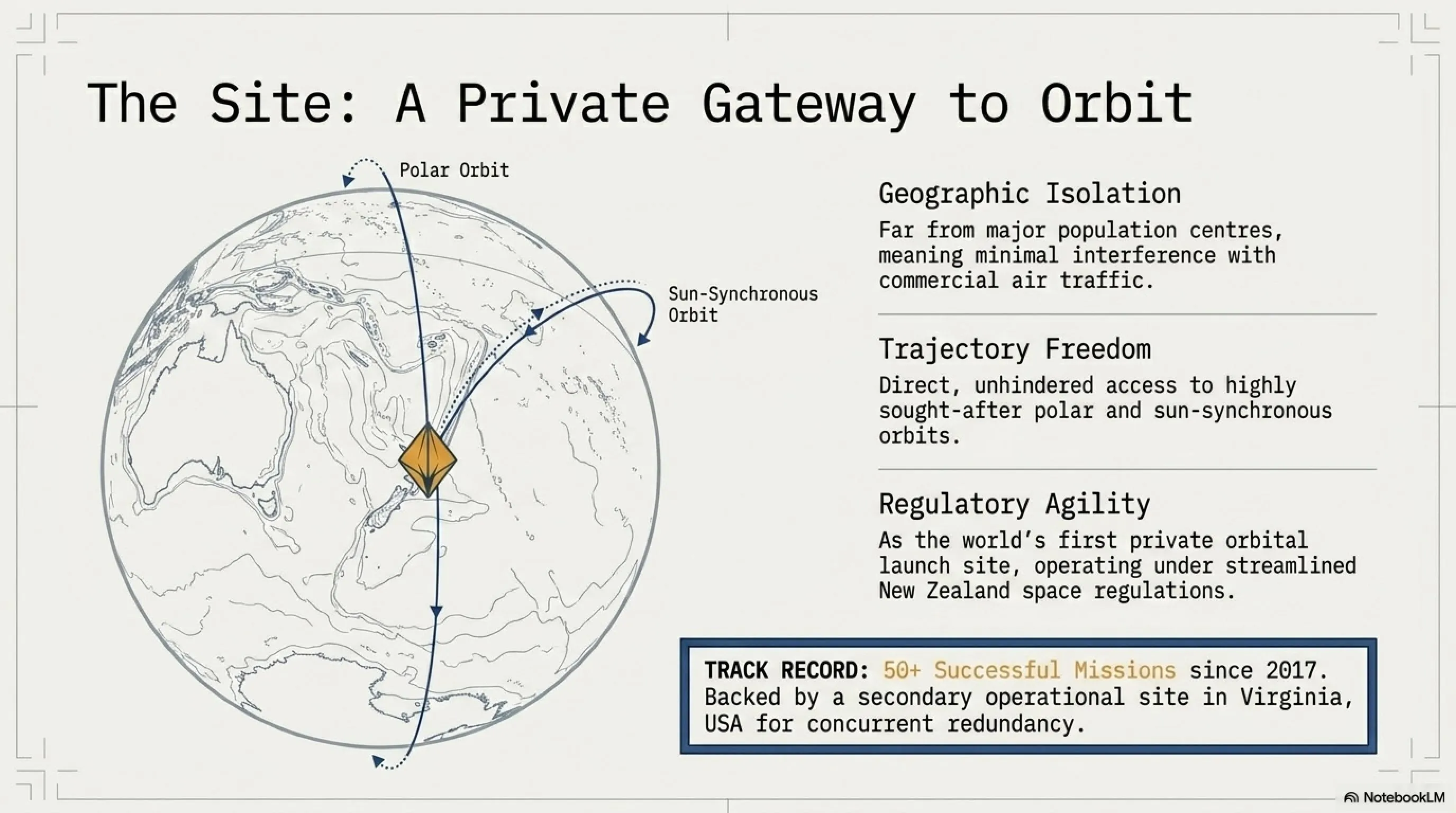
Another key factor in this mission's success was the use of Launch Complex 1 on the Māhia Peninsula, New Zealand. This facility is the world's first private orbital launch site and offers unique advantages that contributed to the rapid turnaround time.
New Zealand's geographic position in the Southern Hemisphere, far from major population centers, means less interference with air traffic, greater flexibility in launch windows, and easier access to polar and sun-synchronous orbits. These factors provide operational advantages that more congested launch sites cannot match.
Rocket Lab has conducted more than 50 successful missions from this site since 2017, making it one of the most reliable launch facilities globally. The company also operates a second site in Virginia, USA, enabling backup or concurrent launch operations if needed.
Strategic Advantages of the New Zealand Launch Site
- Unique geographic position: Access to polar and sun-synchronous orbits without requiring complex maneuvers
- Low air traffic: Sparsely populated region with minimal interference from commercial flights
- Favorable weather conditions: More launch windows available throughout the year
- Government support: New Zealand government actively supports space industry development
- Advanced infrastructure: Modern equipment and support systems
- Flexible regulations: Streamlined licensing process compared to many countries
- Operational track record: Over 50 successful launches demonstrating facility reliability
The Role of Private Sector in Military Space Operations
The Victus Haze mission exemplifies the growing trend of collaboration between the private sector and the military. Historically, military launches were conducted almost exclusively by large government contractors such as Boeing, Lockheed Martin, and Northrop Grumman.
But over the past decade, innovative private companies like SpaceX, Rocket Lab, and Firefly Aerospace have captured significant market share by offering faster, cheaper, and more flexible services. This shift represents a fundamental change in how military space capabilities are developed and deployed.
Rocket Lab has been particularly successful in this arena. The company has launched more than 180 satellites for government and commercial customers, including numerous missions for the Space Force, NASA, and US intelligence agencies. This track record has established Rocket Lab as a trusted provider of national security launch services.
The company's success reflects several factors: rapid iteration and innovation enabled by private capital, lean operational structures that reduce costs, and a focus on specific market segments (small satellite launches) where traditional providers were less competitive.
International Reactions: A New Space Race
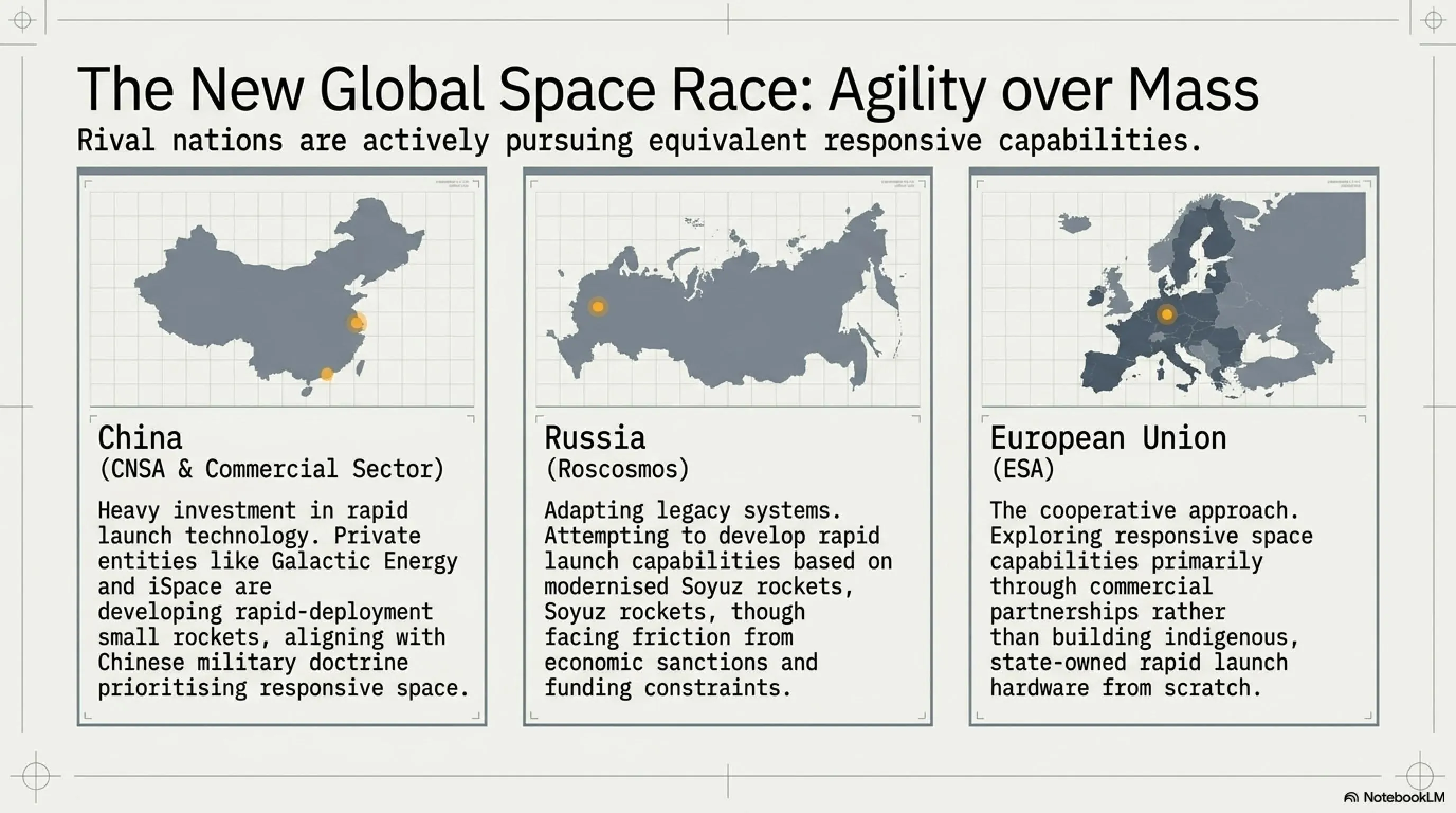
The success of Victus Haze has resonated not only in the United States but globally. China, Russia, and the European Union all have similar programs under development to achieve rapid launch capabilities.
China has made significant progress in rapid launch technology in recent years. The China National Space Administration (CNSA) and private Chinese companies like Galactic Energy and iSpace China are developing small rockets capable of rapid deployment. Chinese military writings increasingly emphasize the importance of "responsive space" capabilities in future conflicts.
Russia, despite sanctions and economic constraints, has made substantial investments in this area. Roscosmos is developing rapid launch systems based on modernized Soyuz rockets, though progress has been slower than initially planned due to funding constraints and technological challenges.
The European Union, through the European Space Agency (ESA), is exploring various options to achieve similar capabilities, though Europe's approach focuses more on commercial partnerships with companies like Rocket Lab and others rather than developing indigenous rapid launch systems from scratch.
Challenges and Limitations Ahead
Despite the impressive success of Victus Haze, significant challenges and limitations remain in the path toward transforming this capability into a fully operational system.
One of the biggest challenges is cost. Each Electron launch costs approximately $7.5 million (at commercial rates). For comparison, a SpaceX Falcon 9 launch costs about $67 million but can carry significantly more payload (up to 22,800 kilograms). Therefore, on a cost-per-kilogram basis, Electron is more expensive.
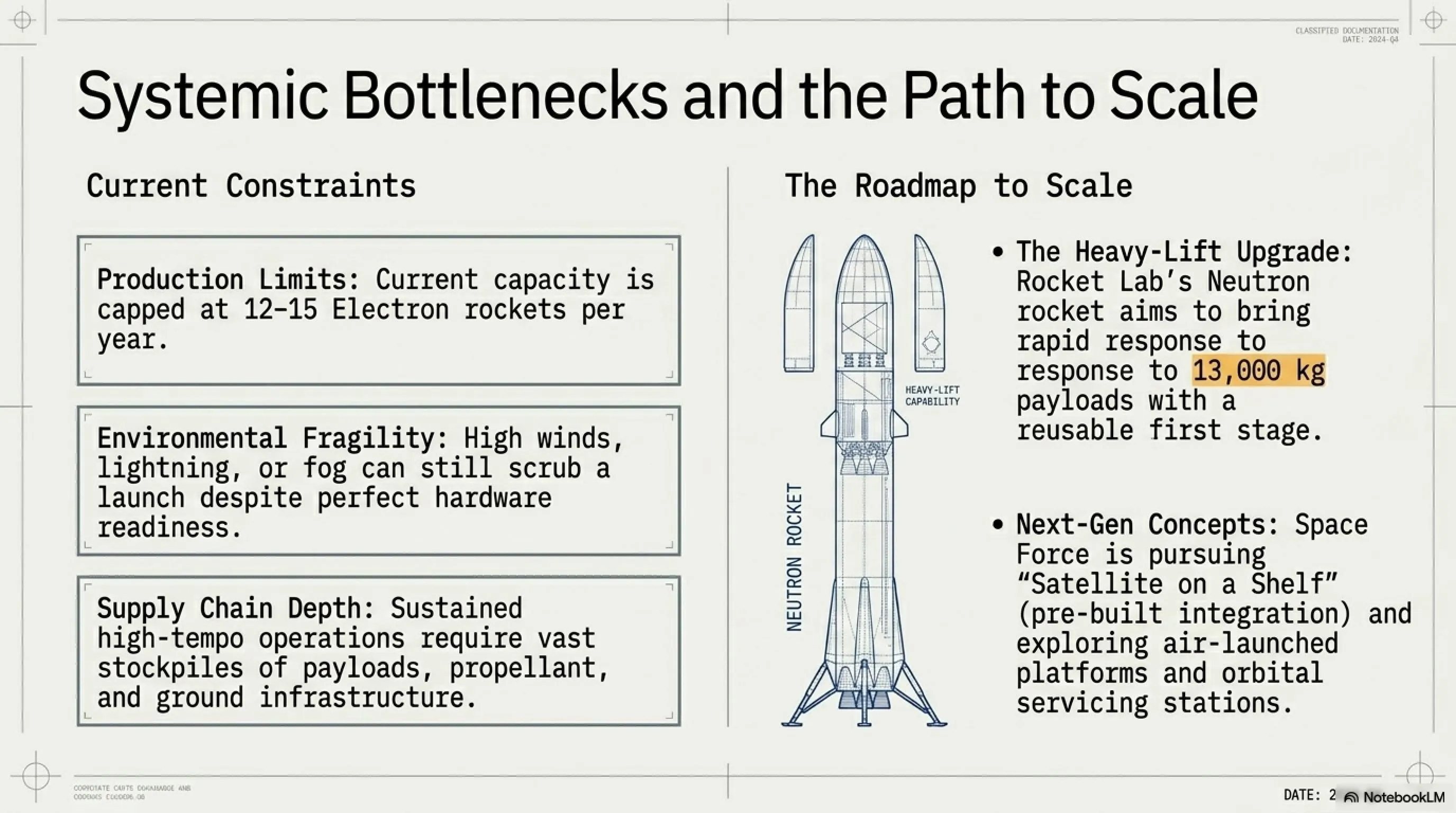
Another challenge is production capacity. Rocket Lab currently has the capability to produce and launch approximately 12 to 15 rockets per year. If we truly want to achieve a global responsive capability, this capacity must increase significantly. The company is investing in expanded manufacturing facilities and automation to address this limitation.
Weather dependence remains a limiting factor as well. Even with all the advances, high winds, lightning, or dense fog can delay or cancel a launch. While pre-positioning assets and maintaining launch-ready status mitigates some weather risks, complete immunity to weather constraints remains elusive.
Supply chain resilience is another concern. Rapid launch capabilities require not just ready rockets but also available payloads, propellant, and support equipment. Building this entire ecosystem to operate at high tempo requires sustained investment and careful logistics planning.
- World record launch speed (16 hours 42 minutes)
- High Electron rocket reliability
- Operational flexibility with two launch sites
- Relatively lower cost than traditional options
- Extensive automation reducing personnel requirements
- Proven track record with 50+ successful launches
- Private sector innovation and agility
- Limited payload capacity (only 300 kilograms)
- Relatively high cost per kilogram
- Limited production capacity (12-15 rockets per year)
- Weather dependency
- Requires complex ground infrastructure
- Small payload size limits mission types
- Geographic constraints of launch sites
The Future: Toward Truly Responsive Space
Rocket Lab has ambitious plans for the future. The company is developing Neutron, a heavier-lift rocket with payload capacity up to 13,000 kilograms, scheduled for first launch in 2025 (though this date may slip to 2026 or 2027).
Neutron is designed to be reusable (the first stage returns to Earth after separation) and dramatically reduce launch costs. If Neutron succeeds, Rocket Lab will be able to launch much larger payloads with the same rapid response capability demonstrated by Electron.
The US Space Force is also investing in next-generation technologies, including:
- Fully automated launch systems: Launch facilities that can prepare and launch rockets with minimal human intervention
- Satellite on a Shelf: Pre-built, launch-ready satellites that can be integrated and launched within hours
- Air-launch systems: Rockets launched from aircraft, providing greater flexibility
- Orbital servicing stations: Satellites that can repair, refuel, or upgrade other satellites in orbit
- In-space manufacturing: Capabilities to build or assemble spacecraft components in orbit
Looking further ahead, some visionaries propose even more radical concepts like space-based launch platforms, electromagnetic launch systems, or even continuous-thrust spacecraft that could provide on-demand orbital positioning without requiring ground launches at all.
Impact on Commercial Space Industry
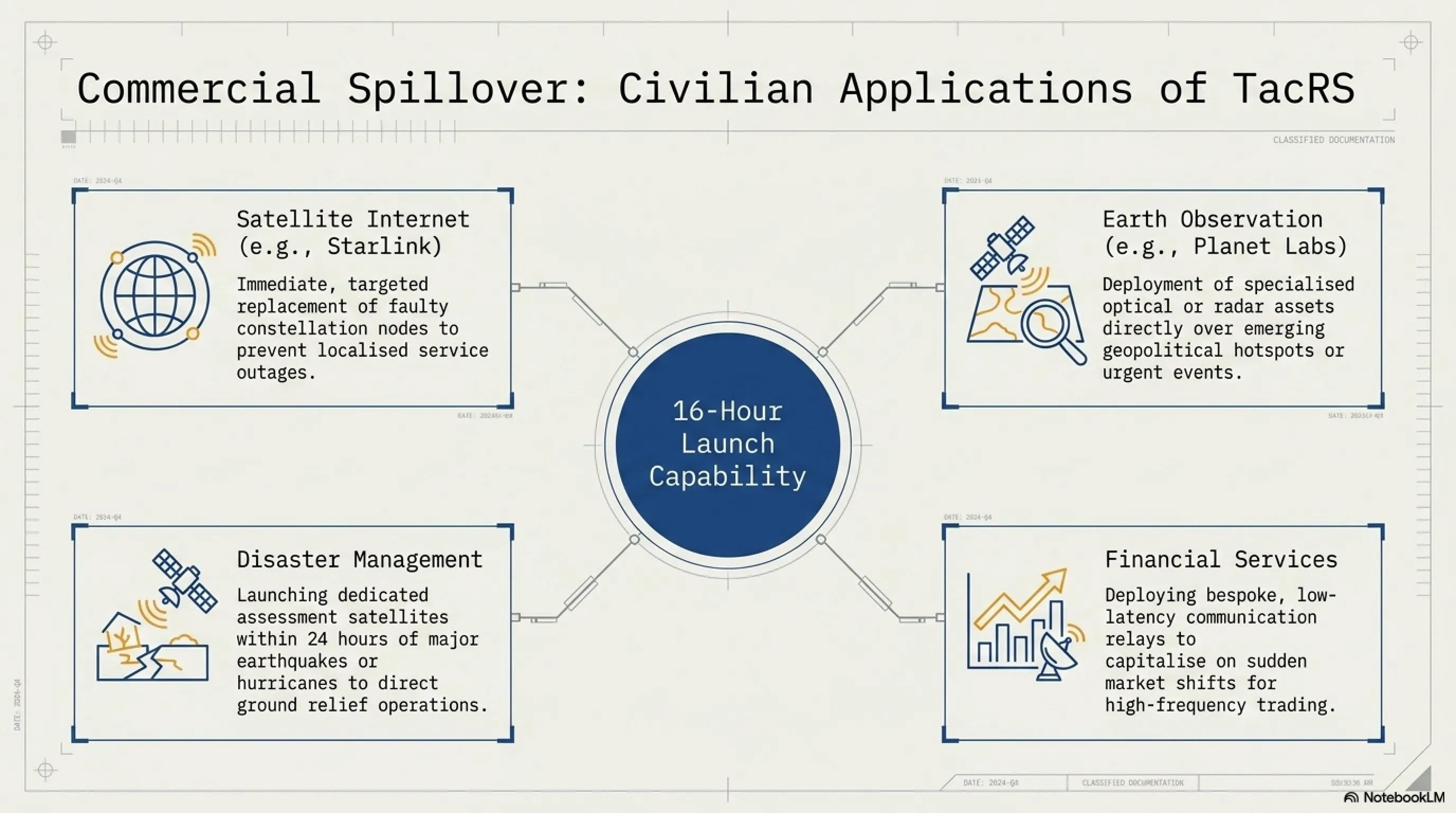
The success of Victus Haze has implications not just for military applications but for the entire commercial space industry. Technologies developed for rapid military launches can be applied to many civilian applications.
For example, satellite internet companies like Starlink (owned by SpaceX) could use this capability to rapidly replace faulty or expired satellites. Earth imaging companies like Planet Labs could launch additional satellites on short notice when urgent imagery from a specific region is needed.
Industries such as agriculture, disaster management, and natural disaster response could also benefit from this technology. Imagine being able to deploy a specialized satellite within 24 hours after a major earthquake or hurricane to assess damage and guide relief operations.
Commercial telecommunications providers could use rapid launch capabilities to respond to sudden demand spikes or service outages. Financial services firms could deploy dedicated satellites for high-frequency trading communications. The potential applications are vast and still being explored.
Final Thoughts
The Victus Haze mission represents a turning point in space technology history. Reducing launch preparation time from months to hours is not just a technical achievement but a strategic transformation in how humanity uses space.
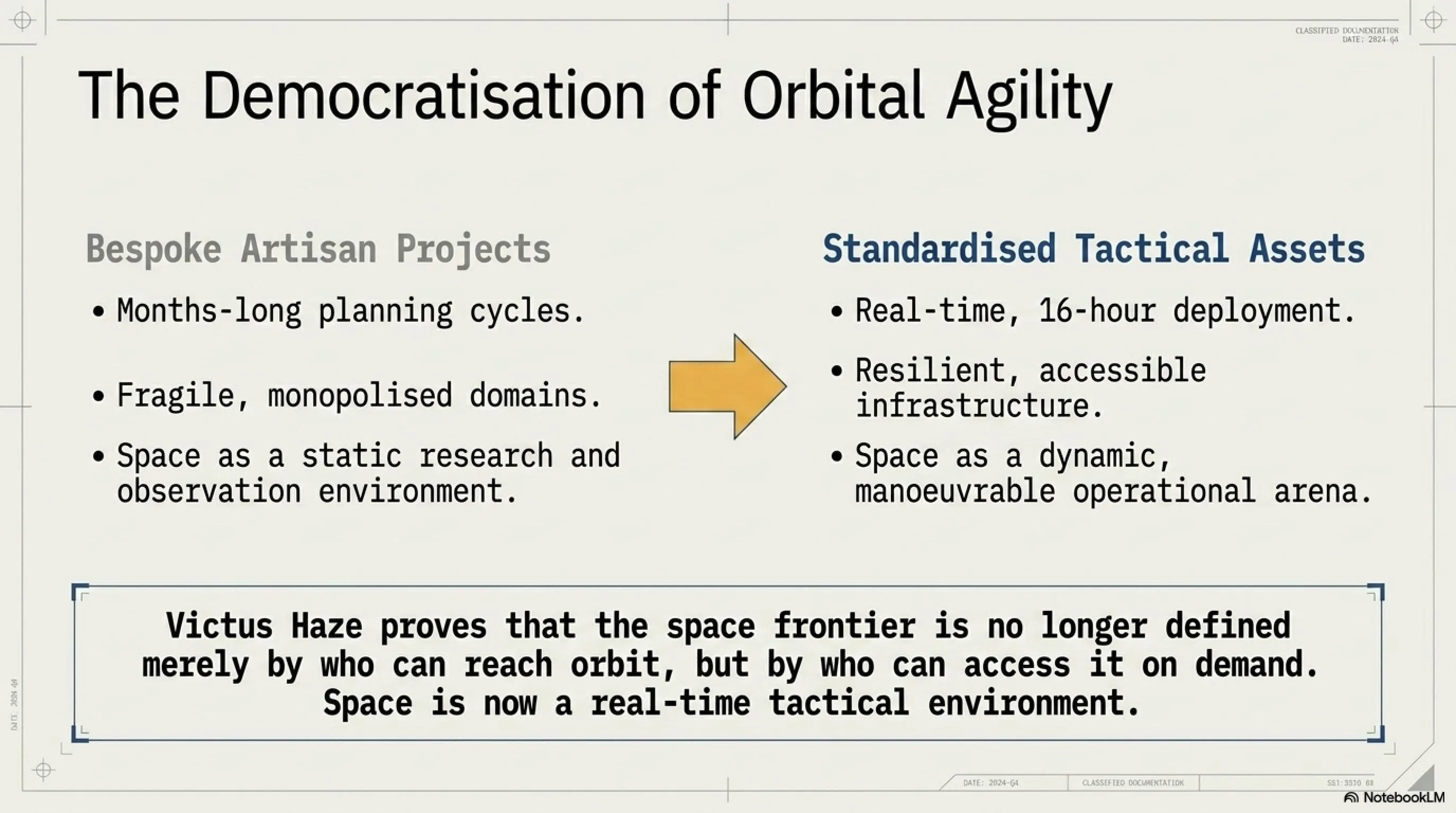
This success demonstrates that space is no longer merely an environment for scientific research or long-planned missions, but is evolving into a dynamic operational arena where speed and agility matter as much as advanced technology.
For the US Space Force, this is a major step toward realizing the vision of 'Tactically Responsive Space.' For Rocket Lab, it's definitive proof that small private companies can compete with—and even surpass—industrial giants.
And for humanity as a whole, it's a reminder that the space frontier is no longer as distant as it once seemed—and whether in peace or war, the ability to rapidly access it could prove decisive.
The broader implications extend beyond military applications. As space becomes more accessible and responsive, it transitions from an exclusive domain of superpowers to a more democratized resource that diverse actors can leverage. This democratization brings both opportunities and challenges for international governance and space security.
Frequently Asked Questions
Why is the 16 hours 42 minutes launch time so significant?
In modern warfare, satellites are critical for communications, navigation, intelligence, and operations coordination. If an adversary can destroy a nation's satellites, the ability to rapidly replace them could determine the war's outcome. Reducing the time from months to hours provides a huge strategic advantage and serves as a deterrent to potential attacks on space assets.
What was the previous record?
The previous record was 27 hours, set by Firefly Aerospace with the Victus Nox mission in September 2023. Rocket Lab improved on this record by more than 10 hours, bringing it down to 16 hours and 42 minutes.
What are the key features of the Electron rocket?
Electron is a two-stage lightweight rocket standing 18 meters tall that can deliver up to 300 kilograms to low Earth orbit. Its engines are 3D-printed, it uses an electric propellant feed system for higher reliability and less complexity, and features highly automated pre-launch processes. The carbon composite structure keeps it lightweight while maintaining strength.
What does the Pioneer satellite do?
Pioneer is an orbital inspection satellite with advanced maneuvering capabilities built by True Anomaly. It can rapidly change its position, inspect other satellites, and perform dynamic engagements with moving targets in space. These capabilities are critical for military applications including satellite servicing, threat assessment, and potentially defensive operations.
Is this technology only for military use?
No, while Victus Haze was a military mission, rapid launch technology has many commercial and civilian applications. It can be used for rapid replacement of communications satellites, emergency response to natural disasters, urgent Earth imaging of critical areas, and many other applications. The technology developed for military purposes often finds valuable civilian uses.
What challenges does this technology face?
Main challenges include cost ($7.5 million per launch), limited production capacity (12-15 rockets per year), payload limitations (only 300 kilograms), and weather dependency. Rocket Lab is developing the larger Neutron rocket to address some of these limitations, with significantly higher payload capacity and reusability to reduce costs.
Why use the New Zealand launch site?
New Zealand's geographic position in the Southern Hemisphere far from population centers offers several advantages: easy access to polar orbits, low air traffic, favorable weather conditions, and strong government support. These factors provide greater flexibility in launch windows and fewer operational constraints than more congested launch sites.
How does this compare to SpaceX?
SpaceX's Falcon 9 can carry much more payload (22,800 kg vs 300 kg) but is less optimized for rapid response. Electron is specifically designed for quick turnaround and small payloads, filling a different niche. For tactically responsive missions requiring speed over payload capacity, Electron currently has advantages. SpaceX is developing Starship which may eventually compete in rapid launch, but that system is still under development.
Sources and References
- Rocket Lab Launches Record-Breaking Space Force Mission - Space.com
- Official Rocket Lab Statement on Victus Haze - Rocket Lab
- Space Force Sets Record with Victus Haze - Defense Scoop
- Rocket Lab Shatters Responsive Space Record - Space Connect
- Victus Haze Mission Analysis - Spacewatch Global
- Official US Space Force Statement - Space Safari Program Office
- Interview with Peter Beck, CEO of Rocket Lab - Space News
- Technical documentation - Rocket Lab Electron User's Guide
Sources Reviewed: June 24, 2026
Compliance Note: All technical information and statistics in this article are verified against official Rocket Lab sources, US Space Force announcements, and reputable space media outlets. Content has been paraphrased for copyright compliance—no more than 30 consecutive words reproduced from any single source.
Additional Gallery: 🚀 Historic Record: Rocket Lab Launches Satellite in 16 Hours