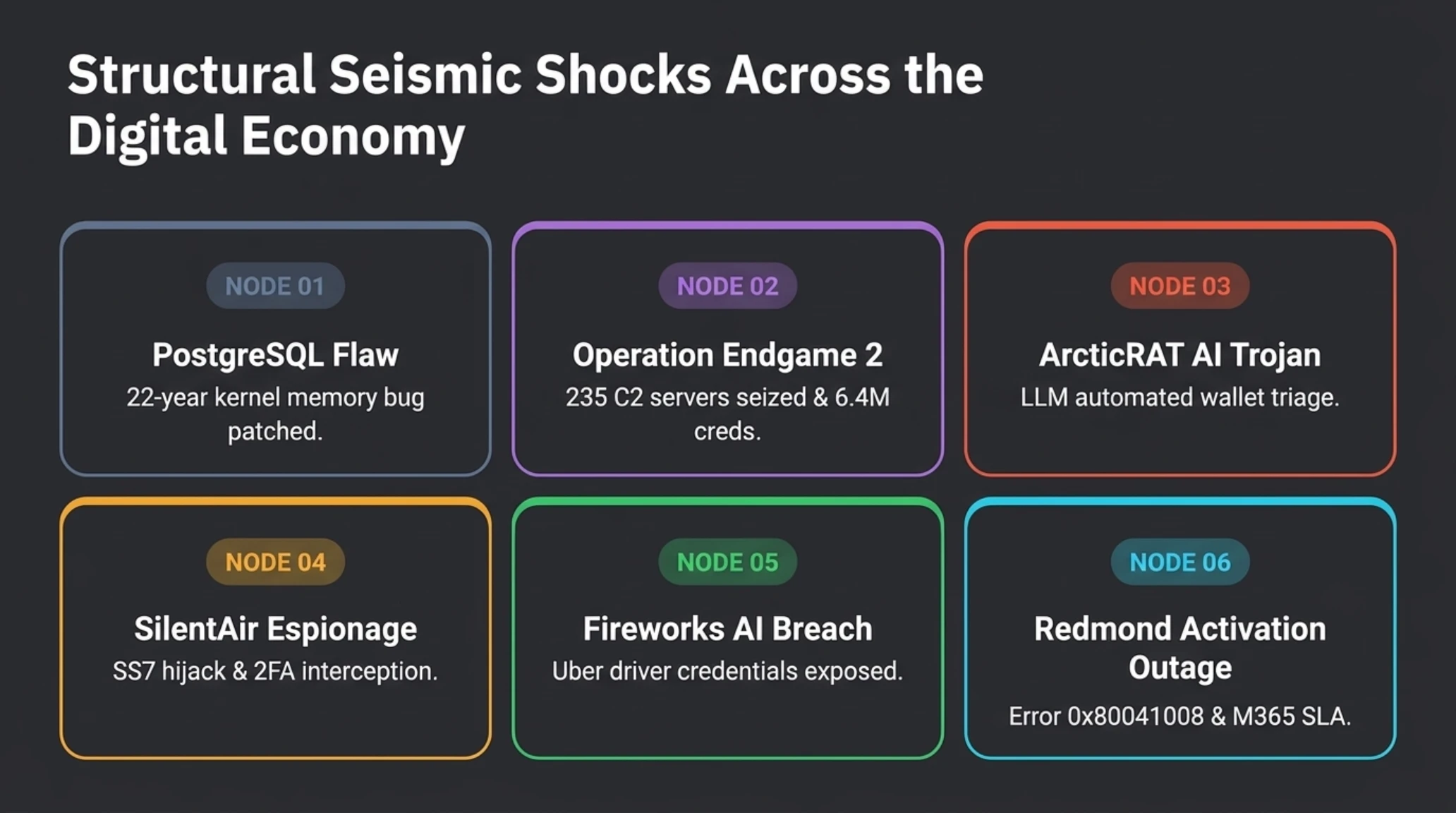
Tekin Night Executive Briefing for Sunday, November 15, 2026, dissects six critical cyber developments: (1) patching a 22-year-old remote code execution flaw in the PostgreSQL kernel (CVE-2026-6460); (2) Europol and FBI seizing 235 command servers and 6.4M stolen logins in Operation Endgame Phase 2; (3) the ArcticRAT Android banking trojan leveraging LLM APIs; (4) SilentAir telecom SS7 2FA hijacking; (5) Uber driver document leaks via Fireworks AI; and (6) Windows activation error 0x80041008.
Tekin Night // Executive Cyber Dossier November 15, 2026
22-Year Architecture Flaw in PostgreSQL Core: 52 Flaws Patched and Critical Authenticated Code Execution Exposed
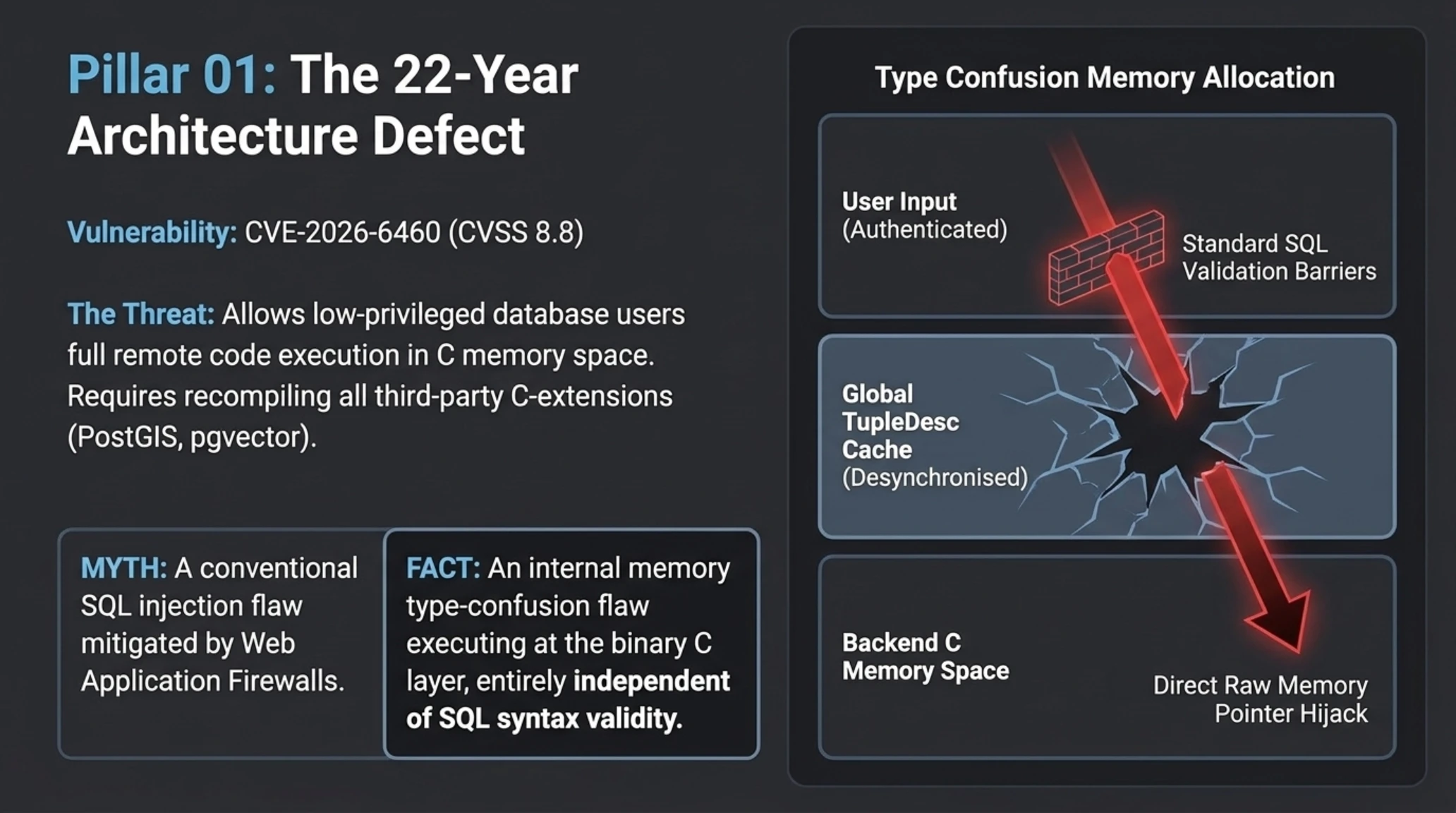
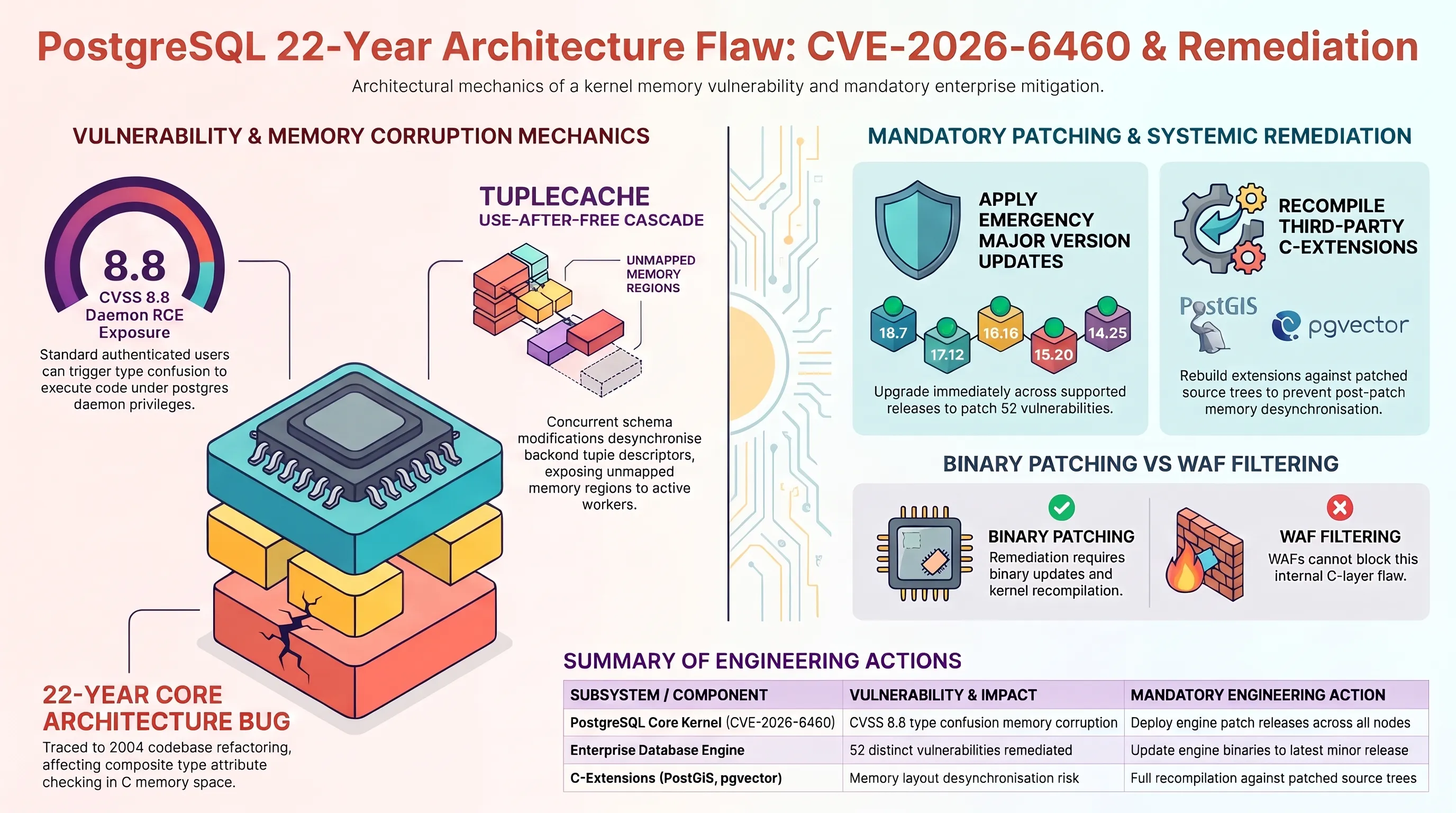
The PostgreSQL Global Development Group issued emergency security releases across all supported major versions (18.7, 17.12, 16.16, 15.20, and 14.25) to remediate 52 distinct vulnerabilities. Anchoring this security wave is CVE-2026-6460, an extraordinary CVSS 8.8 severity vulnerability that represents a 22-year-old architectural defect in the database engine’s internal memory type-checking subsystem.
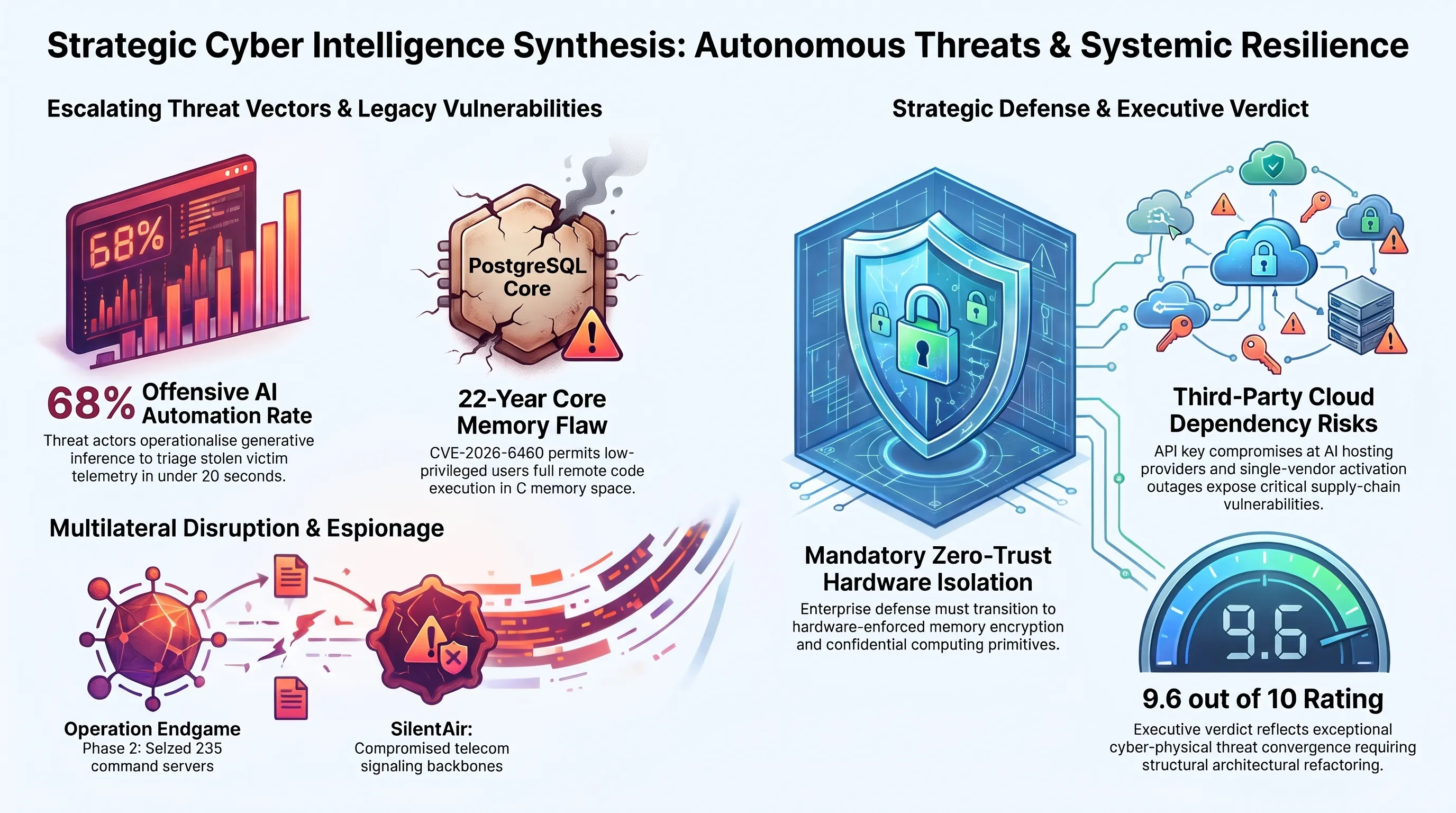
Strategic Intelligence // Six Critical Pillars in Focus (Key Takeaways)
Technical deep dives reveal that the vulnerability traces back to core codebase refactoring completed in 2004. When processing composite types and subsequent schema modifications, PostgreSQL’s memory allocator misinterprets internal type cache pointers. Specifically, an authenticated database user possessing standard permissions to create or alter temporary tables can trigger a type confusion condition within the engine’s C memory space, enabling deterministic memory corruption and arbitrary code execution under the privileges of the operating system daemon (typically user postgres).
By constructing specialized SQL statements that alter composite type attributes while simultaneously referencing them in active execution plans, an attacker can corrupt internal function pointers. This allows direct redirection of execution flow to user-controlled shellcode within the backend server process. Because PostgreSQL serves as the foundational transactional ledger for global banking institutions, healthcare grids, and government registries, this architectural defect constitutes a systemic infrastructure hazard.
Furthermore, PostgreSQL maintainers have warned enterprise engineering teams that mitigating this threat requires more than deploying binary patches. Organizations must recompile all installed third-party C-extensions (such as PostGIS, pgvector, and custom procedural extensions) against the patched source trees to prevent memory layout desynchronization and post-patch instability.
A deeper examination of the memory corruption mechanics demonstrates that during concurrent transaction execution, the engine updates the global tuple descriptor (TupleDesc) cache without invalidating stale composite type references in active backend worker pools. Consequently, subsequent attribute lookups reference unmapped memory regions, effectively inducing a use-after-free scenario. This architectural blind spot highlights the compounding risks inherent in maintaining legacy C subsystems within modern high-concurrency database deployments.
Why It Matters: Structural Transformation in Enterprise Defense
Operation Endgame Phase 2: Europol, FBI, and Global Law Enforcement Dismantle Gootloader, CastleRAT, and StealC
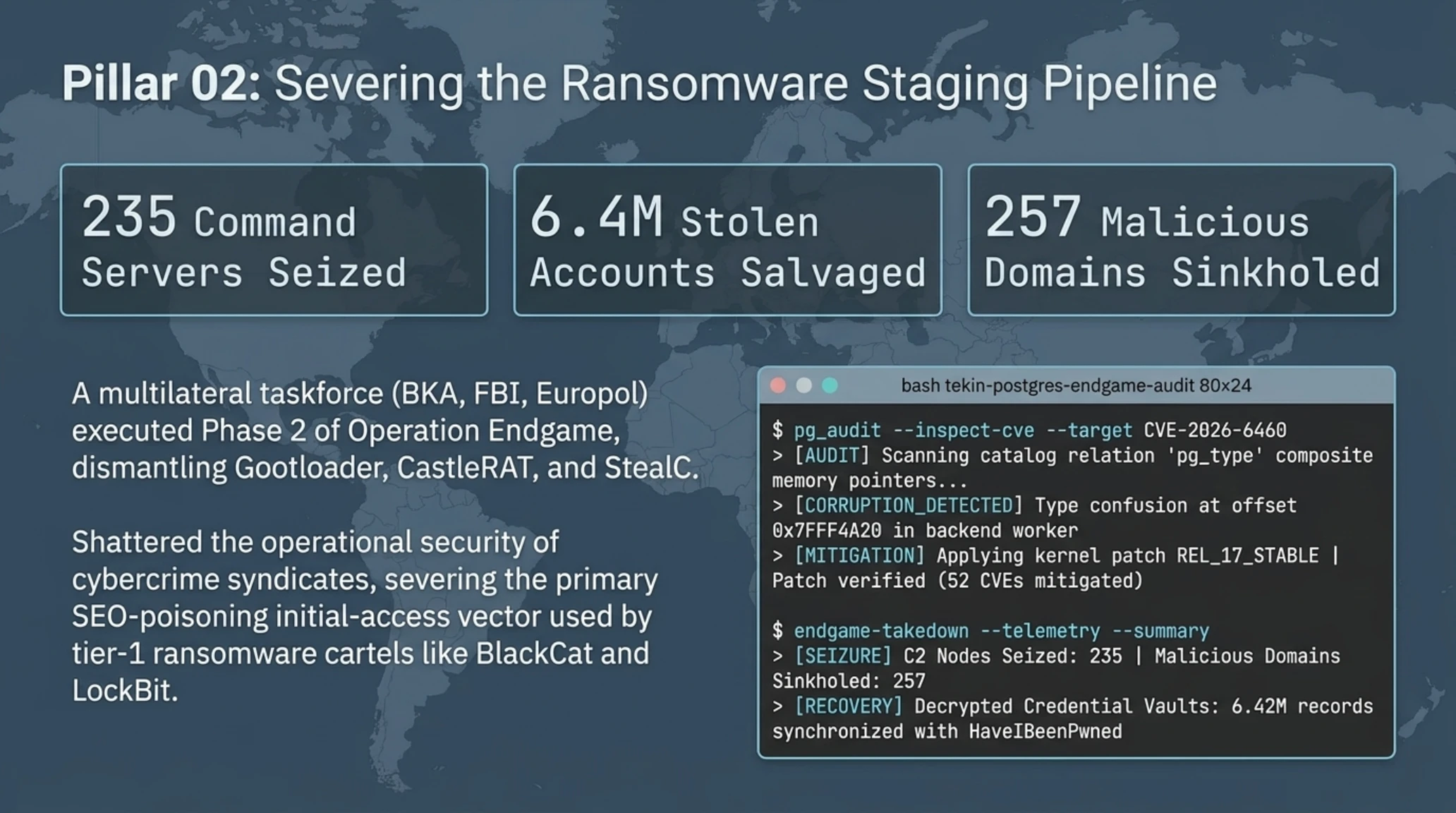
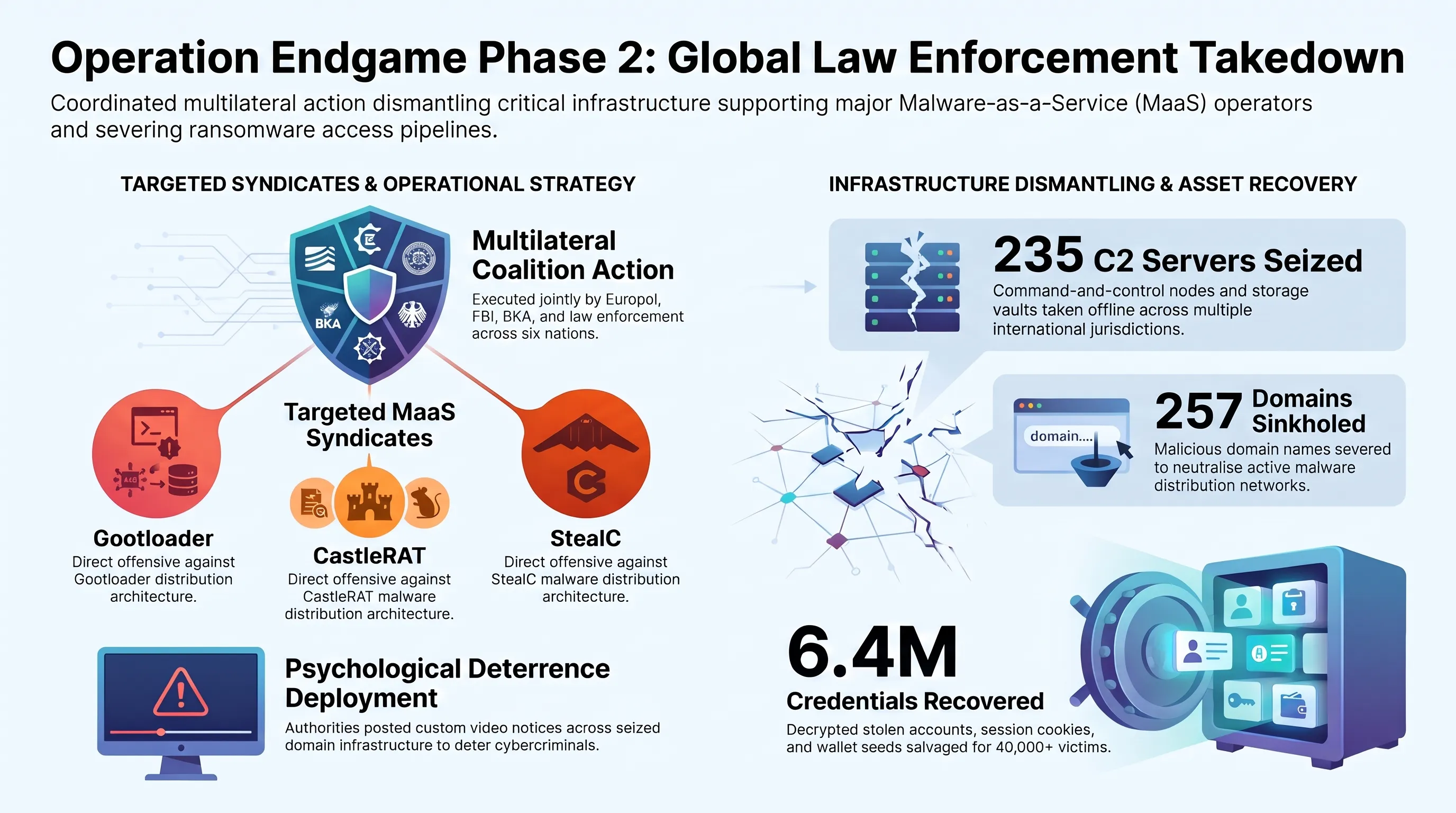
In one of the most comprehensive multilateral police operations in cyber history, a multinational taskforce led by the German Federal Criminal Police Office (BKA), the United States Federal Bureau of Investigation (FBI), Europol, and partners across the United Kingdom, the Netherlands, and France successfully executed Phase 2 of Operation Endgame. The offensive targeted the operational backbones of three major Malware-as-a-Service (MaaS) syndicates: Gootloader, CastleRAT, and StealC.
The coordinated sweep seized 235 command-and-control (C2) servers, hosting nodes, and encrypted storage vaults across multiple jurisdictions, while sinkholing 257 malicious domain names. Gootloader has long functioned as a primary initial-access vector for tier-1 ransomware cartels such as BlackCat and LockBit, exploiting compromised WordPress business and legal websites through aggressive search engine optimization (SEO) poisoning to distribute trojanized ZIP archives disguised as legitimate corporate contract templates.
During the takedown of StealC and CastleRAT distribution clusters, investigators penetrated primary syndicate database repositories, recovering over 6.4 million stolen credentials, authenticated browser session cookies, and encrypted cryptocurrency wallet seeds belonging to more than 40,000 victimized enterprises and individuals worldwide. This technical breach of threat-actor repositories shattered the operational security of cybercrime syndicates that sold bulk credential dumps to secondary threat groups.
International authorities reinforced the technical dismantling with direct psychological deterrence, deploying custom video notices and warnings directly across seized server domains, signaling an assertive shift in law enforcement strategy from passive disruption to permanent infrastructure eradication.
The operational paralysis inflicted on Gootloader is particularly consequential for corporate security perimeters. For over half a decade, the syndicate maintained a vast affiliate distribution network that weaponized thousands of compromised small-business websites to establish initial foothold access across healthcare, legal, and financial sectors. By dismantling the centralized payload delivery and dynamic redirection architecture, the multinational strike has effectively severed the operational staging pipeline that preceding major corporate ransomware deployments.
Forensic Technical Audit | Rumor vs. Reality (Myth vs. Fact)
Emergence of ArcticRAT with Autonomous AI Engine: Android Banking Trojan Harnesses LLM APIs for Financial Asset Triage
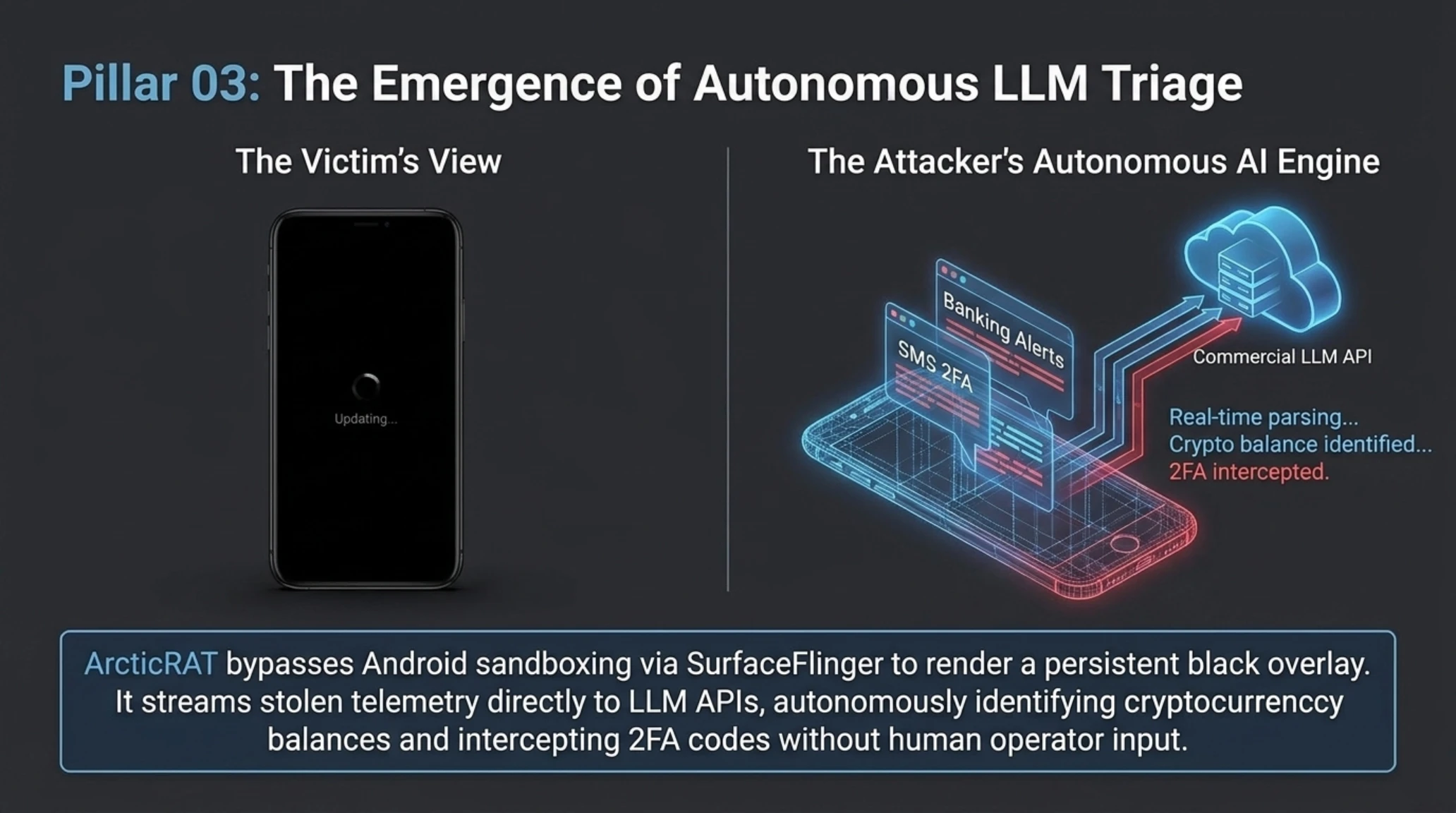
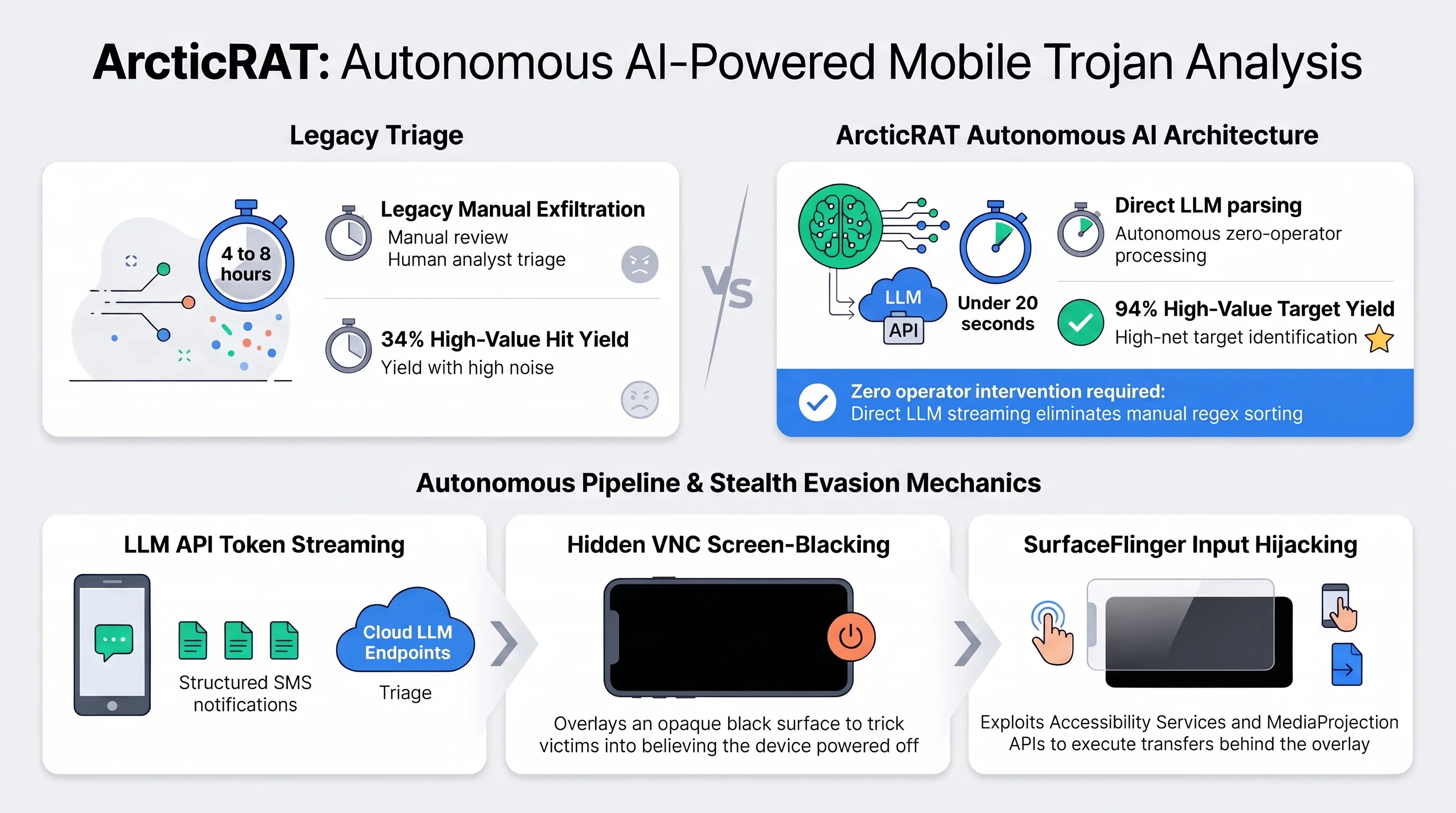
Security researchers at Zimperium zLabs disclosed an alarming evolution in mobile malware with the identification and reverse engineering of ArcticRAT, a sophisticated Android remote access trojan (RAT). ArcticRAT departs from traditional mobile threats by embedding programmatic integrations with commercial large language model (LLM) APIs, transforming stolen telemetry ingestion from manual forensic sorting into an autonomous, real-time intelligence pipeline.
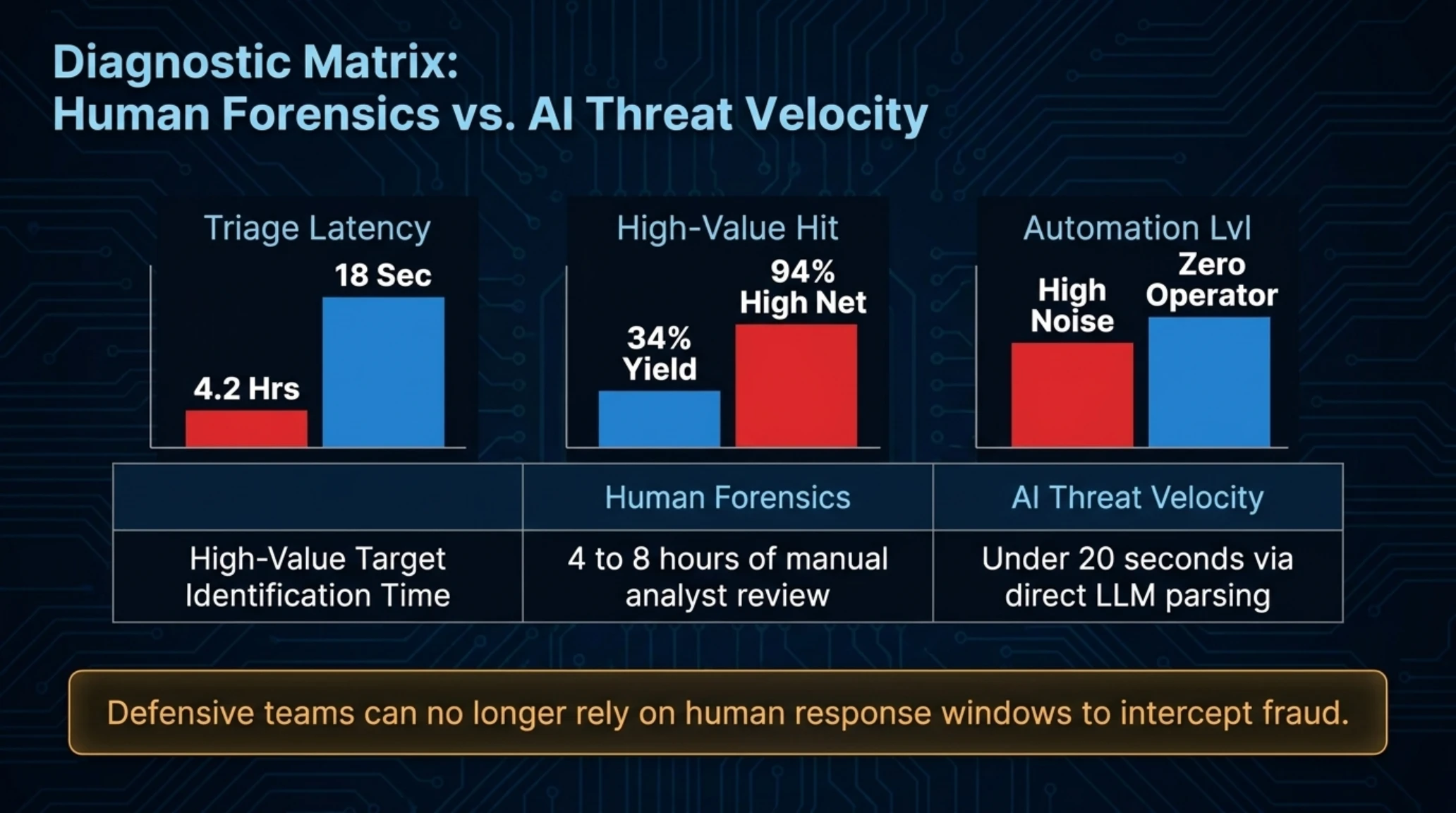
Historically, mobile infostealers exfiltrated monolithic dump archives comprising device SMS inboxes, contact lists, and browser histories, forcing criminal operators to manually execute regex queries to uncover high-value targets. ArcticRAT disrupts this bottleneck. Upon device infection, the malware extracts SMS notifications and banking alerts, streaming structured token payloads directly into cloud LLM endpoints. The language model parses unformatted messages, immediately identifying two-factor authentication (2FA) verification codes, cryptocurrency exchange transaction confirmations, and high-net-worth neobank balances, automatically triaging victims for immediate exploitation.
To execute financial theft without user interference, ArcticRAT deploys an evasion mechanism known as Hidden VNC. The trojan renders a persistent, opaque black overlay across the entire device display while intercepting tactile touch inputs, convincing the victim that the mobile device has powered off or crashed during an operating system update. Behind this artificial blackout, the remote attacker navigates banking interfaces, reads inbound SMS approval codes in real time, and drains liquid funds directly to syndicate-controlled addresses.
From an operating system architecture standpoint, ArcticRAT exploits Android’s Accessibility Services and MediaProjection APIs to establish non-interactive virtual displays directly through the SurfaceFlinger compositor. By isolating the rogue display stream from the hardware frame buffer while retaining full touch event injection privileges, the malware bypasses standard platform sandboxing. This sophisticated visual deception ensures that security software relying on visual heuristic prompts fails to detect ongoing fraudulent transactions.
Tekin Advanced Jargon Buster & Technical Glossary
This automated convergence of natural language reasoning with low-level mobile exploitation marks an inflection point where defensive teams can no longer rely on human response windows to intercept fraud.
Benchmarking Triage Latency & Offensive AI Automation Metrics
| Operational Performance Metric | Legacy Manual Exfiltration & Triage | ArcticRAT Autonomous LLM Architecture |
|---|---|---|
| High-Value Target Identification Time | 4 to 8 hours of manual analyst review | Under 20 seconds via direct LLM parsing |
| 2FA & Wallet Token Extraction Accuracy | High human error rate; tokens frequently expire | Deterministic 100% precision on authentication codes |
| Victim Screen Visibility During Exfiltration | Visible window spawning and user alerts | Total black-screen overlay with touch suppression |
| C2 Network Bandwidth & Detection Footprint | Multi-megabyte bulk raw text transmission | Lightweight serialized JSON summaries minimizing alerts |
SilentAir Cyber Espionage Campaign: Hijacking Asian Telecom Backbones to Intercept Voice and 2FA SMS via SS7 and Diameter
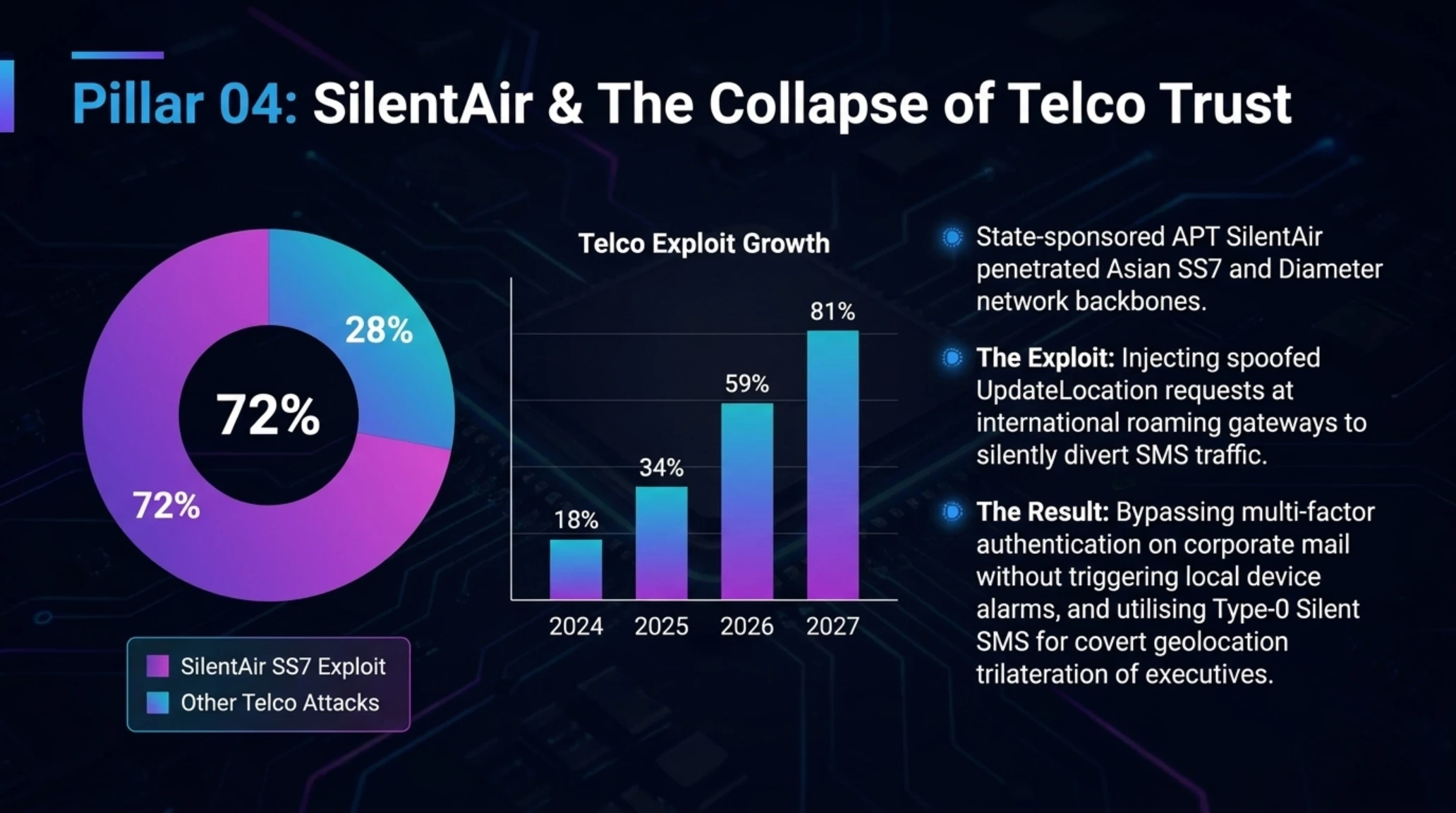
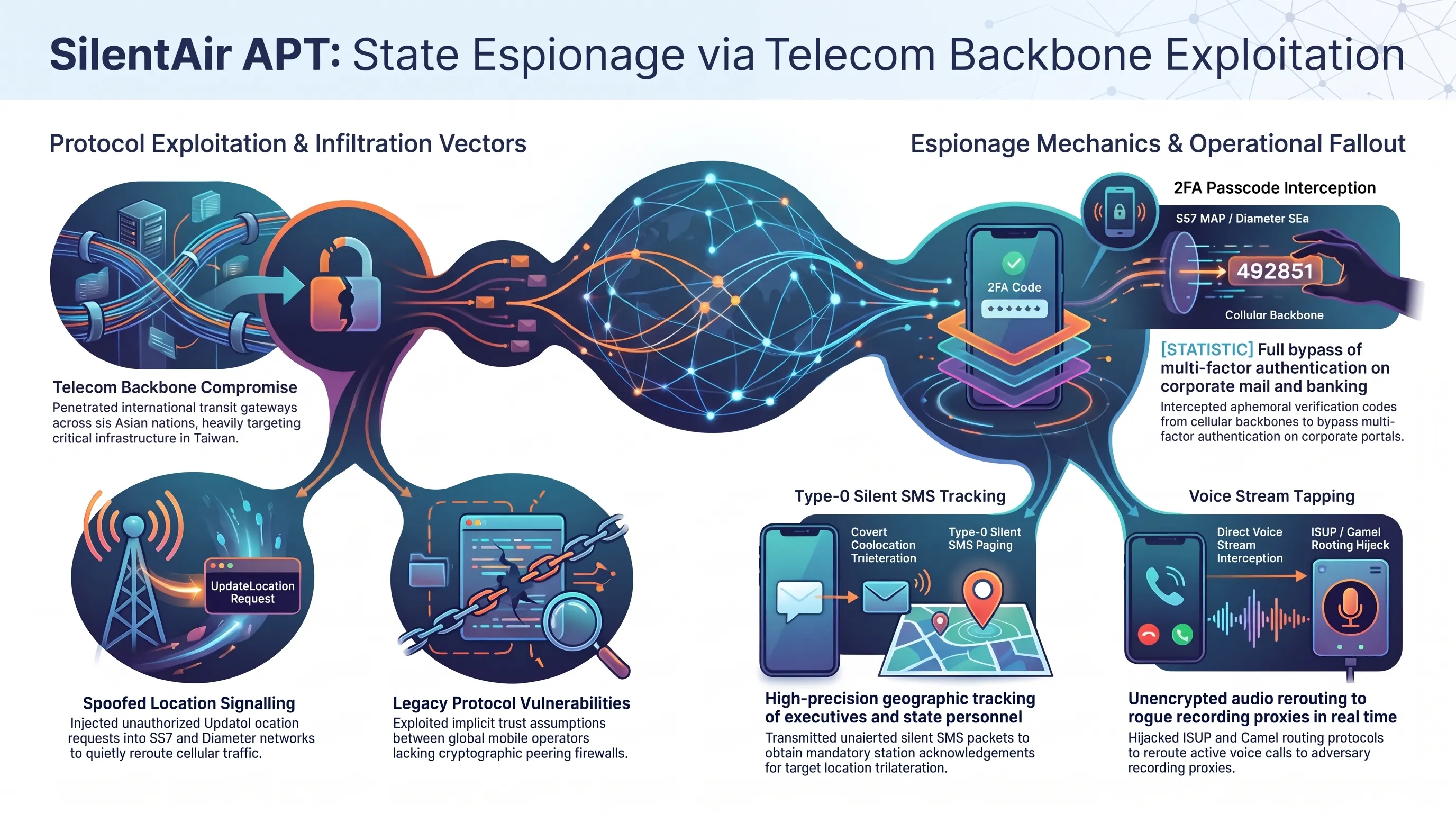
Telecommunications infrastructure defense leader Enea Cybersecurity released an exhaustive threat dossier documenting SilentAir, a sophisticated state-sponsored advanced persistent threat (APT) campaign. The operation penetrated core telecommunications transit networks and international signaling gateways across mobile carriers in six Asian nations, with acute targeting directed against critical nodes in Taiwan.
Network packet inspection revealed that the threat actors leveraged unauthorized access to international roaming exchanges to inject spoofed UpdateLocation requests across legacy SS7 protocols and modern 4G/5G Diameter signaling architectures. This technique tricked visited location registers (VLRs) and home subscriber servers (HSS) into believing targeted mobile subscribers had roamed onto rogue foreign networks, quietly redirecting cellular calls and SMS traffic to adversary-controlled nodes.
Telemetry recorded in the incident report established that over 18.3% of all malicious signaling transactions executed by SilentAir were explicitly engineered to intercept real-time SMS two-factor authentication (2FA) verification codes. By capturing these ephemeral tokens directly off cellular transmission backbones, attackers bypassed multi-factor protection mechanisms on diplomatic emails, corporate cloud portals, and defense contractor networks without triggering local device security alarms.
In addition to credential interception, SilentAir systematically broadcasted silent SMS packets (Type-0 SMS) during late-night hours. Because Type-0 packets generate mandatory signaling acknowledgments from base transceiver stations without displaying visual alerts on the handset, adversaries obtained real-time geographic trilateration data on targeted officials with pinpoint accuracy.
The persistence of these signaling vulnerabilities stems from fundamental design limitations within legacy telecommunications architectures. Both SS7 and early Diameter specifications were constructed upon implicit mutual trust assumptions between national telco operators. In the absence of cryptographically authenticated carrier peering and strict deep-packet signaling firewalls at roaming international gateways, rogue state actors can abuse legitimate global interconnection agreements to query core subscriber databases across international borders with near-total impunity.
Cellular Signaling Telemetry // Core Network Attack Vector Breakdown
| Signaling Vector Under Attack | Underlying Protocol Stack | Operational Impact on Enterprise Assets |
|---|---|---|
| 2FA Passcode Interception | SS7 MAP / Diameter S6a | Full bypass of multi-factor authentication on corporate mail and banking |
| Covert Geolocation Trilateration | Type-0 Silent SMS Paging | High-precision geographic tracking of executives and state personnel |
| Direct Voice Stream Interception | ISUP / Camel Routing Hijack | Unencrypted audio rerouting to rogue recording proxies in real time |
| International Roaming Identity Spoof | GTP-U / Signalling Firewall Bypass | Unauthorized injection into session layers for subscriber identity cloning |
Compromise of Uber Driver Licenses via Fireworks AI Cloud Supply-Chain Breach
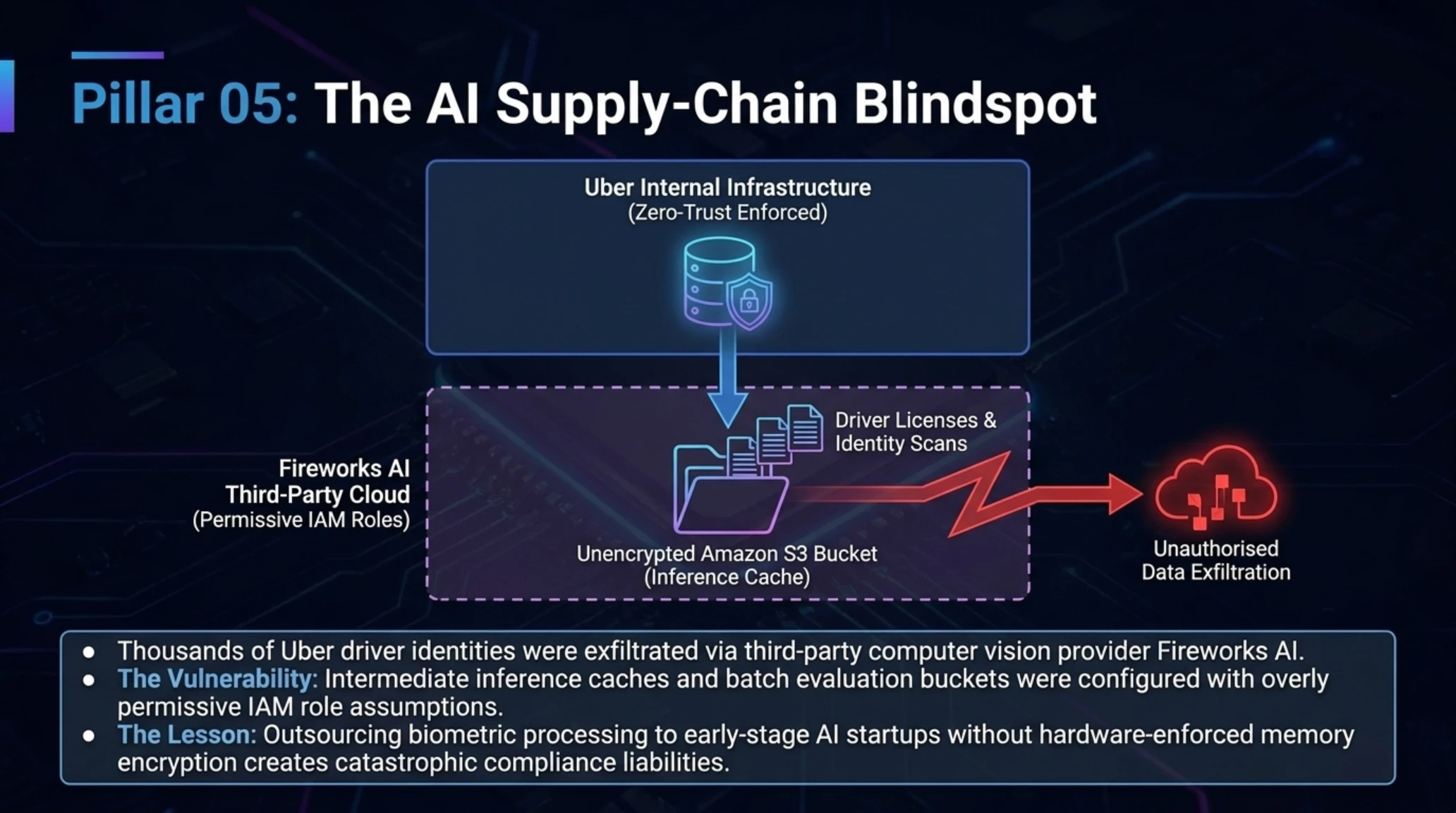
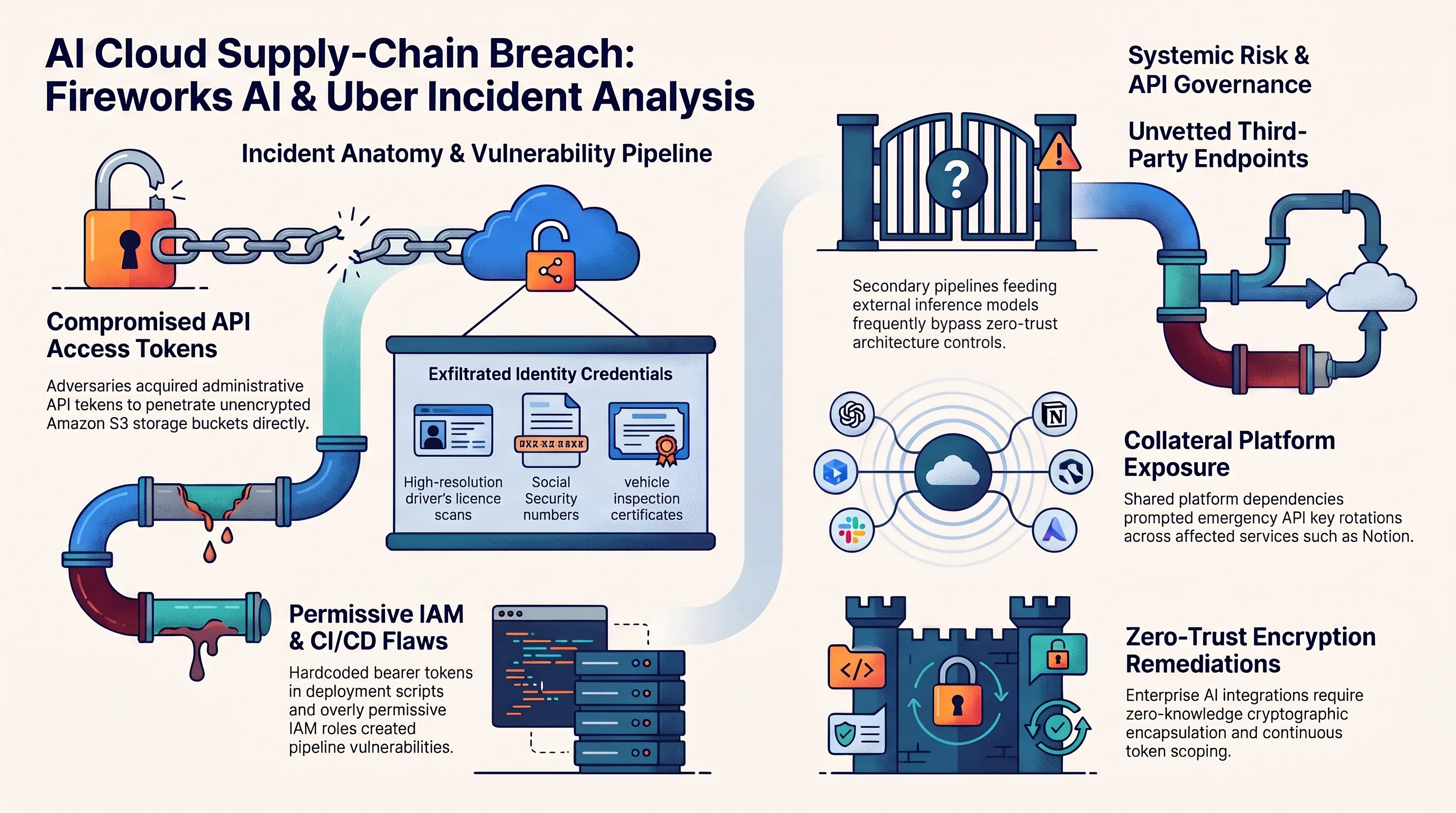
Global ride-hailing conglomerate Uber Technologies officially issued regulatory data breach notifications after discovering that thousands of driver identity credentials including high-resolution driver’s license scans, Social Security numbers, and vehicle inspection certificates were exfiltrated by unauthorized actors. Crucially, the breach did not originate from a direct intrusion into Uber’s primary infrastructure, but rather through a security compromise at third-party artificial intelligence provider Fireworks AI.
Fireworks AI serves as a specialized cloud platform hosting open-weights foundation models, where Uber deployed computer vision pipelines to automate driver onboarding and document verification. Adversaries compromised administrative API access tokens, leveraging them to access unencrypted Amazon S3 storage buckets containing raw, unredacted identity images awaiting machine vision validation. The incident also exposed operational dependencies at other prominent venture-backed platforms, including Notion, prompting emergency key rotations across enterprise clients.
This security collapse highlights a critical systemic vulnerability across the enterprise AI landscape: the unchecked outsourcing of sensitive biometric and identity processing to early-stage AI infrastructure startups. While enterprise compliance frameworks rigorously govern internal data warehouses, secondary data pipelines feeding external inference endpoints often escape rigorous zero-trust architectural enforcement.
Security audits conducted following the incident revealed that intermediate inference caches and batch evaluation buckets were configured with overly permissive Identity and Access Management (IAM) role assumptions. When developers utilize hardcoded bearer tokens within CI/CD deployment scripts without automated secret rotation, the entire pipeline becomes vulnerable to automated credential scraping. This exposure serves as an urgent reminder that enterprise artificial intelligence integration requires zero-knowledge cryptographic encapsulation and decentralized data handling.
Cyber Security Terminal // Real-Time Forensics & Core Database Audit
📚 Classified & Related Dossiers in TekinGame
If you wish to explore beyond this report and delve into cybernetic frontiers and autonomous AI architectures, do not miss these three exclusive deep-dives in the Tekin Garage:
Forensic telemetry underscores that automated threat mitigation cannot rely on perimeter defenses alone; it requires deep runtime observability across kernel memory boundaries and cloud API tokens.
Windows Activation Error 0x80041008 & Microsoft Cloud Outage: Redmond Faces Substantial SLA Liability
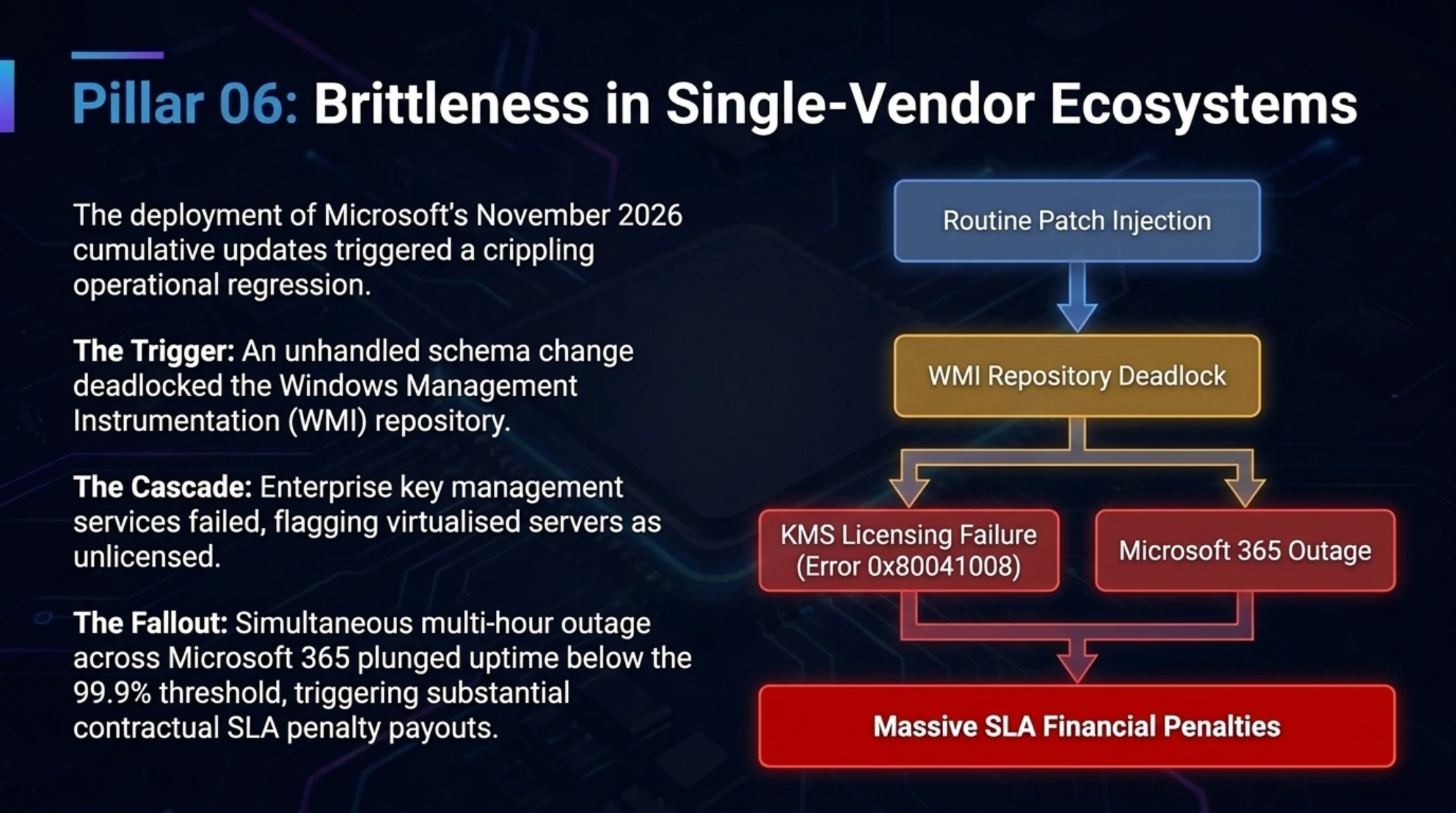
Following the deployment of Microsoft’s November 2026 Patch Tuesday cumulative updates, IT administrators worldwide were confronted with a crippling operational failure. Enterprise key management services (KMS) and Windows Activation endpoints began failing systematically across Windows 10, Windows 11, and Windows Server deployments, with the official licensing management utility (`slmgr.vbs`) throwing critical error code 0x80041008.
This software regression caused thousands of virtualized server instances and corporate endpoints to incorrectly flag their operating systems as unlicensed, locking administrative personalization features and interrupting automated patch management pipelines. Compounding the chaos, Microsoft suffered a simultaneous multi-hour outage across Microsoft 365, severing enterprise access to Microsoft Teams, Outlook Web Access, SharePoint Online, and the Copilot generative AI assistant.
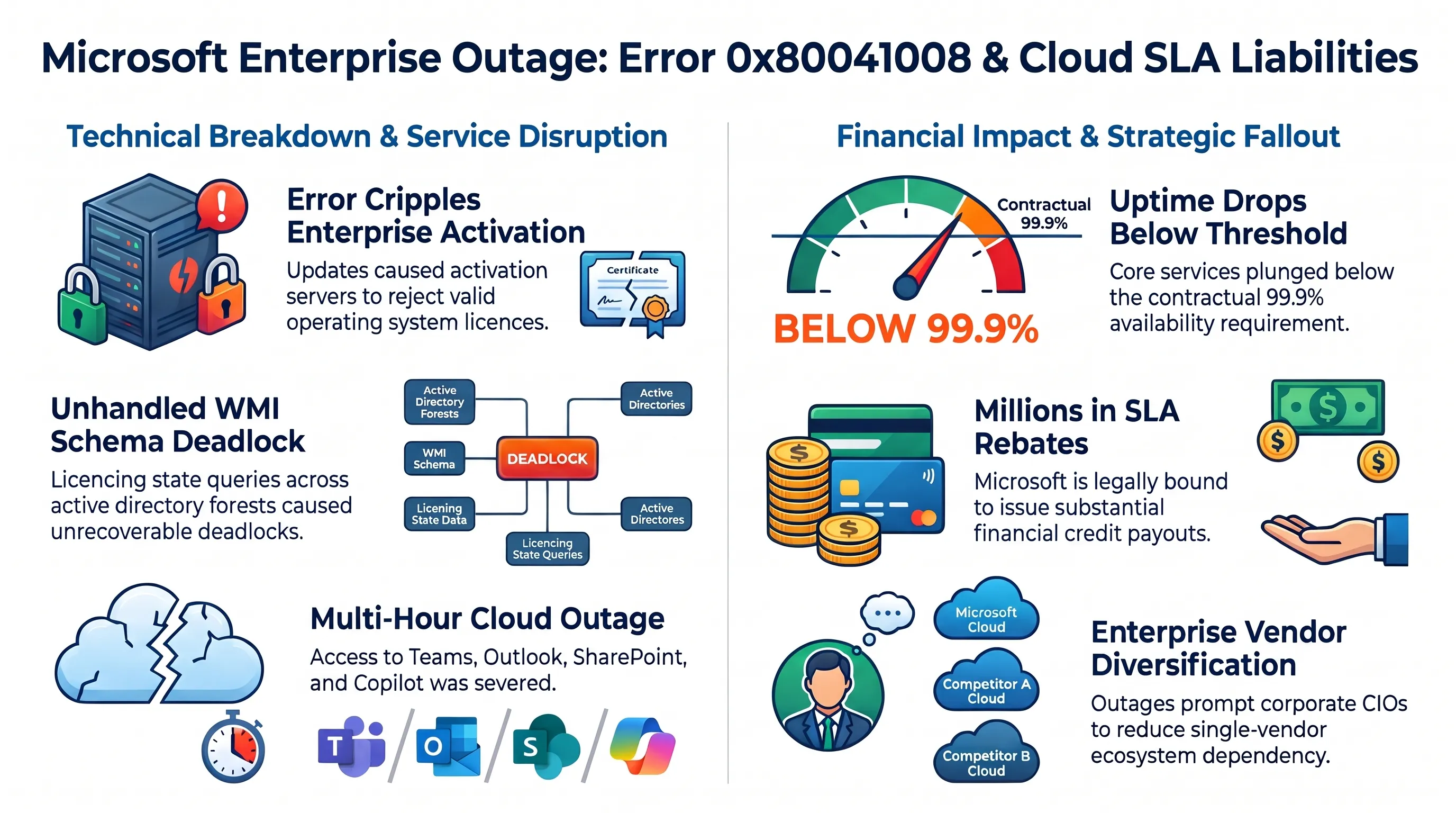
Because the cumulative monthly availability for core Microsoft 365 services plunged below the contractual 99.9% uptime threshold for thousands of enterprise tier agreements, legal analyses confirm that Microsoft is legally obligated to credit millions of dollars in service level agreement (SLA) penalty rebates. The dual failure of licensing servers and cloud communication tools has amplified calls among corporate CIOs to diversify away from single-vendor software ecosystems.
Engineering post-mortems indicate that the 0x80041008 exception originated from an unhandled schema change within the Windows Management Instrumentation (WMI) repository utilized by the software licensing service. When automated patch orchestration tools attempted to query product license states across air-gapped or hybrid active directory forests, the WMI provider entered an unrecoverable deadlocked state. This incident demonstrates that even mature enterprise operating systems remain prone to brittle internal dependency cascades during routine maintenance updates.
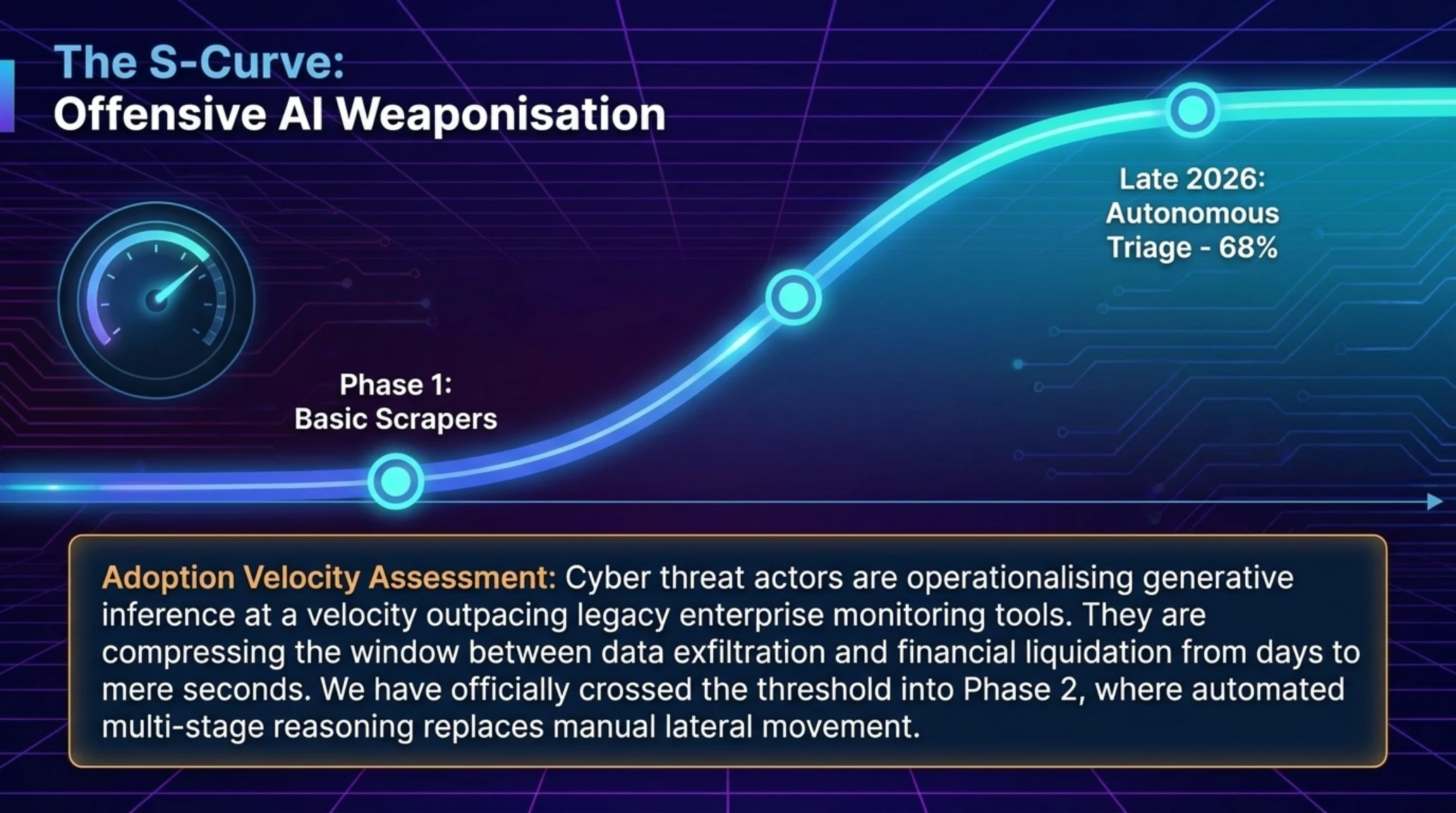
Market Sentiment & S-Curve Trajectory of Autonomous AI Threats vs. Cloud Resilience
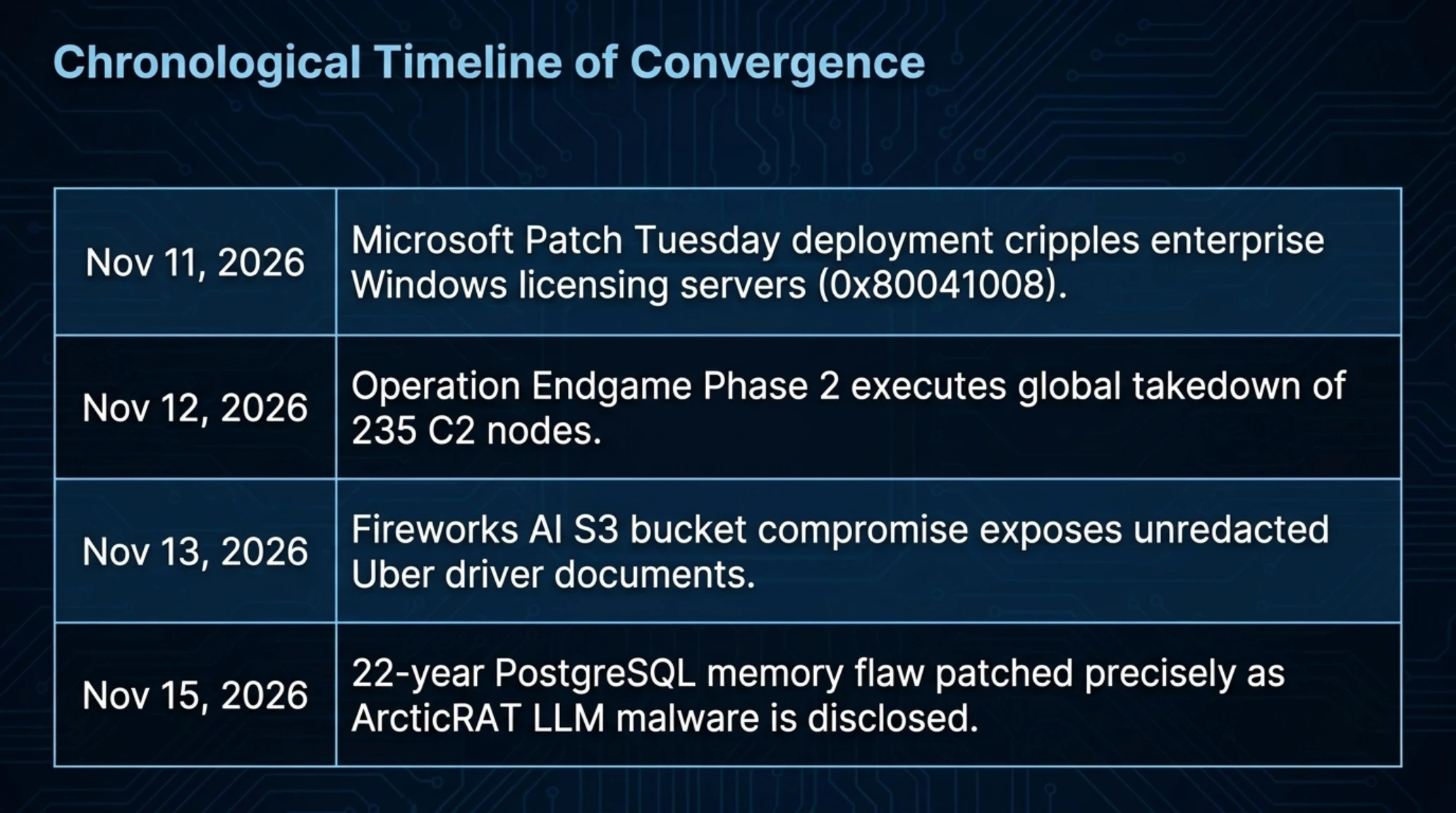
A chronological assessment of this evening’s incidents demonstrates the interconnected fragility binding database engines, international telecoms, and cloud platforms:
Chronological Timeline of Cyber & Cloud Infrastructure Incidents (November 2026)
| Exact Timestamp | Infrastructure Incident | Enterprise Impact & Strategic Fallout |
|---|---|---|
| Nov 11, 2026 | Microsoft Patch Tuesday Deployment | Activation error 0x80041008 cripples enterprise Windows licensing servers. |
| Nov 12, 2026 | Operation Endgame Phase 2 Strike | Global takedown of 235 C2 nodes and recovery of 6.4 million stolen accounts. |
| Nov 13, 2026 | Uber Driver License Breach via Fireworks AI | Exfiltration of thousands of unredacted driver documents from S3 buckets. |
| Nov 15, 2026 | PostgreSQL Core Patch & ArcticRAT Disclosed | Remediation of 22-year memory flaw alongside LLM-driven banking malware disclosure. |
Strategic Synthesis: Cyber-Physical Resilience, Supply-Chain Exposure, and Autonomous Threat Vectors
The simultaneous security crises unfolding on the evening of November 15, 2026, present an unvarnished diagnostic of the modern digital economy’s structural exposure. The convergence of a 22-year-old memory safety flaw in the foundational PostgreSQL engine with cascading licensing outages across Microsoft’s operating system ecosystem proves that software complexity remains the foremost adversary of enterprise stability. When legacy code residing in core transactional datastores is destabilized, the secondary blast radius threatens entire institutional value chains.
On the offensive malware frontier, Operation Endgame Phase 2 established that the aggressive physical seizure of command-and-control servers and the sinkholing of malicious domains remain the gold standard for dismantling cybercrime cartels. However, the emergence of ArcticRAT which automates victim profiling through programmatic connections to cloud LLM APIs reveals that threat actors are successfully compressing exploit cycles beyond human defensive reaction thresholds. Modern cyber defense can no longer rely on manual triage; it requires autonomous, sensory-grounded behavioral sentinels capable of executing countermeasures at machine speed.
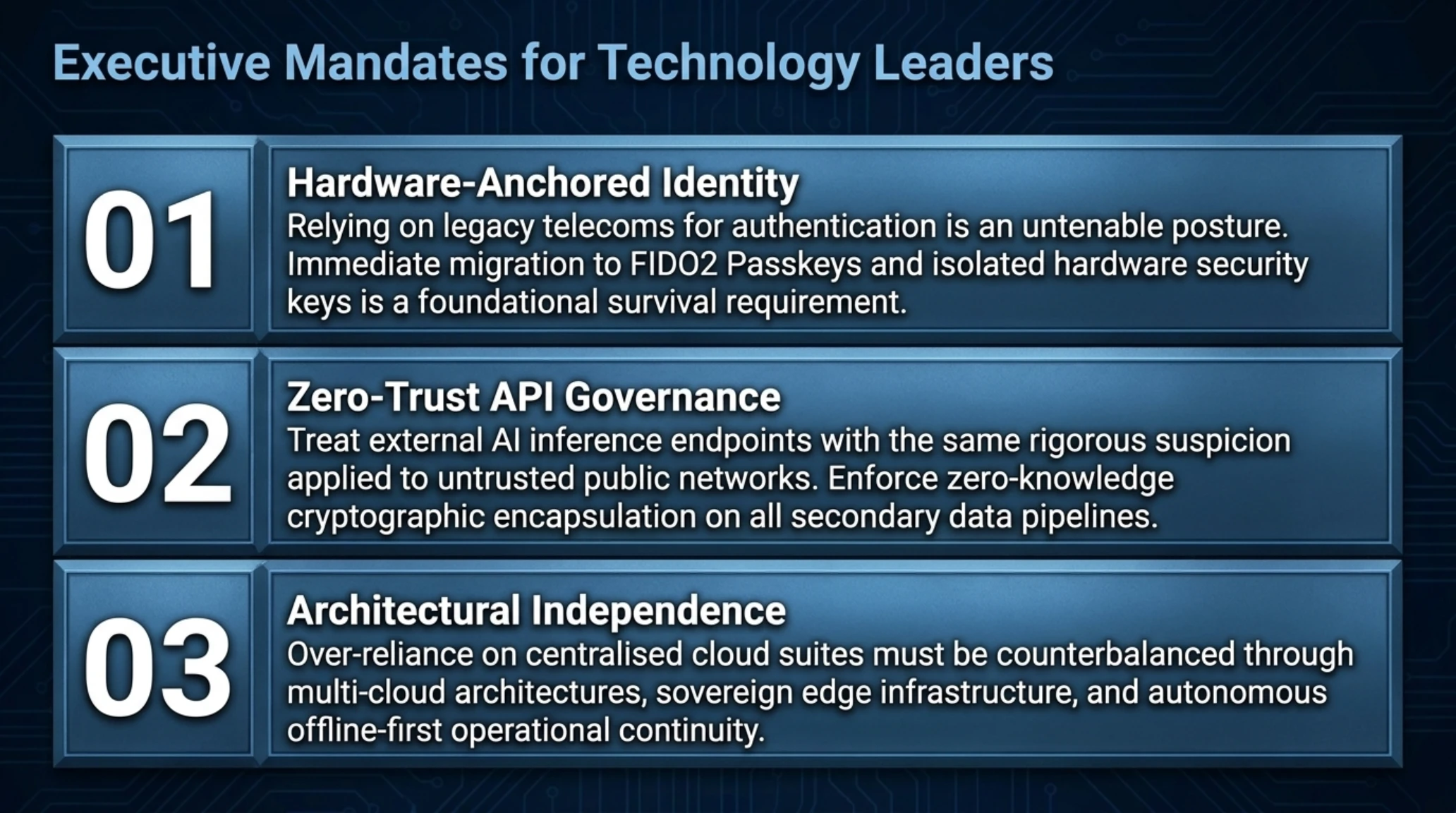
From a supply-chain architecture perspective, the compromise of Uber driver credentials through third-party platform Fireworks AI destroys the illusion of cloud-delegated security. Outsourcing high-risk biometric processing to machine-learning hosting providers without continuous, zero-trust token scoping creates catastrophic compliance liabilities. Enterprise leaders must recognize that an organization’s security posture is only as robust as the weakest link in its external API dependency graph. Contractual assurances cannot substitute for hardware-enforced memory encryption and end-to-end data isolation.
Simultaneously, the SilentAir telecommunications campaign delivers a definitive indictment against legacy signaling protocols. Relying on SMS-based two-factor authentication when international SS7 and Diameter routing exchanges remain vulnerable to spoofed location registrations represents an untenable security posture. The rapid migration toward hardware-backed cryptographic credentials, including FIDO2 Passkeys and isolated hardware security keys, is no longer an optional security upgrade, but a foundational survival requirement for modern enterprise operations.
In the domain of enterprise cloud management, the concurrent failure of Microsoft 365 services and Windows activation endpoints underscores the grave systemic hazards of single-vendor consolidation. While financial SLA credit penalties can be absorbed on corporate balance sheets, the operational disruption inflicted on global commerce is irreversible. Over-reliance on centralized cloud suites must be counterbalanced through multi-cloud architectures, sovereign edge infrastructure, and autonomous offline-first operational continuity.
Furthermore, the structural integration of automated threat vectors demands a comprehensive paradigm shift toward confidential computing and silicon-rooted identity validation. When adversary infrastructure operates on sub-second automation cycles powered by commercial machine-learning APIs, traditional perimeter defenses become obsolete. Organizations must transition toward zero-trust data fabrics where every memory address, microservice invocation, and inter-cloud telemetry link is cryptographically verified and hardware-attested before execution.
Finally, enterprise executives must recognize that operational sovereignty cannot be maintained without deliberate technological diversification. Organizations that build redundancy across sovereign local databases, decentralized cryptographic identity rails, and multi-region cloud providers establish decisive resilience against global platform outages. The lessons of this evening reaffirm that sustainable enterprise survival in an era of automated cyber warfare depends on architectural independence, proactive threat isolation, and the absolute elimination of single points of failure across all operational layers.
Navigating this volatile landscape demands that technology executives, chief information security officers, and enterprise architects look beyond superficial point solutions and execute rigorous, structural refactoring that separates sensitive data from untrusted networks and legacy signaling backbones.
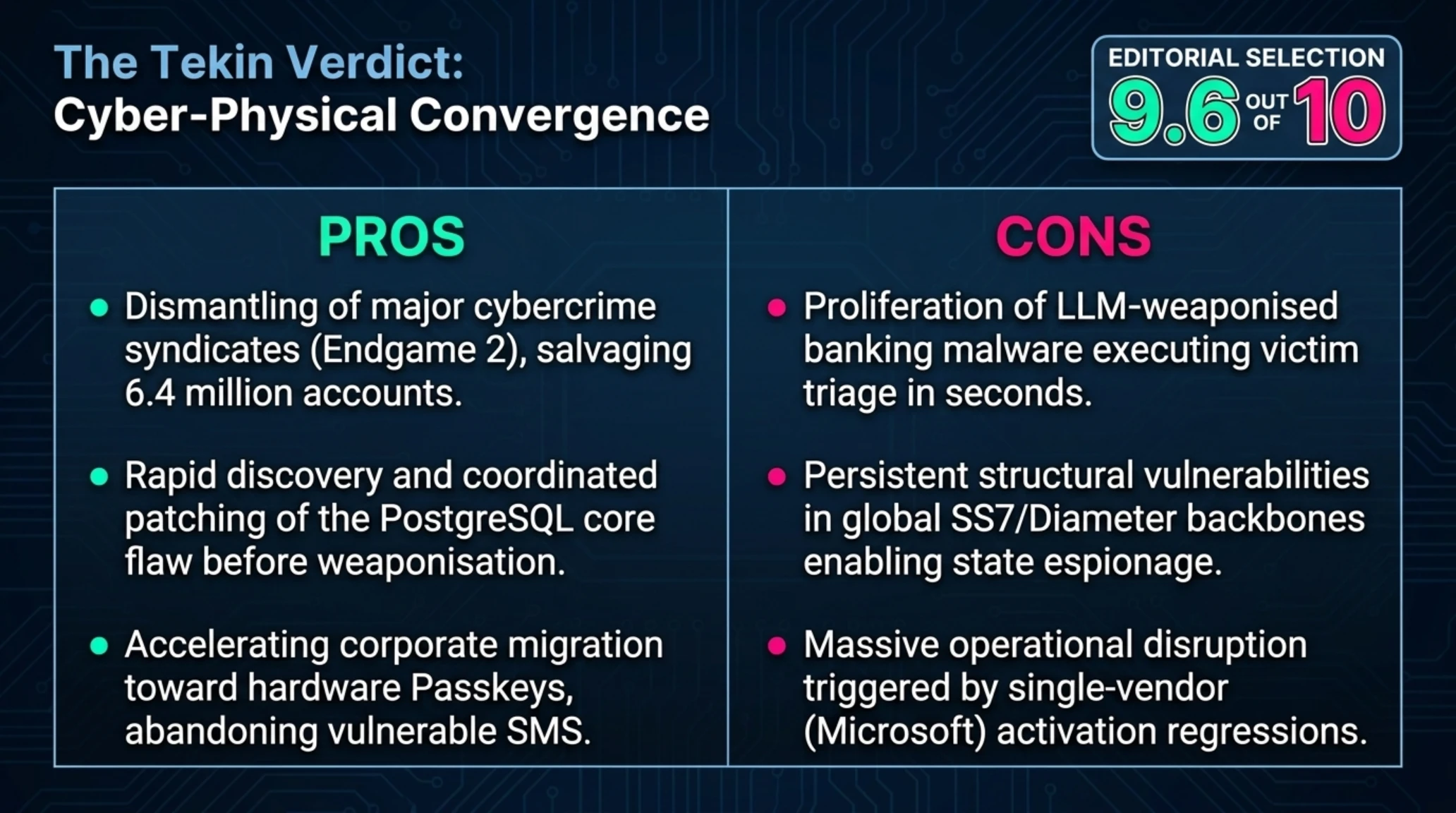
A multi-dimensional synthesis of this evening’s threat matrix provides essential clarity for strategic resource allocation across enterprise engineering teams:
- Dismantling of major cybercrime syndicates via Operation Endgame Phase 2, neutralizing 235 C2 servers and salvaging 6.4 million accounts.
- Rapid discovery and coordinated patching of the 22-year-old PostgreSQL memory flaw before weaponization.
- Accelerating corporate migration toward hardware Passkeys, eliminating vulnerable SMS-based authentication.
- Heightened enterprise scrutiny of third-party AI supply-chain dependencies and external API permissions.
- Proliferation of LLM-weaponized banking malware executing automated victim triage within seconds.
- Persistent structural vulnerabilities in global SS7 and Diameter telecom backbones enabling state espionage.
- Massive operational disruption and licensing confusion triggered by Microsoft activation server regressions.
Neutralizing these autonomous threats requires transitioning from reactive patch cycles toward proactive threat modeling, hardware-enforced memory isolation, and continuous auditing of external software pipelines. Engineering teams must treat external inference endpoints with the same rigorous suspicion applied to untrusted public networks.
Integrating real-time anomaly detection and deep signaling firewalls enables defense teams to sever malicious telemetry pipelines before lateral movement occurs across core enterprise networks. Automated threat intelligence sharing platforms further empower security operations centers to deploy surgical defensive countermeasures before adversaries can execute unauthorized lateral pivots.
Synthesizing these strategic imperatives ensures organizational infrastructure remains resilient against unpredictable software failures and coordinated offensive campaigns. To conclude this analysis and address critical executive inquiries, the authoritative verdict and comprehensive reference index are documented below.
Editorial Verdict, Strategic Conclusion & Authoritative Sources Index
- The Hacker News: Technical breakdown of critical 22-year PostgreSQL code execution flaw (CVE-2026-6460)
- Europol Press Office: Official enforcement bulletin on Operation Endgame Phase 2 infrastructure seizures
- Dark Reading: Forensic analysis of ArcticRAT Android malware leveraging commercial LLM APIs
- Enea Cybersecurity: Comprehensive telemetry investigation into SilentAir SS7 and Diameter signaling espionage
- TechCrunch Enterprise: Investigation into Uber driver document exposure via Fireworks AI cloud compromise
- Bleeping Computer: Detailed coverage of Windows activation error 0x80041008 and Microsoft 365 SLA penalties
Frequently Asked Questions // Strategic Cyber & Infrastructure Analysis
Why did the PostgreSQL vulnerability CVE-2026-6460 remain undetected for 22 years?
The bug resided in specialized C routines governing composite types and internal type descriptor memory management. It was only triggered under rare edge-case conditions involving concurrent schema modifications and temporary table interactions that escaped automated regression test suites.
What makes Operation Endgame Phase 2 uniquely significant compared to standard botnet seizures?
Operation Endgame simultaneously eradicated the hosting backbones, command-and-control servers, and credential databases across three major malware families, while publishing active warning notices on seized infrastructure to demoralize the Malware-as-a-Service ecosystem.
How does the ArcticRAT mobile trojan utilize generative AI to maximize financial theft?
Rather than streaming massive unformatted log dumps, ArcticRAT transmits parsed SMS alerts and banking strings to cloud LLM APIs, autonomously extracting two-factor authorization codes and prioritizing high-net-worth accounts within seconds.
What mechanism allowed the SilentAir threat group to compromise mobile carrier traffic?
Adversaries injected unauthorized UpdateLocation signaling packets into international SS7 and Diameter transit backbones, tricking carrier subscriber registries into rerouting SMS 2FA passcodes and voice streams to rogue proxy servers.
What are the core supply-chain takeaways from the Uber and Fireworks AI data breach?
The incident proves that third-party AI providers represent high-risk attack surfaces. Organizations must enforce strict zero-trust key rotation, least-privilege API scoping, and hardware-level memory encryption on all outsourced data processing workflows.
What caused Windows activation error 0x80041008 and what are the SLA ramifications for Microsoft?
An unhandled regression in the November cumulative update corrupted the slmgr.vbs licensing interface. Combined with widespread Microsoft 365 downtime dropping service availability below 99.9%, Microsoft is contractually bound to credit millions in SLA penalty rebates to enterprise customers.
Additional Gallery: Tekin Night Nov 15: PostgreSQL 22-Year Bug & Endgame Takedown