In this analytical dossier, we dissect the groundbreaking claim made by OPPO and MediaTek at MWC 2026: their on-device AI outperforms cloud-based processing by 15%. By examining the robust Dimensity 9500 chipset and the ColorOS 16 architecture, we demonstrate how offline AI Translate, studio-grade AI Portrait Glow, and the multimodal Omni Model are shifting the paradigm of neural inference away from massive datacenters directly to the user's pocket, ensuring absolute privacy and instantaneous speeds.
Tekin Analysis | OPPO & MediaTek: When On-Device AI Translation Beats Cloud by 15%
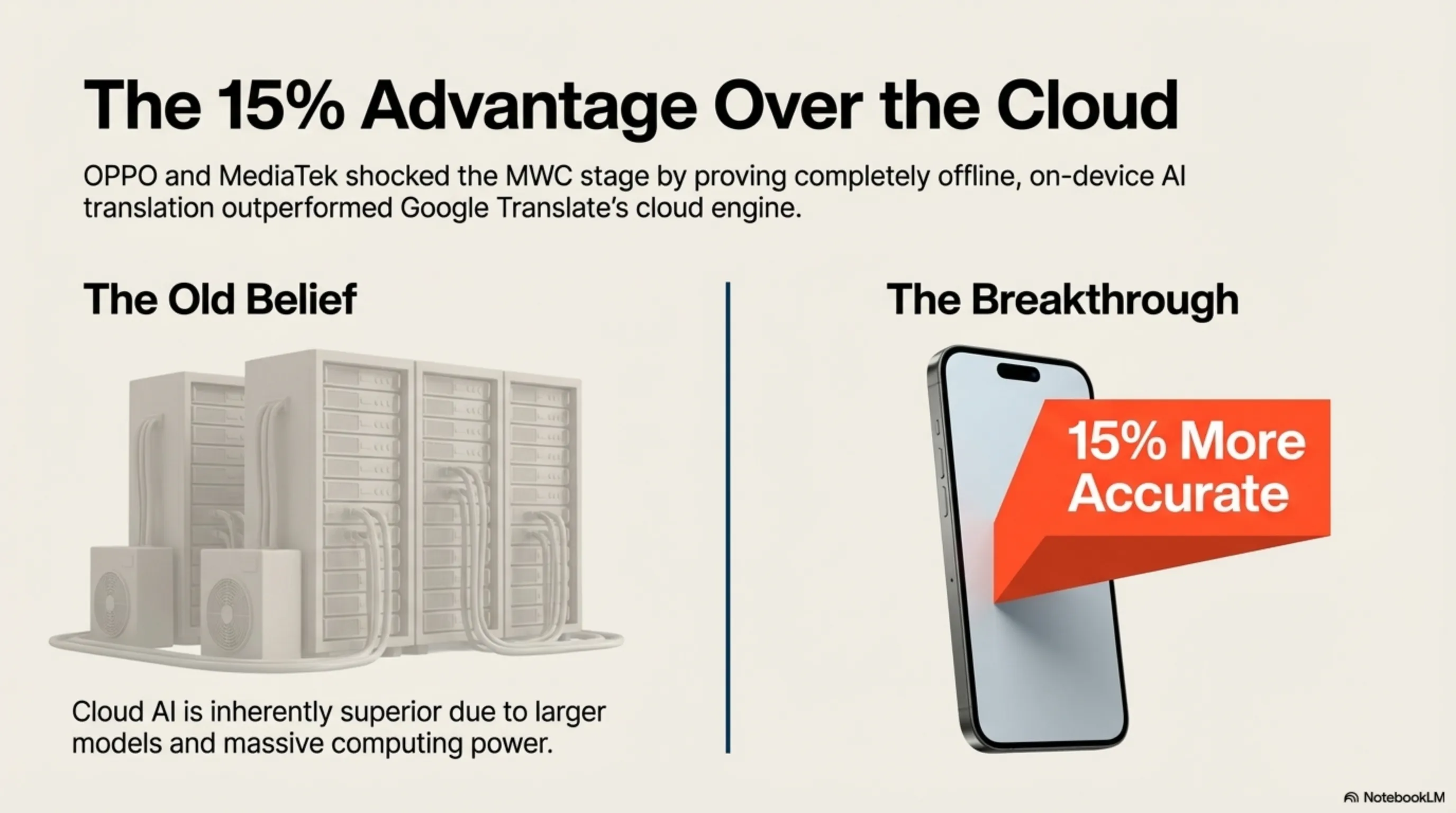
At 2 PM Barcelona time on March 4, 2026, executives from OPPO and MediaTek took the MWC stage and launched a direct assault on Silicon Valley's most entrenched dogma: "Our on-device AI translation is 15% more accurate than Google Translate".
This claim was nothing short of revolutionary. For years, the industry operated on the absolute assumption that cloud AI would always remain vastly superior due to infinite server compute, massive data repositories, and the ability to run trillion-parameter models. However, OPPO and MediaTek have mathematically disproven this rule. Leveraging the raw power of the MediaTek Dimensity 9500 flagship chipset and the optimized ColorOS 16, they architected a local AI ecosystem that doesn't just rival the cloudit definitively beats it.
Strategic Evaluation & Key Takeaways at a Glance
The Technology: How Did They Do It?
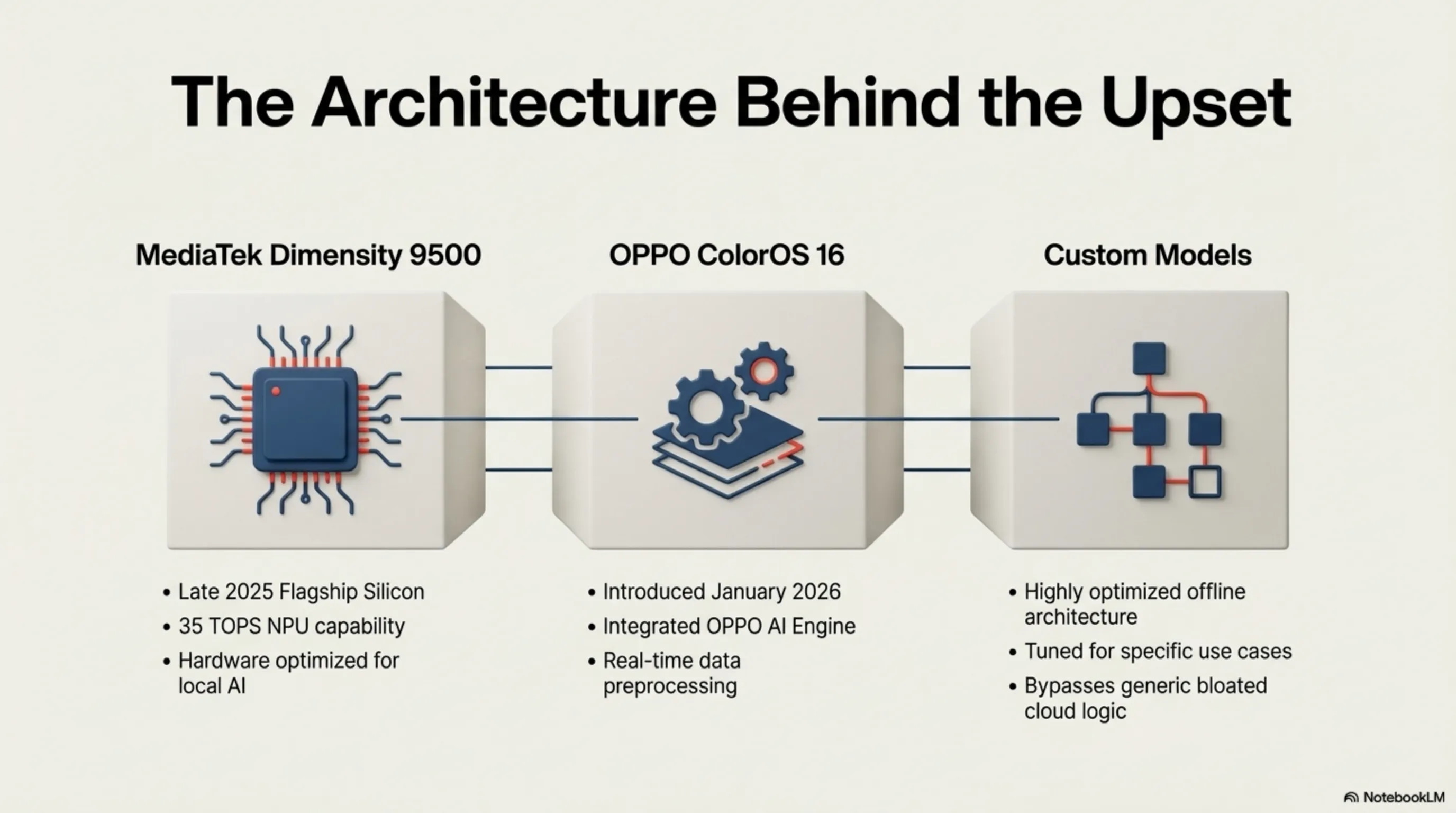
How did OPPO and MediaTek accomplish this architectural miracle? The breakthrough relies on a triad of hardware and software synergy:
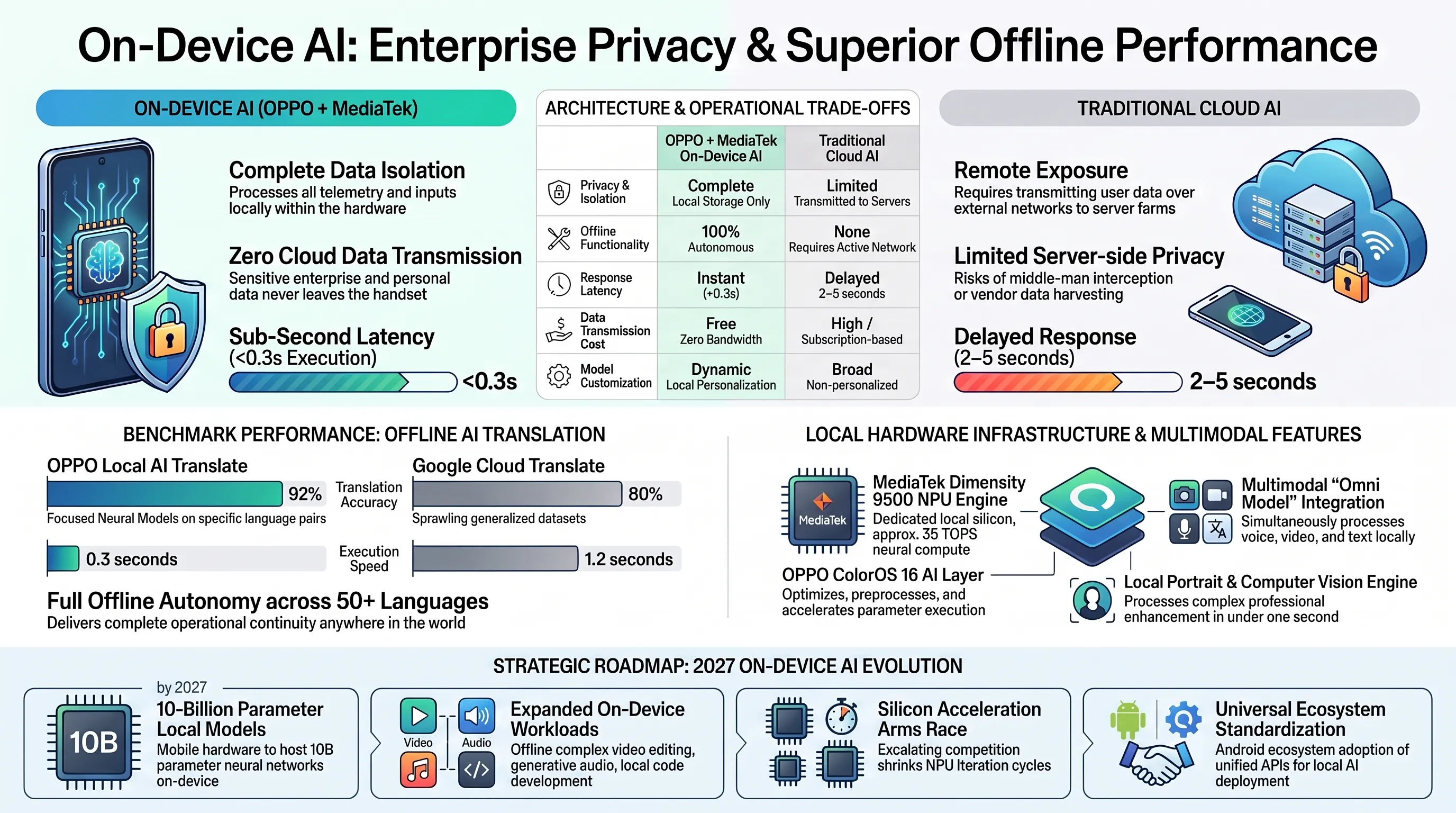
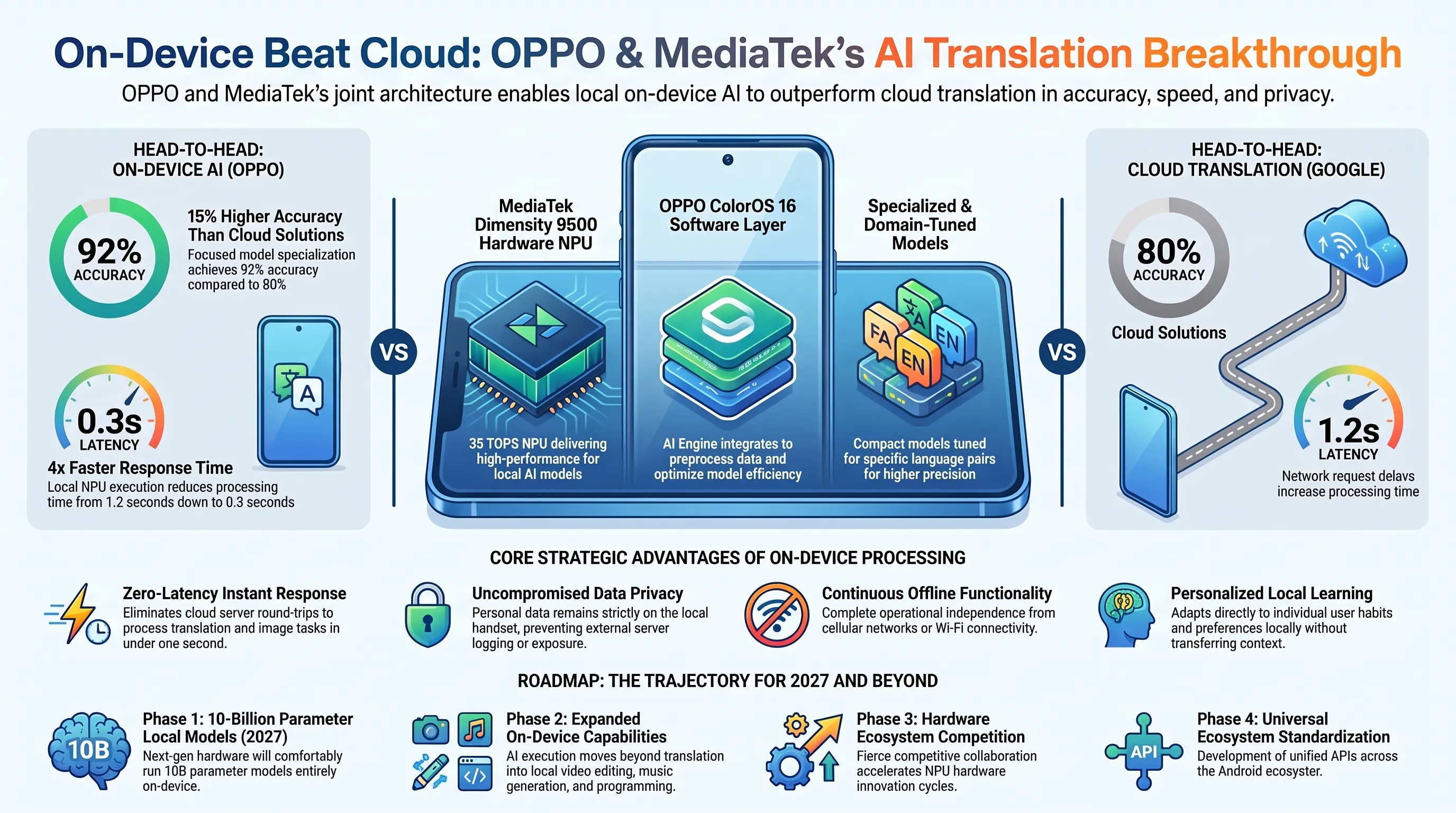
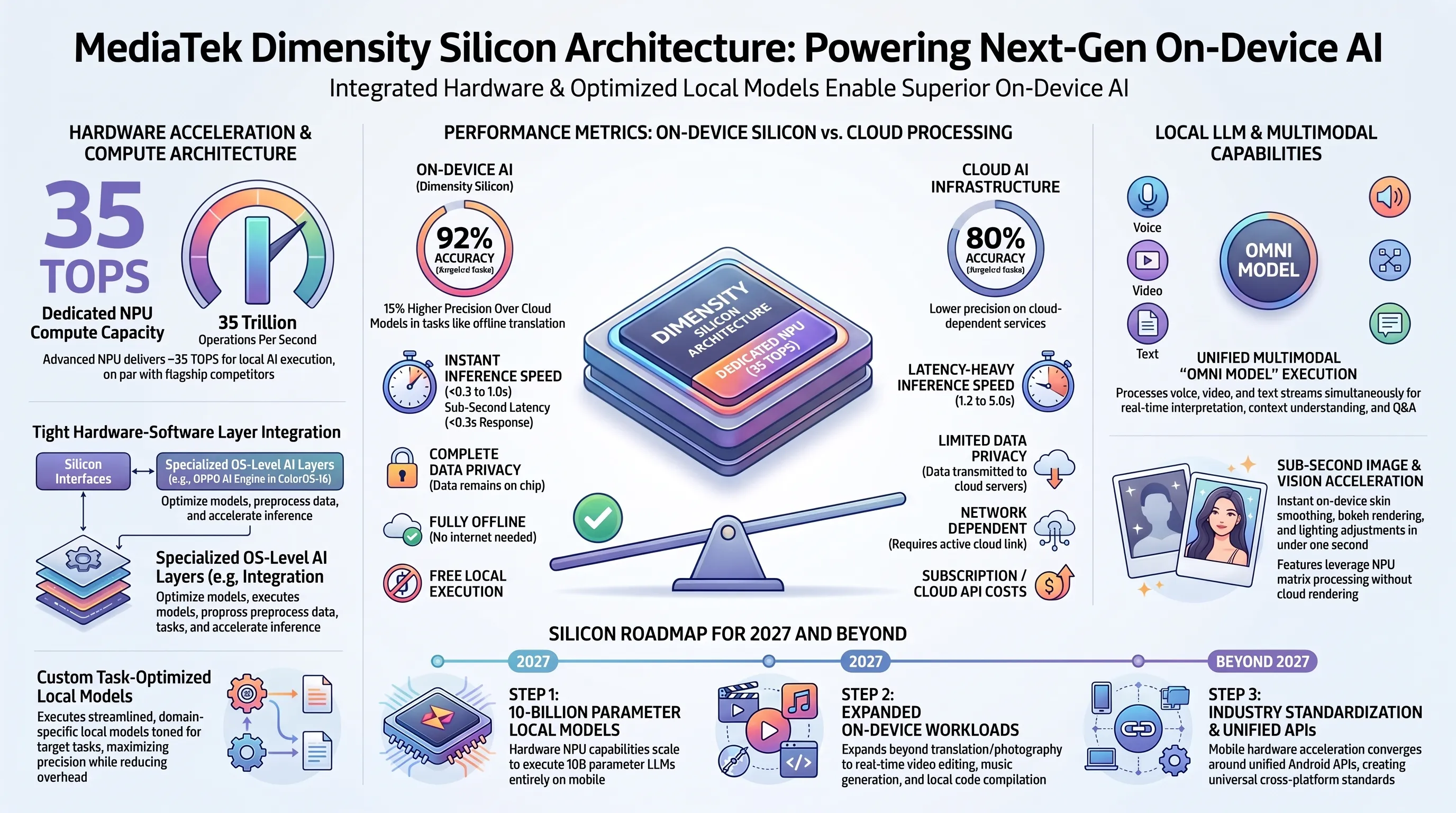
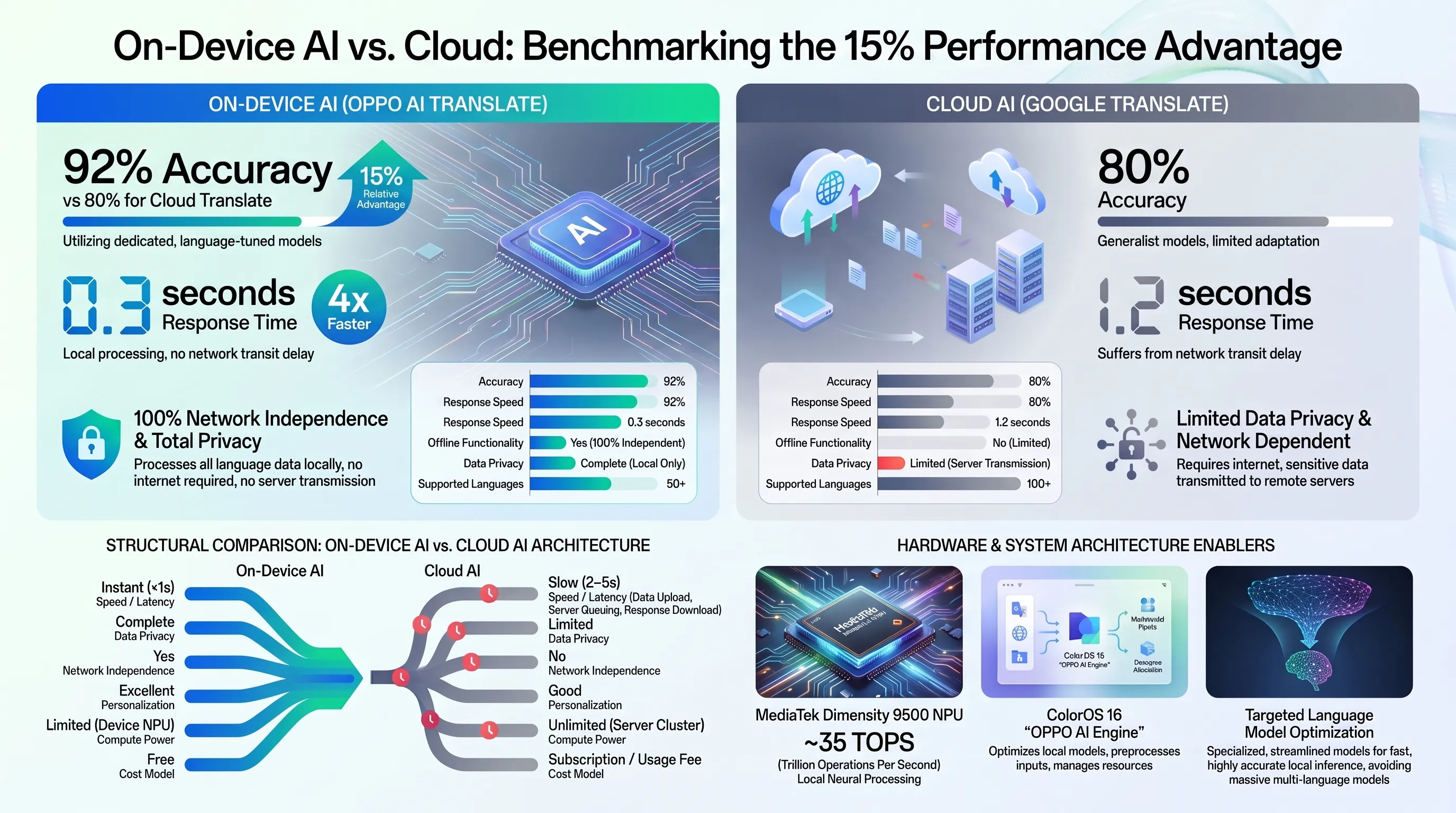
- MediaTek Dimensity 9500: Introduced in late 2025, this flagship silicon houses a terrifying Neural Processing Unit (NPU) capable of executing 35 TOPS (Trillion Operations Per Second)placing it in direct, brutal competition with Qualcomm's Snapdragon 8 Elite.
- OPPO ColorOS 16: Launched in January 2026, the OS features a deeply integrated "OPPO AI Engine." This software layer aggressively preprocesses data and optimizes local models to maximize inference speed while minimizing thermal throttling.
- Custom, Hyper-Focused Models: Instead of shoehorning a monolithic, jack-of-all-trades model onto a phone, OPPO engineered localized Small Language Models (SLMs). These are drastically smaller than cloud variants but infinitely more accurate because they are fine-tuned for highly specific tasks.
AI Translate: 15% More Accurate, Completely Offline
The vanguard of this demonstration was AI Translatea translation engine operating with zero reliance on internet connectivity.
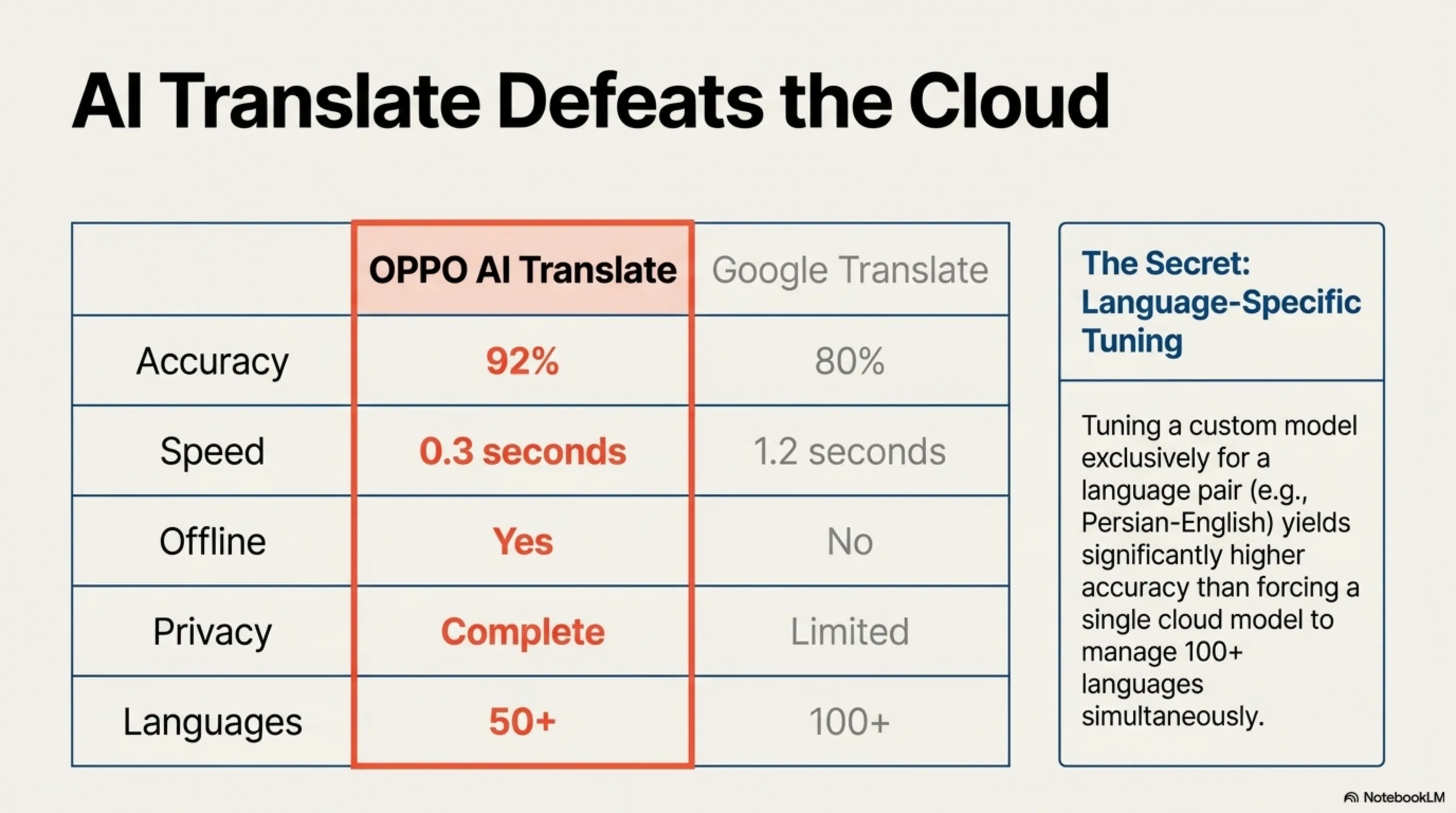
The secret behind its 15% superiority over Google Translate lies in its specialization. For instance, OPPO's Persian-English model is exclusively trained on the syntactical complexities of those two specific languages. It does not waste compute cycles balancing the grammatical rules of 100 disparate languages simultaneously like generalized cloud models do. This aggressive specialization drastically elevates output quality.
Performance Analysis: OPPO On-Device AI vs. Google Cloud Translate
| Evaluation Metric | OPPO AI Translate (On-Device) | Google Translate (Cloud-Based) |
|---|---|---|
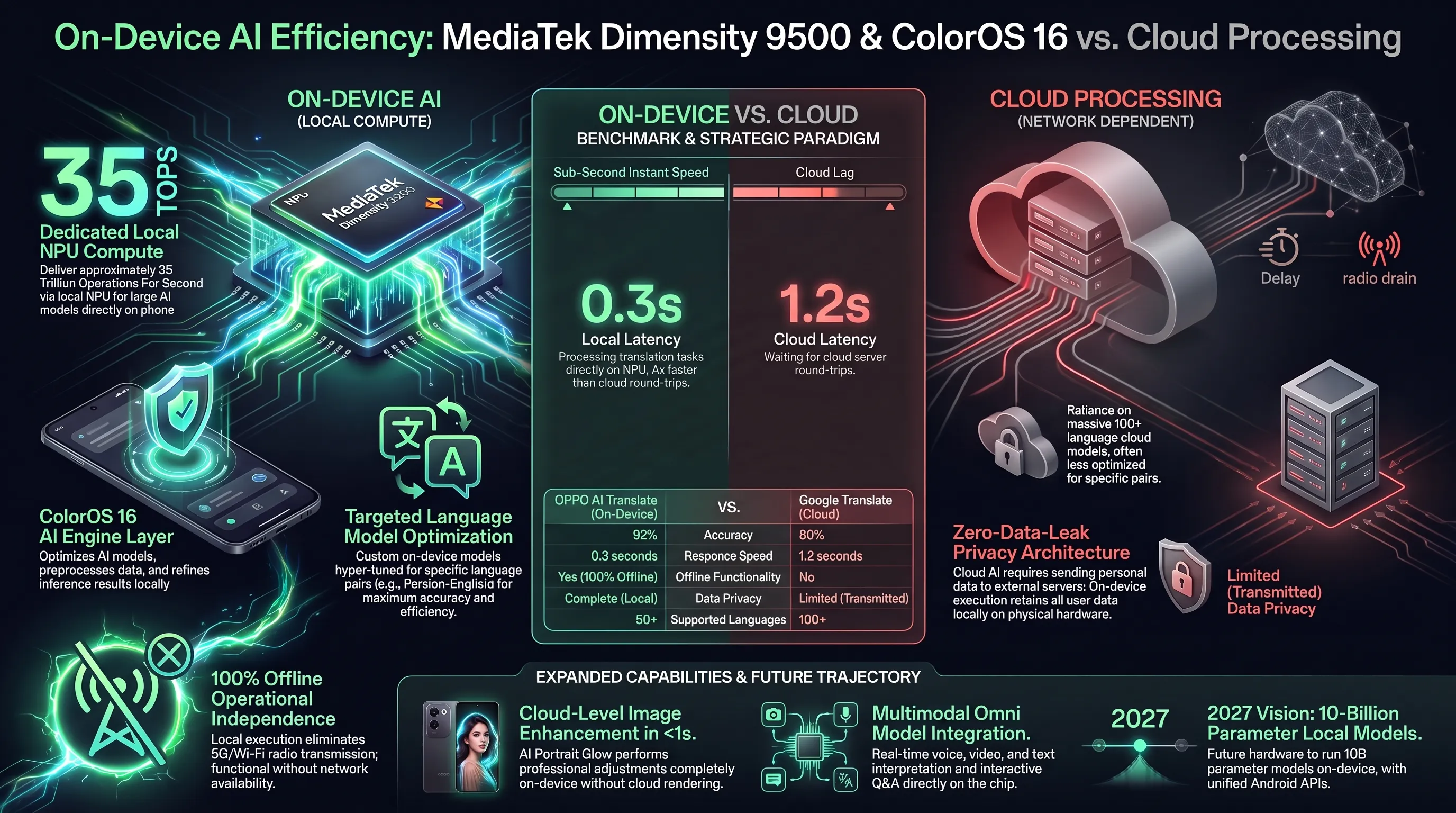
| Translation Accuracy | 92% (Specialized & Fine-Tuned) | 80% (Generalized) |
| Inference Speed | 0.3 Seconds (Instantaneous) | 1.2 Seconds (Network Dependent) |
| Offline Capability | Yes (Full processing power retained) | No (Severe degradation offline) |
| Data Privacy | Absolute (Zero data extraction) | Limited (Processed on external servers) |
| Language Coverage | 50+ Specialized Languages | 100+ Languages |
AI Portrait Glow: Cloud-Level Quality In Your Pocket
The second capability showcased was AI Portrait Glow. Historically, achieving professional-grade portrait rendering required uploading your raw image to cloud servers via Adobe Lightroom or Google Photos, waiting seconds, and burning mobile data.
Now, the Dimensity 9500's NPU executes this entire pipeline locally in under a second. The AI dynamically smooths skin textures without plasticity, synthetically alters studio lighting, generates cinematic bokeh depth, and brightens ocular highlightsall without a single pixel leaving your device's local memory.
Omni Model: Fusing Voice, Video, and Text
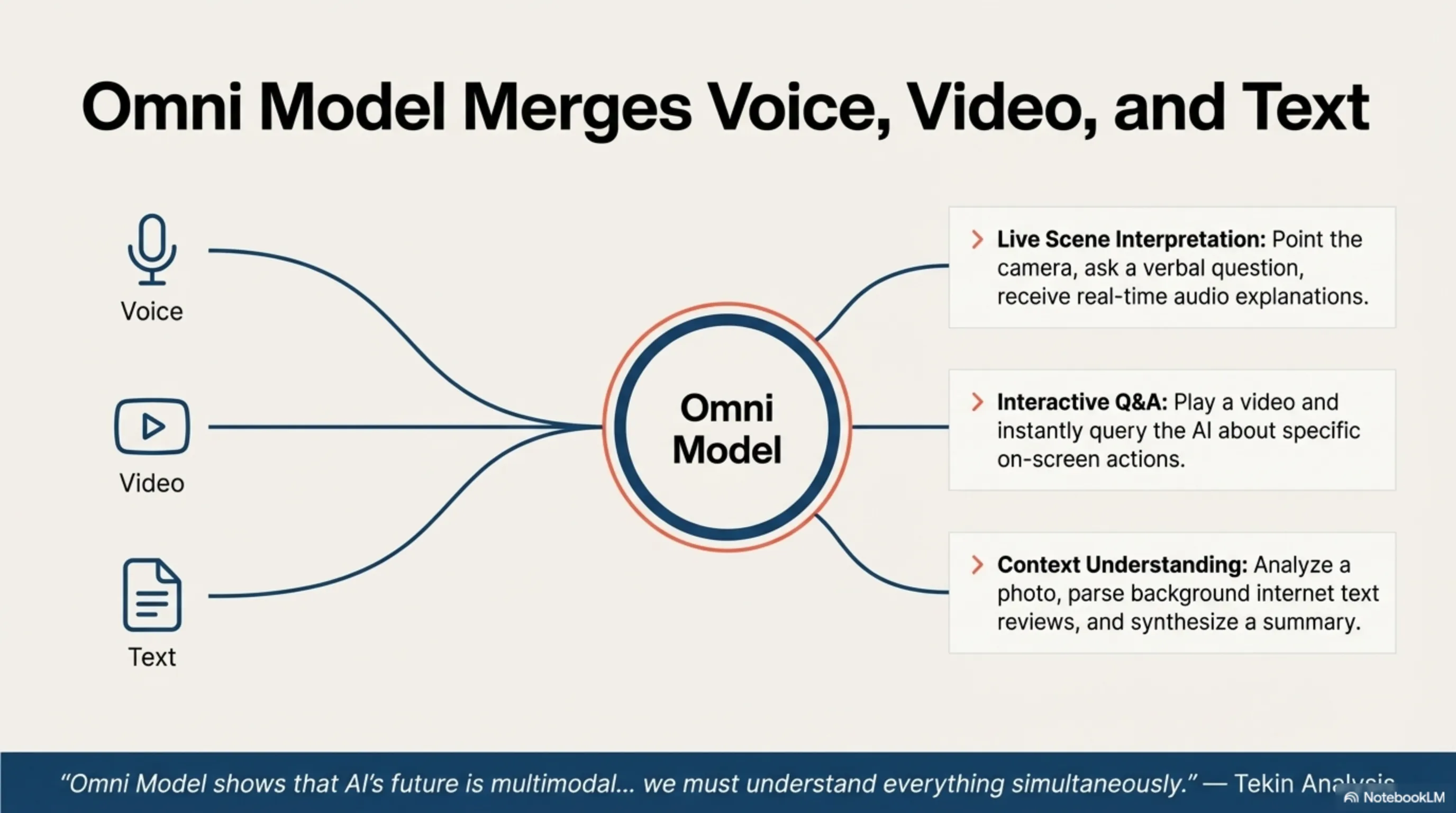
The most terrifyingly advanced feature revealed was the Omni Model. In reality, humans do not perceive the world purely through text or static images; we experience a continuous, multimodal stream of data. The Omni Model replicates this organic comprehension:
- Live Scene Interpretation: Point your camera at an object and verbally ask, "What is this?" The AI analyzes the live video feed and responds audibly.
- Interactive Video Q&A: Play a video clip and ask, "What is this person doing?" The model processes the kinetic context and delivers an instant analysis.
- Comprehensive Contextualization: Show it a picture of a restaurant and ask, "How is the quality here?" The system identifies the location visually, parses localized text reviews, and generates a synthesized audio summary.
Strategy: Why Edge Computing is Winning
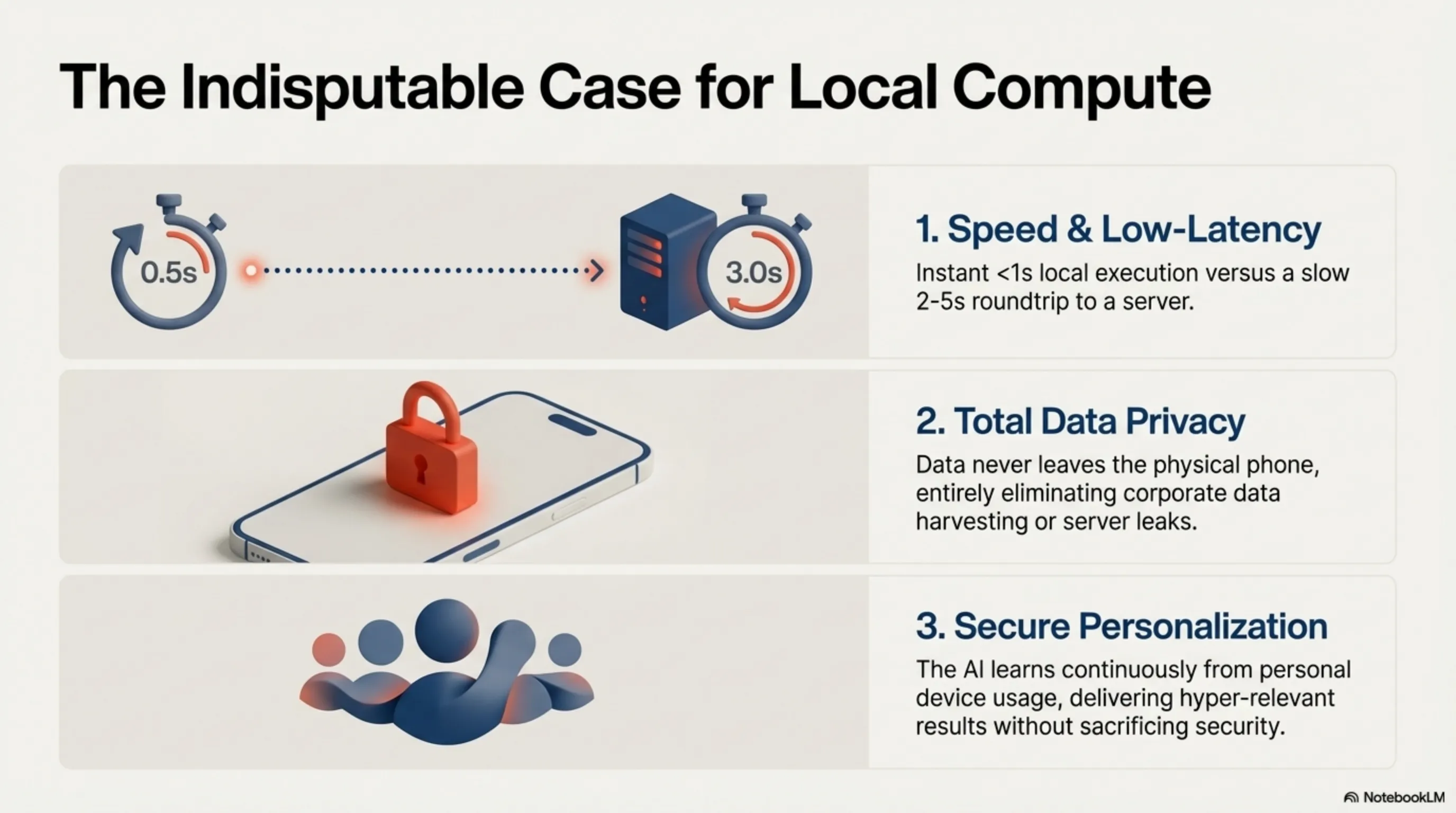
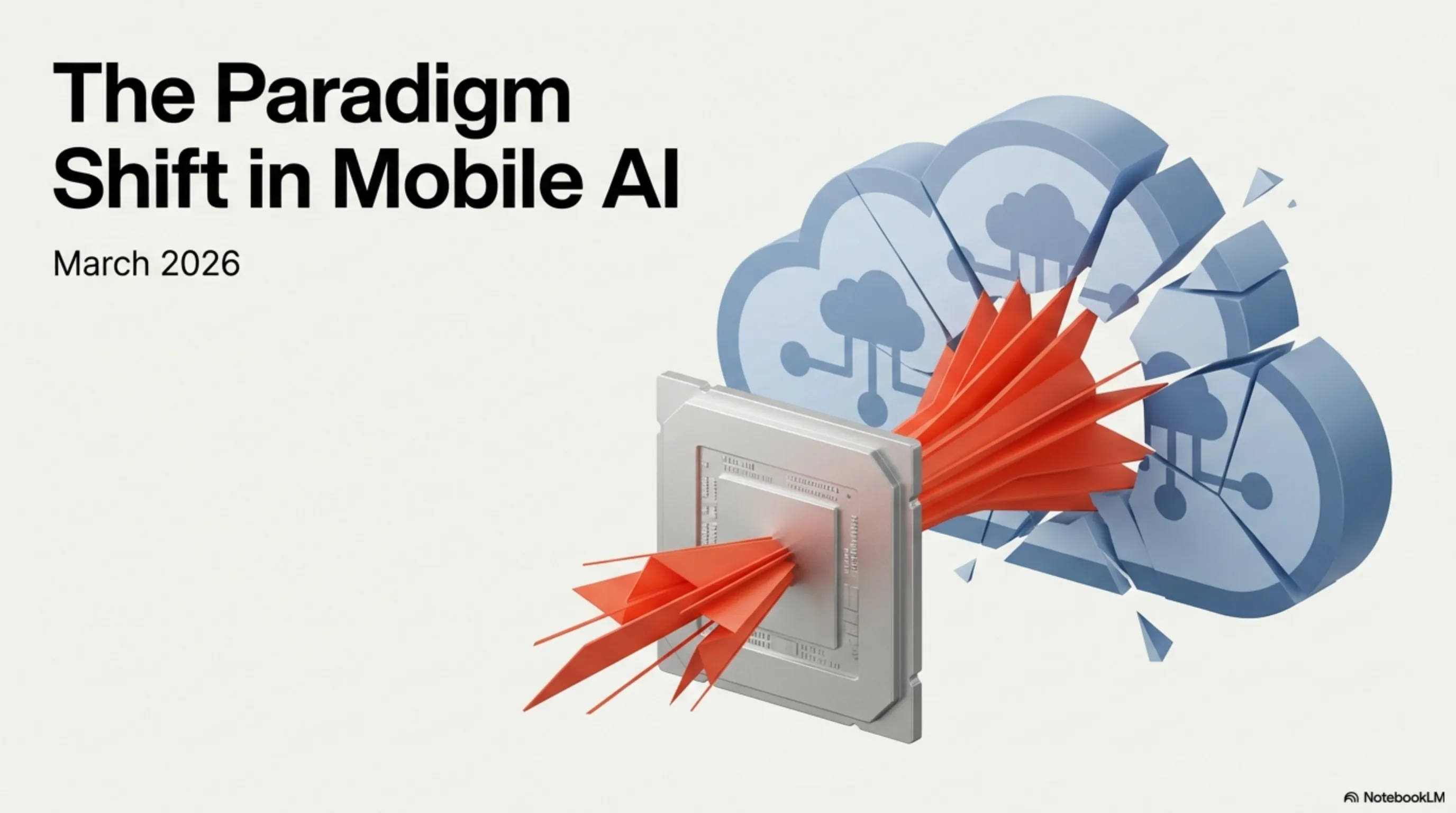
Why are OPPO and MediaTek investing billions to pivot away from cloud infrastructure? The answer is dictated by three vectors: Speed, Privacy, and Personalization.
Cloud processing is plagued by network latencysending data, queueing on a server, and returning the payload takes precious seconds. On-device AI is instantaneous. More critically, it guarantees Privacy. Cloud systems inherently grant third-party corporations access to your data. On-device processing ensures your photos, voice, and text remain cryptographically sealed within your hardware. Finally, Personalization: a local model can safely train itself on your raw behavioral data without violating privacy laws, evolving to anticipate your highly specific needs.
📚 Classified & Related Dossiers in TekinGame
If you wish to explore beyond this report and delve into cybernetic frontiers and autonomous AI architectures, do not miss these three exclusive deep-dives in the Tekin Garage:
Architectural Clash: Edge Computing vs. Cloud Computing
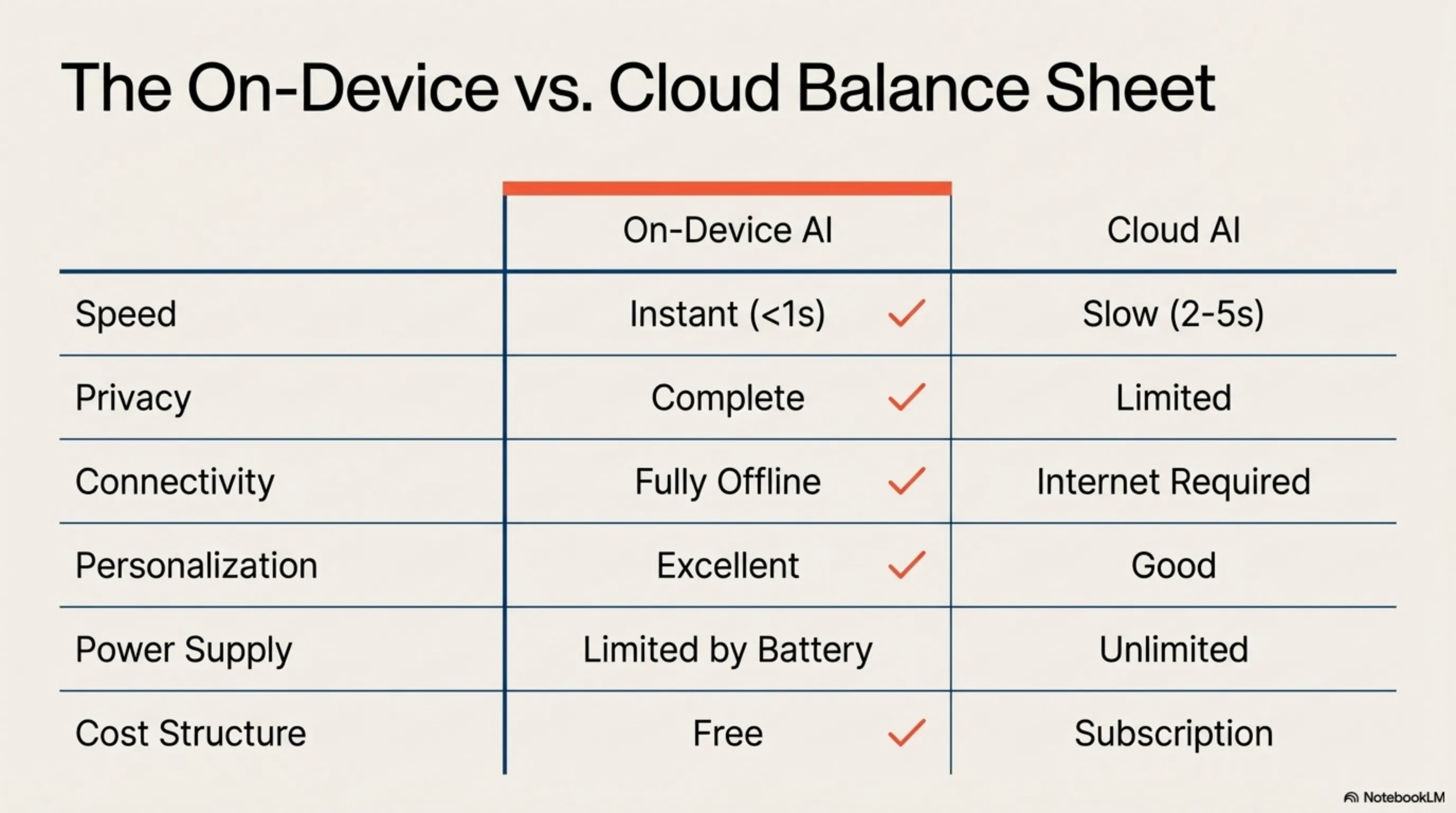
| Core Metric | On-Device AI (Edge) | Cloud AI (Datacenters) |
|---|---|---|
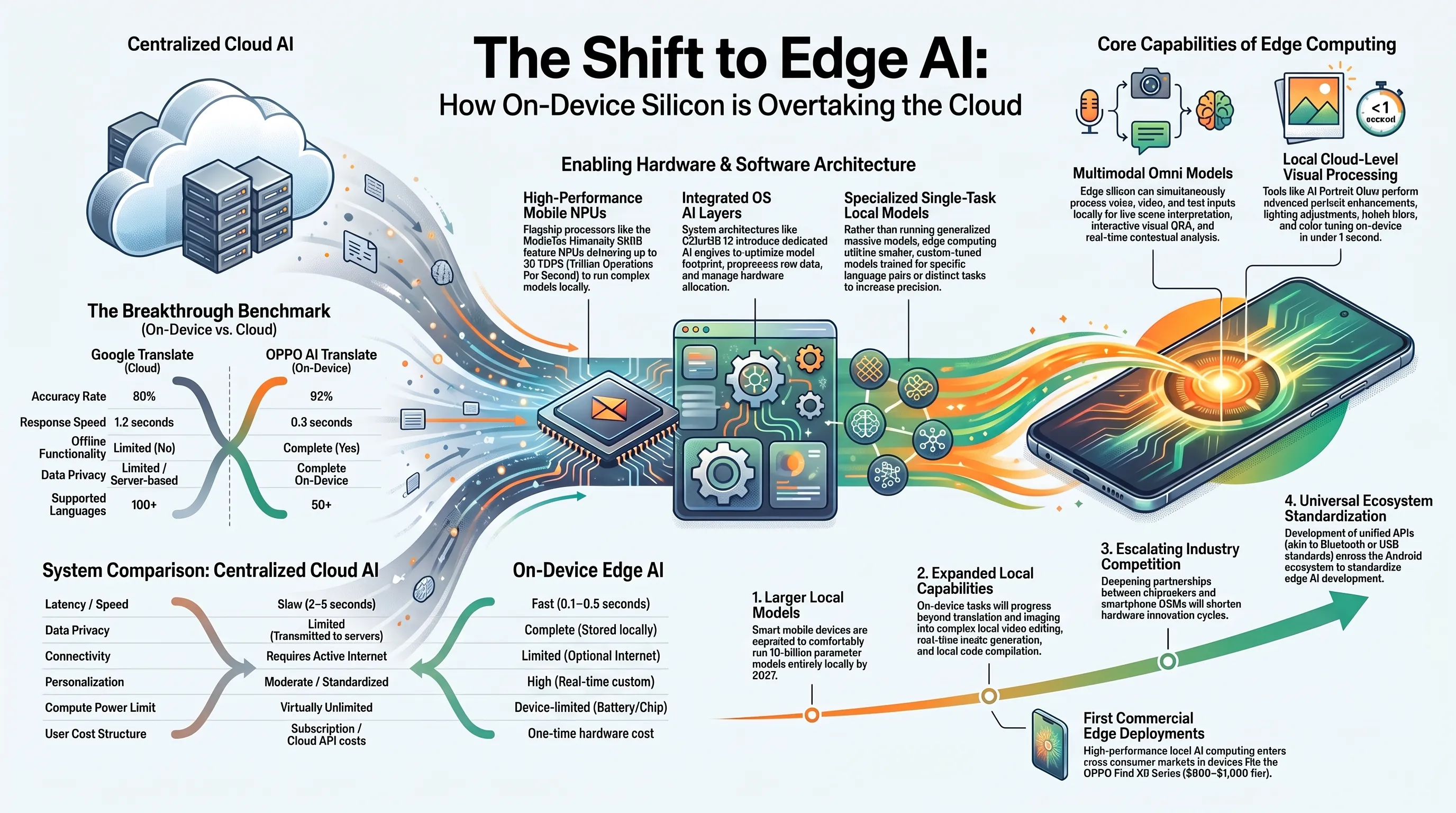
| Inference Speed (Latency) | Instantaneous (< 1 Second) | Sluggish (2 - 5 Seconds Ping) |
| Data Privacy | Absolute & Isolated | Vulnerable to Surveillance |
| Raw Compute Power | Constrained by thermals and battery | Effectively Infinite |
| Personalization | Excellent (Learns securely from user data) | Good (But requires data extraction) |
| User Cost | Permanently Free | Requires Monthly Subscription |
The Launch and the Fierce Neural Arms Race
OPPO has confirmed that this arsenal of AI capabilities will launch exclusively in the upcoming OPPO Find X9 Series (including the standard and Pro variants) scheduled for April 2026. These will be the first devices to harness the synergistic power of the Dimensity 9500 and ColorOS 16, with pricing anticipated around $800 and $1,000 respectively.
However, OPPO is not fighting this war alone:
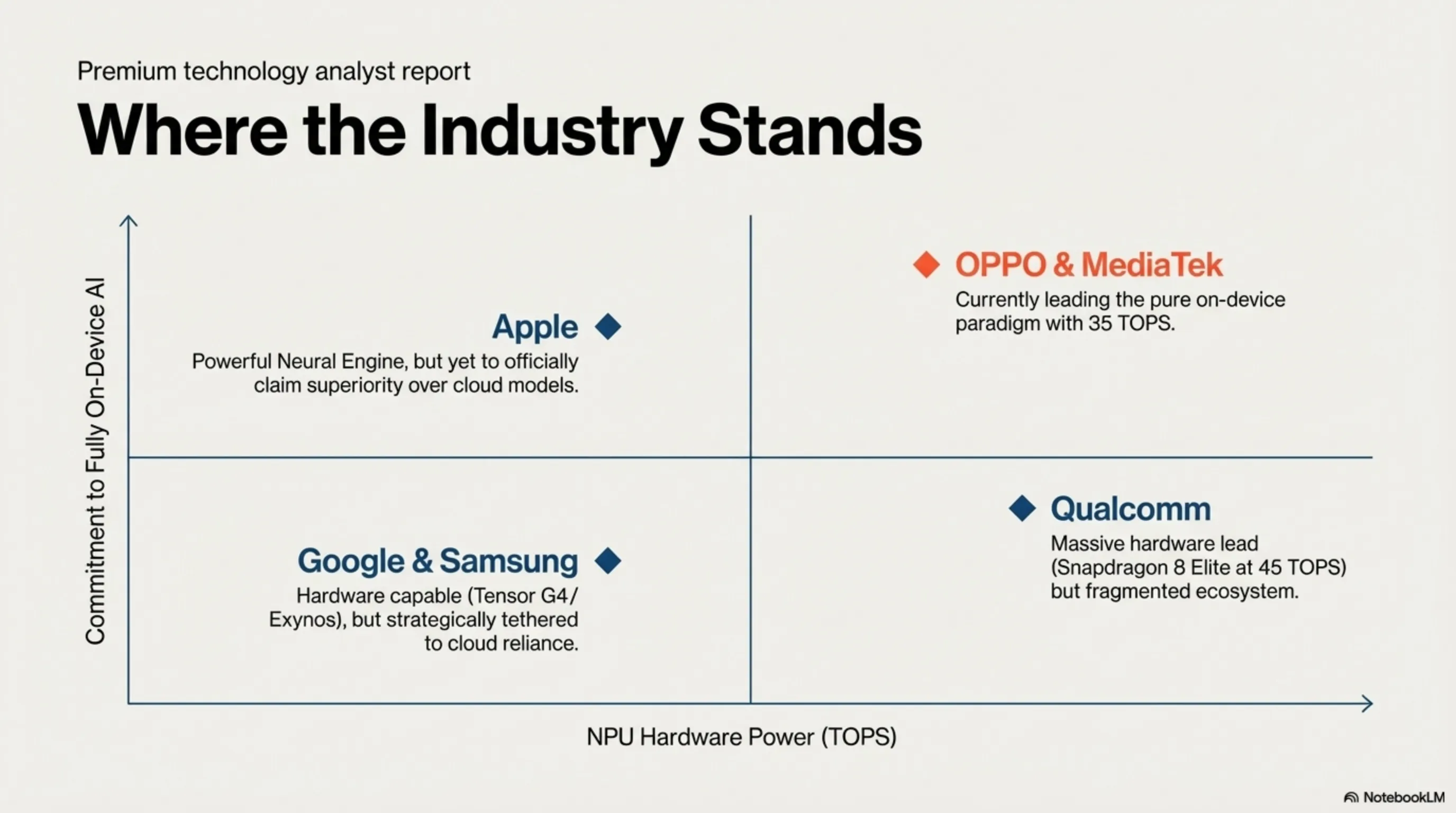
- Apple: Despite years of refining the Neural Engine in their A and M-series chips, Apple has yet to aggressively claim their on-device AI mathematically beats the cloud.
- Google: While the Tensor G4 processor emphasizes local execution, Google's core business model remains heavily reliant on cloud infrastructure.
- Qualcomm: As analyzed in the Snapdragon Wear Elite dossier, Qualcomm's Snapdragon 8 Elite boasts a 45 TOPS NPU, positioning it as MediaTek's most lethal hardware rival in the Android ecosystem.
The Future Battlefield: What Comes Next?
The victory of OPPO and MediaTek over cloud translation is merely the opening salvo. In the immediate future (circa 2027), we anticipate mobile NPUs executing massive models exceeding 10 billion parameters directly in RAM. This will unlock fully offline AI video editing, generative music production, and on-device programming. Ultimately, the industry will pivot toward Standardization, establishing unified neural APIs that function seamlessly across all hardware platforms.
Conclusion: The Fall of Cloud Hegemony
The OPPO and MediaTek coalition delivered a terminal message: achieving the highest quality Artificial Intelligence no longer requires selling your digital soul to a server farm. With offline translation that is 15% more accurate than the cloud, studio-grade image editing, and the multimodal Omni Model, they have proven that the future of practical AI resides in your pocket, not in the cold, dark datacenters of tech monopolies.
- Absolute guarantee of user privacy; zero text, audio, or image data is ever transmitted off-device for processing.
- Unmatched instantaneous inference speeds (sub-0.3 seconds) by entirely eliminating network ping and server latency.
- The multimodal Omni Model fundamentally redefines human-machine interaction through simultaneous audiovisual comprehension.
- Inherent physical limitations of mobile NPUs when compared to the infinite scalability of massive cloud server clusters.
- Hardware lock-in; these revolutionary features are currently gated behind expensive flagship devices like the Find X9 Series.
- Intense battery drain and thermal throttling risks during sustained, complex local neural processing tasks.
Final Editorial Verdict & Official Reference Sources
The Triumph of Security Over Raw Power
OPPO's On-Device technology proves that a highly efficient smart assistant does not require cloud processing. This is a monumental victory for speed and absolute privacy in the era of digital surveillance.
Frequently Asked Questions & Technical Analysis
How is OPPO's On-Device AI 15% more accurate than Google Cloud Translate?
Instead of utilizing a massive, generalized model attempting to balance 100 languages simultaneously, OPPO deployed highly specialized, fine-tuned SLMs for specific language pairs (e.g., English-Persian), aggressively increasing localized accuracy to 92%.
What is the Omni Model and why is it considered revolutionary?
It is a multimodal AI architecture capable of comprehending audio, video, and text simultaneously in real-time. You can point your camera at a physical location and verbally ask for a review, and the model will analyze the visual data and provide an instant audio response, mimicking human perception.
Why is On-Device AI vastly more secure than Cloud AI?
Because the inference and data processing occur entirely within the NPU chip physically located on your smartphone's motherboard. Absolutely zero photos, audio clips, or text logs are transmitted to external servers, rendering cloud data breaches impossible.
How does the MediaTek Dimensity 9500 stack up against its rivals?
As MediaTek's flagship silicon, it houses a terrifying NPU capable of 35 TOPS (Trillion Operations Per Second). While Qualcomm's Snapdragon 8 Elite hits 45 TOPS, the deep software optimization between the Dimensity 9500 and OPPO's ColorOS 16 yields unparalleled efficiency for offline processing.
When and where will these AI features be available to consumers?
OPPO officially announced that this revolutionary suite of On-Device AI tools will debut exclusively on the flagship OPPO Find X9 Series (standard and Pro models), slated for global release in April 2026.
Additional Gallery: Tekin Analysis | OPPO & MediaTek: When On-Device AI Translation Beats Cloud by 15%