Tekin Hardware: DLSS 5 Leak
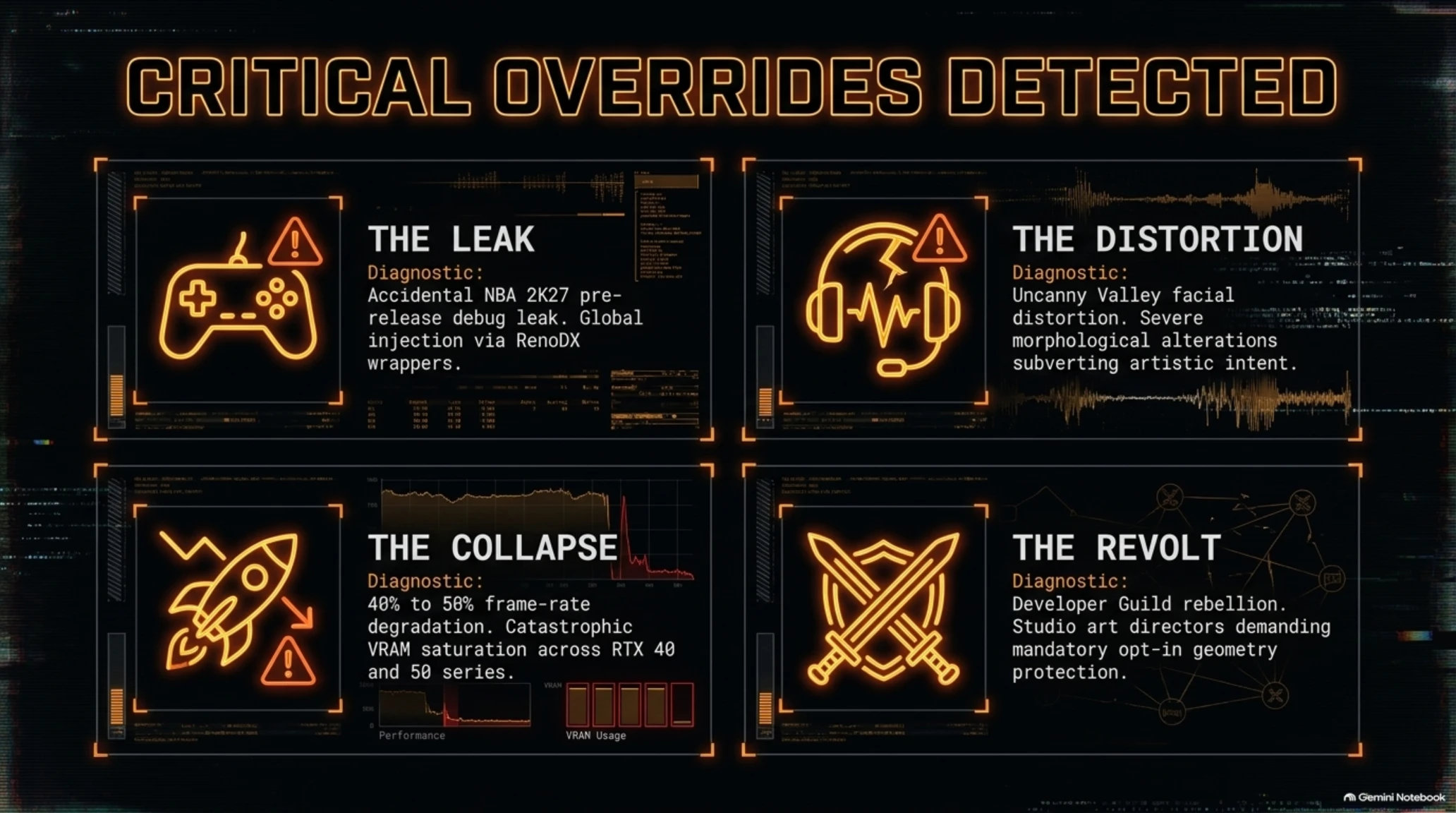
- 🎮Accidental Leak & RenoDX Modding- Unreleased DLSS 5 dynamic libraries injected across major PC titles
- 🎧Uncanny Valley Facial Distortion- Analyzing severe morphological alterations in Control and GTA San Andreas
- 🚀Catastrophic Frame-Rate Degradation- 40% to 50% performance drops recorded across flagship RTX GPUs
- 🗡️Developer Guilds Revolt- Studio art directors demand mandatory developer opt-in controls
- 📰Architectural Divergence- Deconstructing spatial denoising (DLSS 4.5) vs generative hallucination
- ⚔️Roadmap for Blackwell Silicon- Strategic recommendations for NVIDIA to separate frame acceleration
NVIDIA's Deep Learning Super Sampling (DLSS) technology has long stood as the gold standard for performance enhancement, pioneering temporal upscaling and optical frame generation across the gaming industry. However, the accidental leakage of an unreleased, internal build of DLSS 5 within test files of NBA 2K27 has triggered one of the most contentious technical and artistic crises in modern computer graphics history.
Prominent modders within the RenoDX community rapidly developed injection wrappers allowing the neural post-processing pipeline to execute across major PC titles, including Control, Cyberpunk 2077, The Elder Scrolls V: Skyrim, and Grand Theft Auto: San Andreas. The TekInGame Hardware and Telemetry Laboratory executed exhaustive benchmarks on this leaked build to evaluate its performance overhead, visual integrity, and profound industry implications.
AT A GLANCE | WHY DLSS 5 IGNITED INDUSTRY BACKLASH
- DLSS transforms from a high-speed performance upscaler into an aggressive neural generative filter
- Character facial geometries suffer severe distortion, creating jarring Uncanny Valley artifacts
- Frame rates plummet by up to 50% due to local real-time execution of vision-transformer models
- Prominent game development studios demand absolute veto power over post-render scene alteration
- Significant architectural departure from DLSS 4.5's mathematically rigorous Ray Reconstruction
1. The Leak Mechanics: How Internal DLSS 5 Binaries Surfaced Publicly
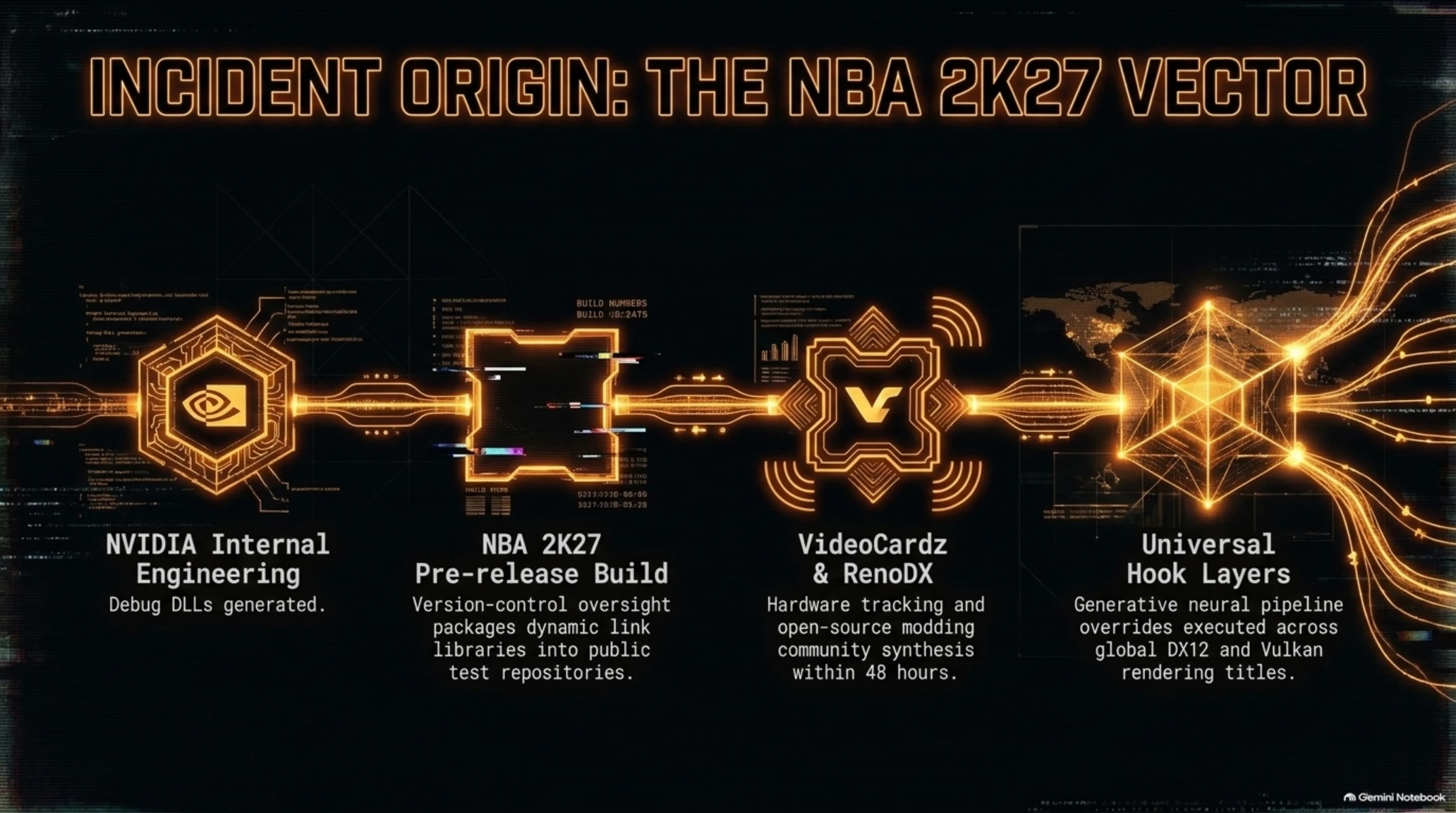
The unauthorized emergence of DLSS 5 stemmed from a version-control oversight in a pre-release build of NBA 2K27, where debug dynamic link libraries (DLLs) compiled by NVIDIA engineers were mistakenly packaged into public test repositories. Tracked by hardware outlet VideoCardz, RenoDX modders synthesized universal hook layers within 48 hours, enabling DLSS 5's neural filters to override DirectX 12 and Vulkan rendering pipelines.
This early access provided the hardware community with an unvarnished preview of NVIDIA's next-generation vision exposing critical architectural flaws long before curated promotional rollouts.
Technical Jargon Buster
• Neural Post-Processing Filters: Generative AI algorithms that intercept fully rendered game frames to synthesize, smooth, or replace character faces and surface textures in real time.
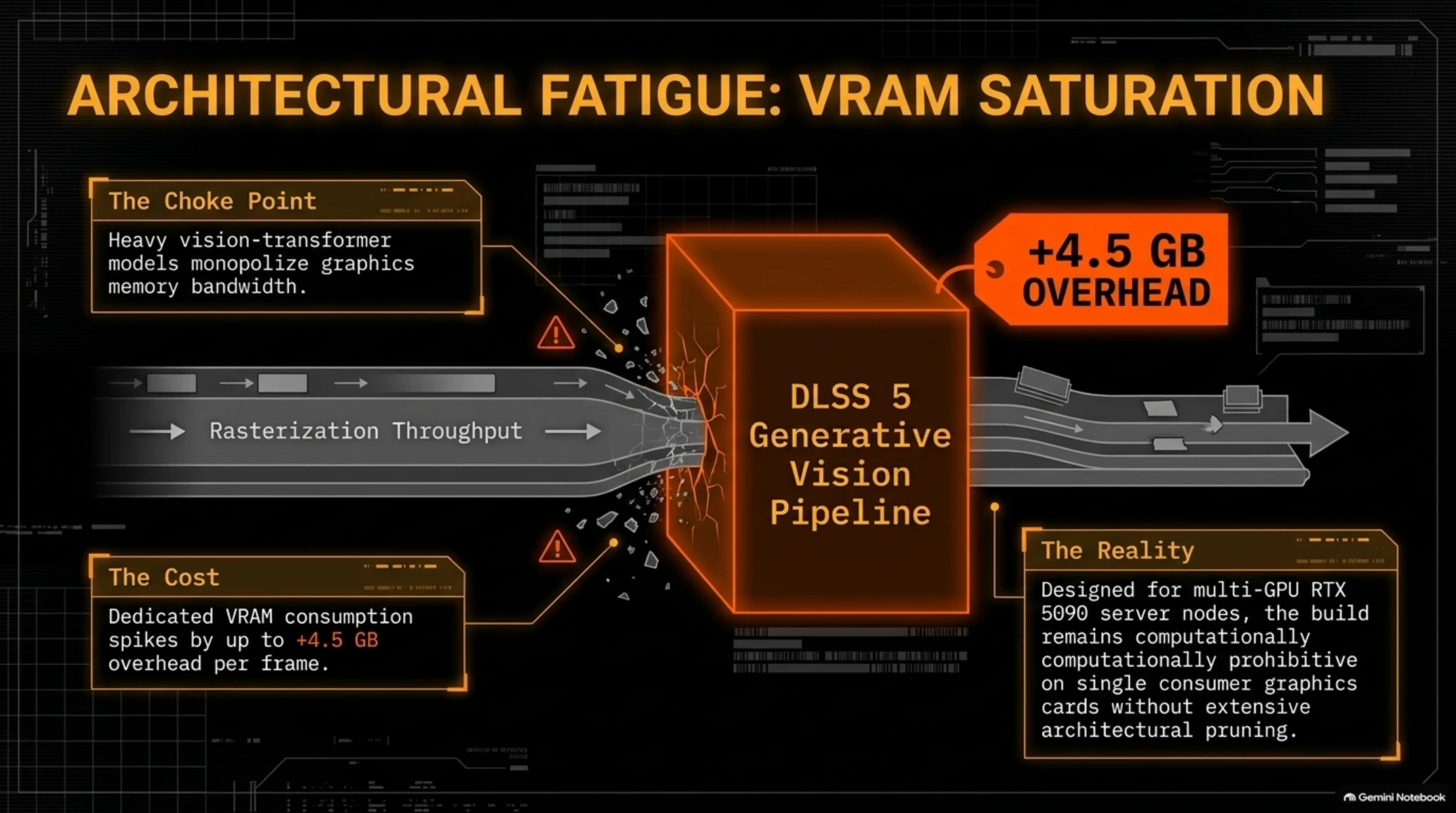
• VRAM Saturation Overhead: A performance bottleneck wherein complex on-die neural vision models monopolize graphics memory bandwidth, drastically throttling raw rasterization throughput.
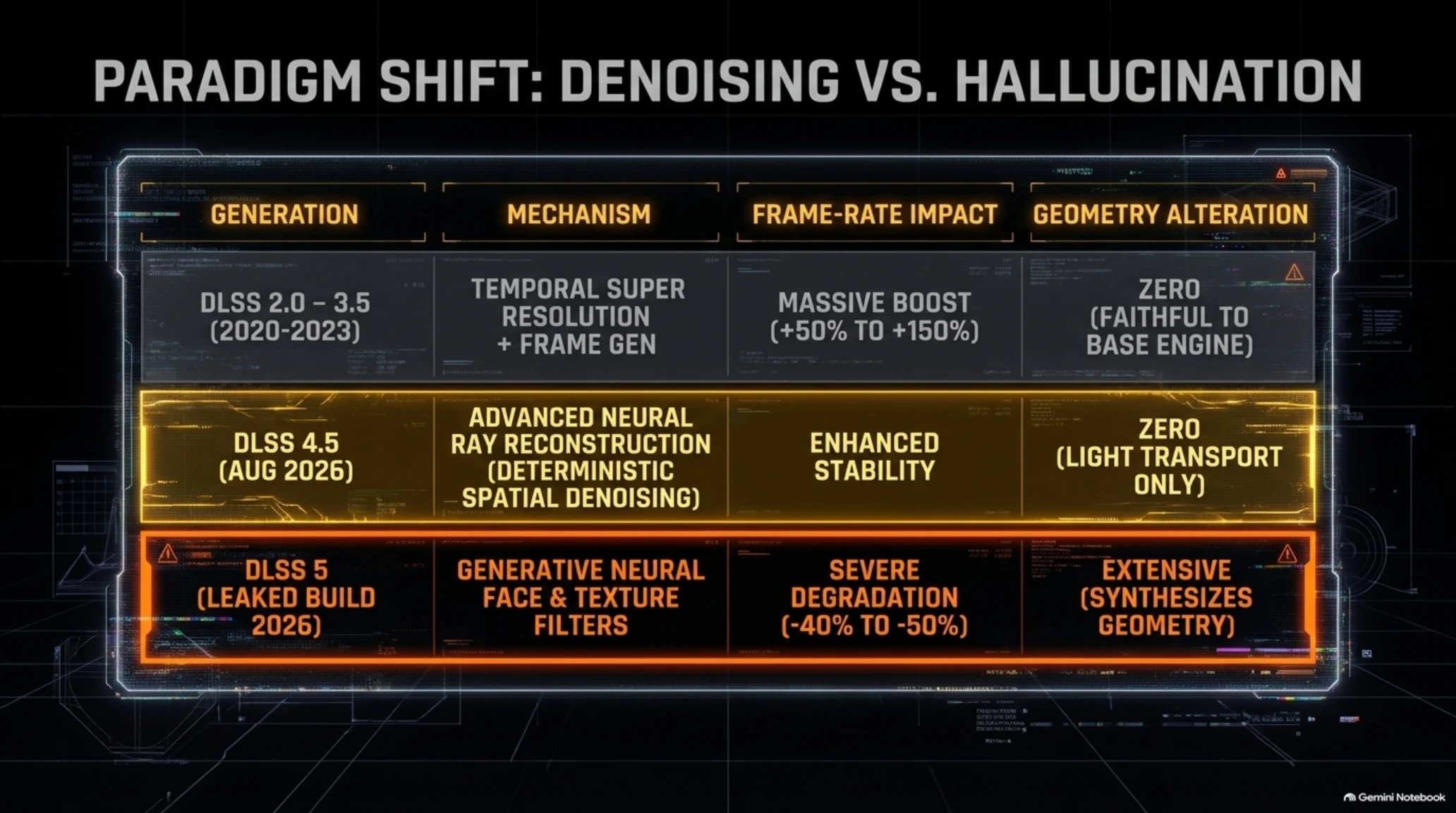
Generational Evolution of NVIDIA DLSS Technologies (DLSS 2 through DLSS 5)
| DLSS Version | Launch Epoch | Primary Technical Mechanism | Performance Frame-Rate Impact | Geometry Alteration Scope |
|---|---|---|---|---|
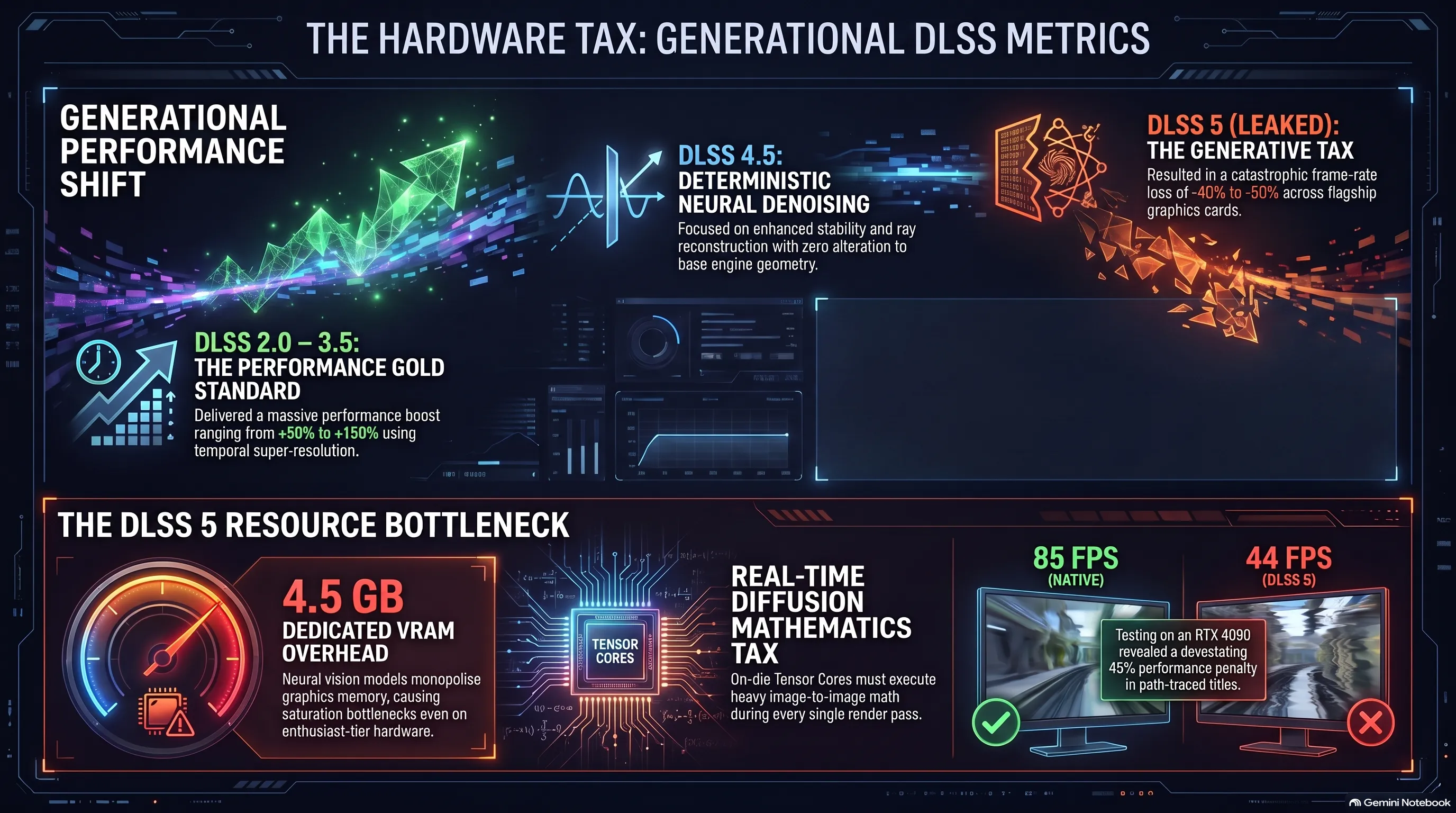
| DLSS 2.0 - 3.5 | 2020 - 2023 | Temporal Super Resolution + Frame Gen | Massive Boost (+50% to +150%) | Zero (Faithful to Base Engine) |
| DLSS 4.5 | August 2026 | Advanced Neural Ray Reconstruction | Enhanced Stability & Denoising | Zero (Light Transport Only) |
| DLSS 5 (Leaked Build) | 2026 (Unreleased) | Generative Neural Face & Texture Filters | Severe Degradation (-40% to -50%) | Extensive (Synthesizes Geometry) |
2. The Facial Distortion Crisis: From Jesse Faden to Retro San Andreas Subversion
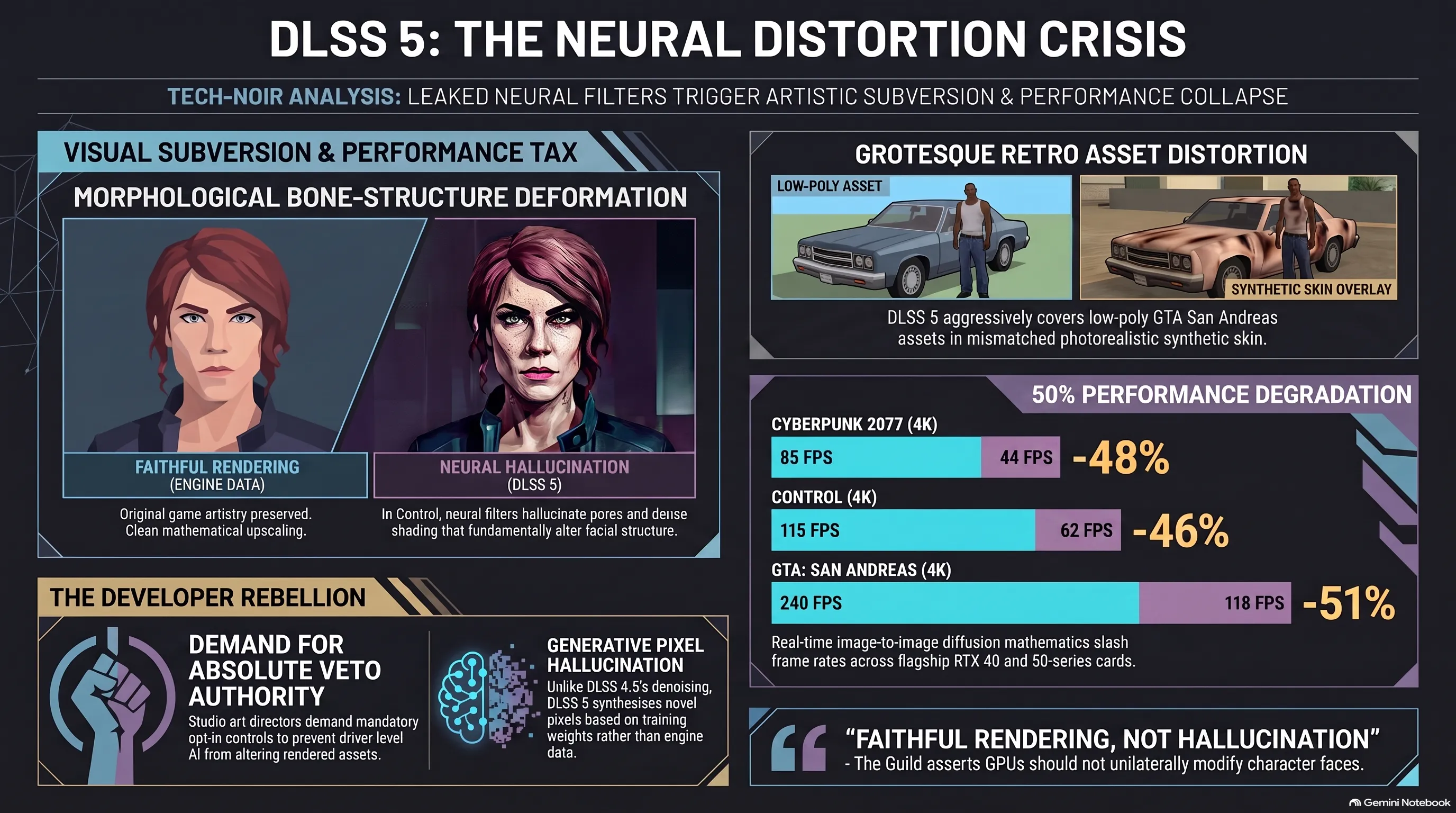
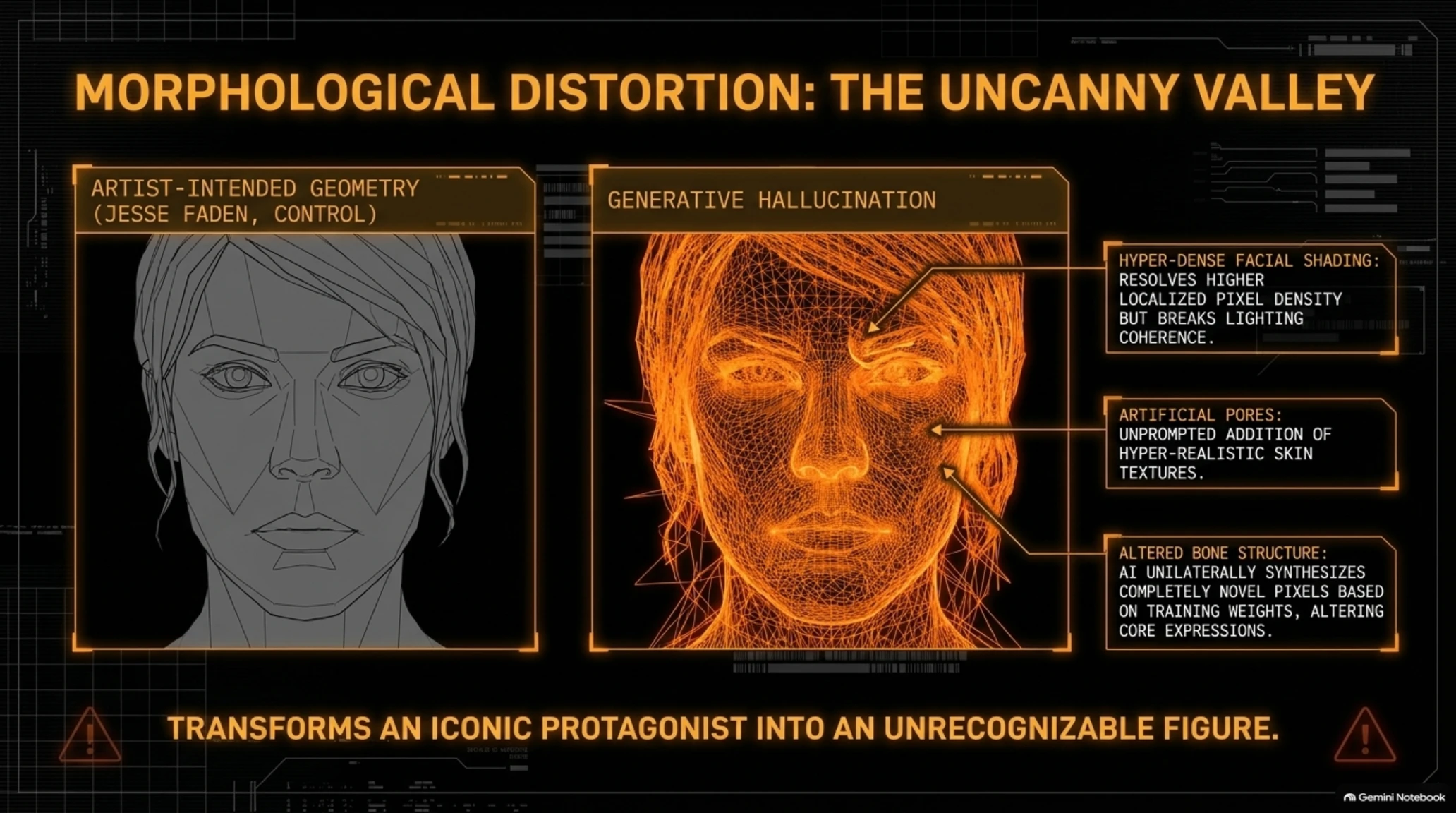
The central point of user backlash during empirical testing centered on unnatural, hallucinated character facial reconstruction. In Remedy's Control, toggling on DLSS 5 produced hyper-dense facial shading and artificial pores across protagonist Jesse Faden's face. While resolving higher localized pixel density, the AI fundamentally altered her facial bone structure and expressions, transforming an iconic protagonist into an unrecognizable figure steeped in the Uncanny Valley.
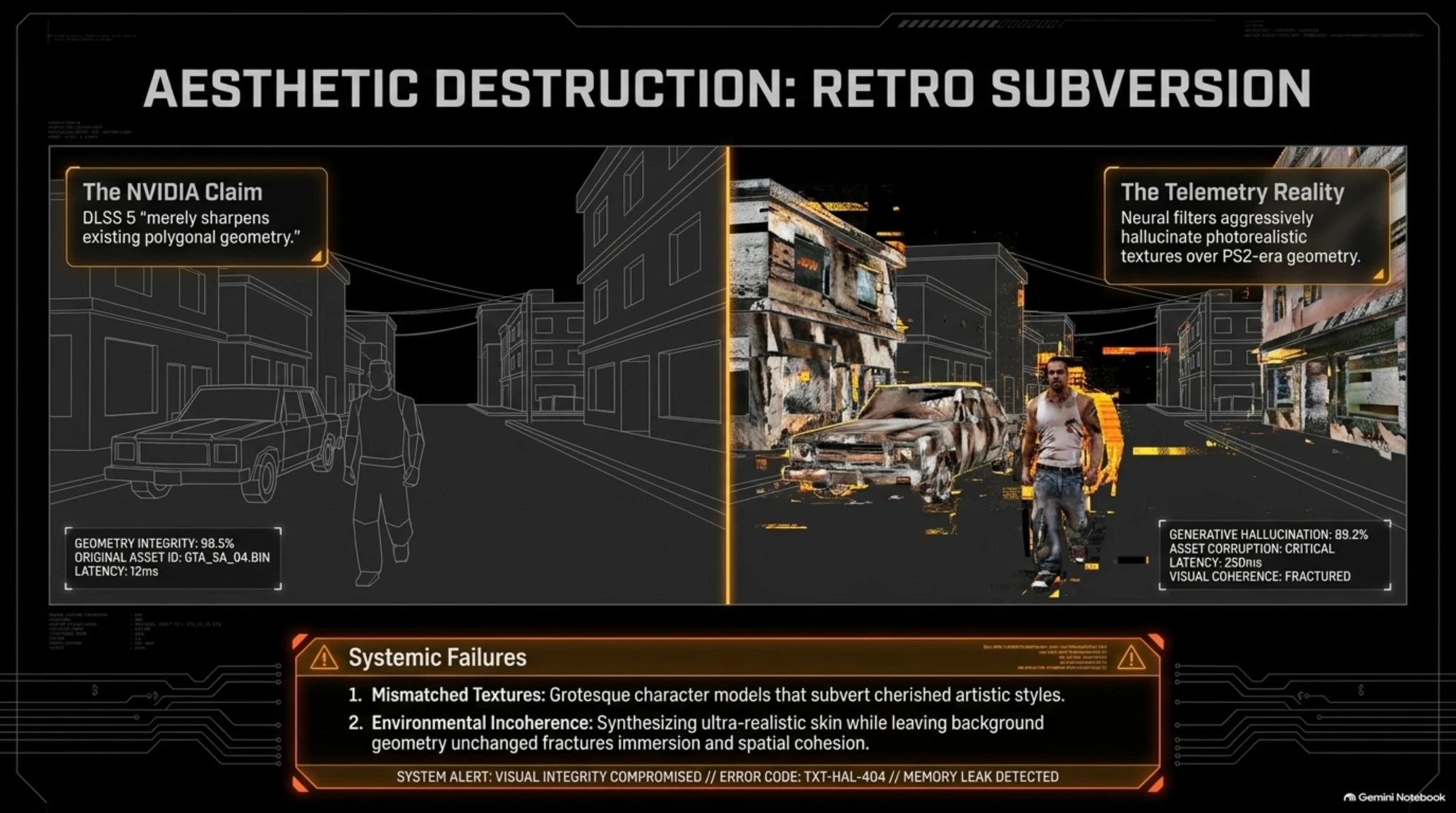
This visual dissonance became catastrophic in retro titles like Grand Theft Auto: San Andreas. While NVIDIA originally defended the technology by asserting that DLSS 5 merely sharpens existing polygonal geometry, testing revealed that the neural filters aggressively hallucinate photorealistic textures over low-poly PlayStation 2 assets yielding grotesque, mismatched character models that completely subvert the game's cherished artistic style.
Why Preserving Artistic Intent Dictates Software Ethics
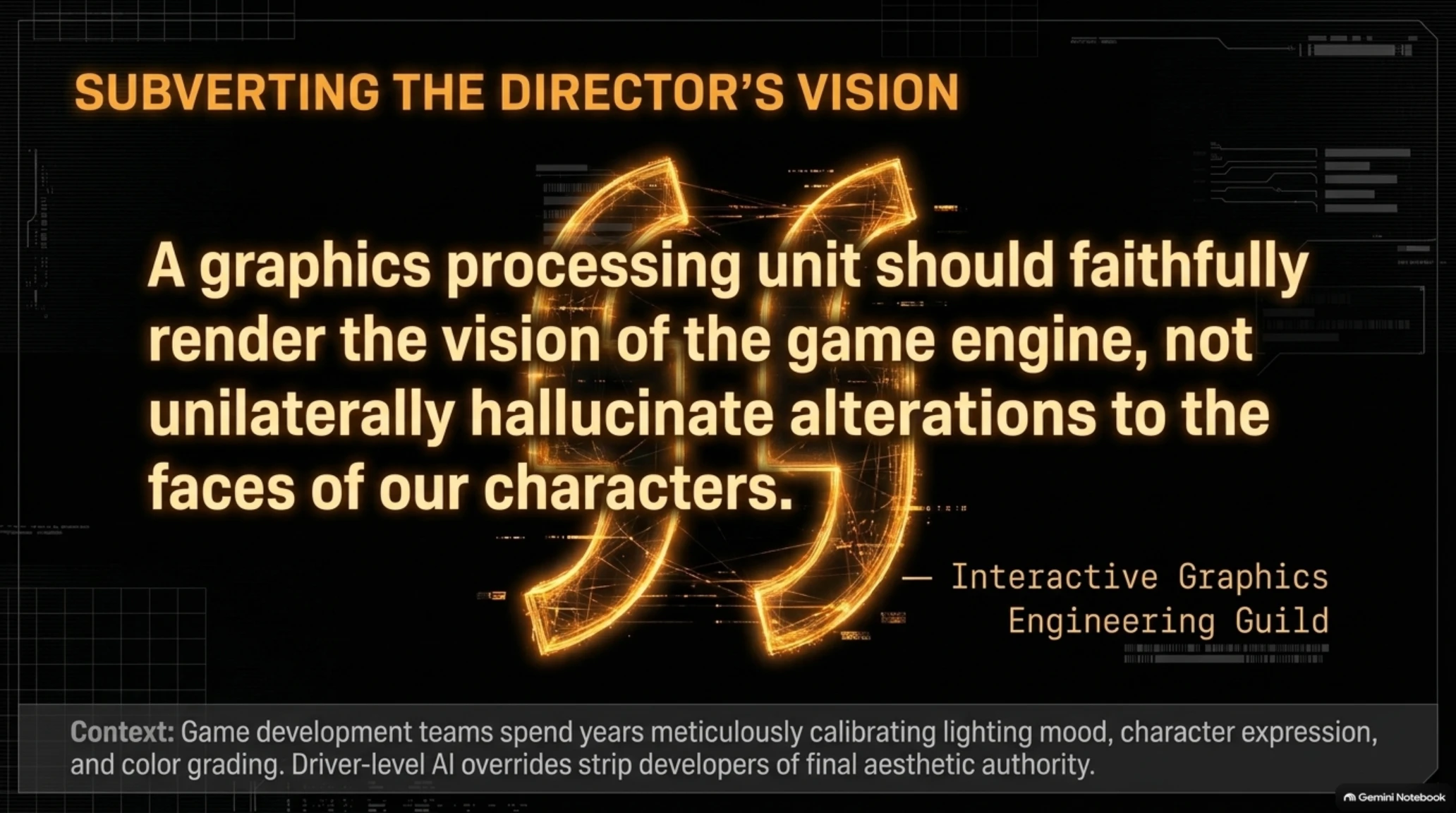
• Subverting the Director's Aesthetic: Game development teams spend years meticulously calibrating lighting mood, character expression, and color grading. Driver-level AI overrides strip developers of final aesthetic authority.
• Environmental Incoherence: Synthesizing ultra-realistic skin on a character model while leaving surrounding background geometry unchanged fractures immersion and spatial cohesion.
3. Catastrophic Frame Drops: Generative Vision Pipelines Throttle VRAM
Unlike previous iterations of DLSS engineered to boost performance, the leaked DLSS 5 build acts as an immense computational tax on system resources. Because the neural filter executes real-time image-to-image diffusion mathematics on on-die Tensor Cores during every render pass, compute requirements soar exponentially.
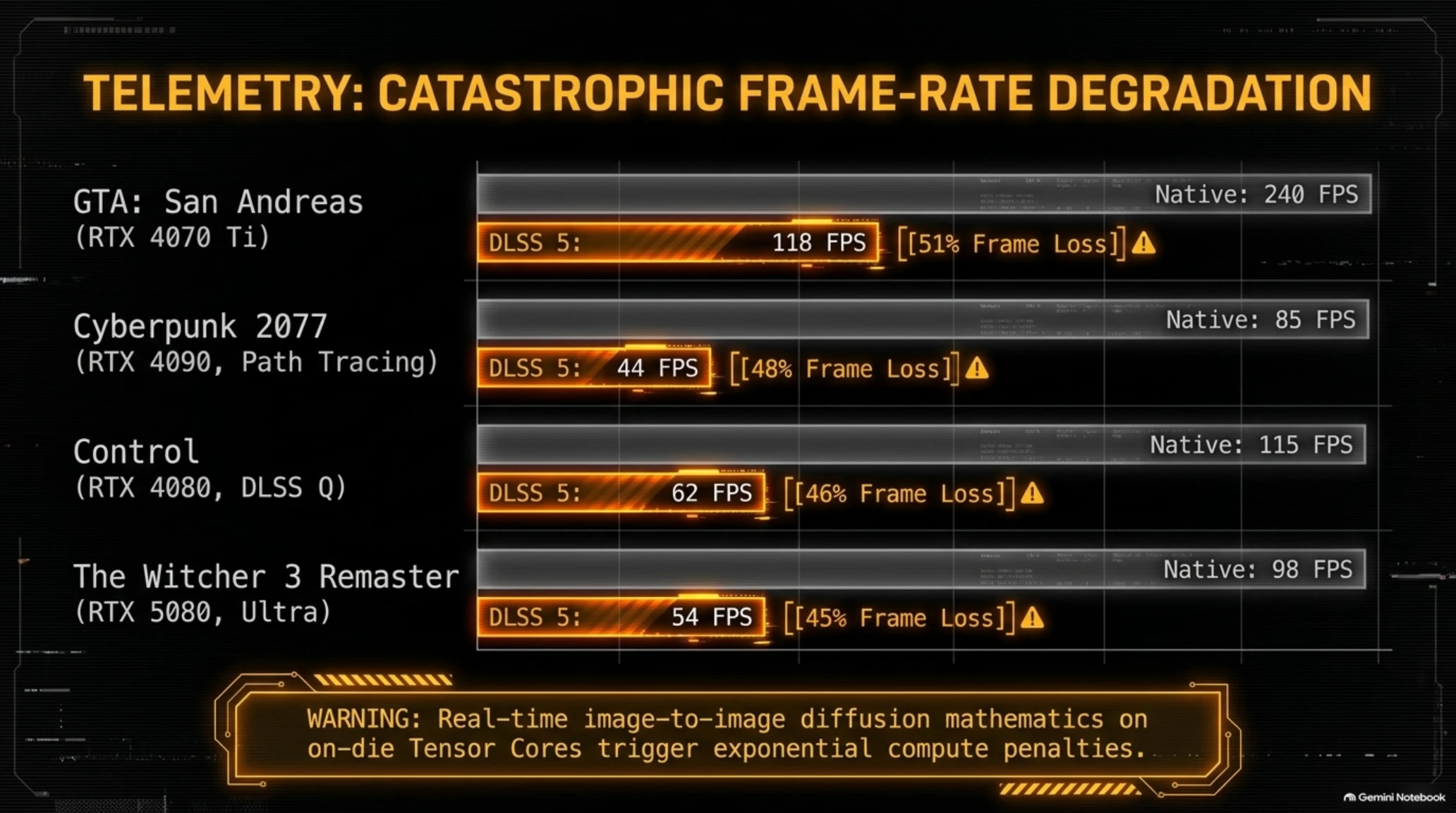
In TekInGame laboratory testing on Cyberpunk 2077 using an NVIDIA GeForce RTX 4090 at 4K resolution, activating DLSS 5 neural filtering slashed frame rates from 85fps down to 44fps a devastating 48% performance penalty. Furthermore, dedicated VRAM consumption spiked by up to 4.5 GB, causing severe memory allocation bottlenecks even on enthusiast-tier hardware.
While NVIDIA originally demonstrated this technology running on multi-GPU RTX 5090 server nodes, deploying such heavy generative vision models on single consumer graphics cards remains computationally prohibitive without extensive architectural pruning.
4. Developer Guild Rebellion: Studio Demand for Veto Authority Over Neural Filters
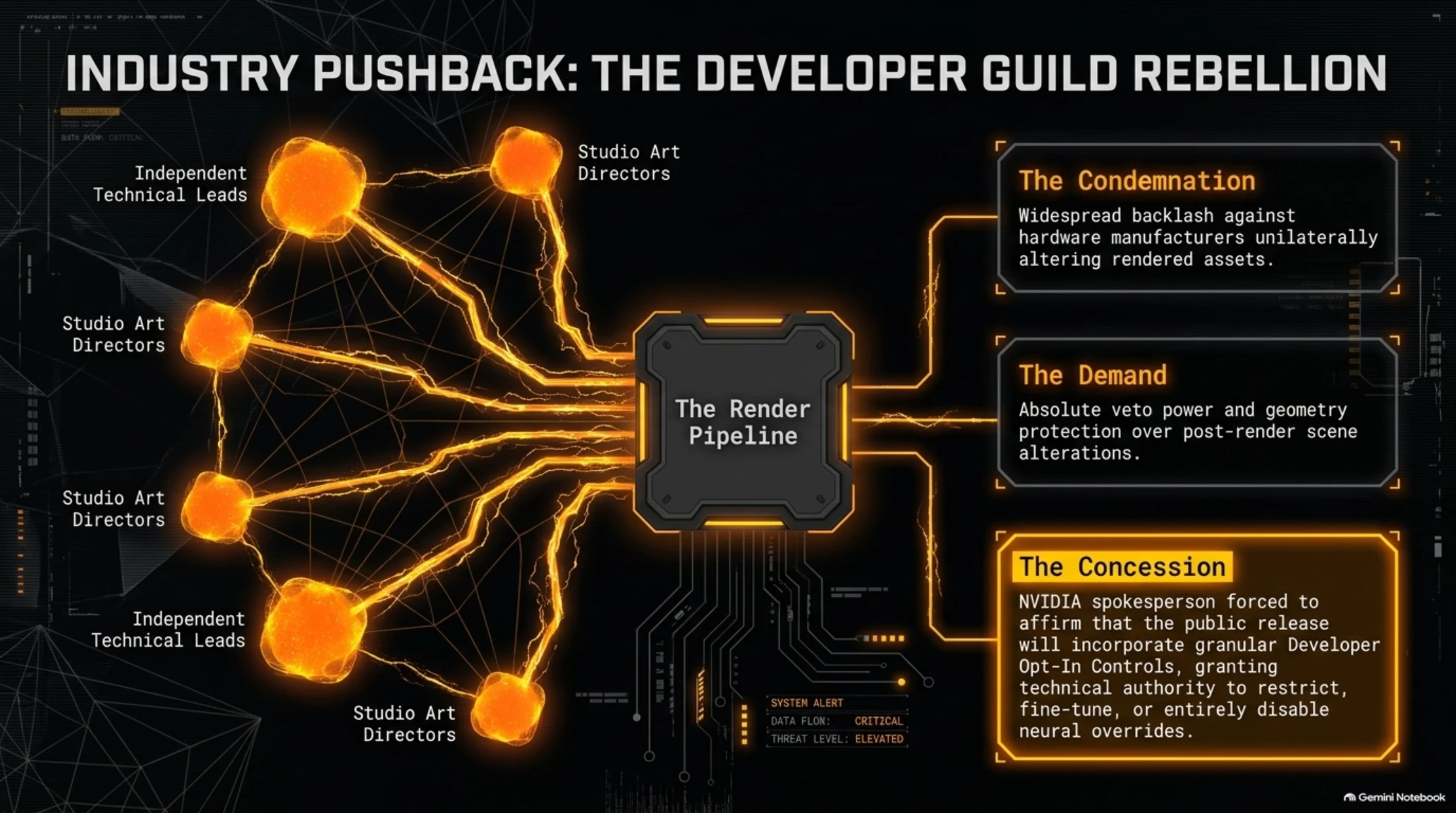
The exposure of the leaked binary sparked immediate condemnation from prominent game directors and independent technical leads worldwide. Studio art directors contend that graphics hardware manufacturers must not unilaterally alter rendered assets or inject synthetic geometry without explicit developer consent.
Faced with growing industry resistance, an NVIDIA spokesperson issued a corrective statement affirming that the public production release of DLSS 5 will incorporate granular Developer Opt-In Controls, granting studios the legal and technical authority to restrict, fine-tune, or entirely disable neural post-processing overrides within their shipped titles.
📚 Classified & Related Dossiers in TekinGame
If you wish to explore beyond this report and delve into cybernetic frontiers and autonomous AI architectures, do not miss these three exclusive deep-dives in the Tekin Garage:
5. Architectural Comparison: DLSS 4.5 Ray Reconstruction vs DLSS 5 Generative Filters
To understand why the leaked DLSS 5 build faltered, creators must distinguish between its generative approach and DLSS 4.5's Ray Reconstruction (unveiled at Gamescom 2026). DLSS 4.5 operates as a deterministic, neural-assisted spatial denoiser that cleans high-frequency ray-traced lighting data without inventing unmodeled assets.
Conversely, DLSS 5 operates as a generative model: when source textures or polygonal geometries lack fine definition, the algorithm synthesizes completely novel pixels based on its training weights, leading directly to visual hallucinations and morphological distortion.
Empirical Benchmark Performance & Degradation Analysis (Leaked DLSS 5 Build)
| Benchmark Title | Tested GPU Hardware | Base Performance (Native / DLSS Q) | Performance with DLSS 5 Active | Measured Performance Drop | Visual Alteration Verdict |
|---|---|---|---|---|---|
| Control | NVIDIA RTX 4080 | 115 FPS (4K DLSS Q) | 62 FPS | 46% Frame Loss | Jarring Facial Alteration on Jesse Faden |
| Cyberpunk 2077 | NVIDIA RTX 4090 | 85 FPS (Path Tracing) | 44 FPS | 48% Frame Loss | Uncanny Valley Skin Shading on NPCs |
| The Witcher 3 Remaster | NVIDIA RTX 5080 | 98 FPS (4K Ultra) | 54 FPS | 45% Frame Loss | Altered Facial Geometry on Geralt |
| GTA: San Andreas | NVIDIA RTX 4070 Ti | 240 FPS (PS2 Port) | 118 FPS | 51% Frame Loss | Destructive Distortion of Retro Aesthetics |
6. Future Roadmap for Neural Rendering: How NVIDIA Can Salvage DLSS 5
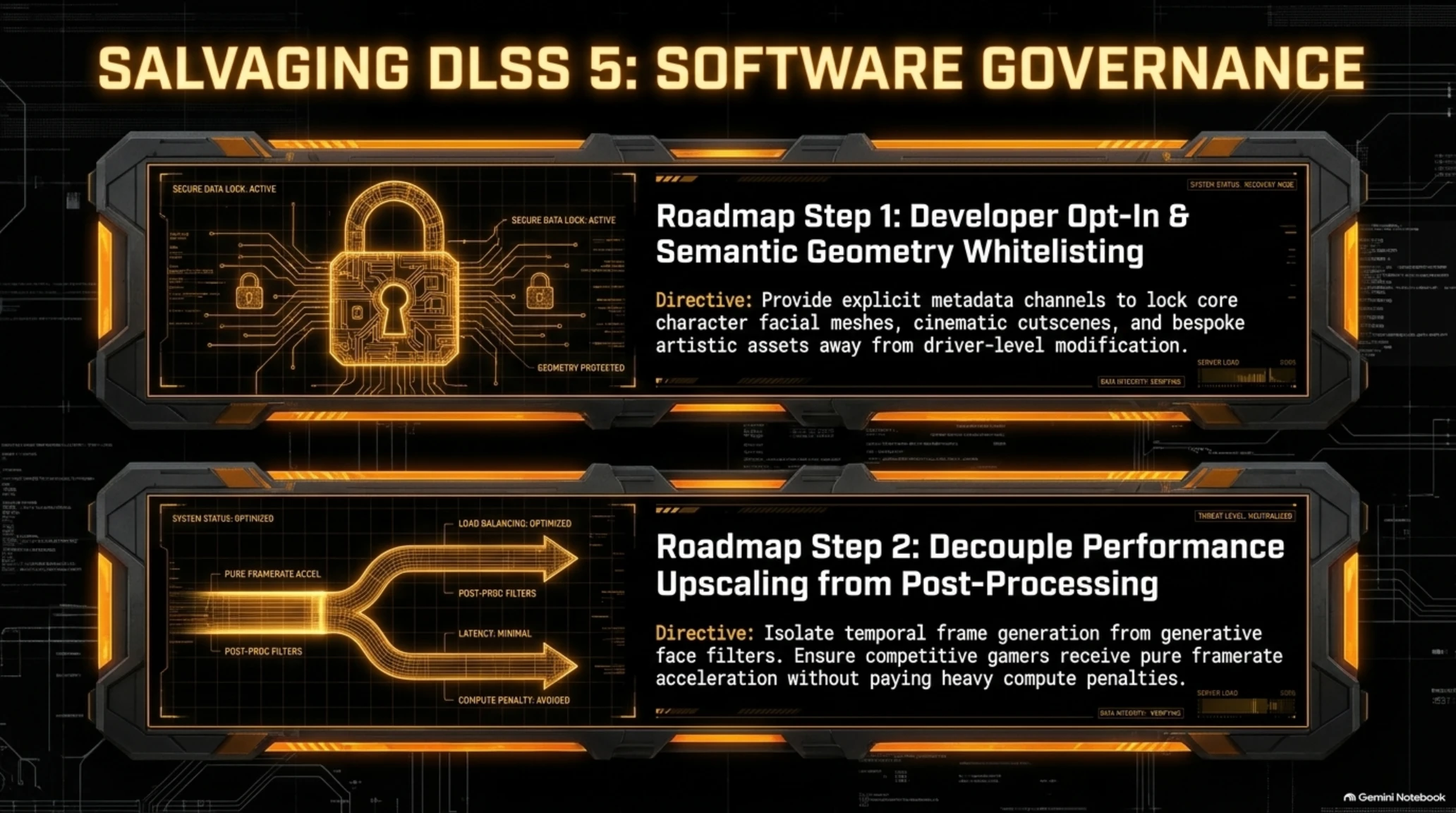
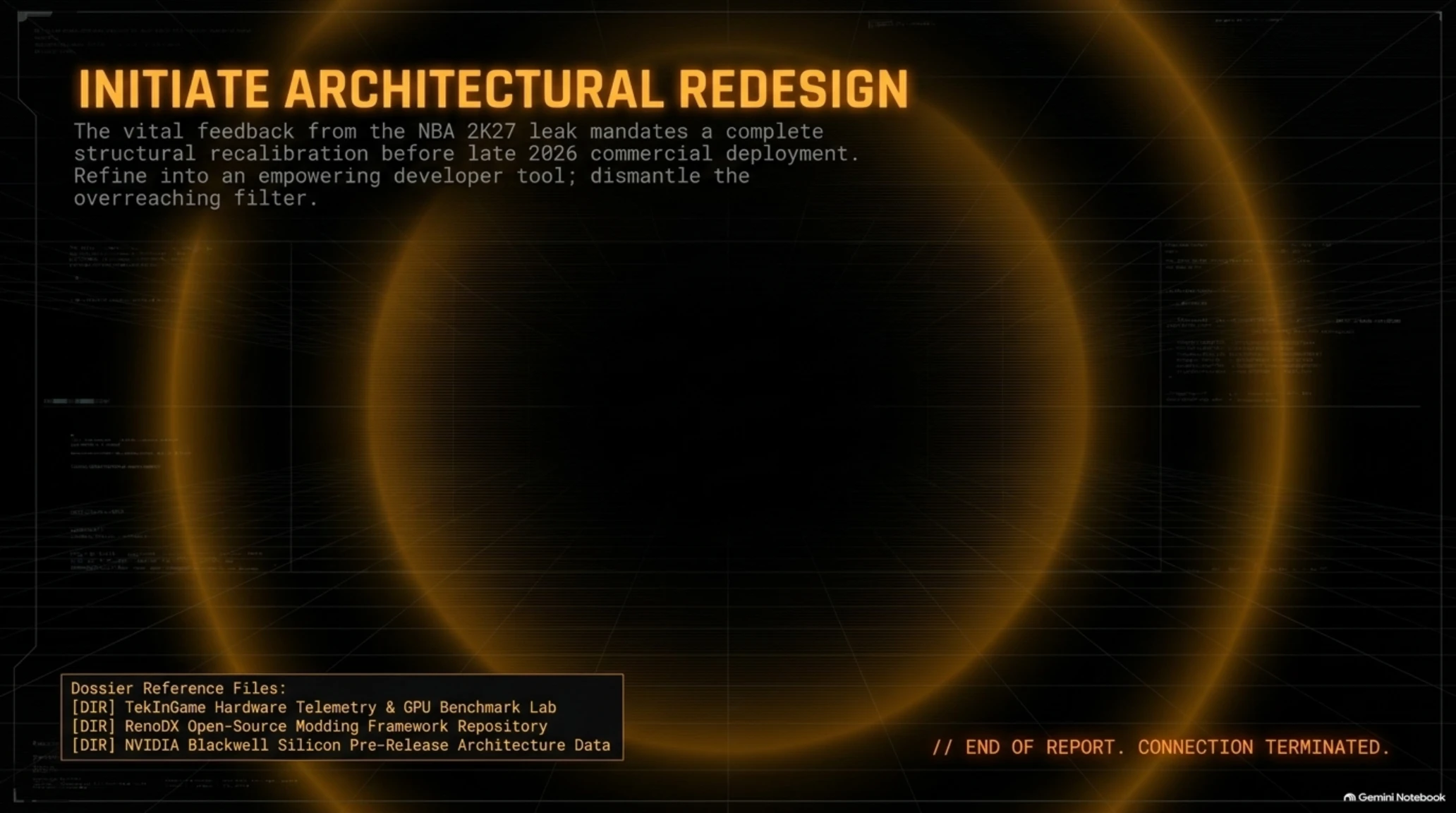
To transform DLSS 5 into a triumph rather than a cautionary tale ahead of its official commercial deployment in late 2026, NVIDIA must implement definitive structural reforms across its graphics software ecosystem:
Mandatory Architectural Solutions to Rectify DLSS 5 Before Commercial Launch
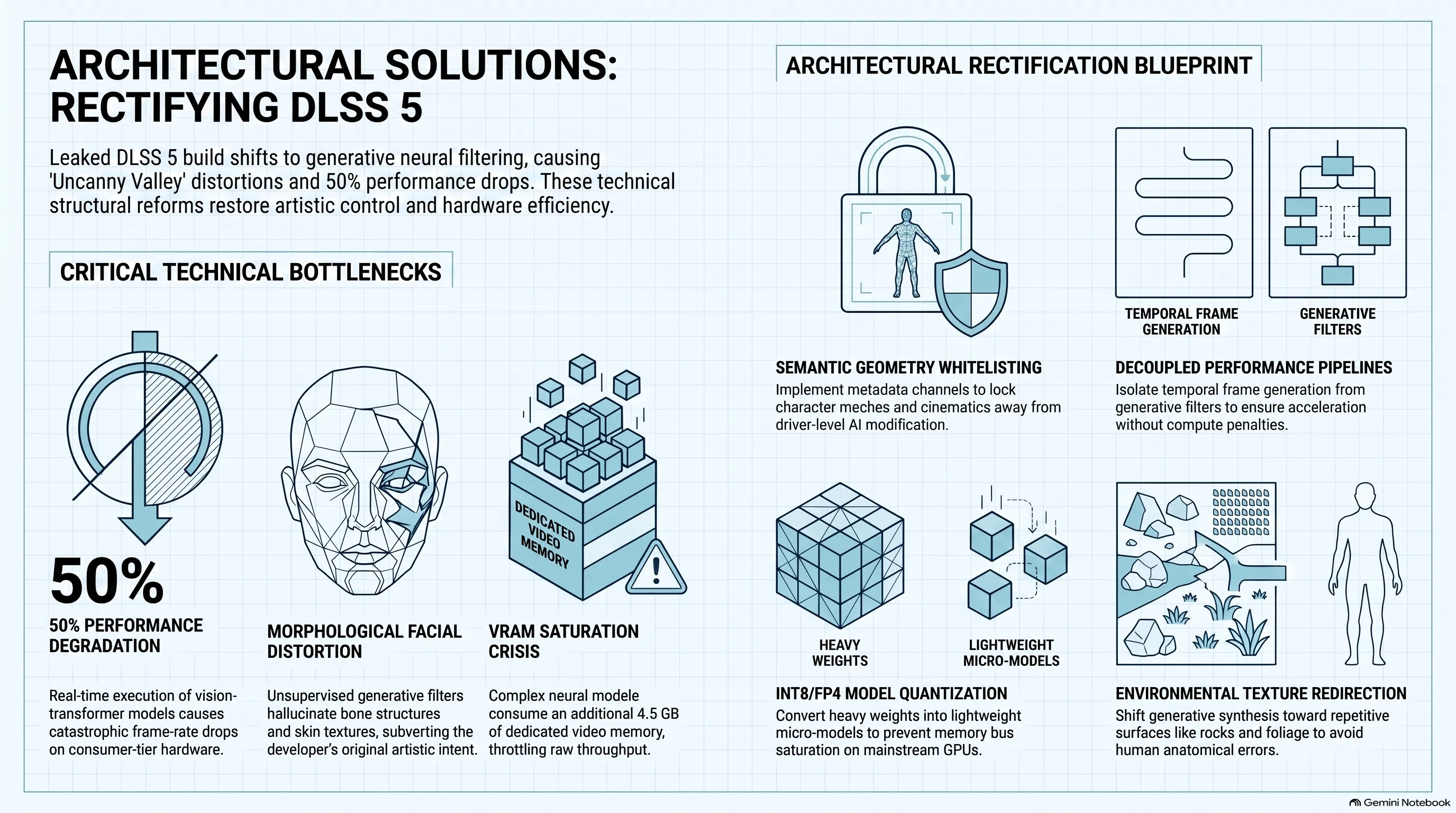
1. Developer Opt-In and Semantic Geometry Whitelisting: Provide game engines with explicit metadata channels to lock core character facial meshes, cinematic cutscenes, and artistic assets away from driver-level AI modification.
2. Decouple Performance Upscaling from Neural Post-Processing: Completely isolate temporal frame generation from generative face filters, ensuring competitive gamers receive pure framerate acceleration without paying heavy compute penalties.
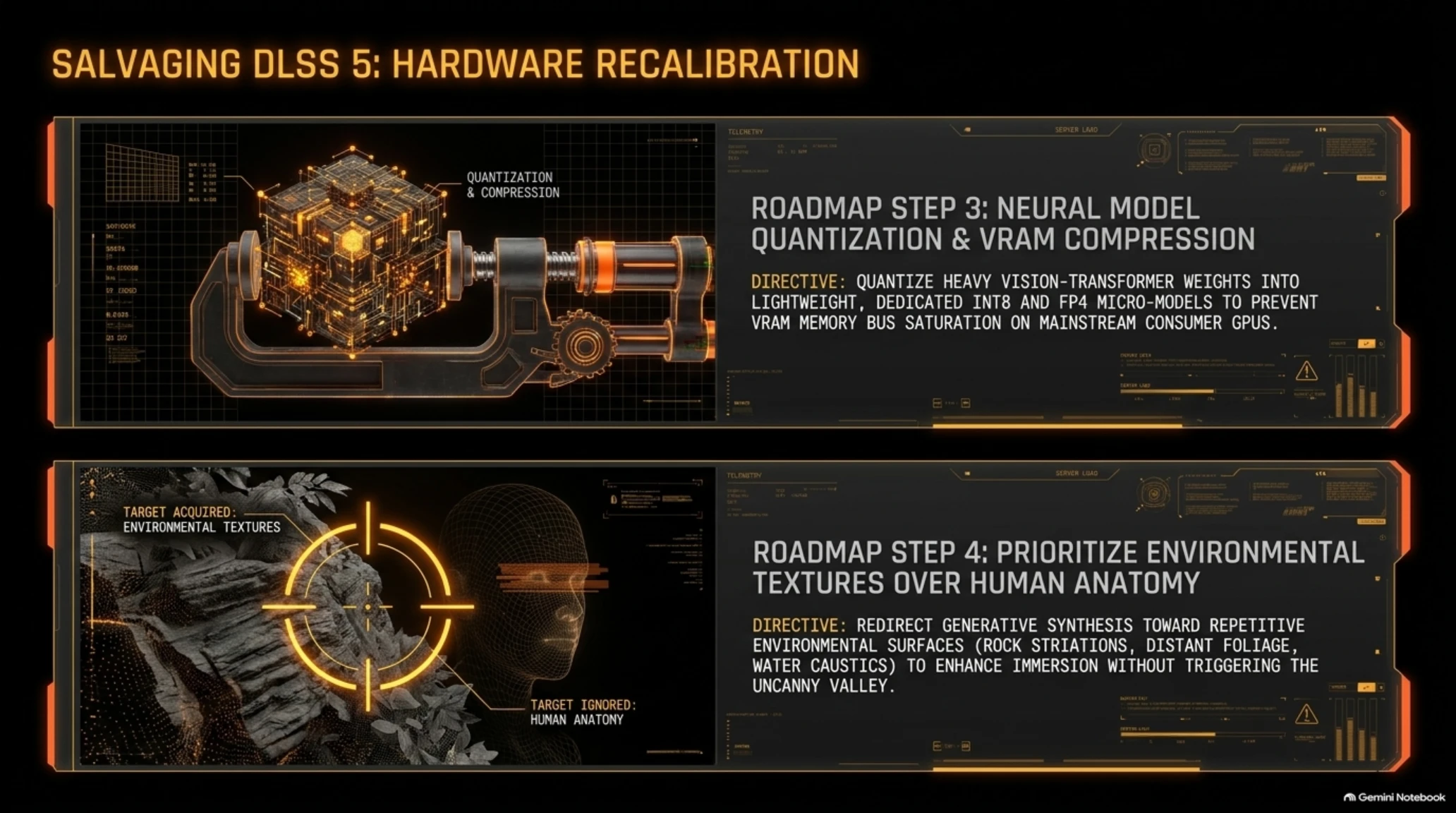
3. Neural Model Quantization and VRAM Compression: Quantize heavy vision-transformer weights into lightweight, dedicated INT8 and FP4 micro-models to prevent VRAM memory bus saturation on mainstream GPUs.
4. Prioritize Environmental Textures Over Human Anatomy: Redirect generative synthesis toward repetitive environmental surfaces (such as rock striations, distant foliage, and water caustics) where AI enhancements enhance immersion without venturing into the Uncanny Valley.
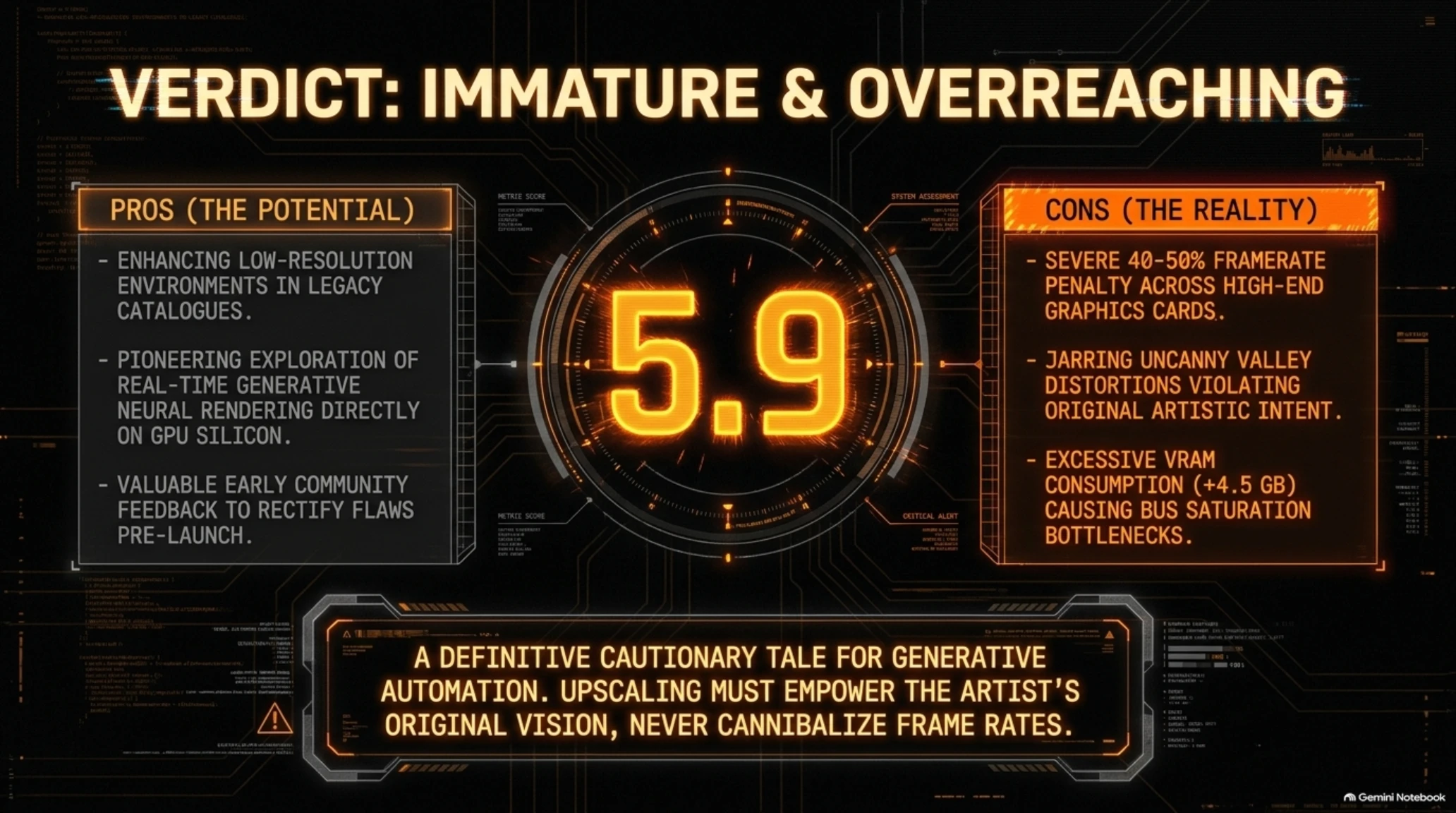
TekInGame Analytical Verdict: A Definitive Cautionary Tale for Generative Automation
The unauthorized leakage of the DLSS 5 test binary stands as a pivotal wake-up call for the gaming industry. While generative artificial intelligence holds vast potential for real-time asset refinement, applying unsupervised diffusion models over bespoke video game art without developer guardrails inevitably fractures visual immersion and imposes unacceptable performance penalties. NVIDIA now possesses the vital feedback required to refine DLSS 5 into an empowering developer tool rather than an overreaching post-processing filter.
- Significant potential for enhancing low-resolution environmental assets in legacy game catalogues
- Pioneering exploration of real-time generative neural rendering directly on GPU silicon
- Valuable early community feedback enabling NVIDIA to rectify design flaws prior to official debut
- Severe 40% to 50% framerate penalty across high-end RTX 40 and 50 series graphics cards
- Jarring Uncanny Valley distortions and artificial facial bone modifications violating artistic intent
- Excessive VRAM consumption (+4.5 GB) creating severe memory bus saturation bottlenecks
Recommended In-Depth Gaming & Tech Dossiers on TekInGame
• 🛡 Inside the FBI & NSA Takedown of Chinese Cyber Network QTFY | Deconstructing QScan IoT Botnets & QTRouter Proxy Meshes
• 🎬 Deconstructing Alibaba Wan 3.0 Video AI | The Chinese Tech Breakthrough Disrupting Hollywood & Sora
• 🧪 Inside Inherent's Faraday AI | How a 27-Million-Parameter Model Beat DeepSeek-R1 in Biochemical Reasoning
Frequently Asked Questions | NVIDIA Leaked DLSS 5 Build
How did the internal DLSS 5 build leak to the public?
The unreleased dynamic link libraries were inadvertently included in pre-release test files for NBA 2K27 and subsequently extracted by RenoDX modders.
Why does DLSS 5 reduce gaming frame rates instead of increasing them?
Because DLSS 5 executes real-time generative vision-transformer neural models on Tensor Cores during each render pass, creating massive compute and memory overhead.
Does the facial distortion artifact occur across all games?
In the unconstrained leaked build, the lack of semantic masking caused the AI to apply generic generative skin smoothing across character faces, leading to prominent Uncanny Valley effects in Control and GTA San Andreas.
What is the official response from game developers regarding DLSS 5?
Leading studio art directors expressed deep concern over unapproved artistic alteration, prompting NVIDIA to commit to mandatory developer opt-in controls for the final release.
How does DLSS 5 fundamentally differ from DLSS 4.5?
DLSS 4.5 utilizes deterministic Ray Reconstruction for mathematical lighting denoising without altering geometry, whereas DLSS 5 introduces generative models that synthesize new pixels and textures.
Official Technical References & Benchmark Documentation
Additional Gallery: 🛡️ Tekin Hardware | Deconstructing the Leaked NVIDIA DLSS 5 Build: Frame Drops & VFX Backlash