🌙 The AI That Sleeps: Inside Xiaomi's MiMo Code
Welcome back to TakinGame's deep dive into the future of software engineering. If you are a developer utilizing tools like Devin, GitHub Copilot, or Claude Code, you are likely familiar with the most frustrating limitation of modern Large Language Models: Memory Decay. Once a project exceeds 100 steps, the AI gets overwhelmed by its own logs, hallucinates, and forgets its initial architecture. Enter Xiaomi MiMo Code. Built as an open-source fork of OpenCode, this terminal-based agent doesn't just write and debug software; it actually mimics human neurobiology. By entering a "dream state" to compress its memories, MiMo Code is redefining how we approach long-horizon autonomous tasks.
⚡ What You Will Discover in this Mega-Article:
🧠 The /dream Command: How AI garbage collection prevents context window collapse.
⚙️ Multi-Agent Workflows: The "Candidate-Evaluation" pipeline for deterministic execution.
💻 Terminal Masterclass: A step-by-step CLI tutorial to run MiMo locally.
💸 The API Cost Trap: Why "Open Source" doesn't mean free, and how to optimize your token budget.
☕ Boot up your terminal and grab a coffee. We are about to deploy the future of coding locally.
1. Introduction: The Context Window Crisis
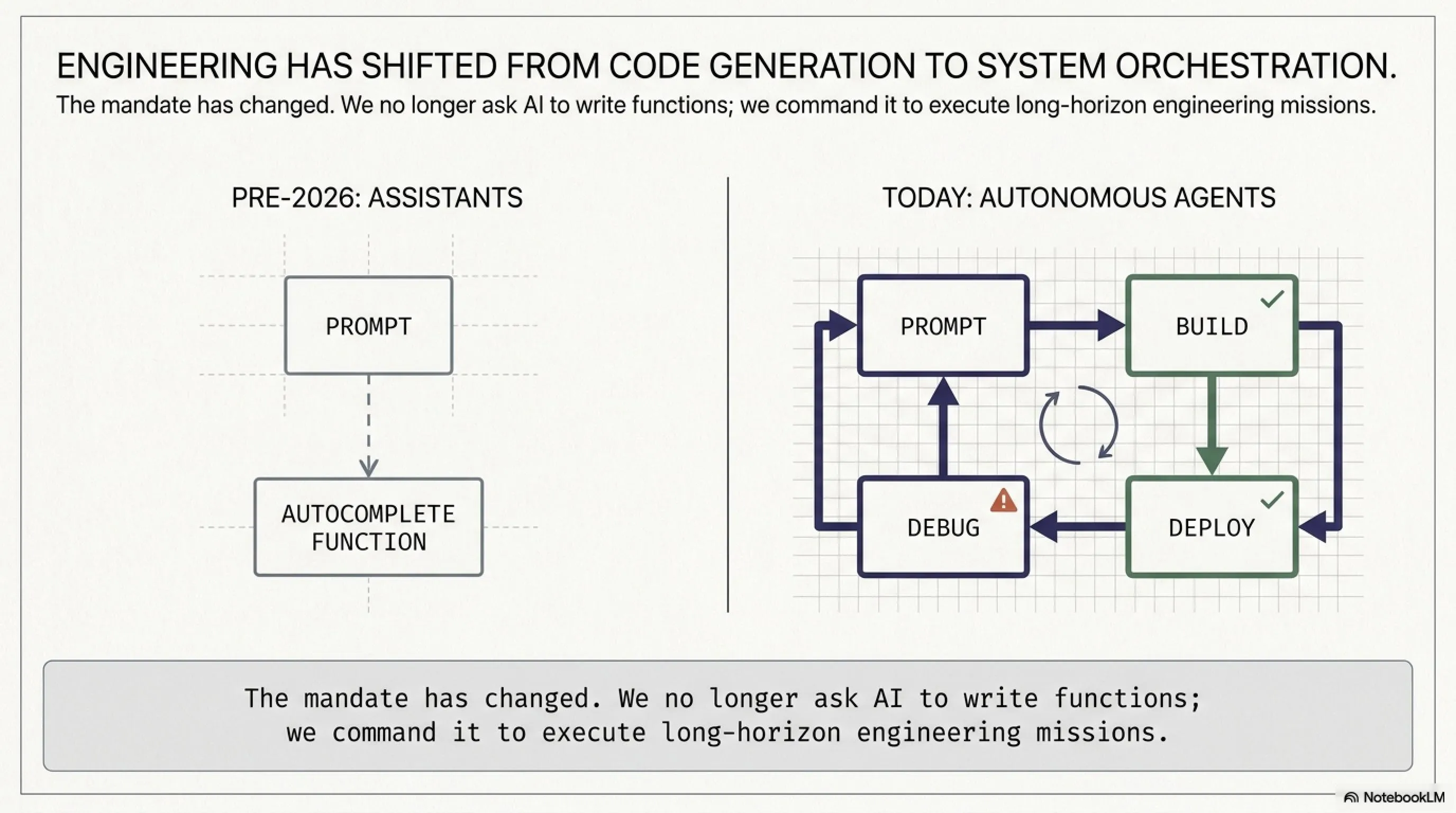
Prior to 2026, AI coding assistants were essentially glorified autocomplete engines. You provided a prompt, and the AI output a function. However, the paradigm has shifted dramatically toward Autonomous Agents. We no longer ask AI to write a function; we ask it to "build a full-stack e-commerce platform, connect to PostgreSQL, and debug any build errors independently."
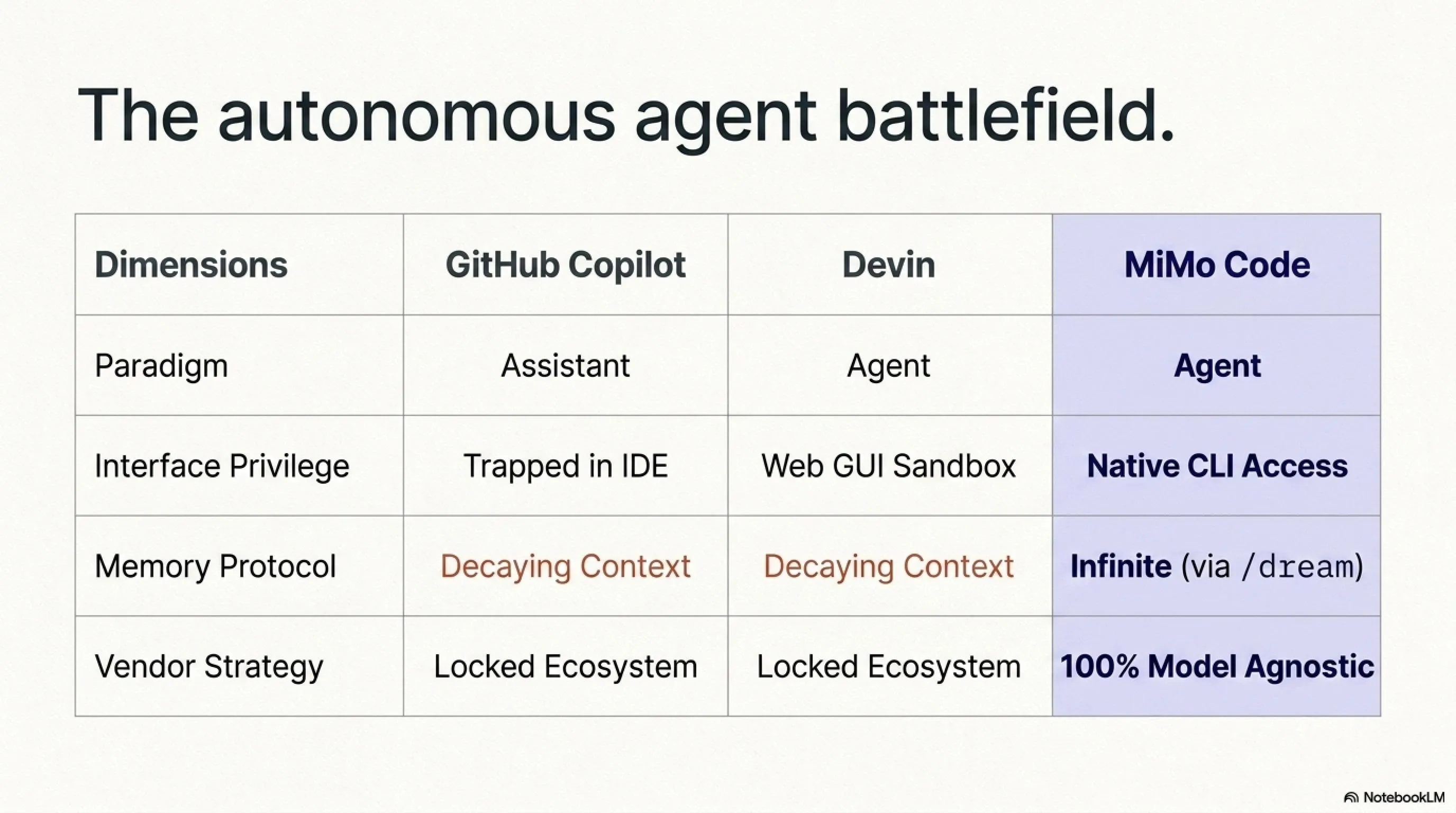
While models like GPT-4o and Claude 3.5 Sonnet possess the raw intelligence to write the code, they suffer from a crippling architectural limitation: the Context Window. When an autonomous agent spends two hours writing code, encountering terminal errors, and generating thousands of lines of trace logs, its context window fills up with "noise". Eventually, the AI suffers from Memory Decay—it forgets the core architectural rules you established at the beginning of the project and starts hallucinating incorrect variable names.
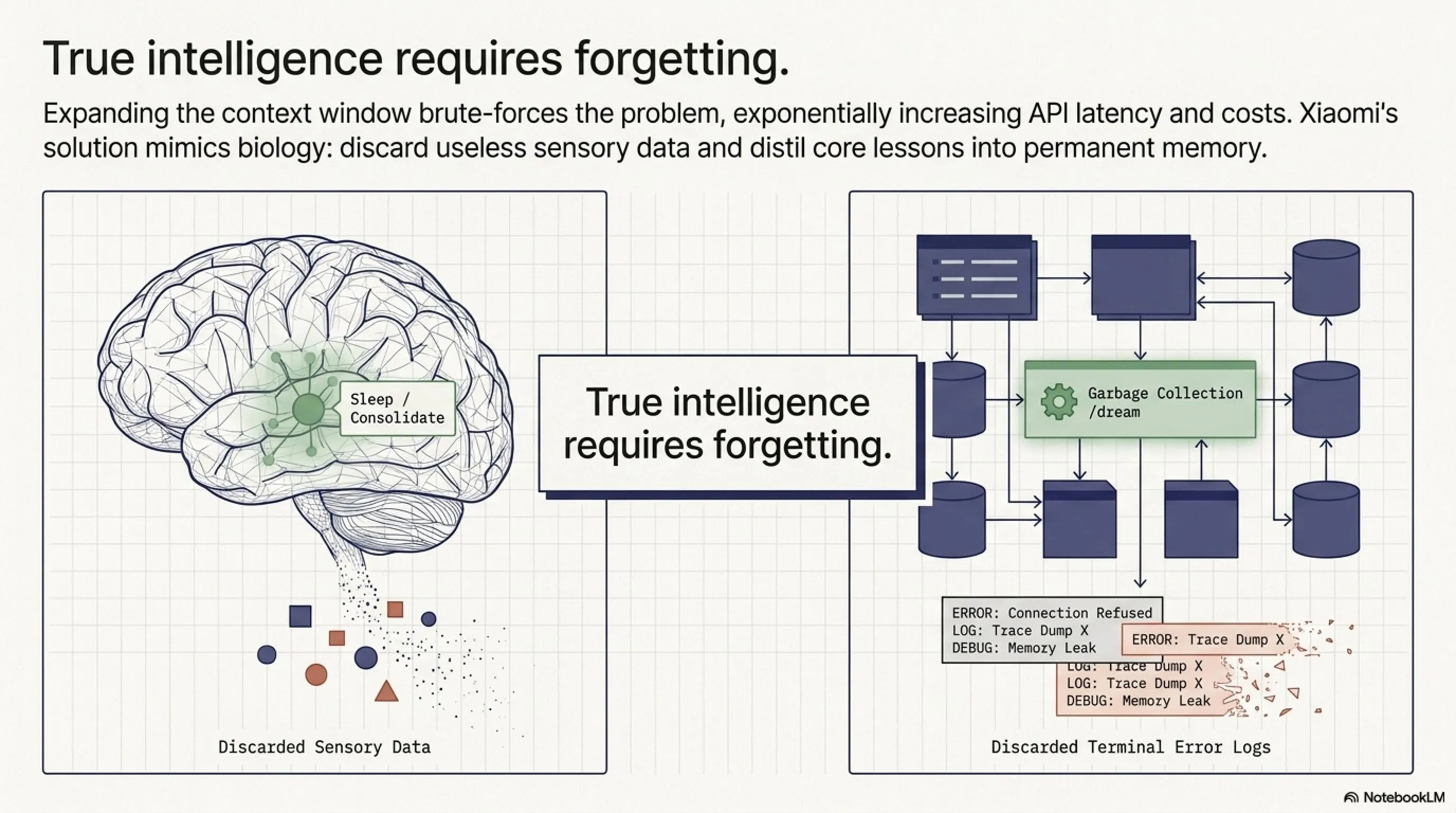
To solve this, the AI research team at Xiaomi introduced MiMo Code. Instead of brute-forcing the problem by simply expanding the context window (which exponentially increases API costs and latency), Xiaomi looked to biology. The human brain does not remember every single keystroke of the day; it sleeps, discards useless sensory data, and consolidates the core lessons into long-term memory. MiMo Code was engineered to do exactly the same thing.

2. The Architecture of Dreaming: How MiMo Works
When you run MiMo Code in your terminal, you are not just chatting with a single AI model; you are deploying an entire orchestrated team of Sub-Agents. This architectural choice is crucial for mitigating hallucinations and ensuring high-quality code generation.
MiMo employs a "Candidate-Evaluation" mechanism. When presented with a complex programming task, multiple sub-agents independently generate potential solutions (the candidates). A distinct, highly critical "Evaluator Agent" then reviews these proposals, checks them against the project's architecture, and selects the most optimal path forward. This multi-agent debate simulates a senior engineer reviewing a junior developer's pull request in real-time.
3. Deterministic Execution: SKILL.md Generation
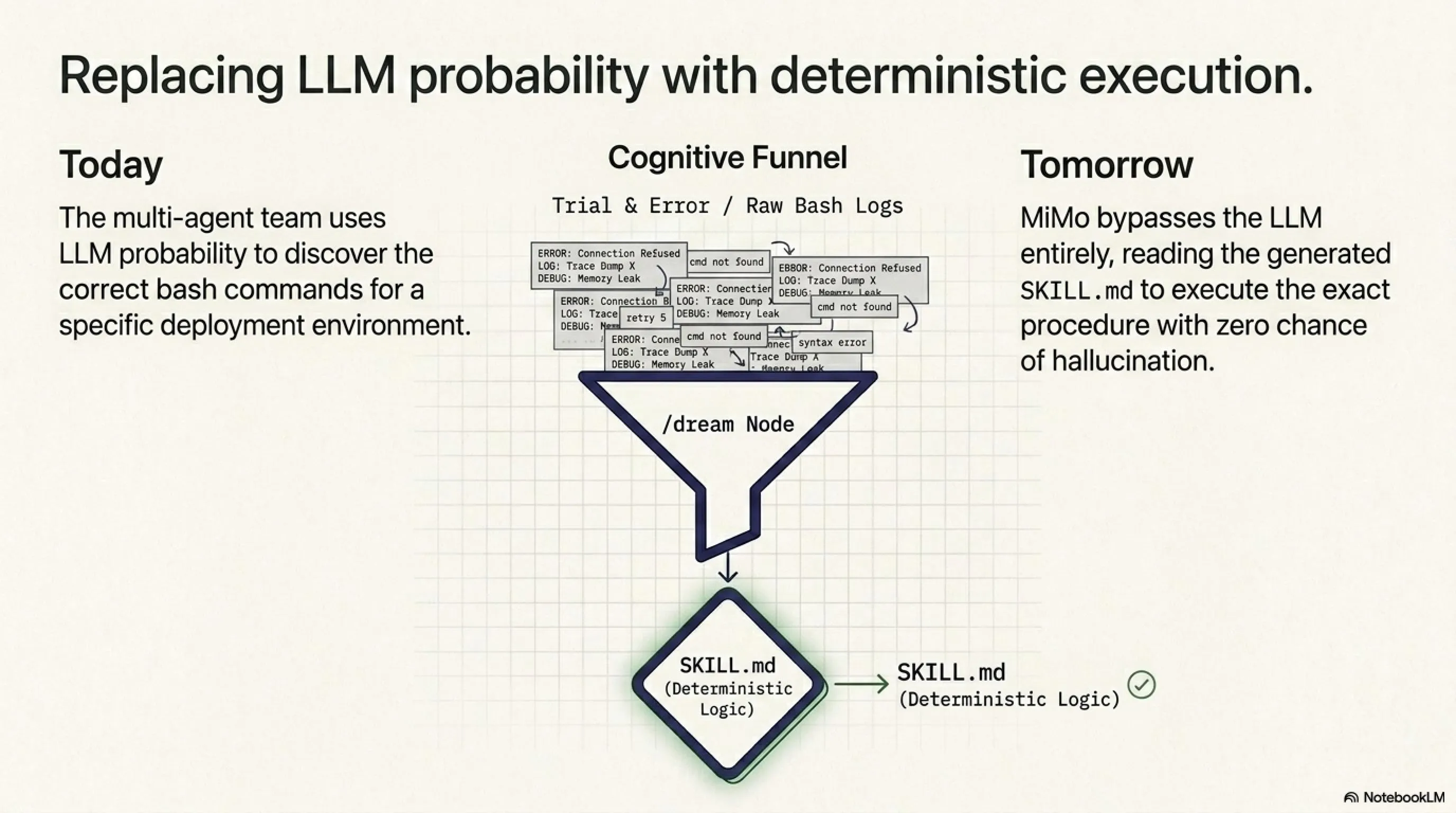
To further enhance reliability, MiMo Code transitions away from relying purely on probabilistic natural language. Once the multi-agent team agrees on a solution, MiMo translates the abstract objective into a highly structured, deterministic logic map, often saved as a SKILL.md file or a JavaScript-based logic execution script.
This means that if you ask MiMo to "Deploy a Docker container" today, it learns the precise sequence of bash commands required for your specific environment. Tomorrow, when you ask it to do the same thing, it doesn't try to "guess" the commands again based on LLM probabilities. Instead, it reads the SKILL.md file and executes the procedure deterministically, with zero chance of hallucination.
⚙️ The Lifecycle of an Autonomous Task in MiMo

Upon receiving a user prompt, sub-agents generate multiple logic pathways. The Evaluator Agent selects the optimal procedure, minimizing initial architectural errors.
The agent writes code, runs terminal commands, reads error logs, and iterates. It operates autonomously in the CLI environment without requiring constant GUI clicks.
Post-execution, the agent discards thousands of lines of useless terminal error logs (Garbage Collection) and distills the core logic into permanent memory for future deterministic use.
4. Step-by-Step: Terminal Setup & CLI Tutorial
Unlike traditional consumer AI tools that require clunky desktop applications or web interfaces, MiMo Code is designed by developers, for developers. It lives natively inside your terminal interface. Because it is built on Node.js, deploying this autonomous agent on your local machine is remarkably straightforward.

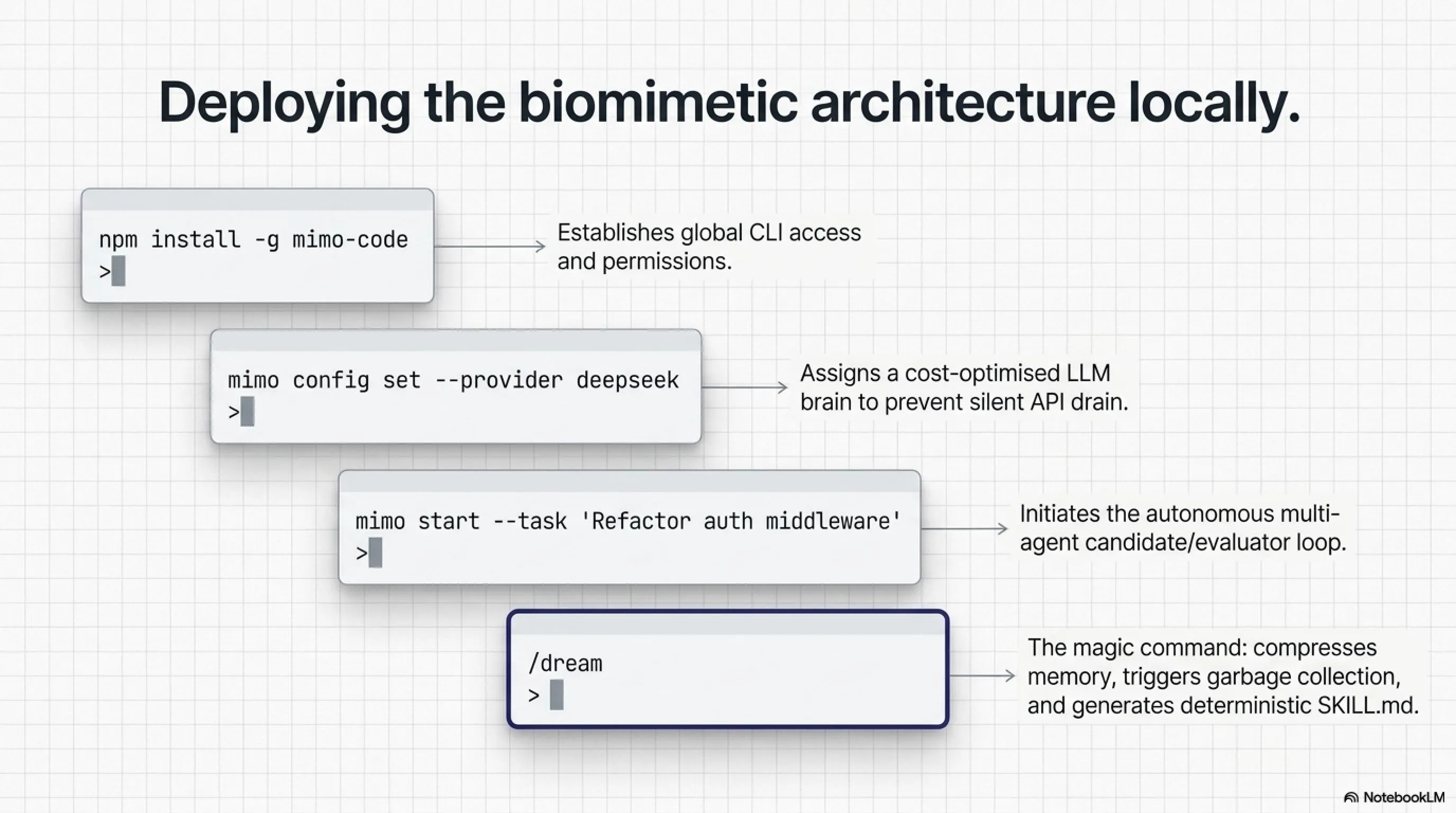
💻 Deploying MiMo Code Locally
1. Global Installation via NPM:
2. API Configuration (Example: Connecting to DeepSeek for cost optimization):
3. Initializing an Autonomous Task within your project directory:
4. The Magic Command: Compressing context memory post-execution:
CLI vs. GUI: Why MiMo Stays in the Terminal
A common question arises: "Why doesn't MiMo Code have a sleek Graphical User Interface (GUI) like Cursor IDE or the GitHub Copilot extension for VS Code?" The answer lies in the fundamental difference between an Assistant and an Agent.

An Assistant (like Copilot) waits for you to type a function signature, then suggests autocomplete code. An Agent (like MiMo or Devin) is designed to operate autonomously. It needs unrestricted access to your terminal to install NPM packages, spin up local Docker containers, execute Git commits, and read raw bash error logs when a build fails. While the open-source community is actively building unofficial VS Code sidebars for MiMo, the core development team at Xiaomi prioritizes CLI supremacy to ensure the agent has the maximum permissible privileges to solve complex engineering problems without waiting for human mouse clicks.
5. The Illusion of "Free": API Cost Analysis
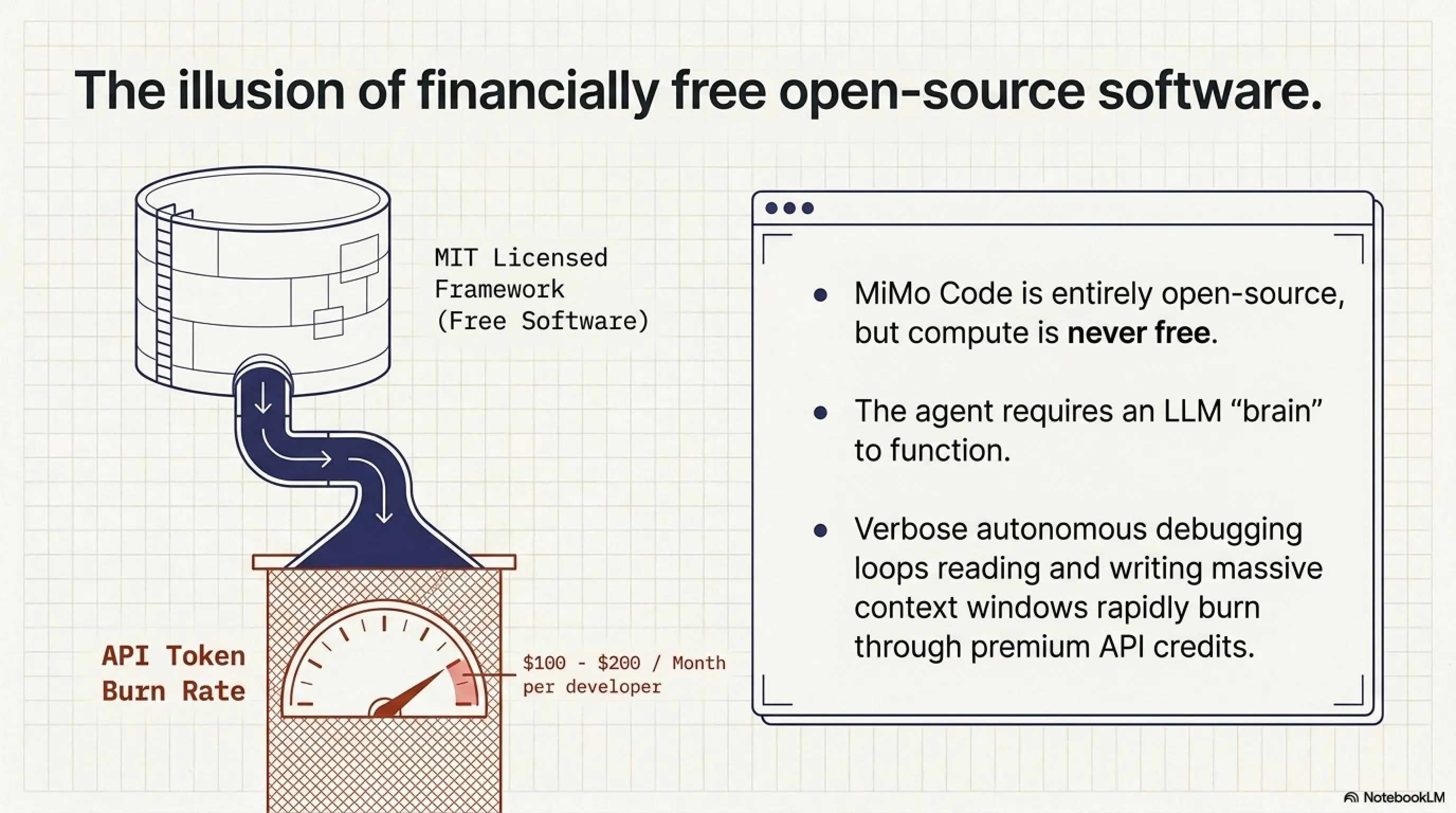
A dangerous misconception pervading the developer community is the conflation of "Open Source" with "Financially Free." While the MiMo Code repository is completely open-source under the MIT License—meaning you pay absolutely zero licensing fees to Xiaomi—the agent requires a "brain" to function. That brain is provided by Large Language Model APIs, and compute is never free.
When MiMo Code operates, it is incredibly verbose. It reads multiple files, writes code, parses terminal errors, and sends massive context windows back and forth to the LLM provider. If you connect MiMo Code to a premium, high-cost model like OpenAI's GPT-4o or Anthropic's Claude 3.5 Sonnet, a single intense debugging session can consume hundreds of thousands of tokens. For an active enterprise developer, API bills can easily exceed $100 to $200 per month.
The Cost-Optimization Strategy: Because MiMo is fundamentally model-agnostic, savvy engineering teams are routing its intelligence through highly capable but significantly cheaper APIs. For instance, connecting MiMo to DeepSeek Coder V2 provides near GPT-4 level coding proficiency at a fraction of the cost. Additionally, for ultra-secure or low-budget environments, developers are running MiMo locally using Llama-3 or Mistral through Ollama, completely eliminating API costs in exchange for local GPU compute.


The Autonomous Agent Battlefield: MiMo vs. The Industry
🟢 THE ADVANTAGES
- Infinite Context Management: The
/dreamcommand effectively eliminates context window saturation, allowing for massive projects. - Deterministic Reliability: Translating language into SKILL.md scripts drastically reduces hallucination rates.
- Vendor Lock-in Freedom: Total model agnosticism allows enterprise teams to switch between OpenAI, Claude, or DeepSeek based on current pricing and performance.
🔴 THE LIMITATIONS
- Steep Learning Curve: The lack of a native GUI makes it intimidating for junior developers or front-end designers accustomed to VS Code extensions.
- Silent API Drain: Without proper rate-limiting configurations, autonomous debugging loops can quietly burn through hundreds of dollars in API credits overnight.
- Prompt Engineering Dependency: An ambiguous initial task prompt will result in the agent executing flawlessly in the completely wrong architectural direction.
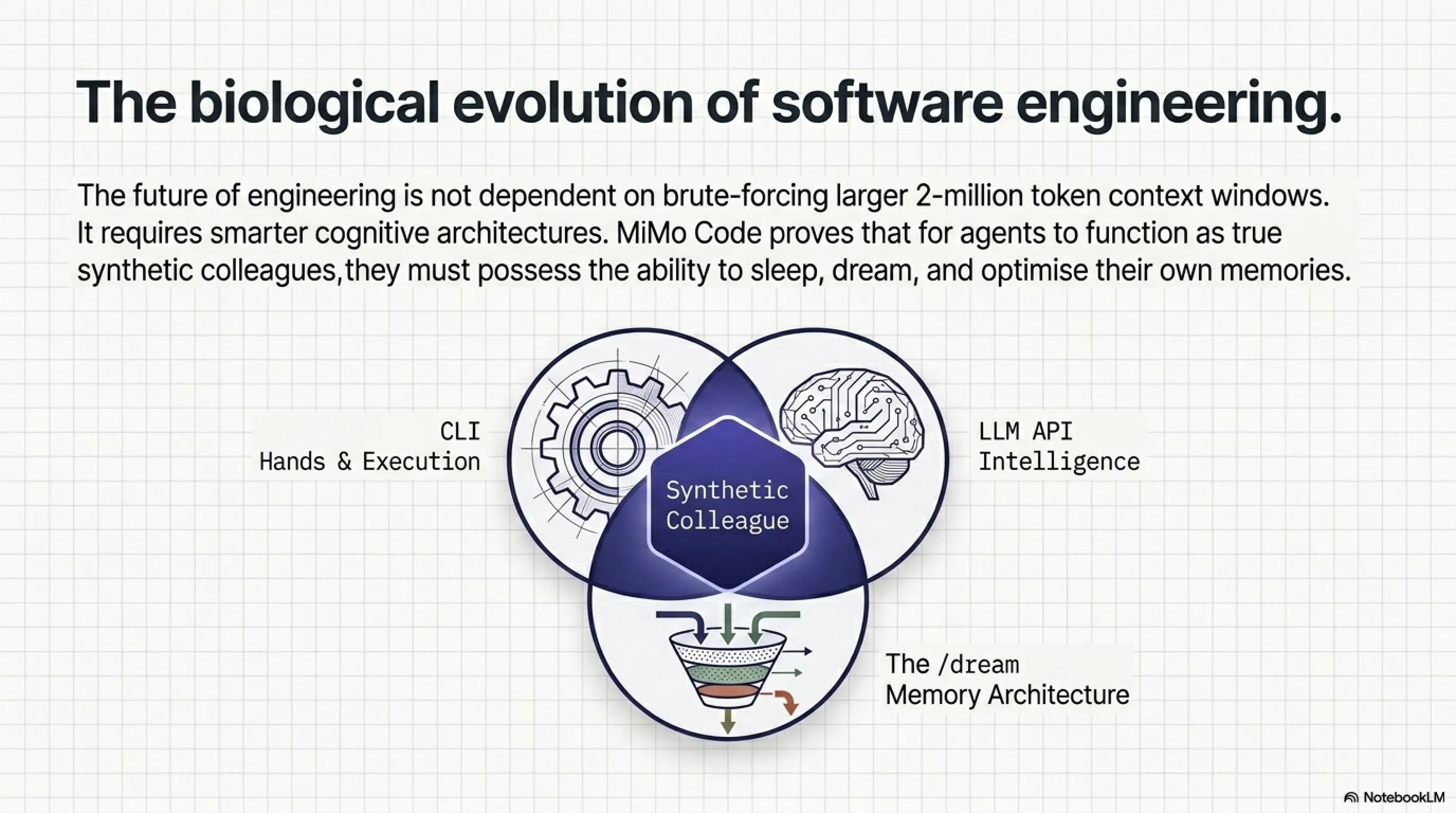
The Biological Evolution of Code Our tech analysts at TakinGame view Xiaomi's approach as a watershed moment in software engineering. For years, the industry attempted to solve LLM amnesia by simply throwing more GPU RAM at the problem—creating 1-million and 2-million token context windows. Xiaomi, however, realized that memory isn't about retaining everything; it's about discarding the irrelevant. By mimicking the biological function of human sleep (memory consolidation and garbage collection), MiMo Code proves that the future of AI isn't just about bigger neural networks, but smarter cognitive architectures.

6. Final Verdict: Does MiMo Beat Devin?
The software engineering landscape is transforming at a breakneck pace. We are transitioning from being "Coders" to "System Orchestrators." Tools like Devin have captured the public imagination with their flashy web interfaces, but for hardcore enterprise teams prioritizing data privacy, customizability, and context-window stability, Xiaomi's MiMo Code is arguably the superior architecture. An agent that can sleep, dream, and optimize its own memory for long-term projects is not just an assistant; it is a synthetic colleague.
💡 The Inspector's Verdict
We highly recommend that every senior developer install MiMo Code today. Start by assigning it a low-risk, contained project—such as scaffolding a microservice or building a Telegram bot—and observe the multi-agent workflow in action. To protect your API budget, configure it to run on DeepSeek or an offline Llama-3 model before upgrading it to GPT-4o. The future belongs to developers who know how to command an army of autonomous agents. Do not get left behind.
📂 The Complete Autonomous Developer Dossier
❓ Frequently Asked Questions (FAQ)
+ Is MiMo Code completely free to use?
The software framework is 100% free and open-source under the MIT license. However, you must connect it to a Large Language Model via an API key (like OpenAI or DeepSeek). You will be billed by the API provider for the tokens consumed during code generation.
+ What exactly does the /dream command do?
When you execute `/dream`, MiMo Code pauses execution and reviews its entire session history. It discards useless terminal logs, failed attempts, and minor errors, then condenses the successful logic into a permanent `SKILL.md` file. This prevents the LLM from suffering memory decay over long projects.
+ How does MiMo Code differ from GitHub Copilot?
GitHub Copilot is a code Assistant—it sits in your IDE and autocompletes the line you are typing. MiMo Code is an Autonomous Agent. It lives in your terminal, can install its own dependencies, execute Git commits, start local servers, and debug its own crashes without human intervention.
+ Is there a GUI or VS Code extension for MiMo Code?
Officially, no. Xiaomi designed MiMo as a CLI-first tool to ensure it has maximum permissions to execute terminal logic autonomously. However, because it is open-source, the community is actively developing third-party VS Code extensions to bring it into a visual sidebar.
+ Which LLM API is recommended for MiMo Code?
For optimal intelligence and zero hallucination, OpenAI's GPT-4o is excellent. However, for a balance of high performance and drastically lower costs (often 1/10th the price), we highly recommend routing the agent through the DeepSeek Coder V2 API.
📚 Verified Intelligence Sources
🌐 Stay Connected With Us 🎮✨
For the latest tech, gaming, and gadget news, follow us on our official social media channels:
Additional Gallery: 🚨 The AI Agent That Dreams: A Deep Dive into Xiaomi's Open-Source MiMo Code