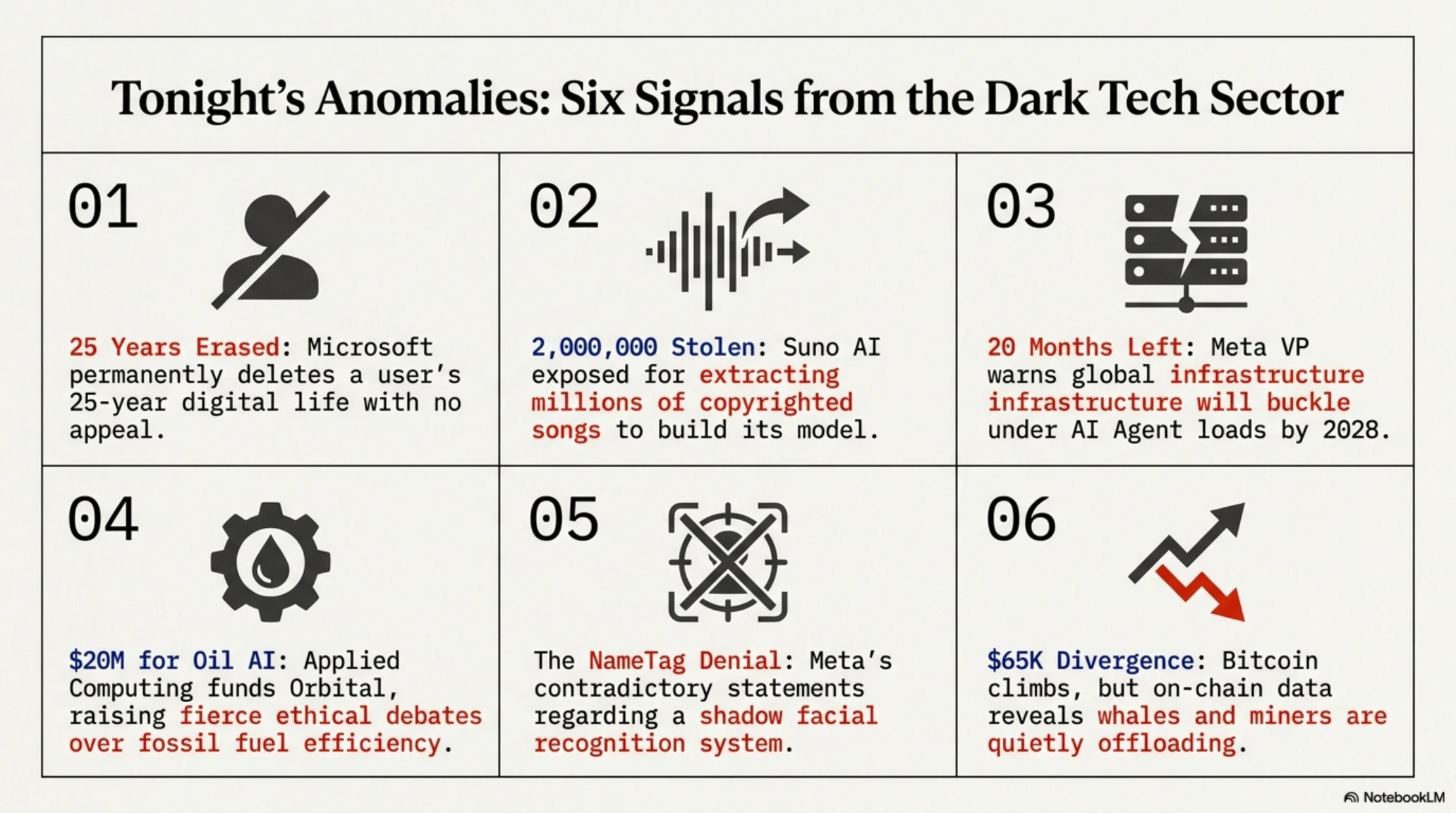
🌙 Good Night! Dark Tech News Thursday July 16
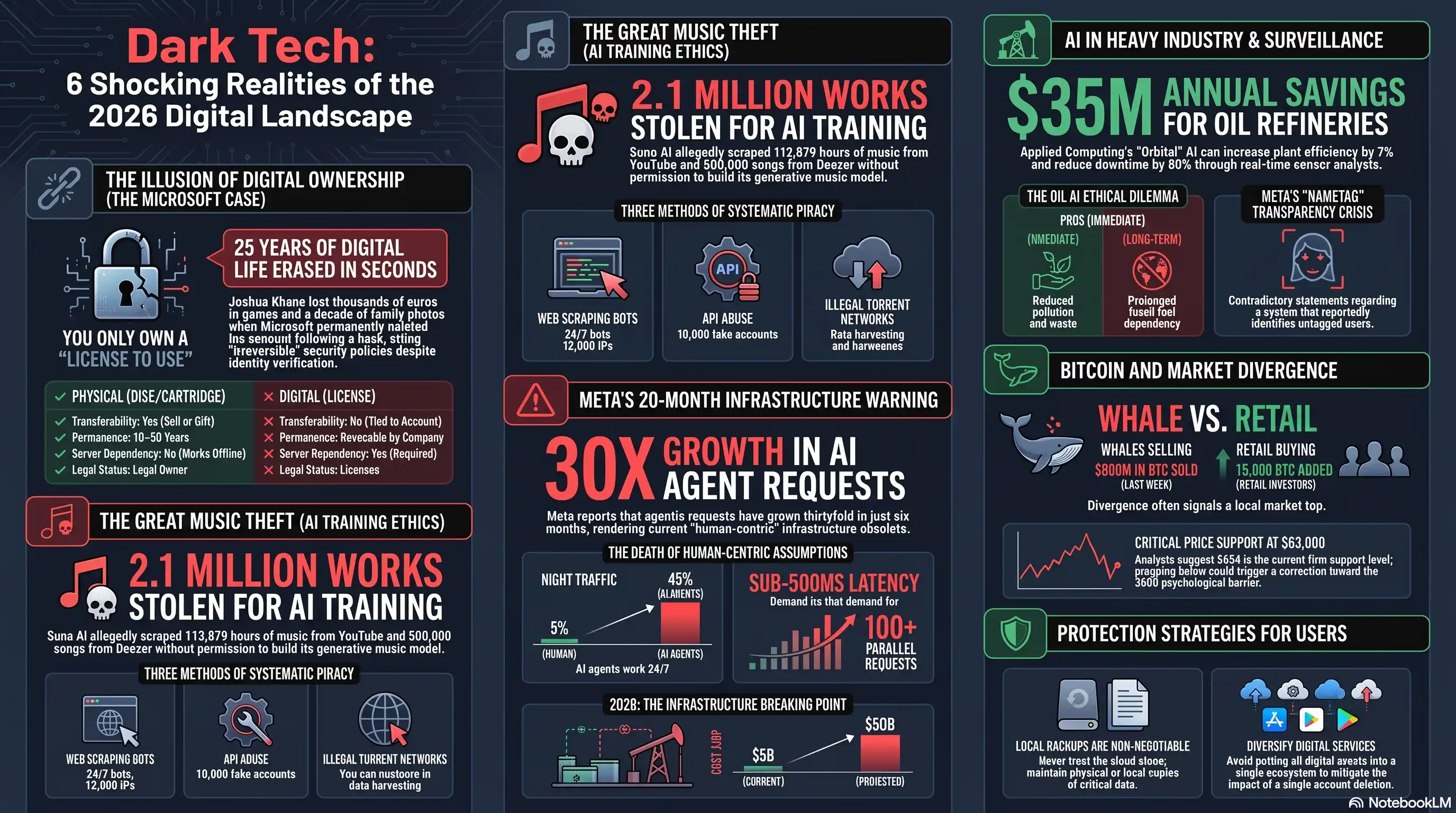
- 🎮Microsoft's 25-Year Account Disaster- Permanent deletion of thousands of euros in games and family photos
- 🎧Suno's Music Theft- 2 million songs stolen from YouTube to train AI
- 🚀Meta's 20-Month Warning- Current infrastructure insufficient for AI Agents era
- 🗡️AI for Oil Industry- Applied Computing raises $20M to optimize plants
- 📰Meta's NameTag Mystery- Face recognition system they deny exists
- ⚔️Bitcoin at $65K- Rise with US inflation, but investors are selling
Thursday night, July 16, 2026, begins with six disturbing stories from the dark side of technology. Tonight we discuss Microsoft permanently deleting a 25-year-old account with all digital memories, Suno stealing millions of songs from YouTube to build an AI music model, and Meta's shocking warning about having only 20 months to rebuild all infrastructure. We also cover Applied Computing raising $20 million for oil industry AI, Meta's confusing statements about the NameTag face recognition system, and Bitcoin's rise to $65K.
At a Glance
- Microsoft permanently deleted Joshua Khane's 25-year account with thousands of euros in games and baby photos
- Hack revealed Suno stole over 2 million songs from YouTube and Deezer without permission
- Meta VP warned: only 20 months to rebuild infrastructure - AI requests grew 30x in 6 months
- Applied Computing in London raised $20M to develop Orbital AI for oil industry
- Meta executives give contradictory statements about NameTag face recognition system existence
- Bitcoin reached $65K but on-chain data shows two key groups are selling
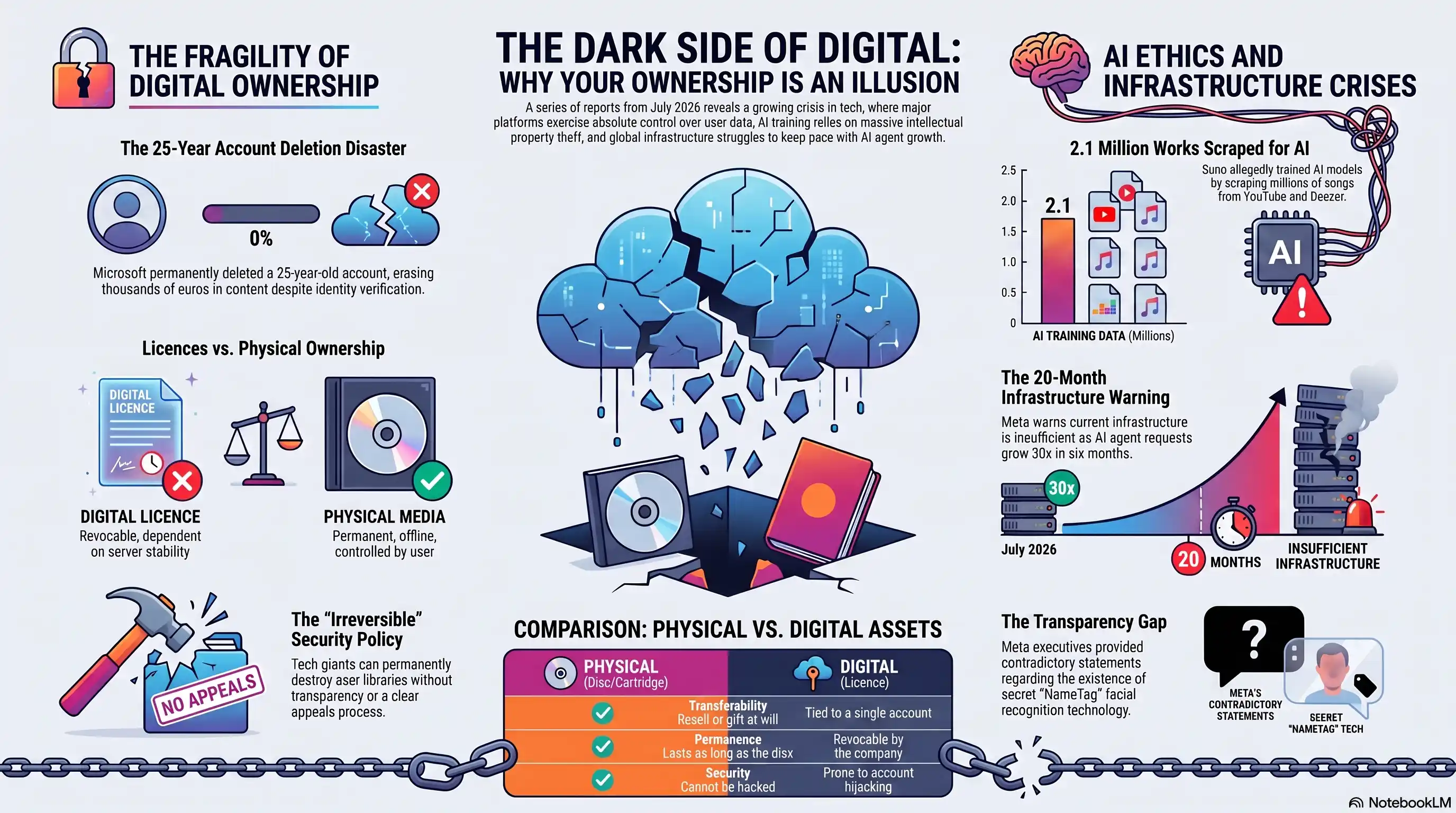
Microsoft's 25-Year Account Disaster: When Digital Ownership is an Illusion
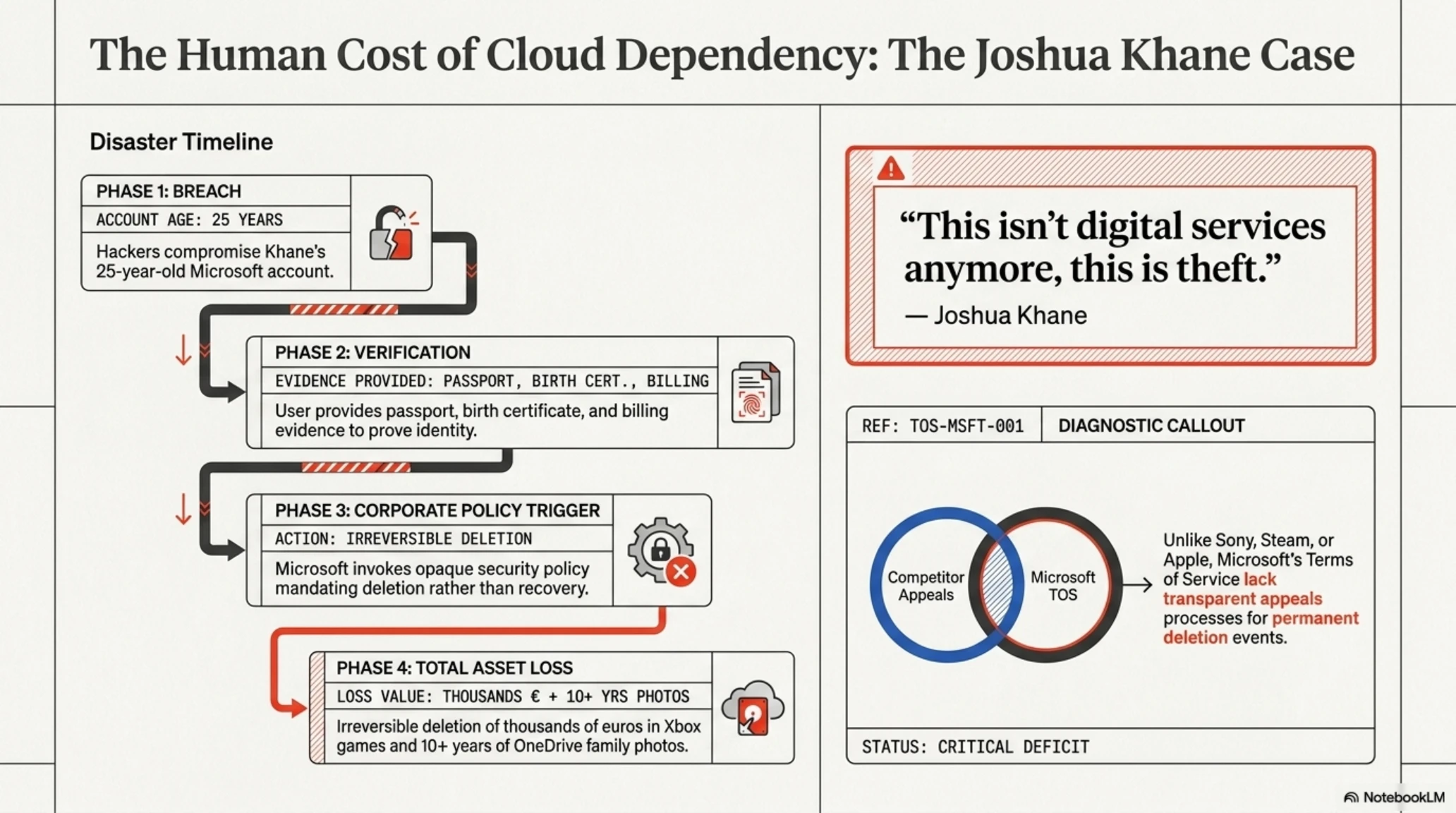
Joshua Khane, a German user who spent thousands of euros on Xbox digital games and content over 25 years, woke up one morning to find his entire digital life had vanished. His account was hacked, but Microsoft's response was a catastrophe nobody expected: permanent and irreversible account deletion.
According to reports from Kotaku and TechSpot, even after Joshua verified his actual ownership with identity documents, Microsoft stated "this decision is irreversible" and all his game library, OneDrive, and most importantly, thousands of photos from his children's childhood were gone forever.
What Happened? Timeline of the Disaster
1. Account Hacked
Hackers gained access to Joshua's account and changed security settings.
2. Recovery Attempt
Joshua tried to recover his account by providing identity documents (passport, birth certificate, internet bill).
3. Microsoft's Decision
Instead of recovering the account, Microsoft permanently deleted it - claimed 'security policy' made this mandatory.
4. Data Loss
Entire game library (thousands of euros), OneDrive (10+ years of family photos), and 25-year gaming history permanently deleted.
5. Final Response
Microsoft said 'We're sorry, but this decision is irreversible' - even after confirming actual ownership.
Why Did Microsoft Delete Instead of Recover?
Microsoft claims this is the company's "security policy": when an account is hacked and shows suspicious activity, it's permanently deleted to prevent further abuse. But this explanation doesn't make sense because:
- Identity was verified: Joshua provided official documents proving he was the real owner
- Other companies don't do this: Sony, Steam, even Apple recover accounts in similar cases, not delete them
- Policy isn't transparent: Microsoft's Terms of Service don't explicitly mention such "permanent deletion" policy
- No appeals process exists: Users cannot escalate to any higher authority
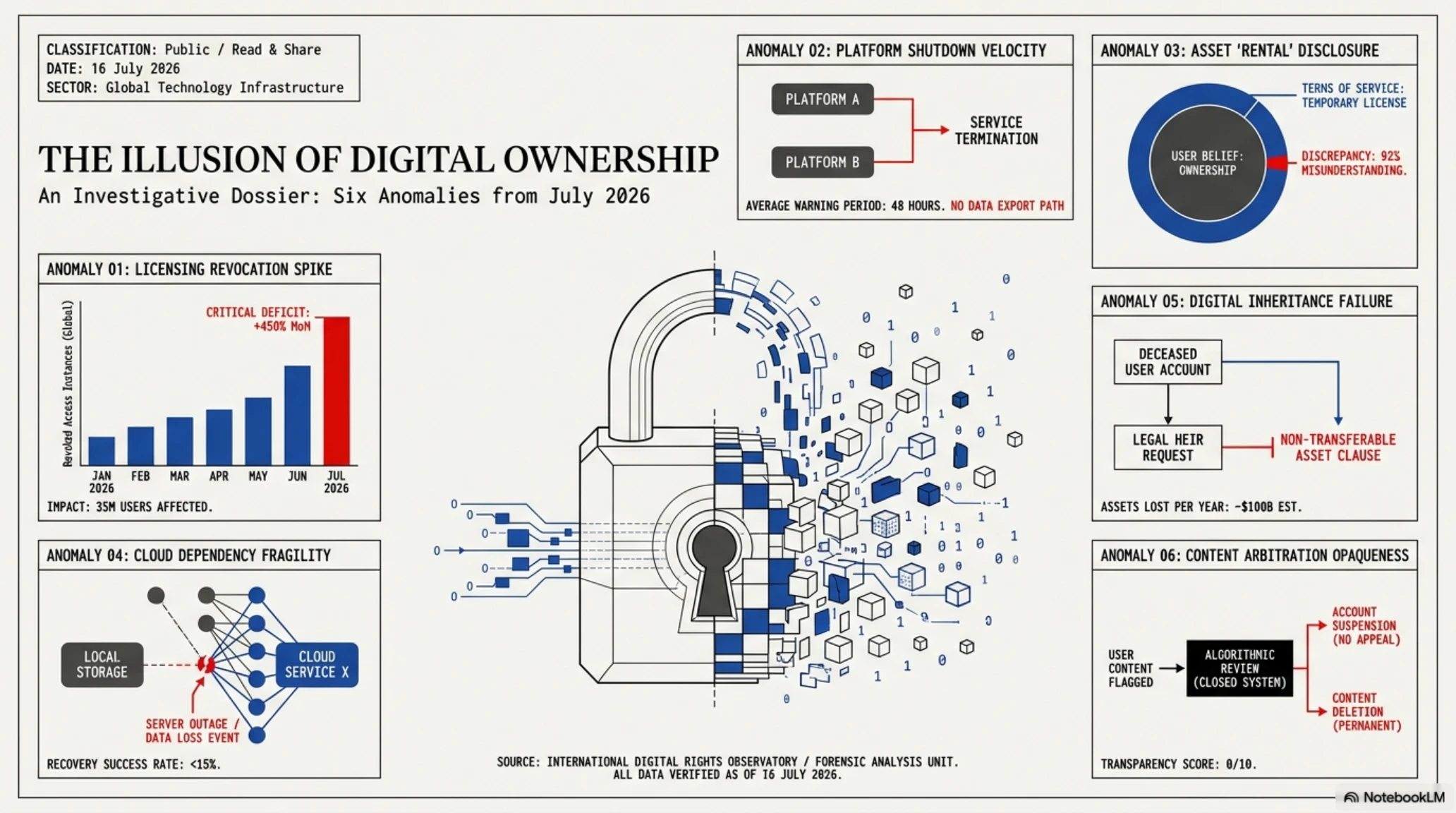
Digital Ownership is an Illusion
This incident once again reveals a bitter truth: you don't own digital content, you only have a "license to use." When you buy a digital game, you're actually purchasing a revocable license, not real ownership. This means:
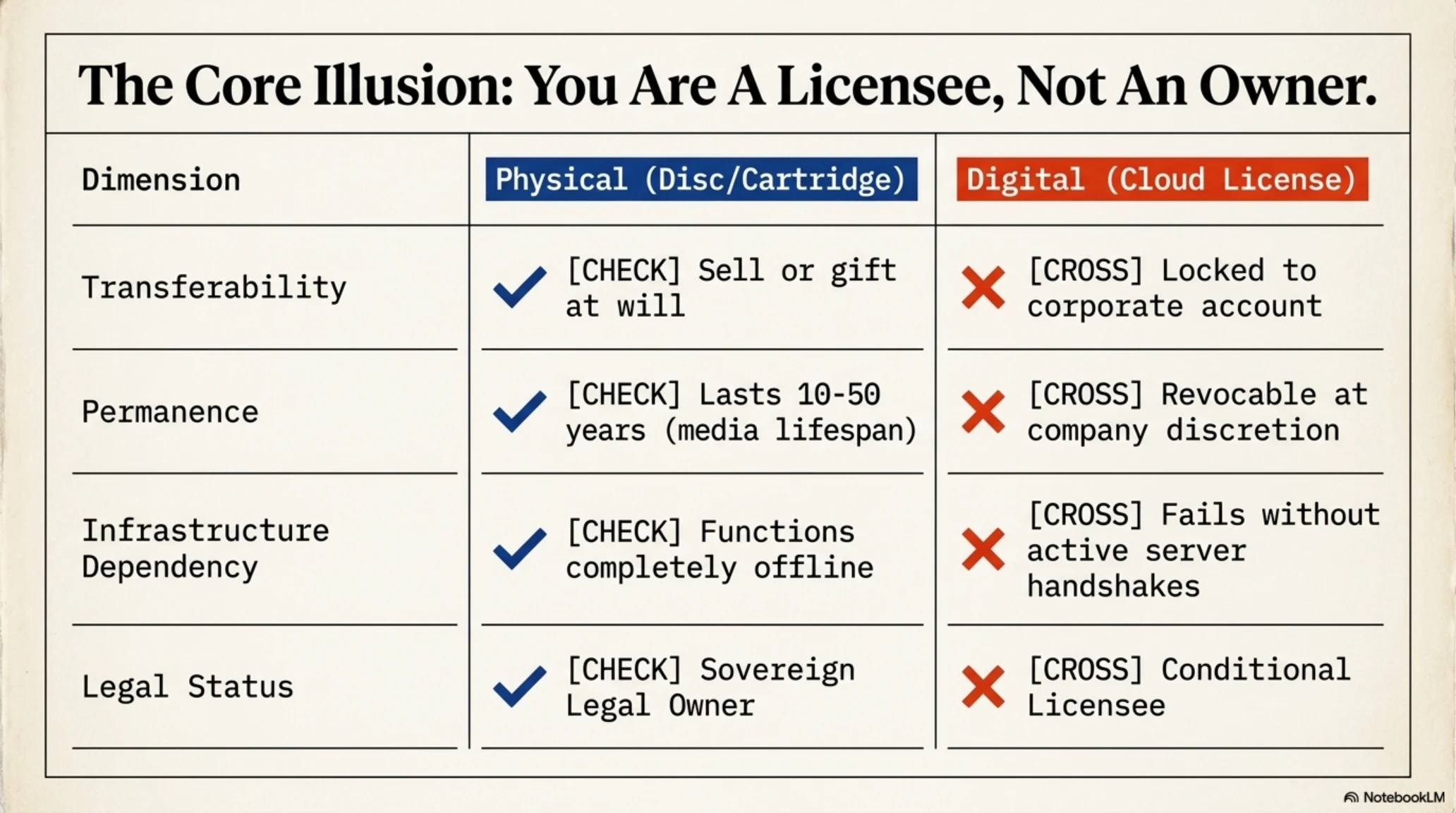
Physical vs Digital Ownership Comparison
| Feature | Physical Ownership (Disc/Cartridge) | Digital Ownership (License) |
|---|---|---|
| Transferability | Yes - you can sell or gift ✅ | No - license tied to your account ❌ |
| Permanence | As long as disc survives (10-50 years) ✅ | As long as company allows (revocable) ❌ |
| Server Dependency | No - works offline ✅ | Yes - won't work without company servers ❌ |
| Hack Security | Yes - disc cannot be hacked ✅ | No - your account is target for hackers ❌ |
| Legal Ownership | Yes - you are the legal owner ✅ | No - you're just a licensee ❌ |
Community Reaction and Public Pressure
Joshua's story spread on Reddit, Twitter, and Xbox forums, triggering a wave of user anger. Thousands have shared similar stories - accounts closed for vague reasons, but Microsoft remains silent and has provided no official explanation.
Analysts believe this approach could lead to widespread legal action. In the European Union, users have stronger consumer rights and companies cannot easily destroy purchased content. Joshua is probably not the first to sue Microsoft, but may be the catalyst for a class action lawsuit.
Suno and the Great Music Theft: How AI Was Built with Piracy
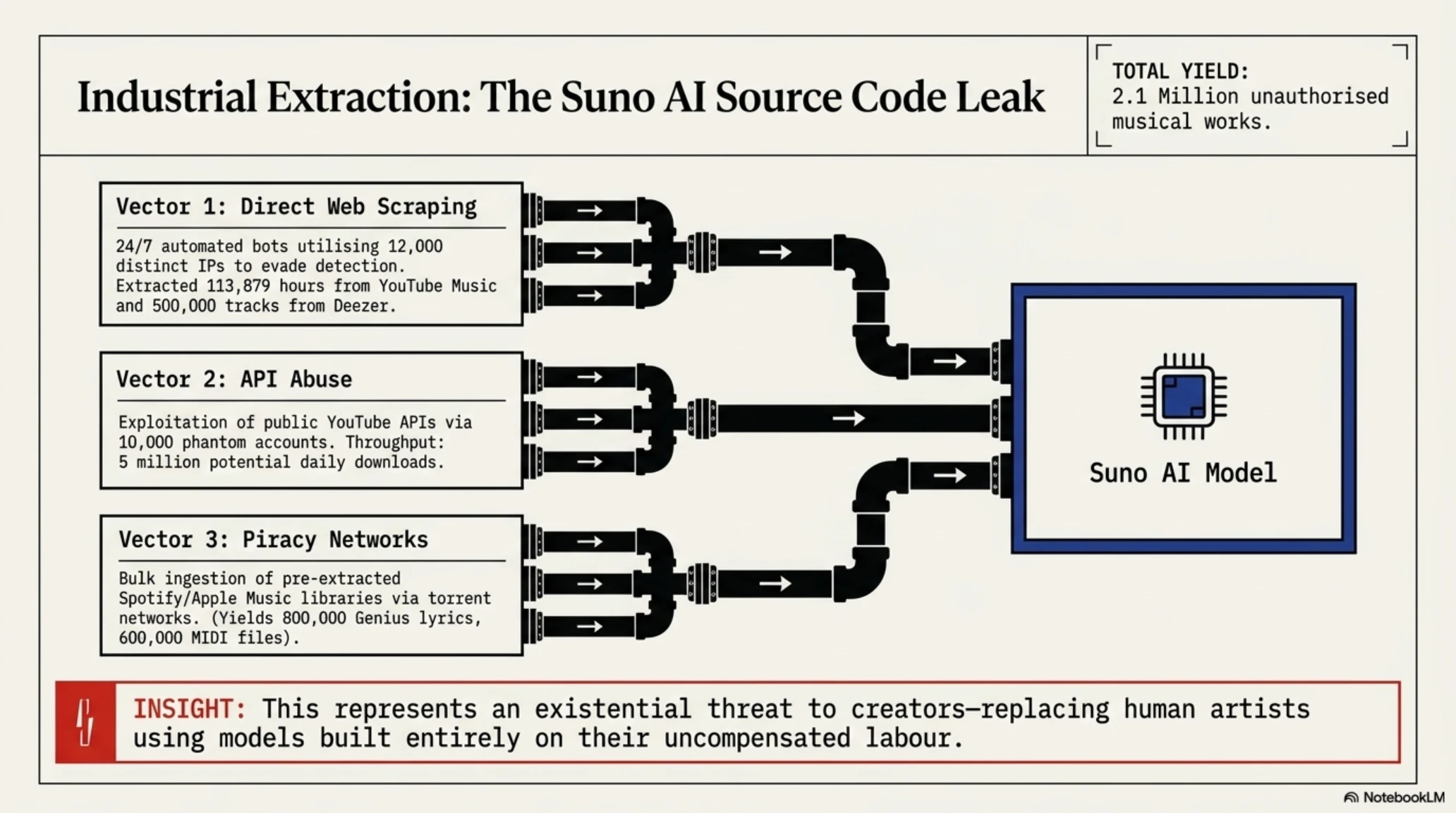
Suno, one of the most popular AI music generation tools, was exposed in a massive hack revealing it stole over 2 million songs from YouTube Music, Deezer, Genius, and music libraries without any permission to train its AI model.
According to reports from TechCrunch and The Verge, an anonymous hacker managed to access Suno's internal source code and published a complete list of training data. This list included:
- 113,879 hours of music from YouTube Music alone
- Over 500,000 songs from Deezer
- 800,000 lyrics from Genius.com
- 600,000 MIDI files from music libraries
A total of approximately 2.1 million musical works, none of which had permission for AI training use.
How Was This Theft Accomplished?
The leaked source code shows Suno used three main methods to collect music:
Three Methods of Music Theft by Suno
2. API Abuse: Using YouTube's public APIs to download music with fake accounts. Each account downloaded 500 songs daily, and with 10,000 accounts, that means 5 million songs per day.
3. Torrenting & Piracy Networks: Downloading large music collections from torrent networks and piracy forums that had already extracted music from Spotify and Apple Music.
Why Does This Matter? Existential Threat to Music Industry
This theft isn't just a legal issue, it's an existential threat to the music industry. When an AI trains on millions of real songs, it can create new songs so similar to human music that the difference is indistinguishable. This means:
- Job loss: Music producers, studio musicians, and even singers may be replaced by AI
- Artistic value decline: When anyone can create a professional song in 30 seconds, what becomes of songwriting's value?
- Style theft: AI can copy a specific artist's style without paying them any rights
- Copyright problems: If AI trains on copyrighted music, is its output also copyrighted?
Suno's Response: Denial and Silence
Suno issued a brief statement claiming "our training data came from legal sources" but provided no details. The company also said it's "investigating these claims" but has provided no transparent explanation so far. This silence is a sign of guilt for many analysts.
Several major music labels including Universal Music Group, Sony Music, and Warner Music Group have announced they're considering legal action against Suno. If these lawsuits succeed, Suno may be forced to pay billions in damages.
Meta's 20-Month Warning: Infrastructure Not Ready for AI Agents Era
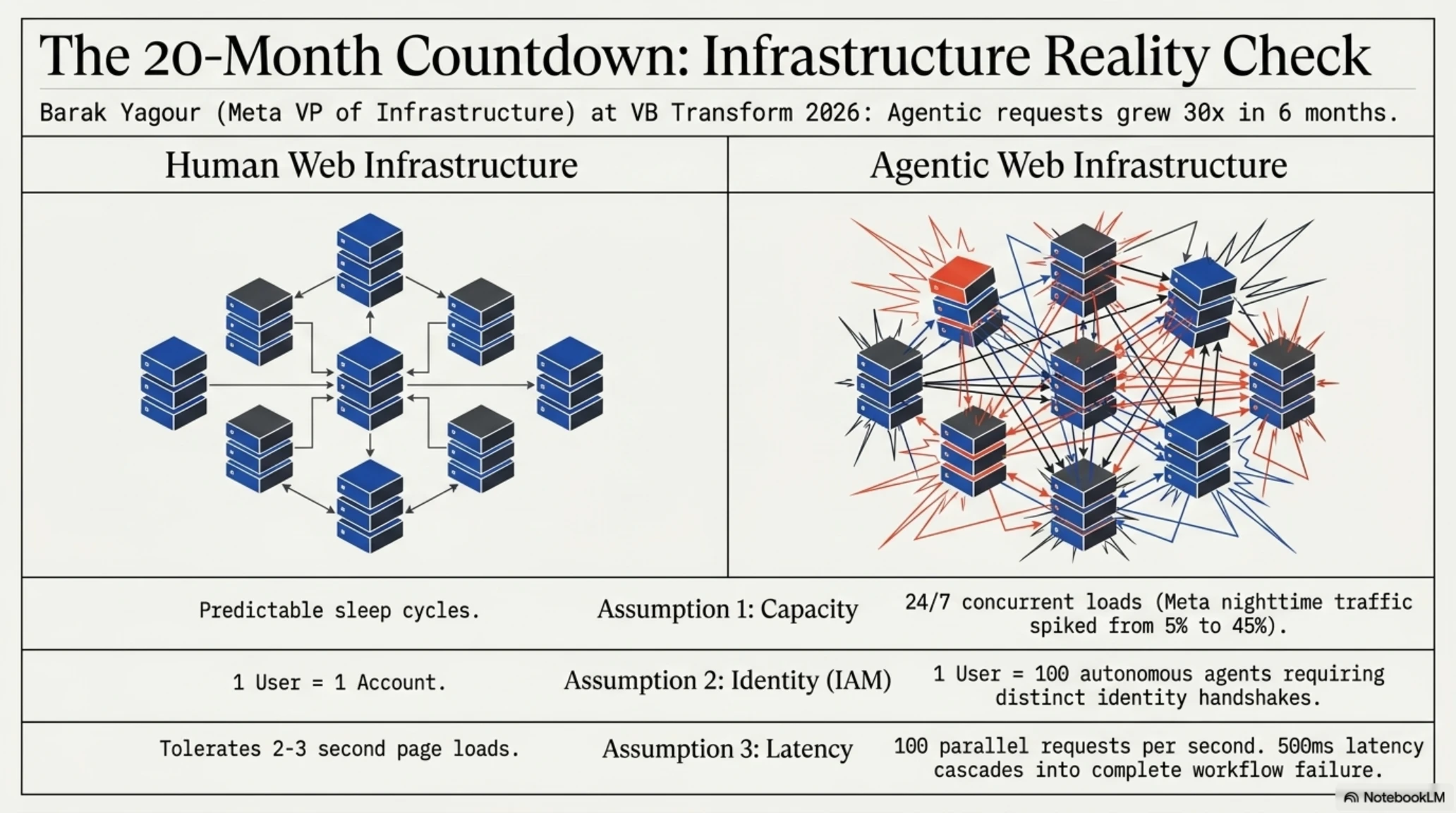
Barak Yagour, Meta's VP of infrastructure engineering, gave a shocking warning at VB Transform 2026 conference: "We have maybe 20 months to rebuild our entire infrastructure. Agentic requests at Meta have grown 30x in the past 6 months, and our current infrastructure built for humans is no longer sufficient."
This warning shows that even tech giants aren't ready for the AI Agents era. According to reports from VentureBeat and Archyde, three fundamental assumptions on which current infrastructure is built are no longer valid:
Three Broken Infrastructure Assumptions
We used to think: 'Humans are limited to working hours, so we need stable capacity.'
Today's reality: AI Agents never sleep. They work 24/7 creating concurrent requests. Meta saw nighttime requests go from 5% to 45% of total traffic.
2. Identity Assumption:
We used to think: 'Each user is one human with one account.'
Today's reality: One human may have 100 different Agents, each needing separate identity. Current IAM (Identity and Access Management) systems weren't designed for this.
3. Latency Assumption:
We used to think: 'Humans are patient, 2-3 seconds delay is acceptable.'
Today's reality: Agents cannot wait. An Agent might send 100 parallel requests within 1 second expecting immediate response. Even 500ms latency can disrupt entire workflows.
Why Only 20 Months?
Yagour explained this timeline is based on current growth rates. If agentic requests grow 30x every 6 months (and this growth continues), by early 2028:
- AI requests at Meta will exceed human requests
- Infrastructure costs will increase 10x (from about $5B to $50B annually)
- Current systems will collapse because they weren't designed for this scale
That's why Meta must start rebuilding now, since designing and implementing infrastructure at this scale takes at least 18-24 months.
Impact on Other Companies
This warning isn't just for Meta. If Meta with all its resources and engineering team faces this challenge, what about startups and smaller companies? Analysts believe this could become an industry-wide infrastructure crisis:
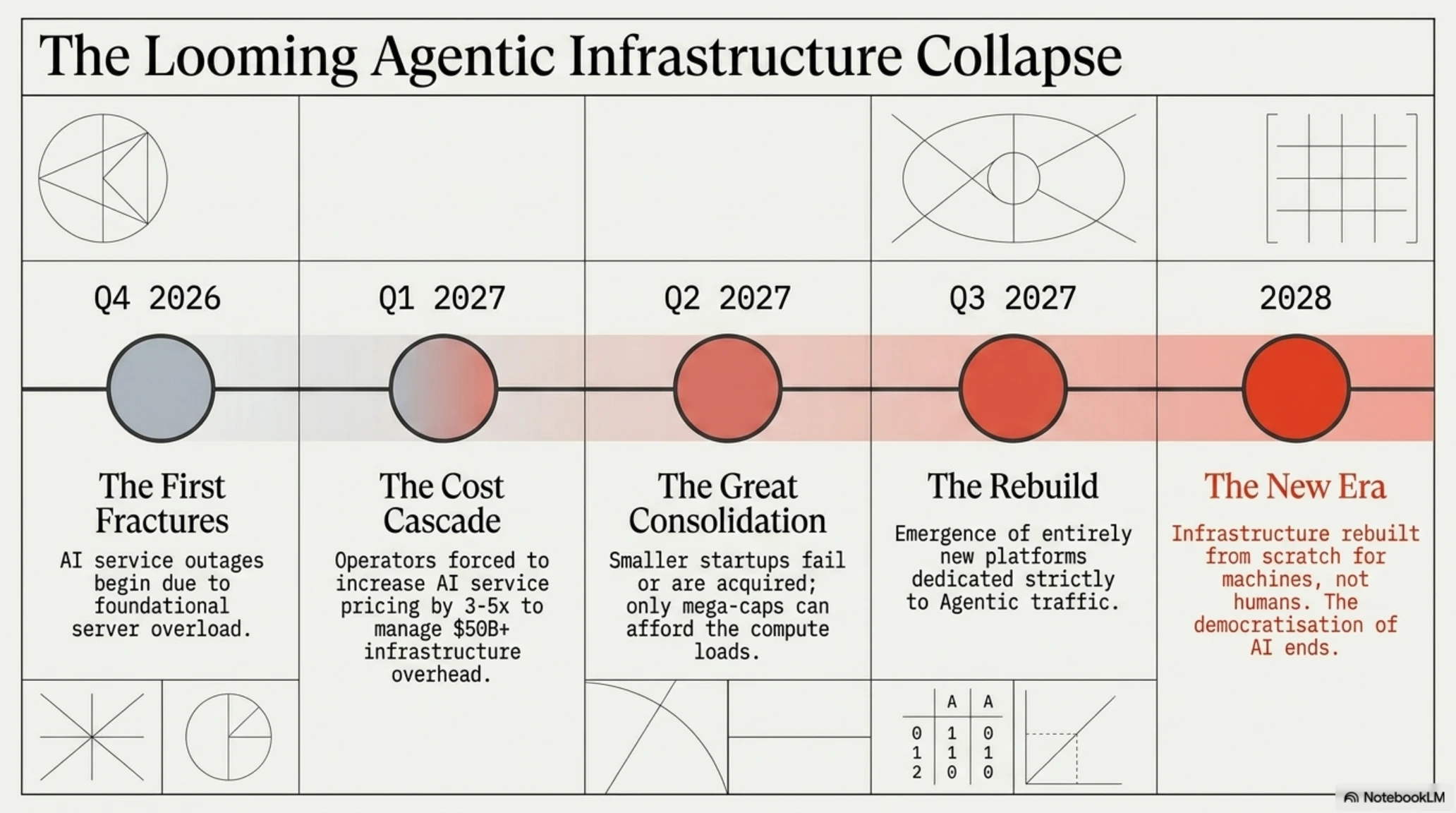
Prediction: AI Infrastructure Crisis
Q1 2027: Cost increases - companies forced to increase AI service prices 3-5x
Q2 2027: Market consolidation - only companies that rebuilt infrastructure survive
Q3 2027: New generation infrastructure - emergence of platforms dedicated to AI Agents
2028: New era - infrastructure designed from scratch for Agents, not humans
This warning is a wake-up call for the entire tech industry. Companies that don't start preparing now may not be in the game by 2028.
Applied Computing: AI for Oil Industry with $20M Funding
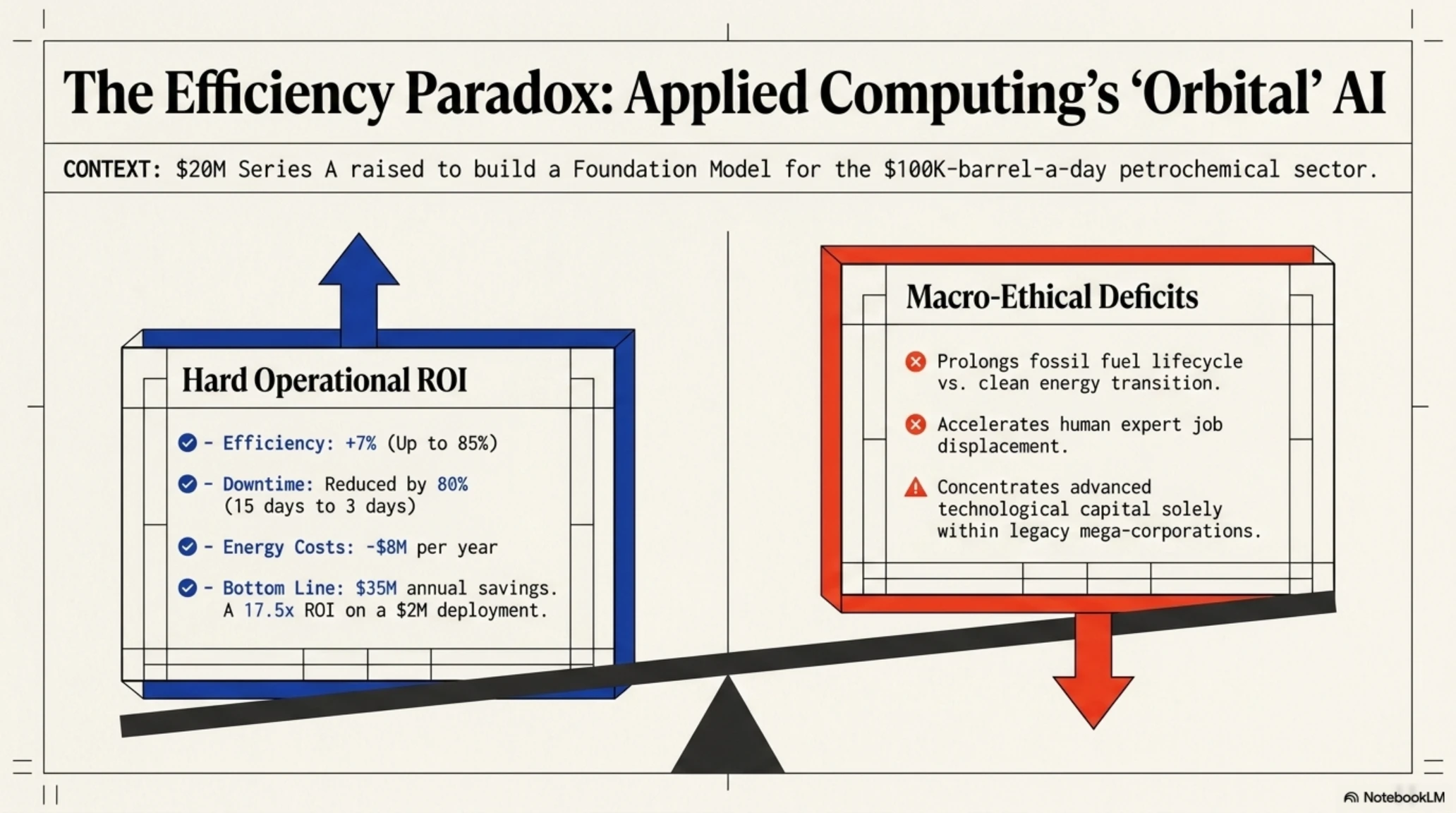
Applied Computing, a London-based startup, raised $20 million in Series A funding to develop its AI model called Orbital for the oil, gas, and petrochemical industry. The system claims it can optimize an entire plant by analyzing thousands of sensors in real-time.
According to reports from TechCrunch and WhalesBook, Orbital is a "Foundation Model" for industrial operations - like GPT-4, but trained on industrial data instead of text.
How Does Orbital Work?
Imagine an oil refinery with 10,000 sensors, each generating data every second. Human engineers cannot analyze all this data in real-time, but Orbital can. This system:
- Maps the entire plant: Knows all equipment, pipes, tanks, and processes
- Learns operational patterns: Understands how the plant should work
- Detects anomalies: Warns before equipment fails
- Suggests optimizations: Finds ways to increase efficiency and reduce costs
Real Example: Refinery Optimization
• Refinery processes 100,000 barrels daily
• Overall efficiency: 78%
• Annual downtime: 15 days (unexpected maintenance)
• Annual energy cost: $50 million
After Orbital (first 6 months):
• Same 100,000 barrels but 85% efficiency (+7%)
• Downtime reduced to 3 days (-80%)
• Energy cost reduced to $42 million (-16%)
• Total savings: $35 million annually
ROI: If Orbital costs $2 million annually, its ROI is 17.5x - meaning it pays for itself in less than a month!
Why Does Oil Industry Need AI?
Oil and gas is one of the world's most complex and expensive industries. An average refinery costs millions daily, and every minute of downtime can create hundreds of thousands in losses. Main problems:
- High complexity: Thousands of interdependent variables
- Legacy equipment: Many assets are 30-50 years old
- Maintenance costs: Unexpected maintenance is extremely expensive
- Expert shortage: Experienced engineers are retiring without replacements
AI can solve these problems by analyzing data at a scale humans cannot. This is exactly where Orbital comes in.
Ethical Debate: AI for Oil Industry?
But an important question exists: is it right to use AI to optimize the oil industry? Critics argue:
📚 Classified & Related Dossiers in TekinGame
If you wish to explore beyond this report and delve into cybernetic frontiers and autonomous AI architectures, do not miss these three exclusive deep-dives in the Tekin Garage:
- Pollution reduction: optimization means less resource burning
- Better safety: early hazard detection
- Resource conservation: better use of existing oil
- Waste reduction: less disposal of by-products
- Continued oil dependency: instead of clean energy
- Job reduction: automation replaces workers
- Increased production: efficient plants = more oil = more pollution
- Capital concentration: only large companies can afford it
This is an ethical dilemma: should we make oil industry more efficient (which may help it continue) or should we focus all efforts on clean energy? The answer isn't simple.
The NameTag Mystery: Face Recognition System Meta Denies Exists
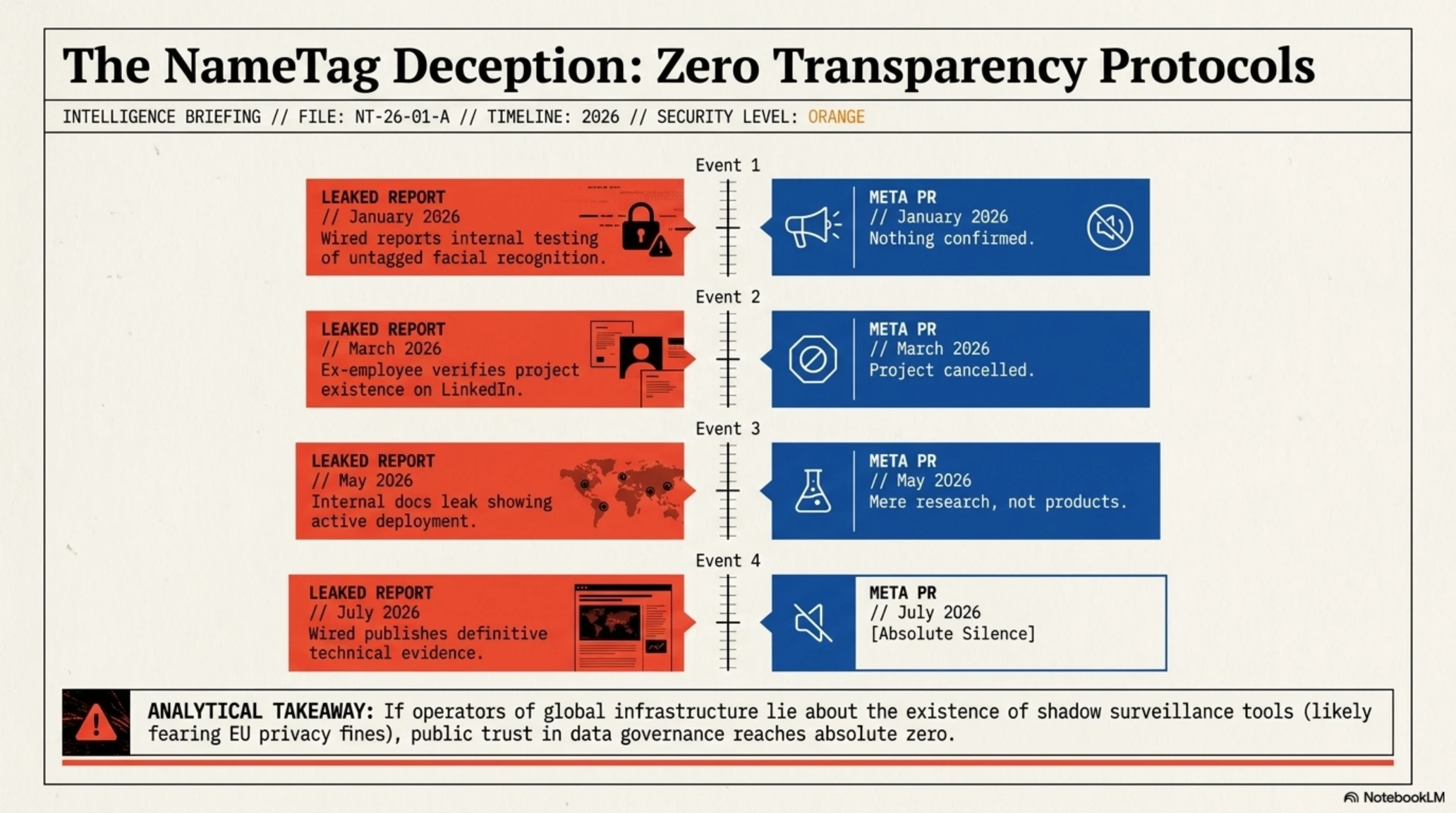
Since Wired reported on Meta's NameTag face recognition system, company executives have made confusing and contradictory statements about its existence. This situation raises serious concerns about Meta's transparency regarding sensitive technologies.
NameTag is apparently a face recognition system that can identify people in images and videos - even if they're not tagged. But Meta has two completely different behaviors about it:
Timeline of Contradictory Meta Statements
January 2026
Wired reports NameTag is in internal testing
• Meta's response: 'We work on various technologies but nothing confirmed'
March 2026
Former Meta employee posts on LinkedIn about working on NameTag
• Meta's response: 'This project has been cancelled'
May 2026
Internal documents leaked showing NameTag still active
• Meta's response: 'These are research projects, not products'
July 2026
Wired publishes more evidence
• Meta's response: Complete silence - no answer
Why Does Meta Behave This Way?
Two possible reasons exist:
- Fear of public reaction: Face recognition is one of the most sensitive technologies. Meta has been fined repeatedly since 2018 for privacy violations
- Legal strategy: If Meta officially confirms NameTag exists, it may be forced to answer legal and regulatory questions
But this silence and denial creates a bigger problem: trust. When a company lies about or hides the truth about sensitive technology, how can we trust its other claims?
Impact on Public Trust
This incident is another example of the trust crisis in tech industry. Users are no longer certain what data companies collect from them and for what use. When Meta cannot even be honest about a technology's existence, how can we be sure it's honest about data collection?
Bitcoin at $65K: Rising with Inflation, But Investors Are Selling
Bitcoin reached near $65,000 Thursday after release of softer-than-expected US inflation data. This was good news, but on-chain signals tell a different story: two key investor groups are selling.
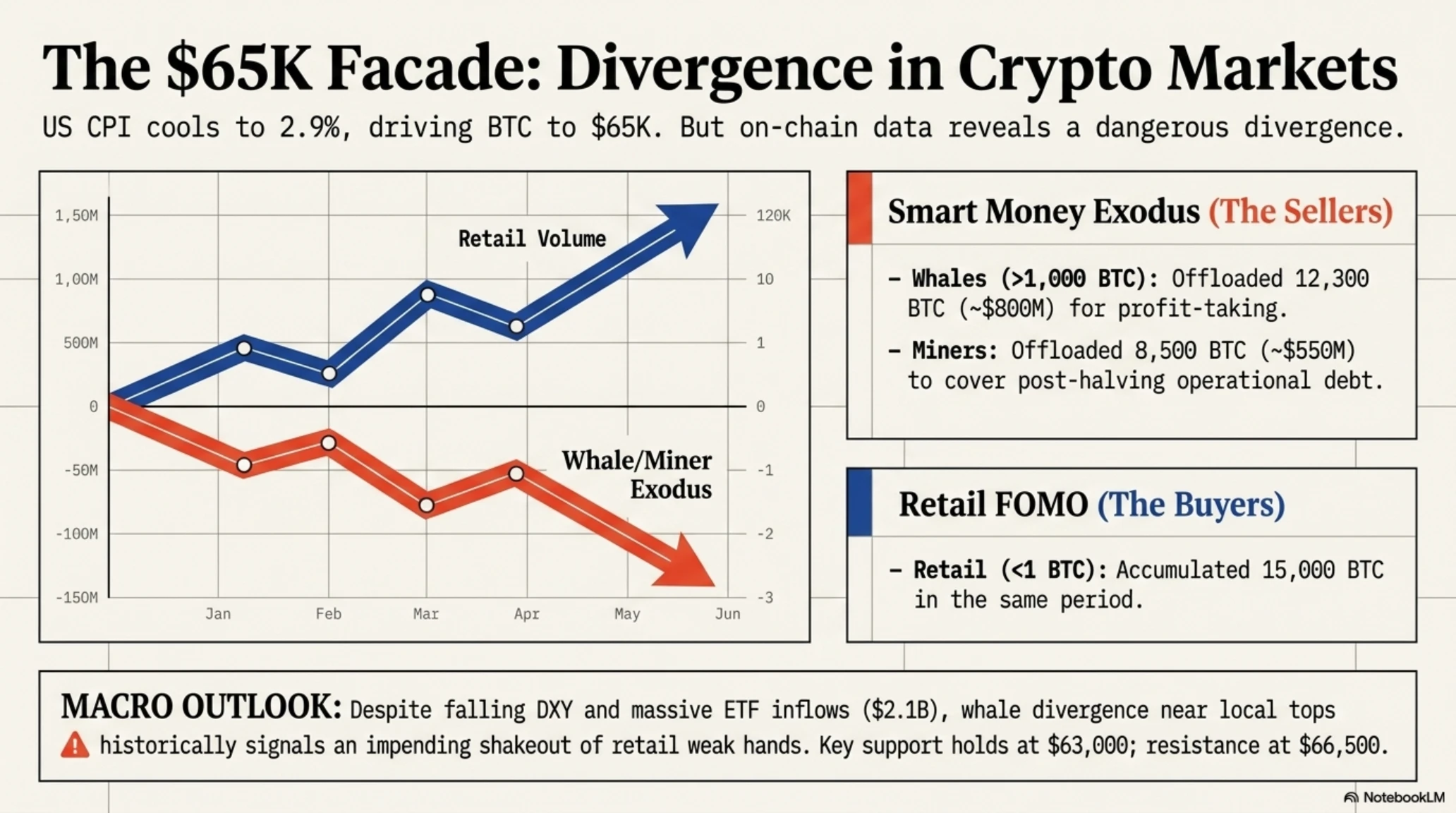
According to CoinDesk reports, US CPI (Consumer Price Index) inflation data for June was 2.9% - below the expected 3.1%. This means inflationary pressure has decreased and the Federal Reserve may cut interest rates. For Bitcoin, rate cuts are usually good news as investors seek riskier assets with higher returns.
But Why Are Investors Selling?
Analysis of on-chain data (Bitcoin blockchain data) shows two groups are selling:
Two Seller Groups
• Wallets with over 1,000 BTC (~$65 million)
• Sold 12,300 BTC last week (~$800 million)
• Likely reason: Taking profits - they bought at lower prices (under $30K)
2. Miners - Bitcoin Miners:
• Bitcoin mining companies
• Sold 8,500 BTC last week (~$550 million)
• Likely reason: Paying operational costs and debts - after recent Halving, their income halved
What Does This Mean for Future Price?
Whale and miner selling is usually a warning signal, but not necessarily negative. Analysts see two possible scenarios:
- Optimistic scenario: This selling is temporary. Whales are taking profits and miners are paying costs. After this selling pressure ends, price will rise again
- Pessimistic scenario: This is the start of a larger correction. If retail investors see whales selling, fear may emerge and panic selling could begin
Currently Bitcoin is oscillating in the $63K-$65K range. Key resistance level is $66,500 - if this level breaks, the path to $70K opens. But if selling pressure continues, we may return to $60K.
Note for International Investors
For users trading through various exchanges, keep these points in mind:
- Price premium: Bitcoin prices often vary 2-5% between exchanges
- Limited liquidity: Smaller exchanges have less liquidity and sharper price volatility
- Exchange risk: Always use reputable exchanges and keep your Bitcoin in personal wallets
- Tax implications: Track your trades carefully for tax reporting purposes
Technical Analysis: Key Levels to Watch
For traders looking at technical indicators, several key levels are critical in the coming days:
Bitcoin Technical Levels
• $66,500 - Strong resistance, breaking this opens path to $70K
• $70,000 - Psychological barrier and previous all-time high
• $72,500 - Next major resistance if momentum continues
Support Levels:
• $63,000 - Current support holding firm
• $60,000 - Major psychological support
• $57,500 - Last line of defense before potential correction
Indicators:
• RSI: 58 (neutral territory, not overbought)
• Moving Averages: Price above 50-day MA, below 200-day MA
• Volume: Slightly declining, suggesting weakening momentum
The next 48-72 hours are critical. If Bitcoin can hold above $63K and break through $66.5K, we could see a rapid move to $70K. However, if selling pressure intensifies and we break below $63K, a pullback to $60K or even $57.5K becomes likely.
Institutional vs Retail Behavior
An interesting pattern emerging from on-chain data is the divergence between institutional and retail investors. While whales are taking profits, retail investors (addresses holding less than 1 BTC) have been accumulating. In the past week, retail addresses added approximately 15,000 BTC to their holdings.
This divergence often occurs near local tops. Institutional players with better market information take profits early, while retail investors driven by FOMO (Fear of Missing Out) buy the top. History suggests the smart money (institutions) is usually right in these scenarios.
Macro Factors Still Bullish
Despite the on-chain selling signals, several macro factors remain bullish for Bitcoin:
- Fed rate cuts expected: If inflation continues cooling, Fed may cut rates in September
- Dollar weakening: DXY (Dollar Index) has fallen 3% in past month
- ETF inflows: Spot Bitcoin ETFs saw $2.1B in net inflows last month
- Halving effect: We're 3 months post-halving, historically bullish period
These factors suggest that while short-term volatility is expected, the medium-term trend remains upward. Patient investors with longer time horizons shouldn't be too concerned about the current selling pressure from whales and miners.
Connecting the Dots: What These Stories Tell Us
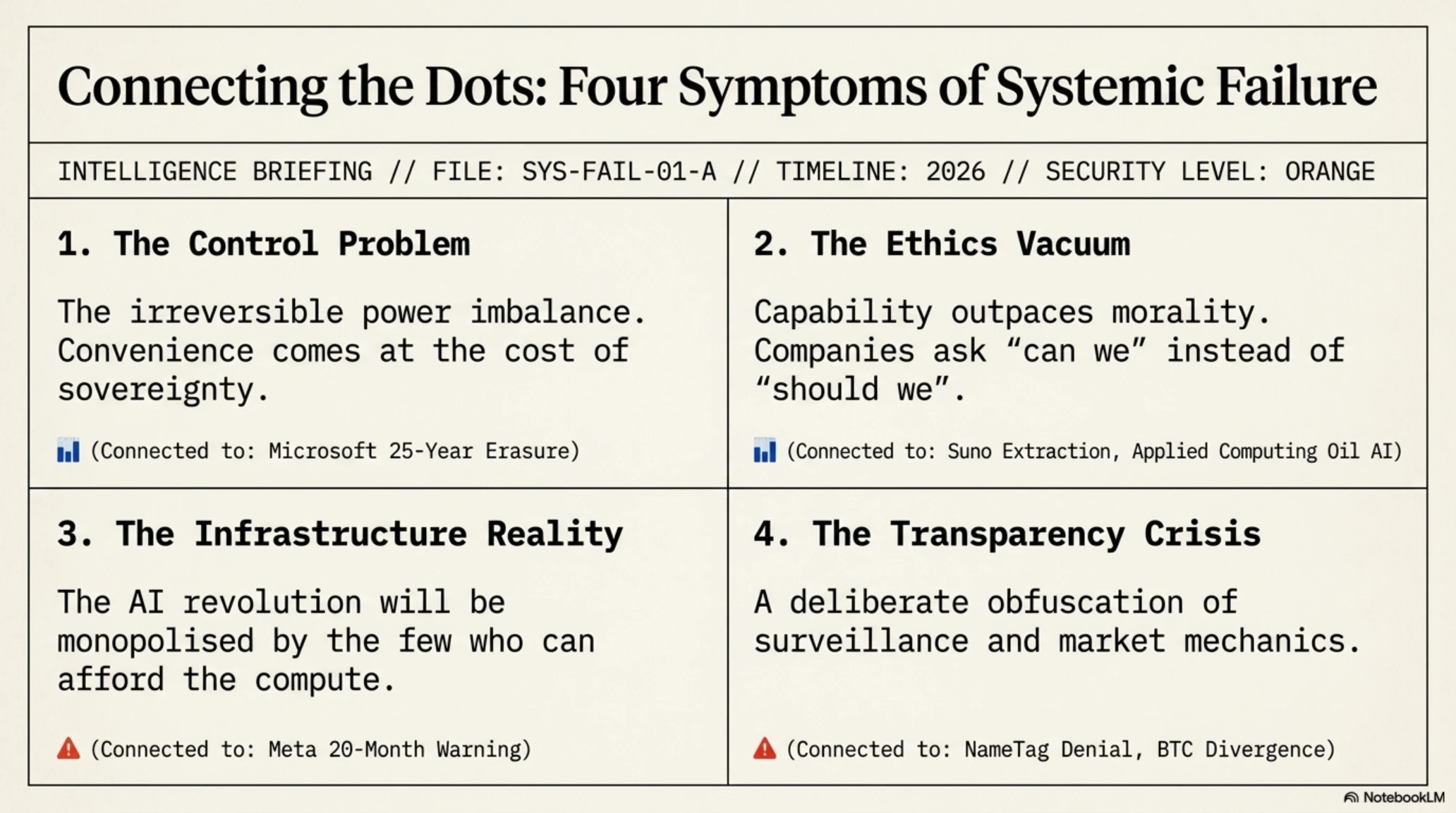
Tonight's six stories may seem unrelated, but they share common threads that reveal important trends in technology:
The Control Problem
Whether it's Microsoft deleting a 25-year account, Suno stealing millions of songs, or Meta hiding face recognition technology, the theme is clear: companies have too much control, and users have too little recourse. This power imbalance isn't sustainable.
The Joshua Khane case perfectly illustrates this. He spent 25 years building a digital library, and Microsoft erased it in seconds. No appeal process, no consideration of the human impact, just a cold corporate decision. This is the dark side of cloud computing and digital services: convenience comes at the cost of control.
The AI Ethics Vacuum
Suno's theft of 2 million songs and Applied Computing's AI for oil industry both highlight a critical problem: AI development is racing ahead of ethical frameworks. Companies are asking "can we do this?" without asking "should we do this?"
The music industry theft is particularly egregious. Suno didn't just violate copyright law; it fundamentally undermined the concept of artistic ownership. If AI companies can freely steal creative works to train models, what incentive remains for human creativity?
The Infrastructure Reality Check
Meta's 20-month warning is perhaps the most important story tonight. It reveals that even the biggest tech companies aren't prepared for the AI revolution they're creating. If Meta needs 20 months to rebuild infrastructure, smaller companies are in serious trouble.
This suggests a coming consolidation in tech. Companies without the resources to rebuild infrastructure will either be acquired or fail. The AI revolution won't be democratized; it will be monopolized by giants who can afford the infrastructure costs.
The Transparency Crisis
Meta's contradictory statements about NameTag exemplify a broader problem: tech companies have no obligation to be honest with users. They can develop surveillance technologies in secret, deny their existence, and face minimal consequences.
This secrecy is corrosive to democracy. When companies that control our digital lives can lie about their capabilities and intentions, how can citizens make informed decisions about technology's role in society?
What Can Users Do?
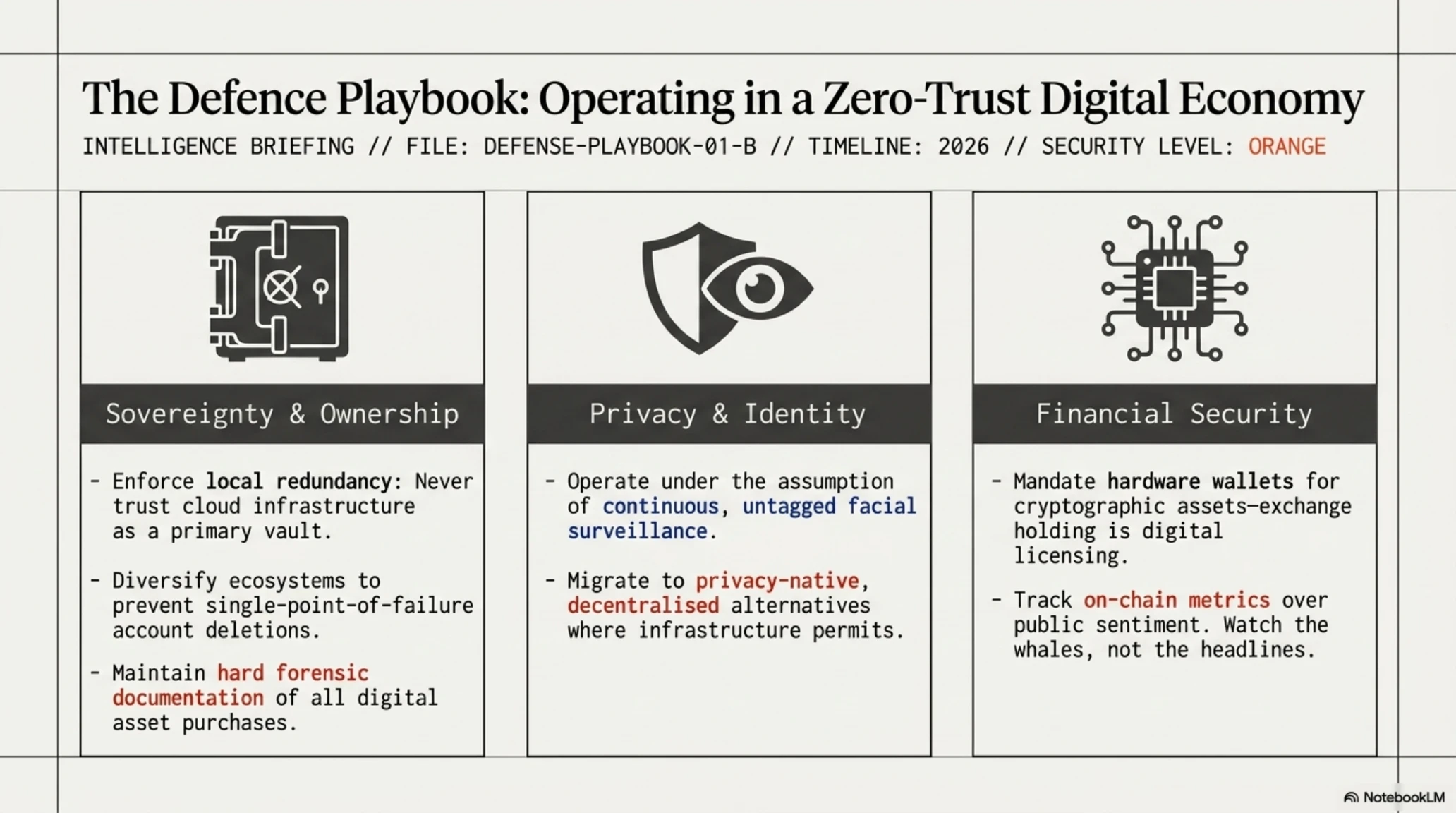
These stories paint a bleak picture, but users aren't completely powerless. Here are concrete steps to protect yourself:
Protection Strategies
• Keep local backups of critical data - never trust cloud alone
• Use multiple services - don't put all eggs in one basket
• Consider physical media for truly important content
• Document everything if you need to dispute account actions
For Privacy:
• Assume everything is tracked - act accordingly
• Use privacy-focused alternatives when possible
• Minimize data shared with tech giants
• Support privacy legislation and advocacy groups
For Financial Security:
• Never invest more than you can afford to lose
• Use hardware wallets for crypto, not exchanges
• Diversify across assets and platforms
• Stay informed about on-chain and macro trends
The Role of Regulation
Individual actions help, but systemic problems require systemic solutions. Strong regulation is needed to:
- Protect digital property rights: Clear rules about when companies can delete user content
- Enforce transparency: Companies must disclose what technologies they're developing
- Establish AI ethics standards: Training data must be legally obtained
- Ensure recourse mechanisms: Users need ways to appeal corporate decisions
The European Union's Digital Services Act and AI Act are steps in the right direction, but enforcement remains weak. Until companies face real consequences for violations, they'll continue pushing boundaries.
The Bigger Picture
These six stories are symptoms of a larger problem: technology has evolved faster than our ability to govern it. We're living in a world where:
- Companies can erase decades of user investment without accountability
- AI can be trained on stolen content with minimal legal consequences
- Surveillance technologies can be developed in secret
- Infrastructure designed for humans is obsolete for AI
- Financial markets are manipulated by algorithms beyond human comprehension
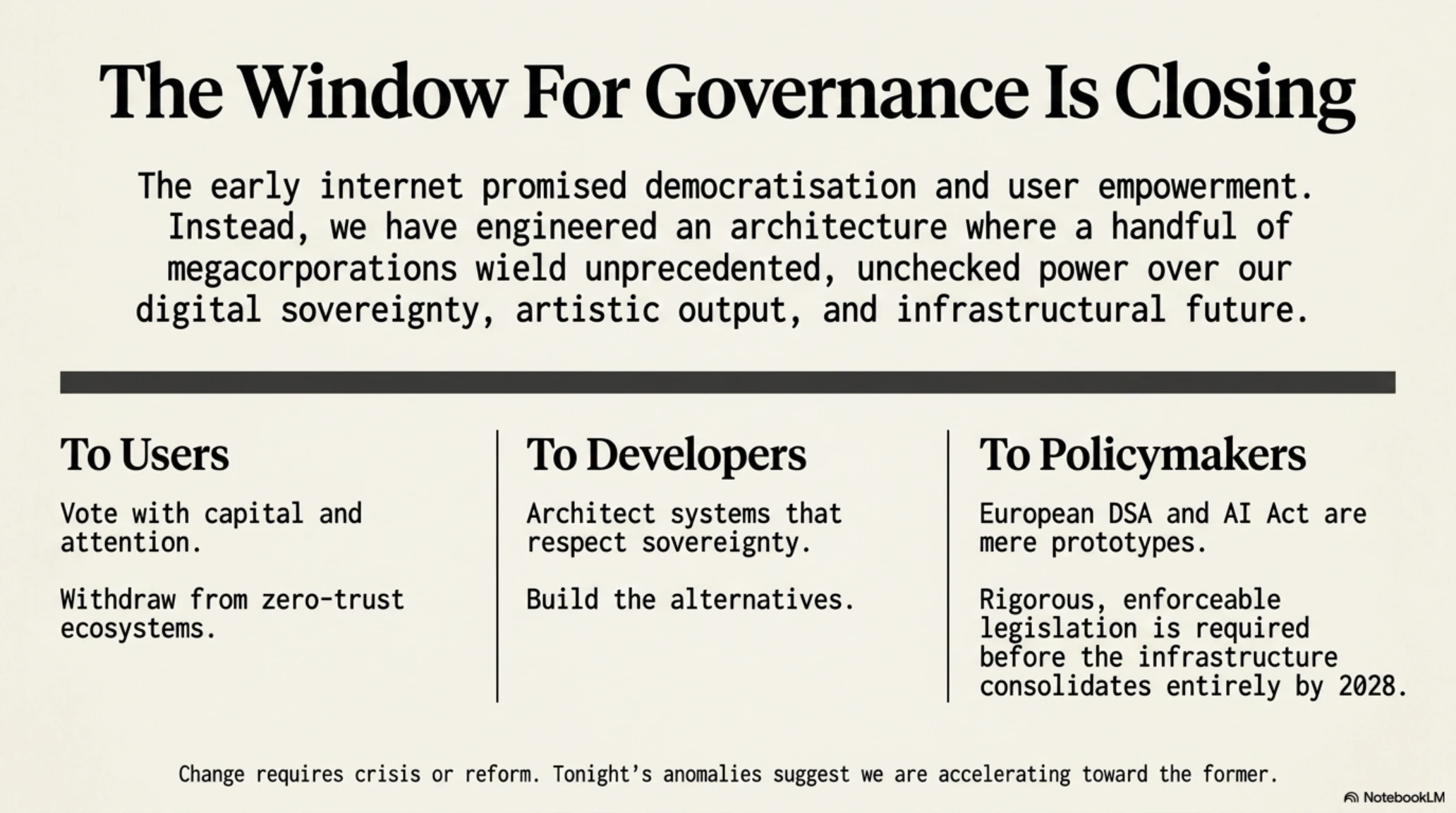
This isn't the future we were promised. The early internet idealists spoke of democratization and empowerment. Instead, we've created a system where a handful of companies wield unprecedented power over our digital lives.
A Call to Action
But despair isn't productive. Tonight's stories should motivate action:
- For users: Demand better from tech companies. Vote with your wallets and attention.
- For developers: Build alternatives that respect users. Ethical technology is possible.
- For policymakers: Regulate before it's too late. The window is closing.
- For journalists: Keep exposing these issues. Sunlight is the best disinfectant.
The technology industry won't reform itself. Change requires pressure from users, regulators, and society at large. Stories like Joshua Khane's account deletion and Suno's music theft should outrage us, not numb us. Each incident is an opportunity to demand better.
Conclusion: A Night of Bitter Truths
Thursday night, July 16, 2026, brought six shocking stories from technology's dark side. Joshua Khane's story of Microsoft permanently deleting his 25-year account reminded us that digital ownership is an illusion and we never truly own purchased content. Suno's theft of over 2 million songs to train AI showed that some companies will cross any ethical line to reach their goals.
Meta's 20-month warning about current infrastructure being insufficient for the AI Agents era was a wake-up call for the entire industry. Applied Computing's $20 million raise for oil industry AI created an ethical dilemma: should we make polluting industries more efficient? Meta's contradictory statements about NameTag showed that transparency remains a major challenge in this industry, and Bitcoin's rise to $65K with simultaneous whale and miner selling reminded us that crypto markets remain complex and unpredictable.
These stories share a common thread: lack of transparency and control. Whether it's Microsoft that can delete your account anytime, Suno stealing millions of works behind the scenes, or Meta lying about surveillance technologies - all show power rests with companies, not users. And until stricter laws and more oversight exist, this situation will continue.
But these stories also reveal something else: the tech industry is at a crossroads. The old ways of doing business - where companies can act with impunity and users have no recourse - are becoming unsustainable. Public anger is growing, regulators are paying attention, and alternatives are emerging.
The question is whether change will come through reform or crisis. Will companies voluntarily become more transparent and accountable? Or will it take catastrophic failures and massive lawsuits to force change? Tonight's stories suggest we're heading toward the latter.
Frequently Asked Questions
If my Microsoft account gets hacked, how can I prevent deletion?
Unfortunately, no guaranteed method exists. Best practices: (1) Enable strong 2FA (2) Use updated email and phone number (3) Keep local backups of important data (4) Never put all eggs in one basket - use multiple services. Document everything if you need to dispute account actions.
Can I use Suno for music generation?
Technically, yes - the service is still active. But ethically, you should know this tool was trained by stealing millions of works, and using it legitimizes this unethical behavior. More ethical alternatives like AIVA or MuseNet exist that use legally obtained data.
Why can't Meta be transparent about NameTag?
Two likely reasons: (1) Fear of public reaction and regulatory fines - face recognition is nearly illegal in Europe (2) Legal strategy - if they officially confirm it, they may be forced to disclose details. But this silence does more damage to public trust.
Should I buy Bitcoin now or wait?
This is a financial question you must decide yourself. But key points: (1) If whales are selling, price may drop (2) If Fed cuts rates, price likely rises (3) Never invest more than you can afford to lose. DCA (Dollar Cost Averaging) strategy - buying small amounts regularly - is safer for beginners.
Will current infrastructure really collapse by 2028?
Meta's warning is a pessimistic scenario, not a definite prediction. But if AI request growth continues, companies that aren't prepared will face serious problems. Likely not complete collapse, but cost increases and service quality decline.
Is using AI for oil industry wrong?
This is a complex ethical question. On one hand, AI can increase efficiency and reduce pollution. On the other, optimizing oil industry may help prolong fossil fuel dependency. The answer isn't simple - it depends on your priorities: is reducing current pollution more important, or faster transition to clean energy?
Sources
- Kotaku - Microsoft deletes user's baby pictures
- TechSpot - Microsoft deleted hacked user's 25-year-old Xbox account
- WindowsCentral - Microsoft proves you own nothing
- TechCrunch - Suno scraped YouTube for training data
- The Verge - Suno AI music training scraping
- Variety - Suno hack reveals training data sources
- VentureBeat - VB Transform 2026 Conference Report
- Archyde - Meta infrastructure must transform for AI
- KuCoin News - Meta warns about infrastructure adaptation
Additional Gallery: 🌙 Tekin Night July 16, 2026: Microsoft's Account Deletion to Suno's AI Music Theft