☀️ Good Morning! Tekin Morning Wednesday July 15, 2026
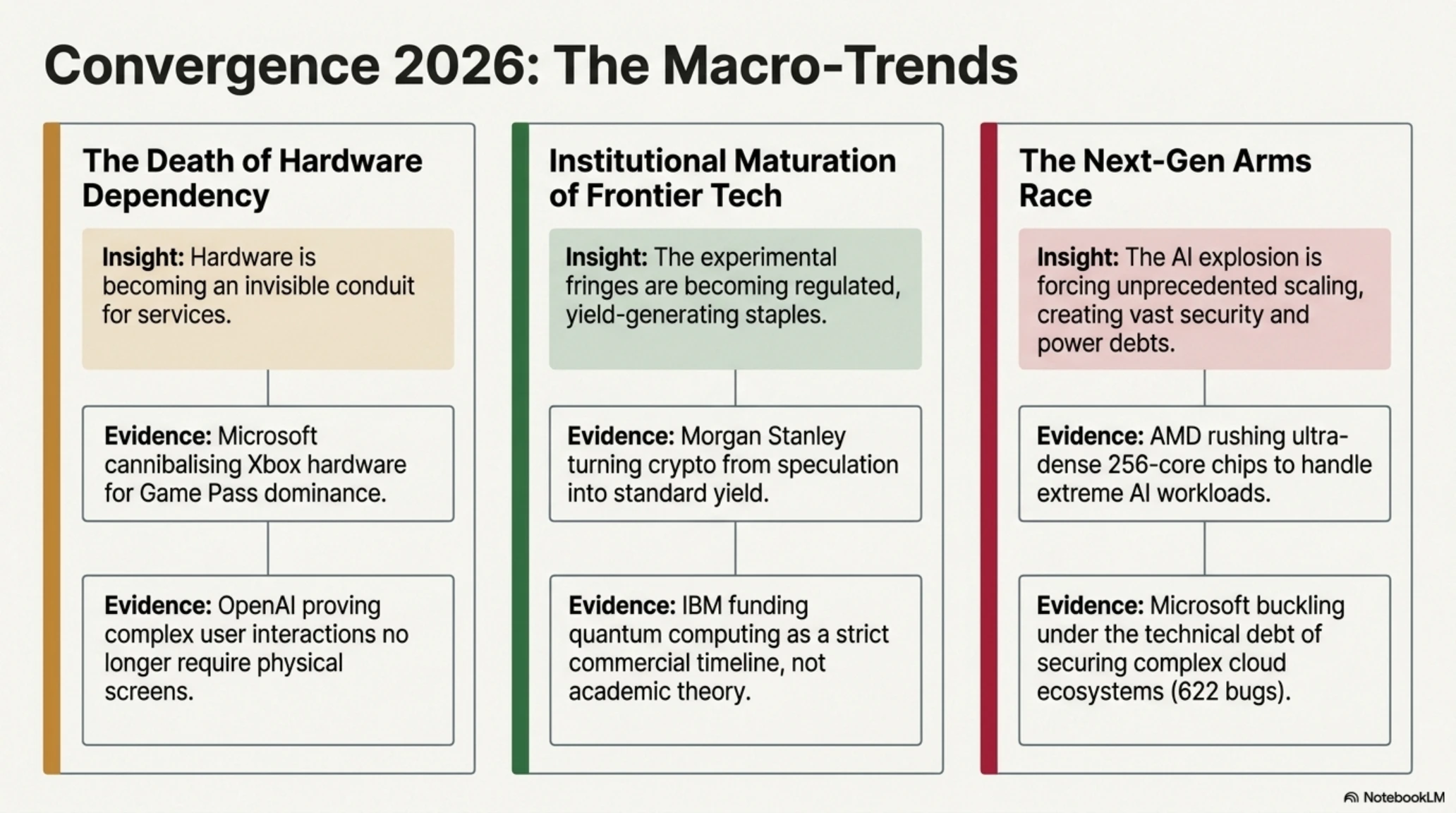
- 🎮622 Microsoft Vulnerabilities- Biggest Patch Tuesday ever with two active Zero-Days
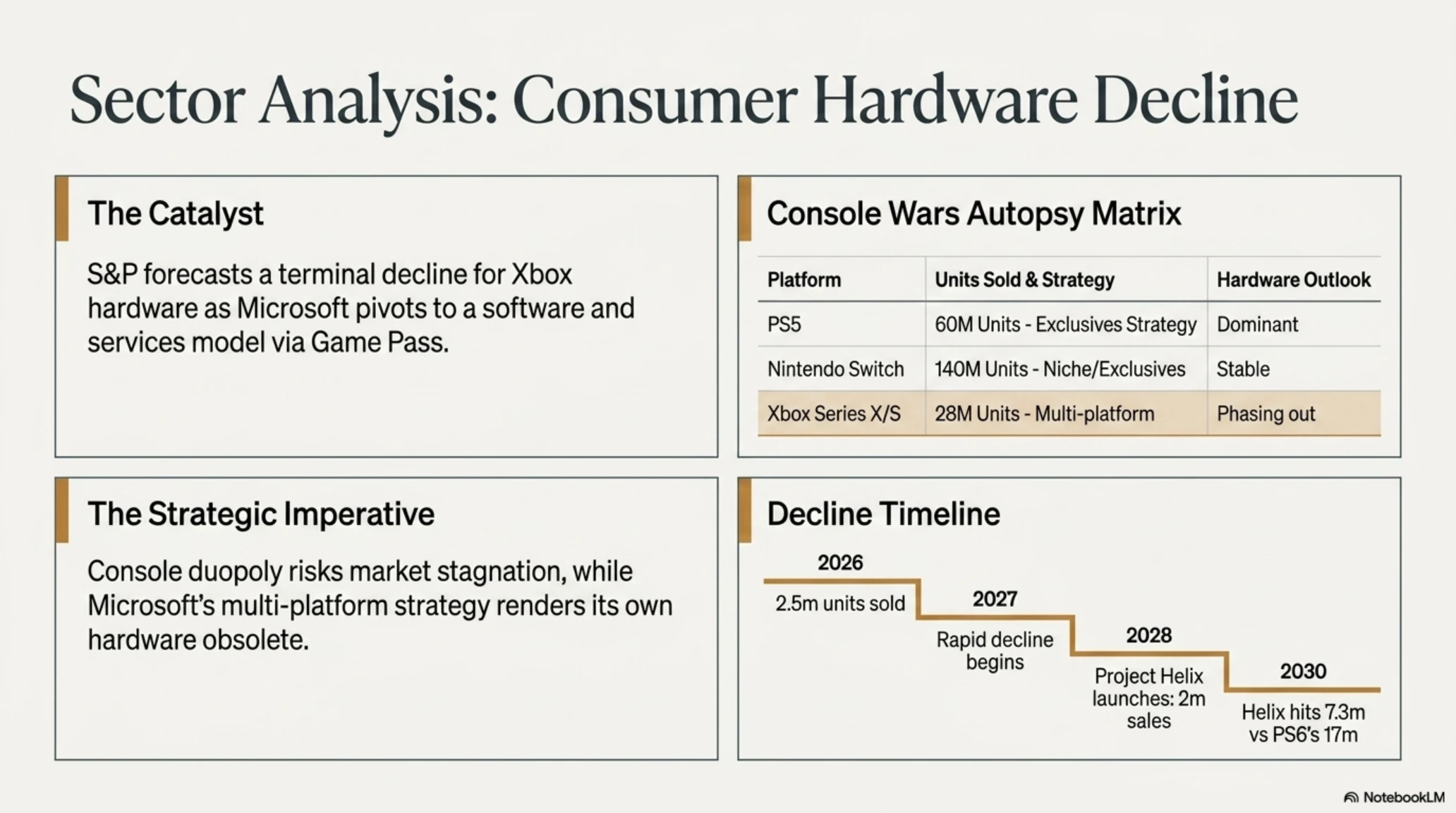
- 🎧Xbox Plummeting to Zero- S&P's dark forecast for Microsoft's console future
- 🚀Ethereum & Solana ETF- Morgan Stanley with 0.14% fee and up to 100% staking
- 🗡️OpenAI Smart Speaker- First consumer hardware without a screen
- 📰$10 Billion from IBM- Massive investment in quantum computing
- ⚔️Zen 6 Venice Processor- AMD with 256 cores and 2nm process
At a Glance
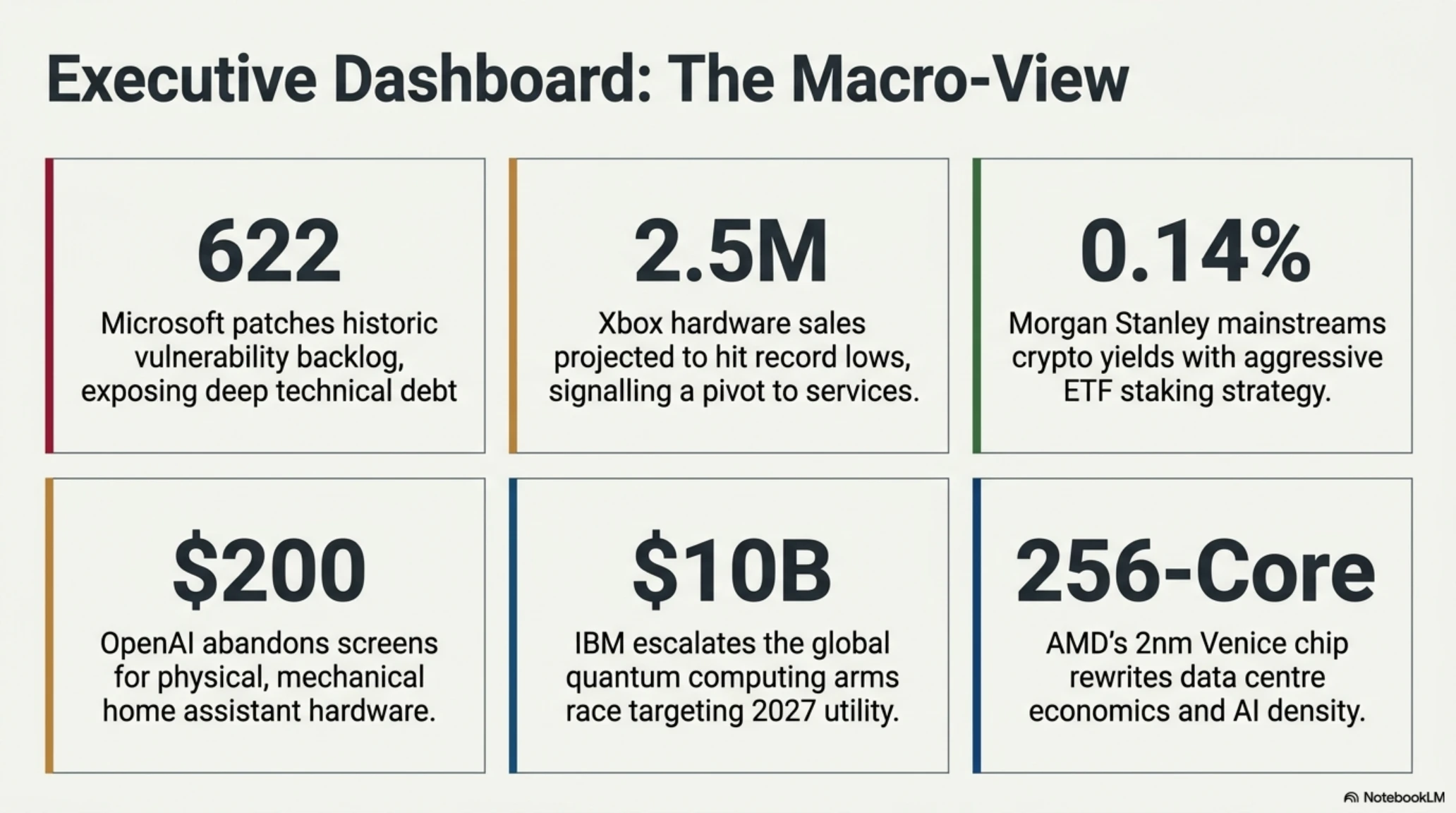
- Microsoft patches 622 vulnerabilities in one day - three times the previous record
- Xbox heading to zero: 2.5 million sales in 2026 and decline thereafter
- Morgan Stanley Ethereum and Solana ETF with 0.14% fee and up to 100% staking
- OpenAI introduces screenless smart speaker with mechanical moving elements
- IBM invests over $10 billion in quantum computing
- AMD unveils Zen 6 processor with 256 cores and 2nm process on July 22
Microsoft Sets Historic Record: 622 Vulnerabilities Patched in One Day
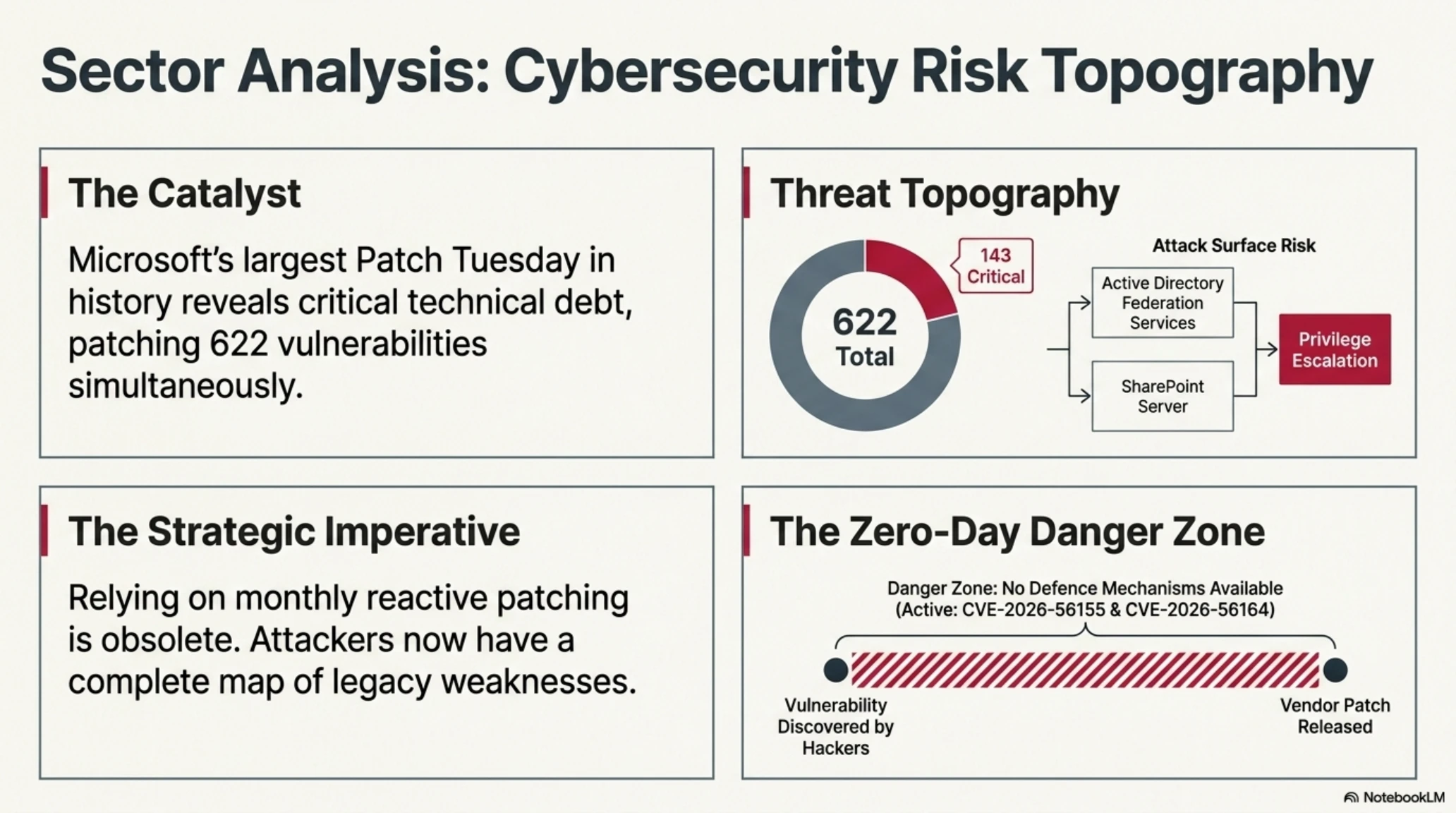
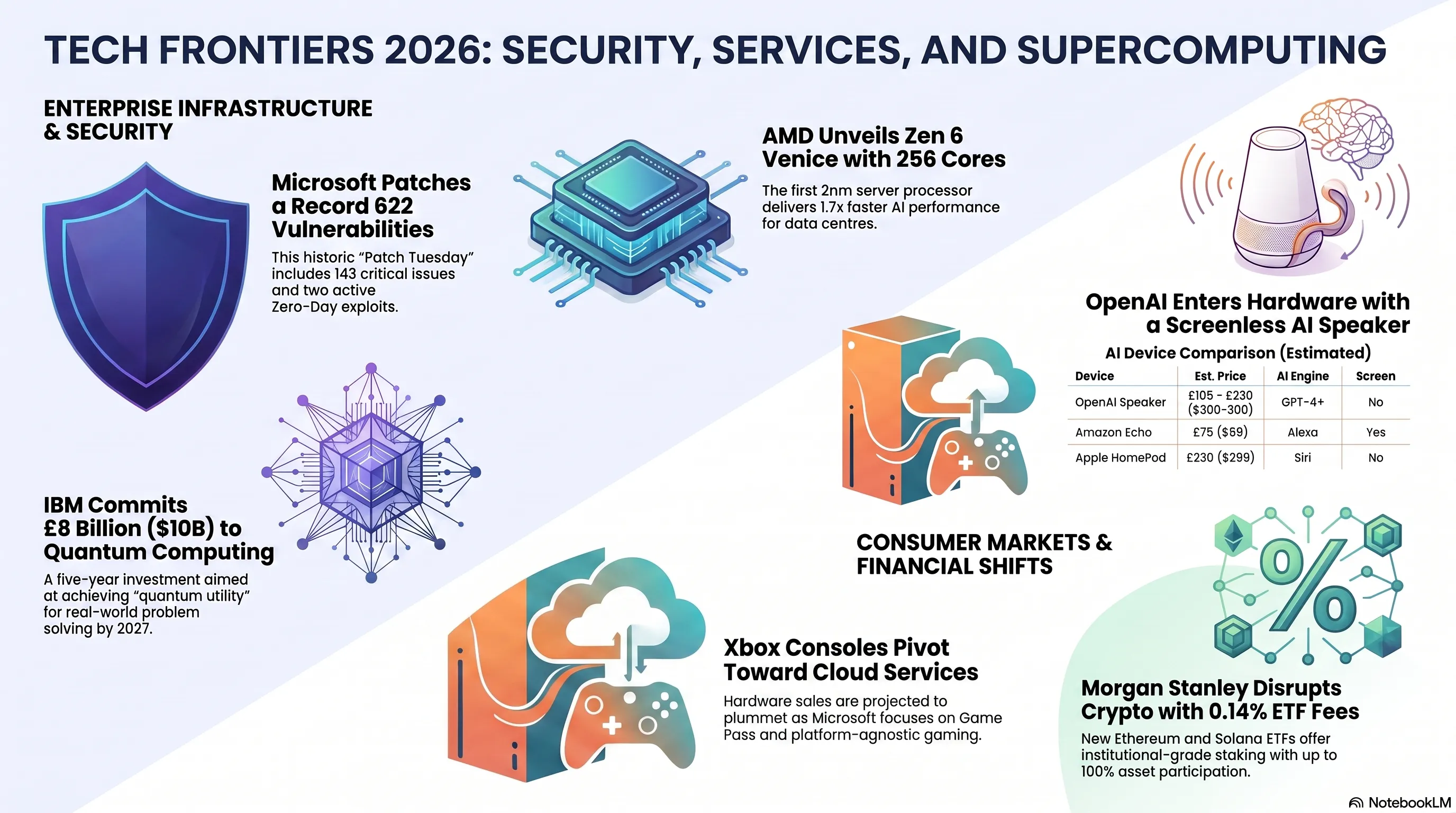
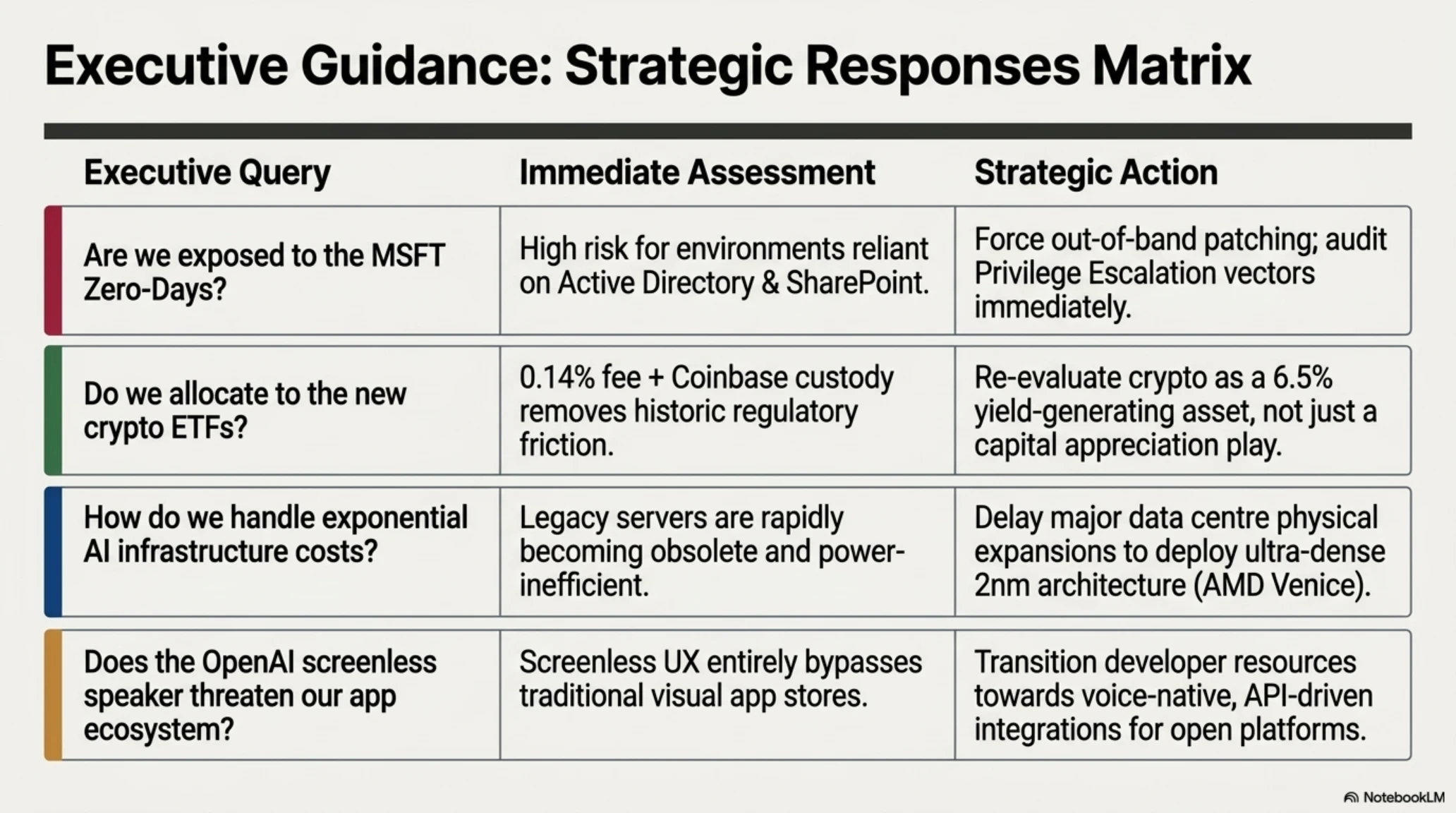
This morning begins with news that has put cybersecurity teams worldwide on high alert. Microsoft released its largest security patch bundle in history during July's Patch Tuesday, patching 622 vulnerabilities in a single day. This number is three times June's record and demonstrates that security challenges in the Windows ecosystem and Microsoft products are dramatically intensifying.
But the more concerning point is the presence of two Zero-Day vulnerabilities currently being actively exploited by hackers. CVE-2026-56155 targeting Active Directory Federation Services and CVE-2026-56164 related to SharePoint Server both enable Privilege Escalation. This means attackers can convert limited access to admin privileges and gain complete system control.
What is Zero-Day?
The Hacker News security team stated in their report that this volume of vulnerabilities represents a worrying trend. Indeed, with the increasing complexity of Microsoft products and integration of cloud services like Azure and Microsoft 365, the attack surface has also expanded dramatically. Cybersecurity experts recommend that all organizations install these security patches as soon as possible, especially those using Active Directory and SharePoint.
Interestingly, among the 622 vulnerabilities, 143 are classified as Critical and the rest fall into the Important category. This means approximately one-quarter of these bugs could lead to data theft, malware installation, or even complete system shutdown. Some affected products include Windows 11, Windows Server 2022, Office 365, Exchange Server, and even Xbox.
Critical Statistics
Who Should Be Worried?
If you're a home user who only uses Windows 11 for gaming and daily tasks, there's no need for serious concern. Windows Update will automatically install these patches. But if you're a network administrator or IT manager for an organization, you need to act immediately. Organizations using Active Directory for employee access management are at serious risk.
Another point is that this volume of vulnerabilities couldn't have been created in one month. This means Microsoft had a huge backlog of security bugs and decided to release them all in one massive bundle. This strategy can have its pros and cons; on one hand, IT teams only need to restart and test systems once, but on the other hand, hackers now have a complete map of Microsoft's weaknesses.
Tekin Analysis
Xbox Console Future Looks Extremely Bleak
Now we move from the world of cybersecurity to gaming, where we don't have good news for Xbox fans. S&P Global Market Intelligence has released a report with truly concerning predictions for Xbox console's future. According to this report, Xbox console sales in 2026 will reach 2.5 million units and then rapidly plummet toward zero.
This comes as the entire console industry is facing a major recession. Console sales are predicted to drop to 27.1 million units in 2027, but Xbox will suffer the most in this recession. Project Helix, expected to be the next-generation Xbox, is predicted to sell only 2 million units in its first year and reach 7.3 million by 2030. In comparison, Sony's PS6 is predicted to sell 10 million more units than Xbox.
The reasons for this decline are multifaceted. First, Microsoft's strategy of putting its exclusive games on rival platforms like PlayStation and Nintendo Switch has left no compelling reason to buy an Xbox console. When Halo, Gears of War, and Forza are all playable on PS5, why would anyone buy an Xbox?
The second reason is Game Pass. While Game Pass is one of the best subscription gaming services, it has simultaneously caused Microsoft to earn less revenue from game sales. Many users prefer to use Game Pass on PC or even Cloud Gaming rather than buying an Xbox console.
Xbox Decline Timeline
Why This Matters
The third reason is the lack of powerful exclusive games. While Sony has a powerful portfolio of exclusive games with Horizon, God of War, Spider-Man, and The Last of Us, Xbox hasn't been able to produce strong AAA games in recent years. Even the Activision Blizzard acquisition hasn't solved this problem, as Call of Duty remains multi-platform.
GameSpot's report shows that even Xbox chief Phil Spencer has indirectly confirmed in recent interviews that Xbox's future is no longer in consoles but in Cloud Gaming and subscription services. This means Microsoft is gradually exiting the hardware market and transforming into a software and service-oriented company.
To better understand the situation, let's look at a comparison of the three major consoles. While PS5 has sold over 60 million units to date and Nintendo Switch has reached the 140 million mark, Xbox Series X/S has only managed to sell around 28 million units. This massive gap shows that gamers no longer see Xbox as a primary option.
- Excellent Game Pass with vast library
- Unmatched backward compatibility features
- Xbox Cloud Gaming for playing anywhere
- Strong PC Gaming support
- Lack of powerful exclusive games
- No differentiation from PC
- Weak sales compared to competitors
- Multi-platform strategy eliminates need for console
The broader implications of Xbox's decline extend beyond just hardware sales. Microsoft's shift represents a fundamental change in how gaming platforms operate. The traditional model of selling consoles at a loss and making profits from game sales and licensing fees is being replaced by a service-based model where the hardware becomes almost irrelevant.
This transition, while potentially profitable for Microsoft in the long term, leaves console gamers in a precarious position. The ecosystem that has thrived on competition and innovation for decades could become stagnant with only two major players. History has shown that monopolies or duopolies rarely lead to consumer-friendly outcomes.
Industry analysts suggest that Microsoft's real play is in becoming the "Netflix of gaming" - a platform-agnostic service that works everywhere. While this strategy makes business sense, it fundamentally changes what Xbox means. No longer a hardware brand, Xbox becomes purely a service identifier, similar to how Microsoft Office transcended the desktop to become a cloud service.
Morgan Stanley Updates Ethereum and Solana ETF with Just 0.14% Fee
In the crypto world, we're witnessing a significant move from one of the world's largest investment banks. Morgan Stanley has updated its S-1 filings for Ethereum and Solana ETFs for the third time, revealing more details about its strategy. This time, Coinbase has been selected as the primary custodian and staking service provider.
The interesting point here is that the management fee for these ETFs is only 0.14%, which is significantly lower than many Bitcoin ETFs currently on the market. This could be a game-changer because institutional investors are always looking to reduce costs, and this fee rate is truly competitive.
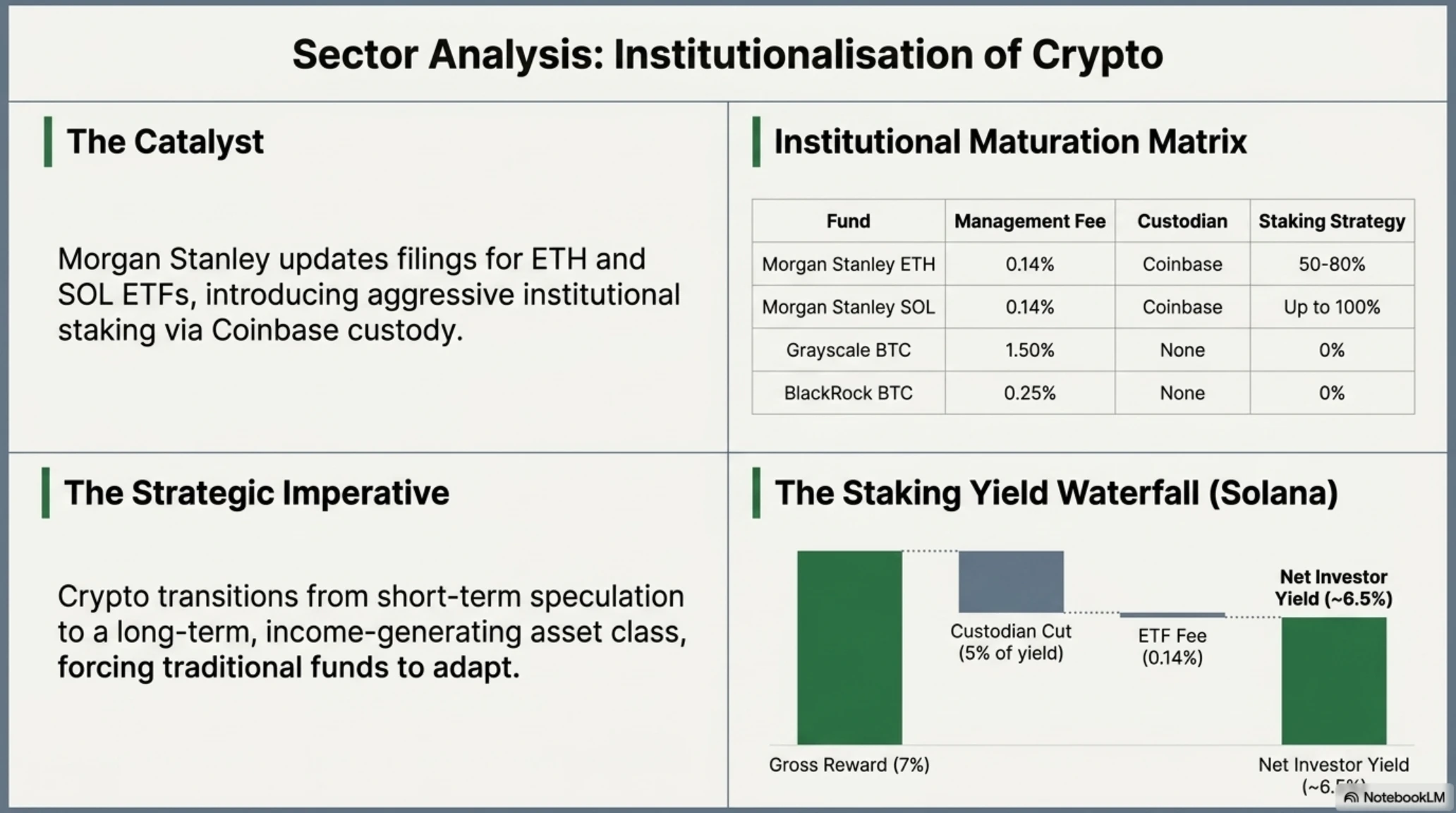
But the really fascinating aspect is the staking strategy. Morgan Stanley has announced that the Ethereum ETF intends to stake 50 to 80 percent of its assets, while the Solana ETF can stake up to 100 percent of assets. This means investors will benefit from staking rewards in addition to price appreciation. According to the filing, 95 percent of staking rewards will go to the trust, with only 5 percent deducted as staking fees.
For better understanding, let's calculate: if Ethereum's staking reward is currently around 3.5% annually, the ETF investor would receive approximately 3.3% staking yield after deducting the 5% staking fee. For Solana, which has a staking reward of around 7%, this number reaches 6.6%. Now if we combine this with the 0.14% management fee, we still have a very attractive net return.
Crypto ETF Comparison
| ETF | Fee | Staking | Total Yield |
|---|---|---|---|
| Morgan Stanley ETH | 0.14% | 50-80% | ~3.2% |
| Morgan Stanley SOL | 0.14% | Up to 100% | ~6.5% |
| Grayscale BTC | 1.5% | - | 0% |
| BlackRock BTC | 0.25% | - | 0% |
What is Staking?
Bitcoin.com noted in its report that this Morgan Stanley move could trigger a new wave of institutional entry into the crypto market. Until now, many pension funds and banks have avoided direct entry into crypto due to technical complexities and regulatory concerns. But now with a regulated ETF, credible custodian like Coinbase, and competitive fees, there's no excuse for not entering.
Another point is that Morgan Stanley's choice to include Solana alongside Ethereum is very smart. Solana has become known in recent years as a fast and cost-effective platform for DeFi and NFT, and many developers and projects have migrated from Ethereum to Solana. With both ETFs, investors can have a diversified portfolio.
One of the main concerns about staking is security risk. But with the selection of Coinbase, one of the world's largest and most reputable exchanges, this concern is largely addressed. Coinbase has necessary licenses from US regulatory bodies and a strong security track record. Of course, this doesn't mean zero risk, but it's certainly much safer than direct individual custody.
Another interesting point is the difference in staking strategy between Ethereum and Solana. Ethereum only stakes 50-80% of assets, while Solana will stake up to 100%. This is due to differences in the staking mechanisms of these two networks. In Solana, unstaking is faster and assets can be quickly freed if needed, while in Ethereum this process is more time-consuming.
The regulatory landscape for crypto ETFs has evolved significantly since the first Bitcoin ETF approvals. The SEC's increasing comfort with crypto products, combined with clearer guidelines on custody and staking, has paved the way for more sophisticated products like Morgan Stanley's offering. This represents a maturation of the market from pure speculation to income-generating investment vehicles.
Tekin Analysis
OpenAI Introduces Its First Hardware Device: A Screenless Smart Speaker
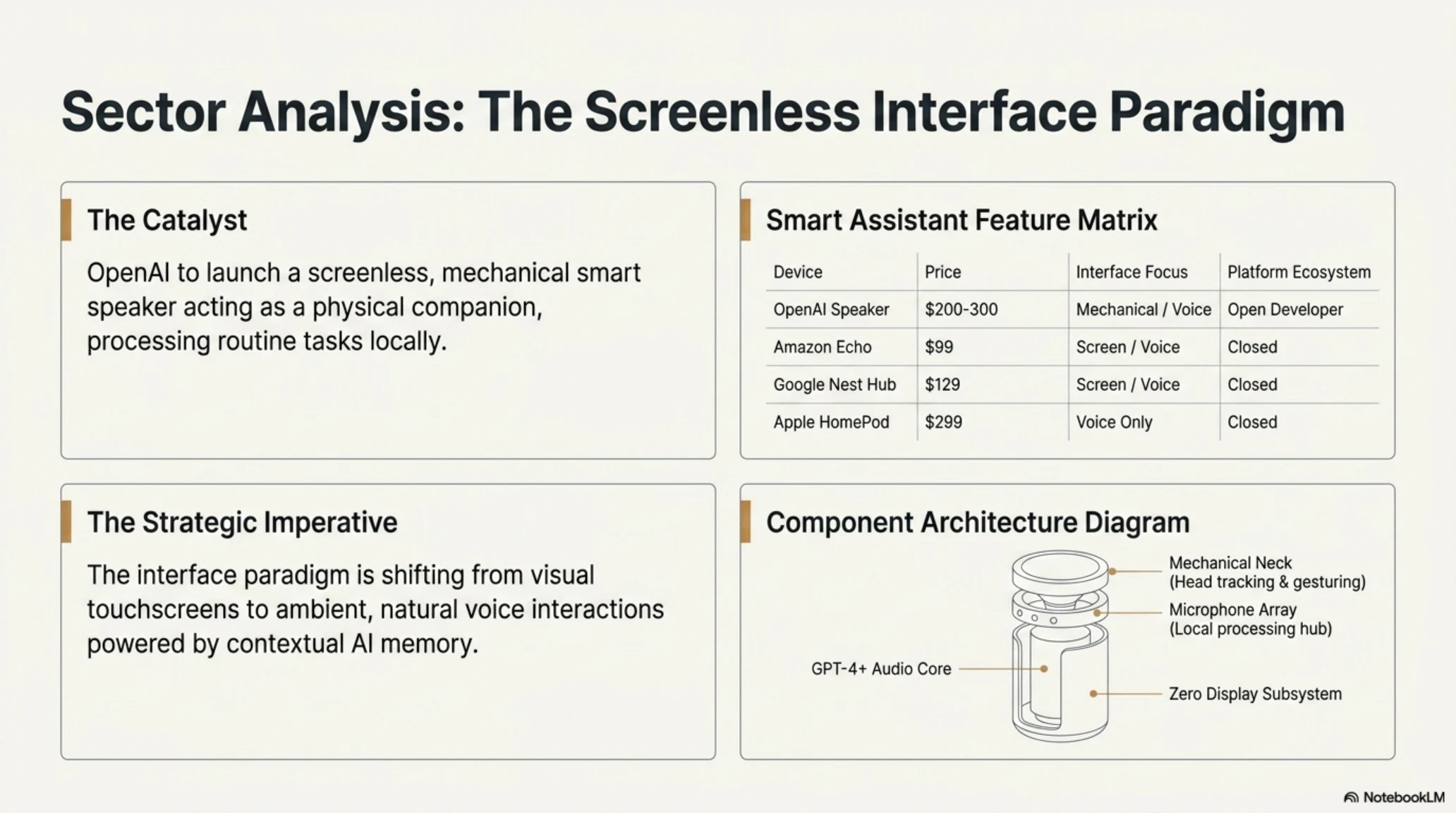
Now we come to one of today's most fascinating news items. OpenAI, which has only operated in the software domain until now, intends to enter the hardware arena. According to Forbes' report, this company's first hardware product will be a smart speaker without a screen, designed as a human-like AI companion.
This device will be portable, equipped with mechanical moving elements, and capable of controlling home appliances, playing music, and answering questions. In other words, OpenAI wants to be a serious competitor to Amazon Echo and Google Home, but with one major difference: utilizing the power of GPT-4 and more advanced language models.
Imagine having a device that not only answers simple questions but can understand complex conversations, remember context, and even make proactive suggestions. For example, when you wake up in the morning, the device can provide a summary of important daily news, weather conditions, and your appointments, all with a natural and human-like voice.
The interesting point here is that OpenAI decided to design this device without a screen. This decision goes against the prevailing industry trend where everyone is moving toward adding displays. But OpenAI believes that focusing on a pure audio experience can lead to more natural and less distracting interaction.
📚 Classified & Related Dossiers in TekinGame
If you wish to explore beyond this report and delve into cybernetic frontiers and autonomous AI architectures, do not miss these three exclusive deep-dives in the Tekin Garage:
The mechanical moving elements are another attractive feature of this device. Imagine a speaker that turns its head toward you when talking or shows different emotions with subtle movements. This could help create an emotional connection between user and device.
This device is predicted to be released in late 2026, with a price likely in the $200-300 range. Of course, OpenAI hasn't announced exact pricing details yet, but given the intense competition in this market, the price must be competitive.
Why This Matters
Another point is that OpenAI intends to release this device as an open platform, meaning third-party developers can build new applications and skills for it. This could quickly create a powerful ecosystem and transform the device from a simple speaker into a central smart home hub.
One of OpenAI's main challenges will be competing with existing giants like Amazon and Google. These companies have years of hardware manufacturing experience and have built strong ecosystems. But OpenAI has one key advantage: much more advanced artificial intelligence. If it can leverage this advantage well, it can capture a significant market share.
The privacy implications of an AI device this sophisticated are worth considering. OpenAI has committed to processing as much data locally as possible, minimizing cloud reliance for routine tasks. However, complex queries will still require cloud processing. The company plans to offer transparent privacy controls and end-to-end encryption for sensitive data.
Another interesting point is OpenAI's entry into the hardware market shows the company is diversifying its revenue model. Until now, OpenAI has primarily earned revenue from API and ChatGPT Plus subscriptions, but now it wants to enter the hardware market, which has higher profit margins.
Smart Assistant Comparison
| Assistant | Price | Screen | AI |
|---|---|---|---|
| OpenAI Speaker | $200-300 | ❌ | GPT-4+ |
| Amazon Echo | $99 | ✅ | Alexa |
| Google Nest Hub | $129 | ✅ | Gemini |
| Apple HomePod | $299 | ❌ | Siri |
The device's mechanical elements represent a return to physical computing in an increasingly digital world. While screens have dominated the past decade, there's growing recognition that not all interactions need visual feedback. Voice, movement, and presence can create equally compelling experiences, especially in home environments where multitasking is common.
OpenAI has reportedly partnered with several industrial design firms and robotics experts to perfect the mechanical movements. The goal is to make them subtle and natural rather than gimmicky. Early prototypes have focused on head tracking, nodding, and gesture-based responses that feel intuitive rather than programmed.
IBM Announces $10 Billion Investment in Quantum Computing
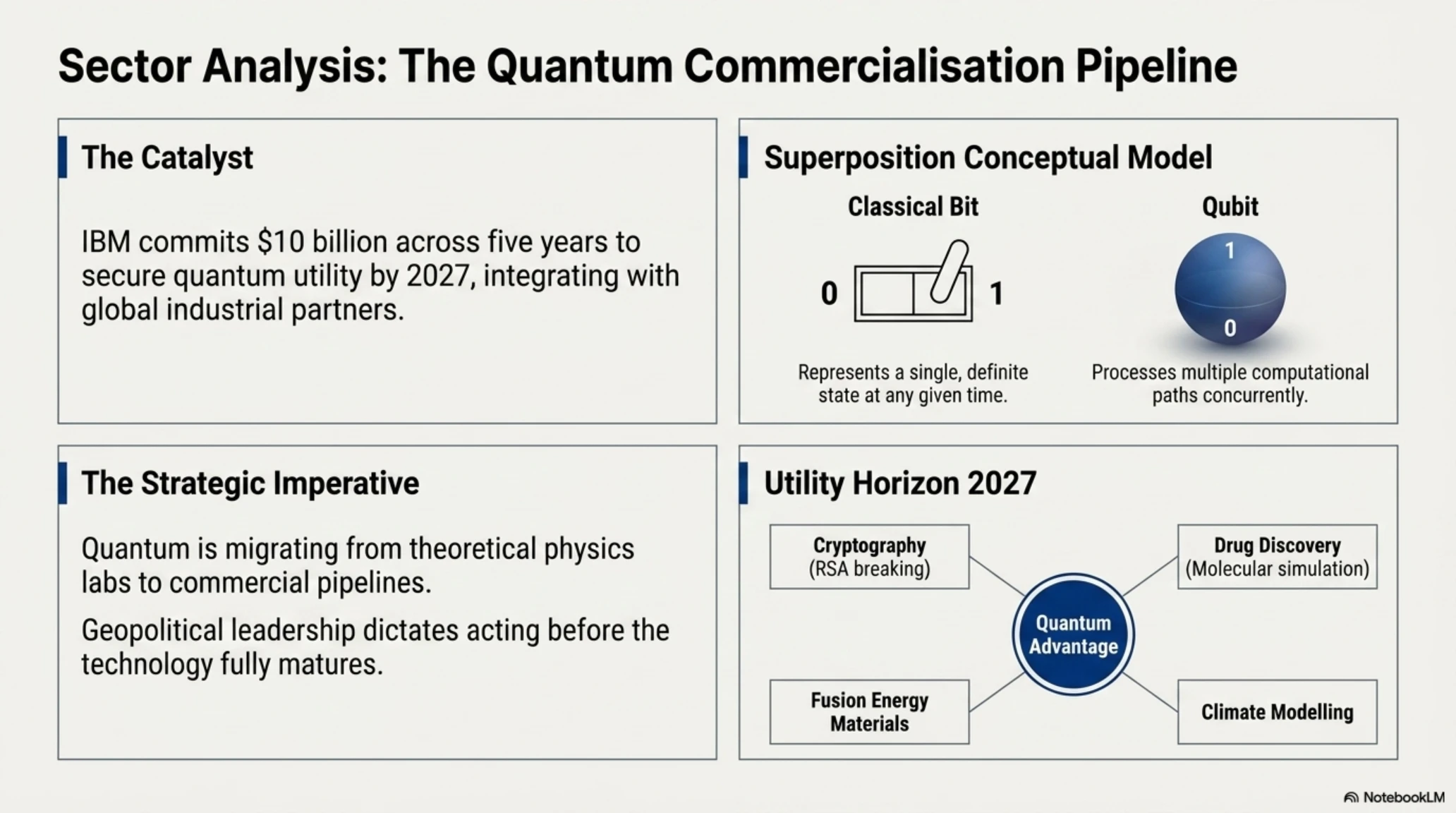
In the world of future technologies, IBM has made a major move. This tech giant has announced it will invest more than $10 billion in quantum computing over the next five years. This investment includes research and development, capital expenditures, production scaling, ecosystem partnerships, and even mergers and acquisitions of smaller companies.
Quantum computing is one of those technologies that could completely transform the world. Unlike classical computers that work with zero and one bits, quantum computers use qubits that can simultaneously be in both zero and one states. This feature allows them to perform extremely complex calculations that would take classical computers years to complete in mere seconds.
One of IBM's recent achievements in this field was collaboration with Cleveland Clinic and Oak Ridge National Lab to perform the first known calculations of fusion energy materials on a quantum computer. This is a major step toward better understanding nuclear reactions and perhaps one day achieving unlimited clean energy.
What is Quantum Computing?
But the question here is: why is IBM investing this much money in a technology that hasn't reached commercialization yet? The answer is simple: because whoever can build a practical quantum computer first will hold the key to a trillion-dollar market. Quantum computing applications range from cryptography and cybersecurity to drug discovery, artificial intelligence, climate modeling, and financial optimization.
Of course, IBM isn't the only player in this arena. Google with its Willow quantum processor, Microsoft with Azure Quantum, and startups like IonQ and Rigetti are all competing to reach Quantum Advantage - the point where a quantum computer can do something no classical supercomputer can.
One of quantum computing's main challenges is the high error rate. Qubits are extremely sensitive and any noise or interference can corrupt calculations. To solve this problem, researchers are working on quantum error correction that allows computers to detect and correct errors. IBM claims that with the $10 billion investment, it can largely solve this problem.
Quantum Computing Applications
- Cryptography: Breaking RSA encryption that's currently impossible
- Drug Discovery: Simulating complex molecules for designing new medicines
- Artificial Intelligence: Training ML models hundreds of times faster
- Climate Modeling: More accurate predictions of climate change
- Financial Optimization: Risk and portfolio management at a new level
- Energy: Simulating fusion reactions and designing better batteries
The interesting point is that IBM announced this investment at a time when many tech companies are reducing their research budgets. This shows that IBM truly believes in this technology and sees it as a long-term investment. Some analysts believe this move could transform IBM back into one of the tech industry leaders.
The quantum computing race has geopolitical implications as well. China has invested heavily in quantum research, viewing it as a strategic technology that could determine future global power dynamics. IBM's $10 billion commitment signals that the United States is taking this competition seriously and won't cede leadership in this critical field.
IBM's roadmap includes achieving "quantum utility" by 2027 - the point where quantum computers deliver practical value for real-world problems, not just laboratory demonstrations. This involves not just building more powerful quantum processors but also developing better software tools, programming languages, and algorithms that can leverage quantum advantages.
Tekin Analysis
AMD to Unveil Zen 6 Venice Processor on July 22
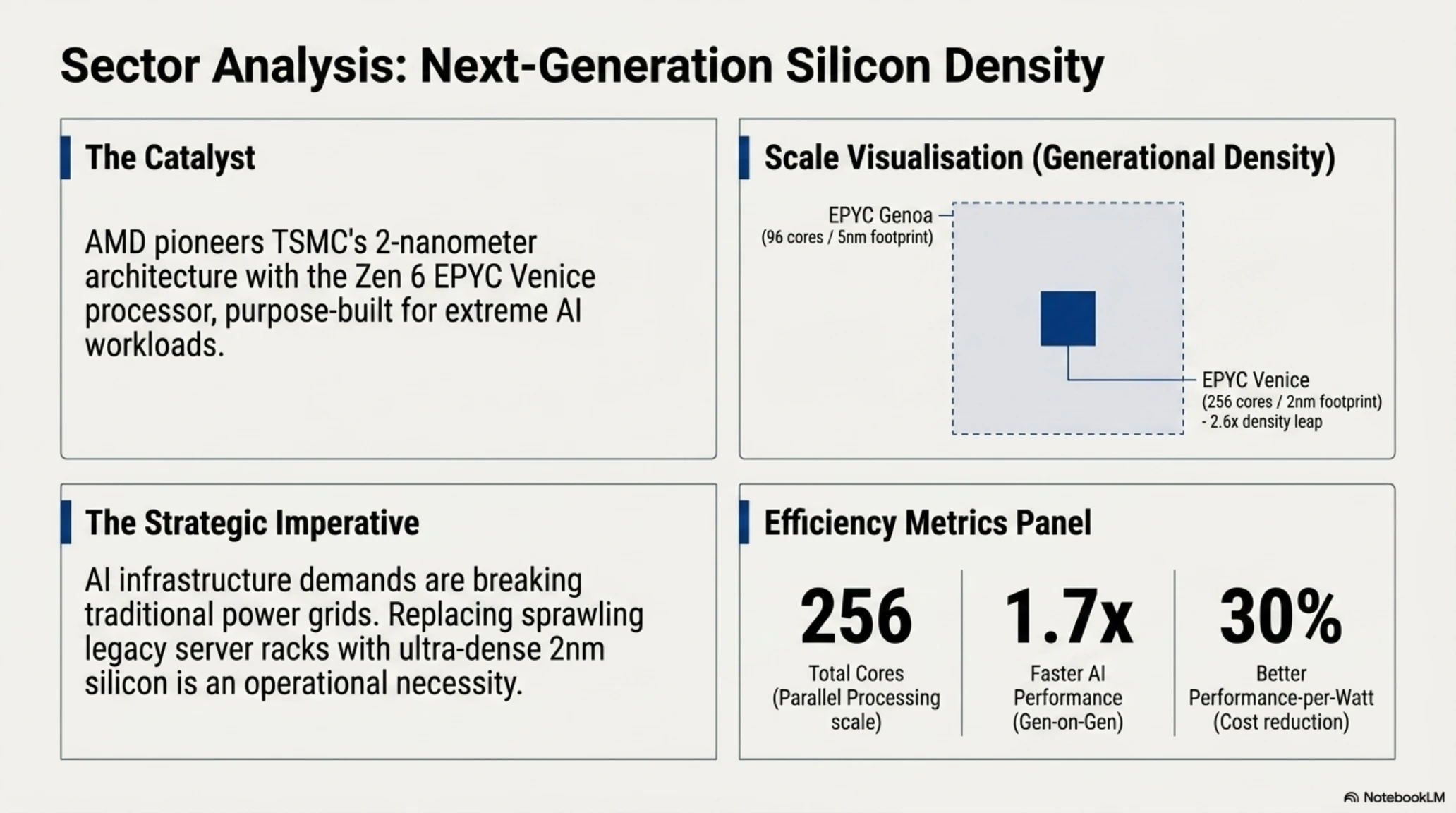
And finally, we have good news for hardware enthusiasts. AMD has announced that at the Advancing AI 2026 event taking place on July 22-23, it will unveil the first Zen 6 generation processors. EPYC Venice will be the first chip with Zen 6 architecture and the first HPC (High Performance Computing) processor built on TSMC's 2-nanometer process.
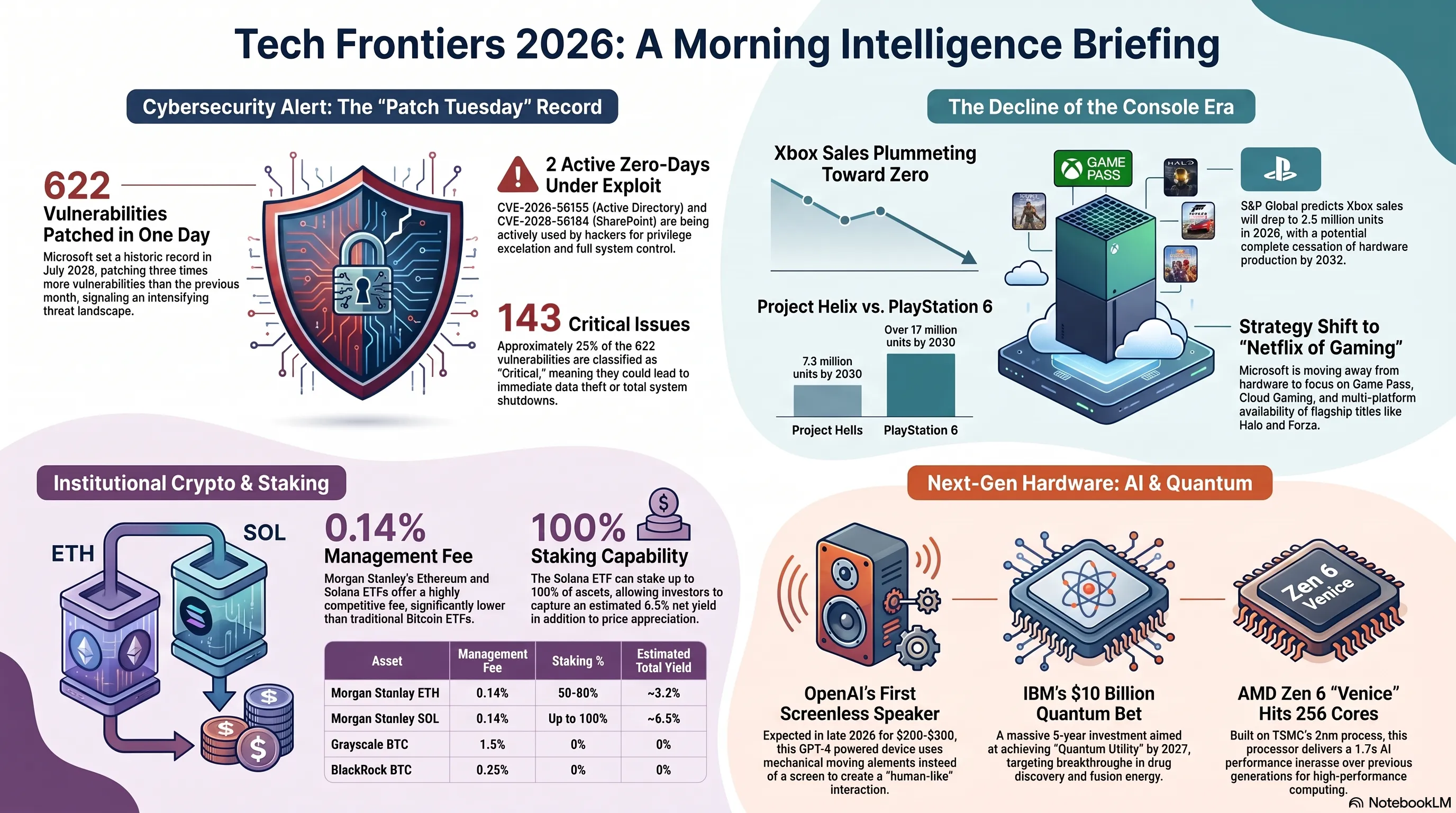
This server CPU features up to 256 cores, which is an extraordinary number for a processor. For comparison, AMD's current flagship, EPYC Genoa, has a maximum of 96 cores. This means AMD has approximately 2.6× increased the core count in one generation.
But core count is only part of the story. AMD has promised that Zen 6 Venice will deliver AI performance up to 1.7 times faster than the previous generation. This is thanks to architectural improvements as well as using the 2-nanometer process that enables higher transistor density and lower power consumption.
TSMC's 2-nanometer process is a major technological leap. To better understand, AMD's current flagship process is 5-nanometer. Going from 5nm to 2nm means approximately twice as many transistors can be placed in the same space, meaning more performance and better energy efficiency.
Technical Specifications
Why 256 Cores Matter
The interesting point is that AMD is making this unveiling at an event titled Advancing AI, not a general hardware conference. This shows that the main focus of Zen 6 Venice is on AI and Machine Learning workloads. In fact, AMD is in direct competition with Nvidia and Intel for dominance in the AI processor market.
Nvidia currently dominates the AI market with its GPUs, but AMD with its combination of powerful CPUs and Instinct GPUs can offer more comprehensive solutions. Especially for applications requiring combined CPU and GPU processing, such as large databases with AI analytics capabilities.
Exact pricing and release date for these processors haven't been announced yet, but AMD is expected to release more details at the July 22 event. Commercial release of these processors will likely be in late 2026 or early 2027, as mass production of 2-nanometer chips is still in early stages.
One of AMD's challenges on this path will be securing 2-nanometer chips from TSMC. Apple is likely the first major customer for this process and may have reserved a significant portion of production capacity. But given AMD's long-term contracts with TSMC, timely supply of these chips is expected not to be problematic.
Another point is competition with Intel. Intel is also working on next-generation processors with Intel 18A process (equivalent to 2-nanometer), but AMD appears to be ahead and can bring its product to market sooner. This could be a major competitive advantage for AMD.
The architectural improvements in Zen 6 go beyond just core count and process node. AMD has redesigned the cache hierarchy, improved branch prediction algorithms, and added new AI-specific instructions that accelerate machine learning workloads. The combination of these enhancements with the density benefits of 2nm technology creates a processor that's not just incrementally better but represents a generational leap.
Data center operators are particularly excited about the power efficiency improvements. With electricity costs being a major operational expense, a processor that delivers 1.7× better AI performance while consuming less power per core could dramatically reduce total cost of ownership. AMD's internal benchmarks suggest Venice could deliver up to 30% better performance-per-watt compared to current generation EPYC processors.
The software ecosystem is also evolving to take advantage of these massive core counts. AMD has been working with major cloud providers, database vendors, and AI framework developers to optimize their software for highly parallel architectures. By the time Venice launches, a rich ecosystem of optimized applications should be ready to leverage its capabilities.
Conclusion
Frequently Asked Questions
Should I be worried about Microsoft vulnerabilities?
If you're a home user with Windows Update enabled, don't worry. The system will automatically install security patches. But if you're an IT manager, you need to immediately deploy these patches in your organization, especially for Active Directory and SharePoint.
Is Xbox really exiting the market?
S&P's forecast shows Xbox is moving toward a software and service-oriented business model. Xbox consoles will likely still exist but with much lower sales and greater focus on Game Pass and Cloud Gaming.
What advantage does crypto ETF have over direct cryptocurrency purchase?
Crypto ETF is suitable for investors who want access to the crypto market without the hassle of wallet custody and security. Also, ETFs offering staking provide additional income.
When can we buy the OpenAI speaker?
According to Forbes' report, this device is predicted to be released in late 2026. Exact price hasn't been announced yet but will likely be in the $200-300 range.
When will quantum computing reach me?
Quantum computers for average users are still years away. This technology is currently only available for scientific research and specialized applications. But cloud quantum services like IBM Quantum Network and Azure Quantum allow developers to experiment with this technology right now.
Is Zen 6 processor suitable for gaming?
Zen 6 Venice is a server processor designed for data centers, not for gamers. But AMD will likely release desktop Ryzen versions based on Zen 6 in the future that will be suitable for gaming.
Sources
- The Hacker News - Microsoft Patches Record 622 Flaws
- GameSpot - Xbox Console Future Looks Bleak
- Bitcoin.com - Morgan Stanley Updates Ethereum and Solana ETF
- Forbes - OpenAI's First Consumer Device Will Be A Smart Speaker
- IBM Newsroom - IBM Commits More Than $10 Billion to Quantum Computing
- ExtremeTech - AMD to Debut First Zen 6 CPUs
Additional Gallery: ☀️ Tekin Morning Wednesday July 15, 2026: From Microsoft's 622 Vulnerabilities to AMD's 256-Core Processor