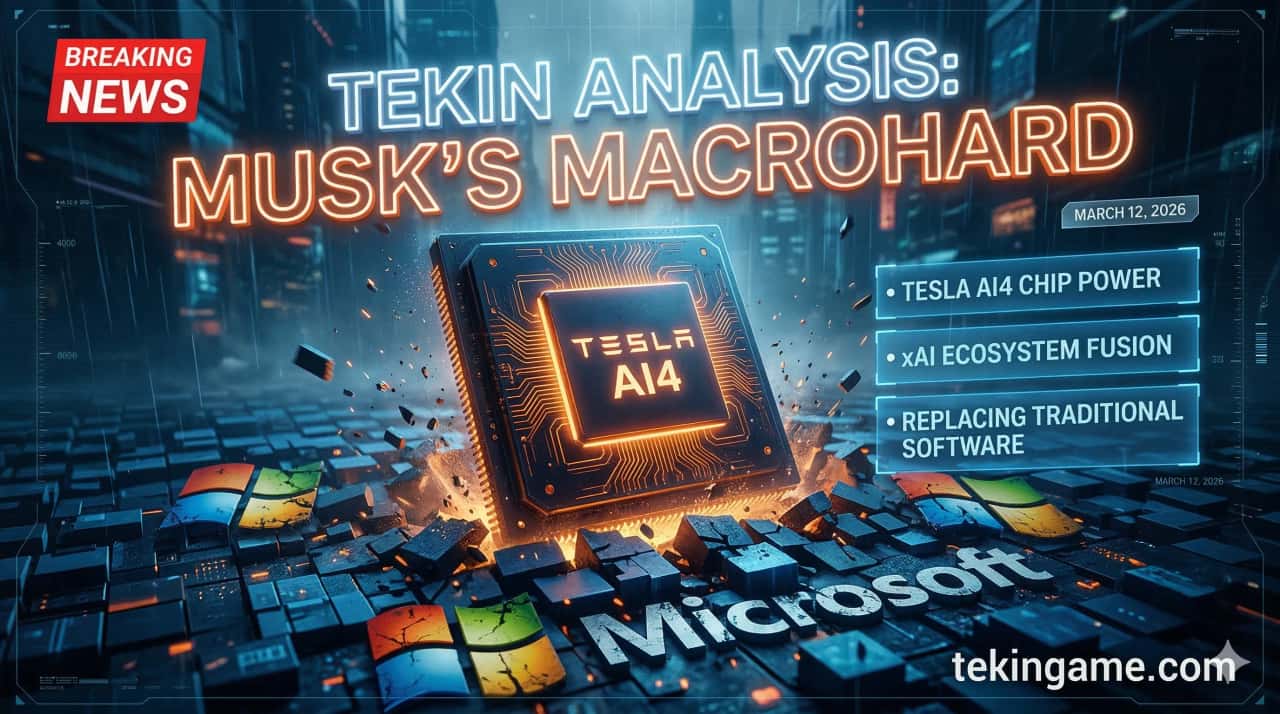
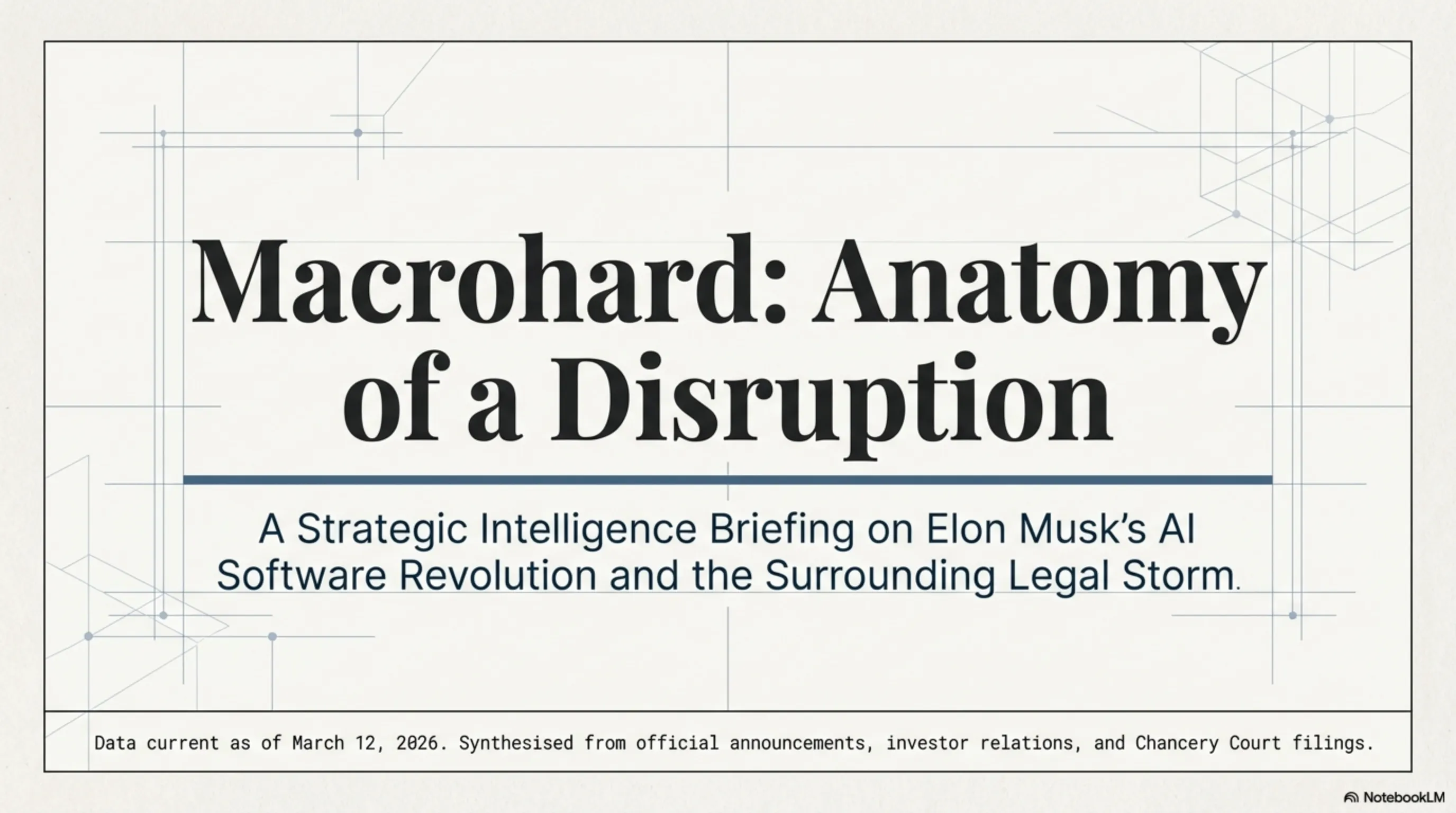
Elon Musk has launched a direct assault on Microsoft with his controversial new project, "Macrohard". By combining Tesla's engineering prowess with xAI's artificial intelligence, Musk claims this system can simulate the functions of entire software companies. This "Tekin Analysis" dissects the bold initiative aimed at using AI to replace human developers, designers, and product managers. Is Macrohard the actual end of human-driven software development, or just another massive bluff in the Silicon Valley AI wars?
On March 11, 2026, Elon Musk detonated a bomb in the tech world that could reshape the entire software industry. The "Macrohard" project — a bitter jab at Microsoft — claims it can simulate the functions of entire software companies using artificial intelligence. But is this a revolutionary innovation or just another one of Musk's grandiose claims?
The Macrohard Project: When AI Wants to Replace Humans
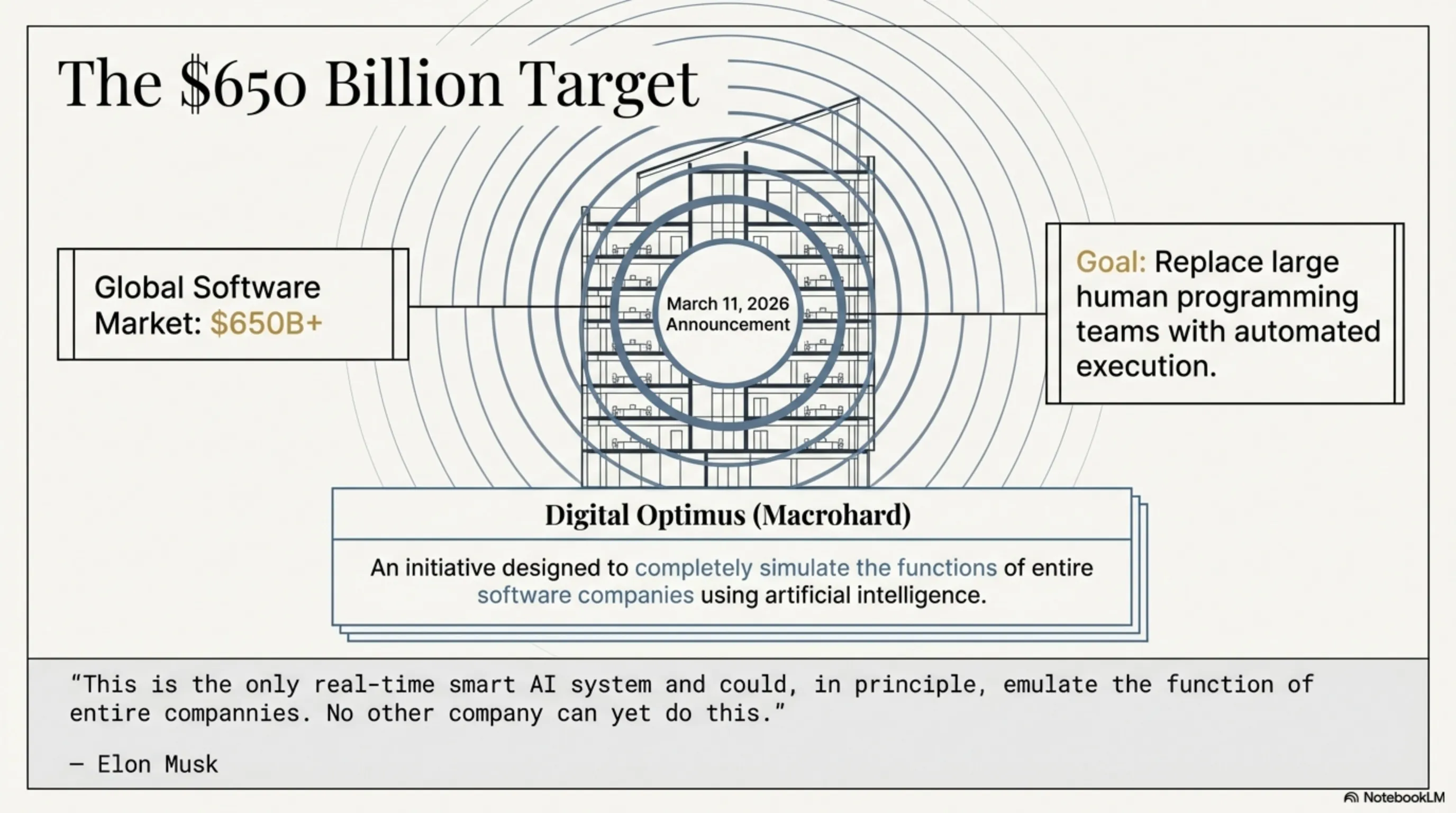
Elon Musk, in a tweet that shook the tech industry, unveiled a joint Tesla-xAI project he called "Digital Optimus" or "Macrohard." This system claims it can "simulate the functions of entire software companies" — a claim that, if true, could threaten millions of jobs and completely transform the $650 billion software industry.
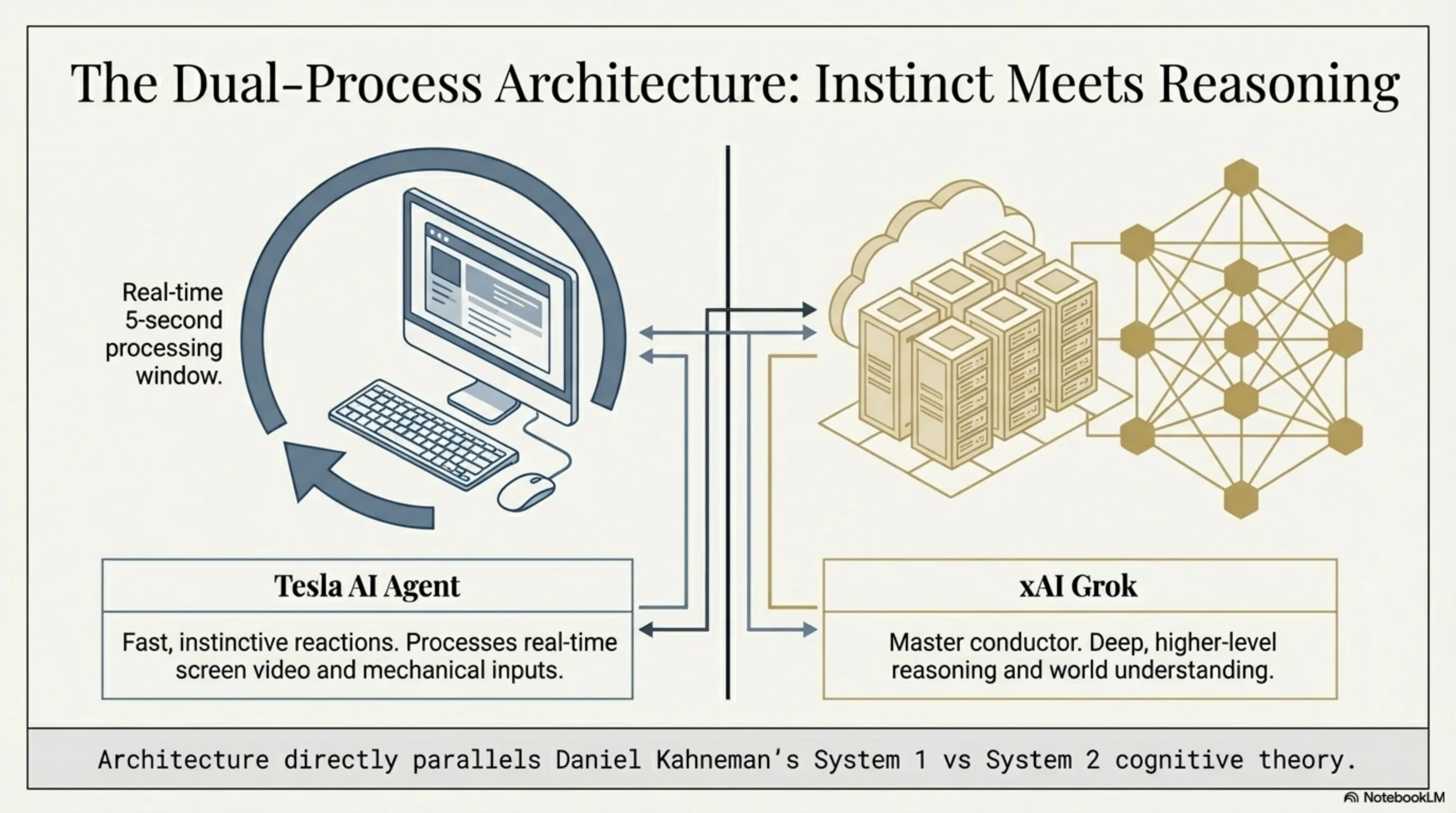
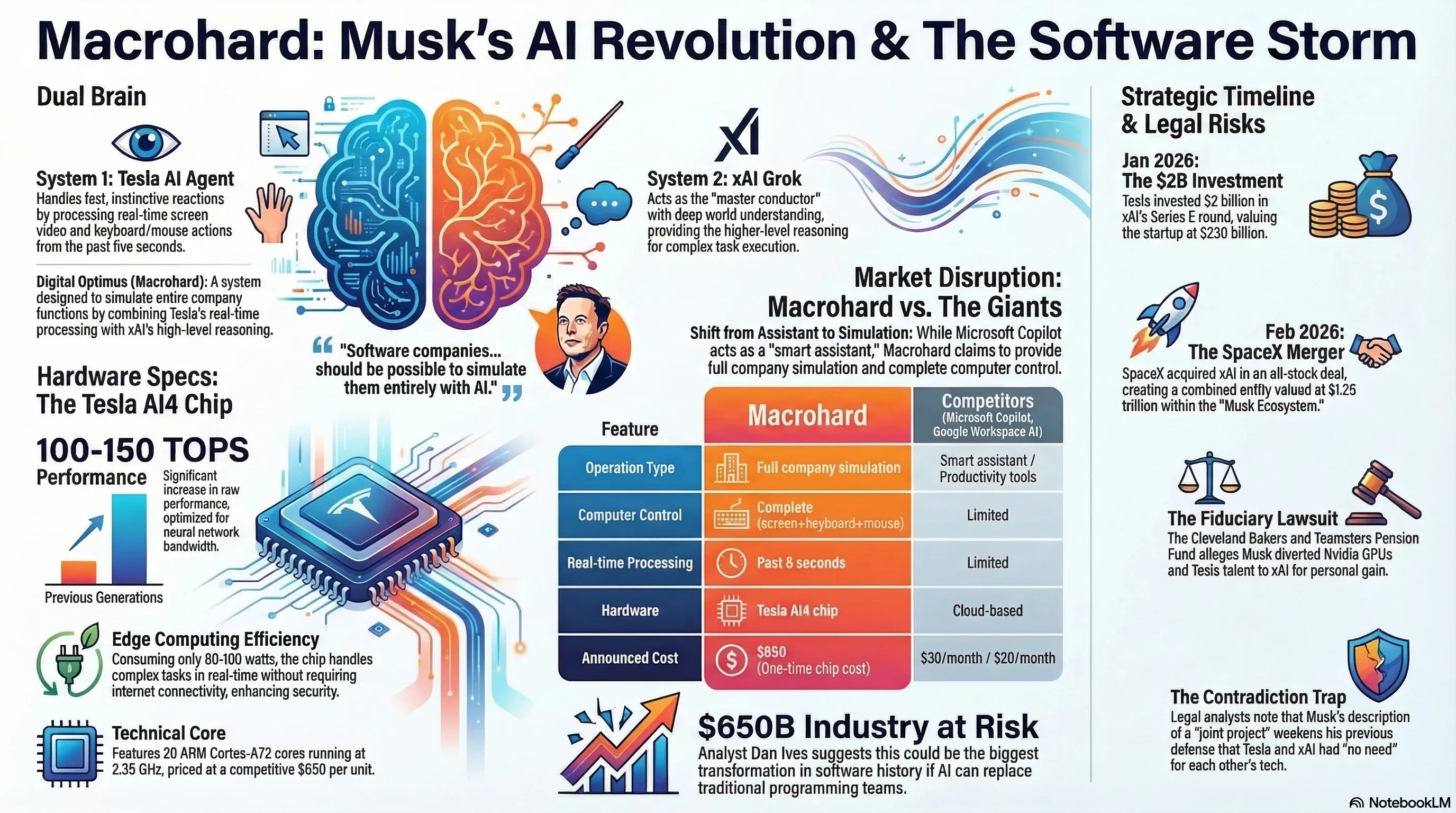
But what exactly is Macrohard? According to Musk's explanation, this system is a combination of two artificial brains: xAI Grok acting as the "master conductor" with deep understanding of the world, and a Tesla-built AI agent that processes real-time screen video and keyboard/mouse actions from the past five seconds. Musk compared this architecture to Daniel Kahneman's dual-process theory: the Tesla component handles fast, instinctive reactions (System 1) while Grok handles higher-level reasoning (System 2).
"This is the only real-time smart AI system and could, in principle, emulate the function of entire companies. No other company can yet do this." — Elon Musk
The name "Macrohard" itself has an interesting story. xAI filed this trademark in late 2025, and Musk has repeatedly used it as a jab at Microsoft. But the underlying objective goes beyond jokes: creating a purely AI-driven software environment that can automatically execute complex tasks typically performed by large human teams.
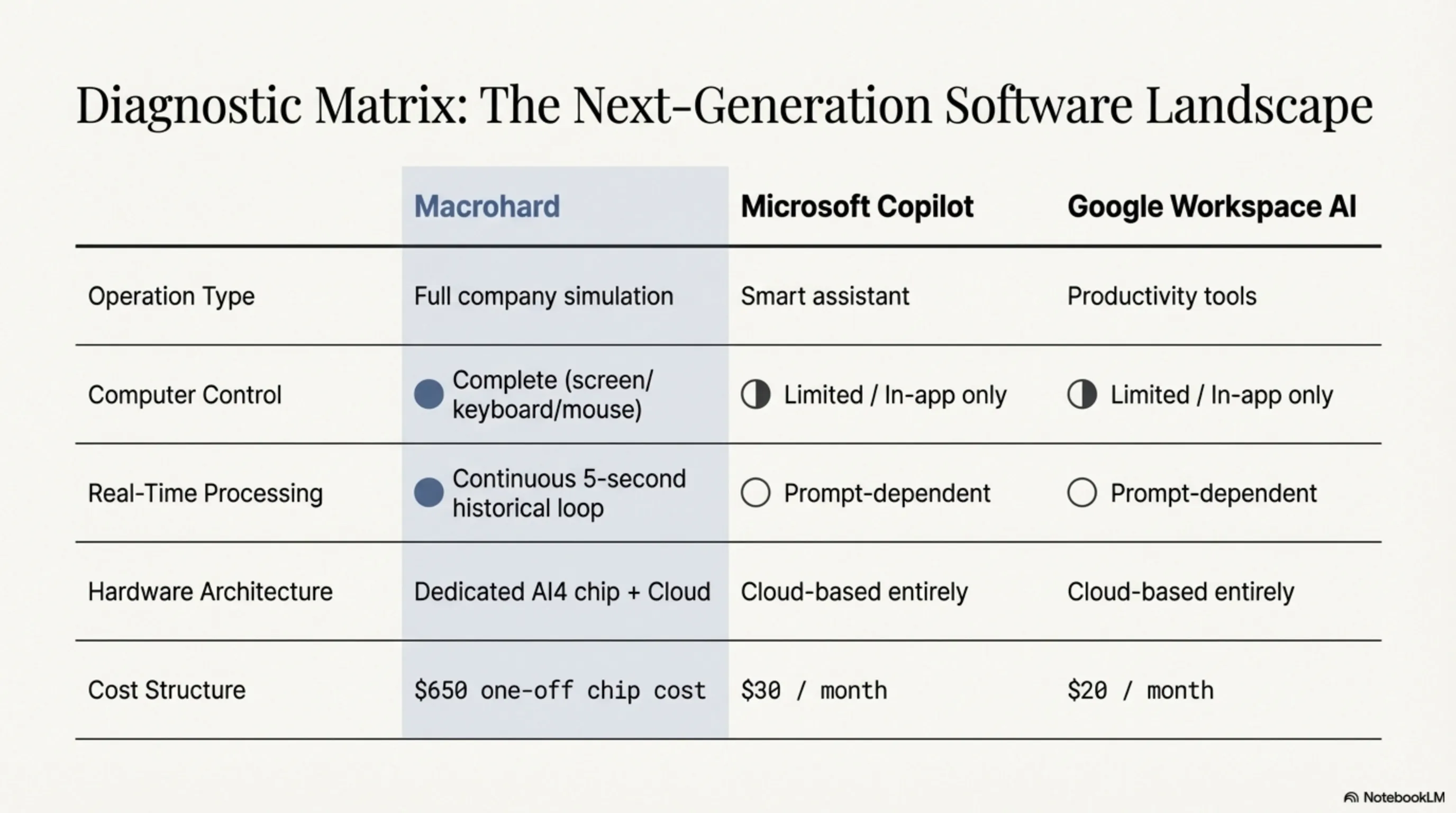
| Feature | Macrohard | Microsoft Copilot | Google Workspace AI |
|---|---|---|---|
| Operation Type | Full company simulation | Smart assistant | Productivity tools |
| Computer Control | Complete (screen + keyboard + mouse) | Limited | Limited |
| Real-time Processing | Past 5 seconds | Limited | Limited |
| Dedicated Hardware | Tesla AI4 chip | Cloud-based | Cloud-based |
| Announced Cost | $650 (AI4 chip) | $30/month | $20/month |
Musk's Strategy: From Tesla to Software Empire
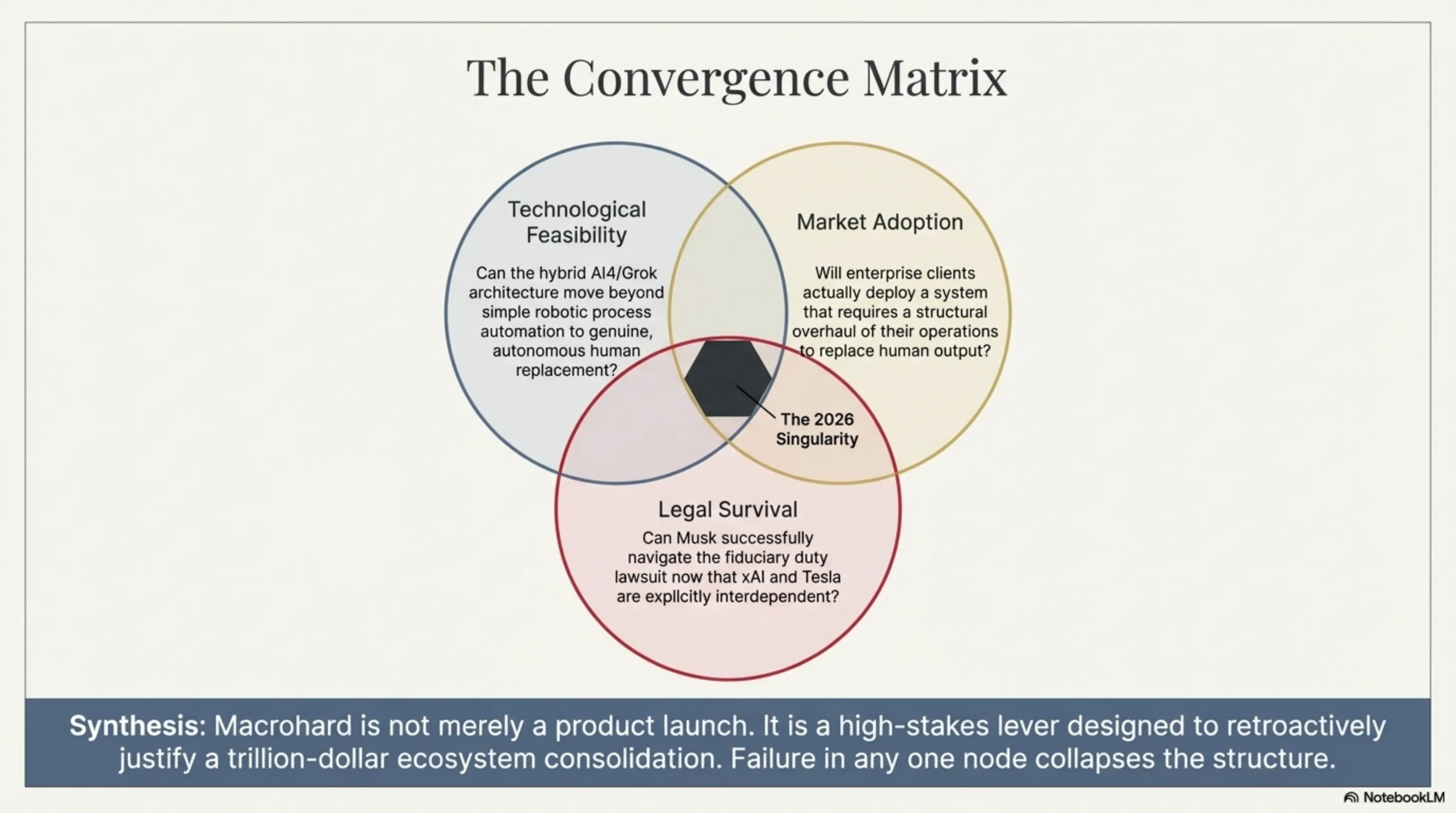
To understand the true significance of Macrohard, we must look at Elon Musk's broader strategy. He's building what could be called the "Musk Ecosystem" — a combination of Tesla, SpaceX, xAI, and even X (formerly Twitter) all moving toward a common goal: dominance over the future of technology.
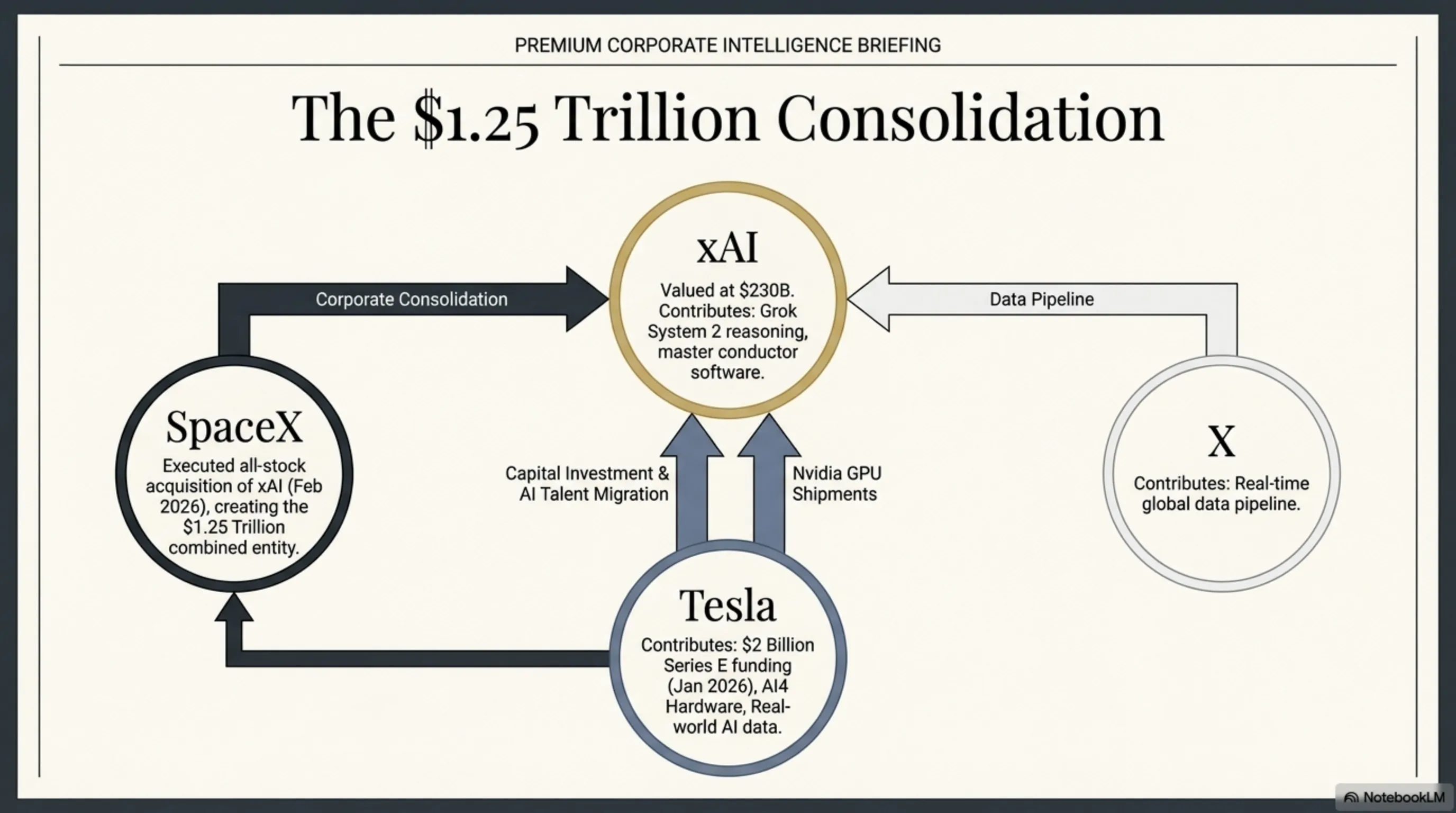
The story began in January 2026, when Tesla invested $2 billion in xAI's Series E funding round, valuing the AI startup at $230 billion. Then in February, SpaceX acquired all of xAI in an all-stock deal that valued the combined entity at approximately $1.25 trillion. Now Tesla, SpaceX, and xAI are all connected in a complex web of investments and collaborations.
But why has Musk created all this complexity? The answer lies in his long-term strategy. He doesn't just want to build electric cars or go to Mars. He wants to change how humans interact with technology entirely. Macrohard is just the first step in this journey — a step that could completely transform the software industry.
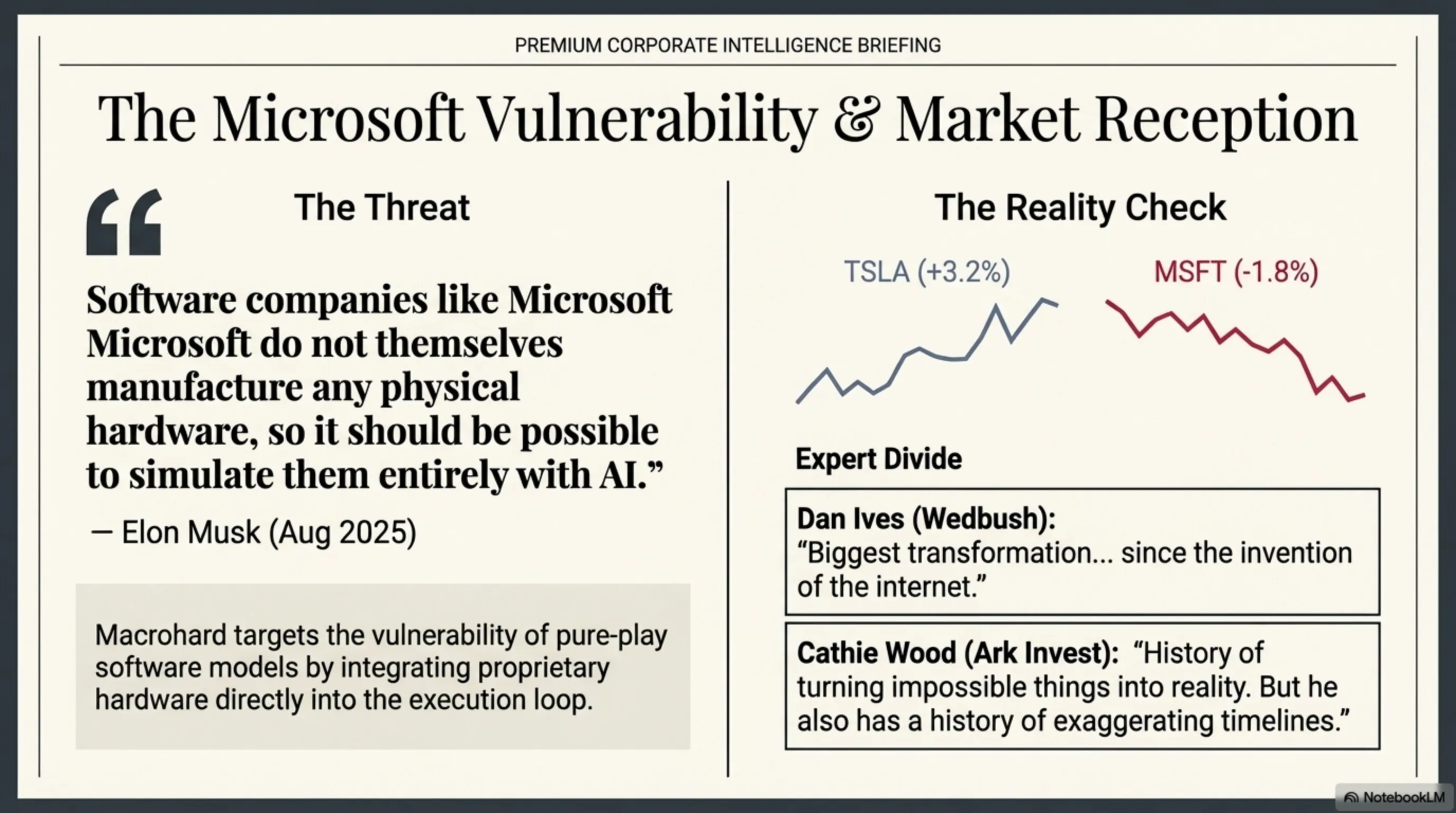
"Software companies like Microsoft do not themselves manufacture any physical hardware, so it should be possible to simulate them entirely with AI." — Elon Musk, August 2025
This strategy is not without challenges. The most significant problem is the Tesla shareholders' lawsuit accusing Musk of breach of fiduciary duty. They claim Musk diverted Tesla's AI talent, Nvidia GPU shipments, and strategic focus to xAI for his personal benefit. This lawsuit, filed by the Cleveland Bakers and Teamsters Pension Fund in Delaware Chancery Court, wants the court to force Musk to hand over his xAI stake to Tesla.
Tesla AI4 Technology: The Hardware Brain of Macrohard
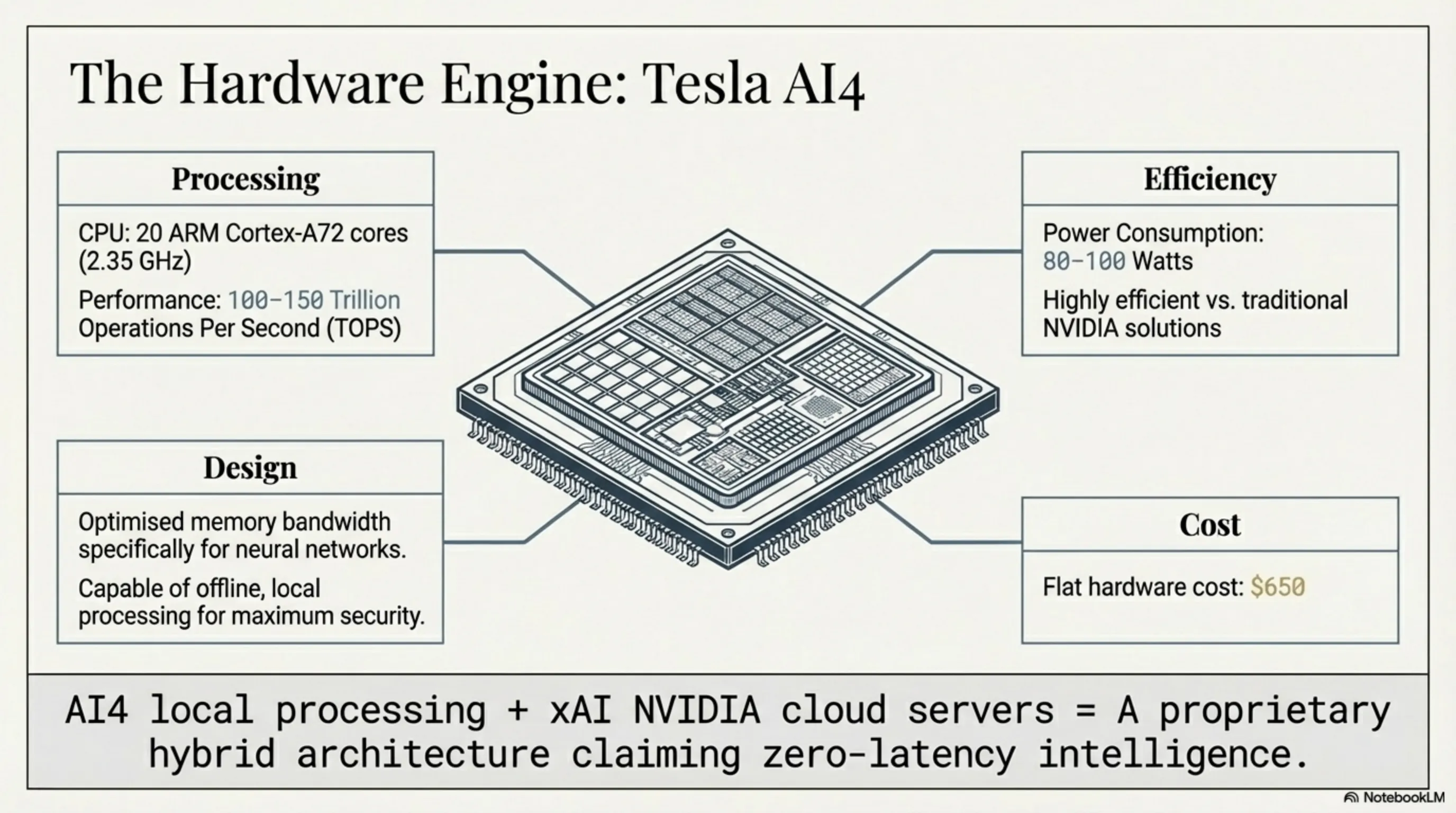
The hardware heart of the Macrohard project is Tesla's AI4 chip — an engineering masterpiece that Tesla designed specifically for AI workloads. This chip, priced at $650, claims to be a serious competitor to industry giants like NVIDIA. But does it really have that power?
The AI4 is designed with 20 ARM Cortex-A72 cores running at a maximum frequency of 2.35 GHz. Its raw performance is estimated at around 100-150 TOPS (Trillion Operations Per Second), a significant increase from the previous generation. But the key design choice lies in memory bandwidth, optimized specifically for neural networks.
The AI4's power consumption ranges from 80-100 watts, which is considered highly efficient compared to similar NVIDIA solutions. Tesla claims this chip can handle complex AI tasks in real-time without requiring internet connectivity — a crucial advantage for security-sensitive applications.
🔧 Tesla AI4 Technical Specifications
⚡ CPU: 20 ARM Cortex-A72 cores (2.35 GHz)
🧠 Performance: 100-150 TOPS
🔋 Power Consumption: 80-100 watts
💰 Price: $650
🎯 Design: Optimized for neural networks
But the AI4 is only part of the equation. Musk explained that the Macrohard system combines AI4 with xAI's Nvidia-based servers. This hybrid architecture allows the system to have both fast local processing and cloud computational power. The result is a system that claims to be "the only real-time smart AI system" in the world.
Impact on the Software Industry: Should Microsoft Be Worried?
If Musk's claims are true, Macrohard could be the biggest threat to the traditional software industry. The global software market, worth over $650 billion, is primarily built on the traditional business model: large teams of programmers working on projects for months or years. But if AI can do these tasks in a fraction of the time with similar quality, what happens to this industry?
Microsoft, which holds a significant share of this market, is likely the most concerned. Satya Nadella's company has made massive investments in AI in recent years and launched products like Copilot. But Copilot is still an "assistant," not a complete replacement. Macrohard claims it can simulate the entire functions of software companies — a claim that, if true, seriously challenges Microsoft's business model.
"If Macrohard can do what it claims, we'll witness the biggest transformation in the software industry since the invention of the internet." — Dan Ives, Wedbush Securities Analyst
But market reaction has been mixed so far. Tesla shares rose 3.2% after the Macrohard announcement, while Microsoft shares fell 1.8%. This shows that investors are taking at least part of Musk's claims seriously. However, analysts warn it's still too early to assess the real impact of this project.
One of the biggest questions is whether Macrohard can actually handle complex tasks like software design, project management, or even strategic decision-making. Musk claims yes, but critics point out he has a history of exaggerating his claims. Remember, he promised we'd have one million Tesla robotaxis on the roads by 2020 — something that still hasn't happened.
Legal Challenges: The Billion-Dollar Lawsuit
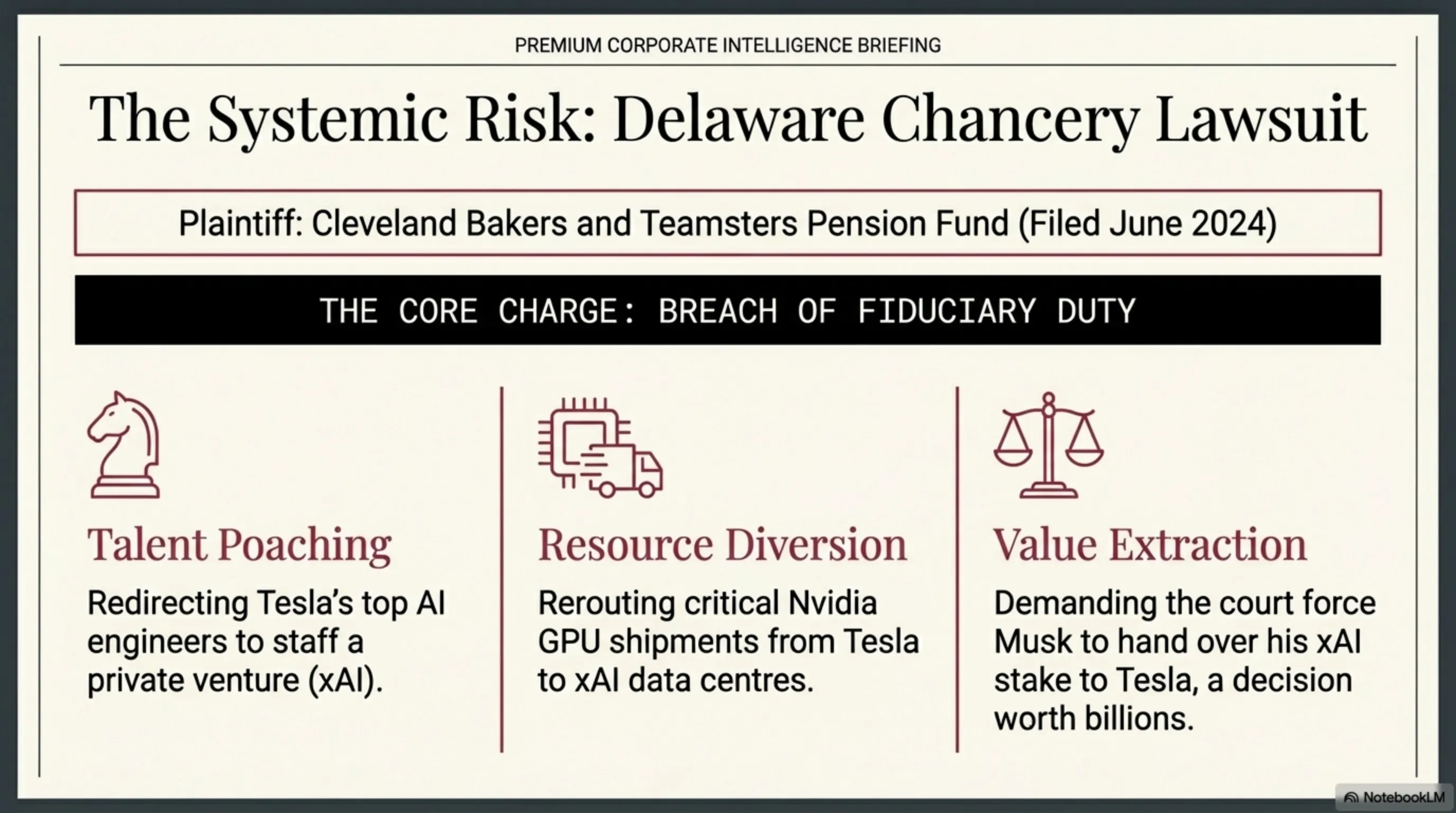
While Musk talks about Macrohard as the future of the software industry, he faces one of the most serious legal challenges of his career. The Tesla shareholders' lawsuit filed in June 2024 by the Cleveland Bakers and Teamsters Pension Fund accuses Musk of breach of fiduciary duty.
The main allegation is that Musk diverted Tesla's AI talent, Nvidia GPU shipments, and strategic focus to xAI for his personal benefit. The plaintiffs want the court to force Musk to hand over his xAI stake to Tesla — a decision that could be worth billions of dollars.
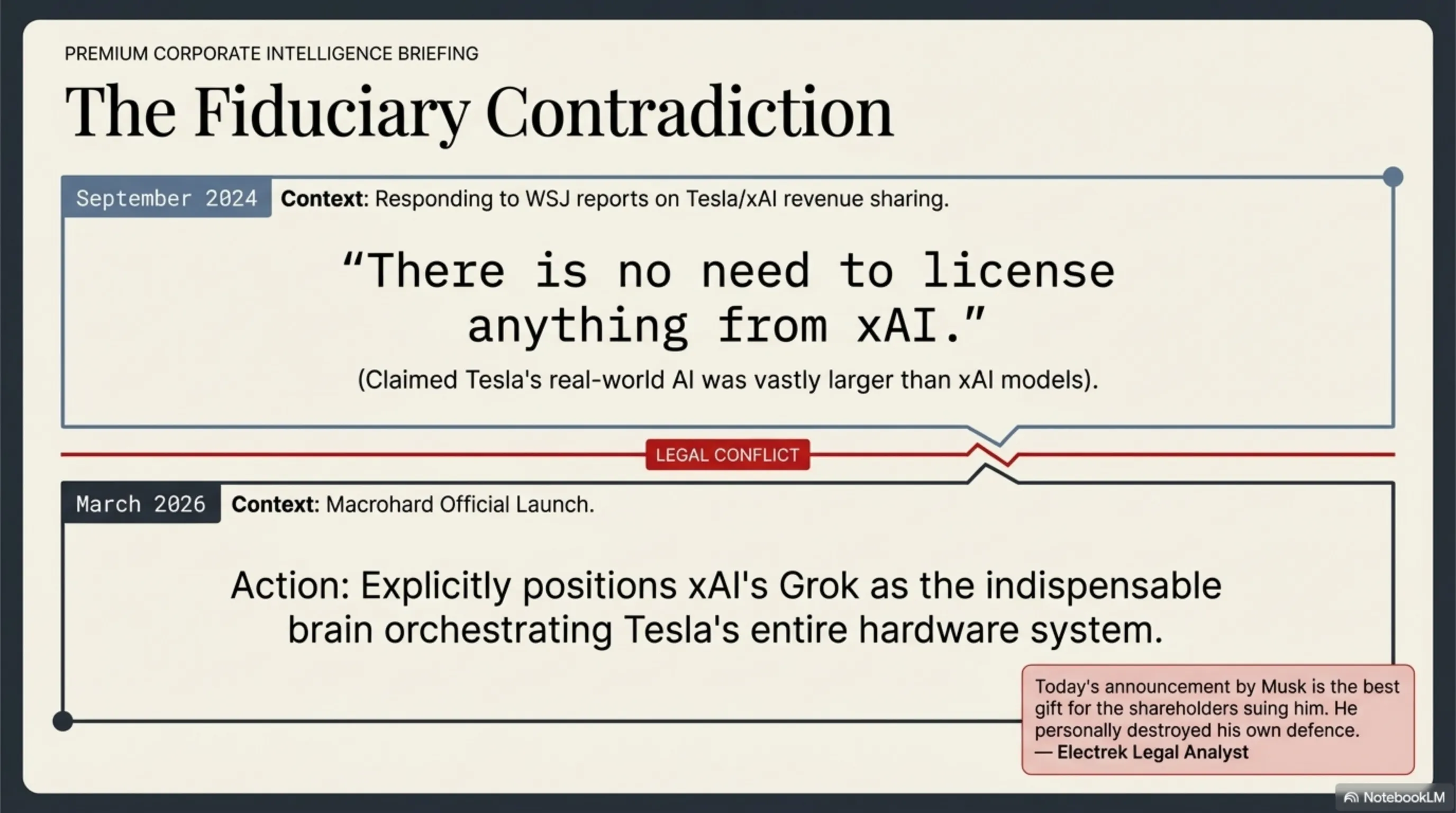
Musk's main problem is that he initially claimed Tesla and xAI operated in completely different domains and that Tesla had no need for xAI's technology. In September 2024, responding to a Wall Street Journal report that Tesla was in discussions to share revenue with xAI in exchange for using its AI models, he wrote on X: "There is no need to license anything from xAI." He explained that Tesla's real-world AI system was "vastly larger" than any large language model.
"Today's announcement by Musk is the best gift for the shareholders suing him. He personally destroyed his own defense." — Electrek Legal Analyst
But now with the Macrohard announcement, Musk is explicitly describing a joint project where xAI's Grok is the "brain" of Tesla's system. This obvious contradiction has significantly weakened Musk's legal position. If xAI's technology is essential for Tesla's Optimus goals, then why did Musk build it in a private company he personally controls?
The timeline of this saga tells a damning story. Musk pitched Tesla to investors as "the world's leading real-world AI and robotics company." He then founded xAI as a separate private venture, recruited Tesla AI engineers to staff it, redirected Nvidia chips ordered for Tesla to xAI's data centers, and told everyone the two companies had completely different missions.
Future and Predictions: Revolution or Just Hype?
Now that Macrohard has been officially introduced, the main question is: can this project actually do what it claims? History shows that Musk often sets ambitious goals that take years to achieve. But sometimes, he actually accomplishes the impossible.
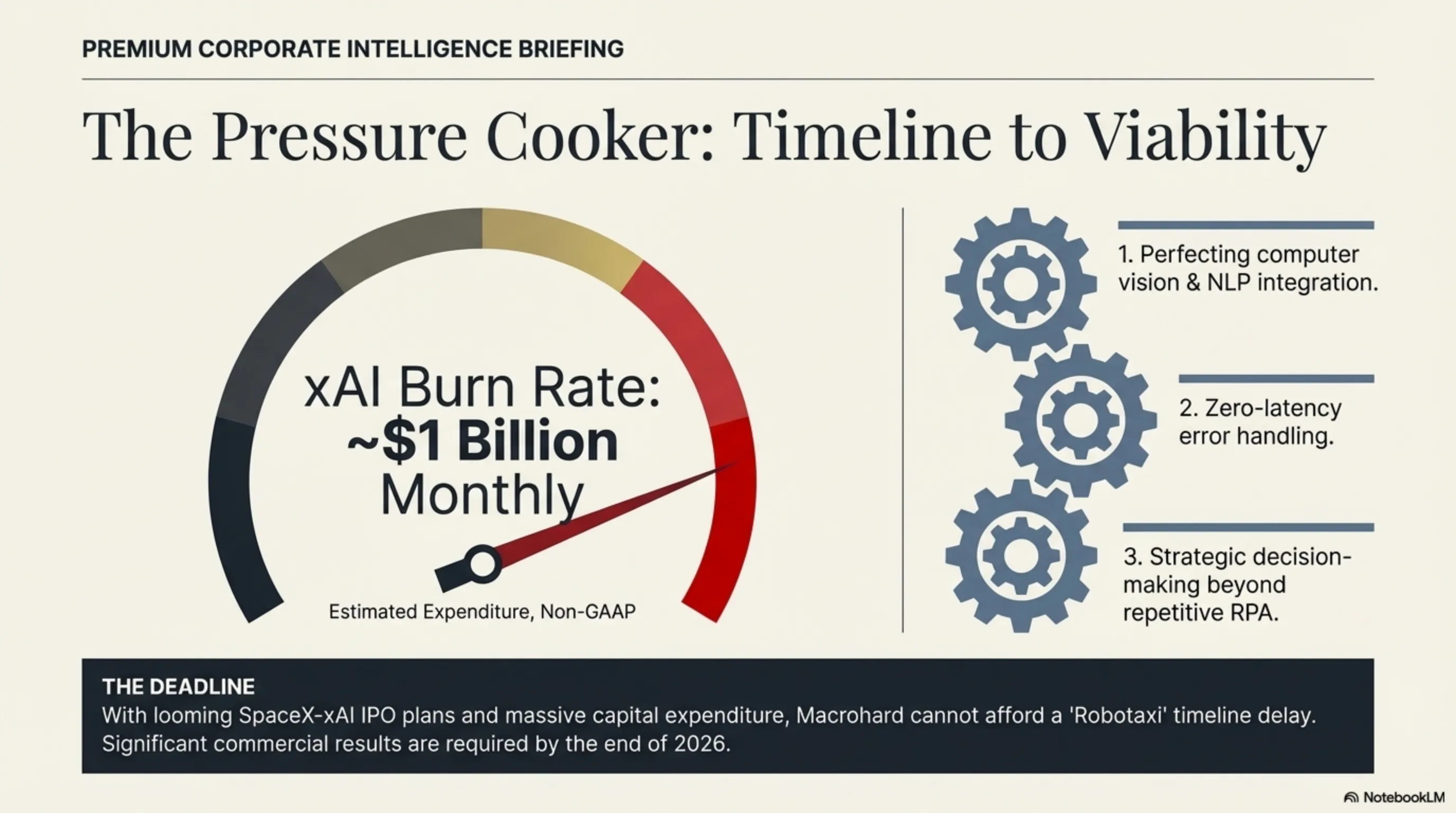
Technically, Macrohard's claims are neither completely impossible nor entirely believable. The required technologies — computer vision, natural language processing, and robotic process automation — all exist. The issue is combining them in a way that can reliably perform complex human tasks. This requires significant advances in AI reasoning, error handling, and human-computer interaction.
Industry analysts have different opinions. Some believe Macrohard could succeed in repetitive and simple tasks, but for more complex work requiring creativity, strategic decision-making, or deep contextual understanding, there are still years to go. Others say if anyone can do this, it's Musk — the man who transformed the automotive and space industries.
"Musk has a history of turning impossible things into reality. But he also has a history of exaggerating timelines. Macrohard will probably have both." — Cathie Wood, CEO Ark Invest
One of the most important success factors will be market reaction. If companies can actually use Macrohard to reduce costs and increase productivity, demand for this technology will explode. But if the system can't meet expectations, it could become another one of Musk's "half-finished projects."
The development timeline is also important. Musk hasn't announced a specific timeline for Macrohard's commercial release, but given xAI's financial pressure (burning about $1 billion monthly) and the SpaceX-xAI IPO plans, we'll probably need to see significant results by the end of 2026.
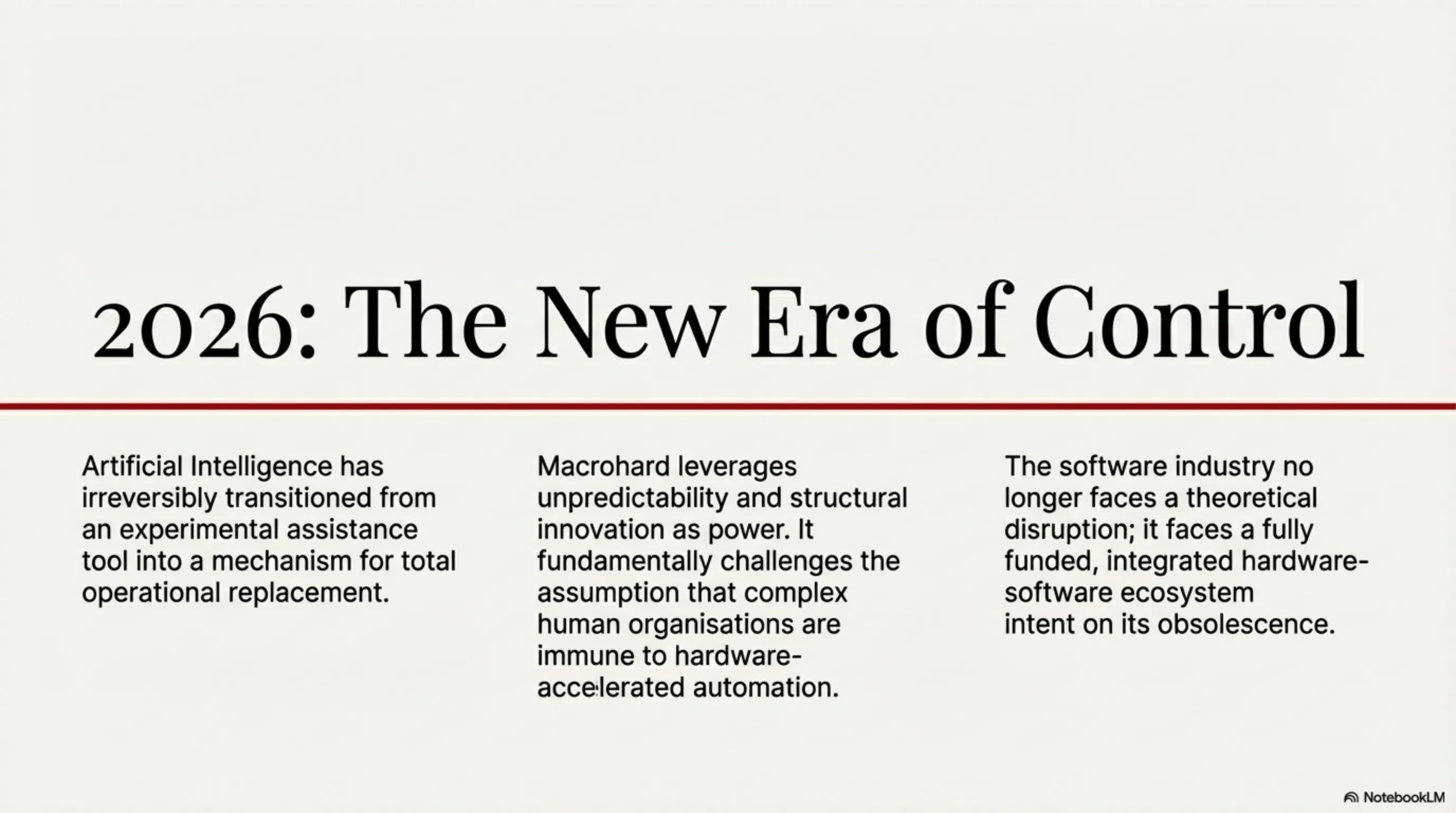
🎯 Conclusion: The New Era of Control
Elon Musk's Macrohard represents a fundamental shift in the nature of artificial intelligence. This phenomenon shows that AI is evolving from a tool to a complete replacement for fundamental functions. These systems use creativity and innovation as sources of power. Players know that functions may have unexpected behaviors, and this uncertainty is part of the appeal.
Key Message: 2026 is the year of transforming AI experiments into tools for hidden innovation.
Final Note: This article is based on official announcements from Elon Musk, Tesla investor relations, xAI documentation, and industry reports from Electrek, Business Insider, and Reuters. Technical specifications are derived from Tesla's official AI4 chip documentation and third-party analysis. Information is current as of March 12, 2026. Market valuations and legal proceedings may change rapidly.
🌐 Stay Connected With Us 🎮✨
For the latest tech, gaming, and gadget news, follow us on our official social media channels:
Supplementary Image Gallery: انگلیسی: Tekin Analysis: Elon Musk's Macrohard; When Tesla & xAI Want to Replace Software Companies