A comprehensive intelligence investigation into the Chinese Ministry of State Security (MSS) operation targeting Nvidia CEO Jensen Huang. Classified US memos reveal Alice Huang, an executive at Singapore's Megaspeed, acted as a state-funded proxy buyer. By bypassing BIS export controls, Megaspeed sought to extract proprietary Blackwell (B200) architecture secrets and influence Nvidia leadership into opposing US sanctions.
Tekin Radar // Special Intelligence Dossier: Chinese MSS Espionage Infiltration of Nvidia
The disclosure of classified United States intelligence assessments detailing Beijing's sophisticated operation to infiltrate the inner commercial orbit of Nvidia CEO Jensen Huang has triggered a profound tremor across Capitol Hill, Silicon Valley, and global semiconductor capitals.
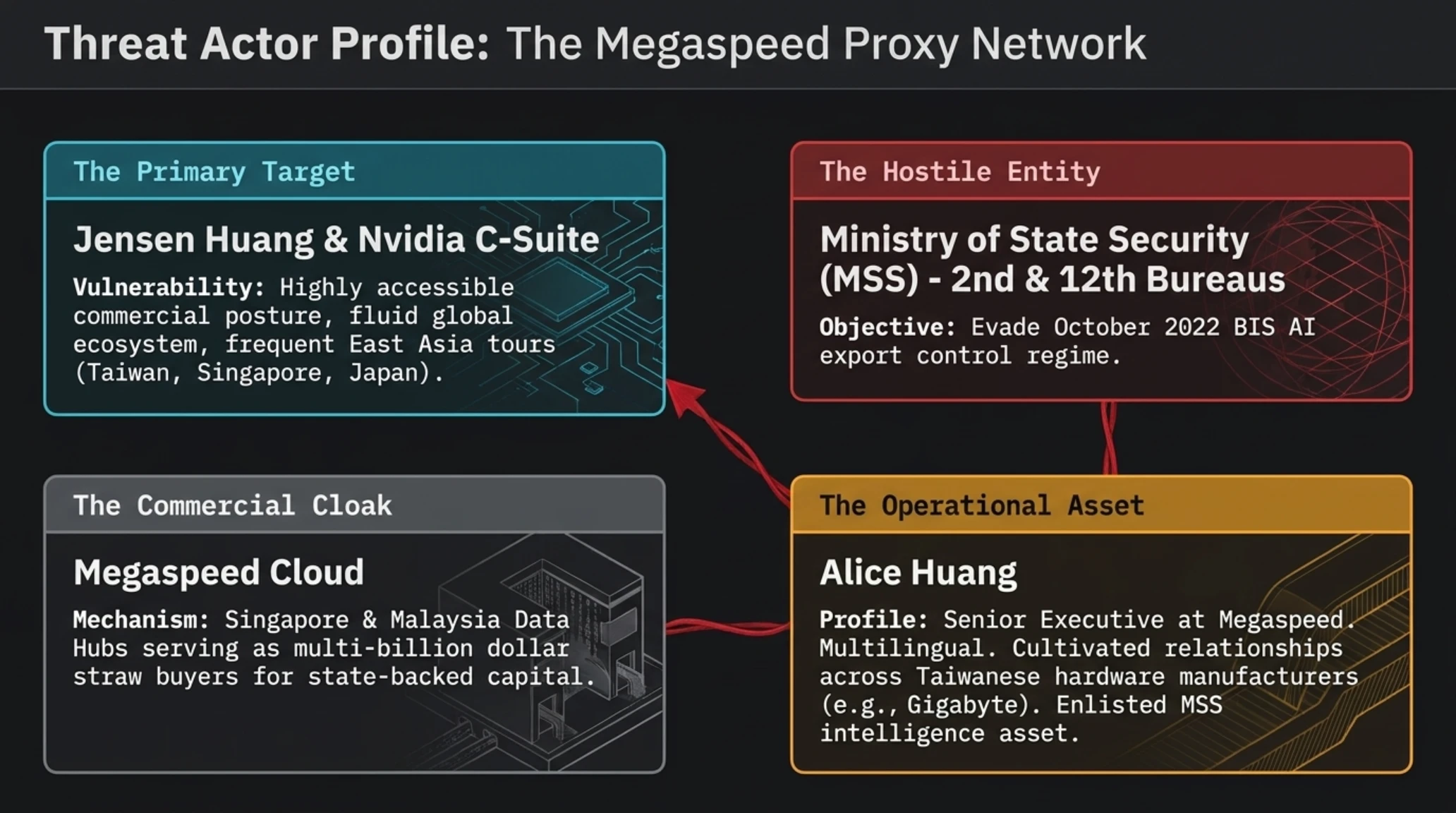
According to high-level intelligence memos circulated among the National Security Council (NSC), the Commerce Department's Bureau of Industry and Security (BIS), and the House Select Committee on the Strategic Competition Between the United States and the Chinese Communist Party, counterintelligence analysts have concluded that China's premier civilian intelligence body the Ministry of State Security (MSS) recruited Alice Huang, a senior executive at Singapore-based AI cloud infrastructure firm Megaspeed, as a strategic intelligence asset to penetrate the leadership tier of the world's most valuable chipmaker.
This unprecedented development unfolds amidst an intensifying technological cold war where generative artificial intelligence hardware has transcended ordinary commerce, emerging as the decisive instrument of 21st-century economic dominance and military power. Since 2022, Washington has enacted aggressive export control frameworks to sever Beijing's access to state-of-the-art compute architectures including the A100, H100, H200, and current-generation Blackwell GB200 accelerators. This dynamic mirrors the systemic vulnerabilities we previously audited in our forensic report on the Chainalysis breach forensic analysis regarding critical digital infrastructure.
STRATEGIC INTELLIGENCE // Six Pillars of the MSS Infiltration Vector
Geopolitical analysis indicates that this intelligence gambit was engineered as a core survival imperative. In Beijing's strategic calculus, sustained denial of leading-edge GPU silicon guarantees permanent technological subordination across foundation LLMs, autonomous drone swarm coordination, and advanced military simulations.
The operational methodology mirrors the deceptive mechanisms we documented in our investigative report on the ThisBash exploit in Claude Desktop, where cognitive manipulation bypassed established containment boundaries. The analytical telemetry below underscores the strategic gravity of this geopolitical confrontation:
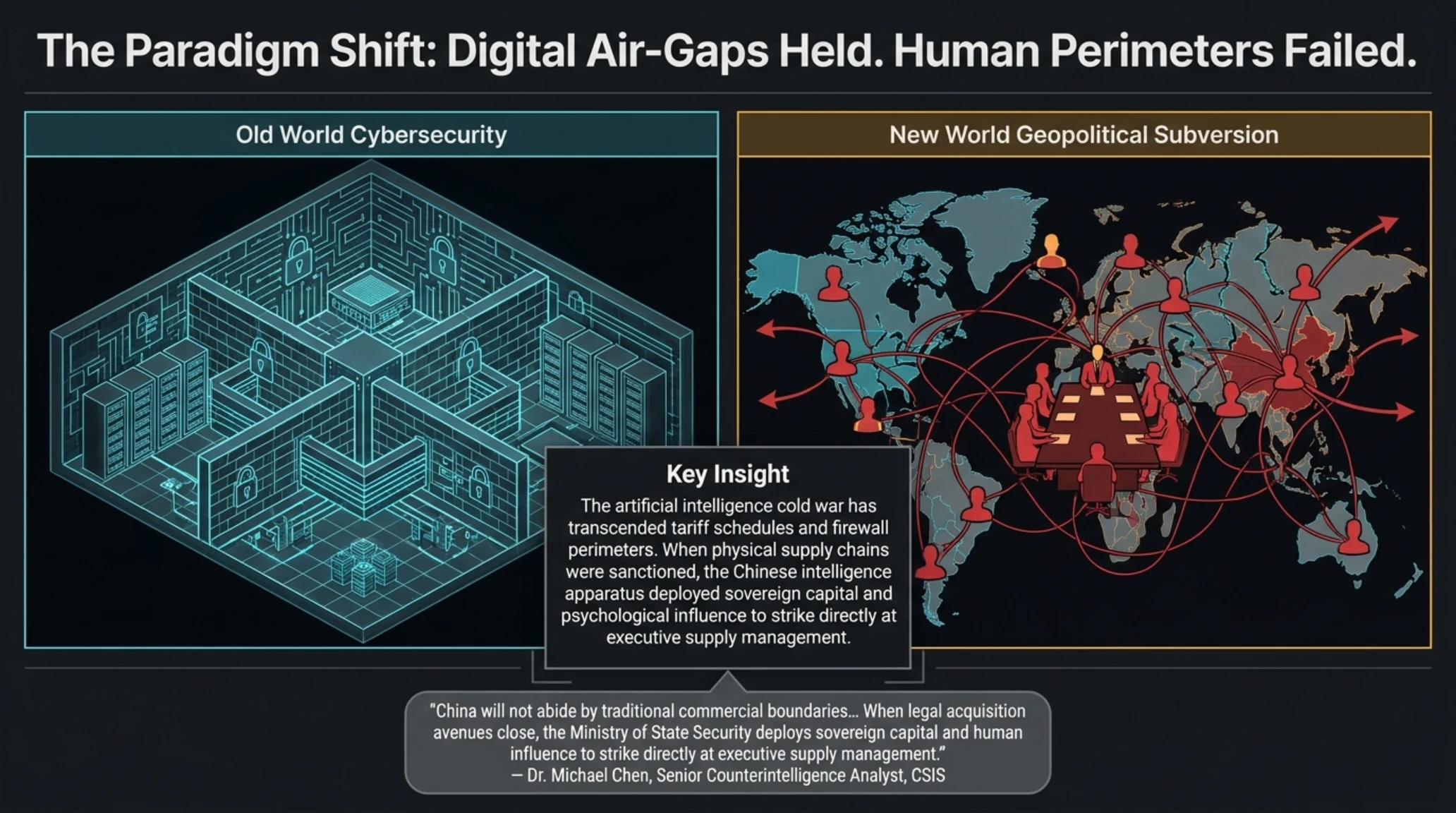
Why This Espionage Crisis Shatters the AI Cold War Paradigm
Tekin Editorial Assessment: The Megaspeed intelligence case proves that the semiconductor battle between Washington and Beijing has breached the boundaries of tariff schedules and IP blocking; China has demonstrated willingness to deploy sovereign wealth combined with psychological influence to circumvent export barriers at the executive source.
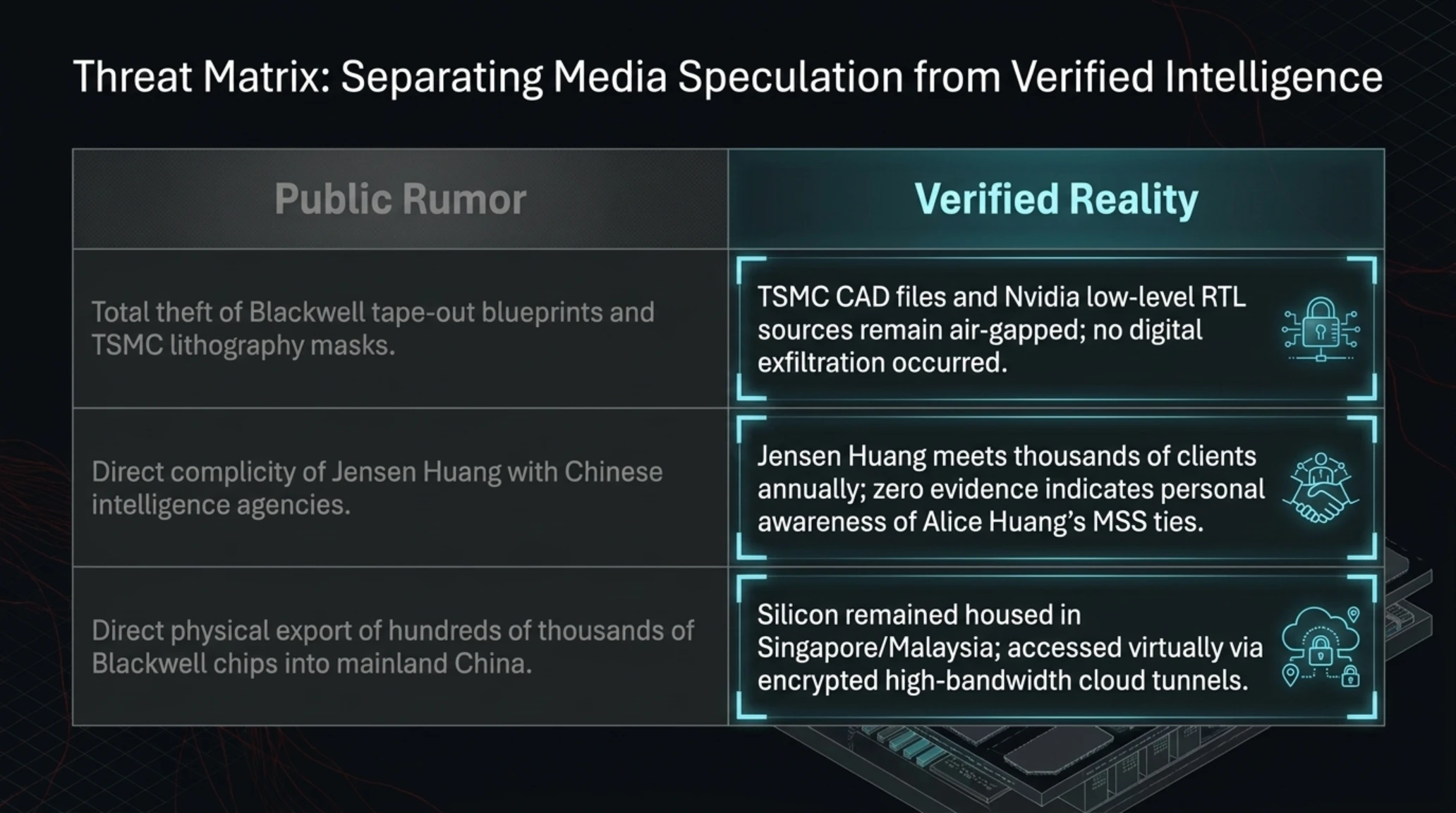
Separating verified intelligence findings from sensationalist media rumors is essential for enterprise security leaders. The comparison matrix below grounds the public controversy in technical and legal reality:
Technical Grounding // Rumor vs. Reality in the Nvidia Intelligence Breach
| Public Rumor & Media Speculation | Verified Technical & Intelligence Reality |
|---|---|
| Total theft of Blackwell tape-out blueprints and TSMC lithography masks | TSMC CAD files and Nvidia low-level RTL sources reside within air-gapped physical facilities; no exfiltration occurred. |
| Direct complicity of Jensen Huang with Chinese intelligence agencies | Jensen Huang meets thousands of corporate clients annually; no evidence indicates personal awareness of Alice Huang's MSS ties. |
| Direct physical export of hundreds of thousands of Blackwell chips into mainland China | Silicon remained housed in Singaporean and Malaysian facilities, accessed via encrypted high-bandwidth cloud tunnels. |
| Total failure and complete irrelevance of BIS compute sanctions | Sanctions severely increased computational costs and forced Beijing into high-risk intelligence maneuvers. |
Expert counterintelligence perspective highlights the unprecedented nature of this hybrid operational vector:
With strategic foundations established, we now initiate a systematic forensic investigation across the seven operational sections of this case.
Section 01: Geopolitical Earthquake in Silicon Valley; Infiltration of Jensen Huang's Outer Perimeter
The unsealing of intelligence assessments marks a watershed moment in corporate security. Jensen Huang the charismatic executive whose trademark leather jacket symbolizes Nvidia's meteoric ascent to a $3.5 trillion market capitalization has long maintained an exceptionally open and engaged posture with global commercial partners. During regular tours across East Asia, including Taiwan, Singapore, and Japan, Huang frequently convened with regional cloud providers and hardware ecosystem leaders.
This accessible and proactive commercial style, celebrated across Wall Street as the engine of Nvidia's hyperscale expansion, inadvertently presented hostile intelligence planners with an unprecedented operational aperture. Unlike traditional defense contractors whose executive suites operate behind secure compartmented information facilities (SCIFs) with dedicated federal counterintelligence details, commercial semiconductor giants inhabit a fluid global ecosystem where high-stakes deals are routinely negotiated in hotel conference suites and public trade exhibitions.
It was within this accessible commercial environment that Alice Huang, operating as a key executive of Singapore-based Megaspeed, cultivated relationships with senior semiconductor leadership. Beyond her interactions with Nvidia personnel, intelligence memos note her extensive networking with executive leadership across Taiwanese hardware manufacturers, including prominent motherboard titan Gigabyte.
By positioning herself at the nexus of Taiwanese contract manufacturing and Southeast Asian cloud infrastructure, Alice Huang established an authoritative corporate profile that disarmed standard corporate compliance filters. She functioned not merely as a buyer seeking silicon allocations, but as a sophisticated interlocutor capable of discussing multi-gigawatt power requirements, liquid-cooling manifold integrations, and regional data governance policies.
United States counterintelligence agencies, following prolonged technical surveillance and cross-border financial tracking, determined that Alice Huang was an enlisted intelligence asset of the MSS. Her mission encompassed gathering real-time telemetry on upcoming US chip roadmaps and encouraging Nvidia leadership to lobby Washington against stringent export restrictions.
Section 02: Anatomy of the Megaspeed Network; How a Cloud Provider Became a Multi-Billion Pipeline
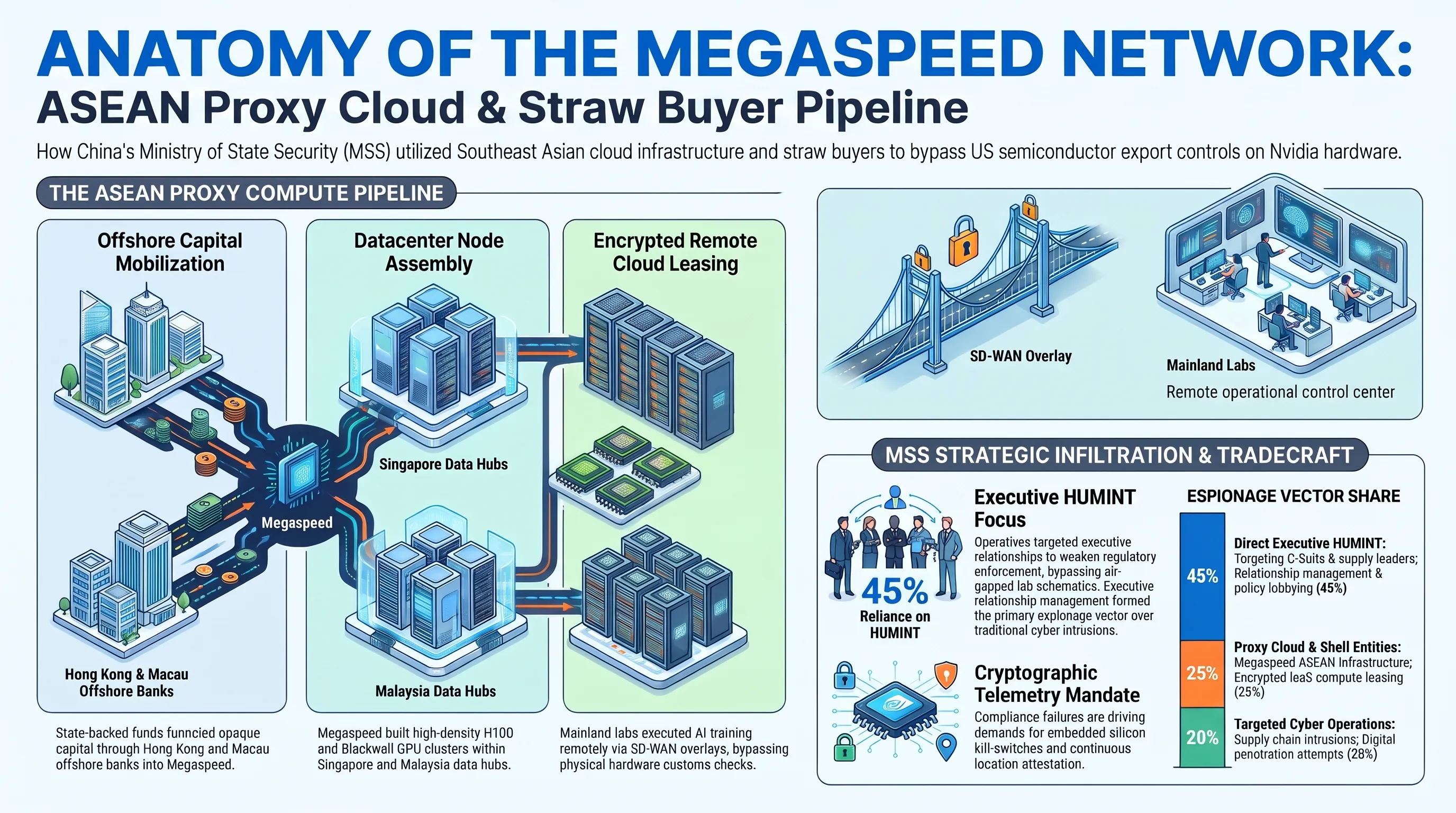
Unraveling this operation requires meticulous forensic deconstruction of Megaspeed's rapid corporate evolution. Prior to the tightening of US computing sanctions, Megaspeed was an obscure regional hosting provider with modest operations. Almost immediately following the publication of the Commerce Department's restrictive thresholds, the firm experienced an influx of opaque capital, securing purchase agreements for billions of dollars in Nvidia H100 and Blackwell infrastructure.
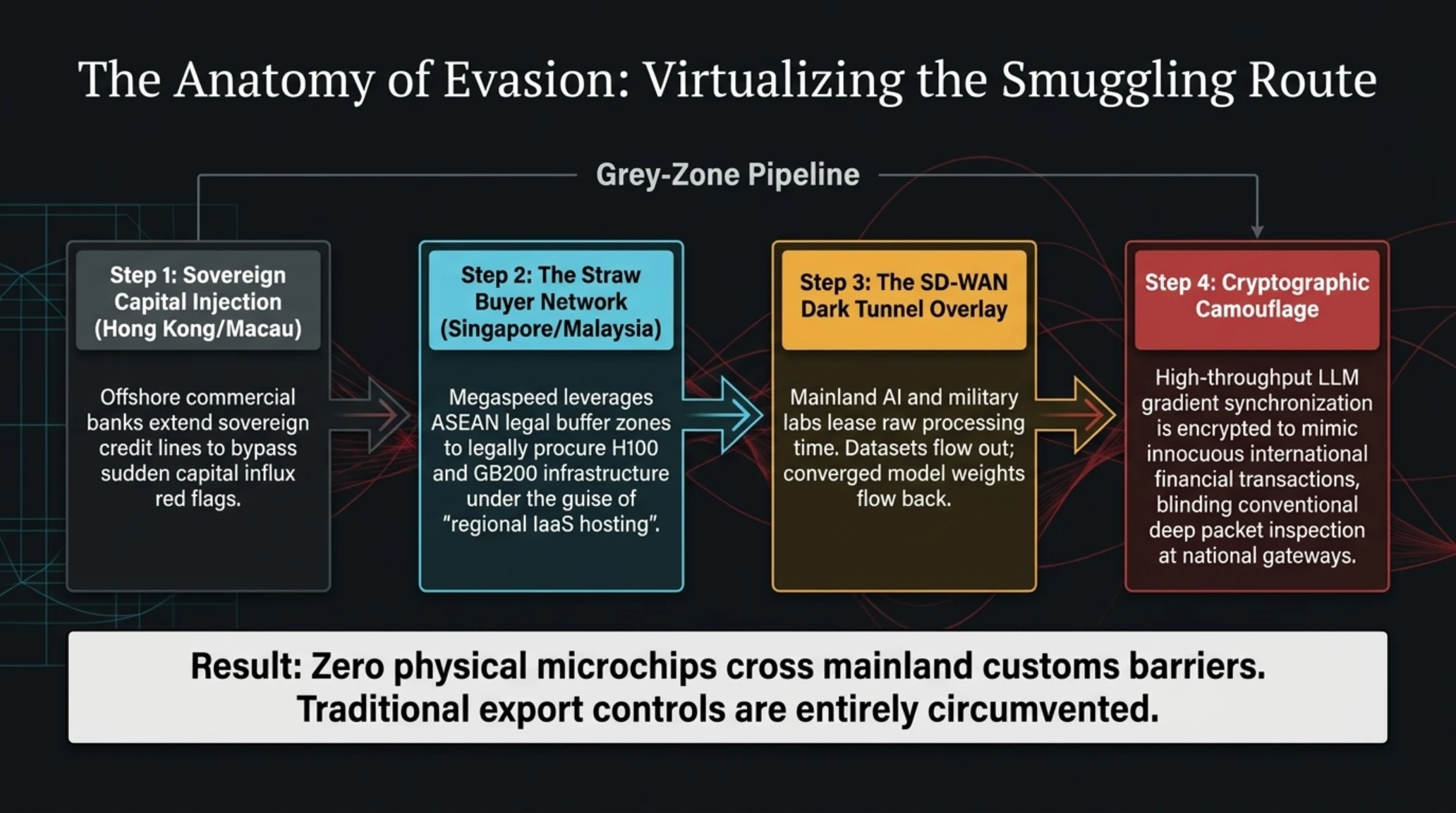
The astronomical velocity of Megaspeed's capitalization should have triggered immediate red flags across automated enterprise compliance pipelines. In less than eighteen months, a startup with negligible historical market share commanded financial liquidity comparable to Tier-1 European telecommunications operators. This rapid financial mobilization was deliberately orchestrated through sovereign credit lines extended via offshore commercial banks operating in Hong Kong and Macau.
Investigations reveal that Beijing leveraged regulatory grey zones within Southeast Asia. Singapore and Malaysia, functioning as global connectivity hubs exempt from blanket US embargoes, provided an ideal buffer. Megaspeed established extensive data centers in these jurisdictions, asserting that compute capacity was exclusively reserved for regional commercial clients. However, layered corporate shareholding structures spanning Hong Kong and the Cayman Islands concealed equity stakes tied to Chinese state investment funds, establishing Megaspeed as a formidable straw buyer.
Furthermore, Megaspeed exploited the legal ambiguity surrounding infrastructure-as-a-service (IaaS) leasing agreements. Under prevailing international commerce frameworks, leasing raw processing time on foreign servers was not categorized as a physical export of military-critical dual-use hardware. This legal loophole enabled mainland Chinese artificial intelligence researchers to execute distributed gradient descent algorithms across thousands of high-performance GPUs without a single microchip crossing mainland customs barriers.
The technical specs table below provides a forensic comparison of the strategic vectors at play:
Strategic Matrix: Assessing Infiltration Vectors Across Nvidia and Megaspeed 2026
| Strategic Evaluation Dimension | Megaspeed Network Architecture | Nvidia Corporate Protocol | US Government Enforcement (BIS) |
|---|---|---|---|
| Operational Vector | Human intelligence (HUMINT) and proxy cloud leasing | High-volume commercial cloud engagements | Strict prohibition of frontier compute transfers |
| Core Geographic Footprint | Singapore, Malaysia, Hong Kong, Cayman Islands | Santa Clara (California), Hsinchu (Taiwan) | Global customs oversight and Entity List monitoring |
| Target Hardware Generations | H100, H200, GB200, NVL72 Blackwell clusters | Hyperscale datacenter accelerators | Total Processing Performance (TPP) ceiling enforcement |
| Ultimate Strategic Objective | Secure compute for Chinese state and military labs | Maximize shareholder value and global market share | Maintain a minimum two-generation technological lead |
| Critical Blind Spot | Operational discovery by Western intelligence agencies | Absence of post-sale compute telemetric verification | Delayed identification of multi-layered shell entities |
The unmasking of this clandestine network exposed a fundamental vulnerability within the global semiconductor supply chain that rapid valuation expansion had long obscured.
The deployment of state intelligence assets under the guise of commercial enterprise illustrates that the struggle for artificial intelligence primacy demands human counterintelligence mechanisms far beyond conventional digital perimeters.
Section 03: HUMINT Tactics of the Chinese MSS; From Interpersonal Relationship Engineering to BIS Policy Lobbying
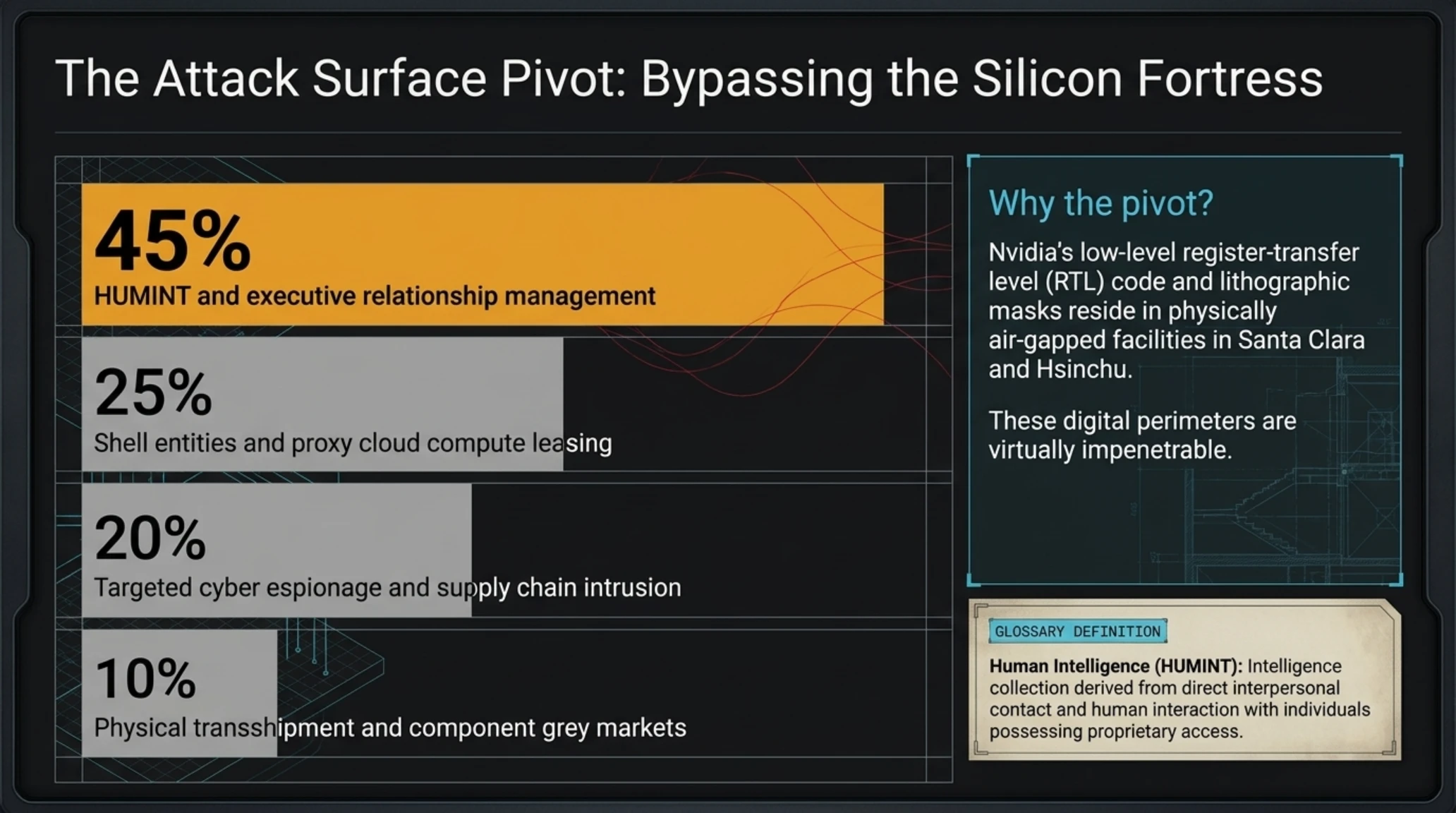
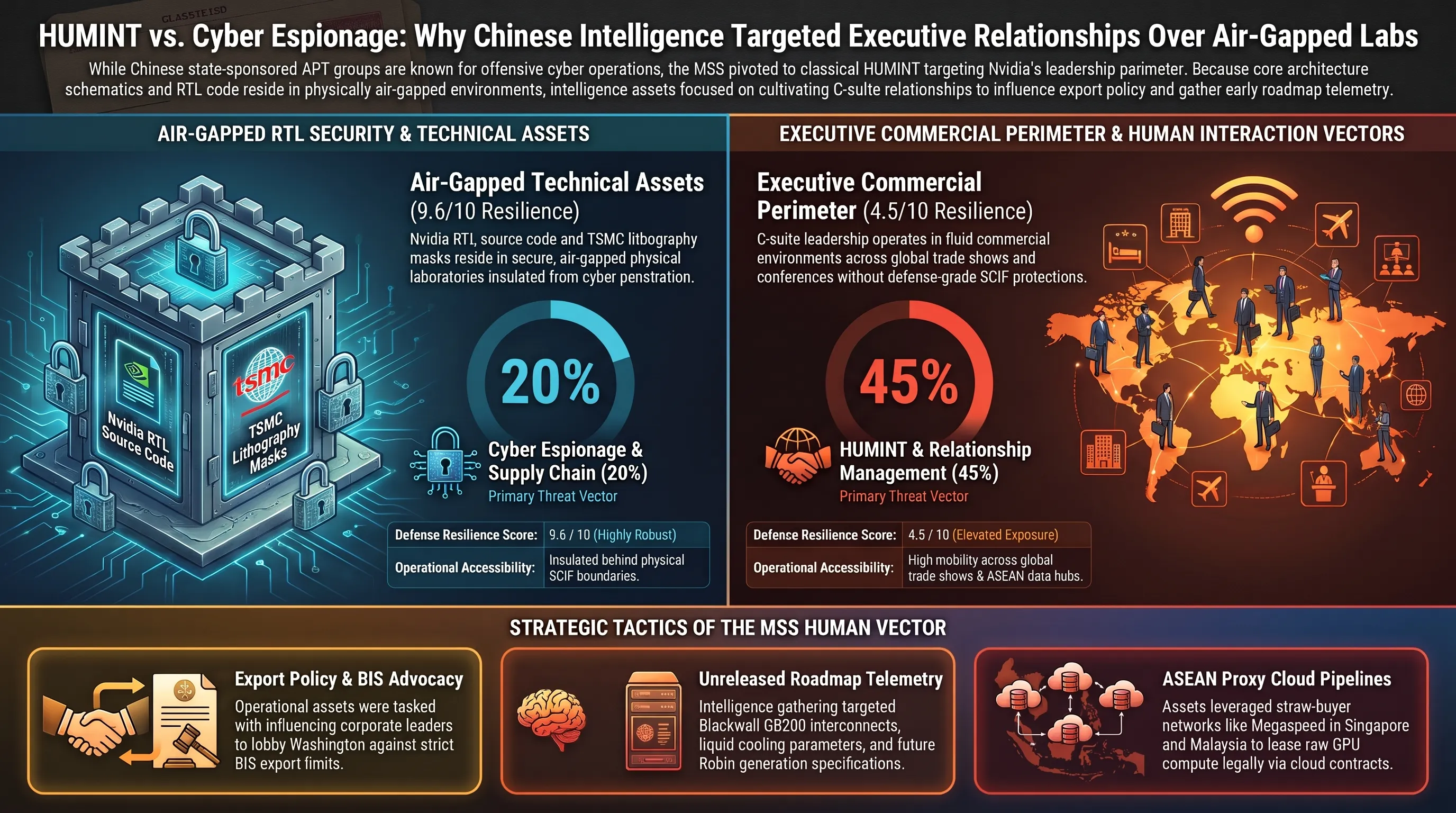
Chinese intelligence organs have established extensive historical notoriety for offensive cyber operations executed by state-sponsored Advanced Persistent Threat (APT) groups such as Volt Typhoon and APT41. However, in targeting Jensen Huang and Nvidia, the Second and Twelfth Bureaus of the Ministry of State Security adopted a classical human intelligence (HUMINT) methodology. This strategic adaptation was dictated by technical reality: Nvidia's low-level register-transfer level (RTL) code, lithographic mask designs, and core architecture schematics reside in physically air-gapped laboratory environments insulated from remote digital penetration.
Western security analysts emphasize that air-gapped containment protocols in Santa Clara and Hsinchu are among the most impenetrable in the computing industry. To breach such perimeters via cyber vectors requires multi-stage hardware supply chain compromises or complex acoustic side-channel exfiltration tactics with exceptionally low probability of success and high probability of immediate detection. Consequently, Chinese intelligence doctrine pivoted toward the human attack surface, recognizing that while digital servers remain air-gapped, corporate decision-makers are inherently accessible through commercial and social interaction.
Alice Huang was recruited for her exceptional executive profile, commercial acumen, multilingual fluency across Mandarin, English, and Cantonese, and established standing within the East Asian enterprise hardware ecosystem. Intelligence memos indicate that MSS handlers recognized her established relationships with Taiwanese component manufacturers including high-level leadership at Gigabyte leveraging structured state financial guarantees to establish her operational credibility.
Her assignment encompassed psychological and cognitive influence: reinforcing the narrative among semiconductor leaders that US export regulations stifle corporate growth, damage domestic innovation, and inadvertently accelerate the ascension of domestic Chinese champions like Huawei and its Ascend 910C accelerator ecosystem. By shaping executive perspective, Beijing sought to transform commercial leadership into informal advocates against BIS enforcement.
This lobbying strategy sought to exploit the inherent friction between Silicon Valley's fiduciary obligations to public shareholders and the Pentagon's strategic doctrine of technological denial. By presenting commercial projections showing billions of dollars in lost annual revenues that would inevitably flow to domestic Chinese state-backed silicon foundries, the operation aimed to induce American technology executives to apply political pressure upon congressional representatives and Department of Commerce officials to establish broader licensing exemptions.
The comparative bar chart below illustrates the divergent procurement streams characterizing frontier AI hardware deployment across Asia:
Comparative Chart // AI Chip Supply Allocations and Intermediary Procurements in Asia 2026
Counterintelligence assessments demonstrate the shifting proportionality of Beijing's technical collection tradecraft:
Distribution of Beijing's Espionage Vectors Across the Semiconductor Industry
For strategic analysts, technical terminology definitions provide necessary context across both intelligence and hardware domains:
Tekin Semiconductor and Security Glossary
📚 Classified & Related Dossiers in TekinGame
If you wish to explore beyond this report and delve into cybernetic frontiers and autonomous AI architectures, do not miss these three exclusive deep-dives in the Tekin Garage:
The timeline table tracks the evolutionary trajectory of export enforcement versus evasion methodologies:
Chronology of Key Intelligence Events in the Nvidia Infiltration Dossier
| Chronological Timestamp | Operational Phase & Intelligence Milestone | Strategic Impact & Regulatory Response |
|---|---|---|
| October 2022 | BIS enacts foundational AI export control regime | Formal termination of direct A100 and H100 sales to mainland Chinese entities. |
| June 2024 | Capital expansion of Megaspeed in Singapore | Aggressive deployment of GPU datacenters and multi-billion-dollar allocation requests. |
| September 2025 | Western intelligence intercepts Alice Huang communications | Identification of direct coordination channels with Ministry of State Security handlers. |
| November 2026 | New York Times public disclosure and congressional inquiries | House Select Committee demands classified briefings and KYC compliance records. |
Section 04: The Secret Battle for Blackwell and Rubin; Technical Secrets and Supply Chains Targeted by Beijing
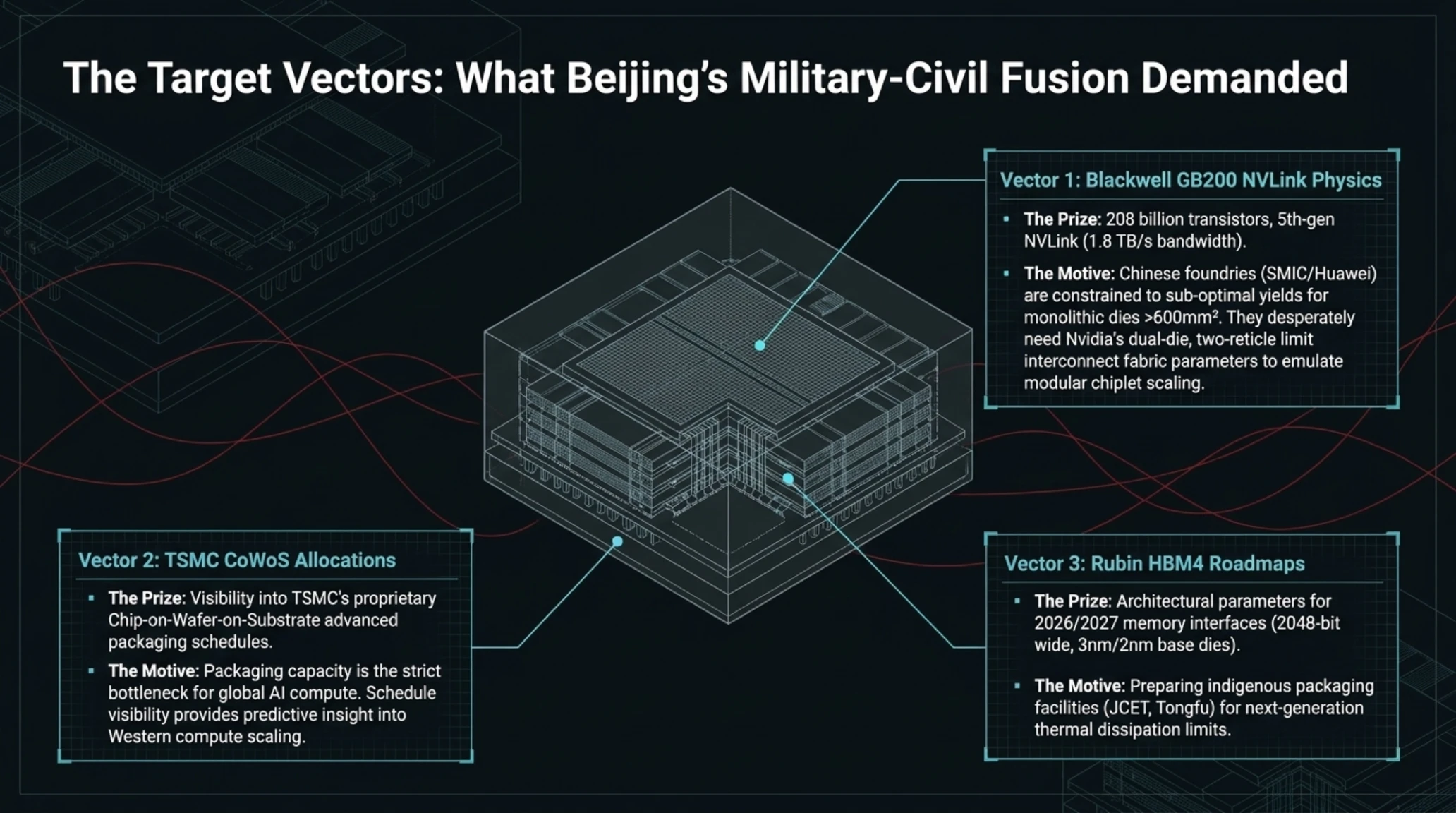
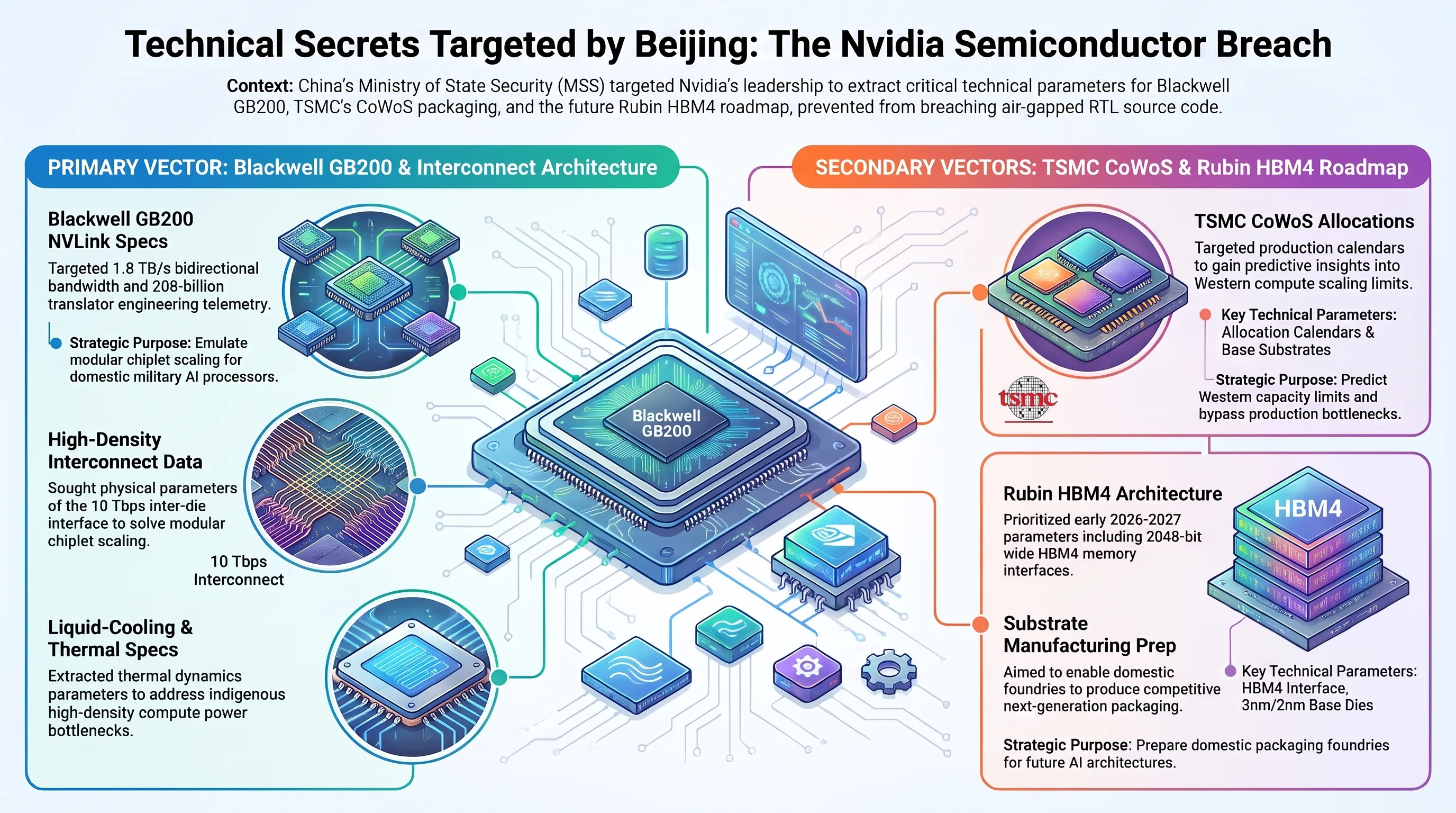
Forensic investigators are currently focused on determining the precise technical objectives pursued by Chinese intelligence assets. Beyond securing physical silicon allocations, analysts identified three critical proprietary domains prioritized by Beijing's military-civil fusion apparatus.
The primary vector centered on Blackwell GB200 NVL72 engineering specifications and firmware architectures. Incorporating 208 billion transistors and relying upon the fifth-generation NVLink interconnect delivering 1.8 terabytes per second bidirectional bandwidth, Blackwell represents an extraordinary triumph of systems engineering. Chinese domestic semiconductor firms, including SMIC and Huawei, face severe physical bottlenecks in high-speed inter-chip networking and liquid-cooling thermal dynamics. Acquiring detailed engineering telemetry could save domestic laboratories years of iterative development.
At the physical die level, Chinese foundries operating multi-patterning Deep Ultraviolet (DUV) lithography are constrained to sub-optimal yields when fabricating complex monolithic dies larger than 600 square millimeters. Nvidia's Blackwell solves this physical limitation through a dual-die two-reticle limit design bonded by a high-density 10 terabit-per-second silicon interface. Chinese intelligence agencies were desperate to ascertain the physical parameters, parasitic capacitance metrics, and power delivery characteristics of this interconnect fabric to emulate modular chiplet scaling within indigenous military AI processors.
The secondary vector targeted TSMC's CoWoS packaging allocation calendars. Because advanced packaging capacity represents the strict bottleneck limiting global AI accelerator output, gaining visibility into TSMC's production schedules provided Beijing with precise predictive insight into Western compute scaling. Finally, the tertiary target encompassed architectural parameters of Nvidia's upcoming Rubin generation, offering early intelligence regarding memory interfaces and packaging shifts planned for 2026 and 2027.
Rubin represents a paradigm shift toward HBM4 memory architecture, requiring a 2048-bit wide memory interface and customized base dies fabricated on TSMC's 3-nanometer and 2-nanometer nodes. By seeking early visibility into Rubin's thermal dissipation limits and high-density substrate requirements, Chinese researchers hoped to prepare indigenous packaging facilities such as JCET and Tongfu Microelectronics to manufacture competitive substrates for next-generation domestic AI architectures.
The escalation of scrutiny surrounding frontier compute distribution demands comprehensive reassessment of technological stewardship across multinational corporations.
The intricate physical and logical architecture of modern enterprise artificial intelligence infrastructure necessitates automated verification frameworks matching the velocity of silicon innovation.
Section 05: Nvidia's Response and the American Export Impasse; Closed-Door Congressional Scrutiny and National Security Redlines
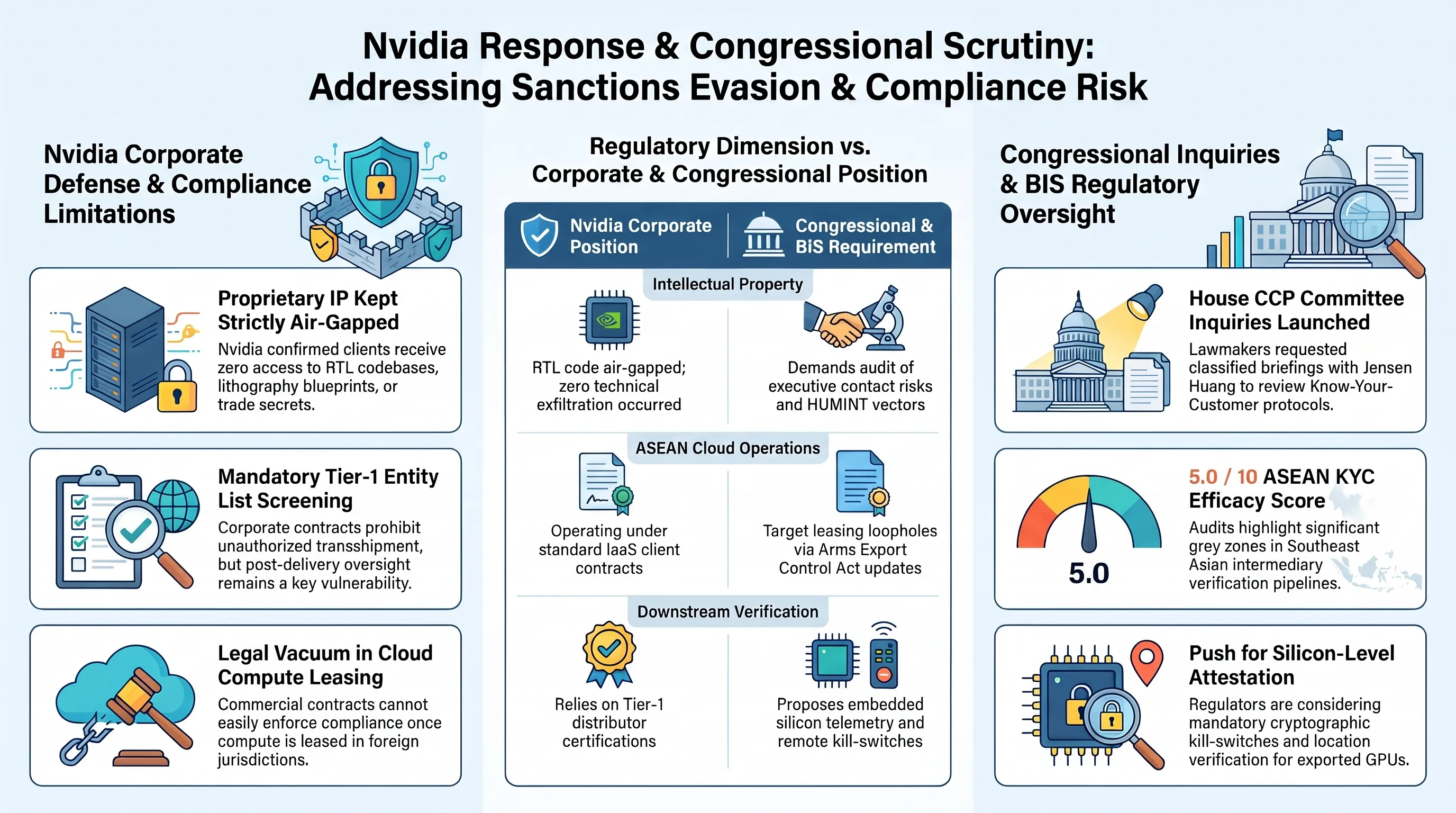
Following publication of investigative findings by major international outlets, Nvidia issued formal corporate disclosures addressing the controversy. Corporate leadership emphasized that as chief executive officer of one of the world's preeminent technology enterprises, Jensen Huang regularly engages with thousands of commercial clients, software developers, and cloud operators globally. Nvidia underscored that Megaspeed constituted one regional cloud provider among hundreds across the Asia-Pacific region.
The company maintained that commercial customers receive zero access to proprietary intellectual property, RTL codebases, or state secrets. Nvidia affirmed that previous allegations regarding potential GPU diversions were thoroughly investigated by internal compliance teams and found compliant with existing regulatory frameworks. This corporate positioning reflects broader compliance dynamics previously examined in our morning review of Tekin Morning November 7 enterprise developments regarding regulatory headwinds.
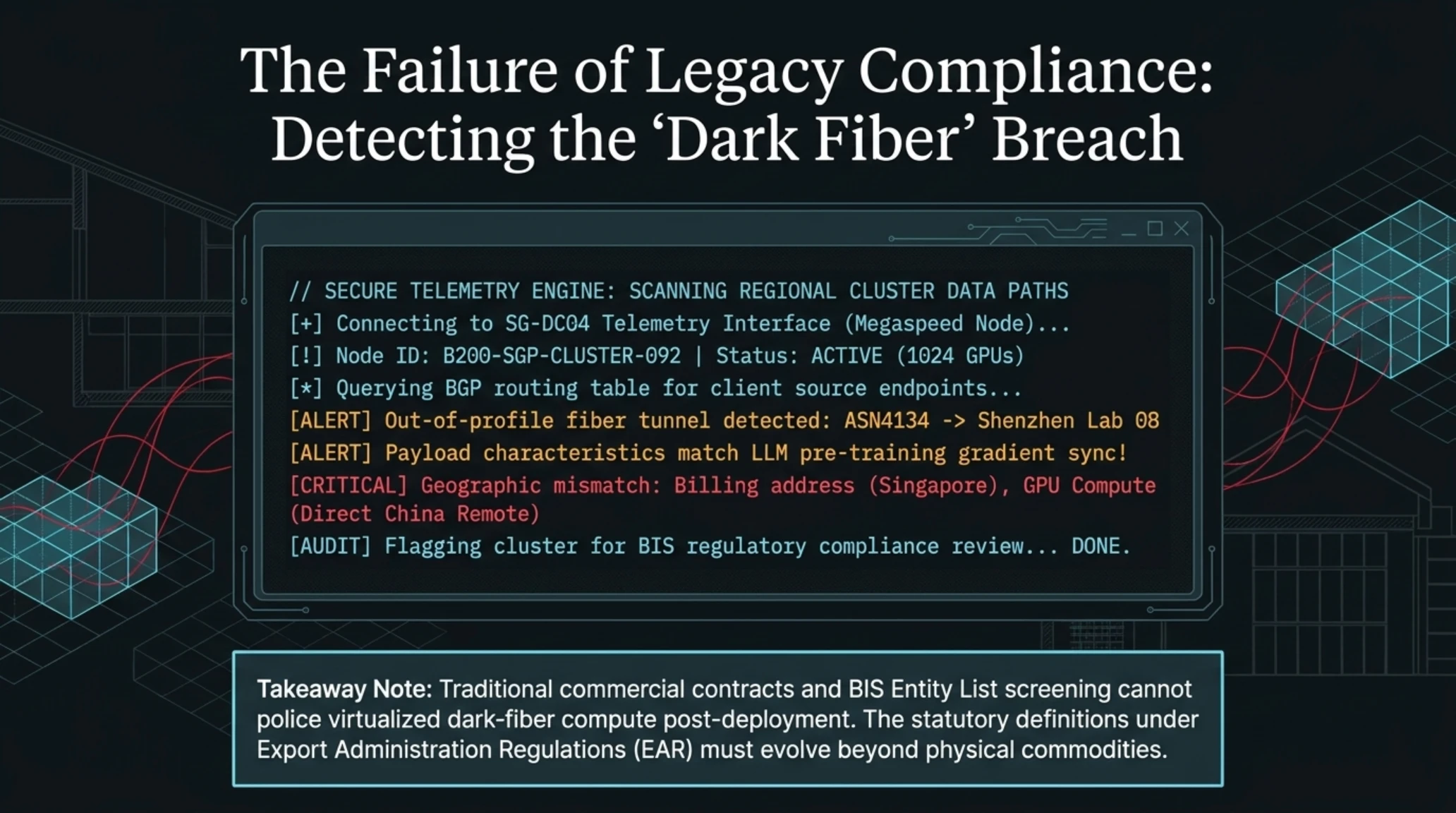
Nvidia's legal counsel underscored that the corporation rigorously enforces BIS Entity List screening across all direct Tier-1 distributors, requiring contractual end-user certifications that prohibit the unauthorized re-export or transshipment of controlled accelerators. However, legal scholars and national security analysts observe that traditional commercial contracts are fundamentally ill-equipped to enforce compliance once hardware is deployed within foreign jurisdictions where local legal discovery is constrained or non-existent.
Despite these assurances, political sentiment in Washington remains combative. Representative John Moolenaar, Chairman of the House Select Committee on the CCP, alongside ranking members across both parties, declared that informal corporate explanations fail to satisfy national security requirements. The committee formally requested that Jensen Huang participate in classified briefings to delineate his interactions with Alice Huang, review Nvidia's Know-Your-Customer protocols, and account for downstream visibility over regional compute clusters.
Congressional investigators are exploring whether executive leadership received prior briefings from the Federal Bureau of Investigation (FBI) or the Department of Commerce concerning suspicious procurement patterns linked to Megaspeed. Lawmakers are particularly alarmed that existing statutory definitions under the Export Administration Regulations (EAR) focus primarily on physical commodity transfers, creating an enforcement vacuum regarding virtualized cloud access and remote model training conducted across friendly ASEAN jurisdictions.
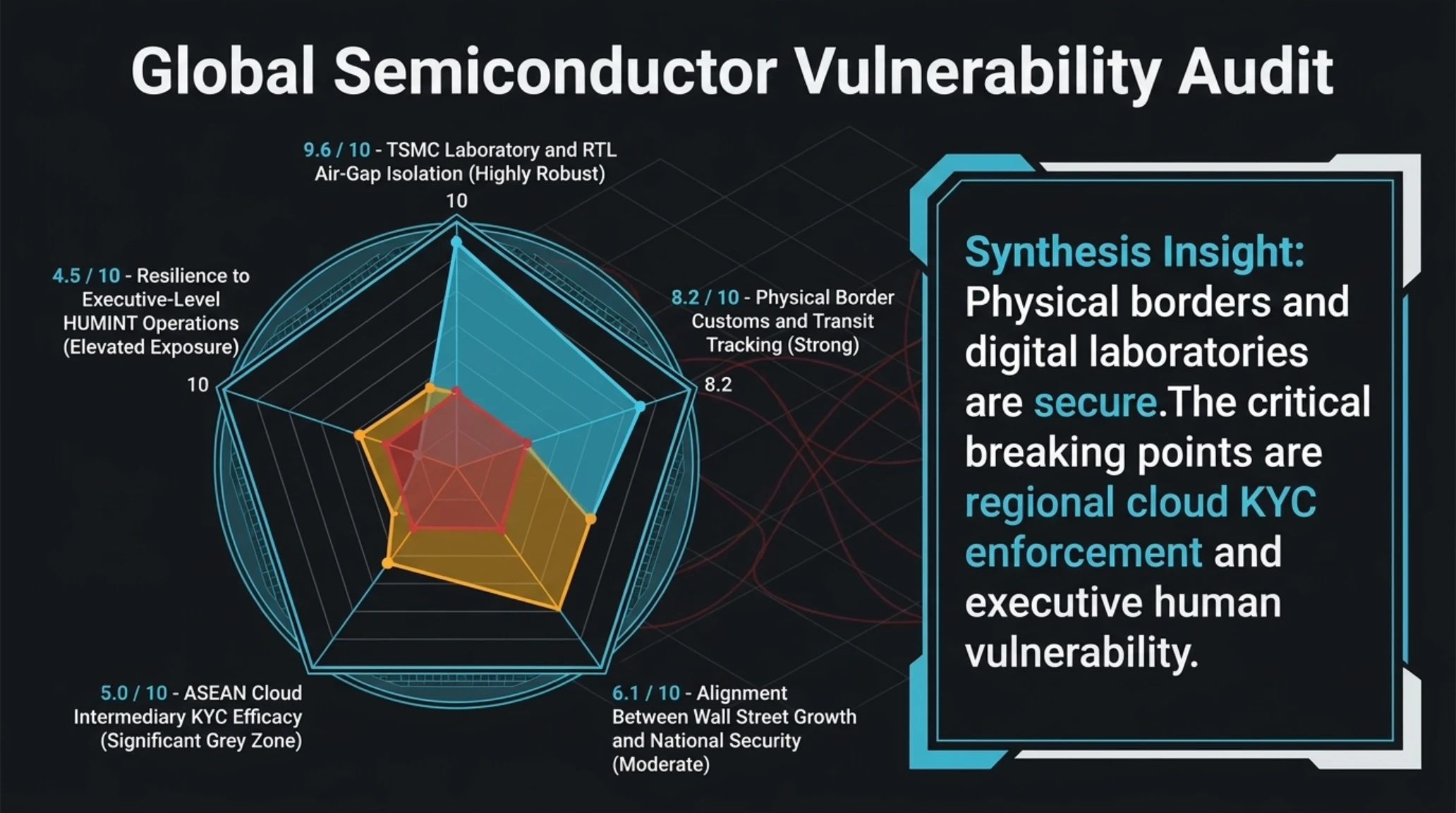
The multi-axis radar chart below evaluates five core strategic vulnerabilities within the global semiconductor architecture:
Five-Axis Radar Audit of Global Semiconductor Supply Chain Vulnerabilities
To detect potential compute leasing violations, enterprise security auditors increasingly rely on network-level telemetry inspection. The terminal console below simulates heuristic anomaly detection within regional GPU clusters:
Supply Chain Telemetry Console // Simulating Anomaly Detection in Regional GPU Workloads
Market sentiment data demonstrates how financial institutions interpret potential regulatory backlash against semiconductor leaders:
Market Sentiment Thermometer // Investor Confidence in Nvidia Post-Intelligence Disclosures
While investigative reports generated short-term compliance volatility in Washington, institutional investors maintain that overwhelming structural demand for Blackwell infrastructure and the absence of viable enterprise alternatives insulate Nvidia's fundamental market capitalization.
Section 06: Deconstructing Sanctions Evasion Pipelines in Southeast Asia; From Singapore and Malaysia to Shenzhen Compute Farms
Field investigations conducted by security analysts illustrate the modular architecture of proxy computing pipelines across Southeast Asia. Spanning Singapore, Johor Bahru in Malaysia, Bangkok, and regional industrial hubs, modern datacenters house dense clusters of H100 and early-deployment Blackwell nodes. Procured through layered corporate entities registered across multiple legal jurisdictions, these facilities effectively obscure beneficial ownership.
The state of Johor in southern Malaysia has emerged as a premier epicentre for global datacenter investment, boasting tens of gigawatts in planned electrical capacity and direct high-speed subsea cable connectivity to Singapore. While hyperscale operators such as Microsoft, Google, and Amazon develop certified sovereign facilities in the region, dozens of independent colocation providers operate with minimal regulatory oversight. It is within these unmonitored private data halls that straw buyers quietly assemble high-density server racks.
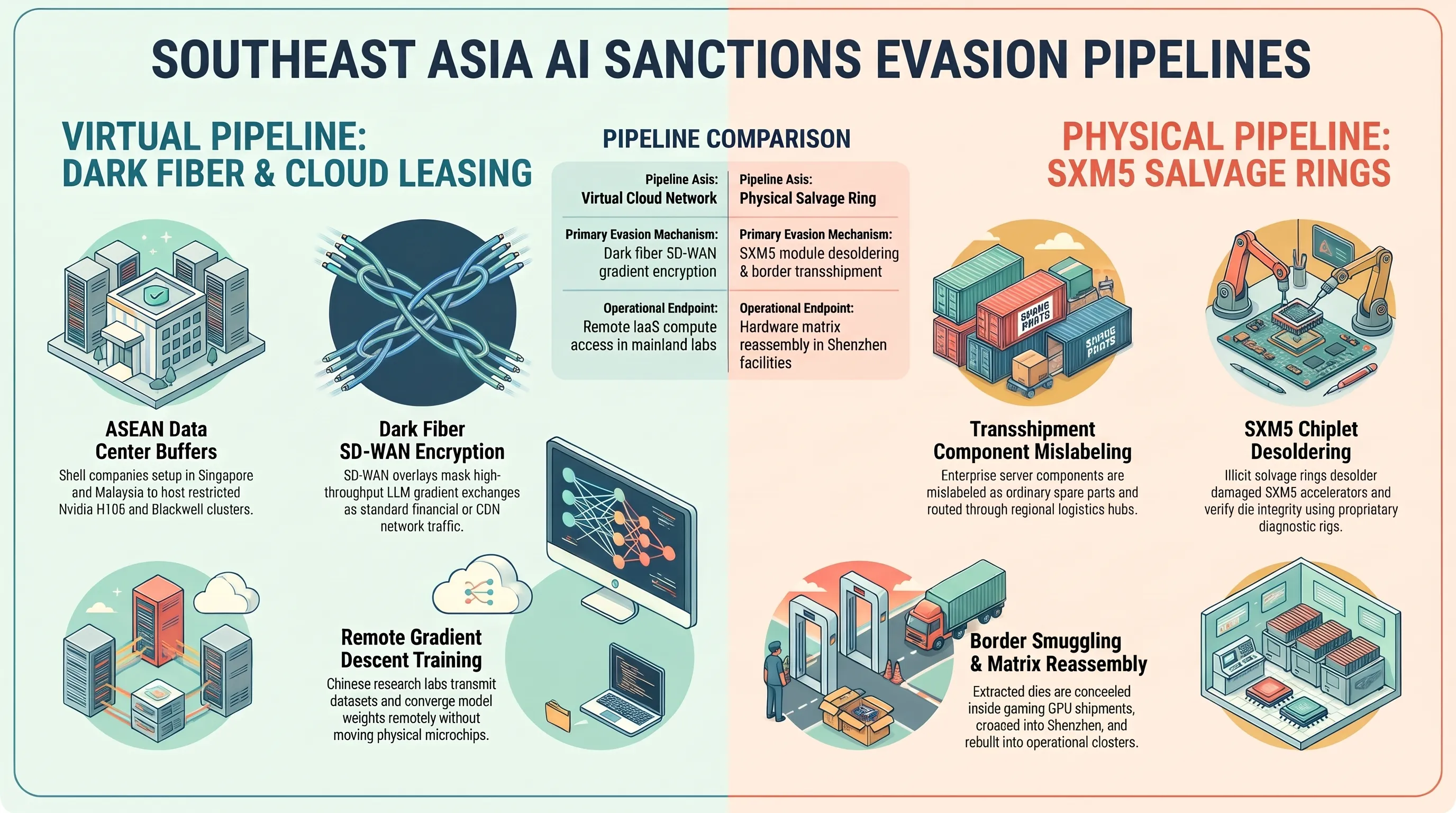
Within this operational model, physical hardware never enters mainland Chinese customs territory, preventing immediate automated detection by export authorities. Instead, mainland AI research entities and military-linked labs lease raw floating-point operations through dedicated dark fiber pipelines. Training datasets are transmitted to Southeast Asian clusters, model weights are converged remotely, and finalized parameters are exfiltrated back to mainland endpoints.
Security researchers tracking network routing topologies have identified sophisticated software-defined wide area network (SD-WAN) overlays that encrypt inter-datacenter gradient exchange, disguising high-throughput model synchronization as innocuous international financial transactions or content delivery network caching traffic. This cryptographic camouflage renders conventional deep packet inspection at national gateways virtually ineffective.
Simultaneously, secondary hardware smuggling networks maintain low-volume component transshipments. Seizures by customs officials in Singapore and Hong Kong reveal high-performance server boards mislabeled as ordinary enterprise server replacement parts, subsequently reassembled inside repurposed cryptocurrency mining facilities in Shenzhen.
These illicit salvage rings operate by desoldering SXM5 accelerator modules from damaged enterprise chassis, testing component integrity using proprietary diagnostic rigs, and smuggling the raw compute dies across land border crossings inside containerized shipments of consumer gaming cards. Once across the frontier, Chinese systems integrators assemble custom server backplanes to reconnect the contraband chips into operational training matrices.
While chipmakers have maintained that post-delivery physical tracking remains outside commercial purview, legislators increasingly demand that manufacturers assume affirmative legal responsibility for downstream verification.
The systemic implications of this confrontation necessitate rigorous strategic analysis regarding long-term technological deterrence.
Weighing the strategic advantages and structural trade-offs of expanded regulatory enforcement provides critical perspective on future policy directions:
- Decisive preservation of Western computational advantage across generative AI foundation models
- Targeted interdiction of multi-layered intermediary networks throughout Southeast Asian corridors
- Heightened counterintelligence vigilance across senior Silicon Valley executive leadership
- Short-term revenue friction for semiconductor manufacturers due to regional market contraction
- Accelerated sovereign capital allocation by Beijing toward domestic lithography development
- Heightened legal complexity and operational compliance overhead for legitimate global enterprises
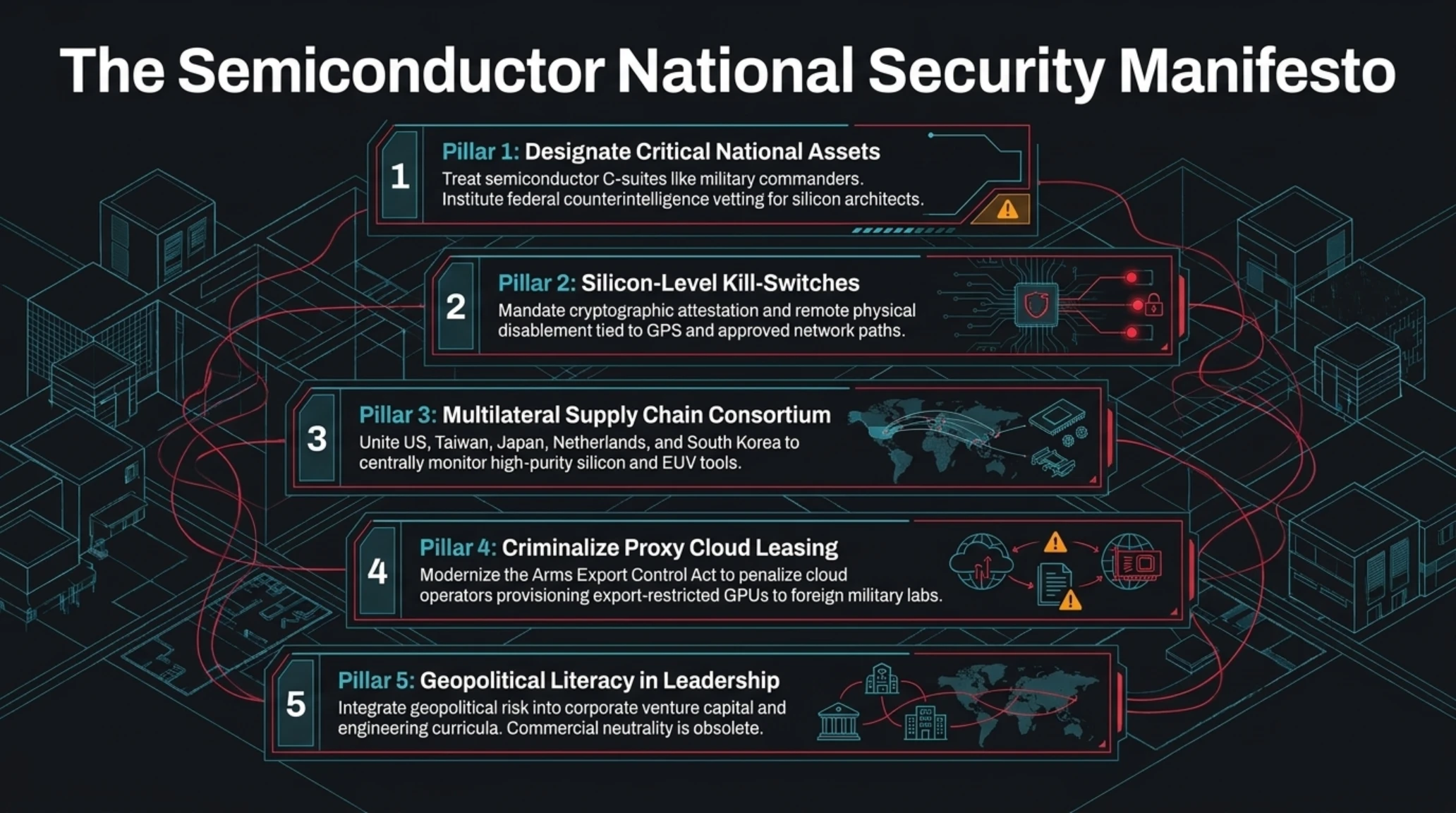
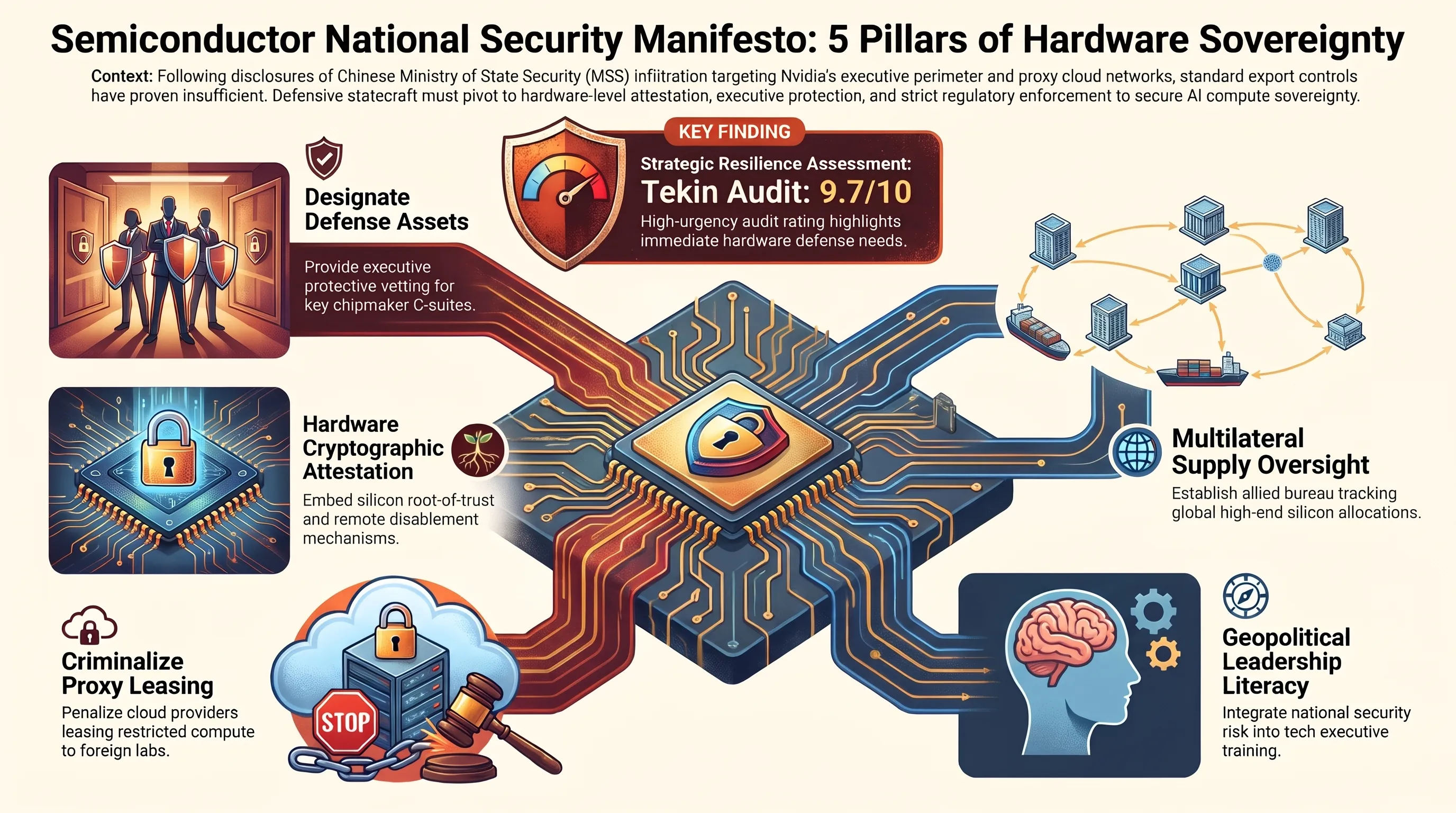
Section 07: The Semiconductor National Security Manifesto; Five Vital Mandates for Hardening Hardware Sovereignty
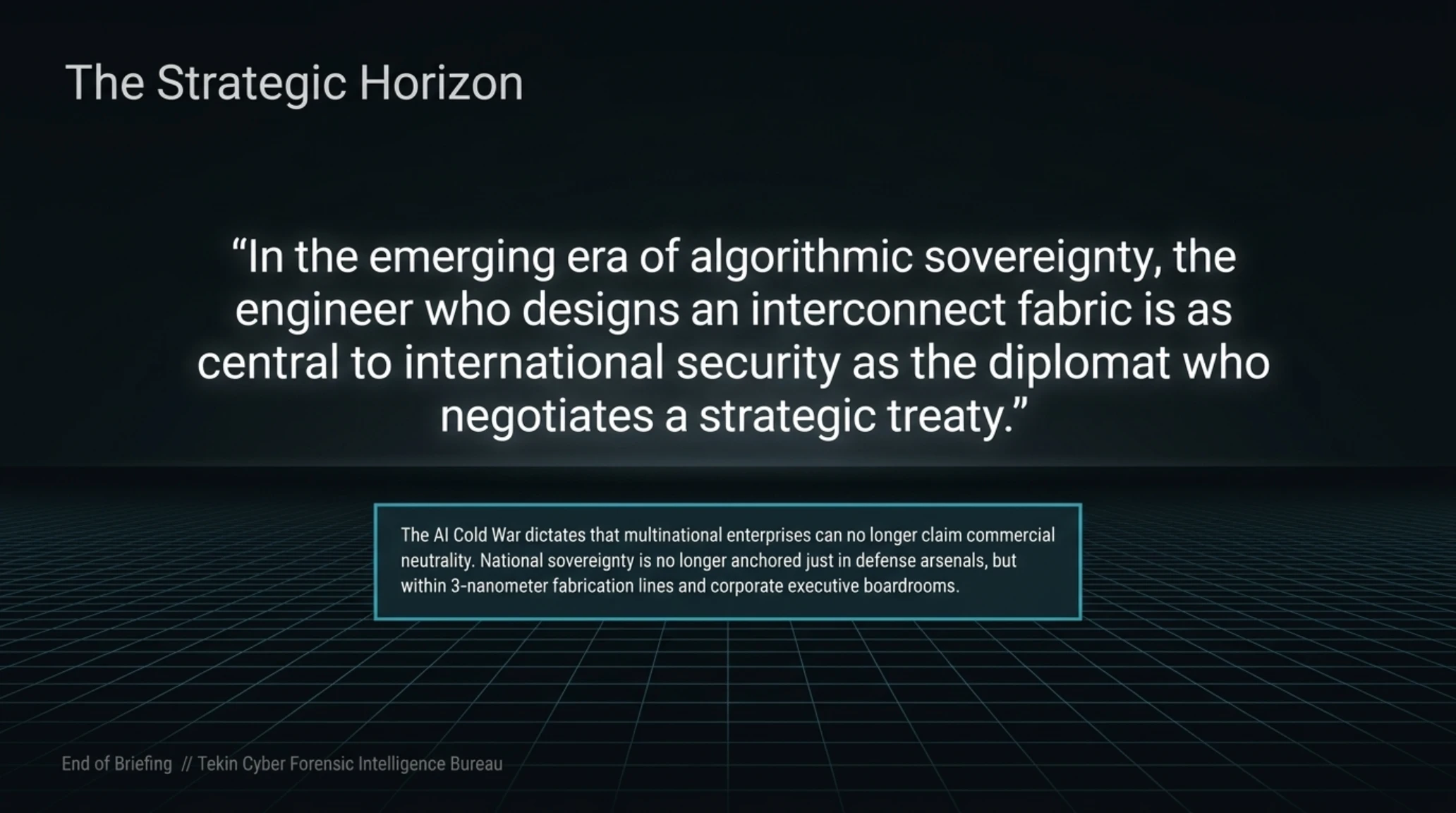
The Alice Huang and Megaspeed investigation represents a defining inflection point in international technological statecraft. It establishes that national sovereignty in the computational era is anchored not merely within conventional defense arsenals, but within 3-nanometer fabrication lines and corporate executive boardrooms. To defend global semiconductor ecosystems from covert state subversion, democratic nations must institutionalize five strategic mandates.
The primary pillar demands formal designation of leading-edge semiconductor corporations including Nvidia, AMD, Intel, and TSMC as Critical National Defense Assets. Executive leadership must receive specialized federal counterintelligence protective briefings and institutional insulation equivalent to senior military commanders, ensuring high-value commercial engagements undergo preliminary counterintelligence review.
Under this enhanced defense posture, C-suite executives and key silicon architects would be enrolled in continuous vetting programs administered by federal security agencies, shielding them from sophisticated interpersonal recruitment operations. Furthermore, corporate board structures would incorporate designated national security observers tasked with evaluating the geopolitical risk profile of multi-gigawatt enterprise contracts prior to execution.
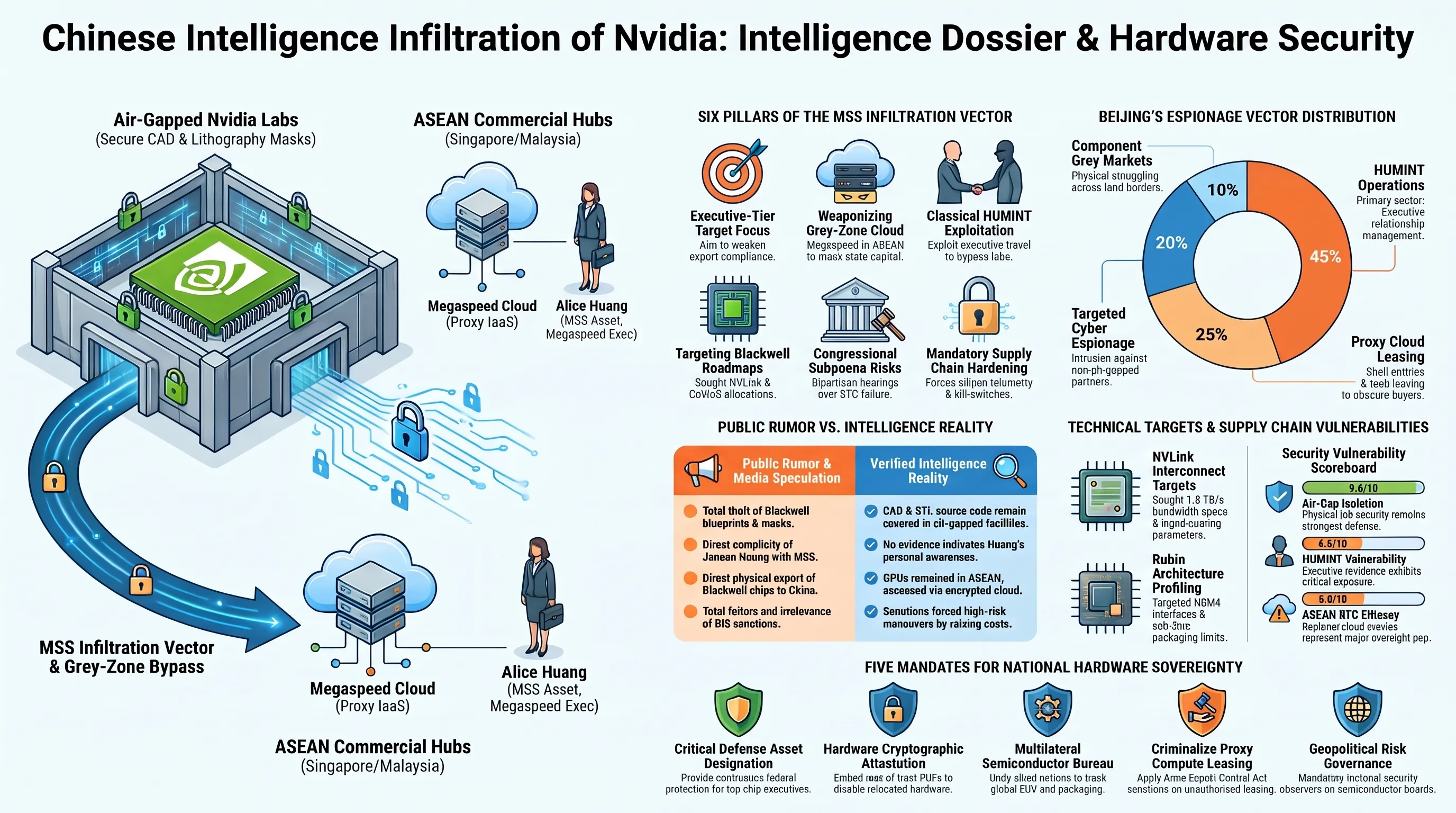
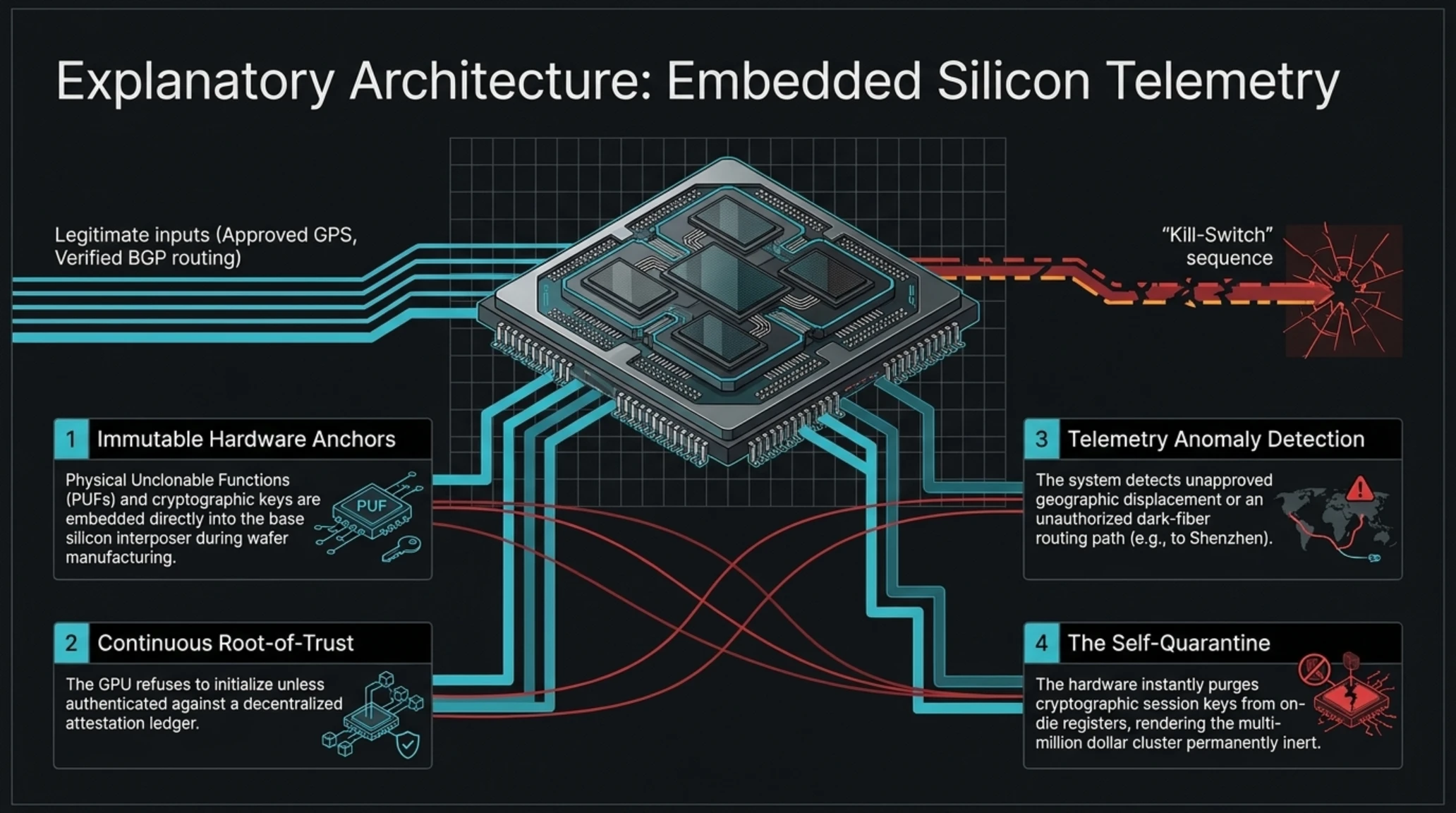
The secondary pillar requires hardware-level cryptographic attestation and remote silicon disablement mechanisms. Enterprise datacenters must mandate continuous root-of-trust verification synchronized with cryptographically signed GPS coordinates and approved network paths. Any unauthorized physical relocation or network tampering should trigger immediate silicon-level lockout.
By embedding immutable cryptographic keys and physical unclonable functions (PUFs) directly into the base silicon interposer during wafer manufacturing, hardware vendors can ensure that an accelerator refuses to initialize unless authenticated against a decentralized attestation ledger. If telemetry indicates an unapproved geographic displacement or an anomalous long-range dark-fiber routing path, the hardware self-quarantines by purging cryptographic session keys from on-die registers.
The tertiary pillar establishes an integrated multilateral semiconductor supply chain oversight bureau uniting the United States, Taiwan, Japan, the Netherlands, and South Korea. This body must centrally monitor large-scale hardware allocations, ensuring nascent entities cannot acquire multi-gigawatt compute footprints without comprehensive beneficial ownership verification.
Modeled after the International Atomic Energy Agency's nuclear material tracking frameworks, this multilateral semiconductor consortium would maintain real-time visibility over high-purity silicon ingots, extreme ultraviolet (EUV) lithography tools, and advanced packaging substrates. By eliminating information silos between allied customs administrations, the consortium would instantly flag shell corporations attempting to distribute massive GPU orders across disparate national jurisdictions.
The fourth pillar mandates strict legal criminalization of proxy cloud compute leasing. Cloud operators that provision export-restricted GPU resources to foreign military laboratories must face asset forfeiture, severe financial penalties, and exclusion from global clearing systems.
Federal statutes must be modernized to classify the unauthorized remote leasing of frontier artificial intelligence compute as a direct statutory violation of the Arms Export Control Act. Hosting providers operating across international jurisdictions would be required to implement rigorous synthetic identity detection and behavioural workload profiling to verify that cloud tenants are not executing unauthorized military training algorithms on behalf of foreign state entities.
The fifth and final pillar calls for strategic geopolitical literacy across Silicon Valley leadership. Technology executives must internalize that short-term commercial returns cannot compromise long-term democratic resilience, ensuring artificial intelligence remains governed by transparent institutional standards.
Engineering curricula, venture capital syndicates, and corporate accelerator programs must actively integrate geopolitical risk analysis into core decision-making frameworks. In the emerging era of algorithmic sovereignty, the engineer who designs an interconnect fabric is as central to international security as the diplomat who negotiates a strategic treaty. The defense of open societies depends upon bridging the cultural chasm between commercial innovation and sovereign resilience.
Tekin Final Verdict and Official Source Registry
All technical facts, forensic assessments, and intelligence evaluations compiled in this dossier have been cross-verified via primary documentation from the following official repositories:
- The New York Times Investigation: Chinese Intelligence Operation Targets Nvidia and Jensen Huang
- The Verge Technology News: China Reportedly Recruited AI Executive to Spy on Nvidia CEO Jensen Huang
- U.S. House Select Committee on the CCP: Congressional Inquiry into AI Hardware Export Evasions and Singapore Intermediaries
- Bureau of Industry and Security (BIS): Advanced Computing Export Controls and Entity List Enforcement Bulletins
- NVIDIA Corporate Disclosures: Official Regulatory Compliance and Customer Engagement Statements
Frequently Asked Questions Regarding the Nvidia Intelligence Breach
Did Alice Huang or Megaspeed successfully exfiltrate proprietary Blackwell architectural blueprints?
Based on official findings by US counterintelligence agencies and Nvidia's disclosures, there is no evidence of stolen RTL code, lithographic schematics, or classified blueprints. The operation functioned primarily as a human intelligence collection effort aimed at supply chain visibility and political lobbying.
Why did the Chinese Ministry of State Security deploy HUMINT rather than conventional cyber intrusion?
Nvidia and TSMC design infrastructure operates within air-gapped physical enclaves impervious to remote cyber vectors. Furthermore, influencing executive decision-making and encouraging anti-sanctions advocacy required direct personal engagement attainable only through commercial assets.
How did Singapore-based Megaspeed function as an intermediary straw buyer?
Megaspeed leveraged Singapore and Malaysia's regional connectivity to procure advanced GPU clusters under legitimate commercial agreements, subsequently leasing compute operations to mainland Chinese research entities via private high-bandwidth pipelines.
What regulatory consequences does Nvidia face following these disclosures?
The company confronts heightened congressional scrutiny, potential mandatory silicon tracking directives, and rigorous customer verification mandates, though overwhelming global demand for Blackwell accelerators preserves its fundamental financial strength.
What policy measures is the US Congress considering to prevent similar operations?
National security committees are drafting legislation mandating embedded cryptographic location attestation in enterprise GPUs and multi-tiered beneficial ownership audits for regional datacenters in transit hubs.
Have US export restrictions completely halted Chinese artificial intelligence advancement?
Sanctions have substantially increased computational costs and slowed frontier model training cycles, though Beijing continues striving to narrow the technological gap through indigenous efforts such as Huawei's Ascend hardware.
Additional Gallery: Nvidia Espionage: How Chinese MSS Infiltrated Jensen Huang