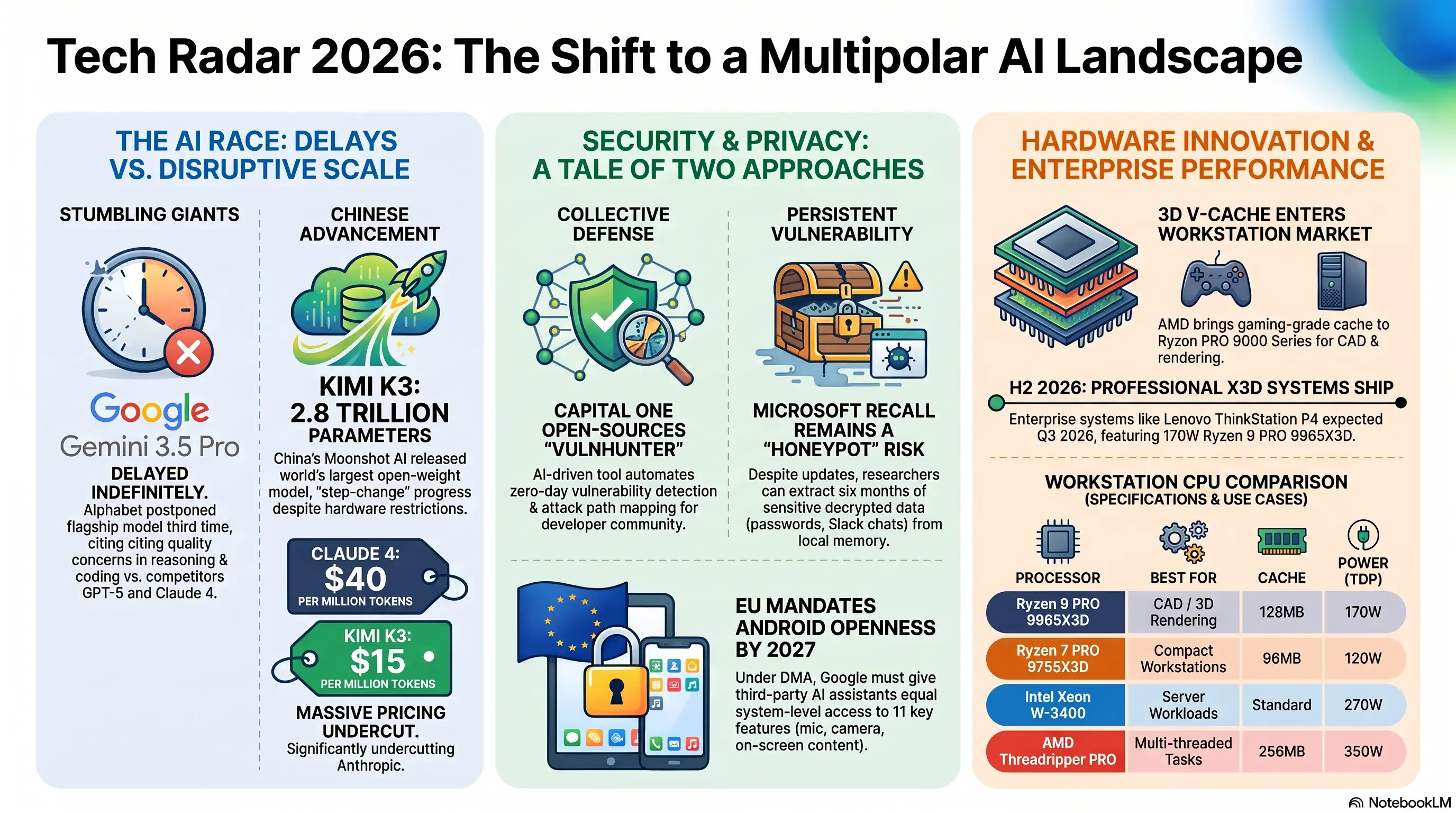
Saturday night July 18, 2026 brought six strategic analyses. Google indefinitely postponed the Gemini 3.5 Pro launch. Capital One open-sourced its VulnHunter security tool. The EU required Google to open 11 Android system-level features to rival AI assistants. Microsoft Recall continues facing security criticism. AMD brought 3D V-Cache technology to Ryzen PRO processors. China's Moonshot AI released Kimi K3 at $15 per million tokens, creating a second DeepSeek moment.
Good Evening, Saturday! July 18, 2026
End your day with six strategic analyses from the worlds of AI, security, and technology.
- 🎮Google Stuck- Gemini 3.5 Pro indefinitely delayed
- 🎧Capital One Security- VulnHunter goes open source
- 🚀EU Lays Down Law- Android must open up
- 🗡️Recall Still Risky- Privacy concerns persist
- 📰AMD Goes Pro- Ryzen PRO gets 3D V-Cache
- 🎮China Shakes Markets- Kimi K3 challenges US dominance
Google Trapped in Gemini 3.5 Pro Limbo
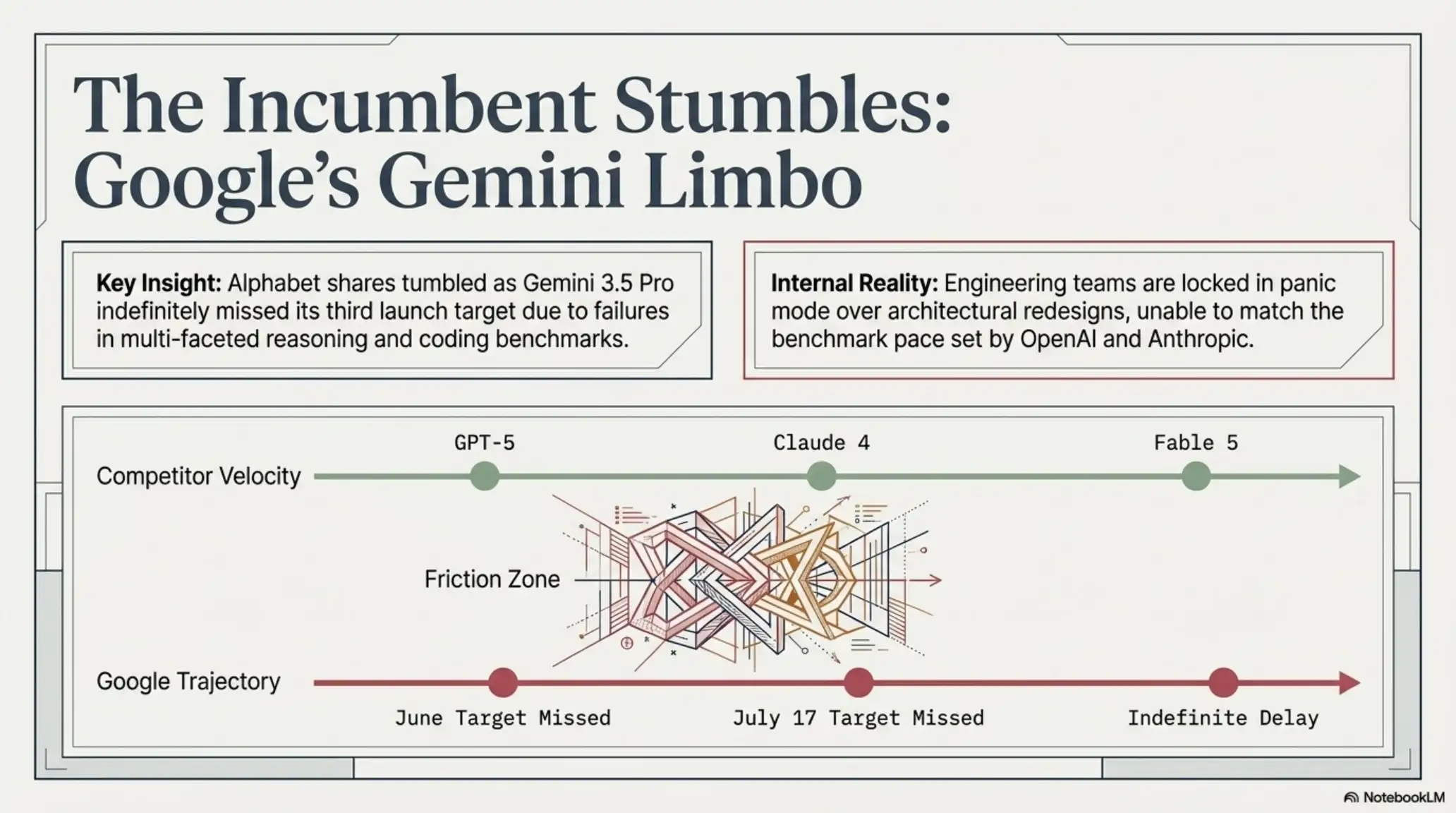
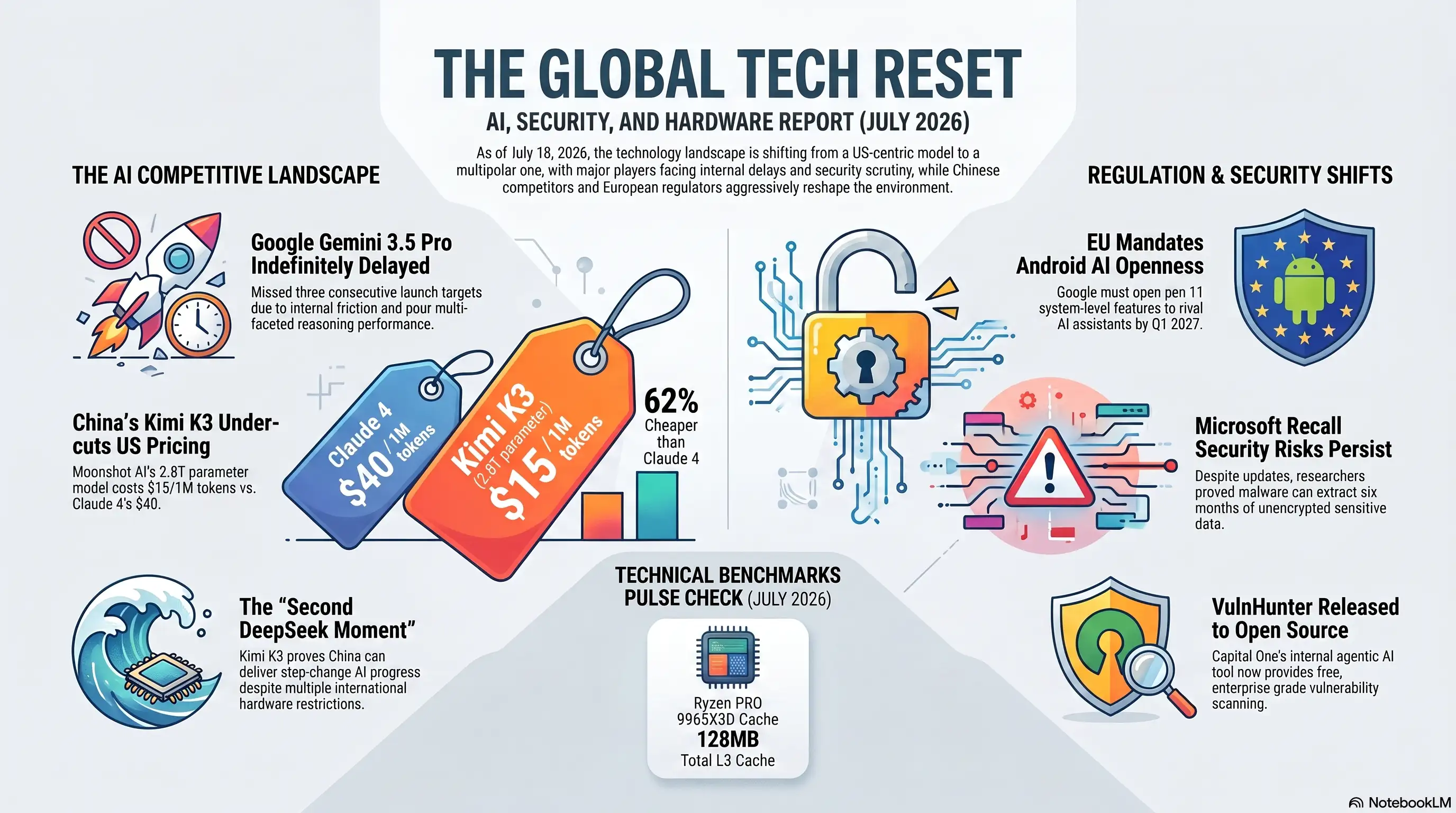
Google indefinitely postponed the highly anticipated Gemini 3.5 Pro launch, citing quality concerns and competitive pressure from OpenAI's GPT-5 and Anthropic's Claude 4. Internal reports indicate the model's performance in multi-faceted reasoning tasks has failed to meet expectations, leaving developers and enterprise customers in uncertainty.
The LA Times reported that Alphabet Inc. is months behind in delivering Gemini 3.5 Pro as the company struggles to improve its capabilities, particularly in coding. Sources familiar with the matter said the flagship model was supposed to be Google's strongest yet but disappointed in internal testing.
Why the Delay Matters So Much
CNBC wrote that Alphabet shares tumbled on news of the Gemini 3.5 Pro delay. 9to5Google noted that in mid-May, Google announced Gemini 3.5 Flash at I/O 2026 and said the Pro version would arrive in June. Onstage, Google said it "shows tremendous progress." That deadline passed without any updates.
Tech-Insider reported that July 17, 2026 had been circled on developers' calendars for weeks. It's the date multiple sources say Google would finally ship Gemini 3.5 Pro. But Google has yet to confirm launch, pricing, or specs.
Understanding the AI Model Hierarchy
- Flash Models: Lightweight, cost-optimized AI models designed for speed and efficiency, suitable for basic tasks
- Pro Models: Flagship AI models with maximum capabilities for complex reasoning, coding, and multi-modal understanding
- Multi-faceted Reasoning: The ability of AI to handle complex problems requiring multiple types of logic simultaneously
- Benchmark Performance: Standardized tests measuring AI model capabilities across coding, reasoning, and comprehension tasks
Behind the Scenes: What Went Wrong?
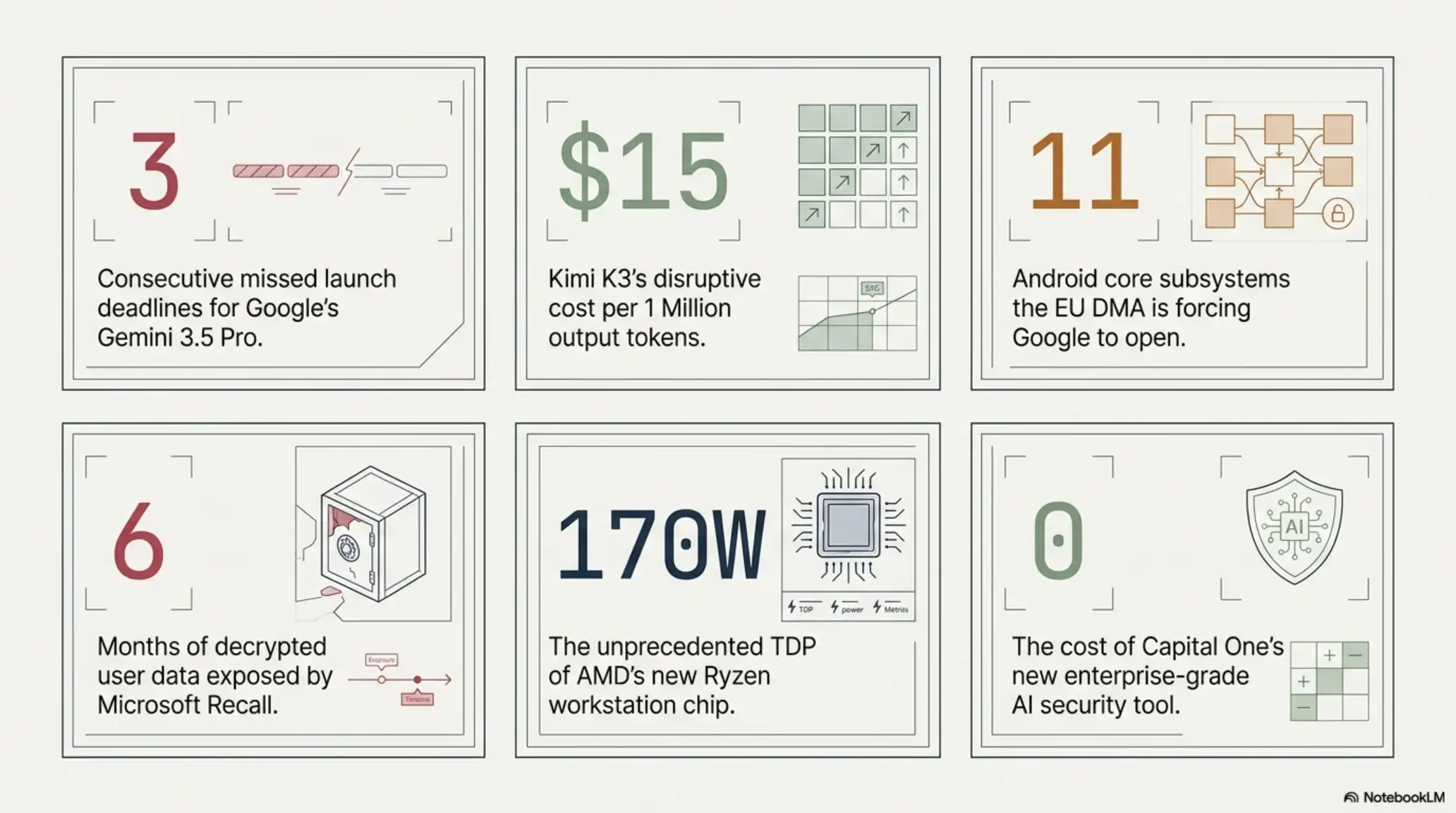
According to Bloomberg, ten current and former employees described a sense of frustration inside the company. The main concern is that Google is losing ground while Anthropic and OpenAI ship models that outperform Gemini. TechTimes wrote that Gemini 3.5 Pro has now missed its launch target three consecutive times: June, then July 17, and now beyond.
Search Engine Journal reported that Julia Love and Davey Alba broke the delay story citing people familiar with the matter. Technology.org noted the delay comes as AI developers face intense pressure on performance, cost, and enterprise features.
Internal Turmoil at Google AI
Bloomberg's investigation revealed deep organizational friction. Engineering teams are clashing over architecture decisions, with some advocating for a complete redesign rather than incremental patches. One former senior engineer described the atmosphere as 'panic mode' after realizing Claude 4 and GPT-5 were outpacing Gemini in benchmarks. The delay isn't just technical—it's existential for Google's AI strategy.
Competitive Pressure Intensifies
The situation highlights how even tech giants like Google face serious challenges amid fierce AI competition. Internal sources say different teams are colliding and engineers feel demoralized. The company that once dominated search now finds itself playing catch-up in the AI race it helped pioneer.
What makes this particularly concerning is the timing. OpenAI and Anthropic have shipped multiple major updates in the past six months, each one expanding their lead. Google's silence on Gemini 3.5 Pro speaks volumes about the technical hurdles the company faces.
Capital One Open Sources VulnHunter Security Tool
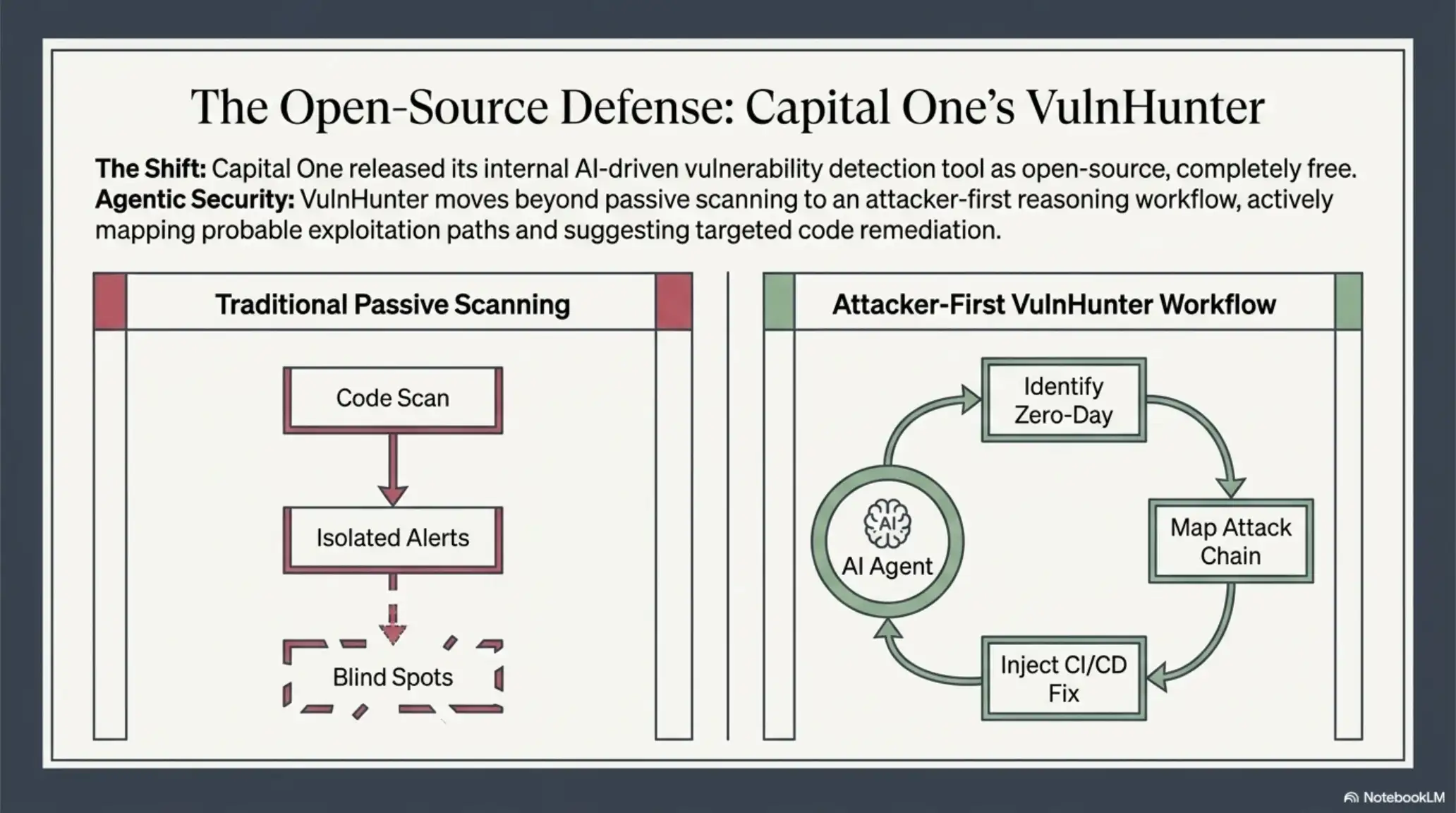
Capital One released VulnHunter, a powerful AI-driven vulnerability detection tool used internally for years, as open source. The tool automates security scanning across codebases, identifies zero-day vulnerabilities, and integrates with CI/CD pipelines. This represents a significant shift in how financial institutions approach cybersecurity transparency.
The official Capital One Tech website wrote that VulnHunter, developed internally, is not a traditional passive vulnerability scanner. It represents a shift in defensive tooling with an agentic reasoning workflow to identify potentially exploitable flaws, map probable attack paths, and suggest highly targeted code fixes.
Technical Capabilities of VulnHunter
TechGig reported the tool provides a "forward-looking analysis with an attacker-first approach" to identify real exploitation paths and reduce false positives. VentureBeat wrote that Capital One on Thursday released VulnHunter, an open-source, agentic AI security tool that scans source code for exploitable vulnerabilities.
DevBytes noted VulnHunter analyzes source code using an attacker-first approach. GitHub hosts the official project repository where developers can integrate it into their projects. The tool uses advanced pattern recognition to identify vulnerability chains that traditional scanners miss.
VulnHunter Key Features
- AI-powered automatic vulnerability detection
- Attack path mapping and chain analysis
- CI/CD pipeline integration
- False positive reduction algorithms
- Targeted remediation suggestions
- Open source and completely free
- Attacker-first security analysis
Impact on Fintech Industry
This open source release demonstrates how Capital One has evolved beyond a traditional financial institution into a technology leader. By sharing its internal tools, the company helps elevate security across the entire industry. For fintech companies and startups with limited security resources, VulnHunter could be a game changer.
The tool provides enterprise-grade security capabilities free to developers. Security researchers have praised the release, noting that tools of this sophistication are typically proprietary and expensive. Capital One's decision to open source VulnHunter signals a broader trend of financial institutions recognizing that collective security benefits everyone.
Several major tech companies have already begun integrating VulnHunter into their security workflows. Early adopters report significant reductions in vulnerability detection time and improved accuracy compared to legacy scanning solutions.
EU Forces Google to Open Android for AI Assistants
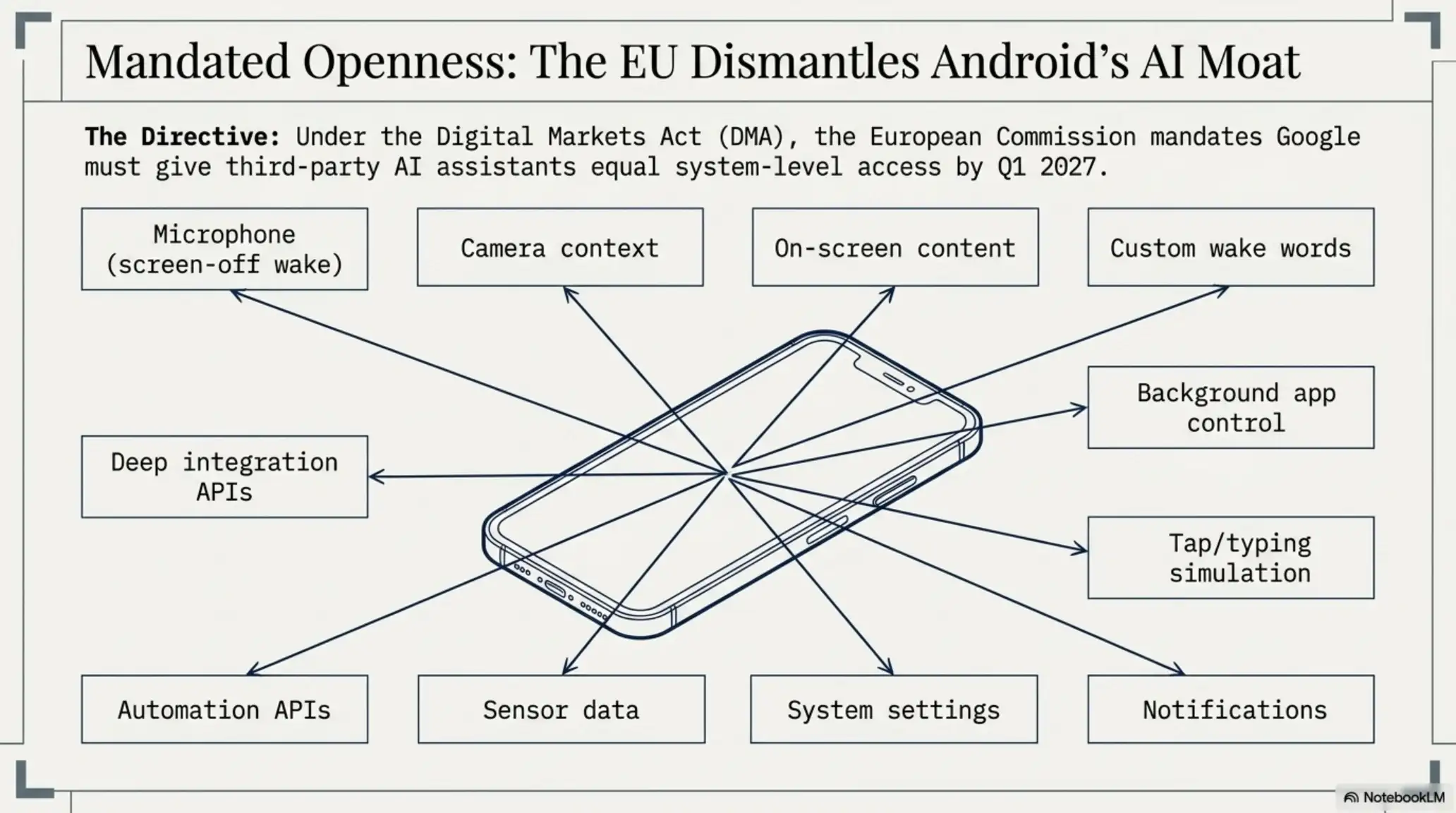
The European Union issued a new ruling under the Digital Markets Act (DMA) requiring Google to integrate AI capabilities across Android in a way that gives third-party AI assistants equal access to system-level features. The goal is preventing Google from using Gemini AI to create unfair competitive advantages. Compliance deadline: Q1 2027.
The European Commission announced on July 16, 2026 that today's decision ensures users can activate their AI assistant of choice through voice commands, similar to "Hey Google" prompt. Users will be able to use third-party AI assistants to carry out actions in apps on their behalf.
Details of the EU Mandate
The Verge wrote that the Android decision specifies how Google must give rival AI assistants the same kind of system features and data access it gives Gemini. In practical terms, it requires more interoperability and lets users—not Google—decide whether rival tools can access their device data and hardware.
The Hacker News reported that the European Commission on Thursday ordered Google to give rival AI assistants the same access to Android that Gemini already has: camera, microphone, whatever's on screen, a wake word that fires with the screen off, and the ability to drive other apps in the background by mimicking taps and typing.
11 Android Features That Must Open
- Microphone access with screen off for wake word detection
- Camera access for visual analysis and context understanding
- On-screen content for situational awareness
- Custom wake word functionality (like Hey Google)
- Background app control and automation
- Tap and typing simulation for cross-app workflows
- Notification access and management
- System settings integration
- Sensor data access for contextual intelligence
- Automation capabilities across system
- Deep system integration APIs
Google's Response and Industry Reaction
Ars Technica wrote that per EU regulators, users should be able to install an AI system of their choice without losing features. The Commission says these measures are designed to preserve user privacy and device integrity. The Verge in another article noted Google is playing the AI regulation game better than Apple.
Techi.com reported the European Commission closed the Android AI spec proceeding it opened in January with binding spec actions: Google must give rival Android AI assistants effective access to 11 OS features that help Gemini listen, understand, and act for the user.
Impact on Android's Future
TechTimes wrote that the European Commission has issued two binding decisions under the Digital Markets Act requiring Google to give rival AI assistants the same Android system-level integration it reserves for Gemini and share the search query data and rankings that underpin its lead in AI-powered search—starting in early January 2027.
This decision could completely transform the AI competition landscape in Europe. Assistants like Alexa, Siri, and others can now compete with Gemini on equal footing. The ruling sets a precedent that may influence AI regulation globally.
EU Decision Timeline
- January 2026: DMA Proceeding Opens — European Commission begins Android AI spec investigation
- July 16, 2026: Official Mandate Announced — EU declares 11-feature access requirement
- Q1 2027: Compliance Deadline — Google must open all specified features
- Q2 2027: Compliance Review — EU assesses Google's implementation
Microsoft Recall Remains Concerning Despite Updates
A year after launch, Windows Recall continues facing security criticism despite privacy updates. The powerful AI screenshot feature (now opt-in, biometric-protected) still stores sensitive data locally in ways researchers call "alarmingly easy to inspect." Security experts warn the feature creates a honeypot for malware targeting local data stores.
Windows Forum wrote that then came technical findings: early Recall versions stored sensitive data in ways researchers found alarmingly easy to inspect. The problem wasn't that the public didn't understand the feature. The problem was the public understood the feature well enough to back away.
Persistent Security Issues
Gadget Hacks wrote that on the privacy question, the core architectural point is simple: Recall keeps its screenshots on device. They never get transmitted to Microsoft servers. Microsoft says it cannot access them, and because data never leaves your device, cannot be used for ad targeting or training AI models.
Beyond Scale Tech reported that security researcher Alexander Hagenah in TotalRecall Reloaded (April 2026) demonstrated complete extraction of Recall data including passwords, banking sessions, and six months of Slack conversations, all from a standard user account without any special privileges.
- Local data storage only
- Opt-in by default
- Biometric protection layer
- No transmission to Microsoft servers
- User controls retention period
- Easy extraction by malware
- Decrypted data in memory
- Six months of sensitive data
- Requires additional security review
- Vulnerable to privilege escalation
Microsoft's Defense
CSO Online wrote that in an email response to CSO, a Microsoft spokesperson said: "After careful investigation, we determined that the access patterns demonstrated are consistent with intended protections and controls in place, and do not represent a bypass of a security boundary or unauthorized access to data."
Computerworld reported Microsoft initially planned to release Recall in June as a flagship feature for its Copilot Plus PCs. Those plans stalled amid security and privacy backlash, as experts claimed it created a treasure trove of data for hackers.
The Core Recall Vulnerability
The fundamental issue isn't that Recall stores data locally—it's how that data becomes accessible. Security researcher Kevin Beaumont demonstrated that malware running with standard user privileges can extract Recall's database, decrypt it using system calls, and exfiltrate everything. Microsoft's biometric protection only guards initial access, not memory contents during active use. This creates a window where sophisticated malware can harvest months of screenshots containing passwords, financial data, and confidential communications.
What This Means for Enterprise Users
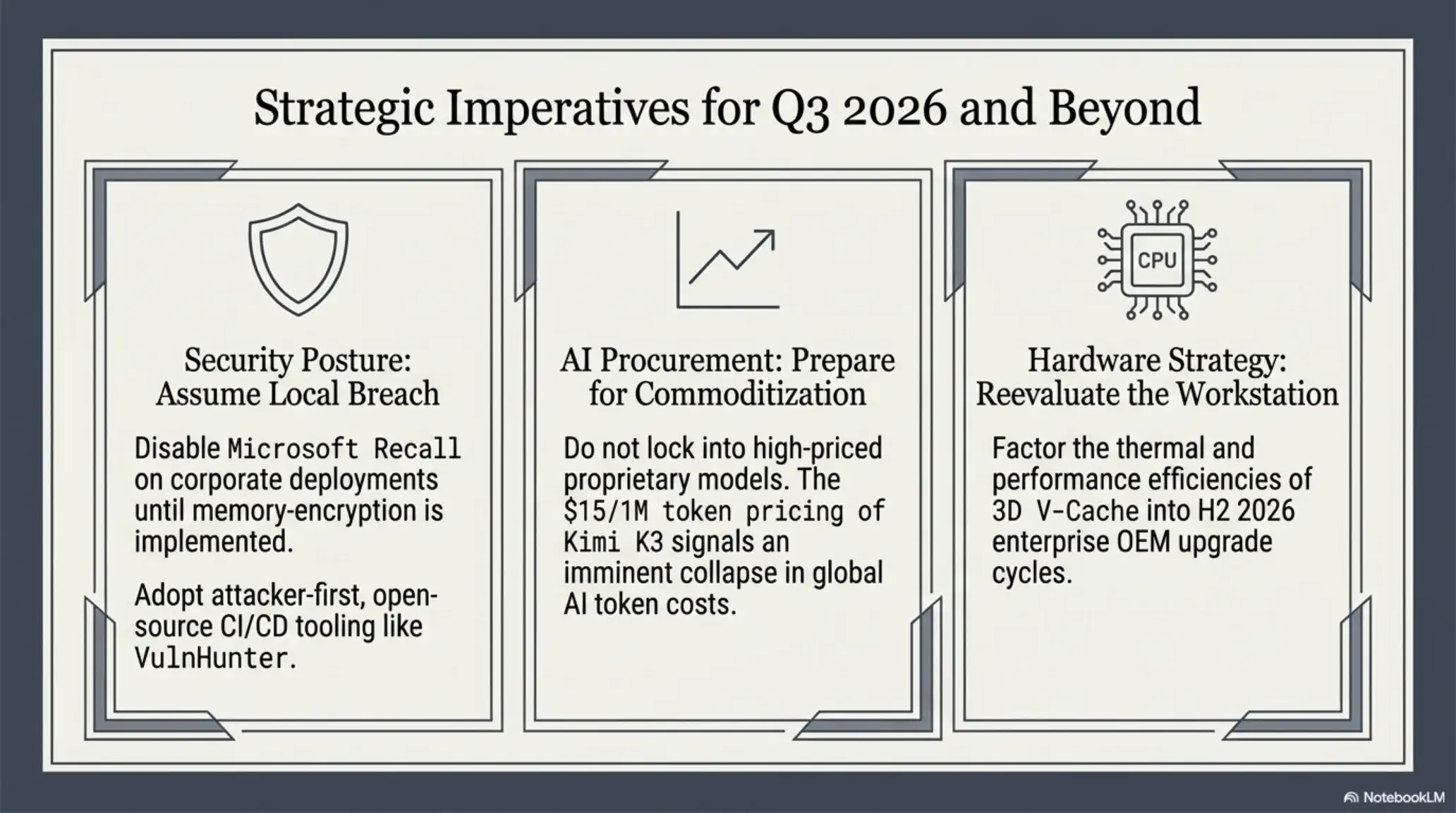
Many IT administrators have disabled Recall on corporate devices despite Microsoft's assurances. The risk calculus is simple: the potential for data breach outweighs any productivity benefits. Security firms are developing additional protection layers for organizations that want Recall's capabilities without the exposure.
The controversy highlights a broader tension in AI-powered features: convenience versus security. Microsoft faces the challenge of making Recall both useful and safe, a balance it hasn't yet achieved according to independent security researchers.
AMD Brings 3D V-Cache to PRO Series Workstations
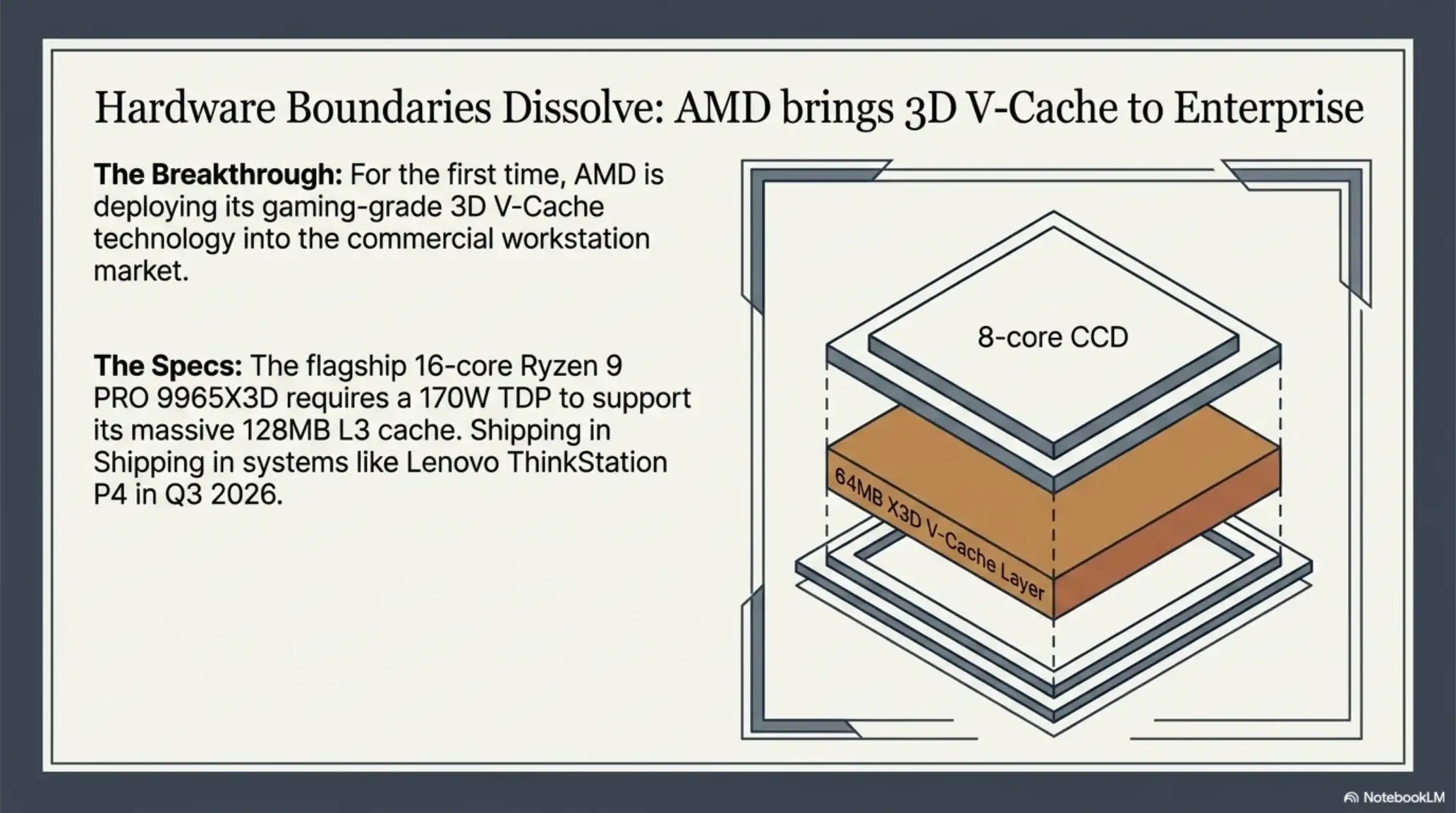
AMD announced six new Ryzen PRO 9000 Series processors with 3D V-Cache technology for the first time in the enterprise/workstation product line. Models include the Ryzen 9 PRO 9965X3D with TDP up to 170W. Systems ship in H2 2026, with Lenovo ThinkStation P4 expected in Q3 2026. This move brings gaming-grade cache technology to professional computing.
Tom's Hardware wrote the processor has 128MB total L3 cache—each eight-core CCD already has 32MB standard L3 cache, but one of the clusters gets an additional 64MB X3D stacked underneath. The CPU has a 170W TDP, same as the 9950X3D it's based on, and is the first time a Ryzen PRO CPU breaks the 65W power ceiling.
New Models and Specifications
TechPowerUp wrote that AMD announced six new Ryzen PRO 9000 Series processors for business desktops and workstations, two of which bring 3D V-Cache to the PRO line for the first time. All six are AM5 parts targeting managed business deployments rather than consumer market.
Digital Trends reported among the six, the headline chip is Ryzen 9 Pro 9965X3D featuring 16 cores, 32 threads, up to 5.5GHz peak boost clock, and 128MB total L3 cache. While everything else might sound normal, that 128MB cache is significantly larger than the standard 64MB.
New Ryzen PRO 9000 Models with 3D V-Cache
| Model | Cores/Threads | L3 Cache | TDP | Feature |
|---|---|---|---|---|
| Ryzen 9 PRO 9965X3D | 16/32 | 128MB | 170W | 3D V-Cache |
| Ryzen 7 PRO 9755X3D | 8/16 | 96MB | 120W | 3D V-Cache |
| Ryzen 9 PRO 9965 | 16/32 | 64MB | 170W | Standard |
| Ryzen 7 PRO 9755 | 8/16 | 32MB | 65W | Standard |
Impact on Workstation Market
Hot Hardware wrote for the first time, AMD is bringing 3D V-Cache technology to its Ryzen Pro processors with expansion of Ryzen Pro 9000 series to drive what the chip designer says is a new era of workstation-class performance. Two of six new models feature 3D V-Cache, including Ryzen 9 Pro 9965X3D and Ryzen 7 Pro 9755X3D.
KitGuru wrote AMD has announced six new additions to its Ryzen PRO 9000 Series processor line, introducing 3D V-Cache technology to the professional segment for the first time. KAD8 noted the launch resolves months of speculation about several rumored X3D processors previously whispered about. Instead of appearing as enthusiast gaming chips, AMD positioned these cache-heavy designs as business workstation processors targeting enterprise deployments and OEM professional systems.
Professional Workstation CPU Performance
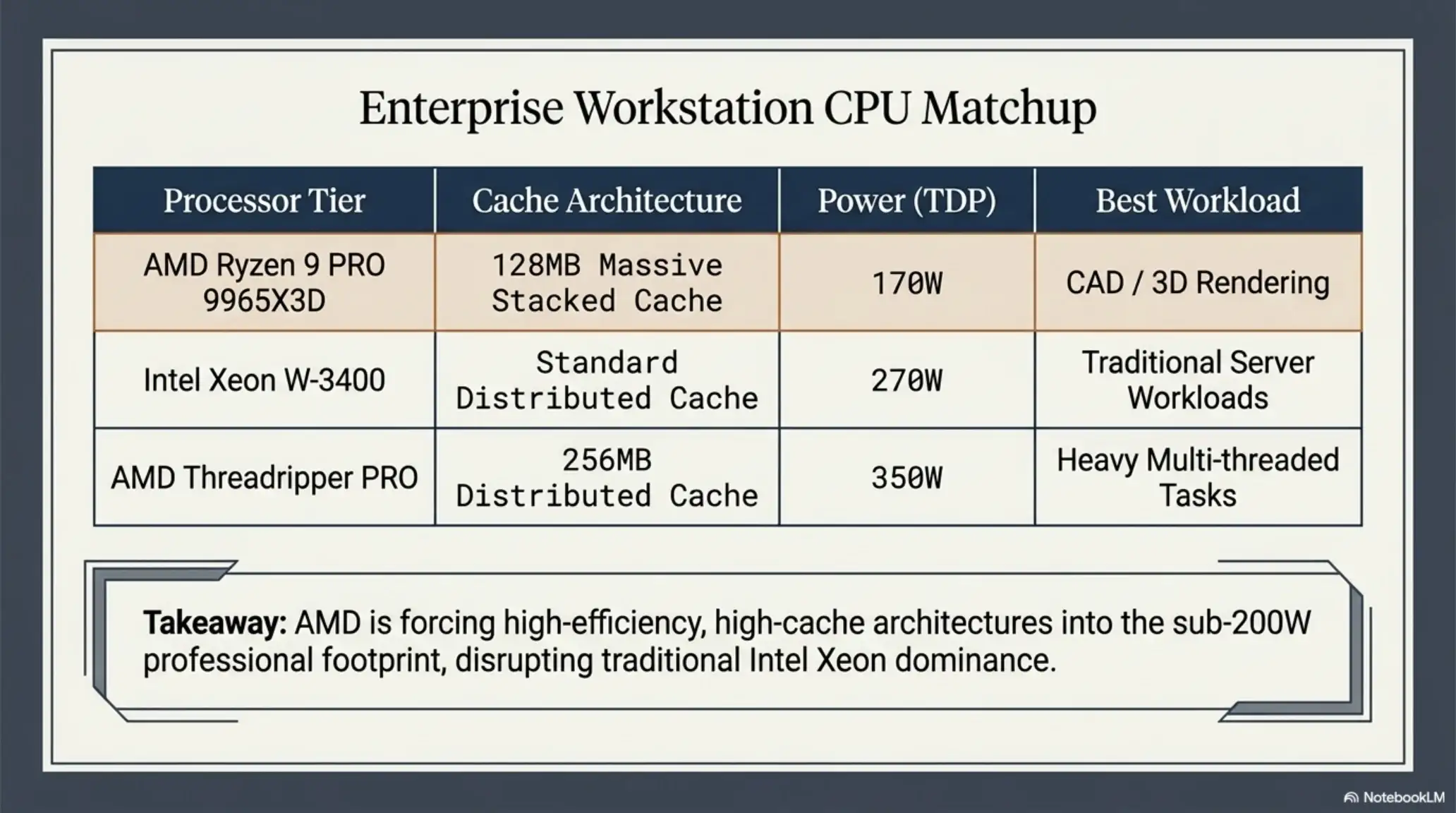
| Processor | Best For | Cache Advantage | Power Efficiency |
|---|---|---|---|
| Ryzen 9 PRO 9965X3D | CAD/3D rendering | 128MB massive cache | High power 170W |
| Intel Xeon W-3400 | Server workloads | Standard cache | Efficient 270W |
| AMD Threadripper PRO | Multi-threaded tasks | 256MB distributed | Very high 350W |
| Ryzen 7 PRO 9755X3D | Compact workstations | 96MB cache | Balanced 120W |
Release Timeline and Availability
Systems equipped with these processors are expected to become available in H2 2026 through OEM partners like Lenovo, HP, and Dell. Lenovo ThinkStation P4 with Ryzen 9 PRO 9965X3D will be among the first systems shipping in Q3 2026.
AMD's official website wrote that based on advanced "Zen 5" architecture, the latest AMD Ryzen PRO 9000 Series processors define a new era of workstation-class performance, bringing advanced computational capabilities, extensive platform flexibility, and for the first time in the commercial desktop segment, select models featuring AMD 3D V-Cache technology to your organization.
China Rocks Markets with Kimi K3 Launch
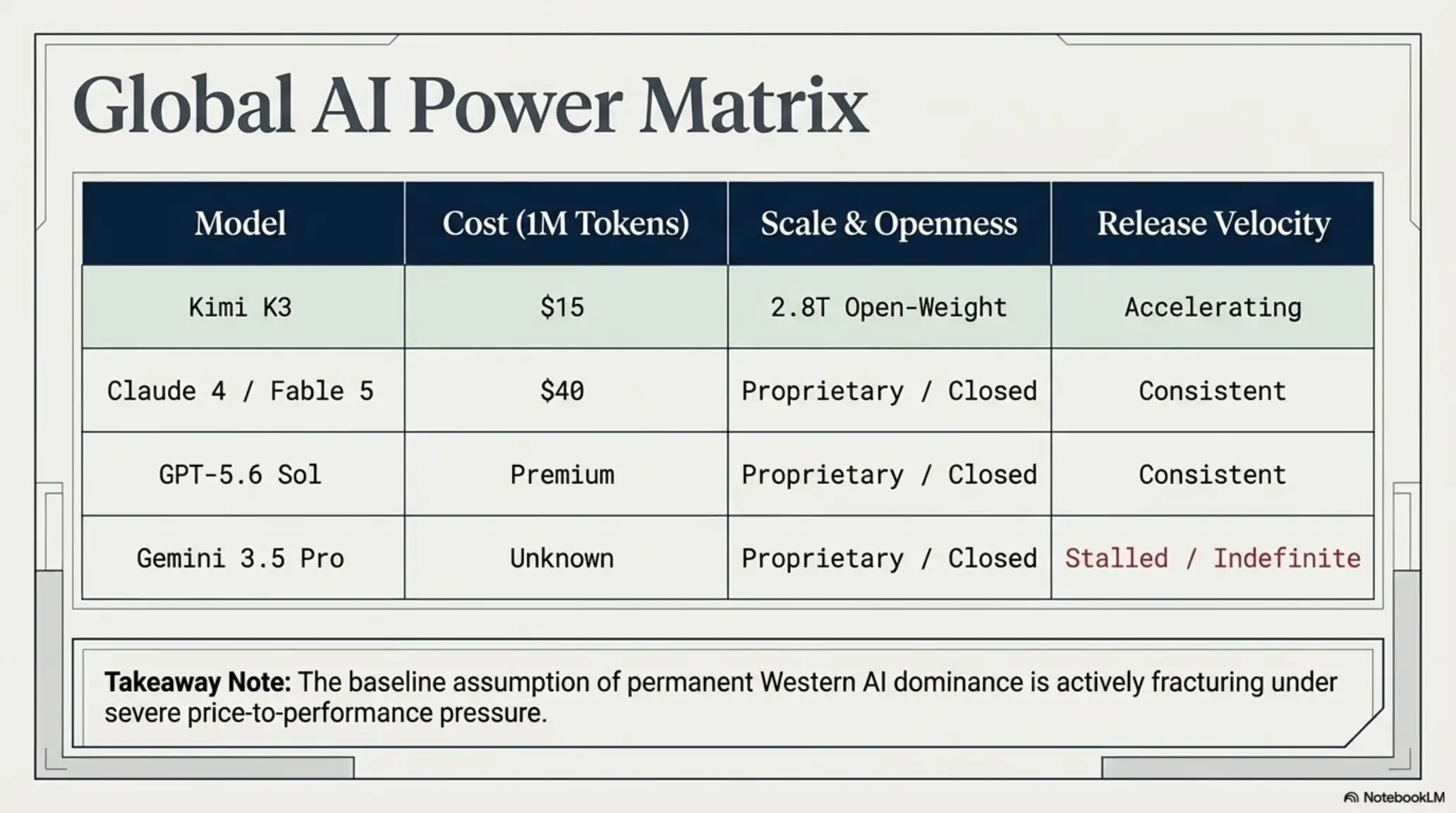
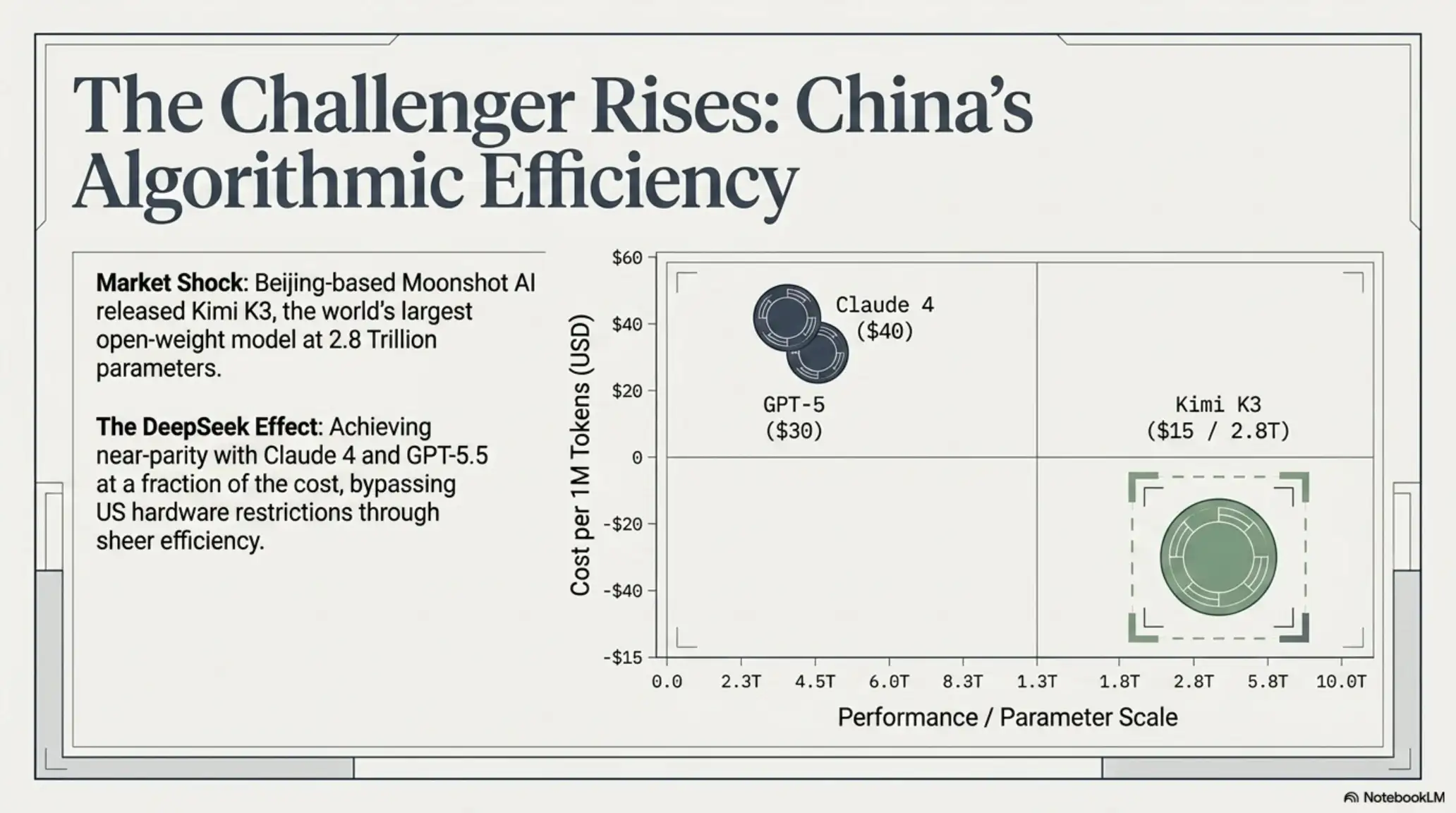
Moonshot AI on July 17, 2026 released Kimi K3, a large language model that outperforms Anthropic's Claude 4 at $15 per million output tokens (versus Claude's $40). Bank of America notes K3 shows China can deliver "step-change achievements" despite hardware restrictions. The announcement triggered tech selloffs alongside weak Netflix/TSMC earnings and Iran tensions.
Forbes wrote that on some benchmarks including coding and general agents, Kimi K3 "performed competitively" with Fable 5 and "performed significantly better" than Claude Opus 4.8, Sol, and GPT 5.5, Moonshot said. Straits Times wrote Moonshot said Kimi K3 is the first open-weight model approaching the three trillion parameter mark, designed for advanced reasoning, long-horizon coding, and knowledge work.
Market Reaction and Analysis
Fortune reported Moonshot AI set K3 pricing at $15 per million output tokens, the bits of information processed and generated by a large language model. Morning Star wrote the model named Kimi K3 and developed by Beijing-based startup Moonshot AI is the world's largest open model at 2.8 trillion parameters, according to the AI lab. Model weights will be available by July 27, Moonshot shared in a blog post.
CNBC wrote Kimi K3 still lags behind Anthropic's Claude Fable 5 and OpenAI's GPT 5.6 Sol in overall performance, the company said Friday, but consistently outperformed other tested models. Business Insider noted the release, timed just before the 2026 World AI Conference in Shanghai, is the latest sign Chinese labs are closing the gap with leading US systems.
Price and Performance Comparison
- Kimi K3: $15 per million output tokens, 2.8T parameters
- Claude Fable 5: $40 per million output tokens
- GPT 5.6 Sol: Higher pricing, similar performance
- China Advantage: Lower pricing with competitive performance
- Impact: Pressure on US firms to reduce pricing
- Market Response: Tech stock selloff on competitive concerns
The Second DeepSeek Moment
Fortune in another article wrote markets may have just experienced their second DeepSeek shock, this time courtesy of a Chinese AI lab named after a Pink Floyd album. Economic Times wrote Chinese AI startup Moonshot on Friday unveiled Kimi K3, a 2.8 trillion parameter model it said is the world's largest open-weight AI system, delivering performance close to leading Fable model from US giant Anthropic.
This "second DeepSeek moment" serves as a warning to America's AI industry. China is not only advancing rapidly in AI but also delivering cheaper, competitive solutions. This could shift the balance of power in the global AI industry. Western dominance in AI, long taken for granted, faces its most serious challenge yet.
The strategic implications extend beyond technology. China's ability to achieve near-parity performance at drastically lower costs suggests efficient training methods that don't require cutting-edge hardware. This challenges assumptions about AI development requiring massive capital investment and semiconductor superiority.
Saturday Night Technology Wrap-Up
Saturday night, July 18, 2026 delivered six strategic analyses from the worlds of AI, security, and hardware. From Google's indefinite delay of Gemini 3.5 Pro to Capital One open sourcing its VulnHunter security tool, each story carries long-term industry implications.
The European Union, by forcing Google to open Android for rival AI assistants, demonstrated that regulation can ensure fair competition. Microsoft Recall continues facing security concerns despite updates. AMD bringing 3D V-Cache to the PRO series showed gaming technology can revolutionize professional computing.
But the most significant story tonight was Moonshot AI's release of Kimi K3, which at lower pricing and competitive performance created a second DeepSeek moment for the AI industry, proving China can compete with American giants despite hardware restrictions.
Night Stats: Global AI Competition
Editor's Perspective
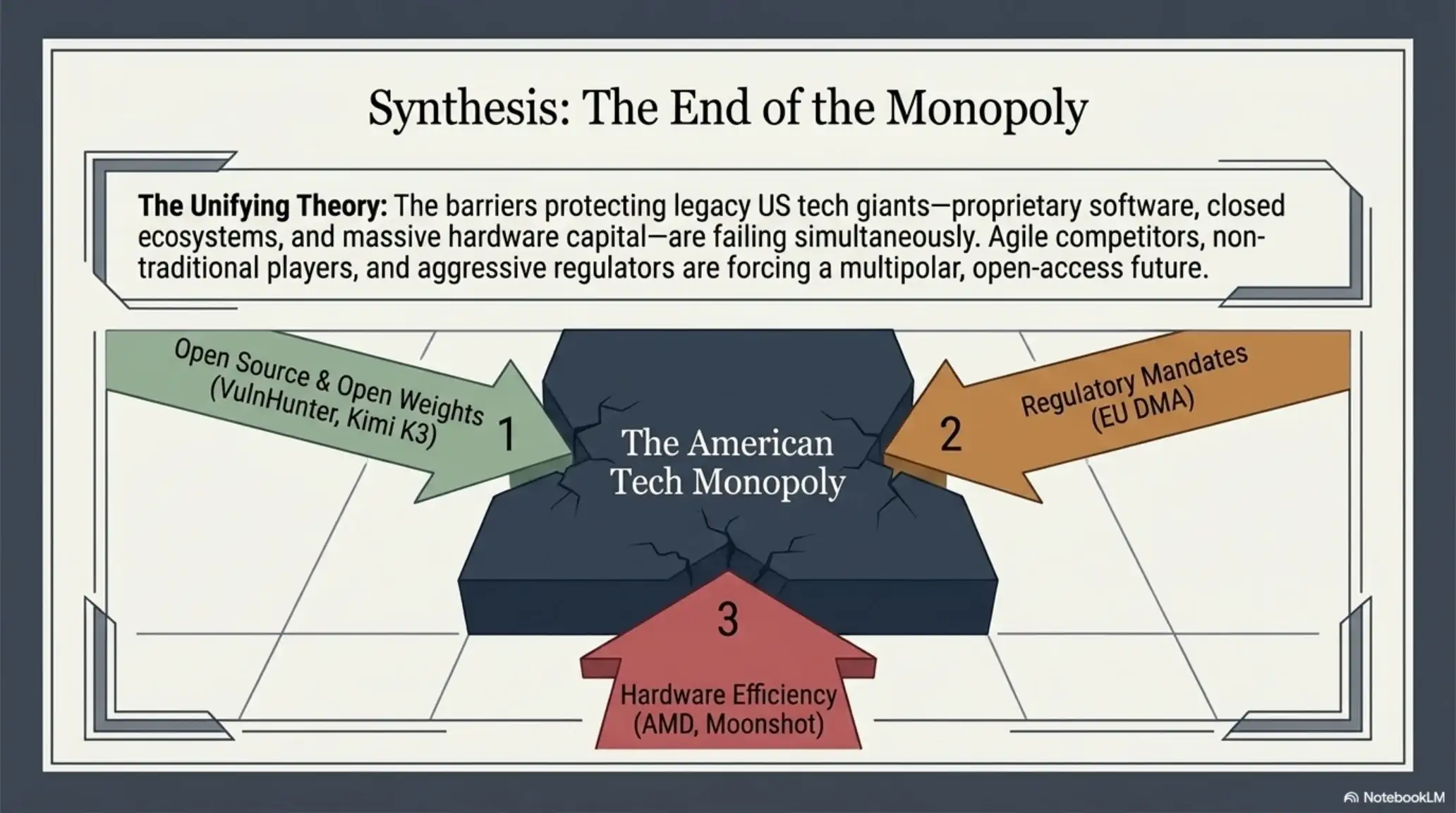
Tonight reminded us the tech industry is transitioning from an American-centric era to a multipolar one. China with Kimi K3 proved it can do more with less. Google's Gemini delay showed even giants can stumble. The European Union proved regulation can strengthen competition, not stifle it. And AMD demonstrated the boundaries between gaming and professional computing are dissolving. The future of technology is multifaceted, competitive, and unpredictable. The West's AI dominance, long assumed permanent, now faces its most serious challenge. The question isn't whether China can compete—it's whether Western firms can maintain their lead while Chinese competitors offer similar performance at fraction of the cost.
— TekiinGame Editorial Team
Frequently Asked Questions
Why did Google delay Gemini 3.5 Pro?
Google indefinitely postponed Gemini 3.5 Pro due to quality concerns and competitive pressure from OpenAI and Anthropic. Internal reports show the model underperforms in multi-faceted reasoning and coding. This is the third consecutive missed launch deadline.
What is VulnHunter and why does it matter?
VulnHunter is a powerful AI-driven vulnerability detection tool Capital One used internally for years and has now open sourced. The tool identifies zero-day vulnerabilities, maps attack paths, and suggests targeted fixes. It's extremely valuable for fintech and startups with limited security resources.
What did the EU demand from Google?
Under the DMA, the EU required Google to open 11 Android system-level features (including microphone, camera, screen content, wake word, and app control) to rival AI assistants. The compliance deadline is Q1 2027. The goal is preventing Gemini monopoly.
Is Microsoft Recall safe?
Despite updates (opt-in, biometric protection, local storage), Recall remains concerning. Researchers demonstrated malware can extract decrypted data from memory without special privileges. Six months of sensitive data including passwords, banking sessions, and Slack conversations are accessible.
Why did AMD bring 3D V-Cache to PRO series?
AMD for the first time brought 3D V-Cache technology from gaming to business/workstation processors. The Ryzen 9 PRO 9965X3D with 128MB L3 cache and 170W TDP is designed for heavy professional workloads like rendering, simulation, and data analysis. Ships H2 2026 with OEM partners like Lenovo.
What is Kimi K3 and why is it significant?
Kimi K3 is a Chinese AI model with 2.8 trillion parameters that Moonshot AI released July 17. At $15 per million tokens (versus Claude 4's $40), it delivers competitive performance. This is a second DeepSeek moment for the AI industry, showing China can compete with America.
Why did K3 shake the markets?
K3's release coincided with weak Netflix/TSMC earnings and Iran tensions, triggering tech selloffs. Investors worried China could capture the AI market with lower pricing. Bank of America said K3 shows China can achieve step-change progress despite hardware restrictions.
What's the future of AI competition?
With Google's delays, EU regulations, and China's rise, AI competition is shifting from American-dominated to globally multipolar. Prices will fall, quality will rise, and competition will intensify. US firms must innovate faster and reduce pricing to remain competitive.
Sources
- LA Times: Inside Google's Gemini Delay
- Capital One: Announcing VulnHunter
- European Commission: Google Android AI Mandate
- Gadget Hacks: Windows Recall Privacy Concerns
- Tom's Hardware: AMD Ryzen PRO 9000 Expansion
- Forbes: Moonshot Unveils Kimi K3
- Fortune: Kimi K3 Market Impact
- CNBC: Chinese AI Startup Releases Kimi K3
- Bloomberg: Google Delays Gemini Pro 3.5
- The Verge: Google Android AI Assistant EU Ruling
Additional Gallery: Gemini 3.5 Pro Delay & China's Kimi K3 AI Shock | Tekin Night July 18