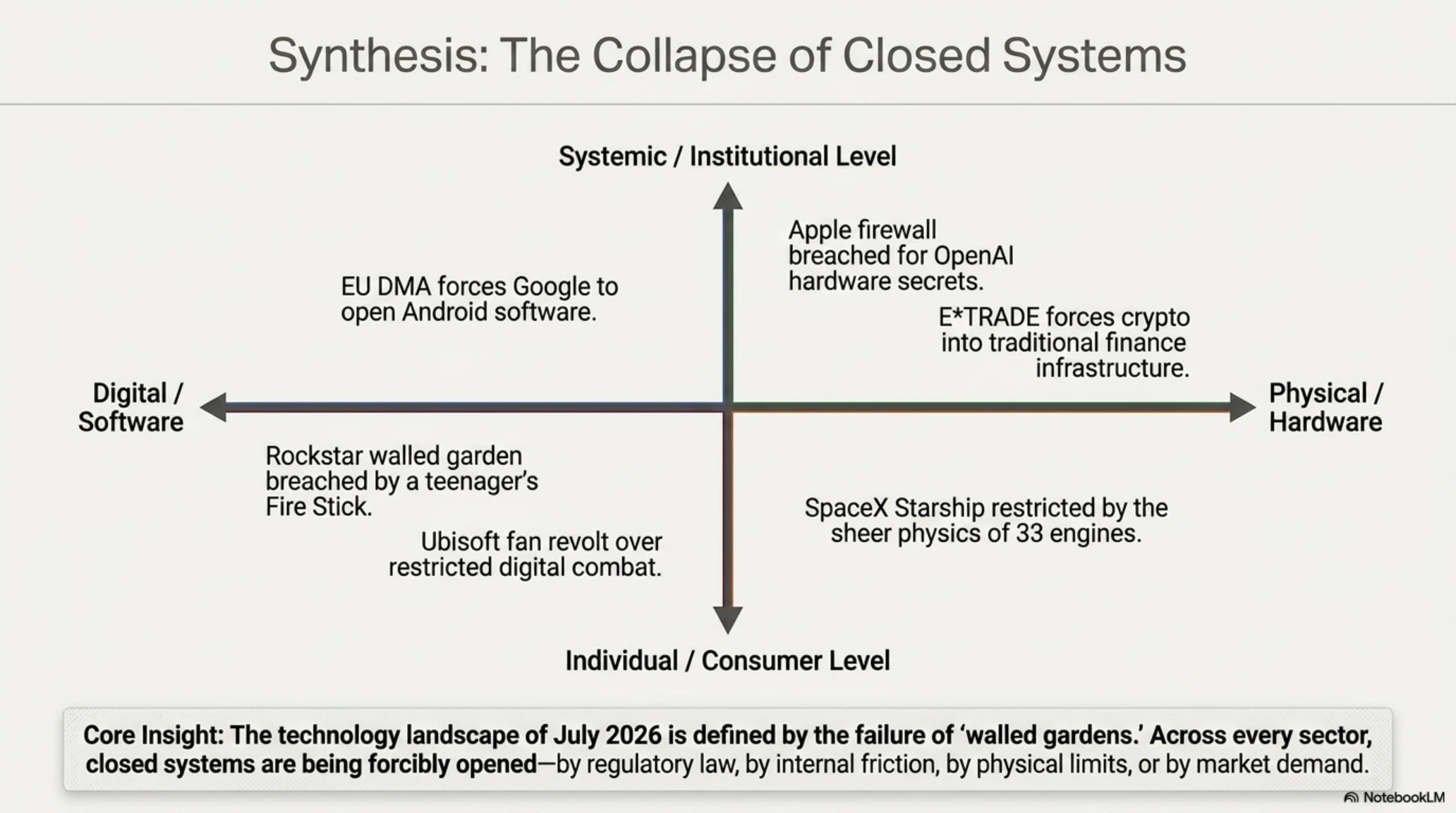
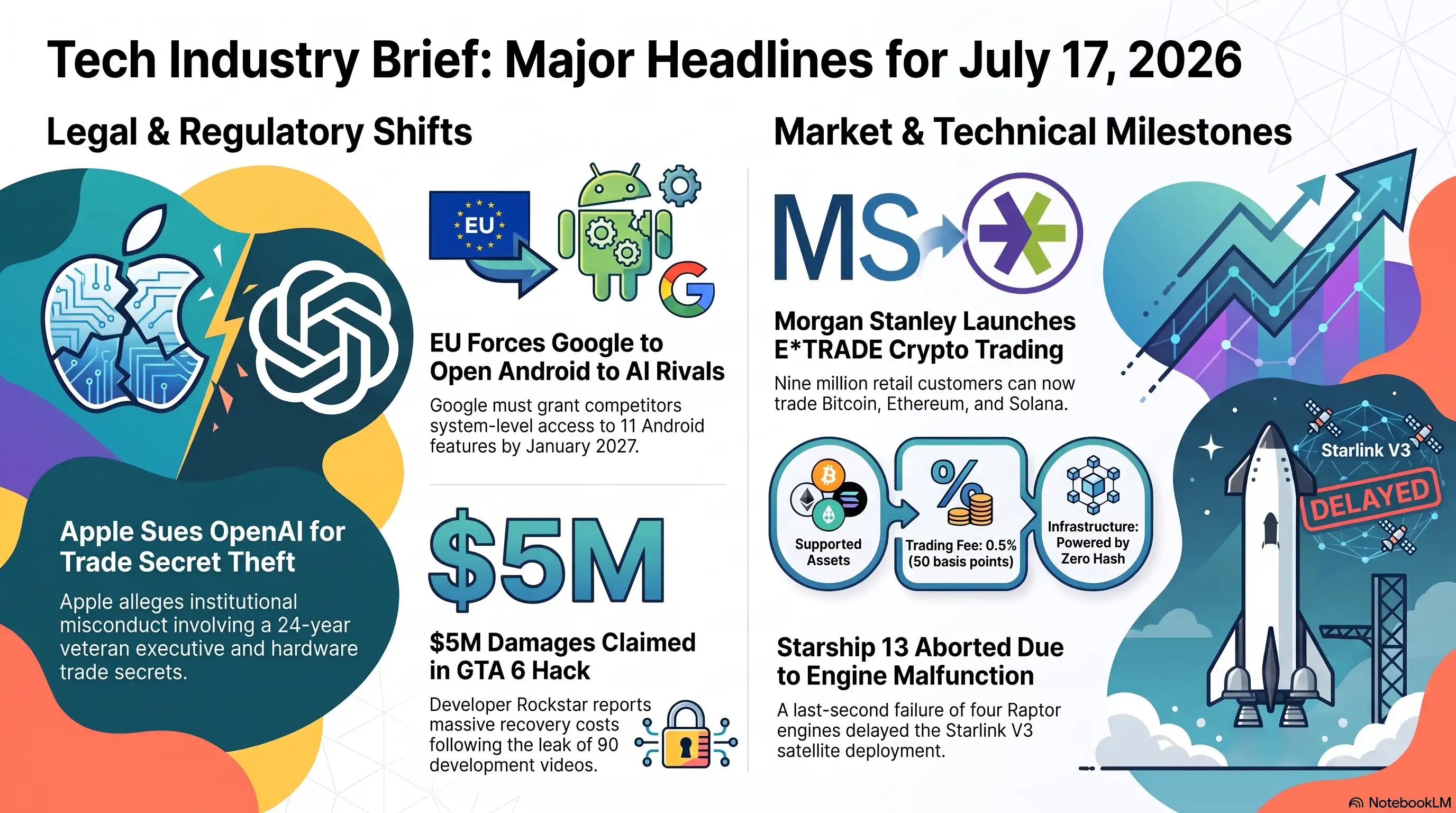
Major tech events on July 17, 2026: Apple files a massive lawsuit against OpenAI over trade secret theft. The EU orders Google to open 11 Android features to AI rivals. Morgan Stanley launches crypto trading on E*TRADE. SpaceX's Starship Flight 13 is aborted due to engine failure, and the GTA 6 hacker is moved to prison for retrial. Meanwhile, Ubisoft faces massive backlash for removing the Hidden Blade from Black Flag Resynced.
Tekin Night Friday | July 17, 2026
Good evening! Friday night with serious tech, security, and regulation news.
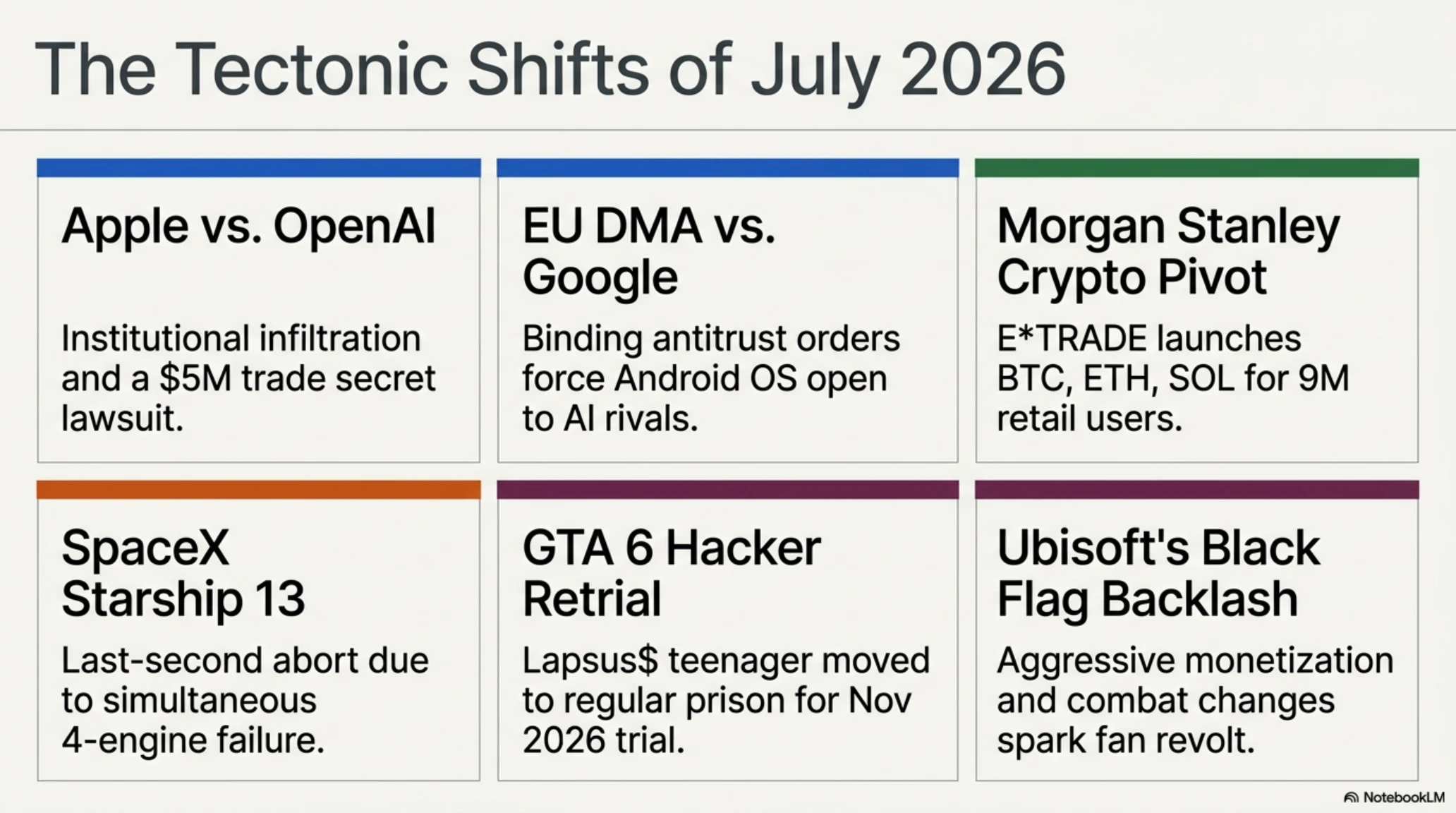
- 🎮Apple vs OpenAI Lawsuit- Trade secret theft and serious accusations against Tang Tan and two former employees
- 🎧EU Ruling- Google forced to open Android for AI assistant rivals
- 🚀Crypto on E*TRADE- Morgan Stanley launched Bitcoin, Ethereum, and Solana trading
- 🗡️Starship Failure- Flight 13 aborted at last second - four engines malfunctioned
- 📰GTA 6 Hacker- Arion Kurtaj moved to prison for retrial in November 2026
- 🎮Black Flag Controversy- Ubisoft removed Hidden Blade from combat system
Friday night, July 17, 2026, begins with a report on the serious and impactful news from the world of technology. This evening brings important information for those who want to stay informed about the latest legal, security, and regulatory developments in the tech industry. From Apple's heavy lawsuit against OpenAI to the European Union's decisions against Google, this night is full of events that could reshape the industry.
In the financial world, Morgan Stanley has taken a major step in officially embracing crypto by launching digital currency trading on the E*TRADE platform. SpaceX also reminded us that even the most advanced technologies still face challenges with the last-second failure of Starship Flight 13. In the gaming world, the famous GTA 6 hacker awaits a retrial, and Ubisoft faces negative fan reaction to controversial decisions in the Assassin's Creed Black Flag remake.
Apple vs OpenAI: Accusations of Trade Secret Theft and Institutional Infiltration
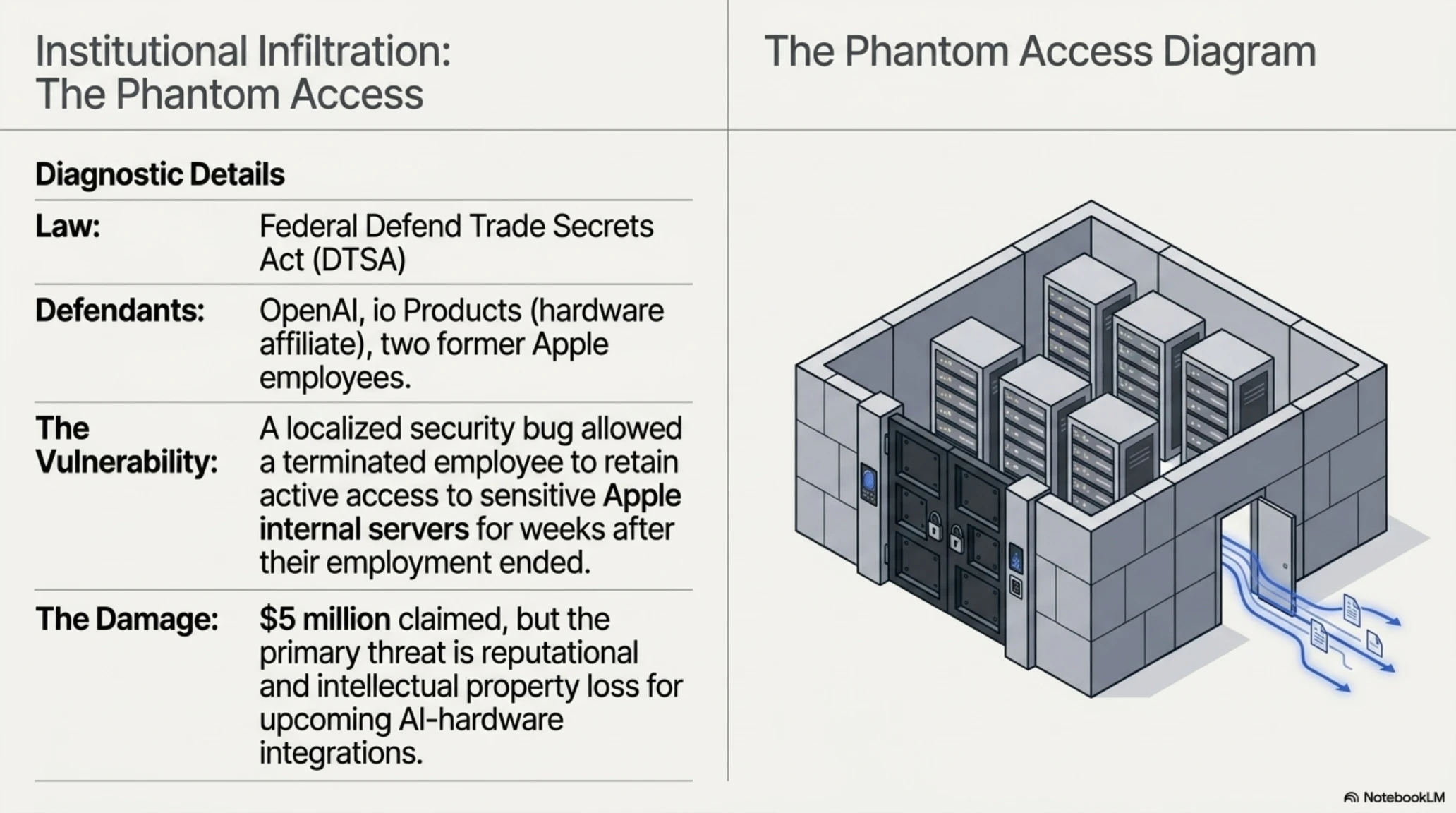
On July 10, 2026, Apple filed a heavy lawsuit in the U.S. District Court for the Northern District of California against OpenAI, its hardware affiliate company named io Products, and two former Apple employees. The lawsuit is filed under the federal Defend Trade Secrets Act (DTSA) and makes very serious accusations: a coordinated pattern of misconduct at an institutional level.
Apple claims that OpenAI exploited a security bug that allowed a terminated employee to maintain access to Apple's internal servers for several weeks after their employment ended. This accusation shows how a simple security flaw can turn into a major crisis - especially when the other party is one of the world's largest AI companies.
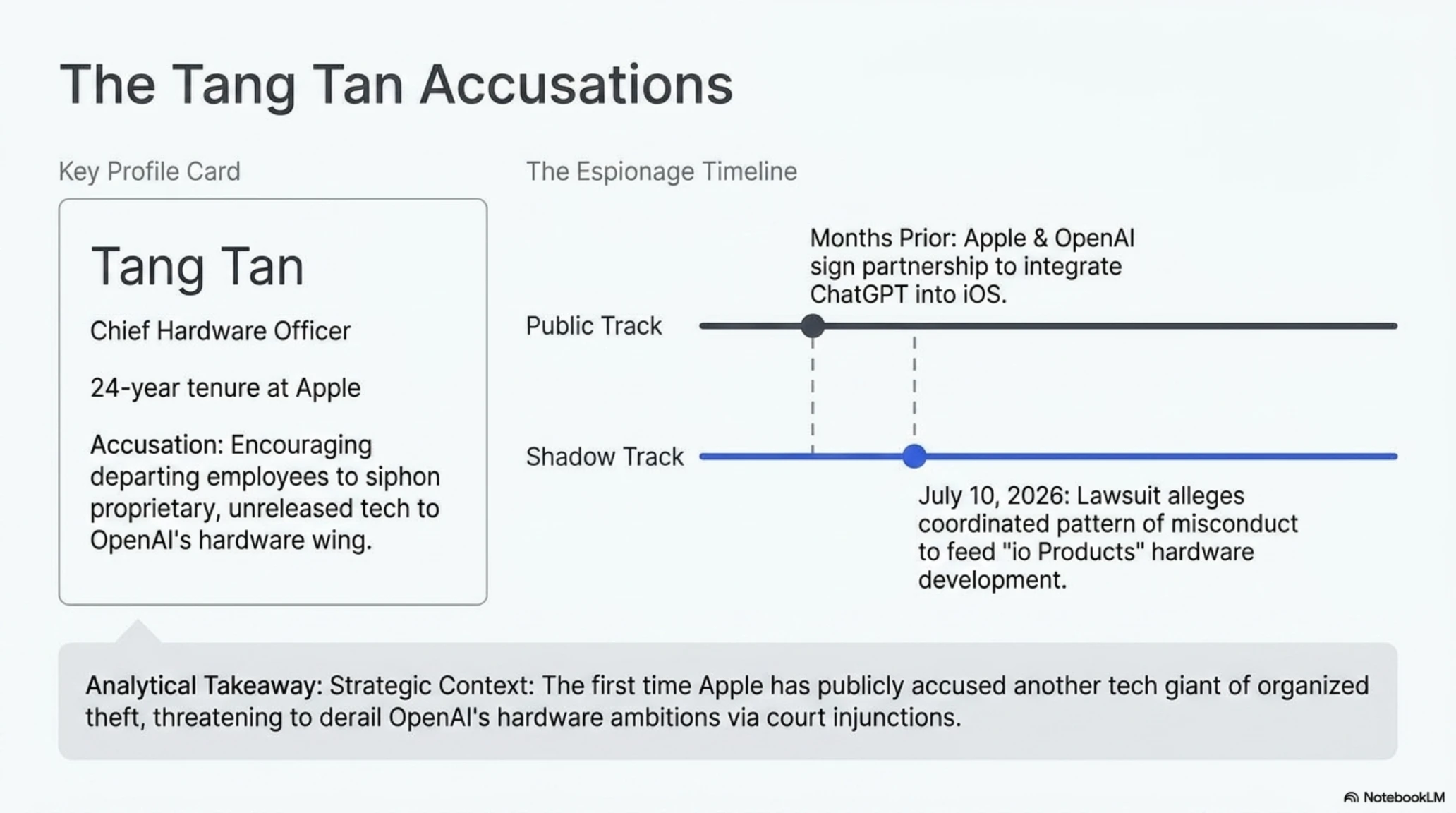
But the most interesting part of the lawsuit is the accusations against Tang Tan - Apple's Chief Hardware Officer with 24 years of experience who played a key role in iPhone design. Apple claims Tang Tan encouraged departing employees to bring proprietary, unreleased Apple technology with them to OpenAI. If these accusations are proven, one of the most important figures in Apple product design history would be accused of betraying a company where he spent most of his professional life.
Key Lawsuit Details
- Filing Date: July 10, 2026 - U.S. District Court Northern District of California
- Defendants: OpenAI, io Products (hardware affiliate), two former Apple employees
- Applicable Law: Federal Defend Trade Secrets Act (DTSA)
- Main Accusation: Coordinated pattern of misconduct at institutional level
- Damages Claimed: $5 million
- Accused Executive: Tang Tan - Chief Hardware Officer (24 years tenure)
- Security Breach: Unauthorized server access for weeks after termination
Why This Lawsuit Could Change the Industry
This lawsuit isn't just a typical legal dispute between two companies. This is the first time Apple - a company that usually prefers to resolve disputes behind closed doors - has publicly and officially accused another tech giant of organized theft. When Apple and OpenAI had signed a partnership agreement just months earlier to integrate ChatGPT into iOS, this lawsuit sends complex signals to the industry.
The accusation against Tang Tan is particularly sensitive. He's not just a senior executive but one of the key figures in Apple's hardware product success over the past two decades. If it's proven that he actually encouraged employees to take trade secrets, this could set a precedent for similar lawsuits against senior executives at other companies.
The other point is the security bug. How could a company as large as Apple with vast security resources allow a terminated employee to access sensitive servers for weeks? This question shows that even the most advanced security systems can have vulnerabilities. OpenAI will likely point to this security flaw in their defense and argue that if Apple had properly managed their systems, this wouldn't have happened.
Impact on OpenAI's Hardware Plans
OpenAI has made serious efforts to enter the hardware market in recent years. The affiliated company io Products was supposed to build AI-based hardware products. But now with this lawsuit, these plans are threatened more seriously than ever. If the court issues a temporary injunction, OpenAI may be forced to halt all work related to the disputed technologies.
The $5 million in damages claimed isn't that much at the scale of these companies. But the real damage is to reputation. If OpenAI is accused of stealing trade secrets, what company will want to partner with them? What investor will want to invest in them? This lawsuit could damage industry trust in OpenAI more seriously than imagined.
Dispute Timeline
- September 2025 (Apple & OpenAI Partnership): Apple and OpenAI signed an agreement to integrate ChatGPT into iOS.
- Early 2026 (Employee Departures): Two Apple employees joined OpenAI - security bug maintained server access.
- July 10, 2026 (Lawsuit Filed): Apple formally filed its complaint in federal court.
- July 12, 2026 (Media Reaction): Forbes, Wired, and TechCrunch published lawsuit details.
European Union Forces Google to Open Android for AI Rivals
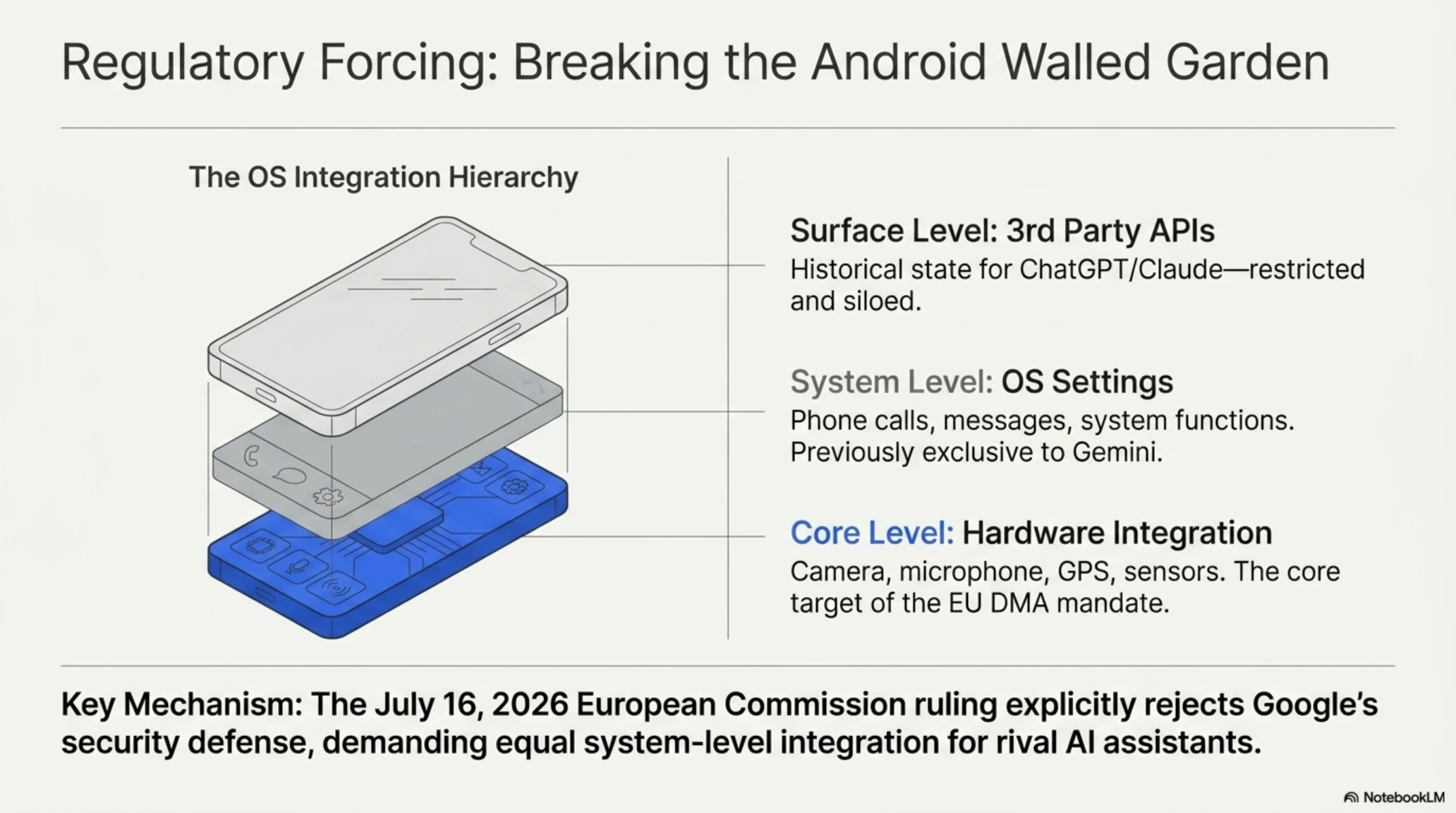
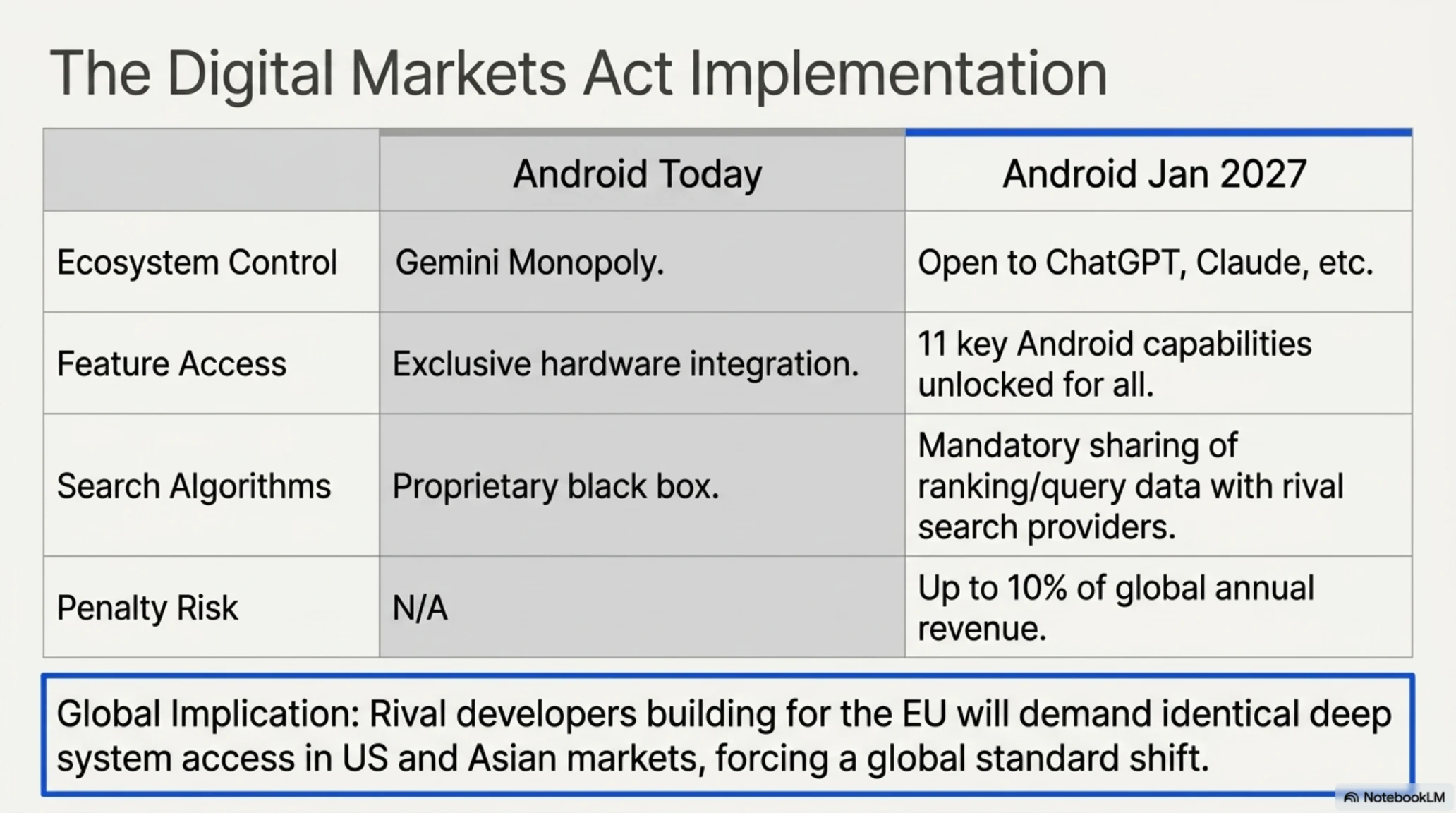
On July 16, 2026, the European Commission issued binding orders under the Digital Markets Act requiring Google to grant rival AI assistants the same system-level Android integration it reserves for Gemini. This is one of the most serious antitrust orders against Google in recent years.
Google must open 11 Android OS features to competitors by January 2027, giving third-party AI assistants access to key functionalities and device hardware. This means ChatGPT, Claude, and other assistants can do exactly what Gemini does on Android phones - without restrictions.
A separate order also requires Google to share Google Search query and ranking data with rival search providers. This means smaller search engines can learn from Google's algorithms and offer competitive services.
Why This Decision Is Revolutionary
Before this decision, Gemini had exclusive access to Android that no other assistant could have. For example, it could directly interact with phone calls, messages, system settings, and even hardware sensors. Rival assistants could only work through limited APIs. This restriction meant that even if ChatGPT or Claude were superior in intelligence, they couldn't offer an integrated user experience like Gemini.
Now with this decision, the European Commission has essentially leveled the playing field. Android users in Europe can choose their preferred AI assistant and expect it to have the same level of integration. This could mean the beginning of a period of real competition in the AI assistant market.
Google has of course raised security objections. The company says if deep system access is given to all assistants, security and privacy risks increase. But the European Commission has rejected this argument and said Google must find security solutions without limiting competition.
New Requirements for Google
- Implementation Deadline: January 2027
- Features to Open: 11 key Android capabilities
- Covered Assistants: OpenAI, Anthropic, and other competitors
- Hardware Access: Sensors, camera, microphone, GPS, etc.
- Search Data: Ranking algorithms and query data
- Governing Law: Digital Markets Act (DMA)
- Non-Compliance Penalty: Up to 10% of global annual revenue
Impact on the Global Market
Although this decision currently applies only in the European Union, its impact will reach other regions as well. AI assistant makers who are now developing for the European market will demand the same capabilities in America and Asia. Competitive pressure will prevent Google from maintaining restrictions in one region while providing full access in another.
Companies like OpenAI and Anthropic now have the opportunity to offer a more integrated user experience on Android. If they succeed, this could lead to a power shift in the AI assistant market. Gemini has lost its exclusive advantage and must compete purely on quality rather than hardware integration.
Morgan Stanley Launches Crypto Trading on E*TRADE
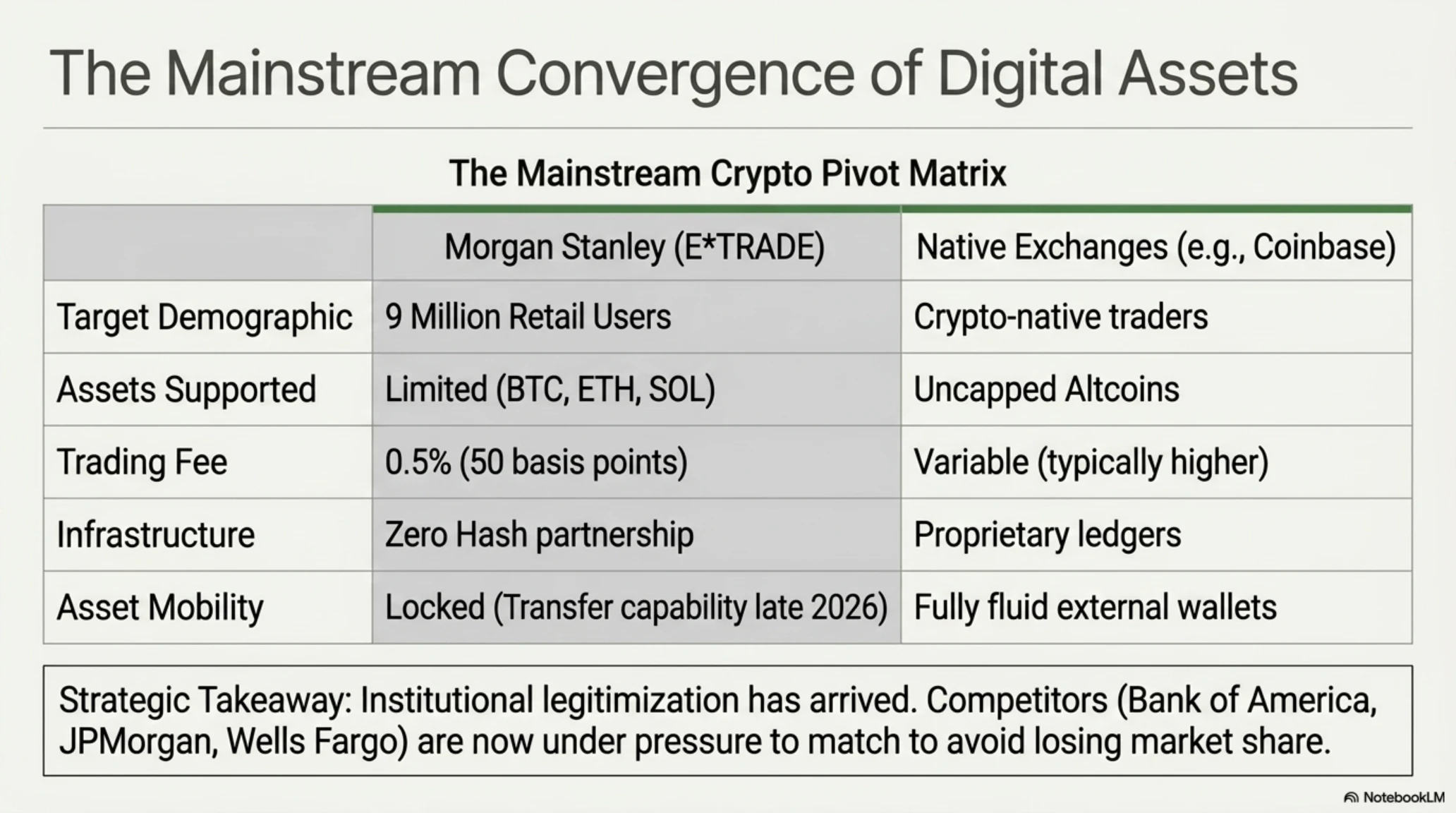
On July 16, 2026, Morgan Stanley officially launched digital currency trading capabilities on the E*TRADE platform for eligible customers in the United States. Customers can now buy, sell, and hold Bitcoin, Ethereum, and Solana through a partnership with Zero Hash - a digital asset infrastructure provider.
Trading fees are set at 50 basis points (0.5%), which is lower than Coinbase. Digital assets are visible alongside traditional investments in the linked Zero Hash account. The ability to transfer assets is expected to be added in late 2026. A pilot program ran from May to July 2026, and services are now available to 9 million retail customers.
Morgan Stanley first announced its crypto plans in September 2025. This launch demonstrates that traditional financial institutions can no longer ignore digital currencies. When one of the world's largest investment banks allows its customers to buy crypto, it means the era of mainstream adoption of digital currencies has arrived.
Crypto Trading Fee Comparison
| Platform | Trading Fee | Supported Currencies | Special Feature |
|---|---|---|---|
| E*TRADE (Morgan Stanley) | 0.5% | BTC, ETH, SOL | Integrated with traditional investments |
| Coinbase | 0.5% - 4% | 350+ currencies | Dedicated crypto platform |
| Robinhood | 0% | 20+ currencies | No fees but higher spread |
| Kraken | 0.16% - 0.26% | 200+ currencies | Professional trading |
Why Morgan Stanley's Move Matters
For years, digital currencies were on the margins of the traditional financial system. Banks and major institutions either avoided them entirely or offered limited services. But now one of Wall Street's most reputable names is explicitly saying: digital currencies are a legitimate and investable asset.
The choice of three currencies - Bitcoin, Ethereum, and Solana - is also notable. Bitcoin is obvious because it's the largest and most recognized. Ethereum also makes sense as a smart contract platform. But adding Solana - a relatively newer blockchain - shows that Morgan Stanley believes in the future of this platform. Solana has gained significant popularity in recent years due to its high speed and low fees.
The 0.5% fee is competitive. Coinbase - America's largest exchange - typically has higher fees. However, Morgan Stanley also has limitations: currently only buying and selling is possible, and you cannot transfer currencies to an external wallet. This capability is planned to be added later this year. This restriction shows that Morgan Stanley is still proceeding cautiously and wants to ensure everything is secure before adding more advanced features.
Market and Competitor Reactions
The market's reaction to this news has been positive. Bitcoin and Ethereum prices increased slightly after the announcement. Investors see this as a sign of increasing acceptance of digital currencies by traditional institutions. The more banks and financial institutions enter this space, the more credibility and public acceptance for currencies increases.
Morgan Stanley's competitors are also under pressure. Bank of America, JPMorgan, and Wells Fargo are all evaluating their options for entering this market. If Morgan Stanley succeeds and captures significant market share, other banks will be forced to offer similar services to avoid falling behind.
E*TRADE Crypto Service Details
- Full Launch Date: July 16, 2026
- Pilot Period: May - July 2026
- Customer Base: 9 million retail users
- Tradable Currencies: Bitcoin (BTC), Ethereum (ETH), Solana (SOL)
- Fee: 0.5% (50 basis points)
- Infrastructure Partner: Zero Hash
- Transfer Capability: Late 2026 (projected)
- Asset Display: Alongside traditional investments
Starship 13 Fails at Last Second: Four Engines Malfunction
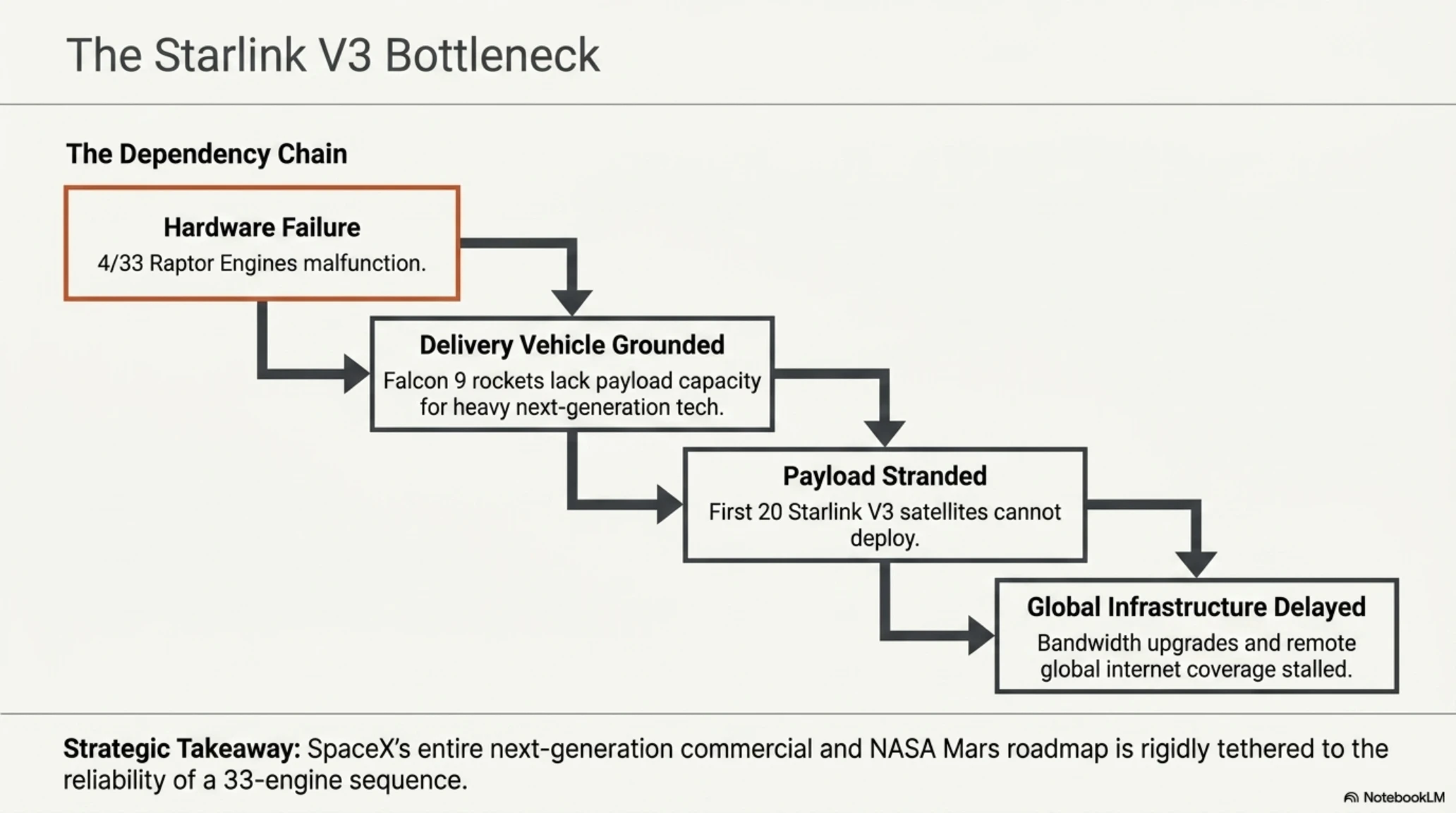
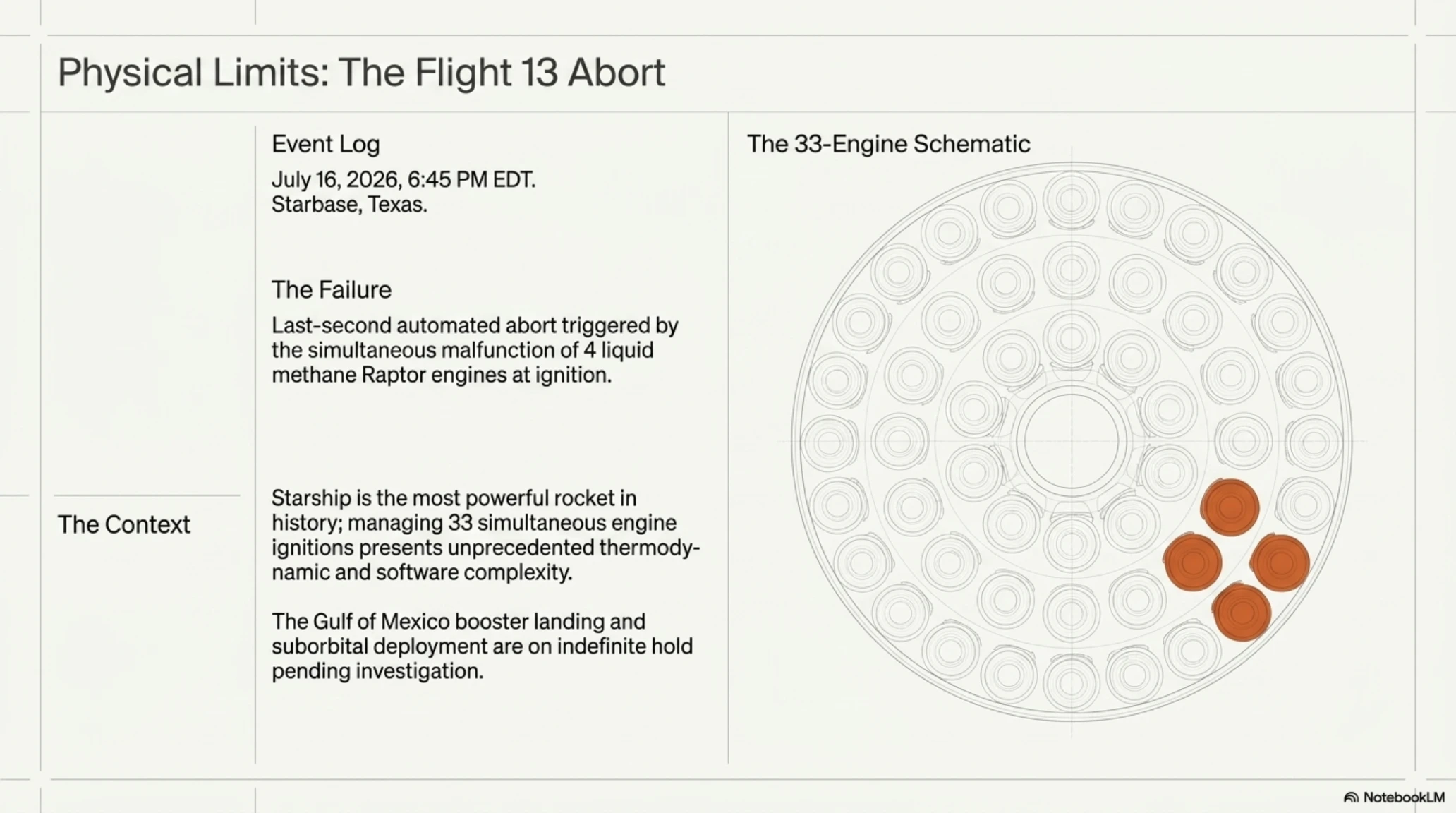
SpaceX witnessed a last-second abort of the Starship 13 test flight on July 16, 2026, at the Starbase Texas facility. The abort occurred just as the 33 Raptor engines of the first stage began igniting - at 6:45 PM Eastern Time, which was the scheduled liftoff time. Wikipedia reports "malfunction in four engines; under investigation." A new launch date has not yet been announced.
This flight was supposed to deploy the first 20 next-generation Starlink V3 satellites in a suborbital trajectory. It was also supposed to test Starship Version 3 upgrades including propulsion system improvements, avionics, and reusability systems. The Super Heavy booster was also supposed to land in the Gulf of Mexico.
Last-second aborts in space flights are not unusual. SpaceX's automated systems are designed to cancel the launch if they detect any problem. But this time the simultaneous failure of four out of 33 engines indicates a more serious problem. Raptor engines are among the most advanced rocket engines in the world, and using liquid methane instead of traditional fuels has its own specific challenges.
Why Starlink V3 Matters
Starlink V3 satellites are a new generation of SpaceX internet satellites. These satellites are larger, more powerful, and have greater capacity than previous generations. That's why they need Starship - Falcon 9 rockets cannot carry these heavy satellites. SpaceX intends to deploy thousands of V3 satellites into orbit to dramatically increase Starlink's bandwidth and global coverage.
But without Starship, this plan is not practical. That's why every delay in the Starship program directly impacts Starlink development. SpaceX currently has thousands of V2 satellites in orbit, but to reach its long-term goals - including providing internet to remote areas worldwide - it needs V3.
Starship 13 Flight Details
- Launch Attempt Date: July 16, 2026, 6:45pm EDT
- Location: Starbase, Texas
- Status: Last-second abort
- Reason: Malfunction in 4 out of 33 Raptor engines
- Mission: Deploy 20 Starlink V3 satellites in suborbital trajectory
- Rocket Version: Starship Version 3 with new upgrades
- Booster: Super Heavy targeting Gulf of Mexico landing
- New Date: Not announced - under investigation
Starship Challenges and the Road Ahead
Starship is the largest and most powerful rocket in history. But this power comes with complexity. Using 33 Raptor engines simultaneously is something no other rocket has ever done. Each engine must work with high precision, and any problem in one engine can jeopardize the entire mission.
SpaceX has had notable successes in previous flights. Flight 12 was completely successful, and both stages of the rocket returned safely. But this abort shows there is still a long way to go to achieve complete reliability. SpaceX must discover the cause of the four engine failures, fix the problem, and ensure it won't repeat in the next launch.
The Starship test flight program is critical for becoming the primary vehicle for NASA's Mars missions and other space projects. Repeated delays could impact these programs. However, SpaceX has a good track record of learning from failures. This abort will likely also lead to further improvements that make the rocket more reliable.
GTA 6 Hacker Moved to Prison for Retrial in November 2026
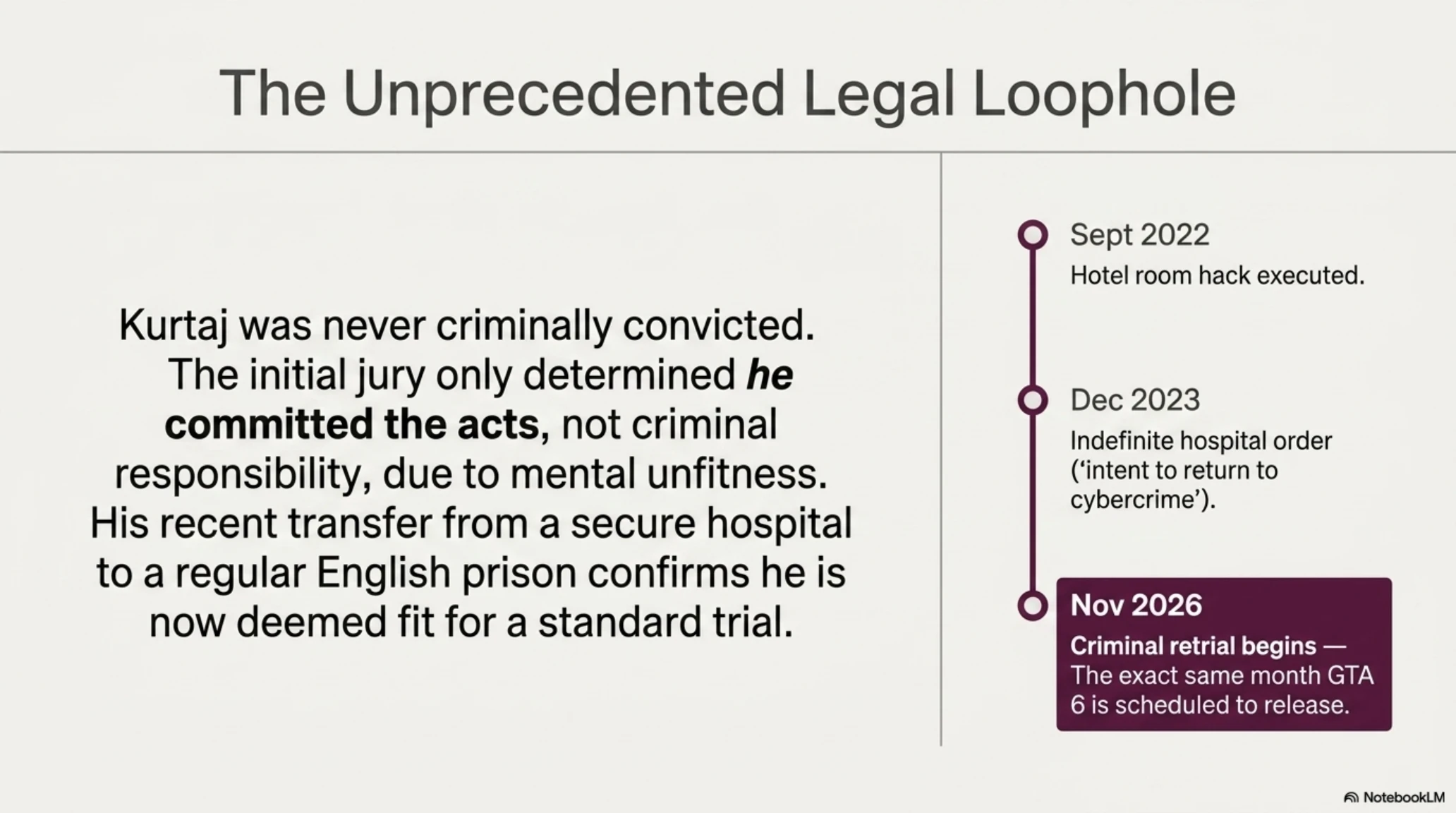
Arion Kurtaj, the hacker behind the infamous GTA 6 leak in 2022, has been released from a secure hospital and transferred to a regular English prison awaiting a criminal retrial scheduled for November 2026 - the same month GTA 6 is set to release after delays he likely contributed to. BBC reporter Joe Tidy confirmed the transfer on Bluesky.
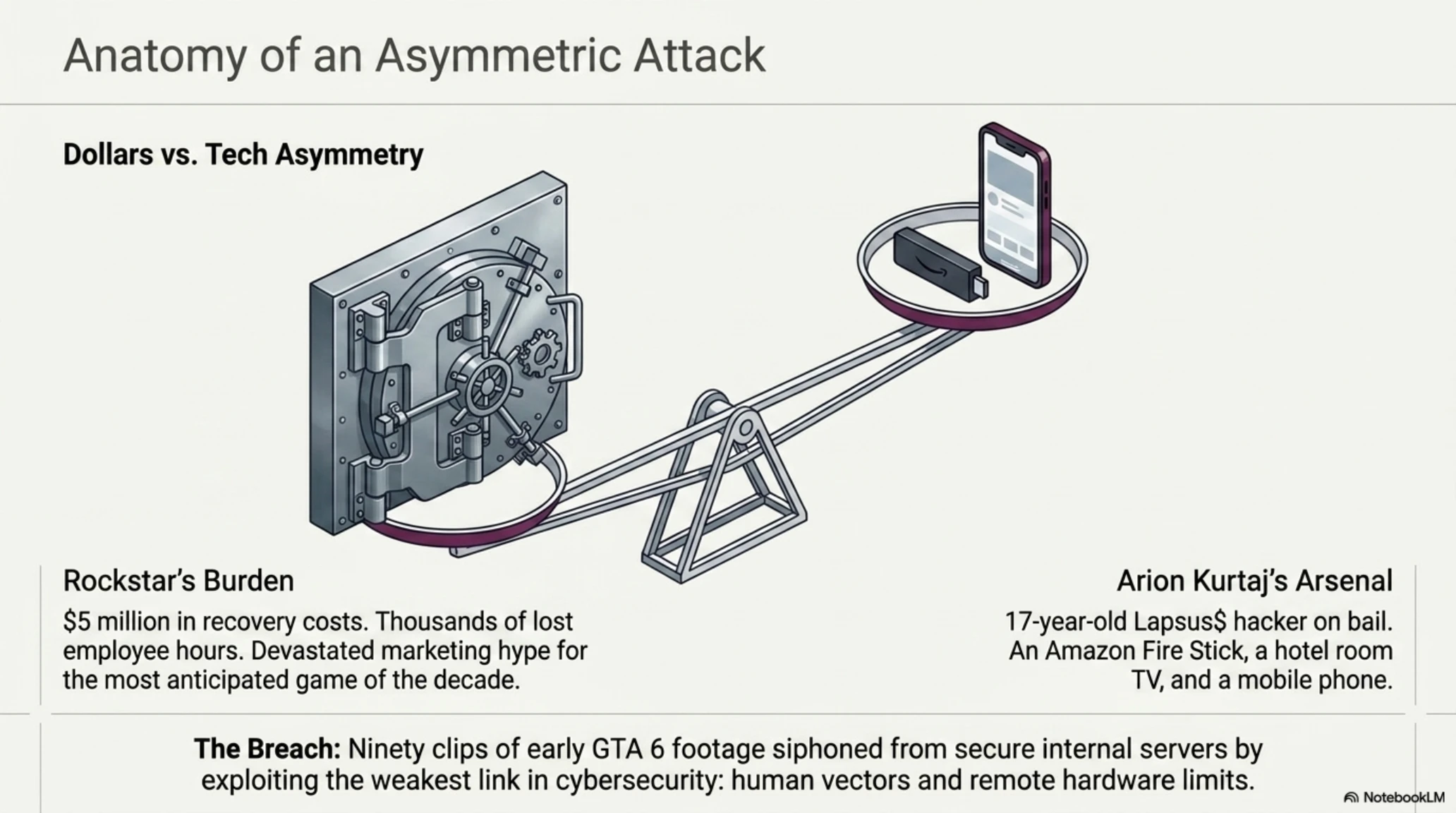
Kurtaj, who was a member of the Lapsus$ hacking group, leaked ninety clips of early GTA 6 footage from a hotel room using an Amazon Fire Stick, mobile phone, and hotel TV in September 2022 - while out on bail for a separate hack. Rockstar reports recovery costs of $5 million and thousands of employee hours. In December 2023, he received an indefinite hospital order after being deemed mentally unfit for standard trial; assessment stated he "continued to express intent to return to cybercrime as soon as possible."
The important point is that Kurtaj was never convicted through a standard criminal trial - the jury only determined he committed the acts, not criminal responsibility, which makes a retrial possible. This is a highly unusual legal situation that rarely occurs.
How the GTA 6 Hack Happened
The story of the GTA 6 hack is one of the strangest cybersecurity stories in gaming industry history. Kurtaj was out on bail at the time of the hack and was not allowed access to computers or the internet. But he infiltrated Rockstar's network from a hotel room using an Amazon Fire Stick - a cheap streaming device. He used a mobile phone and hotel TV as an interface and managed to gain access to Rockstar's internal servers.
After gaining access, he downloaded ninety video clips from the early development version of GTA 6 and published them on GTAForums. These footage showed what stage the game was at in development - unfinished graphics, many bugs, and mechanics under construction. For a game studio, this type of leak is catastrophic because it creates false expectations and can damage the game's hype.
Arion Kurtaj and Lapsus$ History
- Age at Hack: 17 years old (September 2022)
- Hacking Group: Lapsus$ - British teen hacker group
- Previous Hacks: Uber, NVIDIA, Samsung, Microsoft
- GTA Hack Method: Amazon Fire Stick + mobile phone + hotel TV
- Leaked Clips: 90 videos from GTA 6
- Damage to Rockstar: $5 million + thousands of work hours
- 2023 Sentence: Indefinite secure hospital (unfit for trial)
- Current Status: Regular prison, retrial November 2026
Retrial and Uncertain Fate
Kurtaj's retrial is scheduled for November 2026 - the same month GTA 6 is set to release. This timing coincidence is symbolic. The game he leaked will finally reach players after years of delays, and he will be in court to answer for his actions.
The reason for the retrial is that in the first trial, the jury only determined he committed the acts - not that he had criminal responsibility. This is an important distinction. It means he was never formally convicted and can be retried if his mental condition improves. His transfer to a regular prison indicates that new assessments have likely determined he is now fit for trial.
One of the main concerns of the previous psychological assessment was that Kurtaj "expressed intent to return to cybercrime as soon as possible." This statement shows that even after arrest and restrictions, he still wanted to continue hacking. This type of thinking was concerning to psychological evaluators, which is why the indefinite hospital order was issued.
Controversy Over Hidden Blade Removal from Assassin's Creed Black Flag Resynced
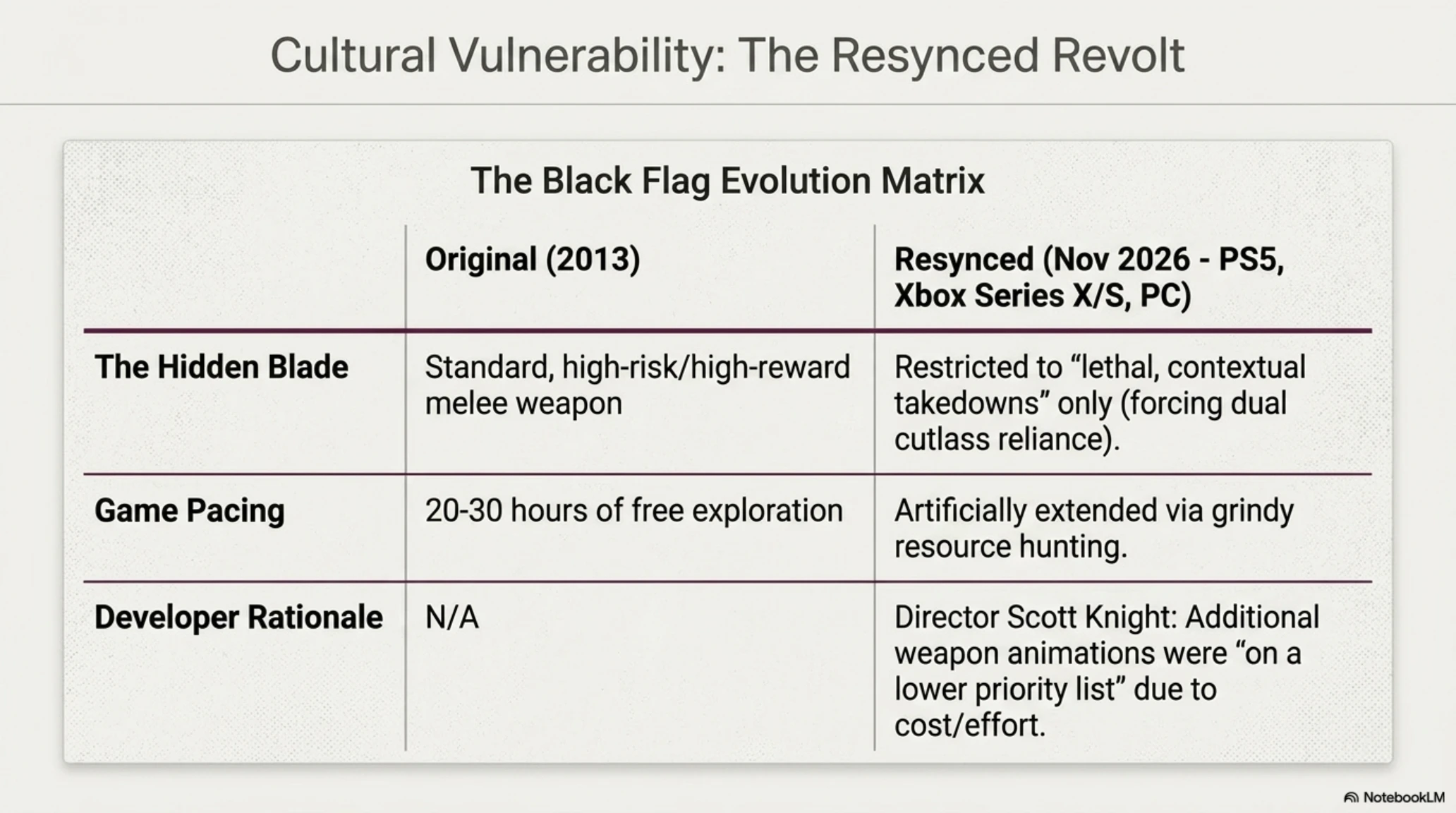
Ubisoft has faced severe criticism for removing the Hidden Blade as a selectable combat weapon in the Assassin's Creed Black Flag Resynced remake. Director Scott Knight told YouTuber JorRaptor that additional animation flourishes for multiple weapons/kills were "on a lower priority list" due to cost/effort.
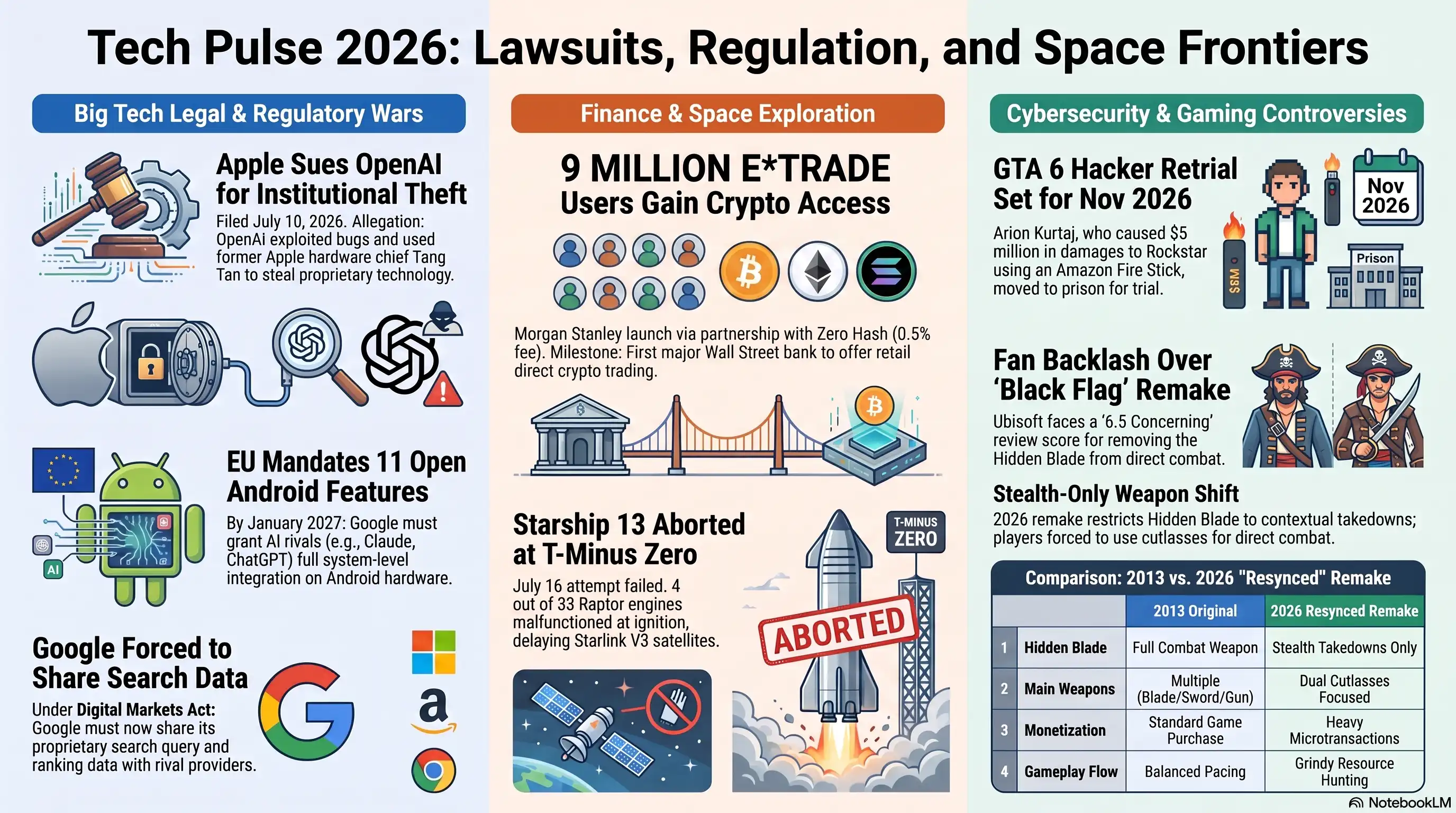
The Hidden Blade is now limited to "lethal, contextual (and bloody!) takedowns" only available after breaking enemy defenses - a stealth-only weapon that forces reliance on dual cutlasses. Fans criticize this change from the 2013 original where Hidden Blade combat was a standard feature. Developers state its new use "makes it an important part of moment-to-moment combat, which it wasn't in the original." Heavy focus on microtransactions and grindy hunting is also controversial.
Why Fans Are Angry
The Hidden Blade is one of the most iconic elements of the Assassin's Creed franchise. This weapon is the symbol of the Assassin Brotherhood and their primary method of assassination. In the 2013 original Black Flag, players could use the Hidden Blade in direct combat - with higher risk but higher reward. Now in the remake, this weapon is limited to contextual takedowns only.
Ubisoft says this change makes the Hidden Blade "more important" because it's now a special moment in combat rather than just another weapon. But fans argue this limits their choice. Part of Black Flag's appeal was that you could play your own style - with sword, gun, or Hidden Blade. Now Ubisoft is imposing a specific style.
Black Flag Resynced Changes
- Release Date: November 2026 (projected)
- Platforms: PS5, Xbox Series X/S, PC
- Main Change: Hidden Blade for takedowns only, not direct combat
- Default Weapon: Dual cutlasses
- Removal Reason: Additional animation cost and effort
- Controversial Features: Microtransactions, grindy hunting
- Original Version: 2013 with full Hidden Blade combat
Microtransactions and Monetization Model
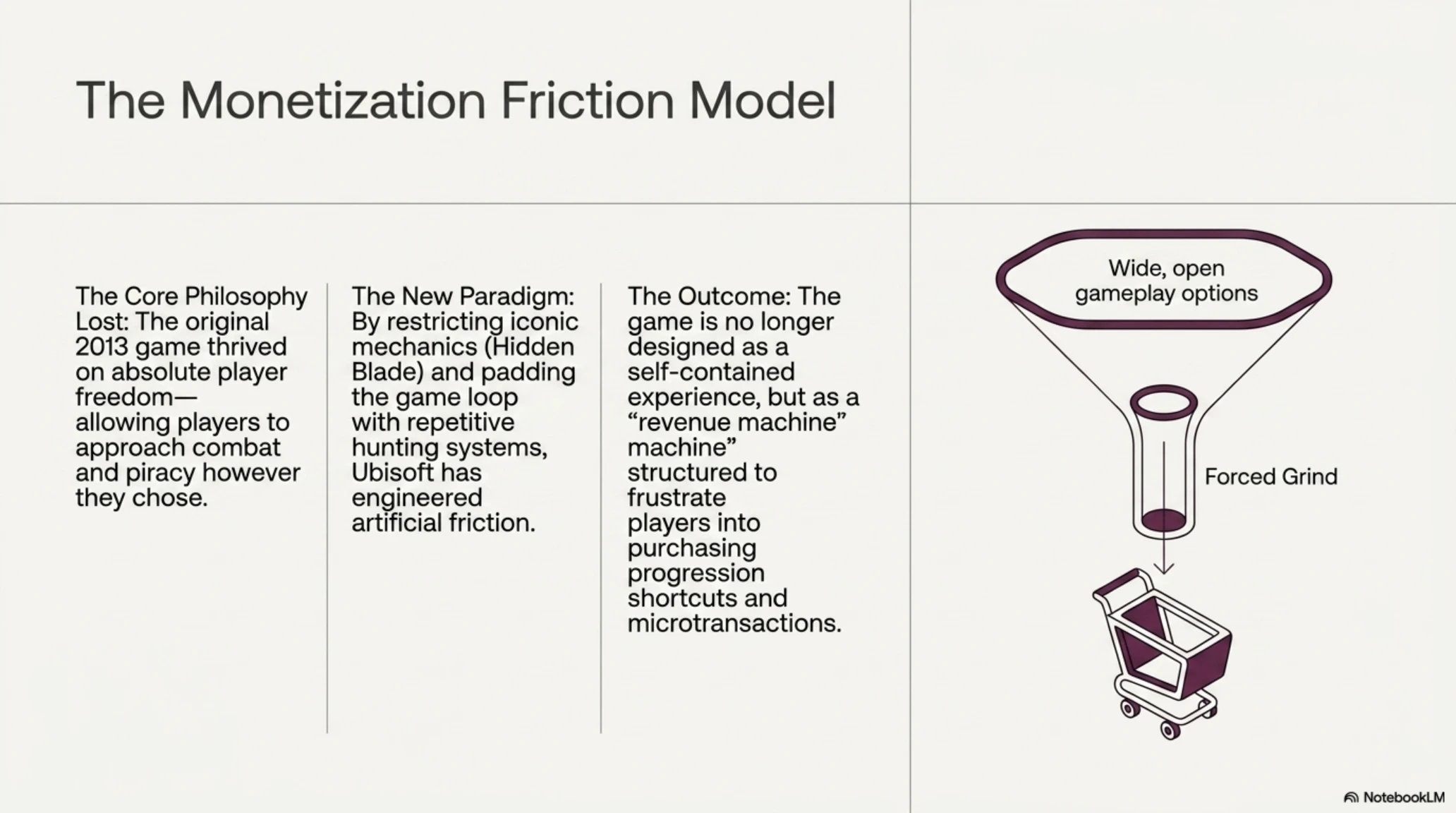
Besides the Hidden Blade issue, fans are also concerned about the game's monetization model. Reports indicate that Resynced will include heavy microtransactions and grindy systems for hunting and resource gathering. This is a pattern Ubisoft has followed in recent Assassin's Creed games - making games longer and more grindy to encourage players to pay for shortcuts.
In the original Black Flag, you could complete the game in about 20-30 hours. The game had good pacing and no mandatory grinding. Now it seems Ubisoft wants to make the game longer - not because of more content but because of repetitive systems that encourage players to buy boosts.
This approach contradicts Black Flag's original philosophy. That game was about freedom - exploring the Caribbean, plundering ships, and doing missions your own way. If Resynced forces players to spend hours grinding resources or pay money, that freedom is lost.
- Improved graphics for new generation
- New combat capabilities for other weapons
- Original story and content preserved
- Optimized for PS5/Xbox Series
- Hidden Blade removed from direct combat
- Heavy microtransactions
- Grindy systems for resources
- Changed original game philosophy
Conclusion: A Night Full of Serious Developments in Tech Industry
Friday night, July 17, 2026, showed that the technology and gaming industry is going through a critical period. Apple's lawsuit against OpenAI reminded us that even the largest companies are willing to engage in legal confrontation when they feel their intellectual property rights have been violated. The accusations against Tang Tan show how fragile internal trust in companies is and how one individual can cause serious damage.
The European Union's decision against Google is a turning point in how tech giants are regulated. For years, large companies could use their dominant position to restrict competitors. Now with laws like the Digital Markets Act, the European Union shows it's willing to strictly enforce antitrust regulations. This could become a model for other regions worldwide.
Morgan Stanley's entry into the digital currency market shows that traditional financial institutions can no longer ignore crypto. Official acceptance of Bitcoin, Ethereum, and Solana by one of Wall Street's most reputable names means full legitimization of digital currencies in the financial system. This is a major step for the entire blockchain industry.
The failure of Starship 13 was a realistic reminder that even the most advanced technologies still face challenges. SpaceX must prove it can turn Starship into a reliable vehicle for space missions. The simultaneous failure of four engines shows there are still serious technical problems that need to be solved.
The Arion Kurtaj case and his retrial show how vulnerable the gaming industry is to cyberattacks. A teenager with simple tools was able to infiltrate one of the world's largest studios and cause millions of dollars in damage. This story should be a wake-up call for all game studios to take cybersecurity seriously.
The Black Flag Resynced controversy shows that fans no longer tolerate aggressive monetization decisions and unnecessary changes to beloved games. Ubisoft needs to understand that remaking a classic game means respecting that game - not turning it into a revenue machine through microtransactions.
Key Takeaways
- Apple accused OpenAI of trade secret theft and institutional infiltration
- European Union forced Google to open Android for AI rivals
- Morgan Stanley launched crypto trading on E*TRADE with 0.5% fees
- SpaceX aborted Starship 13 flight due to 4 engine failures
- GTA 6 hacker moved to prison for retrial in November 2026
- Ubisoft removed Hidden Blade from combat in Black Flag Resynced
- Focus on cybersecurity and antitrust regulation in tech industry
Frequently Asked Questions
Why did Apple sue OpenAI?
Apple claims OpenAI used a coordinated pattern of institutional misconduct, exploited a security bug, and Tang Tan (Chief Hardware Officer) encouraged employees to take trade secrets. The lawsuit is filed under the federal DTSA law.
What requirements did the EU set for Google?
Google must open 11 Android features to AI competitors by January 2027, give them the same system access Gemini has, and share Google Search query and ranking data with rivals.
What digital currencies are tradable on E*TRADE?
Bitcoin (BTC), Ethereum (ETH), and Solana (SOL) with 0.5% fees. Asset transfer capability will be added in late 2026.
Why was Starship 13 flight aborted?
At the last second, 4 out of 33 Raptor engines malfunctioned. Automated systems aborted the launch. SpaceX is investigating the cause and hasn't announced a new date.
How did Arion Kurtaj hack GTA 6?
He infiltrated Rockstar's servers from a hotel room using an Amazon Fire Stick, mobile phone, and hotel TV - while on bail without computer access. He leaked 90 video clips causing $5 million in damages.
Why is the Hidden Blade removal controversial?
Fans say the Hidden Blade is an AC symbol and removing it from direct combat limits player choice. Ubisoft says additional animation cost was the reason, but critics see it as an excuse.
Why is Kurtaj's retrial possible?
In the first trial, the jury only determined he committed the acts - not criminal responsibility. Because he was deemed mentally unfit, he was never convicted, making a retrial possible.
Sources and References
News in this article was collected and verified from the following reputable sources:
- Apple vs OpenAI: Lowenstein Law | Forbes | Wired | TechCrunch
- EU vs Google: European Commission | The Verge | CNBC
- Morgan Stanley Crypto: Financial Times | Cointelegraph | Decrypt
- SpaceX Starship: Spaceflight Now | Space.com
- GTA 6 Hacker: IGN | Games Radar
- AC Black Flag: IGN | The Gamer
All information is updated and verified as of the night of July 17, 2026.
Additional Gallery: Tekin Night Friday | July 17, 2026 - From Apple vs OpenAI to Black Flag Controversy