Tekin Analysis: Apple's Transition
- 🎮Tim Cook's 15-Year Legacy- Market cap surging to $4.2T and an active base of 2.4 billion devices
- 🎧Who is John Ternus?- The master engineer behind Apple Silicon and modern MacBook Pro architecture
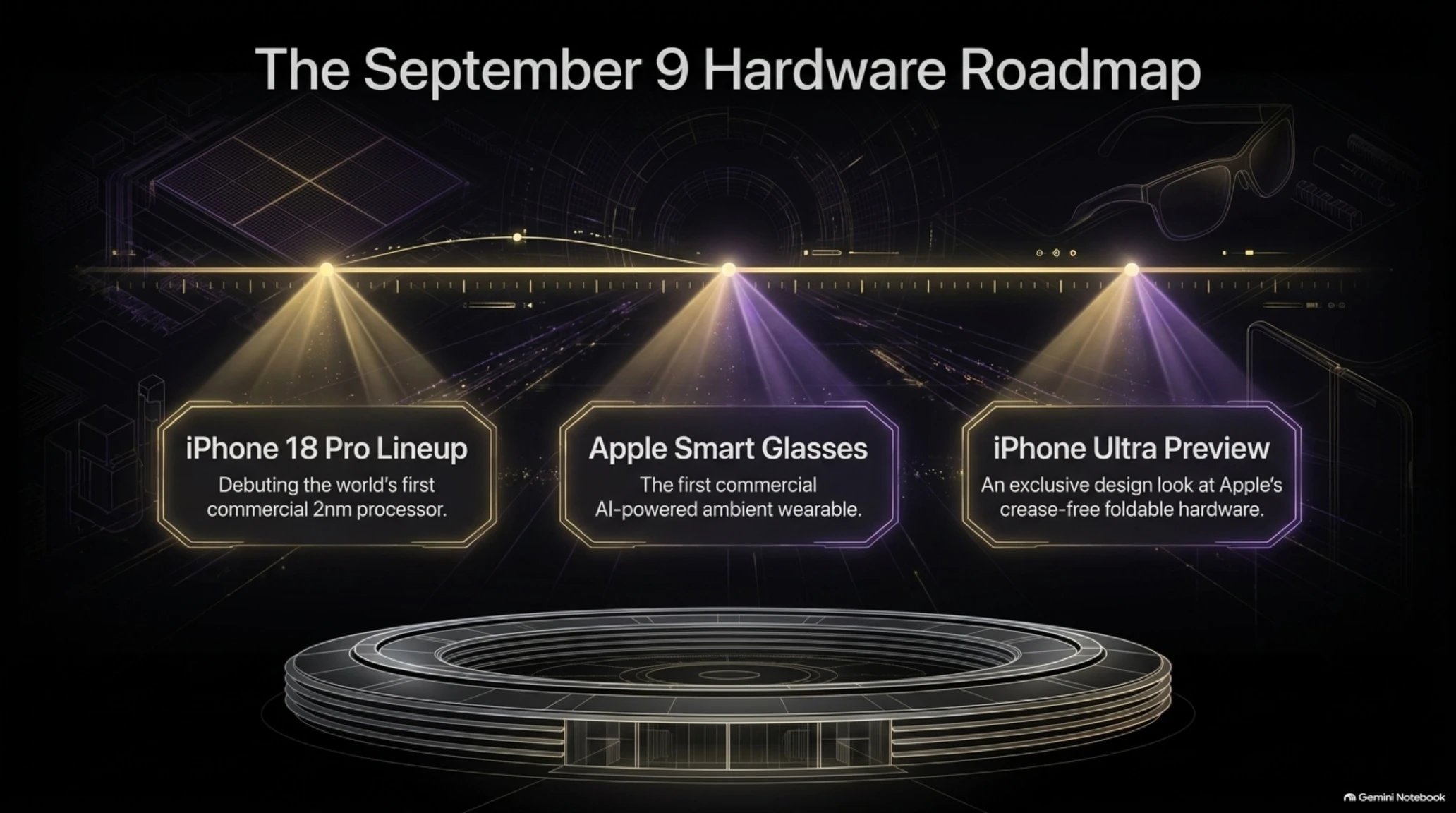
- 🚀September 9 Keynote Roadmap- Debut of iPhone 18 Pro with 2nm A20 Pro silicon and Apple Smart Glasses
- 🗡️Existential AI Challenges- Overcoming cloud AI lag and navigating EU DMA antitrust mandates
- 📰Design Philosophy Shift- Transitioning from margin optimization to aggressive hardware engineering
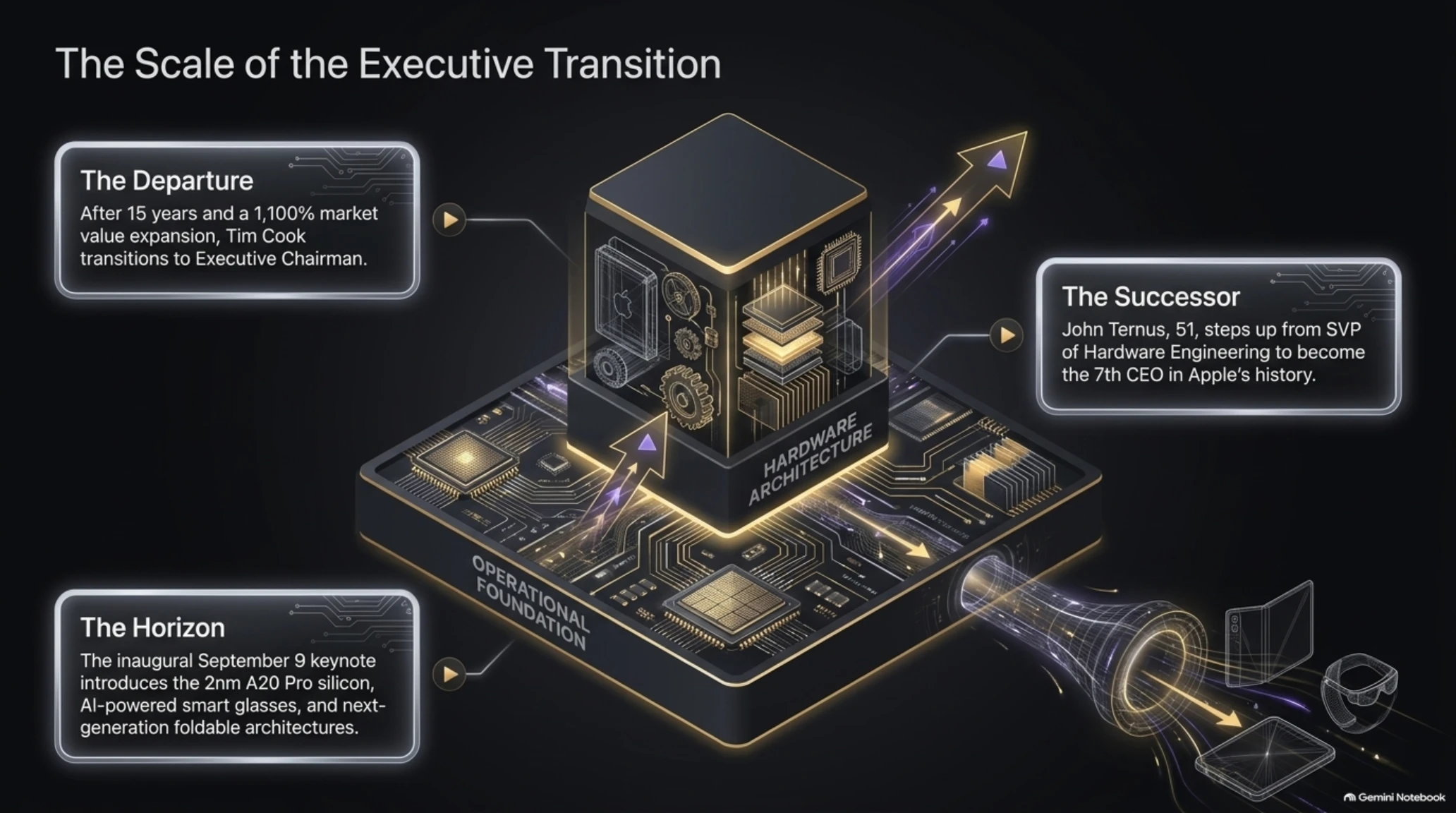
On September 1, 2026, the technology industry witnessed the culmination of one of the most consequential corporate successions in modern history. Tim Cook, after a decade and a half of unprecedented leadership that transformed Apple Inc. into the world's first $4.2 trillion enterprise, officially stepped down as Chief Executive Officer to assume the role of Executive Chairman of the Board. Concurrently, Apple's Board of Directors unanimously appointed John Ternus, the 51-year-old Senior Vice President of Hardware Engineering, as the seventh CEO in the company's storied history.
AT A GLANCE | THE SCALE OF APPLE'S LEADERSHIP TRANSITION
- Tim Cook transitions to Executive Chairman after 15 years as CEO (August 2011 to September 2026)
- John Ternus, chief architect of Apple Silicon integration and Mac/iPad hardware, becomes CEO
- Apple's market value expanded by over 1,100% under Cook, with annual revenue surging past $420 billion
- The upcoming September 9, 2026 keynote marks Ternus's inaugural public appearance as CEO
- Cupertino's new roadmap centers on 2nm A20 Pro silicon, AI-powered smart glasses, and foldable hardware
1. The 15-Year Tim Cook Era: How Operational Mastery Built a $4.2 Trillion Empire
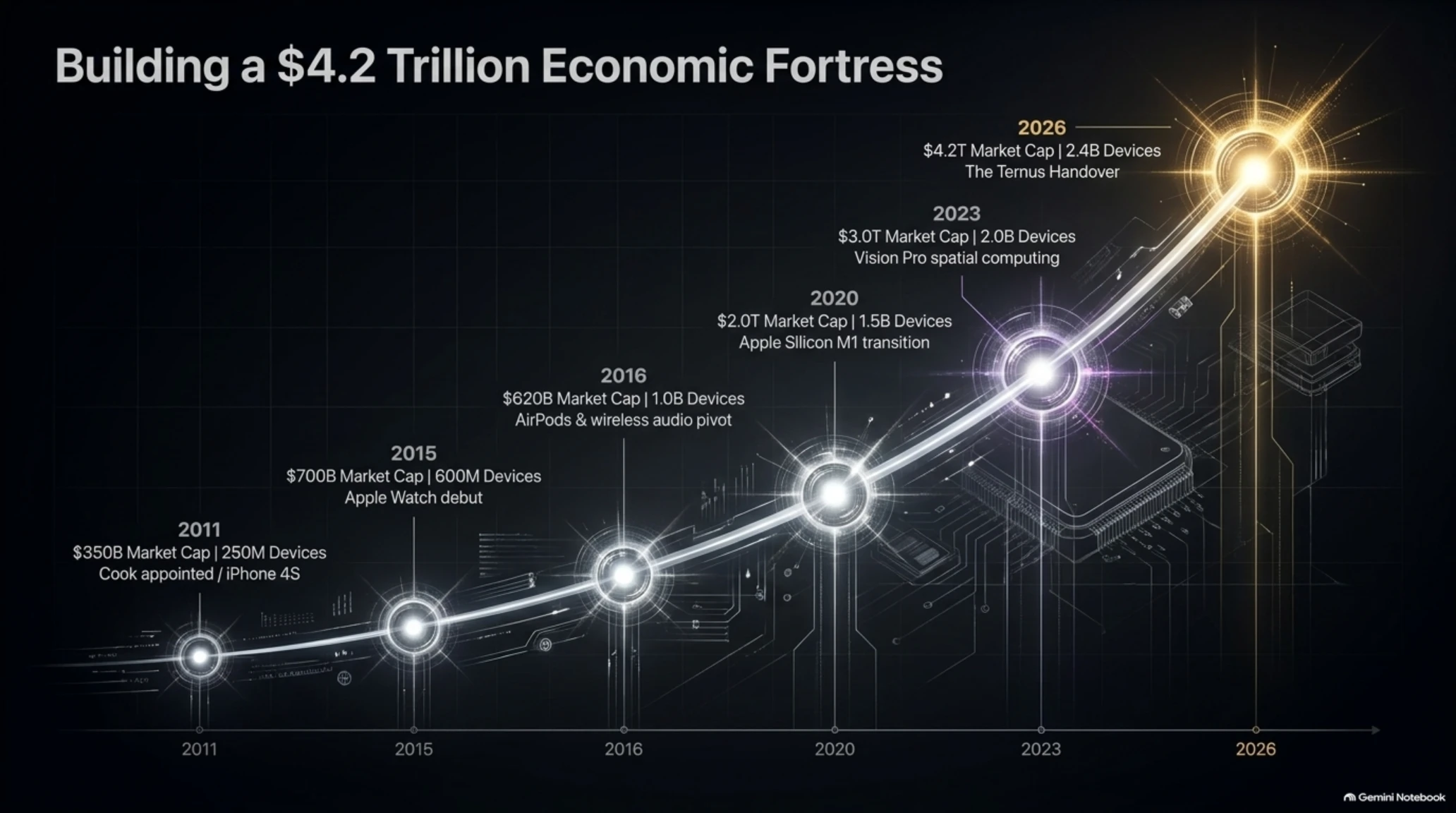
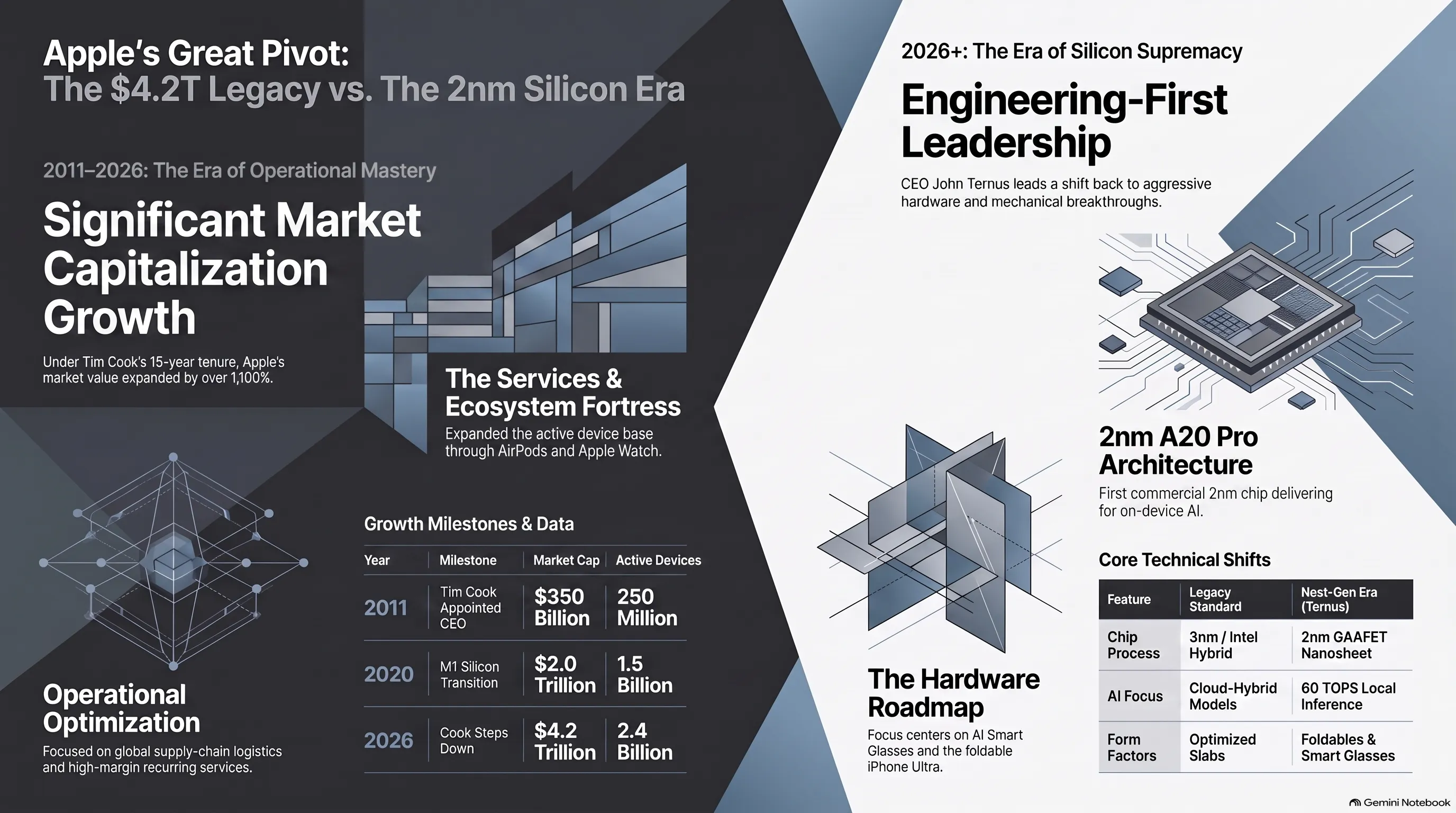
When Tim Cook assumed the chief executive role on August 24, 2011, amidst Steve Jobs's failing health, Wall Street analysts harbored deep skepticism. Critics argued that without Jobs's messianic product intuition, Apple's innovation engine would inevitably falter. Yet, Cook leveraged his unmatched expertise in global supply-chain logistics, capital allocation, and recurring services ecosystems to expand Apple from a $350 billion hardware manufacturer into an unassailable $4.2 trillion technological colossus.
Under Cook's tenure, Apple created entirely new multi-billion-dollar product categories. The Apple Watch evolved into the world's best-selling timepiece, while AirPods generated annual revenues rivaling standalone Fortune 50 enterprises. Most critically, Cook orchestrated the monumental transition away from Intel processors toward proprietary ARM-based Apple Silicon, drastically enhancing hardware profit margins and redefining energy-efficient computing across the personal computer industry.
Executive Leadership & Silicon Jargon Buster
• Executive Chairman: A senior board position focused on long-term corporate governance, strategic capital deployment, and high-level stakeholder relations without managing daily operational tasks.
• Apple Silicon Architecture: Proprietary ARM-based Systems-on-Chip (SoC) integrating CPU, GPU, Neural Engine NPU, and Unified Memory on a single silicon die for maximum energy efficiency and performance density.
15-Year Strategic Timeline & Financial Milestones of the Tim Cook Era (2011–2026)
| Calendar Year | Strategic Milestone & Hardware Pivot | Apple Market Capitalization | Active Installed Base |
|---|---|---|---|
| 2011 | Tim Cook appointed CEO / iPhone 4S debut with Siri | $350 Billion | 250 Million Devices |
| 2015 | Apple Watch original launch & Services revenue surge | $700 Billion | 600 Million Devices |
| 2016 | AirPods launch & headphone jack removal on iPhone 7 | $620 Billion | 1.0 Billion Devices |
| 2020 | Historic Apple Silicon M1 transition announced | $2.0 Trillion | 1.5 Billion Devices |
| 2023 | Spatial computing unveiled via Apple Vision Pro | $3.0 Trillion | 2.0 Billion Devices |
| 2026 | Cook transitions to Chairman / John Ternus appointed CEO | $4.2 Trillion | 2.4 Billion Devices |
2. Engineering the Future: John Ternus's 25-Year Hardware Ascent
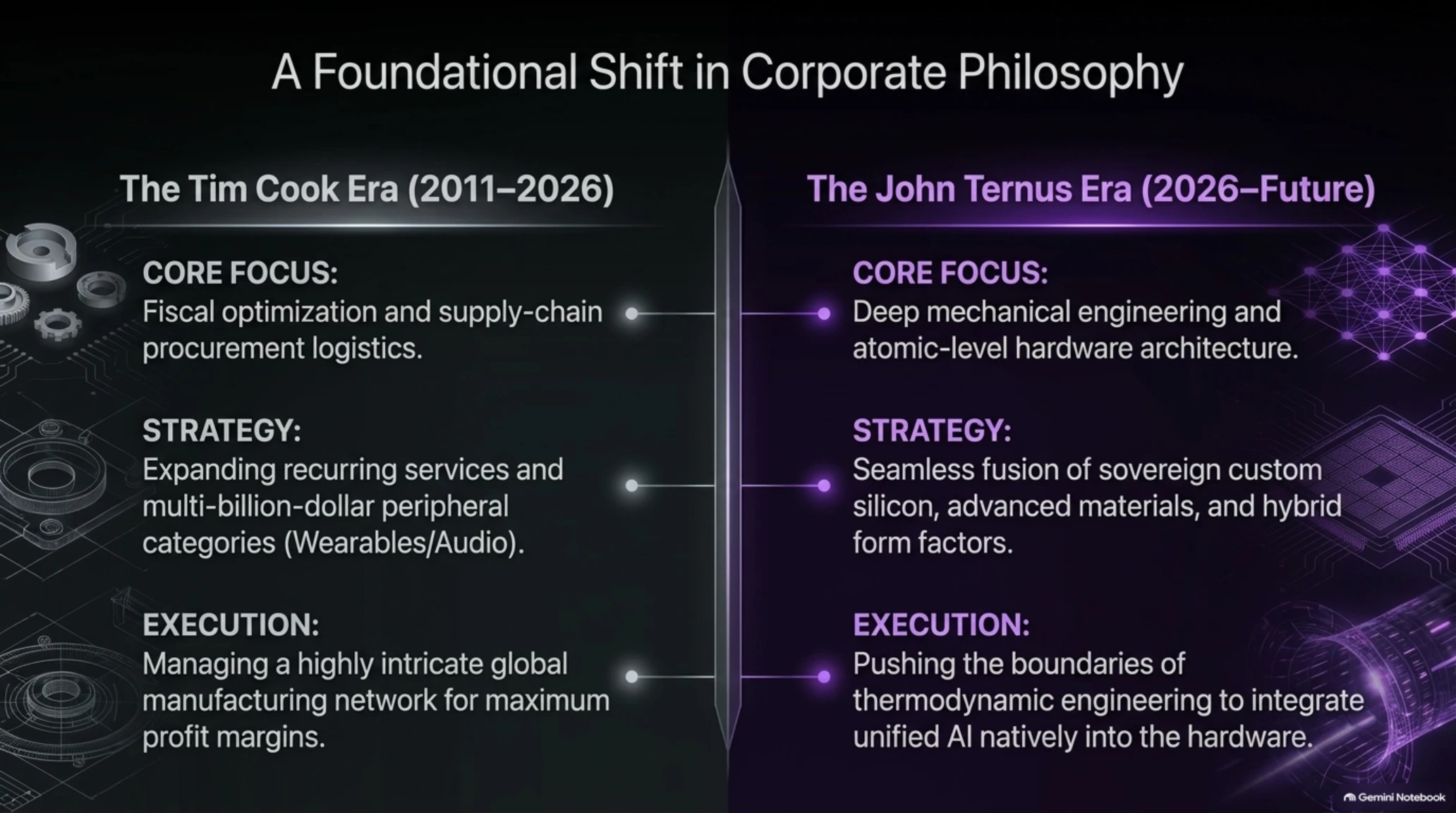
Unlike Tim Cook, who ascended to the executive suite via supply-chain operations and procurement logistics, John Ternus is an elite mechanical engineer and master product architect with a distinguished 25-year tenure at Apple. Having joined the Product Design team in 2001 during the formative development of the original iPod, Ternus steadily advanced through engineering leadership before succeeding Dan Riccio as Senior Vice President of Hardware Engineering in 2021.
Ternus's portfolio encompasses Apple's most universally praised engineering triumphs over the past two decades. He served as chief technical architect behind every generation of iPad Air and iPad Pro, led the widely celebrated redesign of the MacBook Pro (which eliminated the Touch Bar and restored HDMI and SD card connectivity), oversaw the mechanical engineering of MagSafe, and directed the silicon-hardware integration of the entire Apple Silicon family from M1 to modern M5/M6 architectures. His appointment represents a deliberate pivot from fiscal optimization back to deep hardware excellence.
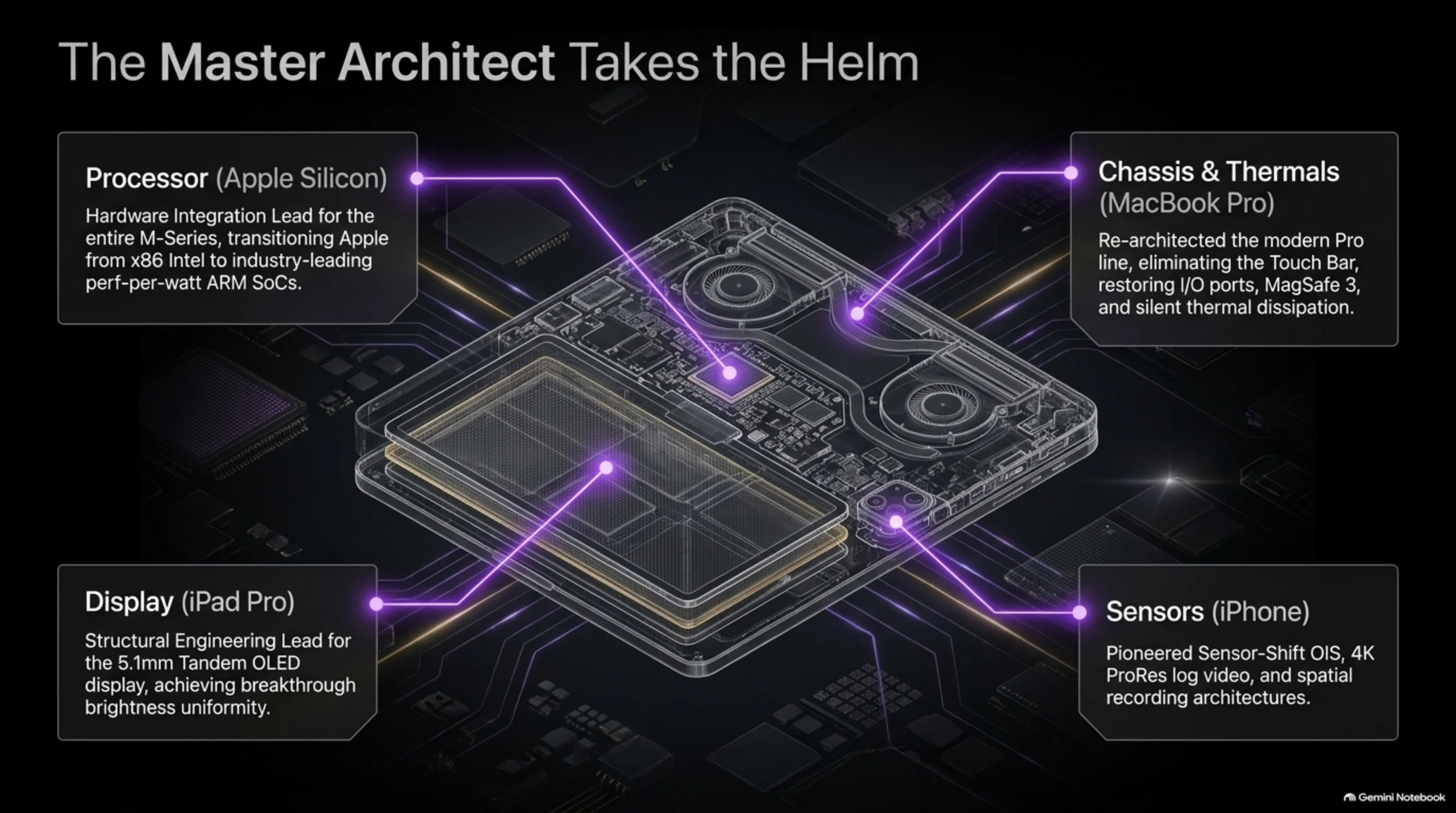
John Ternus Engineering Portfolio & Hardware Milestones at Apple
| Product / Hardware Program | Ternus's Leadership Role | Engineering Impact & Architecture |
|---|---|---|
| Apple Silicon (M-Series Processors) | Hardware Integration Lead | Replaced x86 Intel chips with industry-leading perf-per-watt ARM SoC |
| MacBook Pro Redesign (2021–2026) | Chassis & Thermal Architecture Lead | Restored pro I/O ports, MagSafe 3 charging, and silent thermal dissipation |
| iPad Pro with Tandem OLED Display | Display & Structural Engineering Lead | Thinnest device in Apple history (5.1mm) with breakthrough brightness uniformity |
| iPhone Computational Camera Hardware | Sensor Architecture & Optical Lead | Pioneered Sensor-Shift OIS, 4K ProRes log video, and spatial recording |
3. The Inaugural Keynote: September 9, 2026 Event & 2nm A20 Pro Silicon
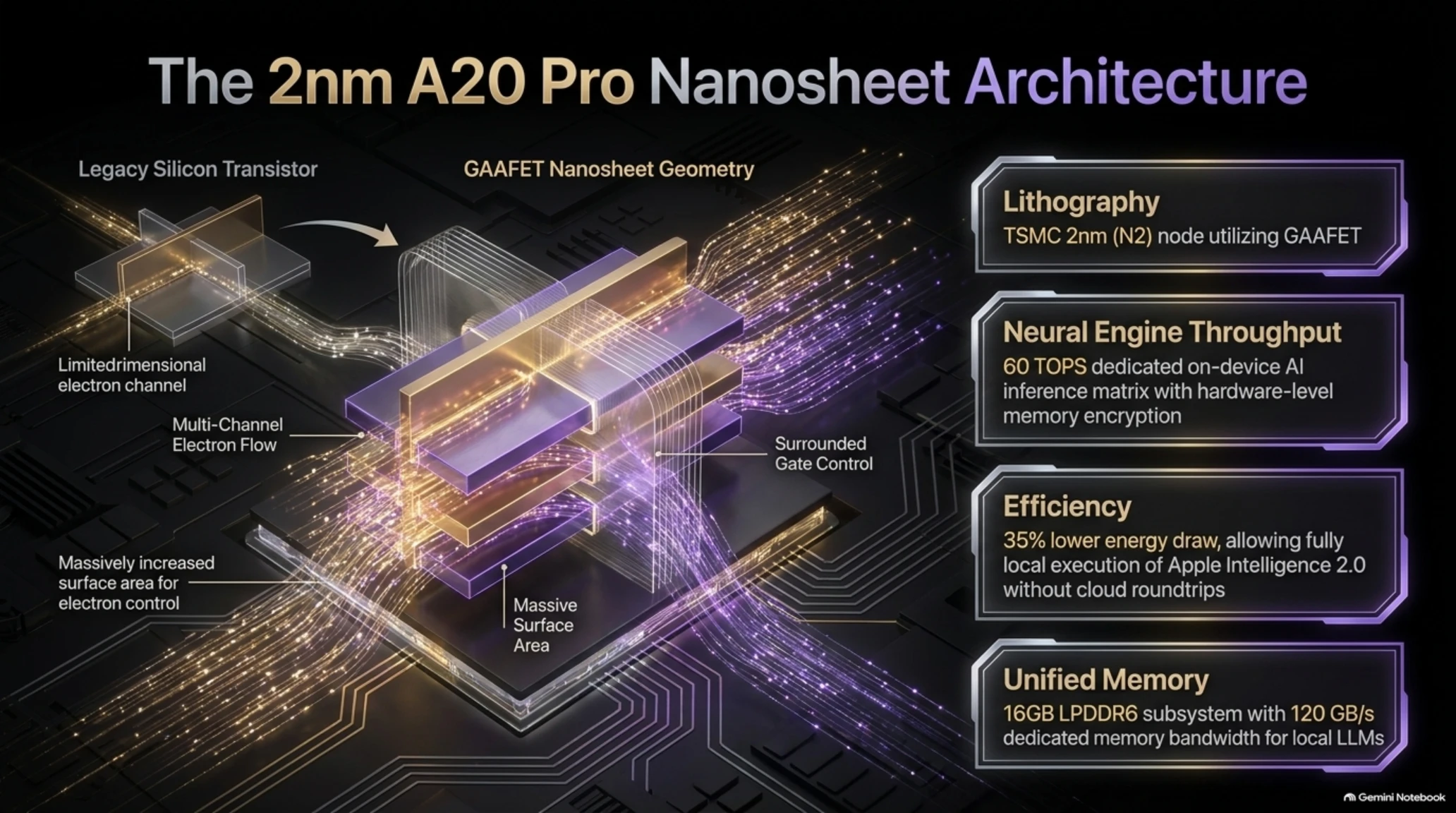
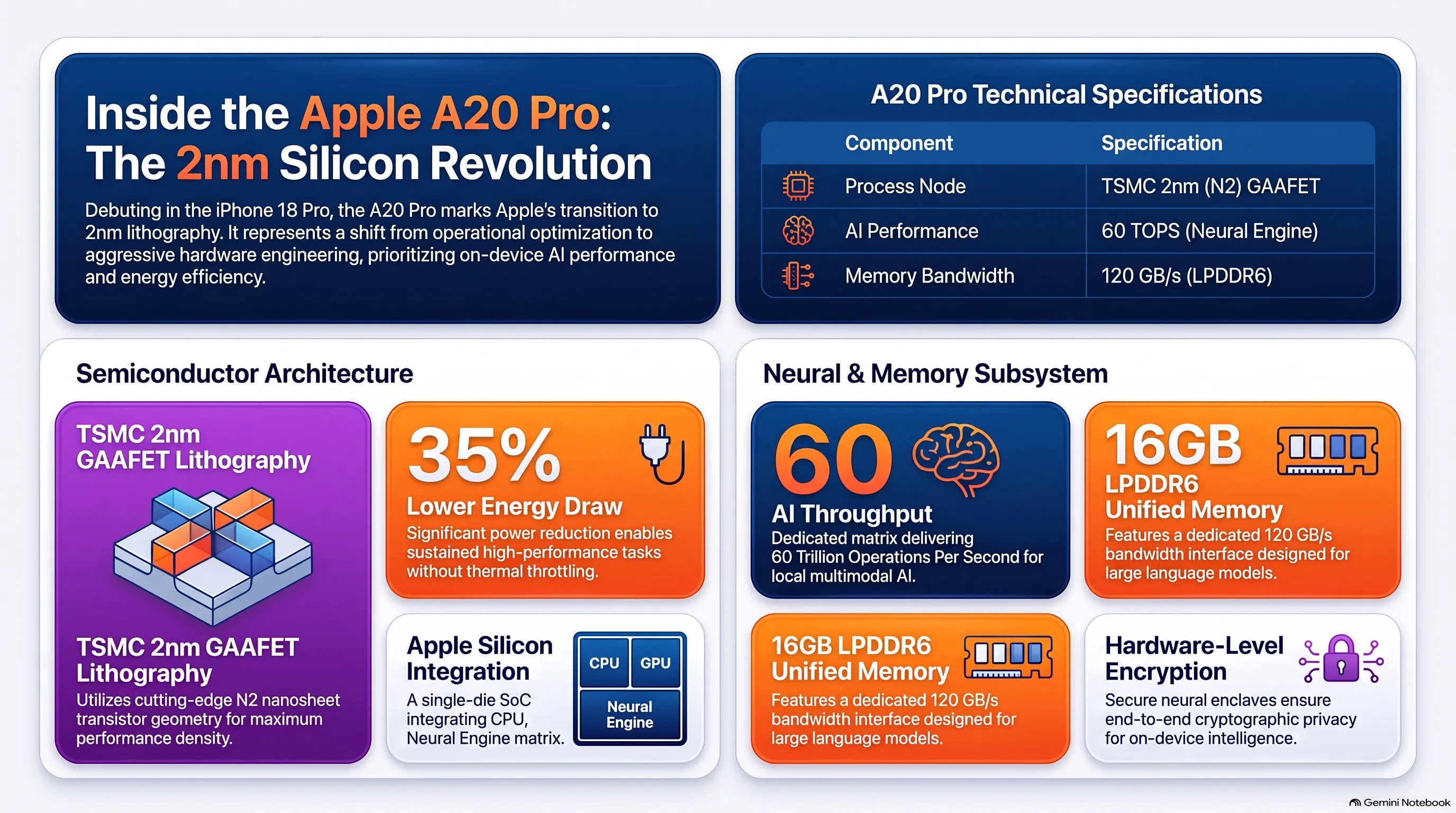
The tech world will witness John Ternus's inaugural public presentation as Chief Executive Officer on September 9, 2026, hosted inside the Steve Jobs Theater at Apple Park. Supply-chain disclosures confirm that this keynote will introduce the flagship iPhone 18 Pro and iPhone 18 Pro Max, powered by the world's first commercial 2nm processor: the Apple A20 Pro, fabricated using TSMC's cutting-edge N2 GAAFET nanosheet lithography.
Featuring an upgraded Neural Engine delivering an extraordinary 60 Trillion Operations Per Second (TOPS) with 35% lower energy draw, the A20 Pro enables fully local, low-latency execution of Apple Intelligence 2.0 large multimodal models without cloud roundtrips. In addition to the iPhone 18 lineup, Ternus is slated to reveal Apple's first commercial AI-powered Smart Glasses alongside an exclusive design preview of the foldable iPhone Ultra.
Key Architectural Specifications: 2nm Apple A20 Pro Silicon
• Semiconductor Lithography: TSMC 2nm (N2) node utilizing Gate-All-Around (GAAFET) Nanosheet transistor geometry.
• Neural Engine Throughput: 60 TOPS dedicated on-device AI inference matrix with hardware-level memory encryption.
• Unified Memory Subsystem: 16GB LPDDR6 unified memory interface with 120 GB/s dedicated memory bandwidth for local LLMs.
📚 Classified & Related Dossiers in TekinGame
If you wish to explore beyond this report and delve into cybernetic frontiers and autonomous AI architectures, do not miss these three exclusive deep-dives in the Tekin Garage:
4. The AI Imperative: Closing the Generative Gap with Private Cloud & Neural Enclaves
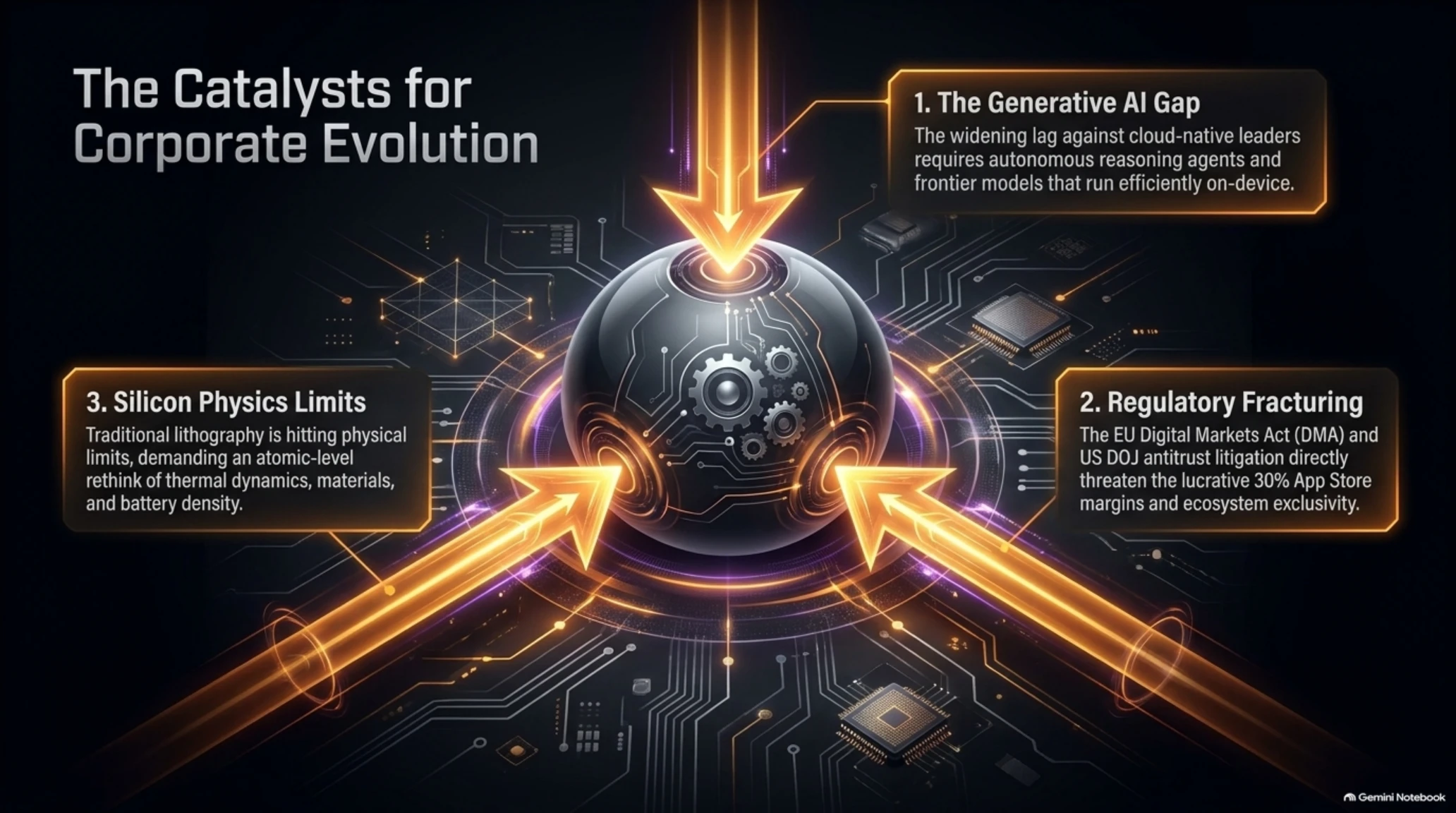
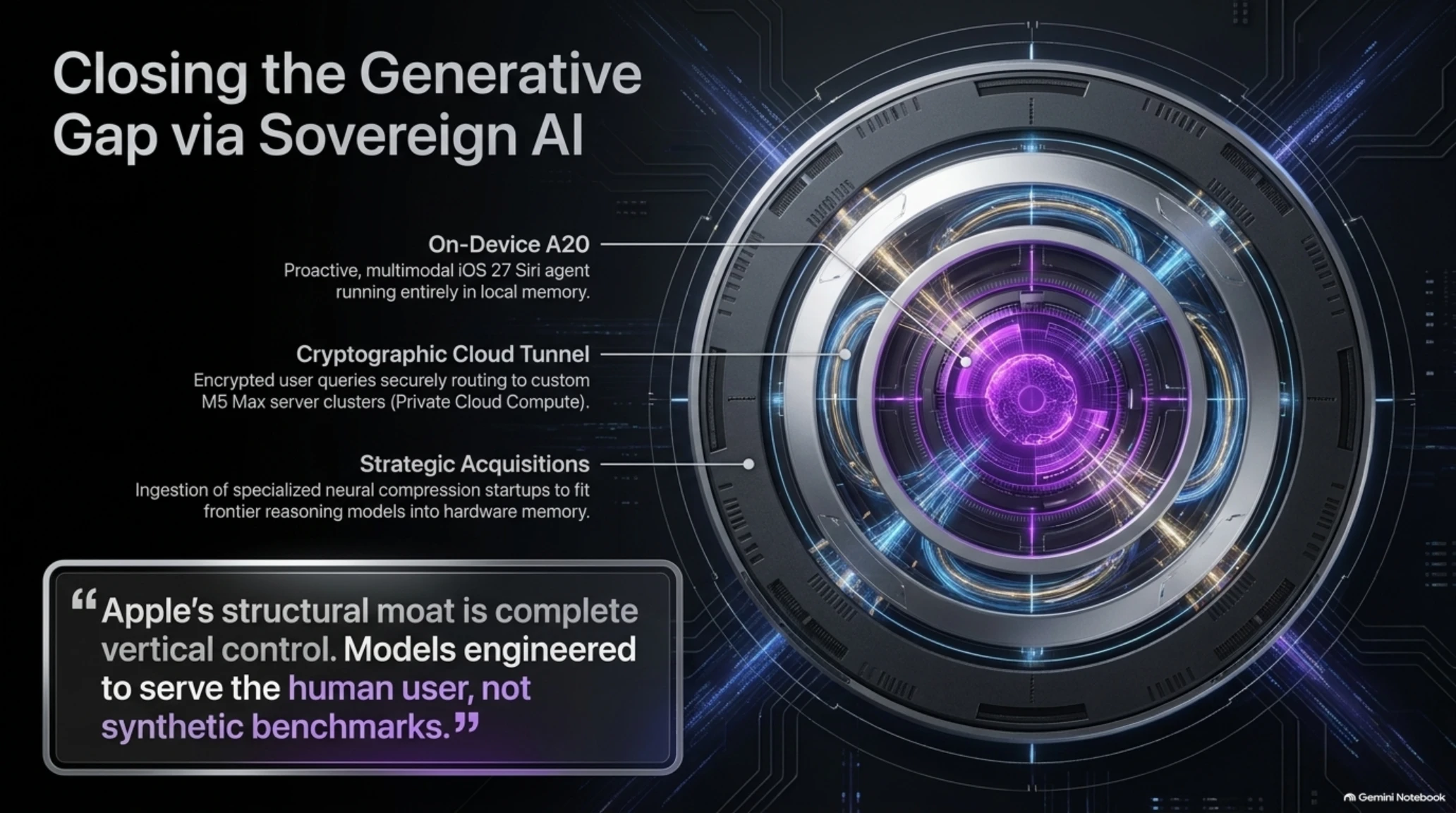
The most pressing strategic imperative confronting John Ternus is closing the widening competitive gap between Apple and cloud-native AI leaders like OpenAI, Google, and Anthropic. While competitors deployed multi-trillion-parameter foundation models and autonomous reasoning agents, Apple's initial Apple Intelligence rollout faced scrutiny for its conservative reliance on constrained on-device models and hybrid cloud routing.
To overcome this hurdle, Ternus has championed a three-tier AI convergence strategy: first, the rapid scaling of Private Cloud Compute (PCC) data centers powered by custom M5 Max server clusters ensuring end-to-end cryptographic privacy; second, the re-architecting of Siri into a proactive, multimodal operating system agent in iOS 27; and third, aggressive acquisitions of specialized neural compression startups to run high-parameter frontier reasoning models entirely within on-device hardware memory.
5. The Threat Matrix: Antitrust Mandates, Geopolitics & Spatial Transition
John Ternus assumes command amidst unprecedented legal, regulatory, and macroeconomic headwinds. Foremost among these is the escalating regulatory offensive by the European Commission under the Digital Markets Act (DMA) and parallel antitrust litigation from the U.S. Department of Justice. These enforcement actions directly challenge Apple's lucrative 30% App Store revenue model and mandatory ecosystem exclusivity, forcing Ternus to architect compliant platforms without degrading core services profitability.
Simultaneously, Ternus must steer Apple's monumental supply-chain diversification away from mainland China toward production hubs in India, Vietnam, and advanced foundry facilities in Arizona. Balancing yield rates, component quality, and geopolitical friction across a multi-billion-device manufacturing network will demand exceptional operational discipline and hardware oversight.
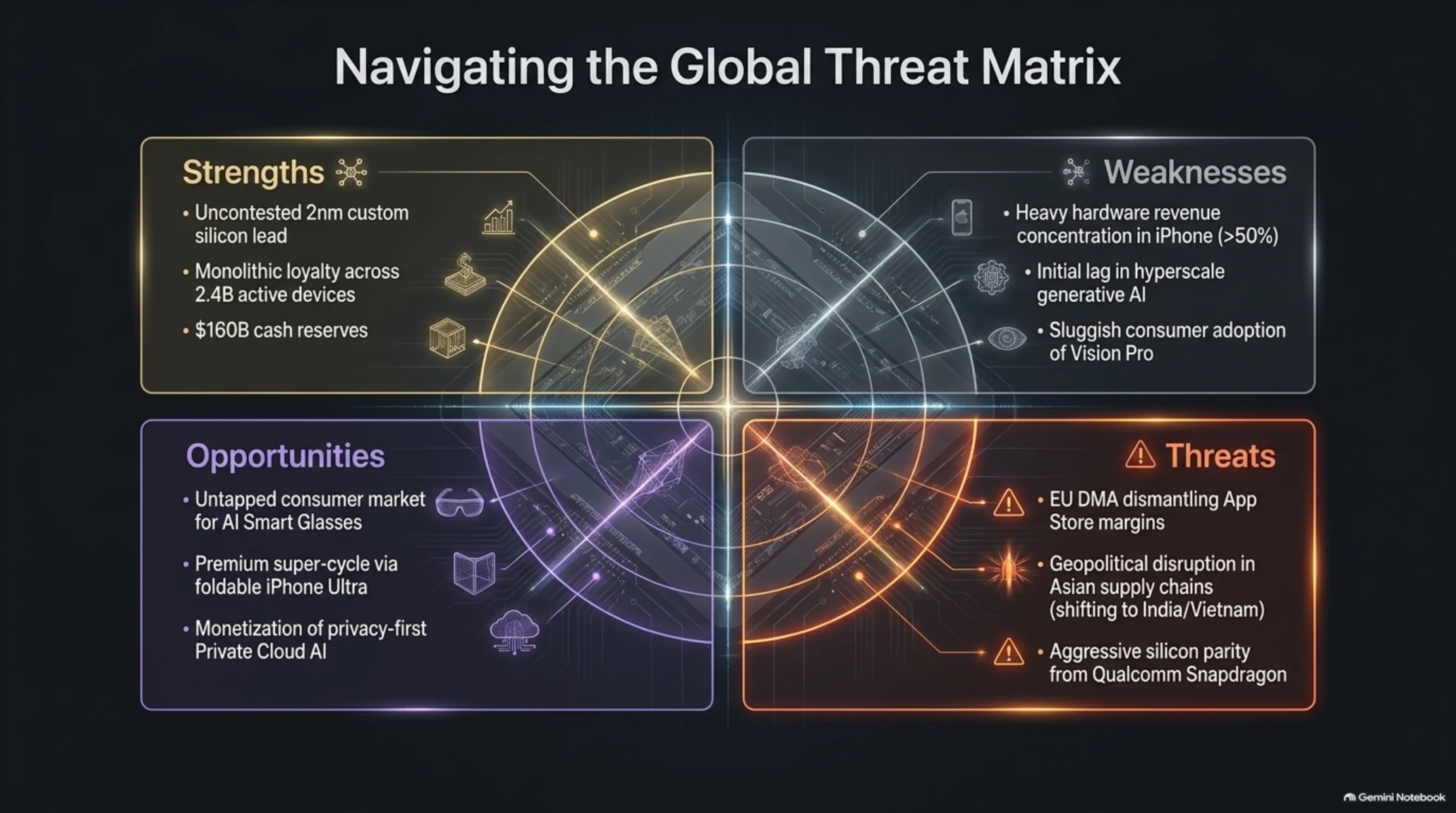
Strategic SWOT Analysis: Apple at the Dawn of the John Ternus Era
| Strengths | Weaknesses |
|---|---|
| • Uncontested leadership in 2nm custom silicon design • Monolithic ecosystem loyalty across 2.4B active devices • Formidable cash reserves exceeding $160 billion | • Heavy hardware revenue concentration in iPhone (>50%) • Initial lag in hyperscale generative AI foundation models • Sluggish consumer adoption of Vision Pro headset |
| Opportunities | Threats |
| • Untapped consumer market for AI Smart Glasses • Premium super-cycle driven by foldable iPhone Ultra • Monetization of privacy-first Private Cloud AI services | • Regulatory dismantlement of App Store revenue margins • Geopolitical disruption across Asian supply chains • Aggressive silicon parity from Qualcomm Snapdragon |
6. The Post-Cook Hardware Renaissance: Materials, Foldables & Ambient Wearables
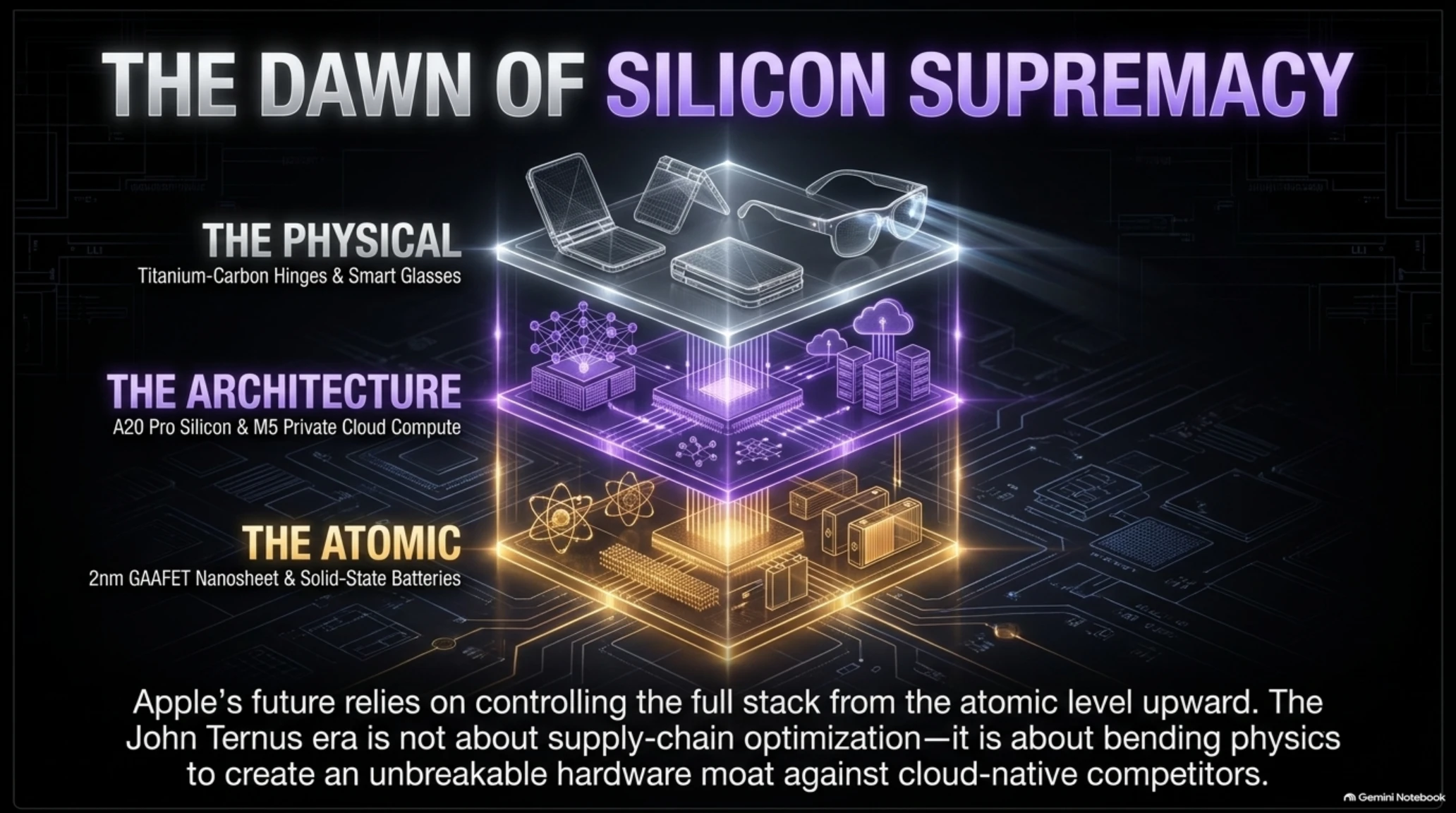
With an elite mechanical engineer at the helm, industry observers anticipate Apple's design philosophy to transition from incremental optimization toward daring breakthroughs in advanced materials, thermodynamic engineering, and hybrid form factors. Ternus has long maintained that the seamless integration of artificial intelligence and hardware demands a foundational reimagining of device architecture from the atomic level upward.
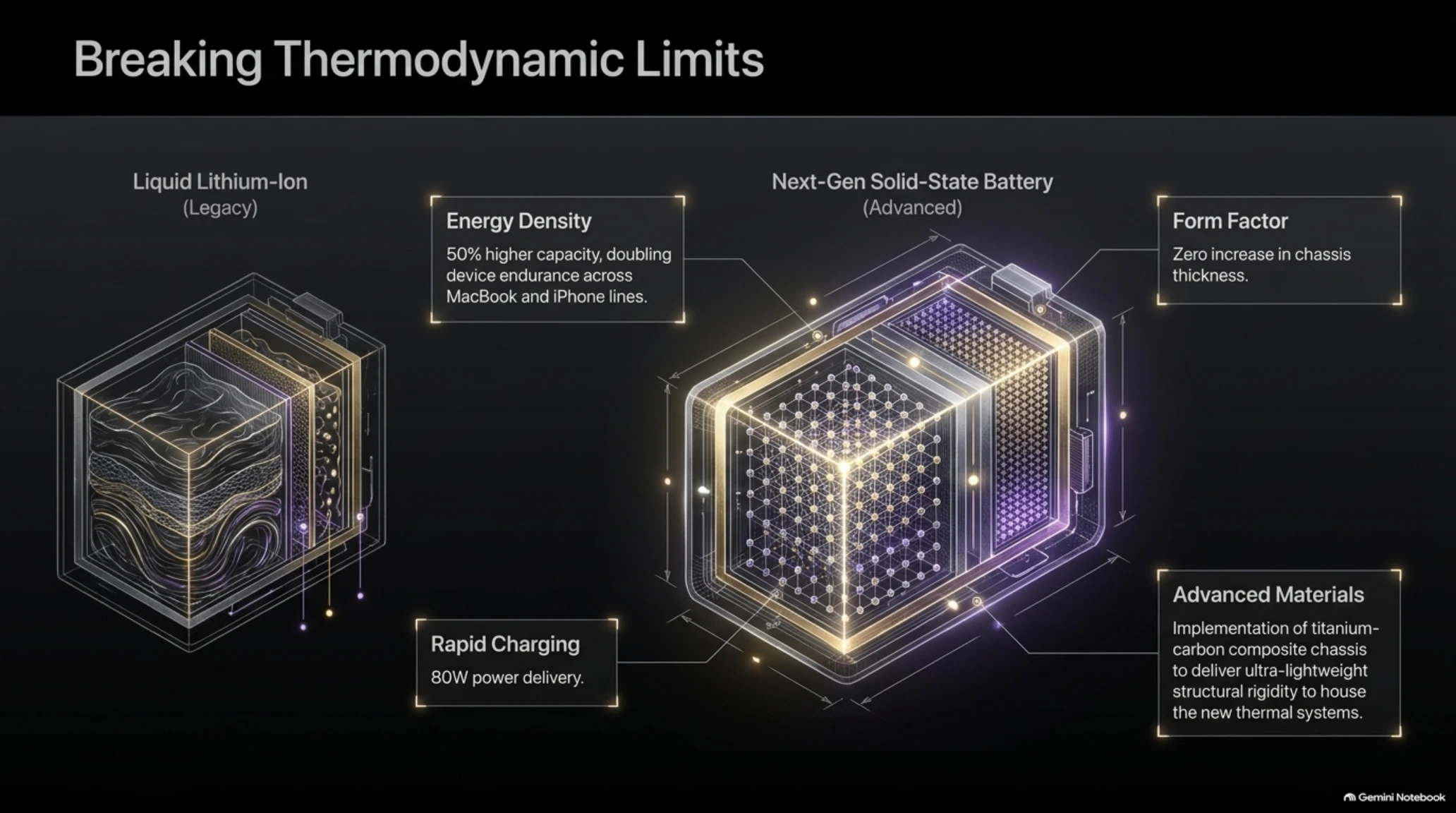
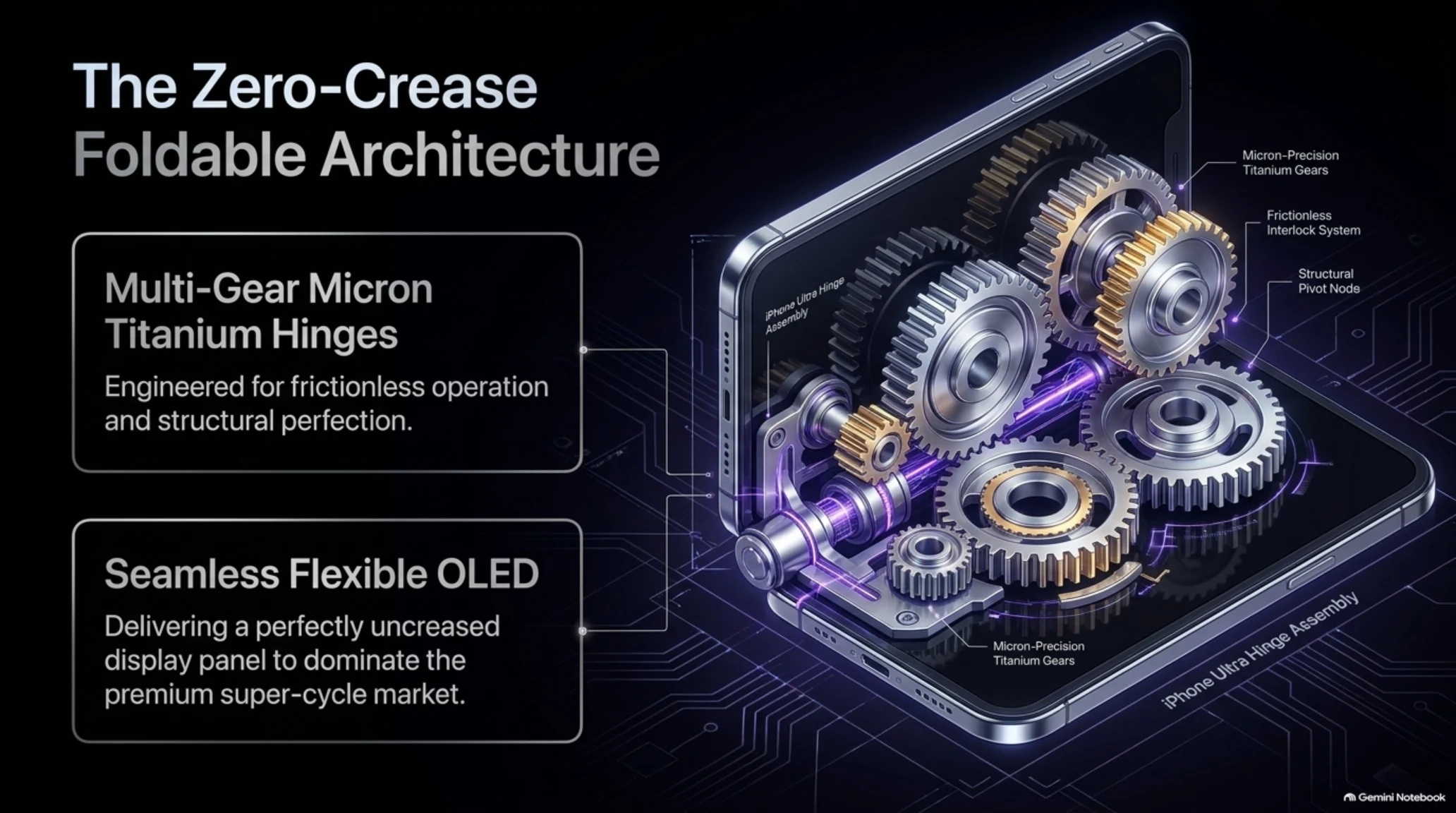
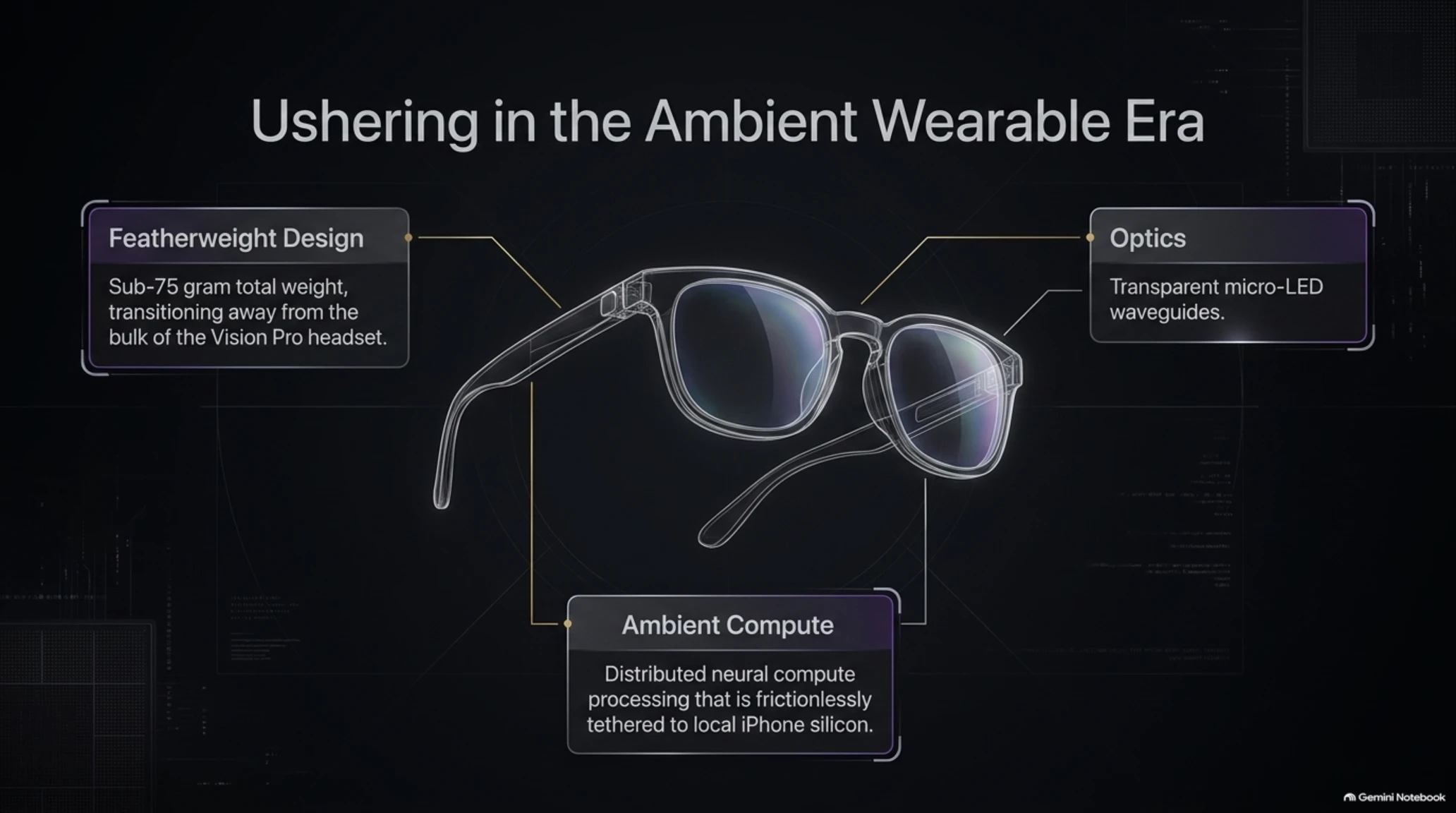
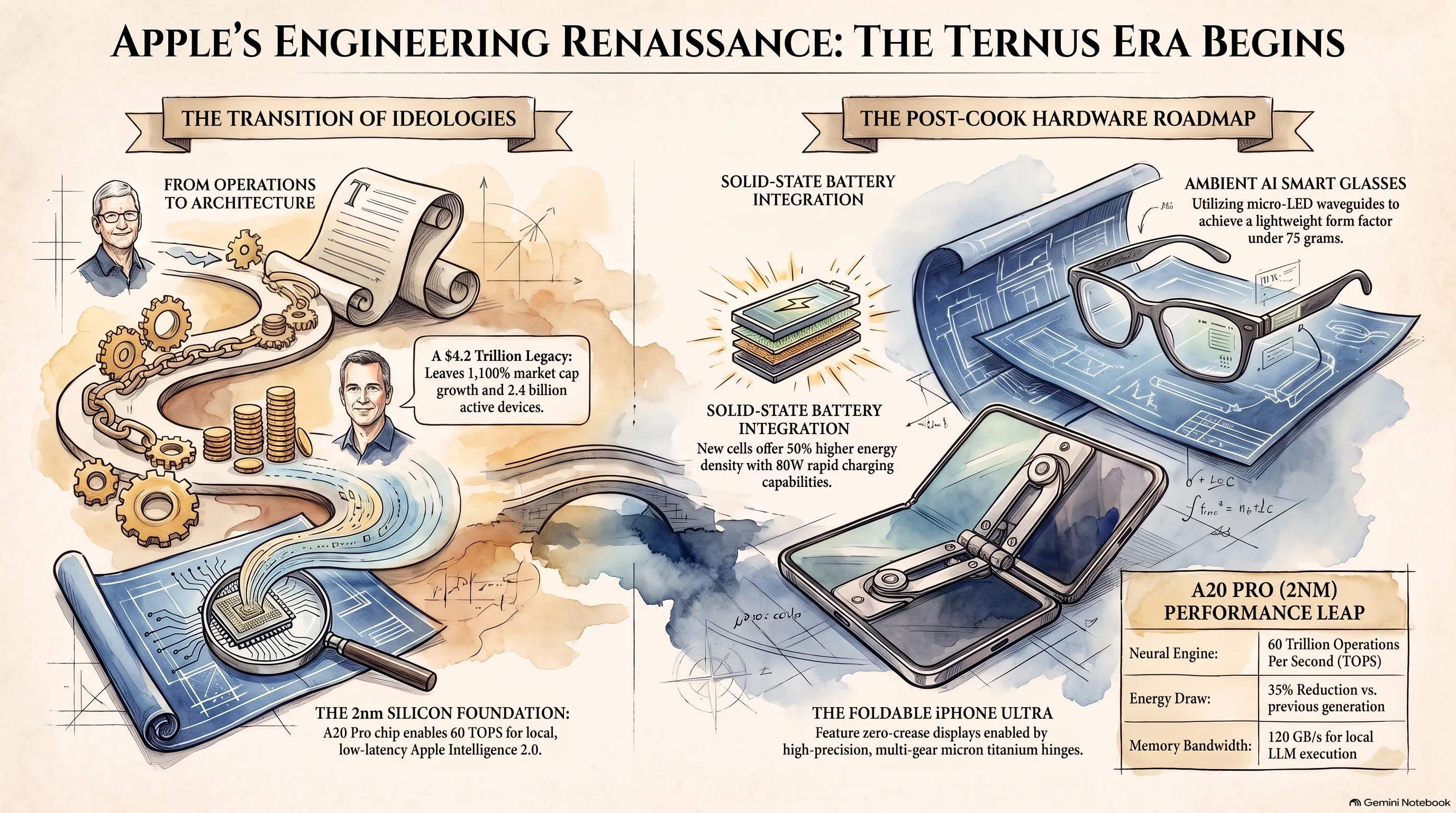
Ternus's five-year hardware roadmap emphasizes the adoption of titanium-carbon composite chassis to deliver ultra-lightweight structural rigidity, the commercialization of Solid-State Batteries offering 50% higher energy density with 80W rapid charging, and the evolution of Vision Pro technology into Apple Smart Glasses weighing under 75 grams. These ambient wearables, paired with frictionless zero-crease titanium hinges on the upcoming iPhone Ultra, aim to secure Apple's dominance for the next quarter-century.
Key Hardware Innovations Defining the John Ternus Era
• Next-Gen Solid-State Battery Cells: Doubling device endurance across MacBook and iPhone without increasing chassis thickness.
• Lightweight AI Smart Glasses: Transparent micro-LED waveguides with distributed neural compute tethered to local iPhone silicon.
• Crease-Free Foldable Displays: Multi-gear micron titanium hinges delivering seamless, uncreased flexible OLED panels.
TekInGame Strategic Synthesis: The Dawn of Silicon Supremacy
The leadership transition on September 1, 2026, marks far more than a routine corporate succession; it signifies the end of a 15-year masterclass in global supply-chain optimization and the birth of an era defined by aggressive hardware engineering and sovereign neural silicon. Tim Cook built an unshakeable $4.2 trillion empire; now, John Ternus must steer this technological titan through the turbulent currents of autonomous AI and post-silicon microarchitecture. The September 9 keynote will be the opening chapter of this historic journey.
- Appointment of an elite hardware and silicon engineer (John Ternus) to lead the world's most valuable enterprise
- Staggering financial baseline inherited from Tim Cook: $4.2T market cap, 2.4B active devices, and $160B in cash reserves
- Decisive semiconductor lead via TSMC's 2nm GAAFET process and the 60 TOPS A20 Pro chip
- Unwavering commitment to user privacy via on-device intelligence and cryptographic Private Cloud Compute
- Competitive gap against cloud-native generative AI pioneers like OpenAI and Google in complex multi-step reasoning
- Escalating regulatory penalties in the EU under the DMA, threatening App Store services margins
- Intricate logistics and yield hurdles associated with diversifying global supply chains out of mainland China
Recommended In-Depth Gaming & Tech Dossiers on TekInGame
• 🛡 Inside the FBI & NSA Takedown of Chinese Cyber Network QTFY | Deconstructing QScan IoT Botnets & QTRouter Proxy Meshes
• 🎬 Deconstructing Alibaba Wan 3.0 Video AI | The Chinese Tech Breakthrough Disrupting Hollywood & Sora
• 🧪 Inside Inherent's Faraday AI | How a 27-Million-Parameter Model Beat DeepSeek-R1 in Biochemical Reasoning
Frequently Asked Questions | Apple Leadership Transition
Why did Tim Cook step down as CEO on September 1, 2026?
After 15 years of historic stewardship building Apple into a $4.2 trillion enterprise, Tim Cook transitioned to Executive Chairman of the Board as part of a long-planned succession strategy to empower next-generation technical leadership.
Who is John Ternus and what is his engineering background at Apple?
John Ternus is Apple's former SVP of Hardware Engineering with a 25-year tenure, serving as the master architect behind the Apple Silicon (M-Series) transition, the MacBook Pro redesign, the OLED iPad Pro, and computational iPhone cameras.
What major announcements are expected at the September 9, 2026 Apple Keynote?
The debut of the iPhone 18 Pro family powered by the 2nm A20 Pro chip, the first Apple AI Smart Glasses, Apple Watch Series 12 / Ultra 4, and a design preview of the foldable iPhone Ultra.
What makes the 2nm Apple A20 Pro processor revolutionary?
Fabricated on TSMC's 2nm N2 process with GAAFET nanosheet transistors, it features a 60 TOPS Neural Engine delivering 35% higher energy efficiency for real-time on-device Apple Intelligence 2.0 execution.
What are John Ternus's greatest strategic challenges as CEO?
Closing the gap with cloud-native generative AI labs, complying with aggressive EU DMA antitrust regulations without eroding App Store margins, and diversifying the manufacturing supply chain across India and Vietnam.
Official Technical References & Primary Sources
Additional Gallery: 👑 Tekin Analysis | Apple CEO Transition: Tim Cook Steps Down, John Ternus & iPhone 18