☀️ Tekin Morning: Energizing Sunday with 6 Hot Tech Stories
Good morning! Welcome to Tekin Morning for Sunday, June 28, 2026. Today we've got an exciting lineup of breakthrough tech news.
- 🎮🍎 Apple Brain Drain- Vision Pro chief joins OpenAI's hardware division
- 🎧💰 Apple Price Surge- MacBook and iPad prices rise due to AI memory shortage
- 🚀🇮🇳 AI Powers India's UPI- Targeting one billion daily transactions with AI
- 🗡️🔋 MagSafe Battery Guide- Best power banks for iPhone 17 and iPhone Air
- 📰🚀 In-Orbit Refueling- NASA successfully tests Cryocoupler technology
- 🎮⚖️ Crypto Regulation War- Warning: China wins if CLARITY Act fails
Sunday morning is all about starting your week with fresh energy and insights. Today is one of those mornings where the tech world delivers a perfect mix of innovation, controversy, and practical consumer advice. From Apple's talent exodus to OpenAI, to widespread price hikes across MacBook and iPad lineups, from India's AI-powered payment revolution to NASA's groundbreaking space refueling tests. Let's dive into these six stories that will shape your understanding of where tech is heading this week.
Apple's Core Asset Walks Out: Paul Meade's Move to OpenAI
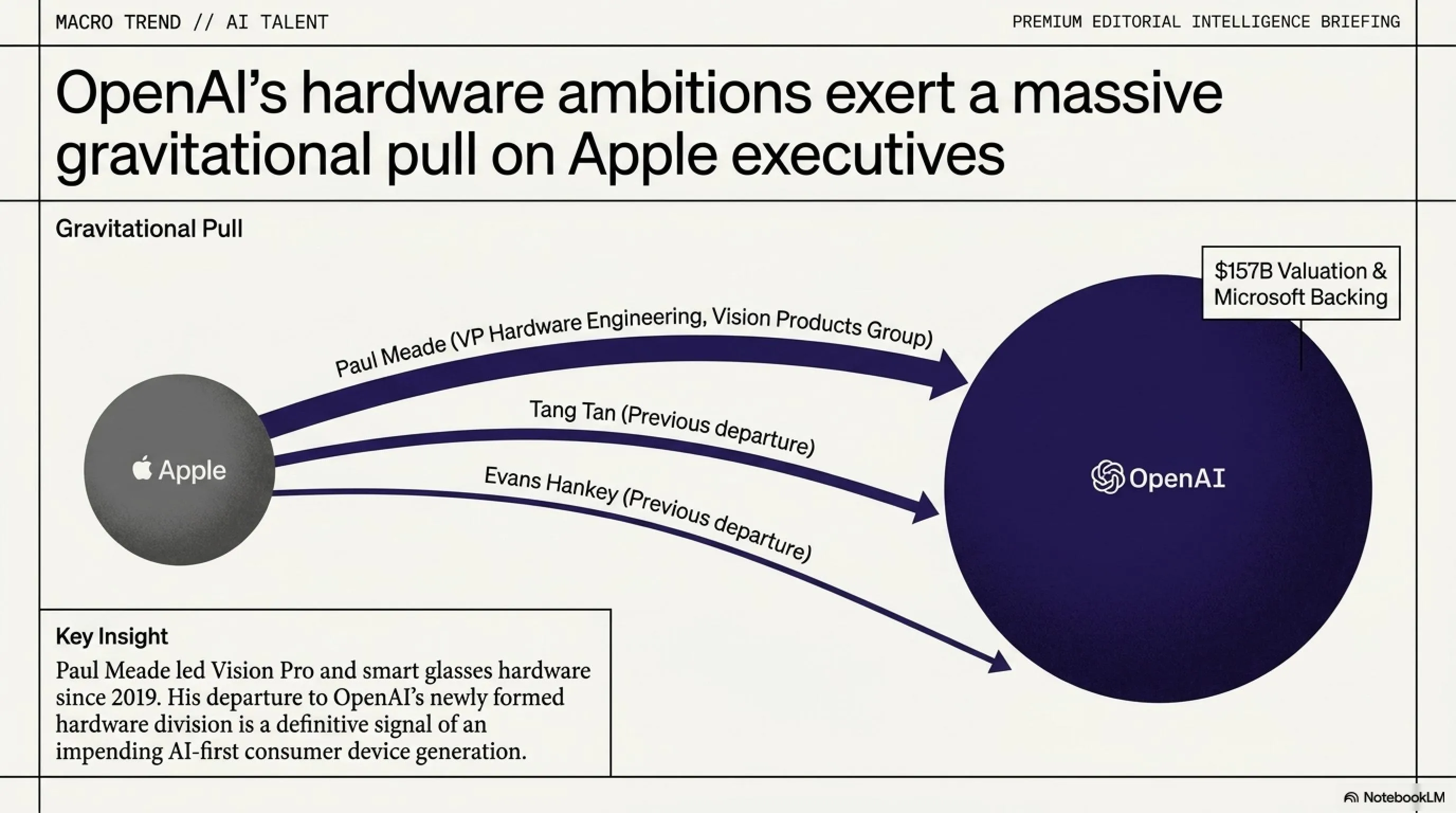
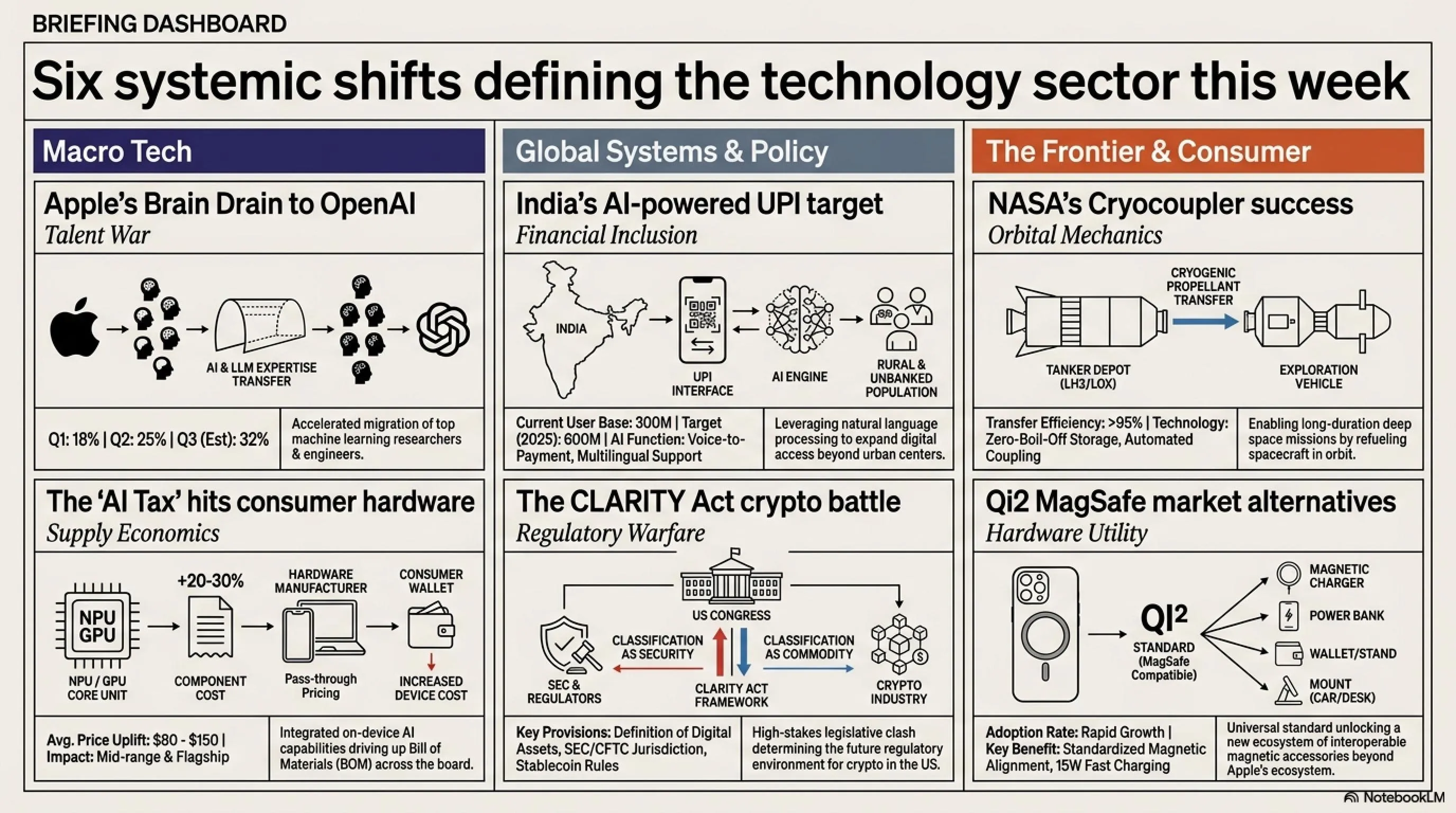
When one of the key architects behind Apple's most ambitious products decides to leave, it's not just another job switch. Paul Meade, the Vice President of Hardware Engineering for Apple's Vision Products Group, is leaving the company next week to join OpenAI's newly formed hardware division. This isn't just any engineer—Meade has been at Apple for over a decade, leading the development of Vision Pro and the company's smart glasses project. Before that, he was instrumental in major iPhone and iPad initiatives.
What makes this particularly significant is that Meade took over the entire hardware engineering responsibility for Vision Products Group in 2019, precisely when Apple was seriously developing Vision Pro. This means one of the principal architects of this product is now heading to a competitor. Fletcher Rothkopf, the previous director, will take over, but the question remains: can Apple easily fill the void left by such specialized talent?
🔍 Who is Paul Meade and Why Does It Matter?
This marks the second senior Apple executive to join OpenAI this year. Previously, notable figures like Tang Tan and Evans Hankey made similar moves. This migration wave suggests OpenAI is building a formidable hardware division. Given OpenAI's current $157 billion valuation and Microsoft's financial backing, the company can offer compensation packages that even Apple struggles to match. The talent war for AI hardware expertise is heating up, and Apple appears to be losing key battles.
The AI Tax Hits Consumers: Apple's Widespread Price Increases
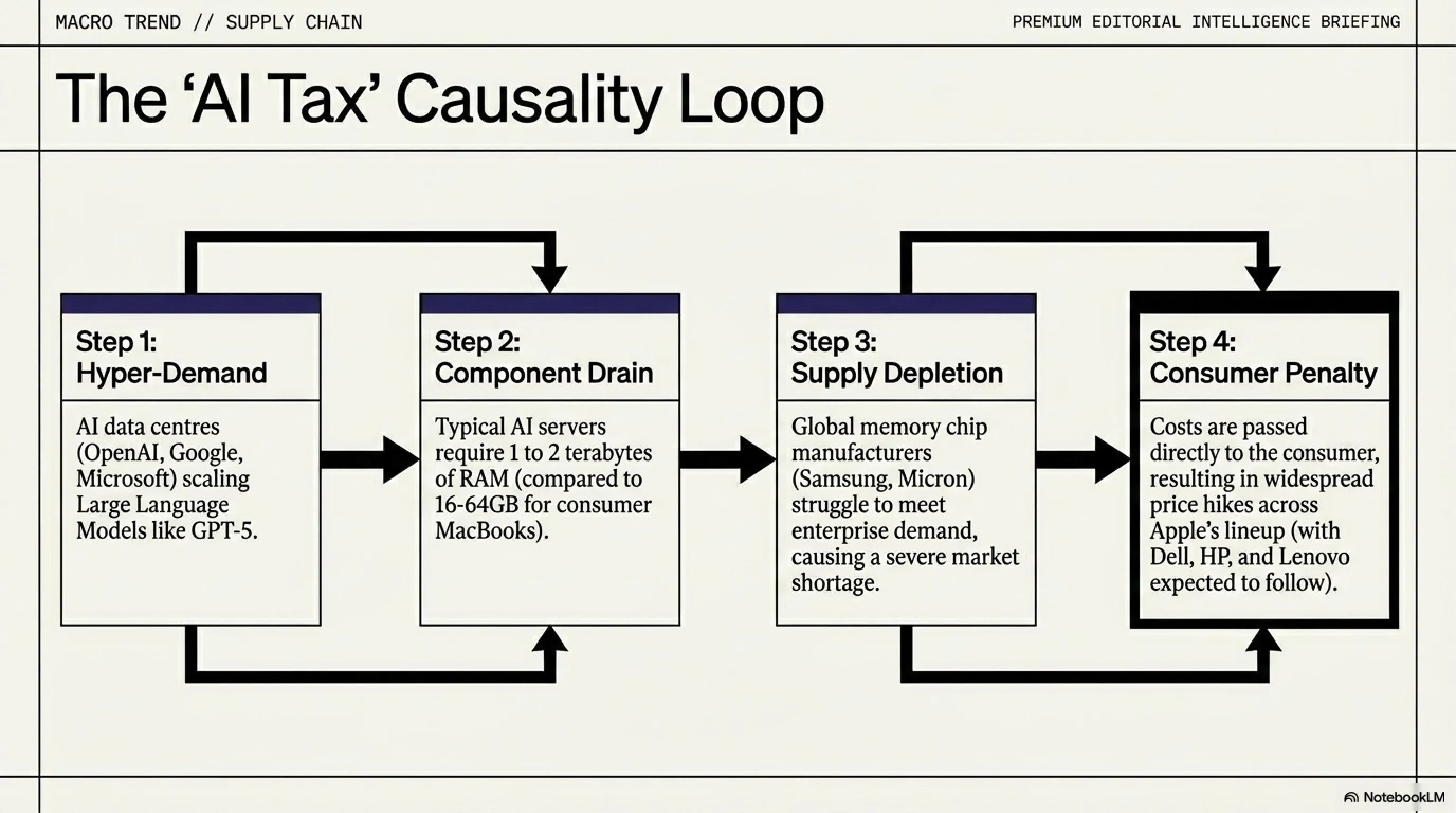
Now for some bad news if you're planning to buy Apple products. Apple has officially announced widespread price increases for MacBook and iPad lines, citing a global shortage of memory chips caused by unprecedented demand from AI data centers for RAM and SSD. In simpler terms, the AI boom is passing its costs directly to everyday consumers.
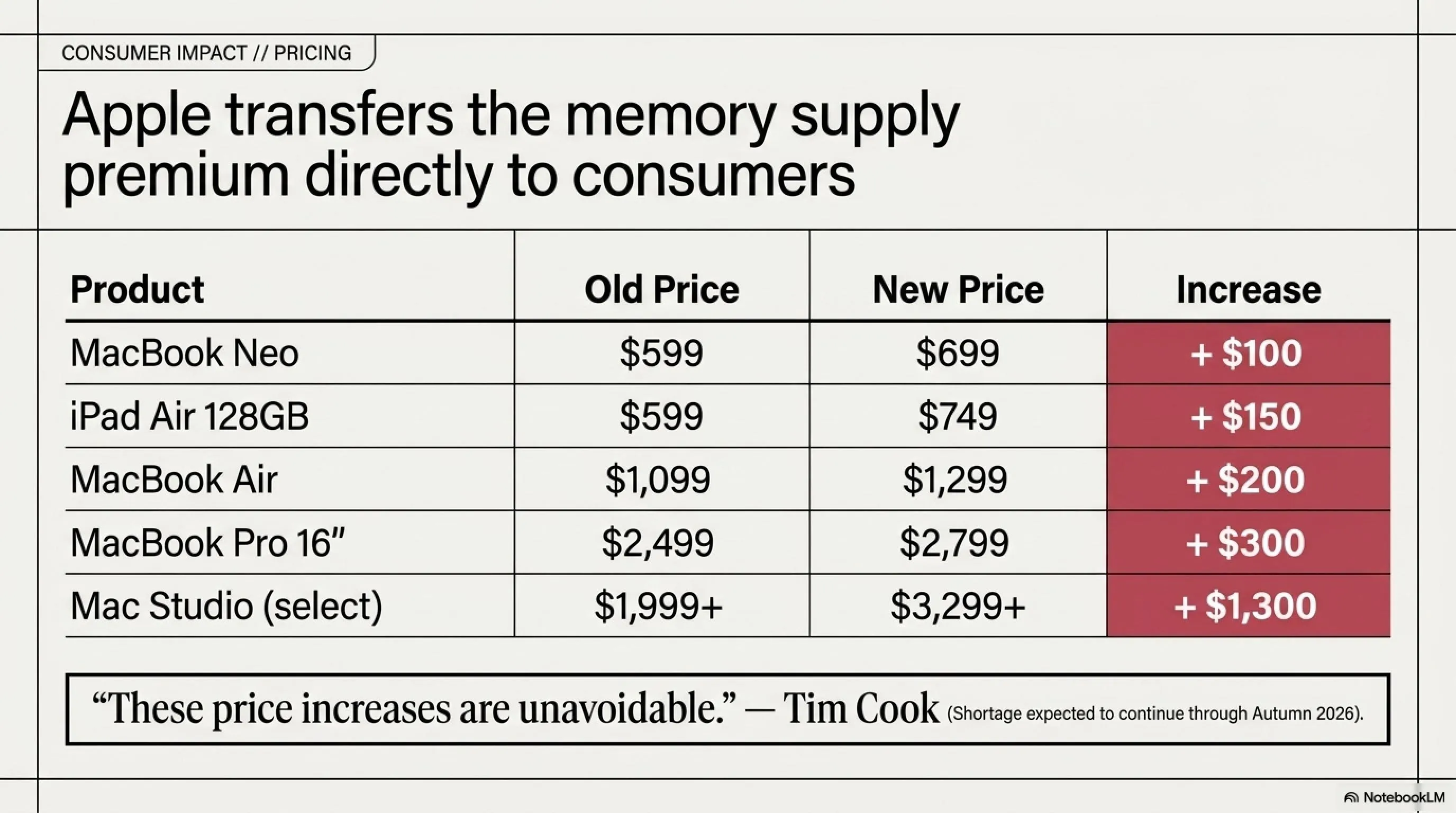
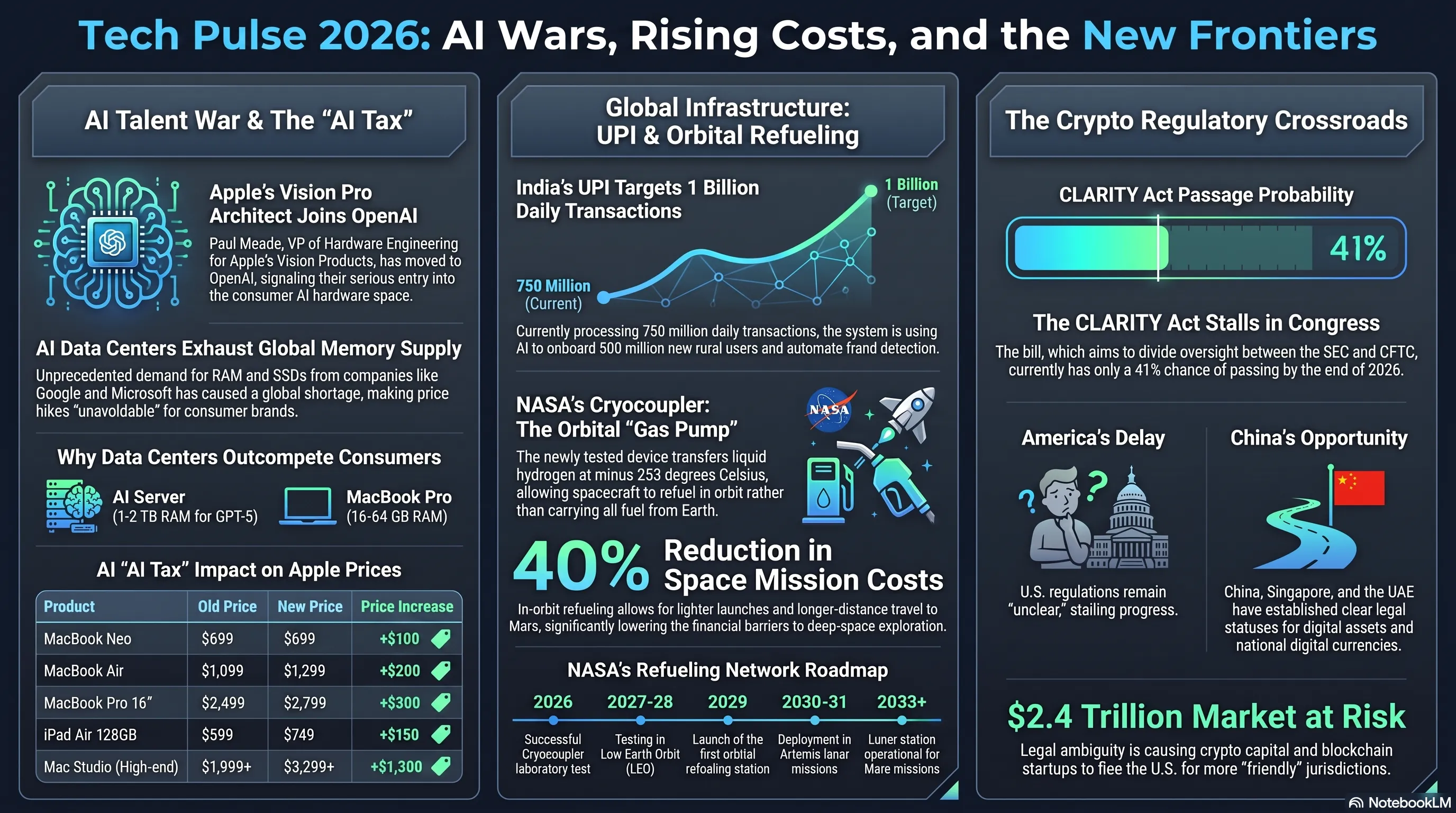
Let's break down the numbers: MacBook Neo jumped from $599 to $699 (a $100 increase), MacBook Air went from $1,099 to $1,299 (up $200), and the MacBook Pro 16-inch saw increases up to $300. The iPad Air with 128GB storage rose from $599 to $749, adding $150 to the price tag. But the most dramatic increase hits the Mac Studio, with some models seeing price jumps of up to $1,300.
💸 Apple Product Price Increase Table
| Product | Old Price | New Price | Increase |
|---|---|---|---|
| MacBook Neo | $599 | $699 | +$100 |
| MacBook Air | $1,099 | $1,299 | +$200 |
| MacBook Pro 16" | $2,499 | $2,799 | +$300 |
| iPad Air 128GB | $599 | $749 | +$150 |
| Mac Studio (select models) | $1,999+ | $3,299+ | +$1,300 |
Tim Cook stated in a release that these price increases are "unavoidable." The reason is straightforward: AI data centers from companies like OpenAI, Google, and Microsoft are buying RAM and SSD chips at unprecedented volumes to build powerful servers for large language models. This massive demand has caused memory chip manufacturers like Samsung and Micron to struggle with supply, driving prices up across the board.
🧠 Why Do AI Data Centers Need So Much Memory?
These price increases aren't limited to Apple. Companies like Dell, HP, and Lenovo will likely follow suit. However, Apple was the first to transparently announce the changes and directly attribute them to the AI boom. For consumers already stretched by inflation, this news means either waiting longer or considering more affordable alternatives.
- Apple's transparency about pricing reasons
- High demand signals AI industry growth
- Opportunity for memory manufacturers
- Financial pressure on consumers
- Shortage may continue through Fall 2026
- Other brands likely to follow suit
India's UPI Revolution: When AI Becomes the Engine of Financial Inclusion
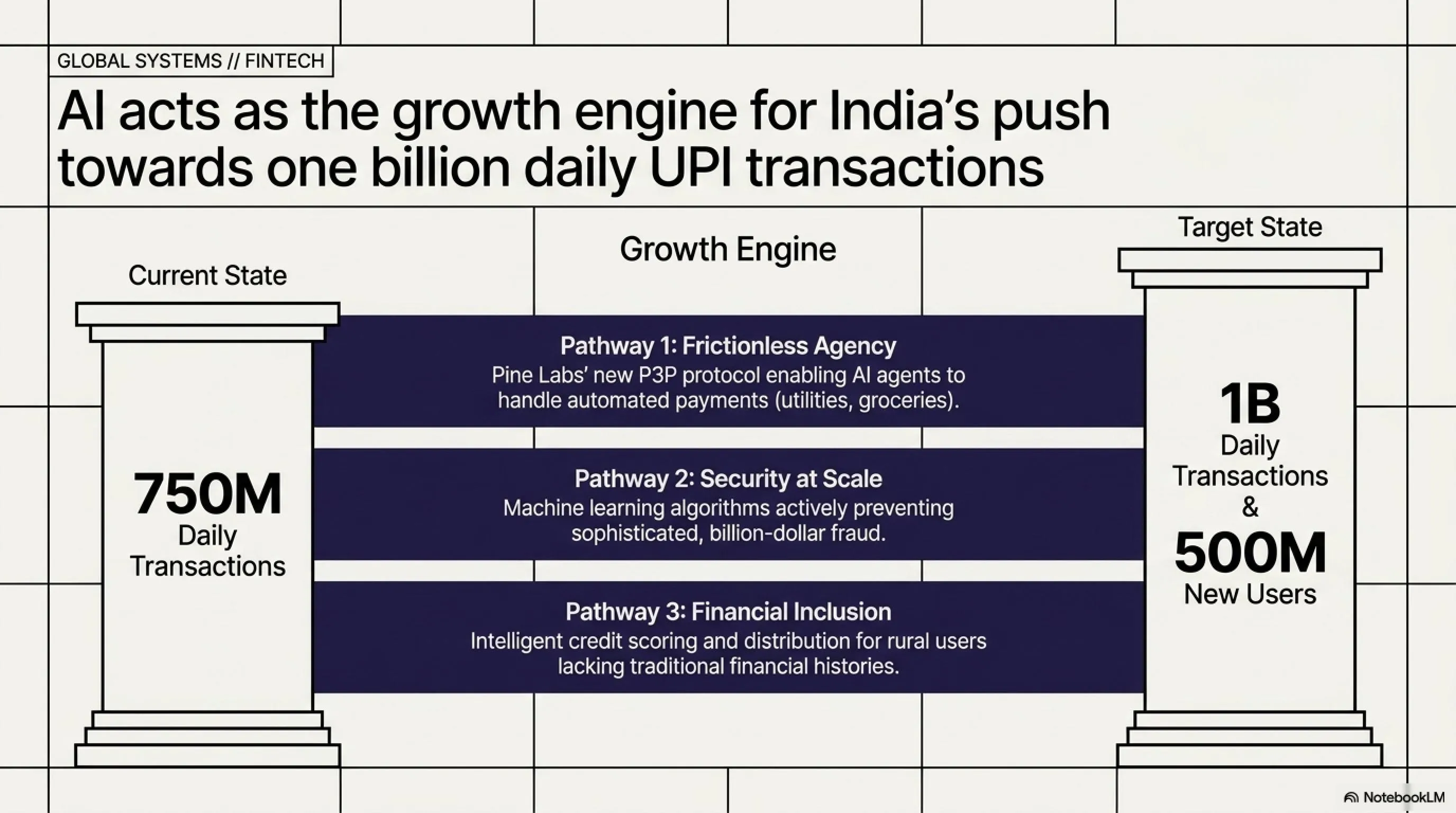
Let's shift from hardware to one of the most successful fintech stories in the world. India's UPI (Unified Payments Interface) system currently processes 750 million transactions daily and is targeting one billion daily transactions. Dilip Asbe, CEO of NPCI (which oversees UPI), announced in a recent interview that artificial intelligence will play a pivotal role in reaching this goal. But how exactly?
UPI is essentially a unified payment protocol that allows users to transfer money using just a digital identifier, without entering banking details. The system has become so popular in India that even street vendors use it. Now NPCI wants to leverage AI for three fundamental tasks: first, preventing sophisticated fraud that costs billions of dollars annually; second, attracting half a billion new users from rural and low-income areas; third, intelligently distributing credit to users without financial history.
🎯 AI's Role in Transforming UPI
- Detecting and preventing advanced fraud with machine learning algorithms
- Predicting user behavior and offering personalized services
- Credit distribution to individuals without financial history (Credit Scoring)
- Reducing operational costs and increasing transaction speed
- Attracting new users from rural areas with simpler interfaces
What's particularly interesting is that Pine Labs recently launched a new protocol called P3P, specifically designed for automatic payments by AI agents. What does this mean? Imagine having an AI assistant that automatically pays your electricity bill, handles weekly grocery shopping, or even manages small investments. This is the future India is building infrastructure for right now.
📈 India's UPI Key Statistics
Daily Transaction Target: 1 billion
Target New Users: 500 million
Growth Driver: Artificial Intelligence (AI)
The notable point is that new UPI applications can become more competitive using AI. For example, a new app could analyze a user's spending patterns and suggest when installment purchases are appropriate or which stores offer better discounts. This level of personalization was previously only available to large banks, but now even a small startup can offer these services with AI.
Best MagSafe Batteries for iPhone 17: A Practical Buying Guide
Now let's turn to something more practical that directly affects daily life. Apple recently introduced a new MagSafe battery pack priced at $99 for the iPhone Air, but the problem is it has low capacity and a high price. Fortunately, the market is full of better alternatives that work with the Qi2 standard and offer higher capacity.
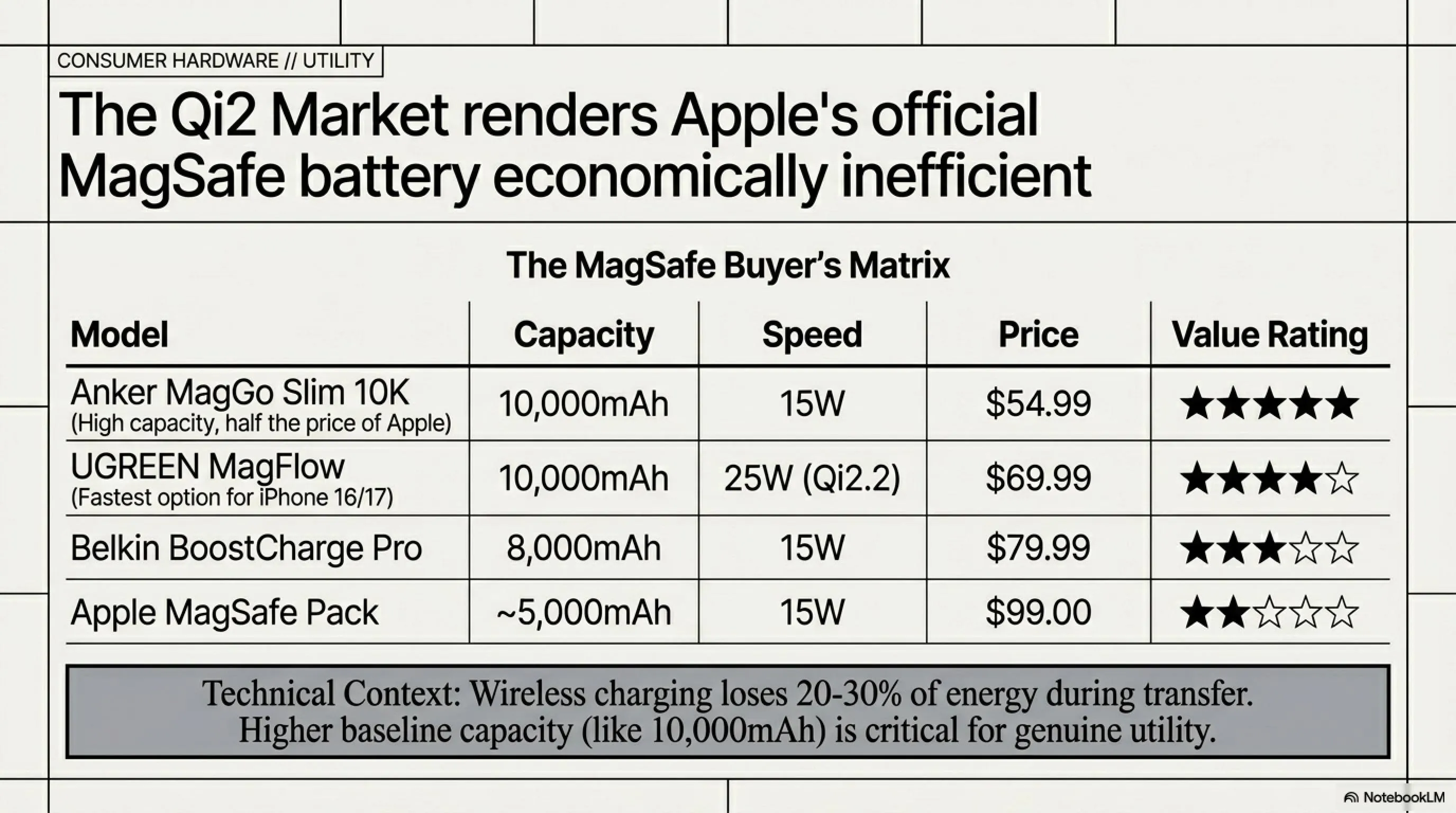
Let's look at the best options. The first and most popular choice is the Anker MagGo Slim 10K, which at $54.99 offers 10,000mAh capacity and 15W charging power. This means you can fully charge an iPhone 17 approximately twice. The second option is UGREEN MagFlow, which with 25W power and Qi2.2 support is considered the fastest option on the market and is compatible with iPhone 16 and 17.
🔋 Best MagSafe Battery Comparison
| Model | Capacity | Power | Price | Value Rating |
|---|---|---|---|---|
| Apple MagSafe Pack | ~5,000mAh | 15W | $99 | ⭐⭐ |
| Anker MagGo Slim 10K | 10,000mAh | 15W | $54.99 | ⭐⭐⭐⭐⭐ |
| UGREEN MagFlow | 10,000mAh | 25W Qi2.2 | $69.99 | ⭐⭐⭐⭐ |
| Belkin BoostCharge Pro | 8,000mAh | 15W | $79.99 | ⭐⭐⭐ |
An important point to know is that wireless charging is naturally less efficient than wired charging. This means a power bank with 10,000mAh capacity can't charge a phone with a 4,000mAh battery exactly 2.5 times. Typically, about 20 to 30 percent of energy is lost in the wireless transfer process, so a higher capacity power bank is a better choice.
💡 Important MagSafe Battery Buying Tips
2. Qi2 Standard: Look for batteries with Qi2 standard, as they have better security and efficiency.
3. Price: Apple's original batteries are more expensive and have lower capacity. Reputable brands like Anker and UGREEN are better options.
For American consumers, these options represent excellent value compared to Apple's official accessory. The Anker MagGo Slim 10K, in particular, offers double the capacity at nearly half the price of Apple's battery pack. With the widespread adoption of Qi2 as an industry standard, consumers can confidently purchase third-party accessories knowing they'll work seamlessly with their devices.
NASA's Orbital Gas Station: The Cryocoupler Test That Changes Everything
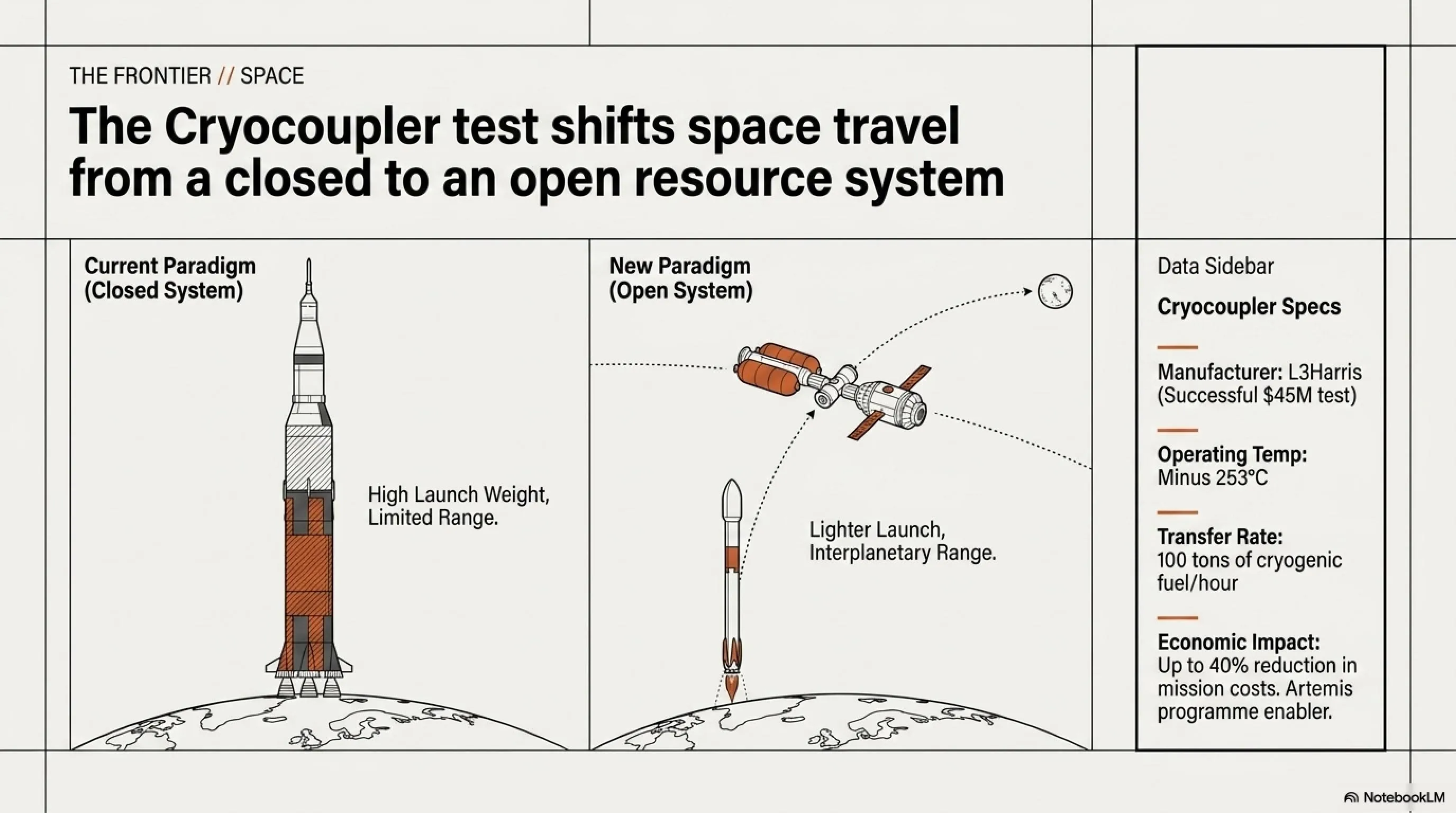
Let's leave Earth and head to space. NASA recently conducted one of the most important space technology tests of the year: successfully testing an in-orbit refueling device called the Cryocoupler. This technology promises to revolutionize space missions because it allows spacecraft to receive fuel in orbit, much like a car stopping at a gas station on the highway.
The Cryocoupler, manufactured by L3Harris, works like a gas pump nozzle but with one major difference: it must handle ultra-cold (cryogenic) materials. Space fuels like liquid hydrogen and liquid oxygen are stored at minus 253 degrees Celsius. At these temperatures, any imperfect connection or small leak can cause fuel to vaporize and mission failure. The Cryocoupler is designed to make this connection without any fuel loss.
🚀 Why Orbital Refueling is Revolutionary
This technology is critical for NASA's Artemis program, which aims to return humans to the Moon and eventually reach Mars. According to the plan, NASA will build refueling stations in Earth orbit and even lunar orbit. A spacecraft heading to Mars would first enter Earth orbit, fill up there, and then begin the long journey. Without this technology, reaching Mars with a crewed spacecraft is nearly impossible.
⏳ NASA Orbital Refueling Timeline
- 2026: Successful Cryocoupler test in laboratory
- 2027-2028: Testing in Low Earth Orbit (LEO)
- 2029: Launch of first orbital refueling station
- 2030-2031: Use in Artemis missions to the Moon
- 2033+: Lunar orbit refueling station for Mars missions
The interesting thing is that this technology isn't just for NASA. Private companies like SpaceX and Blue Origin have shown great interest in this technology. For example, SpaceX plans to build a similar refueling system for its Starship spacecraft. In fact, the future of space travel depends on creating a global network of orbital refueling stations, just like the network of gas stations on Earth.
🔢 Key Numbers and Figures
Operating Temperature: Minus 253 degrees Celsius
Cost Savings: Up to 40% reduction in space mission costs
Fuel Capacity: Capable of transferring 100 tons of cryogenic fuel per hour
The CLARITY Act Battle: When America's Delay Becomes China's Opportunity
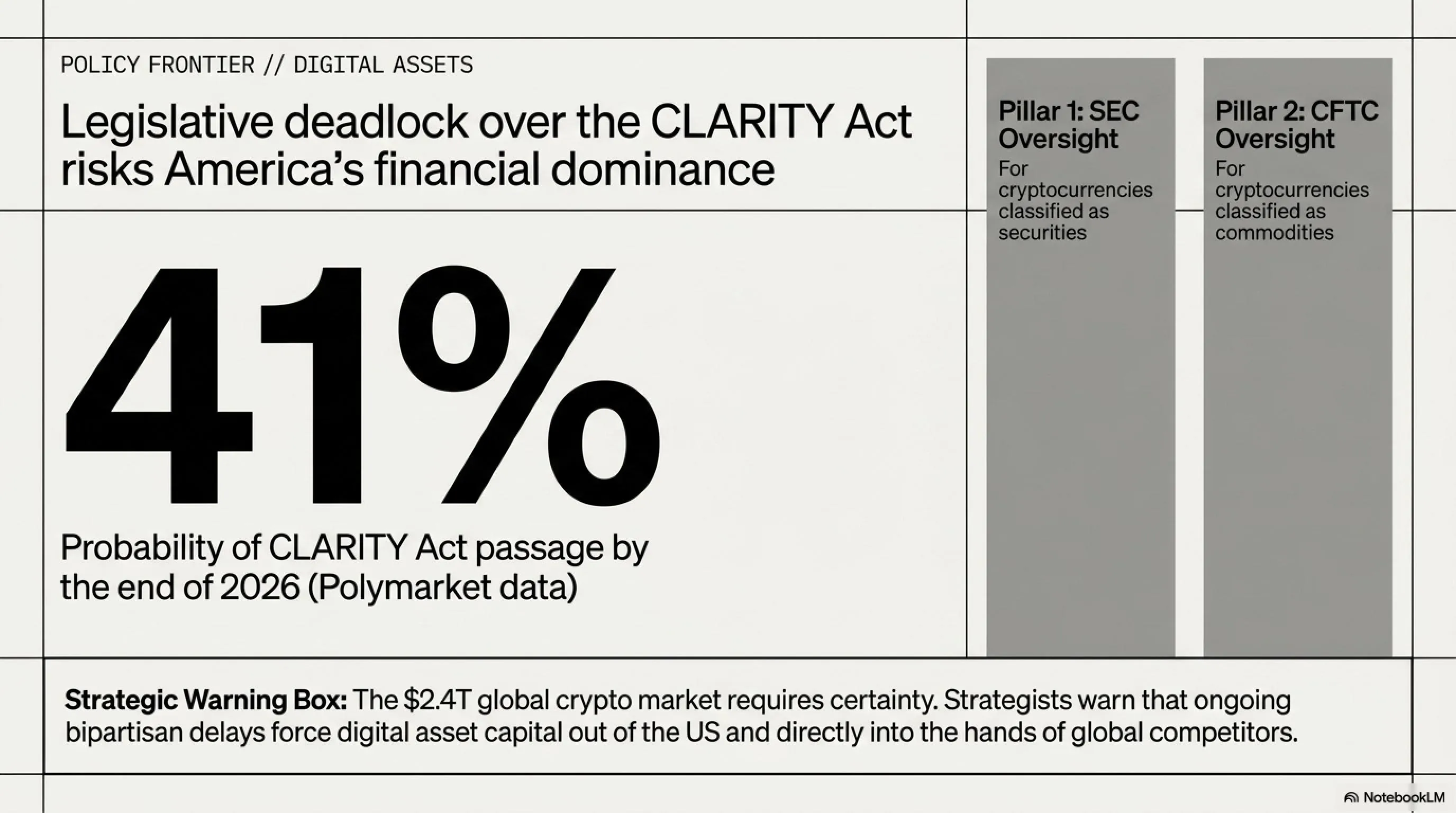
Now let's turn to one of the most contentious topics in the crypto world. The CLARITY Act, which would create a clear legal framework for digital assets in America, is stuck in Congress with only a 41 percent chance of passage by year's end. Now an economic strategist has warned that if this law isn't passed, China could gain significant influence over global digital asset standards, dealing a major blow to the dollar and America's financial dominance.
Let's explain this more simply. The CLARITY Act wants to divide oversight of digital assets between the SEC (Securities and Exchange Commission) and CFTC (Commodity Futures Trading Commission). Under this law, some cryptocurrencies would be classified as commodities and others as securities. Stablecoins would also have specific regulations. This sounds simple, but bipartisan discussions in Congress have reached a deadlock and nobody knows when or if this law will pass.
⚖️ What is the CLARITY Act?
Oversight Division:
• SEC: Oversees cryptocurrencies classified as securities
• CFTC: Oversees cryptocurrencies classified as commodities
New Definitions: Stablecoins, governance tokens, and NFTs will have clear definitions
Current Problem: Legal ambiguity has caused crypto companies to flee America
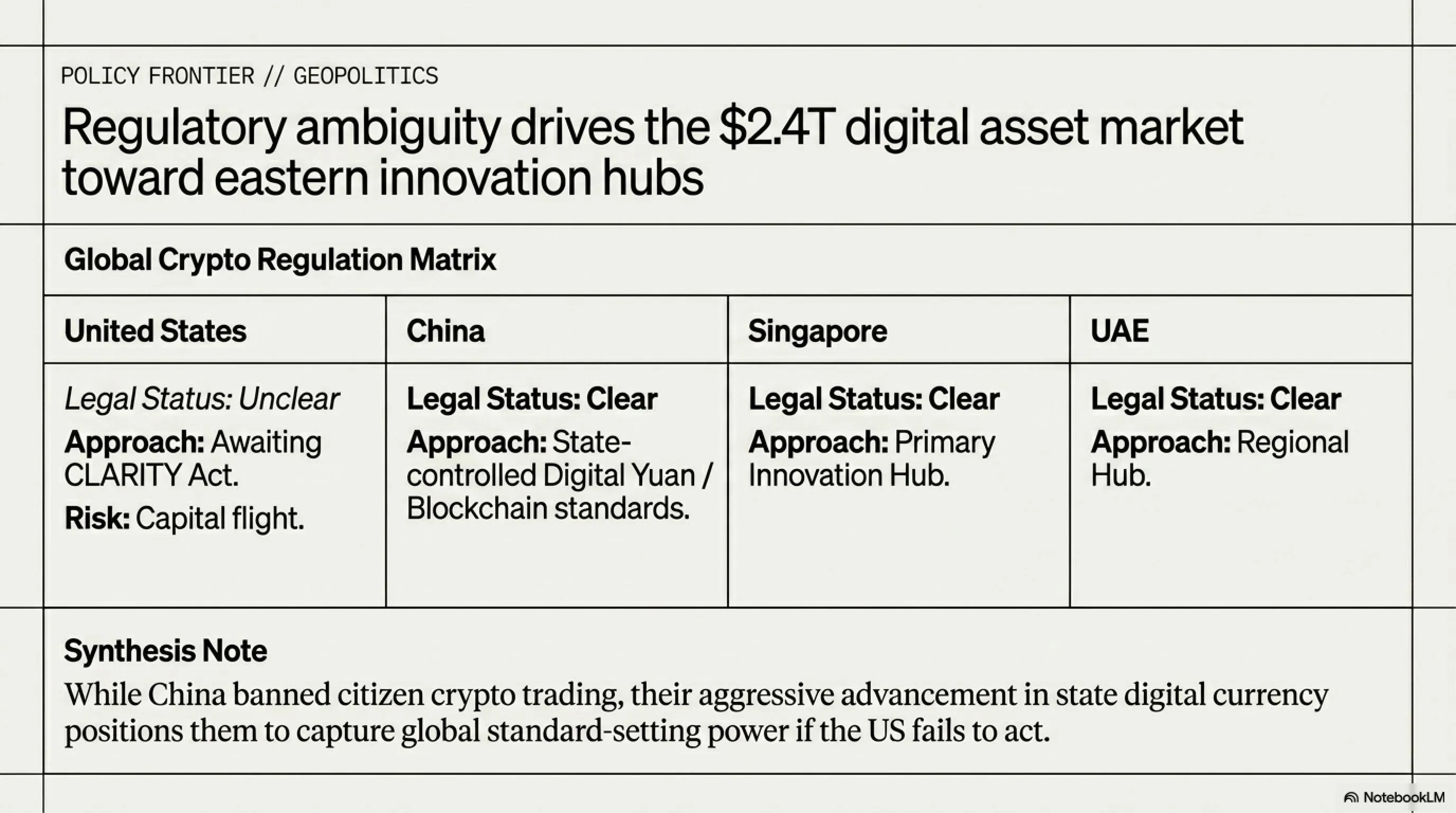
The strategists' warning is that delays in passing this law mean crypto capital flows to countries like China, Singapore, and the UAE that have clearer regulations. While China banned crypto trading for ordinary citizens, it's making significant progress in digital currency (Digital Yuan) and blockchain standards. If America wants to lead in this arena, it needs to decide quickly.
📊 Crypto Market and CLARITY Act Statistics
Total Crypto Market Cap: $2.4 trillion (June 2026)
Oversight Split: SEC vs CFTC
Biggest Winner if America Delays: China
For American investors and crypto entrepreneurs, this uncertainty creates a challenging environment. Many blockchain startups have already relocated to more crypto-friendly jurisdictions. If the CLARITY Act fails, the United States risks losing its position as a leader in financial innovation, potentially ceding ground to China's state-controlled digital currency initiatives.
🌍 Global Crypto Regulatory Comparison
| Country | Approach | Legal Status |
|---|---|---|
| 🇺🇸 United States | Awaiting CLARITY | Unclear |
| 🇨🇳 China | National Digital Currency | Clear |
| 🇸🇬 Singapore | Innovation Hub | Clear |
| 🇦🇪 UAE | Regional Hub | Clear |
Sunday Morning Wrap-Up: Trends That Will Shape the Week
We started Sunday morning with six energizing stories that each represent major shifts in the tech world. From Apple's talent exodus to OpenAI showing the talent war is hotter than ever, to Apple's price increases demonstrating the direct impact of the AI boom on consumer wallets.
India's UPI payment system is becoming a fintech superpower with AI's help, proving that technology can genuinely improve billions of lives. New MagSafe batteries offer better alternatives to Apple products, which is good news for users always worried about phone battery life.
NASA is preparing for interplanetary travel with orbital refueling technology, meaning the dream of reaching Mars is getting closer to reality. And finally, the crypto regulatory battle in America shows that every political decision can change the future of the digital economy.
✨ Tekin Analysis: Looking Ahead to This Week
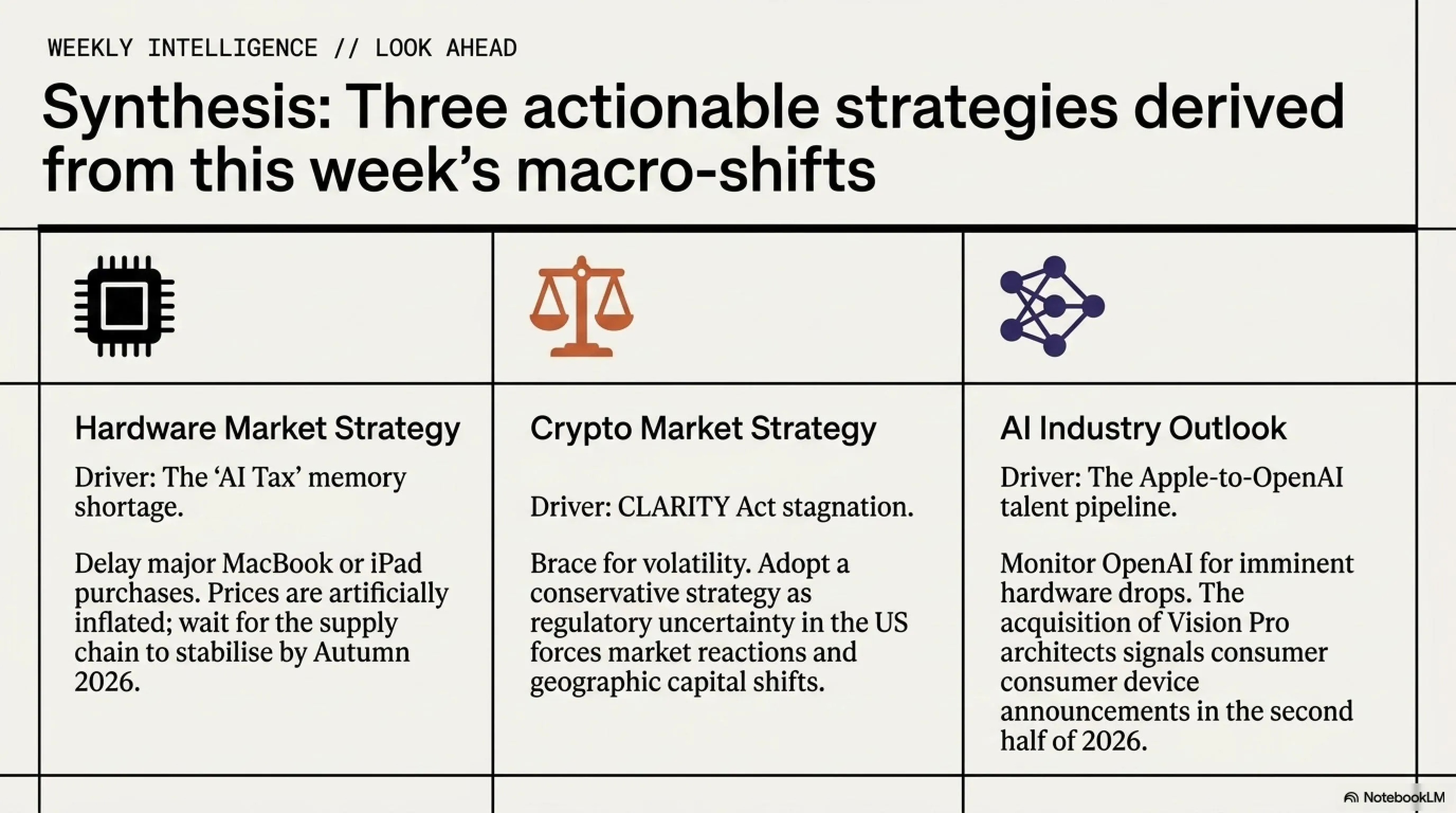
1. Hardware Market: If you're planning to buy a MacBook or iPad, it's better to wait until the memory market stabilizes. Prices will likely adjust somewhat by Fall 2026.
2. Crypto Investment: Given the uncertainty around the CLARITY Act, the crypto market will likely experience significant volatility. A conservative strategy is recommended.
3. AI Technology: The talent war between Apple and OpenAI shows the AI hardware market is getting serious. Expect new product announcements in the second half of 2026.
Frequently Asked Questions
Why did Apple raise its product prices?
Due to a global shortage of memory chips caused by unprecedented demand from AI data centers for RAM and SSD. Companies like OpenAI and Google are heavily purchasing these components, causing shortages and price increases.
Are third-party MagSafe batteries safe?
Yes, if you purchase from reputable brands like Anker, UGREEN, and Belkin that support the Qi2 standard, they are completely safe. This standard is certified by the Wireless Power Consortium and ensures full safety.
How does India's UPI system work?
UPI is a unified payment protocol that allows users to transfer money without entering banking information, using just a digital identifier (like a phone number). The system currently handles 750 million daily transactions and aims to reach one billion with AI assistance.
What is orbital refueling technology used for?
This technology allows spacecraft to receive fuel in orbit, just like a gas station. This means spacecraft can launch lighter from Earth, refuel in orbit, and travel to much farther distances (like Mars). This technology could reduce space mission costs by up to 40%.
What is the CLARITY Act and why is it important?
The CLARITY Act is a proposed law in the U.S. Congress that would create a clear legal framework for digital assets. The law divides oversight between the SEC and CFTC and provides specific definitions for cryptocurrencies and stablecoins. If not passed, crypto capital will flow to other countries like China and Singapore.
Why is OpenAI hiring Apple executives?
OpenAI is launching a serious hardware division and likely plans to release AI-powered hardware products. By attracting executives like Paul Meade who have Vision Pro and smart glasses experience, OpenAI is preparing for direct competition with Apple.
📚 Sources and References
• TechCrunch - Apple Vision Pro exec reportedly leaving for OpenAI
• 9to5Mac - OpenAI poaches Apple Vision Pro and smart glasses chief
• CNBC - Apple MacBook, iPad price hike due to memory shortage
• TechCrunch - Indian payments chief on AI role in UPI growth
• 9to5Mac - Best MagSafe battery banks for iPhone 17
• Engadget - NASA tests in-orbit refueling device
• Bitcoin.com - China could win big if CLARITY Act dies
All information in this article has been gathered and verified from reputable international sources.
Supplementary Image Gallery: ☀️ Tekin Morning | Sunday, June 28: Apple's AI Talent Drain & NASA's Space Test