Tekin Analysis | Redmond's Seismic Pivot: Microsoft Establishes Xbox XP Division
Seismic Reorganization in Redmond: Microsoft Establishes Dedicated Xbox XP Division
On October 8, 2026, Microsoft officially executed one of the most transformative organizational restructuring operations in the twenty-five-year history of its interactive entertainment business. By pulling back the curtain on an entirely autonomous corporate unit designated as 'Xbox XP' a clever nod to the foundational gaming concept of 'Experience Points' the Redmond technology giant signaled its decisive graduation from the constrained confines of dedicated console hardware. The newly minted division has been granted a sweeping executive mandate: to systematically weaponize Microsoft's multi-billion-dollar treasury of gaming intellectual properties across high-budget Hollywood feature films, prestige streaming television, immersive location-based theme parks, and high-margin global consumer merchandise.
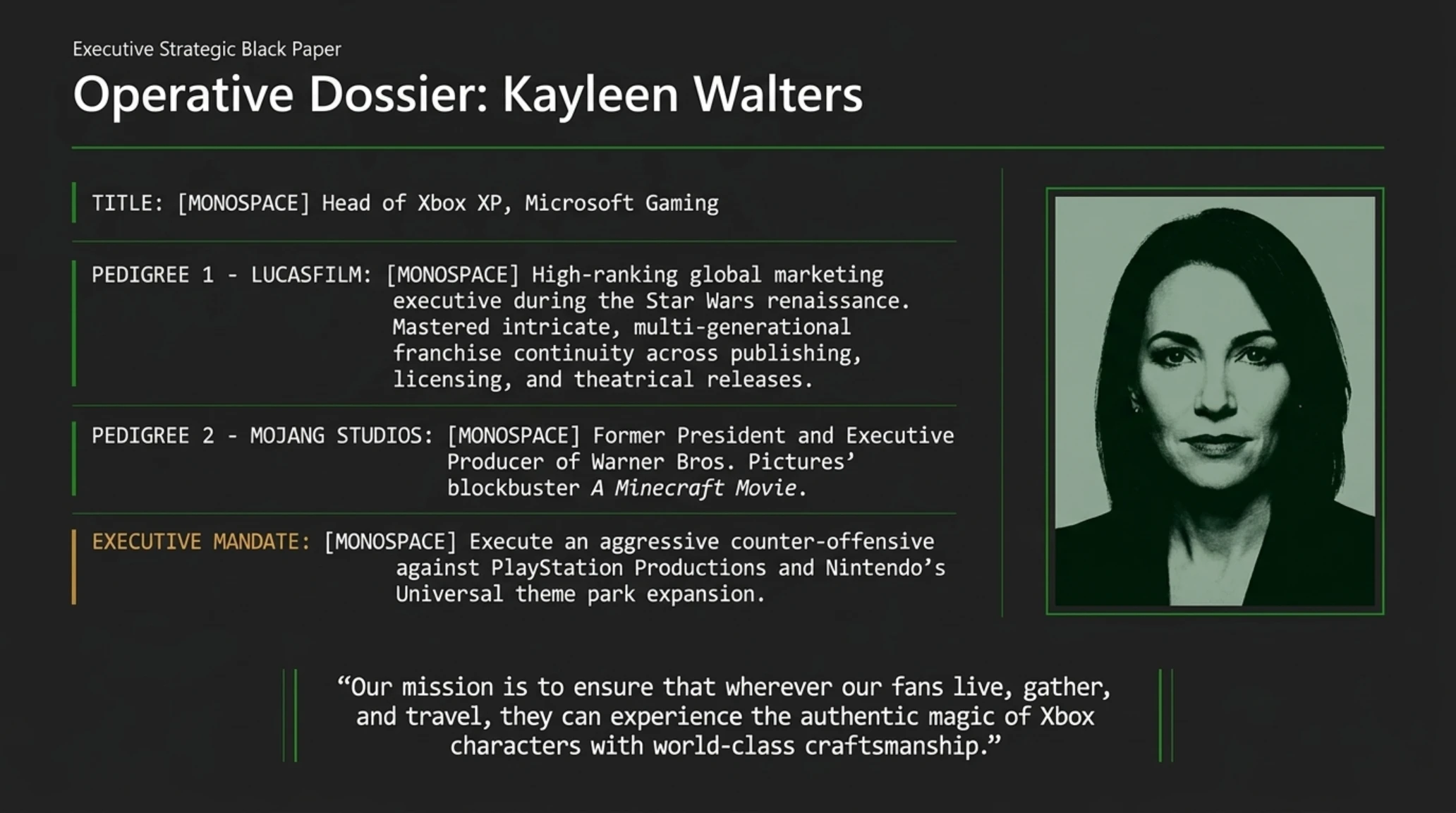
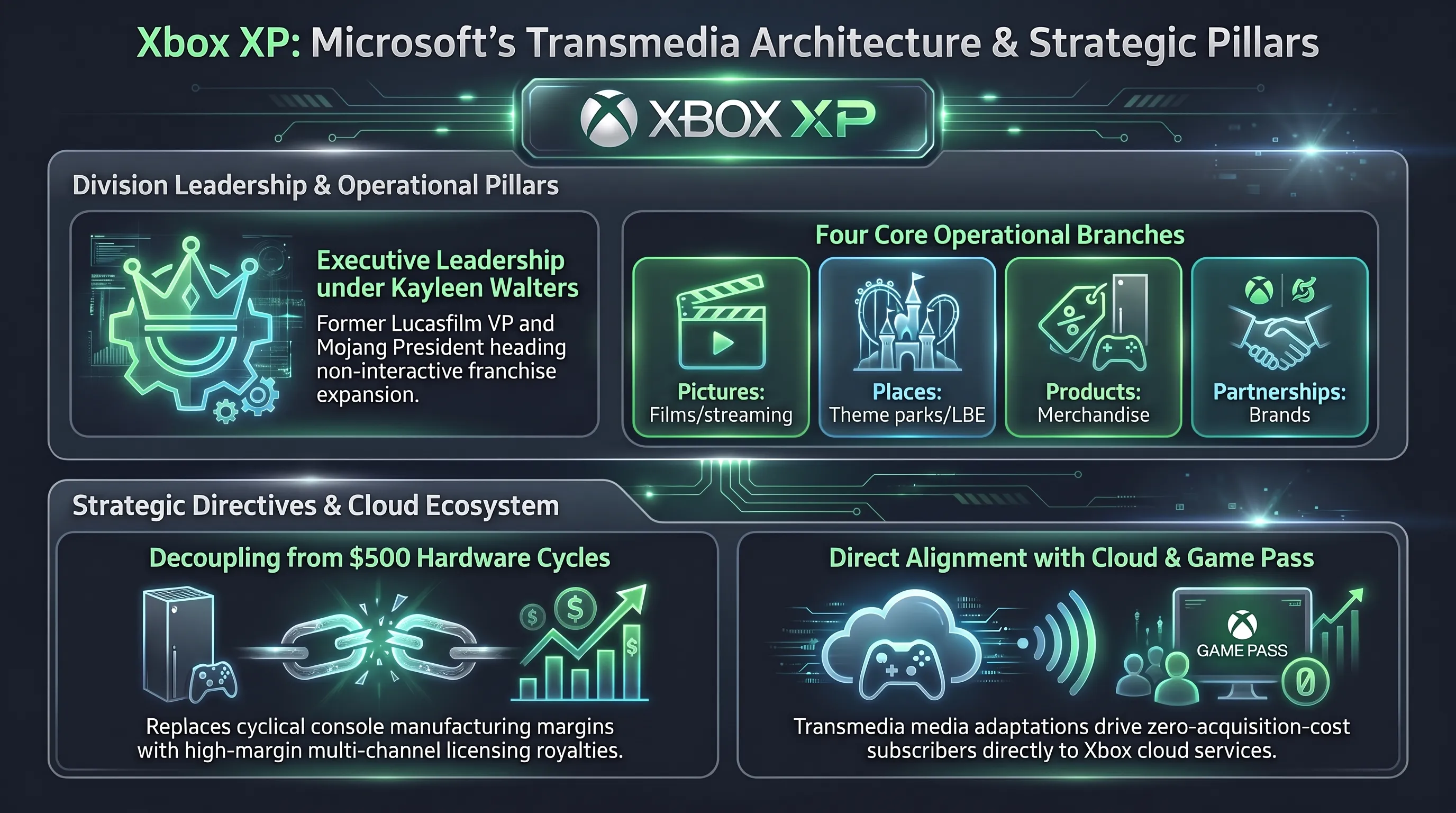
The helm of this sprawling entertainment fleet has been entrusted to Kayleen Walters, a seasoned corporate executive whose professional pedigree bridges traditional Hollywood franchise stewardship with modern interactive community dynamics. Having served as a high-ranking global marketing executive at Lucasfilm during the renaissance of the Star Wars franchise, and subsequently as the President of Mojang Studios where she personally steered production as executive producer on Warner Bros. Pictures' upcoming blockbuster 'A Minecraft Movie' Walters possesses the precise operational acumen required to translate interactive digital worlds into universal pop-culture phenomena. Her tenure at Lucasfilm exposed her to the intricate operational discipline of multi-generational franchise management: coordinating publishing, consumer licensing, broadcast animation, and mainline theatrical releases under a singular, uncompromising continuity canopy. Applying this exact blueprint to Microsoft's expansive catalog represents a historic maturation for the games industry. Her appointment telegraphs a resounding message across the entertainment industry: Microsoft no longer views iconic properties such as Halo, Gears of War, The Elder Scrolls, Fallout, Warcraft, and Call of Duty merely as software titles designed to sell 500-dollar home consoles, but as evergreen transmedia franchises capable of anchoring multi-billion-dollar global consumer ecosystems.
Strategic Pillars of the Xbox XP Corporate Reorganization
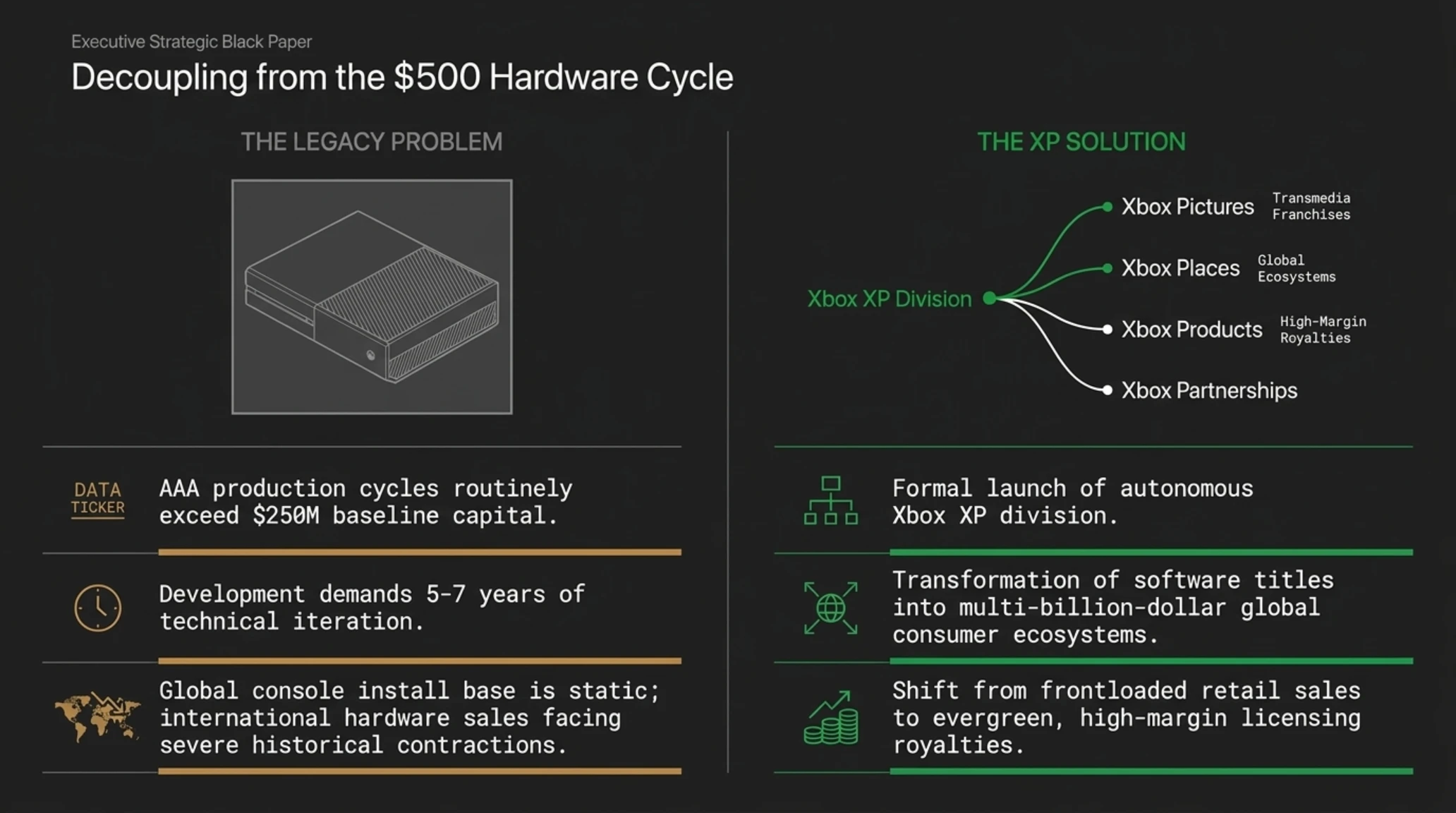
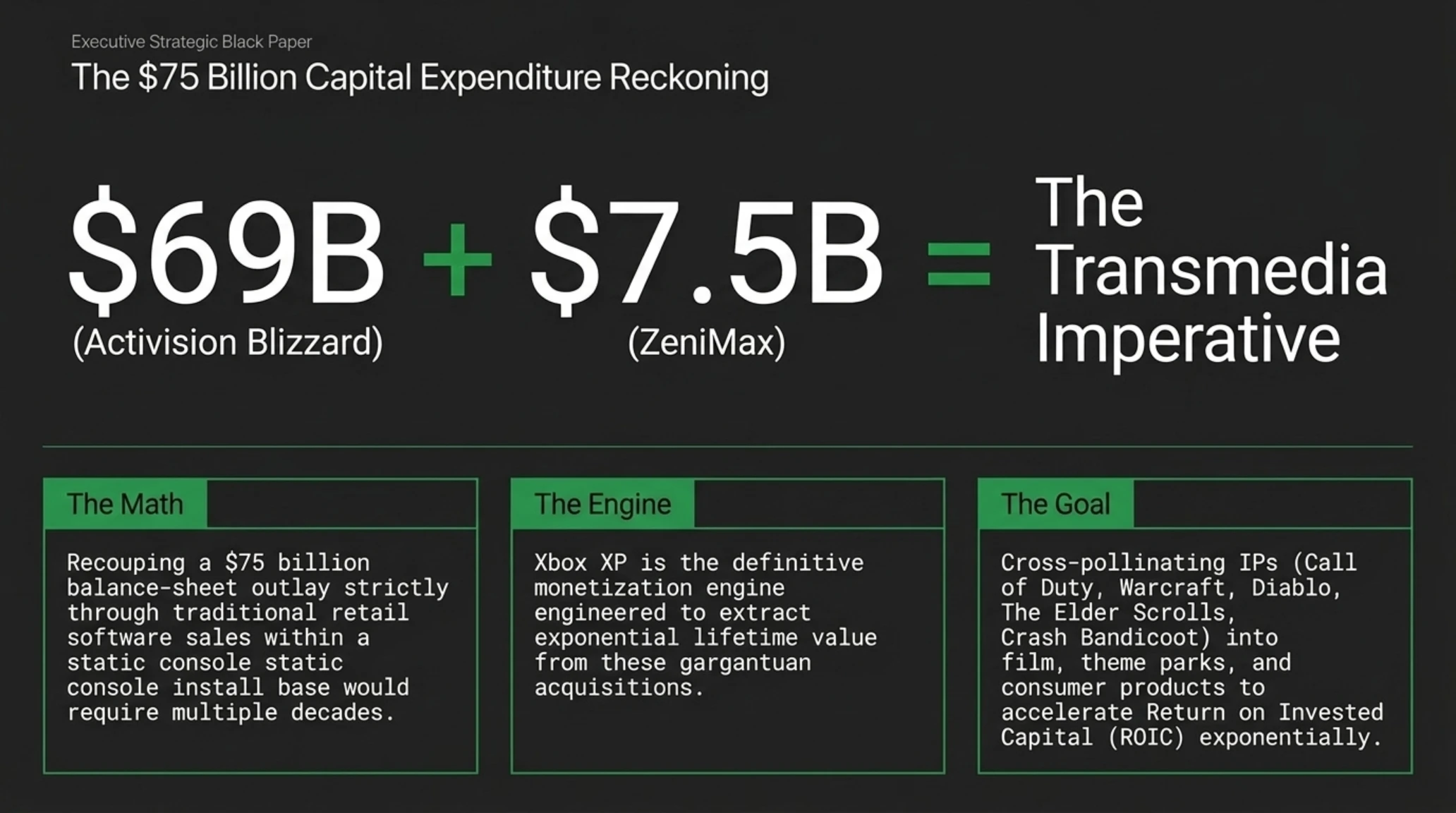
This macro-strategic realignment reflects a profound reckoning within Microsoft's highest executive echelons, including Gaming CEO Phil Spencer and Microsoft Chairman and CEO Satya Nadella. In an era where modern AAA game production cycles regularly balloon past 250 million dollars in baseline development capital and demand five to seven years of grueling technical iteration, relying solely on upfront retail software sales within a plateaued console install base is economically unsustainable. Furthermore, as international console hardware sales face severe historical contractions, diversifying revenue streams into high-margin licensing royalties is no longer a luxury; it is an absolute structural necessity. Xbox XP represents the definitive monetization engine engineered to extract exponential lifetime value from Microsoft's gargantuan 75-billion-dollar acquisitions of ZeniMax Media and Activision Blizzard.
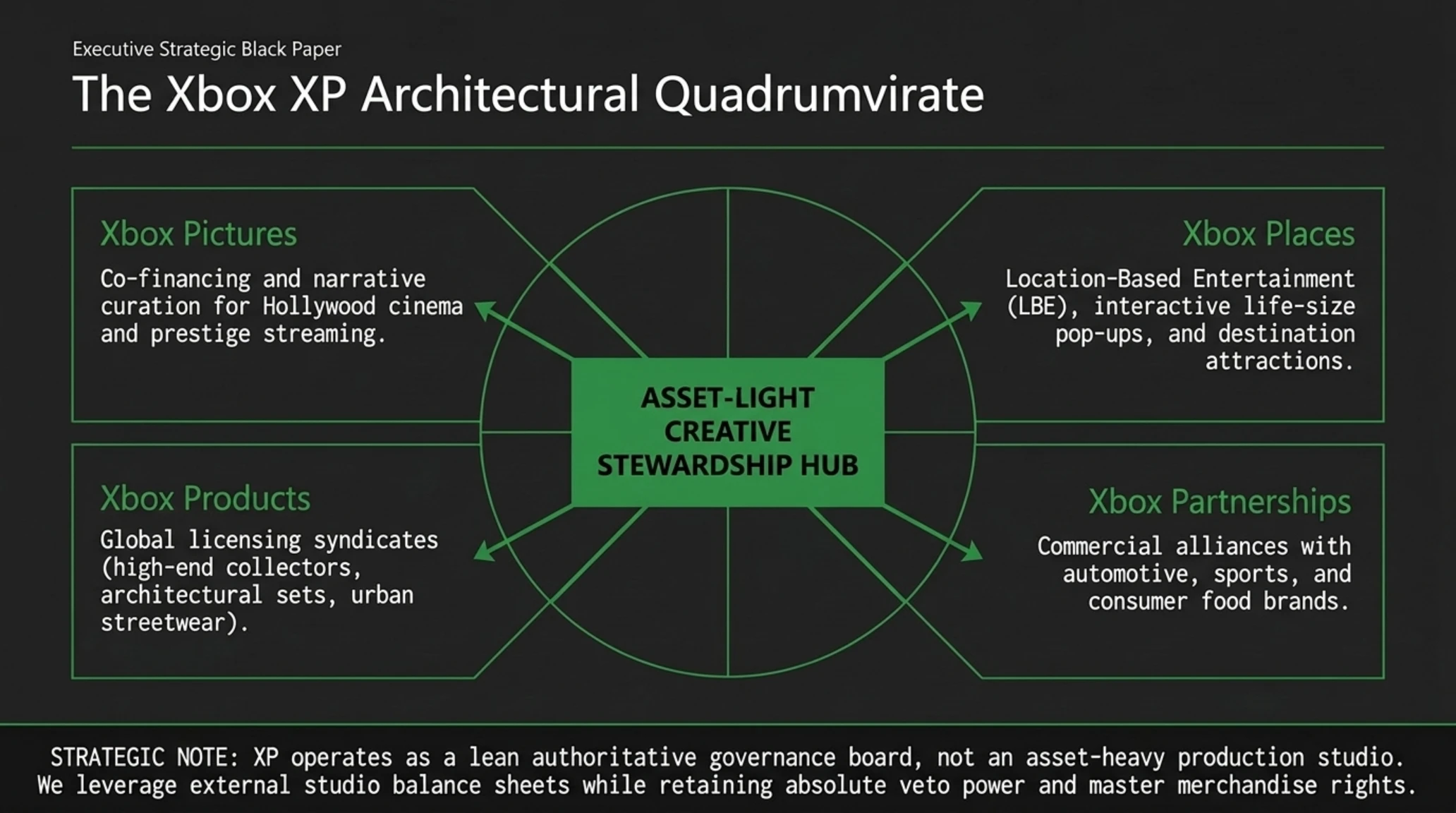
Crucially, the operational architecture of Xbox XP has been deliberately structured as a lean, agile licensing and creative stewardship hub rather than an unwieldy, asset-heavy production studio. Instead of constructing proprietary soundstages or hiring thousands of full-time film crews, Xbox XP operates as an authoritative creative governance board. It oversees canon fidelity, narrative integrity, and cross-media synergy while co-financing and licensing projects to Hollywood powerhouses such as Warner Bros. Discovery, Amazon MGM Studios, and Netflix. This asset-light model allows Microsoft to leverage external studio balance sheets and global distribution networks while retaining absolute creative veto power, master merchandise rights, and lion's shares of downstream backend profits. This high-level transmedia doctrine directly mirrors the convergence of interactive technology and Hollywood cinematography explored in our comprehensive investigative feature on Hideo Kojima's Physint: Cinematic Secrets, Espionage Lore, and Sony Engineering.
Why Transmedia IP Scaling Matters for Enterprise Valuation
The true enterprise enterprise value of Microsoft Gaming does not reside in plastic hardware enclosures positioned under television screens; it resides in the cultural resonance and emotional loyalty of its characters and lore across 500 million active monthly users. By instituting Xbox XP, every cinematic release or experiential theme park attraction transforms into an autonomous profit center that simultaneously drives organic, zero-acquisition-cost subscribers into the Xbox Game Pass cloud ecosystem.
From a competitive standpoint, Microsoft is mounting a formidable pincer movement against its veteran Japanese rivals. Over the preceding four years, Sony Interactive Entertainment aggressively formalized PlayStation Productions, converting iconic gaming narrative arcs into cultural juggernauts like HBO's multi-Emmy-winning 'The Last of Us' and commercial box-office triumphs such as 'Uncharted' and 'Gran Turismo'. Sony deliberately treats its films as prestige calling cards that channel consumers back into premium console purchases and full-price PC ports. Concurrently, Nintendo co-financed the staggering 1.36-billion-dollar global box-office phenomenon 'The Super Mario Bros. Movie' through Illumination, while permanently embedding its brand into family consciousness via Super Nintendo World attractions at Universal Studios across Osaka, Hollywood, and Orlando. Nintendo's philosophy relies on multi-decade emotional nostalgia and physical family tourism to anchor hardware and cart sales. With the founding of Xbox XP, Redmond asserts that its defensive posture has ended, entering the transmedia arena armed with the most commercially potent, Western-tailored narrative portfolios on earth and uniquely optimizing those narratives to fuel recurring, platform-agnostic cloud subscriptions.
Architectural Glossary: Transmedia & Experiential Entertainment
Deconstructing the Four Pillars of the XP Empire: From Silver Screens to Physical Pavilions
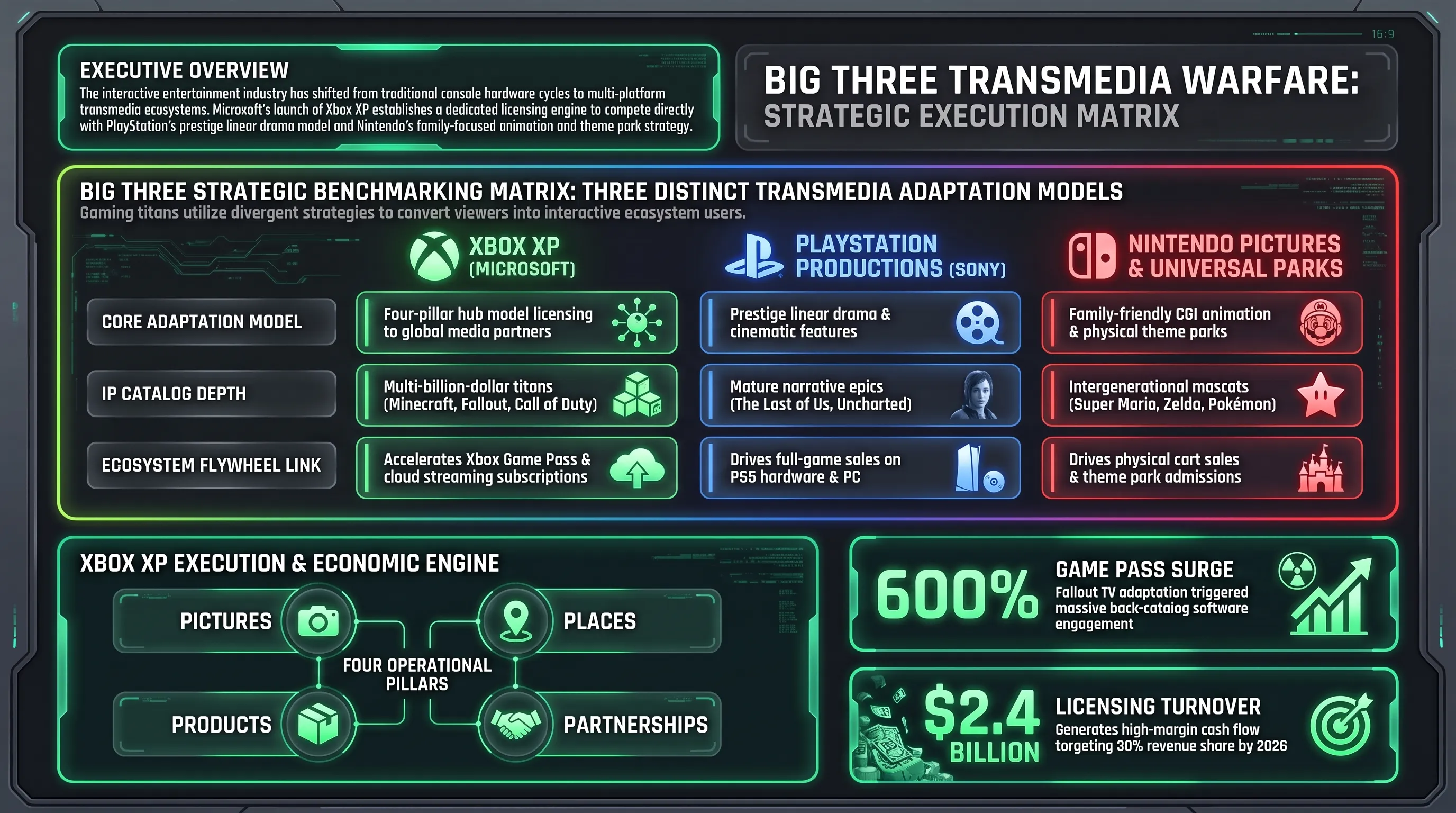
The organizational architecture of Xbox XP is anchored upon an intricate division of labor mapped across four distinct commercial pillars: Xbox Pictures, Xbox Places, Xbox Products, and Xbox Partnerships. Far from a superficial branding exercise designed to license logos to external manufacturers, this multi-tiered infrastructure represents an exhaustive master plan engineered to command consumer attention across living rooms, multiplex cinemas, commercial shopping districts, and experiential entertainment resorts worldwide.
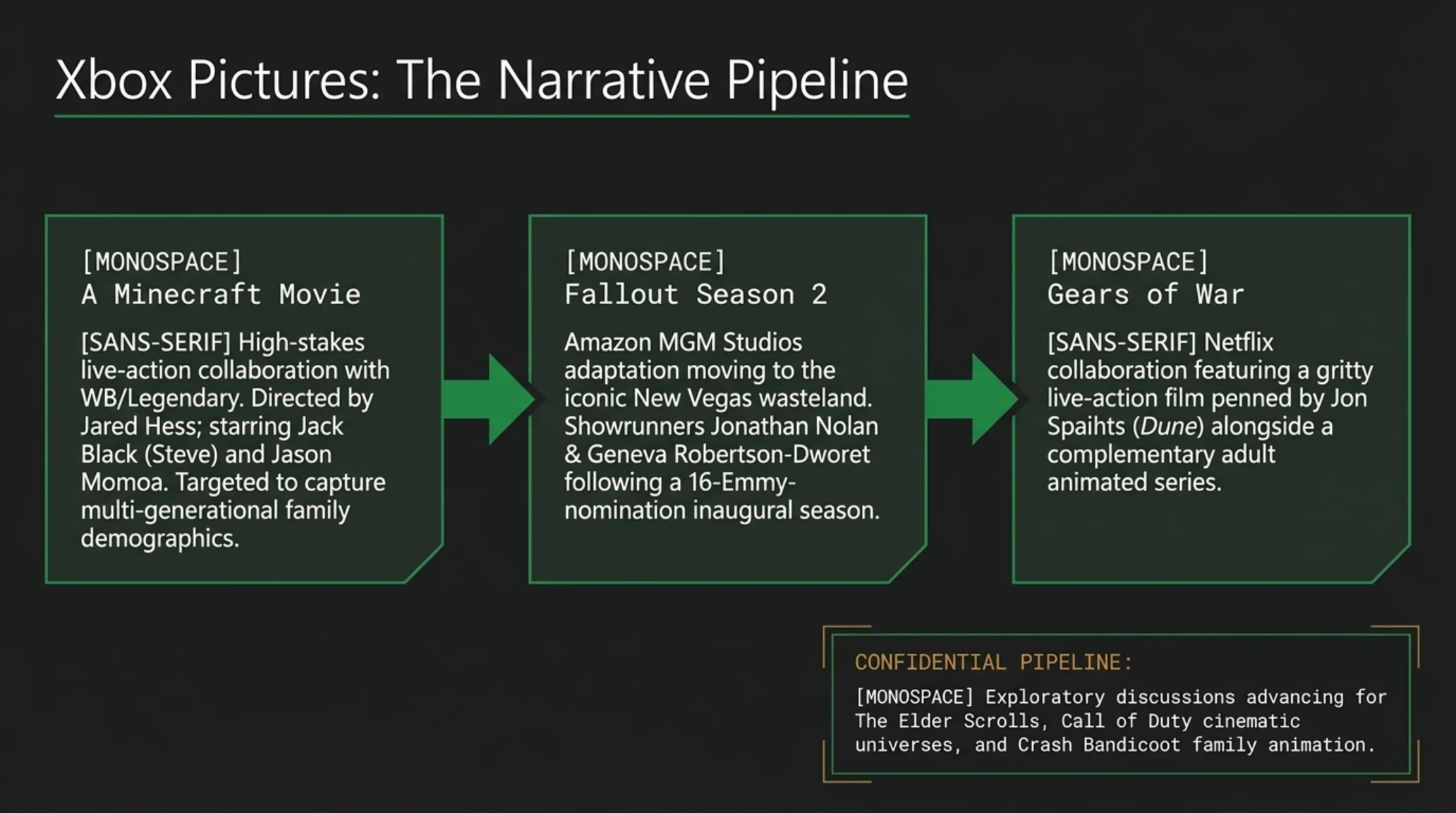
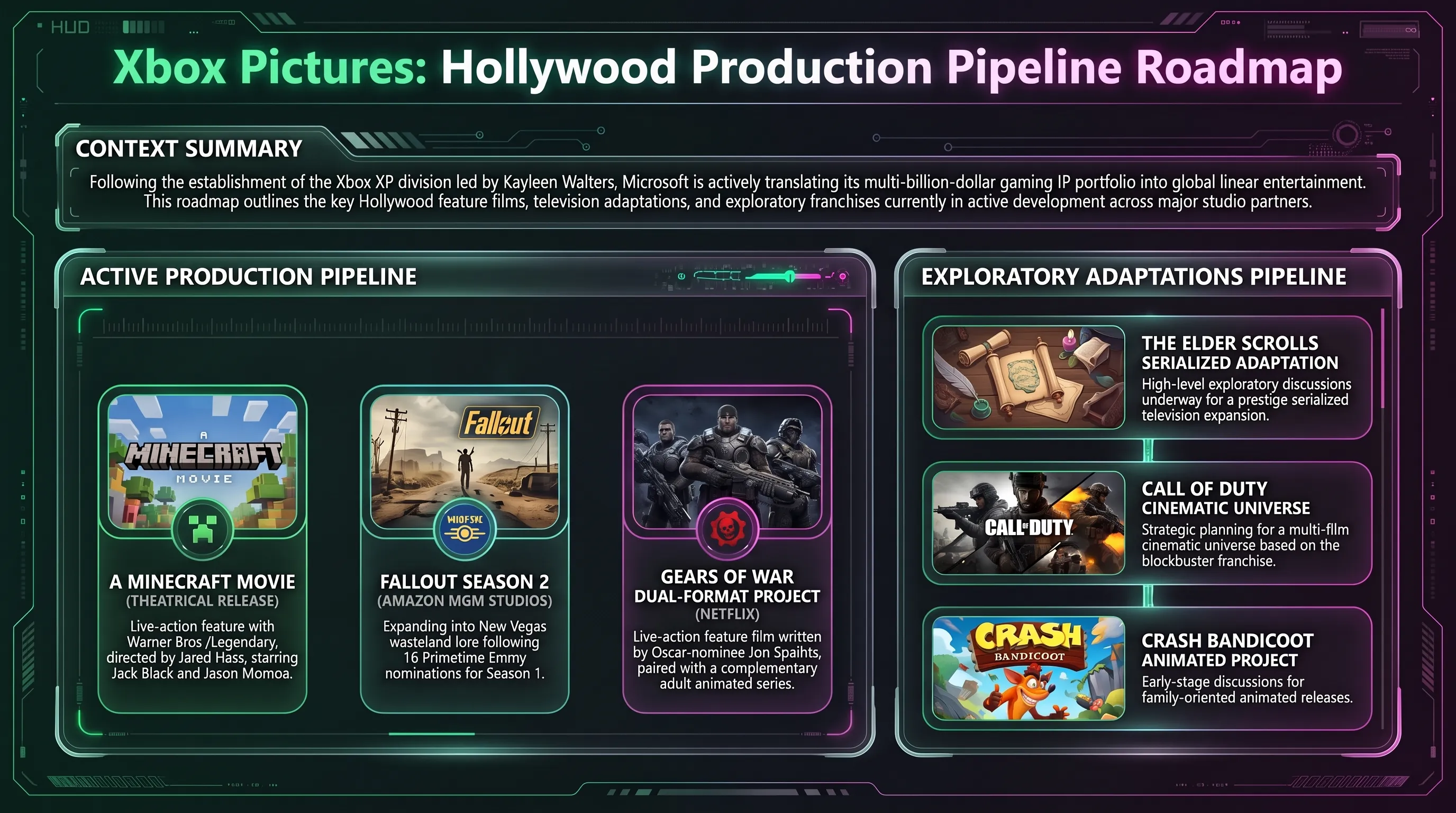
The vanguard of this strategy is Xbox Pictures, tasked with the monumental responsibility of curating, co-producing, and shepherding narrative adaptations into cinema and prestige streaming platforms. Leading this pipeline is 'A Minecraft Movie', produced in high-stakes collaboration with Warner Bros. Pictures and Legendary Entertainment. Directed by Jared Hess and featuring an all-star ensemble cast led by Jack Black and Jason Momoa, this lavish live-action theatrical production serves as the benchmark test of Microsoft's ability to translate digital sandbox culture into a multi-billion-dollar cinematic franchise on par with Barbie or Jurassic World. Mojang Studios spent more than a decade methodically developing this film, ensuring that the distinctive cubic, voxel-based visual aesthetic, redstone engineering lore, and community spirit were authentically translated rather than diluted by standard Hollywood tropes. Jack Black's portrayal of Steve follows his explosive cultural success as Bowser in the Super Mario Bros. Movie, positioning Minecraft to capture multi-generational family demographics spanning children to twenty-something digital natives who grew up crafting in the Overworld.
Complementing Minecraft, the Pictures pillar directly oversees the production of 'Fallout' Season 2 at Amazon MGM Studios steering the narrative into the iconic wasteland topography of New Vegas following sixteen prestigious Primetime Emmy nominations for its inaugural season. Showrunners Jonathan Nolan and Geneva Robertson-Dworet established a masterclass template for how interactive lore should be treated, blending retro-futuristic dark comedy with visceral post-apocalyptic survival. Simultaneously, production is aggressively advancing on the dual-format 'Gears of War' franchise at Netflix, encompassing a gritty live-action feature film penned by Oscar-nominated screenwriter Jon Spaihts (Dune, Doctor Strange) alongside a complementary adult animated series. With confidential exploratory discussions also progressing regarding serialized adaptations for 'The Elder Scrolls', cinematic universes for 'Call of Duty', and family-oriented animated projects centered around 'Crash Bandicoot', the Pictures portfolio represents the most densely populated narrative pipeline in interactive history.
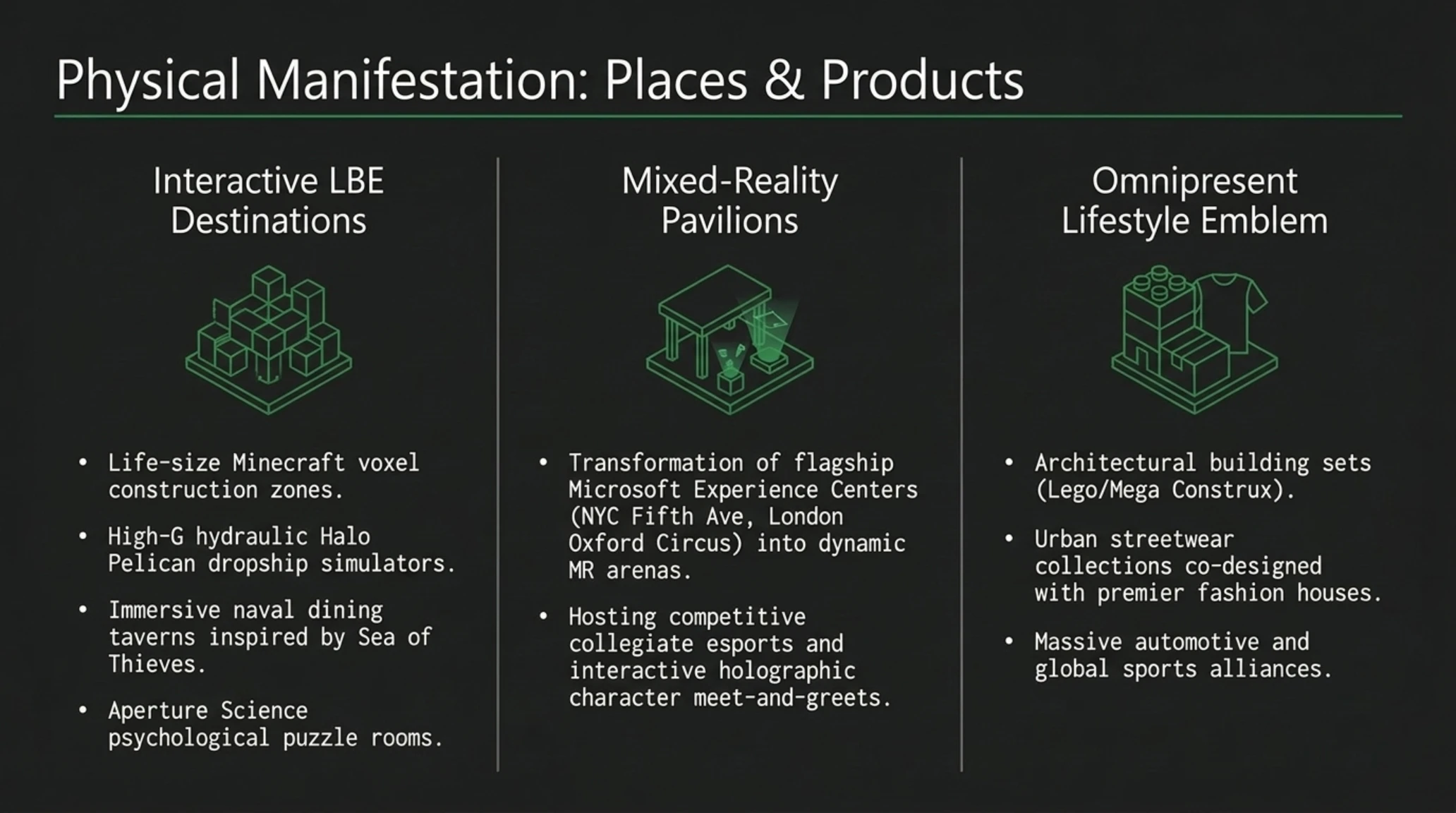
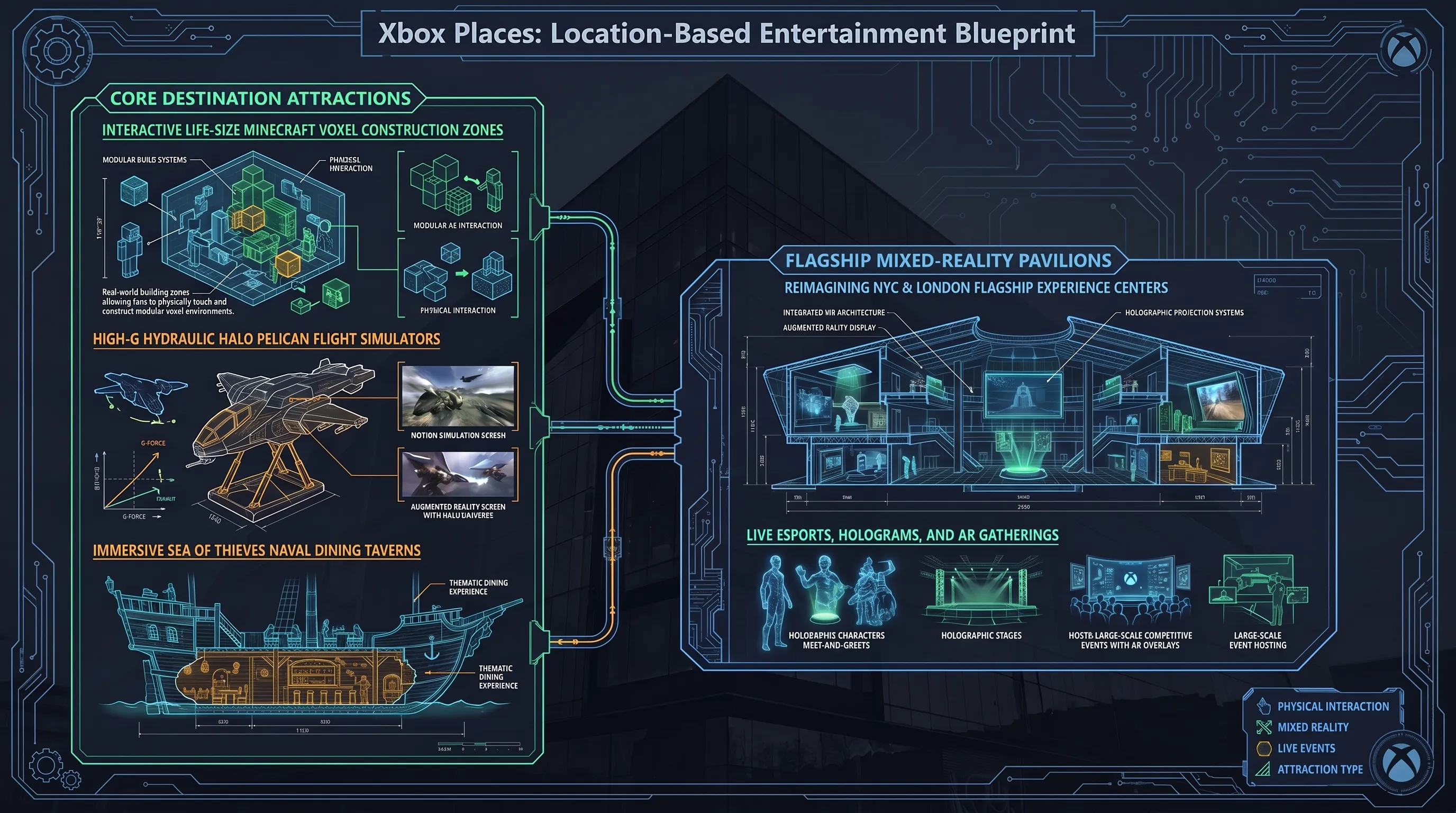
Equally revolutionary is the establishment of Xbox Places, an investment pillar dedicated exclusively to Location-Based Entertainment (LBE), interactive experiential pop-ups, and destination attractions. Recognizing the astronomical cultural and economic success achieved by Universal Destinations & Experiences through Super Nintendo World, Microsoft is actively formulating plans to build physical, real-world destinations where fans can physically touch, build, and interact with their favorite digital universes. These concepts range from interactive life-size voxel construction zones for Minecraft to high-g hydraulic Pelican dropship simulators for Halo, immersive naval dining taverns inspired by Sea of Thieves, and complex psychological puzzle rooms set within Aperture Science laboratories. Furthermore, Places will supervise the transformation of flagship Microsoft Experience Centers such as those on Fifth Avenue in New York and Oxford Circus in London into dynamic mixed-reality gaming pavilions hosting competitive collegiate esports finals, live augmented-reality community gatherings, and interactive holographic character meet-and-greets.
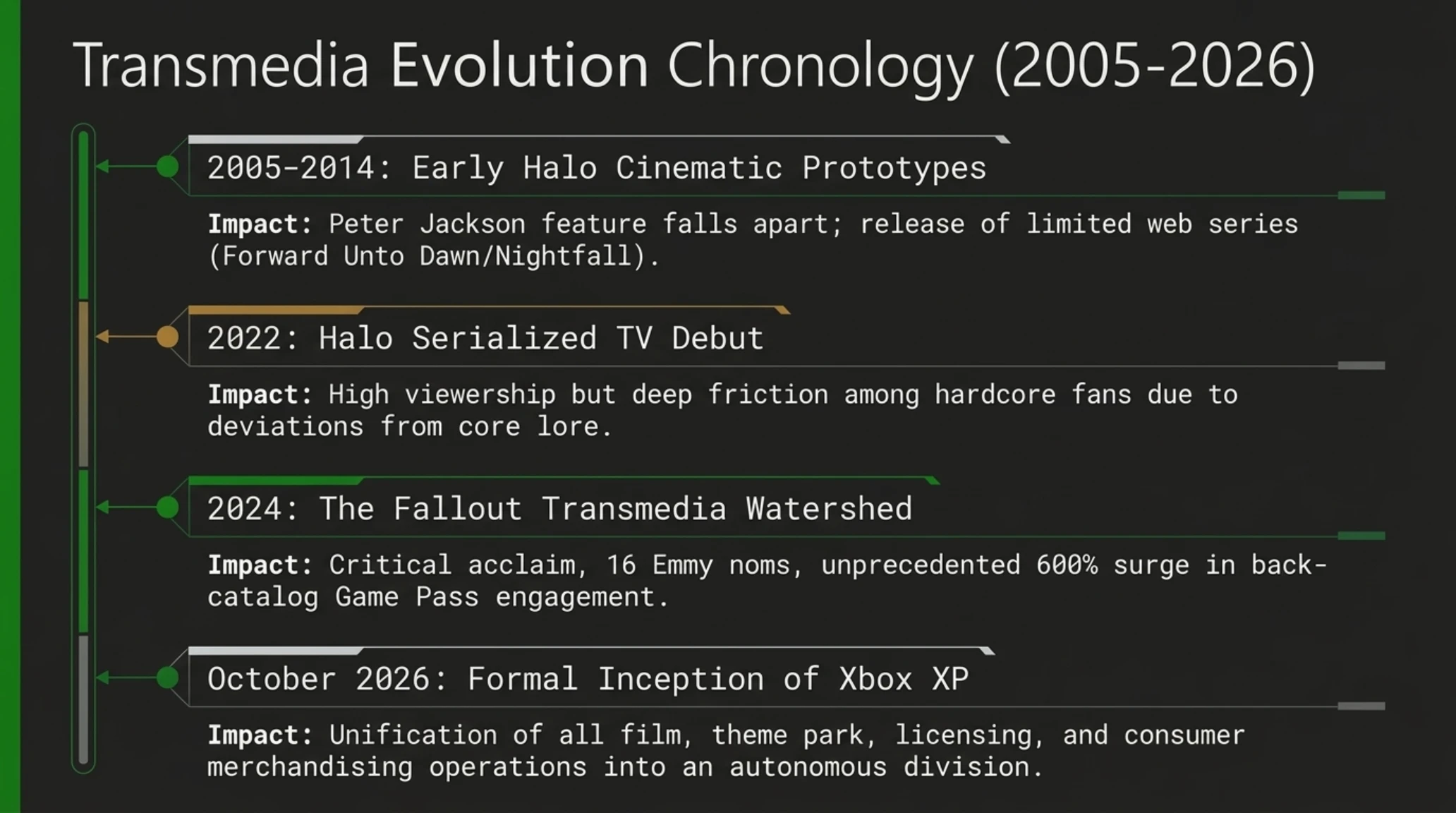
Transmedia Evolution: Chronology of Microsoft's Non-Gaming Expansion
| Timeline Window | Transmedia Milestone | Strategic & Industry Impact |
|---|---|---|
| 2005 - 2014 | Early Halo Cinematic Prototypes | Peter Jackson feature film falls apart amid studio financing disputes; release of limited web series Halo 4: Forward Unto Dawn and Nightfall. |
| 2022 | Halo Serialized TV Debut | Paramount+ adaptation achieves high viewership but sparks deep friction among hardcore fans due to deviations from core game lore. |
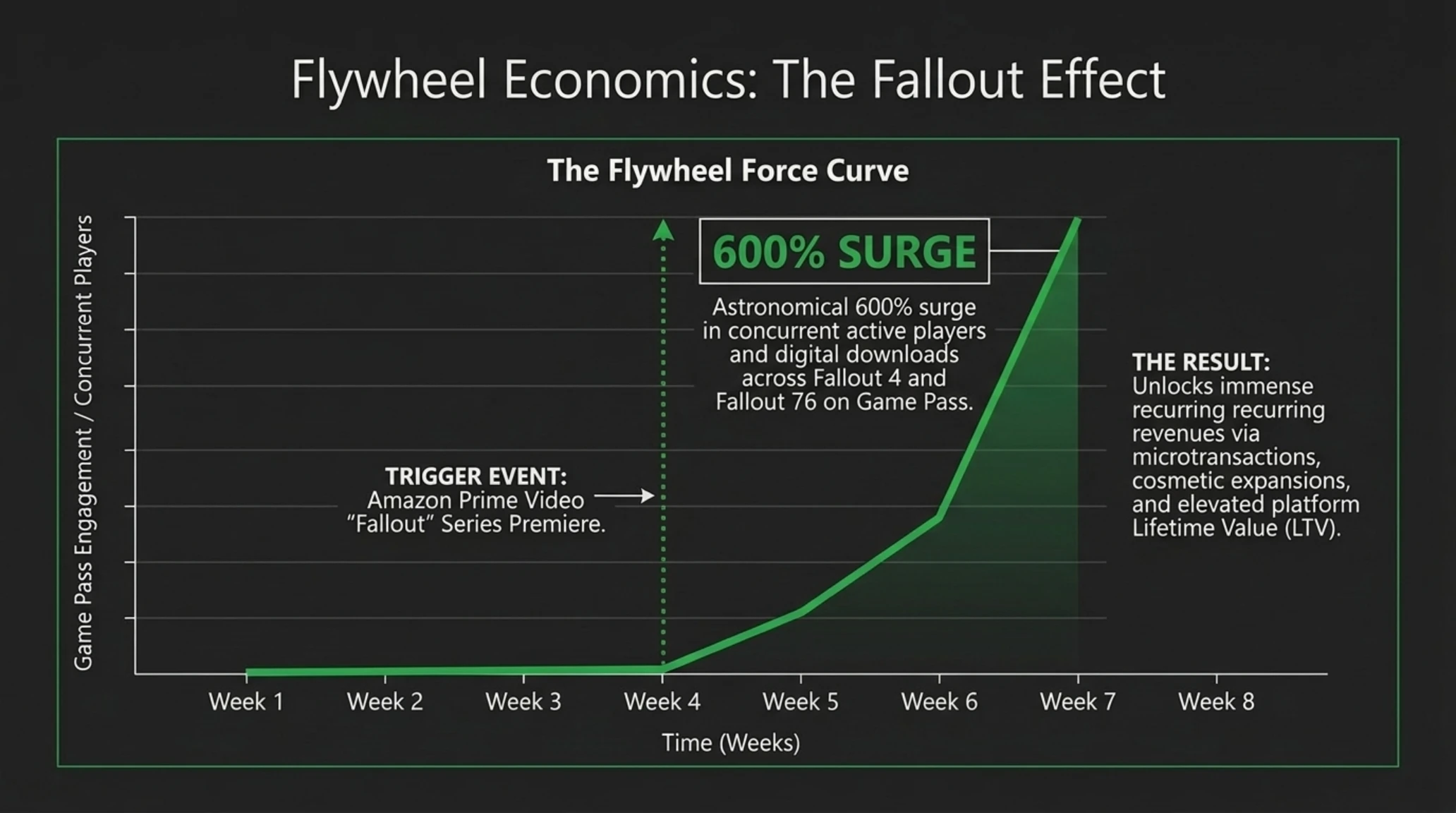
| 2024 | The Fallout Transmedia Watershed | Amazon Prime Video adaptation scores critical acclaim, 16 Emmy nominations, and triggers an unprecedented 600% surge in back-catalog Game Pass engagement. |
| October 2026 | Formal Inception of Xbox XP | Unification of all film, theme park, licensing, and consumer merchandising operations into a standalone corporate powerhouse. |
Completing this architectural quadrumvirate are Xbox Products and Xbox Partnerships. The Products group manages a global licensing syndicate responsible for high-end collector statues, architectural building block sets produced in partnership with Lego and Mega Construx, urban streetwear apparel collections designed with premier fashion houses, and limited-edition custom hardware. In lockstep, the Partnerships division negotiates massive commercial alliances with automotive manufacturers, global sports leagues, and consumer food brands. This cohesive strategy ensures that the Xbox green sphere is transformed from a gamer-centric logo into an omnipresent lifestyle emblem recognized universally across everyday consumer life.
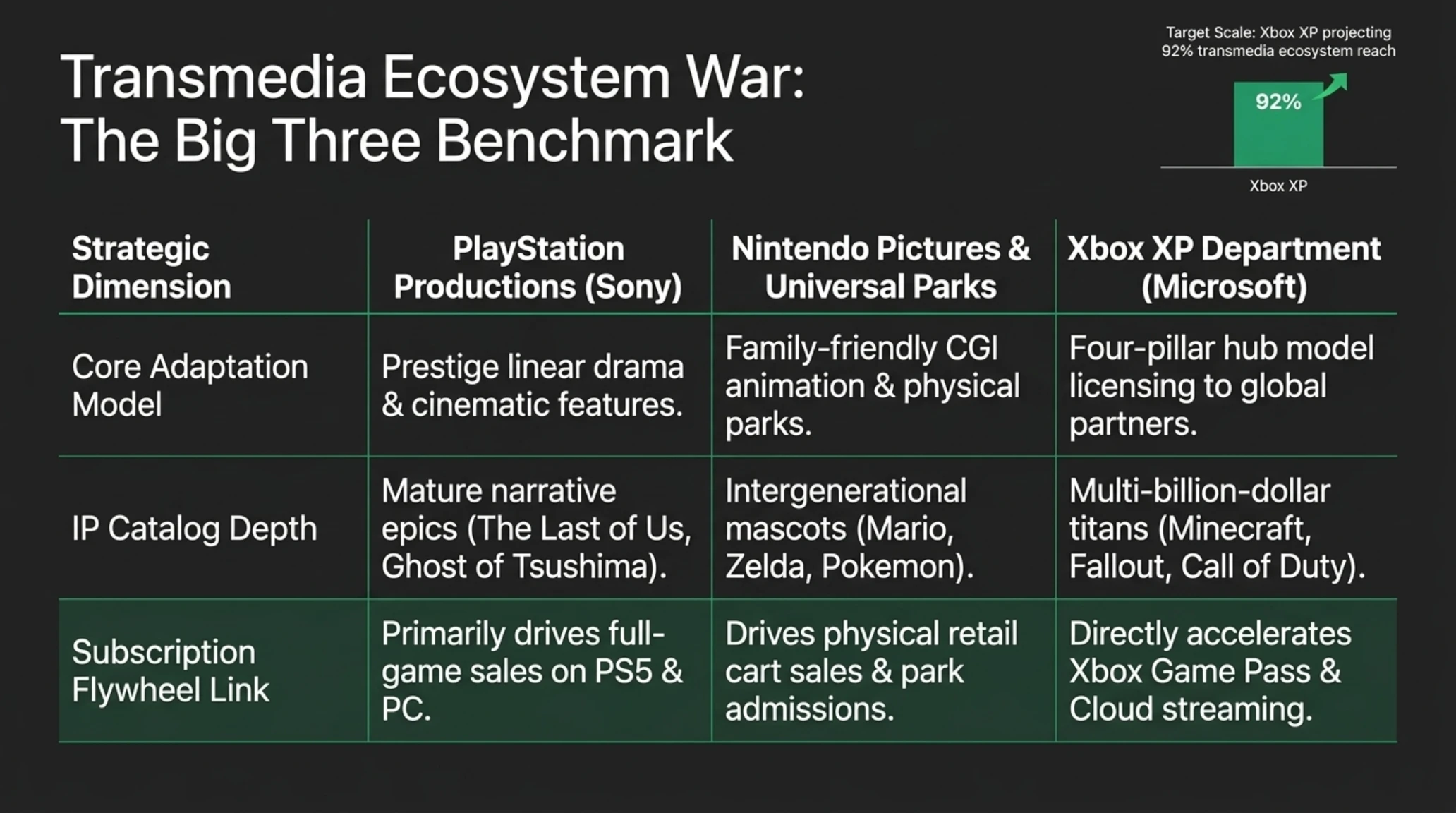
Benchmark Matrix: Comparative Transmedia Reach of the Big Three
| Strategic Dimension | PlayStation Productions (Sony) | Nintendo Pictures & Universal Parks | Xbox XP Department (Microsoft) |
|---|---|---|---|
| Core Adaptation Model | Prestige linear drama & cinematic features | Family-friendly CGI animation & physical parks | Four-pillar hub model licensing to global partners |
| IP Catalog Depth | Mature narrative epics (The Last of Us, Ghost of Tsushima) | Intergenerational mascots (Mario, Zelda, Pokemon) | Multi-billion-dollar titans (Minecraft, Fallout, Call of Duty) |
| Subscription Flywheel Link | Primarily drives full-game sales on PS5 & PC | Drives physical retail cart sales & park admissions | Directly accelerates Xbox Game Pass & Cloud streaming |
📚 Classified & Related Dossiers in TekinGame
If you wish to explore beyond this report and delve into cybernetic frontiers and autonomous AI architectures, do not miss these three exclusive deep-dives in the Tekin Garage:
The Transmedia Flywheel Economics: How Hollywood Re-Ignites Cloud Subscriptions
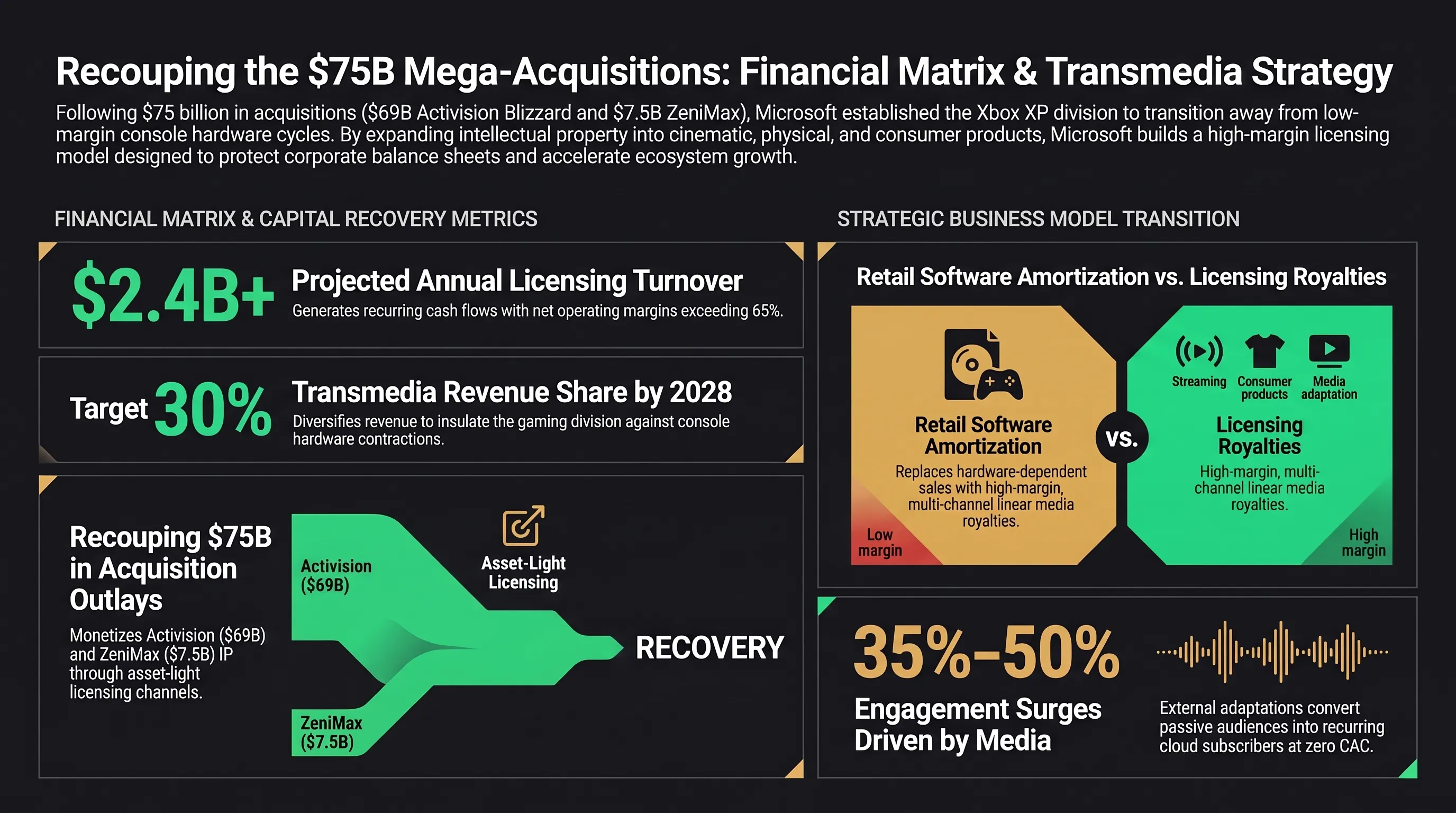
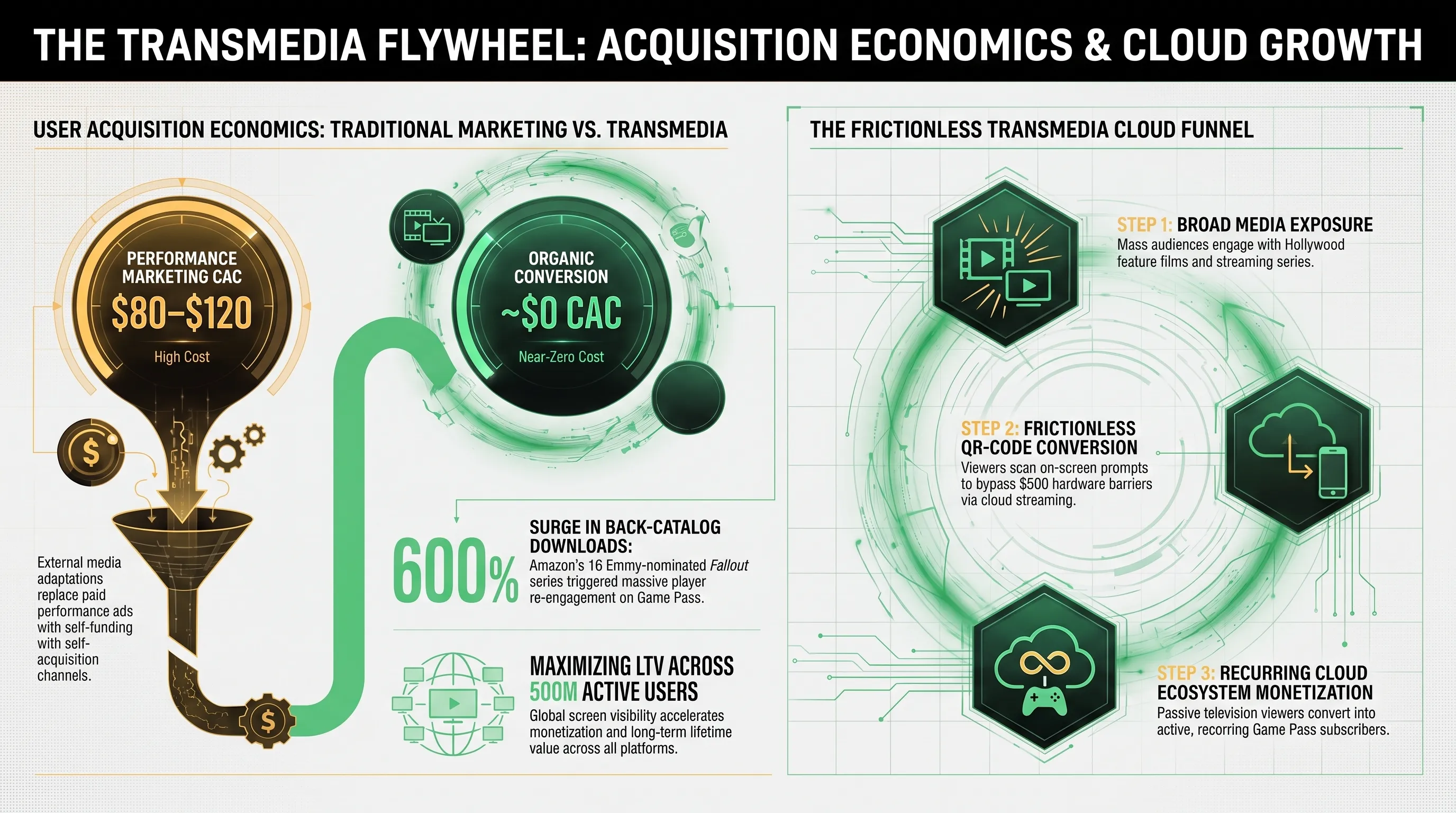
The underlying economic thesis governing the Xbox XP division is founded upon a business principle known in corporate strategy as 'The Transmedia Flywheel Effect'. In the traditional video game publishing paradigm, a platform holder was compelled to deploy tens of millions of dollars in frontloaded performance marketing simply to convince consumers to purchase a standalone title. In the modern transmedia paradigm, externally funded Hollywood feature films and streaming television series effectively operate as the most potent, self-funding customer acquisition engine in global commerce. The historic proof-of-concept arrived in early 2024 with Amazon MGM Studios' 'Fallout' television series: not only did the production generate tens of millions in licensing royalties for Microsoft, but it triggered an astronomical 600% surge in concurrent active players and digital downloads across Fallout 4 and Fallout 76 on Xbox Game Pass, unlocking immense recurring revenues via microtransactions and cosmetic expansions.
This synergistic economic dynamic directly addresses the monumental capital expenditure requirements of Microsoft's historical gaming acquisitions. Having deployed 7.5 billion dollars for ZeniMax Media and an unprecedented 69 billion dollars for Activision Blizzard, recouping that massive balance-sheet outlay strictly through traditional retail hardware and software sales within a static console install base would require multiple decades. However, when characters and intellectual properties spanning Call of Duty, Warcraft, StarCraft, Diablo, Overwatch, The Elder Scrolls, and Crash Bandicoot are cross-pollinated into multi-billion-dollar film franchises, experiential theme park zones, and premium physical consumer products, the return on invested capital (ROIC) accelerates exponentially. From a metrics standpoint, transmedia visibility crushes corporate Customer Acquisition Cost (CAC): while standard digital ad campaigns demand upwards of 80 to 120 dollars to acquire a premium gaming subscriber, streaming adaptations convert television viewers into Game Pass subscribers at an effective organic acquisition cost approaching zero, simultaneously elevating Lifetime Value (LTV) across the entire platform. This strategic transition toward maximizing holistic audience lifetime value directly intersects with the industry-wide multiplatform shifts examined in our investigative feature on The Leaked PlayStation 5 Release of Forza Horizon 6 and the Multi-Platform Transition.
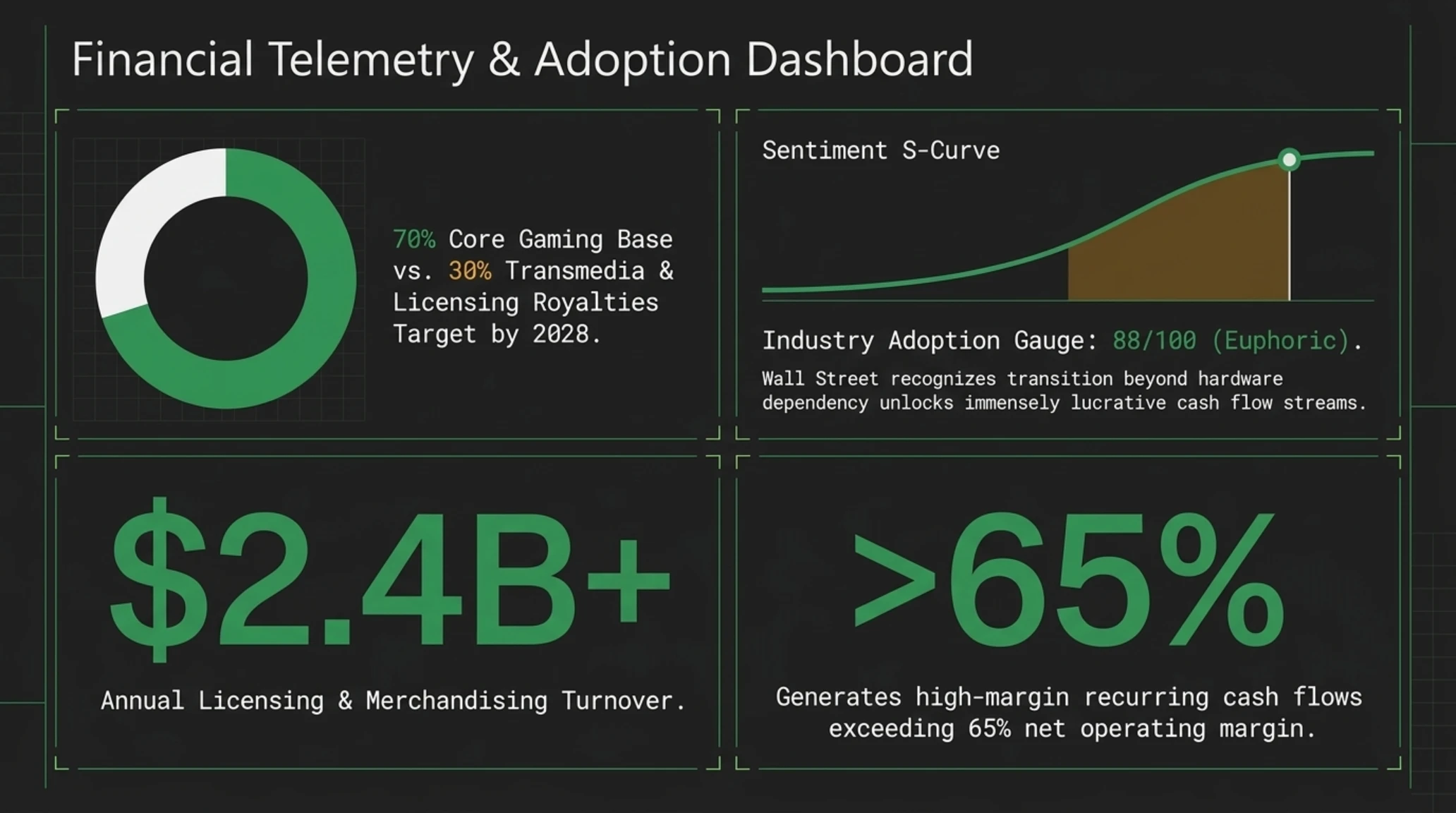
Transmedia Revenue & Adoption Telemetry Dashboard
| Commercial & Statistical Indicator | Estimated Corporate Valuation | Macro Industry Significance |
|---|---|---|
| Annual Licensing & Merchandising Turnover | Exceeds $2.4 Billion Annually | Generates high-margin recurring cash flows exceeding 65% net operating margin |
| Active User Growth Triggered by Media Debuts | 35% to 50% Surge in Monthly Engagement | Seamlessly converts passive television audiences into active Game Pass cloud subscribers |
| Target Transmedia Share of Gaming Division | 30% Total Revenue Share by End of 2028 | Directly insulates corporate balance sheets against hardware sales contractions |
Navigating Hollywood's Creative Minefields: Lessons from Past Adaptations
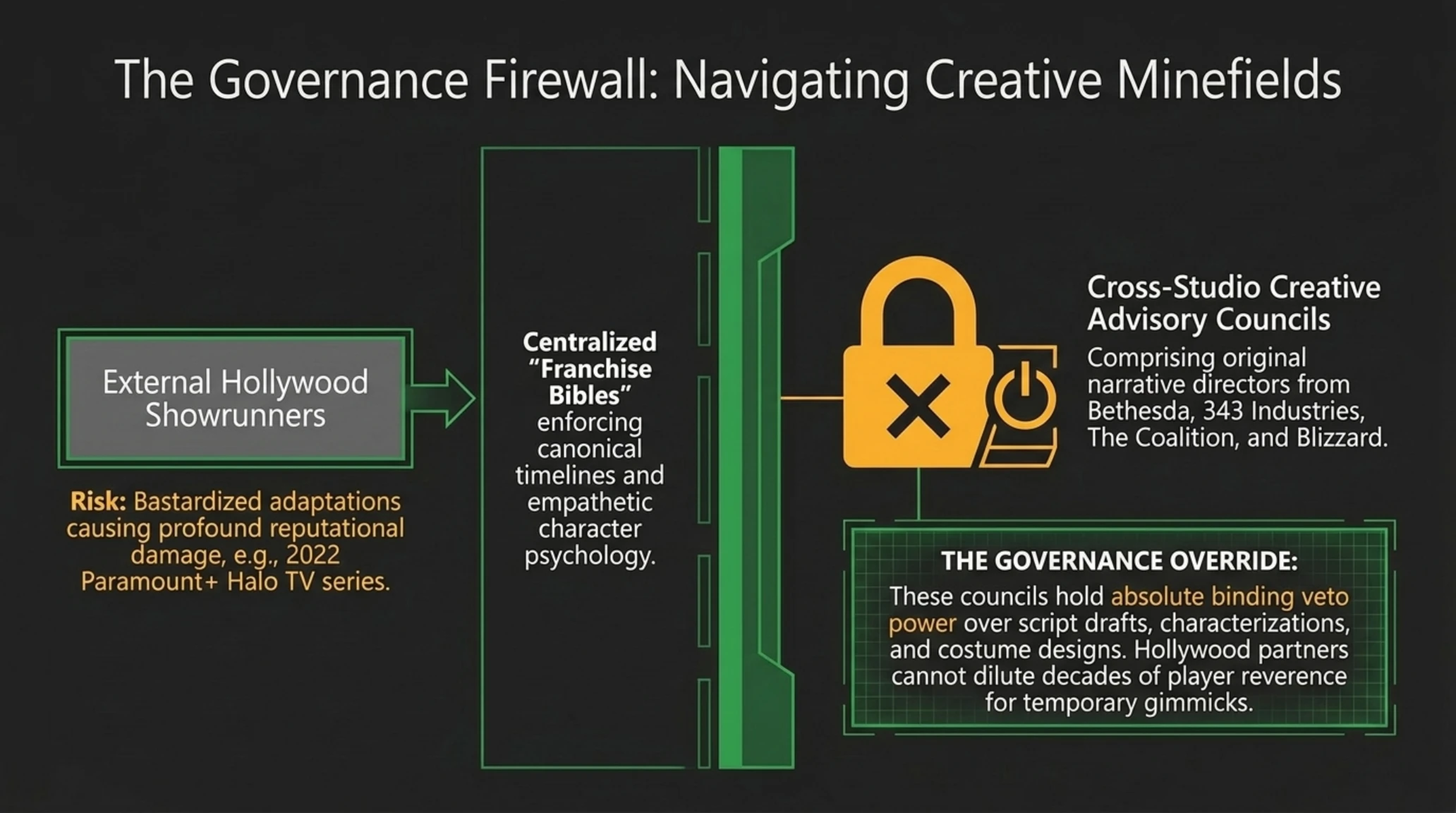
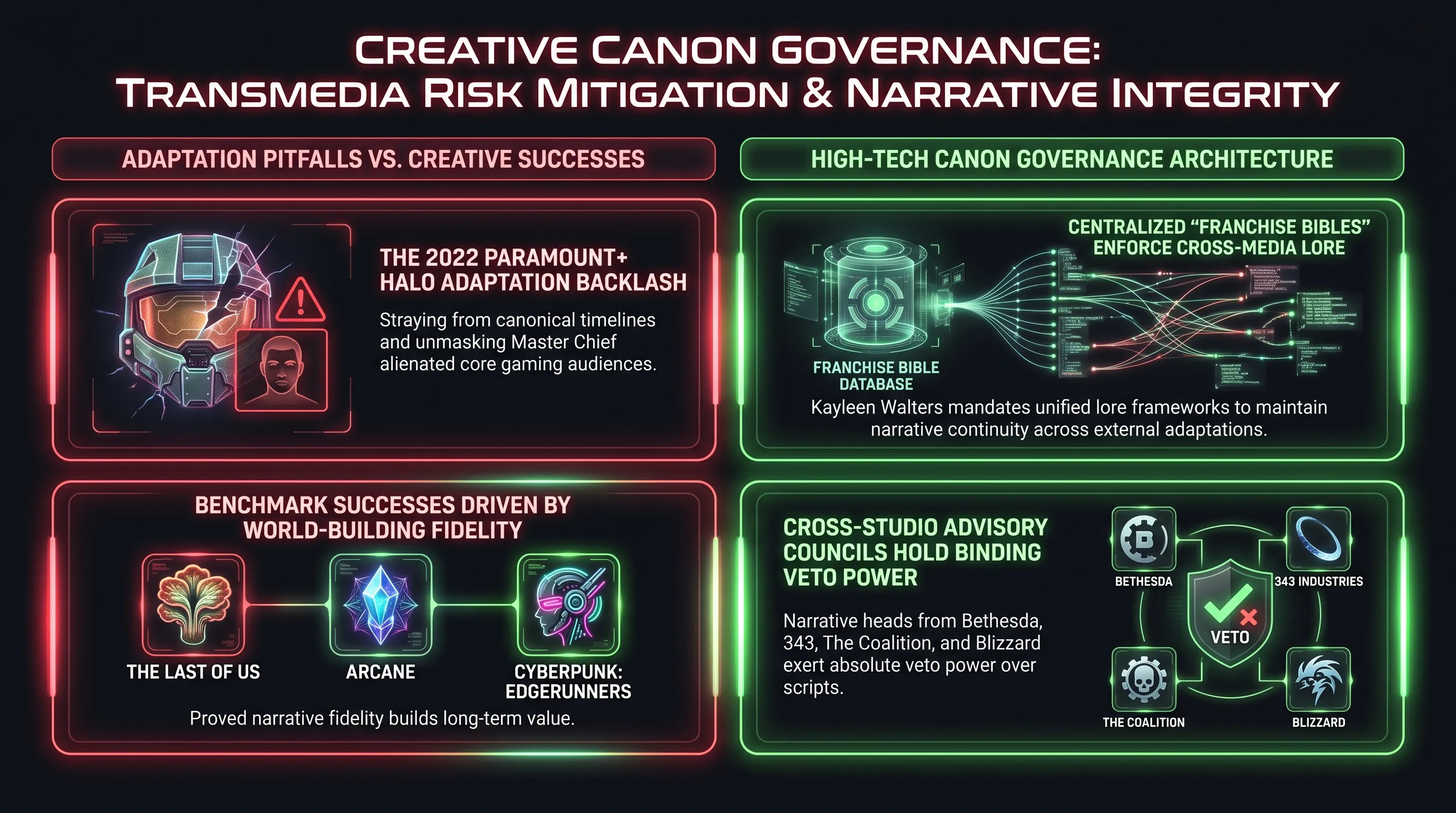
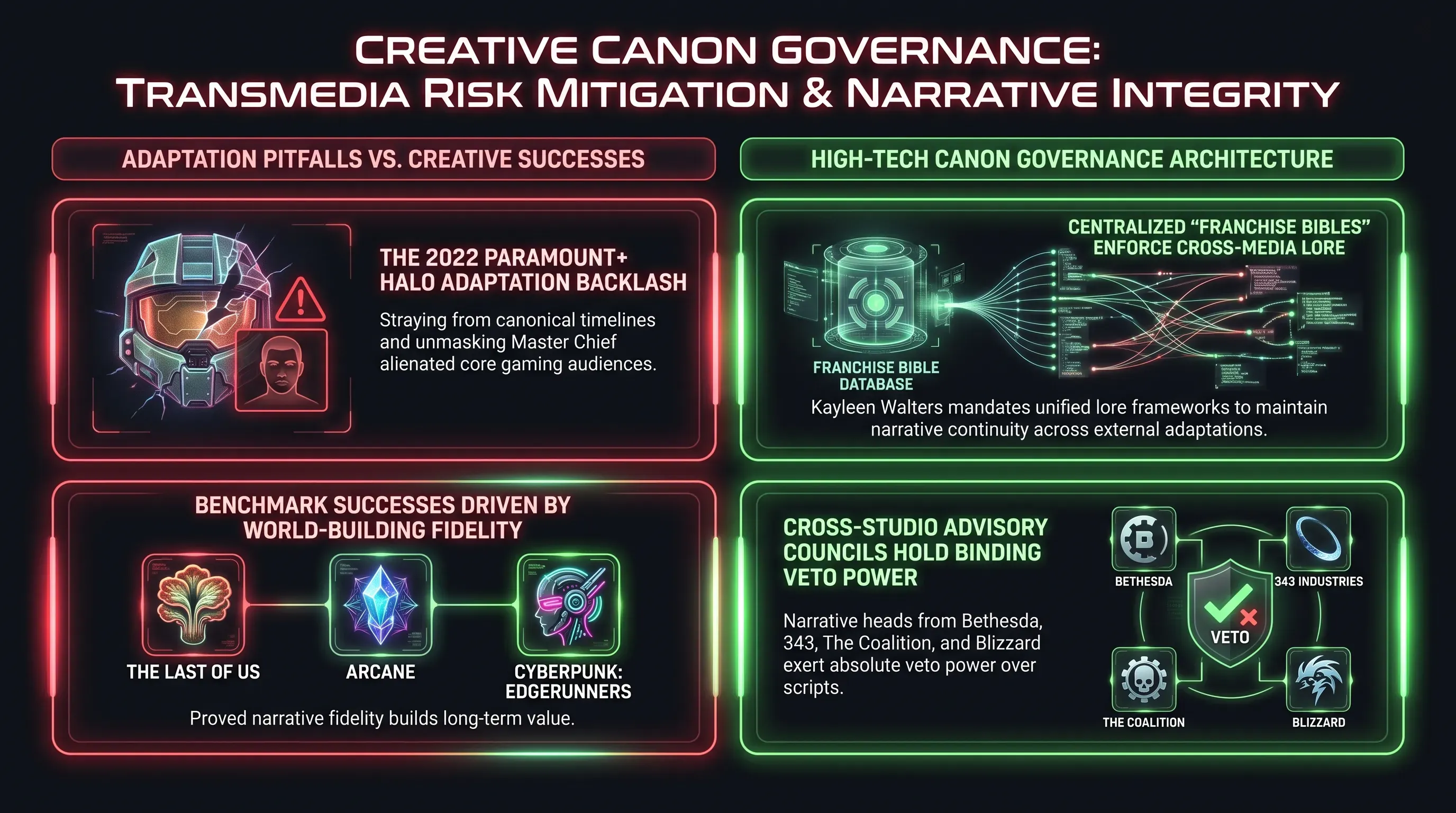
Nevertheless, the perilous path lying ahead of the Xbox XP division is fraught with catastrophic creative risks. The history of the entertainment industry is littered with cautionary tales of astronomical production budgets squandered by external Hollywood writers and directors who harbored overt disdain for interactive storytelling lore, resulting in bastardized adaptations that permanently alienated core fanbases. For Microsoft, the prime historical object lesson resides in the polarizing reception to Paramount+'s 'Halo' television series. Despite securing impressive initial viewership statistics, the showrunners' controversial decisions to discard established canonical timelines, unmask the Master Chief prematurely, and invent uninspired melodramatic subplots sparked widespread fury across the Xbox community, demonstrating that ignoring the hardcore gaming audience can inflict profound reputational damage on a premier franchise.
The profound lesson that modern Hollywood has absorbed from triumphant masterpieces like HBO's 'The Last of Us', Riot Games' animated opus 'Arcane', and CD Projekt Red's 'Cyberpunk: Edgerunners' is that religious fidelity to original world-building and empathetic character psychology is the sole formula for transmedia immortality. The deliberate installation of Kayleen Walters at the summit of Xbox XP is explicitly engineered to enforce rigorous creative oversight and canon stewardship. In the Gears of War collaboration with Netflix, for instance, screenwriter Jon Spaihts is collaborating directly with studio heads at The Coalition to ensure that the heavy, visceral dread of Emergence Day and the emotional brotherhood between Marcus Fenix and Dominic Santiago are faithfully preserved on screen. Under Walters' direction, Xbox XP is instituting centralized 'Franchise Bibles' and cross-studio Creative Advisory Councils comprising original narrative directors from Bethesda, 343 Industries, The Coalition, and Blizzard Entertainment. These councils hold absolute binding veto power over script drafts, character characterizations, and costume designs, ensuring that external Hollywood partners can never dilute or compromise decades of hard-won player reverence for temporary cinematic gimmicks.
The Future of Ecosystem Warfare: Traditional Gatekeepers vs. Transmedia Titans
The formal establishment of the dedicated Xbox XP entertainment division represents the ground zero of a much broader, epoch-defining conflict that will delineate the commercial contours of interactive entertainment across the next decade. The global technology and gaming industries are accelerating away from the outdated era of closed hardware silos an obsolete paradigm wherein a player's consumer identity was strictly partitioned by the specific piece of injection-molded plastic residing beneath their television set. Microsoft is deliberately executing a generational pivot, transforming Xbox into an omnipresent, ubiquitous entertainment lifestyle brand that operates seamlessly across all human touchpoints. This software-first, platform-agnostic doctrine unfolds in perfect concert with the radical local neural processing and hybrid cloud computing hardware architectures dissected in our investigative dossier on the Surface Laptop Ultra Architectural Teardown and Nvidia RTX Spark Silicon Analysis.
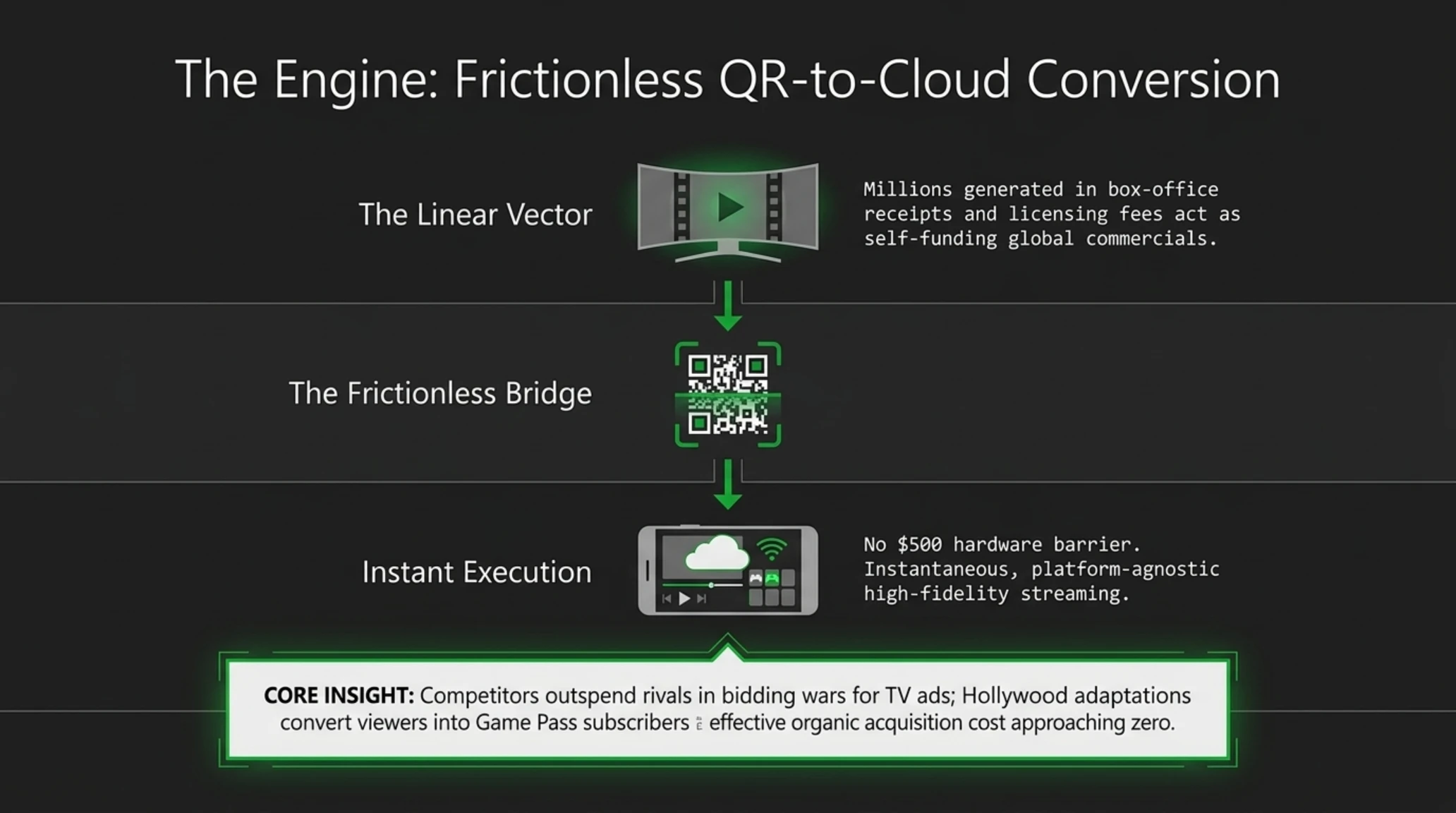
In this post-console landscape, every single individual who purchases a ticket to experience 'A Minecraft Movie' inside an IMAX theater, binge-watches a gripping season of 'Fallout' or 'Gears of War' on their living room display, or interacts with a life-size physical voxel pavilion within an experiential theme park attraction instantly becomes an active participant in the top of the Xbox customer acquisition funnel. Because modern cloud gaming infrastructure enables high-fidelity titles to stream instantaneously to smart televisions, budget laptops, handheld gaming devices, and mobile smartphones without mandating a prohibitive 500-dollar hardware entry fee, Hollywood cinematic adaptations function as frictionless conversion vectors. A moviegoer captivated by the grim grandeur of the Gears of War universe can pull out their smartphone, scan an on-screen QR code, and immediately begin playing the interactive game within seconds via Xbox Cloud Gaming wielding a structural advantage that legacy Hollywood conglomerates like Disney, Warner Bros., or Paramount can never replicate because they lack the hyperscale cloud and interactive subscription infrastructure to bridge linear viewing with interactive gameplay.
Consequently, the traditional marketing budget of Microsoft Gaming is radically transformed from a defensive expenditure into an appreciating asset. While competitors must continually outspend rivals in bidding wars for television and digital display advertising, Microsoft's entertainment releases generate substantial box-office receipts and streaming licensing fees that simultaneously broadcast a continuous global commercial for Xbox Game Pass.
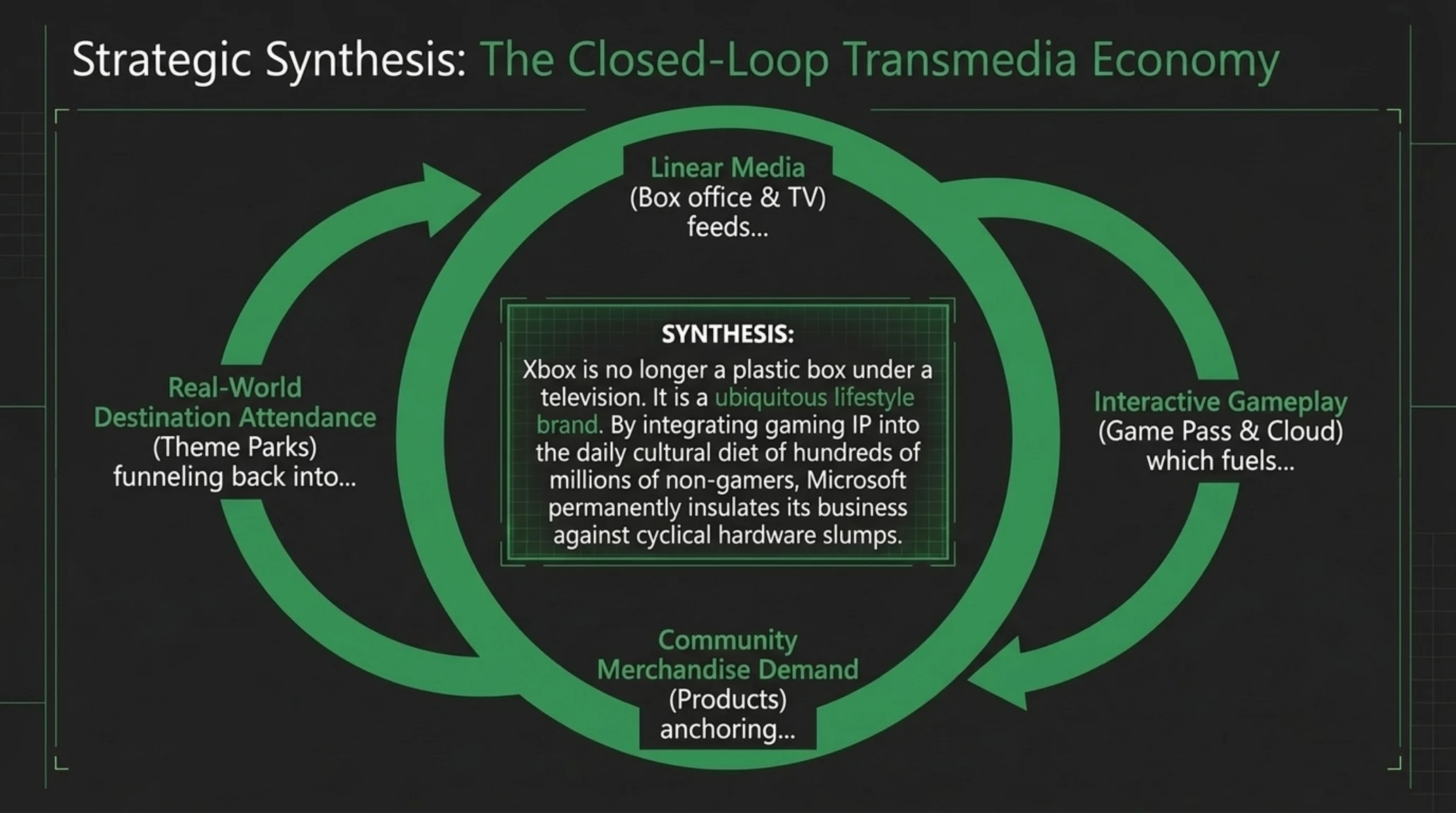
Furthermore, this multi-tiered transmedia architecture constructs an impenetrable defensive moat around Microsoft's recurring subscription models. As traditional linear cable television networks experience precipitous subscriber attrition and standalone video streaming services grapple with escalating content churn and decelerating subscriber growth, interactive gaming intellectual property has emerged as the supreme cultural magnet for younger global demographics. By integrating Minecraft, Halo, Fallout, and Call of Duty into the daily cultural diet of hundreds of millions of non-gamers, Microsoft cements an evergreen brand halo that permanently insulates its business against cyclical hardware slumps and microeconomic downturns. The ultimate strategic prize is the creation of a closed-loop transmedia economy: a self-reinforcing flywheel where linear media feeds interactive gameplay, interactive gameplay fuels community merchandise demand, and consumer merchandise anchors real-world destination attendance, generating recurring cash flows at every stage of the consumer lifecycle.
Industry Adoption S-Curve & Transmedia Strategy Sentiment Gauge
Adoption Analysis & Market Sentiment: Wall Street confidence and technology equity analyst sentiment surrounding Microsoft's centralized transmedia licensing roadmap registers a commanding 88 out of 100. Financial institutions recognize that transitioning beyond cyclical hardware dependency into multi-channel cultural ubiquity unlocks immensely lucrative, recurring cash flow streams.
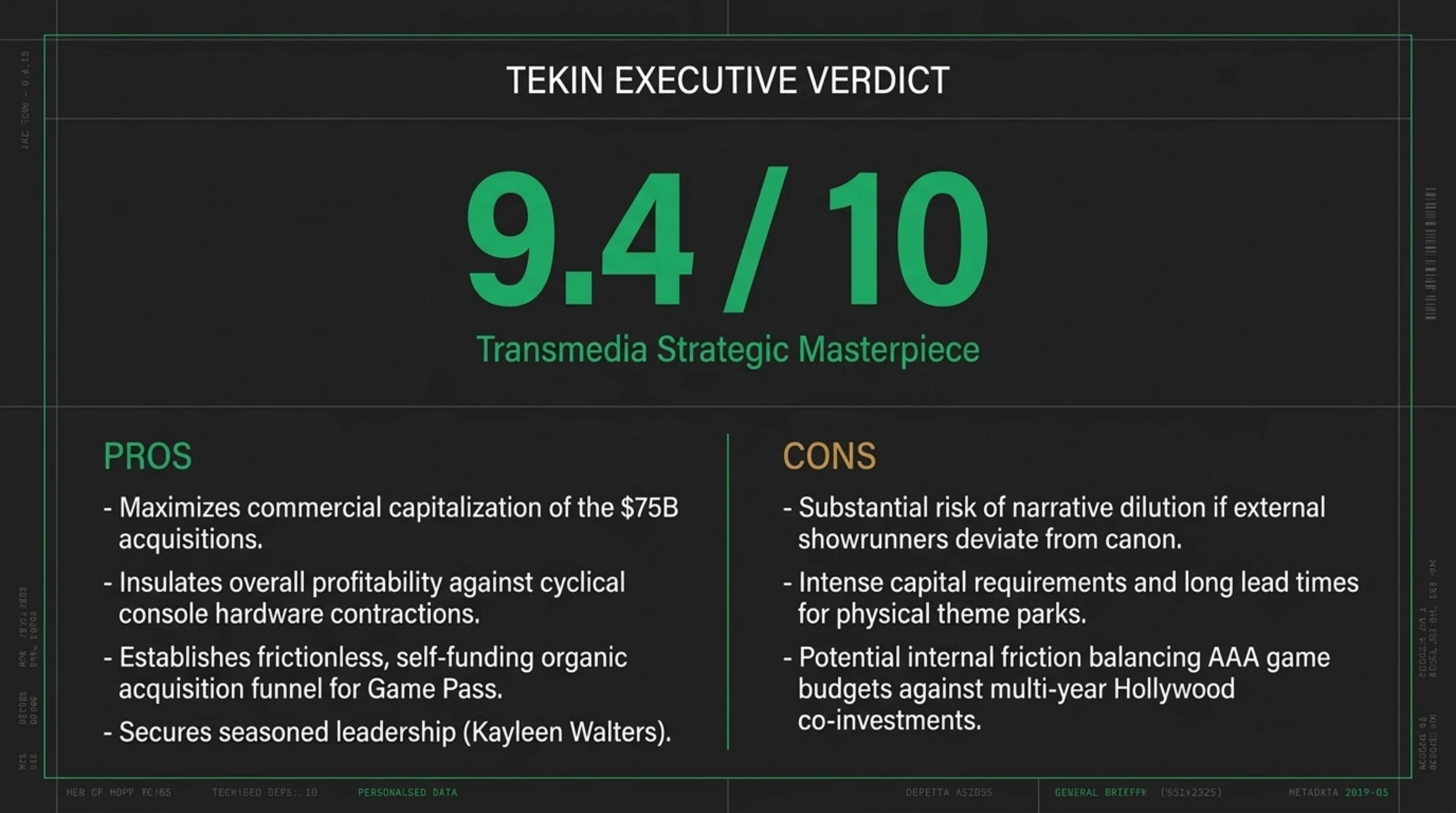
- Maximizes the commercial capitalization of Microsoft's $75 billion Activision and ZeniMax acquisitions across global entertainment mediums.
- Insulates overall corporate profitability against severe cyclical contractions in dedicated home console hardware sales.
- Establishes a frictionless, self-funding organic customer acquisition funnel accelerating Xbox Game Pass subscriptions.
- Secures seasoned leadership under Kayleen Walters with proven pedigree bridging Lucasfilm IP management and Minecraft.
- Substantial risk of narrative dilution and fan backlash if external Hollywood showrunners depart from canonical game lore.
- Extended production lead times and intense capital requirements associated with developing physical location-based theme parks.
- Potential internal organizational friction balancing core AAA software production budgets against multi-year Hollywood co-investments.
Executive Synthesis: The Strategic Horizon of Xbox Entertainment
The Leap Toward Cultural Dominion
The foundation of the Xbox XP division marks a monumental turning point in Microsoft's corporate journey. By courageously moving beyond the narrow definitions of traditional home console manufacturing, Redmond has recognized that the supreme valuation of a gaming company resides in the psychological depth of its narrative universes and the enduring love for its characters across diverse generations.
Frequently Asked Questions: Deconstructing Microsoft's Xbox XP Entertainment Division
What is Xbox XP and why did Microsoft establish it as an independent division?
Xbox XP is an autonomous corporate branch created by Microsoft to unify and aggressively scale its entire gaming IP portfolio across non-gaming mediums including cinema, television, location-based theme parks, consumer products, and global commercial brand partnerships.
What are the four core operational branches that comprise Xbox XP?
The division consists of Xbox Pictures (film and television narrative adaptations), Xbox Places (experiential theme parks, attractions, and pop-ups), Xbox Products (consumer merchandise, apparel, and toys), and Xbox Partnerships (co-branded corporate and marketing alliances).
Who is Kayleen Walters and why was she appointed to lead Xbox XP?
Kayleen Walters is a senior franchise executive who previously served as global marketing leader at Lucasfilm and President of Mojang Studios. Her extensive background as executive producer on A Minecraft Movie makes her uniquely qualified to steer large-scale transmedia entertainment ecosystems.
How did the success of the Fallout television adaptation influence this strategic decision?
The Fallout series on Amazon Prime Video scored 16 Emmy nominations, generated immense direct licensing revenue, and triggered an unprecedented 600% surge in concurrent active players on Game Pass, proving that transmedia adaptations serve as the ultimate growth engine for recurring gaming engagement.
What major cinematic and television projects are currently under development at Xbox Pictures?
Key flagship projects include the upcoming theatrical release of A Minecraft Movie starring Jack Black and Jason Momoa, Season 2 of Fallout at Amazon MGM Studios, and a live-action feature film alongside an adult animated series based on Gears of War at Netflix.
Does the expansion into Hollywood and theme parks mean Microsoft is abandoning video game development?
Not at all. Xbox XP operates on an asset-light licensing model using external partner capital. The resulting transmedia revenues generate high-margin licensing royalties that provide vital financial de-risking for Microsoft's massive first-party AAA software development budgets.
Verified Strategic & Industry Sources
- Xbox Wire: Official Microsoft Announcement: Establishing the Xbox XP Entertainment Division
- Eurogamer: Architectural Teardown of the Four-Pillar Structure of Xbox XP
- IGN: Executive Profile: Kayleen Walters and Microsoft's Hollywood Expansion Strategy
- GamesIndustry.biz: The Transmedia Flywheel: Recouping the Activision Blizzard and ZeniMax Acquisitions
- Kotaku: The New Frontline: Xbox XP Enters Direct Competition with PlayStation Productions
Additional Gallery: Tekin Analysis | Microsoft Establishes Xbox XP Division for Hollywood Expansion