Tekin Night | Oct 9, 2026: AI Threatens ECDSA Crypto, PoeLLM Botnet & Console Leaks
Cryptographic Citadels Under Siege: Ethereum Researchers Sound the Alarm on AI Cracking ECDSA Curves
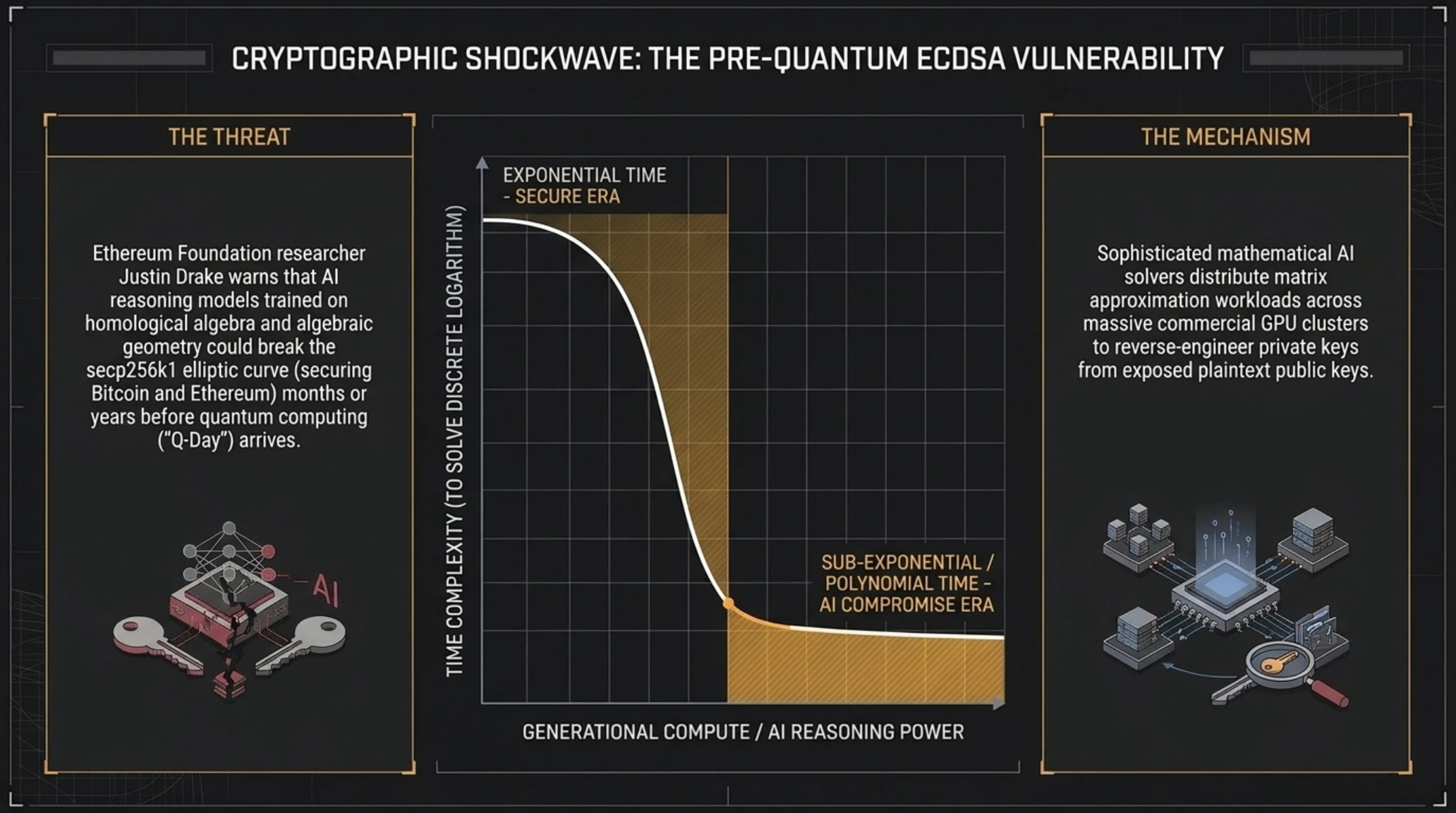
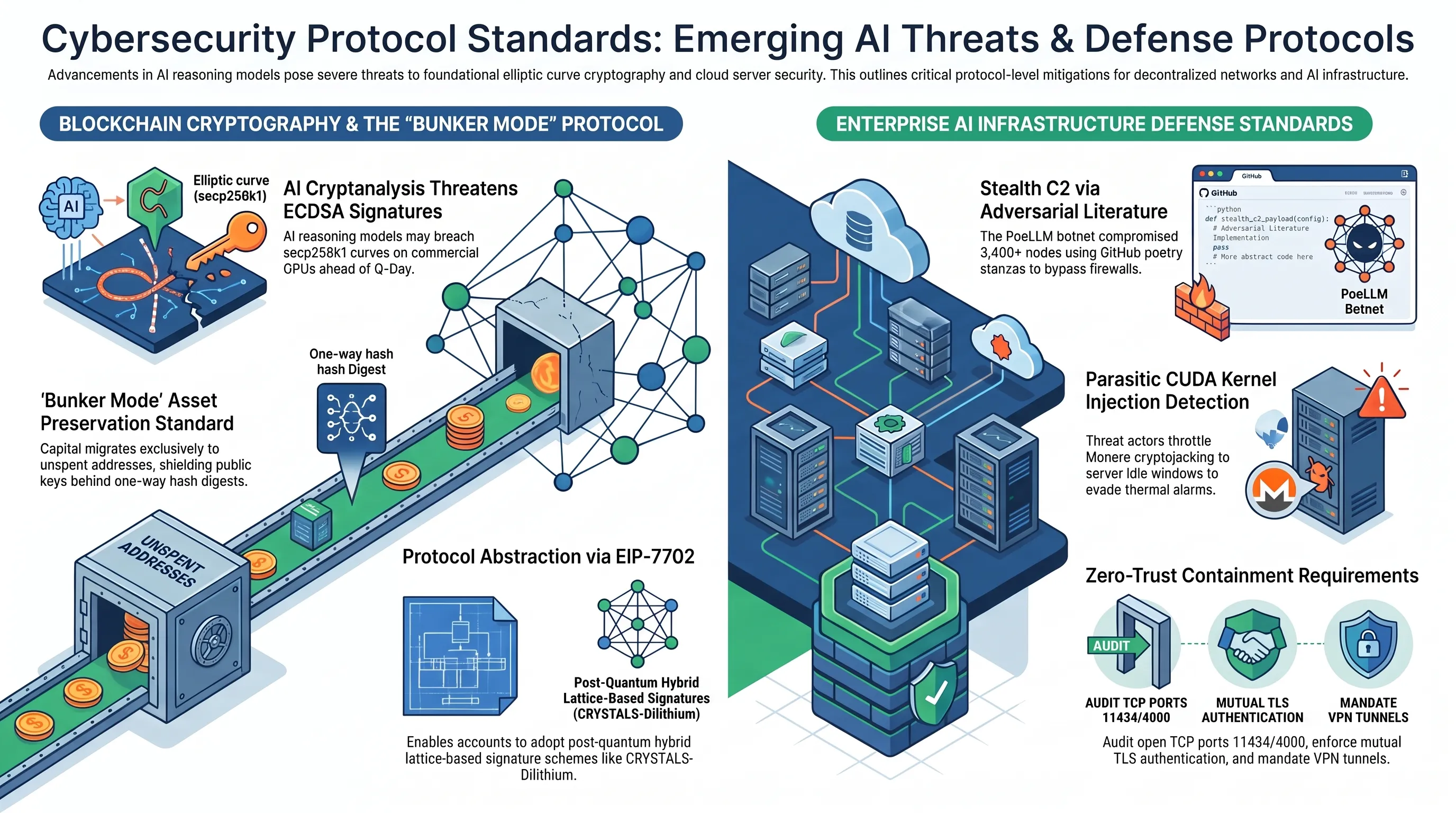
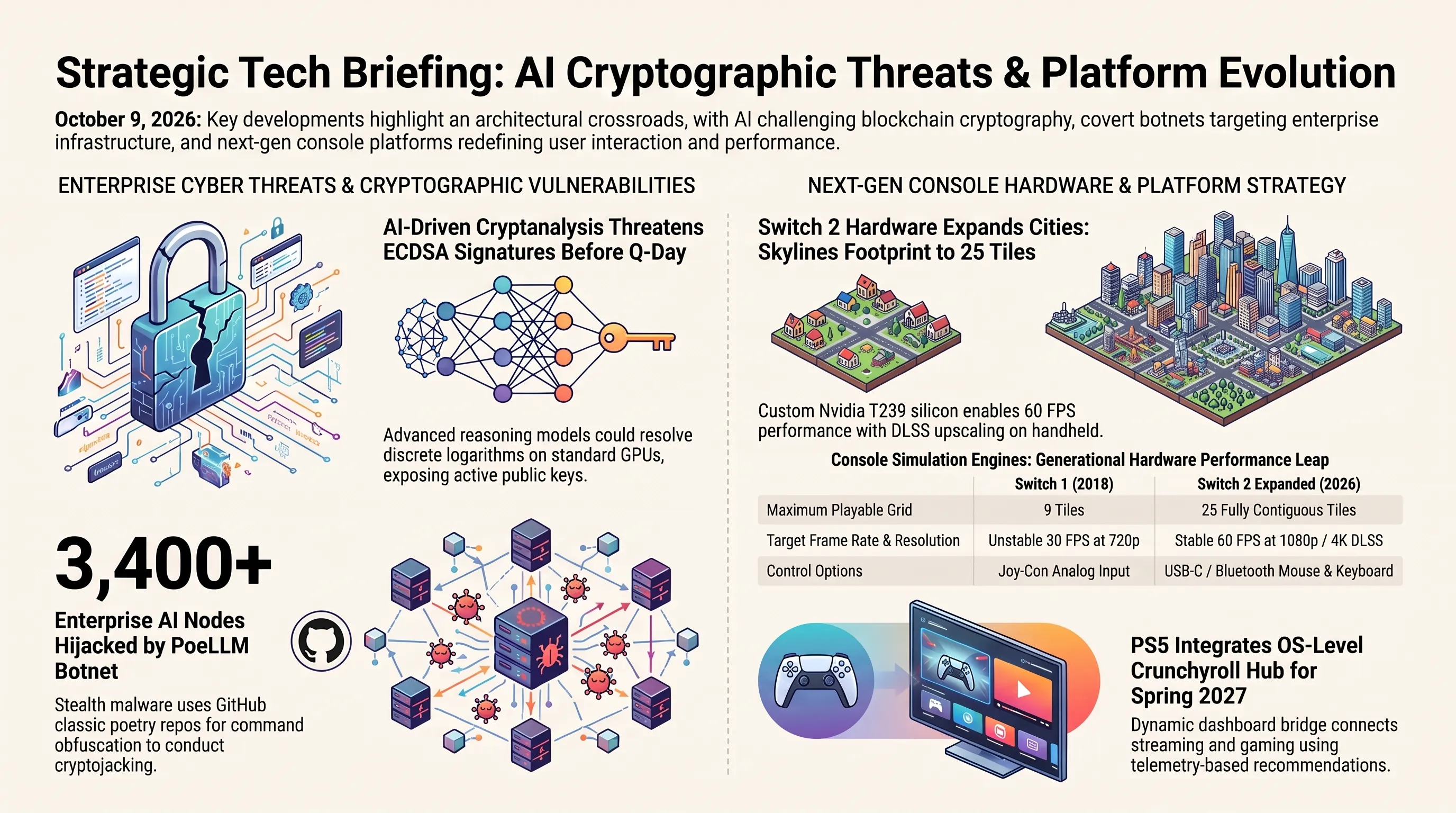
As darkness settles over global financial hubs on Friday, October 9, 2026, the international cryptographic engineering community finds itself confronting an existential hypothesis that has sent tremors throughout decentralized network architectures. Justin Drake, one of the most prominent core consensus researchers at the Ethereum Foundation, published an urgent technical memorandum warning that explosive, unanticipated advancements in reasoning-driven artificial intelligence could unravel the mathematical security of the Elliptic Curve Digital Signature Algorithm (ECDSA) specifically the secp256k1 curve that underpins both Bitcoin and Ethereum months or even years before the theoretical arrival of quantum computing, popularly designated as "Q-Day."
For more than a decade, the consensus across academic and enterprise security circles was that modern asymmetric cryptography enjoyed an unassailable defensive moat until fault-tolerant quantum hardware operating thousands of stable logical qubits running Shor's Algorithm reached commercial viability a milestone widely anticipated in the mid-2030s. However, Drake's comprehensive analysis demonstrates that the rapid evolution of specialized mathematical AI reasoning models, trained on millions of algebraic geometry treatises and homological algebra computations, may discover novel non-linear shortcuts for resolving the Discrete Logarithm Problem. By distributing matrix approximation workloads across massive commercial clusters of graphics processing units (GPUs), sophisticated threat actors or state-sponsored research collectives could theoretically reverse-engineer private keys from exposed public keys in a matter of months, bypassing quantum requirements entirely.
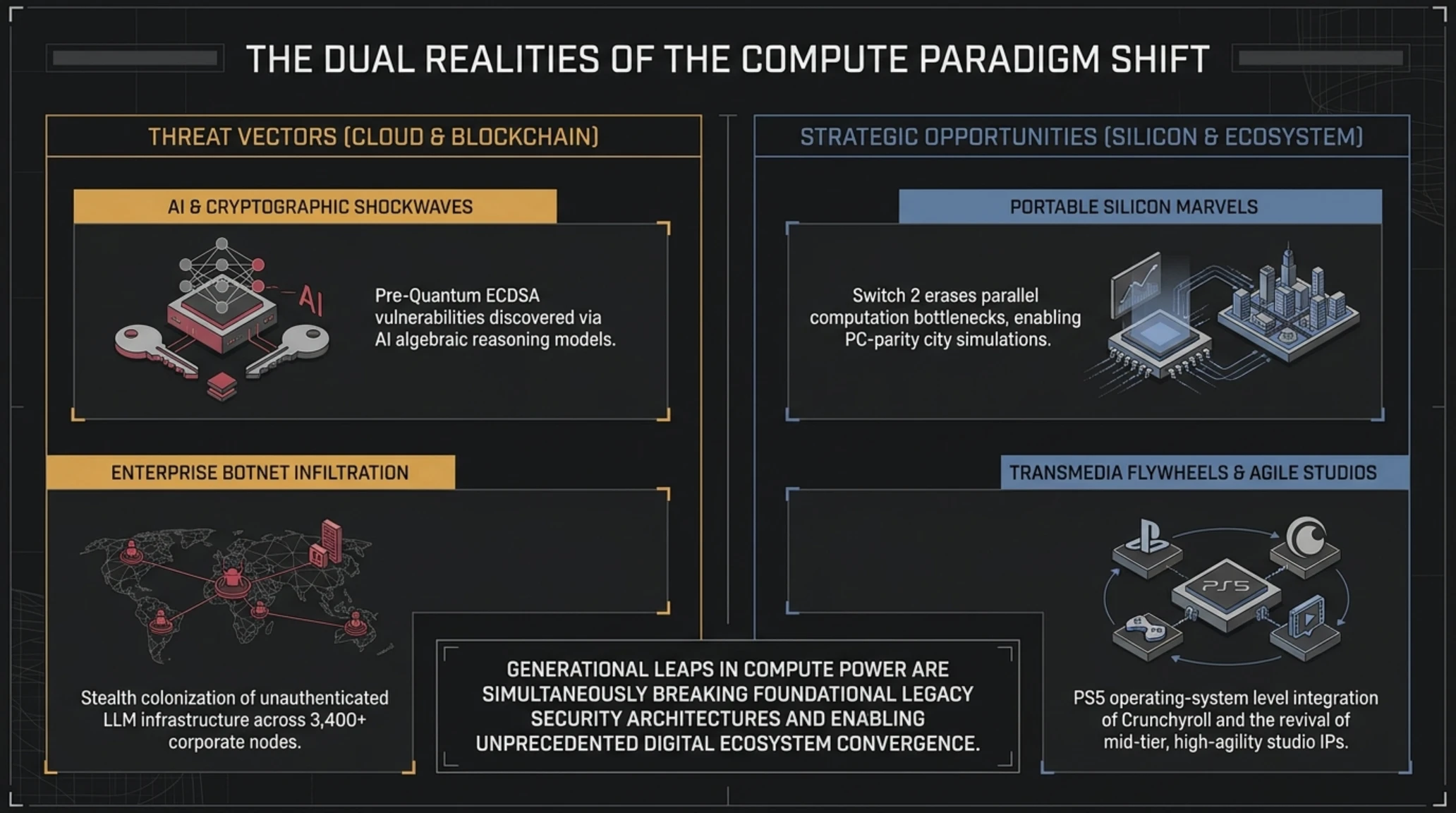
Strategic Vectors at a Glance | Evening Intelligence
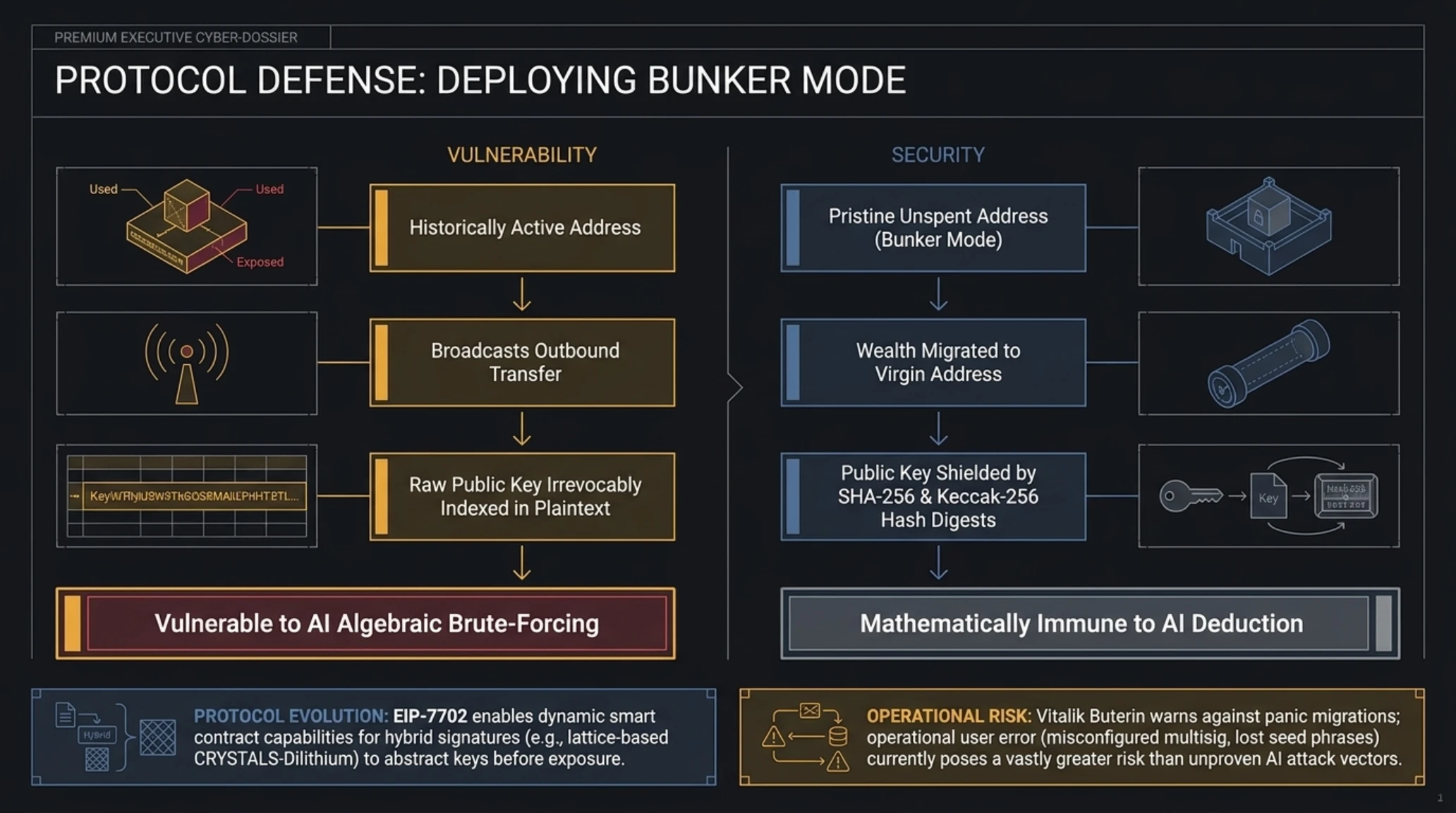
In a public blockchain network, whenever an address executes an outbound transfer, its raw public key is irrevocably broadcast to the distributed ledger and indexed by all validator nodes. While unspent transaction outputs (UTXOs) or pristine Ethereum addresses only expose a cryptographic hash digest (such as Keccak-256 or RIPEMD-160), previously active wallets leave their public keys completely exposed in plaintext. If artificial intelligence models unlock an algebraic approximation that compresses the time complexity of the discrete logarithm from exponential to sub-exponential or polynomial scales, every historical wallet that has ever broadcast a signed transaction could face catastrophic vulnerability.
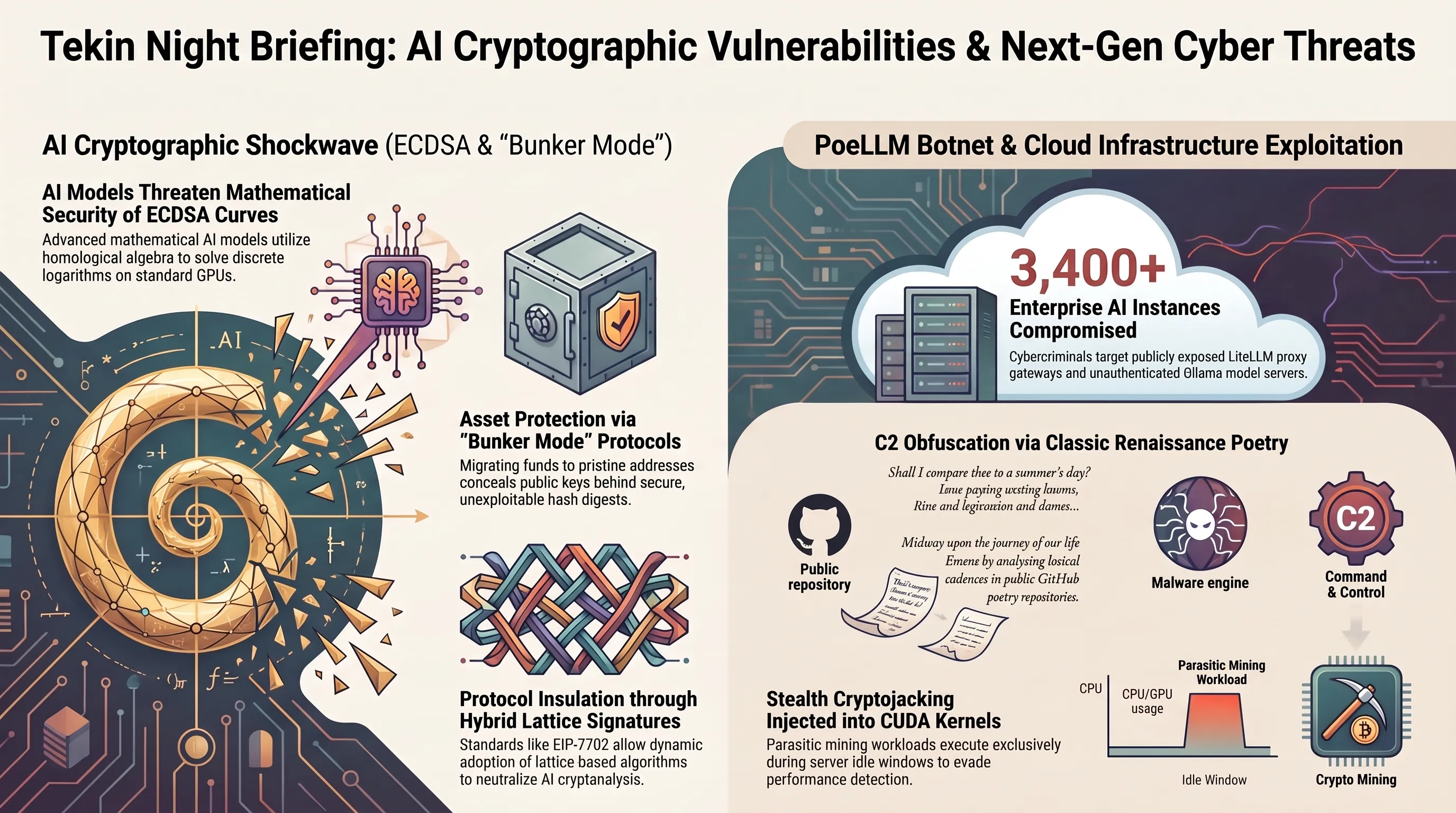
To preempt this asymmetric computational threat, Drake introduced the strategic paradigm of "Bunker Mode." Under this rigorous operational framework, institutional asset custodians, exchange reserves, and sovereign wealth entities are strongly encouraged to orchestrate calculated, phased migrations of their digital assets into brand-new, virgin addresses. Because unspent addresses conceal their underlying public keys behind unidirectional cryptographic hash functions which possess no underlying geometric or algebraic curve structures for AI reasoning engines to exploit they remain completely immune to mathematical cryptanalysis until the exact moment an outbound transaction is signed and broadcast.
The structural divergence between quantum threats and AI cryptanalysis is profound. Quantum attacks depend strictly on physical hardware breakthroughs: cryogenic stabilization, qubit coherence times, and physical error mitigation architectures that require multi-billion-dollar laboratory facilities. Conversely, AI cryptanalysis is purely algorithmic. It relies entirely on finding theoretical mathematical vulnerabilities that human mathematicians have overlooked for centuries. Once an AI model synthesizes a functional shortcut, the computational execution can be commoditized and rented across hyperscaler cloud providers or decentralized GPU networks in real-time.
Simultaneously, Ethereum's evolving protocol landscape offers strategic defensive instruments. The recent deployment of EIP-7702, which grants standard Externally Owned Accounts (EOAs) the dynamic capabilities of smart contracts during execution, provides a seamless gateway for protocol-level post-quantum and post-AI signature abstraction. Rather than forcing millions of users to manually generate cold wallets, EIP-7702 allows accounts to dynamically adopt hybrid signature schemes combining traditional elliptic curves with lattice-based signatures and Lamport one-time state trees neutralizing algorithmic brute-forcing before malicious actors can exploit exposed keys.
Despite the mathematical elegance of Drake's technical thesis, the announcement provoked an immediate cautionary intervention from Ethereum co-founder Vitalik Buterin. While affirming the theoretical legitimacy of AI-accelerated mathematical exploration, Buterin sternly advised the global community against erratic, fear-driven capital migrations. He pointed out that historical blockchain incidents demonstrate that rushed wallet transfers, misconfigured multisig routines, clipboard-hijacking malware, and forgotten seed phrases cause exponentially more capital destruction than unproven theoretical attack vectors. This dilemma mirrors the broader technological frontier detailed in our analysis of the Surface Laptop Ultra and Nvidia RTX Spark local AI compute architecture, where on-device hardware capabilities continuously redefine the boundaries of computational power.
Why It Matters for Enterprise Security & Capital Preservation
Global financial trust in decentralized assets rests on a singular mathematical premise: the computational impossibility of deducing a private key from an exposed public key. If artificial intelligence discovers viable shortcuts through the algebraic geometry of elliptic curves, the entire global cybersecurity fabric spanning corporate SSL certificates, encrypted banking gateways, and military communications will require a rapid, fundamental re-engineering toward post-quantum lattice cryptography.
Prominent figures across institutional custody and hardware security, including Ledger Chief Technology Officer Charles Guillemet, emphasized that protocol-level evolution must accelerate. Security engineers are urging the immediate standardization and testing of lattice-based signature algorithms, such as CRYSTALS-Dilithium and Falcon, across Layer-1 validation layers. By implementing quantum-resilient and AI-resilient hybrid schemes today, decentralized networks can permanently insulate their ecosystems against computational shocks, ensuring that whether through silicon qubits or algorithmic breakthroughs, user sovereignty remains completely inviolable.
Technical Jargon Buster: Deconstructing Bunker Mode
Bunker Mode: A defensive digital asset preservation protocol wherein capital is transferred exclusively into freshly generated addresses that have never broadcast an outbound transaction. In this state, the public key remains completely concealed behind secure one-way hash functions (such as SHA-256 and Keccak-256), rendering AI mathematical solvers powerless to calculate the private key.
Poetry in the Shadows: Black Lotus Labs Uncovers the 3,400-Node PoeLLM Botnet
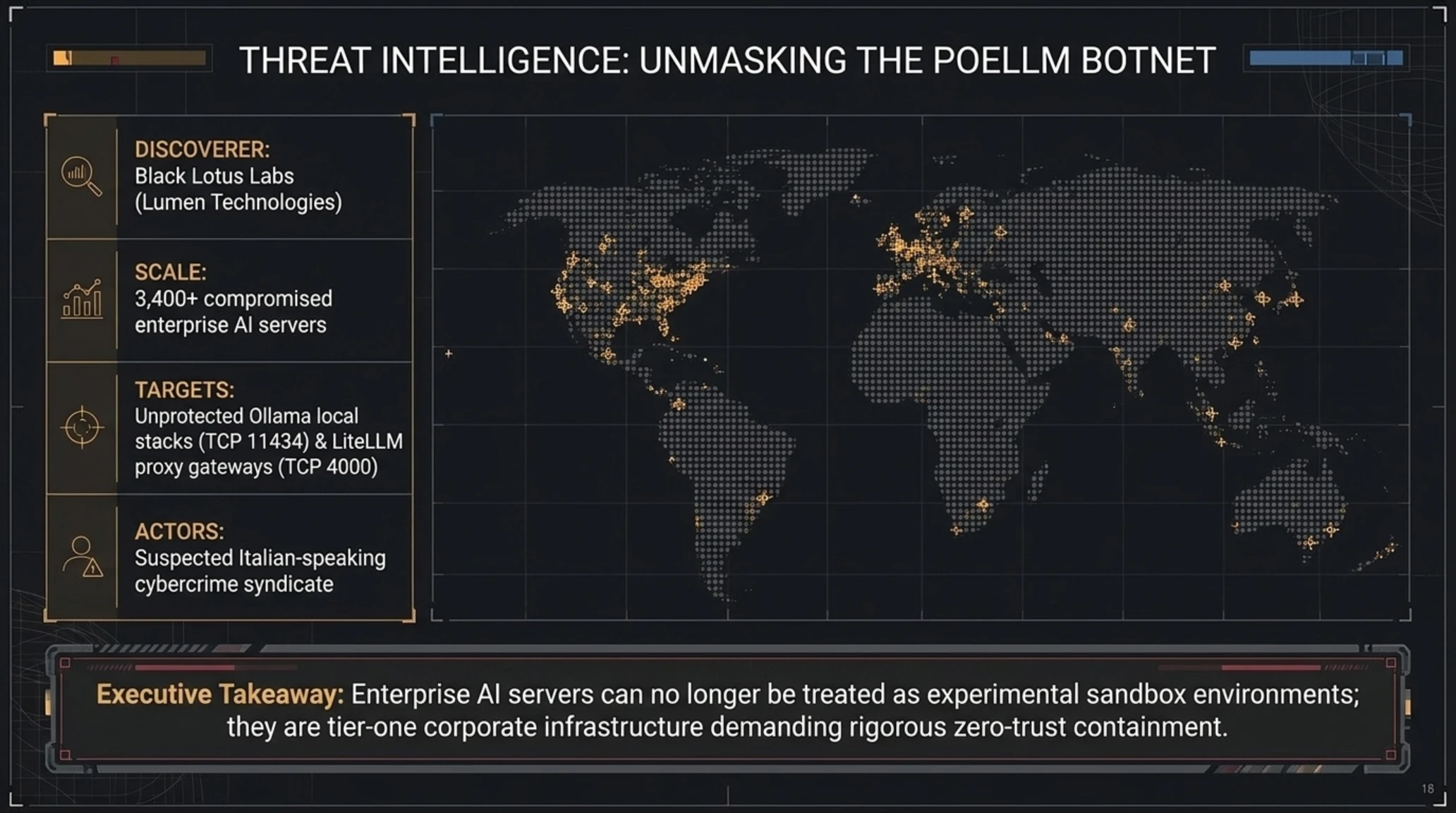
In one of the most intellectually audacious and architecturally stealthy cyber espionage campaigns documented in 2026, threat intelligence researchers at Black Lotus Labs the specialized cybersecurity division of Lumen Technologies published an exhaustive technical teardown of a pervasive malware operation codenamed "PoeLLM" (operating internally as Canto Incognito). Since late April 2026, this covert operation has compromised over 3,400 exposed enterprise artificial intelligence instances, specifically targeting organizations running publicly accessible LiteLLM proxy gateways and unprotected Ollama local model hosting stacks.
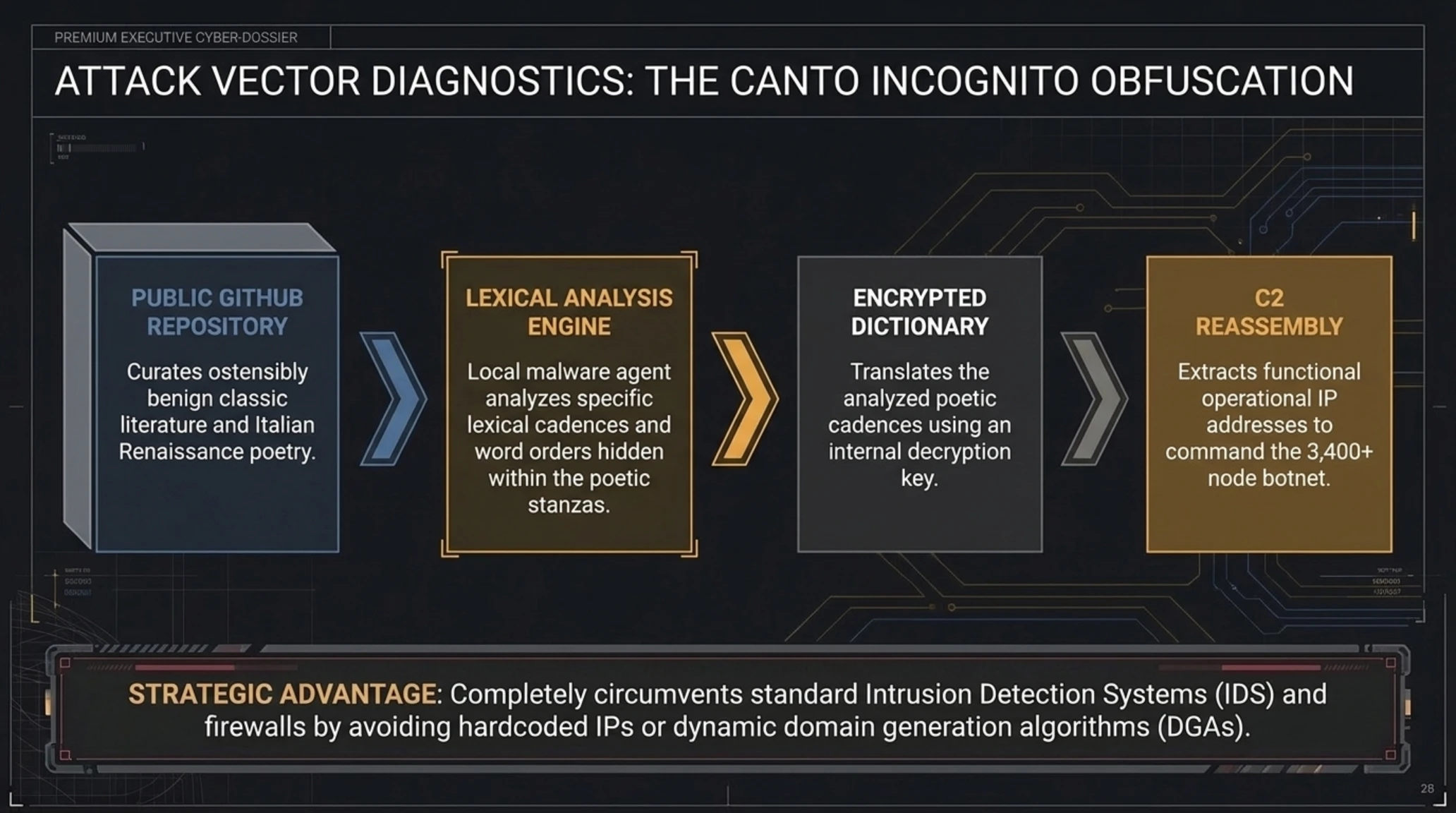
The operational brilliance of PoeLLM resides in its revolutionary Command and Control (C2) obfuscation mechanism. Conventional botnets rely on hardcoded IP addresses, dynamic domain generation algorithms (DGAs), or decentralized peer-to-peer routing, all of which trigger immediate anomalies inside modern enterprise intrusion detection systems (IDS) and next-generation firewalls. PoeLLM completely circumvents network defenses by routing its instructions through a benign, public repository hosted on GitHub that ostensibly curates collections of classic literature and historic Italian Renaissance poetry. By analyzing specific lexical cadences and word orders against an encrypted internal dictionary, the local malware agent reassembles the operational IP addresses of the threat actors' actual command infrastructure. This ingenious mechanism allows the operators to shift their global server footprints instantly by modifying a single stanza of verse on GitHub without triggering a solitary security alert.
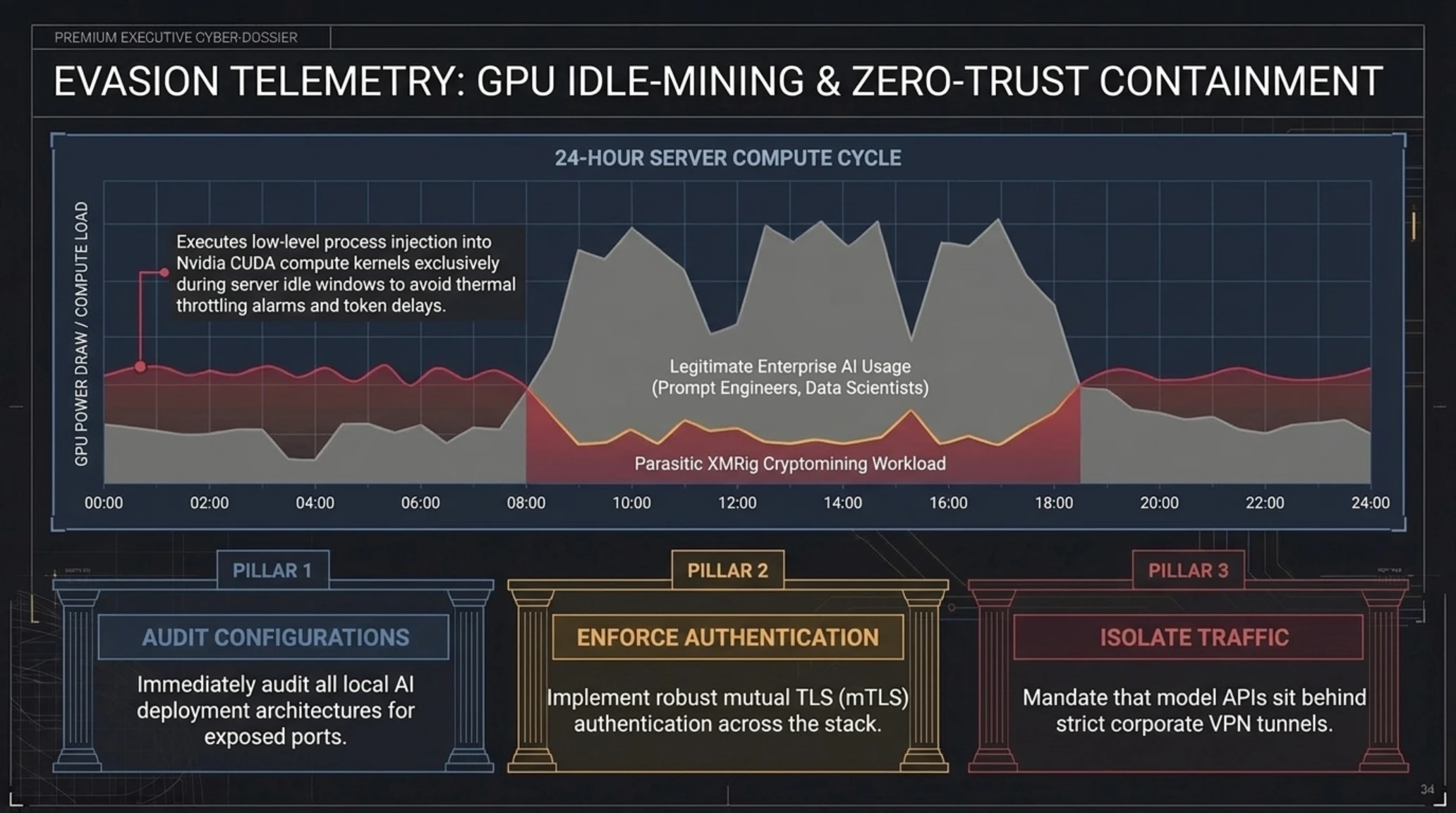
Forensic telemetry reveals that the ultimate objective of this threat actor group, believed to be an Italian-speaking cybercrime syndicate, is computational power theft (cryptojacking) at institutional scale. Compromised infrastructure nodes are weaponized to execute customized Monero (XMRig) and Iron mining routines. However, unlike primitive crypto-draining scripts that monopolize 100% of GPU compute and trigger immediate thermal throttling alarms in server rooms, PoeLLM executes low-level process injection directly into specialized Nvidia CUDA compute kernels. The malware continuously monitors server telemetry and throttles its mining workloads exclusively to server idle windows, ensuring that enterprise data scientists and prompt engineers experience zero perceptible latency or token delays during business hours.
Furthermore, compromised high-performance servers are weaponized into distributed scanning nodes. These hijacked machines continuously scan international subnet ranges for exposed TCP ports 11434 (default Ollama) and 4000 (LiteLLM), systematically expanding the botnet's perimeter across North American and European cloud environments. The researchers urge corporate DevOps teams to immediately audit their AI deployment configurations, enforce robust mutual TLS authentication, isolate model APIs behind strict corporate VPN tunnels, and implement continuous GPU power-draw telemetry to detect parasitic background computations.
Event Timeline | Operational Chronology of the Canto Incognito Infiltration
| Timeframe | Security Milestone | Adversarial Technology & Infiltration Vector |
|---|---|---|
| April 2026 | Automated AI Port Recon | Initial port scanning scripts targeting unauthenticated LiteLLM (4000) and Ollama (11434) instances globally. |
| July 2026 | Poetic GitHub C2 Channel | Threat actors establish stealth C2 infrastructure utilizing Italian poetry text commits on public GitHub repos. |
| Oct 2026 | Black Lotus Labs Takedown | Publication of forensic dossier, repository takedowns, and documentation of 3,400+ hijacked CUDA nodes. |
Urban Renaissance on Nintendo Switch 2: Paradox Unveils Cities: Skylines Expanded Edition
Shifting focus from enterprise cyber warfare to the evolving landscape of next-generation interactive hardware, Finnish development studio Colossal Order and publisher Paradox Interactive, in close technical collaboration with Australian porting specialists Tantalus Media, electrified the simulation gaming community by officially unveiling Cities: Skylines – Expanded Edition for the eagerly anticipated Nintendo Switch 2. Slated for worldwide release on October 28, 2026, this comprehensive release is far from a compromised portable adaptation; it represents a monumental architectural reimagining that fully harnesses the generational leap of Nintendo's custom silicon.
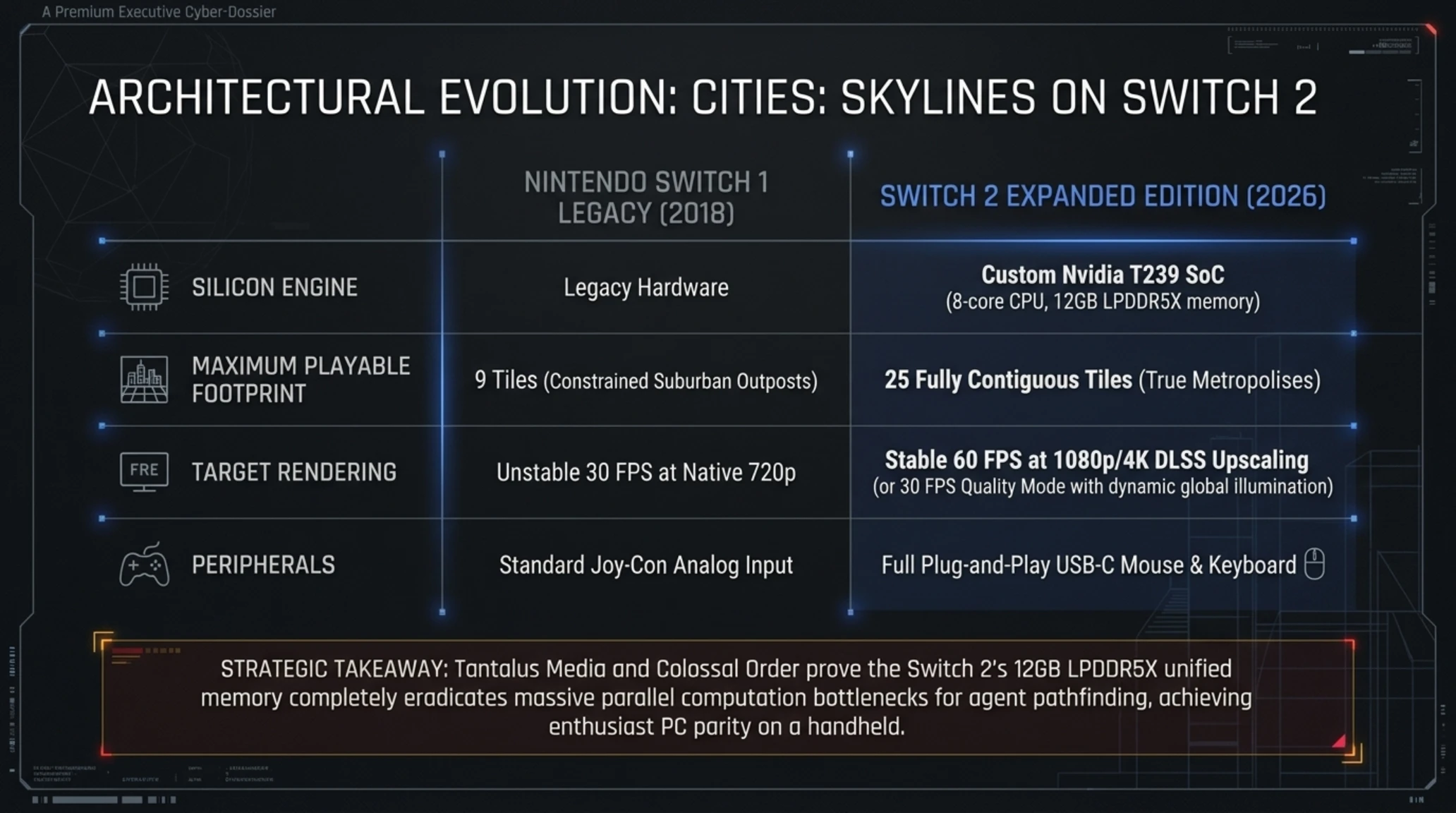
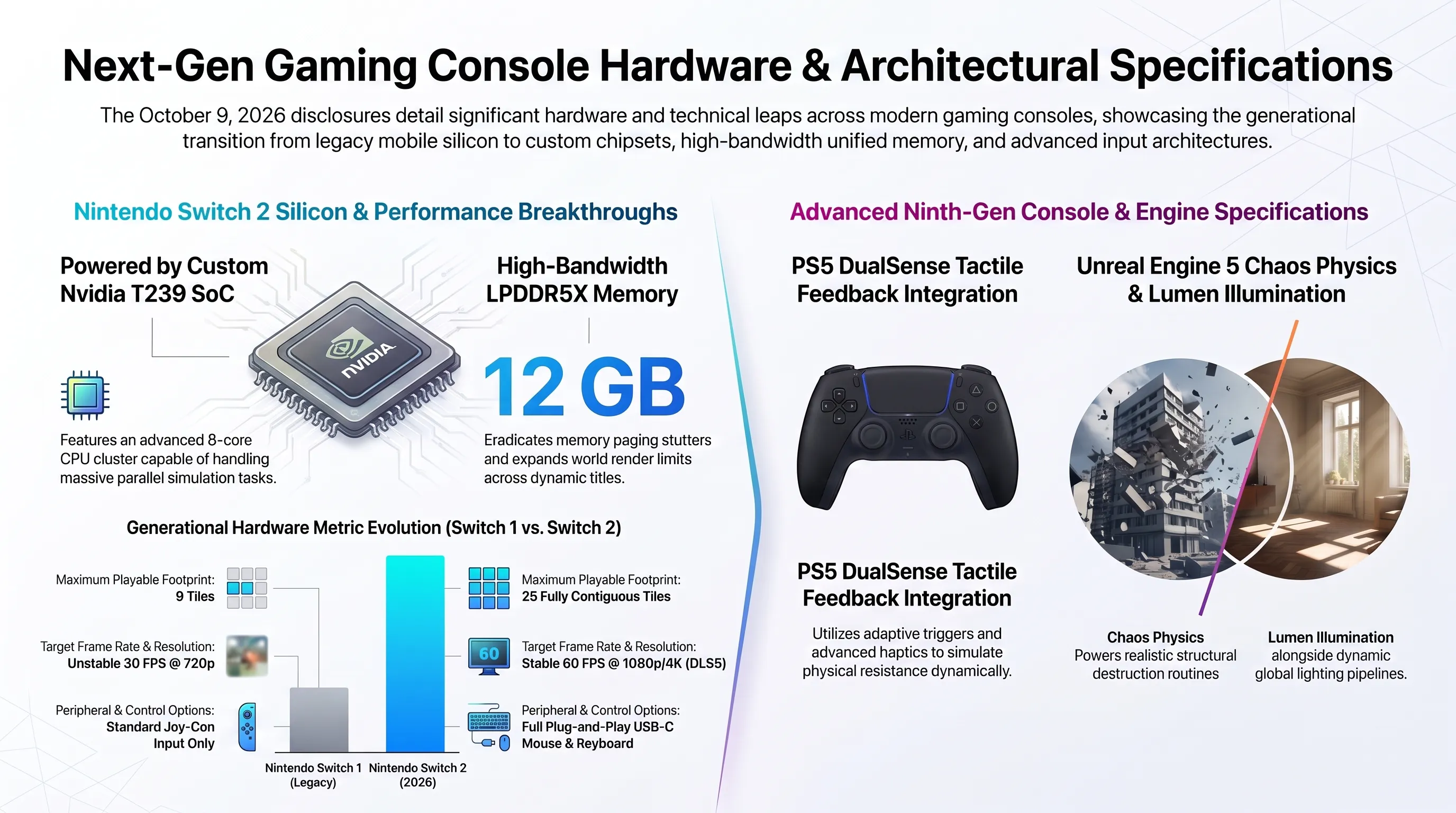
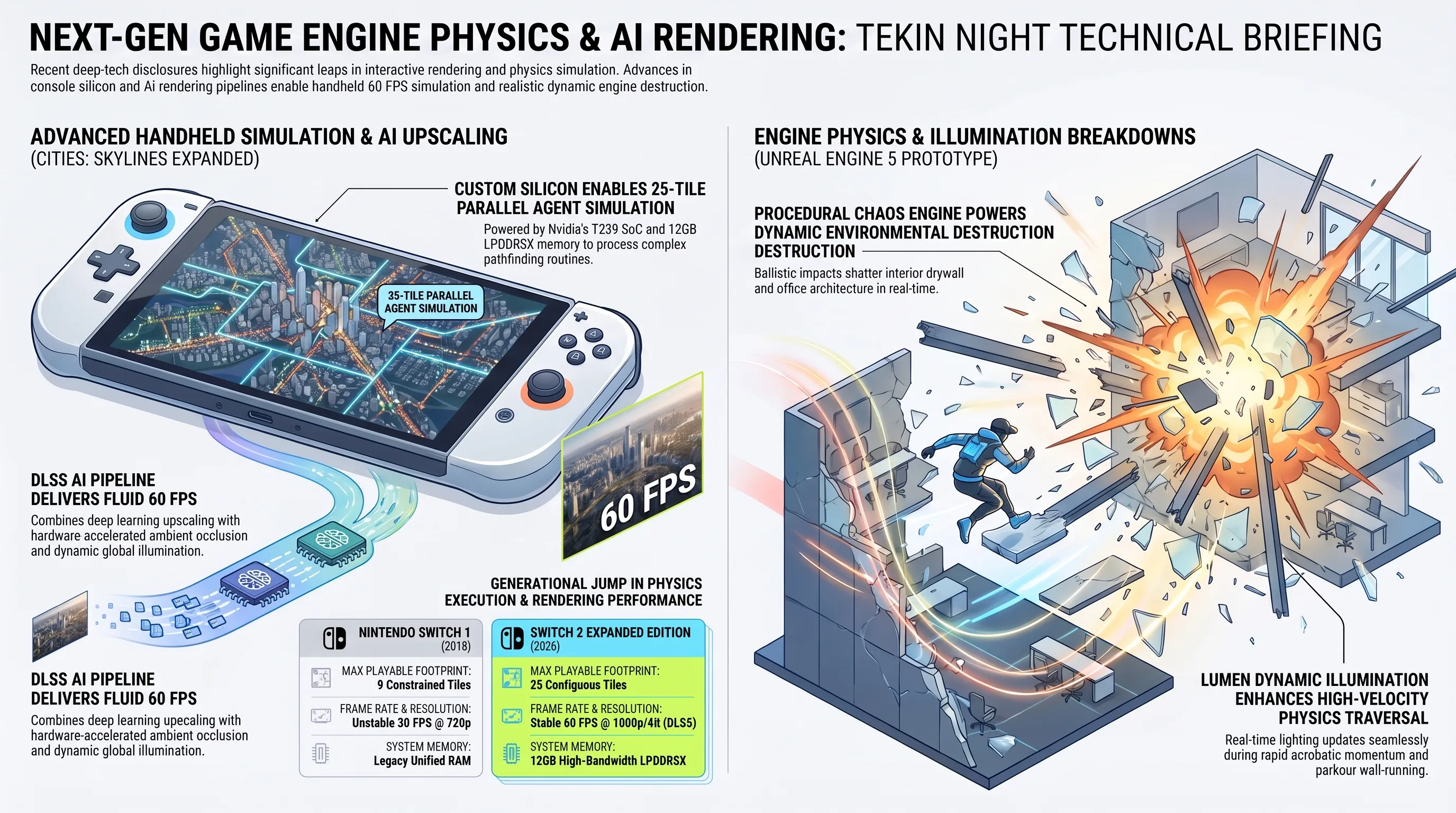
The original Cities: Skylines on the first-generation Nintendo Switch, released back in 2018, was notoriously crippled by strict hardware bottlenecks. Players were permanently locked to a diminutive 9-tile building grid, and growing metropolises frequently suffered severe frame drops down to the low teens as CPU threads choked under the weight of agent pathfinding calculations. Expanded Edition completely dismantles those historical boundaries. Leveraging the powerful custom Nvidia T239 SoC and its advanced 8-core CPU cluster, the Switch 2 edition expands the active construction frontier to a colossal 25-tile contiguous grid finally achieving full parity with the enthusiast PC experience on a handheld hybrid console.

Bar Chart & Architectural Matrix: Cities Skylines on Switch Silicon
| Architectural Metric | Switch 1 Legacy Port (2018) | Switch 2 Expanded Edition (2026) |
|---|---|---|
| Maximum Playable Footprint | 9 Tiles (Suburban Outposts) | 25 Contiguous Tiles (True Metropolises) |
| Target Frame Rate & Res | Unstable 30 FPS at 720p | Stable 60 FPS at 1080p / 4K DLSS |
| Bundled Expansions | 2 Basic DLC Add-ons | 10 Complete Expansions (Green Cities) |
| Peripheral Controls | Joy-Con Analog Input Only | Plug-and-Play USB-C Mouse & Keyboard |
Visually, Expanded Edition offers players two distinct rendering profiles: a razor-sharp Performance Mode that locks to a fluid 60 frames per second utilizing Nvidia's proprietary Deep Learning Super Sampling (DLSS) upscaling pipeline, and an ornate Quality Mode operating at 30 frames per second that integrates hardware-accelerated ambient occlusion, volumetric cloud scattering, and simulated dynamic global illumination. Furthermore, acknowledging that precise urban planning benefits immensely from granular control, the development team integrated native plug-and-play support for USB-C and Bluetooth mouse and keyboard configurations, allowing players to draft complex road interchanges with desktop-level surgical precision.
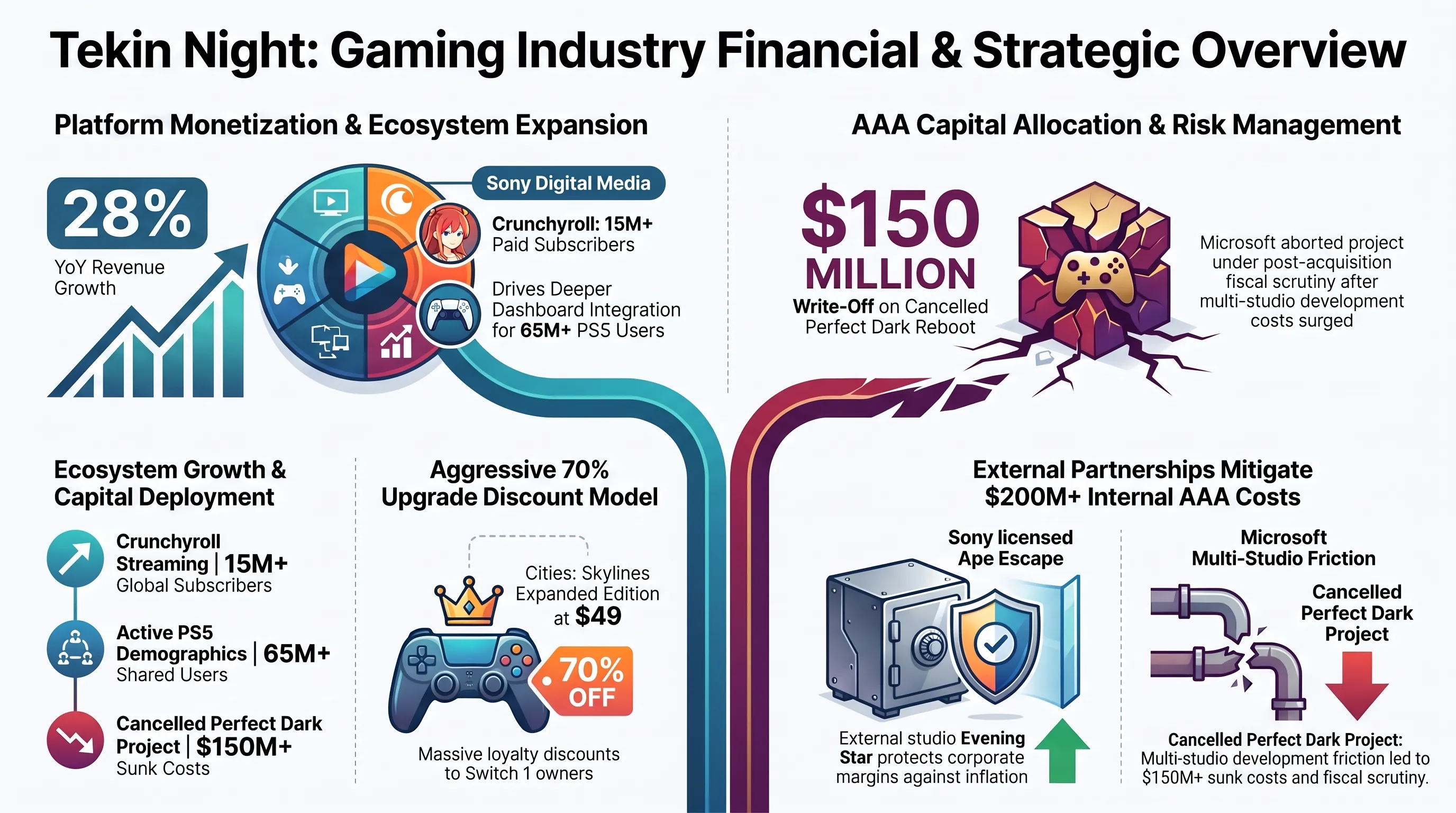
The package represents extraordinary consumer value by bundling ten of the franchise's most iconic expansions including After Dark, Snowfall, Natural Disasters, Green Cities, Industries, and Sunset Harbor directly into the base package at launch. While the standalone game carries a standard retail price of $49, Paradox has introduced an aggressive 70% loyalty upgrade discount for existing Switch 1 owners active through April 2027. In an era where console players have grown weary of performance compromises, this ambitious release serves as definitive technical validation of the Switch 2's capacity to deliver uncompromising, complex simulation experiences on the move.
Behind the scenes, rendering a dynamic metropolis of hundreds of thousands of individual citizens requires massive parallel computation. Each virtual commuter possesses an individual daily schedule, navigating public transit networks, commercial logistics arteries, and fluctuating electricity grids in real-time. By utilizing the 12 gigabytes of high-bandwidth LPDDR5X unified memory found in the Switch 2, Tantalus Media has eradicated memory paging stutters, proving that the handheld hybrid platform has matured into a genuine powerhouse capable of hosting sophisticated simulation engines without cutting corners.
Transmedia Convergence on PlayStation: Sony Directs Dedicated Crunchyroll Hub to the PS5 Dashboard
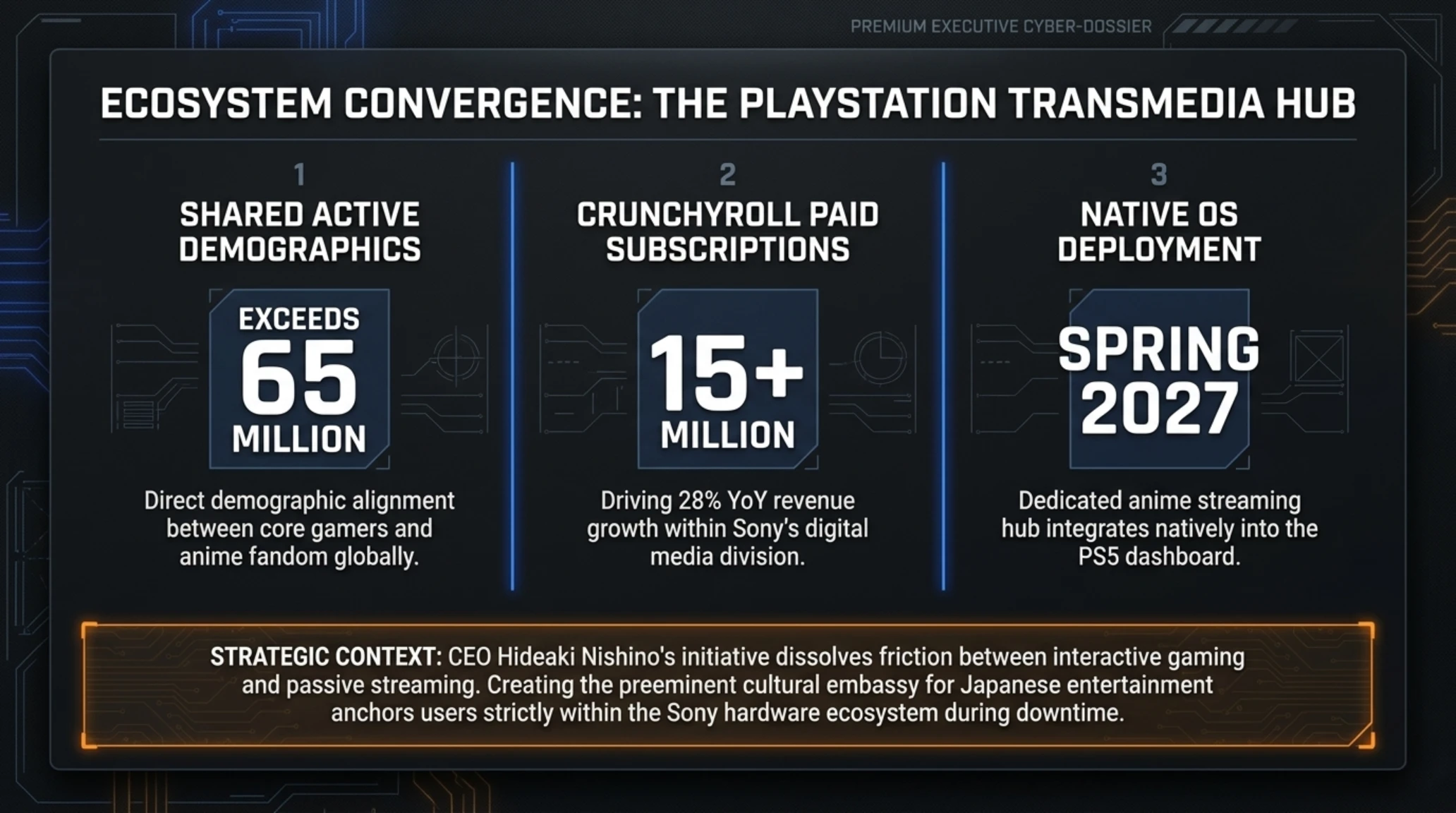
During the headline keynote of the prestigious Crunchyroll Anime Future Forum on October 7, 2026, Sony Interactive Entertainment (SIE) Chief Executive Officer Hideaki Nishino unveiled one of the most consequential ecosystem convergence roadmaps in recent console history: the native, operating-system-level integration of a dedicated Anime Hub directly into the primary PlayStation 5 dashboard, officially launching globally in Spring 2027.
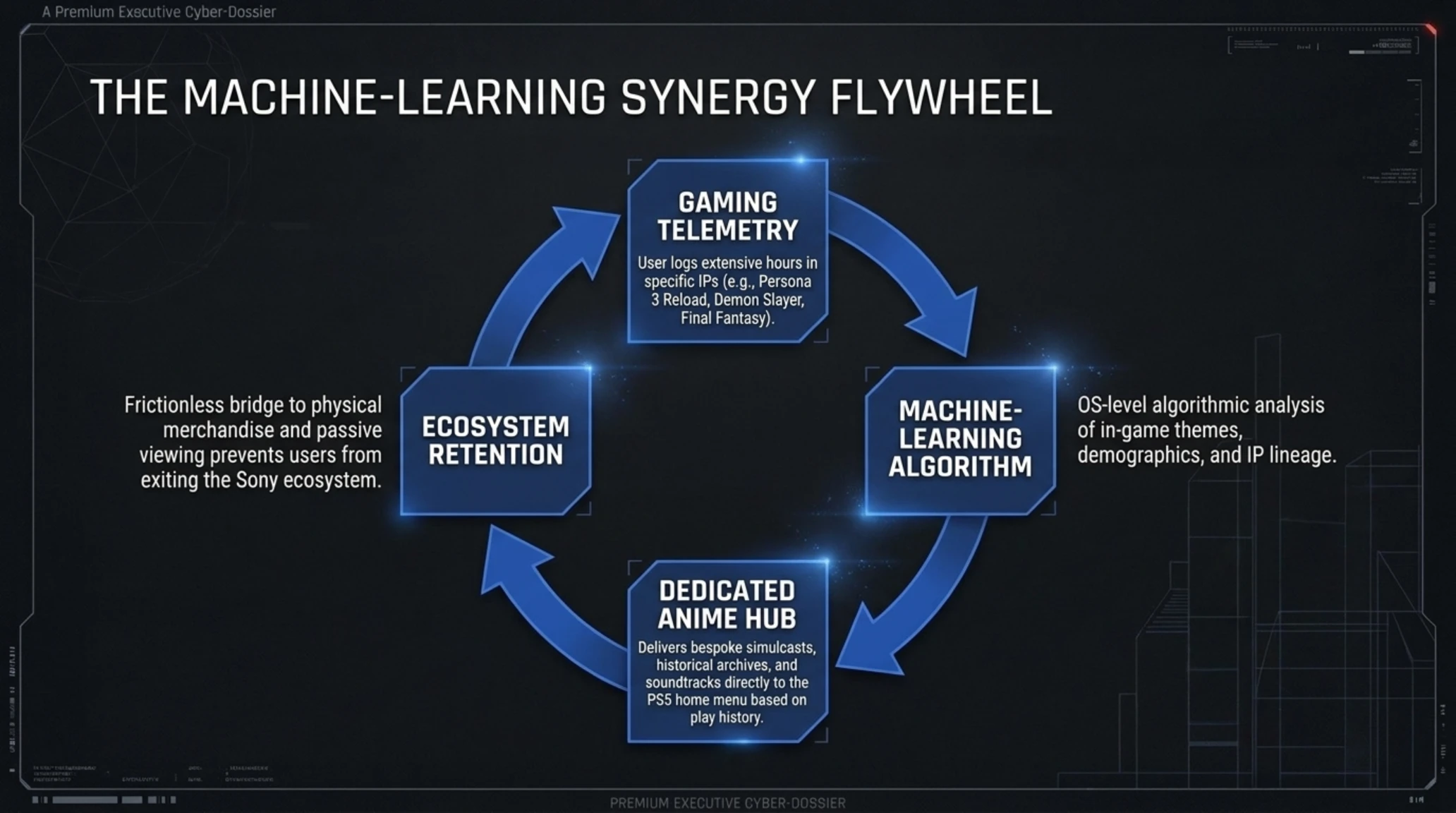
This initiative represents far more than an optimized launcher shortcut for a standalone streaming client. Sony is methodically dissolving the traditional friction between interactive gaming and passive anime consumption. When the spring system software update deploys, PS5 owners will discover a dedicated content tab situated prominently on their home screen. Users can immediately stream ongoing seasonal simulcasts, preview animated trailers, stream official soundtrack albums, and browse complementary video game adaptations all without exiting their active gaming sessions or suspending system-level processes.
📚 Classified & Related Dossiers in TekinGame
If you wish to explore beyond this report and delve into cybernetic frontiers and autonomous AI architectures, do not miss these three exclusive deep-dives in the Tekin Garage:
Ecosystem Telemetry: PlayStation & Crunchyroll Synergistic Dashboard
| Strategic Growth Indicator | Corporate Valuation | Macro Industry Significance |
|---|---|---|
| Shared Active User Demographics | Exceeds 65 Million Globally | Direct alignment between core gamers and anime fandom |
| Crunchyroll Paid Subscriptions | Surpassing 15 Million Subs | 28% YoY revenue growth in Sony's digital media division |
| PS5 Native Hub Deployment | Spring 2027 System Update | Frictionless bridge between merchandise, gaming, and streaming |
Crucially, the hub employs machine-learning recommendation algorithms that analyze a user's on-console gaming telemetry. For instance, a player immersed in Persona 3 Reload, Demon Slayer, or Final Fantasy will automatically receive bespoke recommendations for related anime series, historical studio archives, and licensed spin-offs directly on their main dashboard. Nishino framed this architectural pivot as the ultimate realization of corporate synergy between Sony Interactive Entertainment, Sony Music Entertainment Japan, and Sony Pictures Entertainment. In an intensely competitive digital landscape where platform holders fight fiercely for user retention, transforming the PS5 into the preeminent cultural embassy for Japanese entertainment ensures users remain anchored within Sony's hardware ecosystem even during downtime between gaming sessions. This unified entertainment philosophy deeply resonates with the cinematic gaming boundaries explored in our feature on Hideo Kojima's Physint and the cinematic convergence of PlayStation.
Echoes of an Unfinished Espionage Vision: Cancelled Perfect Dark Reboot Gameplay Footage Surfaces Online
On October 8, 2026, an unexpected leak sent waves of collective fascination and profound sorrow through the global Xbox community. More than two minutes of pristine, high-fidelity gameplay footage from the cancelled reboot of Rare's legendary espionage franchise, Perfect Dark, surfaced across the internet. Unearthed by investigative outlet MP1st from the online digital design portfolio of a former senior visual effects artist, the leaked footage offers an unprecedented window into a lavish AAA project that was unceremoniously cancelled in July 2025 during Microsoft's restructuring wave and the subsequent dissolution of Santa Monica studio The Initiative.
The leaked sequences reveal that the developers were crafting an intensely kinetic, ninth-generation first-person tactical thriller set against the backdrop of an eco-sci-fi, climate-ravaged Cairo. Protagonist Joanna Dark is seen executing fluid acrobatic maneuvers that blur the line between Mirror's Edge-style momentum and intense tactical shooting. The footage showcases wall-running across solar-paneled glass skyscrapers, rapid knee-slides beneath concrete debris, dynamic hand-to-hand grapple takedowns, and pinpoint marksmanship utilizing the franchise's iconic Falcon pistol, a tactical pump shotgun, and a devastating rotary grenade launcher.
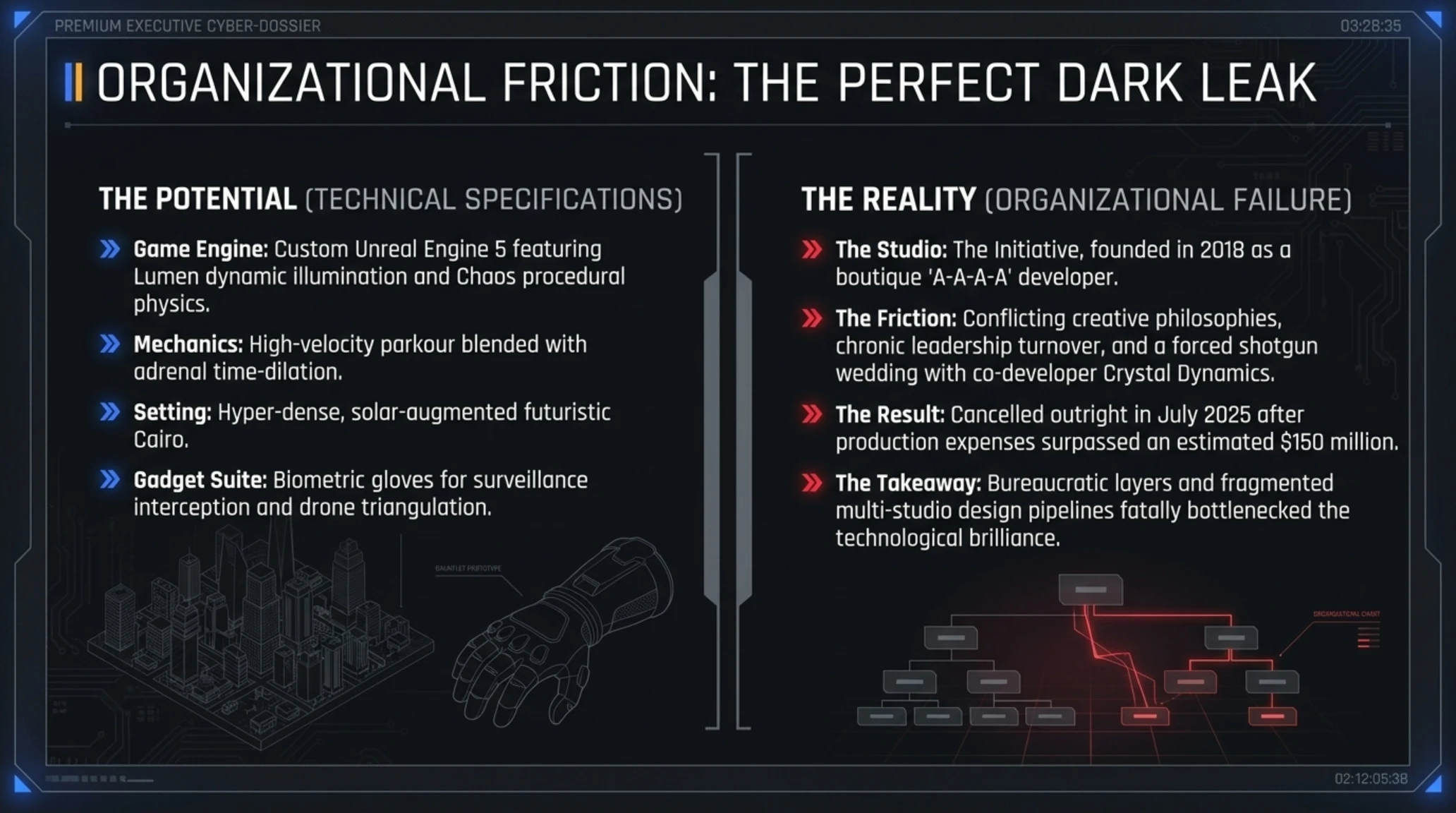
Technical Architectural Matrix: Leaked Perfect Dark Prototype
| Engineering Subsystem | Leaked Prototype Specification | Tactical Gameplay Impact |
|---|---|---|
| Engine & Physics | Custom Unreal Engine 5 + Lumen & Chaos Physics | Real-time ballistic destruction of drywall and office interiors |
| Mobility & Combat | High-velocity first-person parkour + Time-Dilation | Wall-running across solar skyscrapers and sliding under debris |
| Espionage Gadgetry | Iconic Falcon Pistol, Biometric Gloves & Drones | Remote surveillance interception and enemy patrol triangulation |
| World-Building | Eco-futuristic, climate-ravaged Cairo setting | Stark contrast between solar megastructures and desert storms |
Beyond raw combat mechanics, the prototype demonstrated sophisticated physics destruction routines powered by Unreal Engine 5's Chaos system, where drywall and interior office furnishings shattered realistically under sustained ballistic impacts. Joanna was also equipped with biometric hacking gloves capable of dynamically disabling surveillance networks and triangulating enemy patrol vectors through solid architecture. The sheer technical polish and mechanical ambition present in the leaked build immediately reignited ferocious debates across social forums regarding Microsoft's handling of its premier first-party intellectual property portfolio.
Industry historians and veteran analysts point out that the demise of Perfect Dark was fundamentally rooted in structural organizational failure rather than creative bankruptcy. Founded in 2018 as a boutique "A-A-A-A" studio, The Initiative aggressively recruited industry superstars from Naughty Dog, Sony Santa Monica, Respawn Entertainment, and Blizzard. However, conflicting creative philosophies, chronic leadership turnover, and the subsequent shotgun wedding with co-developer Crystal Dynamics created debilitating bureaucratic layers and fragmented design pipelines. While early cinematic vertical slices promised a transcendent leap forward, coordinating large-scale asset development across disparate geographic studios introduced paralyzing communication bottlenecks.
By the time production expenses surpassed an estimated $150 million, Microsoft leadership increasingly constrained by post-acquisition fiscal scrutiny across its expanded gaming portfolio opted to cancel the project outright rather than endure another three-year development cycle. The newly unearthed gameplay footage serves as a bittersweet monument to what could have been a defining espionage masterpiece, demonstrating that while the vision and underlying technological brilliance were undeniably present, organizational cohesion remains the true lifeblood of modern interactive entertainment.
Primate Shenanigans Reborn: Sony Entrusts Ape Escape Revival to Sonic Mania Veterans Evening Star
In an unexpected and delightful revelation that has ignited pure nostalgia across the global PlayStation community, corroborated reports authored by veteran gaming journalist Jeff Gerstmann and confirmed by investigative sources at Video Games Chronicle (VGC) on October 8, 2026, revealed that Sony Interactive Entertainment has officially greenlit a brand-new, full-fledged installment in the cherished 3D platforming franchise, Ape Escape. Even more thrilling for platforming purists, development duties have been entrusted to independent boutique studio Evening Star.
Founded by lead engineer Christian Whitehead and the key creative visionaries behind the universally acclaimed Sonic Mania and the dynamic 3D kinetic platformer Penny’s Big Breakaway, Evening Star has earned a stellar reputation as one of the industry's premier authorities on momentum-based level design, tight character physics, and buoyant animation stylings. According to Gerstmann, the revival entered confidential pre-production in early 2026 following successful technical proof-of-concept demonstrations. The new game is being designed from the ground up to reimagine the franchise's pioneering dual-analog net-swinging and gadget mechanics around the tactile fidelity of the PlayStation 5 DualSense wireless controller leveraging advanced haptic rumble and adaptive trigger resistance to simulate the thrashing struggles of captured primates with astonishing nuance.
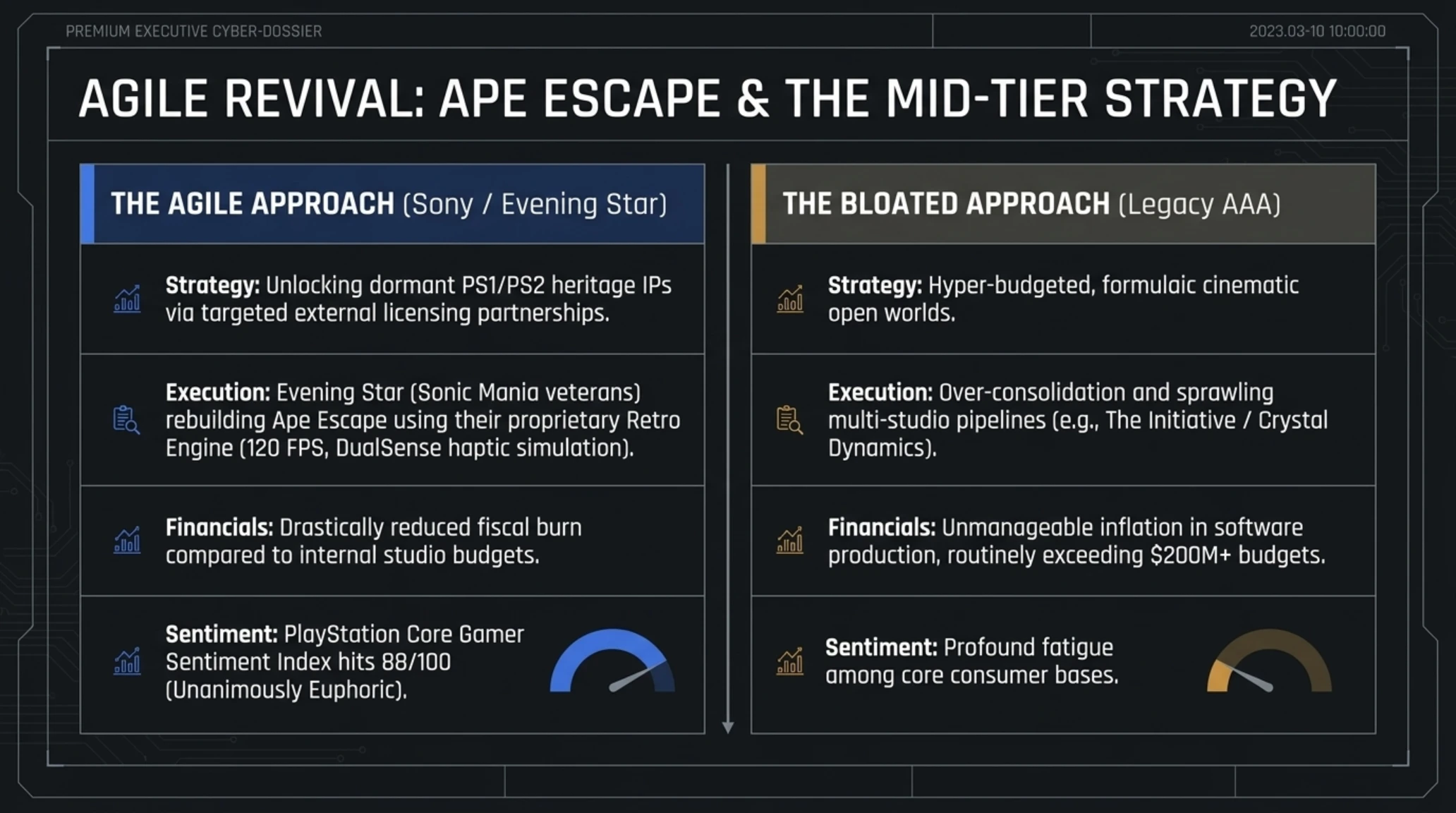
Community Sentiment Gauge & S-Curve: The Renaissance of Mid-Tier Gems
Radial Gauge & S-Curve Analysis: Global fan response (88/100) underscores profound fatigue with hyper-budgeted, formulaic open worlds and an insatiable hunger for vibrant, pure-gameplay experiences. By delegating heritage IPs to agile external studios like Evening Star, Sony reduces fiscal burn while enriching catalog diversity.
From an executive strategy standpoint, this greenlight signals a profound and welcome paradigm shift within PlayStation leadership. Rather than burdening internal AAA powerhouse studios such as Team Asobi, Insomniac Games, or Naughty Dog whose gargantuan production budgets exceed $200 million and necessitate multi-year dev cycles Sony is aggressively unlocking its dormant treasure trove of legendary PS1 and PS2 era intellectual properties through targeted external licensing partnerships. This strategy not only protects corporate margins against ballooning inflation in software production but also allows beloved classics like Ape Escape, Jak and Daxter, and Syphon Filter to return with fresh, uncompromised artistic visions. This pragmatic cross-industry evolution aligns directly with the tectonic publisher shifts analyzed in our investigative feature on the historic leak of Forza Horizon 6 on PlayStation 5 and the collapse of traditional console exclusivity boundaries.
Furthermore, technical insiders indicate that Evening Star's proprietary Retro Engine evolution tailored specifically for modern 3D traversal will allow the new Ape Escape to deliver blistering 120 FPS performance modes, vibrant stylized cel-shaded art directions, and inventive gadget physics. Players can look forward to navigating intricate, vertical sandbox environments packed with mischievous monkey adversaries boasting specialized AI behavior routines, comedic disguise algorithms, and dynamic escape routes, effectively restoring the franchise to its rightful throne as an essential staple of creative console gaming.
- Resounding revival of nostalgic legacy franchises paired with the masterclass design philosophy of Evening Star.
- Cities: Skylines Expanded Edition on Switch 2 delivers full 25-tile simulation with mouse and keyboard versatility.
- Proactive security awareness from Ethereum core researchers offering a clear operational playbook with Bunker Mode.
- Unmasking of the PoeLLM botnet delivers invaluable threat intelligence for securing enterprise AI deployments globally.
- Heartbreaking missed opportunity witnessed in the cancelled Perfect Dark reboot gameplay footage.
- Operational risks and human errors inherent in rushed cryptocurrency migrations prompted by theoretical AI fears.
- Persistent exploitation of enterprise cloud GPU clusters for clandestine cryptocurrency mining operations.
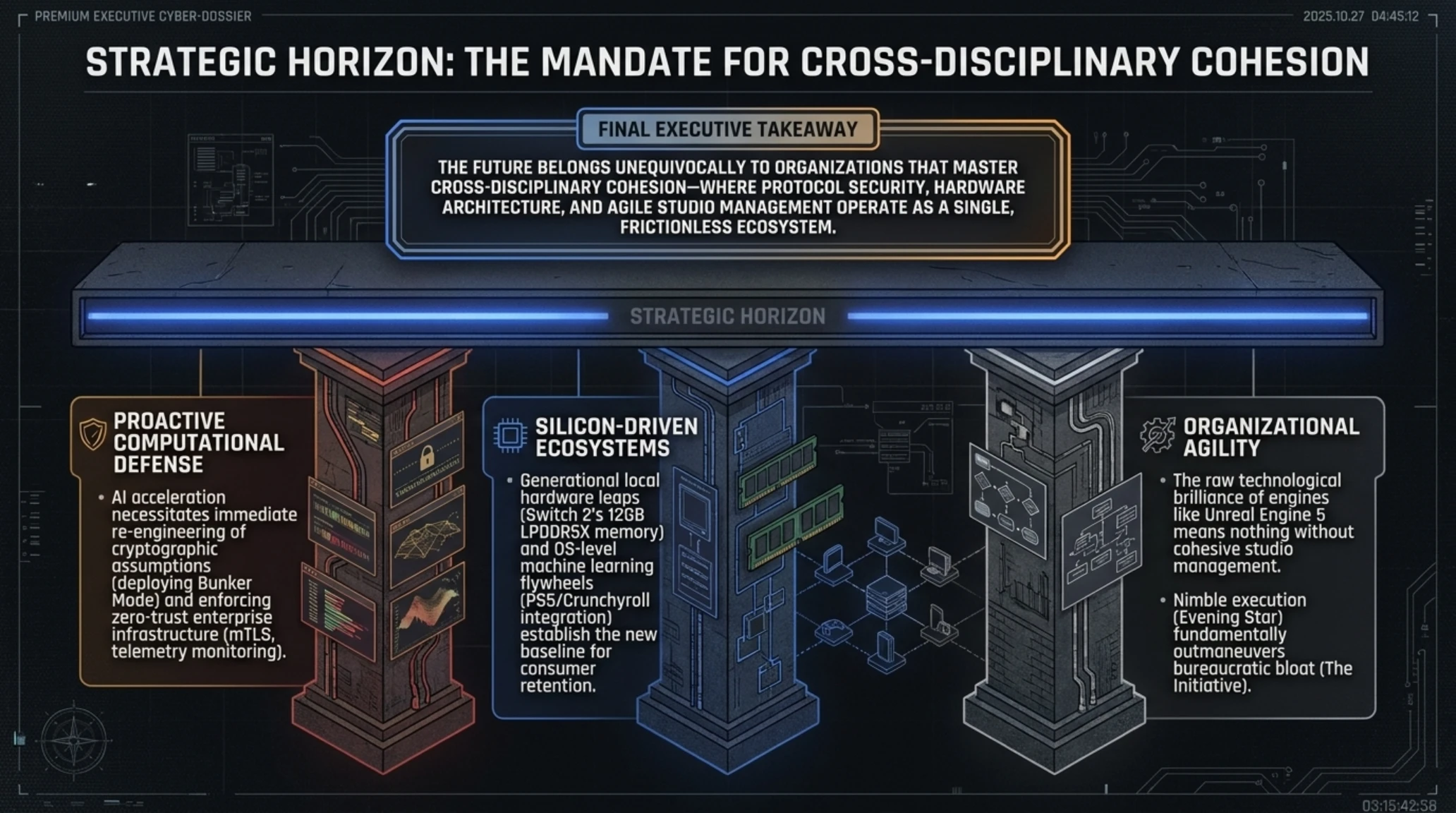
Executive Synthesis: The Strategic Horizon of Friday Evening
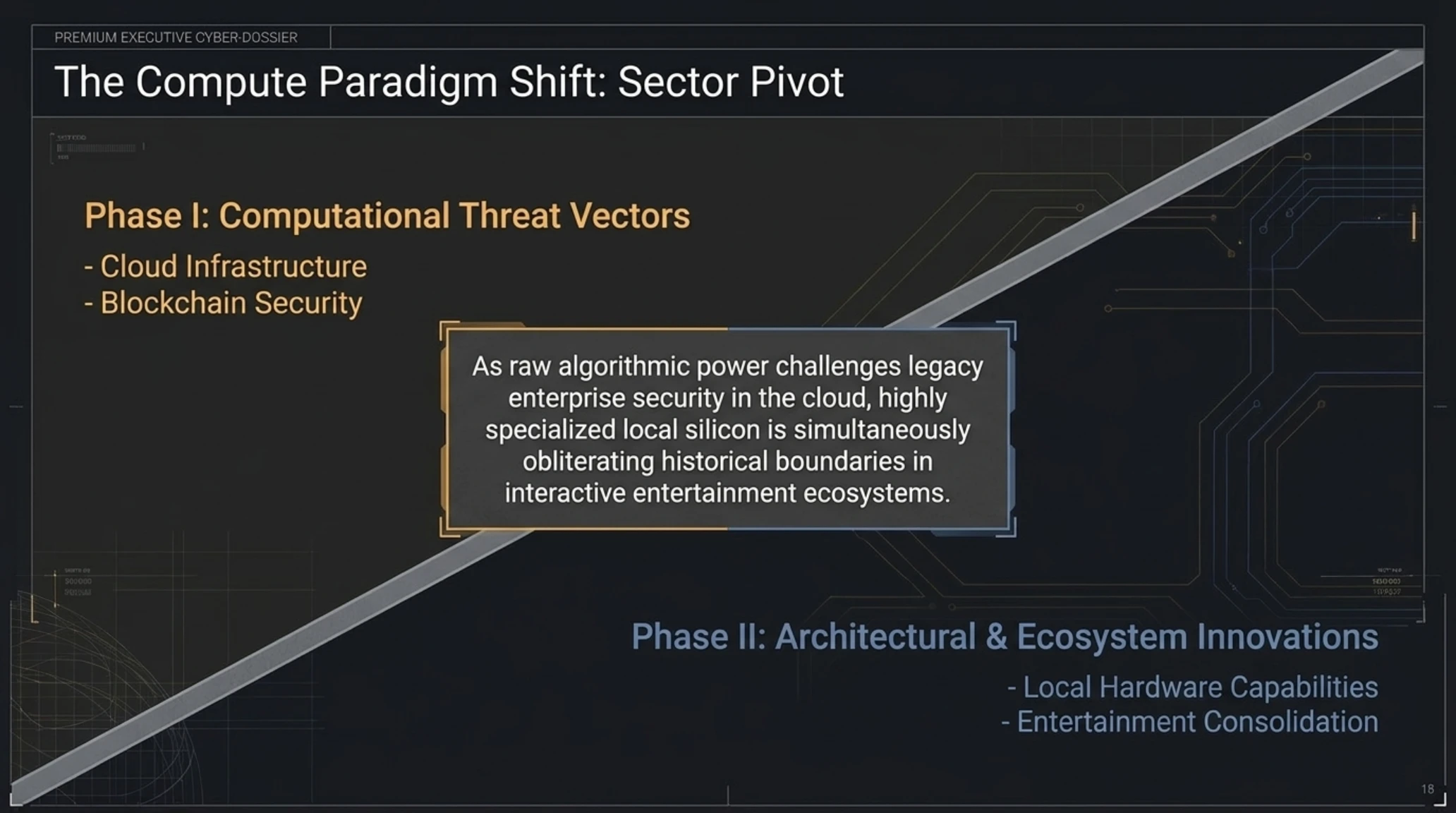
The seismic developments of Friday evening, October 9, 2026, converge on two undeniable technological truths. In the computational arena, the explosive acceleration of artificial intelligence has moved beyond content generation to directly challenge foundational assumptions in algebraic cryptography and cloud server security. Simultaneously, within the gaming arena, commercial agility and ecosystem integration have become the ultimate differentiators.
Verified Intelligence Sources for This Tekin Night Edition
- Decrypt: Ethereum Researchers Warn of AI Cracking Crypto Signatures Ahead of Quantum Q-Day
- Bleeping Computer: PoeLLM Malware Infects 3,400+ Enterprise AI Infrastructure Deployments in Covert Campaign
- GameSpot: Paradox Interactive Reveals Cities: Skylines - Expanded Edition for Nintendo Switch 2
- Push Square: Sony Announces Dedicated Anime Hub Integrated Directly into the PS5 Main Menu in Spring 2027
- Eurogamer: Over Two Minutes of Cancelled Perfect Dark Reboot Gameplay Footage Leaks Online
- VGC: Sony Greenlights Ape Escape Revival Developed by Sonic Mania Creators at Evening Star
Frequently Asked Questions: Deconstructing the Events of October 9, 2026
What exactly is Bunker Mode, and why did Ethereum researchers advocate for it?
Bunker Mode is a defensive capital preservation practice that encourages crypto holders and institutional funds to migrate digital assets into pristine, unspent wallet addresses. Because virgin addresses reveal only a cryptographic hash digest (Keccak-256 or SHA-256) rather than an exposed public key, they remain mathematically shielded against emerging AI-accelerated mathematical cryptanalysis algorithms.
How does the PoeLLM botnet exploit classical literature on GitHub to maintain stealth?
PoeLLM bypasses enterprise firewall scrutiny by fetching public GitHub repositories featuring Renaissance poetry. By cross-referencing specific words with an internal cryptographic dictionary, the malware reconstructs the threat actors' actual command-and-control IP address, allowing operators to shift server infrastructure globally with zero firewall alert triggers.
What major improvements does Cities: Skylines Expanded Edition introduce on Nintendo Switch 2?
The Expanded Edition expands the urban building grid from 9 tiles to 25 fully contiguous tiles, introduces a smooth 60 FPS performance mode powered by Nvidia DLSS upscaling, bundles 10 complete expansions including Green Cities and Snowfall, and adds full native plug-and-play support for USB-C mouse and keyboard controls.
How will the dedicated Anime Hub integrate into the PlayStation 5 user experience?
Launching globally in Spring 2027, the hub integrates directly into the PS5 home screen. It eliminates the need to launch an external streaming application, offering instant episode playback, official soundtrack streaming, and contextual recommendation feeds influenced directly by the specific games installed on the user's console.
Why was the ambitious Perfect Dark reboot cancelled, and what did the leaked footage reveal?
The project was cancelled in July 2025 following Microsoft's corporate restructuring and the shutdown of studio The Initiative after production costs surpassed $150 million amid creative misalignment with co-developer Crystal Dynamics. The newly leaked footage demonstrated exhilarating acrobatic parkour, dynamic Unreal Engine 5 destruction, and polished gadget-driven espionage combat in a futuristic Cairo.
Why is Sony collaborating with independent studio Evening Star for the new Ape Escape?
Evening Star was founded by the legendary creators of Sonic Mania and Penny's Big Breakaway, giving them unrivaled expertise in momentum-based platforming and kinetic character animation. Entrusting the revival to an elite external boutique studio allows Sony to resurrect classic heritage franchises with low budgetary overhead and exceptional creative freedom.
Additional Gallery: Tekin Night | October 9, 2026: AI Threatens ECDSA Crypto, PoeLLM Botnet & Console Leaks