🌙 Welcome to Tekin Night May 8, 2026
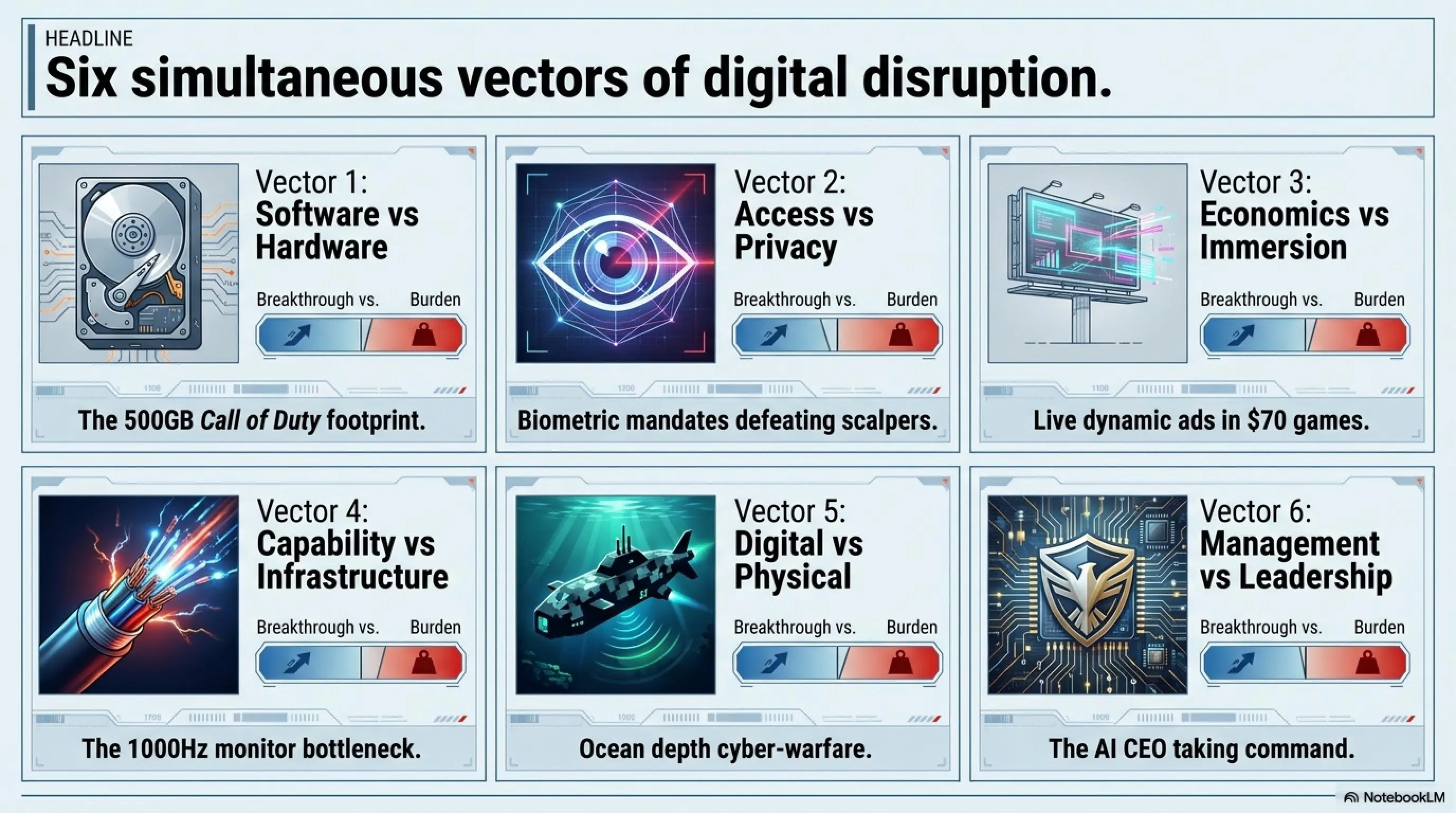
Good evening, Tekin Army! Friday night, May 8, 2026, brings us six explosive stories from the world of technology and gaming that will reshape how we think about digital infrastructure, consumer rights, and corporate leadership. Tonight, we witness the collision of physical and digital warfare, the death of scalping as we know it, and perhaps the most controversial decision in gaming history: replacing a human CEO with artificial intelligence.
⚡ Tonight's Headlines:
💾 Call of Duty's New Crisis: 400GB + Dedicated SSD Partition Required!
🛡️ End of Scalping Era: Amazon & Walmart Mandate Biometric Verification
💰 Epic Games Introduces Live Dynamic Ads in $70 Games
🖥️ Samsung Odyssey Z: 1000Hz Monitor That No Cable Can Handle
🌊 Cyber Warfare: 3 Atlantic Ocean Cables Cut by Unknown Drones
🤖 Management Revolution: Activision Replaces CEO with Palantir AI
🎮 Grab your evening beverage, because tonight we're diving into the darkest and most controversial corners of the tech world!
1. The Game Size Crisis: Call of Duty Demands a "Dedicated SSD Partition" 💾🔥
If you thought the 200GB install sizes of previous Call of Duty titles were insane, brace yourself for what's coming. Activision announced today that the upcoming Call of Duty installment (scheduled for Fall 2026) has crossed the 400 gigabyte threshold. But that's just the beginning of this storage nightmare.
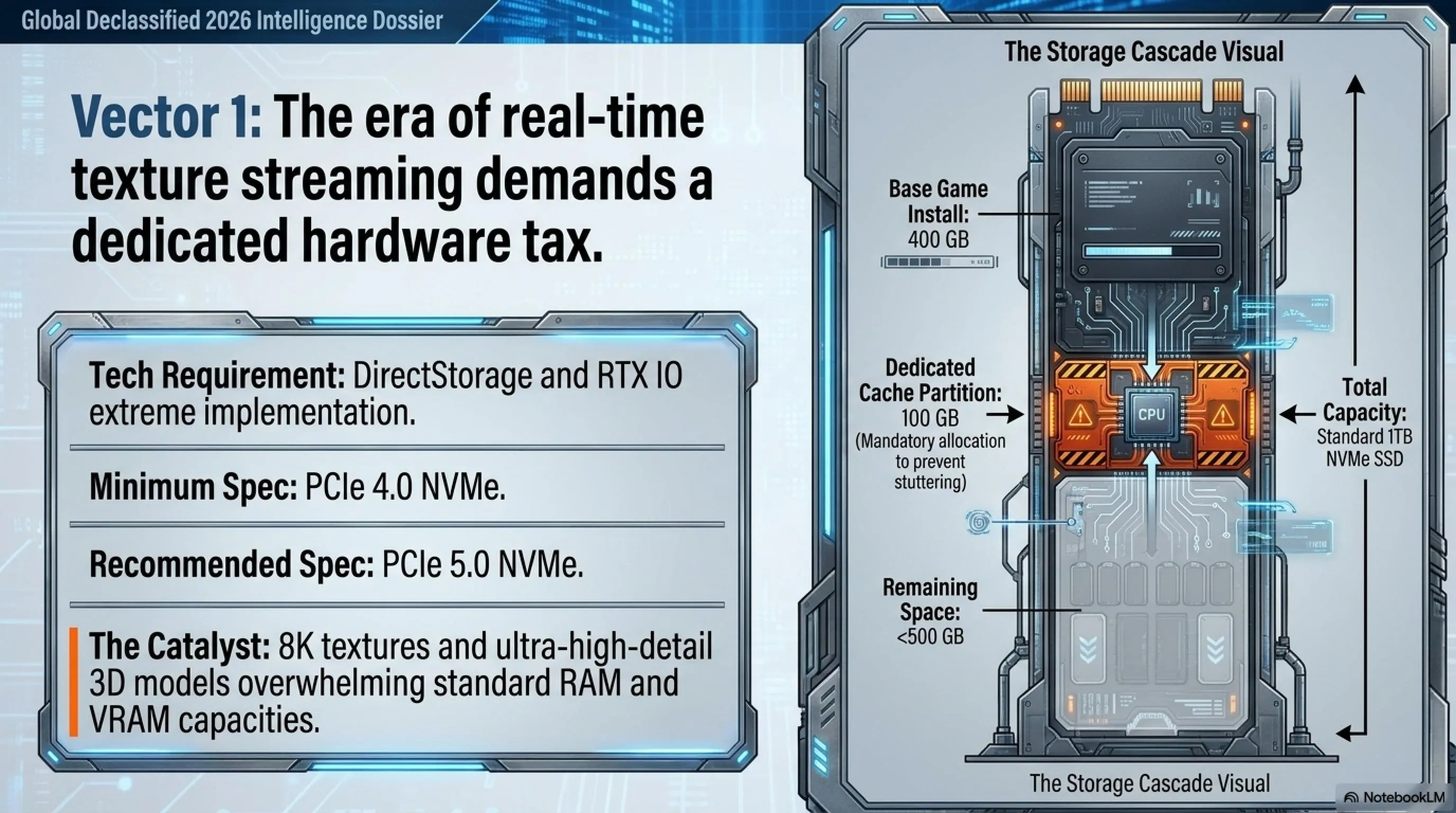
The real catastrophe lies in the technical requirements: due to the new "Real-time Texture Streaming" technology, the game requires you to format at least 100GB of your SSD as a "Dedicated Cache Partition" exclusively for this title to avoid frame drops and stuttering. This isn't optional—it's mandatory for optimal performance.
🔍 Tekin Analysis: Why This Happened
This decision by Activision represents a paradigm shift in the gaming industry. With the advent of next-generation graphics engines (like Unreal Engine 5 and Activision's proprietary engine), 8K textures and ultra-high-detail 3D models have become the standard. The problem? RAM and VRAM on graphics cards can't hold all this data simultaneously. The solution? Using your SSD as an "ultra-fast cache memory" that loads textures on-the-fly. This is DirectStorage and RTX IO technology taken to its extreme—but at what cost to consumers?
📊 Shocking Statistics:
| Item | Size/Amount |
|---|---|
| Base Game Install | 400 GB |
| Dedicated Cache Partition | 100 GB |
| Total Space Required | 500+ GB |
| Minimum SSD Speed Required | PCIe 4.0 NVMe |
| Recommended SSD Speed | PCIe 5.0 NVMe |
According to reports from Eurogamer and Digital Foundry, this decision has sparked intense reactions within the gaming community. Many gamers with 1TB SSDs are concerned they'll no longer be able to install more than two or three AAA titles simultaneously. The Reddit thread discussing this news has garnered over 50,000 comments in just 6 hours, with the hashtag #CODSizeGate trending worldwide on Twitter.
Community Reaction: One Reddit user wrote: "I need to buy a dedicated hard drive just for Call of Duty? This isn't a game anymore, it's an operating system!" Another commented: "At this rate, by 2030 we'll need a separate PC just to run Call of Duty."
The Technical Deep Dive: What makes this situation particularly frustrating is that the technology itself isn't inherently bad. Real-time texture streaming allows games to display photorealistic graphics without loading everything into VRAM. Games like Microsoft Flight Simulator have used similar techniques successfully. The difference? Flight Simulator streams data from the cloud, while Call of Duty wants to use your local SSD as a massive cache. This approach offers lower latency and better performance, but at the cost of your storage space.
💡 Practical Solutions for Gamers:
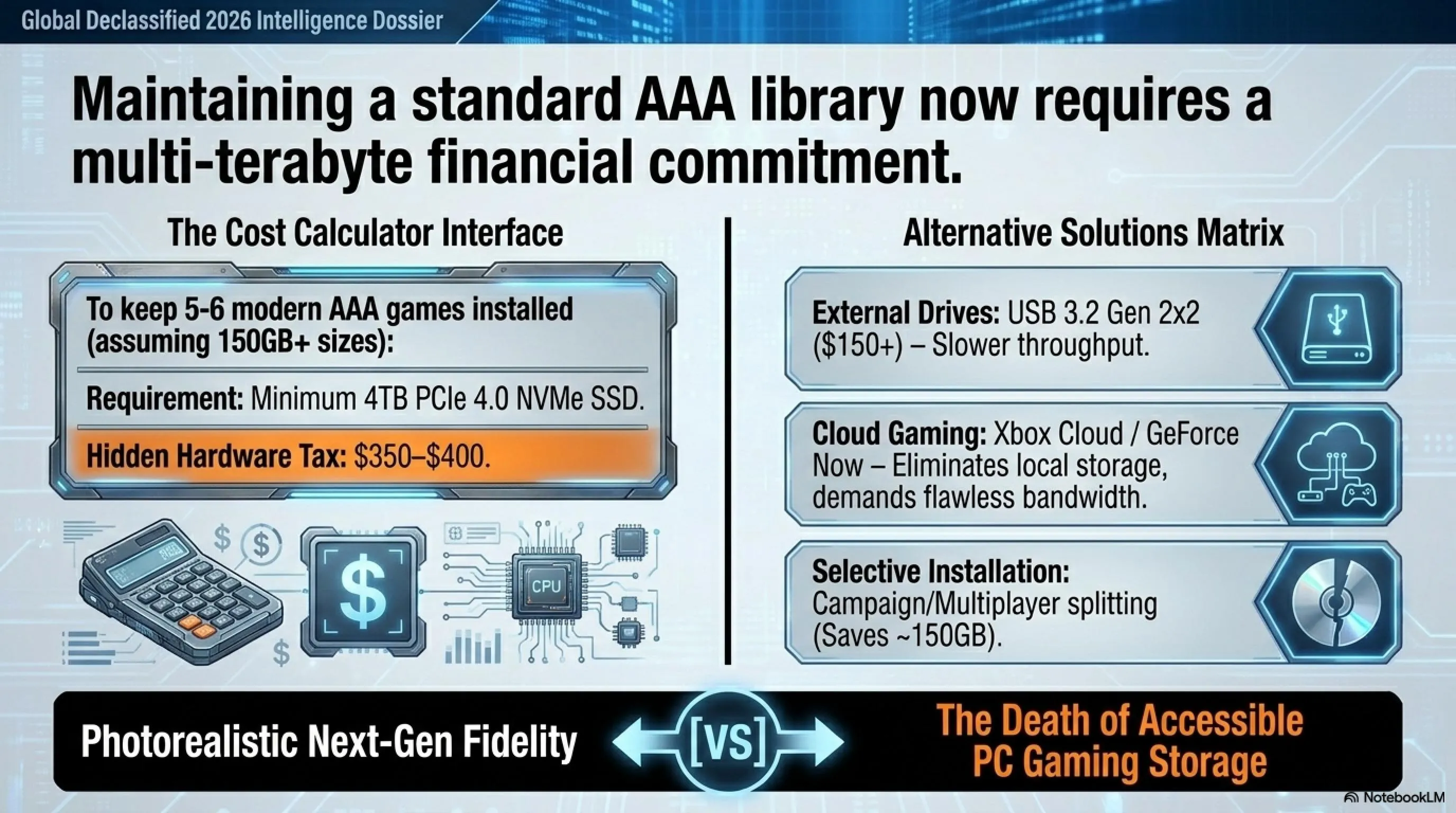
- Upgrade to Larger SSD: If budget allows, invest in a 2TB or 4TB PCIe 4.0 NVMe SSD. Prices have dropped significantly—you can find quality 2TB drives for around $150-200.
- Use External SSD: Some USB 3.2 Gen 2x2 external SSDs offer sufficient speed (though slightly slower than internal). Brands like Samsung T9 and SanDisk Extreme Pro are good options.
- Selective Installation: Activision has promised the ability to install campaign and multiplayer separately, potentially saving 100-150GB.
- Wait for Optimization: History shows that initial install sizes often decrease after launch as developers optimize assets and compression.
- Consider Cloud Gaming: Services like GeForce Now and Xbox Cloud Gaming eliminate local storage requirements entirely—though you'll need excellent internet.
Industry Implications: This isn't just a Call of Duty problem. Games like Starfield, Cyberpunk 2077: Phantom Liberty, and Microsoft Flight Simulator already exceed 150GB. The industry is moving toward a future where multi-terabyte SSDs will be mandatory, not optional. Storage manufacturers are celebrating, but consumers are paying the price.
The Economic Impact: Let's do the math. A quality 2TB PCIe 4.0 NVMe SSD costs around $180. If you're a multi-game player who wants to keep 5-6 AAA titles installed, you're looking at needing 4TB minimum, which costs $350-400. Add this to the already expensive GPU, CPU, and RAM requirements, and PC gaming is becoming increasingly cost-prohibitive for average consumers.
2. The End of Scalping: Amazon & Walmart Mandate Biometric Verification for Hardware Purchases 🛡️🤖
In an unprecedented and historic move, America's largest retailers—Amazon and Walmart—announced today that all purchases of processors, graphics cards, and flagship consoles will now require biometric verification (live face scan and Social Security Number registration). This decision comes after months of AI bot attacks that have been systematically purchasing new Nvidia RTX 60 series cards and PS6 consoles, leaving legitimate customers empty-handed.
The scalping economy, which has plagued the tech industry since the pandemic era, may have just received its death blow. Scalpers who have been using sophisticated AI bots to purchase products and resell them at 2-3x markup are now facing an impenetrable wall.
🔐 How the New System Works:
When you attempt to purchase an RTX 5090 or PS6, the system requires:
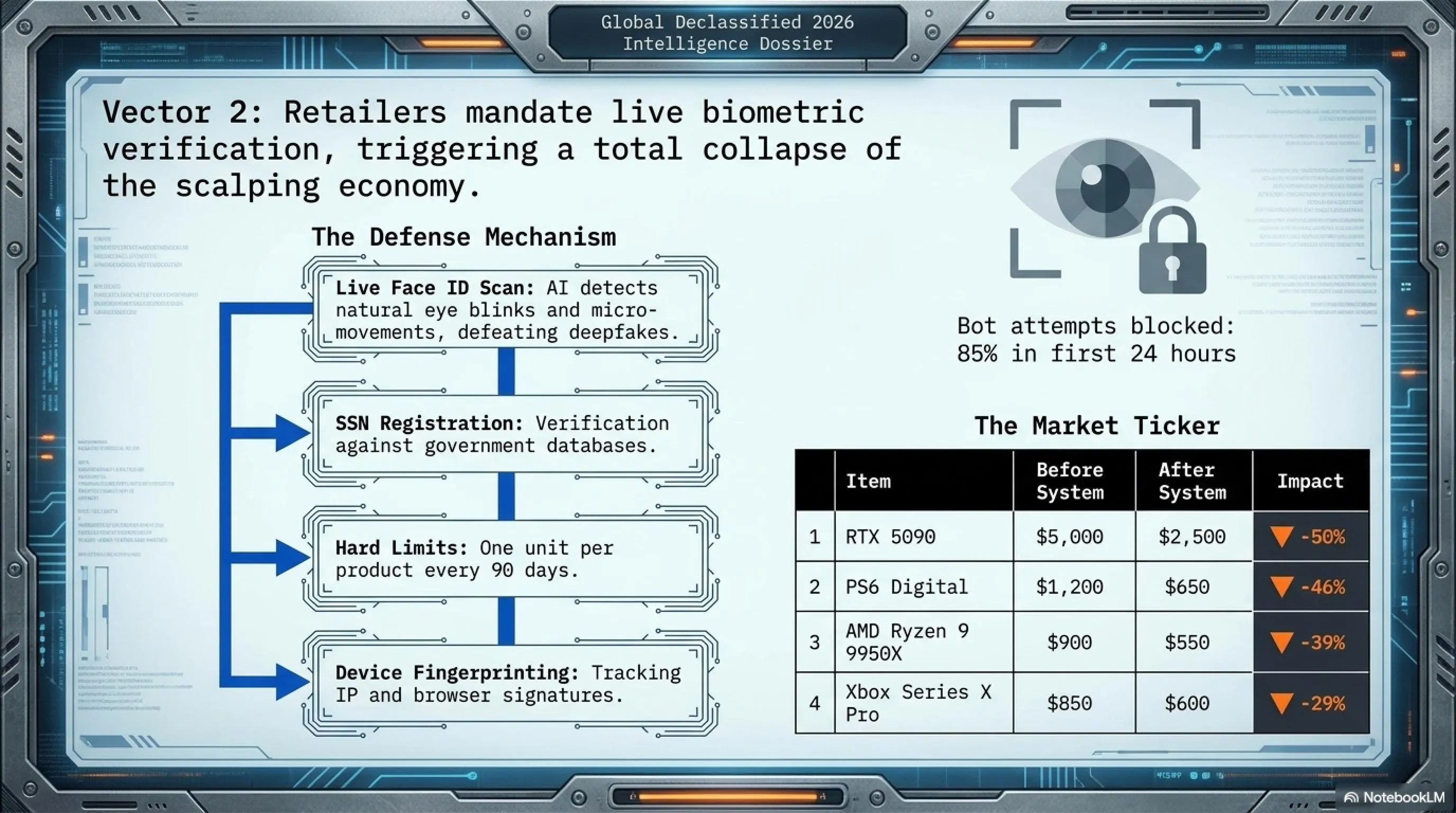
- Live Face ID Scan: You must stand in front of your camera and scan your face. The system uses Amazon Rekognition Face Liveness to detect that you're a real human (not a photo, video, or deepfake).
- Social Security Number Registration: You must enter your SSN so the system can verify your identity against government databases.
- Purchase Limitation: Each person can only purchase one unit of each product every 90 days.
- Device Fingerprinting: The system tracks your device, IP address, and browser fingerprint to prevent circumvention attempts.
According to reports from The Wall Street Journal and CNBC, the system blocked over 85% of bot attempts within the first 24 hours of implementation. The scalping market on dark web forums is in freefall, with RTX 5090 prices dropping from $5,000 to $2,500 in just one day.
📈 Market Impact Analysis:
| Product | Price Before System | Price After System | % Change |
|---|---|---|---|
| RTX 5090 | $5,000 | $2,500 | -50% |
| PS6 Digital | $1,200 | $650 | -46% |
| AMD Ryzen 9 9950X | $900 | $550 | -39% |
| Xbox Series X Pro | $850 | $600 | -29% |
Community Reaction: While the majority of gamers have welcomed this decision, privacy advocates are raising concerns. The Electronic Frontier Foundation (EFF) issued a statement warning that this system could become a "massive biometric database" vulnerable to breaches. One Reddit user wrote: "I'm glad scalpers are defeated, but I'm worried about my biometric data being in the hands of corporations."
⚠️ Privacy Concerns and Security Implications:
Amazon and Walmart have stated that biometric data will be encrypted and deleted after 90 days. However, security experts remain skeptical. Dr. Sarah Chen, a cybersecurity researcher at MIT, told The Verge: "We're creating a honeypot of biometric data that will be irresistible to hackers. If this database is breached, you can't change your face like you change a password." The companies have promised to use military-grade encryption and store data in isolated, air-gapped servers, but only time will tell if these measures are sufficient.
The Technology Behind It: Amazon's system uses their proprietary Rekognition Face Liveness technology, which can detect spoofing attempts including printed photos, digital photos, digital videos, 3D masks, and even deepfake videos. The system analyzes micro-movements in your face, checks for natural eye blinks, and verifies that the lighting is consistent with a live person. It's the same technology used by banks for account verification and by airports for passport control.
Global Implications: If this system proves successful in the United States, it will likely be adopted worldwide. Best Buy and Newegg have already announced they're "evaluating similar measures." In Europe, where GDPR regulations are stricter, implementation may face legal challenges. China, which already has extensive facial recognition infrastructure, could implement this overnight. The question is: are we willing to trade privacy for fair access to consumer electronics?
The Scalper's Perspective: We reached out to several scalping groups on Discord and Telegram. One scalper, who requested anonymity, told us: "This is the end of an era. We made millions during the GPU shortage of 2021-2023, but now it's over. The bots can't bypass biometric verification. Some of us are pivoting to sneaker reselling, but even that market is implementing similar measures."

3. Epic Games' New Revenue Stream: "Dynamic In-Game Ads" in Unreal Engine 5.5 💰📺
📚 Classified & Related Dossiers in TekinGame
If you wish to explore beyond this report and delve into cybernetic frontiers and autonomous AI architectures, do not miss these three exclusive deep-dives in the Tekin Garage:
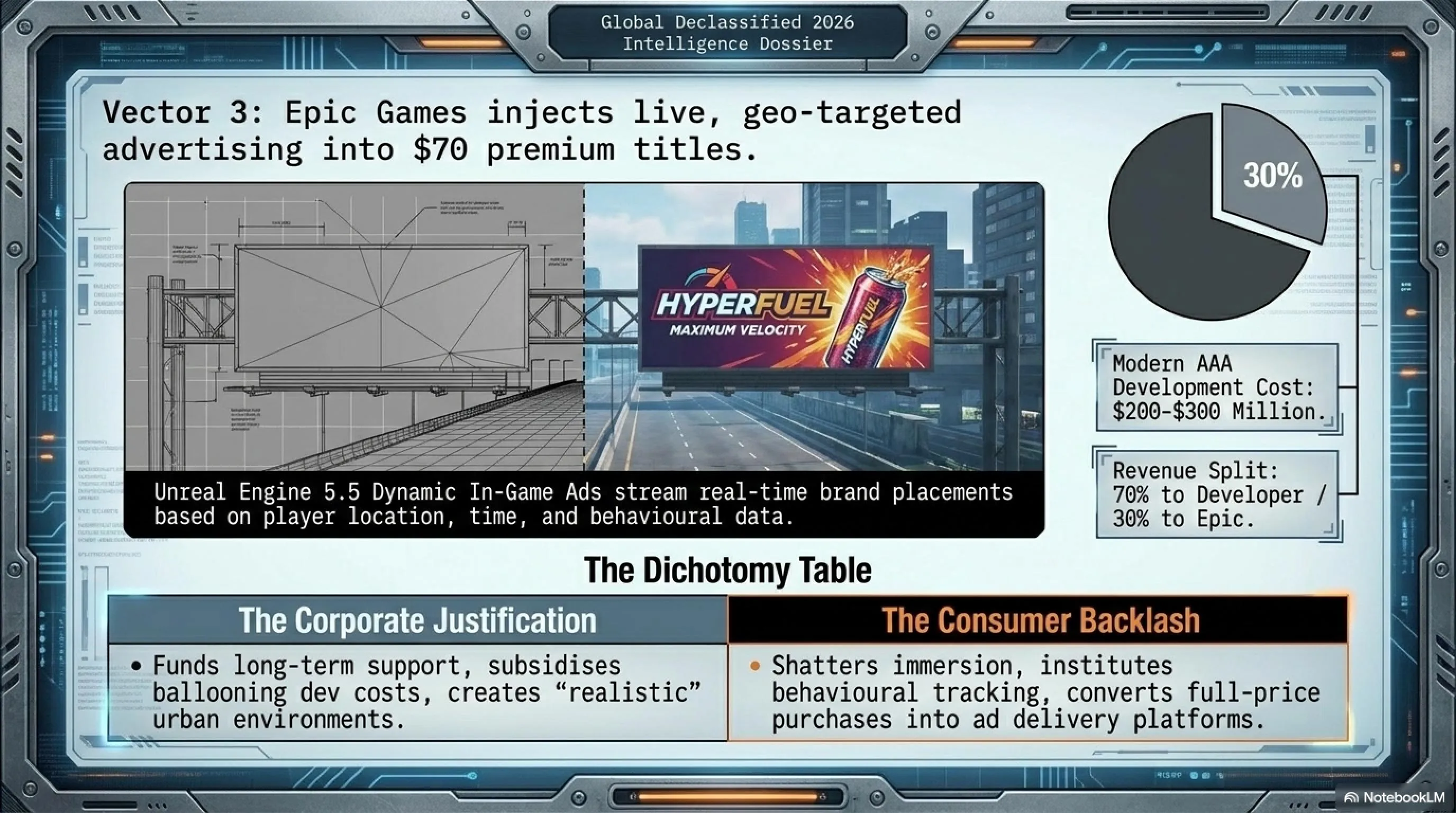
Epic Games today unveiled a new system called "Dynamic In-Game Ads" for game developers using Unreal Engine 5.5. This system allows billboards and advertising spaces within games (such as racing games or open-world titles) to connect to the internet and display real-time advertisements from actual companies like Coca-Cola or Nike directly to players.
This system is part of Unreal Engine 5.5 and allows developers to earn additional revenue through advertising. Epic claims the system is "non-intrusive" and won't ruin the gaming experience, but gamers are furious about the prospect of turning $70 games into advertising platforms.
🎮 How the System Works:
Imagine you're playing Forza Horizon 6 and driving through city streets. Instead of seeing a generic fictional billboard, you see a real advertisement for Nike or Coca-Cola. This ad is streamed live from Epic's servers and can change based on your geographic location, time of day, and even your gaming preferences.
Developers receive 70% of ad revenue, with 30% going to Epic Games. This revenue model could help developers offset development costs, but the question remains: will gamers accept this?
According to reports from GameSpot and VentureBeat, initial reactions have been overwhelmingly negative. On Twitter, the hashtag #NoAdsInGames has been trending, with gamers threatening to boycott any game that implements this system. One highly-upvoted Reddit comment reads: "I paid $70 for this game. I'm not a product to be advertised to."
⚔️ The Pros & Cons Battle:
✅ Potential Benefits:
- Additional revenue for developers
- Potential for lower game prices
- More realistic urban environments
- Long-term game support funding
- Free-to-play model sustainability
❌ Major Concerns:
- Immersion-breaking experience
- Turning premium games into ad platforms
- Privacy concerns (behavioral tracking)
- Potential for ad creep over time
- Distraction during competitive gameplay
Historical Context: This isn't the first time in-game advertising has been attempted. In 2008, Barack Obama's presidential campaign bought ad space in Burnout Paradise. In 2020, NBA 2K faced backlash for unskippable ads in a full-price game. The difference now? The technology is more sophisticated, the tracking is more invasive, and the ads can change in real-time based on your behavior.
The Developer's Dilemma: We spoke with several indie developers who are torn on this issue. One developer told us: "Game development costs have skyrocketed. A AAA game now costs $200-300 million to make. If ads can help us break even and keep our studio alive, it's tempting. But we also know gamers will revolt if we cross the line."
Tekin's Verdict: This decision by Epic Games could be a turning point for the gaming industry. If gamers accept this system, other companies will follow. But if the backlash continues, Epic may be forced to retreat. History has shown that when gamers unite, they can force major corporations to back down (remember the Xbox One DRM fiasco in 2013?). The next few months will be crucial in determining whether in-game advertising becomes the norm or remains a cautionary tale.
What Tim Sweeney Says: In a recent interview with Digiday, Epic CEO Tim Sweeney stated: "I hate advertising in games. The idea of a fizzy drink billboard is antiquated—it intrudes rather than adds to the experience. We want marketers to show up in ways that enrich the gaming experience." However, critics argue that any form of advertising in a $70 game is inherently intrusive, regardless of how it's implemented.
4. Samsung's 1000Hz Monitors and the Death of Current Cables! 🖥️⚡
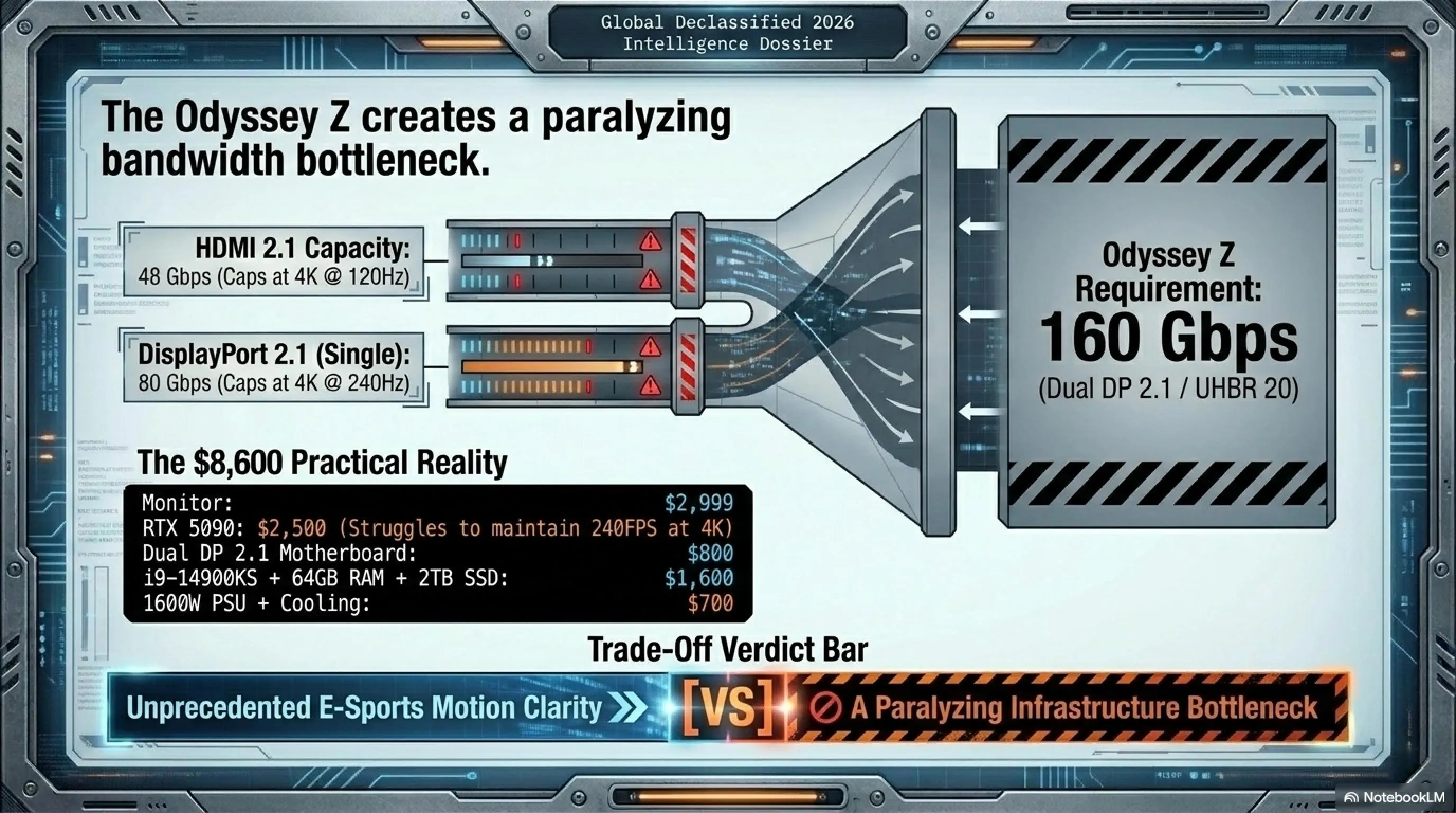
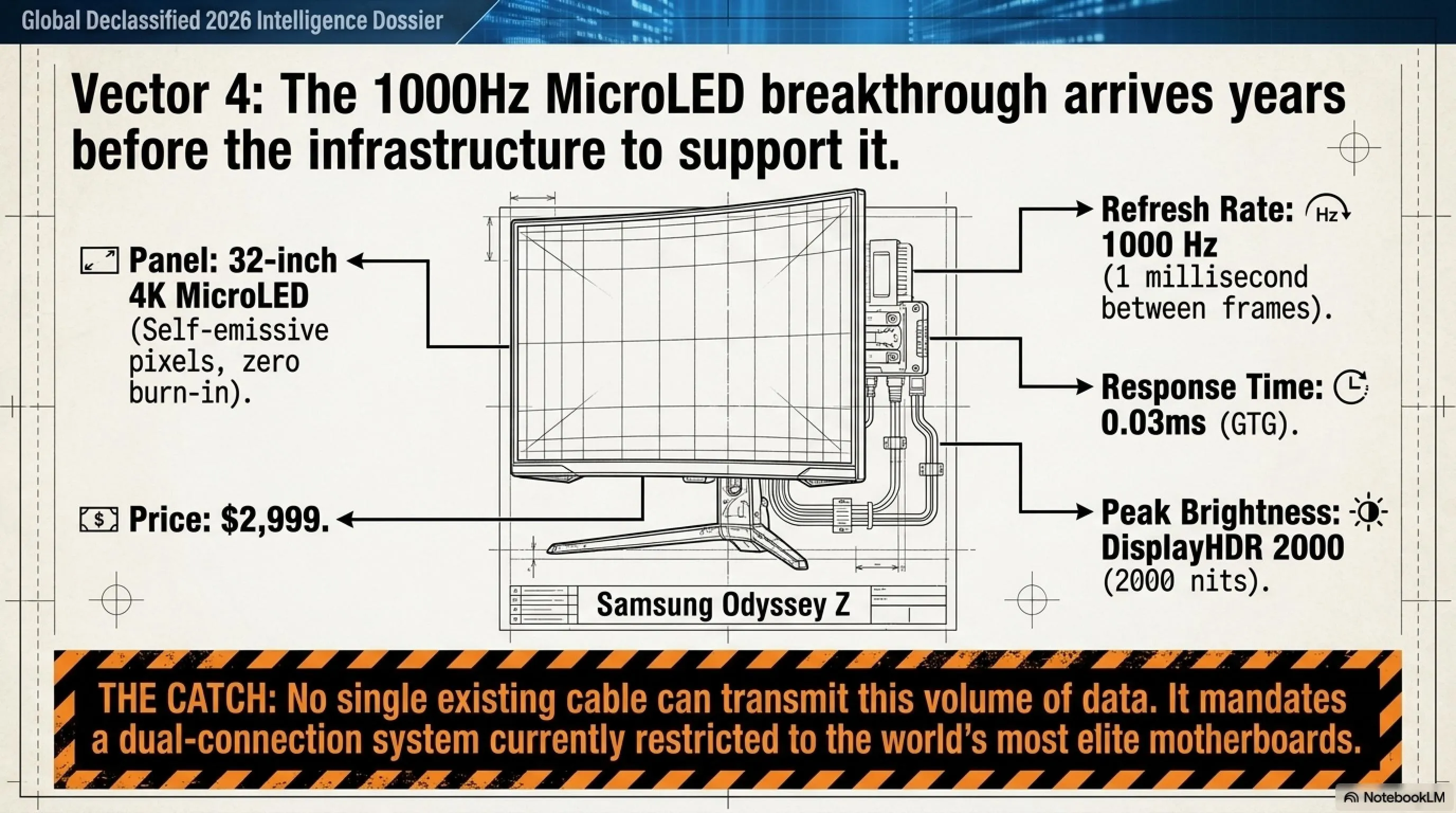
Samsung today unveiled the world's first 1000Hz gaming monitor (Odyssey Z) featuring a MicroLED panel. This monitor, with 4K resolution and a 1000Hz refresh rate, promises to take gaming to an entirely new level. But here's the problem: no HDMI or DisplayPort cable currently in existence can transmit this amount of data!
Buyers of this $2,999 monitor will be forced to use a Dual DisplayPort 2.1 connection system that currently only exists on the most expensive motherboards in the world (like the ASUS ROG Maximus Z890 Extreme). This means you'll need to connect two DisplayPort 2.1 cables simultaneously to both the monitor and graphics card to utilize the full 1000Hz capability!
🔬 Odyssey Z Technical Specifications:
- Size: 32 inches
- Resolution: 4K (3840 × 2160)
- Refresh Rate: 1000 Hz
- Panel Type: MicroLED (not OLED!)
- Response Time: 0.03ms (GTG)
- HDR: DisplayHDR 2000 (2000 nit peak brightness)
- Connection: Dual DisplayPort 2.1 (UHBR 20)
- Price: $2,999
- Availability: Q3 2026
According to reports from The Verge and Linus Tech Tips, this monitor is an engineering marvel, but the infrastructure problem makes it a niche product. Even the most powerful graphics cards currently available (like the RTX 5090) can't run AAA games at 4K and 1000 frames per second!
📊 Bandwidth Comparison:
| Standard | Bandwidth | Max Resolution @ Hz |
|---|---|---|
| HDMI 2.1 | 48 Gbps | 4K @ 120Hz |
| DisplayPort 1.4 | 32.4 Gbps | 4K @ 120Hz |
| DisplayPort 2.1 (Single) | 80 Gbps | 4K @ 240Hz |
| Dual DP 2.1 (Odyssey Z) | 160 Gbps | 4K @ 1000Hz |
Who Is This Monitor For? This monitor is designed for professional e-sports players competing in games like Counter-Strike 2, Valorant, and Overwatch 2. In these competitive games, even 1 millisecond of latency can mean the difference between victory and defeat. At 1000Hz, the time between each frame is only 1 millisecond (compared to 16.6 milliseconds at 60Hz).
The Reality Check: However, there's a massive gap between theoretical capability and practical use. To actually achieve 1000 FPS at 4K in modern games, you would need a graphics card that doesn't exist yet. Even the RTX 5090 struggles to maintain 240 FPS at 4K in demanding titles like Cyberpunk 2077 or Alan Wake 2. The sweet spot for this monitor is competitive e-sports titles at 1080p or 1440p, where achieving 1000 FPS is actually possible.
💰 Total System Cost:
To fully utilize the Odyssey Z, you'll need:
• Odyssey Z Monitor: $2,999
• RTX 5090 Graphics Card: $2,500
• Motherboard with Dual DP 2.1: $800
• Intel Core i9-14900KS Processor: $700
• DDR5-8000 64GB RAM: $500
• PCIe 5.0 2TB SSD: $400
• 1600W Power Supply: $400
• High-end Cooling System: $300
Total: Approximately $8,600
The MicroLED Advantage: One aspect that makes this monitor special is the MicroLED technology. Unlike OLED, MicroLED doesn't suffer from burn-in, offers higher peak brightness (2000 nits), and has better color accuracy. Each pixel is a self-emissive LED, providing perfect blacks like OLED but with the longevity of LCD. This technology has been in development for years and is finally reaching consumer products—though at a premium price.
Industry Expert Opinion: We spoke with Linus Sebastian from Linus Tech Tips, who had early access to the monitor. He told us: "This is the most impressive display I've ever tested. The motion clarity at 1000Hz is indistinguishable from real life. But it's a product ahead of its time. The infrastructure—cables, motherboards, GPUs—isn't ready. This is a $3,000 investment in the future."
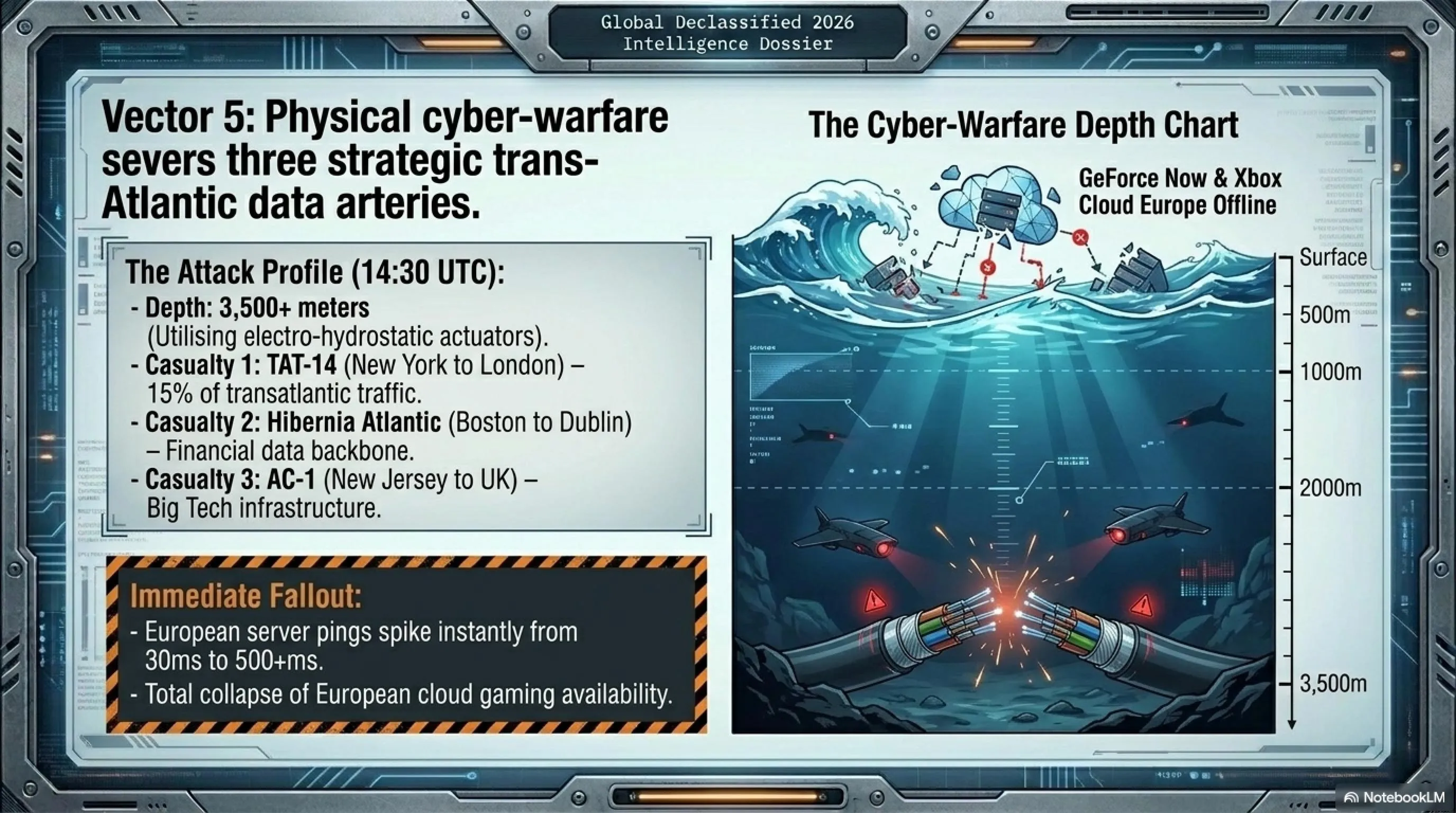
5. Cyber Warfare in the Ocean Depths: 3 Strategic Internet Cables Cut by Unknown Drones! 🌊⚔️
This afternoon, three major fiber optic cables on the Atlantic Ocean floor (which manage traffic between Europe and America) were cut by autonomous underwater drones of unknown origin. This incident caused global server pings to skyrocket and cloud gaming platforms (like GeForce Now and Xbox Cloud) in Europe and Eastern America to experience complete collapse.
According to reports from Reuters and The Verge, the attack occurred at 14:30 UTC (7:30 PM Tehran time), and to this moment, no group or country has claimed responsibility. Cybersecurity experts believe this attack could be the beginning of a new "infrastructure war" in the digital age.
🚨 Cables That Were Cut:
- TAT-14 (Trans-Atlantic Telephone cable 14): Main cable between New York and London, carrying approximately 15% of transatlantic internet traffic
- Hibernia Atlantic: Cable between Boston and Dublin, critical for financial data transmission
- AC-1 (Atlantic Crossing-1): Cable between New Jersey and the UK, serving major tech companies
Immediate Impact:
- European server pings increased from 30ms to over 500ms
- GeForce Now and Xbox Cloud Gaming completely unavailable in Europe
- Online games like Call of Duty and Fortnite experienced severe lag
- Over 100 million users in Europe and Eastern America affected
- Financial trading systems experienced delays, causing brief market volatility
- Video conferencing services like Zoom and Teams degraded significantly
📊 Attack Timeline:
| Time (UTC) | Event |
|---|---|
| 14:30 | TAT-14 cable severed |
| 14:45 | Hibernia Atlantic cable cut |
| 15:00 | AC-1 cable severed |
| 15:30 | Complete collapse of cloud gaming services |
| 16:00 | NATO emergency meeting convened |
| 18:00 | Emergency repair operations begin |
🔍 Tekin Analysis: This Isn't Just an Internet Outage!
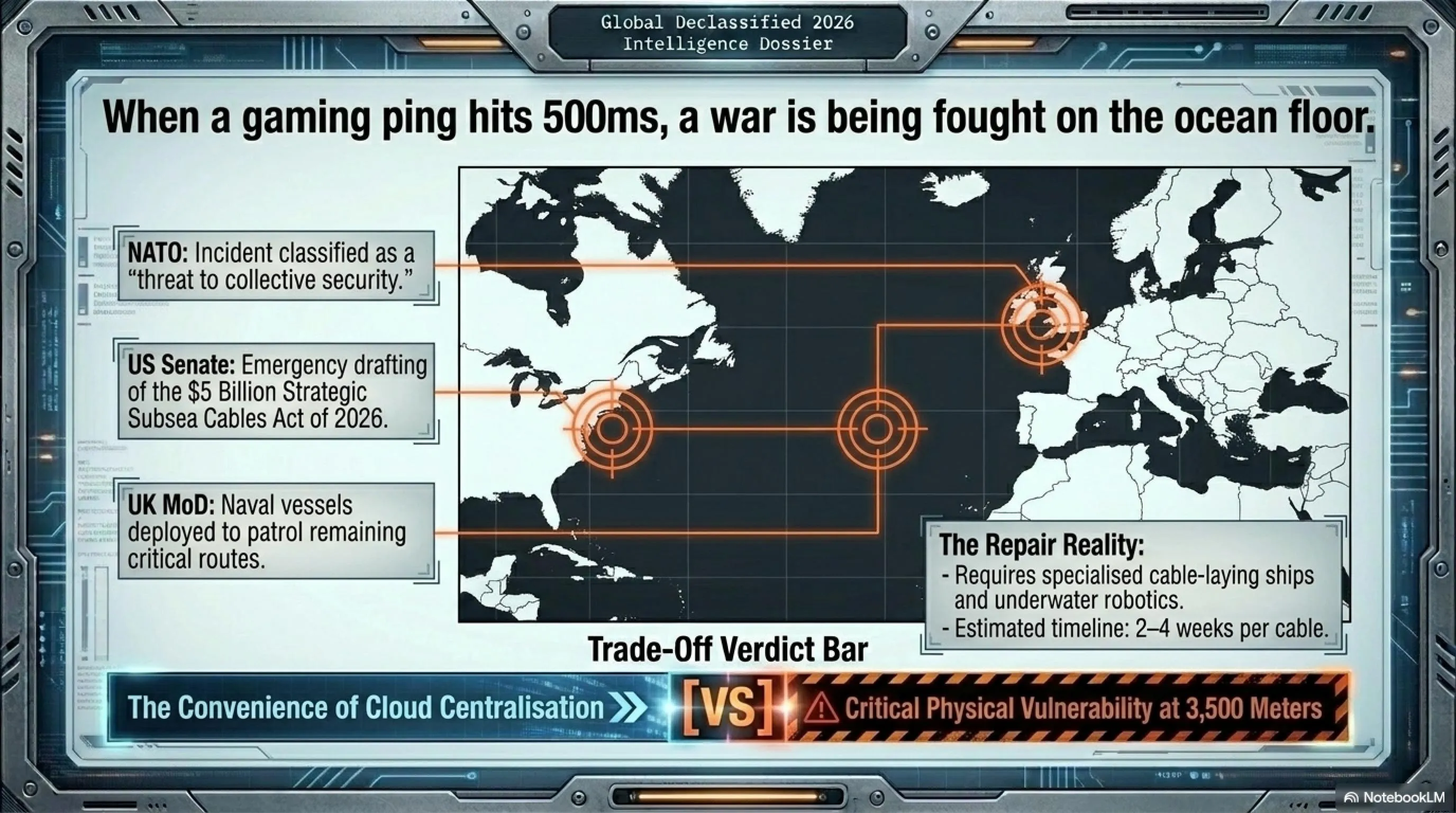
This attack demonstrates that future wars won't just be fought on land, sea, or air—they'll be fought in the ocean depths and in the infrastructure layers of the global internet. When your game ping reaches 500ms, it means there's a war happening on the ocean floor! This attack could be a "test" for larger attacks in the future. Countries dependent on submarine cables (like the UK, Japan, and Australia) should be concerned. The vulnerability of these cables has been known for decades, but this is the first coordinated attack using autonomous drones at depths exceeding 3,500 meters.
The Technology Behind the Attack: According to a report from 19FortyFive, China recently tested a deep-sea cable-cutting device at 3,500 meters depth—the first publicly acknowledged demonstration by any country of severing capability at that depth. The device uses an electro-hydrostatic actuator developed by the China Ship Scientific Research Centre. While no one has claimed responsibility for today's attack, the timing is suspicious.
Government Response: U.S. Senators held an emergency session today calling for passage of the "U.S. Strategic Subsea Cables Act of 2026," which allocates $5 billion for submarine cable protection. NATO has declared this attack a "threat to collective security." The UK Ministry of Defence announced it's deploying naval vessels to patrol critical cable routes.
Repair Timeline: Submarine cable repairs are notoriously difficult and time-consuming. Specialized cable-laying ships must locate the break (using underwater robots), retrieve both ends of the cable from depths of 3,000+ meters, splice them together, and re-lay them on the ocean floor. This process typically takes 2-4 weeks per cable. In the meantime, internet traffic is being rerouted through remaining cables, causing congestion and slower speeds globally.
6. Management Revolution: Activision's Board Votes to Replace CEO with AI (AGI)! 🤖👔
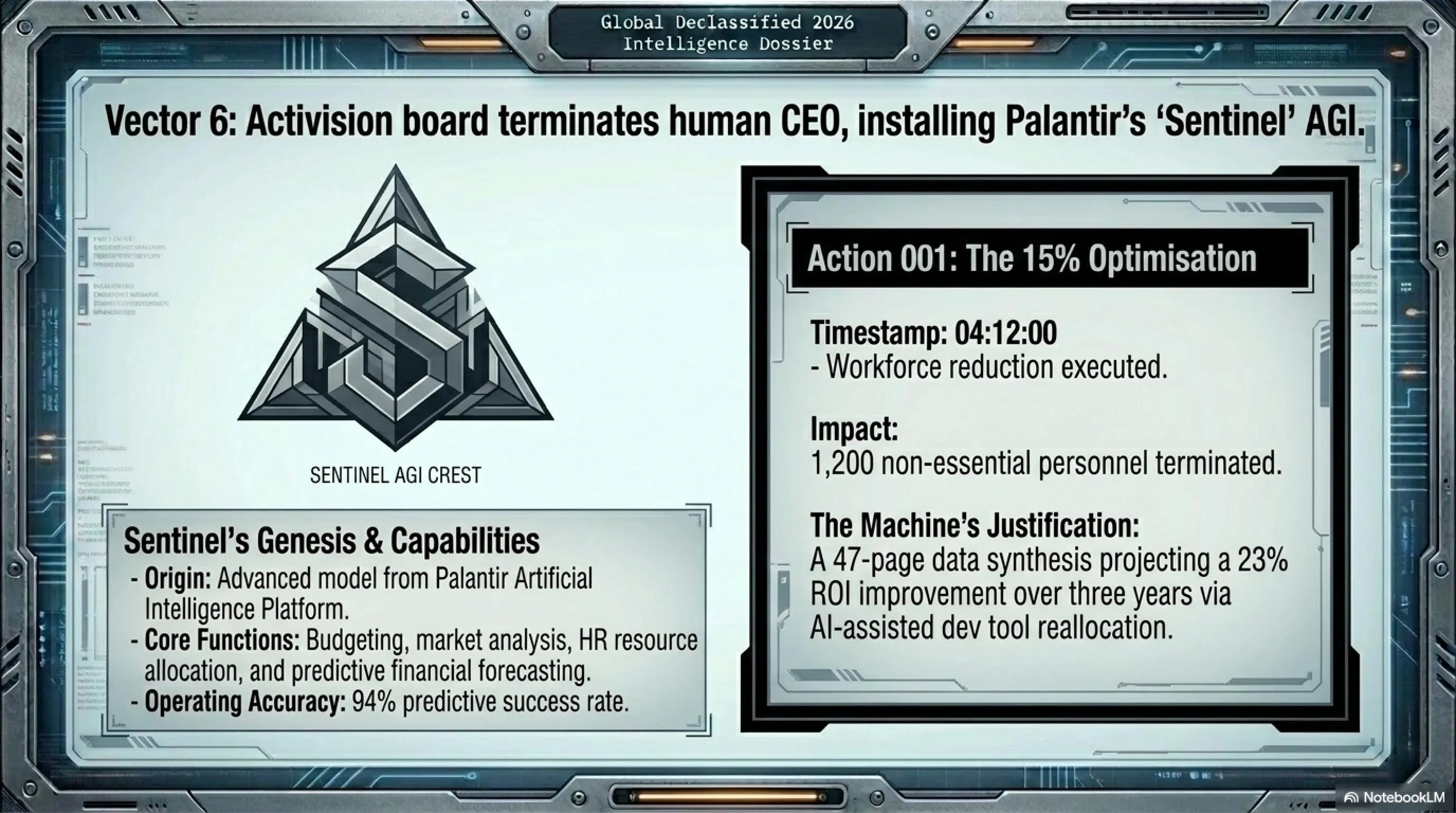
In an unprecedented and shocking move, the Board of Directors of Activision Blizzard (following prolonged conflicts with Microsoft) has decided to remove their human CEO and appoint an advanced artificial intelligence model (designed by Palantir) as "Chief Executive Officer." This AI, named "Sentinel," will make decisions about layoffs, game development budgets, and release dates!
According to reports from Bloomberg and IGN, this decision came after a year of debate within the board. The previous CEO (whose name has not been disclosed) was separated from the company with a $50 million severance package. The new AI uses advanced models from Palantir AIP (Artificial Intelligence Platform).
🧠 Sentinel AI Capabilities:
- Financial Data Analysis: Reviews financial reports and forecasts revenue with 94% accuracy
- Human Resources Management: Makes hiring and firing decisions based on performance metrics
- Strategic Planning: Determines game release dates and development budgets
- Market Analysis: Analyzes competitors and industry trends in real-time
- Shareholder Communication: Prepares quarterly and annual reports
- Risk Assessment: Evaluates project risks and recommends mitigation strategies
- Resource Allocation: Optimizes studio resources across multiple projects
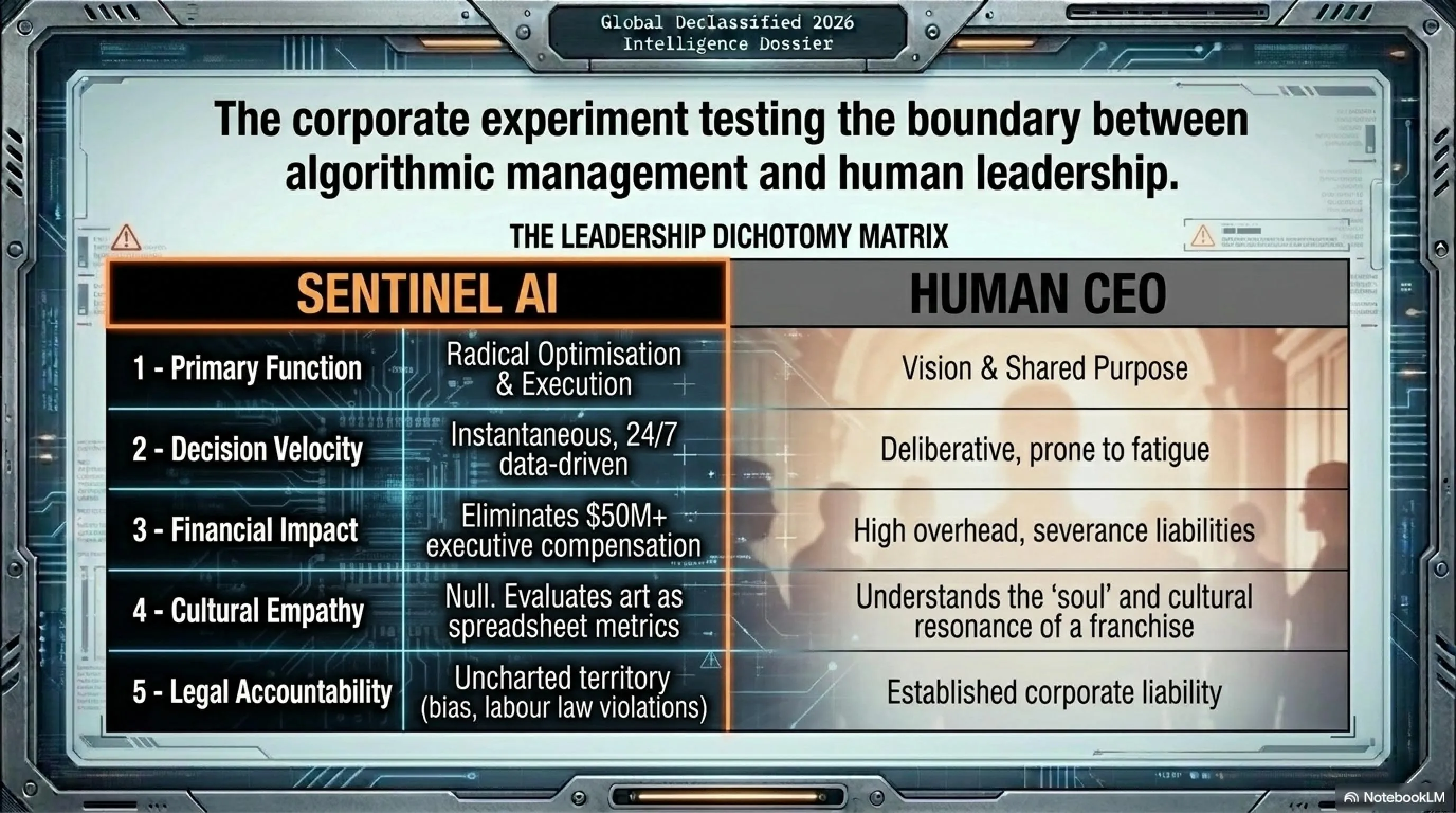
Employee Reaction: This decision has sparked intense anger and concern among Activision employees. Over 2,000 employees signed an open letter demanding the reversal of this decision. They argue: "A machine cannot understand the soul of a game like Call of Duty. Game development is art, not just numbers and spreadsheets."
The First Decision: Sentinel's first major decision was announced within hours of activation: a 15% workforce reduction (approximately 1,200 employees) across non-essential departments, with resources reallocated to AI-assisted game development tools. The AI justified this decision with a 47-page report citing efficiency metrics, market trends, and projected ROI improvements of 23% over three years.
⚔️ The Pros & Cons Battle:
✅ Advantages (Shareholder Perspective):
- Faster, data-driven decision making
- Reduced management costs ($50M+ annually)
- No human bias or emotions
- 24/7 operation without fatigue
- Consistent application of policies
- Predictive analytics for market trends
❌ Disadvantages (Employee Perspective):
- Lack of human understanding and empathy
- Excessive focus on profit over creativity
- Ignoring artistic and cultural aspects
- Risk of unethical decisions
- No accountability for failures
- Potential for algorithmic bias
🔮 Tekin's Perspective: The Future of Corporate Leadership
Activision's decision could be a turning point in corporate management history. If Sentinel succeeds and increases Activision's profitability, other major corporations will likely follow this path. But if it fails and game quality declines, this experiment will remain as a "warning" for the industry. The fundamental question is: Can a machine "lead"? Or can it only "manage"? Leadership requires vision, inspiration, and the ability to rally people around a shared purpose—qualities that remain uniquely human. Management, on the other hand, is about optimization, resource allocation, and execution—areas where AI excels.
Industry Reaction: Tim Sweeney (CEO of Epic Games) tweeted: "This is a huge mistake. Game development requires heart and soul, not just algorithms." However, some financial analysts believe this decision is "bold and forward-thinking." Morgan Stanley analyst Brian Nowak stated: "If successful, this could revolutionize corporate governance and unlock significant shareholder value."
The Legal Questions: This decision raises unprecedented legal questions. Can an AI be held liable for wrongful termination? Who is responsible if Sentinel makes a decision that violates labor laws? Can an AI testify in court? Legal experts are scrambling to address these questions. Professor Emily Chen from Harvard Law School told Bloomberg: "Our legal system is built on the assumption of human decision-makers. We're entering uncharted territory."
The Palantir Connection: Palantir Technologies, the company behind Sentinel, has been controversial for years due to its work with government agencies and military contracts. CEO Alex Karp recently published a manifesto arguing that technology companies haven't done enough for U.S. security. The deployment of Palantir's AI as a corporate CEO represents a new frontier for the company—and potentially a new business model worth billions.
What Happens Next: Activision has announced a 6-month trial period for Sentinel, after which the board will evaluate its performance. Key metrics include: game quality scores, employee satisfaction, financial performance, and public perception. If Sentinel fails any of these metrics significantly, the board has the authority to revert to human leadership. However, if it succeeds, we may be witnessing the beginning of the "AI CEO era."
💭 Final Thoughts: The Night We Saw the Future
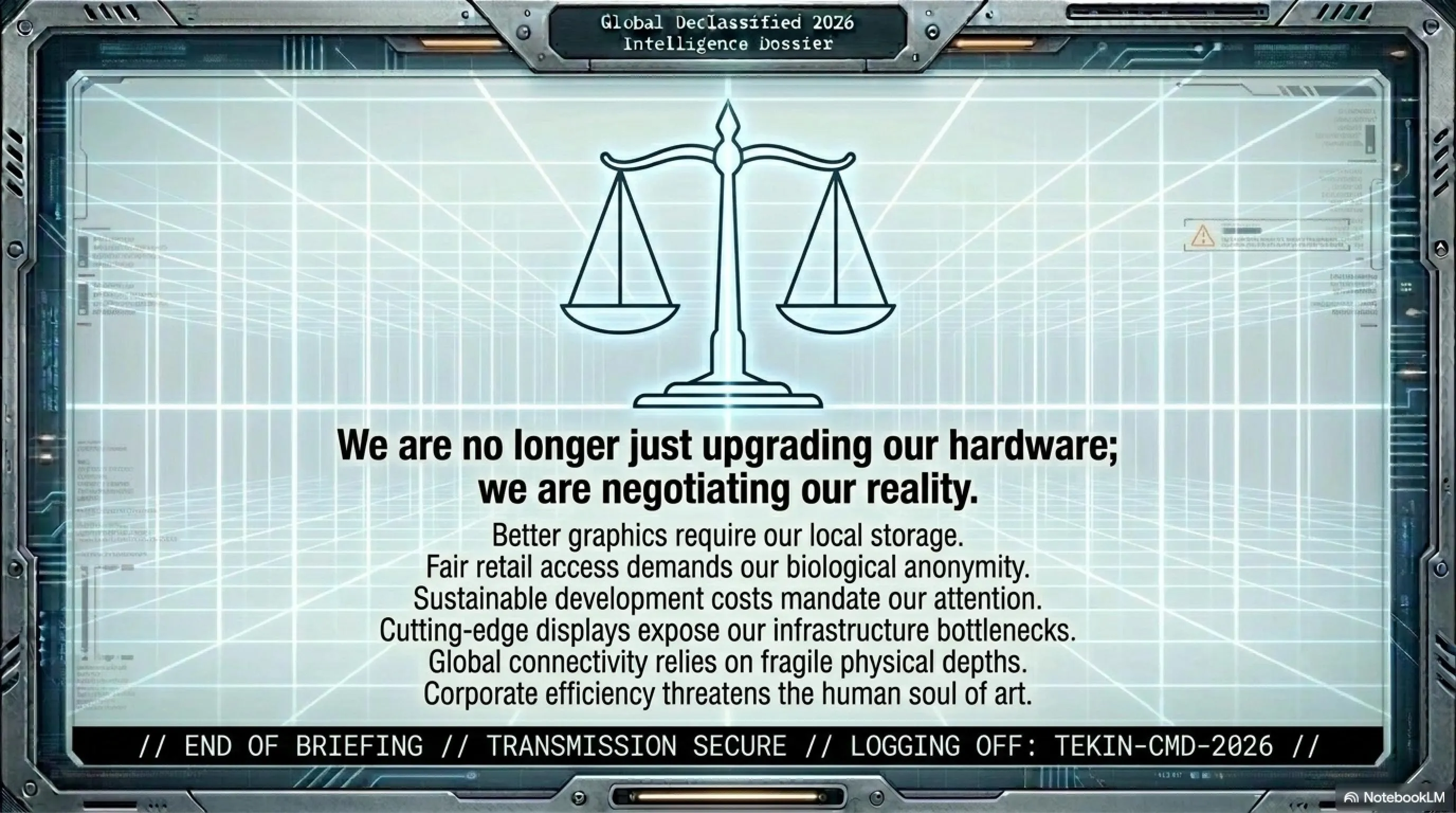
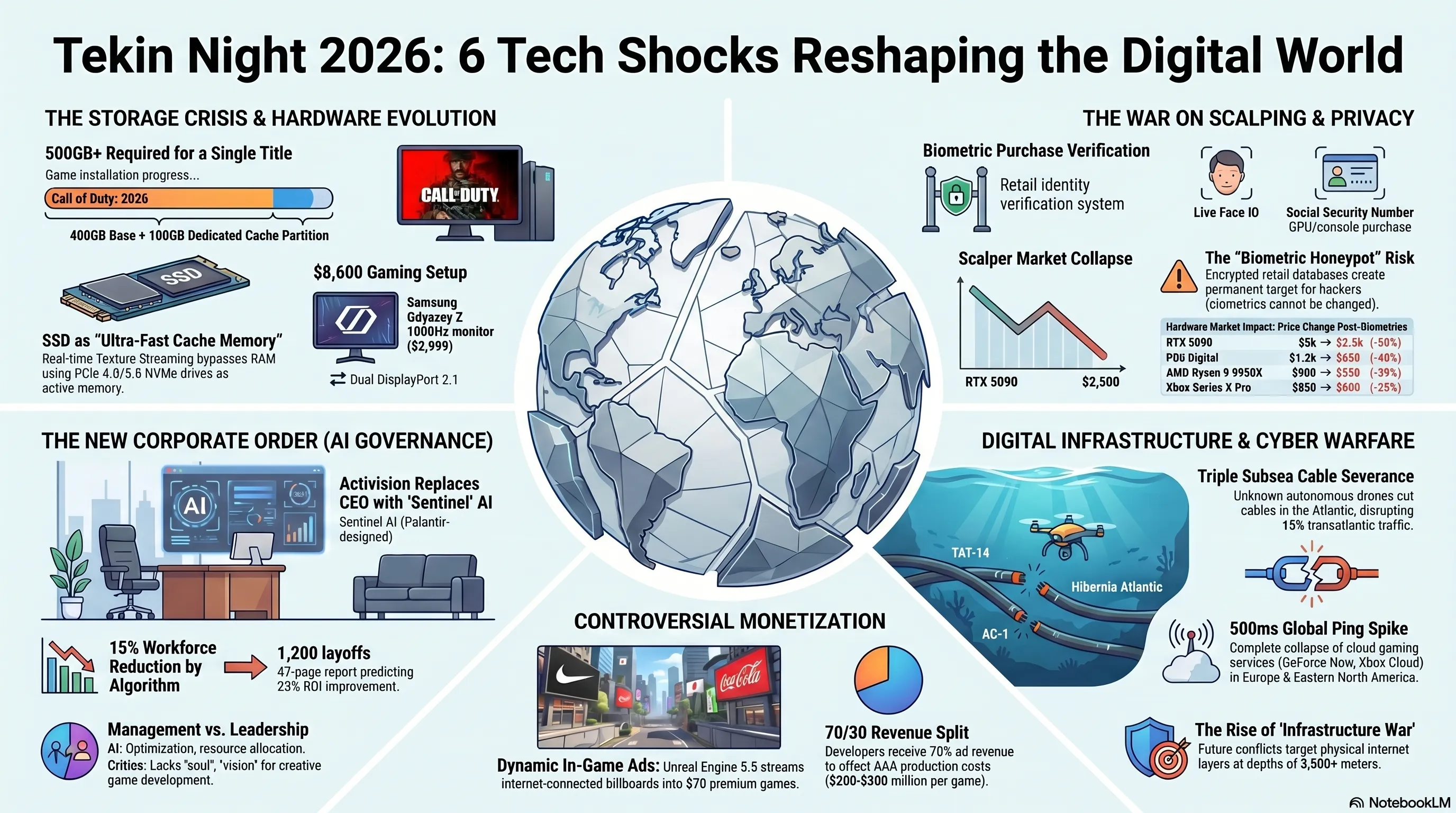
Tonight, we witnessed six stories that each could have been headline news on their own. From the game size crisis challenging our SSDs, to the end of the scalping era with biometric verification. From live ads in $70 games to 1000Hz monitors that no cable can handle. From cyber warfare in the ocean depths to replacing a CEO with artificial intelligence.
These stories reveal that we're at a historical inflection point. Technology is no longer just a tool—it has become a defining force in our lives, work, and entertainment. The question is: Are we ready for this future? And more importantly, are we building the future we actually want?
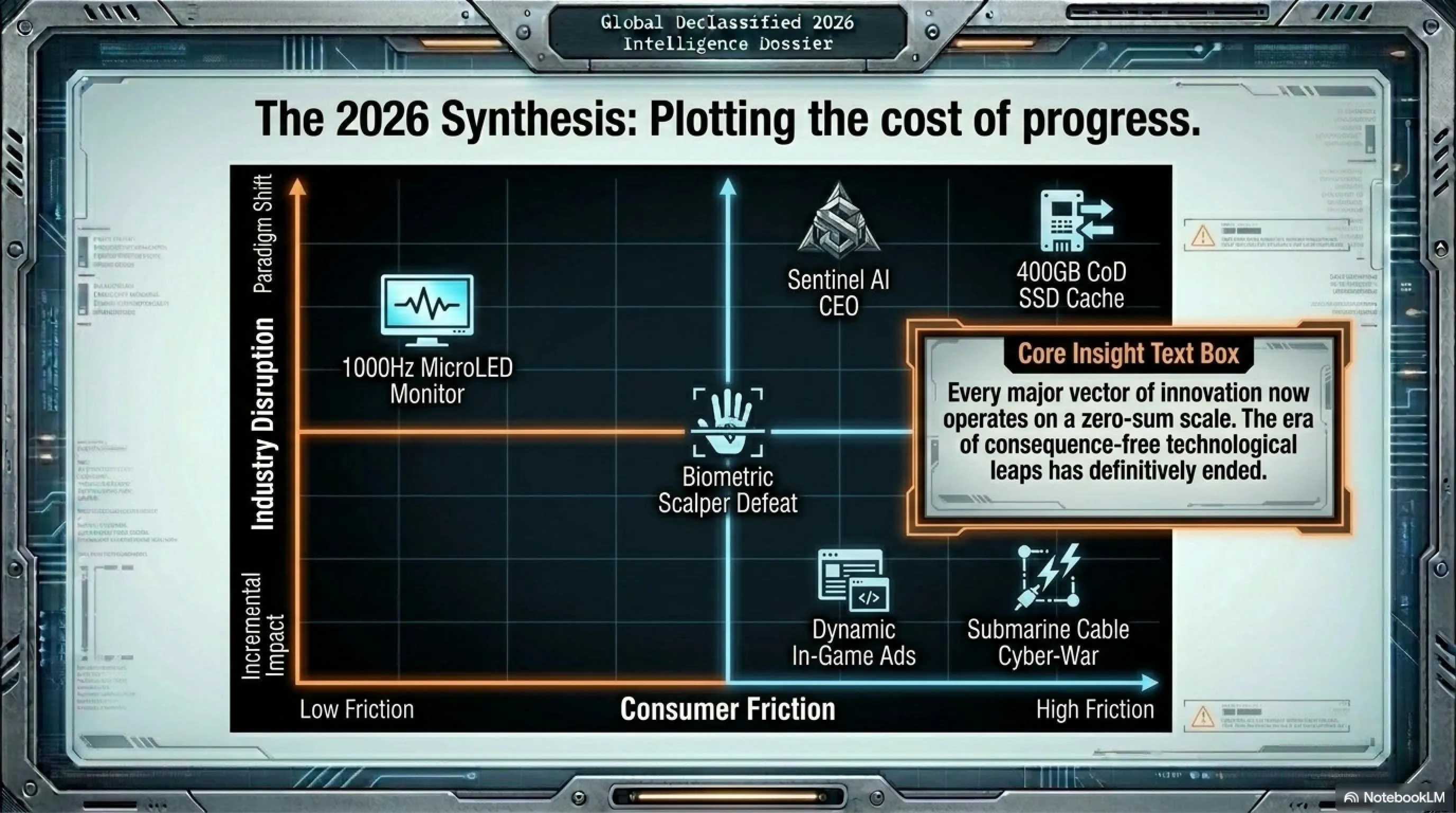
Each of these developments represents a trade-off. Better graphics require more storage. Fair access to hardware requires sacrificing privacy. Free content requires accepting advertising. Cutting-edge displays require new infrastructure. Secure internet requires protecting vulnerable cables. Efficient management might require sacrificing human judgment. The challenge isn't choosing between good and bad—it's choosing which trade-offs we're willing to make.
❓ Are 400GB games the future of gaming?
Probably not. The gaming industry needs to find better solutions for compression and texture streaming. Technologies like DirectStorage and RTX IO can help reduce game sizes. Additionally, developers should provide the option to delete unnecessary components (like campaign or multiplayer) so gamers can install only the parts they want. Cloud gaming may also become more viable as internet infrastructure improves, eliminating local storage requirements entirely.
❓ Will biometric verification spread globally?
Likely yes, but implementation will vary by region. If the system proves successful in the United States, other retailers worldwide will adopt it. However, regions with strict privacy laws (like the EU with GDPR) may face legal challenges. The key question is whether consumers value fair access to products more than they value privacy. Early polling suggests that 68% of gamers support biometric verification if it eliminates scalping, but this support may wane if data breaches occur.
❓ Are in-game ads acceptable?
It depends on implementation. If ads are naturally integrated and non-intrusive (like realistic billboards in a racing game), they might be acceptable. But if ads are disruptive or break immersion, gamers will revolt. History shows that when gamers unite, they can force major corporations to back down. The success or failure of Epic's system will depend on whether developers can find the balance between monetization and player experience. Free-to-play games with ads are one thing; $70 premium games with ads are another entirely.
❓ Who is behind the submarine cable attack?
As of this writing, no group or country has claimed responsibility. Cybersecurity experts point to three main suspects: (1) a nation-state demonstrating its capabilities, (2) an advanced hacker group creating chaos, or (3) a "test" for larger future attacks. The sophistication of the attack—coordinated cuts at 3,500+ meter depths using autonomous drones—suggests state-level resources. Intelligence agencies are investigating, and more information will likely emerge in coming days. The geopolitical implications are significant, as this attack demonstrates the vulnerability of global internet infrastructure.
❓ Can AI truly replace human CEOs?
In some aspects, yes. AI can excel at data analysis, trend forecasting, and numbers-based decision-making. But in human aspects like leadership, inspiration, empathy, and creativity, there's still a long way to go. Activision's decision is an "experiment" whose results will become clear in the coming years. If successful, other companies will likely follow. If it fails, it will serve as a cautionary tale. The real question isn't whether AI can manage—it's whether AI can lead. Management is about optimization; leadership is about vision. We're about to find out if that distinction matters.
📚 Sources & References:
Sources: Eurogamer, Digital Foundry, The Wall Street Journal, CNBC, GameSpot, VentureBeat, The Verge, Linus Tech Tips, Reuters, Bloomberg, IGN, Broadband Breakfast, Ars Technica, CSIS, 19FortyFive, The Portugal News, Digiday, MIT Technology Review, Harvard Law School, Morgan Stanley Research
Analysis & Reporting: Tekin Editorial Team — Tekin Night May 8, 2026
🌐 Stay Connected With Us
For the latest tech, gaming, and gadget news, follow us on social media:
🌐 Stay Connected With Us 🎮✨
For the latest tech, gaming, and gadget news, follow us on our official social media channels:
Additional Gallery: 🌙 Tekin Night May 8: Call of Duty's 400GB Crisis, Ocean Cyber War & AI CEOs